bg image
bg image

Serving Petersburg & Virginia

Stop losing margin on manual retail ops across Petersburg in 2026

Petersburg retailers still burn hours on stock counts, markdown guesses, and disconnected POS files. That lag hits cash flow when Tri-Cities shoppers move to faster competitors. We build AI Retail Automation that cuts repeat labor and surfaces only the decisions your managers need. It is built for multi-store operators, distributors feeding local shelves, and franchise groups that already run on imperfect data. You keep your current systems. We add only what pays back inside one season. Get AI Retail Automation cost estimate in 24 hours. Tell us budget, timeline, stack, and which stores or SKUs matter first.

Discuss Project

Overview

Why Petersburg retail still runs on spreadsheets in 2026

Petersburg sits inside a tight Tri-Cities retail corridor with Colonial Heights, Hopewell, and routes into Richmond. Local operators compete with national chains on speed of restock and price moves, not brand glamour alone. Manual cycle counts and after-hours spreadsheet merges still own too many back offices. That delay shows up as empty endcaps, overbuys on slow SKUs, and labor spent recounting instead of selling. AI Retail Automation is the practical fix when you need machines to watch inventory signals while people handle customers.

Trusted AI Retail Automation Partner for Petersburg Businesses. We work with US-based clients, including companies operating in Virginia. Our teams have delivered 10+ AI solution projects in the US market that share the same pattern: dirty source systems, tight staff, and a need for clear handoffs. For retail that means POS exports, vendor ASNs, and camera or handheld feeds feeding one decision layer. We do not rip out what already works. We wrap it.

Operators near Prince George and Dinwiddie often run mixed formats: grocery-adjacent, specialty soft goods, and small distribution yards feeding both. Each format needs different exception rules. A high-velocity cooler line cannot wait for overnight batch jobs. A slower gift assortment can tolerate slower models but needs tighter markdown control. We map those constraints before any model training starts so spend lands on the process that actually leaks cash.

Technical approach stays boring on purpose. Event streams or scheduled pulls feed a feature store. Rules and models score exceptions. Staff see ranked actions in the tools they already open each morning. When documents or clinical-style notes appear in vendor packs, we reuse patterns from our real-time EHR summarization agent work: medical summarization style extraction pipelines and EHR-focused NLP adapted to retail paperwork. Same discipline, different vocabulary.

If you need a deeper look at how we staff and ship AI programs, review our AI development practice. From there we scope Petersburg and Tri-Cities sites with budget, timeline, tech stack, and dataset boundaries in plain language. You leave discovery knowing which workflow automates first and which waits.

Talk to an Expert
Multi-source feeds

Multi-source feeds

POS exports, vendor ASNs, handheld and shelf-camera signals into one durable queue

Decision layer

AI decision layer

Feature store plus inspectable rules and models that score exceptions by dollar impact

Ranked actions

Ranked morning actions

Transfer tickets, pick lists, and labor prompts inside tools staff already open

Wrap legacy systems

Wrap, don’t rip

Adapters around working POS and handhelds so format changes never force a rewrite

Retail decision stack

Core event fabric Petersburg stores can run without drama

Petersburg multi-store groups need a fabric that tolerates spotty Wi-Fi in older strip centers and still posts reliable actions by opening. We build an ingestion tier that accepts POS tickets, receiving scans, supplier EDI or CSV drops, and optional shelf-camera frames. Each source keeps its own adapter so a vendor format change never forces a full rewrite. Messages land in a durable queue. Downstream workers enrich and score without blocking the front lanes.

Feature preparation sits next. Rolling velocity, days of cover, waste risk, and promotion lift are computed on a schedule matched to how fast each category moves. High-turn dairy-like categories refresh in minutes. Slow seasonal goods refresh a few times a day. Models stay small and inspectable. Managers can see why a SKU was flagged. That transparency matters when a Colonial Heights assistant manager must justify a same-day transfer from Hopewell stock.

Action services write only approved outcomes: transfer tickets, pick lists, price-change proposals, or labor prompts. Human approval gates stay on for margin-sensitive moves until the pilot proves stable. We instrument every gate so you can raise autonomy later without another project. Security/compliance covers PII in loyalty exports, PCI adjacency around payment systems, and role-based access so store staff never see corporate cost sheets they should not hold.

DevOps is built for small retail IT teams. Containers ship behind your firewall or a US region you already trust. Blue-green releases keep a Friday night fail from locking Saturday trade. Config lives outside images so seasonal rule changes do not require redeploys. Logs and traces feed a single ops board that names the failing store, not a cryptic pod id.

We ground this stack in work already shipped. Our real-time EHR summarization agent used an extraction pipeline and focused NLP to produce live summaries from dense records. Retail vendor packs, claim notes, and planogram comments carry the same messiness. The same pipeline pattern strips entities, normalizes units, and feeds structured fields into scoring without asking clerks to retype. That reuse cuts build time and keeps accuracy measurable against labeled samples you already own.

plavno logo

Build your first
Smart AI project today!

Just tell the Plavno AI Agent about your project - it will ask questions, gather requirements, and propose a tailored solution

Delivery path

From first store pilot to Tri-Cities rollout

A fixed sequence that protects Saturday trade while you prove value on one Petersburg site before you scale.

Clipboard
Team
01

Step 1: Workflow and data audit (1–2 weeks)

We sit with store and inventory leads on the actual floor. We list the five tasks that steal the most hours each week. We capture POS versions, handheld models, and how receiving actually lands after truck delays. You receive a gap map that names missing fields and broken timestamps. Budget and timeline bounds are locked so later phases cannot drift without a written change. Dataset scope is defined by SKU count and store list, not vague promises.

02

Step 2: Pilot build on one site (3–5 weeks)

Engineers wire adapters for the pilot store only. Models train on historical exports plus a short live window. Staff get a thin UI inside tools they already open. Success metrics are pre-agreed: labor minutes per count, stockout hours on A items, and markdown leakage. You see weekly demos with real SKUs from Petersburg inventory, not synthetic demos. Exit criteria decide go or no-go before money moves to a second site.

Search in doc
Rocket
03

Step 3: Multi-store hardening (2–4 weeks)

We add Colonial Heights or Hopewell only after pilot scores clear the bar. Shared catalogs and transfer rules go live with conflict checks. Latency budgets are retested under peak Friday loads. Role permissions expand carefully so regional managers see rollups while clerks stay in task lists. Runbooks cover weekend on-call and rollback. You get a cost model that shows cloud and support spend per additional door.

04

Step 4: Autonomy lift and handover (2–3 weeks)

Approved action classes move from human gate to auto-post with monitoring. Training materials match your LMS or printed floor cards. Local admins learn how to pause a rule without calling engineering. We leave dashboards that flag drift in demand patterns after promotions. A ninety-day support window covers model refresh and new vendor formats. Final artifacts include architecture diagrams, data dictionaries, and the original budget vs actuals.

AI Retail Automation Solutions for Petersburg Industries

Where Tri-Cities operators cut labor first in 2026

Six local patterns tied to how Petersburg, Colonial Heights, and Hopewell actually move goods and serve shoppers.

Fresh Grocery

Fresh Grocery

Shrink Control

Independent grocers and specialty food

Fresh shrink and out-of-stocks still dominate cost talks on Halifax and Crater corridors. Manual morning walks miss coolers that spiked overnight. We install demand signals from POS plus receiving lag so ordering reflects real sell-through. Staff see a ranked pull list before first delivery windows close. One mid-size operator target is cutting cold-case waste review time by roughly a third inside a quarter once baselines are stable. Technical path uses short-horizon forecasts and exception rules, not black-box bulk orders.

Soft Goods

Soft Goods

Fast Markdowns

Soft-goods and gift retailers

Seasonal turns in Colonial Heights malls leave slow colorways eating floor space. Price changes land late when managers wait on corporate files. Automation scores aged inventory against local velocity and weather windows. Markdown candidates appear with margin floors already applied. Typical aim is faster first markdown on dead stock while protecting hero SKUs. Scoring joins ticket history with simple image tags when style names conflict across vendors.

Auto Parts

Auto Parts

Stock Transfers

Auto parts and DIY corridors

Parts counters lose sales when interlocking SKUs sit at the wrong door. Petersburg and Dinwiddie shops expect same-day pickup. We link branch inventories and flag transfer opportunities before the counter promises stock. Pick paths account for counter depth and hazardous items. Result focus is higher fill rate on high-margin add-ons without extra overtime. Rules engine plus graph of related parts keeps suggestions practical for one-person night crews.

Local Distribution

Local Distribution

Dock Match

Distribution feeding local shelves

Tri-Cities DCs push mixed pallets into small footprints with thin backrooms. Mis-picks cascade into store labor. Computer vision on outbound docks plus ASN reconciliation catches mismatches early. Exception tickets go to the loader, not the store manager. Measured aim is fewer dock claim hours and cleaner store receiving. Pipeline mirrors extraction work we used on dense EHR packs: entity pull, unit normalize, then structured match.

Hospitality Retail

Hospitality Retail

Burst Demand

Hospitality retail and gift shops

Hotels and event venues near I-95 swings see burst demand that static par levels miss. Mini-bar and gift SKUs stock out during peak weekends. Automation adjusts pars from occupancy feeds and local event calendars. Night audits shrink to exceptions only. Goal is lower emergency runs into Richmond wholesale while keeping guest-facing shelves full. Light models plus calendar features keep compute cost modest for single-property teams.

Franchise Units

Franchise Units

Brand Guard

Franchise multi-unit operators

Brand rules collide with local labor reality across Hopewell and Prince George doors. Corporate planograms ignore a store’s true velocity. We keep brand compliance checks while local demand models propose lawful swaps. Regional managers get a single board of open exceptions. Target is fewer surprise corporate chargebacks and less overtime on rewrite nights. Integration stays API-first against the franchise POS and labor tools already under contract.

What you actually receive

Five deliverables Petersburg retailers can put on the floor

Exception-first inventory board

Exception-first inventory board

Managers waste mornings on full counts when only twenty SKUs matter. We ship a board that ranks stockouts, overstocks, and transfer candidates by dollar impact. Petersburg teams open it beside the POS they already trust. Rules run on velocity and days-of-cover features refreshed on a timer that matches your receiving schedule. PostgreSQL holds durable state while Redis caches hot ranks for snappy store Wi-Fi. Staff act from a short list instead of another walk of the entire floor.

Markdown and promo guardrails

Markdown and promo guardrails

Price cuts land too late or too deep when gut feel owns the button. Guardrails propose cuts inside margin floors you set. Colonial Heights multi-unit leads see only SKUs that breach age or sell-through thresholds. Models stay simple regressions plus business rules so finance can audit. We chose rule-first design so a Friday promo does not need a data scientist on call. Outcomes feed a weekly pack for regional review.

Vendor document extraction

Vendor document extraction

ASN PDFs and claim emails still force retyping into the WMS. We adapt extraction pipeline patterns proven on our real-time EHR summarization agent. Entities, quantities, and lot codes land as structured rows. Hopewell receiving clerks confirm exceptions instead of typing whole packing lists. OCR plus focused NLP handles messy scans without a full custom model per vendor. You cut dock-to-system latency and claim disputes in the same move.

Labor prompt engine

Labor prompt engine

Overtime spikes when tasks are unclear at open. The engine turns model exceptions into timed task cards tied to roles. Store leads assign walks that match who is already on the clock. Integrations respect existing timekeeping so you do not double-enter hours. We picked lightweight queues so a dropped phone network cannot block lane sales. Measured win is fewer blind overtime hours on slow aisles.

Pilot metrics pack

Pilot metrics pack

Without a shared scoreboard pilots die in opinion fights. You get baseline capture for stockout hours, count minutes, and markdown leakage before go-live. After go-live the same pack updates weekly for the pilot door. Charts stay plain so a Petersburg owner can forward them to a landlord or franchise coach. Storage is your warehouse or a locked US bucket. This pack is the gate that authorizes the next store, not a vanity dashboard.

Case Study

We help customers cut
down on development

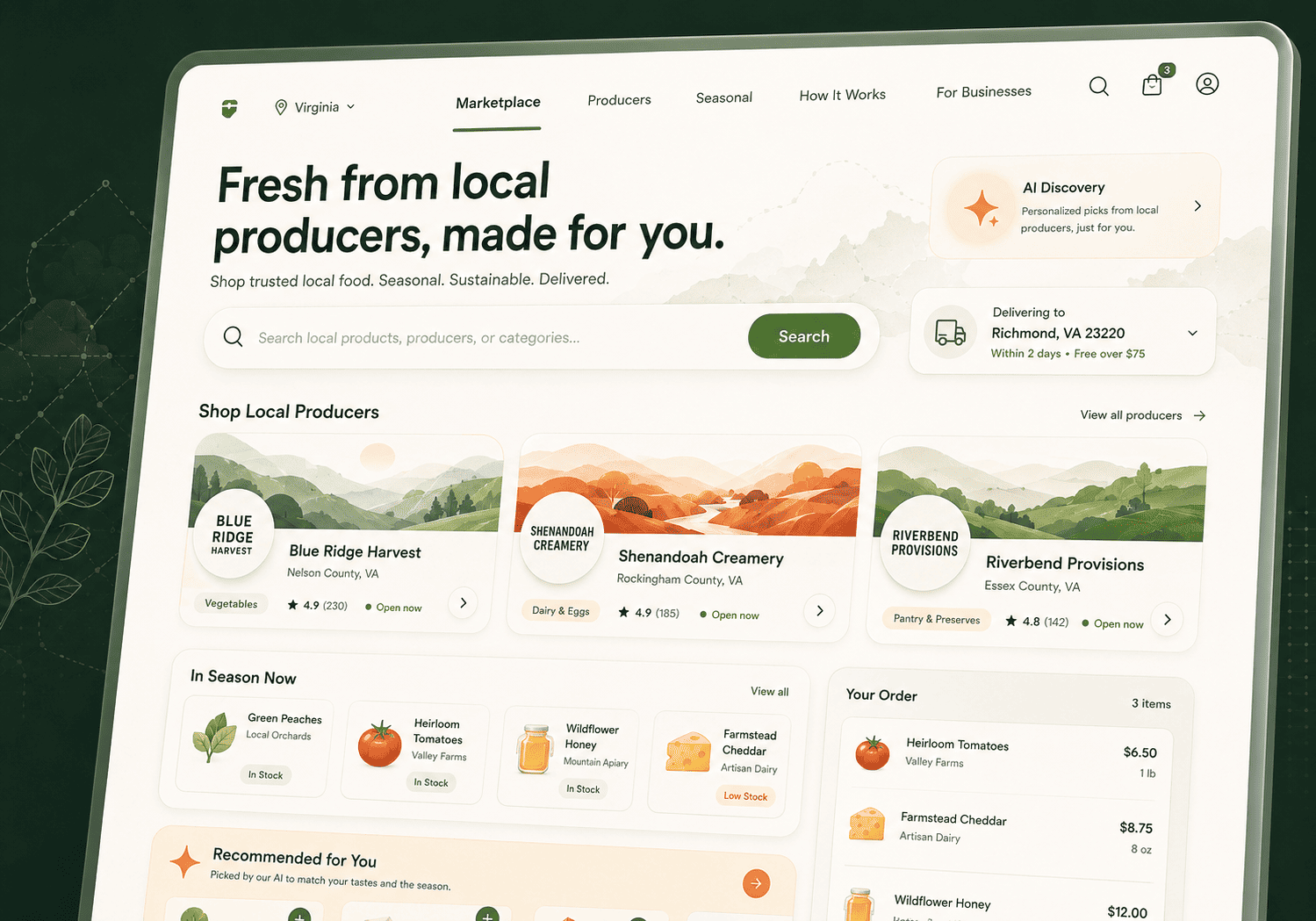
Digital Marketplace for Virginia Farmers, Local Producers & Direct-to-Consumer Food Sales

Plavno developed a custom multi-vendor marketplace for Virginia-based farmers, food producers, and regional sellers to unify product listings, vendor operations, customer ordering, and local fulfillment workflows.

Read More
3x

increase in product discovery relevance

Digital Marketplace for Virginia Farmers, Local Producers & Direct-to-Consumer Food Sales

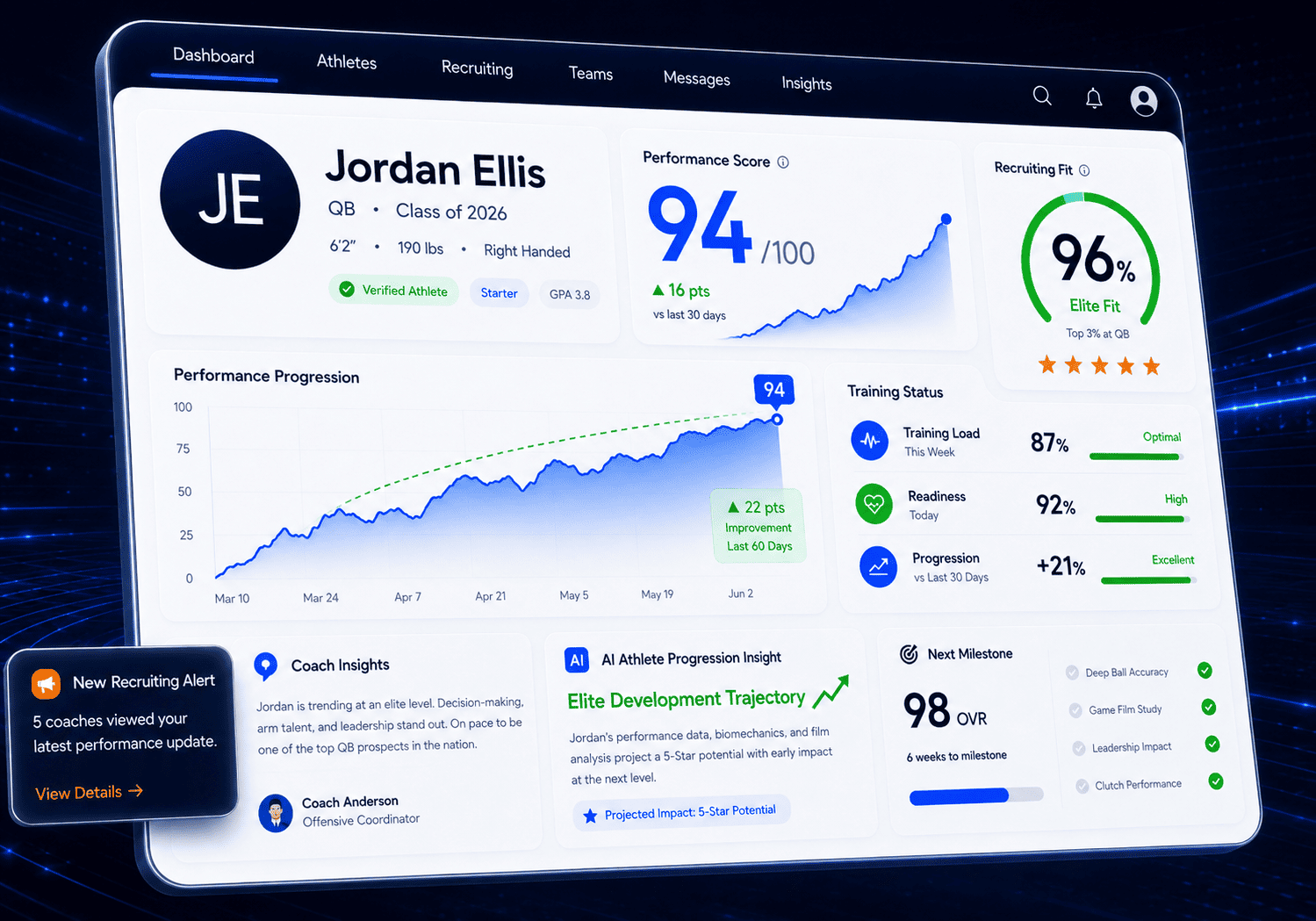
AI-Powered Sports Performance & Recruiting Platform for Virginia Clubs, Academies & Youth Programs

Plavno developed a custom sports technology platform for Virginia-based clubs and academies to combine athlete performance tracking, coach communication, recruiting workflows, and mobile engagement in one ecosystem.

Read More
3x

faster recruiting pipeline

AI-Powered Sports Performance & Recruiting Platform for Virginia Clubs, Academies & Youth Programs

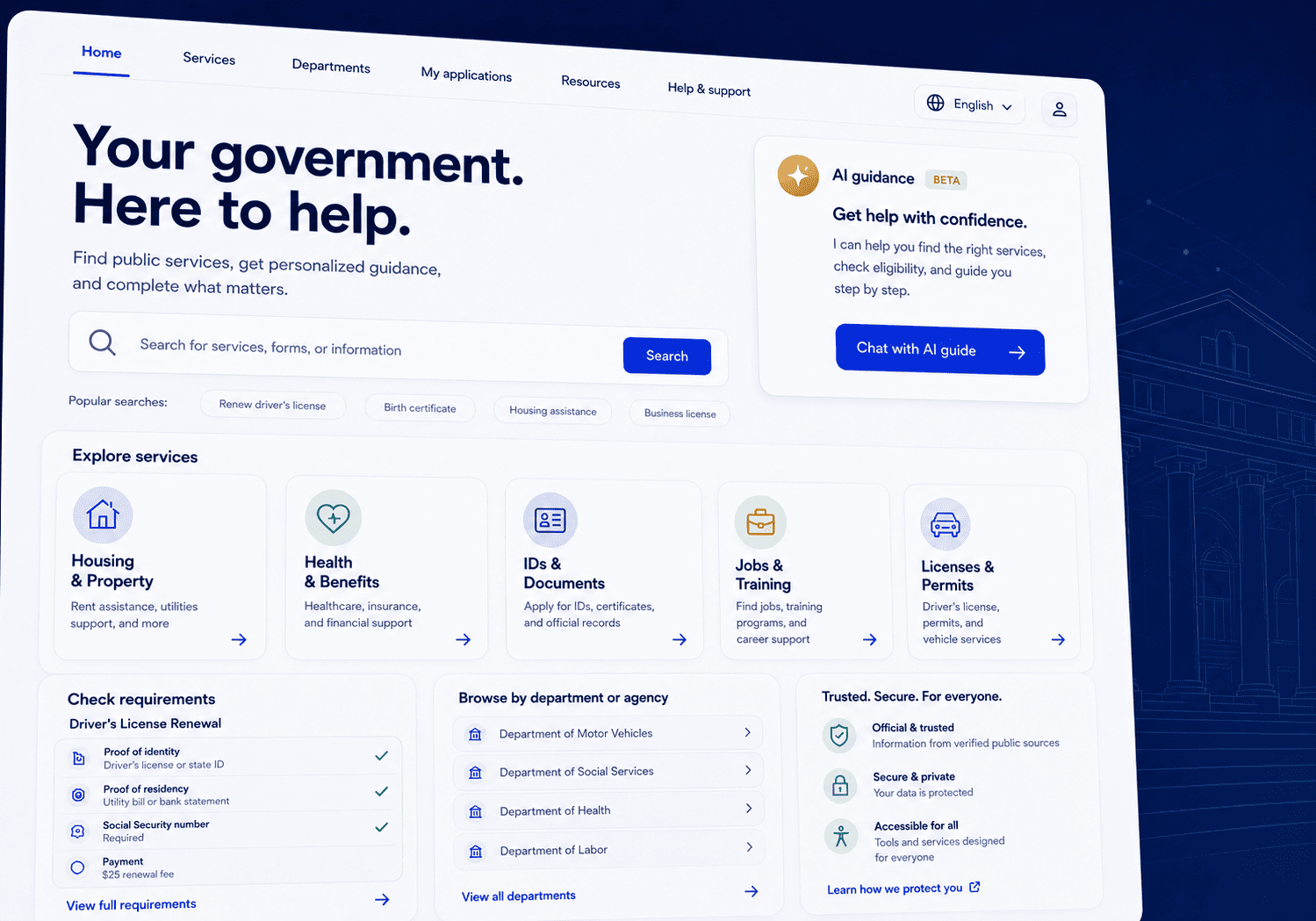
AI-Powered Citizen Services Website Platform for Virginia State Agencies

Plavno developed a modern eGovernment website platform for Virginia state agencies that centralizes citizen services, public information, department content, and an AI-powered guidance agent in one scalable system.

Read More
70%

reduction in routine citizen inquiries to agency staff

AI-Powered Citizen Services Website Platform for Virginia State Agencies

Testimonials

We are trusted by our customers

“They really understand what we need. They’re very professional.”

The 3D configurator has received positive feedback from customers. Moreover, it has generated 30% more business and increased leads significantly, giving the client confidence for the future. Overall, Plavno has led the project seamlessly. Customers can expect a responsible, well-organized partner.

Sergio Artimenia

Commercial Director, RNDpoint

Sergio Artimenia

“We appreciated the impactful contributions of Plavno.”

Plavno's efforts in addressing challenges and implementing effective solutions have played a crucial role in the success of T-Rize. The outcomes achieved have exceeded expectations, revolutionizing the investment sector and ensuring universal access to financial opportunities

Thien Duy Tran

Product Manager, T-Rize Group

Thien Duy Tran

“We are very satisfied with their excellent work”

Through the partnership with Plavno, we built a system used by more than 40 million connected channels. Throughout the engagement, the team was communicative and quick in responding to our concerns. Overall, we were highly satisfied with the results of collaboration.

Michael Bychenok

CEO, MediaCube

Michael Bychenok

“They have a clear understanding of what the end user needs.”

Plavno's codes and designs are user-friendly, and they complete all deliverables within the deadline. They are easy to work with and easily adapt to existing workflows, and the client values their professionalism and expertise. Overall, the team has delivered everything that was promised.

Helen Lonskaya

Head of Growth, Codabrasoft LLC

Helen Lonskaya

“The app was delivered on time without any serious issues.”

The MVP app developed by Plavno is excellent and has all the functionality required. Plavno has delivered on time and ensured a successful execution via regular updates and fast problem-solving. The client is so satisfied with Plavno's work that they'll work with them on developing the full app.

Mitya Smusin

Founder, 24hour.dev

Mitya Smusin

Engineering contrast

Why Petersburg teams pick deep build over slideware

Generic agencies sell templates. We ship adapters, gates, and runbooks that survive real store hours.

Generic Agencies
Our Platform (Deep Engineering Expertise)
Store-level pilot before multi-site spend
checkmark
Adapters for legacy POS and handhelds
checkmark
Human approval gates with audit logs
checkmark
checkmark
Document extraction for messy vendor packs
checkmark
Weekend rollback runbooks for retail peaks
checkmark
Fixed budget bands tied to SKU and door count
checkmark
checkmark
Post-launch drift monitors on demand models
checkmark

Architecture & Engineering Overview

How 2026 retail automation decisions pay off in Petersburg

Exception board

Exception-first board

Kill full-store walks; rank stockouts and transfers by dollar impact so managers sell, not clipboard

Transfer savings

Smarter transfers

Cut emergency Richmond wholesale runs that erase margin after freight on A items

Reason codes

Auditable reason codes

Every price or transfer flag carries evidence finance and floor can challenge together

Pilot baselines

90-day measured pilot

Before/after stockout hours and count minutes with cloud spend tagged by store and model

For Business: Technical ROI & Risk Mitigation

Retail owners near the I-95 spine care about cash tied in stock and hours on the clock. Technical choices only matter when they shrink those two lines without adding IT babysitting. A ranked exception board removes full-store walks that never pay for themselves. That frees opening managers for vendor calls and guest recovery instead of clipboards. Transfer suggestions cut emergency wholesale runs into Richmond that erode margin after freight.

Risk falls when every price or transfer suggestion carries a reason code. Staff learn to trust the list because they can challenge a bad flag with evidence. Finance sees the same codes in weekly packs so disputes do not turn into opinions. We keep autonomy behind gates until the pilot door shows stable precision on A items. That sequencing protects brand reputation in small markets where word travels fast.

Cost control sits in the open. Cloud spend is tagged by store and by model family. If a vision job spikes, you see it before the monthly bill. We prefer shorter-horizon models on dirty data over heavy deep nets that need constant labeling budgets you do not have. The same extraction discipline used in our EHR summarization agent reduces manual claim prep without inventing a second ops team.

Opportunity cost matters too. Competitors already move inventory with less labor. Delaying only increases the gap on stockout hours customers feel. A ninety-day pilot framed against your actual baselines is cheaper than another year of overtime. We measure that baseline first so claimed savings have a before number, a after number, a store list, and a calendar window.

Freeze scope

Freeze pilot scope

Lock door, source systems, and action classes before any model training starts

Versioned adapters

Versioned adapters

First-class contracts and queues so a POS column change never starves lane APIs

Config gates

Gate vs auto-post

Per-action config flags, hybrid freshness SLAs, written risk owners on margin rules

Handover

Owned handover

Pause/freeze playbooks and label quality back to merchandising without shadow IT

For CTOs: Architecture & Technical Lifecycle

Lifecycle starts with a constrained system map, not a dream architecture. We freeze the pilot door, the source systems, and the action classes before any model training. Adapters are first-class services with versioned contracts. When a POS export adds a column, only one adapter changes. Queues buffer weekend load so training jobs never starve lane-facing APIs.

Decision points are written. Human gate vs auto-post is a config flag per action type. Feature freshness SLAs differ by category velocity. You approve those SLAs in writing. Governance uses change tickets that name the risk owner for margin-impacting rules. Production promotions require a rollback artifact and a store manager contact for same-day validation.

Trade-offs stay explicit. Batch scoring overnight is cheaper but misses morning spoilage. Near-real-time streams cost more and need better observability. We default to hybrid: frequent pulls for high-turn categories, nightly for slow lanes. Data residency stays in US regions your counsel already accepts. Secrets never live in notebooks that leave the build environment.

Handover is part of lifecycle, not an afterthought. Admin playbooks cover pause, thrash, and feature freeze. Ownership of label quality returns to your merchandising lead with a simple spreadsheet path until you want a labeling tool. That keeps the system alive after our warranty window without a permanent shadow IT dependency.

Action APIs

Typed action APIs

Thin API layers expose approved outcomes; one image serves Colonial Heights and Hopewell via store-ID injection

Python workers

Python feature & scoring workers

Idempotent jobs, p95 latency targets under peak, human-in-loop on low-confidence vendor parses

Postgres Redis

Postgres truth + Redis hot path

Retail-familiar backups; Redis shortens tablet reads on weak strip-center Wi-Fi

Extraction pipeline

EHR-style extraction pipeline

OCR + focused NLP normalizes units and lots from messy ASN PDFs before rules fire

For Engineers: Implementation Details & Stack

Implementation favors boring components that junior store IT can restart. Python workers handle features and scoring; typed API layers expose actions; Postgres anchors truth; object storage holds raw extracts. We pick Postgres because retail IT already knows backups and replicas. Redis shortens hot path reads when store tablets share weak links. Message brokers stay managed when your team is thin, self-hosted when compliance demands it.

Why extraction mirrors the EHR agent: vendor PDFs and packing notes are noisy like clinical notes. An extraction pipeline plus focused NLP normalizes units and lot codes before rules fire. We keep human-in-the-loop on low-confidence parses. Labels from corrected docks improve the next vendor template without a full retrain. That loop is how accuracy climbs without mystery.

Optimization targets p95 action latency under your measured peak, not lab averages. We cache catalog dimensions aggressively. Feature jobs are idempotent so retries after a truck outage do not double-count. Edge cases include split shipments, negative on-hands from theft, and promo codes that collide across banners. Each case has a fixture test before release.

Local dev uses containerized stubs of POS exports so engineers never need live lanes. CI runs contract tests against adapter schemas. Load tests simulate Friday open using sanitized historical tickets. Production configs inject store IDs only at deploy time so one image serves Colonial Heights and Hopewell without forks.

US security

US residency & gates

Agreed regions, encryption at rest, least-privilege roles, no card-data path touch

Store observability

Store-named observability

Freshness of POS pulls, open exceptions, adapter fails, drift after promo calendars

Cost ceilings

Cost ceilings in code

Per-store cloud tags and inference counters with monthly caps that stop runaway jobs

Restore drills

Restore & device binding

Tested backup drills on non-prod copies plus session timeouts for shared back-office PCs

Infrastructure, Observability & Security

US retail clients need clear residency and access trails. We deploy in agreed US regions with encryption at rest, least-privilege roles, and audit logs on every price or transfer write. PCI adjacency means we never touch card data paths. Loyalty PII is tokenized or excluded unless a use case truly needs it. SOC2-minded controls cover change management and vendor access even when full certification is still in flight.

Observability watches what store managers feel: age of freshest POS pull, count of open exceptions, failed adapter runs, and model score distributions that drift after a promo calendar change. Alerts page humans only when action queues stall past the SLA. Dashboards name the store and the SKU family, not only a container id. Incident response pairs an engineer with a named retail lead until lanes stabilize.

Monitoring also tracks cost. Per-store cloud tags and per-model inference counters surface surprises early. We set monthly ceilings in code so a runaway job cannot silently burn budget. Post-launch, drift jobs compare live feature stats to the pilot baseline and open tickets when sell-through patterns shift beyond tolerance.

Security reviews include handheld theft scenarios and shared back-office PCs. Session timeouts and device binding reduce casual data leakage. Backups are tested with actual restore drills on a non-prod store copy. That drill is scheduled before go-live so the first failure is not a real Saturday.

Data & integration fabric

Integrations that survive Petersburg’s mixed POS estate

Second build concern is not more models. It is clean movement of messy retail data across systems that never shared a designer. Petersburg operators often inherit one POS from a franchise kit, another from an acquired door, and a spreadsheet still feeding payroll. We treat each source as a bounded context with its own schema version. Canonical product and location ids sit in a modest mapping service. Nothing overnight-rewrites the cashier experience.

Integration style is pull-first when vendors throttle APIs and push-second when webhooks exist. File drops still matter for older suppliers along the Tri-Cities corridor. Those land in scanned folders with checksums and quarantine for poison files. Retry policies back off on locked files so night jobs do not hammer a Windows share to death. Every ingest writes a lineage row: who, when, which file hash, which store.

Quality gates block scoring when critical fields go missing. A null unit cost will not silently zero a margin guard. Instead the SKU parks on an exception list with a plain reason. Merchandisers fix master data once. Downstream models stop inventing numbers. This gate discipline is the same mindset that kept our EHR extraction pipeline honest on incomplete records.

Scaling and cost stay explicit. Feature jobs partition by store so a single bad door cannot starve the fleet. Cold storage holds raw history past the window models need. Hot tables keep only serving features. You can drop a closed location without a schema migration. Budget dashboards show which integration accounts for traffic spikes after a holiday flyer.

Security wraps identity for service accounts separate from human SSO. Rotating keys and short-lived tokens are default. We document every external call destination for your counsel. When a supplier insists on legacy FTP, we isolate that path in a locked segment with extra logging. That isolation keeps a compromised vendor credential from opening your entire retail graph.

Maturity path

Raise automation autonomy without shocking store crews

A four-rung maturity ladder that moves Petersburg teams from manual lists to guarded auto-actions with proof at each rung.

Clipboard
Team
01

Step 1: Manual baseline capture (1 week)

Staff keep working as today while we instrument time and error sources. Stopwatches and simple forms record count minutes and stockout discoveries. No model yet. You receive a baseline pack with store names, SKU samples, and hour totals. This week prevents fake ROI later. Timeline stays short so fatigue does not dirty the numbers. Deliverable is a signed baseline sheet every stakeholder accepts.

02

Step 2: Assisted recommendations (2–3 weeks)

Models score and rank but write nothing to POS. Managers accept or reject each suggestion inside a simple UI. Acceptance rates become training gold. Hopewell and Petersburg doors can run different thresholds if labor skills differ. You get weekly precision reports on A items. Exit means staff trust the list enough to skip full walks on quiet days.

Search in doc
Rocket
03

Step 3: Guarded auto-actions (2–4 weeks)

Low-risk actions auto-post: internal transfer tickets under a dollar cap, task cards for facing, non-price adjustments. High-risk price moves stay gated. Monitoring watches reverse rates and customer complaints tagged to SKUs. Rollback is one toggle. Timeline includes a soft launch midweek, never a holiday weekend. Deliverable is an ops board tying each auto-action to a human owner on call.

04

Step 4: Policy-driven autonomy (ongoing)

Category policies raise caps where precision holds. Seasonal playbooks load before known peaks on the Richmond event calendar. Drift monitors trigger review, not silent model swaps. Quarterly business reviews re-open budget against new doors. You keep the right to freeze any action class after one bad week. This rung is continuous improvement with clear kill switches, not endless scope creep.

Eugene Katovich

Eugene Katovich

Sales Manager

Need a custom software solution? We’re ready to help!

Plavno has a team of skilled developers ready to tackle the project. Ask me!

Get a Free Quote

Retail AI answers

Petersburg AI Retail Automation questions for 2026

Straight answers on cost, time, data, quality, security, and day-two operations for Virginia retail teams.

What drives the cost of AI Retail Automation for a Petersburg multi-store group?

Cost tracks doors, SKU breadth, and how many source systems need adapters. A single pilot store with clean POS exports sits at the low end. Mixed POS estates across Colonial Heights and Hopewell add adapter work and longer test cycles. Document-heavy vendor packs add extraction effort similar to pipelines we already run on dense records.

Labor savings targets also change price. If you only want ranked lists, spend stays lower. If you need auto-post into ordering or price files, expect deeper integration and approval workflows. Cloud inference cost is usually modest for tabular retail models. Vision on every shelf end raises both hardware and labeling spend.

Local market factors matter. Older strip centers may need offline-tolerant clients. That design costs more up front and less in outage loss later. Franchise compliance reviews add calendar time even when engineering is ready. We price discovery as a fixed band so you see those drivers before build starts.

Budget conversations should include twelve months of monitoring, not only go-live. Model refresh after major promo calendars is real work. Support coverage on weekends is a line item if your peak is Saturday. Bring stack notes, door count, and a sample export to the first call. We return a cost estimate window in 24 hours with assumptions written down.

How long does it take to build AI Retail Automation software for our stores?

A focused MVP on one Petersburg door usually lands in eight to twelve weeks from signed baseline. That window covers audit, adapters, pilot models, and staff UI. Full multi-site deployment across Tri-Cities doors adds two to six weeks depending on catalog sharedness and network realities. Timelines slip when master data lacks stable SKU ids or when franchise change boards meet monthly only.

MVP scope is intentional. We automate one painful workflow end to end instead of boiling the ocean. Inventory exceptions or markdown candidates are common first targets. Success metrics and rollback plans are written before coding so sign-off is fast. You should plan internal time for weekly reviews. Absent product owners stretch calendars more than any algorithm.

Full deployment includes hardening, role setups, and runbooks. Training for night crews needs real shifts, not a single lunch-and-learn. We stage go-lives midweek to protect weekend trade. Parallel stores can roll after the first clears exit criteria. That sequencing keeps quality higher than a big-bang cutover.

External dependencies dominate long poles. Vendor API access, VPN change windows, and PCI questionnaires all sit outside engineering velocity. We surface those on day one. If your data is already exportable and a decision owner is named, you stay near the short end of the range. If exports require custom jobs from a legacy host, pad the plan early.

What data do you need from our Petersburg retail systems to start?

Start with twelve to twenty-four months of POS ticket lines if you have them. Include store id, timestamp, SKU, quantity, and net price. On-hand snapshots and receiving records come next. Even imperfect daily files beat waiting for a perfect data lake. We can score with partial history while quality improves.

Product master fields matter: unit cost, vendor pack size, category, and perishable flags. Location master needs open hours and storage constraints for transfer logic. Promo calendars prevent false anomaly calls during known events. Loyalty data is optional and often excluded until privacy review clears.

For document flows we need sample ASN PDFs, claim emails, and packing lists. Those samples train extraction patterns the same way dense clinical packs trained our real-time EHR summarization agent. You keep originals. We work on copies inside a locked project space. Labeling a few dozen corrected extracts dramatically lifts accuracy.

Access method can be SFTP drops, API keys, or read replicas. Read-only beats risky write access in week one. Provide a data dictionary even if it is informal. Name a business owner who can confirm that a weird SKU is real. Without that owner, engineers guess and models learn the wrong lesson. We document every field used so counsel and franchise auditors can follow the trail.

How do you measure quality of AI Retail Automation before we expand beyond the pilot?

Quality is measured against the baseline captured in week one. We track stockout hours on A items, minutes spent on full counts, acceptance rate of recommendations, and reverse rate of auto-actions. Each metric carries a store name, a date window, and the exact definition in writing. No vanity accuracy scores without business meaning.

Precision and recall sit behind those business metrics for engineers. If the model cries wolf too often, staff stop looking. If it misses real stockouts, sales suffer. We set floors before go-live. Falling below a floor pauses autonomy even if executives want speed. That discipline protects trust on the floor.

Evaluation uses holdout weeks and live shadow mode. Shadow mode shows what would have posted without writing to POS. Managers score suggestions daily for a short period. Disagreements become labeled cases. When vision is in play, human audits sample shelf detections each week. Sample sizes are large enough to spot bias by category.

Expansion gates are explicit. A second door opens only after the pilot clears the floors for two consecutive weeks and support tickets stay under an agreed count. We also check cost per decision so a clever model that burns double the cloud budget fails the gate. Reports are plain enough for a non-technical Petersburg owner to read without a translator.

How do you handle security and compliance for retail AI in Virginia?

Security starts with least privilege and US data residency. We isolate environments so production store data never mixes with experiments. Encryption covers disks and transit. Service accounts rotate. Human access uses SSO with MFA whenever your identity provider allows. PCI cardholder data is out of scope by design for inventory and labor use cases.

Privacy reviews decide whether loyalty identifiers enter features at all. Often they do not. When needed, tokens replace raw emails or phones. Audit logs capture every write that could change price or stock. Those logs stay exportable for franchise or insurer requests. Retention matches your policy, not our convenience.

Virginia operators selling regulated categories such as alcohol or pharmacy-adjacent goods get extra rule checks. Age-restricted items never appear in open public interfaces. Supplier credentials for EDI stay in a vault. If HIPAA-touched records appear in a related wellness product line, we apply the same careful extraction controls used in our EHR summarization work without claiming clinical certification you do not need.

Vendors and freelancers never receive bulk exports on laptops. Work happens in controlled clouds or your VPC. Penetration tests can be scheduled before multi-site launch. Incident runbooks name who calls store leads if an outage hits peak hours. Compliance is continuous: quarterly access reviews and documented change tickets, not a one-time PDF.

Contact Us

This is what will happen, after you submit form

Need a custom consultation? Ask me!

Plavno has a team of experts ready to start your project. Ask us!

Vitaly Kovalev

Vitaly Kovalev

Sales Manager

Schedule a call

Get in touch

Fill in your details below or find us using these contacts. Let us know how we can help.

Required because you selected “Other” above

No more than 3 files may be attached up to 3MB each.
Formats: doc, docx, pdf, ppt, pptx, xls, xlsx, txt.
Book your meeting