

Cloud Solutions Development
Cloud Software Development
We provide cloud solutions for data collection, management, storage, backup, visualization and analysis. We design cloud architectures of any complexity!
Cloud Solutions Development
We provide cloud solutions for data collection, management, storage, backup, visualization and analysis. We design cloud architectures of any complexity!
Services

We provide a complete cloud application development cycle, including database design, frontend and backend | development, and other software development.

Cloud-based data management and storage improves data availability, enables project scalability, and streamlines software updates and backups

We review the existing software infrastructure, assess the security risks and develop a migration strategy best suited your specific business needs

We develop cloud-based solutions that can collect telemetry data from multiple loT devices, process that information, and visualize it in real time

We develop complete cloud solutions utilizing the backbone service models provided by third-party platforms to integrate with current software

We explore the capabilities of various cloud platforms to build easy-to-implement applications and ensure they work securely to solve a wide range of business problems
Trusted by Industry Leaders






Solutions

CRM systems with constant updates, remote access and full integration with any third-party services

Increasing the control and security of business processes, we create solutions with cloud-based primary services

With cloud inventory control software, every member of your team will know where each item is located across multiple locations

Remote cloud data centers are flexible and scalable, and can provide valuable data-driven analytics

Our company develops cloud storage solutions with a user-friendly interface and remote access to each document

Cloud backup solutions are easier to use - users don't have to worry about availability and storage capacity

Eugene Katovich
Sales Manager
Plavno has a team of skilled developers ready to tackle the project. Ask me!
Get in TouchModels
Each type of cloud service and each deployment method provides a different level of control, flexibility and management. Understanding the differences between standard cloud computing models will help you decide which set of services will work best for your business needs.
The laaS model includes the basic elements for developing a cloud-based IT software. Under this model, users have access to network resources, virtual computers or dedicated hardware, and data storage. laaS providers deliver the highest level of flexibility in the operation and management of IT resources. This format is basically identical to the traditional IT resource model that IT professionals and developers are more accustomed to.
PaaS providers do not require business to manage the core infrastructure including hardware and operating systems. PaaS mode allows you to devote all of your efforts in deploying and managing applications. This increases productivity because you no longer have to worry about acquiring physical resources, dealing with capacity planning, software maintenance, deploying security updates, and other time consuming tasks required to keep applications running.
SaaS vendors provide software applications that are run and managed by the vendor. This usually involves applications for third-party end users. With a SaaS model, you don't have to worry about maintaining the software or managing the underlying infrastructure and can focus entirely on using the cloud-based solution
Benefits
Despite its complex architecture and sophisticated customization, the main advantage of cloud technology is easy to use. Cloud services, which operate on the basis of a web client, grant access to all features and files without requiring to keep data locally on a physical device.

Utilizing cloud technology will save money on deployment and maintenance of software project. Businesses pay only for the amount of resources they consume. You can cancel unneeded capacity at any time. In addition, you don't have to purchase software - everything you need will be pre-installed.
With cloud technologies, businesses can add new users and new applications without having to worry about growing infrastructure. Because of this, cloud technologies are a favored choice for companies that wish to react swiftly to market challenges.
With local software solutions, you have to deal with software maintenance and updates. With cloud-based solutions, these are done by the provider, allowing the business to free up resources for different objectives
Cloud solution providers keep the infrastructure up and running by utilizing their own resources. Businesses can be assured that the solution will not have any performance problems
Cloud solutions allow team members to access and share information from anywhere, anytime. Increased flexibility and accessibility has led to improved collaboration and productivity. In addition, cloud computing solutions has made it easier for companies to communicate with customers and partners
Cloud-based backup and recovery solutions are typically more efficient and less expensive than local-based infrastructure. By storing data and applications in the cloud, businesses are able easily protect themselves from data loss
Despite popular belief, cloud solutions more secure than local-based solutions. Data will be stored in a secure cloud and businesses can take advantage of modern, advanced security features
Case Study
Partnering with Plavno, Verde Local lower its days sales of inventory from 27 days to 18 days, improved overall demand forecasting accuracy to 90%, and increased on-shelf availability to 75% across the entire store chain. As a result of the new solutions, Verde Local was able to increase revenue and open 15 new stores in 6 months
Accuracy of demand forecasting

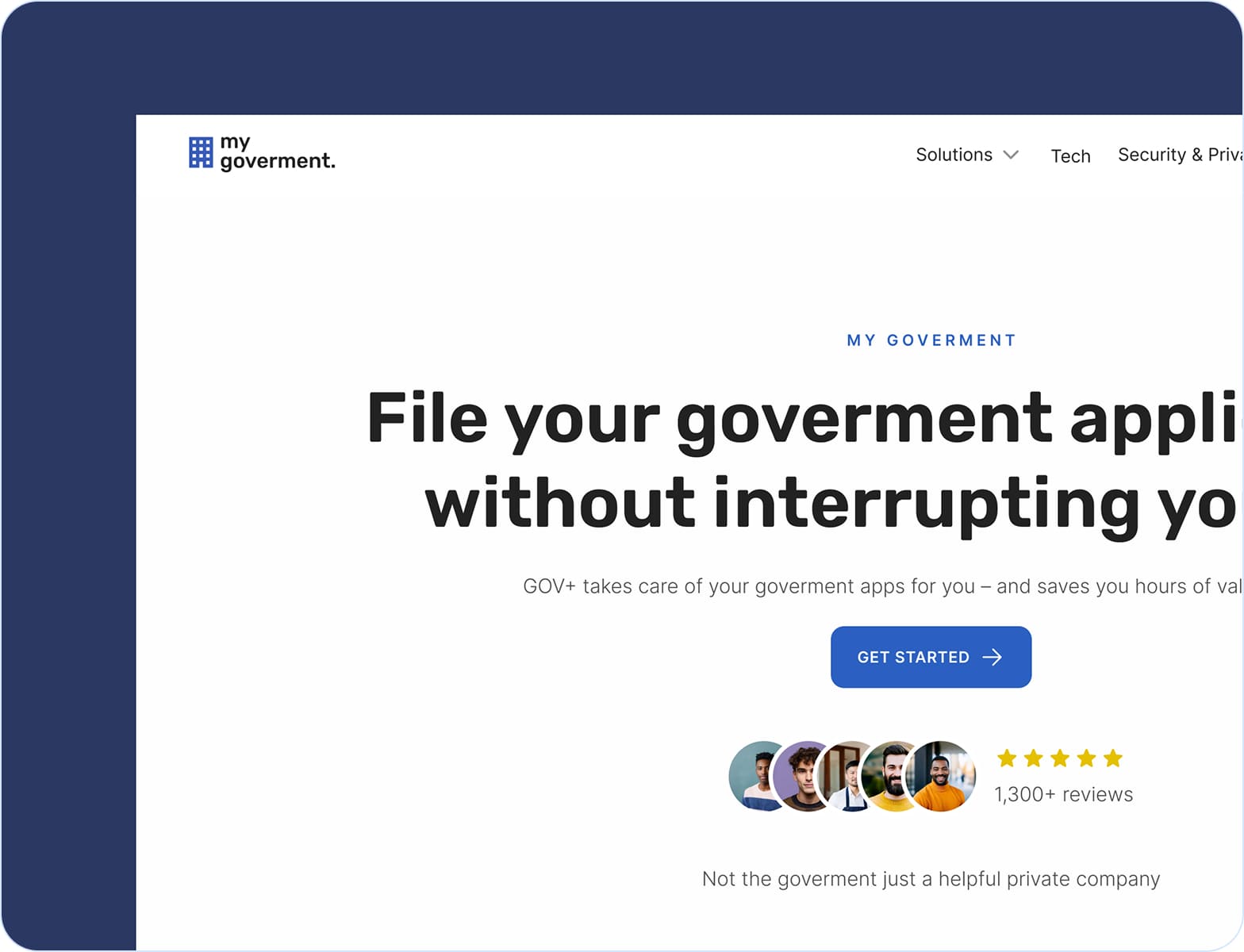
The idea for the online platform appeared to address frustrations with traditional bureaucratic processes, aiming to make application submissions easier, reduce paperwork, and provide real-time updates.
government agencies onboard
Tech Stack
ln order to solve business problems effectively, we are continuously improving our technologies and tools portfolio. Check out our tech stack that we use in our projects.


Behchmarks
92%of retailers use cloud services
80%of businesses use several private or public clouds
40%is an average Total Cost of Ownership (TCO) reduction rate by migrating to the public cloud
20%of businesses claim to be unaware of the costs associated with of local software infrastructure maintenance
Advantages

Experts ready to start with your project
We are not "blind coders" or "feature makers." We focus on creating the right product for the right people.

Agile teams are primed for deployment within 2-3 weeks.

Well-defined service standards for all clients.

of developers are senior-level.
Talent pool

Alex
Backend Lead
Builds scalable backend services in Python and Node.js. Designs domain-driven APIs with FastAPI, Postgres, and Kafka eventing.
Builds scalable backend services in Python and Node.js. Designs domain-driven APIs with FastAPI, Postgres, and Kafka eventing.

Alex
Solution Architect
End-to-end solution design, cloud security, and scaling expert. Experienced in distributed systems and microservices architecture.
End-to-end solution design, cloud security, and scaling expert. Experienced in distributed systems and microservices architecture.

Vasily
Backend
Software Engineer with experience React and PHP as well as in Solidity development.
Software Engineer with experience React and PHP as well as in Solidity development.

Sofia
Integrations Engineer
Develops integrations with EHR, CRM, and productivity tools. Works with FHIR/HL7, Salesforce, HubSpot, and calendar APIs.
Develops integrations with EHR, CRM, and productivity tools. Works with FHIR/HL7, Salesforce, HubSpot, and calendar APIs.

Alexander
Backend
Senior Backend Developer with an experience in Drupal and Shopify. Successfully delivered 10+ projects.
Senior Backend Developer with an experience in Drupal and Shopify. Successfully delivered 10+ projects.

Erik
Security Engineer
Implements secure authentication and access control. Specializes in SSO/SAML, RBAC, and secrets management.
Implements secure authentication and access control. Specializes in SSO/SAML, RBAC, and secrets management.

Artyom
Backend
Software Engineer with 4+ years of experience in PHP, Node.js and React development.
Software Engineer with 4+ years of experience in PHP, Node.js and React development.
Challenges
Our developers help to handle all the challenges associated with developing, scaling, and migrating business solutions to the cloud.

Development Process


You schedule a meeting with our product development team at a time that works for you.
You share your product idea and ask any questions you have after we sign an NDA.
We outline how we can assist you in developing and bringing your product idea to life.
Project Calculator
No meetings or calls needed. Just answer a few questions and our consultants will provide an advisory package tailored for your project. It's free and non-binding
Frequently Asked Questions
Find answers to your common concerns
In order to develop blockchain solutions in the cloud, you need to consider a software developer and a cloud solution provider. When building blockchain infrastructure, hybrid and multi-cloud solutions are crucial as they pave the way for interoperability and decentralization of the blockchain. Certain cloud providers deliver multi-local services, which is an advantage for decentralizing the internal structure of the blockchain. However, only providers with extensive experience in implementing solutions are likely to offer hybrid and multi-cloud network solutions. The cloud provider's position on regulation policy is also significant. Not all providers offer industry guidance on compliance with regulatory requirements and data sovereignty rules, such as GDPR in the EU.
Cloud services is an infrastructure that provides businesses with access to computing resources, storage, and applications that are hosted on remote servers. There are several types of cloud development services including Infrastructure as a Service (IaaS), Platform as a Service (PaaS), and Software as a Service (SaaS) models. Each model has its own advantages and disadvantages. IaaS is a model that provides access to virtual servers, storage, and network resources over the Internet. PaaS is a model that provides access to a development environment and tools to build, test, and deploy applications over the Internet. SaaS is a model that provides access to ready-to-use applications over the Internet.
A Cloud Specialist is an entry-level position that does not require hands-on problem solving experience or technical background. Solutions Architect is a specialist with deep knowledge of cloud technologies, who has strong technical skills and a portfolio of completed projects. Software Developer is a more universal position that requires special technical expertise and skills.
The cost of developing a cloud application can vary greatly. Publicly available estimates range from roughly $20,000 to over $400,000 per project. The cloud application project's final cost is determined by its complexity, the technology stack, the development team's structure and experience, the project's scale, and the implementation timeline.
Testimonials
“They really understand what we need. They’re very professional.”
Sergio Artimenia
Commercial Director, RNDpoint

“We appreciated the impactful contributions of Plavno.”
Thien Duy Tran
Product Manager, T-Rize Group

“We are very satisfied with their excellent work”
Michael Bychenok
CEO, MediaCube

“They have a clear understanding of what the end user needs.”
Helen Lonskaya
Head of Growth, Codabrasoft LLC

“The app was delivered on time without any serious issues.”
Mitya Smusin
Founder, 24hour.dev

Project Estimator
The estimated time to launch the product
Clear vision of functionality you need
15% discount on your first sprint

Contact Us
Plavno experts contact you within 24h
Discuss your project details
We can sign NDA for complete secrecy
Submit a comprehensive project proposal with estimates, timelines, team composition, etc
Plavno has a team of experts ready to start your project. Ask us!

Vitaly Kovalev
Sales Manager
What Happens Next?
