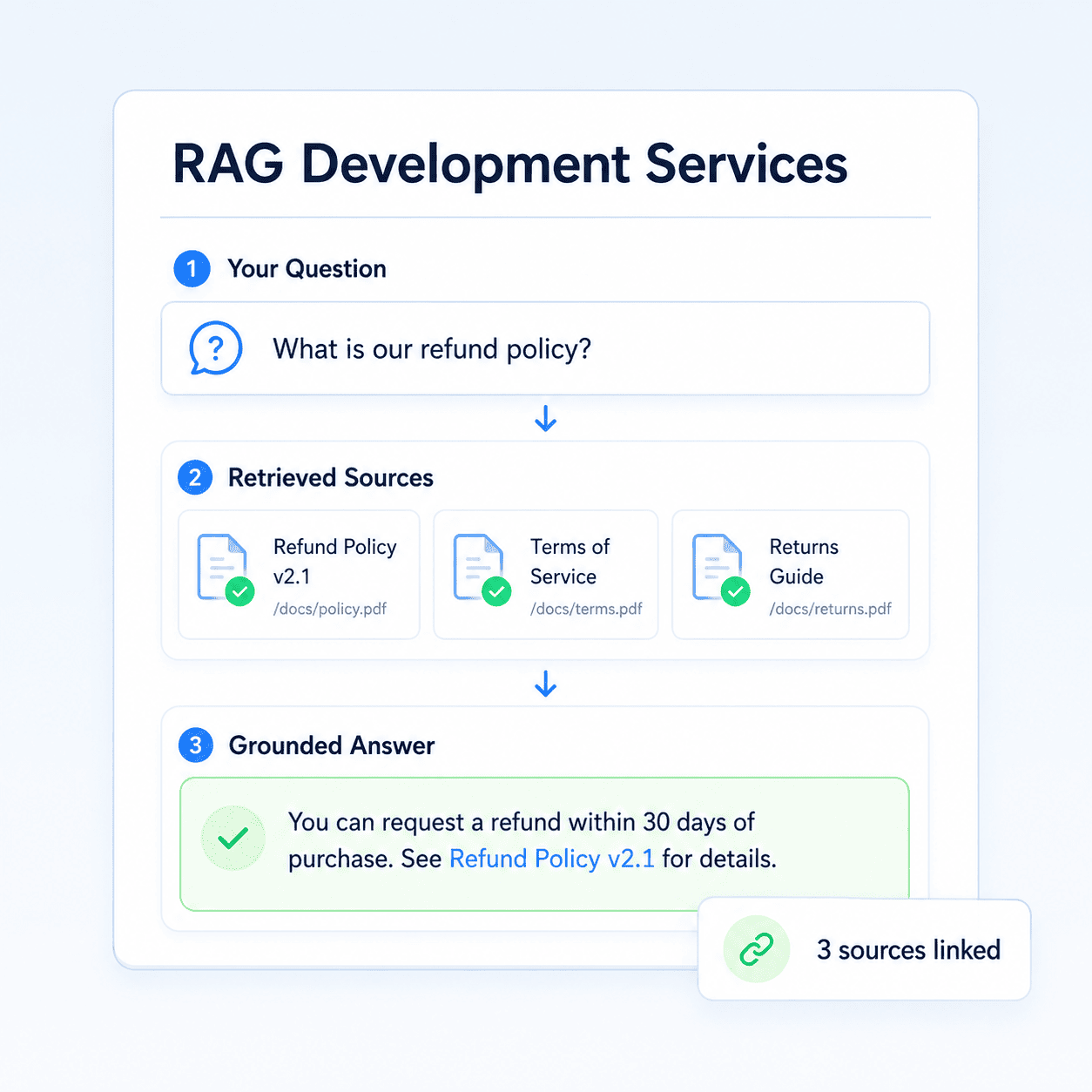
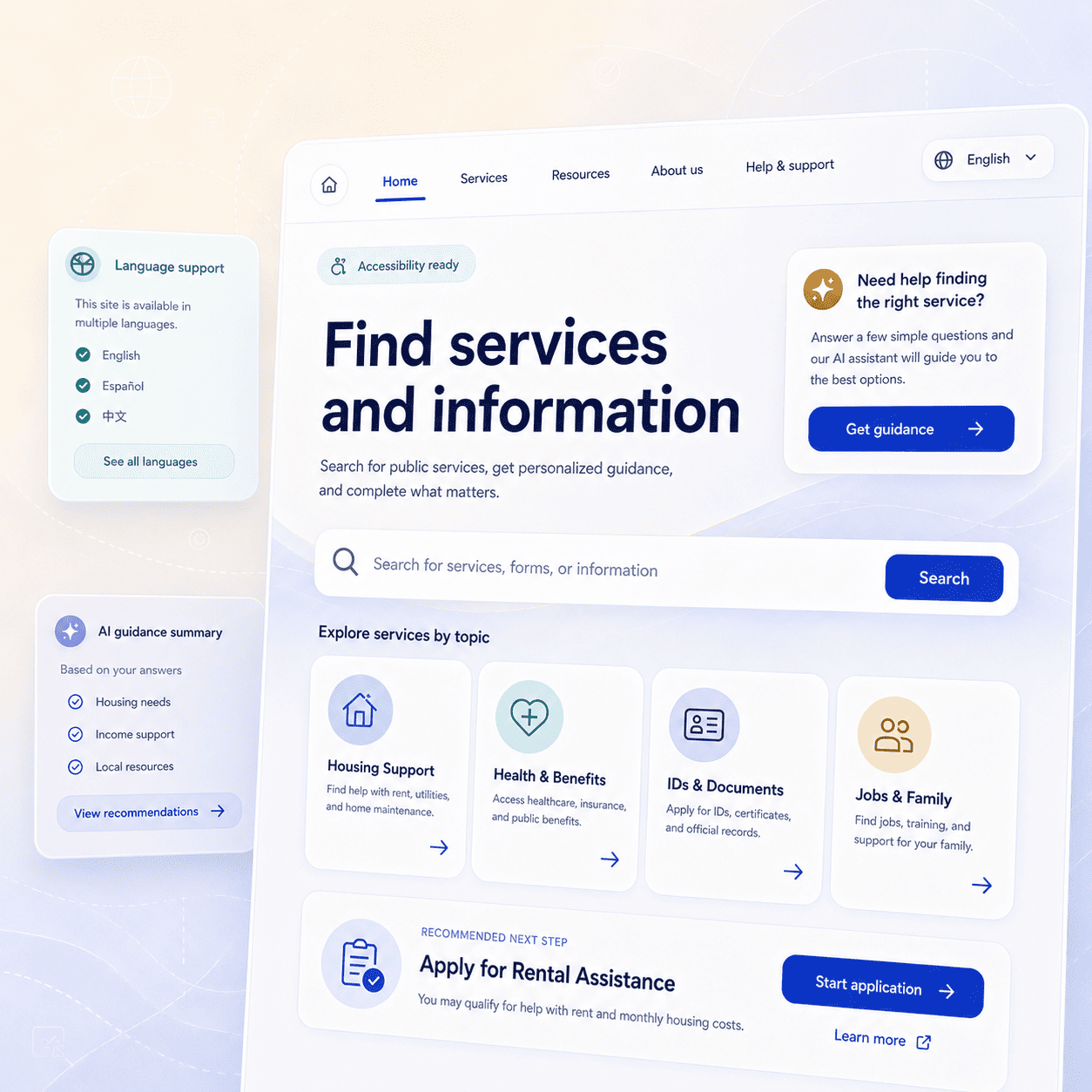
Plavno developed a modern eGovernment website platform for Virginia state agencies that centralizes citizen services, public information, department content, and an AI-powered guidance agent in one scalable system.
Overview
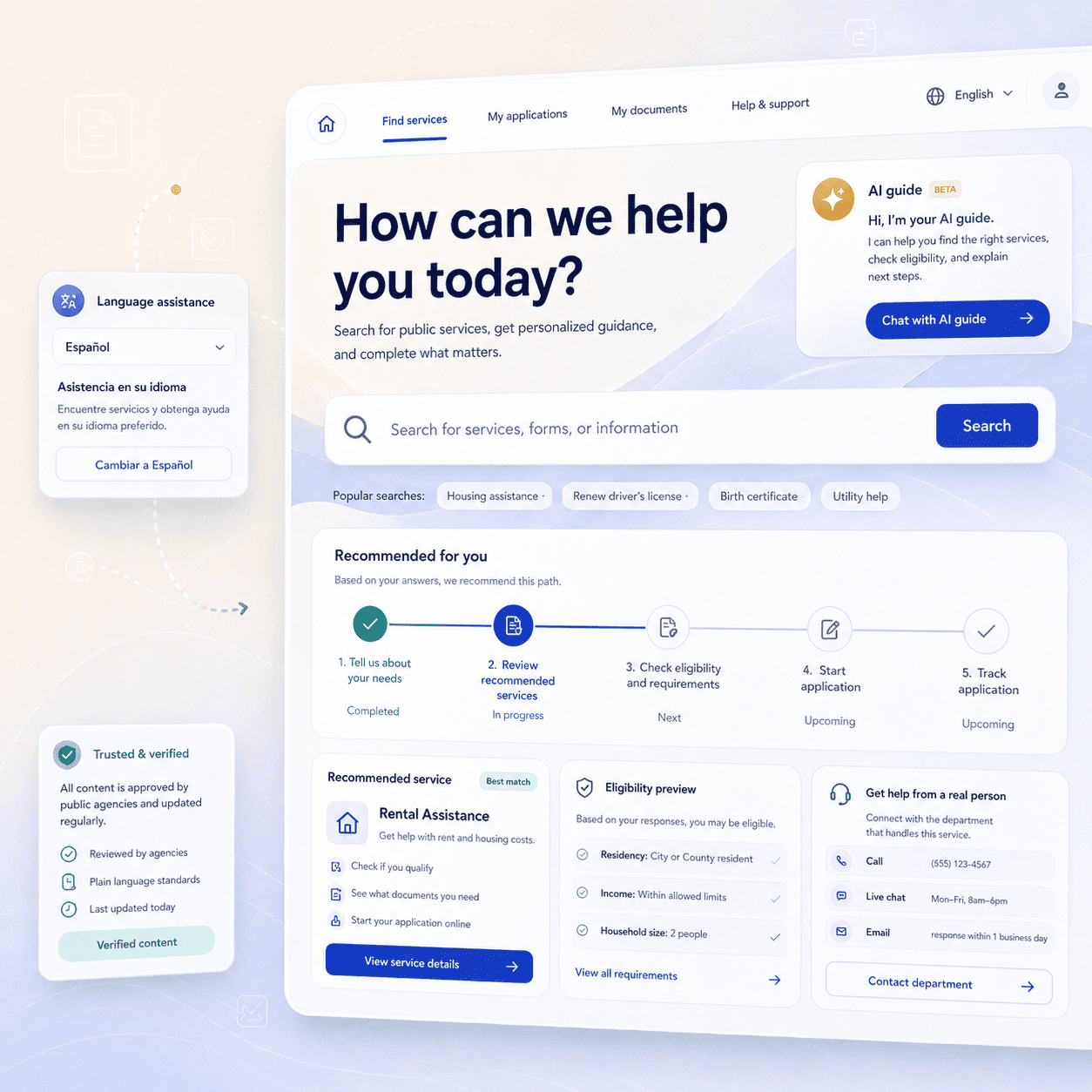
The platform combines structured service pages, public resources, multilingual workflows, and an AI agent that helps citizens navigate services and requirements more efficiently.
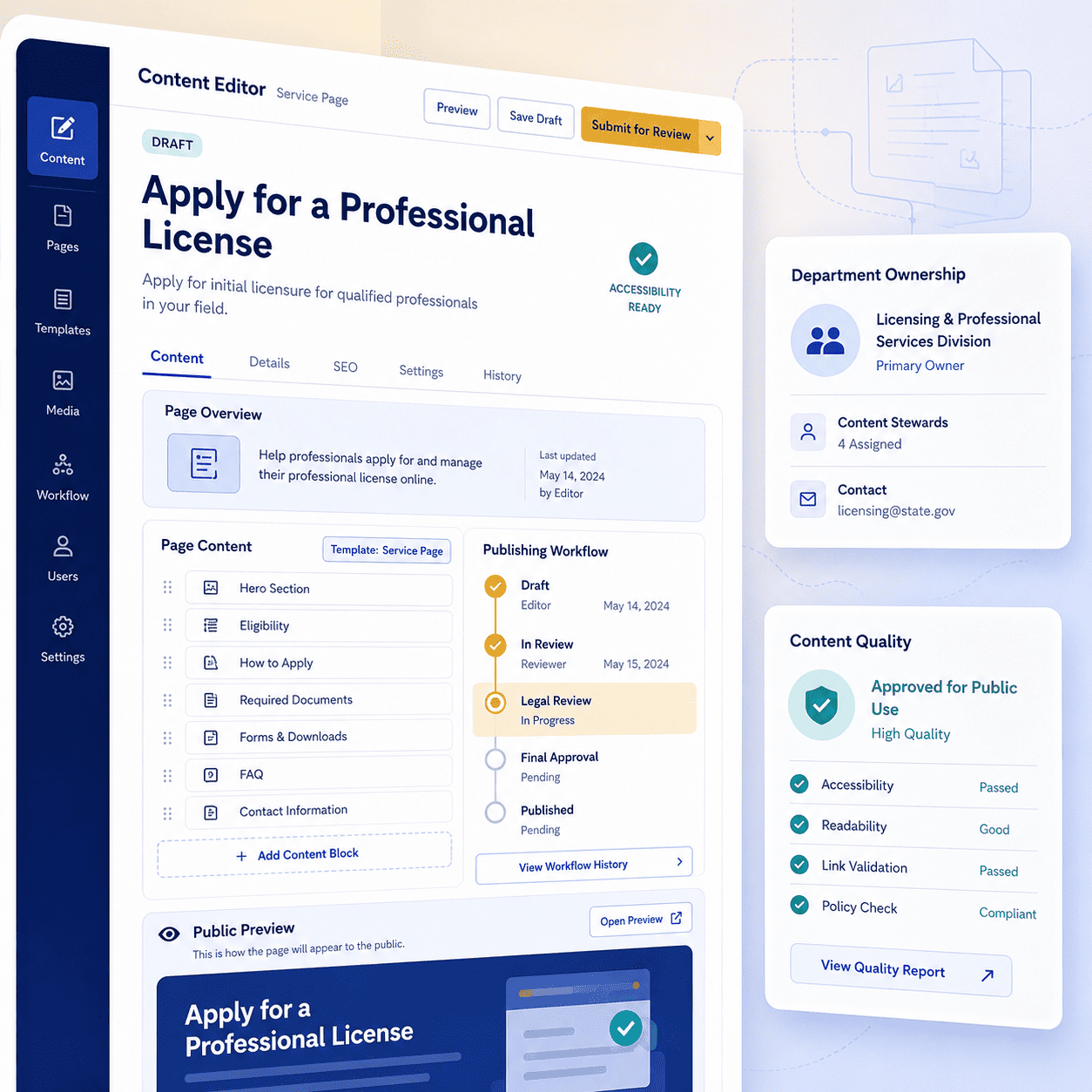
Plavno built this solution around structured content models for public services, agencies, forms, and FAQs — with editorial workflows, reusable templates, and an AI agent trained on approved public information. Instead of acting as a generic chatbot, the AI agent helps users find relevant service pages, understand requirements, and navigate department content. The platform supports long-term scalability for digital government modernization.
Faster access to the right public service information through AI-assisted navigation
Better consistency across service pages, departments, and public resources
Reduced editorial dependency on technical teams for routine content updates
Improved discoverability of forms, requirements, and service guidance
Stronger digital foundation for future state-level service modernization
State agency websites often evolve over time into fragmented, difficult-to-navigate information environments.
For a public sector ecosystem such as Virginia, common challenges include:
Service information spread across departments and agencies
Inconsistent page structures and terminology
Outdated public information workflows
Difficulty for citizens to identify the correct service or next step
Limited support for multilingual or accessibility-driven communication
High dependence on internal staff to answer repetitive service questions
As a result, citizens spend too much time searching for the right forms, requirements, eligibility details, or agency contacts, while internal teams spend too much time handling repetitive inquiries.

The platform needed to:
Centralize public information and service content across multiple state-level functions
Support structured service pages, FAQs, regulations, contacts, and resource hubs
Enable non-technical teams to update content independently
Improve citizen navigation without requiring a full portal rebuild from day one
Introduce an AI agent that could guide users to the right service path
Remain scalable for future digital services, forms, and integrations
There were also important constraints:
Different departments had different content ownership models
The information architecture had to reflect real public service logic
The AI agent had to remain useful, safe, and grounded in approved public content
The platform needed to support accessibility, clarity, and trust for a broad citizen audience

Solution
An AI-powered citizen services assistant grounded in approved public content, not a generic chatbot
Structured citizen service pages and agency information architecture
AI agent for service discovery and citizen guidance
Reusable templates for forms, requirements, FAQs, and department resources
Role-based publishing workflows for state agency teams
Accessibility-ready and multilingual content support
Search-ready public information taxonomy
Scalable CMS foundation for future digital government expansion
Browse or Ask: Citizens can either navigate the website traditionally or ask the AI agent for help finding the right service, requirement, or public resource.
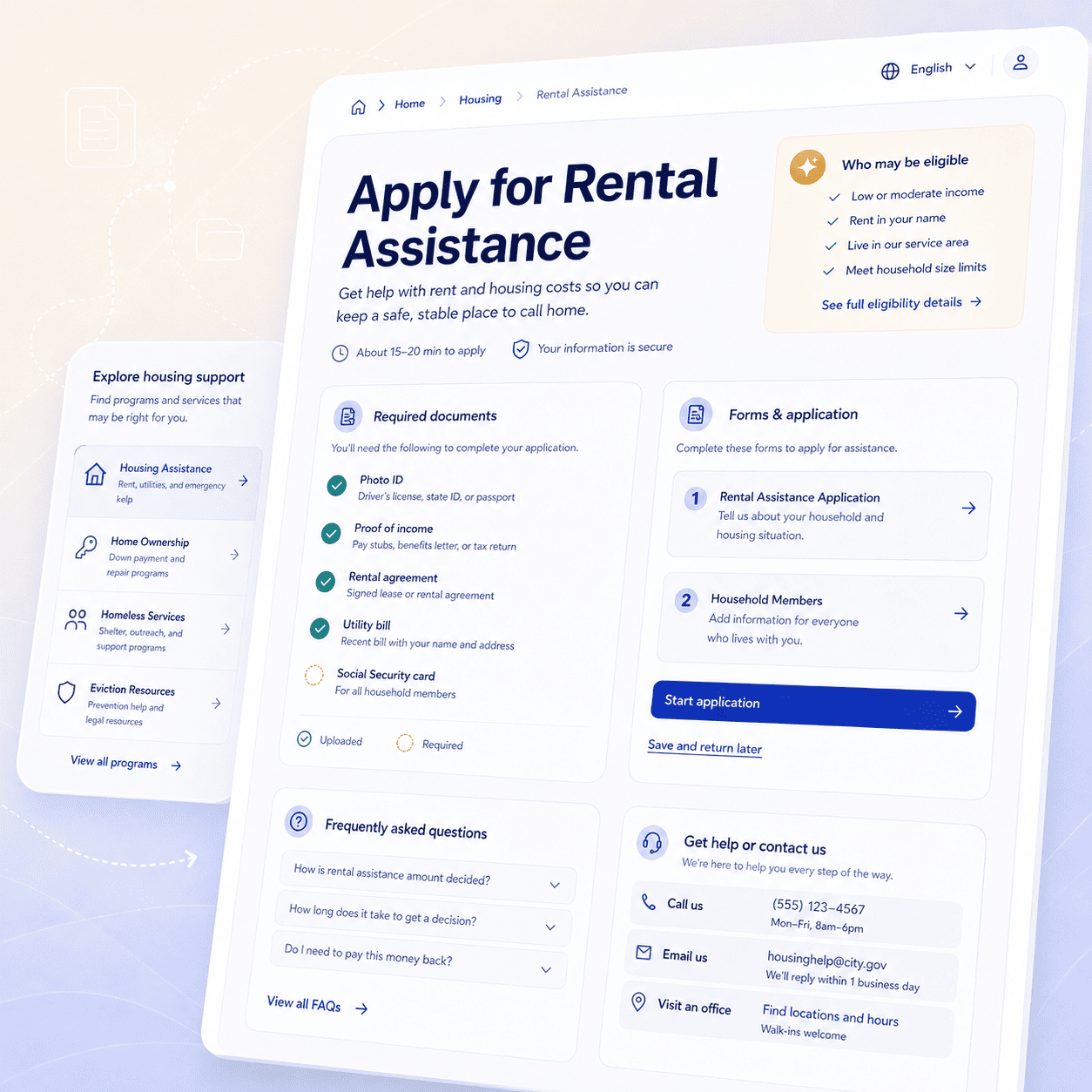
Understand Eligibility & Requirements: The AI agent guides users to approved service information, explaining required documents, steps, or contact points in a clearer way.
Access Agency Content: Users reach structured pages for departments, offices, FAQs, and service categories without relying on fragmented navigation.
Update Public Information: Agency editors manage service content, announcements, and informational resources through a structured CMS workflow.
Supports large public information ecosystems across state-level service areas
Suitable for multi-agency public sector environments
Designed for high volumes of informational content and citizen inquiries
Works for both direct navigation and AI-assisted discovery
Scalable for future service automation, forms, and public portal expansion
Architecture Overview
Service Content Layer: Structured entities for citizen services, departments, offices, forms, requirements, FAQs, and public resources.
Editorial Governance Layer: Department and agency publishing workflows with role-based ownership and update control.
AI Agent Layer: An AI-powered citizen services assistant grounded in approved public content, designed to guide users toward the right service information and next steps.
Search & Discovery Layer: Taxonomy-driven navigation and AI-assisted discovery improve access to service pages and public resources.
Frontend Delivery Layer: A citizen-facing website architecture optimized for clarity, speed, accessibility, and future scalability.
Infrastructure Layer: Secure cloud or controlled deployment aligned with public-sector operational requirements.

Value
Delivering structured public information, trustworthy AI guidance, and scalable citizen-facing service discovery
The platform organizes citizen services in a clear, reusable format aligned with public-sector service logic.
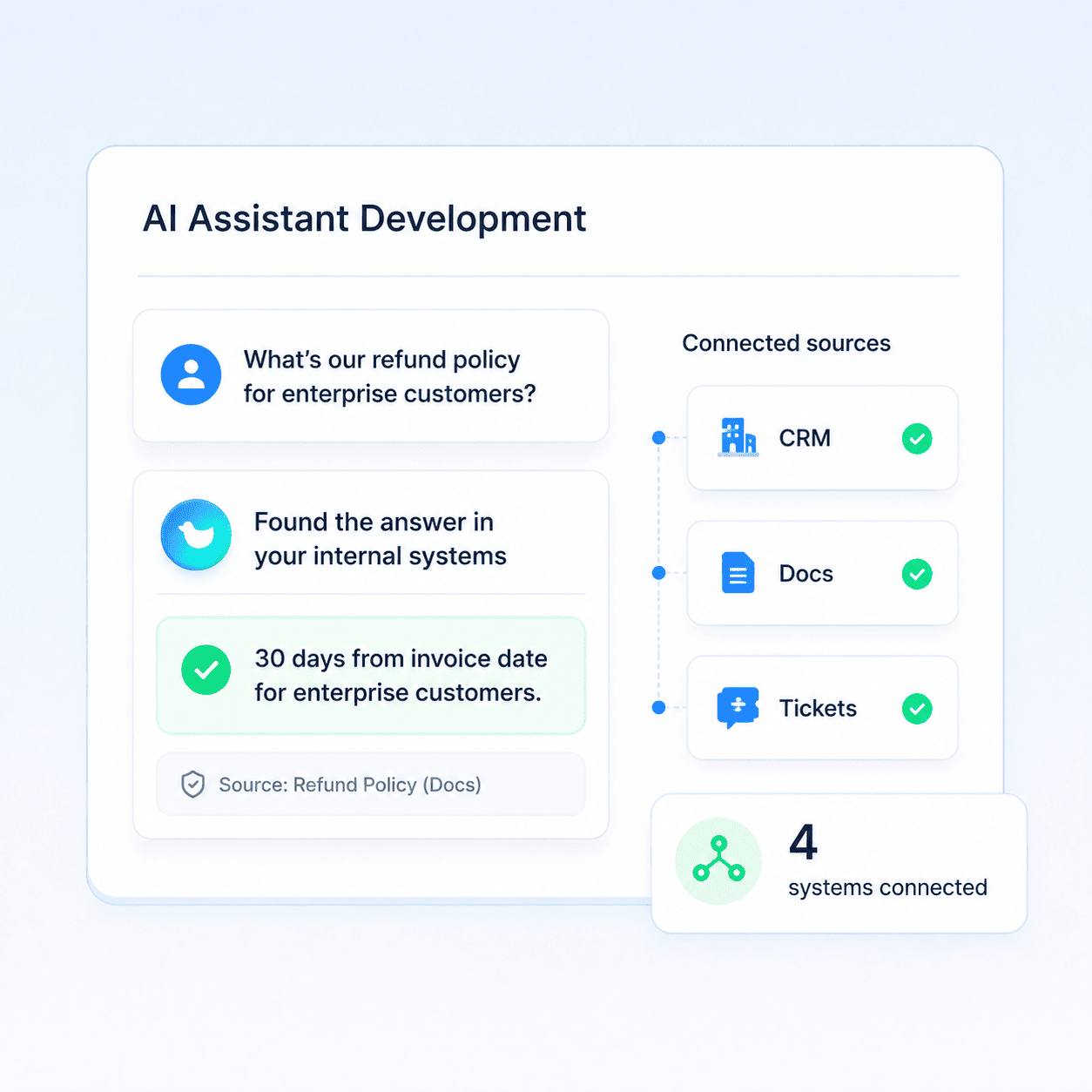
The AI agent answers citizen questions based on approved content, helping users navigate services with more confidence.
Agency teams can update content independently while maintaining clearer governance and content quality.
The system supports long-term growth in services, public resources, and citizen-facing digital experiences.
Benchmarks
Built to support state-level information delivery, multi-agency publishing, and AI-assisted citizen service access
The platform can support multiple agencies, service categories, and content owners within one structure.
The AI agent works as a guidance layer on top of structured public information rather than replacing official content.
Supports large numbers of service pages, FAQs, and public resources across state service areas.
Can be deployed in ways that align with public-sector hosting and governance requirements.
Data Protection
Enterprise-grade protection for public content workflows, AI-assisted service guidance, and government website operations
Agency and department teams access only the content areas relevant to their responsibility.
Service information is governed through structured review and publishing logic.
The AI agent is designed to rely on approved public information rather than producing unsupported answers.
Innovative Experience
AI-powered eGovernment website platforms for citizen service delivery and public information modernization
Delivery Crew
High-performing developers for growing companies

Eugene Katovich
Sales Manager
Plavno builds public sector platforms that combine structured service content, modern CMS workflows, and AI-powered citizen guidance for scalable digital government experiences.
Talk to an ExpertCompetitive Ability
Demonstrating how Plavno transforms fragmented state agency information into an AI-powered citizen services platform
Structure Citizen Service Information
Model services, forms, requirements, agencies, and public resources inside a scalable CMS architecture.
Enable Department Publishing Workflows
Allow agency teams to maintain approved content through role-based editorial access.
Support AI-Guided Discovery
Use an AI agent to help citizens navigate services, understand requirements, and find relevant next steps.
Deliver Scalable Public Access
Provide a strong digital foundation for website growth, future integrations, and broader citizen service modernization.
Role-based editorial workflows for agency teams
Reusable service templates and FAQ structures
Faster content updates without developer dependency
Better operational control over public information publishing
State-level content architecture
Multi-department publishing support
High-volume informational access
Scalable foundation for future citizen service expansion
AI agent grounded in approved public service content
Structured service-page architecture for accurate guidance
Better consistency across departments and public resources
Reduced information fragmentation for citizens
Measurable outcomes delivered by an AI-powered citizen services platform for Virginia-style public sector needs
Citizens can reach relevant information more efficiently through both structured navigation and AI guidance.
Service pages, FAQs, and agency information are maintained more consistently across departments.
Public sector teams can publish and update content more independently.
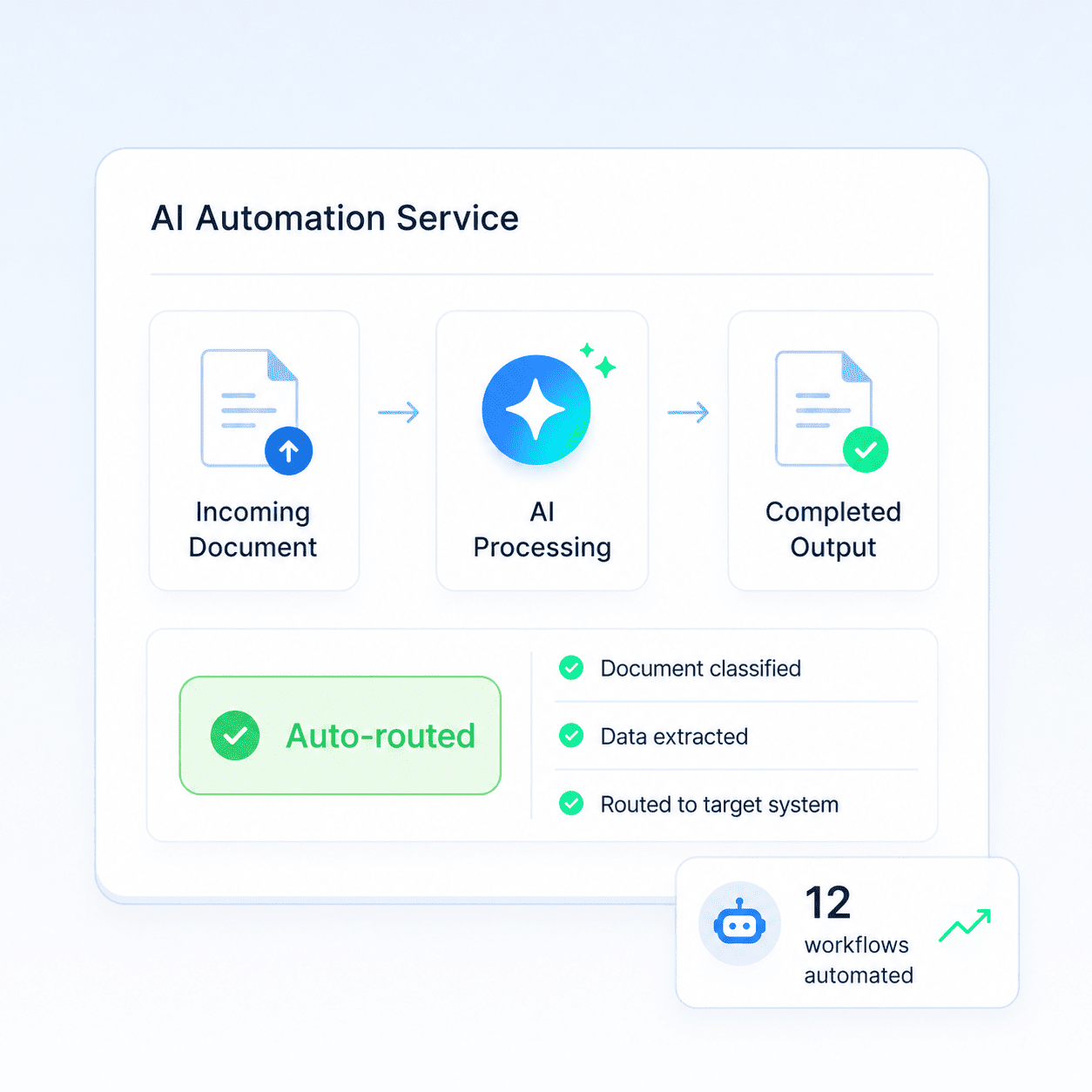
The platform creates a scalable base for future forms, service workflows, and public sector AI use cases.
The AI agent answers routine service questions directly, freeing agency teams to focus on complex citizen needs and higher-value work.
Tools We Used
Project Estimator
The estimated time to launch the product
Clear vision of functionality you need
15% discount on your first sprint

Frequently Asked Questions
Find answers to your common concerns
No. It works as a guidance layer that helps citizens find and understand official content faster.
Yes. The platform is designed for distributed editorial ownership with role-based access.
Yes. The architecture supports multi-agency and multi-service public sector environments.
Yes. It provides a strong base for forms, service workflows, and broader citizen portal functionality.
About Plavno

Senior engineers + proven AI components to accelerate time-to-value.

From MVPs to enterprise platforms at global scale.

From extension UX to GPU pipelines and global scale.
Testimonials
Contact Us
We can sign NDA for complete secrecy
Discuss your project details
Plavno experts contact you within 24h
Submit a comprehensive project proposal with estimates, timelines, team composition, etc
Plavno has a team of experts that ready to start your project. Ask me!

Vitaly Kovalev
Sales Manager
Fill in the form to access the case study.