bg image
bg image

Serving Lynchburg & Virginia

Lynchburg retailers reclaim hours lost to stock counts and manual orders in 2026

Store managers across Central Virginia still burn evenings fixing inventory mismatches and delayed replenishment. Labor is tight. Margins leave little room for stockouts or overbuys. This service is for multi-location operators, independent chains, and distribution partners who need fewer manual handoffs between POS, warehouse, and floor staff. We map the highest-cost retail workflows first and replace them with measured automation you can audit. Results show up in fewer emergency orders and cleaner week-end closes. Get AI Retail Automation cost estimate in 24 hours. Tell us your budget, timeline, current stack, and dataset scope so we can scope a realistic first release.

Discuss Project

Overview

Why Lynchburg retail still runs on fragile manual loops

Retail operators from downtown Lynchburg to Forest and Madison Heights face the same pattern in 2026. Sales move on the floor while inventory truth lives in spreadsheets, delayed POS feeds, and staff memory. That gap drives emergency transfers, lost sales on peak weekends, and overtime during seasonal ramps around Liberty University and tourist traffic. Trusted AI Retail Automation Partner for Lynchburg Businesses means we start with the cost centers you already feel, not a vanity pilot.

Independent grocers, specialty shops, and regional chains serving Bedford and Amherst need systems that survive real store hours. Peak evenings and weekend rushes expose brittle processes faster than any demo. We work with US-based clients, including companies operating in Virginia. Our teams ship AI retail automation that ties shelf reality to ordering rules without forcing a full platform rip-and-replace on day one.

Outcomes matter more than model names. Clients care about fewer stockouts on A items, cleaner cycle counts, and less time spent reconciling receipts against invoices. We have delivered 10+ AI automation projects in the US market that stress extraction accuracy and operational handoff, including a real-time EHR summarization agent built on medical summarization, an extraction pipeline, and EHR-focused NLP. That same discipline applies when we parse invoices, pack slips, and catalog feeds for retail.

Technically we keep the first release narrow. Connect the systems you already run. Score which SKUs and stores create the most pain. Automate the decision step that currently waits on a human. Our AI development practice treats retail data as noisy by default and designs guards around drift, latency, and cost from the first sprint.

If your Lynchburg team still closes the day by exporting CSVs and guessing tomorrow’s picks, the cost compounds each quarter. Regional competitors who tighten replenishment freer cash and staff attention. The rest of this page walks through what we build, how proof transfers from live deployments, and what you need ready before kickoff.

Talk to an Expert
Connect existing systems

Connect existing systems

POS, receiving, and catalog feeds stay in place—no rip-and-replace on day one

Score SKU and store pain

Score SKU & store pain

Rank A-item stockouts, drift, and overtime around campus and tourist peaks

Automate guarded decisions

Automate guarded decisions

Replace CSV exports and staff memory with policy-capped ordering rules

Retail outcomes that stick

Outcomes that stick

Fewer stockouts, cleaner cycle counts, less invoice reconciliation time

Retail automation architecture

Event-driven store agents that respect POS truth

Lynchburg operators get a working automation layer that sits beside existing POS, e-commerce, and warehouse tools rather than replacing them overnight. Core architecture starts with a thin event bus that captures sales, receiving, and adjustment events as they land. Those events feed feature stores used by demand and allocation models. Human review queues stay in the loop where risk or policy requires a signature before an order leaves the building.

We favor modular services over a single monolith so a failure in one store path does not freeze the chain. Inventory state services own the canonical on-hand picture. Recommendation services propose transfers, POs, and planogram nudges. Policy services encode min/max rules, vendor constraints, and margin floors that Lynchburg merchandisers already enforce by hand. Each service exposes clear APIs so your internal IT or a partner can extend rules without waiting on us for every change.

Technology choices follow production evidence, not fashion. Message queues buffer store spikes during football weekends and holiday sales. Relational stores hold transactional truth your accountants trust. Vector or document indexes support catalog search and invoice parsing when text is messy. For document-heavy steps we reuse patterns proven in our real-time EHR summarization agent: medical summarization discipline, a structured extraction pipeline, and domain-focused NLP adapted to pack slips and invoices instead of clinical notes.

Security/compliance sits in the build, not a later checklist. Role-based access mirrors store versus HQ privileges. Secrets stay in managed vaults. PII on loyalty records is tokenized before it reaches model training paths. Audit logs record who approved an automated order and which policy version applied. Virginia retailers that handle payment data retain PCI boundaries; our agents never hold raw card data.

DevOps covers staged rollout store by store. Feature flags let Madison Heights pilot while downtown stays manual. Canary releases catch latency before peak hours. Cost monitors alert when token or inference spend drifts above the budget you set at kickoff. Runbooks document rollback so a bad model version never locks a busy Saturday. Everything we ship includes ownership maps so your team knows who restarts a worker at 2 a.m. and how.

plavno logo

Build your first
Smart AI project today!

Just tell the Plavno AI Agent about your project - it will ask questions, gather requirements, and propose a tailored solution

What ships first

Five retail automation deliverables Lynchburg teams actually use

Inventory truth service

Inventory truth service

Lynchburg stores lose sales when on-hand counts drift from the shelf. We build a continuous inventory service that reconciles POS sales, receiving scans, and cycle counts into one state feed. Staff see exceptions instead of full dumps. PostgreSQL holds transactional integrity because finance needs auditable numbers. Streaming consumers update store views within minutes so managers stop waiting on overnight batches. The outcome is fewer ghost stockouts and cleaner transfers between nearby locations.

Demand and replenishment agents

Demand and replenishment agents

Manual order sheets still drive many Virginia independents. Agents score velocity, seasonality around campus calendars, and vendor lead times before proposing POs. You approve with one action or let policy auto-send low-risk lines. We use lightweight forecasting libraries chosen for explainable features rather than black-box opacity. Merchants in Forest and Bedford keep control of margin floors. The result is smaller emergency buys and steadier shelf presence on A movers.

Document extraction for AP and receiving

Document extraction for AP and receiving

Invoice and ASN mismatches waste back-office hours every week. Our extraction pipeline pulls line items, quantities, and costs from PDFs and emails into structured records. We apply the same extraction discipline used in our EHR-focused NLP work so noisy vendor formats do not break the flow. Human review catches low-confidence rows only. Accounting closes faster and receiving disputes drop because the system surfaces deltas early.

Store operations copilots

Store operations copilots

Floor leads juggle callouts, planogram changes, and promo setups without spare time. Copilots surface today’s priorities from sales and task systems so huddles stay short. We integrate chat interfaces only where staff already work, often mobile web, to avoid another unused app. Rules throttle suggestions during peak traffic so the tool never distracts cashiers. Managers regain focus time without hiring another coordinator.

Cross-location transfer orchestrator

Cross-location transfer orchestrator

Multi-site operators near Amherst and Appomattox move stock by phone and spreadsheet. Orchestration scores surplus and deficit across stores, then builds transfer lists with transit times. Routing constraints respect vehicle capacity and open hours. Graph logic keeps suggestions simple enough to explain in a stand-up. Capital tied in slow locations frees for stores that sell through. You get measurable turns improvement without a full WMS project.

Capability maturity path

From manual counts to guarded autonomy in 2026

We advance Lynchburg retail teams through clear maturity stages so risk and spend stay proportional to proof.

Clipboard
Team
01

Step 1: Manual baseline capture (1–2 weeks)

We document how inventory, ordering, and receiving actually run across your Lynchburg and satellite stores. Time studies and system exports show where hours and dollars leak. You receive a process map, SKU risk list, and data quality score. No model trains yet. The goal is a shared baseline everyone trusts before change begins. Timeline stays short so leadership sees the cost of status quo fast.

02

Step 2: Assisted recommendations (2–4 weeks)

Models propose replenishment and transfer actions while humans approve every send. Dashboards show confidence and the features behind each suggestion. Merchandisers in Forest or downtown can override and teach the policy layer. Deliverables include a review console and weekly accuracy reports against the manual baseline. This stage builds trust without ceding control. Typical wall time is two to four weeks after clean data lands.

Search in doc
Rocket
03

Step 3: Guarded auto-execute (3–5 weeks)

Low-risk SKUs and stores move to auto-send under hard policy caps. High-value or volatile items stay assisted. Circuit breakers freeze automation if error rates climb or vendor feeds lag. You receive runbooks, alert thresholds, and a rollback path. Business context stays front: protect weekend sales while cutting clerk hours on routine POs. Technical work hardens monitoring and cost caps before wider rollout.

04

Step 4: Multi-store autonomy (4–6 weeks)

Patterns proven in one Lynchburg location expand to Madison Heights, Bedford, and further nodes. Shared feature stores keep models consistent while local calendars still apply. Governance reviews meet monthly on drift, spend, and override rates. Clients receive playbooks their ops leads own without our daily presence. Timeline flexes with store count and integration complexity. Autonomy never means unmonitored.

AI Retail Automation Solutions for Lynchburg Industries

Where Central Virginia operators cut retail process waste

Use cases map to the stores, distributors, and campus-adjacent businesses that actually move goods around Lynchburg.

Campus Specialty

Campus Specialty

Event Demand

Campus-adjacent specialty retail

Shops near Liberty University swing hard with enrollment and event calendars. Manual buys overshoot after homecoming and stock out during move-in. We automate demand signals tied to local calendars and prior season velocity. Merchants approve first waves then open auto-execute on staples. ROI often shows as a double-digit cut in emergency freights within one semester cycle when baseline waste is high. Technically, calendar features plus POS streams feed a simple replenishment agent with hard budget caps.

Independent Grocery

Independent Grocery

Fresh Stock

Independent grocery and specialty food

Fresh categories punish slow counts. Lynchburg grocers lose margin to spoil and empty cooler doors. Continuous inventory plus short-horizon forecasts prioritize receive and markdown actions before loss. Staff focus on floor service instead of clipboard walks. Operators report fewer overnight emergency orders once assisted mode stabilizes. Pipelines combine scan events, vendor ASNs, and extraction on paper invoices so nothing waits on a back-office rekey.

Apparel Chains

Apparel Chains

Transfer Scoring

Regional apparel and hardgoods chains

Multi-door operators across Forest and Bedford trap capital in slow sizes and colors. Transfer orchestrators move surplus toward doors with proven sell-through before markdowns. Store teams stop negotiating transfers by text thread. Capital release compounds when applied across seasonal buys. Scoring uses size curves, local weather windows, and recent velocity with human veto on new fashion risk.

Wholesale Distribution

Wholesale Distribution

Load Priority

Wholesale and light distribution to stores

Distributors feeding Lynchburg retail routes still build loads from tribal knowledge. Automation ranks stop priority from retailer on-hand signals and open orders. Drivers leave with fuller productive loads and fewer second trips. Fill rates rise while overtime on the dock falls. Integration listens to retailer inventory APIs where available and falls back to scheduled EDI plus document extraction for holdouts.

Building Supply

Building Supply

Job Stocking

Home and building supply independents

Project-driven demand spikes when construction around Amherst and Appomattox heats up. Stockouts on fasteners and finishing goods delay jobs and push buyers to big boxes. Agents watch contractor accounts and job starts signals to pre-position fast movers. Counter staff keep relationships while the system owns the mundane restock. Results show as fewer lost tickets on high-turn SKUs after assisted mode proves accuracy.

Health Retail

Health Retail

Expiry Watch

Pharmacy-adjacent and health retail front ends

Front-end retail next to clinics needs tight expiry and compliance awareness. Automation flags short-dated goods and odd velocity without touching regulated backend systems. We isolate models from clinical data while still applying extraction rigor learned on EHR summarization work. Shrink and write-offs drop when staff act on ranked lists daily. Security boundaries keep PHI out of retail model paths entirely.

Case Study

We help customers cut
down on development

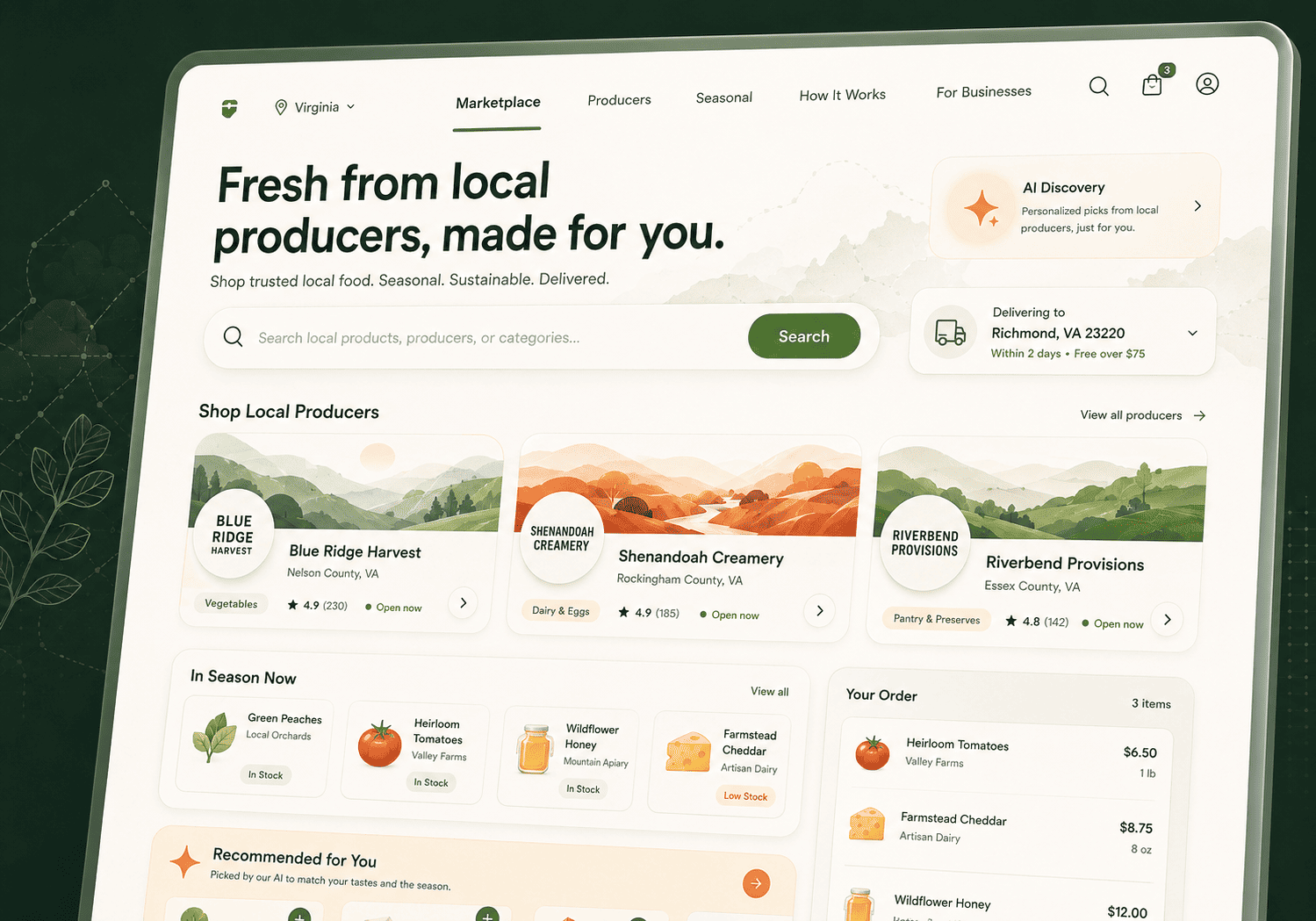
Digital Marketplace for Virginia Farmers, Local Producers & Direct-to-Consumer Food Sales

Plavno developed a custom multi-vendor marketplace for Virginia-based farmers, food producers, and regional sellers to unify product listings, vendor operations, customer ordering, and local fulfillment workflows.

Read More
3x

increase in product discovery relevance

Digital Marketplace for Virginia Farmers, Local Producers & Direct-to-Consumer Food Sales

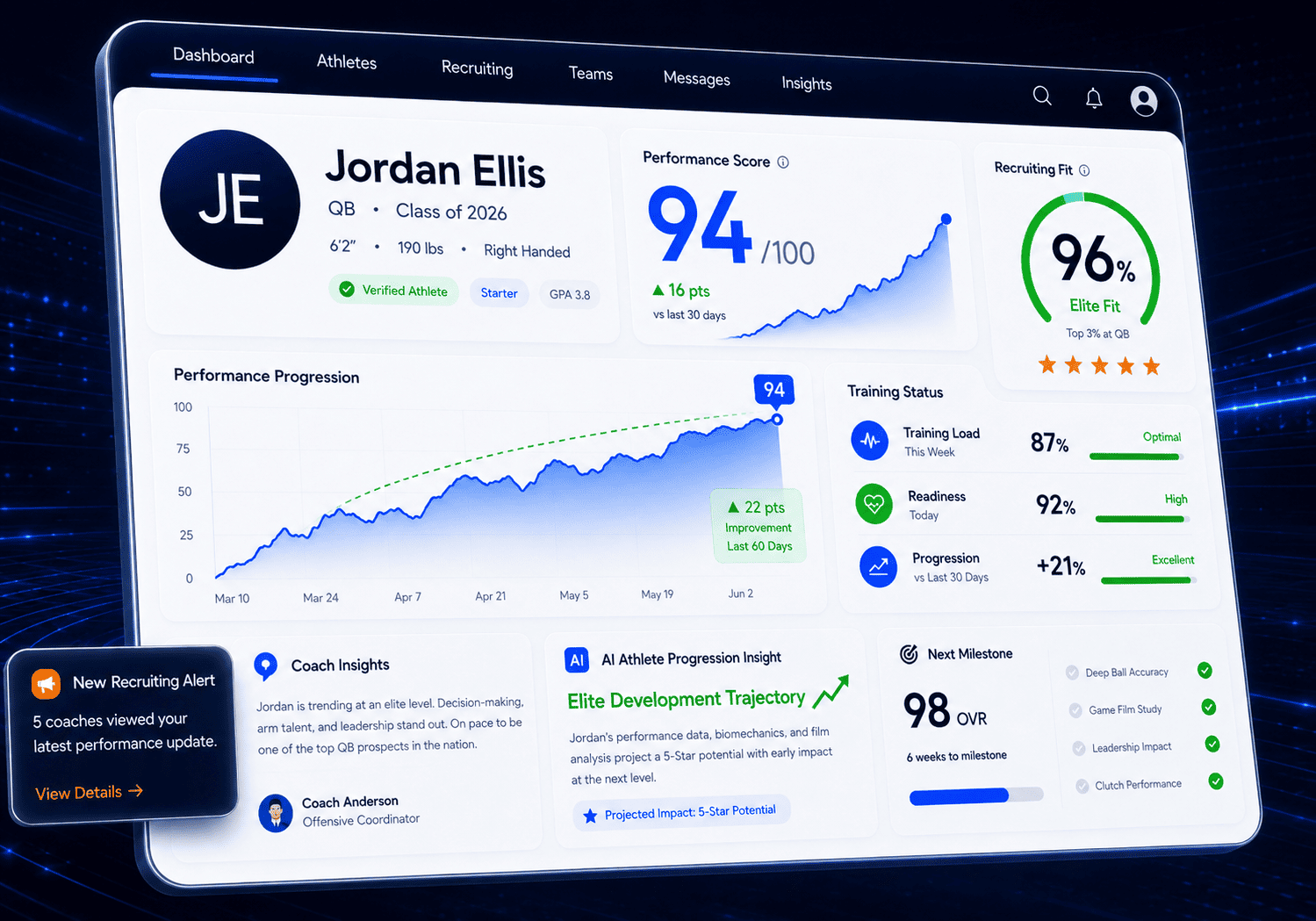
AI-Powered Sports Performance & Recruiting Platform for Virginia Clubs, Academies & Youth Programs

Plavno developed a custom sports technology platform for Virginia-based clubs and academies to combine athlete performance tracking, coach communication, recruiting workflows, and mobile engagement in one ecosystem.

Read More
3x

faster recruiting pipeline

AI-Powered Sports Performance & Recruiting Platform for Virginia Clubs, Academies & Youth Programs

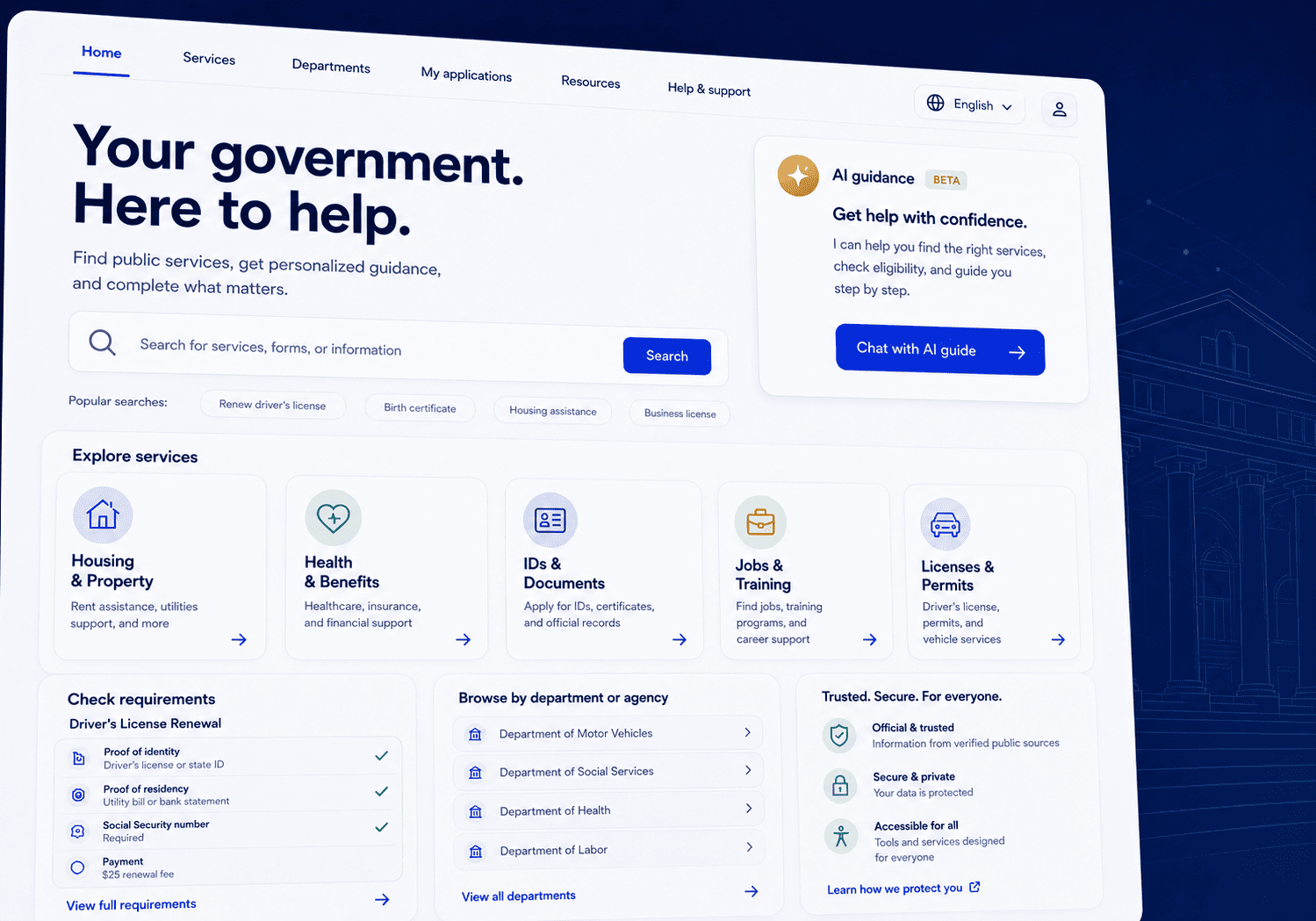
AI-Powered Citizen Services Website Platform for Virginia State Agencies

Plavno developed a modern eGovernment website platform for Virginia state agencies that centralizes citizen services, public information, department content, and an AI-powered guidance agent in one scalable system.

Read More
70%

reduction in routine citizen inquiries to agency staff

AI-Powered Citizen Services Website Platform for Virginia State Agencies

Delivery sequence

How a Lynchburg retail automation engagement actually runs

This sequence covers discovery through launch operations so stakeholders know what happens each week.

Clipboard
Team
01

Step 1: Discovery and data access (1–2 weeks)

We confirm goals, budget bands, and systems of record with your Lynchburg leadership. Engineers map POS, ERP, and file drops and request read access plus sample extracts. Security reviews cover how credentials and PII will be handled. You receive a written scope, risk register, and success metrics tied to stockouts, hours, or carry cost. No production writes occur in this phase. Timeline holds at one to two weeks when stakeholders stay available.

02

Step 2: Integration and feature foundation (2–4 weeks)

Connectors land for sales, inventory, and vendor documents. Feature tables compute velocity, lead time, and exception rates. Data quality gates block bad rows from reaching models. Clients see a live dashboard of feed health before any recommendation goes live. Technical debt in brittle CSV jobs gets replaced with monitored jobs. Expect two to four weeks depending on how clean the source APIs are.

Search in doc
Rocket
03

Step 3: Pilot in one store cluster (2–3 weeks)

A single Lynchburg cluster runs assisted recommendations with daily stand-ups. We tune thresholds against real overrides and stock outcomes. Training covers store managers and HQ buyers with short playbooks. Deliverables include accuracy reports versus the prior manual baseline and a go/no-go memo. Business owners decide expansion with evidence, not demos. Wall time stays two to three weeks of active pilot.

04

Step 4: Harden, expand, and hand off (2–4 weeks)

Monitoring, cost alerts, and rollback drills complete before multi-store expand. Documentation and runbooks transfer to your ops owner. We schedule a post-launch review cadence and optional retainers for model refresh. Success is measured on the metrics set in discovery, not vanity usage charts. Expand only after the first cluster holds for agreed windows. Two to four weeks covers harden and controlled expand for most Virginia mid-market chains.

Testimonials

We are trusted by our customers

“They really understand what we need. They’re very professional.”

The 3D configurator has received positive feedback from customers. Moreover, it has generated 30% more business and increased leads significantly, giving the client confidence for the future. Overall, Plavno has led the project seamlessly. Customers can expect a responsible, well-organized partner.

Sergio Artimenia

Commercial Director, RNDpoint

Sergio Artimenia

“We appreciated the impactful contributions of Plavno.”

Plavno's efforts in addressing challenges and implementing effective solutions have played a crucial role in the success of T-Rize. The outcomes achieved have exceeded expectations, revolutionizing the investment sector and ensuring universal access to financial opportunities

Thien Duy Tran

Product Manager, T-Rize Group

Thien Duy Tran

“We are very satisfied with their excellent work”

Through the partnership with Plavno, we built a system used by more than 40 million connected channels. Throughout the engagement, the team was communicative and quick in responding to our concerns. Overall, we were highly satisfied with the results of collaboration.

Michael Bychenok

CEO, MediaCube

Michael Bychenok

“They have a clear understanding of what the end user needs.”

Plavno's codes and designs are user-friendly, and they complete all deliverables within the deadline. They are easy to work with and easily adapt to existing workflows, and the client values their professionalism and expertise. Overall, the team has delivered everything that was promised.

Helen Lonskaya

Head of Growth, Codabrasoft LLC

Helen Lonskaya

“The app was delivered on time without any serious issues.”

The MVP app developed by Plavno is excellent and has all the functionality required. Plavno has delivered on time and ensured a successful execution via regular updates and fast problem-solving. The client is so satisfied with Plavno's work that they'll work with them on developing the full app.

Mitya Smusin

Founder, 24hour.dev

Mitya Smusin

Before you kick off

Readiness checks for Virginia retail automation projects

  • Own your inventory and sales extracts — Confirm you can export at least ninety days of line-level sales, on-hand, and receiving data without vendor delay. Lynchburg teams often discover POS exports miss adjustments or store IDs. Fix gaps before models train or accuracy will look random. Document field definitions so engineers are not guessing units. Include promotional flags if you run heavy weekend pricing. Clean history is the cheapest speedup you can buy.

  • Name a single business owner and IT contact — Automation fails when no one can approve policy or open a firewall rule. Assign one merchant lead and one systems contact with backup coverage. Decision SLAs of forty-eight hours keep sprints from stalling. Share current org charts for store versus HQ authority. Virginia multi-site groups should clarify who can unlock auto-execute per location. Ambiguity here costs more than any license fee.

  • List systems and integration constraints — Inventory POS version, ERP, e-commerce, and any WMS or 3PL tools with API status. Note rate limits, sandbox availability, and change freezes around holidays. Flag file-only vendors that need document extraction instead of live APIs. Capture who hosts each system and who pays for interface work. This inventory prevents surprise delays after kickoff. Bring sample payloads to the first technical call.

  • Define success metrics and kill criteria — Pick two or three metrics such as stockout rate on A items, hours on cycle count, or emergency PO count. Set baselines from the last quarter and a review date. Write what bad looks like so either side can pause spend. Tie metrics to store clusters you can observe weekly. Avoid pure accuracy scores with no dollar link. Shared numbers keep the engagement honest.

  • Budget for post-launch monitoring — Models drift when seasons change or vendors alter formats. Reserve time and spend for monthly reviews, alert response, and small retrains. Decide who watches cost dashboards for inference and queue. Plan a freeze window during your highest volume week. Post-launch is where ROI either sticks or erodes. Treat operations as part of the build price, not an afterthought.

Vitaly Kovalev

Vitaly Kovalev

Sales Manager

Get a Lynchburg retail automation readiness audit

Share budget, timeline, stack, and dataset scope. We return a scored readiness audit and rough cost band for Lynchburg businesses within one business day.

Talk to Experts
Eugene Katovich

Eugene Katovich

Sales Manager

Need a custom software solution? We’re ready to help!

Plavno has a team of skilled developers ready to tackle the project. Ask me!

Get a Free Quote

Retail AI questions

FAQ on AI retail automation for Lynchburg teams

Straight answers on cost, timing, data, quality, security, and what happens after launch.

What drives the cost of AI retail automation for a Lynchburg store group?

Cost tracks three levers: integration depth, number of store nodes, and how much human review you keep. Connecting a modern POS API costs less than scraping file drops from a legacy system with no vendor support. Each extra location multiplies testing and policy work even when models are shared. If every PO still needs a merchant signature, you pay for workflow UX more than for raw inference.

Local market factors matter in Virginia. Smaller independents often run mixed stacks with older back offices, which extends discovery. Seasonal peaks around campus calendars push us to load-test before football weekends and move-in weeks. Labor rates for US-based engineering stay transparent in the estimate so you are not surprised by offshore handoff costs later.

We price discovery as a fixed short engagement, then bound build work with clear change controls. Inference and cloud spend roll up monthly with caps you set. Document extraction volume for invoices can dominate if vendors send noisy PDFs. Share current vendor count and monthly document volume early.

A realistic first release often targets one painful workflow such as replenishment on A movers rather than full autonomous stores. That focus keeps spend proportional to proof. Expand only after metrics hold. Budget talks should include post-launch monitoring hours, not only the build. Skipping ops budget is the fastest way to lose the gains you just paid for.

How long does it take to build AI retail automation software?

A focused MVP that assists ordering for one Lynchburg cluster often lands in eight to twelve weeks when data access is ready on week one. That path covers discovery, connectors, assisted recommendations, and a measured pilot. Full multi-store autonomy with transfers, invoice extraction, and hardened monitoring usually spans four to six months depending on store count and vendor APIs.

Timeline slips when extracts lack store IDs, units disagree, or security reviews stall credentials. We front-load a one to two week discovery so those risks surface before heavy engineering. Pilot phases run two to three weeks of live assisted use so overrides teach the policy layer. Skipping the pilot to “save time” almost always creates longer rework later.

MVP definition matters. Shipping a dashboard with no write path is not automation. Shipping auto-POs without circuit breakers is not safe. We define MVP as assisted decisions on a bounded SKU set with clear success metrics versus your manual baseline. Full deployment adds auto-execute tiers, multi-node expand, and runbook transfer.

Virginia retailers with holiday freezes should plan kickoff so pilots avoid blackout weeks. Campus-driven seasons around Lynchburg also create natural measurement windows. Share those calendars in scoping. Parallel work on document extraction can overlap forecasting work if staffing allows. Honest schedules beat optimistic decks every time.

What data do you need before starting AI automation for retail?

Minimum viable data includes line-level sales with timestamps and store IDs, on-hand snapshots or perpetual inventory events, and receiving or PO history for lead-time features. Ninety days is a practical floor. A full year helps seasonal categories near Liberty University calendars. Without store-level grain, models cannot learn local demand and will waste everyone’s time.

Secondary sources accelerate quality. Vendor catalogs with pack sizes, promo calendars, and transfer history reduce manual feature work. Invoice PDFs or ASNs enable extraction pipelines similar in discipline to the medical summarization and EHR-focused NLP systems we have already shipped. Loyalty data is optional and must be handled carefully under privacy rules.

We also need system maps: which POS, which ERP, who hosts, and whether sandboxes exist. Rate limits and change freezes belong in the same pack. Sample payloads beat slideware. If a vendor only offers CSV on email, say so early so we plan extraction instead of fake API promises.

Data quality scoring is part of week one. Duplicate SKUs, negative on-hands, and missing receive events get fixed or excluded with your approval. We never invent labels. If a field is unreliable, the model does not pretend otherwise. Clean governance here protects both accuracy and trust with store managers who will reject opaque tools.

How do you evaluate quality of retail AI automation after go-live?

Quality starts with the business metrics chosen in discovery, not abstract model scores alone. We track stockout rate on defined A items, emergency PO count, cycle-count hours, and override rates on recommendations. Each metric carries a baseline from the pre-pilot period, a measurement store set, and a review cadence. If the needle does not move, we diagnose data, policy, or model issues instead of celebrating accuracy charts.

Technical quality watches precision and recall on extracted invoice lines, latency from sale event to inventory update, and prediction calibration on replenishment. Drift monitors compare recent feature distributions to training windows. When campus seasonality shifts in Lynchburg, drift alerts should fire before shelves go wrong. Cost per recommendation stays visible so spend cannot silently climb.

Human factors count. If managers ignore the console, the system failed regardless of offline metrics. We measure engagement and time-to-decision. Training materials and UI friction get fixed as product work, not blamed on staff. Store walk-throughs in Forest or downtown locations catch issues dashboards miss.

Evaluation includes kill criteria. Sustained regression versus baseline or repeated policy breaches pause auto-execute. Incident reviews document root cause and owners. Monthly steering with your merchant lead keeps the scoreboard shared. Quality is a operating practice, not a single UAT sign-off.

How do you handle security and compliance for retail automation in Virginia?

Retail systems touch payments, loyalty identities, and sometimes health-adjacent front ends. We separate card data completely; agents never process raw PAN. Loyalty identifiers are tokenized before analytic paths. Access follows least privilege with store versus HQ roles. Audit logs record recommendation generation, human overrides, and any auto-send events with policy version stamps.

For clients near clinical retail, we apply hard boundaries so PHI never enters retail model training. Lessons from building a real-time EHR summarization agent with medical summarization controls and EHR-focused NLP inform how we isolate domains. Retail extraction for invoices stays on commercial documents only. Shared infrastructure uses segregation controls reviewed with your security owner.

US hosting regions and encryption in transit and at rest are baseline. Secrets live in managed vaults rotated on a schedule. Vendor questionnaires and SOC2-aligned practices are available for enterprise procurement. Virginia operators serving public institutions may add contract clauses we accommodate in architecture reviews.

Incident response is written before launch. On-call paths, customer notification steps, and rollback buttons are tested. Penetration testing of external interfaces can be scheduled when your risk team requires it. Security is not a slide at kickoff. It is continuous monitoring paired with clear ownership after handoff.

Contact Us

This is what will happen, after you submit form

Need a custom consultation? Ask me!

Plavno has a team of experts ready to start your project. Ask us!

Vitaly Kovalev

Vitaly Kovalev

Sales Manager

Schedule a call

Get in touch

Fill in your details below or find us using these contacts. Let us know how we can help.

Required because you selected “Other” above

No more than 3 files may be attached up to 3MB each.
Formats: doc, docx, pdf, ppt, pptx, xls, xlsx, txt.
Book your meeting