bg image
bg image

Serving Chesapeake & Virginia

Cut stockouts and labor waste across Chesapeake retail in 2026

Chesapeake retailers lose margin every week to manual replenishment, slow price updates, and scattered POS data. This service is for operators who run multi-site stores, fulfillment nodes, or specialty chains and need automation that pays back in cycle time. We map your highest-cost workflows first, then ship agents that reduce overstock and missed sales. Regional teams near the port get faster turns without adding headcount. You keep control of rules, exceptions, and vendor ties. Get AI Retail Automation cost estimate in 24 hours. Tell us budget, timeline, stack, and dataset scope so we can price a real plan.

Discuss Project

Overview

Why Chesapeake retail still bleeds hours on manual ops in 2026

Chesapeake sits inside a dense retail and logistics corridor that stretches through Norfolk, Virginia Beach, Portsmouth, and Suffolk. Store managers still reconcile overnight counts by hand while trucks roll in from the port. That lag shows up as empty shelves on high movers and piles of slow SKUs in the back room. Regional buyers feel it when promotions land on poor forecasts. We build AI Retail Automation that closes those gaps with agents tied to real inventory and POS feeds rather than slideware pilots.

Trusted AI Retail Automation Partner for Chesapeake Businesses means we start from your P&L, not a generic chatbot demo. We work with US-based clients, including companies operating in Virginia. Operators in Greenbrier, Great Bridge, and along Military Highway face the same pressure: wage rates climb while customers expect ship-from-store accuracy. A focused automation layer that grades demand by store and season cuts that friction. Our delivery record includes 10+ AI solution projects delivered in the US market spanning extraction pipelines and operational agents.

Retail groups here often mix legacy ERPs with newer e-commerce carts and warehouse systems. Integration debt is the real blocker, not model choice. We design connectors first so forecasts and pick lists land where staff already work. One of our medical builds, a real-time EHR summarization agent, used an extraction pipeline and domain NLP to turn dense records into usable briefings. That same discipline applies when we pull messy product, invoice, and ASN data into clean retail events. You get decisions staff can trust on the floor.

Outcomes stay concrete: fewer emergency transfers between stores, shorter time from receipt to shelf, and tighter markdown timing. We keep humans in the loop for exceptions that touch customer experience or vendor penalties. Technical work rides on event streams, rules engines, and supervised models only where history supports them. If you need a broader view of how we approach AI development for operations, that path covers the same engineering bar we bring to retail.

Risk surfaces early if data quality is ignored. Duplicate UPCs, stale vendor packs, and missing store hours break any agent. We instrument quality checks before models go live and monitor drift after launch so cost does not silently rise. Maintenance plans cover model refresh, connector watchdogs, and budget caps on inference. That is how Chesapeake teams keep automation useful past the first quarter instead of a pilot that fades.

Talk to an Expert
Inventory and POS feeds

Live inventory & POS feeds

Agents tied to real stock and sales events, not slideware pilots

Connectors first

Connectors before models

ERP, WMS, cart, and ASN data normalized where staff already work

AI Retail Automation

AI Retail Automation

Store-level demand, pick lists, and exception queues Chesapeake floors trust

Concrete floor outcomes

Floor-ready outcomes

Fewer emergency transfers, faster dock-to-shelf, tighter markdown timing

Core retail automation stack

Architecture that keeps Chesapeake floors stocked without night-shift chaos

Clients in Chesapeake receive a modular automation platform centered on inventory signals, order events, and staff workflows. The spine is an event bus that normalizes POS, WMS, and supplier updates into a single store-day view. Demand models sit on top of that view and output suggested orders, transfers, and labor slots. We chose Python services for model serving because retail feature pipelines change weekly and need fast iteration. PostgreSQL stores cold facts while Redis holds hot counters for same-day stock. This mix keeps latency low when managers refresh a tablet on the floor.

Core agents own discrete jobs: replenishment, price exception, returns triage, and shelf-gap alerts. Each agent writes an audit trail so finance can trace why a transfer fired. We avoid black-box batch jobs that dump opaque scores at 3 a.m. Rules and model scores share one decision service so violations of vendor MOQs or cold-chain limits get blocked at source. For text heavy inputs like packing lists and returns notes, we reuse patterns proven in our real-time EHR summarization agent: medical summarization methods, an extraction pipeline, and domain NLP. Retail documents get the same structured pulls without inventing new tools for every format.

Security/compliance starts with least-privilege service accounts into your ERP and isolated secrets in a vault. Cardholder paths stay out of model training sets. PII from loyalty programs is tokenized before feature stores. Role checks mirror store hierarchy so a single-site manager never sees another chain’s data. Virginia operators often run multi-entity corporations; tenancy boundaries are explicit in every API. We log access with purpose codes so audits complete without a scramble.

DevOps means blue-green deploys for agents, canary traffic on new forecast versions, and automated rollback if pick accuracy drops below your baseline. Containers sit on managed Kubernetes so store-level traffic spikes during holiday weekends do not require stranding engineers on call all night. Infrastructure as code locks environments so Greenbrier staging matches production. Cost controls cap GPU hours and throttle batch scoring when queues empty. You see spend and stock KPI on one board.

What you run day to day is deterministic: overnight scores, morning exception lists, and mid-day rebalance if large customers pull inventory. We document every integration contract and leave runbooks your team owns. Expansion to a second brand or a micro-fulfillment node then copies the same agent pack rather than starting over. That is the philosophy: small compositions that survive real Chesapeake production load, not a single mega model pretending to run the store.

plavno logo

Build your first
Smart AI project today!

Just tell the Plavno AI Agent about your project - it will ask questions, gather requirements, and propose a tailored solution

What ships with each engagement

Five deliverables Chesapeake operators actually use after go-live

Store-day demand board

Store-day demand board

Chesapeake multi-site retailers still open the day with stale spreadsheets. Missed promotions and fresh-goods spoil follow. We ship a store-day board that ranks SKUs by stockout risk and overstock cost. Forecasts pull from POS plus local event calendars near military bases and port traffic. We use Prophet-style baselines with gradient boosters for residuals because they explain well to buyers. Managers get ordered actions, not raw charts. Alerts route to phones before the first truck leaves the DC.

Automated replenishment agents

Automated replenishment agents

Manual POs burn buyer hours across Hampton Roads. Late orders force expensive expedites. Agents draft ordered quantities against MOQ, pack size, and lead time, then queue human approval only on outliers. We implement them as short-running jobs with clear SLAs so a missed run is visible. Redis tracks in-flight orders to stop double buys. Postgres keeps the history finance needs. Result is fewer emergency transfers between Virginia Beach and Chesapeake sites.

Shelf-gap computer vision packs

Shelf-gap computer vision packs

Empty facings hurt conversion even when the WMS says units exist. Night walks miss them. Optional camera packs flag gaps and map them to planogram positions. We pick lightweight models on edge devices to cut bandwidth cost inside older stores. Images never leave your tenancy without policy. Findings open tickets in the same system pickers already use. Teams fix front-facing issues before lunch rush in Greenbrier corridors.

Returns and claims triage

Returns and claims triage

Returns notes and vendor claims slow AP and storeroom teams. Free-text reasons bury root causes. We apply extraction pipelines like those used for EHR-focused NLP to structure defect codes, lot IDs, and photo evidence. Downstream workflows route high-value claims first. Structured data feeds vendor scorecards so renegotiation has teeth. Chesapeake distributors cutting port-inbound claims see fewer open disputes after ninety days of clean data capture.

Labor slotting suggestions

Labor slotting suggestions

Weekend traffic and ship-from-store spikes break static schedules. Managers overstaff stagnant hours and understaff peaks. We join footfall proxies, order waves, and receiving calendars into hour-level suggestions. The model stays advisory so union or policy constraints stay human. You choose Cloud Functions or on-prem workers based on data residency. Outcome is fewer overtime spikes without blank aisles during Sunday peaks along Military Highway.

Delivery sequence

How a Chesapeake retail automation build moves from truth to live agents

Four phases with fixed outputs. Each phase ends when store truth matches system truth and owners sign the gate.

Clipboard
Team
01

Step 1: Demand truth map (1–2 weeks)

We inventory every source that claims to know stock, price, and sales. Gaps and duplicate SKUs get scored by dollar impact. You receive a data contract pack and a ranked risk list for Greenbrier versus Great Bridge sites. Workshops pull store managers and DC leads into the same room. Timeline sits at one to two weeks so discovery does not drift. Deliverable is a signed scope with KPI baselines for stockout rate and labor hours.

02

Step 2: Pathfinders on two workflows (2–4 weeks)

We automate only the top two cost drivers first, often replenishment and returns triage. Thin agents run in shadow mode beside human POs. Accuracy and override rates get published daily. Stack choices stay reversible until the gate. You see a side-by-side that proves lift before broad spend. Timeline two to four weeks depending on API access quality from your ERP vendor.

Search in doc
Rocket
03

Step 3: Hardening and controls (2–3 weeks)

Security reviews, role maps, and kill switches land before traffic flips. Monitoring covers drift, latency, and cost per decision. Runbooks name on-call owners in your org and ours. We stress test for holiday volume using synthetic waves layered on real history. Gate exit requires rollback drills completed. Timeline two to three weeks with parallel staff training on exception queues.

04

Step 4: Fleet rollout and tune (3–6 weeks)

Agents expand site by site across Chesapeake and nearby Norfolk nodes. Feature flags let weak stores stay manual longer. Weekly reviews adjust thresholds as seasonality shifts. You own a backlog of next workflows already sized. Handoff includes cost dashboards and a ninety-day improvement plan. Timeline three to six weeks based on store count and change management bandwidth.

Case Study

We help customers cut
down on development

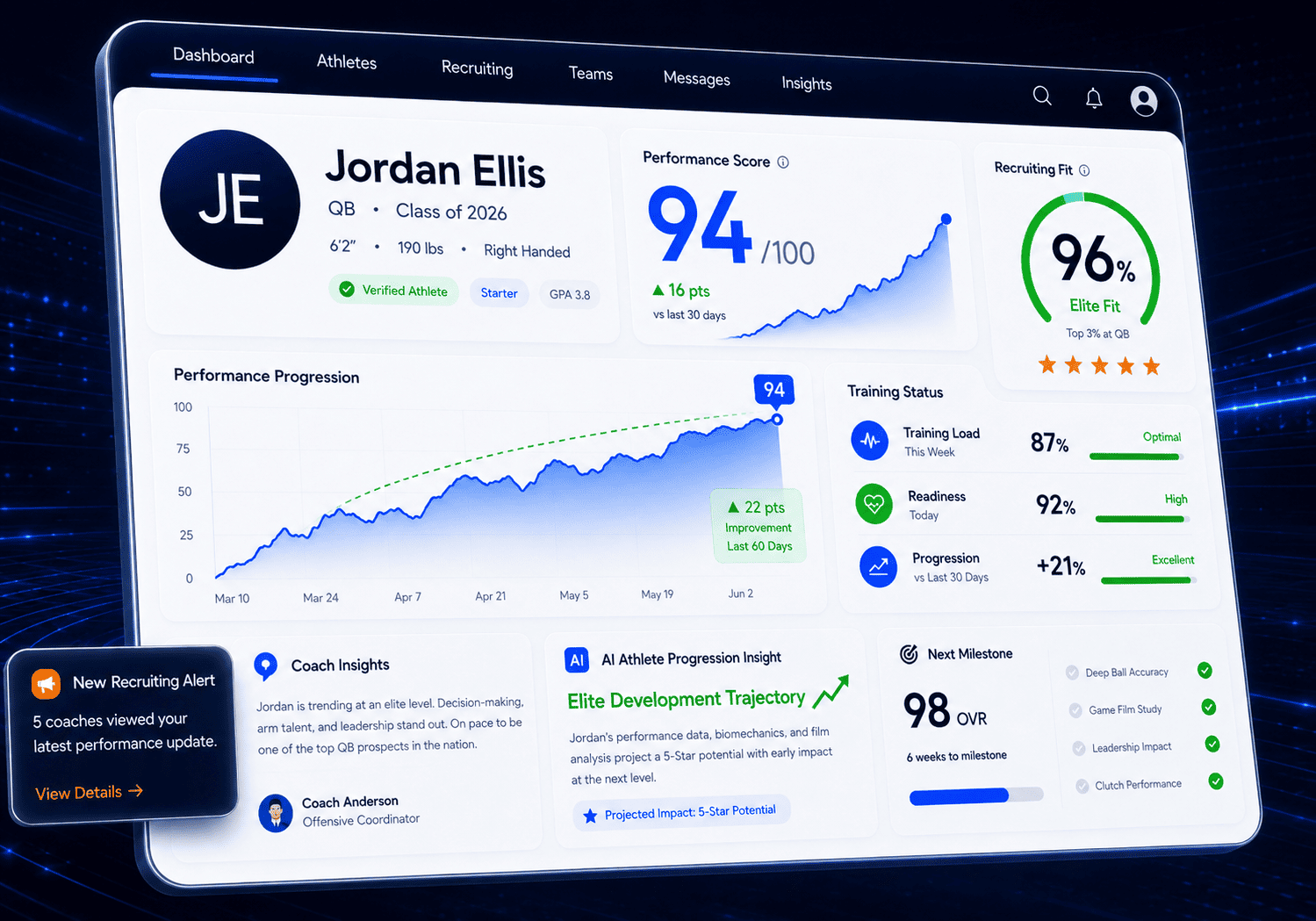
AI-Powered Sports Performance & Recruiting Platform for Virginia Clubs, Academies & Youth Programs

Plavno developed a custom sports technology platform for Virginia-based clubs and academies to combine athlete performance tracking, coach communication, recruiting workflows, and mobile engagement in one ecosystem.

Read More
3x

faster recruiting pipeline

AI-Powered Sports Performance & Recruiting Platform for Virginia Clubs, Academies & Youth Programs

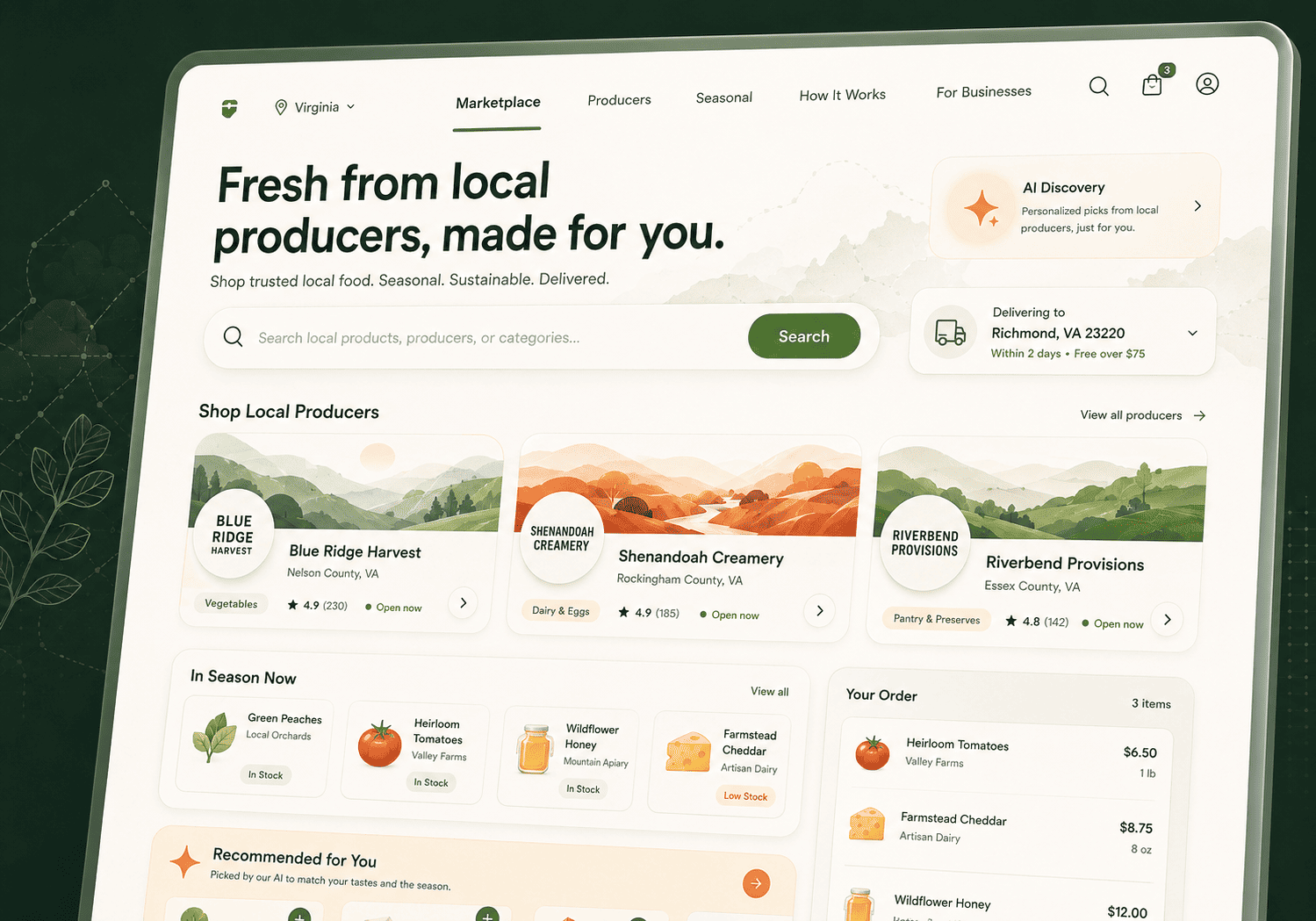
Digital Marketplace for Virginia Farmers, Local Producers & Direct-to-Consumer Food Sales

Plavno developed a custom multi-vendor marketplace for Virginia-based farmers, food producers, and regional sellers to unify product listings, vendor operations, customer ordering, and local fulfillment workflows.

Read More
3x

increase in product discovery relevance

Digital Marketplace for Virginia Farmers, Local Producers & Direct-to-Consumer Food Sales

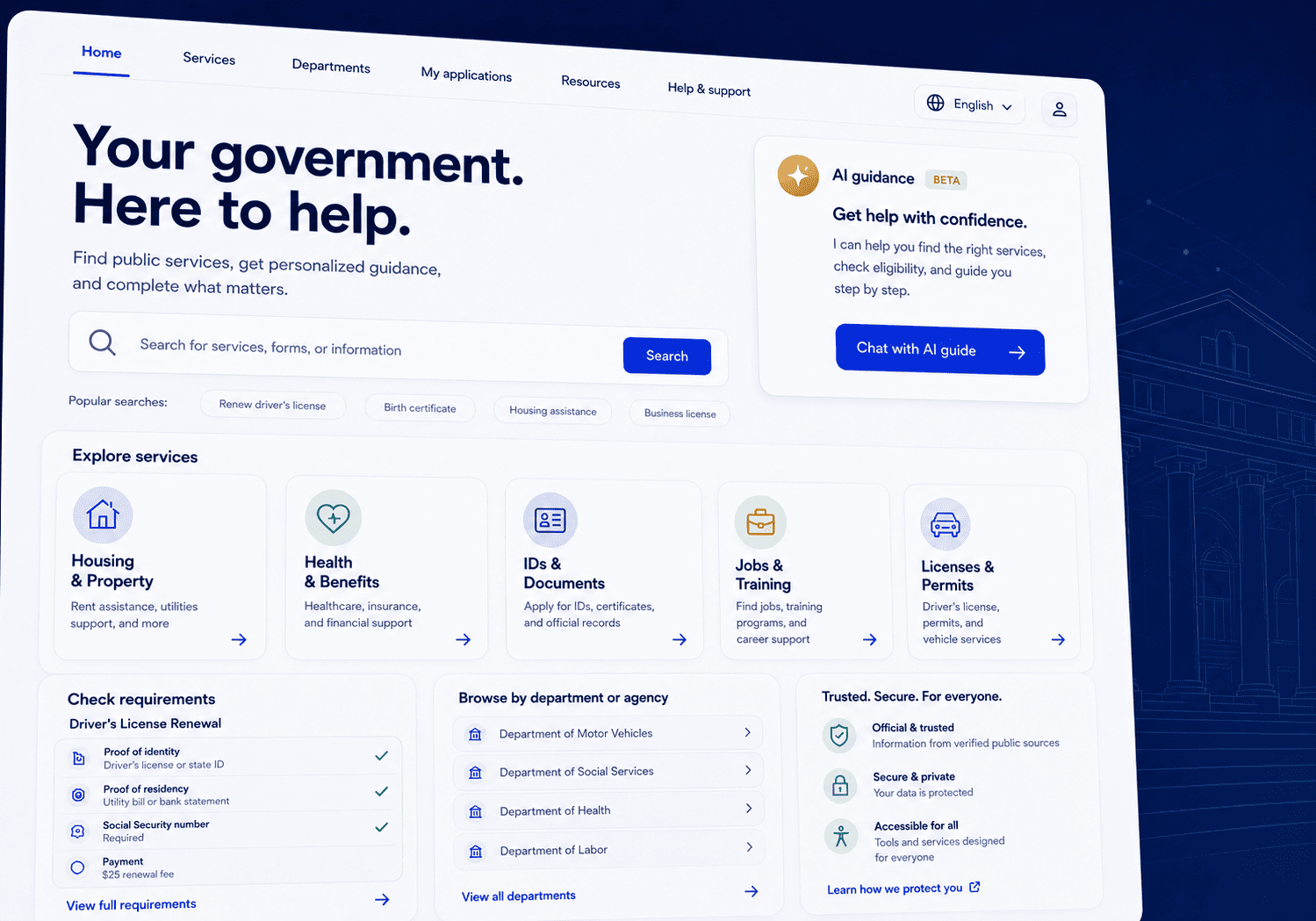
AI-Powered Citizen Services Website Platform for Virginia State Agencies

Plavno developed a modern eGovernment website platform for Virginia state agencies that centralizes citizen services, public information, department content, and an AI-powered guidance agent in one scalable system.

Read More
70%

reduction in routine citizen inquiries to agency staff

AI-Powered Citizen Services Website Platform for Virginia State Agencies

AI Retail Automation Solutions for Chesapeake Industries

Local use cases tied to Hampton Roads retail and logistics cash flow

These six plays map to how money actually moves through Chesapeake shelves, carts, and yards. Each is sized for measurable ROI inside one or two quarters.

Omnichannel Grocery

Omnichannel Grocery

Demand Agents

Omnichannel grocery and market chains

Fresh categories near Great Bridge spoil when forecasts ignore local traffic. Manual end-caps lag competitor pricing. We run day-part demand agents that blend POS with delivery app spikes. Transfer suggestions keep high movers moving between sister stores. Technical path uses streaming features and short-horizon models so morning produce orders improve without ripping out the current WMS. Target ROI is a mid-single digit drop in waste write-offs within the first quarter after shadow mode ends.

Port Import

Port Import

ASN Extraction

Port-adjacent import and bulk retailers

Containers hit Norfolk and Suffolk yards with mixed SKU accuracy. Receiving teams burn hours matching ASN noise. Extraction agents structure packing lists and photos into clean receipts. Exception queues open only when confidence drops. The pipeline reuses lessons from medical summarization and EHR-focused NLP where dense documents needed structure fast. ROI shows as faster dock-to-shelf time and fewer demurrage disputes with carriers.

Building Supply

Building Supply

Seasonal Reorder

Home improvement and building supply yards

Seasonal lumber and fixture demand swings with local housing starts. Overstock ties cash; stockouts lose contractor loyalty. We couple weather and permit proxies to reorder points with human overrides. Agents respect bulk pack and cut rules unique to yards. Systems post suggested POs into the ERP you already run. Concrete ROI is reduced emergency buys from secondary suppliers at premium rates across a two-month measurement window.

Apparel Malls

Apparel Malls

Returns Grading

Apparel and specialty malls in Greenbrier

Size curves break when e-commerce returns flood the back room. Staff cannot regrade fast enough for floor sets. Vision plus ticket extraction grades condition and routes units to resale, online, or claim. Models stay light so older store networks keep pace. Result is faster recovery of sellable units and cleaner markdown timing before season ends. Operators track recovered retail value against baseline return lag.

Auto Parts

Auto Parts

Bin Availability

Auto parts and service retail

Parts counters lose sales when the catalog says available but the bin is empty. Inter-store loans create double counts. We unify bin scans and ticket history into a live availability truth. Agents propose loans only when probability of same-day sale beats holding cost. Integration sits on existing DMS APIs without a rip and replace. ROI surfaces as fewer lost tickets and lower expedites from warehouse hubs outside the city.

3PL Fulfillment

3PL Fulfillment

Labor Slotting

3PL and retail fulfillment nodes

Chesapeake fulfillment sites serve multi-brand cart traffic that peaks with ads. Static labor plans miss the wave. Slotting and wave suggestions join carrier cutoffs with pick density. Short feedback loops rebalance mid-shift. Stack uses job queues and feature stores already standard in our retail agents. Measured ROI is higher lines per labor hour and fewer missed SLA penalties over a settled thirty-day period.

Engineering difference

Why Chesapeake teams pick deep build over generic automation shops

We ship owned agents with audit trails. Packaged chatbots and body-shop decks fail the store floor.

Generic Agencies
Our Platform (Deep Engineering Expertise)
Shadow-mode proof before cutover
checkmark
Store-level KPI baselines in contract
checkmark
ERP and WMS connectors with rollback
checkmark
checkmark
Document extraction reuse from production NLP
checkmark
Inference cost caps and drift monitors
checkmark
Slide deck strategy without code owners
checkmark
Joint runbooks with client on-call roles
checkmark
checkmark

Testimonials

We are trusted by our customers

“They really understand what we need. They’re very professional.”

The 3D configurator has received positive feedback from customers. Moreover, it has generated 30% more business and increased leads significantly, giving the client confidence for the future. Overall, Plavno has led the project seamlessly. Customers can expect a responsible, well-organized partner.

Sergio Artimenia

Commercial Director, RNDpoint

Sergio Artimenia

“We appreciated the impactful contributions of Plavno.”

Plavno's efforts in addressing challenges and implementing effective solutions have played a crucial role in the success of T-Rize. The outcomes achieved have exceeded expectations, revolutionizing the investment sector and ensuring universal access to financial opportunities

Thien Duy Tran

Product Manager, T-Rize Group

Thien Duy Tran

“We are very satisfied with their excellent work”

Through the partnership with Plavno, we built a system used by more than 40 million connected channels. Throughout the engagement, the team was communicative and quick in responding to our concerns. Overall, we were highly satisfied with the results of collaboration.

Michael Bychenok

CEO, MediaCube

Michael Bychenok

“They have a clear understanding of what the end user needs.”

Plavno's codes and designs are user-friendly, and they complete all deliverables within the deadline. They are easy to work with and easily adapt to existing workflows, and the client values their professionalism and expertise. Overall, the team has delivered everything that was promised.

Helen Lonskaya

Head of Growth, Codabrasoft LLC

Helen Lonskaya

“The app was delivered on time without any serious issues.”

The MVP app developed by Plavno is excellent and has all the functionality required. Plavno has delivered on time and ensured a successful execution via regular updates and fast problem-solving. The client is so satisfied with Plavno's work that they'll work with them on developing the full app.

Mitya Smusin

Founder, 24hour.dev

Mitya Smusin

Architecture & Engineering Overview

What 2026 Chesapeake retail AI decisions cost if you get them wrong

Shadow-mode proof

Shadow-mode first

Human POs stay live while scores prove accuracy on your baselines

Paired cost savings

Transfers + overtime

Paired board so finance sees stockout cuts and cash release together

Explainable decisions

SKU-store explainability

Every decision audited at grain staff and vendors can challenge

Inference budget caps

Inference budget gates

Deep scores on A/B movers; cheaper rules on the long tail with caps

For Business: Technical ROI & Risk Mitigation

Technical choices show up as cash or burn inside ninety days. Choosing shadow-mode agents before full cutover is the single largest risk cut we give operators. You keep human POs live while scores prove accuracy against your own baselines. That prevents a weekend stockout event that no slide deck can repair. Latency budgets matter because a forecast that lands after the truck already left is worthless.

Cost savings arrive when emergency transfers and overtime drop together. We measure both on the same board so finance sees the paired effect. Overstock cash release usually trails stockout gains by a few weeks as buyers trust the system. You should demand baseline-to-current tracking with store tags, not corporate averages that hide weak sites.

Risk rises when vendors push opaque SaaS scores with no override path. Staff stop trusting the tool and quietly rebuild spreadsheets. We keep every decision explainable at SKU and store grain. That habit also speeds audits when a vendor disputes a claim.

Inference spend can creep if you score every SKU hourly. We gate deep scores to A and B movers and use cheaper rules on the long tail. Budget caps alert before the card surprises you. Virginia multi-entity groups appreciate separate cost centers per brand.

Technical debt hurts most when connectors are one-off scripts. Our contracts force versioned APIs and replayable events. When the ERP upgrades, agents keep running. That is how ROI compounds past year one instead of resetting each vendor change.

1

Truth map & shared decision log

Freeze KPIs with finance; product, ops, and data cite the same events

2

Shadow exit & store sequencing

Canaries on high- and low-volume sites; boring storage beats novel models

3

Fleet flags & holiday rollbacks

Feature flags keep blast radius tight; drillsrequired before peak windows

4

Governance & open interfaces

Monthly model review, weekly connector health, exportable feature stores

For CTOs: Architecture & Technical Lifecycle

Lifecycle starts with a truth map, not a model bake-off. Governance fails when product, store ops, and data platform never share a single decision log. We install that log first so every later model cites the same events. Kickoff freezes KPI definitions with finance present. Ambiguous fill rate formulas kill more programs than bad algorithms.

Decision points include when to leave shadow mode, which stores enter first, and how hard overrides must hurt before thresholds move. Trade-offs favor boring storage and clear schemas over novel model families. You can swap a booster later; you cannot easily unwind a corrupted stock ledger.

From pathfinder to fleet, feature flags and tenancy keep blast radius tight. We require canaries on at least one high-volume and one low-volume site. Rollback drills are non-negotiable before holidays. Change calendars respect blackout windows around inventory counts.

Post-launch governance runs a monthly model review and a weekly connector health check. Owners sit inside your org; we pair as needed. Documentation lives next to code, not in a forgotten drive. That structure keeps institutional knowledge when staff rotate.

Vendor lock is mitigated with open interfaces and exportable feature stores. If you later bring scoring in-house, the events still flow. Lifecycle ends only when you choose; maintenance contracts exist so drift does not become a silent tax.

Event-first spine

Append-only event spine

Every POS, ASN, and adjustment becomes a fact before any model reads it

Python workers and rules

Python workers + rules veto

Containerized serving; MOQ, hazmat, and age rules catch what models propose

PIT feature pipelines

Versioned feature pipelines

Point-in-time columns, replayable training, midnight store-day edge cases tested

Agent observability

Observability on every agent

Structured logs, connector traces, and business metrics in one debug pane

For Engineers: Implementation Details & Stack

Implementation prefers an event-first spine. We treat every POS, ASN, and adjustment as an append-only fact before any model reads it. That mirrors how we structured extraction pipelines for dense medical text: clean structure first, intelligence second. Retail documents like invoices and claims notes get the same extraction treatments using domain NLP patterns proven on EHR-focused work.

Serving stack stays plain: containerized Python workers, a relational system of record, and a fast cache for counters. We avoid dumping business rules only inside model weights. Rules engines catch MOQ, hazmat, and age-restricted SKUs. Models propose; rules veto.

Feature pipelines version every column with point-in-time correctness so backtests match production. Training jobs are replayable. Edge cases include midnight store-day boundaries, delayed tender fixes, and split shipments that arrive across days. Tests encode those realities.

Optimization targets p95 decision latency under interactive thresholds for manager tablets. Batch runs stay off the hot path. We profile DB locks during mass reprice events. Queue depth alerts fire before pick waves stall.

Observability hooks scaffold every agent with structured logs, traces on connector calls, and business metrics as first-class signals. Engineers debug a wrong transfer with the same tools they use for API errors. That single pane keeps mean time to repair short when a vendor API flaps.

Single operable board

One operable board

Decision quality, connectors, spend, and security alerts only when action is needed

PCI and access controls

PCI-adjacent isolation

Card data out of training; SOC2 change control; per-connector service accounts

IaC multi-site canaries

IaC multi-site canaries

Environment parity; tech + business KPIs; failed canaries auto-halt promotion

Cash-mapped metrics

Cash-mapped metrics

Stockout, override, MAPE, latency, error budget, cost per 10k decisions

Infrastructure, Observability & Security

US retail clients need clear residency and access stories. We monitor decision quality, connector health, spend, and security signals on one operable board. Alerts page humans only when action is required. Noise kills response; we tune ruthlessly. Incident response pairs on-call retail ops with engineering so floor impact is assessed in minutes.

Compliance mapping covers PCI-adjacent flows by keeping card data out of training and feature stores. SOC2-aligned controls cover change management and access reviews. When healthcare-adjacent clients appear in mixed portfolios, HIPAA patterns from medical work inform isolation even if retail itself is lighter. Secrets rotate. Service accounts are per connector.

Deployment for multi-site Virginia rollouts uses infrastructure as code and environment parity. Staging replays anonymized production events. Canaries publish both tech and business KPIs. Failed canaries auto-halt promotion.

What we monitor: stockout rate, override rate, forecast MAPE on A items, agent latency, error budgets, and inference cost per ten thousand decisions. Why: each line maps to cash or trust. Drift in override rate often signals a pricing policy change no one documented.

Post-incident reviews write fixes into tests and runbooks the same week. Cost control jobs idle unused GPU capacity after peaks. This operations layer is where automation survives the second holiday season, not only the launch demo.

Data plane and integration fabric

Keep Chesapeake inventory truth clean when six systems disagree

The second build concern is not model VIP seating. It is the messy data plane that makes every Chesapeake chain unique. Most operators run a national ERP, a regional WMS, a ecommerce cart, a loyalty vendor, and a labor tool that never quite agrees on store day boundaries. We construct an integration fabric that normalizes those clocks and identifiers before any agent acts. Without that fabric, forecasts look clever and still order the wrong pack size.

We map SKUs, location codes, and vendor packs into a golden graph with explicit conflict rules. When POS and WMS diverge, the system records both and applies your policy, never a silent average. Change data capture lands in an append-only log so audits reconstruct who sold what after a tender void. Tools stay boring: managed streaming where volume warrants it, batch pulls where vendor APIs throttle. The reason is durability under staff turnover, not fashion.

Document intake is part of this plane. Inbound ASNs, claim PDFs, and return notes need structure. We apply extraction pipelines and domain NLP methods related to those used in our real-time EHR summarization agent for medical records. Retail text is different content with the same need for reliable fields. Structured outputs feed claims, AP, and quality scorecards without another round of human rekeying.

Cost control lives here too. Sync jobs declare budgets and backoff when suppliers rate-limit. Large historical backfills run off-peak so store tablets stay snappy. We tag every pipeline with a product owner in your org so orphan jobs do not burn cloud spend a year later. Data quality monitors track null rates, duplicate UPCs, and impossible on-hand negatives before agents see them.

Security on the data plane means field-level encryption for loyalty identifiers and strict egress rules from the store network. Partners receive least data required. Retention schedules match Virginia tax and consumer rules your counsel defines. The payoff is simple: agents trust the numbers, managers stop maintaining shadow sheets, and new sites onboard by mapping codes instead of rewriting automation. That is the integration story we actually build and leave you able to run.

Automation maturity path

Move Virginia store teams from manual lists to supervised autonomy

A maturity ladder for ops leaders who cannot freeze the floor for a big-bang cutover. Each rung keeps service levels intact.

Clipboard
Team
01

Step 1: Assisted visibility (2–3 weeks)

Staff still decide, but every morning opens with a ranked risk list instead of raw exports. Goals are shared definitions of stockout and overstock money. Deliverables include dashboards, data quality scores, and a gap log by site. Technical work focuses on connectors and clean store-day joins. Clients receive training for managers in Chesapeake and Norfolk. Timeline two to three weeks from credential access.

02

Step 2: Guided actions (3–5 weeks)

System drafts POs, transfers, and claim packets. Humans approve with one tap or adjust with a reason code. Goals cut keystrokes and capture override knowledge. Deliverables are agents in approval mode plus weekly accuracy reports. Technical work adds rules vetoes and audit trails. You gain a measured override baseline before any autonomy talk. Timeline three to five weeks including UAT on two pilot stores.

Search in doc
Rocket
03

Step 3: Supervised autonomy (4–6 weeks)

Low-risk SKUs auto-execute inside strict bounds. High-risk categories stay guided. Goals shift labor to exceptions that truly need people. Deliverables include kill switches, cost caps, and store-level success scores. Technical work hardens canaries and drift monitors. Business context covers union or franchise notice periods where required. Timeline four to six weeks staged by category, not by slogan.

04

Step 4: Cross-site learning loops (3–4 weeks)

Patterns from Greenbrier inform Great Bridge without leaking confidential brand data across tenants. Goals compound accuracy through shared features with hard tenancy walls. Deliverables are playbooks for new store launches and seasonal packs. Technical work focuses on feature store governance and replay tools. Clients leave with a roadmap for the next process, often labor or pricing. Timeline three to four weeks once autonomy is stable.

Eugene Katovich

Eugene Katovich

Sales Manager

Need a custom software solution? We’re ready to help!

Plavno has a team of skilled developers ready to tackle the project. Ask me!

Get a Free Quote

Retail AI questions

FAQ for Chesapeake AI Retail Automation buyers in 2026

Straight answers on cost, time, data, quality, security, and life after launch. Bring budget, timeline, stack, and dataset scope to move faster.

What drives the cost of custom AI Retail Automation in Chesapeake?

Cost tracks connector count, SKU complexity, and how many stores enter the first wave. A single-banner operator with clean POS exports pays less than a multi-entity group with separate ERPs across Virginia. Local wage rates and after-hours cutovers near 24/7 fulfillment nodes also affect delivery effort. We price discovery as a fixed band, then firm build once the truth map is done.

Model spend is usually smaller than integration spend. Inference caps and scoring only A and B movers keep cloud bills predictable. Computer vision is optional and priced separately because camera surveys and edge hardware vary by site age. If you already own scanning gear, we reuse it.

Chesapeake labor markets and port-related overtime make time-to-value the real lever. Faster dock-to-shelf and fewer emergency transfers often repay the build inside two quarters when baselines are honest. We need your budget range, timeline, current tech stack, and dataset scope to produce a binding estimate.

Change management is a cost center people forget. Training managers and writing override playbooks prevents silent spreadsheet workarounds. We include those hours rather than pretending software alone moves behavior. Ask us for a line-item view that separates platform, connectors, models, and enablement so finance can book them correctly.

How long does it take to build AI Retail Automation software?

A useful MVP that shadows replenishment and one more workflow typically lands in eight to twelve weeks after credentials and data access arrive. That path covers truth mapping, thin agents, and a live accuracy board on two pilot stores. Full deployment across a Chesapeake multi-site estate with supervised autonomy often runs four to six months depending on ERP change windows and blackout dates around physical inventory.

MVP means measurable shadow mode, not a slide. You leave with draft POs, override capture, and a decision log finance trusts. Full deployment adds canaries, cost guards, role maps, and staged category autonomy. Holiday freezes extend calendars; we plan backward from your peak so machinery is stable before traffic spikes.

Blockers that extend timelines are slow vendor API keys, undefined fill-rate formulas, and unresolved duplicate UPCs. We surface those in week one. Parallel tracks let training and security reviews run while engineers finish connectors. Your team still needs a single product owner who can decide store order of rollout.

If a prior pilot left half connectors, we can sometimes shorten discovery. Greenfield rarely starts coding day one for good reason: wrong SKU graphs waste every later sprint. Expect honest gates rather than a fixed date promise that ignores your data reality. We publish a revised forecast after the truth map, not before.

Do you work with startups in Virginia?

Yes. We work with US-based clients, including companies operating in Virginia, from early retail tech teams to established chains. Startup founders in the Hampton Roads corridor and up through Richmond often need a pathfinders approach: two workflows, tight budget, and proof that wins the next funder or retailer pilot. We size scopes so equity-backed teams are not buying enterprise bloat on day one.

Regional ecosystems matter. Port logistics innovators near Norfolk, shopify-heavy specialty brands serving tourists in Virginia Beach, and defense-adjacent supply startups all face inventory truth problems. We speak store floor language and customer SLA language. Your series A engineering lead keeps demo quality while we own production hardening.

Startups sometimes lack historical depth. We design cold-start policies using category priors and rapid human feedback rather than pretending a deep model exists. As order volume grows, features graduate into supervised models without a rewrite. That staged maturity matches how young operators actually gain data.

We also partner when a startup embeds automation inside a product sold to other retailers. Multi-tenant patterns, audit trails, and cost controls become part of your differentiator. Contracts stay clear on IP and data boundaries. Bring stack details and sample datasets even if small; clarity beats volume when scoping a first release.

Can AI Retail Automation integrate with my existing system?

Yes. Integration is the main job. We connect to ERPs, WMS platforms, POS suites, ecommerce carts, and labor tools through APIs, secure file drops, or change data capture when live hooks are weak. Legacy systems common in Virginia retail often need an anti-corruption layer so modern agents never write unsafe fields back. We design that layer first.

Where APIs throttle or lack webhooks, scheduled pulls with watermarking keep truth close enough for replenishment. High-volume sites may justify streaming. The choice is driven by failed order cost, not ideology. Every connector carries health checks and replay so a vendor outage does not corrupt on-hand counts.

Custom middleware is sometimes required when pack size logic lives only in tribal knowledge. We encode those rules visibly. Managers still override, and the reason codes train later models. Nothing silently edits price files without your policy root.

If you plan an ERP migration next year, agents sit on the event graph rather than deep proprietary stored procedures. That protects the investment. Share interface docs early, including sandbox limits. We will tell you which flows are safe for write-back versus read-only advisory during the first wave.

What industries in Chesapeake benefit most from AI Retail Automation?

Grocery and fresh format stores benefit quickly because waste and stockouts hit weekly. Home improvement and building supply yards benefit when seasonal swings and contractor demand outpace static min-max settings. Auto parts retail gains when bin accuracy decides same-day repair revenue. These three already anchor much of local commercial activity around Chesapeake and the wider Hampton Roads market.

Port-adjacent importers and bulk retailers gain from document extraction on ASNs and claims, reducing dwell and dispute time. Apparel and specialty retail in centers like Greenbrier recovers sellable returns faster with structured triage. 3PL nodes serving national carts improve lines per hour when waves meet carrier cutoffs with better slotting suggestions.

Healthcare retail and clinic-adjacent supply counters also see gains when lot tracking and expiration rules must stay tight. Patterns from our medical summarization and extraction work inform how we treat dense compliance text even outside pure clinical settings. Always with proper isolation.

If your vertical mixes retail and field service, hybrid agents can propose both parts orders and tech routing. The binding constraint is clean identifiers, not industry labels. We will pressure-test your top two cash leaks and only automate where a baseline exists. Small boutique single doors may wait until multi-site complexity appears; multi-site already bleeding labor should not wait on 2026 planning cycles.

Contact Us

This is what will happen, after you submit form

Need a custom consultation? Ask me!

Plavno has a team of experts ready to start your project. Ask us!

Vitaly Kovalev

Vitaly Kovalev

Sales Manager

Schedule a call

Get in touch

Fill in your details below or find us using these contacts. Let us know how we can help.

Required because you selected “Other” above

No more than 3 files may be attached up to 3MB each.
Formats: doc, docx, pdf, ppt, pptx, xls, xlsx, txt.
Book your meeting