bg image
bg image

Serving Alexandria VA

Make pipeline decisions faster in Alexandria in 2026 with AI CRM Automation

Sales and delivery teams in Alexandria lose hours to manual updates, duplicate records, and slow follow-up. We build automations that move leads, tasks, and customer requests through your CRM with fewer handoffs. Your reps spend more time on calls and proposals, not on fields and spreadsheets. Managers get forecasting they can explain, not dashboards that nobody trusts. This is for GovCon, real estate, and B2B teams that run on tight SLAs and audits. Get AI CRM Automation cost estimate in 24 hours.

Discuss Project

Overview

Why Alexandria revenue ops breaks in 2026

Alexandria teams operate in a high-touch market where response time decides who wins the deal. GovCon primes, real estate brokerages, and B2B services firms often run Salesforce or HubSpot with manual steps between marketing, sales, and delivery. Those handoffs turn into stale stages, missing notes, and inconsistent follow-up. AI CRM automation fixes the gaps by turning repeatable decisions into workflows that run the same way every time. The goal is simple: reduce admin time while improving pipeline quality and customer experience. Trusted AI CRM Automation Partner for Alexandria Businesses. We work with US-based clients, including companies operating in Virginia. In Northern Virginia, you also need systems that fit how teams work across Arlington, Fairfax, Tysons, Springfield, and Woodbridge. That includes contractors coordinating with DC stakeholders and nonprofits managing multi-channel outreach with limited staff. A practical delivery target is to put the first set of automated CRM playbooks into production within 6 to 10 weeks, depending on data quality. That timeline matters because pipeline decay shows up fast when lead volume shifts. We build outcomes first, then choose the minimum technology that can hold up under real usage. Your CRM stays the system of record, while automations handle routing, enrichment, and customer response steps that do not need a person every time. CRM AI integration also means deciding what should never be automated, like sensitive approvals or contract language changes. We have built AI agents that coordinate quoting and tracking workflows for logistics teams, plus customer support flows that reduce back-and-forth. Those patterns map cleanly to CRM work where the same questions and steps repeat across deals. If you already have a CRM program and need engineering depth, start with our CRM development work and extend it with automation and AI. We implement Salesforce AI automation and HubSpot AI automation in a way that keeps admins in control of changes. Data quality, access control, and monitoring come before fancy scoring models. You get a plan you can run and maintain, not a one-off script that breaks after the next CRM update. The result is a CRM that stays accurate under real Alexandria operating pressure.

Talk to an Expert
CRM as system of record

CRM stays system of record

Salesforce or HubSpot holds fields, objects, permissions, and reporting.

Automation playbooks

Automation playbooks

Routing, follow-ups, renewals, escalations — API/webhook triggers with rollback.

AI decisions with guardrails

AI decisions with guardrails

Explainable scoring/forecast inputs, human override, and “never automate” boundaries.

Governance, monitoring, compliance

Governance + monitoring

Audit trails, least privilege, sandbox-first releases, alerts for failures and write volume.

Engineering-first delivery

Systems that make CRM actions automatic, not risky

Alexandria companies usually do not need a new CRM. They need the CRM they already pay for to drive action without extra clicks. We build an automation layer around your existing Salesforce or HubSpot setup that listens for events, applies business rules, and writes back clean updates. That layer includes CRM workflow automation for tasks like lead routing, meeting follow-up, renewal reminders, and SLA-based escalations. Each workflow has clear inputs, outputs, and rollback steps so your ops team can ship changes safely. For AI-driven decisions, we focus on places where the business already has a repeatable policy. That is how we approach AI lead scoring and AI sales forecasting without turning the CRM into a black box. We define what a good lead means in your Alexandria market segment, then encode it in features your team can audit. When a model is used, it is wrapped with guardrails and human override. This is the same discipline we used when building an AI agent for freight quoting and tracking, where the workflow had to stay consistent under daily operational load. Integration work is where most CRM automation projects fail. We design CRM data enrichment AI Alexandria flows to handle duplicates, partial fields, and mismatched identifiers across marketing tools, accounting systems, and contractor portals. We use APIs and webhooks because they make changes observable and testable, and because they reduce brittle screen automation. When systems are older, we add a thin adapter that isolates legacy quirks from your CRM. That keeps technical debt contained and makes future migrations less painful. Security/compliance is treated as a design constraint, not a checklist at the end. Alexandria and Northern Virginia teams often deal with controlled data, government-facing processes, or strict donor privacy expectations. We implement least-privilege access, audit trails for automated field changes, and environment separation so production data is protected. We also document data flows so stakeholders can review what leaves the CRM and why. This approach supports regulated programs without slowing down day-to-day sales work. On the DevOps side, we build automation the same way we ship product features. Changes go through version control, automated tests, and staged rollout, then get promoted to production with clear release notes. We add monitoring for workflow failures, integration latency, and unexpected write volume so you catch issues before reps feel them. That operational discipline matters when you automate customer support steps, where missed messages turn into churn. It is also how we protected user experience in a personalized house-hunting platform, where search and messaging workflows had to remain stable as inputs changed.

plavno logo

Build your first
Smart AI project today!

Just tell the Plavno AI Agent about your project - it will ask questions, gather requirements, and propose a tailored solution

What you get

Five deliverables Alexandria teams actually use

AI-assisted lead routing that matches your territory rules

AI-assisted lead routing that matches your territory rules

Alexandria teams lose deals when leads sit unassigned or bounce between reps. We implement routing that combines your current territory logic with AI lead scoring signals that are easy to explain. Salesforce and HubSpot are supported because they already host your assignment rules and audit logs. We use APIs because they provide reliable triggers and clear failure handling. The outcome is faster first-touch and fewer reassigned records. Your ops team can change rules without waiting on engineers for every update.

Proposal and follow-up automation for GovCon velocity

Proposal and follow-up automation for GovCon velocity

In Alexandria, GovCon teams often track proposals in email threads and spreadsheets. We build AI-driven proposal tracking for contractors Alexandria workflows that create tasks, reminders, and status updates inside the CRM. The automation captures key dates and dependencies so nothing falls through during peak submission periods. We choose CRM-native objects where possible to keep reporting consistent. Integrations are added only where they reduce manual copying from portals or shared drives. The result is fewer missed steps and clearer accountability across capture and delivery.

Customer support deflection with CRM-safe escalation

Customer support deflection with CRM-safe escalation

Support teams in Northern Virginia get repeat questions that still require a logged case and a clear handoff. We implement AI customer service automation that drafts replies, suggests knowledge articles, and opens cases with correct fields. A human can approve high-risk messages or regulated content before sending. We pick chat and ticket integrations that keep the CRM as the source of truth. Monitoring is added to track response lag and automation failure rates. The business outcome is faster resolution without losing control of customer communications.

Marketing-to-sales handoff that prevents dirty pipeline

Marketing-to-sales handoff that prevents dirty pipeline

Pipeline in Alexandria often becomes unreliable when marketing systems push incomplete fields into the CRM. We build marketing automation AI handoffs that validate required data and enrich missing context before a record hits the rep. HubSpot is a common fit for campaign attribution because it already tracks engagement at the contact level. We use enrichment steps only where they reduce manual research, not to inflate datasets. The CRM workflow stops and alerts ops when inputs fail validation. The outcome is fewer junk opportunities and more trustworthy reporting.

Forecasting signals that managers can defend

Forecasting signals that managers can defend

Forecast calls get painful when stages are updated late or inconsistently. We implement AI sales forecasting inputs that highlight risk factors like stalled activity and missing next steps. The system prompts reps with specific actions, not generic warnings. We choose features that map to existing CRM fields so teams do not learn a new tool. Integration logging ensures managers can trace how a forecast note was generated. The result is forecasting that improves decision speed without breaking trust with the team.

Rollout plan

Automate without disrupting Alexandria sales cycles

We roll out AI CRM automation in controlled increments so your team keeps selling while data and workflows get cleaner.

Clipboard
Team
01

Step 1: Workflow inventory and data audit (1–2 weeks)

We map the workflows that matter in Alexandria, like inbound lead follow-up, proposal tracking, and support escalation. Your team reviews a short list of automation candidates ranked by impact and risk. We audit CRM fields, duplicates, and integration touchpoints to find where automation would amplify bad data. Deliverables include a workflow diagram, a data quality report, and an implementation backlog. We also define who owns approvals and who can override automation. This phase takes 1 to 2 weeks depending on how many systems feed the CRM.

02

Step 2: Build the first playbooks in a sandbox (2–4 weeks)

We implement the first two or three playbooks end-to-end, usually lead routing and follow-up tasks. Everything is built in a sandbox or staging environment so production is not touched. You get working demos and a test plan that reflects real Alexandria deal flow. Integrations are wired with clear error handling so failed calls do not create silent data gaps. Admin documentation is written as we build so your ops team can maintain it. This phase typically runs 2 to 4 weeks based on integration complexity.

Search in doc
Rocket
03

Step 3: Pilot with one team and measure outcomes (2–3 weeks)

We pilot with a defined group, like one GovCon capture team or one real estate office. Baseline metrics are collected from your CRM before the pilot starts, then tracked daily during the rollout. You receive a dashboard that shows what the automation changed and what was left to humans. We tune rules and AI prompts based on real exceptions, not hypothetical cases. If a workflow causes noise, we disable it quickly and ship a safer revision. The pilot phase usually takes 2 to 3 weeks to reach stable behavior.

04

Step 4: Expand, train, and operationalize (2–6 weeks)

After the pilot, we expand to additional teams across Alexandria and nearby offices in Arlington or Fairfax. Training focuses on what changes in daily work and what stays the same. We set up alerting for workflow failures and latency so ops can spot issues without waiting for user complaints. A runbook is delivered with escalation paths and release procedures for future changes. You also get a backlog for the next automation wave, such as enrichment or customer support drafting. This phase runs 2 to 6 weeks based on how many workflows and teams you add.

Decision support

Why engineering depth matters for CRM automation

Alexandria teams need automation that survives audits, integrations, and real user behavior, not just a quick set of CRM rules.

Generic Agencies
Our Platform (Deep Engineering Expertise)
Sandbox-first delivery with rollback plan
checkmark
Auditable automation logs for field changes
checkmark
API-first integrations over screen scripting
checkmark
checkmark
GovCon-focused workflow controls and approvals
checkmark
Cost and rate limiting for AI usage inside workflows
checkmark
Admin handoff package and runbooks
checkmark
checkmark

Case Study

We help customers cut
down on development

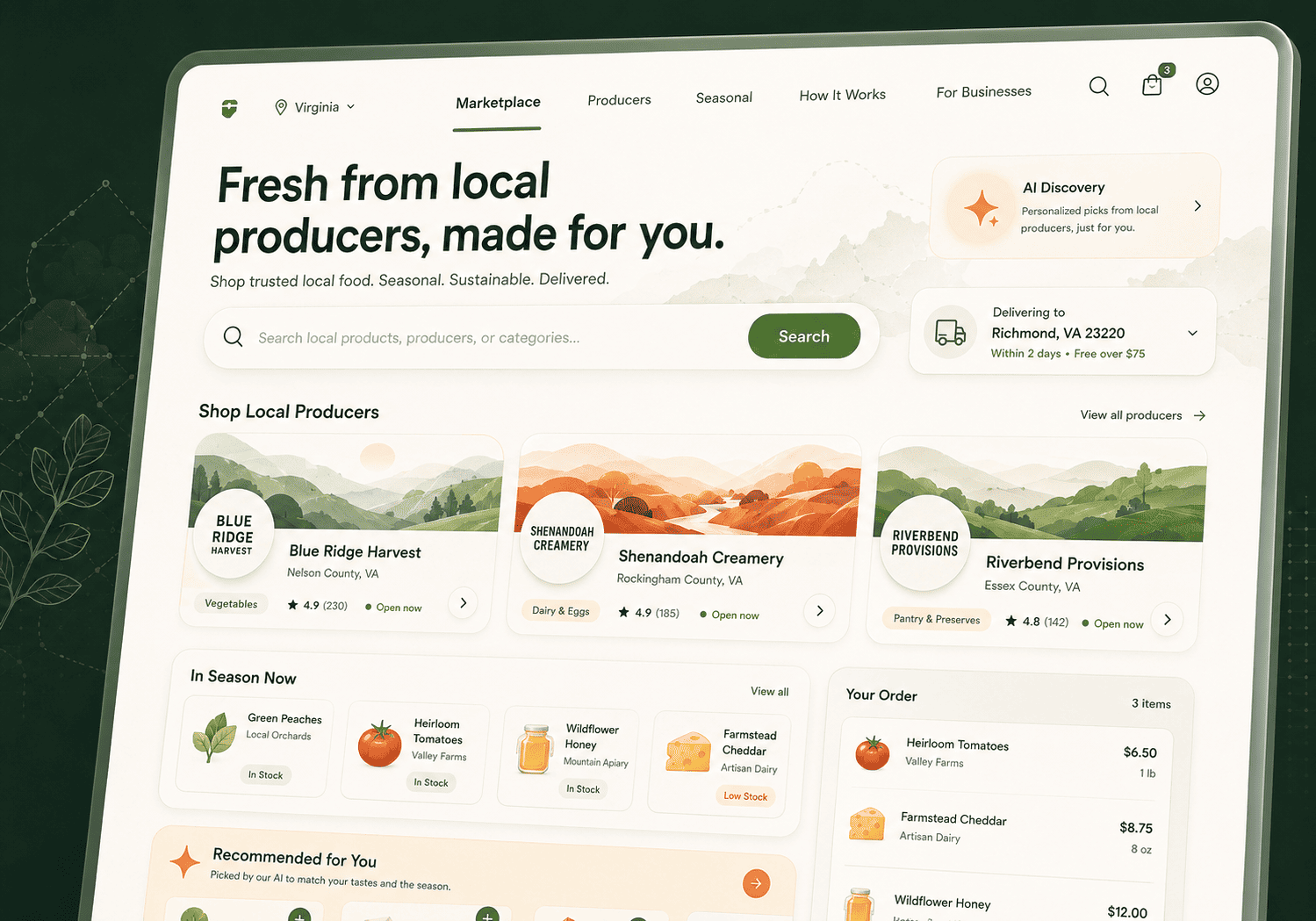
Digital Marketplace for Virginia Farmers, Local Producers & Direct-to-Consumer Food Sales

Plavno developed a custom multi-vendor marketplace for Virginia-based farmers, food producers, and regional sellers to unify product listings, vendor operations, customer ordering, and local fulfillment workflows.

Read More
3x

increase in product discovery relevance

Digital Marketplace for Virginia Farmers, Local Producers & Direct-to-Consumer Food Sales

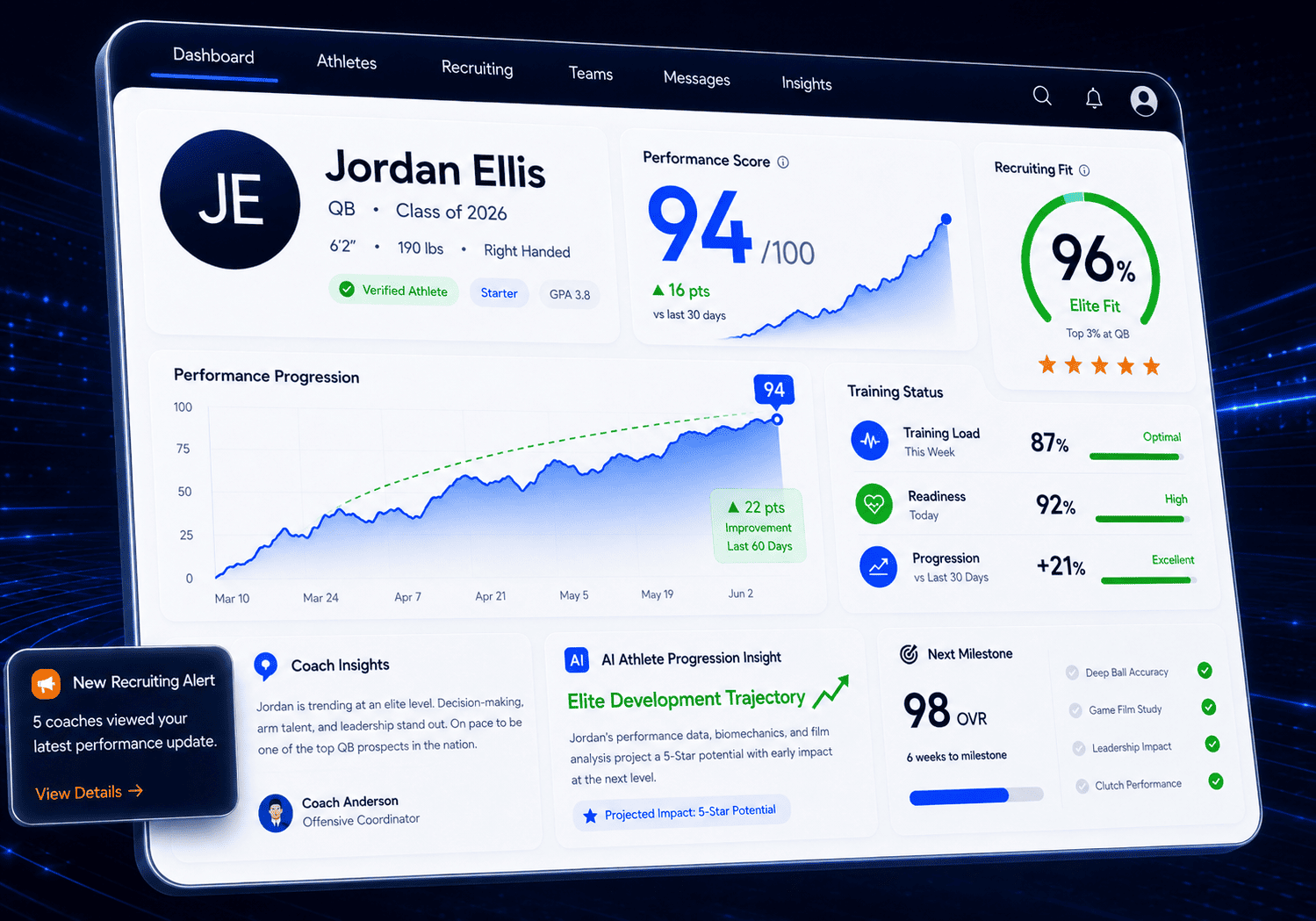
AI-Powered Sports Performance & Recruiting Platform for Virginia Clubs, Academies & Youth Programs

Plavno developed a custom sports technology platform for Virginia-based clubs and academies to combine athlete performance tracking, coach communication, recruiting workflows, and mobile engagement in one ecosystem.

Read More
3x

faster recruiting pipeline

AI-Powered Sports Performance & Recruiting Platform for Virginia Clubs, Academies & Youth Programs

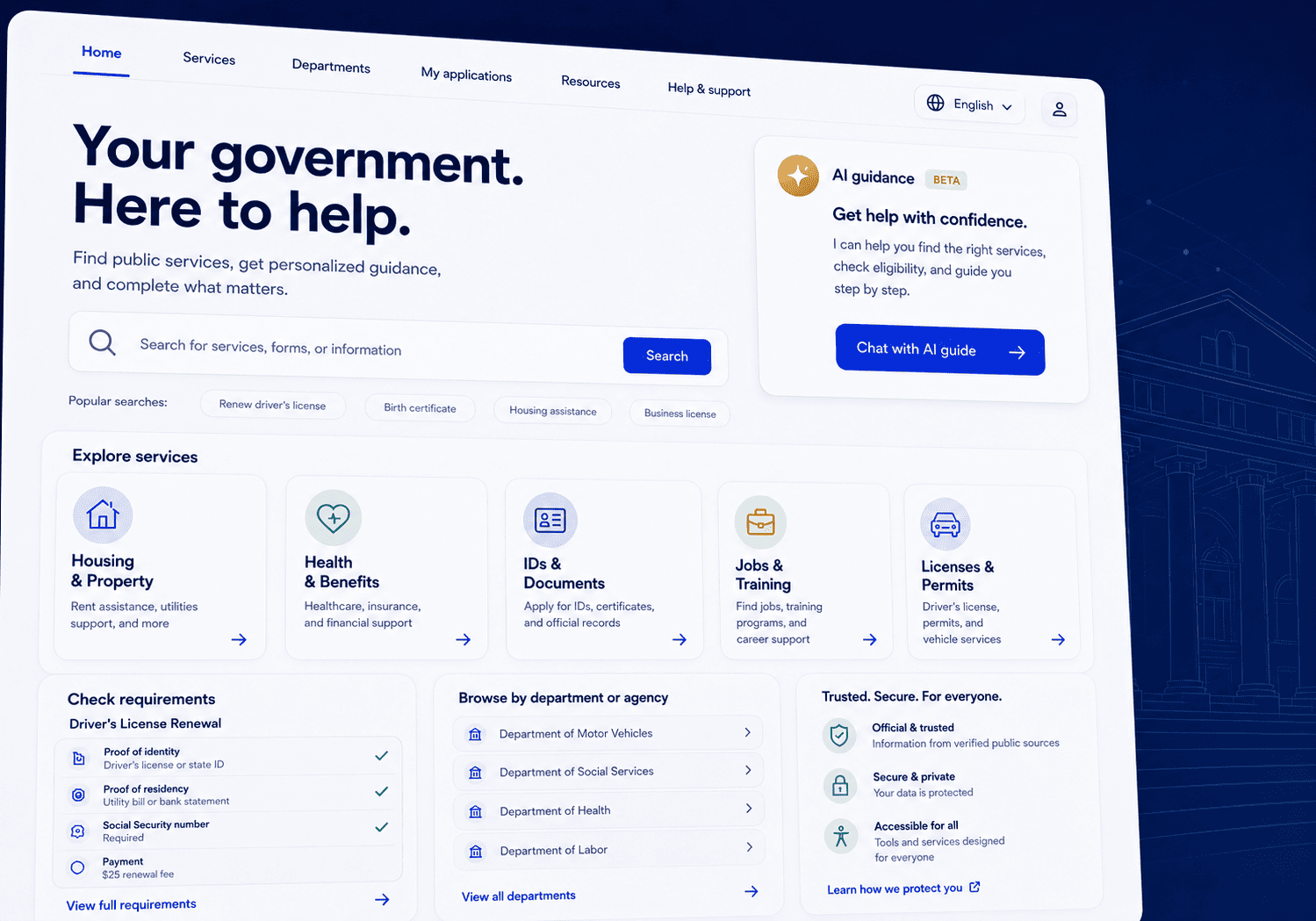
AI-Powered Citizen Services Website Platform for Virginia State Agencies

Plavno developed a modern eGovernment website platform for Virginia state agencies that centralizes citizen services, public information, department content, and an AI-powered guidance agent in one scalable system.

Read More
70%

reduction in routine citizen inquiries to agency staff

AI-Powered Citizen Services Website Platform for Virginia State Agencies

Architecture & Engineering Overview

What makes Alexandria CRM automation reliable

Baseline KPIs

Baseline KPIs in CRM

2-week baseline: time-to-first-touch, reassignment rate, missing next steps.

Measured deltas

Verify ROI with deltas

Measure same indicators for 4 weeks post-rollout; adjust or remove if no lift.

Control points and approvals

Control points

Approvals for regulated drafts; audit logs for critical changes (e.g., submission dates).

Cost guardrails

Cost guardrails + fallbacks

Limits by trigger/object; deterministic rules when AI is unavailable or low-confidence.

For Business: Technical ROI & Risk Mitigation

AI CRM automation pays off when it removes repeatable work without creating new data risk. In Alexandria, that means less time spent fixing records after handoffs between capture, sales, and delivery. It also means fewer missed follow-ups when teams are moving between client sites and internal reviews. The most common failure mode is automating on top of bad data, which makes errors spread faster. We start by identifying which fields and events your pipeline decisions depend on. To keep ROI measurable, we define baselines inside your CRM before any workflow goes live. We track a two-week baseline for items like time-to-first-touch, reassignment rate, and percentage of opportunities missing a next step. After rollout, we measure the same indicators for four weeks and review the deltas with your stakeholders. This avoids claims that cannot be verified and keeps everyone aligned on business outcomes. If the indicators do not improve, we adjust or remove the automation. Risk reduction comes from designing automation around control points. For example, support drafting can suggest a response but it should not send regulated content without approval. Proposal tracking can create reminders, but it should never change a submission date without logging who approved it. We used this pattern in an AI agent for freight quoting and tracking, where the workflow had to stay consistent even when exceptions occurred. The same discipline applies to GovCon and nonprofit CRM workflows in Northern Virginia. Cost control is handled with guardrails, not guesses. We set limits on how often AI steps can run and which objects trigger them, so you do not get surprise usage spikes. We also design fallbacks that use rules when AI is unavailable or returns low-confidence results. This keeps your team working during outages and reduces vendor lock-in pressure. The business result is predictable operations and fewer emergency fixes during critical sales windows.

Workflow decision log

Decision log

What gets automated, why, and who signs off — prevents scope drift.

Small releases

Small releases

Testable increments with docs, test cases, and rollback paths; plan exceptions early.

Governance

Governance built-in

Who publishes workflows, edits scoring, and how approvals/audits are recorded (GovCon).

Production readiness

Production readiness

Load/failure planning, idempotent retries, and “automation storm” prevention.

For CTOs: Architecture & Technical Lifecycle

The lifecycle that works in Alexandria is iterative, with governance built in from day one. We treat the CRM as a shared production system where changes can affect revenue reporting overnight. Kickoff starts with a workflow decision log that captures what will be automated, why, and who signs off. That log becomes the reference when stakeholders disagree later. It also prevents scope drift when teams ask for automation that conflicts with policy. Engineering work proceeds in small releases that are easy to test. Each release includes updated documentation, test cases, and a rollback path. We plan for exceptions early, like duplicates arriving from marketing tools or portal imports. Those edge cases are common in Northern Virginia organizations with multiple lines of business. A small release cadence keeps those issues from turning into a rewrite. Governance is not heavy if it is specific. We define who can publish workflow changes, who can edit scoring criteria, and how approvals are recorded. For GovCon, we also map which actions require an audit trail and which actions can remain informal. This protects the team when processes are reviewed later. It also reduces the operational burden on your CRM admins. Production readiness includes load and failure planning even for simple workflows. We simulate high-volume events like campaign imports or batch updates that can trigger automation storms. We also design idempotent steps so retries do not create duplicate tasks or cases. That approach came from building orchestration for logistics workflows, where repeated events are normal. The CTO outcome is fewer incident pages and a calmer change process.

Deterministic contracts

Input contracts

Required fields + allowed values; stop workflow with actionable errors on violations.

API-first integrations

API + webhook integrations

Consistent behavior for testing lead updates, merges, and escalations (Salesforce/HubSpot-native).

Versioned workflow logic

Version-controlled workflows

Review diffs, revert safely, keep reporting coherent with native objects/permissions.

Bounded AI steps with fallback

Bounded AI steps + fallback

Schema outputs + confidence thresholds; fall back to rules/human task; dedupe/enrich before assignment.

For Engineers: Implementation Details & Stack

Implementation succeeds when integrations are testable and workflows stay deterministic. For Alexandria CRM programs, the hardest part is usually not building a rule. The hard part is keeping rules stable when upstream data changes. We design clear contracts for inputs, including allowed values and required fields. When an input breaks the contract, the workflow stops and surfaces an actionable error. We prefer API integrations and webhooks because they behave consistently and support automated testing. That makes it easier to validate scenarios like lead updates, contact merges, and case escalations. For teams on Salesforce or HubSpot, we work with their native objects and permissions so reporting stays coherent. We also keep workflow logic in version control so you can review diffs and revert changes. This is the same discipline used in product teams that ship weekly. AI steps are implemented as bounded components, not free-form automation everywhere. A step might draft a summary, classify an inbound request, or suggest a next best action. Each step has a defined schema for outputs and a confidence threshold you can tune. If the output does not meet the threshold, the workflow falls back to deterministic rules or a human task. This prevents noisy AI output from corrupting CRM data. Edge cases are handled deliberately because Alexandria teams often have mixed sources. Marketing imports can create duplicates that break routing. Mergers and partner lists can introduce conflicting identifiers. We add deduplication and enrichment stages that run before assignment so reps do not chase the same account twice. The engineering outcome is fewer intermittent failures and fewer manual cleanup days.

Observability

Observability

Correlation IDs, failure-rate alerts, latency + abnormal write-volume monitoring.

Trusted operations

Trusted operations

Runbooks, fast disable/rollback paths, and regular reviews to retire outdated workflows.

Security and compliance

Security + compliance

Least privilege, environment separation, audit logs for sensitive fields, retention docs.

Infrastructure, Observability & Security

Observability and security decide if AI CRM automation can be trusted in Virginia operations. Without visibility, teams disable automation after the first confusing incident. We instrument workflow runs with correlation IDs so you can trace a CRM update to the exact trigger and downstream calls. Alerts are tuned to catch real failures, like repeated integration errors or abnormal write volume. This makes it possible to fix issues before they spread through reporting. Monitoring focuses on what users feel and what auditors ask about. We track workflow failure rates, queue backlogs, and integration latency because those are early warning signs. We also monitor unusual access patterns and permission errors that can indicate a misconfigured role. For customer support automation, we track escalation timing and case reopen patterns to catch bad drafts early. These signals keep support quality stable while automation runs. On compliance, we align controls to the programs you operate under. Some Alexandria organizations need HIPAA alignment, others need SOC2-style controls, and many GovCon teams need strong audit trails. We implement least-privilege access, environment separation, and logging of automated changes to sensitive fields. Data retention rules are documented so you can answer review questions quickly. This reduces security risk without blocking delivery. Incident response is planned, not improvised. You get a runbook with who gets paged, what gets rolled back, and how to communicate changes to end users. We also schedule regular reviews to remove workflows that no longer fit current policy. That is important in Northern Virginia markets where regulations and contract terms can shift. The outcome is automation that stays on, not automation that gets turned off after one quarter.

Testimonials

We are trusted by our customers

“They really understand what we need. They’re very professional.”

The 3D configurator has received positive feedback from customers. Moreover, it has generated 30% more business and increased leads significantly, giving the client confidence for the future. Overall, Plavno has led the project seamlessly. Customers can expect a responsible, well-organized partner.

Sergio Artimenia

Commercial Director, RNDpoint

Sergio Artimenia

“We appreciated the impactful contributions of Plavno.”

Plavno's efforts in addressing challenges and implementing effective solutions have played a crucial role in the success of T-Rize. The outcomes achieved have exceeded expectations, revolutionizing the investment sector and ensuring universal access to financial opportunities

Thien Duy Tran

Product Manager, T-Rize Group

Thien Duy Tran

“We are very satisfied with their excellent work”

Through the partnership with Plavno, we built a system used by more than 40 million connected channels. Throughout the engagement, the team was communicative and quick in responding to our concerns. Overall, we were highly satisfied with the results of collaboration.

Michael Bychenok

CEO, MediaCube

Michael Bychenok

“They have a clear understanding of what the end user needs.”

Plavno's codes and designs are user-friendly, and they complete all deliverables within the deadline. They are easy to work with and easily adapt to existing workflows, and the client values their professionalism and expertise. Overall, the team has delivered everything that was promised.

Helen Lonskaya

Head of Growth, Codabrasoft LLC

Helen Lonskaya

“The app was delivered on time without any serious issues.”

The MVP app developed by Plavno is excellent and has all the functionality required. Plavno has delivered on time and ensured a successful execution via regular updates and fast problem-solving. The client is so satisfied with Plavno's work that they'll work with them on developing the full app.

Mitya Smusin

Founder, 24hour.dev

Mitya Smusin

Before we start

Alexandria CRM automation readiness checklist

  • Define the highest-cost manual loops — List the CRM tasks that reps and coordinators repeat every day, then rank them by time and revenue risk. In Alexandria, this is often lead follow-up, proposal status updates, and case triage. Capture where the work happens today, including email, spreadsheets, and chat. Note which steps require approvals and which steps are routine. This becomes the scope boundary that protects timeline and budget. It also prevents automating a low-impact task first.

  • Inventory integrations and data owners — Document every system that writes to the CRM and who owns it. Include marketing tools, accounting, portals used by contractors, and any data providers. Identify how records are matched today and where duplicates come from. Ask owners what changes are planned in the next quarter that could break automation. This step reduces integration surprises during rollout. It also clarifies who must approve API access and security reviews.

  • Fix the fields that drive routing and reporting — Choose a small set of fields that must be correct for routing, forecasting, and compliance reporting. Define allowed values and which teams are responsible for them. Create validation rules or pre-processing checks so automation does not write bad values. Track a short baseline of error types so you know what improves after changes. This is the foundation for CRM workflow automation that does not create noise. It also makes future reporting changes safer.

  • Prepare an evaluation set for AI steps — For any AI classification, summarization, or drafting step, collect examples from real Alexandria workflows. Include both normal cases and awkward edge cases like incomplete emails or mixed-language notes. Remove sensitive data if needed, but keep structure so the test is realistic. Define pass criteria that a business owner can judge, like correct category and acceptable tone. This allows fast iteration without arguing about subjective quality. It also reduces the risk of deploying AI that users reject.

  • Plan post-launch ownership and monitoring — Decide who owns day-to-day operations once automation is live. Define how incidents are reported, how changes are requested, and how releases are approved. Set up a weekly review to look at failures, slowdowns, and user feedback during the first month. Ensure you have access to logs that show what triggered each workflow and what changed in the CRM. This keeps trust high and reduces shadow processes. It also sets expectations for continuous improvement instead of one-time delivery.

Vitaly Kovalev

Vitaly Kovalev

Sales Manager

Request an Alexandria AI CRM Automation estimator

We will run a lightweight workflow audit and share an estimator for Alexandria businesses that maps scope, timeline, and integration complexity to a build plan.

Talk to Experts
Eugene Katovich

Eugene Katovich

Sales Manager

Need a custom software solution? We’re ready to help!

Plavno has a team of skilled developers ready to tackle the project. Ask me!

Get a Free Quote

Operate and improve

Post-launch control: drift, cost, and change management

After launch, Alexandria teams need automation that stays accurate as people, processes, and data sources change. We set up an operating model that treats workflows like living assets. That includes a release cadence, a backlog, and clear ownership for approvals and exceptions. Most CRM automation failures come from untracked edits and silent integration changes. Our approach keeps changes observable so you can keep moving without regressions. For AI features, the risk is not only quality. Drift happens when inputs change, like new lead sources or new proposal templates. We schedule regular checks using a fixed evaluation set so quality is measured against the same yardstick over time. If the output changes, we adjust prompts, thresholds, or fallback rules before users lose trust. This is how you keep AI sales automation stable during seasonal volume spikes. It also keeps managers from chasing forecast noise caused by shifting inputs. Cost control is implemented in the workflow design and in operations. We limit where AI is used to steps where it replaces meaningful manual work, not where it adds commentary. We also define which triggers can call AI and how frequently, so batch updates do not create a surge. When AI is not needed, deterministic rules run instead. This keeps your monthly spend predictable and makes budgeting easier for nonprofits and small GovCon teams in Alexandria. Security stays active after go-live because permissions and data categories evolve. We review access patterns, role changes, and audit logs for automated updates to sensitive fields. For regulated programs, we keep documentation updated so security reviews do not turn into a scramble. We also separate environments so testing does not touch production data. This supports security/compliance expectations common in Northern Virginia. Finally, DevOps practices keep the system maintainable. We keep workflow definitions in version control and ship changes through staging with automated tests. Observability dashboards and alerts are reviewed weekly in the first month, then monthly once stable. When a workflow fails, the incident response runbook tells the team what to disable and how to recover. The result is automation that keeps working as Alexandria businesses grow and reorganize.

FAQ

AI CRM Automation questions from Alexandria teams

These answers reflect how CRM automation projects are scoped and operated in Northern Virginia environments.

What does AI CRM automation cost in Alexandria, VA, and what drives the price?

Cost is mostly driven by integration count, data quality, and how many workflows must be governed with approvals. Alexandria teams often connect CRM data to marketing systems, accounting, proposal tools, and customer support channels. Each connection adds work for authentication, error handling, and testing under realistic edge cases. Security review time can also be material for GovCon and regulated nonprofits in Northern Virginia. Workflow complexity matters more than the number of screens. A simple lead routing rule can be cheap, but it gets harder when you need deduplication, enrichment, and exception handling. AI steps also vary in effort because they require an evaluation set and clear pass criteria. When a team wants AI to draft customer responses, we add review gates and logging so the process stays auditable. Those controls take time, but they reduce operational risk. Pricing also changes based on how you want to operate the system. If you need admin-friendly controls, documentation, and runbooks, we build those artifacts as part of delivery. If you want rapid experimentation, we plan a pilot and budget time for iterations. The fastest way to reduce cost is to choose two or three high-impact playbooks and ship them first, then expand once the data is cleaner. We can scope options once you share your CRM, integrations, and the workflows you want to automate.

How long does it take to build AI CRM Automation software?

Timeline depends on how quickly we can validate workflows against real Alexandria deal flow. A small MVP is usually the first two or three playbooks, such as lead routing, follow-up task creation, and one enrichment step. That MVP can reach production in about 6 to 10 weeks when integrations are straightforward and CRM data is reasonably consistent. The first week or two is spent on workflow inventory, data audit, and a clear decision log. A full deployment takes longer because it includes more teams, more edge cases, and more governance. In GovCon, workflows often include approvals and audit trails that must be tested under multiple roles. In real estate and customer support, volume spikes and message timing create different constraints. Scaling also means training and a support model so automation does not degrade once more users rely on it. Those activities extend the schedule even when the code is done. We keep delivery predictable by releasing in small increments. Each release goes to a sandbox first, then a pilot group, then broader rollout. Testing is tied to your real objects and data shapes, not generic templates. If you need to coordinate across multiple Northern Virginia offices, we plan the rollout around sales cycles so it does not disrupt quarter-end work. The result is a timeline you can defend internally, with clear gates and visible progress.

Do you work with startups in Virginia?

Yes, and we scope projects so a small Virginia team can ship meaningful automation without turning it into a long platform build. Startups in the DC and Northern Virginia area often sell to regulated buyers, which raises the bar for auditability and security even at an early stage. Teams around Alexandria, Arlington, and Fairfax also compete for fast follow-up and clean pipeline reporting. Those constraints make AI CRM automation useful earlier than many founders expect. For a startup, the best first step is usually workflow automation that enforces hygiene. That might be lead assignment, automatic next-step tasks, and enrichment that prevents incomplete records from entering the pipeline. We then add AI selectively, such as summarizing inbound requests or classifying support messages, with human approval when needed. This keeps your team in control while you learn what patterns repeat. We also plan for future scale without overbuilding. Admin documentation and version-controlled workflows let you hire new ops people without losing how the system works. If you later migrate from HubSpot to Salesforce, or add a customer support platform, we design integration boundaries so the change is manageable. We can fit into the ecosystem that regional startups use, including local accelerators and the broader DC tech community, while keeping delivery focused on revenue outcomes. Share your current CRM, target buyer, and sales motion and we will propose a phased plan.

Can AI CRM automation integrate with my existing system?

Yes, and integration is usually the main engineering effort in Alexandria CRM automation projects. We start by listing every system that reads from or writes to the CRM, then identify which ones can use standard APIs and which ones need special handling. Most modern tools support REST APIs and webhooks, which are preferable because they are testable and observable. When a system is older, we build an adapter layer so legacy behavior does not leak into your CRM logic. Data needed for integration is not only records. We need to understand identifiers, merge rules, and ownership of key fields. For example, marketing might own lead source while sales owns stage and next step. If those rules are unclear, automation will create conflicts and users will bypass it. We also need permission models so automated actions run with least privilege and do not expose data across teams. We implement clear error handling so failures do not silently corrupt pipeline reporting. Failed syncs create alerts and retry logic that does not duplicate tasks or cases. Logging ties each change back to a trigger so you can audit what happened later, which is important for GovCon programs in Northern Virginia. We can integrate with Salesforce and HubSpot environments, plus common marketing and support tools, once we review your current stack and constraints. Bring a list of integrations, sample objects, and any compliance requirements to speed up scoping.

What industries in Alexandria benefit most from AI CRM automation?

Alexandria is a strong fit for AI CRM automation because many local industries run on repeatable processes and strict timelines. GovCon is a prime example because capture and proposal work includes recurring steps, approvals, and deadlines that can be tracked and enforced in the CRM. Professional services firms also benefit because handoffs between sales and delivery often cause data gaps that hurt forecasting. Automation reduces those gaps by creating consistent tasks and status updates. Real estate is another strong use case in the Alexandria and Northern Virginia market. Lead response time and follow-up consistency have direct impact on showings and conversions. CRM automation can assign leads, schedule follow-ups, and enrich contact context so agents spend time on clients instead of admin. Nonprofits in the region can also benefit because donor outreach and event workflows repeat but staffing is limited. Customer support heavy businesses in the area can use automation to triage requests and ensure cases are logged with correct fields. That supports faster resolution while keeping a clean customer history in the CRM. B2B sales teams that sell into DC-area accounts also benefit from proposal and renewal automation because stakeholders and touchpoints are complex. If you tell us your industry and sales cycle, we can suggest the first workflows that produce measurable improvement. The best starting point is usually the highest-volume workflow with the clearest policy.

Contact Us

This is what will happen, after you submit form

Need a custom consultation? Ask me!

Plavno has a team of experts ready to start your project. Ask us!

Vitaly Kovalev

Vitaly Kovalev

Sales Manager

Schedule a call

Get in touch

Fill in your details below or find us using these contacts. Let us know how we can help.

No more than 3 files may be attached up to 3MB each.
Formats: doc, docx, pdf, ppt, pptx, xls, xlsx, txt.
Send request