bg image
bg image

Serving Leesburg & Virginia

Cut Leesburg clinic admin load before 2026 payer rules tighten

Leesburg providers still spend whole shifts on intake, chart notes, and prior auth follow-ups. That backlog slows volume and burns skilled staff. We help Northern Virginia health groups replace repetitive desk work with guarded AI workflows that fit existing EHR habits. Leaders get fewer denied claims and faster patient turns without adding headcount. Operations teams keep control of RCM and care paths. Get Healthcare AI cost estimate in 24 hours. Bring budget range, timeline, stack list, and a sample dataset so we can scope risk and effort clearly.

Discuss Project

Overview

Why Loudoun care teams still chase paper in 2026

Leesburg sits inside a dense belt of outpatient centers, specialty groups, and back-office RCM shops serving Fairfax and Loudoun patients. Staff still copy data between portals, phones, and the EHR every hour. Small delays stack into denial spikes and longer wait times. Local leaders need systems that shrink that friction without putting PHI at risk. Trusted Healthcare AI Partner for Leesburg Businesses means we start from real front-desk load, not slide decks.

We work with US-based clients, including companies operating in Virginia. Health networks near Ashburn, Sterling, Reston, and Purcellville face the same payer multi-portal maze. Healthcare AI services pay back when they attack one high-volume workflow first, then expand. Our approach mirrors retrieval agents we shipped for internal knowledge desks: answers stay grounded in source documents, not free invention. That reduces wrong fills on prior auth packets and intake packets.

Clinics lose money when coders rework incomplete notes and when nurses leave for less paperwork-heavy roles. Automation that only drafts still leaves review load high. We pair draft generation with clear confidence signals and human approve steps so clinicians stay accountable. The same pattern helped enterprise teams cut search time for policy answers through retrieval-augmented responses and workflow routing. Medical groups can reuse that pattern for clinical policy lookup and denial letter kits.

Technical work starts with data contracts, audit trails, and role scopes before models produce text. We map fields from intake forms to EHR write-back paths early so engineers catch missing consent flags. Teams that skip this step rebuild half the stack six months later. For vision-heavy document rooms we often connect related computer vision pipelines to pull structured values from scanned packets. That keeps OCR and model layers separate from clinical decision rules.

Northern Virginia operators also juggle multi-site staffing and telehealth queues. Bot projects that ignore handoff rules create shadow tickets. We stage pilots in one clinic pod, measure minutes saved per encounter, then extend. Qualitatively, similar enterprise knowledge agents already proved they can route internal questions without hunting shared drives. Health operators gain the same discipline on clinical SOP search and billing FAQ desks.

Talk to an Expert
One workflow first

One workflow first

Attack a high-volume desk, then expand across Loudoun sites

Grounded retrieval

Grounded retrieval

Answers cited from policy PDFs—not free invention

Human approve gates

Human approve gates

Drafts + confidence signals keep clinicians accountable

Contracts before models

Contracts before models

Data contracts, audit trails, role scopes precede generation

HIPAA-first agent stack

Core runtime we ship for clinical document work

Leesburg buyers receive a production agent stack built around retrieval, guarded generation, and explicit write-back contracts. We do not drop a generic chatbot on PHI stores and hope. The pattern comes from enterprise internal support agents that combined LLM routing, enterprise search, and retrieval-augmented answers with workflow automation. Health groups get the same separation of retrieval, reasoning, and action layers so auditors can follow every step.

Architecture centers on a document index that stores chunked policies, preferred drug lists, and SIU notes with tenant isolation. Retrieval pulls only scopes the role owns. Generation runs inside short prompts that force citation IDs before free text. For medical workflow automation we add structured extractors that pull ICD candidates, member IDs, and date spans into JSON first. Human review screens show diffs against source pages. This cuts silent hallucinations before they hit claims files.

Security/compliance shapes every service boundary. PHI stays in your VPC or approved managed tenancy. Access tokens expire fast. Every tool call logs who triggered it, which record context was loaded, and what left the model. Encryption covers rest and transit. Role maps mirror Active Directory groups already used by clinic managers in Loudoun. We refuse broad admin condition when programs only need read on prior auth queues.

DevOps paths use containerized workers, blue-green promotion for prompt packs, and feature flags per clinic site. Model and prompt versions travel together like conventional app releases. Failure alerts land in the same ops channels nursing leaders already watch. Cost controls throttle high-token jobs after hours and queue long documents to batch lanes. Rate limits protect shared EHR APIs that choke on burst traffic during morning intake waves.

Why this stack works for Leesburg groups is simple. Clinics already run mixed Epic, athena, and custom RCM tools. Our connectors speak FHIR where available and fall back to vetted RPA only for locked portals. We proved multi-source retrieval on corporate knowledge agents that mixed ticket history with policy PDFs. Healthcare inherits that multi-source discipline. Draft feedback style is also informed by rubric-based evaluation work from education scoring systems, where outputs must follow accountable criteria rather than open voice. Same idea forces status letters and denial appeals to match plan wording rules.

plavno logo

Build your first
Smart AI project today!

Just tell the Plavno AI Agent about your project - it will ask questions, gather requirements, and propose a tailored solution

Deliverables for operators

Five builds Leesburg care groups actually buy

Prior-auth packet agent

Prior-auth packet agent

Staff lose half days assembling charts, notes, and payer forms for each request. The agent pulls recent encounters, flags missing labs, and drafts a packet for nurse review. We use retrieval over policy PDFs so language matches the plan binder. Structured extractors fill member fields so humans only confirm edge cases. Clients keep final submit control. Outcome shows fewer first-pass refusals and faster turnaround for high-volume specialties in Loudoun.

Intake and referral triage desk

Intake and referral triage desk

Front desks retype demographics from portals into the EHR under peak morning load. Automation reads inbound faxes and portal messages, proposes mapping, and opens draft encounters. OCR plus validation rules catch bad plan IDs early. Routing logic ranks complex referrals for human attention. Clinics in Sterling and Ashburn clear queues sooner with the same headcount. Staff spend time on patients who still need a person, not on rubber stamps.

Clinical policy answer bot

Clinical policy answer bot

Nurses burn minutes hunting binder versions of coverage rules. An internal retrieval agent serves answers grounded in the latest approved manuals. Retrieved passages display alongside short summaries. Access scopes stop staff from seeing competitor payer packet copies. Design borrows from the enterprise knowledge assistant pattern that already solved multi-repository search with retrieval-augmented answers. Care sites reduce wrong status letters rooted in out-of-date PDFs.

Denial outline and appeal drafts

Denial outline and appeal drafts

RCM teams rewrite similar appeals weekly with slight plan wording changes. We generate first drafts from denial codes, notes, and local appeal templates. Rubric-style checks confirm required elements appear before queues surface a review task. Humans own medical judgment and submit buttons. Practices in Reston report cleaner packages leaving the office. Turnaround improves without betting on unsupervised claims risk.

Ops knowledge agent for multi-site staff

Ops knowledge agent for multi-site staff

New hires across satellite clinics ask the same schedule, supply, and HIPAA process questions. An employee support style agent answers from SOPs with citations. Escalation buttons land hard cases with trainers. Workflow automation creates tickets only when confidence drops. This follows the same LLM agent plus enterprise search model used for corporate internal support. Loudoun multi-site groups shorten onboarding while holding policy fidelity.

Rollout without chaos

How Leesburg pilots move from one desk to network

A staged maturity path that grows automation only when the pilot desk hits clear quality gates and HIF privacy checks.

Clipboard
Team
01

Step 1: Manual baseline map (1–2 weeks)

We shadow intake or auth desks in one Leesburg site and time each subtask. Deliverables include a swimlane chart, PHI touchpoints, and a ranked pain list. Clients receive a written risk register and a short dataset readiness note. Engineering inventories EHR write APIs and storage rules. Business owners leave this phase knowing which desk will fund the next step. Timeline stays tight so momentum does not fade.

02

Step 2: Assisted drafts only (2–4 weeks)

Agents produce drafts the existing team still fully reviews. No auto-submit paths open yet. We wire retrieval indexes for local policies and turn on audit logs. Staff score drafts on accuracy and missing fields each Friday. Clients obtain a quality dashboard plus a go decision packet. This phase protects clinical and billing integrity while proving value on Northern Virginia volume patterns.

Search in doc
Rocket
03

Step 3: Guarded write-back (2–3 weeks)

Approved fields land into the EHR under dual-control toggles by role. Latency budgets and retry rules sit in front of vendor APIs. Monitoring watches token spend and error rates during AM peaks. Clients receive runbooks and a rollback switch document. Training sessions cover exception handling for temporary nurses from Fairfax temps pools. Controlled automation begins here without full freedom for the model.

04

Step 4: Multi-site scale and cost caps (3–5 weeks)

After gates pass at the pilot desk we clone configs to Ashburn or Sterling sites with local policy packs. Shared services host the model plane while data stays partitioned. Cost guards pause non-urgent jobs after hours. Clients get a capacity model and a maintenance calendar. Executive stewards review quarterly drift reports. Expansion stays deliberate so technical debt does not explode.

Case Study

We help customers cut
down on development

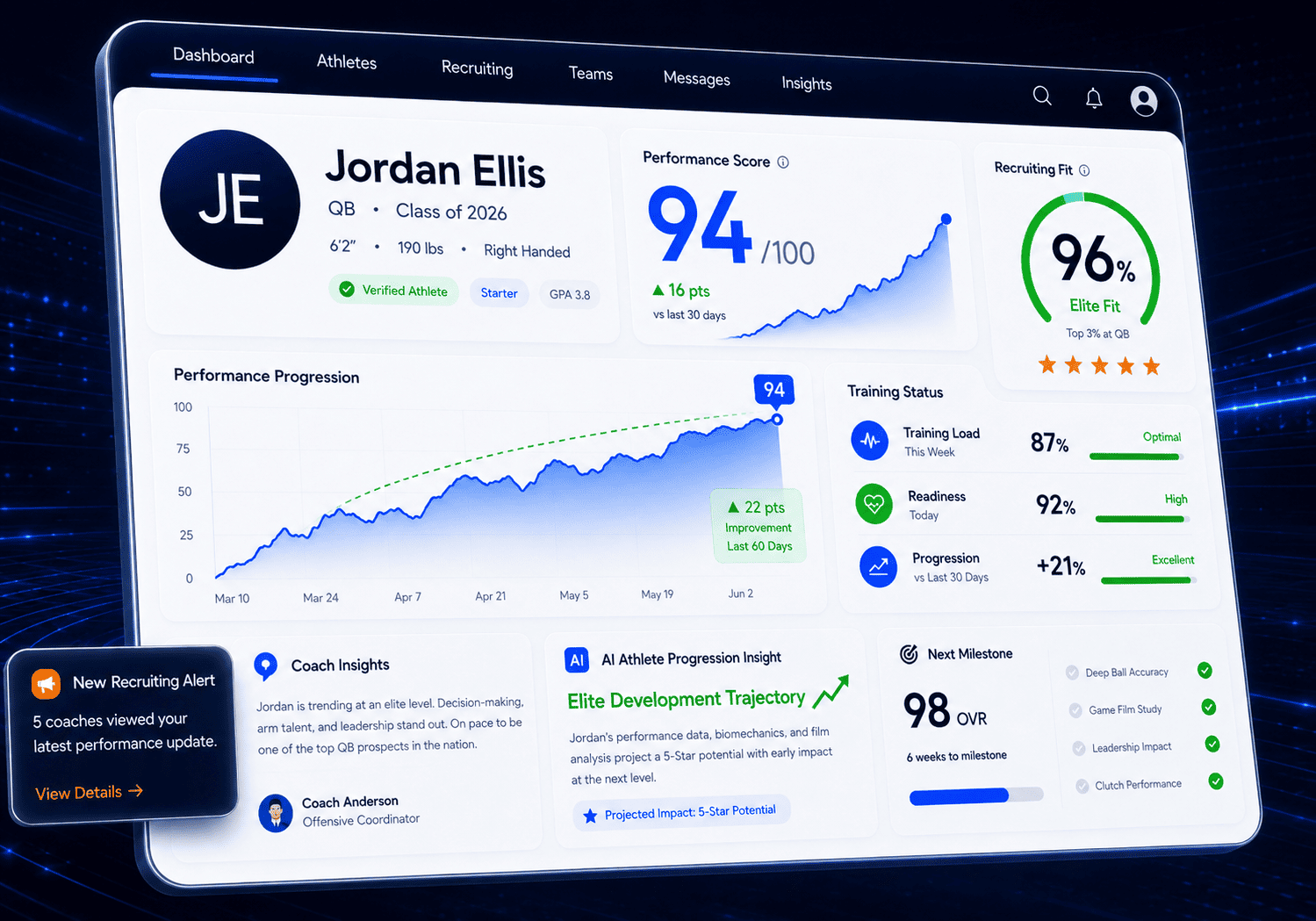
AI-Powered Sports Performance & Recruiting Platform for Virginia Clubs, Academies & Youth Programs

Plavno developed a custom sports technology platform for Virginia-based clubs and academies to combine athlete performance tracking, coach communication, recruiting workflows, and mobile engagement in one ecosystem.

Read More
3x

faster recruiting pipeline

AI-Powered Sports Performance & Recruiting Platform for Virginia Clubs, Academies & Youth Programs

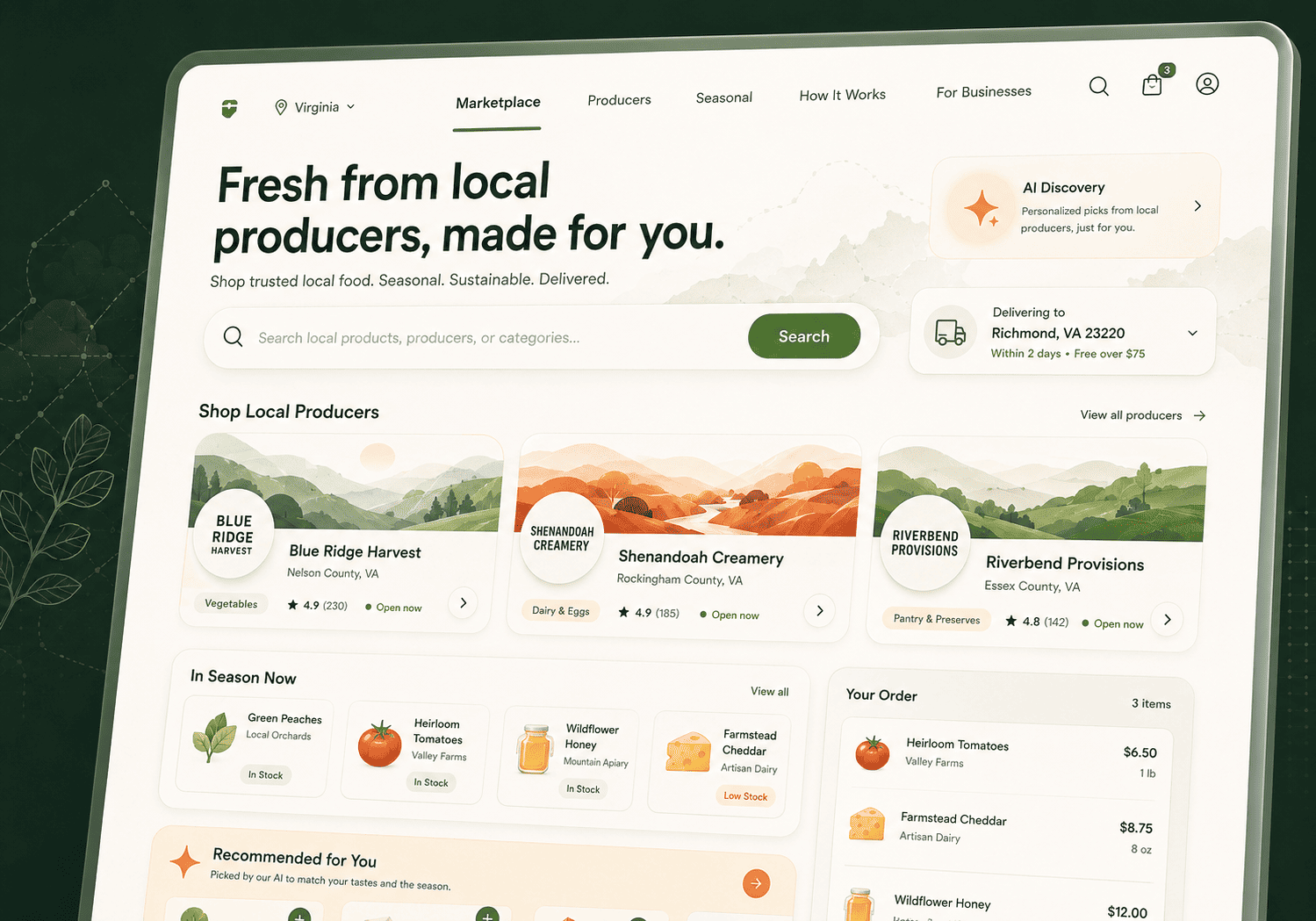
Digital Marketplace for Virginia Farmers, Local Producers & Direct-to-Consumer Food Sales

Plavno developed a custom multi-vendor marketplace for Virginia-based farmers, food producers, and regional sellers to unify product listings, vendor operations, customer ordering, and local fulfillment workflows.

Read More
3x

increase in product discovery relevance

Digital Marketplace for Virginia Farmers, Local Producers & Direct-to-Consumer Food Sales

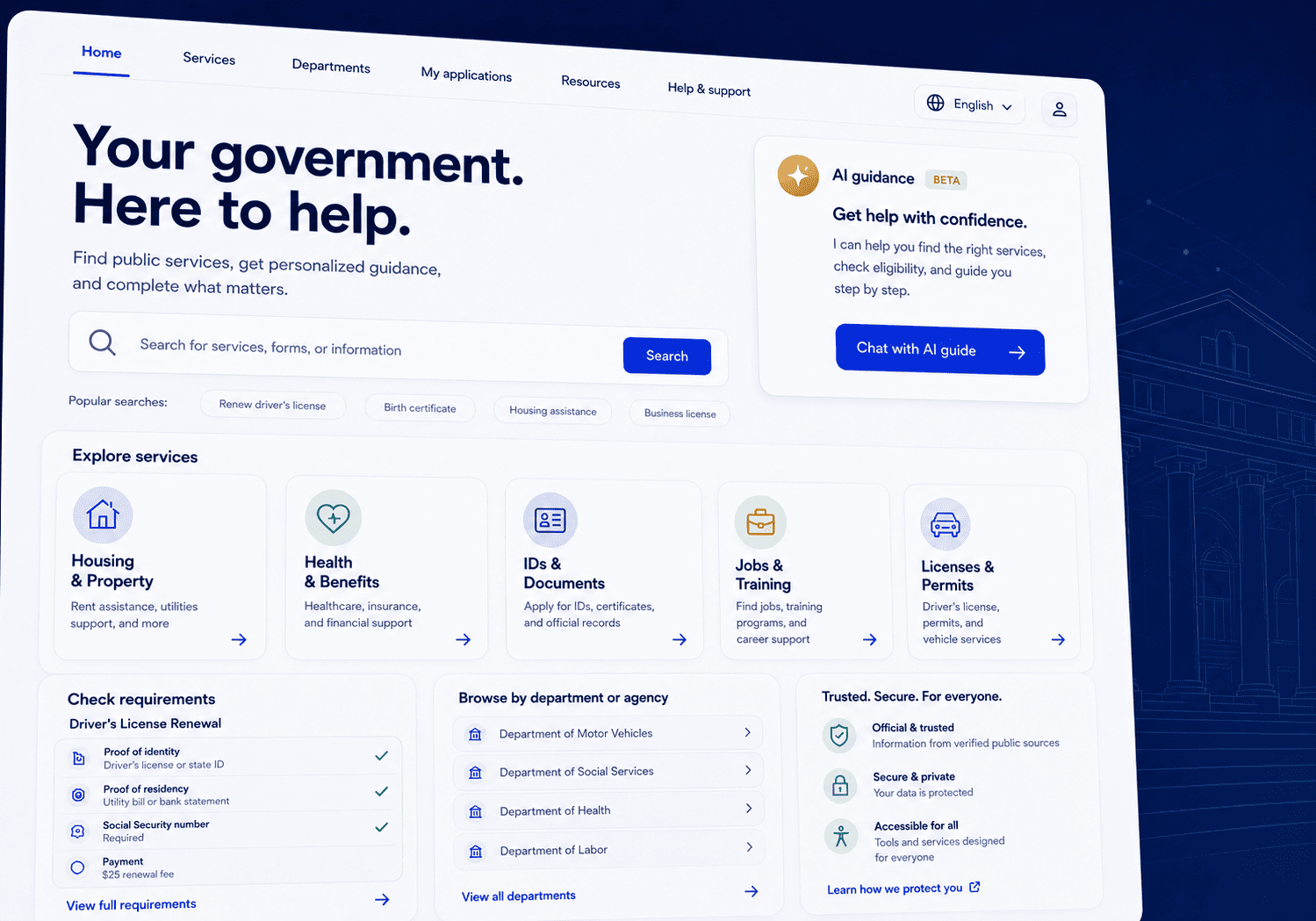
AI-Powered Citizen Services Website Platform for Virginia State Agencies

Plavno developed a modern eGovernment website platform for Virginia state agencies that centralizes citizen services, public information, department content, and an AI-powered guidance agent in one scalable system.

Read More
70%

reduction in routine citizen inquiries to agency staff

AI-Powered Citizen Services Website Platform for Virginia State Agencies

Architecture & Engineering Overview

Engineering choices behind Leesburg Healthcare AI in 2026

Desk capacity recovered

Desk capacity recovered

Drafts and field pulls free hours for access and appeals

Denial risk reduced

Denial risk reduced

Role-scoped approve plus source-ID audit rows on every answer

Token spend controlled

Token spend controlled

Batch large packets and cache stable policy chunks

Patient retention lever

Patient retention lever

Returned desk hours keep phones answered across Loudoun

For Business: Technical ROI & Risk Mitigation

Health groups fund AI when minutes leave the desk and denial exposure falls. The main thesis is that controlled retrieval plus human gates convert ambiguous pilot work into measurable desk capacity without open-ended model risk. Prior auth packs that once took long uninterrupted blocks shrink because drafts and field pulls run first. Supervisors reassign released hours to patient access or complex appeals instead of pure typing.

Risk falls because write-back never fires without role-scoped approval. Audit rows show source document IDs for any PHI-bearing answer. That record matters when payers or reviewers challenge a letter. We saw the same need for accountable outputs when education stacks used rubric-based evaluation and feedback generation so scoring stayed consistent at scale. Medical content inherits that demand for explainable grades of quality.

Cost control arrives through batching large packet jobs and caching stable policy chunks. Clinics avoid surprise token spikes during enrollment seasons. We size capacity using measured desk volume coding rather than vendor marketing peaks. Leadership sees spend tied to completed packets instead of open chat windows.

Local competitive pressure around Loudoun tech and federal workers drives tighter access expectations. Patients leave when phones go unanswered. Returning desk hours is a direct retention tool. Projects fail only when they automate gossip tasks instead of the high-ratio steps. We reverse that by ranking tasks on volume times minutes times denial cost first.

1

Charter & shared gates

PHI boundaries, success metrics, decommission criteria before sandbox exit

2

Hosting & prompt lifecycle

VPC vs managed endpoints, versioned prompt packs, clinic-pod feature flags

3

FHIR-first integrations

Thin RPA adapters that expire; event buses that never bury PHI in third-party logs

4

Year-two drift control

Red-team calendar, automated contractor offboards, dual model + policy reviews

For CTOs: Architecture & Technical Lifecycle

Lifecycle starts with a multi-party charter covering PHI boundaries, success metrics, and decommission criteria. The main thesis is that healthcare agents succeed when product, compliance, and engineering share written gates before code leaves a sandbox tenancy. Kickoff inventories identitys, data residency, and change windows with EHR vendors. Latency SLOs are set against real morning surge numbers from Leesburg front desks, not lab laptops.

Decision points include whether to host models inside private VPC endpoints or approved managed endpoints. Trade-offs weigh egress fees against patch speed. Prompt packs version like any other artifact with peer review. Feature flags isolate a single clinic pod when experiments roll. Governance boards review weekly quality samples before promotion.

Integration work treats FHIR as preferred truth while keeping thin RPA adapters for locked portals. Adapters expire after native APIs appear so debt stays visible. Event buses carry task state without burying PHI in third-party logs. Disaster recovery drills pair AI stack restores with EHR sandbox drills already on the calendar.

Post-launch the program enters year-two cost and drift reviews. Models and policies drift for different reasons. Our schedule inspects both. CTOs receive a calendar of red-team tests and contractor offboards automated into identity disables. That keeps Leesburg programs outside the long-lived access mess that grows after staff churn.

Hybrid retrieval index

Hybrid retrieval index

Vector + keyword so rare drug names hit; section-aware chunkers and plan-year rerankers

Tool-call orchestration

Tool-call orchestration

Extract → draft → validate with locked JSON schemas for IDs and date ranges

Rubric evaluators

Rubric evaluators

Required-element scoring; failures never emit partial claim fields silently

Isolated HIPAA runtime

Isolated HIPAA runtime

Existing vaults, queue workers, spans tagged by clinic ID and packet type

For Engineers: Implementation Details & Stack

Implementation stores policy text and prior notes in a vector plus keyword hybrid index so rare drug names still hit. The main thesis is that hybrid retrieval plus structured tool schemas beat single free-form chat for medical paperwork with legal exposure. Chunkers respect section headers so appeals quote full criteria blocks. Rerankers prefer fragments that share plan ID and year. Memory is session short and never reuses PHI across patients.

Generation orchestration uses explicit tool calls for extract, draft, and validate. Schemas lock JSON shapes for member IDs and date ranges. Free text appears only after tools succeed. Rubric evaluators score required elements the way our education AI grader applied rubric-based evaluation and feedback generation. Failures never leave as partial claims fields silently.

Stack prefers languages and runtimes your team already deploys for HIPAA web apps. Workers run in isolated queues. Secrets live in existing vaults. Observability tags every span with clinic ID and packet type so on-call staff can filter. Edge cases cover half-scanned faxes, dual insurance cards, and multi-language intake that still needs English claim output. Fallbacks route hard packets to humans with labeled reasons.

We reuse patterns proven on the enterprise knowledge assistant for LLM agents, enterprise search, and retrieval-augmented answers with workflow hooks. Engineers inherit ready patterns for citation displays and escalate buttons instead of inventing UI grammar under time pressure.

Evidence-first posture

Evidence-first posture

Region-locked clouds, CMKs, BAAs, least-privilege roles, expiring break-glass

Six live signals

Six live signals

Success, override, token cost, retrieval hit, latency, PII leakage on outputs

Freeze-write incident path

Freeze-write incident path

Write paths first, logs second, privacy officers third—plus fax injection red teams

Canary then county

Canary then county

Single-site canaries before Reston/Herndon rollouts; retained model cards and decision logs

Infrastructure, Observability & Security

Infrastructure for US health clients sits in region-locked clouds with customer-managed keys when required. The main thesis is continuous evidence beats checklist certifications alone when auditors ask what happened on a given Tuesday chart. HIPAA on each path is paired with BAA coverage, least-privilege roles, and break-glass procedures that expire. SOC2-style change records track who promoted a prompt pack.

We monitor task success rate, human override rate, token cost per packet, retrieval hit quality, end-to-end latency, and PII leakage detectors on outputs. WHY these signals matters is simple. High overrides signal bad retrieval. Cost spikes signal document bloat. Latency spikes during 8 a.m. rushes show queue mis-sizing before patients notice. Alerts page on-call and clone into compliance mailers for material events.

Incident response freezes write paths first, freezes logs second, and pages privacy officers third. Playbooks mirror FHIR outage playbooks already practiced. Red teams probe prompt injection through fax cover sheets and malicious attachments. Deployments favor canaries to a single site before county rollouts near Reston or Herndon service areas.

Maintenance retains model cards and decision logs for the retention window legal sets. Cost control work kills abandoned indexes after projects end. Nurses keep chat channels for live exceptions without open anon public endpoints. That posture keeps Northern Virginia operators ready for 2026 audit seasons without repainting the stack each year.

Testimonials

We are trusted by our customers

“They really understand what we need. They’re very professional.”

The 3D configurator has received positive feedback from customers. Moreover, it has generated 30% more business and increased leads significantly, giving the client confidence for the future. Overall, Plavno has led the project seamlessly. Customers can expect a responsible, well-organized partner.

Sergio Artimenia

Commercial Director, RNDpoint

Sergio Artimenia

“We appreciated the impactful contributions of Plavno.”

Plavno's efforts in addressing challenges and implementing effective solutions have played a crucial role in the success of T-Rize. The outcomes achieved have exceeded expectations, revolutionizing the investment sector and ensuring universal access to financial opportunities

Thien Duy Tran

Product Manager, T-Rize Group

Thien Duy Tran

“We are very satisfied with their excellent work”

Through the partnership with Plavno, we built a system used by more than 40 million connected channels. Throughout the engagement, the team was communicative and quick in responding to our concerns. Overall, we were highly satisfied with the results of collaboration.

Michael Bychenok

CEO, MediaCube

Michael Bychenok

“They have a clear understanding of what the end user needs.”

Plavno's codes and designs are user-friendly, and they complete all deliverables within the deadline. They are easy to work with and easily adapt to existing workflows, and the client values their professionalism and expertise. Overall, the team has delivered everything that was promised.

Helen Lonskaya

Head of Growth, Codabrasoft LLC

Helen Lonskaya

“The app was delivered on time without any serious issues.”

The MVP app developed by Plavno is excellent and has all the functionality required. Plavno has delivered on time and ensured a successful execution via regular updates and fast problem-solving. The client is so satisfied with Plavno's work that they'll work with them on developing the full app.

Mitya Smusin

Founder, 24hour.dev

Mitya Smusin

Vendor selection lens

Why Choose Us over generic AI shops

Engineering depth and healthcare operational discipline separate long-lived agents from chat demos that stall after pilot week.

Generic Agencies
Our Platform (Deep Engineering Expertise)
HIPAA BAAs and PHI audit trails by default
checkmark
Human approve gates before EHR write-back
checkmark
Retrieval grounded in site-owned policy packs
checkmark
checkmark
Measured desk-minute baselines before build
checkmark
Prompt and model versioning with rollback
checkmark
Slide deck strategy without production code
checkmark
Post-launch drift and cost reviews included
checkmark

Data plane and controls

Integration fabric that keeps PHI inside your boundary

The second build track for Leesburg buyers focuses on how data moves, not on the language model itself. Groups fail when integrations bolt on after UI demos. We reverse that order. Adapters, identities, and retention rules land before larger models pore over charts. Patterns again borrow from enterprise agent work that needed multi-source search and controlled automation rather than one fat print monologue.

Data prep defines field dictionaries for every form the agent may touch. Mapping sessions include coding and compliance leads so synonyms do not invent house codes. Source-of-truth tables decide whether the clearinghouse or EHR owns a claim status. Nightly reconciliations test that writes to one system still match the second. Marketing promises skip this boring work. Denials later reveal the gap.

Security on the data plane means column-level masks for demos, tokenization for stable keys, and short-lived signed URLs for packet previews. Engineers never copy live PHI into unlimited SaaS sandboxes. Logging strips free-text content while still storing decision codes. Separation of retrieval indexes by business unit stops a behavioral health dataset diluting primary care answers. Loudoun multi-entity groups especially need that wall.

Cost and latency risks surface when PDFs balloon or when overnight OCR floods the same queue as interactive chat. We split batch and interactive workers. Queue depths report to ops before Monday. Backoff respects EHR rate cards so morning charting does not compete with AI thrash. These controls are plain DevOps, not magic. They keep 2026 budgets predictable for Virginia operators.

Maintenance contracts include quarterly access reviews and dead index cleanup. Subscription marketplace engineering taught us to design billing and entitlement packages carefully. Healthcare shares the need for clear entitlements: who pays for extra seats or higher packet volume after pilot. Clients get visible knobs rather than surprise invoices. Technical debt stays a tracked backlog item, not a quiet seizures risk six months after launch.

Eugene Katovich

Eugene Katovich

Sales Manager

Need a custom software solution? We’re ready to help!

Plavno has a team of skilled developers ready to tackle the project. Ask me!

Get a Free Quote

Readiness before kickoff

Pre-project checks for Leesburg Healthcare AI buyers

  • Inventory PHI paths and BAAs — List every system that stores member IDs or clinical notes for the pilot desk. Confirm BAAs exist for current vendors and for any new model host. Identify who owns FOIA or state breach notices. Map secondary copies in shared drives that still hold old packets. Without this list engineers cannot size controls. Leesburg teams that skip it lose weeks mid-build on surprise file shares.

  • Capture a timed baseline of the desk — Record minutes per packet category for two normal weeks. Separate complex specialty cases from routine. Note staff roles who intervene. Capture denial codes that loop back. A baseline turns later headlines into real ROI stories. Northern Virginia leaders use that baseline when boards ask why tools beat more hires.

  • Freeze identity groups and clinic scopes — Decide which Active Directory groups unlock which agents. Draft the break-glass process with expiry. Name the business owner for model updates. Document overnight freeze windows tied to EHR upgrades. Clear ownership stops silent permission creep after contractors leave Herndon campuses.

  • Stage a representative offline dataset — Pull redacted prior samples of the target packet type with outcomes attached. Include bad scans and multi-plan thrash cases. Document consent for reuse in sandbox. Size media carefully so engineers meet realistic OCR pain. Teams that hand only perfect samples discover real load only after go-live.

  • Agree on human-in-loop SLAs — Define max hours for nurse review of drafts before queues age. Write escalation paths to physician leads. Choose quality metrics that stop auto-promotion when override rates climb. Plan staffing for first month peaks. Automation still fails when no ranked human is awake to catch edge cases across Loudoun sites.

Vitaly Kovalev

Vitaly Kovalev

Sales Manager

Request a Leesburg Healthcare AI desk audit

Share budget band, timeline, stack, and sample packet set. Receive a free desk-minute and HIPAA gap estimator built for Leesburg businesses.

Talk to Experts

Buyer questions

Healthcare AI FAQs for Leesburg leaders in 2026

Straight answers on cost, timing, data, quality, compliance, and run state for Virginia health operators.

What drives the cost of Healthcare AI services for a Leesburg clinic?

Cost follows scope of workflows, data readiness, and integration depth more than model brand labels. A single prior-auth desk with clean PDFs and FHIR write paths costs far less than multi-site RCM covering five locked payer portals. Local Virginia markets also price engineer hours against D.C. metro averages, so on-site discovery sessions add travel only when dual control requires it. We price discovery, build, and a fixed first quarter of monitoring as separate lines so boards see spend move with risk. Token usage sits under caps tied to packet counts rather than open chat. Hidden cost lands when people skip redaction labor and later rebuild indexes after an audit finds orphan copies. Clinics that arrive with timed baselines and named system owners finish sooner and spend less. Expect change orders mainly when DHCP EHR vendor fees appear mid-project or when staffing models require extra dual-control training. We will not invent thrifty numbers. Share your volume bands, stack diagram, and BAA list so we can estimate within twenty-four hours with clear assumptions.

How long does it take to build Healthcare AI software for production use?

A focused MVP with assisted drafts for one desk often lands in eight to twelve weeks after data access is live. Full deployment with guarded write-back, multi-site config packs, and cost monitors commonly takes four to six months depending on EHR slots and staffing for human review. Timeline math starts only when identitys and sample packets arrive. Sandbox waiting can idle calendars longer than coding. Education grader projects taught us to ship rubric checks early so quality gates do not stall at the end. Internal knowledge agents had similar critical path: retrieval quality before fancy front ends. Leesburg groups usually stage by clinic pod so a Reston or Ashburn site does not wait for every policy clause elsewhere. Rush schedules fail when compliance legal needs two weeks per SOP update. We publish a rolling plane with freeze windows around major EHR upgrades. MVP proves minutes saved. Full rollout hardens observability and cost. Ask for both plans rather than one number, and bring your release calendar so we align with locked change freezes already on the hospital board schedule.

What data do you need before a Healthcare AI pilot can start?

We need three classes of material: process video or shadow notes of the desk, redacted historical packets with outcomes, and system maps for identitys plus write targets. Without the timed baseline we cannot set success gates. Without packet samples retrieval and OCR stay theory. Without identity maps we cannot place least-privilege controls. De-identify under your policy before share, or host us inside your private room. Sample size should cover the messy cases you actually see on Mondays. Perfect cases alone mis-train expectations. Provide the versioned policy manuals those packets must obey so citations match. Log retention policies also matter so we design storage correctly from week one. Startup-like outpatient groups in Northern Virginia often begin with a few hundred anonymized samples and grow as consent packs expand. Enterprise hospital groups usually route through existing IR or privacy offices first. We help draft a request packet that privacy teams accept. The pilot will not start on slogans. It starts when these three assets sit in a controlled bucket and status owners answer Slack on delays.

How do you evaluate quality of Healthcare AI outputs over time?

Quality for clinical paperwork is multi-signal. We score retrieval hit correctness on sampled queries, check that required rubric elements appear in drafts, track human override reasons, and measure end-to-end minutes versus the baseline. The education AI grader work showed how automated scoring plus rubric-based evaluation plus feedback generation keeps volume without silent drift. We apply similar graded checks for appeal letters and auth packets. A weekly sample reviewed by dual clinical and coding reviewers decides if a prompt pack may promote. Dashboards police override rate climbing as a kill switch. Latency and cost sit next to accuracy; a perfect letter that arrives late after the credential window still fails finance. Gold set files stay frozen in Git so later model upgrades retest the same cases. Loudoun multi-site work also compares override patterns between clinics to catch policy pack mismatch. Qualitatively our enterprise retrieval agents already lived under similar citation norms. Programs that only measure user happiness smoke bad answers through thin satisfaction. We publish a quality contract at kickoff so both sides know what green means before anyone celebrates demos.

How do you handle HIPAA and security for Healthcare AI in Virginia?

HIPAA drives tenancy, logging, and people process first. Business associate agreements cover every provider that may touch PHI. Keys stay customer managed when your risk team demands. Role scopes map to existing groups so a temporary tech from Ashburn cannot open behavioral notes. Write paths freeze until dual approval if the client elects that control. We design logs that prove who, when, which record context, and which model version without dumping free text into third parties. Encryption covers rest and transit. Backups inherit same controls. Penetration tests include prompt injection through faxes and rogue attachments. Virginia operators also watch state privacy notices and multi-state licensing rules when telehealth crosses borders. Incident playbooks freeze egress first and notify privacy officers on measured timers. SOC2-style change evidence trails every prompt pack deploy. We do not rely on marketing badges. Evidence pipelines exist so auditors can pull a Tuesday trail. Staff training includes phishing drills aimed at AI tool admin consoles. Security is continuous monitoring, not a binder we hand at go-live.

Contact Us

This is what will happen, after you submit form

Need a custom consultation? Ask me!

Plavno has a team of experts ready to start your project. Ask us!

Vitaly Kovalev

Vitaly Kovalev

Sales Manager

Schedule a call

Get in touch

Fill in your details below or find us using these contacts. Let us know how we can help.

Required because you selected “Other” above

No more than 3 files may be attached up to 3MB each.
Formats: doc, docx, pdf, ppt, pptx, xls, xlsx, txt.
Book your meeting