bg image
bg image

Serving Herndon & Virginia

Cut clinical admin load for Herndon health teams in 2026

Herndon operators lose hours every day to intake, coding support, and chart review. That drag slows clinics, payers, and research sites across Northern Virginia. We help leadership teams install Healthcare AI that reduces repeat work and raises throughput. You keep control of data, budget, and vendor risk. Programs target measurable cycle time and staff hours, not demo screens. Built for B2B health companies that need production systems this year. Get Healthcare AI cost estimate in 24 hours.

Discuss Project

Overview

Why Herndon health ops need production AI now

Herndon sits beside Reston, Dulles, Tysons, and McLean, where federal contractors, health systems, and biotech groups share one pressure. Staff spend too long hunting policies, coding rules, and prior records. Leadership wants AI that cuts that drag without creating new compliance debt. Trusted Healthcare AI Partner for Herndon Businesses means we plan for real ward and claims load, not lab demos.

We work with US-based clients, including companies operating in Virginia. Local operators need systems that respect PHI boundaries, audit trails, and change control from day one. Our delivery work already includes an enterprise employee support agent that answers staff questions with retrieval-augmented responses and workflow automation. That same pattern maps cleanly to clinical ops desks, revenue cycle teams, and quality offices near Fairfax and Ashburn.

Outcomes stay concrete. Faster answers for frontline staff. Fewer handoffs between knowledge sources. Clear owners for model risk and data quality. When imaging or document intake is part of the path, we connect text agents to computer vision so review queues shrink without opaque black boxes. We also use rubric-style evaluation methods proven in our EdTech grader work so model output quality is scored, not guessed.

Herndon buyers often juggle Epic, Cerner, Salesforce Health Cloud, claims feeds, and legacy portals. Integration risk is the silent budget killer. We map those interfaces early, bound latency targets, and keep token and host costs visible. You get a staged plan that protects production, not a slide deck of promises. Over 10+ Healthcare AI related delivery projects in the US market shape how we staff discovery and risk reviews.

Healthcare AI services here mean governed agents, retrieval layers, evaluation harnesses, and HIPAA-aligned release paths. We write runbooks, monitoring hooks, and ownership charts so your team can run the system after launch. That is the difference between a pilot and a line item you can defend to finance.

Talk to an Expert
Governed agents

Governed agents

Role-aware answers with citations for ward & claims desks

Retrieval layers

Retrieval layers

Curated corpora, policy stores, PHI-bound indexes

Evaluation harnesses

Evaluation harnesses

Rubric scoring so quality is measured, not guessed

HIPAA release paths

HIPAA release paths

Runbooks, audit trails, ownership charts post-launch

plavno logo

Build your first
Smart AI project today!

Just tell the Plavno AI Agent about your project - it will ask questions, gather requirements, and propose a tailored solution

Core stack choices

Architecture Herndon teams can own in production

Herndon health groups need systems that answer real staff and patient-ops questions without leaking PHI into open models. We build retrieval-first agents that sit on curated corpora, policy stores, and ticketing APIs. The same pattern powered our enterprise internal knowledge assistant. Staff ask in plain language. The agent searches approved sources. Answers cite what was used. Workflows then open tasks or updates only where policy allows.

Core pieces stay simple to explain to risk and IT. An orchestration layer routes intents. A vector index holds redacted or approved document chunks. A policy gate checks role, purpose, and data class before any call leaves the private boundary. Model choice depends on latency and cost. Smaller hosted models handle high-volume routing. Larger models stay on complex summarization where quality pays for the spend. We pick tools for measurable control, not brand lists.

For scoring and feedback loops we reuse methods from our AI grader program. Rubric-based evaluation scores structured outputs against clinical or coding criteria you define. That keeps generation from drifting into freestyle prose. Feedback generation then packages reviewer notes so human oversight stays fast. This matters when revenue cycle or quality teams need consistent language across thousands of cases per month in Northern Virginia sites.

Security/compliance is designed in, not stapled on. Encryption in transit and at rest, secrets isolation, environment separation, and audit logs are baseline. Access maps to least privilege. PHI fields never enter training sets without a written control path. We document model cards, data lineage, and break-glass procedures so HIPAA reviews do not stall launch. Vendor BAAs and regional hosting choices get settled before code freezes.

DevOps covers promotion gates, canary releases, rollback hooks, and cost dashboards. CI pipelines run evaluation suites on every meaningful change. Alerting watches latency, error rate, token burn, and retrieval miss rates. On-call runbooks name who owns incidents on your side and ours. You receive infrastructure-as-code and environment maps so internal engineers are not locked out. Herndon clients keep the keys, the logs, and the ability to change providers later if strategy shifts.

Healthcare AI Solutions for Herndon Industries

Where Northern Virginia health operators apply AI first

Use cases track real Herndon employers: health systems, payers, biotech, device firms, and federal health contractors across Dulles and Reston.

Hospital Knowledge

Hospital Knowledge

Desks

Hospital and clinic knowledge desks

Front-line staff near Herndon still bounce between shared drives and intranet pages for policy answers. That delay shows up as longer intake and frustrated nursing units. We deploy retrieval agents with role-aware answers and source citations. Teams cut repeat calls to supervisors and free specialists for bedside work. Typical ROI target is a 20 to 30 percent drop in internal search time within one quarter. Tech path uses enterprise search, LLM routing, and workflow hooks into existing ticketing. Guardrails block out-of-policy replies before they reach the user.

Revenue Coding

Revenue Coding

Support

Revenue cycle and coding support

Payer and provider groups around Fairfax face mounting denial work and coding backlog. Manual first-pass review burns expensive specialist hours. We install assistants that draft coding suggestions against your rubrics and flag missing documentation. Humans approve the final claim. Cycle time falls while auditability stays intact. A practical ROI frame is faster first-pass completion on high-volume claim classes within 90 days. The stack pairs structured extraction, rubric scoring, and human review queues. Logging keeps every suggestion tied to the source record.

Biotech Trials

Biotech Trials

Operations

Biotech trial operations in Dulles Corridor

Trial ops teams near Dulles juggle protocols, site questions, and SOP updates across sponsors. Search friction slows site activation and monitoring. We build private knowledge agents over protocol libraries with strict access tiers. Monitors get faster, cited answers instead of email chains. Result is fewer stalled site queries and cleaner audit trails for sponsors. Implementation uses retrieval-augmented answers plus workflow automation for escalations. Access logs support inspection without rewriting your document store.

Federal Contractors

Federal Contractors

Service

Federal health contractor service desks

Contractors supporting federal health programs need tight control of what models can see. Generic chat tools fail security reviews fast. We design segmented agents with purpose-of-use checks and environment isolation. Agents answer only from approved corpora and ticket history. Leadership gains shorter resolution times without expanding clearance scope. Expect measurable reduction in Tier-1 handle time after the first production wave. Engineering centers on policy gates, encrypted stores, and orchestration that never mixes tenant data. Change control aligns to your ATO rhythm.

Device Quality

Device Quality

Docs

Medical device quality documentation

Device firms in Reston and Herndon maintain dense quality systems and CAPA history. Finding the right precedent still takes senior engineers hours. We introduce search and summarization over controlled document sets with version awareness. Authors draft faster with cited prior art from your own library. Quality cycle time improves and training load on new hires drops. Solution design mixes document chunking, metadata filters, and review workflows. Outputs stay draft-class until a human signs off in your QMS.

Payer Support

Payer Support

Members

Payer member and provider support

Health plans serving Virginia members drown in repetitive benefit and network questions. Call centers cannot scale linearly with membership. We implement retrieval agents that answer from approved benefit text and route exceptions. Agents reduce average handle time and keep scripts consistent across shifts. ROI shows up as lower cost per contact and improved first-contact resolution. Architecture includes intent routing, RAG over curated content, and CRM write-backs. Supervisors monitor quality with evaluation dashboards rather than spot checks alone.

Case Study

We help customers cut
down on development

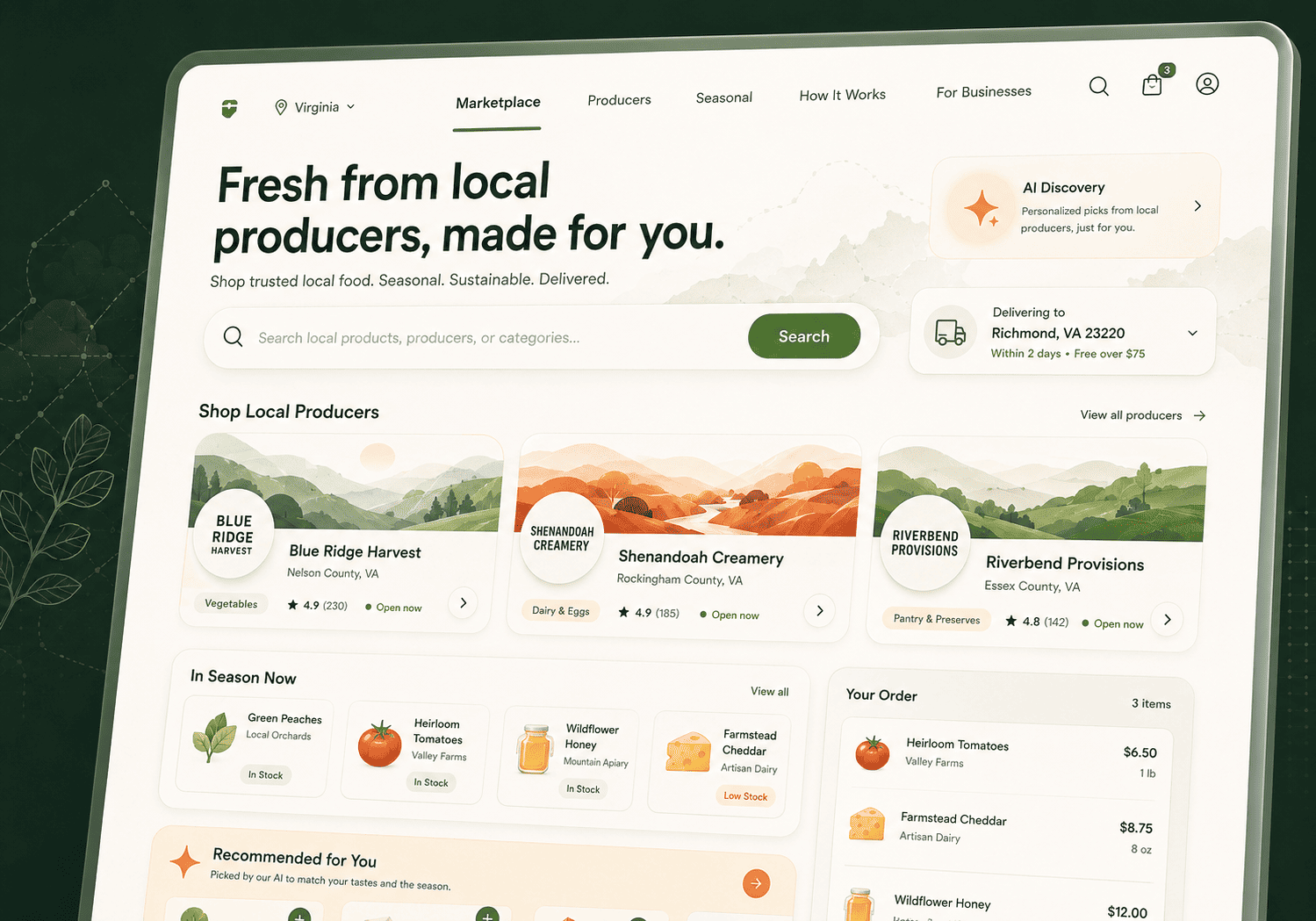
Digital Marketplace for Virginia Farmers, Local Producers & Direct-to-Consumer Food Sales

Plavno developed a custom multi-vendor marketplace for Virginia-based farmers, food producers, and regional sellers to unify product listings, vendor operations, customer ordering, and local fulfillment workflows.

Read More
3x

increase in product discovery relevance

Digital Marketplace for Virginia Farmers, Local Producers & Direct-to-Consumer Food Sales

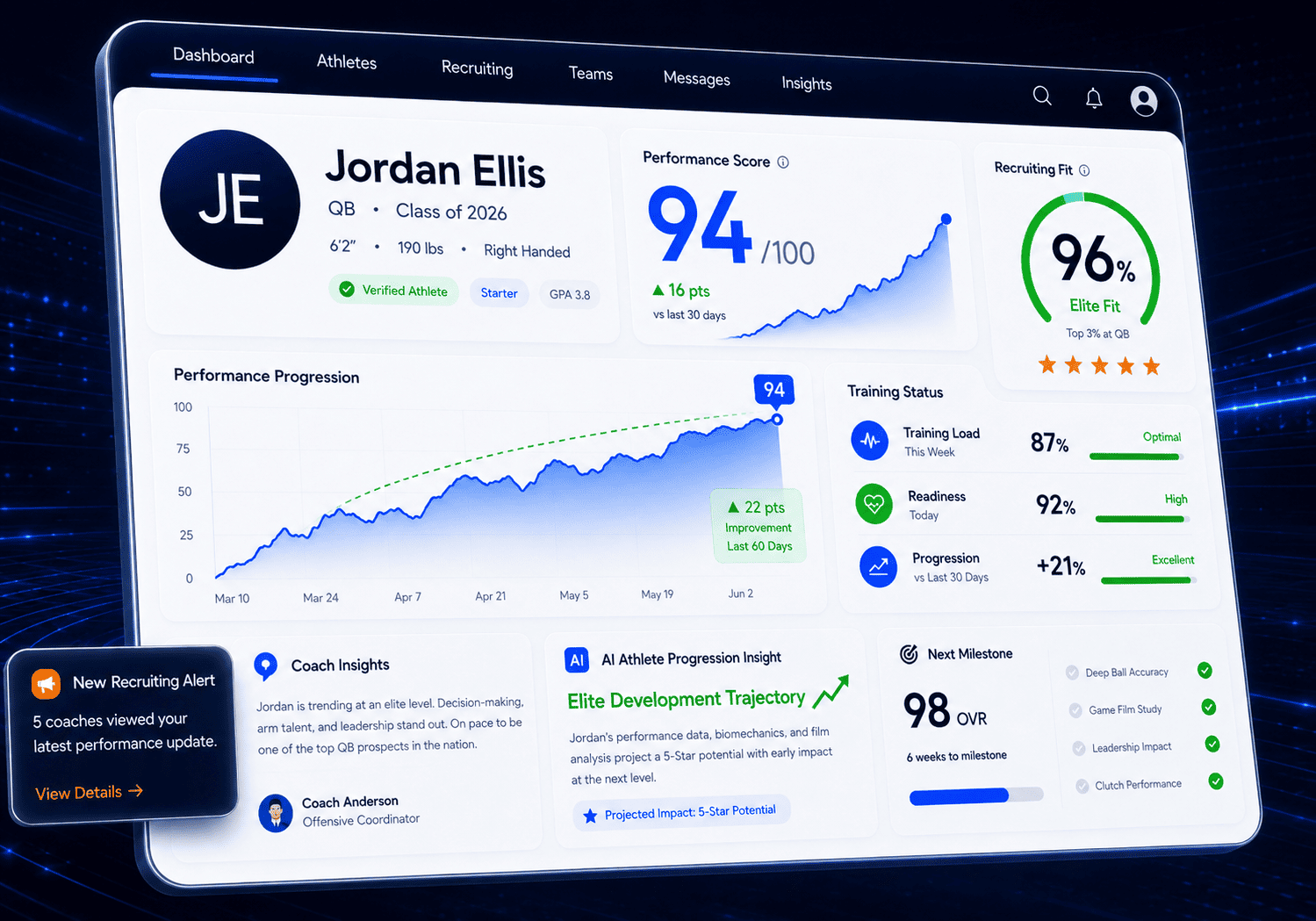
AI-Powered Sports Performance & Recruiting Platform for Virginia Clubs, Academies & Youth Programs

Plavno developed a custom sports technology platform for Virginia-based clubs and academies to combine athlete performance tracking, coach communication, recruiting workflows, and mobile engagement in one ecosystem.

Read More
3x

faster recruiting pipeline

AI-Powered Sports Performance & Recruiting Platform for Virginia Clubs, Academies & Youth Programs

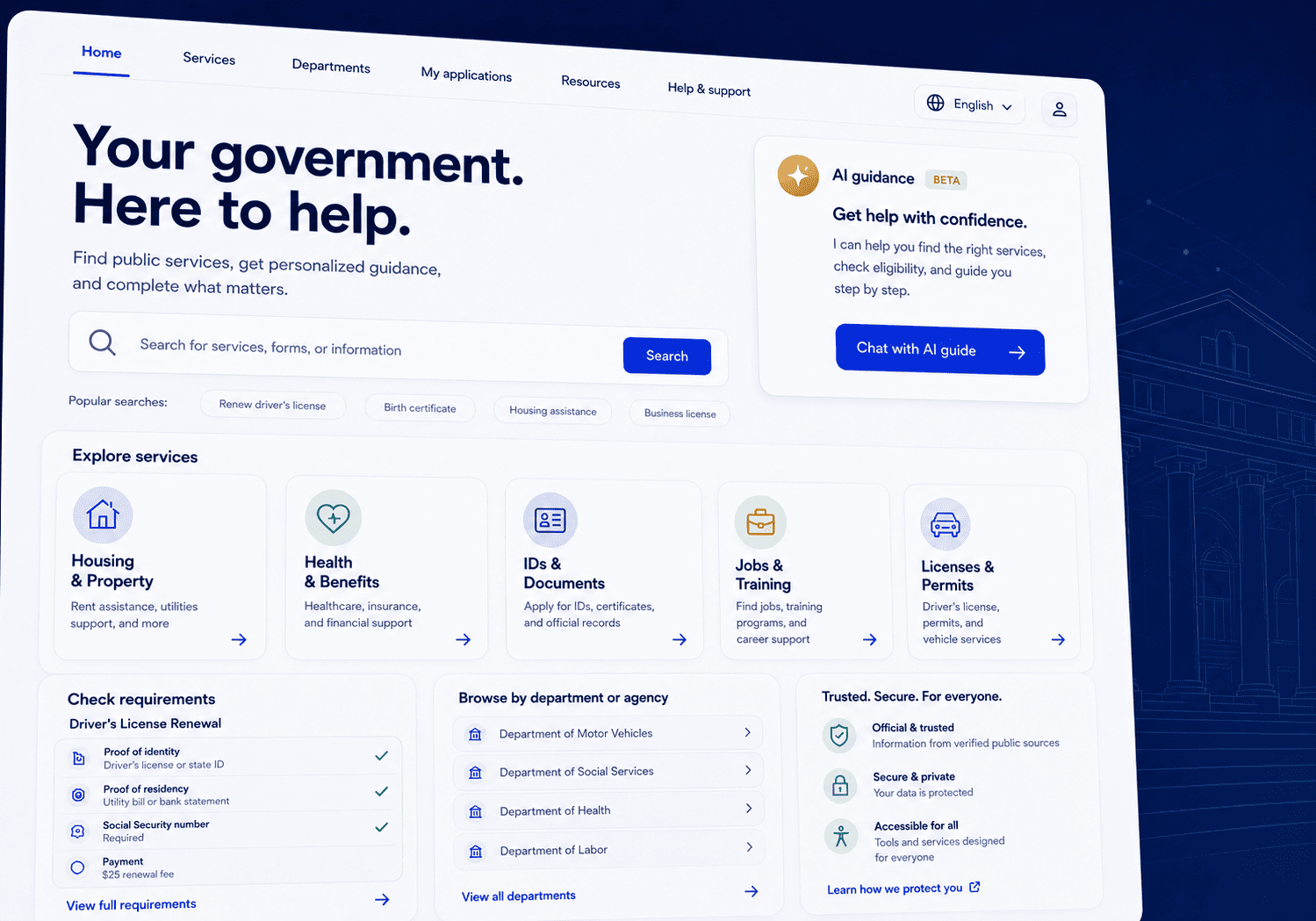
AI-Powered Citizen Services Website Platform for Virginia State Agencies

Plavno developed a modern eGovernment website platform for Virginia state agencies that centralizes citizen services, public information, department content, and an AI-powered guidance agent in one scalable system.

Read More
70%

reduction in routine citizen inquiries to agency staff

AI-Powered Citizen Services Website Platform for Virginia State Agencies

Architecture & Engineering Overview

How Herndon Healthcare AI programs stay fundable in 2026

Hours & denials ROI

Hours & denials ROI

Baselines on cycle time, handle time, backlog age

Bounded risk path

Bounded risk path

Corpus limits, citations, human gates on claims

Shipped patterns

Shipped patterns

Knowledge assistant + rubric grader transfer

Living cost case

Living cost case

Token burn reviews; cut features that miss payback

For Business: Technical ROI & Risk Mitigation

Budget owners in Herndon care about hours returned, denial drag, and audit exposure. Technical choices only matter when they move those three numbers without creating new liability. We start with a narrow workflow that already has volume and clear owners. That focus avoids wide pilots that never reach payroll impact. Each release ships with a baseline of cycle time, handle time, or backlog age so finance can read results without translation.

Risk mitigation rides beside ROI. PHI misuse, hallucinated guidance, and unbounded model spend are the usual failure modes. We bound corpora, require citations, and set spend caps per environment. Human approval stays in the path for irreversible actions such as claim submission or clinical advice. That structure keeps legal and compliance teams engaged instead of blocking late in the schedule.

We ground delivery in work already shipped. The enterprise knowledge assistant proves staff can trust retrieval-backed answers when sources are visible. The AI grader proves rubric scoring can keep outputs consistent at volume. Those patterns transfer to coding assist, quality documentation, and ops desks without inventing unproven methods. You buy reduced uncertainty, not just model calls.

Cost control remains visible after launch. Token burn, retrieval miss rates, and escalation volume feed monthly reviews. If a feature costs more than the hours it saves, we cut or redesign it. That discipline protects margin for clinics and contractors competing hard in Northern Virginia. Leadership gets a living business case instead of a one-time deck.

Procurement risk falls when contracts name data return, model training bans, and exit plans. We write those clauses into the technical design early. Hosting regions, key ownership, and log retention land on paper before production traffic. You remain able to change vendors without rebuilding the whole workflow stack from zero.

Discovery

Discovery

Data classes, SOR map, latency & decision rights

Thin vertical

Thin vertical

Replaceable orchestration, portable retrieval

Evaluation gates

Evaluation gates

Score thresholds, drift checks, ADRs for boards

Controlled scale

Controlled scale

Contract tests, runbooks, 90-day backlog handoff

For CTOs: Architecture & Technical Lifecycle

Lifecycle design decides whether Herndon teams can operate the system after we leave. We treat discovery, thin vertical, evaluation gates, and controlled scale as fixed stages with exit criteria. Discovery maps data classes, systems of record, latency budgets, and decision rights. No model work starts until those are written. That prevents silent scope growth once demos look good.

Architecture choices favor replaceable parts. Orchestration stays separate from model providers. Retrieval indexes remain portable. Policy checks live as services, not hard-coded prompts. Trade-offs get documented when we pick managed versus self-hosted models. Latency, cost, and residency needs drive that call more than fashion. Governance boards see the rationale before money commits.

Decision points include which workflows stay human-led, which data can leave the VPC, and how rollback works under incident load. We define promotion rules from staging to production using evaluation score thresholds. Drift checks run on sample sets pulled from real traffic patterns after go-live. CTOs receive architecture decision records they can reuse on later products.

Integration is scheduled, not hoped. EHR connectors, identity providers, and ticket systems get contract tests. Failure modes such as partial outages and slow retrieval are exercised before users depend on the agent. Technical debt is tracked as open risks with owners. You know which shortcuts exist and when they will be retired.

Handoff includes runbooks, on-call charts, cost alerts, and a 90-day improvement backlog. Internal engineers pair on releases so knowledge does not live only in our repo history. That is how programs survive budget seasons and staff changes across Virginia sites.

Orchestration + policy gates

Orchestration + policy gates

Intent classify, tool select, purpose tags, timeouts

Document pipelines

Document pipelines

Section chunking, metadata, OCR reject, in-VPC indexes

Rubric evaluation harness

Rubric evaluation harness

Field-level scores before human queues; fail to review

Workflow adapters

Workflow adapters

Scoped ITSM/RCM APIs, idempotent writes, feature flags

For Engineers: Implementation Details & Stack

Engineers need concrete choices, not slogans. We implement retrieval-augmented agents with explicit policy gates, evaluation harnesses, and workflow adapters. Document pipelines chunk by section, attach metadata such as department and effective date, and reject low-quality OCR before indexing. Embeddings and indexes stay inside your controlled network when PHI is present. Query rewriting improves recall without widening data access.

Orchestration services classify intent, select tools, and enforce timeouts. LLM calls carry purpose tags for audit. Prompt templates version with the same rigor as application code. For consistency tasks we apply rubric-based evaluation similar to our EdTech grader. Structured outputs are scored against field-level criteria before they reach a human queue. Failures route to review rather than silent defaults.

Workflow automation connects to ITSM or RCM systems only through scoped APIs. Writes are idempotent and reversible where possible. We prefer event-driven adapters so peak clinic hours do not stall the agent. Caching covers frequent policy reads. Rate limits protect both model spend and downstream EHRs. Feature flags let you disable a path without a full redeploy.

Production edge cases get tests: empty retrieval, conflicting sources, expired documents, and mixed-language notes common in multi-site groups. Observability includes trace IDs across retrieval, model, and workflow steps. Engineers can replay a failed answer with redacted payloads. That shortens debug cycles when Reston or Fairfax sites report odd behavior after a content update.

Stack choices stay reasoned. Managed vector stores when ops load is high. Self-hosted when residency demands it. Smaller models for routing. Larger models only where quality deltas justify cost. Secrets never live in prompts. Configuration is environment-scoped. Every dependency has an owner named in the repo so on-call is not a scavenger hunt.

Private & encrypted

Private & encrypted

Separated envs, IdP federation, time-bound break-glass

Ops monitoring

Ops monitoring

Latency, miss rates, token spend, eval score trends

HIPAA alignment

HIPAA alignment

BAAs, audit logs, no training on your traffic

Canary & rollback

Canary & rollback

Blue-green deploys, circuit breakers, exportable IaC

Infrastructure, Observability & Security

US healthcare clients need controls that survive audits and real incidents. We run private networking, encrypted stores, continuous evaluation, and incident playbooks as standard infrastructure, not add-ons. Environments separate build, staging, and production. Identity is federated to your IdP. Break-glass access is logged and time-bound. Backups and retention maps match your legal hold requirements for Virginia operations.

What we monitor is intentional. Latency percentiles on agent responses. Retrieval miss and low-confidence rates. Token spend by workflow. Error budgets per integration. Evaluation score trends on golden sets. Alerting fires when quality drops or cost spikes, not only when services crash. Dashboards feed weekly ops reviews so product and security see the same truth.

HIPAA alignment covers BAAs, minimum necessary access, audit logging, and encryption. SOC2-minded practices guide change management and vendor review. We document data flows end to end so security can map controls without reverse engineering code. Model providers are restricted from training on your traffic. Residuals and temporary caches get deletion policies you can verify.

Incident response names severity, comms owners, and rollback paths. If a model release degrades coding suggestions, canaries stop promotion and prior versions return fast. If a connector leaks errors into the EHR, circuit breakers open and human queues absorb load. Post-incident notes update evaluation sets so the same failure class is caught earlier next time.

Deployment for multi-site Northern Virginia clients supports blue-green or canary patterns. Configuration is promoted with the same gates as code. Cost controls include budget alarms and per-tenant quotas where needed. You keep exportable logs and infrastructure definitions. That preserves independence if corporate strategy changes hosting partners later.

Delivery outcomes

What Herndon buyers actually receive in 2026

Governed clinical ops agents

Governed clinical ops agents

Ops leaders need answers that staff can trust under shift pressure. We ship agents bound to approved sources with citation trails and role checks. Business result is fewer escalations and shorter handle times on common policies. Technical approach uses LLM routing plus retrieval over curated corpora. Policy gates block out-of-scope questions before generation. Workflow hooks open tickets only when humans must act. Herndon teams keep audit logs ready for compliance review.

Rubric-backed quality scoring

Rubric-backed quality scoring

Inconsistent AI drafts create more review work than they remove. We apply rubric-based evaluation so outputs meet your field rules every run. That method proved useful in our automated scoring work for education products and transfers well to coding and documentation assist. Reviewers see scores and rationale, not raw text piles. Error classes feed the next model and prompt release. Quality becomes a measured control, not an opinion after the fact.

Enterprise search for PHI-aware content

Enterprise search for PHI-aware content

Knowledge is scattered across drives, wikis, and ticket history in most Herndon health firms. We build enterprise search that respects ACL and data class before ranking results. Staff find current SOPs without pinging specialists. Retrieval-augmented answers then summarize only what the user may see. Indexing pipelines reject weak OCR and stale copies. The outcome is faster onboarding and fewer conflicting instructions across Reston and Fairfax sites.

Workflow automation with human gates

Workflow automation with human gates

Automation fails when it skips approvals that regulations demand. We wire agents to create drafts, tasks, and reminders while humans retain final authority on sensitive steps. This cuts idle time between systems without silent writes into EHRs or claims platforms. Adapters stay idempotent and reversible where possible. Monitoring tracks stuck workflows and retry storms. Managers in Dulles Corridor ops get throughput gains with a clear accountability path.

HIPAA-aligned release engineering

HIPAA-aligned release engineering

Shipping fast means little if production cannot pass security review. We package environments, secrets handling, evaluation gates, and BAAs into the delivery plan from week one. Herndon buyers get promotion rules tied to quality scores and cost budgets. Logs support investigations without exposing raw PHI to broad teams. Rollback paths are tested, not theoretical. You leave with runbooks your internal staff can execute on nights and weekends.

Testimonials

We are trusted by our customers

“They really understand what we need. They’re very professional.”

The 3D configurator has received positive feedback from customers. Moreover, it has generated 30% more business and increased leads significantly, giving the client confidence for the future. Overall, Plavno has led the project seamlessly. Customers can expect a responsible, well-organized partner.

Sergio Artimenia

Commercial Director, RNDpoint

Sergio Artimenia

“We appreciated the impactful contributions of Plavno.”

Plavno's efforts in addressing challenges and implementing effective solutions have played a crucial role in the success of T-Rize. The outcomes achieved have exceeded expectations, revolutionizing the investment sector and ensuring universal access to financial opportunities

Thien Duy Tran

Product Manager, T-Rize Group

Thien Duy Tran

“We are very satisfied with their excellent work”

Through the partnership with Plavno, we built a system used by more than 40 million connected channels. Throughout the engagement, the team was communicative and quick in responding to our concerns. Overall, we were highly satisfied with the results of collaboration.

Michael Bychenok

CEO, MediaCube

Michael Bychenok

“They have a clear understanding of what the end user needs.”

Plavno's codes and designs are user-friendly, and they complete all deliverables within the deadline. They are easy to work with and easily adapt to existing workflows, and the client values their professionalism and expertise. Overall, the team has delivered everything that was promised.

Helen Lonskaya

Head of Growth, Codabrasoft LLC

Helen Lonskaya

“The app was delivered on time without any serious issues.”

The MVP app developed by Plavno is excellent and has all the functionality required. Plavno has delivered on time and ensured a successful execution via regular updates and fast problem-solving. The client is so satisfied with Plavno's work that they'll work with them on developing the full app.

Mitya Smusin

Founder, 24hour.dev

Mitya Smusin

Selection criteria

Why Choose Us over generic AI shops

Compare engineering depth, compliance habits, and proof from shipped systems—not slideware—when selecting a Healthcare AI partner in Herndon.

Generic Agencies
Our Platform (Deep Engineering Expertise)
HIPAA-ready design from discovery
checkmark
Retrieval citations on staff-facing answers
checkmark
Rubric evaluation harness in CI
checkmark
Demo-only chatbot without workflow writes
checkmark
Cost and token dashboards post-launch
checkmark
Replaceable model providers by design
checkmark
Opaque prompts with no decision records
checkmark

Controls that stick

HIPAA data paths Herndon counsel will accept

The second build focus is the data path, not the agent chat UI. Herndon legal and security teams reject tools that cannot name where PHI sits, who touched it, and how long it lives. We design ingress filters that classify fields before storage. Sensitive attributes stay tokenized or excluded from model context when the task does not need them. Training on customer traffic is contractually off. Temporary caches expire on a schedule you can audit.

Identity and purpose binding matter as much as encryption. Every retrieval request carries user role, department, and allowed purpose. Answers that would reveal peer-patient details never leave the gate. Cross-tenant mixing is architecturally impossible, not merely discouraged in a policy PDF. This pattern extends ideas from our multi-user enterprise assistant work into stricter health contexts without copying that product wholesale.

Data quality controls reduce silent failure. We score source documents for freshness, ownership, and structural completeness before they enter indexes. Broken tables and expired SOPs are quarantined. Reviewers get queues to fix content rather than hoping the model invents a fix. For high-stakes coding assist, structured extraction feeds rubrics instead of free prose. That keeps denials from rising when the model is confident but wrong.

Integration complexity is treated as a first-class risk. Legacy HL7 feeds, FHIR endpoints, SFTP batch jobs, and CRM objects each get adapters with contract tests. Latency budgets are set per hop so a slow archive does not stall the whole agent. Circuit breakers protect core clinical systems during model or network faults. Cost controls throttle noncritical jobs when monthly budgets tighten.

Post-launch ownership is written into the build. Monitoring watches drift in retrieval quality and evaluation scores. Maintenance windows update corpora and models under change control. We report spend by workflow so product owners can cut low-value paths. Herndon clients keep exportable data, keys, and infrastructure maps. Exit is a drill we design for, not a threat letter after the contract ends.

Eugene Katovich

Eugene Katovich

Sales Manager

Need a custom software solution? We’re ready to help!

Plavno has a team of skilled developers ready to tackle the project. Ask me!

Get a Free Quote

Readiness review

Prepare your Herndon data before kickoff

  • Inventory systems and owners — List EHR modules, document stores, ticketing, and claims tools your Herndon teams touch daily. Name a business owner and a technical owner for each. Note which hold PHI and which are reference only. Capture current SLAs and nightly batch windows. Flag vendor lock points that block API access. Deliver a one-page map we can challenge in week one. Missing owners delay discovery more than missing APIs.

  • Define success metrics with baselines — Pick two operational metrics such as handle time, first-pass yield, or backlog age. Measure them for two weeks before any model work. Write the population and site list so results are comparable later. Agree what change counts as success for finance. Keep metrics few so staff still trust the scoreboard. Share raw extracts, not summary slides alone. Baselines make ROI real when board reviews hit Reston and Fairfax leaders.

  • Classify data and retention rules — Mark fields as PHI, confidential, or public according to your policy. Document retention, legal hold, and deletion needs. Decide which attributes may enter model context for each workflow. Identify de-identification steps that already exist. Record where logs may and may not store payloads. Confirm BAA status with current vendors. Clean classification prevents late security surprises.

  • Assemble evaluation samples — Pull representative tickets, notes, or coding cases with known good outcomes. Cover edge cases like missing fields and conflicting guidance. Write rubrics a reviewer can apply in under two minutes per item. Exclude anything your counsel blocks from offsite review. Version the set like code. Plan how new failures join the set after launch. Strong samples beat generic benchmarks for Healthcare AI quality.

  • Confirm integration access paths — Request sandbox credentials, rate limits, and change windows from each system vendor. Test read and write scopes separately. Document identity federation requirements with your IdP team. Note network constraints for Dulles-area hosting preferences. Identify who approves production firewall changes. Schedule a joint connectivity test before coding agents. Access work done early protects timeline more than extra prompt engineering.

Vitaly Kovalev

Vitaly Kovalev

Sales Manager

Request a Herndon Healthcare AI readiness audit

Share budget range, timeline, stack, and dataset scope. Receive a free readiness audit and cost estimator tailored for Herndon businesses within one business day.

Talk to Experts

Buyer questions

Healthcare AI questions Herndon teams ask in 2026

Straight answers on cost, time, data, quality, compliance, and operations for Virginia buyers preparing production programs.

What drives Healthcare AI project cost for Herndon organizations?

Cost follows scope of workflows, data preparation effort, integration count, and compliance depth more than model brand names. A single internal knowledge agent with retrieval over curated policies costs far less than a multi-system coding assistant with EHR write-backs. Herndon and broader Northern Virginia buyers often undercount content cleanup and access provisioning. Those steps dominate early invoices when drives are messy and owners are unclear. Model inference is usually a smaller monthly line once volume is known.

Labor mix also matters. Discovery with security, clinical ops, and IT takes senior time. Engineering covers orchestration, retrieval, evaluation harnesses, and adapters. Compliance work includes threat modeling, BAAs, logging design, and audit evidence. If you need on-prem or strict regional hosting, infrastructure spend rises versus managed cloud endpoints. We price these pieces openly so finance sees trade-offs early.

Local market factors include higher contractor rates in the Dulles Corridor and longer security review cycles for federal-facing firms. Programs that already hold clean FHIR or well-structured document stores move faster and cheaper. Programs that still rely on scanned PDFs without OCR quality control spend more before any agent answers a question. We estimate after a short readiness review rather than guessing from a brochure package.

Ongoing cost covers hosting, model tokens, monitoring, content updates, and on-call. Token spend tracks message volume and context size, so we design retrieval to keep prompts tight. Evaluation jobs and dashboards add modest fixed cost that protects quality. Budget holders should plan a continuous improvement tranche after launch, not a freeze that lets drift grow. Share budget, timeline, stack, and dataset scope for a 24-hour estimate grounded in your constraints.

How long does it take to build Healthcare AI software?

Timelines split into a narrow MVP and a hardened production path. A focused MVP for one workflow such as internal policy Q&A often lands in eight to twelve weeks when data access is ready. That window covers discovery, corpus prep, agent orchestration, basic evaluation, and a controlled pilot group. It does not include deep EHR writes or multi-state compliance variants. Herndon teams with clear owners and sandbox credentials stay toward the front of that range.

Full deployment with multiple integrations, human-in-the-loop queues, HIPAA evidence packs, and site rollout usually spans four to six months. Extra time goes to contract tests on legacy interfaces, security review cycles, and training for supervisors. Federal contractors near Dulles may add weeks for authorization mapping. We stage releases so value appears before the entire roadmap finishes. Each stage has exit criteria tied to quality scores and operational metrics.

Delays almost always come from access, not model tuning. Waiting on API keys, unclear PHI rules, or missing rubrics stalls engineering. Content without owners creates index garbage that later burns pilot trust. We front-load those dependencies in a readiness checklist so the calendar is honest. Parallel workstreams let infrastructure and evaluation proceed while content is cleaned.

MVP versus full path also differs in observability and cost control maturity. MVP may run on a single environment with manual reviews. Production adds canaries, drift checks, budget alarms, and runbooks. Plan post-launch hypercare of four to six weeks for Herndon multi-site groups. That period absorbs real traffic quirks and tunes thresholds. Ask for a Gantt that names your internal dependencies beside ours so leadership sees the true critical path.

What data do you need to start a Healthcare AI engagement?

We need representative artifacts of the workflow, not your entire data lake on day one. For knowledge agents that means current SOPs, policy pages, ticket macros, and access control lists. For coding or documentation assist that means de-identified charts or claim samples with known outcomes. For quality scoring that means rubrics and graded examples. Volume can start small if diversity is real. Edge cases matter more than millions of near-duplicate notes.

System metadata is equally important. Provide interface docs, identity roles, environment diagrams, and retention rules. Tell us which fields are PHI and which may leave the secure boundary. Sandbox credentials beat production clones for early work. If sandboxes lack realistic volume, we synthesize structural fixtures while waiting on redacted extracts. Legal should clear transfer paths before files move.

Startup and growth firms in Virginia ecosystems such as the Capital region, Arlington talent pools, and Herndon corporate centers often hold data in mixed SaaS tools. We map Salesforce, ServiceNow, SharePoint, and EHR exports early. Gaps get written as risks with mitigation, not hidden assumptions. You should expect a data dictionary draft by the end of discovery. That artifact guides both engineering and compliance.

We never require unrestricted production access to begin design. Minimum necessary samples under BAA or equivalent agreements are enough to shape retrieval and evaluation. As pilots expand, pipelines automate ingestion with classification checks. Continuous feeds need ownership for freshness. Without owners, model quality decays even if code stays perfect. Prepare a list of data stewards before kickoff to protect schedule integrity across Reston and Fairfax stakeholders.

How do you evaluate and measure Healthcare AI quality?

Quality is measured with task rubrics, human review samples, and operational metrics tied to the workflow. We reject vague accuracy claims that ignore business context. For answer agents, raters score correctness, citation fidelity, tone, and refusal behavior on held-out questions. For structured assist, field-level precision and recall matter more than fluent prose. Our AI grader experience showed rubric scoring keeps feedback consistent at volume, and we apply the same discipline here.

Evaluation sets start with gold examples from your experts. They grow as real failures appear in pilot traffic. CI runs the harness on each meaningful prompt or model change. Score drops block promotion. Side-by-side comparisons catch regressions humans might miss in spot checks. Confidence thresholds route weak outputs to people instead of forcing an answer. That design protects patients and revenue alike.

Operational metrics sit beside model scores. Handle time, escalation rate, first-contact resolution, denial rate, and backlog age show whether the tool helps the bottom line. We baseline before launch so moves are visible. Herndon multi-site groups should segment metrics by location when process differences exist. A win in one clinic can hide a miss in another without segmentation.

Drift monitoring continues after go-live. Content updates, seasonal ticket mixes, and vendor model changes all move quality. Dashboards track retrieval miss rates and evaluation trends weekly. Incident reviews add new cases to the golden set. Cost per successful task is tracked so efficiency claims stay honest. If quality and cost diverge the wrong way, we redesign retrieval or narrow scope rather than buy larger models by reflex.

How do you handle HIPAA compliance and security for Healthcare AI?

Compliance begins in discovery with data flow diagrams, purpose binding, and minimum necessary design. We classify fields, separate environments, and decide what may enter model context. BAAs and vendor reviews complete before production traffic. Encryption in transit and at rest is baseline. Secrets stay in managed vaults. Access follows least privilege mapped to your IdP groups. Audit logs capture who retrieved what and which model version answered.

Architectural controls matter more than checklist stickers. Policy gates enforce role and purpose on every request. Retrieval never mixes tenants. Training on your data is disabled in provider settings and contracts. Temporary stores expire on documented schedules. Break-glass access is time-bound and reviewed. These habits align with how regulated Herndon and Virginia operators already run other clinical systems.

Security testing includes threat modeling, dependency review, and failure drills. We verify rollback when a release degrades quality or opens error floods into EHR adapters. Logging redacts payloads where full content is unnecessary for debug. Incident playbooks name severity levels and communication owners on both sides. Evidence packs for audits assemble continuously so you are not scrambling during certification windows.

Post-launch operations keep compliance alive. Change control covers corpus updates and model swaps. Monitoring watches unusual access patterns and spend spikes that might signal misuse. Access reviews run on a cadence you set. Documentation of model cards and lineage stays current. We design exit paths so data returns cleanly if you change vendors. That is part of security, not only of commercial hygiene.

Contact Us

This is what will happen, after you submit form

Need a custom consultation? Ask me!

Plavno has a team of experts ready to start your project. Ask us!

Vitaly Kovalev

Vitaly Kovalev

Sales Manager

Schedule a call

Get in touch

Fill in your details below or find us using these contacts. Let us know how we can help.

Required because you selected “Other” above

No more than 3 files may be attached up to 3MB each.
Formats: doc, docx, pdf, ppt, pptx, xls, xlsx, txt.
Book your meeting