bg image
bg image

Serving Arlington & Virginia

Reduce admin drag on Arlington care teams before 2026 budgets lock

Arlington health systems, clinics, and federal contractors still burn hours on chart look-up, prior auth follow-ups, and staff questions that a trained agent could answer. Manual handoffs slow every unit from Rosslyn to Crystal City. You need measurable relief on labor cost and cycle time, not another pilot that dies in a lab. This work is for operators who own P&L and already run real production systems. We scope budget, timeline, stack, and data before a single line is shipped. Get Healthcare AI cost estimate in 24 hours. Bring your current EMR interfaces and pain metrics. We map a first release you can fund and defend in 2026 planning.

Discuss Project

Overview

Why Arlington care operators still lose days to search

Arlington sits inside a dense corridor of hospitals, payers, and federal health contractors. Staff in Ballston, Rosslyn, and Crystal City still open three systems to answer one employee question. Chart lookup, policy text, and shift notes live in separate stores. That friction shows up as overtime, delayed discharges, and burnout that no hiring plan can fully cover. Local leaders need tools that cut lookup time without adding another silo. Trusted Healthcare AI Partner for Arlington Businesses means we start from that operational reality, not a demo reel.

Health systems near the Pentagon and along Route 50 carry unique constraints. Many teams answer the same internal questions every week. Our work on an enterprise employee support and information retrieval agent shows the pattern. An LLM agent with enterprise search and retrieval-augmented answers can resolve those queries inside existing chat tools. Workflow automation then pushes the next step without a ticket queue. The same design travels well into clinical operations support, benefits desks, and contractor onboarding hubs across Northern Virginia.

We work with US-based clients, including companies operating in Virginia. Engagements start with a clear data map, access rules, and a narrow first workflow. You get a production path that protects PHI boundaries and keeps human review where risk stays high. Architecture choices favor retrieval over free generation when source of truth matters. That keeps answers grounded in your policies and knowledge bases. It also holds down token cost as usage grows after launch.

Outcomes focus on cycle time and staff minutes returned to care. Arlington teams often request a single intake channel for HR, IT, and clinical policy questions. We build that channel so answers cite the approved document. Escalation rules route edge cases to a named owner. Monitoring tracks unanswered queries so content gaps close fast. 10+ Healthcare AI related projects delivered in the US market give us repeatable patterns you can audit. If your roadmap also needs imaging pipelines, our related computer vision practice ties cleanly into the same delivery model.

Northern Virginia buyers compare build versus buy every planning cycle. Generic chatbots fail when they invent answers or ignore role permissions. Custom Healthcare AI implementation ties identity, search indexes, and audit logs to your stack. You keep control of prompts, sources, and evaluation sets. That is the difference between a pilot dashboard and a system your compliance team will sign. We keep scope honest so 2026 budget asks stay credible with the board.

Talk to an Expert
LLM employee agent

LLM employee agent

Enterprise search + RAG answers inside Slack or Teams

Grounded retrieval

Grounded retrieval

Answers cite approved policies and knowledge bases

Workflow automation

Workflow automation

Next steps without ticket queues or swivel-chair work

PHI-safe control

PHI-safe control

Identity filters, audit logs, human review on high risk

Core stack choices

Agent architectures that stay grounded in sworn sources

Arlington clients receive a production agent layer, not a notebook demo. The core pattern is an LLM agent backed by enterprise search and retrieval-augmented answers. We used that exact pattern for an internal support agent that handled employee questions and knowledge lookup. Retrieval pulls from approved corpora first. Generation only drafts from those chunks. Workflow automation then completes the follow-on action in the systems your staff already use. That split keeps hallucination risk low while still improving answer speed.

Identity sits in front of every call. Tokens carry role, facility, and data-class claims. Retrieval filters enforce those claims before context reaches the model. Logs capture source IDs so a compliance officer can replay any answer. Security/compliance work includes PHI redaction hooks, retention timers, and environment separation for training versus production. We refuse to train shared models on client PHI unless a dedicated agreement and tenant are in place. Most Virginia programs stay retrieval-only for that reason.

DevOps runs on standard cloud accounts you own. Pipelines promote prompts, index versions, and policy packs together. Feature flags gate new tools the agent can call. Canary traffic proves latency and cost before full cutover. Rollbacks restore the prior index and prompt set in minutes. Observability covers token spend, retrieval hit rate, escalation rate, and human override volume. Cost alarms fire when a new workflow spikes spend without a matching resolution gain.

We also adapt scoring and feedback engines when the use case needs consistent evaluation. For an EdTech grader we shipped automated scoring, rubric-based evaluation, and feedback generation at scale. The same control loop works for clinical training assessments, coding audits, and quality reviews. Fixed rubrics beat free-form critique when fairness and audit trails matter. Humans still sample edge cases. Scores and comments land back into the LMS or QA worksheet with no copy-paste step.

Integration stays deliberate. REST and event bridges talk to EMR side cars, ticketing, identity providers, and document stores. We avoid brittle UI scrapes unless no API exists and risk is accepted in writing. Marketplace-style billing surfaces appear when product teams need subscription metering for internal tool users. We already delivered marketplace architecture and subscription billing for a subscription-based marketplace, so metering and plan gates are not theory. Every component you fund can be owned, extended, or replaced without a lock-in story.

plavno logo

Build your first
Smart AI project today!

Just tell the Plavno AI Agent about your project - it will ask questions, gather requirements, and propose a tailored solution

What ships first

Five deliverables Arlington operators actually fund

Internal knowledge agent

Internal knowledge agent

Staff in Arlington still spend mornings hunting policy PDFs and LMS links. A single agent answers inside Slack or Teams and cites the approved source. We reuse the same LLM agent, enterprise search, and retrieval-augmented design we shipped for enterprise employee support. Workflow automation opens a ticket only when confidence drops. You gain fewer repeat questions and cleaner onboarding weeks. Latency stays low because retrieval is indexed, not crawled live. Access rules follow your identity provider groups so PHI stays walled.

Retrieval index you control

Retrieval index you control

Scattered SharePoint, Confluence, and shared drives block every pilot near Ballston. We build a governed index with document owners, refresh jobs, and ACL mirrors. Chunking rules keep section titles with body text so answers stay coherent. Delete request flows scrub both object store and vector entries. Health systems keep legal hold without freezing the whole corpus. Search quality is measured with a golden question set your SMEs own. Index lag becomes a dashboard number, not a guess.

Rubric-based scoring services

Rubric-based scoring services

Training and quality programs need stable grades, not vibe checks. Automated scoring with rubric-based evaluation and feedback generation keeps volume high and bias low. We proved the pattern on an AI grader for EdTech that delivered consistent scoring and richer feedback at scale. Clinics can reuse it for competencies and coding spot checks. Feedback text maps to rubric cells your educators already trust. Humans sample disagreements and feed corrections back into prompts. Audit exports show why a score landed where it did.

Workflow automation bridges

Workflow automation bridges

Answers without next actions still leave work on humans. We connect agent decisions to ticketing, scheduling, and notification systems your teams run today. Protected actions require dual confirmation when risk is high. Idempotent jobs prevent double bookings during retries. Arlington contractor shops use this to finish onboarding steps after policy Q&A. Each bridge carries retry budgets and dead-letter queues. Ops sees stuck flows before users report them. You retire the swivel-chair copy step between chat and the system of record.

Usage and cost controls

Usage and cost controls

Token spend surprises kill board confidence after month two. We ship budgets per department, hard caps, and daily burn charts from day one. Caching frequent retrieval hits cuts repeat cost for common FAQs. Model routing sends simple lookups to smaller models and saves the heavy path for hard cases. Subscription-style metering is available when you productize the agent internally. We applied marketplace architecture and subscription billing patterns before, so plan gates and usage records are ready. Finance gets exportable ledgers that match cloud invoices.

Healthcare AI Solutions for Arlington Industries

Regional use cases pinned to real Northern Virginia demand

These six paths map to hospitals, federal health work, payers, clinics, training orgs, and product teams already operating around Arlington.

Hospital Support

Hospital Support

Staff Desks

Hospital staff support desks

Inova-adjacent and independent systems still staff large internal help lines for HR and clinical policy. Volume spikes after policy updates and system cutovers. An LLM agent with enterprise search returns retrieval-augmented answers inside existing chat. Workflow automation files the residual cases with full context. Teams recover hours previously lost to repeat questions. Root documents stay the single source so legal reviews stay clean. First-release ROI is measured in average handle minutes and ticket deflection rate over a fixed 90-day window.

Federal Contractors

Federal Contractors

Knowledge Ramp

Federal health contractors in Crystal City

Contractors near Crystal City and the Pentagon juggle controlled unclassified knowledge with rotating staff. Onboarding repeatedly stalls on 'where is the SOP'. A retrieval agent scoped by contract vehicle and clearance group shrinks that ramp. Answers carry citations so quality managers can audit. Escalations stay inside approved channels. The design mirrors our enterprise employee support agent work for knowledge lookup. Cycle time from first login to productive task drops without expanding headcount. Security officers keep full logs of sources used.

Payer Benefits

Payer Benefits

Policy Q&A

Payer operations and benefits Q&A

Payer shops across Northern Virginia field endless benefits configuration questions from internal teams. Static FAQs rot within a quarter. Indexed policy packs plus retrieval-augmented answers keep the desk current. Confidence thresholds force human review when source overlap is weak. Workflow hooks open adjustments in the billing stack only after dual control. Staff stop hunting versioned PDFs across shared drives. Measured ROI starts with reduced rework on misquoted benefits and fewer callbacks from provider relations. Audit exports travel cleanly to compliance packs.

Ambulatory Clinics

Ambulatory Clinics

Protocol Lookup

Ambulatory clinics in Ballston and Rosslyn

Multi-site clinics lose nurse time to protocol look-ups between rooms. A mobile-friendly agent serves short answers with links to the full protocol page. Role filters hide seats that certain staff should never see. Offline fall-backs display last-known safe summaries when connectivity dips. Training scores on protocol recall improve after consistent feedback loops. The grader pattern we used for automated scoring and richer feedback supports competency checks without new faculty load. Clinics track minutes returned to direct patient touches over a fixed clinic day sample.

Clinical Education

Clinical Education

Competency Scoring

Clinical education and competency programs

Educators need consistent scoring when cohorts grow past what faculty can grade by hand. Automated scoring, rubric-based evaluation, and feedback generation keep quality even at scale. We shipped that method for an AI grader in EdTech and reuse the control points here. Rubrics lock the criteria board wants. Feedback stays specific to missed cells rather than soft praise. Disagreement queues let faculty correct the model with tracked notes. Programs report faster grade turnaround and fewer grade disputes without inventing vanity percentages.

Tool Monetization

Tool Monetization

Partner SKUs

Health product teams monetizing internal tools

Some Arlington product groups turn internal agents into paid modules for partner clinics. They need plan gates, metering, and clean invoices. Marketplace architecture with subscription billing covers that path without a second rebuild. We delivered those patterns on a subscription-based marketplace, so entitlements and renewals are proven. Usage caps protect your own model budgets while partners grow. Finance sees SKU-level revenue next to token cost. Go-to-market can open limited pilots in Falls Church and Alexandria before a broader North Virginia push.

Case Study

We help customers cut
down on development

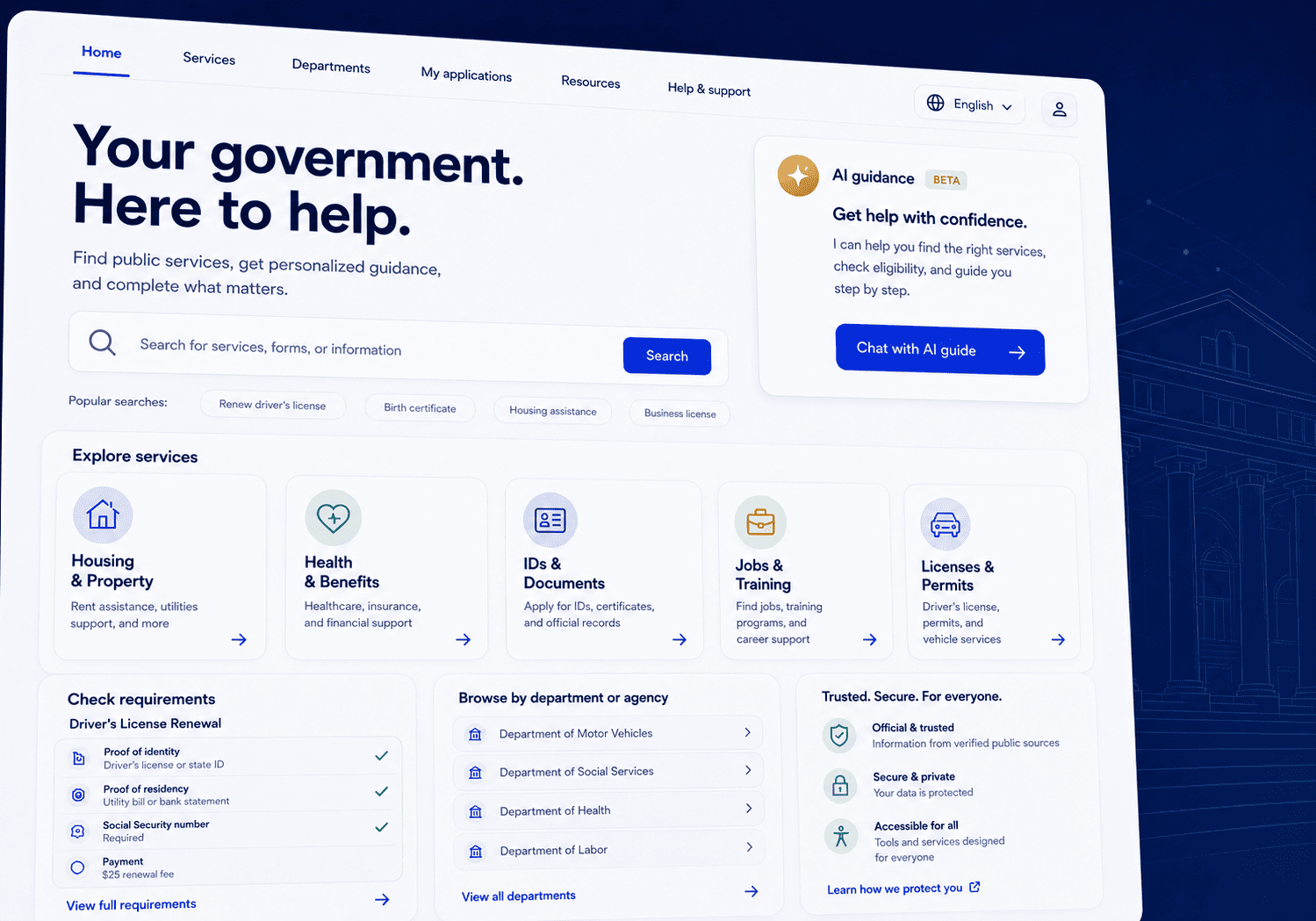
AI-Powered Citizen Services Website Platform for Virginia State Agencies

Plavno developed a modern eGovernment website platform for Virginia state agencies that centralizes citizen services, public information, department content, and an AI-powered guidance agent in one scalable system.

Read More
70%

reduction in routine citizen inquiries to agency staff

AI-Powered Citizen Services Website Platform for Virginia State Agencies

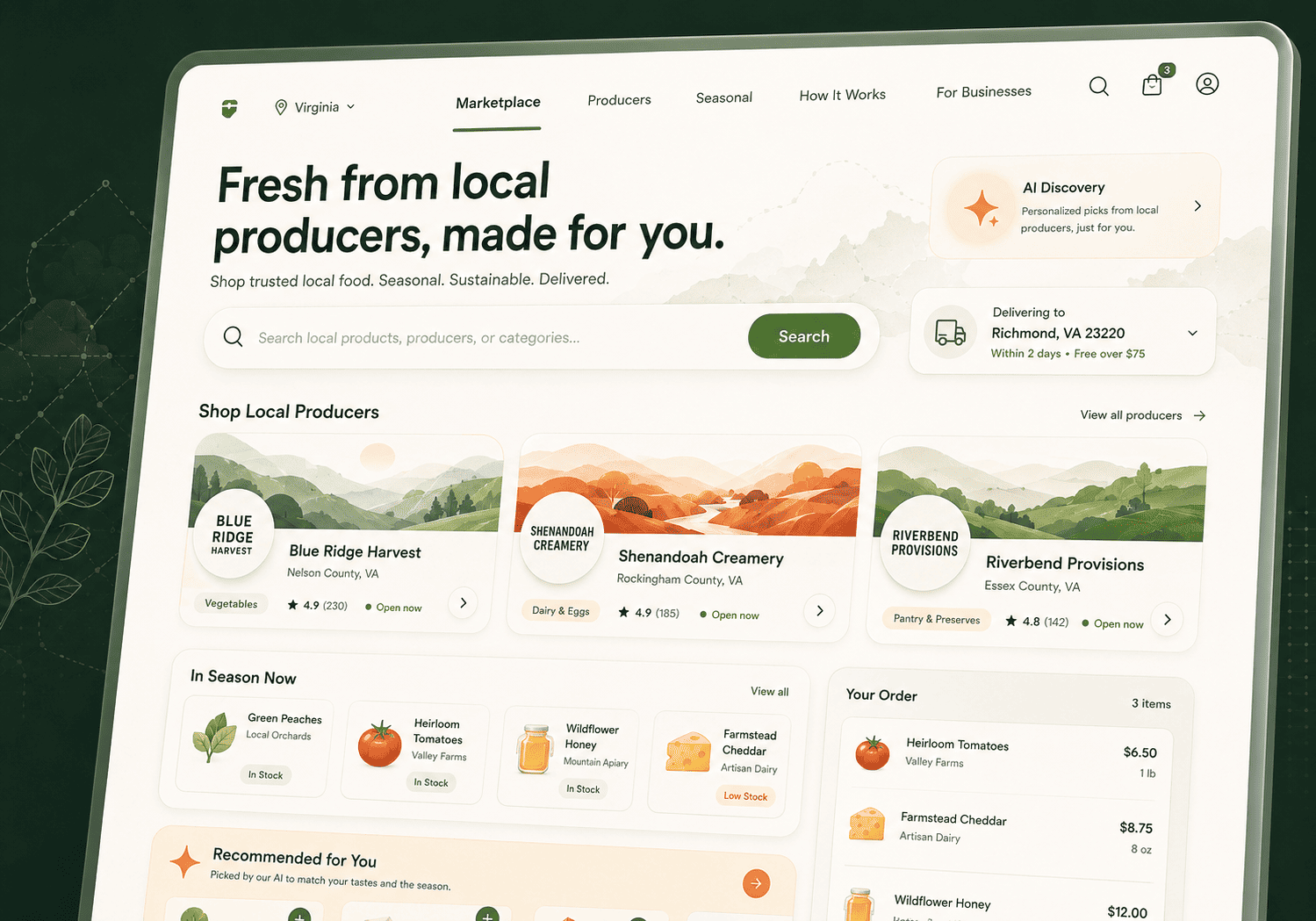
Digital Marketplace for Virginia Farmers, Local Producers & Direct-to-Consumer Food Sales

Plavno developed a custom multi-vendor marketplace for Virginia-based farmers, food producers, and regional sellers to unify product listings, vendor operations, customer ordering, and local fulfillment workflows.

Read More
3x

increase in product discovery relevance

Digital Marketplace for Virginia Farmers, Local Producers & Direct-to-Consumer Food Sales

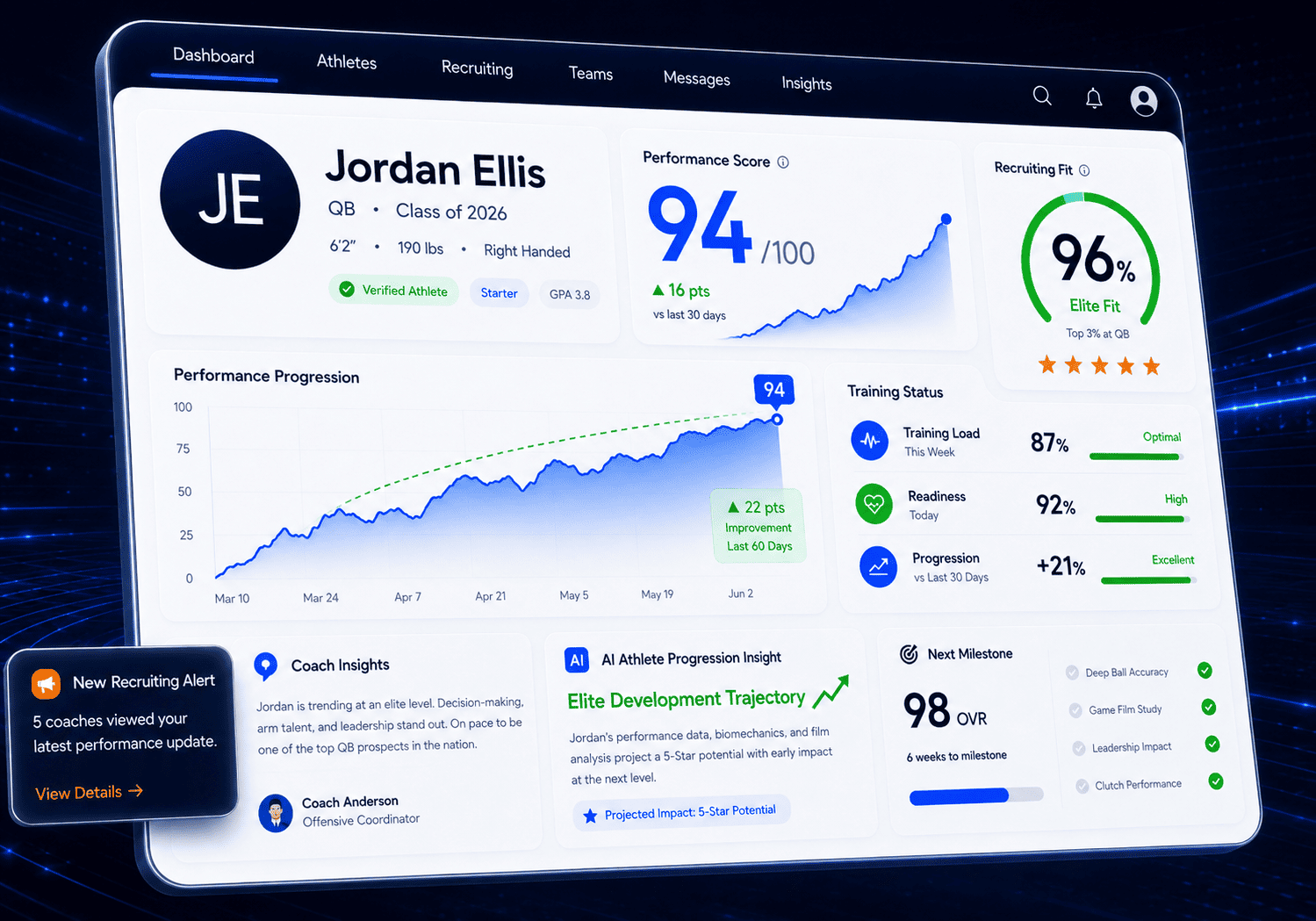
AI-Powered Sports Performance & Recruiting Platform for Virginia Clubs, Academies & Youth Programs

Plavno developed a custom sports technology platform for Virginia-based clubs and academies to combine athlete performance tracking, coach communication, recruiting workflows, and mobile engagement in one ecosystem.

Read More
3x

faster recruiting pipeline

AI-Powered Sports Performance & Recruiting Platform for Virginia Clubs, Academies & Youth Programs

Delivery path

From discovery to first production agent in Arlington

A fixed four-phase path that keeps scope, data readiness, and compliance evidence in lockstep for Virginia buyers.

Clipboard
Team
01

Step 1: Discovery and risk map (2 weeks)

We inventory workflows, systems, and document owners across your Arlington sites. Priority goes to high-volume, low-ambiguity questions first. Data classes and retention rules get written before any index is built. Stakeholders sign a risk register covering PHI boundaries and escalation owners. You receive a ranked backlog, success metrics, and a draft architecture one-pager. Workshops stay short so clinical leads can attend. The output is a funding-ready brief your 2026 budget cycle can use without rewrite.

02

Step 2: Data prep and golden set (2–3 weeks)

Document packs are cleaned, versioned, and tagged with owners. Access control lists are mirrored into the retrieval layer. SME teams write and freeze a golden question set that will score every release. Redaction rules are tested on sample dumps before full load. You receive index stats, dead-link reports, and a first retrieval quality score. Gaps become content tasks with named owners instead of vague AI blame. This phase prevents the silent failure mode of pretty answers over rotten sources.

Search in doc
Rocket
03

Step 3: Agent build and tool wiring (3–4 weeks)

The LLM agent, enterprise search, and retrieval-augmented path go live in a locked environment. Tool calls for ticketing or scheduling follow the exact workflow automation pattern we used before. Prompt packs and allow-lists version together. Human review queues open for low-confidence answers. You get weekly demos against the golden set, not vanity chat. Latency, token cost, and citation completeness are tracked from the first build. Security reviews the audit log format before traffic rises.

04

Step 4: Controlled launch and handoff (2 weeks)

Pilot groups in one Arlington unit take production traffic under feature flags. Runbooks cover outages, bad retrieval, and cost spikes. Training covers how staff escalate and how content owners refresh sources. Success metrics follow the original discovery targets for handle time and deflection. You receive ops dashboards, residual backlog, and a 90-day improvement plan. Ownership of prompts, indexes, and cloud accounts remains with your team. We stay on for hypercare while your staff run the weekly review.

Testimonials

We are trusted by our customers

“They really understand what we need. They’re very professional.”

The 3D configurator has received positive feedback from customers. Moreover, it has generated 30% more business and increased leads significantly, giving the client confidence for the future. Overall, Plavno has led the project seamlessly. Customers can expect a responsible, well-organized partner.

Sergio Artimenia

Commercial Director, RNDpoint

Sergio Artimenia

“We appreciated the impactful contributions of Plavno.”

Plavno's efforts in addressing challenges and implementing effective solutions have played a crucial role in the success of T-Rize. The outcomes achieved have exceeded expectations, revolutionizing the investment sector and ensuring universal access to financial opportunities

Thien Duy Tran

Product Manager, T-Rize Group

Thien Duy Tran

“We are very satisfied with their excellent work”

Through the partnership with Plavno, we built a system used by more than 40 million connected channels. Throughout the engagement, the team was communicative and quick in responding to our concerns. Overall, we were highly satisfied with the results of collaboration.

Michael Bychenok

CEO, MediaCube

Michael Bychenok

“They have a clear understanding of what the end user needs.”

Plavno's codes and designs are user-friendly, and they complete all deliverables within the deadline. They are easy to work with and easily adapt to existing workflows, and the client values their professionalism and expertise. Overall, the team has delivered everything that was promised.

Helen Lonskaya

Head of Growth, Codabrasoft LLC

Helen Lonskaya

“The app was delivered on time without any serious issues.”

The MVP app developed by Plavno is excellent and has all the functionality required. Plavno has delivered on time and ensured a successful execution via regular updates and fast problem-solving. The client is so satisfied with Plavno's work that they'll work with them on developing the full app.

Mitya Smusin

Founder, 24hour.dev

Mitya Smusin

Architecture & Engineering Overview

How Arlington programs stay fundable after the pilot

Staff minutes returned

Staff minutes returned

Grounded retrieval + automation cuts rework CFOs can measure

Cited answers

Cited answers only

Every reply lists sources so legal can sample without guesswork

Cost control

Managed token spend

Caching, model routing, department caps turn AI into a line item

Narrow first workflow

Narrow first workflow

Benefits or policy desks first — no big-bang clinical cutover

For Business: Technical ROI & Risk Mitigation

Arlington operators fund Healthcare AI when it returns staff minutes and cuts rework they can show a CFO. Grounded retrieval plus workflow automation is the shortest path to that proof. Free-form chat without citations creates new audit risk. Free-form chat also absorbs token budget on questions your PDFs already answer. The agent pattern we shipped for enterprise employee support focuses spend on search hits and short generations. Escalations carry full context so second-line staff do not restart the interview.

Risk drops when every answer lists sources. Legal and compliance teams in Virginia can sample those citations without guessing model intent. Role filters stop a clerk from opening material reserved for clinicians. Delete and retention jobs keep storage aligned with policy. That discipline is cheaper than cleaning a data incident later. Boards understand that narrative faster than a slide about model size.

Cost control matters as much as accuracy. Caching common retrieval packs reduces repeat spend on benefits FAQs and HR scripts. Smaller models handle classification and routing while larger models reserve for hard synthesis. Department budgets and hard caps prevent a single clinic from burning the regional pool. Finance sees daily burn next to resolved question volume. That pair of charts turns AI from a black box into a managed line item.

Change risk is managed through narrow first workflows. A benefits desk or employee policy channel fails soft if content is missing. It does not touch medication orders or diagnostic pathways on day one. Success there funds the next slice. Training and quality teams later add rubric-based scoring using the same control plane proved on our EdTech grader. Cumulative gains stack without one big-bang cutover that freezes a hospital for a weekend.

Vendor risk stays low when you own accounts, prompts, and indexes. Exit plans are written before kickoff. Data export jobs are tested, not promised. That stance keeps Arlington procurement comfortable and shortens security questionnaires. You hire a builder that leaves systems you can run, not a permanent middle layer you cannot unwind.

Architecture decisions

Decision list freeze

Integrations, model tiers, stores each get trade-offs + rollback

Agent build gates

Build against golden set

Tools grow one at a time; pure lookup stays cheaper than tool calls

Governance boards

Prompt & index boards

No ship without green golden-set scores; ATO-ready change lists

Owned handoff

IaC + pairing handoff

Your engineers rotate secrets, rebuild indexes, add tools safely

For CTOs: Architecture & Technical Lifecycle

Lifecycle starts with a recorded architecture decision list. Every integration, model tier, and data store earns a written trade-off and a rollback plan. Discovery freezes system boundaries, identity sources, and PHI classifications. The build phase grows the agent tools one at a time against a golden set. Staging mirrors production ACLs so surprises appear early. Launch stays behind flags with clear kill switches.

Decision points include when to call tools versus answer from retrieval alone. Pure lookup stays cheaper and safer. Tool calls open only when a state change is required and permission checks pass. Dual control gates high-impact actions such as schedule changes. Dead-letter queues capture failed calls for ops review. These gates keep autonomy from outrunning governance in a regulated environment.

Governance covers prompt change boards, index release notes, and evaluation gates. No prompt ships without golden-set scores at or above the last green release. Content owners approve document packs on a schedule aligned to policy updates. Emergency patches follow a faster path with forced post-review. Auditors receive chronological change lists that match infrastructure history. Virginia contractors especially need that paper trail for customer ATO evidence.

Technical debt is treated as a backlog item with an owner. Temporary scrapers get expiry dates. Temporary model bypasses get expiry dates. Cost anomalies open tickets the same way latency would. Observability is not optional after launch. Drift in retrieval hit rate or escalation rate triggers the same on-call path as a 5xx spike.

Handoff includes infrastructure as code, runbooks, and a two-week pairing window. Your engineers learn how to rotate secrets, rebuild indexes, and add tools safely. We do not trap knowledge in private notebooks. Long-term retainers exist when you want them, yet the architecture survives if you staff everything back in-house from Clarendon to Alexandria sites.

Thin agent runtime

Thin planner + tool adapters

System prompts declare tools, refusals, citation format; HTTPS to ticketing/HRIS with timeouts and idempotency keys

Controlled index

Hybrid retrieval index

Chunked PDF/HTML with metadata filters; lexical + vector recovers exact policy codes embeddings miss

Rubric scoring

Rubric scoring path

Constrained generations, missed-cell feedback, LMS export — same control loop as EdTech grader

Edge resilience

Clinic edge resilience

Last-known safe summaries on VPN drop; queued tools; trimmed token windows under carrier latency

For Engineers: Implementation Details & Stack

Implementation favors clear components over clever monorepos. Retrieval-augmented answers on a controlled index beat raw generation for regulated knowledge work. Document loaders normalize PDF, HTML, and ticket exports. Chunking keeps headings with body spans so citations remain human readable. Embeddings land in a vector store that supports metadata filters for site, role, and document class. Hybrid lexical plus vector search recovers exact policy codes that embeddings alone miss.

The agent runtime holds a thin planner. System prompts declare allowed tools, refusal rules, and citation format. Tool adapters speak HTTPS to ticketing, HRIS, or scheduling APIs. Timeouts and circuit breakers protect upstream clinical systems. Idempotency keys stop double writes when users retry. Structured logs attach conversation IDs to every retrieval and tool call for later replay.

For scoring workloads we reuse automated scoring with rubric-based evaluation, the same method behind our AI grader for EdTech. Rubric cells become machine checks or constrained generations with fixed output schema. Feedback templates fill only the missed cells. Human disagreement samples retrain few-shot packs rather than silent fine-tunes on PHI. Export jobs write scores back through the LMS API without intermediate spreadsheets.

When product teams need metering we apply marketplace architecture and subscription billing patterns already delivered on a subscription-based marketplace. Entitlements check before expensive model calls. Usage records stream to a ledger your finance tools can import. Plan changes take effect without redeploying the agent. That isolation keeps clinical paths free of billing complexity while still enabling partner SKUs.

Local edge cases include spotty clinic Wi-Fi and VPN dropouts for field staff. The client degrades to last-known safe summaries with staleness banners when live retrieval fails. Message queues buffer outbound tools until connectivity returns. Token windows are trimmed aggressively so mobile paths stay under carrier latency budgets. Engineers get reproducible local sandboxes with synthetic data that mirrors ACL shapes without real PHI.

HIPAA-aligned controls

HIPAA-aligned base

US regions, private links to EMR adjuncts, vault secrets, full answer replay

Live observability

Ops telemetry

Hit rate, citations, escalation, token burn, tool errors, E2E latency on one board

Threat hardening

Threat hardening

Prompt injection, exfiltration via tools, redaction before any third-party model path

Post-launch cost control

2026 cost cadence

Cache targets, model routing, shared finance/eng dashboards keep AI a funded asset

Infrastructure, Observability & Security

US workloads stay in US regions with separate accounts per environment. HIPAA-aligned controls, private networking, and full answer replay are non-negotiable for Arlington health programs. Secrets live in managed vaults. Network paths to EMR adjunct systems use private links. Backup and restore drills include both object storage and vector indexes so a region event does not wipe retrieval quality hours.

We monitor retrieval hit rate, citation presence, escalation rate, token spend, tool error rate, and end-to-end latency. Alerts page on-call when golden-set offline scores drop or budgets burn faster than the plan. Product managers see the same charts without waiting for a monthly email. Incident response runbooks define who freezes prompts, who flips flags, and who notifies compliance within defined minutes.

Security reviews cover threat models for prompt injection, data exfiltration via tools, and cross-tenant bleed. Content filters strip secrets before logs leave the secure boundary. Redaction pipelines handle, display names, and MRNs before any third-party model call when that path is approved at all. Many programs never send raw notes out. They retrieve and answer inside the controlled network only.

Compliance artifacts include data flow diagrams, retention matrices, and access review logs. SOC2 evidence maps naturally onto change tickets and deploy history already required for stability. Customer questionnaires in the Virginia federal health market receive concrete diagrams instead of marketing claims. Criminal history is irrelevant here, but vendor onboarding checklists still expect named control owners and response times. We leave those fields filled, not blank.

Post-launch cost control keeps the program alive through 2026 budget seasons. Rightsizing schedules, cache hit targets, and model routing changes ship on a regular cadence. Usage anomalies open tickets the same day. Finance and engineering share one dashboard language so neither side invents private math. That habit is how Healthcare AI stays a line of business asset instead of a short experiment.

Adoption path

Maturity stages for clinical operations teams in 2026

A separate four-stage model that moves staff from manual lookup to supervised autonomy without a risky leap.

Clipboard
Team
01

Stage 1: Manual baseline capture (1–2 weeks)

Teams log real questions and time-to-answer for two high-volume desks. Sources of truth get named owners with last-review dates. Shadow IT chat threads are listed so nothing hides during later automation. You receive a simple heat map of pain by unit. No model calls fire in this stage. The data sets the contract for what good looks like later. Arlington leads use it to keep executives honest about starting points.

02

Stage 2: Assisted retrieval only (2–3 weeks)

Staff still write the final answer. The system surfaces the three best passages with links. Measurement tracks whether the passages match the golden set. Training covers how to reject weak retrieval instead of rewriting from memory. You receive citation quality reports and missing document lists. This stage builds trust before free generation enters the chat. Clinicians learn the tool as a faster binder rather than a black box peer.

Search in doc
Rocket
03

Stage 3: Drafting with mandatory review (3 weeks)

The agent drafts replies from retrieved sources. Humans approve, edit, or reject before send. Rejection reasons feed weekly prompt and content fixes. Workflow automation may prepare a ticket but will not submit without approval. You get handle-time deltas against the Stage 1 baseline. Confidence scores drive which drafts need senior review. Risk remains low while speed gains become visible to charge nurses and desk leads.

04

Stage 4: Supervised autonomy for safe classes (ongoing)

Low-risk question classes auto-send when confidence and citation checks pass. High-risk classes stay on mandatory review forever. Monitoring watches drift in tone, cost, and escalation mix. Content boards meet on a fixed cadence to unlock new classes. You receive a living matrix of autonomous versus supervised topics. Expansion follows evidence, not hope. Virginia compliance stakeholders keep a permanent seat on that board so autonomy never outruns policy.

Eugene Katovich

Eugene Katovich

Sales Manager

Need a custom software solution? We’re ready to help!

Plavno has a team of skilled developers ready to tackle the project. Ask me!

Get a Free Quote

Readiness gate

Pre-build checklist for Arlington Healthcare AI programs

  • Name owners for every source pack — Every policy binder, FAQ sheet, and SOP set needs a living owner with a refresh date. Without owners the index rots in three months and staff fall back to side channels. List owners by unit across Rosslyn, Ballston, and other sites you run. Put backup owners on the same sheet so leave time does not freeze updates. Confirm legal has already approved redistribution into the retrieval store. Capture retention periods next to each pack so delete jobs have clear rules. Bring this sheet to kickoff or the first sprint stalls on email threads.

  • Freeze a golden question set early — Fifteen to forty real questions with expected citations beat any model card. SMEs write them from actual tickets, not marketing prompts. Lock the set before human effort floods into prompt tuning. Score every release against that same list so progress is visible. Include tough negatives the agent must refuse. Mark which items hold PHI so test environments stay clean. Share the set with compliance so evaluation itself becomes an audit artifact rather than a surprise.

  • Map identity groups to data classes — List which AD or Okta groups may see which document tags. Agents without ACL filters will leak across roles the first week. Verify nested groups and contractor accounts common in Northern Virginia federal work. Test deny paths as hard as allow paths. Document break-glass roles and time limits. Align HR joiner and leaver flows to index ACL refresh jobs. Treat this map as infrastructure, not a slide, because production incidents start when groups drift.

  • Decide automation boundaries in writing — Write which tool calls may auto-run and which always need a human. Scheduling changes, ticket writes, and messaging blasts each need an explicit rule. Dual control is cheaper than an outage apology later. Store the matrix beside the runbooks so new engineers do not guess. Review the matrix after every near miss. Keep clinical decision pathways off the auto list until evidence and governance both clear. Share the matrix with nurse leaders so adoption does not feel imposed.

  • Budget tokens and cloud with hard caps — Set department wallets before go-live, not after the first surprise bill. Pair spend alerts with resolution metrics so cuts stay rational. Cache plans should be written for the top fifty questions. Choose default model tiers for routing simple lookups away from large models. Plan a 90-day re-forecast once real traffic arrives. Include logging and trace storage in the same budget so security is not a freeloader on another cost center.

Vitaly Kovalev

Vitaly Kovalev

Sales Manager

Request your Arlington Healthcare AI readiness audit

Share budget range, timeline, current stack, and dataset scope. We return a scored readiness audit and cost estimator tailored for Arlington and Northern Virginia health teams.

Talk to Experts

Plain answers

Healthcare AI questions Arlington teams ask before signing

Each answer focuses on cost, time, data, quality, security, and operations for Virginia programs.

What drives the cost of Healthcare AI services in Arlington?

Cost follows data preparation effort, integration count, compliance depth, and traffic more than model brand names. Arlington programs often pay more for ACL design and audit logging than for raw inference. A knowledge agent with enterprise search and retrieval-augmented answers stays cheaper when the corpus is clean and small. Messy shared drives force multi-week cleanup before quality appears. Each connected system such as ticketing or HRIS adds adapter work and test cycles. Human review queues also carry operating cost that boards sometimes forget to fund.

Local market rates sit near broader DC contractor pricing for senior engineers. You can offset that with a narrow first workflow and ruthless caching. Token spend on common FAQs drops fast when answers stay stable and cached. Rubric-based scoring services add fixed evaluation compute but save faculty or QA hours. Marketplace-style metering matters only if you package the agent for partner use. Most hospitals skip that layer entirely on day one.

Hidden costs include golden-set creation with SMEs, security reviews, and post-launch content ops. Those lines safeguard quality so treat them as product, not overhead. We write them into the estimate rather than burying them under a low, ram-looking build fee. When you send budget, timeline, tech stack, and dataset scope we return a fixed-phase plan with clearly marked optional stretches. Transparent numbers beat free pilots that explode after month three. Virginia buyers typically reopen budgets annually, so we size 2026 spends to survive the next cycle without emergency top-ups.

How long does it take to build Healthcare AI software for a first release?

A first production release for a constrained knowledge agent often lands in eight to twelve weeks when sources and owners are ready. Discovery and risk mapping take about two weeks. Data prep and a frozen golden set take another two to three. Build and tool wiring take three to four. Controlled launch and handoff finish in about two more. Those windows match the delivery path we run for Arlington teams that already know their pain desks.

MVP scope means one user channel, one high-volume question class, and limited tools. Full deployment across multiple clinics, identity groups, and workflow automations stretches longer. Extra time comes from security questionnaires common with federal-adjacent contractors near Crystal City. Content cleanup also stretches when PDFs lack consistent titles or version marks. We never claim a six-week miracle when your corpora are still in random drives.

Parallel tracks keep time honest. Security checklist work runs while SMEs write golden questions. Infrastructure as code stands up while document loaders are tested on sample packs. That overlap is why clear owners matter on day one. Without owners each open question turns into email lag. With owners the same calendar stays green. After first release, maturity stages stretch assisted retrieval into supervised autonomy over additional quarters rather than one big cutover. That staging protects clinical operations while still showing progress each month. Timelines always include hypercare so your staff are not left alone on day thirty.

What data do you need before Healthcare AI implementation starts?

We need representative documents, access rules, and real questions before model work begins. Policy PDFs, SOP pages, LMS exports, and internal FAQ pages form the core corpus. Identity group lists tied to what each role may see come next. Ticket samples or chat logs supply the informal phrasing staff actually use. Without those three inputs we would optimize for imaginary language that fails on day one. Sample PHI must arrive only through approved channels and sanitized where possible.

Data quality beats data volume. Ten clean SOP binders outperform two thousand mixed scans with no titles. Owners and last-reviewed dates should travel with every pack. Retention rules should sit beside each collection so delete jobs do not guess. If you run sites in Arlington, Alexandria, and Falls Church keep site tags intact so filters work later. Legacy systems without APIs need export jobs or read-only replicas documented during discovery.

We also request metrics you already track. Average handle time, ticket volume by category, and first-contact resolution give the baseline. Training programs should share rubrics if scoring is on the roadmap. The EdTech grader work we delivered depended on clear rubrics rather than free-form hope. You will get a written readiness audit after we inspect what you send. Gaps become explicit backlog instead of quiet failure after go-live. Start gathering now even if budget lands next quarter so 2026 kickoff is not spent hunting file shares.

How do you evaluate quality for enterprise Healthcare AI agents?

Quality starts with a golden question set locked by your SMEs. Each item has expected citations and acceptable answer criteria. Online metrics track citation presence, retrieval hit rate, escalation rate, and human edit distance. Offline reruns of the golden set gate every prompt or index change. If scores fall the release stops. Vanity conversational polish never overrides those gates for regulated work in Virginia health settings.

For scoring products we lean on automated scoring and rubric-based evaluation with feedback generation. That is the same method used in our AI grader for EdTech for consistent scoring and richer feedback at scale. Residence of grades stays explainable because each cell maps to a rule or constrained generation. Faculty or QA leads sample disagreements and reverse high-impact mistakes. Those corrections update few-shot packs or rubrics rather than silent weight changes on PHI. Transparency keeps educators and compliance in the same conversation.

Live traffic quality also watches refusal behavior. The agent must decline medical advice it is not authorized to give. It must refuse to cross ACL walls even when a user sweet-talks the prompt. Injection tests and red-team scripts run each release cycle. Alerts fire when refusal rates or escalation ratios drift outside agreed bands. Dashboards stay open to both engineering and clinical operations so one side cannot spin metrics alone. Over time the golden set grows with hard cases found in production rather than remaining a static museum piece. That living evaluation set is how quality survives model upgrades and staff turnover alike.

How do you handle compliance and security for Healthcare AI in Virginia?

Security design assumes PHI sensitivity even for internal knowledge agents. Separate environments, private networking, and strict secret management come first. Retrieval filters enforce role and facility claims before any context reaches a model. Logs keep source IDs and actor IDs so answers replay under audit. Many programs never send raw clinical notes to external model hosts at all. They keep generation inside controlled networks fed only by approved retrieval packs.

HIPAA-aligned processes cover access reviews, retention, breach response timing, and BAAs where third parties appear. Virginia and federal-adjacent contractors often need extra diagrams for customer ATOs. We provide data flow drawings, encryption statements, and change histories that map cleanly into those packets. Prompt injection defenses and tool allow-lists sit in the same threat model as classic API abuse. Dual control protects write actions that could alter schedules or tickets. Messy tools without timeouts never touch production.

Operational security continues after launch. On-call playbooks define freezes for prompts and indexes during incidents. Delete request pipelines purge object storage and vector entries together. Contractor joiner and leaver feeds update ACLs on a measured cadence. Penetration tests and configuration scans join the release calendar rather than waiting for annual panic. Staff training covers what not to paste into the agent. That list includes secrets, full SSNs, and unpublished enforcement memos. Compliance is a daily habit expressed in tickets and dashboards, not a binder on a shelf. Arlington organizations that treat it that way clear procurement faster and sleep better after go-live.

Contact Us

This is what will happen, after you submit form

Need a custom consultation? Ask me!

Plavno has a team of experts ready to start your project. Ask us!

Vitaly Kovalev

Vitaly Kovalev

Sales Manager

Schedule a call

Get in touch

Fill in your details below or find us using these contacts. Let us know how we can help.

Required because you selected “Other” above

No more than 3 files may be attached up to 3MB each.
Formats: doc, docx, pdf, ppt, pptx, xls, xlsx, txt.
Book your meeting