bg image
bg image

Serving Arlington & Virginia

Cut support load for Arlington contractors before 2026 budgets lock

Arlington firms waste hours on repetitive intake, RFI triage, and product questions every week. That cost shows up in overtime, missed bids, and frustrated buyers. We build AI chatbots that answer, route, and recommend without adding headcount. Government contractors, professional services firms, and product teams across Northern Virginia use them to keep ops lean. You keep control of data, tone, and escalations. Get AI Chatbots cost estimate in 24 hours. Tell us budget, timeline, stack, and project scope so we can price the first release with clarity.

Discuss Project

Overview

Why Arlington ops still choked on ticket queues in 2026

Arlington sits next to federal tenants, major contractors, and fast-growing product companies. Support volume rises with every new program win. Phone trees and static FAQ pages cannot keep pace. Teams in Rosslyn, Ballston, and Crystal City still route basic product and policy questions to expensive staff. That pattern burns margin and slows response during bid season.

Trusted AI Chatbots Partner for Arlington Businesses. We work with US-based clients, including companies operating in Virginia. Our focus is practical ai chatbot development that removes routine load while keeping humans on high-value work. You get faster first response, cleaner handoffs, and a searchable transcript trail for audits. Local operators in Alexandria and McLean report the same pressure from multi-channel inquiries that never should have hit a senior desk.

We start from your real workflows, not a generic bot template. Intake rules, knowledge sources, and escalation paths define the first architecture. For product and beauty retail use cases we already shipped an LLM agent with product recommendation logic and customer support automation. That same pattern maps cleanly to contractor portals and B2B catalogs. The result is fewer abandoned chats and clearer next steps for every visitor.

Technical approach stays deliberate. Models sit behind your approved gateways. Retrieval pulls only from sources you control. Session data stays inside your boundaries. We publish AI chatbot patterns that government-adjacent teams can defend in security review. 10+ AI chatbot projects delivered in the US market give us a repeatable baseline for Northern Virginia delivery without experimental risk on your first release.

Talk to an Expert
Workflow-first intake

Workflow-first intake

Real intake rules, knowledge sources, and escalation paths—not generic bot templates

Governed retrieval

Governed retrieval

Models behind approved gateways; answers pulled only from sources you control

Faster first response

Faster first response

Routine load off senior desks; cleaner handoffs across Rosslyn to Crystal City

Audit-ready trail

Audit-ready trail

Searchable transcripts and session data kept inside your security boundaries

Core stack choices

Conversation stacks Arlington teams can own and audit

Arlington clients need bots that survive review boards and nightly traffic swings. We build a layered conversation system. An orchestration layer owns intent routing, tool calls, and state. An LLM layer handles generation under strict prompts and retrieval filters. Channel adapters cover web, mobile, and internal portals. This split lets you swap models without rewriting business rules. Every claim below tracks to work we already shipped, including an AI beauty support agent with personalized recommendations.

Retrieval is the spine. Documents, catalog feeds, and policy pages land in a structured index. Chunking follows document type so answers stay specific. When the beauty support case used product recommendation logic, the agent needed inventory fields and affinity rules in the same turn. We apply the same pattern for contractor catalogs and service menus. The bot cites the source passage when policy accuracy matters. That citation trail satisfies reviewers in Pentagon City and Falls Church offices alike.

Security/compliance sits in design, not as a late patch. Role-based access gates tool use. Secrets never ride in prompts. PII redaction runs before any external model call when contracts demand it. Logging captures intent, latency, and escalation reason without storing full free-text when policies forbid it. Fed-adjacent teams get artifacts that map to their existing control catalogs. We document data flow before code freezes so legal does not block launch week.

DevOps keeps releases boring. Infrastructure as code defines environments. Feature flags control gradual rollout by geography or account tier. Canary traffic hits a shadow score that tracks answer quality against a fixed eval set. Failures auto-route to humans with full context. Observability covers token cost, latency buckets, and retrieval miss rate. Cost alerts fire before monthly spend surprises finance. This operating model is why production stays stable after handoff.

You leave with source, runbooks, and a testing harness. The team that maintains the bot should not need the original vendor for routine prompt edits. We train your engineers or a named partner on eval harness use and release gates. Core architecture stays portable across cloud accounts common in Northern Virginia. That ownership model reduces lock-in risk for multi-year programs.

plavno logo

Build your first
Smart AI project today!

Just tell the Plavno AI Agent about your project - it will ask questions, gather requirements, and propose a tailored solution

What ships

Five deliverables Arlington buyers can budget in 2026

Intake and triage agents

Intake and triage agents

Front-line staff in Arlington waste mornings sorting incomplete requests. An intake agent collects required fields, validates them, and routes clean tickets. Voice to structured data and chat to structured data both work. We use form schemas plus LLM parsing so free text still lands correctly. Escalation rules send edge cases to the right queue with context attached. Sample transcripts and field maps ship with the release so QA can replay week one traffic.

Catalog-aware recommenders

Catalog-aware recommenders

Buyers bounce when they cannot match needs to SKUs or service lines. A recommender chatbot narrows options using constraints the user states. We proved this path on a beauty support agent with product recommendation logic. Inventory status and preference signals drive shortlists in one turn. The common stack pairs retrieval with light ranking code so sales rules stay editable. Arlington product firms cut no-result sessions and raise attach rates without adding agents.

Secure knowledge Q&A

Secure knowledge Q&A

Policy PDFs and SOPs sit unread until something breaks. A grounded Q&A bot answers from approved sources only. Citations appear beside each answer for audit. We choose vector search when docs are fragmented and keyword-plus-rerank when nomenclature is rigid. Access tokens mirror your IdP groups so classified folders stay closed. Teams in Crystal City reduce internal Slack pings for standard procedure questions within the first month.

Handoff and CRM writeback

Handoff and CRM writeback

Bots fail when they create dual systems of record. Writeback connectors push case notes, lead scores, and resolution codes into the tools you already run. REST or event buses keep latency low on high-volume days. Idempotent payloads prevent duplicate tickets during retries. We pick middleware only when native APIs lack retry strength. Support leads in Ballston finally see chatbot volume inside the same dashboards as phone and email.

Eval harness and score cards

Eval harness and score cards

Without measurements teams argue about quality. An eval harness replays fixed scenarios after every prompt or model change. Scores cover accuracy, tone, refusal correctness, and latency. Gold answers come from your SMEs, not generic datasets. CI blocks merges when scores drop past agreed thresholds. Northern Virginia buyers get a weekly scorecard they can defend to leadership without spreadsheet theater.

AI Chatbots Solutions for Arlington Industries

Sector plays that match the Northern Virginia economy

These six scenarios track real demand from contractors, professional services, and product operators working across Arlington and adjacent corridors.

RFI Intake

RFI Intake

Contractors

Government contractor RFI intake

Proposal shops drown in incomplete RFIs during peak cycles. A guided chatbot collects site, scope, clearance needs, and deadlines before a BD lead engages. Windowed sessions attach documents and confirm mandatory fields. Incomplete threads auto-nudge instead of dying. Typical programs see first-pass complete rate lift past prior email-only baselines. Technically the flow uses structured slots plus retrieval from past win libraries so answers stay consistent with how the firm prices work.

Employee Helpdesk

Employee Helpdesk

Defense IT

Defense-adjacent employee helpdesk

Internal IT and facilities queues stack with password, badge, and access questions. A authenticated chatbot answers from SOP libraries and opens tickets only when tools fail. Identity claims from your IdP drive which floors and systems the user may query. Soft savings appear as fewer Tier-1 minutes per week, often enough to fund the build in under two quarters. Retrieval with citation plus pure rule tools handles compliance questions that must never freewheel.

Client Portal

Client Portal

Services

Professional services client portal bot

Consulting firms near Rosslyn field status, invoice, and deliverable questions after hours. A portal bot checks engagement phase and returns approved updates only. Writeback into the PSA system records who asked what. Clients stop emailing partners for routine status. Firms report reduced partner interruptions inside the first sprint. Session state plus CRM APIs keep context without storing sensitive case detail in the model layer.

Healthcare Intake

Healthcare Intake

Admin

Healthcare admin intake near medical corridors

Clinics serving Arlington patient's administrative line sort insurance, hours, and prep instructions all day. A phone and web chatbot triages those flows and books only when slots and rules allow. PHI paths stay inside your network boundary with redaction before any external call. Coupon of staff time returns as fewer abandoned calls on Mondays. Slot filling with deterministic booking APIs beats pure generation for appointment integrity.

SaaS Onboarding

SaaS Onboarding

Setup

B2B SaaS onboarding assistant

Product companies in Ballston lose new accounts when setup docs feel dense. An onboarding chatbot walks configured steps, detects stuck states, and offers the right snippet. It can trigger sandbox resets or streaming short how-to video deep links. Activation rates climb when friction drops in week one. Event hooks from product analytics feed the bot so it speaks to the user's real stage instead of a static script.

Beauty Support

Beauty Support

Retail

Retail and beauty personalized support

Product support for beauty lines must mix advice with inventory truth. We built an AI beauty client support and personalized recommendation agent using an LLM agent, product recommendation logic, and customer support automation. Shoppers received fit guidance and live options without waiting on chat agents. Returns dropped when recommendations matched stock. The same pattern ports to any SKU-rich Arlington catalog that needs conversational selling after hours.

Case Study

We help customers cut
down on development

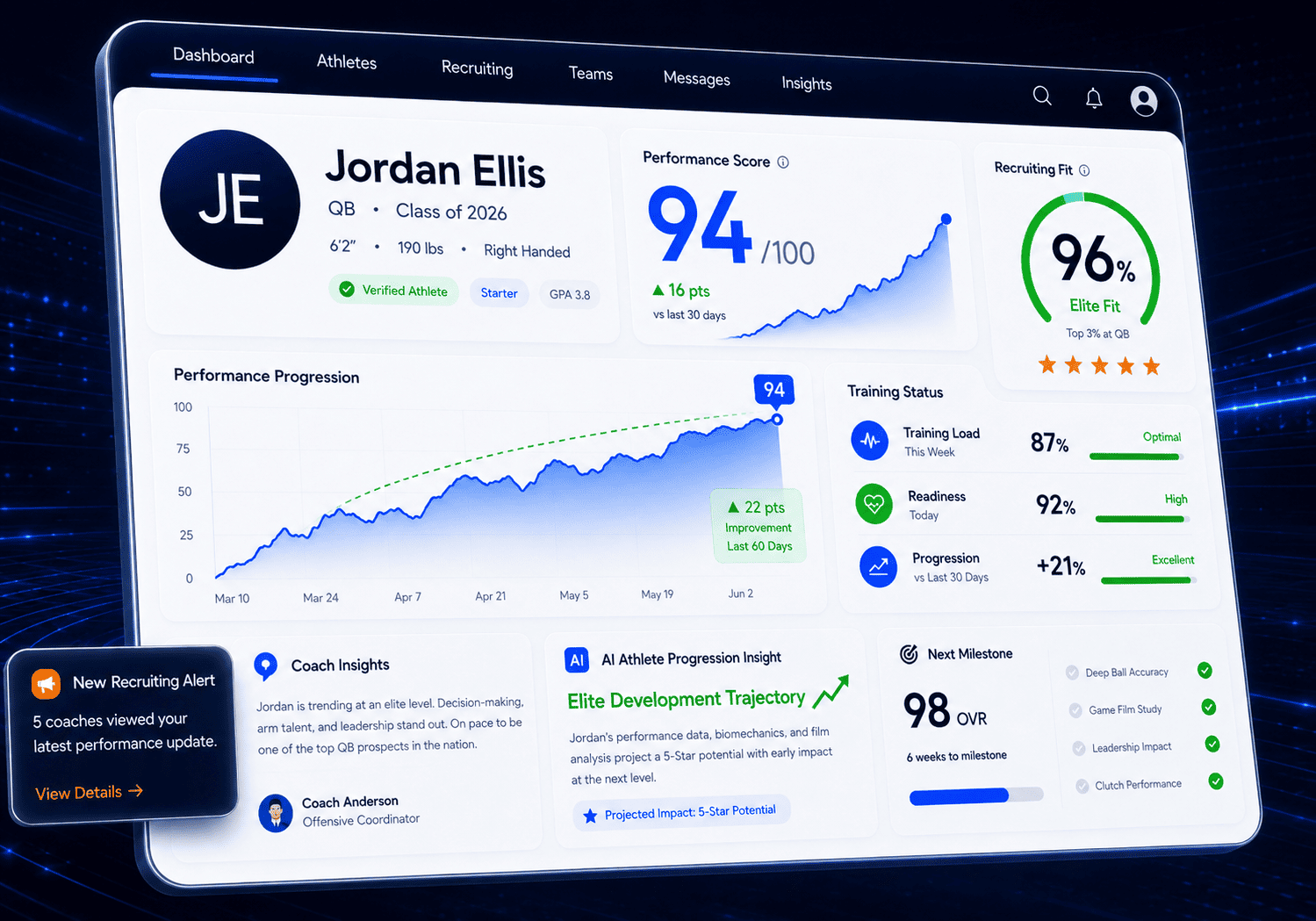
AI-Powered Sports Performance & Recruiting Platform for Virginia Clubs, Academies & Youth Programs

Plavno developed a custom sports technology platform for Virginia-based clubs and academies to combine athlete performance tracking, coach communication, recruiting workflows, and mobile engagement in one ecosystem.

Read More
3x

faster recruiting pipeline

AI-Powered Sports Performance & Recruiting Platform for Virginia Clubs, Academies & Youth Programs

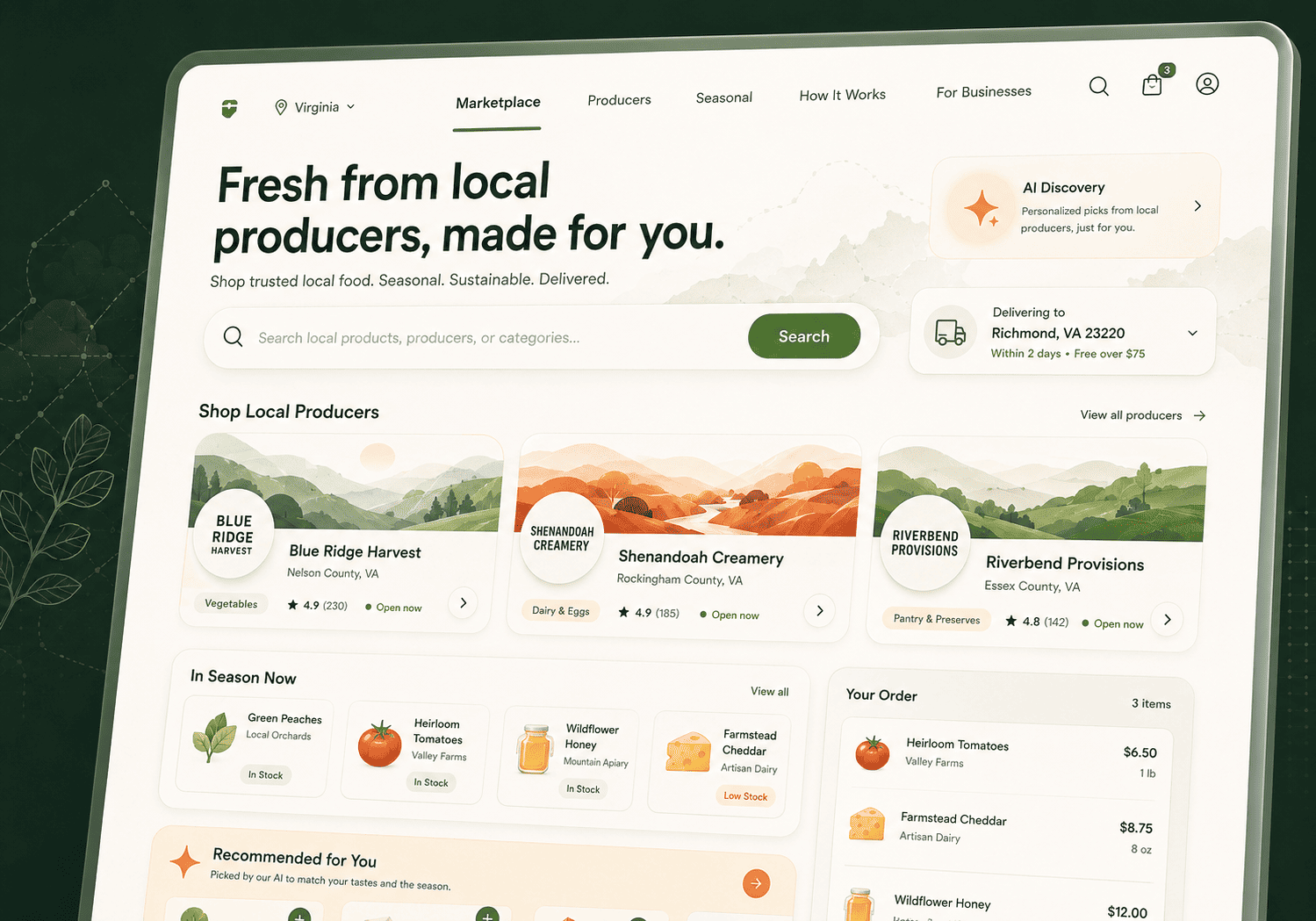
Digital Marketplace for Virginia Farmers, Local Producers & Direct-to-Consumer Food Sales

Plavno developed a custom multi-vendor marketplace for Virginia-based farmers, food producers, and regional sellers to unify product listings, vendor operations, customer ordering, and local fulfillment workflows.

Read More
3x

increase in product discovery relevance

Digital Marketplace for Virginia Farmers, Local Producers & Direct-to-Consumer Food Sales

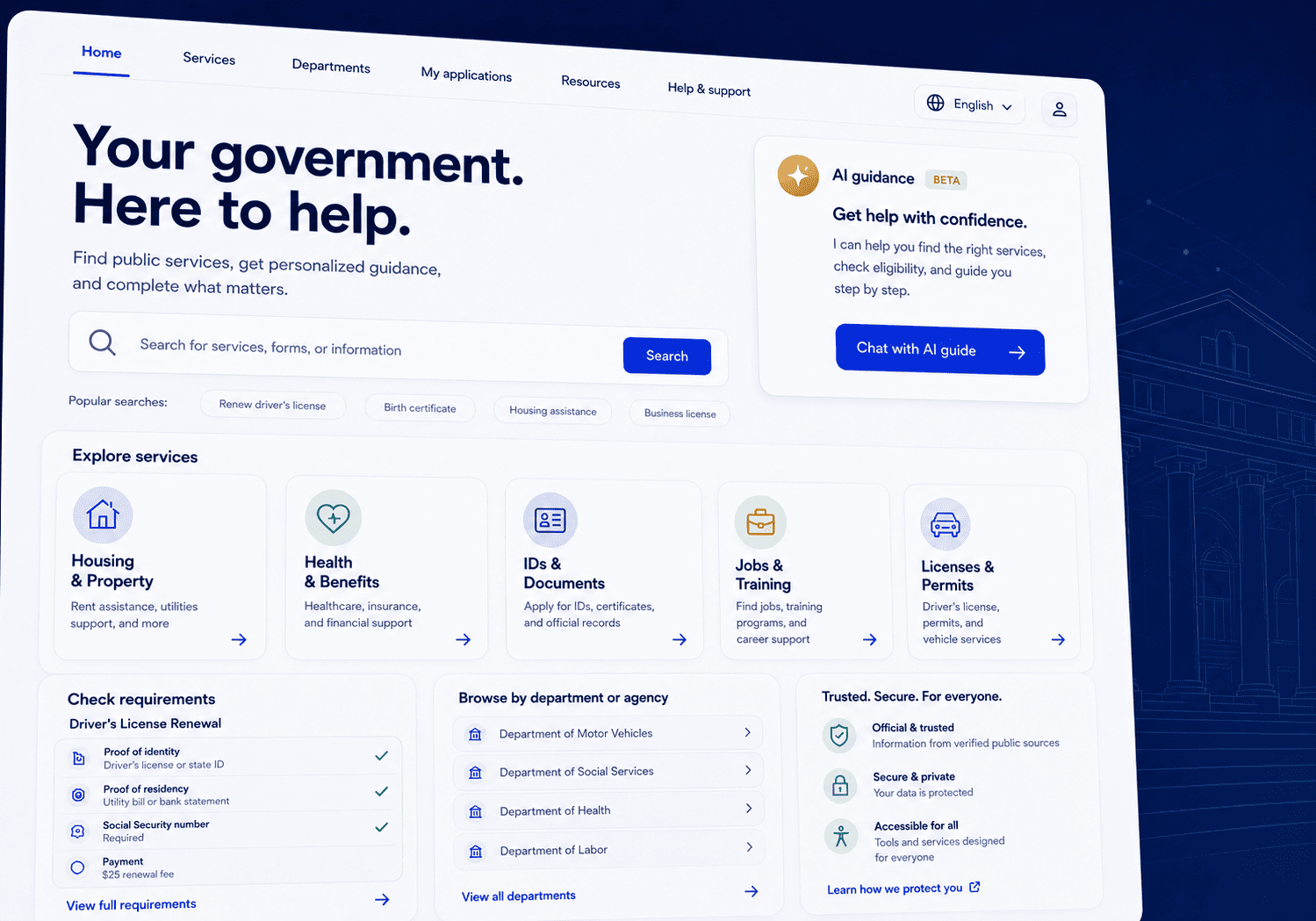
AI-Powered Citizen Services Website Platform for Virginia State Agencies

Plavno developed a modern eGovernment website platform for Virginia state agencies that centralizes citizen services, public information, department content, and an AI-powered guidance agent in one scalable system.

Read More
70%

reduction in routine citizen inquiries to agency staff

AI-Powered Citizen Services Website Platform for Virginia State Agencies

Architecture & Engineering Overview

How Arlington programs decide build depth in 2026

Hours returned

Hours returned

Cut Tier-1 minutes, overtime in bid spikes, and abandoned inquiries that kill pipeline

Grounded risk controls

Grounded risk controls

Retrieval + tool-only money paths; escalation with full transcript on low confidence

Baseline ROI

Baseline ROI discipline

Handle time, first response, containment—attribute only bot-closed conversations

Spend guards

Spend & adoption guards

Turn caps, answer cache, smaller classifiers; train agents so the bot protects them

For Business: Technical ROI & Risk Mitigation

Leaders care about hours returned and risk avoided, not model names. Every technical choice must map to a cost line finance already tracks. Chatbot load should reduce Tier-1 minutes, lower overtime during bid spikes, and shrink abandoned inquiries that kill pipeline. When we shipped the beauty support agent with personalized recommendations, the business goal was support automation plus better product matches, not novelty demos. That framing keeps scope honest.

Risk surfaces when bots invent policy or leak restricted content. Grounded retrieval and tool-only actions on money or booking paths cut that exposure. Escalation thresholds protect brand when confidence drops. Human takeover includes the full transcript so agents do not re-ask known facts. These controls cost less to build early than to retrofit after a public miss. Arlington contractors under audit pressure value that sequence.

ROI measurement needs baselines before launch. Count average handle time, first response latency, and containment rate for two weeks on current channels. After launch compare the same spans with identical hours and volumes. Attribute only the conversations the bot actually closed. Partial assists still matter but belong in a separate ledger. That discipline stops inflated claims and keeps renewals rational.

Budget risk often hides in token spend and failed retrieval loops. Cap max turns. Cache frequent answers. Downshift to smaller models for classification where quality holds. Alerts on daily spend give operators a brake. Programs that skip these guards tend to freeze the bot after one bad invoice cycle. We write the cost policy into runbooks so ops can act without waiting on engineering.

Change management decides whether staff fight or adopt the bot. Train agents on takeover UX. Publish which intents stay human-only at week one. Expand intent coverage only after scorecards hold. Local teams across Tysons and Pentagon City adopt faster when they feel the bot protects them instead of replacing them overnight.

1

Discovery freeze

Workshops lock metrics, threat model, eval set size, channel list, and data boundaries

2

Model & retrieval bakeoff

Controlled scores on your set; batch vs streaming indexes; least-privilege tool exposure

3

Governed change control

Prompt, schema, model swaps ticketed; CI gold set; % flags and one-click rollback

4

Ownership handoff

Named owners for eval drift, tool approval, token bills—plus a 90-day ops plan

For CTOs: Architecture & Technical Lifecycle

Lifecycle starts with intake workshops that freeze success metrics and data boundaries. Architecture freezes only after threat model, eval set size, and channel list agree. Discovery maps systems that will accept writeback and systems that stay read-only. Prototypes use synthetic traffic until privacy signoff, then fly with real redacted logs. This order blocks rework when security asks late questions.

Decision points arrive at model selection, retrieval design, and tool exposure. Larger models raise quality on fuzzy intents but raise unit cost. We run controlled bakeoffs on your eval set instead of marketing scores. Retrieval strategy depends on document churn. Static manuals favor batch indexes. Live catalogs need streaming refresh. Tool exposure stays least privilege. A booking tool should never share credentials with a reporting tool.

Governance sits in change control. Prompt edits, schema updates, and model swaps all open tickets. CI runs the gold set. Staging mirrors production identity rules so SSO bugs show early. Production rollouts use percentage flags by business unit. Rollback is a flag flip, not a redeploy scramble. CTOs in Arlington multi-cloud estates insist on that exit before green light.

Trade-offs stay explicit. Monolith bots ship faster and age poorly. Modular orchestration takes longer up front and survives vendor model thrash. Shared knowledge indexes beat per-channel copies for consistency yet need access filters. We document the cost of each path with rough night estimates so product and security can choose with eyes open.

Handoff includes ownership matrix. Who owns eval drift weekly. Who approves new tools. Who pays token bills. Without those names the bot decays in quiet ways. Our engagement ends with a 90-day ops plan that names the roles even when phases are short.

Orchestration owns state

Orchestration owns state

Typed handlers for inputs, side effects, retries; model stays disposable and swappable

Retrieval plus ranking

Retrieval + ranking services

Catalog facts outside prompts; hard filters in code, soft prefs to the model—beauty-agent pattern

Edge-case guards

Edge-case session guards

Sanitize paste noise, detect topic switches, offer two clear choices when confidence drops

Structured observability

Per-turn observability

Intent id, hit rate, tool success, tokens, latency—alerts on quality drops, not manual log watches

For Engineers: Implementation Details & Stack

Implementation favors plain interfaces over clever frameworks. Orchestration code owns conversation state, tool schemas, and retry policy while the model stays disposable. We structure intents as typed handlers. Each handler declares inputs, side effects, and success criteria. Unit tests cover handler logic without calling live models. This isolation keeps velocity high once the first channel works.

For recommendation heavy work we combine retrieval with ranking functions written in regular services. That is the path used for the beauty client support agent with product recommendation logic. Catalog facts never live only inside prompt text. Structured filters handle hard constraints. Soft preferences can defer to the model. Caching repeated product lookups cuts both latency and spend during campaigns.

Edge cases dominate real traffic. Users paste error codes. Users switch topics mid stream. Users spam free text with junk. Input sanitization and topic change detectors keep sessions stable. When confidence falls below threshold the bot offers two clear choices instead of guessing. Those refusal behaviors belong in the eval set or they drift after prompt edits.

Observability hooks emit structured events per turn. Fields include intent id, retrieval hit rate, tool success, token totals, and end-to-end latency. Dashboards aggregate by channel and customer tier. On-call alerts fire on error spikes and on answer quality drops against the smoke eval. Engineers should not watch chat logs manually to learn of failure.

Local development uses fixture conversations and recorded tool responses. Secrets stay in vault references even on laptops. Contract tests freeze channel adapter shapes so mobile and web clients can ship independently. This toolbox is how Northern Virginia teams keep several product squads moving without stepping on each other.

Trusted control plane

Trusted control plane

Your regions, IdP, KMS, and private egress to approved model endpoints

Saturation signals

Saturation-first monitors

Queue depth, p95 latency, tool errors, empty retrieval, weekly embedding drift

Compliance separation

Compliance separation

SOC2 defaults vs HIPAA paths—separate projects and keys, never mixed casually

Assessor-ready packet

Assessor-ready packet

Data-flow diagrams, retention tables, third-party lists ready for federal-prime reviews

Infrastructure, Observability & Security

US client deployments prefer regions and accounts that match existing controls. The control plane you already trust should host identity, secrets, and logs for the bot as well. Network rules restrict egress to approved model endpoints when contracts require private connectivity. Encryption stays on at rest and in transit with keys under your KMS. These defaults pass most Arlington contractor checklists without special pleading.

We monitor saturation signals first. Queue depth, p95 latency, tool error rate, and retrieval empty rate tell more than vanity containment charts. Drift detection compares live answer embeddings to the gold set weekly. Cost monitors track tokens by intent so expensive paths get caps. Incident response playbooks name severity, customer notice rules, and freeze conditions. Practice drills beat unread PDFs.

Compliance paths depend on data classes. SOC2 aligned logging and access reviews cover most B2B chatbots. HIPAA relevant traffic needs BAAs, stricter redaction, and extra audit fields. We never mix those environments casually. Separate projects and separate keys keep a marketing bot from blooming into a clinical risk. Mapping starts in discovery so build script includes the right controls from commit one.

Post-launch ops cover version pins, dependency scans, and prompt change windows. Models drift under vendor updates. We freeze versions for regulated flows and batch upgrades after full eval. Dependency scanners block known CVEs in adapters. Prompt change windows prevent Friday night experiments on paid traffic. These habits keep MTTR low when something does break.

Handover includes a security summary for your assessor. Data flow diagrams, retention tables, and third party lists drop into your evidence folder. Arlington programs that resell to federal primes routinely need these packets within days of go-live. Preparing them during build costs less than scrambling after a request arrives.

Maturity path

Move Arlington teams from scripts to trusted autonomy

This sequence is a capability maturity path, not a generic coding schedule. Each stage unlocks the next only after scorecards hold.

Clipboard
Team
01

Step 1: Manual baseline capture (1–2 weeks)

We record how staff answer the top intents today. Shadow sessions produce transcripts, exception lists, and average handle times. Legal confirms which sources the future bot may cite. You receive a baseline scorecard and a banned-topic list. Without this freeze, later automation invents metrics. Timeline stays tight so momentum does not drain into endless interviews.

02

Step 2: Assisted retrieval bot (2–4 weeks)

The first production slice answers with retrieval only and always shows sources. No write tools yet. Humans monitor every session and grade answers. Eval harness start with twenty gold cases from your SMEs. Containment targets stay conservative. You receive weekly miss reports that feed knowledge cleanups before autonomy widens.

Search in doc
Rocket
03

Step 3: Tool-enabled actions (2–3 weeks)

Approved tools appear under least privilege. Ticket create, catalog lookup, and appointment soft-hold go first. Every tool call logs actor, payload hash, and result. Feature flags limit tools to internal employees before customer traffic. Failures fall back to chat-only mode automatically. You leave this stage with a tool catalog and retry policy documented.

04

Step 4: Guarded autonomy (2–4 weeks)

Confidence thresholds decide when the bot closes without a human. Multi-turn planning covers multi-product questions similar to the beauty recommendation agent pattern. Cost caps and latency budgets enforce themselves. Canary customers expand by flag. Your ops team runs the dashboard without our daily presence. Autonomy grows only while eval scores stay inside green bands.

Data and integration spine

Feeds, identity, and cost controls that keep bots honest

Architecture is useless if data arrives stale or identity leaks across tenants. This second build focus is the integration plane. Arlington contractors often run a mix of legacy service desks, modern CRMs, and file shares with uneven metadata. We design connectors that respect those truths instead of demanding a clean greenfield. Freshness SLAs, conflict rules, and backfill jobs ship as first-class work, not weekend chores.

Identity binds every session to known roles. SSO tokens decide which catalogs and case histories appear. Service accounts for tools rotate on a fixed calendar. Impersonation for support agents is time boxed and logged. Multi-tenant product companies isolate indexes per customer when contracts demand it. These choices cost setup time and prevent the breach reviews that freeze roadmaps later.

Cost control lives next to the data plane. We size caches for the intents that hit most often. Batch re-embeds for changed documents instead of constant reindexing. Smaller classifiers handle intent gates before expensive generation. Daily budgets per environment stop runaway test loops. Token attribution by channel shows which product lines fund themselves. Finance teams in Northern Virginia expect that breakdown during QBR season.

Integration tests replay third party failures. What happens when the CRM times out. What happens when inventory returns zero stock. The bot must degrade to safe answers rather than invent. Circuit breakers and cached last-known-good data cover short outages. Alerting pages the owner of that connector, not a shared void inbox. Production chat stays useful even when one upstream system is unhappy.

Documentation and ownership close the loop. Each feed has a steward, a freshness objective, and a console link. Runbooks explain how to pause a toxic source without taking the entire agent offline. Training materials show your engineers how to add a field without breaking prompts. That operational clarity is what separates a pilot that dies from a system that outlasts the original sponsor.

Testimonials

We are trusted by our customers

“They really understand what we need. They’re very professional.”

The 3D configurator has received positive feedback from customers. Moreover, it has generated 30% more business and increased leads significantly, giving the client confidence for the future. Overall, Plavno has led the project seamlessly. Customers can expect a responsible, well-organized partner.

Sergio Artimenia

Commercial Director, RNDpoint

Sergio Artimenia

“We appreciated the impactful contributions of Plavno.”

Plavno's efforts in addressing challenges and implementing effective solutions have played a crucial role in the success of T-Rize. The outcomes achieved have exceeded expectations, revolutionizing the investment sector and ensuring universal access to financial opportunities

Thien Duy Tran

Product Manager, T-Rize Group

Thien Duy Tran

“We are very satisfied with their excellent work”

Through the partnership with Plavno, we built a system used by more than 40 million connected channels. Throughout the engagement, the team was communicative and quick in responding to our concerns. Overall, we were highly satisfied with the results of collaboration.

Michael Bychenok

CEO, MediaCube

Michael Bychenok

“They have a clear understanding of what the end user needs.”

Plavno's codes and designs are user-friendly, and they complete all deliverables within the deadline. They are easy to work with and easily adapt to existing workflows, and the client values their professionalism and expertise. Overall, the team has delivered everything that was promised.

Helen Lonskaya

Head of Growth, Codabrasoft LLC

Helen Lonskaya

“The app was delivered on time without any serious issues.”

The MVP app developed by Plavno is excellent and has all the functionality required. Plavno has delivered on time and ensured a successful execution via regular updates and fast problem-solving. The client is so satisfied with Plavno's work that they'll work with them on developing the full app.

Mitya Smusin

Founder, 24hour.dev

Mitya Smusin

Readiness gate

Confirm these before an Arlington 2026 chatbot kickoff

  • Source inventory and owners — List every knowledge source the bot may read. Name a steward for each. Mark refresh cadence and sensitivity. Confirm formats and export rights with vendors. Missing ownership is the top reason answer quality stalls after week four. Bring sample files to the first workshop so we can score retrieval fit early.

  • Success metrics and baselines — Pick two or three metrics that finance already trusts. Capture current first response time, containment proxy, and cost per contact. Agree how containment will be counted when humans assist mid-session. Publish the formula before build starts. Ambiguous KPIs create renewal fights. Lock them while goodwill is high.

  • Identity and data boundaries — Decide which IdP groups map to which knowledge. Document PII fields that must never leave your VPC. Confirm low-data modes for external model calls if required. Security signoff belongs on this sheet. Skipping it delays go-live more than any coding lag. Arlington contractors should expect this packet.

  • Channel and handoff design — Choose web, mobile, voice, or internal portal first. Map human takeover UX and hours of coverage. Define payload that rides with every escalation. Test that path with real agents before launch day. Broken handoffs erase trust faster than wrong answers. Budget rehearsal time, not just build time.

  • Ops staffing and budget caps — Name who watches scorecards weekly. Set monthly token and vendor caps with alert routes. Schedule prompt review windows. Confirm who can freeze production. A bot without an owner slowly becomes a liability. Write names into the SOW so responsibility is not tribal knowledge.

Vitaly Kovalev

Vitaly Kovalev

Sales Manager

Request an Arlington chatbot readiness audit

Share budget, timeline, tech stack, and dataset scope. We return a scored readiness audit and rough cost band for Arlington businesses within one business day.

Talk to Experts
plavno logo

Build your first
Smart AI project today!

Just tell the Plavno AI Agent about your project - it will ask questions, gather requirements, and propose a tailored solution

Common questions

AI chatbot questions Arlington teams ask before signing

Straight answers on cost, time, data, quality, security, and operations for Northern Virginia buyers planning 2026 releases.

What drives the cost of AI chatbot development for Arlington companies?

Cost follows scope depth more than glamour. Channel count, tool integrations, and compliance burden set the floor. A single web FAQ bot with retrieval sits far below a multi-tool agent that writes to CRM and respects fine-grained ACLs. Model choice affects run cost more than build cost after the first month. Eval harness size and SME time also show up as real line items when quality targets are high.

Local market rates for specialized engineering around Arlington and the broader DC metro sit above national averages. That does not force luxury pricing if scope stays disciplined. We rebuke gold-plating early. Start with three top intents. Add write tools only after containment proves stable. Cache frequent answers to control tokens. Each of those choices knocks monthly run cost down without hiding quality debt.

Data cleanup often surprises budgets. If policy PDFs are scanned images or catalogs lack stable IDs, indexing work expands. Price that discovery honestly in week one. Government contractor environments may need private networking and extra audit logs. Those controls add infrastructure hours but avoid later stop-ship events. Put them on the table during estimate, not after kickoff.

Ongoing cost includes monitoring seats, model fees, and light prompt maintenance. Expect a retainer or internal FTE share rather than zero after launch. We share a cost model that separates build, run, and continuous improvement so finance can fund the right bucket. Transparent numbers prevent the classic pilot-then-stall cycle common across Northern Virginia programs.

How long does it take to build AI Chatbots software?

MVP timing for a focused chatbot usually lands between six and ten weeks when sources are available and identity is ready. That path covers discovery, one channel, retrieval answers, basic eval, and a controlled pilot group. Full deployment with multiple tools, several channels, and hardened ops often needs three to five months depending on integration friction. Parallel workstreams shorten calendar time only when ownership is clear on your side.

Discovery and baseline capture take one to two weeks. Architecture freeze, security review, and eval set creation happen next. Buildrooms move faster when SMEs reply inside agreed SLAs. Waiting on access to legacy APIs is the most common delay we see with Arlington contractors. Clearing credentials and sample data before start date protects the schedule better than heroic weekend coding.

MVP exit criteria should be explicit. Containment on the golden intent set, handoff success rate, and p95 latency each need thresholds. Without them teams argue about done. After MVP you expand intents and tools in two to three week slices. Each slice reuses the harness so quality does not silently drop. That cadence beats big-bang freezes that terrify security teams.

Full deployment adds evaluation on live traffic, cost controls proven under load, and runbooks ready for your on-call. Training sessions for support staff land here as mandatory. Programs that skip rehearsal regret it on the first holiday spike. When data is messy we sometimes insert a dedicated cleanup sprint. Honesty about that need early produces better trust than polishing slides that ignore scrub time.

Do you work with startups in Virginia?

Yes. We work with US-based clients, including companies operating in Virginia, from early product teams through multi-hundred person firms. Startup buyers in the Arlington, Ballston, and Tysons corridors often need a faster first release with strict cost caps. We right-size architecture so a three-person engineering staff can still own the bot. That means fewer moving parts, clear runbooks, and eval tooling that does not need a research lab.

Virginia startup ecosystems around Northern Virginia universities, accelerator programs, and contractor spinouts bring mixed data maturity. Some teams already stream product events. Others live in spreadsheets. We meet the stack you have. Event-fed onboarding bots work when analytics exist. Document-grounded FAQ bots work when they do not. The same engagement model covers both without forcing pretend scale day one.

Budget honesty matters more for startups than logos. We price phases with kill points after discovery and after MVP. If metrics miss, you pause without a multi-year albatross. Founders should bring target CAC impact or support minute targets so we design against a business number. Vanity demos do not survive the next board meeting.

We also partner when startups sell into regulated buyers. A consumer-ready chatbot still needs contractor-grade controls if your first logos are federal-adjacent. That dual mode is common in Arlington. We tier environments so a public marketing bot and a private customer bot do not share risk profiles. Ask early if that split belongs in scope. It often does.

Can AI Chatbots integrate with my existing system?

Yes when interfaces exist or can be wrapped safely. Most Arlington environments already run a CRM, a service desk, an identity provider, and one or two custom databases. Chatbots integrate through REST, GraphQL, event buses, or secure file drops depending on what the system tolerates. We prefer native APIs with idempotent writes. Middleware appears only when retry logic or transformation complexity exceeds what native clients handle well.

Legacy systems need patience. Older ticket platforms may offer limited fields or brittle sessions. We design adapter layers that isolate those quirks so prompt code stays clean. Read paths ship first. Write paths wait until staging proves no double-create bugs. This order protects production data while still delivering value through better answers. Your IT owners keep approval rights on every write tool.

Identity integration is non-negotiable for internal bots. SSO attributes decide knowledge visibility and tool rights. We map claims carefully and test negative cases, not just happy ones. For customer-facing bots we keep guest mode and authenticated mode separate so anonymous chats never inherit elevated data. Mixed modes with portfolio products need extra tenancy tests before go-live.

Data needed from you includes API docs, auth methods, rate limits, sandbox credentials, and sample payloads. Incomplete samples slow mapping. Field dictionaries prevent wrong writes. When docs are missing we schedule a joint reverse-engineering session instead of guessing. Contractors with strict change boards should add lead time for ticket approval. Integration quality drives long-term trust more than model selection.

What industries in Arlington benefit most from AI Chatbots?

Three stand out immediately. Government contractors handling high RFI and HR volume gain from intake and policy bots that harden under audit. Professional services firms around Rosslyn and Ballston reduce partner interruptions with client portal assistants. Product and retail operators, including beauty and catalog-heavy sellers, use conversational recommendation and support such as the AI beauty client support agent we already shipped with personalized recommendation logic and support automation.

Healthcare administration groups serving the local medical corridor cut phone load with scheduling and prep instruction bots, provided PHI controls are correct. Defense-adjacent shared services teams answer badge, access, and facilities questions without opening every request as a ticket. B2B SaaS companies across Northern Virginia improve activation with onboarding agents that read product state. Each of these domains already shows repeated demand in 2026 planning cycles.

Benefit strength tracks process repetition and document richness. If your team answers the same twenty questions daily and those answers live in files, chatbots pay back quickly. If every case is unique, a bot still helps with intake but should not pretend to resolve everything. We tell clients when not to automate so budget goes where cycle time actually moves.

Regional dynamics matter. Federal budget season and contract award waves create spike traffic. Chatbots absorb spikes without overtime. Multilingual visitor sets near international corridors add another motive for consistent answers. Whatever industry you run, start with the intent cluster that steals the most expensive staff hours. That focus produces proof leaders believe.

Contact Us

This is what will happen, after you submit form

Need a custom consultation? Ask me!

Plavno has a team of experts ready to start your project. Ask us!

Vitaly Kovalev

Vitaly Kovalev

Sales Manager

Schedule a call

Get in touch

Fill in your details below or find us using these contacts. Let us know how we can help.

No more than 3 files may be attached up to 3MB each.
Formats: doc, docx, pdf, ppt, pptx, xls, xlsx, txt.
Send request