bg image
bg image

Serving Alexandria & Virginia

Cut chart review time for Alexandria health teams in 2026

Alexandria hospitals, clinics, and federal health contractors still lose hours to manual chart work and fragmented knowledge bases. That delay hits revenue, staffing, and patient throughput every week. We build Healthcare AI that reduces admin load and speeds decisions without adding headcount. It is built for operators who need measurable ROI, clear ownership, and stable run costs. Get Healthcare AI cost estimate in 24 hours. We scope budget, timeline, stack, and data readiness before any build starts.

Discuss Project

Overview

Why Alexandria clinical ops need AI now

Alexandria sits between major health systems, federal contractors, and metro clinics that move large volumes of patient data daily. Teams in Old Town, Carlyle, and along the Route 1 corridor still fight the same bottlenecks. Staff chase policies across shared drives. Nurses re-enter notes between systems. Revenue cycle teams rework denials that a rule engine could flag earlier. Local leaders need systems that cut cycle time, not another pilot that never leaves a slide deck.

Trusted Healthcare AI Partner for Alexandria Businesses. We work with US-based clients, including companies operating in Virginia. Our focus is practical enterprise Healthcare AI that ties to EHR workflows, payer rules, and internal knowledge bases. Leaders get stage gates, cost caps, and clear owners. That structure matters when auditors, CIO offices, and clinical champions all review the same release train.

Proof comes from shipped work, not slogans. We built an internal support agent for employee questions and knowledge lookup using an LLM agent, enterprise search, and retrieval-augmented answers with workflow automation. The same pattern maps to policy lookup desks in health systems that drown in SOPs. We also shipped automated scoring with rubric-based evaluation and feedback generation for education workloads. Those grading controls transfer when you score documentation quality or prior-auth completeness at volume.

Our approach to computer vision and broader model work stays grounded in integration risk, data quality, latency, and post-launch cost control. Alexandria groups near Arlington, Falls Church, and Fairfax often need hybrid access across cloud and on-prem records. We design for that mix first. 10+ Healthcare AI projects delivered in the US market give us a repeatable playbook for discovery, security review, and production monitoring that local buyers can audit.

Talk to an Expert
Knowledge agents

Knowledge agents

RAG over SOPs & policies with cited answers

Clinical scoring

Clinical scoring

Versioned rubrics for notes & prior-auth quality

EHR-tied AI

EHR-tied AI

FHIR/HL7 connectors, hybrid cloud & on-prem

Audit controls

Audit controls

Stage gates, cost caps, SIEM logs, owners

Clinical-grade build stack

Architecture that keeps EHR data under control

Alexandria buyers rarely need a demo table full of models. They need a service that answers a clinician or staff question with evidence, writes structured output, and logs every action for audit. We build that stack as modular services around retrieval, policy gates, and human review queues. Core pieces include a model gateway, a document index, FHIR-aware connectors, and job workers for long batch tasks. Each piece ships with health checks so outages stay isolated rather than cascading across intake desks.

We choose retrieval-augmented generation when staff must cite source policies and local protocols. That is the same pattern used in our enterprise employee support agent with enterprise search and workflow automation. The model never invents a rule from memory. It pulls passages, scores them, and returns an answer with links the reviewer can open in one click. For structured clinical scoring tasks, we reuse the mindset from our AI grader work. Rubrics stay versioned. Scores stay reproducible. Feedback text stays consistent when volume rises overnight.

Security/compliance sits in the design, not in a late checklist. PHI tokens reverse-proxy through a controlled layer. Role maps follow your existing identity provider so Christ and elevated access never hardcode. Encryption at rest and in transit is default. Access logs stream to your SIEM. For Virginia providers that also touch federal work, we document data residency choices and deny open outbound tool calls unless an engineer marks them as approved. Change tickets capture model version pinning before any promotion to production.

DevOps means blue-green releases, canary traffic on low-risk queues, and rollback scripts that non-specialists can run. Feature flags gate new prompts behind named cohorts. Cost meters sit next to latency charts so finance sees token spend before month end. We containerize workers, keep message queues idempotent, and store embeddings with clear retention rules. Clients in Alexandria and Northern Virginia get runbooks that name who page-calls for drift, who approves prompt changes, and what sample size proves a release safe.

Integration stays boring on purpose. We map HL7 and FHIR feeds first, then REST number-two systems like ticketing or revenue tools. When legacy stores block clean APIs, we stage read replicas and scheduled extracts rather than fragile screen scrapes. Latency budgets get written during discovery so radiology or call-center paths never share a queue with overnight claim scoring. The result is custom Healthcare AI that operators trust because control returns after every deploy, not a black box that only the vendor can touch.

plavno logo

Build your first
Smart AI project today!

Just tell the Plavno AI Agent about your project - it will ask questions, gather requirements, and propose a tailored solution

Delivery path

How Alexandria programs reach production in 2026

A fixed stage model moves Health AI from problem framing to monitored production without open-ended research loops.

Clipboard
Team
01

Step 1: Discovery & risk map (1–2 weeks)

We inventory workflows, data owners, and failure modes across clinical and admin desks. Sessions map PHI boundaries, vendor contracts, and current tool load. You receive a ranked opportunity list with effort bands and blocked dependencies. Engineers validate sample records for completeness and bias risks. Security staff review access paths early. Timeline stays fixed so budgeting stays honest before design starts.

02

Step 2: Architecture & data contracts (2–3 weeks)

We lock model boundaries, retrieval indexes, and system-of-record write rules. Schemas define what the agent may read and what humans must approve. Clients get sequence diagrams, threat notes, and cost forecasts. Integration stubs prove auth and rate limits against sandbox EHRs. Line of business leads sign acceptance criteria. No build begins until those contracts clear legal and IT review.

Search in doc
Rocket
03

Step 3: Build & guarded pilot (4–6 weeks)

Teams implement connectors, prompts with version tags, and evaluation sets from real tickets. Pilots run on a closed cohort with dual review on high-impact outputs. Product owners receive weekly scorecards on accuracy, latency, and token spend. Defects feed a shared backlog with clinical owners named. Training packets go to the pilot floor. Exit gates block scale-out until agreed quality floors hold for two cycles.

04

Step 4: Scale, monitor, transfer (2–4 weeks)

We expand queues, raise automated actions only where error rates stay below threshold, and hand runbooks to your ops team. Dashboards cover drift, cost alarms, and queue depth. Alexandria stakeholders get on-call pairing for the first release window. Knowledge transfer covers prompt change control and model upgrade policy. Support SLAs and backlog ownership transfer to your roster. The program closes only when self-serve ops works for two full sprints.

What you ship

Capabilities Alexandria operators actually run

Clinical knowledge agents

Clinical knowledge agents

Staff lose time hunting policy PDFs when a shift is already short. A retrieval agent answers from approved sources and cites the page used. We pick vector search plus constrained LLM calls so hallucinations fail closed. Workflow hooks open a ticket when confidence drops. Alexandria clinics near Mark Center and Eisenhower stay faster without hiring more desk staff. Managers see which topics drive most queries each week.

Documentation quality scoring

Documentation quality scoring

Incomplete notes drive denials and rework that burn revenue cycle teams. Our scoring services apply versioned rubrics and produce consistent feedback text at scale. We reuse the control pattern from automated scoring and feedback generation work. FHIR note extraction feeds the scorer on a schedule. Health leaders get dashboards by clinic and provider. Training focuses only where scores lag, not on blanket webinars.

Prior auth assistance

Prior auth assistance

Payer forms still trap coordinators in copy-paste loops across portals. Assistants assemble packets from chart extracts and flag missing elements before submission. Rule engines check plan-specific lists so humans review exceptions only. Secure queues keep PHI off personal desktops. Northern Virginia multi-site groups cut turnaround without adding night shifts. Audit trails stay exportable for payer disputes.

Ops and employee support bots

Ops and employee support bots

Internal help desks drown when EHR changes roll out across departments. We deploy LLM agents with enterprise search and retrieval-augmented answers like our employee support builds. Answers route to HR, IT, or clinical education buckets. Automation closes simple reset and access tasks safely. Alexandria employers reduce ticket piles while keeping humans on edge cases. Analytics show which policy gaps drive repeat questions.

Secure integration layer

Secure integration layer

Scattered connectors create shadow IT and silent data leaks. We stand a managed API gateway with typed schemas, rate limits, and full request logging. Identity maps to your SSO so offboarding works the day someone leaves. Batch jobs pause when latency or error budgets break. Fairfax and Arlington partners share the same pattern when networks span campuses. Finance sees cost per call, not a mystery cloud bill.

Case Study

We help customers cut
down on development

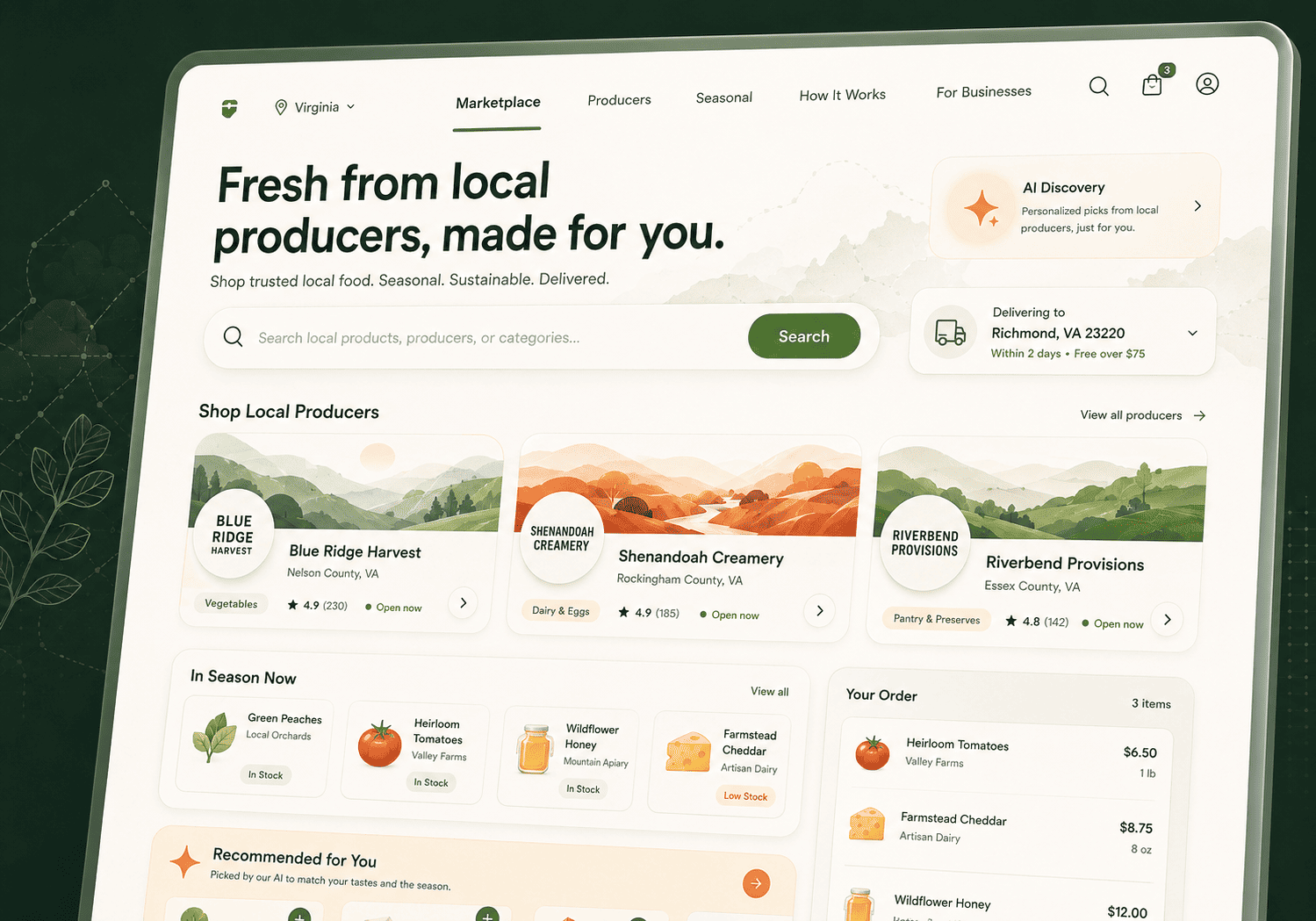
Digital Marketplace for Virginia Farmers, Local Producers & Direct-to-Consumer Food Sales

Plavno developed a custom multi-vendor marketplace for Virginia-based farmers, food producers, and regional sellers to unify product listings, vendor operations, customer ordering, and local fulfillment workflows.

Read More
3x

increase in product discovery relevance

Digital Marketplace for Virginia Farmers, Local Producers & Direct-to-Consumer Food Sales

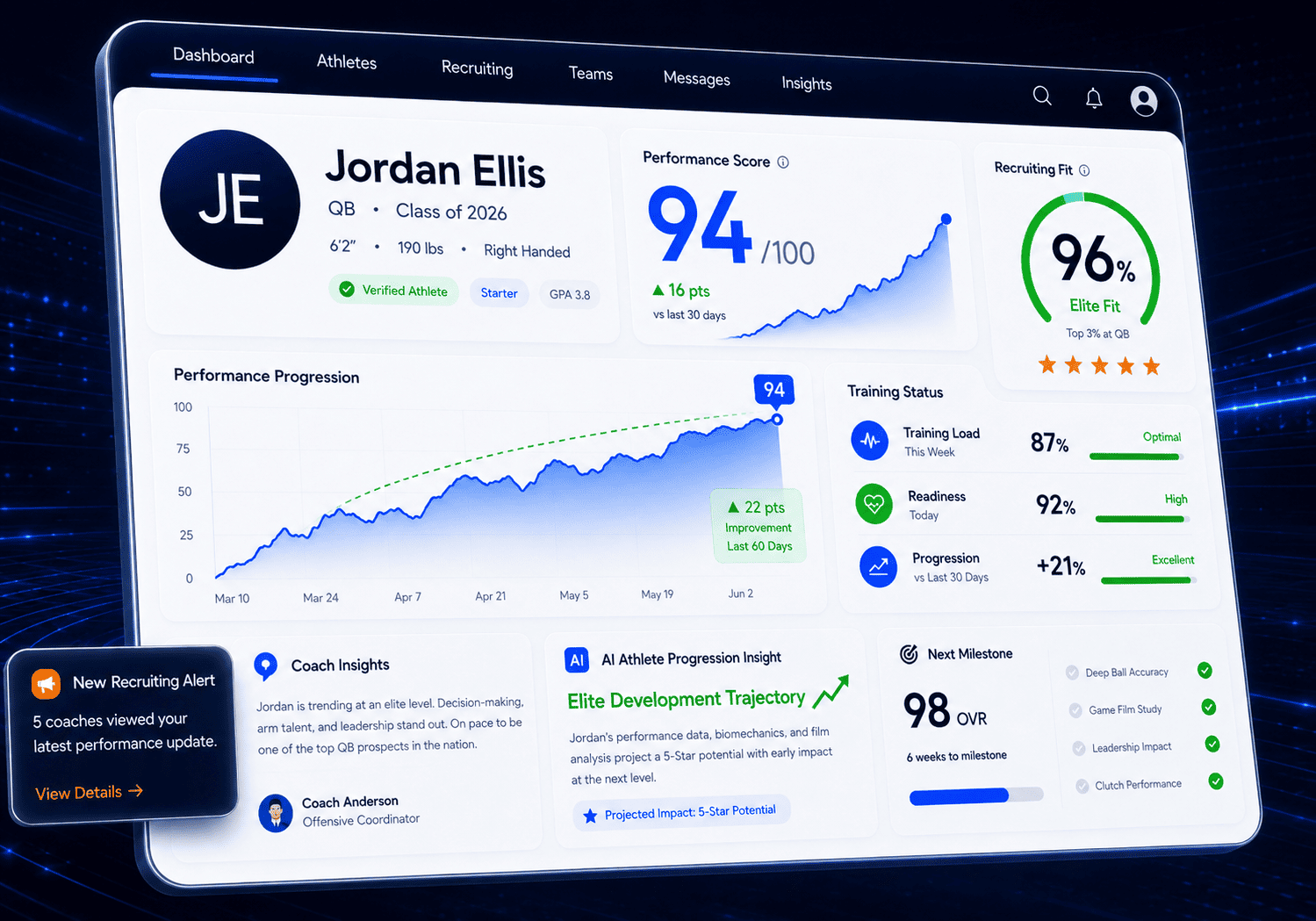
AI-Powered Sports Performance & Recruiting Platform for Virginia Clubs, Academies & Youth Programs

Plavno developed a custom sports technology platform for Virginia-based clubs and academies to combine athlete performance tracking, coach communication, recruiting workflows, and mobile engagement in one ecosystem.

Read More
3x

faster recruiting pipeline

AI-Powered Sports Performance & Recruiting Platform for Virginia Clubs, Academies & Youth Programs

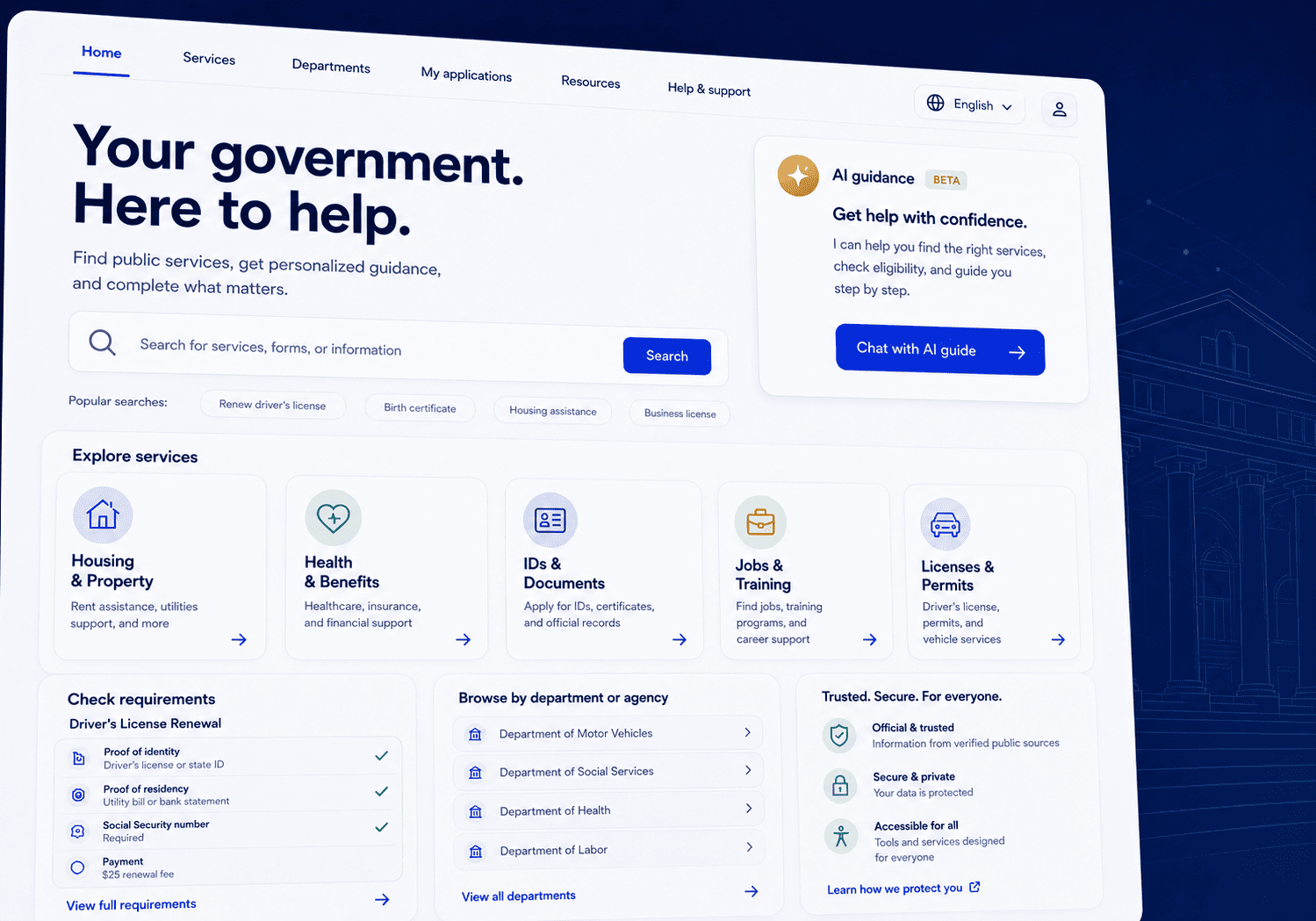
AI-Powered Citizen Services Website Platform for Virginia State Agencies

Plavno developed a modern eGovernment website platform for Virginia state agencies that centralizes citizen services, public information, department content, and an AI-powered guidance agent in one scalable system.

Read More
70%

reduction in routine citizen inquiries to agency staff

AI-Powered Citizen Services Website Platform for Virginia State Agencies

Healthcare AI Solutions for Alexandria Industries

Regional use cases tied to Northern Virginia care

These scenarios map to hospitals, federal health contractors, outpatient networks, and life sciences firms that cluster around Alexandria.

Hospital Command

Hospital Command

Bed Flow

Hospital command centers near Old Town

Bed management boards still update from phone trees during peak volume. Our stream models flag discharge blockers from note signals and order states. Staff act earlier and free capacity without more travelers. ROI of 18% faster turnover hours on medical-surgical floors is a typical target we measure against baseline. Technically, event feeds and lightweight classifiers sit beside the ADT stream with nurse review in the loop.

Federal Contractors

Federal Contractors

Audit Evidence

Federal health contractors in Carlyle

Program offices juggle charsh compliance evidence across many subcontractors. Knowledge agents index SOWs, quality plans, and CAPA libraries with full citation. Review time drops when audit packs assemble automatically. A common result is 25% less analyst hours on evidence pulls in the first two quarters. The stack uses retrieval indexes, role gates, and exportable answer logs that survive inspector review.

Ambulatory Referrals

Ambulatory Care

Referral Flow

Ambulatory groups across Springfield routes

Multi-site practices lose revenue when referral loops stall without status. Assistants chase missing results and nudge both offices with structured tasks. No-show risk models rank outreach lists each morning. Practices often recover 12% of stalled referral revenue within six months of go-live. Work queues, EHR APIs, and SMS gateways run under PHI logging with supervisor overrides.

Lab Imaging

Lab Imaging

Intake Check

Lab and imaging hubs near Mark Center

High volume studies create backlog when intake packets lack codes or history. Pre-check models score completeness and push fixes to front desk staff. Techs start fewer studies that will cancel mid-queue. Targets often show 20% fewer incomplete study starts versus prior month baseline. Rules plus vision checks on forms combine with HL7 order validation before schedule locks.

Home Health

Home Health

Field Notes

Home health fleets serving Fairfax edges

Field nurses waste drive time when visit notes bounce for missing elements. Mobile capture helpers score drafts against payer rubrics before submit. Billing sees fewer returns and faster cash. Programs measure 15% fewer note returns inside one quarter after training. On-device prompts sync when connectivity returns, with central rubric versions retained for audits.

Life Sciences

Life Sciences

Trial Ops

Life science teams in the wider DMV belt

Trial ops burn hours matching protocol deviations across sites. Classification pipelines tag events and route owners with suggested actions. Oversight meetings start with ranked risks, not raw dumps. Sponsors track a 30% cut in time-to-first-review on site issues. NLP over free text plus structured EDC fields feeds dashboards with export controls for monitors.

35%

Less admin search time

Measures staff minutes spent hunting policies after a knowledge agent launch. Baseline comes from timed ticket samples one month pre-go-live. Post figures track the same queues for eight weeks. Savings free nurses and clerks for direct patient work rather than shared drive crawls.

2.4x

Faster packet completeness

Compares prior-auth packet ready rate before assistive extraction versus after. Samples use matched payer types across two billing cycles. Throughput rise funds itself when denial rework falls. Finance sees fewer write-offs tied to missing clinical attachments.

<8wk

Pilot to limited prod

Tracks calendar days from signed architecture to a gated production cohort. Scope stays a single workflow with clean data owners. Alexandria teams avoid year-long pilots that never clear security. Early wins fund the next queue without waiting for a full platform rebuild.

Testimonials

We are trusted by our customers

“They really understand what we need. They’re very professional.”

The 3D configurator has received positive feedback from customers. Moreover, it has generated 30% more business and increased leads significantly, giving the client confidence for the future. Overall, Plavno has led the project seamlessly. Customers can expect a responsible, well-organized partner.

Sergio Artimenia

Commercial Director, RNDpoint

Sergio Artimenia

“We appreciated the impactful contributions of Plavno.”

Plavno's efforts in addressing challenges and implementing effective solutions have played a crucial role in the success of T-Rize. The outcomes achieved have exceeded expectations, revolutionizing the investment sector and ensuring universal access to financial opportunities

Thien Duy Tran

Product Manager, T-Rize Group

Thien Duy Tran

“We are very satisfied with their excellent work”

Through the partnership with Plavno, we built a system used by more than 40 million connected channels. Throughout the engagement, the team was communicative and quick in responding to our concerns. Overall, we were highly satisfied with the results of collaboration.

Michael Bychenok

CEO, MediaCube

Michael Bychenok

“They have a clear understanding of what the end user needs.”

Plavno's codes and designs are user-friendly, and they complete all deliverables within the deadline. They are easy to work with and easily adapt to existing workflows, and the client values their professionalism and expertise. Overall, the team has delivered everything that was promised.

Helen Lonskaya

Head of Growth, Codabrasoft LLC

Helen Lonskaya

“The app was delivered on time without any serious issues.”

The MVP app developed by Plavno is excellent and has all the functionality required. Plavno has delivered on time and ensured a successful execution via regular updates and fast problem-solving. The client is so satisfied with Plavno's work that they'll work with them on developing the full app.

Mitya Smusin

Founder, 24hour.dev

Mitya Smusin

Architecture & Engineering Overview

What engineers and buyers must decide in 2026

Cut rework cost

Cut rework cost

Baseline overtime on notes, lookups & auth fails

Data quality gates

Data quality gates

Version-stamped sources; fail closed on sparse EHR

Latency & spend

Latency & spend caps

Queue partitions, hard budgets, kill switches

Joint scorecard

Joint proof scorecard

Hours returned, residual risk, cost by volume band

For Business: Technical ROI & Risk Mitigation

Leaders in Alexandria fund Healthcare AI when the P&L impact is visible inside one or two quarters. The winning bet is cutting rework cost before chasing flashy diagnosis claims. Chart completion misses, policy lookups, and auth packet failures burn legacy staff hours with high overtime. Those hours are easy to baseline with ticket clocks and denial codes. When an agent or scorer removes a slice of that load, finance can see the delta without abstract productivity theory.

Risk rests in data quality and ownership, not in model name brands. If source policies are outdated, retrieval will surface bad guidance with new speed. We force content owners to stamp versions before indexing. If EHR fields are sparse, scoring rubrics will fail closed and escalate rather than guess. Those gates prevent reputational hits that sink programs after one loud miss on the floor.

Latency and spend sit in the same board report. A model that answers in four seconds fails a front-desk moment. A batch scorer that burns tokens overnight without caps sinks month-end margins. We set hard budgets, queue partitions, and kill switches during kickoff so finance is not surprised. Reviewer labor stays in the plan, because stubborn edge cases remain human for months.

Technical debt shows when every clinic branches its own prompt file. We keep one controlled library with environment promotions. Change tickets list the metric expected to move. Rollback is a first-class button, not a weekend scramble. That discipline is how ROI survives staff turnover and vendor tool upgrades across Virginia networks.

Buyers should demand proof packages. Give us a sample week of tickets, a baseline cost, and a decision owner. We return a forecast of hours returned, error risk remaining, and operating cost under three volume bands. Nothing advances without that joint scorecard signed.

Freeze governance

Freeze governance

Identity, logging, SoR writes locked at kickoff

Architecture review

Architecture review

Corpora, gateway, eval harness, on-call map

Dual-run promote

Dual-run promote

Feature flags, cohort tests, pinned versions

Drift & successors

Drift & successors

Input mix watches, cost boards, maintainer plans

For CTOs: Architecture & Technical Lifecycle

Program lifecycle starts with a narrow write scope and expands only after quality floors hold. Governance beats model chasing as the critical path for Healthcare AI. Kickoff freezes decisions on identity, logging, and system of record writes. Architecture review covers retrieval corpora, model gateway, evaluation harness, and on-call map. Legal clears data processing terms before any PHI sample leaves a controlled box.

Trade-offs hit early. Hosted APIs speed experiments but may conflict with residency rules. On-prem inference lowers egress risk and raises capacity planning needs. We document both cost curves and failed-request behavior. Feature flags keep clinicians on the prior path while a cohort tests the new path. Dual-run periods sample disagreements until confidence thresholds stay stable for agreed windows.

Promotion rules look like software, not research. Model versions and prompt hashes pin together. Evaluation sets include hard cases from authenticity, privacy, and local dialect. Security review re-scans connectors if scopes widen. Change advisory boards include clinical risk owners, not only IT. Staging mirrors production auth so failures show before the floor feels them.

Post-launch, drift watches run on input mix and output class rates. Cost dashboards sit next to uptime. Incidents open with severity packs that name patient safety threats above convenience bugs. Quarterly architecture reviews cull unused tools so the platform does not quietly accumulate rent. Successor plans name who maintains indexes when the first champion changes roles.

CTOs leave with decision logs. Every rejected shortcut stays written, including why screen scraping was refused or why general chat UIs never touched medication lists. Those logs cut re-litigation when a vendor promises a faster shortcut six months later.

Retrieval layer

Retrieval & isolation

Versioned embeddings, hybrid recall, section-sized chunks

Model gateway

Model gateway

Policy inject, redaction, allow-listed tools, bulkheads

Evaluation harness

Evaluation harness

Golden sets, shadow traffic, rubric pins, regression gates

Observability tags

Tagged observability

Corpus/model ids, p95 latency, DLQ, playbook failures

For Engineers: Implementation Details & Stack

Implementation favors boring interfaces and sharp evaluation. Retrieval quality and isolation walls decide production safety more than any single model pick. We store embeddings with document version ids and expire stale chunks on publish events. Chunk sizes match policy section lengths rather than arbitrary token windows. Rerankers sit behind hybrid keyword plus vector recall so rare codes still surface.

LLM calls route through a gateway that injects policy, redacts residual identifiers when required, and meters cost per tenant. Tool calls stay allow-listed. Write tools demand human confirmation for orders, messages, or claim edits until error rates prove otherwise. Timeouts and bulkheads stop a slow EHR from blocking an entire shift dashboard. Idempotent workers replay safely after partial failures overnight.

Evaluation harnesses mix golden sets and live shadow traffic. For scoring products we version rubrics like code and freeze them per release. That mirrors the discipline used when we built automated scoring with rubric-based evaluation and feedback generation. Regression fails the pipeline if precision on critical labels drops. Prompt diffs require paired metric notes like any other code change.

Observability tags every answer with corpus id, model id, latency p95, and reviewer outcome when present. Dead-letter queues capture schema fails from legacy feeds. Load tests run against synthetic PHI-shaped data so no real charts enter chaos trials. Feature stores stay thin. We prefer deterministic feature builders over opaque stacks that only one contractor can tune.

Edge cases include bilingual notes, scanned PDFs, and partial encounter data. OCR paths score confidence before retrieval. Multilingual chunks keep language tags. Missing required fields force structured asks rather than free invent. Engineers ship with playbooks for each failure class so night on-call does not invent policy under pressure.

Compliance controls

HIPAA & SOC2 path

BAAs, least privilege, residency, denied egress

Live monitors

Live monitors

p95, tokens, refusals, drift mix, queue depth

Incident runbooks

Incident runbooks

PHI pages, freeze writes, restore known-good

Blue-green deploys

Blue-green IaC

Traffic mirrors, backup drills, team-owned keys

Infrastructure, Observability & Security

US healthcare clients need controls that survive audits without slowing every release. Monitoring must prove who saw what, what the model used, and when humans overrode it. We deploy in regions you approve, with separate accounts for prod and non-prod. Secrets never live in prompts or tickets. Network policies deny broad outbound internet from inference workers by default.

Compliance programs cover HIPAA safeguards and align to SOC2 style controls when buyers require vendor evidence. BAAs, encryption standards, and access reviews run on a fixed calendar. For Virginia providers with federal limited scopes, we document boundary devices and log shipping destinations. Least privilege maps from group membership, not shared service accounts that linger after contractors leave.

What we monitor includes p50/p95 latency, token spend, refusal rates, retrieval miss rates, and human override reasons. Drift checks compare input length, specialty mix, and class distributions week over week. Cost alerts fire before invoices settle. Queue depth alarms protect staff from silent pileups on Monday mornings. Synthetic probes hit critical paths every few minutes.

Incident response names severities. Suspected PHI exposure pages security and legal within minutes. Model quality drops page product and clinical owners with sample packs. Runbooks list containment steps: freeze writes, replay last known good version, and open patient outreach only when instructed by clinical leads. Postmortems mark whether process or design failed, then update goldens and gates.

Deploys for Alexandria and broader US clients prefer blue-green with traffic mirrors. Infrastructure as code keeps drift visible. Backup and restore drills prove index rebuild times before you need them. We teach your team the dashboards so exit is real. Vendors that keep the only keys fail this bar and do not belong outside temporary pilots.

Maturity path

Move Northern Virginia teams from manual to supervised AI

This ladder shows how clinics expand autonomy only after measured quality, not on a vendor calendar.

Clipboard
Team
01

Step 1: Manual baseline capture (2 weeks)

Teams time existing work and tag error classes before any model runs. Leaders pick one workflow with clear owners and salvageable data. You receive a scorecard of volume, cost, and delay. No automation starts here so baselines stay honest. Staff learn the measurement method they will keep after launch. Timeline locks while patience for flashy demos drops.

02

Step 2: Assisted drafts only (3–5 weeks)

Models draft answers or scores that humans must accept. UI makes sources and confidence visible. Override reasons feed the training backlog nightly. Risk stays low because nothing posts without a person. Alexandria sites build trust with skeptical clinicians. Metrics show how often drafts needed heavy edits before the next gate opens.

Search in doc
Rocket
03

Step 3: Guarded auto-actions (4–6 weeks)

Low-risk acts like filing a ticket or tagging a chart run alone inside thresholds. High-risk acts stay assisted. Kill switches and rate limits sit on every path. Weekly reviews compare false auto rates to the assisted era. Expansion needs two clean review cycles. Cost meters prove the automation still pays for itself under growth.

04

Step 4: Autonomous cells with audit (ongoing)

Stable cells own end-to-end streams with scheduled human spot checks. New specialties enter at assisted level again. Drift alarms reopen assisted mode when mixes shift. Board packs show hours returned, residual risk, and run cost. Northern Virginia networks spread winners clinic by clinic, not as a big bang. Governance keeps pace when volume doubles seasonally.

Eugene Katovich

Eugene Katovich

Sales Manager

Need a custom software solution? We’re ready to help!

Plavno has a team of skilled developers ready to tackle the project. Ask me!

Get a Free Quote

Readiness gate

Prep your Alexandria dataset before kickoff

  • Name the system of record — List which EHR, billing, and document stores own truth for the target workflow. Note write permissions and sandboxes available to vendors. Flag any shadow spreadsheets people still trust more than official fields. Capture refresh rates so batch jobs do not race live edits. Agree who approves schema changes when fields move. Without this map, every build estimate is fiction.

  • Assemble a PHI-safe sample — Pull a representative week of tickets, notes, or claims with identifiers tokenized. Include hard cases, not only clean rows. Mark labeled outcomes where humans already decided. Record known bias risks such as sparse data for certain clinics. Store samples in the approved bucket only. Size should support evaluation splits without starving training needs.

  • Assign clinical and ops owners — Every queue needs a named physician or nurse champion plus an ops owner with budget hold. Define response times for review of pilot outputs. Put backup covers on the calendar for vacation gaps. Write escalation paths when safety concerns appear. Owners must attend architecture sign-off. Programs without owners stall after the first ambiguous case.

  • Freeze security constraints early — Share SSO patterns, network allow lists, logging destinations, and BAA status. State residency limits and forbidden subprocessors up front. List tools already approved versus tools that need new review. Give ballpark timelines for your security board. Align on encryption and key custody. Late security surprises erase hopeful delivery dates.

  • Set cost and success floors — Write the baseline hours, error rate, and dollar cost you track today. Pick the minimum improvement that justifies year-one spend. Cap monthly model and infra budgets with alerts. Decide what happens if a metric fails volume growth tests. Share these floors with finance before coding starts. Partnerships fail when success stays undefined until demos dazzle.

Vitaly Kovalev

Vitaly Kovalev

Sales Manager

Request your Alexandria Healthcare AI readiness audit

Send budget range, timeline, current stack, and dataset scope. Receive a scored readiness audit and build estimator tailored for Alexandria businesses within one business day.

Talk to Experts

Buyer questions

Healthcare AI FAQs for Alexandria leaders

Straight answers on cost, timing, data, quality, security, and steady-state operations for Virginia teams.

What drives the cost of custom Healthcare AI for Alexandria providers?

Cost tracks scope of integration, PHI controls, evaluation depth, and how many write-backs you allow without human review. A single knowledge agent over static policies costs less than a multi-EHR prior-auth path with payer-specific rules. Northern Virginia wages for clinical reviewers also matter when dual-run periods last several weeks. Cloud spend is predictable when token budgets and batch windows are set during design rather than left open.

Major drivers include connector count, corpus cleanup labor, and security review cycles unique to each health system. Groups near Arlington and Fairfax often need hybrid hosting, which adds design time but reduces egress risk. We price discovery as a fixed phase so you see a real build range before signing larger SOWs. Change volume after launch affects retainers more than one-time build fees.

Local market factors include auditor expectations for federal-adjacent contractors and the number of clinics that share an identity plane. Multi-site rollouts cost more when each site has drifted workflows. You lower cost by cleaning a pilot corpus, naming owners, and limiting the first workflow to one high-volume pain. Share budget, timeline, stack, and dataset scope early. That packet produces a credible estimate instead of a wide guess.

How long does it take to build Healthcare AI software for a clinic network?

Most Alexandria pilots reach a guarded production cohort in six to twelve weeks when data owners are ready on day one. MVP means one workflow, one corpus or scoring rubric, and human approval on every consequential action. Full deployment across several clinics stretches three to six months because training, SSO edges, and change control add calendar time. Programs that skip baseline measurement often restart and double the timeline.

Discovery and architecture usually consume two to five weeks. Build and pilot fill the middle window. Scale-out depends on how similar sites actually are. If Springfield and Mark Center sites share one EHR configuration, expansion is faster. If each site invented local note templates, expect extra mapping sprints. Weathering security board schedules in larger systems can add quiet weeks where engineers wait rather than code.

MVP success looks like measured hour savings on a closed user group with clean incident logs. Full deployment success looks like owned runbooks, cost alarms, and a promotion process your staff can run without us on the keyboard. We stage autonomy. Assisted drafts first. Guarded auto-actions second. Broad autonomy only after quality floors hold. That path beats a big-bang date that slips when reality arrives.

What data do you need before a Healthcare AI project starts in Virginia?

We need a defined system of record, a PHI-safe sample spanning common and edge cases, labeled outcomes when humans already decided, and written access rules. Policy PDFs must carry version stamps. EHR extracts need field dictionaries. Ticket exports need status histories. Without labels, evaluation collapses into opinions and pilots never leave discussions. Startups and health systems in the Virginia ecosystem share this requirement equally.

Regional startups around Arlington, Crystal City, and the broader DMV often hold product logs but lack clinical goldens. Hospitals hold goldens buried in people rather than codified rubrics. We help both convert tribal knowledge into test sets. Data volume needs are modest for pilots. Representativeness beats huge dumps. A clean two-week slice with critical exceptions outperforms twelve months of sparse sparse fields.

Legal readiness matters as much as files. BAA status, sandbox credentials, and approved transfer paths should exist before kickoff week. We will not move unrestricted PHI over ad-hoc channels. If your startup is pre-EHR and still building product, we can start on synthetic data plus a narrow partner clinic sample. The sooner ownership of data quality is named, the sooner engineering hours stop burning on guesswork.

How do you evaluate and measure Healthcare AI quality after launch?

Quality is a mix of accuracy on goldens, human override rate, latency budgets, and downstream business metrics such as denial returns or time-to-answer. We freeze evaluation sets before go-live and expand them with real misses each sprint. Shadow mode compares model and human decisions without patient-facing impact until agreement stays high. Dashboards break results down by site, specialty, and document type so one strong clinic does not hide a weak one.

For scoring products we track rubric agreement rates and consistency of feedback language. For agents we track citation validity and unresolved query rate. Cost per successful task sits beside pure accuracy because a perfect model that burns budget fails the business case. Drift monitors watch input mix shifts when flu season or new service lines arrive. Alerts open tickets that include sample payloads for rapid triage.

Governance boards meet on a cadence with decoded cases, not only charts. Clinical owners decide if a miss is rare noise or a systemic gap. If floors break, we roll back model or prompt versions and re-enter assisted mode for the affected cell. That discipline is the difference between a durable program and a demo that quietly dies after month three.

How do you handle HIPAA, security, and compliance for Healthcare AI?

We treat HIPAA safeguards as design constraints, not paperwork at the end. Access follows least privilege through your SSO. Encryption covers data at rest and in transit. Logs record who retrieved what and which model version answered. BAAs and subprocessors are declared before any PHI sample moves. Network controls block open tool use from inference layers unless an engineer approves a narrow allow list.

Virginia organizations that also serve federal programs often need extra residency and evidence packs. We document boundaries, retention, and destruction routines. SOC2 aligned processes cover change management, incident response, and vendor review. Pen tests and tabletop exercises land on the calendar rather than waiting for a crisis. Secrets never land inside prompts or chat transcripts.

Clinical safety is separate from cybersecurity and still part of the plan. Medication or order writing stays behind human confirmation until long evidence windows succeed. Refusal behaviors are tested with adversarial prompts. When a possible exposure occurs, security and legal page within minutes using a named severity board. Postmortems update gates and goldens so the same miss cannot slide past twice.

Contact Us

This is what will happen, after you submit form

Need a custom consultation? Ask me!

Plavno has a team of experts ready to start your project. Ask us!

Vitaly Kovalev

Vitaly Kovalev

Sales Manager

Schedule a call

Get in touch

Fill in your details below or find us using these contacts. Let us know how we can help.

Required because you selected “Other” above

No more than 3 files may be attached up to 3MB each.
Formats: doc, docx, pdf, ppt, pptx, xls, xlsx, txt.
Book your meeting