bg image
bg image

Serving Richmond & Virginia

Stop Losing Staff Hours to Repetitive Work in Richmond by 2026

Richmond operations leaders still burn cycles on handoffs that never needed a human. Finance, public services, and logistics firms feel it first when volume spikes. Autonomous agents take those loops and run them with clear rules and audit trails. You keep control of decisions that matter. Your teams reclaim time for judgment work. This is built for Virginia companies that already run real systems, not greenfield demos. Get AI Agents Development cost estimate in 24 hours.

Discuss Project

Overview

Why Richmond ops still stall on manual loops in 2026

Richmond sits at the crossroads of state government, regional banks, healthcare networks, and logistics corridors. Those sectors run on forms, approvals, status checks, and exception queues that grow faster than headcount. Hiring alone rarely closes the gap. Leaders need software that acts inside existing tools, not another dashboard to watch.

Local teams in Henrico, Chesterfield, Short Pump, and Midlothian already feel the drag. A claims clerk rekeys the same fields across three portals. A city vendor onboarding package stalls for days waiting on missing documents. An ecommerce ops lead opens tickets by hand when inventory drifts. Each delay has a dollar cost and a reputation cost.

We design ai agents development work that owns a bounded process end to end. Agents read structured signals, call your APIs, enforce policy, and escalate only when confidence drops. You set the rails. We ship the worker that stays inside them. That is the difference between a chat demo and production automation that survives real load.

Trusted AI Agents Development Partner for Richmond Businesses. We work with US-based clients, including companies operating in Virginia. Our delivery habit comes from shipping secure, self-hosted portals and commerce systems that already handle forms, roles, and structured content under real constraints. You can review our approach to build ai agents before scoping a pilot.

Outcomes stay concrete. Fewer overnight queues. Faster cycle times on routine packets. Clear logs for auditors who ask who touched what. We keep stack choices dull and supportable so your internal engineers can own the system after handover. That is how Richmond firms grow capacity without a hiring binge they cannot fill.

Talk to an Expert
Bounded process agents

Bounded process agents

Own one queue end to end with start triggers, success states, and hard stops

Rails inside your stack

Rails inside your stack

Read signals, call existing APIs, enforce policy — no greenfield rip-and-replace

Escalate with evidence

Escalate with evidence

Low-confidence cases route to named humans with full decision packs

Audit-ready capacity

Audit-ready capacity

Fewer overnight queues, faster cycles, clear logs auditors can trust

Core runtime design

Agent runtimes that survive Richmond production traffic

Clients in Richmond get a bounded agent runtime, not a loose prompt script. Each agent owns one process family with explicit inputs, tool contracts, and stop conditions. We separate planning from execution so a failure in a single tool call never corrupts the whole session. State lives in durable stores your team already trusts. That keeps restarts safe after a deploy or a network blip.

Architecture favors thin orchestrators and sharp tools. The orchestrator decides next steps. Tools perform narrow actions against CRM, ERP, ticketing, CMS, or custom APIs. We ground tool schemas tightly so free-form model output cannot invent fields. For content heavy workflows we reuse headless patterns we already shipped, such as Strapi driven service pages with structured forms and secure submission paths. Agents then operate on clean schema instead of scraping brittle HTML.

Security and compliance sit in the build, not a slide deck. Secrets stay in vaults. Role maps mirror your directory groups. Action scopes are least privilege by default. Every sensitive write requires a verified user or system identity. For public sector and healthcare adjacent work we keep audit trails complete enough for later review. Security/compliance gates ship before the first production write is allowed.

DevOps is part of the same package. We containerize workers, pin model versions, and ship with health checks, retry budgets, and dead letter queues. Feature flags control rollout by team or by workflow type. Observability hooks emit tokens used, latency, tool failure rates, and human escalation counts. Your SRE team can wire alerts into existing boards on day one. DevOps discipline is how agents stay boring after launch.

We prove choices against systems we have already delivered. A self-hosted public services portal needed bilingual structured pages and secure form workflows. That taught us how agents should fill, validate, and route the same packets without inventing fields. An online pet supplies storefront taught catalog and checkout edges where inventory agents must respect stock truth. Those shipping constraints shape every stack call we make for Virginia buyers.

plavno logo

Build your first
Smart AI project today!

Just tell the Plavno AI Agent about your project - it will ask questions, gather requirements, and propose a tailored solution

AI Agents Development Solutions for Richmond Industries

Where Richmond firms put agents on the payroll first

These use cases map to the capital region economy, state agencies, health systems, banks, campuses, and distribution belts around the city.

Packet Routing

Packet Routing

Public sector

State and local public service packet routing

Virginia agencies still move citizen packets through email and shared drives. Missing attachments stall cases for days. We build agents that validate required fields, request gaps, and route complete packets to the right queue. Staff see a cleaned inbox instead of a raw pile. Cycle time on standard caseloads drops because exceptions become visible early. Technically the agent sits on structured service schemas, calls form APIs, and writes immutable status events. ROI shows up as fewer callbacks and higher first-pass completion on routine filings.

Intake Triage

Intake Triage

Healthcare

Regional healthcare admin intake triage

Richmond health systems bury coordinators in eligibility checks and prior auth packets. Manual triage loses hours before clinical work even starts. Agents assemble required data from EHR query layers, flag missing documents, and open only clean tickets for humans. Clinics regain schedule integrity when incomplete packets stop landing on nurses. The agent uses read scoped connectors and policy rules that block write access until a human confirms. Measured value appears as reduced phone tag and faster time to a billable slot.

Bank Exceptions

Bank Exceptions

KYC ops

Capital region bank operations exceptions

Banks and credit teams near downtown face volume spikes on KYC refresh and wire exception queues. Generic chat bots cannot close those loops. We ship agents that pull case bundles, compare against policy checklists, and draft the next required action with evidence links. Analysts approve or reject instead of hunting files. The design uses strict tool contracts against core banking APIs and immutable decision logs. Cost control comes from cutting average handle time on the middle tier of cases that do not need a senior review.

Enrollment Ops

Enrollment Ops

Campus

Campus and workforce program enrollment ops

Higher education and workforce boards across Richmond run enrollment seasons that overwhelm small staffs. Forms arrive incomplete. Applicants wait without status. Agents check package completeness, nudge applicants, and update CRM stages when rules pass. Coordinators focus on edge cases and appointments. Implementation binds to CRM and document stores with bilingual content patterns we already used on public portals. Yield improves when fewer complete applicants drop out waiting on silence.

Warehouse Exceptions

Warehouse Exceptions

Logistics

Distribution and warehouse exception handling

Logistics operators along the I-95 and I-64 belts lose money when receiving mismatches stay manual. Agents compare ASN data to scans, open supplier tickets, and propose disposition codes. Floor leads confirm only the true exceptions. Dwell time falls because the system stops waiting for someone to notice a variance. Technical path uses event streams from WMS plus guarded write tools that never invent SKUs. Margin gain sits in fewer late outbound waves and less overtime on clean-up shifts.

Retail Copilot

Retail Copilot

Catalog

Retail catalog and support copilot for commerce

Local retailers expanding beyond short-run storefronts still handle catalog fixes and order exceptions by hand. Drawing from ecommerce storefront work with catalog and checkout flows, we attach agents that update attributes, flag stock drift, and draft customer replies with order truth. Merchants approve posts. Fewer wrong SKUs reach the buyer. Stack stays practical. Headless catalog APIs plus order webhooks feed a tool layer the agent alone can call. Savings appear as lower support staffing during peak weeks without feeling quality drop.

Delivery capability set

What Richmond buyers actually receive from an agent build

Process-bound autonomous workers

Process-bound autonomous workers

Richmond firms lose money when work hops between inboxes without ownership. We package agents that run one named process with start triggers, success states, and hard stops. Outcome is a worker you can hand a queue and trust overnight. Tooling stays explicit with JSON schemas and versioned prompts. We choose durable run queues so restarts resume cleanly after deploys. Your ops lead gets a status board instead of more chat noise.

Systems integration that respects legacy cores

Systems integration that respects legacy cores

Capital region companies already run banks of older ERPs, portals, and tickets. Rip and replace is rarely an option. Agents call existing APIs and package screens through adapters instead of forcing greenfield systems. We prefer contract first integration so field names never drift in production. Middleware logs every external call for later audit. Result is automation that lives beside finance and case systems without breaking batch windows.

Human escalation paths with evidence packs

Human escalation paths with evidence packs

Autonomy fails when confidence is soft and no path exists for judgment. We build escalation packets that show what the agent saw, what it tried, and why it stopped. Supervisors act in minutes instead of reverse engineering logs. Notification channels map to existing Slack or email ops. Threshold rules live in config your team can change without a redeploy. Trust grows because people always see the why.

Policy and audit tooling out of the box

Policy and audit tooling out of the box

Virginia buyers in regulated lanes need more than a model score. Every write action can require a policy check and an identity stamp. We store decision traces linked to case IDs your compliance group already uses. Export formats match common auditor requests. Retention rules follow your legal hold window. This lowers the risk of shadow automation living only in private chats.

Cost and latency controls from week one

Cost and latency controls from week one

Unmetered agent loops burn budget and patience. We set token budgets, cache frequent look-ups, and choose smaller models where classification is enough. Batch windows handle non-urgent work after hours to cut peak spend. Metrics show cost per completed case beside SLA hit rate. Finance sees a unit cost they can forecast. Engineering keeps kills switches able to pause a single workflow type without taking the fleet offline.

Case Study

We help customers cut
down on development

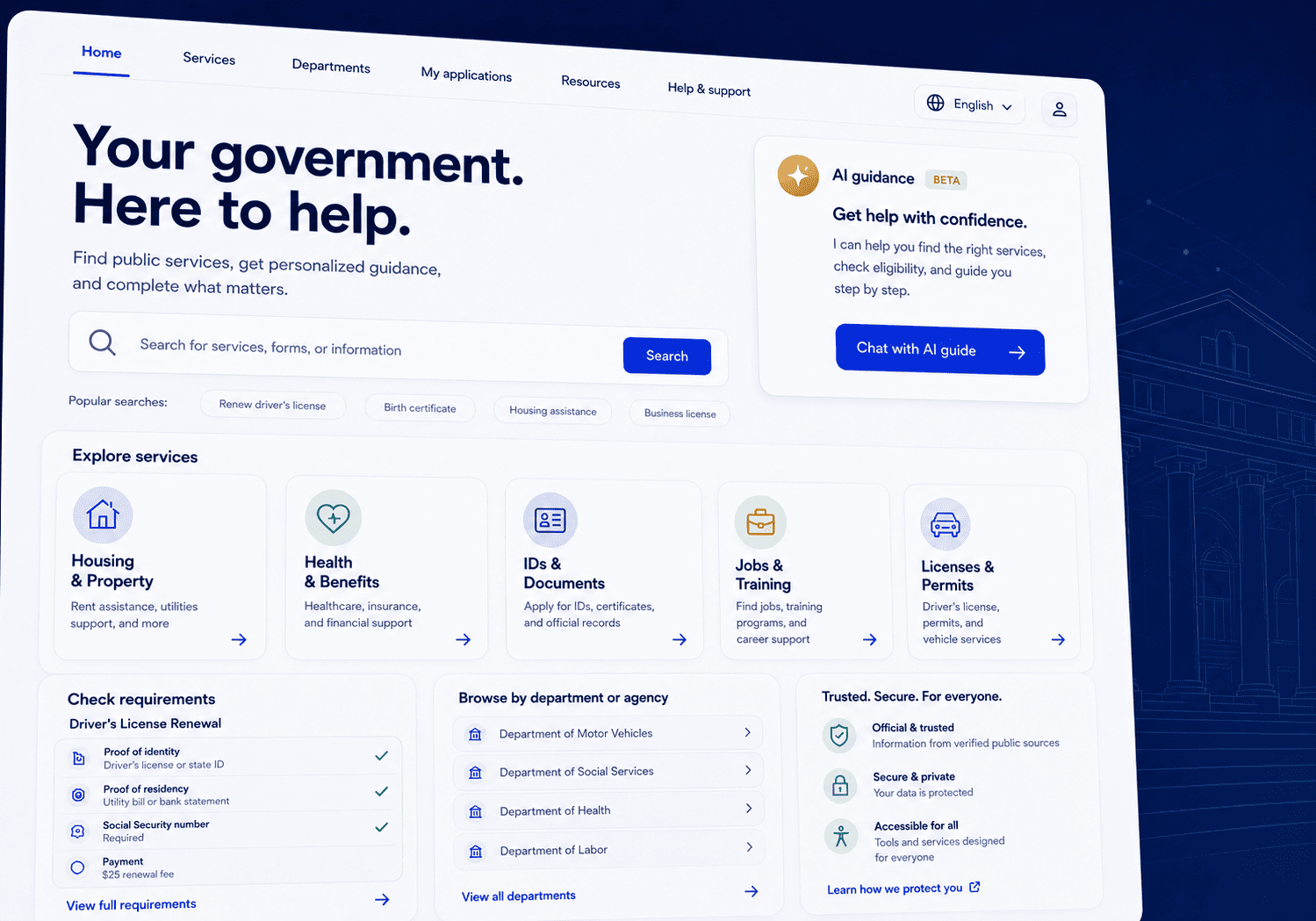
AI-Powered Citizen Services Website Platform for Virginia State Agencies

Plavno developed a modern eGovernment website platform for Virginia state agencies that centralizes citizen services, public information, department content, and an AI-powered guidance agent in one scalable system.

Read More
70%

reduction in routine citizen inquiries to agency staff

AI-Powered Citizen Services Website Platform for Virginia State Agencies

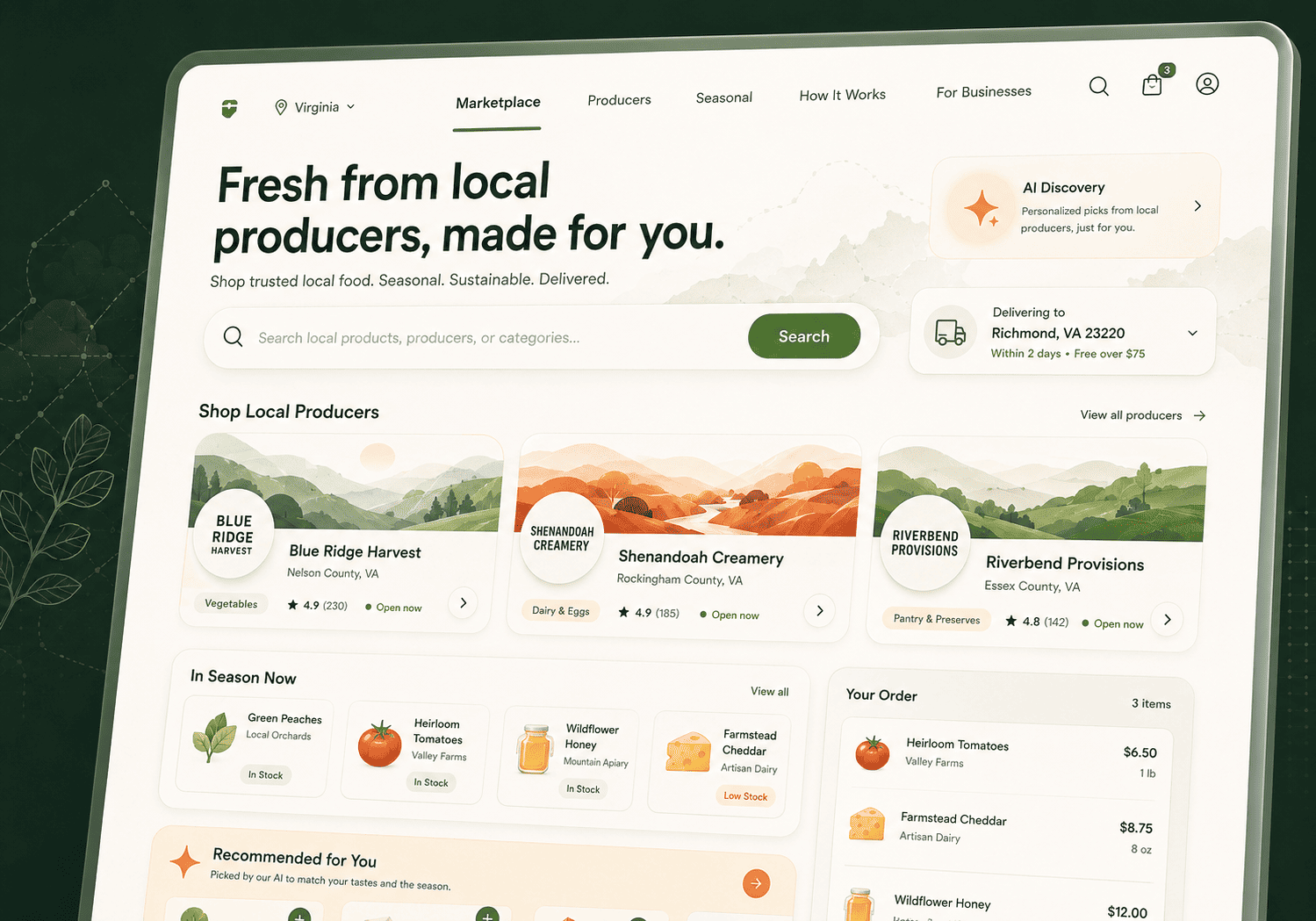
Digital Marketplace for Virginia Farmers, Local Producers & Direct-to-Consumer Food Sales

Plavno developed a custom multi-vendor marketplace for Virginia-based farmers, food producers, and regional sellers to unify product listings, vendor operations, customer ordering, and local fulfillment workflows.

Read More
3x

increase in product discovery relevance

Digital Marketplace for Virginia Farmers, Local Producers & Direct-to-Consumer Food Sales

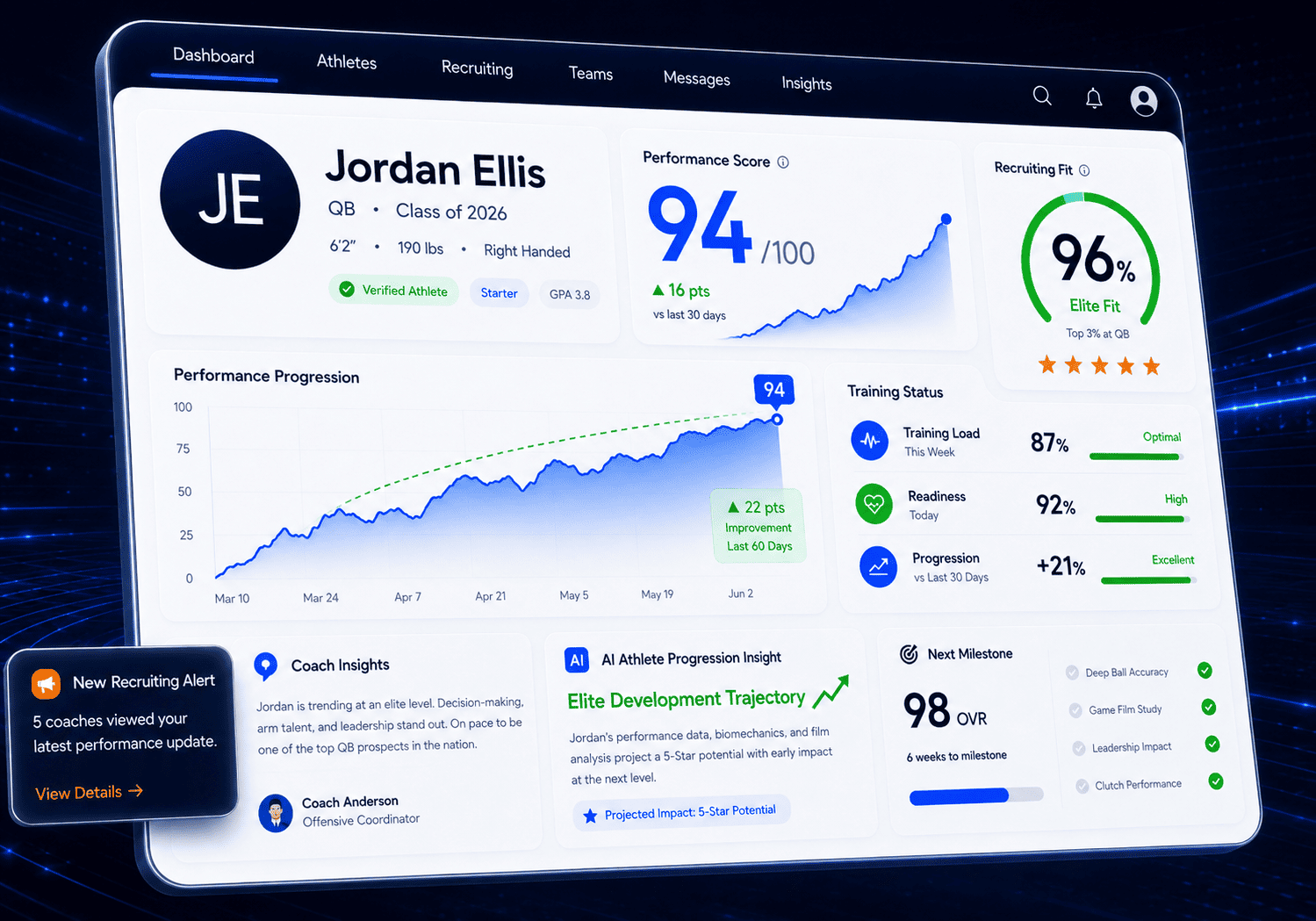
AI-Powered Sports Performance & Recruiting Platform for Virginia Clubs, Academies & Youth Programs

Plavno developed a custom sports technology platform for Virginia-based clubs and academies to combine athlete performance tracking, coach communication, recruiting workflows, and mobile engagement in one ecosystem.

Read More
3x

faster recruiting pipeline

AI-Powered Sports Performance & Recruiting Platform for Virginia Clubs, Academies & Youth Programs

Architecture & Engineering Overview

How we engineer agent programs Richmond teams can own

1

Baseline the workflow

Log touches per case, hours stuck, and rework share before any code ships

2

Shadow mode first

Read tools dominate; agents refuse incomplete packets instead of guessing

3

Unlock guarded writes

Write tools open only after shadow accuracy holds — ledger integrity stays intact

4

Prove unit economics

Weekly before/after slices plus token budgets; spikes page owners with run IDs

For Business: Technical ROI & Risk Mitigation

Business sponsors care about cycle time, error rates, and liability more than model brands. Technical choices only matter when they move those three numbers in measured windows. We baseline a target workflow before code ships. Counts of touches per case, average hours stuck awaiting status, and rework shares get logged for a short sample period. After launch we compare the same slices weekly so value stays visible.

Risk falls when agents cannot freestyle. Read tools dominate early releases. Write tools unlock only after shadow mode accuracy holds. That staged path protects customer data and ledger integrity while you still learn edge cases. Escalation destinations are named people and queues, not a void.

Cost risk is controlled the same way. Token and tool budgets sit on each workflow. Spikes page an owner with the specific run id. Finance reviews unit economics monthly with the ops lead. Failures become design brief updates instead of surprise invoices.

We apply lessons from earlier portal and storefront delivery. Structured service pages and secure form workflows taught us incomplete inputs are the first failure mode. Agents therefore refuse incomplete packets instead of guessing. Catalog and checkout systems taught us stock truth must lead product claims. Agents refuse to promise inventory they cannot verify.

The result for Richmond leadership is a controllable program. You pick which queues go first. You see before and after on those queues. You keep both an on switch and an off switch. That is ROI without theater.

Workflow charter

Workflow charter

One process family locked by ops and eng before any model work

Thin vertical slices

Thin vertical slices

Read tools → guarded writes behind flags → autoscaled workers

Governance gates

Governance gates

Prompt/schema changes peer-reviewed; model pins with proven rollback

Handover asset

Handover asset

Runbooks, alert catalogs, and platform-team KT with the first pilot

For CTOs: Architecture & Technical Lifecycle

Lifecycle starts with a single workflow charter signed by ops and engineering. Scope locks to one process family before any model work begins. Discovery maps systems of record, identity sources, and the write actions that carry real risk. Decision spikes settle tool boundaries and data contracts before sprints fill with UI polish.

Build phases run thin vertical slices. First slice proves read tools and classification in a lower environment. Second slice adds guarded writes behind feature flags for a pilot cohort. Third slice expands volume with autoscaled workers and cost fences. Each phase ends with a go or no-go on metrics the charter already named.

Governance stays practical. Prompt and tool schema changes pass the same review gate as code. Model version pins live in config with rollback proven in staging. Ownership matrix names who can modify policy tables after launch. That prevents quiet drift when staff churn.

Trade-offs are explicit. Heavier local runtimes buy data control at the price of ops load. Fully hosted model endpoints cut toil but raise data residency questions. We present both options with cost and compliance notes instead of a single default. Your stack and risk profile drive the pick.

Handover is planned early. Runbooks, alert catalogs, and on-call tips land with the first pilot. Knowledge transfer sessions target your platform team, not a one hour slide show. The goal is an asset you can extend after the statement of work closes.

Typed tool contracts

Typed tool contracts

OpenAPI services with auth scopes; models propose, tools decide what runs

Checkpointed orchestration

Checkpointed orchestration

State machines with idempotency keys; retries capped to protect legacy hosts

Model routing & evals

Model routing & evals

Light models for classify; golden-set evaluators before every model bump

Self-defending edges

Self-defending edges

Timeouts compensate; schema drift freezes tools; outages flip read-only

For Engineers: Implementation Details & Stack

Implementation favors typed tool interfaces and deterministic glue. Models propose. Tools and posts-conditions decide what actually runs. We implement tools as small services with OpenAPI contracts, auth scopes, and replayable fixtures. Agents call only those contracts. Free form shell access never ships.

Orchestration uses explicit state machines or graph runners depending on branch density. Long work is checkpointed so a kill mid run resumes without double writes. Idempotency keys travel with every external mutation. Retries stay capped with jitter to protect brittle legacy hosts still common in Virginia offices.

Where content structures matter we reuse proven patterns from headless CMS delivery. Structured types and form schemas give agents clean fields. Static generation friendly front ends remain separate from the worker plane. That split keeps public sites fast while agents work on private queues.

Optimization starts with caching deterministic look-ups and batching non urgent work. Classification routes to lighter models. Heavier reasoning only opens when scores demand it. Evaluators run offline on golden task sets before each model bump. Production canary traffic then proves the candidate under live mix.

Edge cases get coded, not hoped away. Timeouts produce compensated actions. Partial vendor outages flip agents into read-only mode automatically. Schema drift detectors freeze a tool when responses stop matching contracted shapes. Engineers sleep better when the system defends itself against quiet breaks.

Your cloud, your keys

Your cloud, your keys

Containers on your account or locked tenancy; egress limited; private links for sensitive DBs

Four-plane observability

Four-plane observability

Traces, case completion, token cost, and security denies — wired into your existing dashboards

Compliance by default

Compliance by default

HIPAA-aware flows, SOC2 change logs, full action provenance for public-sector lanes

Progressive delivery & IR

Progressive delivery & IR

Canaries and dual pools; runaway loops are sev-1 with budget kill; drift freezes the canary

Infrastructure, Observability & Security

Infrastructure defaults to containers on your cloud account or a locked down tenancy you approve. Data residency and key ownership stay with you unless a written exception says otherwise. Network policies limit egress to approved vendors. Private link options cover sensitive database reaches for healthcare and finance buyers.

Observability covers four planes. Application traces show tool paths and latency. Business metrics count completed cases and escalation rates. Cost metrics track tokens and paid connector calls. Security metrics watch denied auth, anomalous write volume, and policy misses. Dashboards sys into your existing stack rather than inventing a second home.

Compliance mapping is explicit. For HIPAA adjacent work we keep BAA aware data flows and avoid training on customer content. SOC2 minded clients get change logs, access reviews, and backup tests as part of the handoff pack. Public sector work inherits least privilege and full action provenance by default.

Deployment uses progressive delivery. Canaries, blue green, or simple dual worker pools depending on your platform maturity. Secrets rotate on schedule. Model pins and config ship through the same pipeline as code. Rollback is a runbook step tested monthly.

Incident response names owners and severity thresholds up front. A runaway loop is severity one with immediate budget kill. A silent accuracy drift is severity two with canary freeze and human review. Post incident notes feed the evaluator suite so the same miss fails CI next time. Monitoring exists to protect both customers and spend.

Engineering contrast

Why Choose Us over generic AI freelancers

Richmond buyers need production ownership, not a weekend chatbot. Here is how deep engineering programs differ from thin agency wrappers.

Generic Agencies
Our Platform (Deep Engineering Expertise)
Process-bound agent scopes with stop conditions
checkmark
Typed tool contracts against legacy systems
checkmark
Shadow mode before any production writes
checkmark
Token and cost budgets per workflow
checkmark
Audit traces linked to business case IDs
checkmark
Slide deck model comparison workshops
checkmark
checkmark
Handover runbooks and evaluator suites
checkmark

Testimonials

We are trusted by our customers

“They really understand what we need. They’re very professional.”

The 3D configurator has received positive feedback from customers. Moreover, it has generated 30% more business and increased leads significantly, giving the client confidence for the future. Overall, Plavno has led the project seamlessly. Customers can expect a responsible, well-organized partner.

Sergio Artimenia

Commercial Director, RNDpoint

Sergio Artimenia

“We appreciated the impactful contributions of Plavno.”

Plavno's efforts in addressing challenges and implementing effective solutions have played a crucial role in the success of T-Rize. The outcomes achieved have exceeded expectations, revolutionizing the investment sector and ensuring universal access to financial opportunities

Thien Duy Tran

Product Manager, T-Rize Group

Thien Duy Tran

“We are very satisfied with their excellent work”

Through the partnership with Plavno, we built a system used by more than 40 million connected channels. Throughout the engagement, the team was communicative and quick in responding to our concerns. Overall, we were highly satisfied with the results of collaboration.

Michael Bychenok

CEO, MediaCube

Michael Bychenok

“They have a clear understanding of what the end user needs.”

Plavno's codes and designs are user-friendly, and they complete all deliverables within the deadline. They are easy to work with and easily adapt to existing workflows, and the client values their professionalism and expertise. Overall, the team has delivered everything that was promised.

Helen Lonskaya

Head of Growth, Codabrasoft LLC

Helen Lonskaya

“The app was delivered on time without any serious issues.”

The MVP app developed by Plavno is excellent and has all the functionality required. Plavno has delivered on time and ensured a successful execution via regular updates and fast problem-solving. The client is so satisfied with Plavno's work that they'll work with them on developing the full app.

Mitya Smusin

Founder, 24hour.dev

Mitya Smusin

Data readiness plane

Data contracts that keep Richmond agents honest after launch

The second build concern is data truth, not another orchestration diagram. Agents fail quietly when fields mean different things across systems. We start every program by naming systems of record for customers, inventory, cases, and money. Each agent tool may read only from those masters. Derived caches get expiry rules so stale numbers never become decisions.

Integration mapping is a first class deliverable. Side by side field dictionaries show source, type, owner, and freshness. Conflicting definitions surface before code freezes them. For portals we already know structured service schemas and secure form posts. Agents consume that same structure so bilingual labels and validation rules stay consistent. For commerce paths catalog and checkout objects remain the ground truth for stock and price claims.

Quality gates sit in the pipeline. Schema tests fail a deploy when required fields vanish. Sample based drift checks compare agent outputs to human gold sets weekly. Outliers create tickets rather than auto merging into production memory. Your data team gains levers without babysitting every run.

Cost control rides along with data design. High volume look-ups move to cached projections. Large document parses run async with clear SLAs. We reject unbounded retrieval patterns that pull entire archives into prompts. Spending stays proportional to completed work instead of raw curiosity loops the model invents mid flight.

Security remains attached to data planes. Row filters, tenant partitions, and field redaction travel with every tool response. Agents never see full payloads when a hash or token is enough. Logs store references, not raw PII, unless absolute audit need exists. That keeps Virginia regulated buyers inside policy while still shipping automation.

plavno logo

Build your first
Smart AI project today!

Just tell the Plavno AI Agent about your project - it will ask questions, gather requirements, and propose a tailored solution

Readiness gate

Confirm these five gates before you fund an agent pilot

  • Name one workflow with volume and pain. Pick a queue your Richmond team already measures. Document average weekly volume, staff minutes per case, and the error or delay that hurts most. Include sample redacted packets so tool needs become obvious. Without a single named workflow the program spreads thin across slogans. A tight charter turns the pilot into a measured unit economics test instead of a demo theater. Share owners for ops and engineering before kickoff.

  • List systems of record and write risks. Inventory the CRMs, ERPs, tickets, and file stores the agent must touch. Mark which actions are read only at first. Mark which writes need human countersign. Capture auth methods and rate limits. This inventory prevents surprise blockers two sprints late. It also reveals where adapters must absorb legacy quirks common in Virginia shops.

  • Assemble identity and audit requirements. State who may invoke an agent and how their role maps to directory groups. Define retention for decision traces and who may export them. Note industry rules that apply to your data class. Healthcare, banking, and public sector teams rarely share the same bar. Setting it early avoids rework on logging formats later.

  • Prepare evaluation packets and success splits. Collect at least a modest set of historical cases with known correct outcomes. Split them into train free gold sets for offline scoring. Agree what accuracy, handle time, and escalation share make a go decision. Include edge cases that currently break staff, not only the happy path. Metrics without examples become arguments instead of signals.

  • Budget ownership and kill switches. Assign a product owner who can freeze spend and a technical owner who can pause workers. Cap monthly model and connector cost for the pilot window. Decide how rebates or credits will handle spikes during load tests. Document the off path if the agent misbehaves during business hours. Pilot confidence rises when everyone knows the stop button location.

Vitaly Kovalev

Vitaly Kovalev

Sales Manager

Request a Richmond agent readiness audit

Share budget range, timeline, current stack, and the dataset or queue you want automated. We return a scored readiness audit and pilot estimate sized for Richmond and Virginia operating constraints.

Talk to Experts

Straight answers

FAQ on AI agents for Richmond teams

Practical questions Virginia operators ask before funding a first autonomous workflow. Costs, time, data, quality, security, and life after launch.

What drives the cost of AI agents development for a Richmond company?

Cost follows scope clarity more than model brand names. A single bounded workflow with two or three system integrations sits in a very different band than a multi department program with open ended goals. Local market factors also matter because Virginia regulated buyers often need audit trails, role mapping, and private networking that pure consumer bots skip.

Major drivers include number of tools the agent may call, volume of historical cases needed for evaluation, and whether writes happen in production systems on day one. Shadow modes lower risk and can raise calendar time. Heavy legacy adapters with poor APIs raise engineering hours. Hosted model usage adds a variable run rate you must meter.

Richmond public sector and healthcare adjacent firms should budget for compliance work. That covers logging design, data retention, access reviews, and sometimes dedicated environments. Retail and logistics pilots can move leaner if PII loads are lighter. Either way we price the pilot as a fixed scope with an optional run cost model after launch.

We ask four inputs up front. Budget range. Timeline. Tech stack. Dataset or process documentation. With those we can separate must-have agent behavior from nice-to-have experiments. That split prevents golden wallpaper features from swallowing funds that should buy reliability first.

Expect the largest swings from integration quality and evaluation depth rather than from which base model headline you pick. A disciplined unit can finish a focused pilot without blowing a full year transformation budget.

How long does it take to build AI Agents Development software?

Timelines depend on whether you want a measured pilot or a fleet ready platform. A focused MVP that automates one queue with read tools and limited writes often lands in several weeks once data access is granted. Full deployment with multiple workflows, cost controls, and hardened ops can run a few months. Calendar time expands when credentials and sample data arrive late.

We stage delivery. Discovery locks the process charter and system map. Build one produces a shadow mode agent scored against gold cases. Build two unlocks guarded writes for a pilot cohort. Build three hardens observability, budgets, and runbooks for broader use. Each gate has exit metrics so you are not trapped funding vague progress.

MVP scope should stay ruthless. One persona. One success definition. A handful of tools. Anything else becomes a second project. Teams that insist on ten systems on day one usually watch calendars slip while identity tickets bounce between vendors.

Full deployment adds training for operators, pager expectations, and cost forecasting. It also adds time to wire progressive delivery so you can pause one workflow without heating the rest. Virginia buyers in regulated lanes should reserve time for security review cycles that are outside pure engineering control.

Share your target go live season early. Around fiscal year changes or enrollment peaks we plan freezes so the agent never launches into your busiest week untested. Clear seasonality beats heroic last minute pushes every time.

Do you work with startups in Virginia?

Yes. We work with US-based clients, including companies operating in Virginia, from early product teams to established regional operators. Richmond and the wider corridor host startups tied to govtech, health services, fintech, and logistics software. Many sit near VCU, downtown accelerators, or suburban product shops in Short Pump and Henrico. They need automation that respects limited staff and real compliance paths.

Startups usually want a thin first agent that protects founder time. Common asks cover lead enrichment, support triage, onboarding document checks, and ops exception sweeps. We keep footprints small, instrument costs tightly, and avoid platform sprawl that a five person team cannot nurse. The agent must pay for itself in hours returned each week.

Ecosystem realities matter. Some young firms sell into state agencies and inherit procurement and security questionnaires early. Others plug into hospital systems and meet heavier data rules. We scale governance to the buyer they face rather than forcing enterprise ceremony on a pure B2C seed stage product.

Commercial structure stays flexible. Fixed scope pilots work better than open time and materials when runway is a topic. We transfer code and runbooks so your own engineers continue without a permanent toll. That matters when investment cycles force trim decisions later.

If you are pre-product with no systems of record, wait. Agents need signals and sinks. If you already process repeating work in tickets, forms, or chats, you are likely ready for a narrow pilot conversation now.

Can AI agents integrate with my existing system?

Yes for most modern stacks and many older ones if interfaces exist. Agents do not need full platform ownership. They need clear contracts to read cases, fetch documents, and place carefully scoped updates. REST, GraphQL, message queues, and even vetted RPA style adapters appear depending on the age of the host system. We prefer official APIs when rate limits and auth are sane.

Legacy cores common in banking, claims, and public systems may expose limited endpoints. In those cases we reduce write surface and raise human confirmation until better interfaces appear. Middleware or an antifragile adapter layer isolates the agent from brittle session behavior. Idempotency keys protect against double posts during retries.

Data needed for a serious start includes sample payloads, auth documentation, sandbox credentials, and a list of fields that must never be invented. Field level ownership charts stop two systems claiming different truths about the same customer hard fact. We also map batch windows so agent traffic does not collide with overnight jobs.

Security sticks to your identity provider when possible. Service accounts carry least privilege roles. Human escalation routes keep people in charge of high impact actions. Every external call can emit a correlation id baked into your SIEM later.

If a system has no API and no supported RPA path, we say so early. Automation theater that staples brittle UI scripts without monitoring becomes tomorrow’s outage. Integration honesty is cheaper than witty demos that collapse on first real Tuesday.

What industries in Richmond benefit most from AI Agents Development?

Three clusters stand out first. Public sector and government adjacent services move huge volumes of forms and status checks across local and state teams. Healthcare systems and related admin firms drown in intake and authorization packets. Financial services shops downtown and nearby run recurring KYC, exceptions, and case reviews that stress specialists. Each has repeating work with enough structure for agents to own the middle of the funnel.

Logistics and distribution along the regional highway belts form a fourth high yield set. Receiving mismatches, carrier exception notes, and inventory drift respond well to agents linked into WMS events. Higher education and workforce programs add a seasonal fifth set where enrollment packets and FAQS consume small teams each term.

Shared traits matter more than NAICS codes. If a process has clear inputs, policy rules, and measurable completion states, agents fit. If every case is novel multi hour consulting, keep humans. Richmond buyers should also weigh compliance load. Industries already used to audits absorb logging and controls without culture shock.

Local proof patterns help choose first targets. Structured public service content and secure forms mirror citizen packet work. Commerce catalog and checkout mirrors retail ops pain. Neither case needed mythic AI to succeed. They needed clean structure agents can later consume.

Start where backlog growth already hurts outside perception. Citizen response times, patient schedule integrity, wire exception SLAs, and same day ship rates are visible signals executives track. Agents that move those numbers earn budget for the next wave.

Contact Us

This is what will happen, after you submit form

Need a custom consultation? Ask me!

Plavno has a team of experts ready to start your project. Ask us!

Vitaly Kovalev

Vitaly Kovalev

Sales Manager

Schedule a call

Get in touch

Fill in your details below or find us using these contacts. Let us know how we can help.

Required because you selected “Other” above

No more than 3 files may be attached up to 3MB each.
Formats: doc, docx, pdf, ppt, pptx, xls, xlsx, txt.
Book your meeting