bg image
bg image

Serving Newport News & Virginia

Stop burning shifts on handoffs in Newport News 2026

Shipbuilding yards and defense offices in Newport News still lose full days to status chasing. Autonomous agents take the repetitive load off your people. You free capacity without adding headcount or new tools. This is built for operations leads who need reliable action, not another dashboard. We start with the friction that costs the most each week. Then we ship agents that act inside rules you set. Get AI Agents Development cost estimate in 24 hours. Scope, budget, stack, and data needs are all we ask up front.

Discuss Project

Overview

Why Newport News yards still lose days to manual chains

Newport News sits at the core of Hampton Roads shipbuilding and defense work. Supervisors still reconcile spreadsheets across yard systems every shift. Port schedulers in Norfolk and Portsmouth face the same drag on turn times. Manual ticket routing burns hours that never show on a P&L. Autonomous agents close those gaps by acting on live signals with clear limits. AI agent development services turn recurring routines into governed workflows your teams can trust.

Trusted AI Agents Development Partner for Newport News Businesses. We work with US-based clients, including companies operating in Virginia. Our track includes 10+ automation and structured-workflow projects delivered across the US market. Nearby sites in Hampton, Yorktown, and Williamsburg run similar multi-system chains. Agents must respect contractor network boundaries from the first design sketch. That constraint shapes every build we ship here.

Outcomes stay concrete. Staff stop copying status between systems. Exception queues shrink because agents flag only what needs a human. You keep control of which actions require approval. Our AI agent development work starts with process maps, not model shopping. We ground designs in data quality and latency limits you already live with. That approach cuts rework after go-live.

Regional firms need partners who understand defense and maritime cadence. Schedules shift with vessel arrivals and audit windows. Agents that ignore those rhythms create more noise than value. We design around peak load at the port and yard gates. Integration stays tight so agents pull only what they need. Cost stays visible because every tool call is metered and logged.

Talk to an Expert
Live-signal agents

Live-signal agents

Act on yard, berth, and queue feeds with clear action limits every shift

Governed workflows

Governed workflows

Human approval gates you define; every write logged for defense reviews

Defense-ready design

Defense-ready design

Contractor network boundaries, metered tool calls, audit traces from day one

Core agent stack

Agent runtimes built for Hampton Roads production load

Clients in Newport News receive a working multi-agent system, not a slide deck. The core is a planner agent that breaks goals into steps. Worker agents call tools against your APIs and message queues. A critic agent checks outputs before anything writes back. We chose this split because single-prompt agents fail under yard-scale exceptions. Structured handoffs keep each step auditable for defense reviews. The same pattern supports maritime status bots that must stay current with AIS feeds.

Model choice follows task, not hype. Lightweight local models handle classification and routing to cut latency and spend. Stronger remote models only open for complex reasoning when the planner flags need. Tool adapters sit behind a thin contract layer so swaps stay cheap. We use message brokers already common in port systems so agents plug in without new infrastructure. Every call carries a correlation ID that ties back to the originating request. That traceability satisfies audit teams without extra scripts.

We learned structured content and form workflows building a self-hosted public services portal with Strapi and Next.js. Static generation plus secure form paths taught us how to keep data clean under public load. Those habits transfer. Agent state stores use typed schemas so drift shows up early. Custom forms became the pattern for human approval gates inside agent loops. Bilingual content work reinforced locale-aware prompts for multi-crew yards. Nothing ships without that discipline.

Security/compliance sits in the runtime. Secrets stay in your vault. Agents never hold long-lived credentials. Role checks run before every write. We implement least-privilege service accounts that map to existing AD groups common in Virginia contractors. Data residency stays inside the client boundary you define. Logging avoids payload dumps that would violate export controls.

DevOps keeps agents alive after launch. Canary releases route a slice of traffic first. Rollback is one config flip. Cost dashboards show tokens and tool calls per workflow so finance sees burn weekly. Health checks restart stuck workers before queues back up. You own the keys. We hand over runbooks written for your ops staff, not ours.

plavno logo

Build your first
Smart AI project today!

Just tell the Plavno AI Agent about your project - it will ask questions, gather requirements, and propose a tailored solution

What ships

Five agent capabilities Newport News teams use first

Workflow intake agents

Workflow intake agents

Intake still piles up when yards open new work packages. Agents parse email and form submissions into structured tickets. They assign priority from rules you already use. Duplicate detection drops rework before it starts. We chose document parsers with layout awareness because yard PDFs arrive messy. Output lands in your existing queue system ready for human review. Newport News contractors cut queue time without changing how crews report issues.

Status sync agents

Status sync agents

Status lives in three systems across most Hampton Roads sites. Agents poll and push only the fields that changed. Conflict rules keep the system of record clean. Crews stop asking for the same update twice. Message queues were picked over direct DB writes so legacy apps stay untouched. Alerts fire only on stale or missing signals. Ops managers in Norfolk see one live view instead of three partial ones.

Exception triage agents

Exception triage agents

Not every alert needs a senior engineer. Agents classify noise from real faults using past tickets. They attach context and recommended next steps. Low-risk items auto-resolve under caps you set. Higher ones escalate with a full packet ready. Classification models run local first to keep response under a second. This frees skilled staff for the failures that actually stop production in shipyards.

Compliance check agents

Compliance check agents

Audit windows arrive fast for defense contracts. Agents scan completed packages against checklist rules. Missing artifacts get flagged before the review meeting. Evidence packs assemble automatically from approved stores. Rule engines stay separate so auditors can inspect logic without model opacity. Logs prove every check ran. Virginia contractors walk into reviews with fewer last-minute gaps.

Logistics window agents

Logistics window agents

Vessel and truck windows slip when data lags. Agents watch ETA feeds and berth plans together. They propose re-slots only inside policies ops already approved. Notifications go to the right shift lead. We integrate AIS and terminal APIs through rate-limited adapters so peak traffic never floods partners. Maritime teams in Newport News keep gates moving without extra dispatch overtime.

Maturity path

From assisted steps to full autonomy in 2026

We move Newport News teams up a controlled ladder. Each stage proves value before the next unlock.

Clipboard
Team
01

Stage 1: Map and measure (1–2 weeks)

We sit with the crews who own the pain. Process maps capture every system touch and handoff. Baseline times and error rates get recorded for the top three flows. Data quality gaps surface early so no one is surprised later. You receive a ranked backlog with effort and risk tags. No code yet. This stage protects budget by killing weak ideas fast. Newport News stakeholders leave with a shared target, not vague ambition.

02

Stage 2: Assisted pilot (2–4 weeks)

Agents suggest. Humans still decide. We wire one flow end to end with heavy approval gates. Shadow mode runs beside the manual path for a full cycle. Side-by-side metrics show lift or friction. Prompt and rule fixes happen daily from real tickets. You get a pilot report with cost per run and override rates. Only after that data do we open write paths. This keeps risk low for defense environments.

Search in doc
Rocket
03

Stage 3: Bounded autonomy (3–5 weeks)

Write actions open under dollar and severity caps. Agents execute routine paths without waiting. Exceptions still escalate with full context. Monitoring dashboards track drift and spend hour by hour. We add failover so a bad model call never blocks the queue. Runbooks and on-call rotations transfer to your team. Production load at yard scale is the only test that counts here.

04

Stage 4: Fleet and govern (2–3 weeks)

More flows join under the same control plane. Shared tool adapters and policy packs keep cost and risk in one place. Quarterly reviews reset caps against new volumes. Training packs teach new hires how to read agent traces. You own the fleet config. We stay available for audits and new integrations. This stage turns a single win into a durable operating habit across Hampton Roads sites.

Architecture & Engineering Overview

How agent systems hold up under yard and port load

Collapse handoff tax

Collapse handoff tax

Multi-person status loops become one timed agent cycle; hours return to skilled craft work

Per-workflow budgets

Per-workflow budgets

Token and tool caps stop surprise spend; only flows with clear payback reach production

Fail-soft integrations

Fail-soft integrations

Thin versioned adapters and queues absorb partner spikes so berth decisions stay gated

For Business: Technical ROI & Risk Mitigation

Manual coordination tax shows up as overtime and delayed berths. Agents cut that tax by collapsing multi-person handoffs into one timed loop. You measure success in hours returned to skilled work, not model accuracy alone. Risk drops because every write is gated and logged. A bad suggestion never becomes a bad berth assignment without a human gate first.

Cost control starts at design. Token and tool budgets sit per workflow so a chatty agent cannot surprise finance. We kill low-value loops early from pilot data. Only flows with clear payback move to production. That discipline matters when multiple contractors share the same yard systems. Shared spend stays visible and assigned.

We treat integration debt as a first-order risk. Adapters stay thin and versioned. Legacy systems keep their contracts. Agents fail soft when a partner API slows. Queues absorb spikes instead of dropping work. Business owners see fewer fire drills after go-live because the edge cases were budgeted up front.

Proof stays qualitative where numbers are private. Structured service portals we shipped with Strapi and secure forms showed that clean schemas reduce rework. Ecommerce catalog and checkout work proved checkout paths break when data is loose. The same lesson applies. Agents inherit strict schemas so downstream systems stay reliable. That is how ROI compounds instead of eroding after month three.

Decision speed improves because status is current. Managers stop polling people. They act on agent-surfaced exceptions only. The culture shift is quiet but real. Teams reclaim focus for craft work that still needs human judgment. That is the lasting gain for Newport News operators.

1

Freeze metrics & limits

Constrained problem statement first; success gates and latency caps locked before any prompt work

2

Threat model & control plane

Planner, workers, critic, and tool gateway get explicit contracts; secrets stay out of prompt context

3

Pilot trade-off curve

Autonomy vs gate throughput measured in shadow mode; migration only after statistical parity

4

Own & govern quarterly

Ownership maps, game-day on-call, drift and cost reports; one control plane stops agent sprawl

For CTOs: Architecture & Technical Lifecycle

Lifecycle starts with a constrained problem statement, not a model bake-off. We freeze success metrics and hard limits before any prompt is written. Architecture choices follow those limits. If write latency must stay under two seconds, local classification stays in path. Remote models stay off the hot loop. Governance docs capture every decision so future CTOs inherit context.

Kickoff delivers a threat model and data inventory first. Then the control plane sketch. Planner, workers, critic, and tool gateway get explicit contracts. State stores use append-only logs for audit. Secrets never enter prompt context. We reject designs that require wide credentials. Virginia defense peers expect that posture and so do we.

Trade-offs are explicit. More autonomy raises override design work. Tighter gates slow throughput. We surface both numbers in pilot. Leadership picks the point on that curve. No silent defaults. Migration off dual-running is gated by statistical parity, not calendar date. Rollback remains a config switch through the first full quarter.

Handover includes ownership maps. Who owns prompts. Who owns tool schemas. Who owns spend alerts. On-call plays are tested in a game day before we leave. Documentation lives in your repo. That is the only way the system survives staff changes common in contractor environments.

Post-launch governance is a quarterly loop. Drift reports. Cost reports. Policy pack updates for new regulations. New flows enter through the same intake that the original pilot used. Sprawl is the failure mode we design against. One control plane, many agents, shared rules.

Typed tool gateway

Typed tool gateway

Auth, rate limits, payload caps, jittered retries, and idempotency keys on every call

Versioned prompts

Versioned prompts

Diff-reviewed artifacts; evals from redacted tickets; cost tracked beside accuracy

Split agent memory

Split agent memory

Typed long-term store plus run-scoped scratchpads; no unbounded context windows

Contract & chaos tests

Contract & chaos tests

Recorded partner fixtures, adapter locks, mid-run worker kills before production load

For Engineers: Implementation Details & Stack

Stack choices prefer boring and inspectable. Typed tool interfaces and schema-first state beat clever chains every time. Agents call tools through a gateway that enforces auth, rate limits, and payload size. Retries use jittered backoff. Idempotency keys stop double writes when networks flap. These are the edge cases that kill naive demos on real yard networks.

Prompts stay versioned artifacts. Diffs go through review like code. Eval sets are built from redacted real tickets, not synthetic fluff. Regression runs on every change. We measure exact match on structured fields and human preference on free text only where needed. Cost per successful task is tracked alongside accuracy so green metrics stay honest.

From earlier portal work we kept the habit of static generation where content is stable and dynamic paths only where live data matters. Agent memory follows the same split. Long-term facts sit in a typed store. Short-term scratchpads die with the run. No unbounded context windows. That keeps latency and cost predictable under parallel load.

Observability uses your existing stack when possible. Traces carry workflow IDs end to end. Logs are structured and stripped of sensitive fields by default. Metrics export token counts, tool error rates, and human override rates. Alerts fire on sustained anomaly, not single spikes. Engineers get pages they can act on at 2 a.m.

Local testing uses recorded partner responses so builds do not hit live AIS or yard APIs. Contract tests lock adapter behavior. Chaos tests kill workers mid-run to prove recovery. Production is not the first time failure modes appear. That rigor is non-negotiable for teams serving defense adjacent load.

Client-boundary core loops

Client-boundary core loops

Data stays on your controlled network; cloud models only via approved proxies with DLP and training flags off

Four-plane monitoring

Four-plane monitoring

App health, decision quality, cost burn, and security events with drift detectors and auto-pause on sev-1

Vault & least privilege

Vault & least privilege

Short-lived workload tokens, egress allowlists, image scans in CI, evidence from existing IAM and tickets

Soft then hard cost caps

Soft then hard cost caps

Per-agent budgets, idle scale-to-zero, weekly plain-language digests shared by finance and engineering

Infrastructure, Observability & Security

Deployment targets stay inside client boundaries for US defense and maritime work. We never require data to leave your controlled network for core loops. Where cloud models are used, traffic exits through approved proxies with DLP. Residuals and training-use flags stay off. That is table stakes for contractors operating near sensitive programs.

Monitoring covers four planes. Application health. Agent decision quality. Cost burn. Security events. We watch queue depth, override spikes, and silent tool failures. Drift detectors compare live input distributions to the eval set. When inputs shift, models and rules get rechecked before accuracy falls in production. Incident response playbooks name owners and timelines. Severity one means human page plus automatic pause on writes.

Compliance maps to what the client already holds. SOC2 control evidence is collected from the same logs the system produces. Access reviews feed from existing IAM. Change management uses the tickets your process already requires. We do not invent a parallel paper trail. HIPAA paths appear only when health data is truly in scope for a given workflow. Most yard agents never touch it.

Secrets rotate on the schedule your vault already enforces. Agents receive short-lived tokens via workload identity. Network policies restrict egress to the tool allowlist only. Image scans and dependency pins run in CI. Supply chain hygiene is part of the Definition of Done, not an afterthought. US clients get this posture by default.

Post-launch cost control is continuous. Budgets per agent soft-cap and then hard-cap. Idle workers scale to zero. Hot paths stay warm. Finance sees a weekly digest in plain language. Engineers see the same data with more grain. That shared view stops surprise bills and keeps the fleet alive past the honeymoon period.

Case Study

We help customers cut
down on development

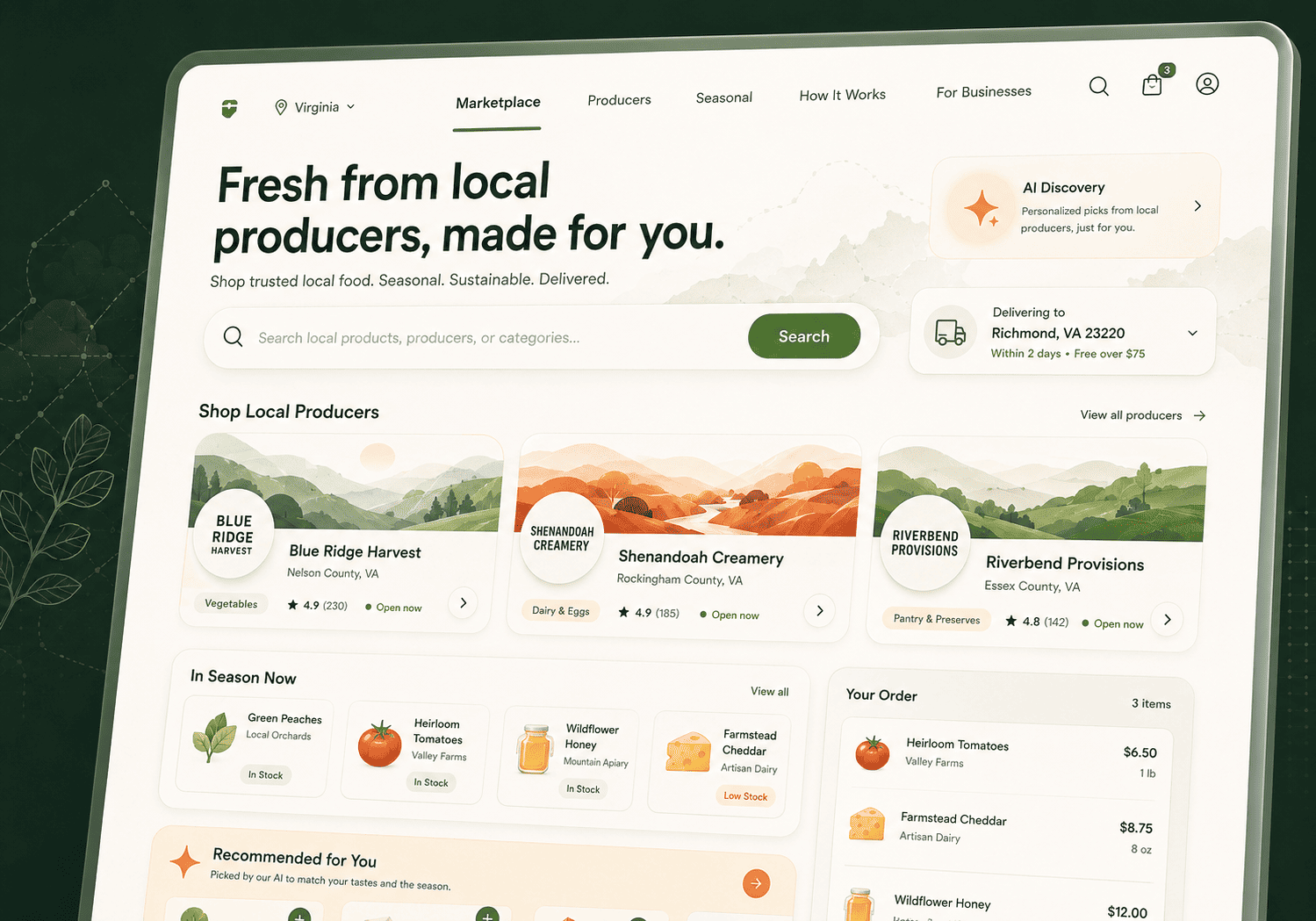
Digital Marketplace for Virginia Farmers, Local Producers & Direct-to-Consumer Food Sales

Plavno developed a custom multi-vendor marketplace for Virginia-based farmers, food producers, and regional sellers to unify product listings, vendor operations, customer ordering, and local fulfillment workflows.

Read More
3x

increase in product discovery relevance

Digital Marketplace for Virginia Farmers, Local Producers & Direct-to-Consumer Food Sales

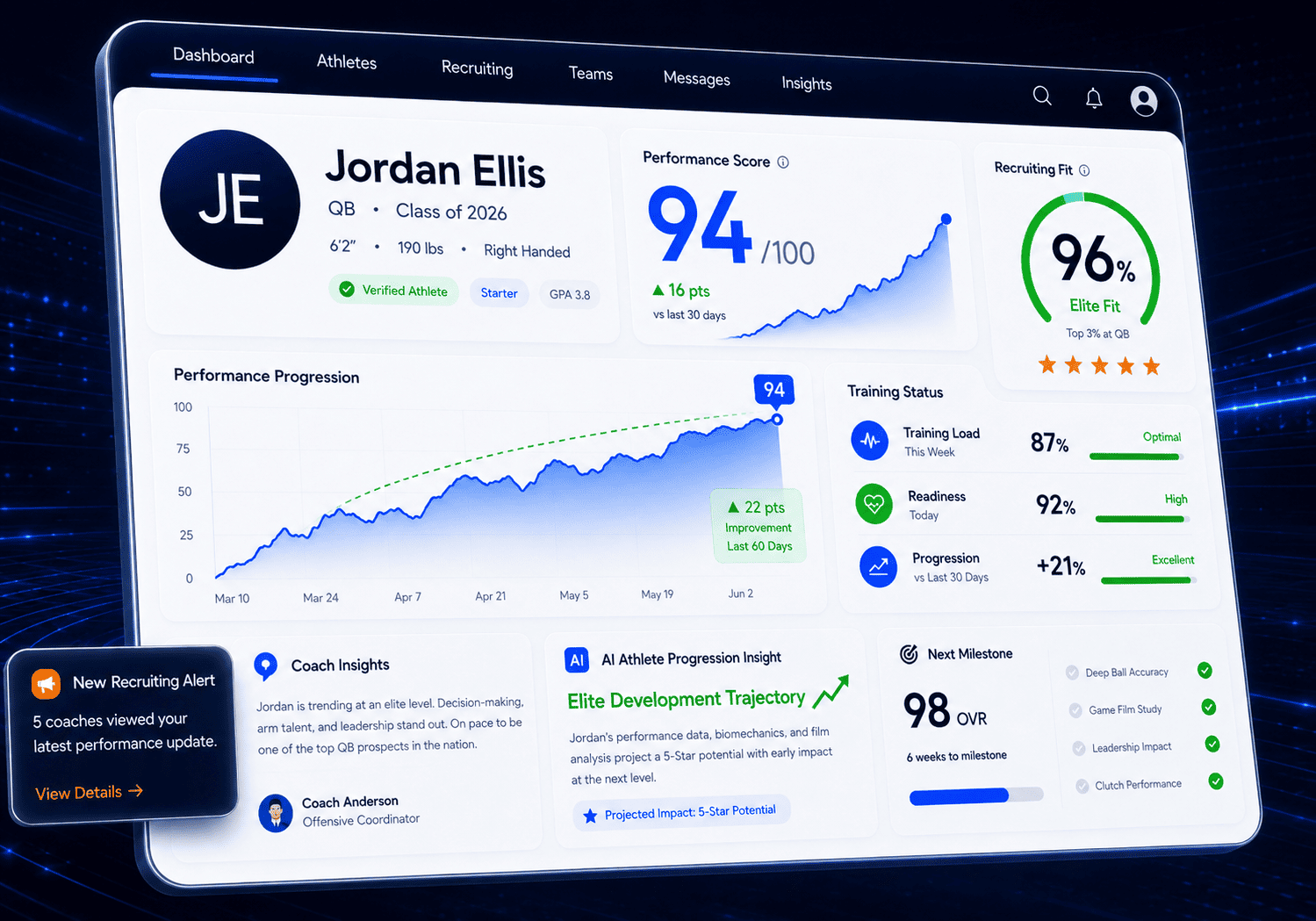
AI-Powered Sports Performance & Recruiting Platform for Virginia Clubs, Academies & Youth Programs

Plavno developed a custom sports technology platform for Virginia-based clubs and academies to combine athlete performance tracking, coach communication, recruiting workflows, and mobile engagement in one ecosystem.

Read More
3x

faster recruiting pipeline

AI-Powered Sports Performance & Recruiting Platform for Virginia Clubs, Academies & Youth Programs

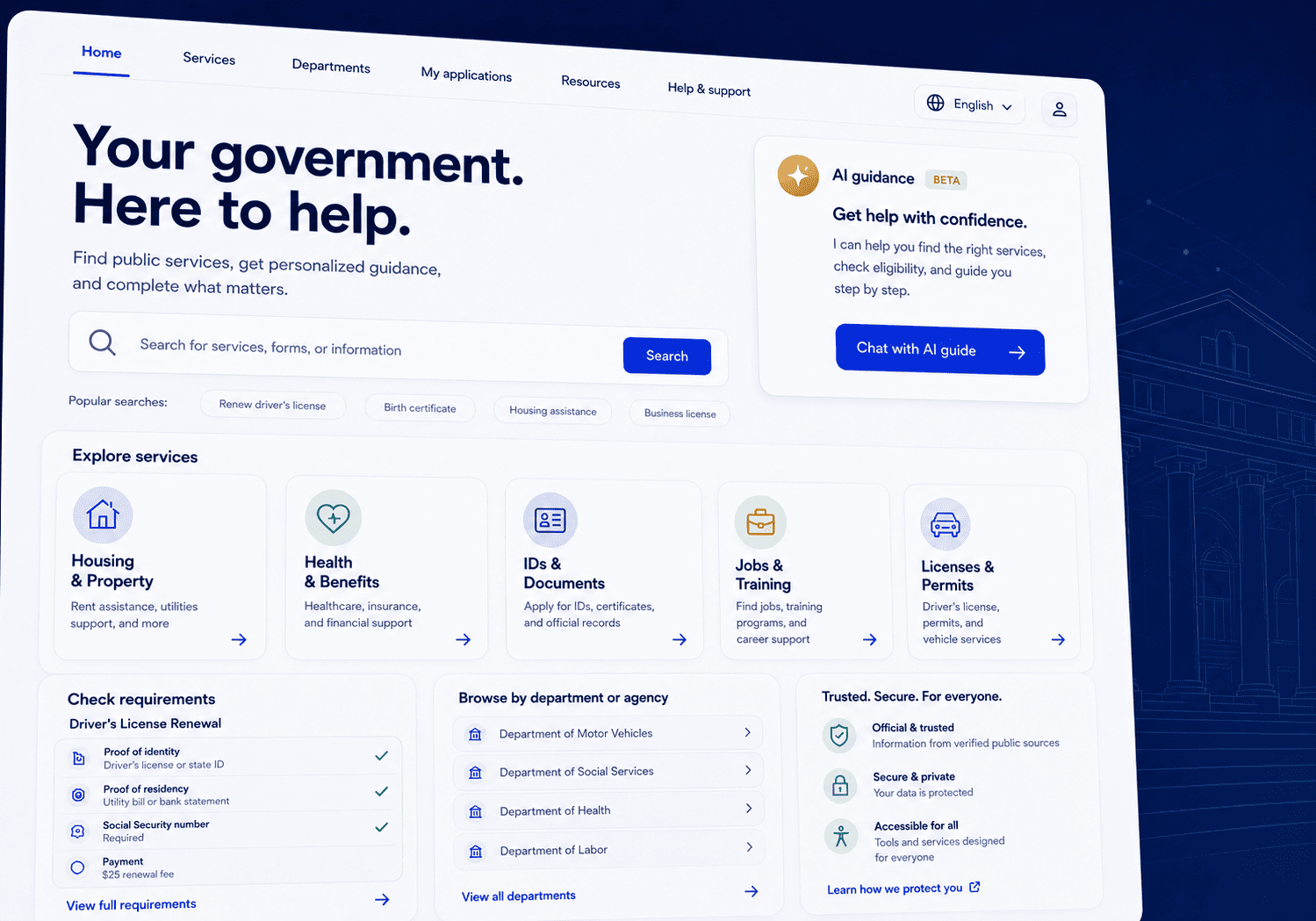
AI-Powered Citizen Services Website Platform for Virginia State Agencies

Plavno developed a modern eGovernment website platform for Virginia state agencies that centralizes citizen services, public information, department content, and an AI-powered guidance agent in one scalable system.

Read More
70%

reduction in routine citizen inquiries to agency staff

AI-Powered Citizen Services Website Platform for Virginia State Agencies

Clear contrast

Why Virginia operators pick our agent builds

Generic shops sell demos. We ship governed agents that survive real yard and port traffic.

Generic Agencies
Our Platform (Deep Engineering Expertise)
Process baseline before any model work
checkmark
Shadow mode with parity gates
checkmark
Per-workflow token and tool budgets
checkmark
Typed tool gateway with idempotency
checkmark
checkmark
Defense-ready audit traces by default
checkmark
Handover runbooks and game-day tests
checkmark
Slide-deck architecture only
checkmark

Testimonials

We are trusted by our customers

“They really understand what we need. They’re very professional.”

The 3D configurator has received positive feedback from customers. Moreover, it has generated 30% more business and increased leads significantly, giving the client confidence for the future. Overall, Plavno has led the project seamlessly. Customers can expect a responsible, well-organized partner.

Sergio Artimenia

Commercial Director, RNDpoint

Sergio Artimenia

“We appreciated the impactful contributions of Plavno.”

Plavno's efforts in addressing challenges and implementing effective solutions have played a crucial role in the success of T-Rize. The outcomes achieved have exceeded expectations, revolutionizing the investment sector and ensuring universal access to financial opportunities

Thien Duy Tran

Product Manager, T-Rize Group

Thien Duy Tran

“We are very satisfied with their excellent work”

Through the partnership with Plavno, we built a system used by more than 40 million connected channels. Throughout the engagement, the team was communicative and quick in responding to our concerns. Overall, we were highly satisfied with the results of collaboration.

Michael Bychenok

CEO, MediaCube

Michael Bychenok

“They have a clear understanding of what the end user needs.”

Plavno's codes and designs are user-friendly, and they complete all deliverables within the deadline. They are easy to work with and easily adapt to existing workflows, and the client values their professionalism and expertise. Overall, the team has delivered everything that was promised.

Helen Lonskaya

Head of Growth, Codabrasoft LLC

Helen Lonskaya

“The app was delivered on time without any serious issues.”

The MVP app developed by Plavno is excellent and has all the functionality required. Plavno has delivered on time and ensured a successful execution via regular updates and fast problem-solving. The client is so satisfied with Plavno's work that they'll work with them on developing the full app.

Mitya Smusin

Founder, 24hour.dev

Mitya Smusin

Data & integration layer

Clean feeds keep maritime agents honest in 2026

Second focus for Newport News clients is the data plane that feeds every agent. Agents fail loudly when AIS, yard MES, and ERP clocks disagree. We start by measuring freshness, completeness, and conflict rates on the sources you already own. Only then do we bind tools. This order prevents beautiful agents that sit idle waiting for garbage inputs. Maritime logistics teams feel this pain most when windows compress overnight.

Integration uses event streams where partners already publish them. Polling is a fallback with strict backoff. Transform steps normalize units and identifiers before any agent sees a record. Dead-letter queues capture poison messages with enough context for ops to fix root causes. We refuse silent drops. That stance came from ecommerce checkout work where lost catalog events broke customer paths. The same discipline applies to berth updates.

Schema contracts live in a shared registry. Agent tools pin to versions. Breaking changes require dual-read windows. Consumers upgrade on their schedule. This protects long-running defense programs that cannot freeze for a partner release. Versioning also makes audits simpler. You can show exactly which contract an agent used for a past decision.

Quality monitors sit beside the agents. Freshness SLOs page the right owner when a feed stalls. Completeness checks catch missing required fields before planners act. Drift on categorical fields triggers a human review of rules. None of this is glamorous. All of it keeps autonomous loops from inventing reality. Cost of prevention here is far lower than cost of a wrong crane move.

Security on the data path mirrors the runtime. Read scopes stay minimal. Writes go through the same gateway that enforces policy. PII and controlled technical information get field-level tags. Redaction happens before any external model call. Virginia contractors already operate under these rules. Our layer simply enforces them in code so people do not have to remember at 3 a.m.

Eugene Katovich

Eugene Katovich

Sales Manager

Need a custom software solution? We’re ready to help!

Plavno has a team of skilled developers ready to tackle the project. Ask me!

Get a Free Quote

Ready check

Prep checklist before an agent build starts

  • Name the top three pain flows — List the exact sequences that burn the most staff hours each week. Include systems touched and handoff points. Note which steps already have written SOPs. Mark any step that touches controlled data. Provide sample tickets with secrets removed. This list becomes the pilot backlog. Without it every vendor will pitch generic chat.

  • Inventory live data sources — Catalog APIs, files, and queues agents might need. Record owners, refresh rates, and known gaps. Flag any source that cannot leave the premises. Note rate limits and maintenance windows. Share contract docs or sample payloads. Clean inventory shortens discovery by weeks for Newport News teams.

  • Define hard limits early — Decide max spend per run and per day. Set which actions always need a human. Name severity rules for auto-pause. Confirm residency and model-use constraints with security. Write them as measurable gates. Agents without limits become cost and compliance risks fast.

  • Assign real owners — Pick a business sponsor who can free crew time. Name a technical owner for adapters and secrets. Confirm who will run on-call after launch. Schedule the shadow-mode reviewers now. Ownership gaps kill more pilots than model quality ever does. Put names on a page before kickoff.

  • Prepare success metrics — Choose two time metrics and one quality metric per flow. Capture current baselines with the same method you will use later. Agree on the minimum lift that justifies next stage spend. Set the review date in the calendar. Metrics turn opinions into ship or stop decisions. Bring them to the first working session.

Vitaly Kovalev

Vitaly Kovalev

Sales Manager

Get your Newport News agent readiness score

Share budget range, timeline, current stack, and the dataset or flow you want to automate. Receive a free agent readiness audit tailored for Newport News businesses within one business day.

Talk to Experts

Common questions

AI Agents Development questions from Virginia teams

Straight answers on cost, time, data, quality, security, and life after launch for Newport News operators.

What drives cost for AI agent development services in Newport News?

Cost follows scope, data readiness, and autonomy level more than model brand. A single assisted workflow with clean APIs costs far less than a multi-agent fleet writing into legacy yard systems. Each extra system adapter adds design, testing, and monitoring work. Defense constraints that keep data on-prem can raise infra effort. Human approval gates reduce risk but add UI and audit work that still needs engineering hours.

Local market factors matter. Contractors around Newport News Shipbuilding often need tighter logging and access reviews. Those controls are not free, yet they prevent expensive rework during audits. We price discovery as a fixed short engagement so you see the real map before committing to build. Pilot stages stay capped so spend stops if lift is weak. Full fleet work only opens after measured results.

Ongoing cost is mostly tokens, tool calls, and the people who watch the dashboards. Budgets per workflow keep surprises away. We design for local models on hot paths when latency and spend demand it. Remote models stay for hard reasoning only. That mix is how Virginia teams keep monthly burn predictable. Ask for a line-item view that separates build from run. That split shows true ownership cost across the first year.

How long does it take to build AI Agents Development software?

A focused MVP that assists one workflow usually lands in six to ten weeks. That includes mapping, adapter work, shadow mode, and a short production window with heavy gates. Full autonomous deployment across several flows often takes three to five months. Timeline stretches when source systems lack APIs or when security reviews require extra evidence packs. Clean data and clear owners are the fastest accelerators.

We avoid calendar-only promises. Each stage ends with a go or no-go based on measured lift. Shadow mode can add two weeks if parity is not yet there. That delay is cheaper than writing bad data into a berth plan. Defense-adjacent projects add time for threat modeling and access setup. Plan that from day one rather than treating it as a surprise gate.

After go-live, expect a stabilization month. Override rates fall as rules tighten. New edge cases appear and get folded in. Only then do we open more autonomy or more flows. Teams that skip stabilization pay later in emergency fixes. Newport News operations rarely get quiet weeks, so the plan must respect that cadence. Share your blackout windows early so delivery fits around them.

Do you work with startups in Virginia?

Yes. We work with US-based clients, including companies operating in Virginia, from early product teams to established contractors. Startup velocity is welcome when the problem is sharp and the data path is honest. We have seen strong early teams in the Hampton Roads corridor and around the broader Virginia tech pockets tied to defense and logistics. The same architecture rules apply. Start narrow. Measure. Then expand.

Startups often lack deep ops history. That is fine. We help write the first SOPs while we map the agent flows. The benefit is a system that grows with the company instead of a brittle script pile. Funding gates still matter. Our stage model lets you show lift to investors without betting the whole budget on day one. CapEx stays modest until results appear.

Ecosystem partners matter. Port accelerators, defense innovation groups, and university programs nearby sometimes introduce teams that already understand domain constraints. We plug into those realities rather than teaching generic SaaS habits. If your stack is still forming, we pick boring components that will not force a rewrite at series A. The goal is durable shipping capacity, not a demo that dies after the pilot story.

Can AI agents integrate with my existing system?

Yes, provided we can reach the system through an API, queue, file drop, or approved database view. Most Newport News environments already run a mix of modern services and older MES or ERP tools. Agents never need to sit inside the core system. They call tools through a gateway that handles auth, retries, and payload checks. That pattern protects legacy stability while still letting automation move.

We prefer event-driven links when partners publish them. Polling works when events are missing, with backoff that respects shared infrastructure. Transformations normalize IDs and units before planner agents see records. Idempotency keys stop double posts when networks drop mid-call. These are ordinary engineering practices. They matter more than any model feature when uptime is on the line.

Legacy constraints get respect. If a system only accepts batch files at night, the agent schedule matches. If write windows are short, suggestions queue until the window opens. We document every dependency so future changes do not break silent assumptions. Security reviews usually approve this approach because privileges stay narrow and every call is traced. Share interface docs early. Integration risk falls fast once the contracts are on the table.

What industries in Newport News benefit most from AI Agents Development?

Shipbuilding and defense contracting see the fastest payback. Work packages, compliance packs, and multi-system status chains create constant coordination load. Agents collapse those loops while keeping humans on high-judgment steps. Maritime logistics and port operations rank next. Window planning, ETA reconciliation, and gate notifications punish teams when data lags. Agents that watch feeds and propose bounded moves cut overtime and missed slots.

Public sector and municipal service teams also gain when form-heavy workflows dominate. Structured intake and routing agents reduce backlogs without new headcount. Supply and industrial service firms around Hampton Roads use similar patterns for order exceptions and vendor follow-ups. The common thread is high volume of repeatable decisions with clear rules and expensive exceptions. If that describes your week, agents belong on the list.

We avoid forcing agents where judgment is the whole job. Design engineering and final safety sign-off stay human. The win is removing the glue work that surrounds those craft roles. Three local anchors keep showing up: yard operations, terminal logistics, and contractor compliance offices. Start where the pain is loudest and data already exists. That is how Virginia teams turn pilots into standing capacity instead of one-off experiments.

Contact Us

This is what will happen, after you submit form

Need a custom consultation? Ask me!

Plavno has a team of experts ready to start your project. Ask us!

Vitaly Kovalev

Vitaly Kovalev

Sales Manager

Schedule a call

Get in touch

Fill in your details below or find us using these contacts. Let us know how we can help.

Required because you selected “Other” above

No more than 3 files may be attached up to 3MB each.
Formats: doc, docx, pdf, ppt, pptx, xls, xlsx, txt.
Book your meeting