bg image
bg image

Serving Leesburg & Virginia

Reduce manual handoffs for Leesburg ops teams with AI agents in 2026

Leesburg firms still burn hours on routine checks that never need a human. Defense vendors, data-center operators, and county agencies feel that load first. AI agents take those steps off your staff and keep results auditable. You keep control of policy and budgets. We scope the work against your real systems, not a slide deck. Get AI Agents cost estimate in 24 hours. Tell us the process you want freed and the data you already hold.

Discuss Project

Overview

Why Leesburg ops still wait on people to finish routine work

Leesburg sits inside one of the densest tech and defense corridors in Virginia. Loudoun County hosts major data centers, federal contractors, and county service teams that share the same pressure. Daily status pulls, compliance packs, and ticket triage still depend on people copying data between tools. That delay compounds when a contract review lands or a service desk spikes. Teams around Ashburn, Sterling, and Reston report the same pattern every quarter.

The cost is not only payroll. Missed follow-ups create rework cycles that managers notice only after a client escalates. AI agents close those gaps by watching queues, calling internal APIs, and writing structured summaries for humans who decide. They do not replace judgment. They remove the waiting. We work with US-based clients, including companies operating in Virginia. Trusted AI Agents Partner for Leesburg Businesses across Loudoun and Northern Virginia markets.

Our approach starts from the systems you already run. We map the handoffs, score data quality, then design agents that own a narrow job with clear success metrics. For production work we use the same pattern proven on an analytics assistant for telecom operations: an LLM agent that turns raw streams into scheduled insights. The same method fits defense workflow digests and public service form triage. Browse our AI agents service page for the delivery model and engagement options.

Outcomes stay local and measurable. A county team can cut form backlogs without new hires. A contractor can keep audit packs current overnight. A network ops group gets overnight anomaly briefs before the morning stand-up. We have shipped 10+ AI agent style projects in the US market with US data residency as the default. Purcellville, Herndon, and Leesburg leadership share the same ask in 2026: prove value in weeks, not quarters.

Talk to an Expert
Map handoffs

Map handoffs & data quality

Score existing ticket, ERP, and form systems before any agent design

Narrow-job agents

Narrow-job AI agents

LLM tools with strict schemas, retrieval, and one clear success metric

Local outcomes

Local measurable outcomes

Cut backlogs, overnight audit packs, and anomaly briefs in weeks

Core agent stack

Agent runtime choices that hold under Loudoun production load

Leesburg clients need agents that survive real traffic from ticket systems, ERP exports, and sensor feeds. We build a modular runtime where each agent owns one job, one data contract, and one escalation path. The brain is an LLM configured with tool access and strict output schemas so answers stay structured. Retrieval sits behind the model so policy and product docs stay current without retraining. Orchestration handles retries, timeouts, and human handoff when confidence drops.

We ground design in shipped work. The AI analytics agent for telecom used an LLM agent to automate insight drafts from operational data. That taught us to separate reasoning from fetch steps so a slow API never stalls the whole run. For public sector portals we used Strapi as a headless CMS with Next.js static generation and secure forms. The same content discipline feeds agent knowledge bases: structured service pages, bilingual fields, and form schemas that agents can read without scraping. Memory is short-term per session plus long-term store gated by role checks.

Security/compliance sits inside every layer. Agents call credentials through short-lived tokens. Prompts never hold raw secrets. Audit logs capture tool calls, model versions, and human overrides. Defense contractors near Leesburg often need ITAR-aware paths and private endpoints. We keep those flows inside client VPC or private links. No model vendor sees regulated payloads when policy forbids it. DevOps treats agents like any other service: versioned prompts, canary deploys, and automatic rollback on error rate spikes.

DevOps for agents means observability first. We emit traces for each tool hop, latency per step, and cost per run. Nightly jobs regenerate embeddings when source docs change. Feature flags switch tools without redeploying the whole stack. Cost controls cap token spend per tenant and per hour so a runaway loop cannot burn budget. Leesburg teams get runtime dashboards that operations staff already understand. No black box that only specialists can read.

What you receive is a production agent plus the wiring: connectors to your systems of record, runbooks for on-call, and a backlog for the next jobs the same runtime can absorb. Architecture stays simple enough that your engineers own day-two changes. We document every tool boundary so future agents reuse the same contracts. That keeps AI work aligned with how Loudoun firms already ship software.

plavno logo

Build your first
Smart AI project today!

Just tell the Plavno AI Agent about your project - it will ask questions, gather requirements, and propose a tailored solution

What ships

Five agent capabilities Leesburg teams put into production first

Queue triage that reaches a human only when needed

Queue triage that reaches a human only when needed

Leesburg service desks still sort tickets by hand each morning. Agents classify new items against past resolutions and route them with urgency tags. Staff open a ranked list instead of a raw inbox. We use structured outputs so every label stays machine-readable for the next system. Fast classifiers sit ahead of heavier LLM calls to keep unit cost low. The same pattern reduced manual sorting for operations teams that already run high ticket volume. It frees specialists for the two percent that need judgment.

Overnight insight packs from ops data

Overnight insight packs from ops data

Telecom and network teams near Ashburn chase anomalies after the fact. Agents watch feeds, draft barriers, and attach source rows before stand-up. Leadership starts the day with a signed pack instead of a blank site. The LLM agent we built for telecom analytics follows this batch pattern. Reason it works: scheduled runs bound cost and still catch drift early. Your team edits the narrative layer; the agent owns the facts.

Compliance digests for defense contractors

Compliance digests for defense contractors

Virginia defense suppliers juggle control evidence across spreadsheets. Agents collect artifacts, check completeness, and flag missing owners. Reviewers open one packet per system instead of chasing folders. Retrieval over policy libraries keeps citations current without weekly rewrites. Secure credentials stay in vaults the agent never logs. Result: audit prep stops being a fire drill before every customer review.

Form and portal assistants for public services

Form and portal assistants for public services

County portals still lose hours to incomplete submissions. Agents guide residents, validate fields, and open clean tickets for staff. Structured CMS content feeds the agent so answers match published rules. Our Strapi and Next.js public services portal proves the content backbone: bilingual pages, secure forms, static generation for speed. Agents add the conversational layer without growing headcount. Leesburg and Loudoun agencies keep control of every public answer.

Cross-system status agents for program managers

Cross-system status agents for program managers

Program offices near Reston check five tools to finish a status. Agents pull milestones, risk notes, and blocker owners into one brief. Managers spend time on decisions, not copy-paste. Tool adapters isolate each system so a vendor change does not rewrite the agent. Output schemas lock the format every executive expects. Weekly digests become daily without more meetings.

AI Agents Solutions for Leesburg Industries

Where Loudoun industries put agents to work in 2026

Regional employers share dense data estates and strict oversight. These six uses map agent jobs to the work already on their plates.

Defense Evidence

Defense Evidence

Audit Packs

Defense contractor evidence packs

Leesburg-area contractors still assemble control evidence by hand before every audit. Agents gather logs, ownership maps, and policy hits overnight. Reviewers open a scored packet instead of a chase list. Incomplete items route to named owners with hallmarks that stick. Business result: audit prep drops from multi-week scrambles to a steady weekly rhythm. Technically the agent runs connectors under private endpoints, retrieves only tagged document stores, and writes structured gaps JSON for the GRC tool. ROI shows as reduced overtime before each customer or Federal review cycle.

Data Center

Data Center

Incident Briefs

Data center incident briefings

Loudoun hosts some of the densest colocation campuses in the country. Night alarms still wake people who then rebuild context from three consoles. Agents stitch facility alerts, ticket history, and change windows into one briefing. On-call staff arrive already briefed. The agent scores confidence and escalates only unclear cases. Result: mean time to understand falls without adding headcount. Stack uses scheduled tool calls, short retrieval windows, and cost caps so noisy flaps cannot burn tokens.

Telecom Insights

Telecom Insights

Ops Automation

Telecom ops insight automation

Network groups across Northern Virginia drown in KPI dumps. Agents convert raw counters into narrative insights with owner tags. Leaders act from draft packs instead of empty decks. We already shipped an AI analytics agent for telecom that built this exact flow with LLM reasoning over operational datasets. Technical path: batch ingest, feature filters, and LLM drafts stored for human edit. Measured benefit arrives as fewer hours spent writing the same charts into notes each week.

Public Service

Public Service

Form Intake

County public service intake

Leesburg and Loudoun citizen portals still collect incomplete forms. Agents guide applicants, check required evidence, and open clean cases for staff. The content model mirrors our digital public services portal built with Strapi: structured service pages, bilingual content, and secure form workflows behind Next.js. Agents speak fixed policy language only. Result: back-office staff resolve more completed packs per day. ROI appears as shorter queues without new contractor seats.

Services Digests

Services Digests

Delivery Status

Professional services delivery digests

Consulting and SI firms near Herndon track delivery status across spreadsheets. Agents summarize milstones, risk notes, and client actions every morning. Partners open one digest instead of five apps. Integration prefers read-only APIs and outbound webhooks so source systems stay untouched. Output arrives as HTML mail plus a JSON row for the PMO tool. Teams reclaim hours each week while client trust stays high through consistent pacing.

Logistics Exceptions

Logistics Exceptions

Fulfillment

Logistics and fulfillment exception agents

Distribution hubs serving the capital region handle late loads and SKU mismatches daily. Agents watch WMS events, flag exceptions, and draft recovery steps for the floor lead. Only open items reach people. Catalog and checkout patterns from ecommerce work inform the stock checks, yet the agent stays focused on exceptions not storefronts. Result: fewer cold chain or high-value misses. Technical summary: event webhooks, rule plus LLM hybrid scoring, and locked action menus that need a human stamp.

Case Study

We help customers cut
down on development

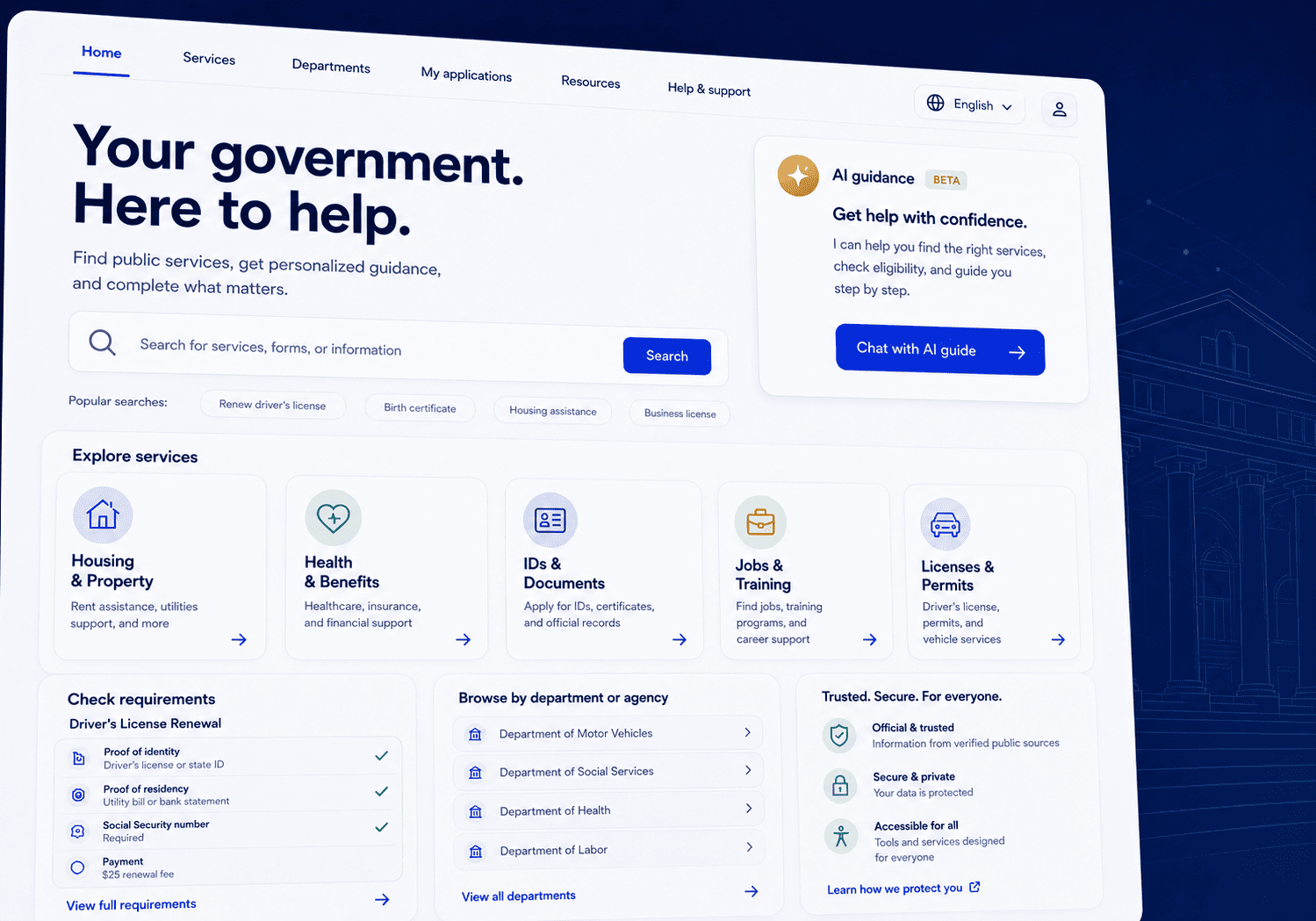
AI-Powered Citizen Services Website Platform for Virginia State Agencies

Plavno developed a modern eGovernment website platform for Virginia state agencies that centralizes citizen services, public information, department content, and an AI-powered guidance agent in one scalable system.

Read More
70%

reduction in routine citizen inquiries to agency staff

AI-Powered Citizen Services Website Platform for Virginia State Agencies

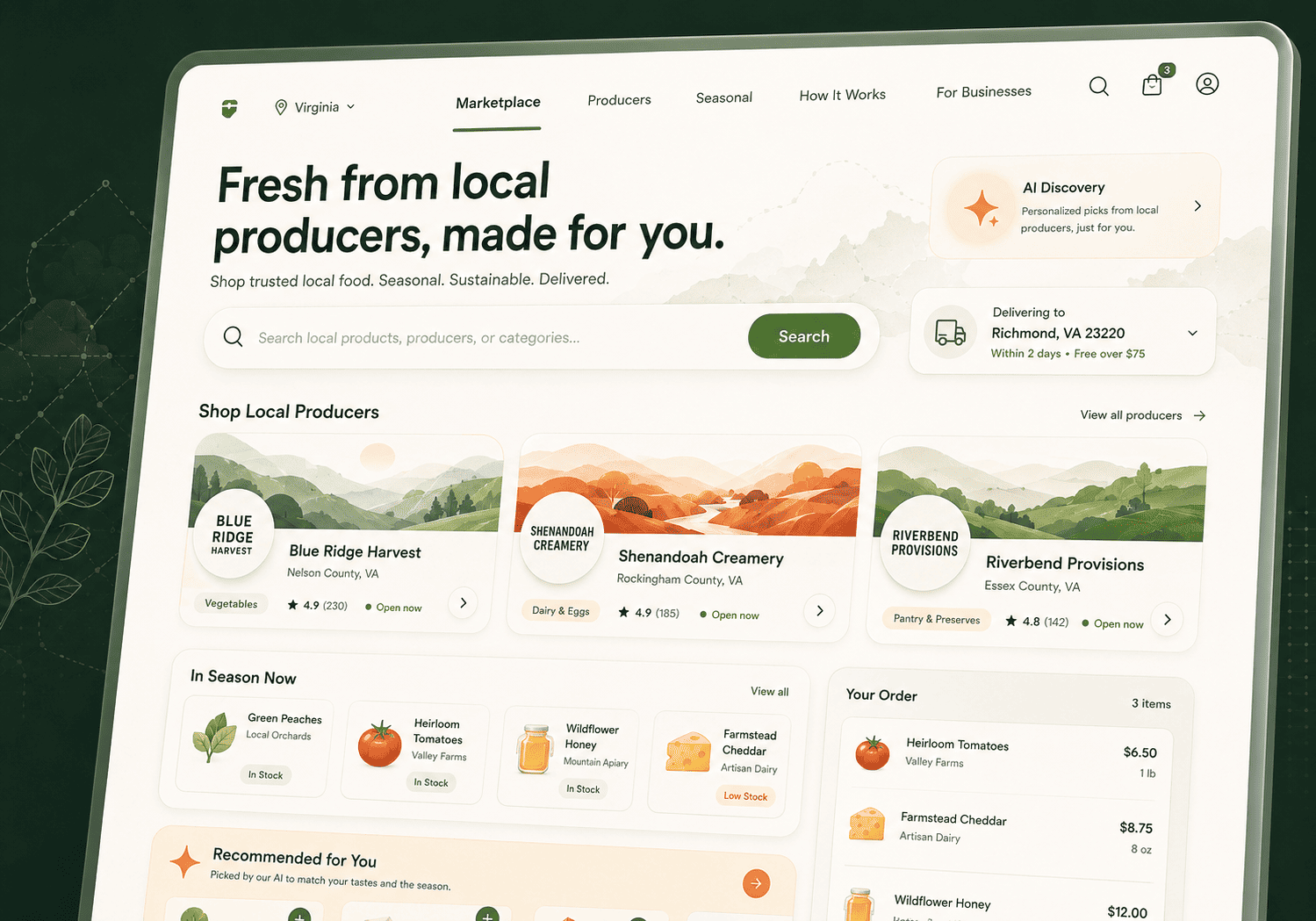
Digital Marketplace for Virginia Farmers, Local Producers & Direct-to-Consumer Food Sales

Plavno developed a custom multi-vendor marketplace for Virginia-based farmers, food producers, and regional sellers to unify product listings, vendor operations, customer ordering, and local fulfillment workflows.

Read More
3x

increase in product discovery relevance

Digital Marketplace for Virginia Farmers, Local Producers & Direct-to-Consumer Food Sales

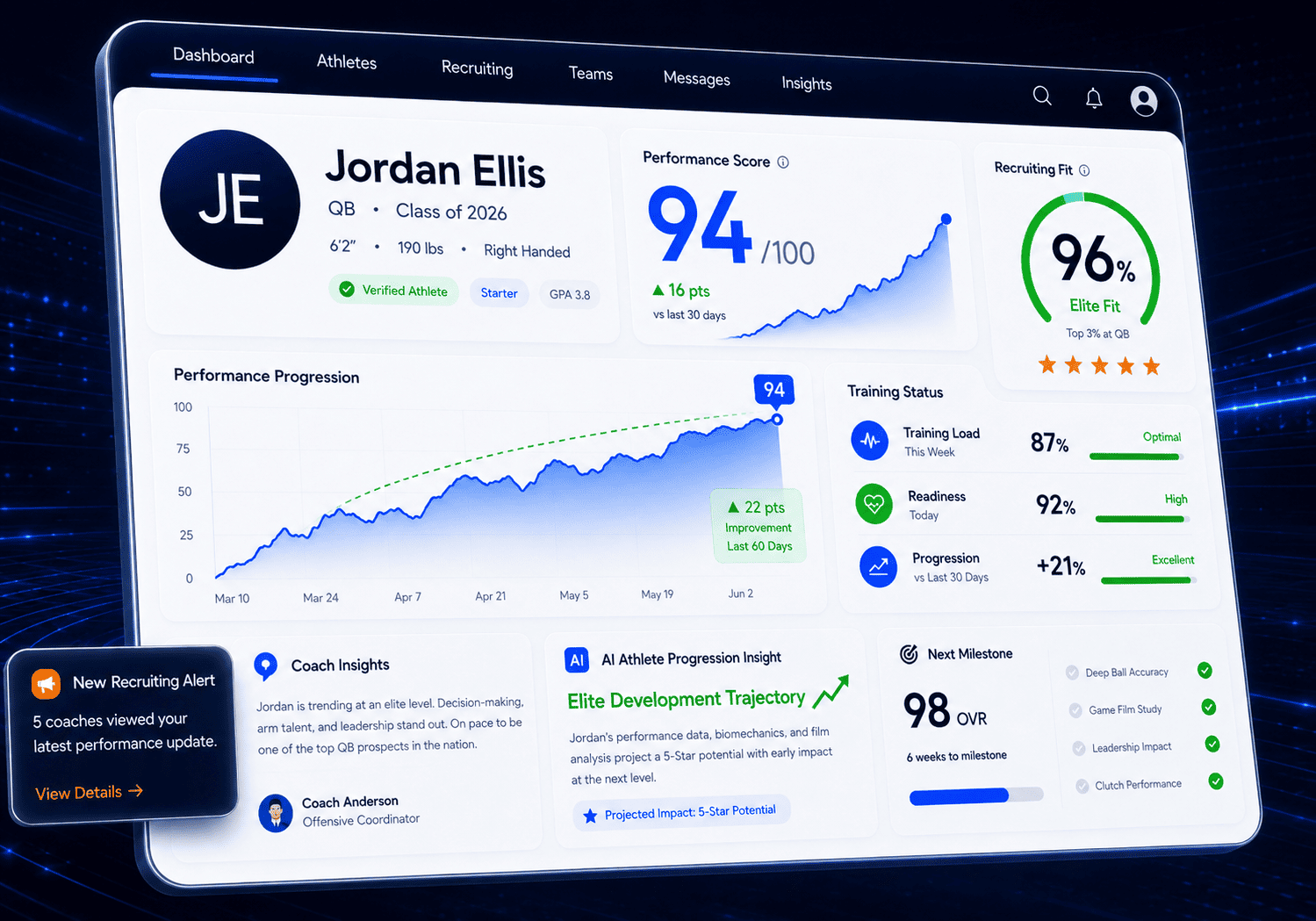
AI-Powered Sports Performance & Recruiting Platform for Virginia Clubs, Academies & Youth Programs

Plavno developed a custom sports technology platform for Virginia-based clubs and academies to combine athlete performance tracking, coach communication, recruiting workflows, and mobile engagement in one ecosystem.

Read More
3x

faster recruiting pipeline

AI-Powered Sports Performance & Recruiting Platform for Virginia Clubs, Academies & Youth Programs

Engineering difference

Why Leesburg buyers pick a build partner over a slide shop

Generic agencies ship demos. We ship agents that your on-call team can run at 2 a.m.

Generic Agencies
Our Platform (Deep Engineering Expertise)
Production runbooks and on-call owners
checkmark
Private VPC and cost-capped tool calls
checkmark
Reuse of prior LLM agent and CMS patterns
checkmark
Only slideware architecture reviews
checkmark
Prompt editing without rebuild cycles
checkmark
Source-linked audit traces per run
checkmark
Same template for every industry
checkmark

Architecture & Engineering Overview

How Leesburg AI agent programs stay profitable after launch

Budget gates

Budget & timeout gates

Every tool call capped so cloud spend is forecast before go-live

Structured truth

Structured outputs + sources

Citations and schemas cut hallucination risk before legal review

Early escalation

Early human escalation

Low-confidence branches page staff instead of pushing bad actions

ROI thesis

ROI = unfinished work shrinks

Baselines on triage hours and incomplete forms, remeasured with timestamps

For Business: Technical ROI & Risk Mitigation

Technical choices show up first on the P&L. Agents that thrash APIs silently double cloud bills within a month. We bind every tool call with budgets and timeouts so spend is predicted before go-live. Leesburg defense and county buyers also carry reputation risk if an agent invents facts. Structured outputs and source links cut that exposure before legal reviews.

The main thesis is that agent ROI arrives when unfinished work shrinks faster than the cost of tokens and connectors. We measure baselines during discovery: hours spent on triage, number of incomplete forms, and nights spent rebuilding status. After launch the same metrics retake the stage with timestamps. No vanity dashboards.

Risk drops further when agents escalate early. A low-confidence branch stops and pages a human instead of pushing a bad action. That rule protected the telecom analytics agent when underlying counters drifted. Business leaders keep trust while still shedding volume work. Insurance and board reviews accept that stance faster than unbounded autonomy pitches.

Cost control extends past model choice. Caching retrieval results, batching nightly jobs, and pruning unused tools cut recurring spend. We publish a unit-economics sheet so finance can forecast annually. Virginia firms operating under tight federal margins need that clarity more than flashy demos.

Finally we treat exit risk as part of the contract. Prompt libraries, tool adapters, and evaluation sets stay yours. Moving off any single model vendor remains a config change. That avoids lock-in tax when budgets tighten in 2026.

1

Procedure map & governance

Owners, systems, read-only tools, and mandatory human stamps before code

2

Thin vertical slice

Staging data first; latency vs completeness trade-offs accepted, then expand

3

Observe, diffs & kill switches

Prompt reviews as code, eval growth, freeze spend or force human mode in minutes

4

Planned retirement

Archive idle agents; reuse connectors and schemas on the next job

For CTOs: Architecture & Technical Lifecycle

Lifecycle starts with a single procedure map, not a model bake-off. We identify owners, systems, and failure modes before writing code. Decision points appear early: which tools stay read-only, where human stamps are mandatory, and which KPIs prove value. Governance wraps those choices so shadow pilots do not proliferate.

The main thesis is that agent programs live or die on lifecycle discipline rather than model novelty. Kickoff produces a thin vertical slice under staging data. Trade-offs sit on paper: latency versus completeness, cost versus insight depth. Once stakeholders accept the slice, we expand tools and retention. No big-bang cutovers for Loudoun production estates.

Mid-life work focuses on observation. Diffs on prompts go through the same review path as application code. Model gateway choices stay swappable. Evaluation sets grow with every incident so regressions surface before customers do. CTOs get a living architecture notebook instead of a forgotten Confluence page.

Runbooks list kill switches. On-call can disable a tool, freeze spends, or force everything to human mode within minutes. Those switches proved useful when external APIs degraded during prior telecom agent runs. Documentation lives next to the code so engineers outside the original team can act.

Retirement is planned. Agents that stop earning are archived with full logs. Assets they created, such as connectors and schemas, feed the next job. That keeps technical debt from growing under the AI label.

Decision layer

LLM decision layer + schemas

Model chooses; deterministic code owns math, routing, and typed I/O

Tool adapters

Typed tool adapters

Timeouts, retries, and honest contracts so tests stay trustworthy

Retrieval CMS

Chunked retrieval & CMS APIs

Source IDs; Strapi-style typed fields—never scrape if a content API exists

CI evals

Trace replay & CI eval gates

Sandboxed fixtures; every prompt change blocked on evaluation failure

For Engineers: Implementation Details & Stack

Implementation favors boring seams. Agents speak to systems through typed tool adapters with timeouts and retries. Schemas for input and output travel with the agent so tests stay honest. We keep the model at the decision layer while deterministic code owns math and routing. That split cut failure noise on the telecom analytics agent where pure prompt logic was too fragile.

The main thesis is that production agents are systems engineering first and model prompts second. Retrieval uses chunked source documents with source IDs. When we need structured content we lean on headless CMS patterns proven on the Strapi public services portal: typed fields, bilingual content, static generation for speed. Agents never scrape HTML if a content API exists.

Optimization targets three axes: token volume, wall-clock latency, and error rate. Feature extraction happens before the LLM when possible. Semantic cache returns prior answers for identical questions under a TTL. Edge cases such as empty tool responses produce fixed user messages instead of free-form apologies.

Local development mirrors prod connections via sandboxes and recorded fixtures. Engineers replay full agent traces during debugging without burning live tokens. CI runs evaluation suites on every prompt change. Failures block merge the same way unit tests do.

Stack choices stay replaceable. LLM provider, vector store, and queue queue can change behind the same interfaces. Documentation lists the reasons for each pick so a later team knows what to keep.

Private residency

Private VPC & residency

Client cloud, short-lived vault tokens, scrubbed logs, ITAR paths

Observability product

Obs & security as product

Success rate, p95 tool latency, token cost, escalations, eval drift

Progressive delivery

Canary & flag deploys

Percent traffic, auto-rollback, disable tools without full redeploy

Infrastructure, Observability & Security

US clients around Leesburg expect private networking and clear residency. Agents run inside the client cloud account or a dedicated subscription with private endpoints to models when policy requires. Secrets never land in prompts. Vaults mint short-lived credentials the agent requests per tool hop. Logs scrub free text that could hold personal data.

The main thesis is that observability and security are the product, not afterthought toggles. We monitor run success rate, p95 latency per tool, token cost per tenant, escalation frequency, and drift between eval sets and live traffic. Alerts fire before finance notices a budget cliff. Dashboards sit next to the same panel SRE already uses for APIs.

Compliance coverage depends on the buyer: SOC 2 style controls for SaaS, HIPAA paths when health data appears, and ITAR-aware isolation for defense contractors. We map each control to runtime evidence so auditors open traces instead of slides. Incident response lists who freezes an agent, who notifies the customer, and how we roll back prompts within minutes.

Deployments follow progressive delivery. Canaries take a percentage of traffic with automatic rollback on error spikes. Config changes use flag systems so we can disable a newly added tool without a full redeploy. Post-launch we keep a weekly drift review: source documents changed, new failure modes, cost trends.

That stack keeps agents boring to operate. Loudoun teams already run mission platforms. We make AI jobs look like the rest of their estate.

Testimonials

We are trusted by our customers

“They really understand what we need. They’re very professional.”

The 3D configurator has received positive feedback from customers. Moreover, it has generated 30% more business and increased leads significantly, giving the client confidence for the future. Overall, Plavno has led the project seamlessly. Customers can expect a responsible, well-organized partner.

Sergio Artimenia

Commercial Director, RNDpoint

Sergio Artimenia

“We appreciated the impactful contributions of Plavno.”

Plavno's efforts in addressing challenges and implementing effective solutions have played a crucial role in the success of T-Rize. The outcomes achieved have exceeded expectations, revolutionizing the investment sector and ensuring universal access to financial opportunities

Thien Duy Tran

Product Manager, T-Rize Group

Thien Duy Tran

“We are very satisfied with their excellent work”

Through the partnership with Plavno, we built a system used by more than 40 million connected channels. Throughout the engagement, the team was communicative and quick in responding to our concerns. Overall, we were highly satisfied with the results of collaboration.

Michael Bychenok

CEO, MediaCube

Michael Bychenok

“They have a clear understanding of what the end user needs.”

Plavno's codes and designs are user-friendly, and they complete all deliverables within the deadline. They are easy to work with and easily adapt to existing workflows, and the client values their professionalism and expertise. Overall, the team has delivered everything that was promised.

Helen Lonskaya

Head of Growth, Codabrasoft LLC

Helen Lonskaya

“The app was delivered on time without any serious issues.”

The MVP app developed by Plavno is excellent and has all the functionality required. Plavno has delivered on time and ensured a successful execution via regular updates and fast problem-solving. The client is so satisfied with Plavno's work that they'll work with them on developing the full app.

Mitya Smusin

Founder, 24hour.dev

Mitya Smusin

Data and control plane

Data contracts and cost gates that keep Leesburg agents honest

The second build concern after runtime is the data path. Agents fail when they sip dirty feeds or overrun budgets. We start every Leesburg project by writing contracts for each source system: fields, freshness, ownership, and privacy class. Those contracts become the protocol the agent trusts. Anything outside the contract is refused. That discipline mirrors how we structured service pages and forms on the public portal work so content stayed typed and bilingual without free-form chaos.

Integration uses adapters, not hard-coded calls. Each adapter documents rate limits, auth style, and failure modes. Retries stay bounded. Circuit breakers open when a vendor slows down so the agent escalates rather than thrashing. For analytics style loads we batch. The telecom analytics agent taught us that insight jobs prefer nightly windows over constant chatter. Leesburg ops teams get the same cadence unless live reaction is mandatory.

Cost gates live next to the tools. Per-tenant token budgets, per-hour ceilings, and per-job stop switches sit in config. Finance can read the ledger without calling engineering. When a new tool is proposed we estimate monthly spend before it is wired. That habit stopped surprise bills during earlier agent pilots. Security/compliance reviews sit on the same table because cheaper open endpoints often break residency rules that defense and county clients cannot accept.

DevOps for the control plane treats prompts, eval sets, and tool manifests as versioned artifacts. Changes ride pull requests. Canary agents see the update first. Observability links cost spikes to the commit that caused them. Rollback is a config flip. Loudoun engineers who already ship standard microservices recognize the rhythm.

What you leave with is a data map, a billed path for every call, and adapters you can reuse on the next agent. No second team has to reverse engineer how the first agent found its sources. That is how AI work compounds instead of restarting every quarter inside Virginia firms.

Readiness scan

Confirm these five items before funding an AI agent pilot in Leesburg

  • Name the single tedious job — Pick one process with clear owners and repeated pain. Write the start trigger, the end artifact, and who signs off today. Avoid multi-department moonshots in the first sprint. Leesburg teams that stay narrow see production value inside one quarter. Capture sample volume for a normal week so size is real. Share the list of systems the job already touches.

  • Prove data access paths — Confirm API or export access for every system the job needs. Record auth methods, rate limits, and who owns credentials. Flag fields that cannot leave private networks. Clean mappings take longer than prompts so start early. Note freshness: overnight dumps differ from live streams. Attach one real sample file with sensitive values redacted.

  • Set success metrics with baselines — Choose two metrics that management already tracks. Examples include hours drying tickets or number of incomplete forms. Record the current baseline and the window you will remeasure. Avoid vague quality scores with no owner. Agree who will stop the pilot if metrics stall. Put the numbers in the charter before design starts.

  • Define human escalation rules — Write when the agent must yield. List confidence floors, dollar thresholds, and customer tiers that force a person. Name the on-call role and the channel. Without this map agents create quiet risk. Draft the message templates staff will send after takeover. Confirm legal has reviewed external language if the agent talks to citizens or clients.

  • Budget tokens and staff time — Reserve cash for model spend and for the internal experts who will review output. Put weekly office hours on calendars. Account for connector work from your side. A starved pilot produces demos that never launch. Align finance on a monthly cost ceiling and a kill switch. Capture the decision date for go or no-go after the first season of live runs.

Vitaly Kovalev

Vitaly Kovalev

Sales Manager

Book a Leesburg agent readiness audit

Share budget, timeline, tech stack, and dataset scope. Receive a free readiness scorecard and cost estimator built for Leesburg and Loudoun County businesses.

Talk to Experts
Eugene Katovich

Eugene Katovich

Sales Manager

Need a custom software solution? We’re ready to help!

Plavno has a team of skilled developers ready to tackle the project. Ask me!

Get a Free Quote

Leesburg AI agent FAQs

Answers for Virginia teams planning AI agents in 2026

Practical questions from Leesburg buyers on cost, timing, data, quality, security, and day-two operations.

What drives the cost of AI agents for Leesburg and Loudoun companies?

Cost follows scope more than model brand. The biggest drivers are the number of systems the agent must call, the freshness of data, and whether humans must stay in the loop for every action. A night batch insight agent costs less than a live customer-facing assistant that needs multi-tool workflows. Loudoun defense and data center clients often need private endpoints and logging that add platform fees. We price those needs early so quotes stay real.

Labor is the second driver. Discovery workshops, connector builds, and evaluation sets consume senior time. When your APIs are documented and samples ready, that work shrinks. When credentials live in five teams, the calendar expands. We ask for budget, timeline, tech stack, and dataset scope in the first call so estimates stay honest.

Token spend sits third. We cap usage and prefer batch jobs unless real-time is required. Caching and deterministic pre-filters keep models from doing work code already can handle. Over 90 days that discipline matters more than saving pennies on a single call. Virginia firms under fixed contracts need predictable OPEX, not surprises.

Finally, post-launch support is a real line. Monitoring, prompt updates, and connector patches need owners. We include a clear run path so you do not invent it later. A pilot without day-two funding quickly becomes shelfware.

How long does it take to build AI Agents software?

Time splits into a thin MVP and a hardened deployment. A focused MVP that handles one job on two systems often lands in six to ten weeks when data access is ready on day one. That window covers discovery, adapter work, evaluation sets, and a pilot group. It excludes political delays and multi-month security reviews that some Virginia agencies require after the build.

Full deployment adds hardening: cost caps, private networking, runbooks, and training. Expect another four to eight weeks depending on change windows in production systems. Defense contractors near Leesburg often add time for documentation packages before the cutover. We schedule those milestones with you rather than pretending they are optional.

Complexity multiplies when the agent must write into systems of record rather than only draft output. Approval gates and rollback plans expand the plan. Communities of practice also need time to accept new artifacts in their queues. Plan communication work as part of the calendar, not as aftercare.

We publish a week-by-week plan during kickoff so you track slip risks. Dependencies on third-party APIs get flag dates. If a connector stalls, we re-scope rather than burn weeks. Transparency keeps leadership confidence while the team still lands value.

Do you work with startups in Virginia?

Yes. We support US-based clients, including companies operating in Virginia, from early product teams to enterprise groups. Startup partners usually sit in the Northern Virginia and D.C. corridor where talent density is high. Leesburg, Reston, and Arlington founders use agents to cover functions they cannot yet staff. The pattern is a narrow agent that multiplies a small team rather than a sprawling platform story.

Startup ecosystems around Tysons, Arlington, and the Dulles tech corridor already mix capital, procurement tie-ins, and data center customers. We design agents that respect early-stage budgets while staying production ready enough to demo for enterprise buyers. That means private options when a defense or public sector pilot appears. It also means clear kill switches so burn rate stays controlled.

Engagements stay right-sized. Fixed discovery, a tightly scoped MVP, and a transparent support window after launch. We refuse megascope proposals that consume runway. Founding engineers own enough of the stack to continue without us. Documentation and eval sets travel with the code.

If you are raising or closing a first major contract in 2026, bring the process you want accelerated and the systems of record. We will say if an agent is the right move or if ordinary automation is enough. Honesty saves months.

Can AI agents integrate with my existing system?

Yes when we can reach the system through an API, message bus, or scheduled export. Agents do not need full platform rewrites. They need stable contracts. We wrap each system in an adapter that speaks the agent language and hides auth quirks. Legacy platforms on Virginia campuses often expose SOAP or file drops. Adapters still work. They simply move slower and need stronger error handling.

Read paths start first. An agent that drafts and routes already returns value without write risk. Write paths arrive after human approval workflows are proven. We set timeouts and retries so a down ERP does not stall every other tool. Circuit breakers keep one silent system from cascading cost. These habits came from prior agent work where downstream APIs were less reliable than demos claimed.

Security reviews shape the path. Credentials stay in vaults. Least privilege is non-negotiable. For public services style systems we align with structures already proven on a Strapi headless CMS with secure forms and Next.js delivery. The agent consumes published schemas rather than scraping pages. That keeps content owners in charge.

If a system has no interface we build a controlled export lane first. Waiting for a multi-year modernization is rarely the right call. Tell us the systems list and we will score integration tiers before you fund a pilot.

What industries in Leesburg benefit most from AI Agents?

Three industries show the clearest pull in Leesburg and greater Loudoun. Defense and federal contractors carry heavy evidence and status load. Agents that assemble packs and digests repay themselves before the next audit. Data center and infrastructure operators face dense telemetry and night events. Agents that brief on-call teams protect uptime without hiring for every spike. County and public service teams process high form volume. Guided intake and triage improve completion rates while staff stay focused on edge cases.

Telecom and network groups form a fourth strong fit. We already built an AI analytics agent for telecom that automated insight drafts from operational data. That pattern transfers well across providers and enterprise network teams in Northern Virginia. Professional services firms also benefit when status digests stop consuming partner hours.

Industries with thin digital footprints get value later. Start with the three densest. Use a successful first agent as the template. Expansion into adjacent teams becomes cheaper once connectors and governance exist. Local context matters: ITAR paths, county procurement rules, and data center SLAs all change design choices.

If your firm sits between these groups bring the bottleneck you feel firsthand. The industry label matters less than a repeated manual job with clear owners. We size the agent to that job and expand only after metrics move.

Contact Us

This is what will happen, after you submit form

Need a custom consultation? Ask me!

Plavno has a team of experts ready to start your project. Ask us!

Vitaly Kovalev

Vitaly Kovalev

Sales Manager

Schedule a call

Get in touch

Fill in your details below or find us using these contacts. Let us know how we can help.

No more than 3 files may be attached up to 3MB each.
Formats: doc, docx, pdf, ppt, pptx, xls, xlsx, txt.
Send request