bg image
bg image

Serving Herndon & Virginia

Cut routine decision cost across Herndon operations before 2026

Herndon firms still lose whole days to handoffs, status pulls, and report drafting. Federal contractors, telecom teams, and growth companies feel that waste first. We build AI agents that own those workflows end to end and escalate only when policy demands it. You keep ownership of data, access rules, and final review. Leaders in Reston, Ashburn, and the Dulles corridor already run similar agents in production. Get AI Agents cost estimate in 24 hours. Share budget range, timeline, stack, and the first process you want automated.

Discuss Project

Overview

Why Herndon ops still wait on manual work in 2026

Herndon sits at the heart of the Dulles tech corridor. Federal contractors, cloud platforms, and finance teams crowd these offices every day. Routine analysis and status chasing still consume specialist calendars. Reston, Ashburn, and McLean face the same drag on bid speed and delivery. Agents that act on live data remove days of delay from those flows without a full rewrite of core systems.

Trusted AI Agents Partner for Herndon Businesses. We work with US-based clients, including companies operating in Virginia. Our record includes 10+ AI agent and automation projects delivered in the US market. One telecom engagement produced an analytics assistant that automated insight generation from operations data. Local leaders use that pattern to free analysts for higher-stakes decisions instead of filtering noise.

We design agents that call your tools, read internal sources, and escalate only when rules require it. Work starts with clear tool boundaries and success metrics, not endless pilots. Full AI agent development covers orchestration, memory, and human review loops. Security, audit logs, and cost controls ship with every build. Herndon clients keep ownership of models, keys, and proprietary data from kickoff forward.

Dulles corridor firms compete on speed of decision. Slow reports cost bid windows and contract performance scores. Agents that watch feeds and draft recommendations close that gap for teams already under load. Fairfax and Loudoun operations groups already track handoff-cycle cuts from early pilots. Production agents also surface data quality gaps early so technical debt does not grow silently inside the stack.

Talk to an Expert
Live-data agents

Live-data agents

Act on feeds to cut days of status delay across Dulles ops

Tool orchestration

Tool-bound loops

Call tools, scoped memory, escalate only when rules fire

Security controls

Security & audit

Cost caps, logs, keys, and data ownership stay with you

US delivery record

US-proven delivery

10+ agent builds; telecom analytics pattern free analysts

plavno logo

Build your first
Smart AI project today!

Just tell the Plavno AI Agent about your project - it will ask questions, gather requirements, and propose a tailored solution

Agent runtime and tool layer

Architecture that keeps Herndon agents under policy control

Herndon clients receive a production agent runtime, not a chat demo. The core is a policy-bound loop: retrieve context, plan steps, call tools, write results, and stop when confidence drops. We ground designs in work already shipped, including an analytics assistant for telecom operations that automated insight generation from live feeds. That pattern taught us to separate model choice from tool servers so swaps stay cheap. Memory is scoped by role and tenant so a contractor site never bleeds into another account. Every claim below traces to systems that already ran against real data channels.

Orchestration sits on a thin control plane that records each tool call, parameter set, and outcome. We prefer explicit graphs over free-form chain prompts because auditors and federal buyers need to see why a step ran. Retrieval uses structured indexes plus permission-aware filters so agents never see records a human in that seat could not open. For public-facing or bilingual content work we previously used Strapi headless CMS with Next.js and static generation, which informs how we expose safe read APIs agents may call. Tool servers wrap your existing APIs, ticketing, and warehouses rather than force a new source of truth. Failures degrade to a human queue with the full transcript attached.

Security/compliance starts before first prompt. Keys live in your cloud or HSM path. Prompts and logs can strip PII by policy before storage. Role maps mirror IdP groups so least privilege is not a slide deck claim. We add rate limits and spend caps per agent family so a runaway loop cannot burn budget overnight. Audit exports land in your SIEM shape for FedRAMP-style evidence packs when contracts demand them. Jump hosts and private network paths keep agents inside your VPC when data cannot leave the region.

DevOps treats agents like any other service. Images are versioned. Config is declarative. Rollouts use canary traffic and automated rollback when latency or error rates cross thresholds you define. Observability covers tool success rates, token spend, escalation counts, and drift in answer quality against a fixed eval set. Schedulers and webhooks wake agents on events rather than constant polling. Cost dashboards sit beside latency graphs so product owners and finance see the same truth. Our builds for US clients already follow this path so Herndon teams inherit working habits instead of green-field theory.

Business fit comes from narrow first scopes. A telecom-style insights agent that summaries queues beats a vague copilot for every desk. An e-commerce style catalog and checkout stack we shipped elsewhere taught us clean API boundaries agents need when they place or amend orders. Same discipline applies when agents draft status for federal programs or open tickets system-wide. You leave with documented tool contracts, eval harnesses, runbooks, and a clear owner map. That package is what keeps agents alive past the pilot quarter in Northern Virginia enterprises.

Delivery path

How Herndon projects move from brief to live agents

A fixed four-phase path with explicit exits keeps scope honest for Dulles corridor teams under contract deadlines.

Clipboard
Team
01

Step 1: Discovery and risk map (1–2 weeks)

We map the target process end to end with operators in Herndon or Reston. Failures, handoffs, and data gaps go on a shared board. Legal and security list the systems agents may not touch. You receive a written risk register, success metrics, and a NOLIST of tools. Timeline and budget envelopes lock here so later phases do not drift. Deliverable is a one-page decision brief your sponsors can sign.

02

Step 2: Agent design and contracts (1–2 weeks)

We define tool schemas, memory scopes, and escalation paths in plain language. Sample transcripts show what good and bad runs look like. Eval questions come from your real tickets and reports. Architecture diagrams name every dependency and secret path. You approve policy rules before any model calls production data. Deliverable is a design pack and a stubbed environment ready for build.

Search in doc
Rocket
03

Step 3: Build and controlled trials (3–5 weeks)

Engineers implement the control plane, tools, and retrieval with your stack. Shadow mode runs beside human owners so outcomes can be scored without customer impact. We tune prompts and guards against the fixed eval set only. Security reviews the audit trail and spend limits mid-sprint. Weekly demos use Herndon-relevant scenarios, not toy data. Deliverable is a production candidate with runbooks and known defect list.

04

Step 4: Launch and handover (1–2 weeks)

Canary traffic goes live under watch. On-call and escalation contacts train on the exact failure modes we already logged. Cost and quality dashboards open to product and finance owners. We transfer repo access, keys, and playbooks fully into your accounts. A thirty-day hypercare window catches drift before it becomes habit. Deliverable is a signed go-live with owners named for each agent family.

AI Agents Solutions for Herndon Industries

Where Northern Virginia teams put agents to work first

Use cases track real Dulles corridor work: federal delivery, telecom ops, finance controls, and local tech scale-ups.

Federal Evidence

Federal Evidence

Status packs

Federal contractor status and evidence agents

Herndon defense and civilian primes spend nights assembling status packs for CORs. Agents pull from ticketing, time systems, and document stores under role rules. They draft redline-ready summaries and flag missing artifacts before the call. Review stays with the program manager. Teams cut prep cycles measured in half-days per program without losing audit trail quality. Technical path uses permissioned retrieval, tool wrappers on gov systems, and mandatory human sign-off gates before any external send.

Telecom Insights

Telecom Insights

Ops analytics

Telecom operations insight agents

Regional telecom operators drown in network and care metrics that need weekly narrative. We previously built an analytics assistant for telecom operations that automated insights from those feeds. Agents watch the same sources, cluster anomalies, and draft action lists for NOC leads. Dulles and Ashburn network teams gain the same pattern without hiring another analyst tier. Results show faster triage starts and fewer surprise escalations to vendors. Stack pairs LLM planning with secure read APIs and locked tool scopes on performance data only.

Finance Controls

Finance Controls

Close support

Finance control and close support agents

Northern Virginia finance groups still reconcile exceptions by spreadsheet each close. Agents list unmatched lines, pull supporting docs, and draft memos under controller policy. They never post entries. Escalation goes to named owners when confidence falls. Close days shrink and residual risk becomes visible earlier in the cycle. Implementation uses read-only connectors, deterministic checklists, and full transcripts for SOX-style evidence.

Support Triage

Support Triage

SaaS routing

Product support triage for corridor SaaS teams

Local software companies burn senior engineers on first-line tickets that scripts could classify. Agents read ticket text, mid logs, and knowledge bases, then route or draft replies. Hard cases rise with context packs already filled. Mean handle time drops while CSAT holds. Reston and Tysons support leads get capacity back without a fresh hire wave. Runtime ties CRM APIs, search over docs, and strict write limits on customer-facing messages.

Facilities Runbooks

Facilities Runbooks

Data centers

Data center and facilities runbook agents

Loudoun and Herndon campus operators execute many repeat runbooks under change control. Agents advance the safe steps, log every action, and stop at hold points. On-call engineers receive clean state and next options if sensors trip. Mean time to diagnose improves because history is structured at the moment of failure. Night-shift load falls without relaxing safety rules. Design wraps existing CMDB and monitoring tools with signed action contracts and dual-control on irreversible steps.

Knowledge Onboarding

Knowledge Onboarding

Internal Q&A

Internal knowledge and onboarding agents

Fast-growing Herndon teams lose onboarding weeks to hunt-and-ask culture. Agents answer process questions from approved handbooks and ticket history only. They log gaps when content is missing so owners fix sources. New hires ramp faster and senior staff lose fewer interruptions between 9 and 5. Content stays current because wrong answers create tickets instead of tribal lore. Whole stack uses versioned knowledge, citation links, and zero silent write access to source systems.

Case Study

We help customers cut
down on development

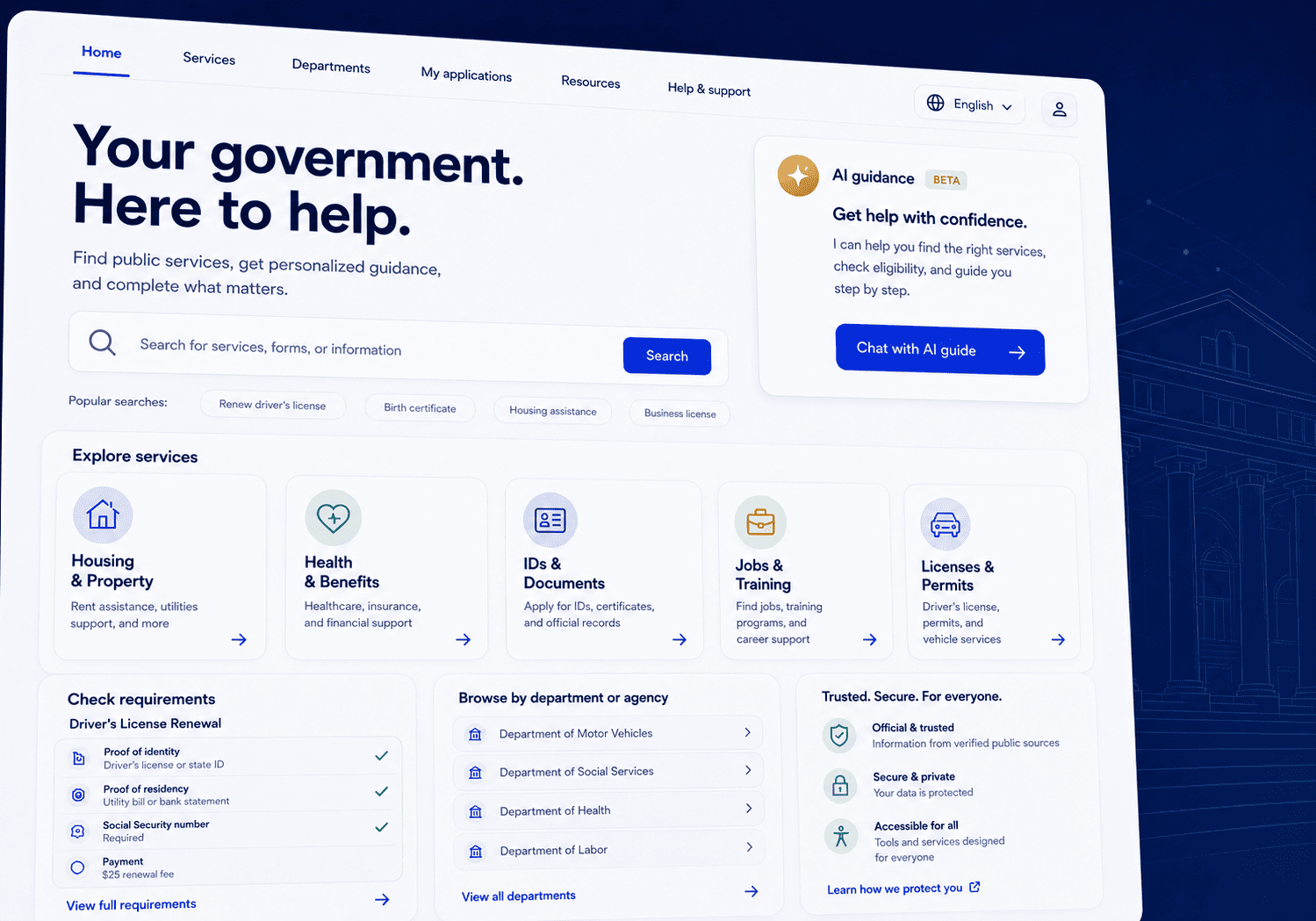
AI-Powered Citizen Services Website Platform for Virginia State Agencies

Plavno developed a modern eGovernment website platform for Virginia state agencies that centralizes citizen services, public information, department content, and an AI-powered guidance agent in one scalable system.

Read More
70%

reduction in routine citizen inquiries to agency staff

AI-Powered Citizen Services Website Platform for Virginia State Agencies

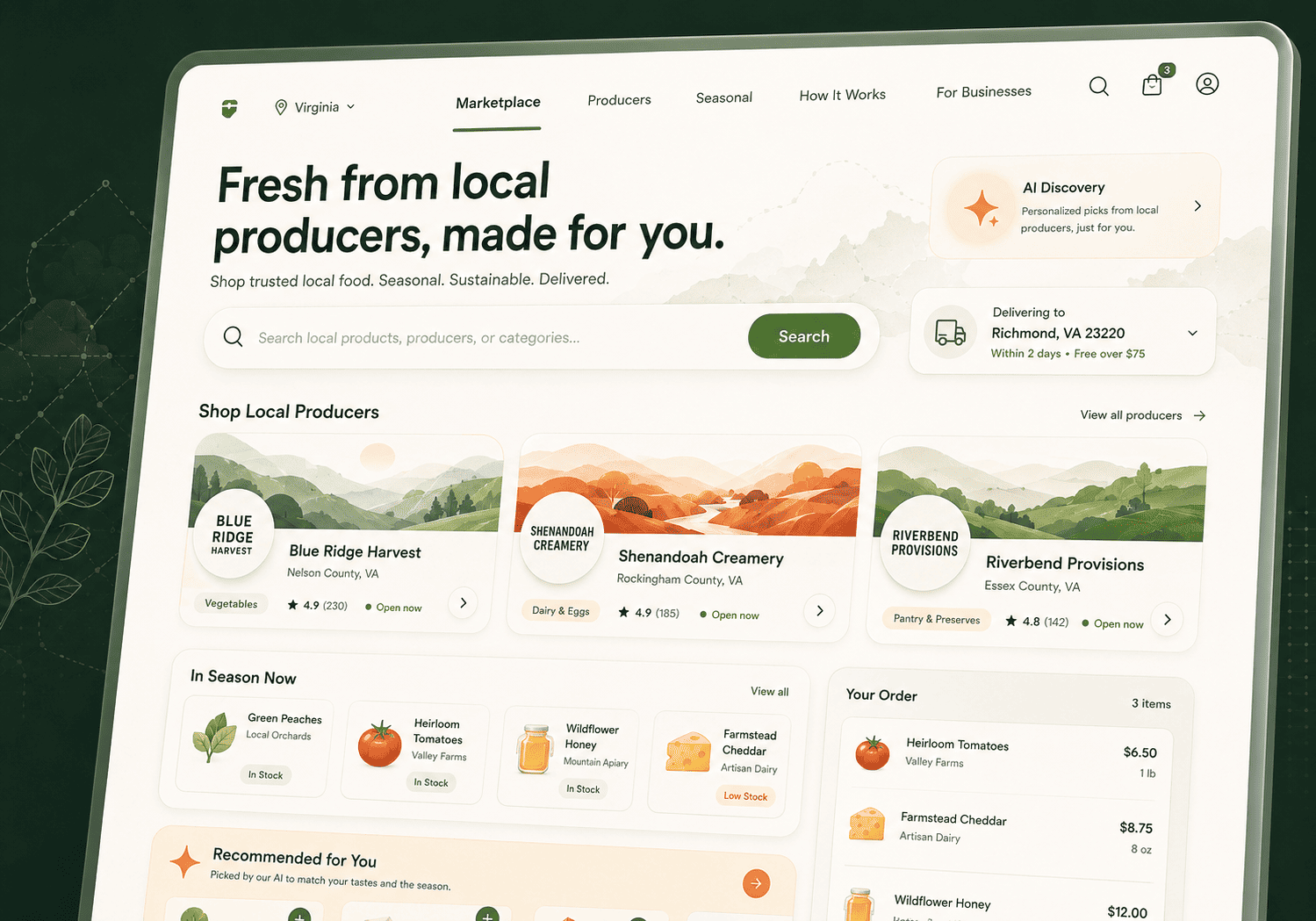
Digital Marketplace for Virginia Farmers, Local Producers & Direct-to-Consumer Food Sales

Plavno developed a custom multi-vendor marketplace for Virginia-based farmers, food producers, and regional sellers to unify product listings, vendor operations, customer ordering, and local fulfillment workflows.

Read More
3x

increase in product discovery relevance

Digital Marketplace for Virginia Farmers, Local Producers & Direct-to-Consumer Food Sales

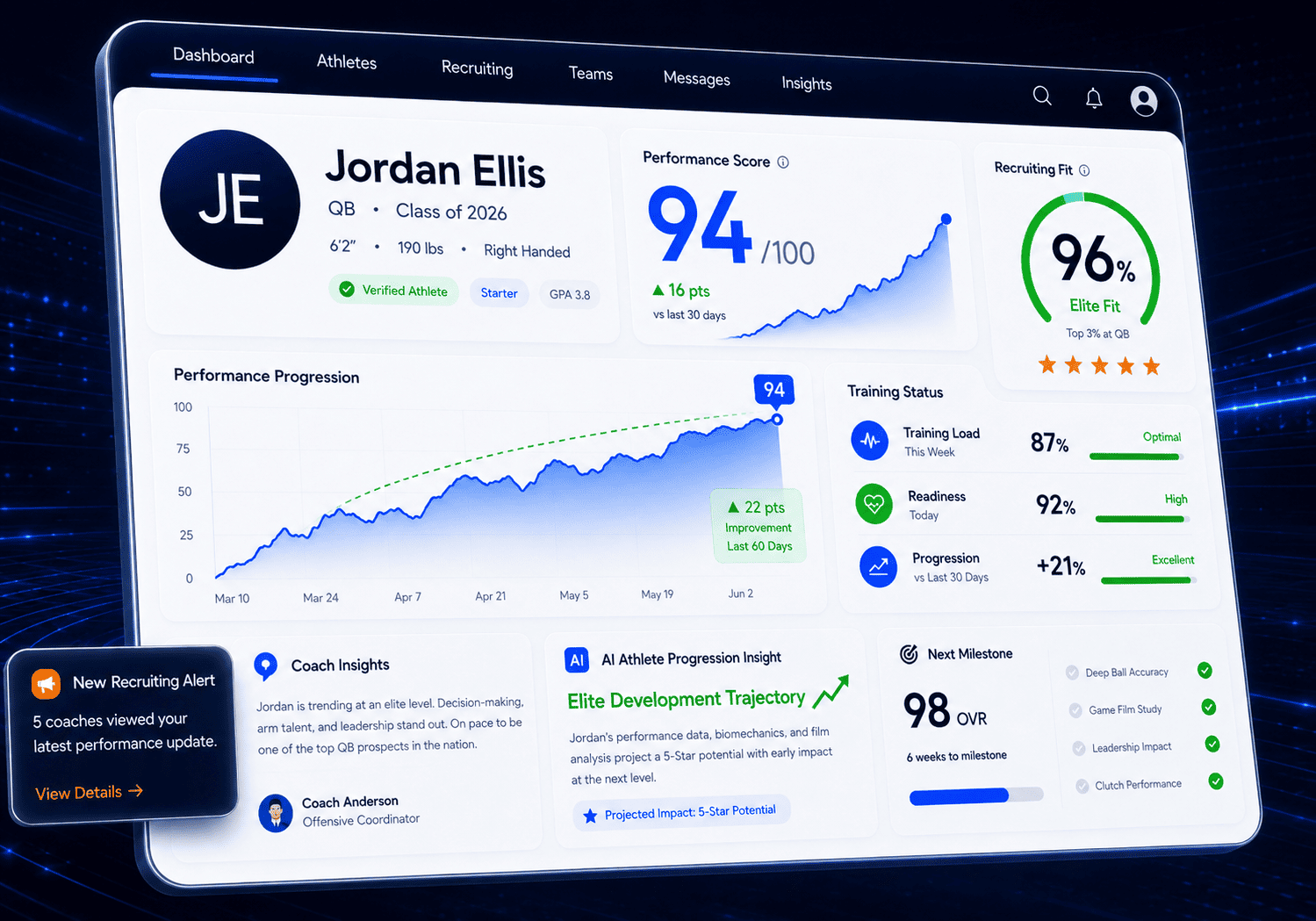
AI-Powered Sports Performance & Recruiting Platform for Virginia Clubs, Academies & Youth Programs

Plavno developed a custom sports technology platform for Virginia-based clubs and academies to combine athlete performance tracking, coach communication, recruiting workflows, and mobile engagement in one ecosystem.

Read More
3x

faster recruiting pipeline

AI-Powered Sports Performance & Recruiting Platform for Virginia Clubs, Academies & Youth Programs

Architecture & Engineering Overview

Engineering choices that keep Herndon agents honest in 2026

Cycle time ROI

Hours back each week

Draft insight packs on owned queues; free specialists for human work

Spend control

Spend caps by design

Token limits, rate caps, canary open writes only after shadow proof

Audit risk drop

Logged & reversible

Every action audited; separate secrets, tenants, and eval harnesses

Managed scorecard

One-page scorecard

Time saved, escalation rate, spend/run, defects with stop rules

For Business: Technical ROI & Risk Mitigation

Herndon sponsors care about cycle time, burn rate, and audit risk more than model names. The ROI case for agents is simple when you bit only the wait queues that already have owners and data. Manual insight packs and status pulls burn expensive people. An analytics-style agent that drafts those packs frees them for work only humans can finish. Savings show up as hours returned per week and fewer late deliverables on federal calendars. Risk drops when every action is logged and reversible by policy.

Cost control is part of the design, not a later finance ask. Token caps, tool rate limits, and canary traffic stop runaway spend before invoices grow. We size first agents around a single team so the spend line stays visible. Shadow runs prove quality without customer exposure. Only then do you open write paths. That sequence protects both budget and reputation inside the Dulles corridor purchasing culture.

Technical debt risk is real when pilots hard-code credentials or mix memory across tenants. Our builds separate secrets, tenants, and eval harnesses from day one. You can retire a model vendor without rewriting tools. You can hand a repo to internal teams without reverse engineering folklore. Residual risk lives in documentation and tests instead of a single engineer head. That is the mitigation board directors accept.

Proof comes from prior delivery, not slides. The telecom analytics agent showed how insight automation changes an ops week when data is already flowing. Public services work with structured forms and secure workflows taught clean API edges agents require. E-commerce catalog and checkout work reminded us to keep payment and inventory paths locked. Each lesson reduces surprise for Virginia buyers who cannot afford a failed showcase in 2026.

Decision makers leave with a one-page scorecard. Metrics cover time saved on the target process, escalation rate, spend per successful run, and open defects. Review cadence is monthly at first. Stop conditions are explicit if quality drifts or cost spikes. That device turns AI from a hope into a managed service line. Herndon companies use the same language they already apply to cloud and SOC spend.

Control plane

Plane 1

Control plane

Explicit graphs, tool-call audit, frozen contracts & eval set at kickoff

Tool plane

Plane 2

Tools & retrieval

Small specialized wrappers; permission filters; HITL density gated per phase

Model plane

Plane 3

Replaceable models

Swap vendors without rewrites; private endpoints when residency demands

Lifecycle gates

Governance

Paper gates & drift life

Discovery→design→pilot→write access; pinned versions, incident SEV, decommission drills

For CTOs: Architecture & Technical Lifecycle

Lifecycle starts with a problem statement signed by ops and security, not a model bake-off. Architecture stays legible when the control plane, tools, and models remain three replaceable planes. Kickoff freezes the tool contract shape and the eval set. Those two artifacts guide every later trade-off. Without them Herndon teams reverse into prompt.sprawl that no one can roll back cleanly.

Decision points sit on paper gates. After discovery you choose human-in-loop density. After design you choose retrieval and memory scope. After pilot you choose write access and multi-agent handoffs. Each gate has exit criteria: score thresholds, latency, and incident count. Skip a gate and you own the debt openly. Governance mirrors how you already ship payments or identity changes.

Trade-offs favor observability over cleverness. Graph orchestration beats free-form loops for regulated corridors because auditors can follow branches. Smaller specialized tools beat large mega-tools that hide side effects. Local or private endpoints win when data residency or contract language demands it. Public APIs win when latency and quality justify the path and export controls allow it. We record the choice and the owner who approved it.

Production lifecycle assumes drift. Eval sets rerun on schedule. Prompt and tool versions pin beside app releases. Incident response treats bad agent output as a severity-linked event with the same on-call chain as APIs today. Decommission is rehearsal-backed: revoke keys, freeze configs, archive logs. CTOs get a living architecture notebook, not a static diagram from week two.

Hiring and vendor mix stay flexible. Your engineers can own tools while we own orchestration for a quarter. Or the reverse once internal ML skills catch up. Contracts write those handoffs early. Northern Virginia firms often face clearances and continuous monitoring rules. Lifecycle steps leave room for those reviews without freezing delivery for months.

Typed tools

Typed, timeout tools

Strict schemas, safe retries, idempotent wrappers over your APIs

Swappable stack

Interface-bound LLMs

Model swaps leave tools untouched; plain services with logs & traces

Edge-case tests

Edge cases first

Empty retrieval stop, injection-as-data, spend budget escalation fixtures

Fast CI loops

Local + CI speed

Mock tools offline, contract tests, agent regression on every PR

For Engineers: Implementation Details & Stack

Implementation prefers boring edges. Agents stay reliable when tools are small, typed, and timeout-bound rather than long-running magic. We expose your APIs behind strict schemas with retries that are safe and idempotent. Planning prompts stay short and reference tool cards, not novels. Retrieval layers combine vector recall with structured filters so access control never lives only in a system prompt. Memory stores track session scopesper tenant and role.

Stack choices follow proven delivery. LLM clients sit behind an interface so model swaps do not touch tools. Orchestration code is plain services you can debug with normal logs, traces, and breakpoints. For content-heavy portals we used Strapi with Next.js and static generation before. That taught us how to offer read-only CMS endpoints agents can trust. Telecom analytics work used LLM planning over ops metrics, which taught batching and summary quality checks. E-commerce storefront and checkout experience taught inventory locks and clean order mutations when agents eventually write.

Edge cases get first-class tests. Empty retrieval returns a stop with reason. Conflicting tools return a clarification path. Spend or latency budgets exhausted mid-run open an escalation ticket with partial transcript. Timeouts kill orphan tool jobs. Prompt injection defenses treat untrusted document text as data, never instructions. Engineers receive fixtures that simulate those cases from day one.

Optimization is measured, not guessed. We cache stable retrieval chunks. We stream only when UI needs it. We batch unrelated tool fan-out carefully to avoid thundering herds on your cores. Eval harnesses score groundedness against source citations. Token histograms and tool error rates sit on the same dashboard. When a metric worsens we roll back config before clients feel it.

Local developer loops stay fast. Mock tool servers run offline. Secrets load from local vault patterns that mirror production paths. CI runs unit tests, contract tests, and a short agent regression suite on every pull request. Staging mirrors production network rules whenever possible. Herndon teams inherit that CI shape so internal contributors can ship without torching live agents.

Security posture

Your cloud, your IAM

CMK, region pins, short-lived tokens, allow-list only, PII stripped in logs

Observability signals

Signals that page

Tool latency, tokens/$, escalations, eval deltas, queue depth on one plane

Incident response

SEV-grade response

Bad output = product incident; freeze config, canary rollback, immutable transcripts

Cost & deploy

Budgets & IaC deploys

Per-agent kill switches, blue-green agents, eval-gated model updates

Infrastructure, Observability & Security

US client deployments place workloads in your cloud accounts under your IAM. Security and observability are product features of the agent, not afterthought tickets. Private networking, customer-managed keys, and region pins satisfy contract language common to Virginia federal suppliers. Agents never receive standing credentials for systems outside their allow list. Short-lived tokens and just-in-time roles cover writes. Logs strip or hash sensitive fields by policy before they leave the runtime boundary.

What we monitor is explicit. Tool success and latency, planner step counts, token and dollar spend, escalation volume, eval score deltas, and queue depth. Why those signals: they predict user pain and budget surprise before exec reviews. Alerts page owners when thresholds breach for a sustained window. Dashboards open to product, security, and finance with different default views so arguments share one data plane.

Incident response follows your existing SEV ladder. Bad agent output that reaches customers is handled as a product incident with cultural notes on what the agent was allowed to do. Rollback plays freeze the current config and relieve traffic to a known-good version. Forensics use immutable transcripts. After-action items fix tests or tool contracts, not vague awareness training. Compliance evidence packs export the same trails for SOC 2 or HIPAA-aligned work when those frameworks apply.

Deployment styles fit corridor taste. Some teams want fully private LLM endpoints. Others accept gated public models with DLP controls. We support both without rewriting tools. Blue-green or canary releases apply to agent services the same way they apply to APIs. Infrastructure as code pins versions so a rebuild two years later still boots. Secrets rotation is automated and tested.

Post-launch cost control is continuous. Per-agent budgets and kill switches live in config. Daily reports flag spend outliers by team. Quality drift sends a ticket to the content or data owner when sources rot. Maintenance windows update models only after evals pass. Herndon and Reston clients keep the runbooks, so no single vendor is a single point of failure for lights-on work.

Testimonials

We are trusted by our customers

“They really understand what we need. They’re very professional.”

The 3D configurator has received positive feedback from customers. Moreover, it has generated 30% more business and increased leads significantly, giving the client confidence for the future. Overall, Plavno has led the project seamlessly. Customers can expect a responsible, well-organized partner.

Sergio Artimenia

Commercial Director, RNDpoint

Sergio Artimenia

“We appreciated the impactful contributions of Plavno.”

Plavno's efforts in addressing challenges and implementing effective solutions have played a crucial role in the success of T-Rize. The outcomes achieved have exceeded expectations, revolutionizing the investment sector and ensuring universal access to financial opportunities

Thien Duy Tran

Product Manager, T-Rize Group

Thien Duy Tran

“We are very satisfied with their excellent work”

Through the partnership with Plavno, we built a system used by more than 40 million connected channels. Throughout the engagement, the team was communicative and quick in responding to our concerns. Overall, we were highly satisfied with the results of collaboration.

Michael Bychenok

CEO, MediaCube

Michael Bychenok

“They have a clear understanding of what the end user needs.”

Plavno's codes and designs are user-friendly, and they complete all deliverables within the deadline. They are easy to work with and easily adapt to existing workflows, and the client values their professionalism and expertise. Overall, the team has delivered everything that was promised.

Helen Lonskaya

Head of Growth, Codabrasoft LLC

Helen Lonskaya

“The app was delivered on time without any serious issues.”

The MVP app developed by Plavno is excellent and has all the functionality required. Plavno has delivered on time and ensured a successful execution via regular updates and fast problem-solving. The client is so satisfied with Plavno's work that they'll work with them on developing the full app.

Mitya Smusin

Founder, 24hour.dev

Mitya Smusin

Adoption ladder

Move Herndon teams from assisted work to autonomous runs

A maturity ladder keeps risk low while autonomy rises. Each rung has exit tests before the next grant of power.

Clipboard
Team
01

Step 1: Manual baseline capture (1 week)

Operators record the current steps, systems, and failure moments without any agent present. Time stamps and error rates become the baseline. You learn which steps are pure policy versus pure labor. Data gaps surface early so retrieval work has a clear backlog. Sponsors agree which metric must bend first. Output is a scored as-is map signed by the process owner in Herndon or nearby campuses.

02

Step 2: Assisted drafts only (2–3 weeks)

Agents draft summaries or ticket text. Humans still send every action. Shadow scoring compares agent drafts with what experts would have written. Prompt and retrieval change only when scores stall. Confidence from this rung decides whether write tools unlock later. Output is a measured quality lift with no external risk taken yet.

Search in doc
Rocket
03

Step 3: Guarded autonomous actions (2–4 weeks)

Agents gain write tools inside hard caps and dual control on irreversible steps. Escalation is automatic when confidence falls or tools fail. Nightly reports list every autonomous action for owner review. Incidents pause the agent family immediately. Metrics against the baseline must hold for a full week before wider rollout. Output is a limited production zone with clear kill criteria.

04

Step 4: Multi-team autonomy and shared controls (ongoing)

Successful agent patterns become shared modules other Reston or Ashburn teams can request. Central policy and spend limits still apply. New teams reuse tools instead of inventing parallel stacks. Quarterly reviews retire spent agents and fund new ones. Architecture stays common so security and audit remain simple. Output is a managed agent portfolio rather than a pile of one-off bots.

Eugene Katovich

Eugene Katovich

Sales Manager

Need a custom software solution? We’re ready to help!

Plavno has a team of skilled developers ready to tackle the project. Ask me!

Get a Free Quote

Readiness gate

Confirm your Herndon team is ready before kickoff in 2026

  • Name the owner and the first process — Pick one workflow with clear pain and available data. Write the owner name, not a committee. Confirm that person can free two hours a week through launch. List success as a number you can measure today. Without this gate agents become an orphan demo. Herndon sponsors who skip ownership dig debt that security later freezes.

  • Inventory systems and access paths — Catalog APIs, file stores, and IdP groups the agent will need. Mark what is blocked by change control or clearance. Request read credentials for a sandbox path now. Note latency and rate limits that already frustrate humans. Real inventories prevent twelve week stalls on paperwork. Northern Virginia programs lose months when this step waits until after sprint one.

  • Define stop conditions and spend caps — Decide maximum tokens, dollars, and actions per day before any code runs. Write who gets paged when caps trip. Agree how fast the agent freezes after a bad output. Publish that policy to finance and security together. Clear stops keep trust when early runs act wrong. Virginia buyers expect this discipline from any production service.

  • Assemble an evaluation packet — Gather twenty to fifty real examples of good and bad outcomes. Redact secrets but keep structure. Label gold answers and the sources that support them. Plan who scores new runs each week after launch. Eval packets make quality an objective, not a hallway opinion. Teams without them argue about vibes while costs climb.

  • Plan post-launch ownership — Name who tunes prompts, who owns tools, and who pays the cloud bill. Schedule the first review date before go-live. Confirm on-call knows the agent as a service with SEV levels. Reserve budget for content cleanup when retrieval exposes stale pages. Operations plans are what keep agents working past the press note. Include this sheet in every statement of work.

Vitaly Kovalev

Vitaly Kovalev

Sales Manager

Request a Herndon agent readiness audit

Share budget, timeline, stack, and dataset scope. Receive a free readiness scorecard and cost estimator built for Herndon and Dulles corridor teams inside three business days.

Talk to Experts

Common questions

AI Agents questions from Herndon and Virginia buyers

Straight answers on cost, timing, data, quality, security, and life after launch for Northern Virginia teams.

What drives the cost of AI agents for Herndon companies?

Cost follows scope, tool complexity, and compliance load more than model brand. Narrow agents with two or three tools land far below fleets that touch every department on day one. Herndon and broader Northern Virginia buyers often add private networking, audit export, and clearance-friendly hosting. Those choices add engineering weeks but protect contract position. Token spend is only one line and is capped un by design.

Labor is the larger share during build. Discovery, design, eval harnesses, and security reviews dominate early invoices. After launch the mix shifts toward model usage, monitoring, and light maintenance. We price phases so you see that shift early. Fixed-fee discovery keeps risk bounded before you commit to full build. Change requests sit outside that fence with explicit written impact.

Local market factors matter. Federal-aligned firms near Dulles may need extra evidence packs and longest proceed to production. Commercial SaaS teams in Reston often move faster and cheaper when data already sits behind clean APIs. Legacy ERPs without APIs force custom adapters that raise both time and cost. We detect that during readiness so quotes stay honest. Get AI Agents cost estimate in 24 hours when you can name process, stack, and timeline.

Hidden costs appear when data quality is weak or owners are missing. Agents amplify messy sources instead of fixing them. Budget a content cleanup slice when retrieval scores stay low. Also seize spend spend spend caps early so finance is not surprised midactivity quarter. All of this is normal program hygiene for 2026, not special AI theater. Clear ownership is cheaper than any model upgrade.

How long does it take to build AI Agents software?

A focused MVP often ships in eight to twelve weeks when data and owners are ready. That path covers discovery, design, build, and a guarded launchala for one process. Full multi-team autonomy takes longer because maturity rungs add their own exit tests. Parallel workstreams help only when tool contracts and evals already exist. Calendar time also depends on your change windows and security review depth.

Discovery and design usually take two to four weeks total. Build and controlled trial take three to five weeks for a single agent family. Launch and handover make one to two weeks more. If knowledge sources are scattered or APIs missing, insert buffer weeks for adapters and cleanup. Federal contractors in Herndon should plan extra for Authority to Operate style questions even when the agent lives outside classified space. Commercial only corridors move closer to the low end of ranges.

MVP means drafts or tightly capped actions with dense human review. Full deployment means lower escalation rates, higher write limits, and multi-team reuse of shared tools. Do not collapse both into one milestone. Shock comes when pilots promise full autonomy but lack evals or stop conditions. We mark the exit criteria for each rung in the statement of work. Dates move only when criteria miss, not when excitement swellss.

After launch the clock continues for improvement cycles rather than green-field coding. First thirty days are hypercare. Quarterly reviews retire or expand agents. Model upgrades happen only on passing evals. That keeps timelines honest beyond the initial ribbon. Tell us your start date and first process so we can map a calendar you can defend to sponsors.

What data do you need to start AI agent work in Virginia?

You need three data classes on day one. Process samples show the real work. System inventories show where truth lives. Policy rules show what agents may never do. Without samples we cannot build evals. Without inventories we cannot design tools. Without policy we risk unsafe actions even in shadow mode. Start small and deepen as the first agent earns trust.

Process samples are tickets, reports, chat logs, or recordings with sensitive fields redacted. Twenty to fifty solid examples beat thousands of noisy ones. Label good and bad endings. Note which sources a human used. That labeling is the seed of the eval harness and the retrieval map. Virginia teams often already have quality QA packs that can seed this set after a scrub.

System inventories list APIs, warehouses, files, and identity groups. Access request templates feel boring yet decide whether build starts on time. Prefer read-only low-env access first. Document rate limits and required MFA. Map who must approve production write scopes later. Clear inventories prevent the classic mid-sprint encrypted wait on credentials.

Policy covers retention, residency, allowed model endpoints, and escalation chains. Northern Virginia sellers to the federal market often bring extra language on logging and transfer. We encode those rules into the control plane instead of relying on prompt dreams. Missing policy is a stop. With it we move. Bring these packs to the first workshop and the readiness audit finishes faster for Herndon teams.

How do you measure quality and decide if an agent is good enough?

Quality is a score against a frozen eval set, not a demo vibe. We grade groundedness, task completion, unsafe-action rate, and latency together. Humans remainadvantages the gold during training of that set. An agent graduates only when scores hold across several fresh batches. Business owners pick which metric is the release gate. Engineering owns the rest.

During shadow mode the agent proposes whilea humans act. Diffs show where it helps and where it invents. We tune until the help rate is usefulast and inventions fall below writtenthresholds. Only then does write-access enter trial. Threshold numbers live in the design pack so Arguments stay short. Herndon program leads like this style because it matches how they already measure odds software SLAs.

Live quality needs continuous watch. Schedule evals re-run on a cadence. Spot checks sample production transcripts. Drift alerts fire when sources change or scores drop. Escalation spikes also signal quality trouble even if raw accuracy looks fine. We treat quality incidents like product incidents. Fixes go into tests so regression cannot sneak back quietly.

Decision rule is written early. Example: ship when task success clears X percent, unsafe actions stay under Y, and spend under Z for two weeks. Fail any line and the agent stays in shadow or rolls back. Sponsors sign that rule before build. That single page prevents the forever pilot that never commits. It also gives security a clear stop if risk climbs after launch.

How do you handle security and compliance for AI agents?

Security is built as controls around tools, data, and soil logs. Agents never hold broad credentials. Short tokens and scope maps limit what each run canOwnership touch. Prompts and documents are treated as untrusted input with injection defenses. PII scrubbing can run before storage. Private networking and customer-managed keys stay available when contracts demand them. Herndon federal suppliers frequently need this package intact.

Compliance evidence starts in the same pipelines as product logs. Every tool-call and decision is exportable. Role maps follow your IdP. Retention mirrors existing policy. SOC 2 minded controls cover change management and access reviews. HIPAA-aligned work adds stricter data boundaries and BAAs when healthcare data appears. standards We do它 not claim certifications we do not hold. We implement the technical patterns auditors look for in your environment.

Threat models cover prompt injection, data exfiltration via tools, runaway spend, and supply chain risks on model providers. Mitigations include allow lists, DLP on outputs, hard spend caps, and version pins. Incident response integrates with your SEV process. Bad agent output that hits customers is not a footnote. It is a tracked event with root cause and test updates. Security convenes at discovery અને, design and pre-prod gates.

Virginia clients remain data owners. We work inside your cloud when required and leave keys with you. Training on your private data does not happen unless that scope is难民 written and paid. Least privilege is enforced in code. Reviews confirm it before go-live. That and posture is mandatory when agents join regulated ops rather than optional bolt-on.

Contact Us

This is what will happen, after you submit form

Need a custom consultation? Ask me!

Plavno has a team of experts ready to start your project. Ask us!

Vitaly Kovalev

Vitaly Kovalev

Sales Manager

Schedule a call

Get in touch

Fill in your details below or find us using these contacts. Let us know how we can help.

Required because you selected “Other” above

No more than 3 files may be attached up to 3MB each.
Formats: doc, docx, pdf, ppt, pptx, xls, xlsx, txt.
Book your meeting