bg image
bg image

Serving Hampton & Virginia

Cut call load and missed appointments across Hampton teams in 2026

Hampton operators still burn payroll on repetitive phone work that never stops. Port logistics desks, clinics, and federal contractors lose hours to scheduling and status callbacks every week. An AI Voice Assistant answers, routes, and books without expanding headcount. It is built for teams that already run phones at volume and need clean handoff to humans. You keep control of scripts, data, and escalation rules from day one. Get AI Voice Assistant cost estimate in 24 hours. We scope budget, timeline, stack, and dataset before any build starts.

Discuss Project

Overview

Why Hampton phone queues still drain margin in 2026

Hampton sits inside a dense Hampton Roads economy of ports, shipyards, clinics, and federal support firms. Those teams take high volumes of routine calls that staff cannot fully absorb. Missed callbacks, after-hours gaps, and slow scheduling directly hit throughput and customer trust. Leaders need a practical path to handle volume without hiring another full shift.

An AI Voice Assistant takes the first pass on intake, status, and booking. It confirms identity rules you set, captures structured data, and opens tickets in systems you already use. Staff focus on exceptions instead of repeating the same script. That shift is local and immediate for operators near Newport News, Norfolk, and Virginia Beach.

Trusted AI Voice Assistant Partner for Hampton Businesses. We work with US-based clients, including companies operating in Virginia. Our delivery footprint includes 10+ voice and agent projects delivered in the US market, grounded in real workflows rather than demo scripts. One recent build was a voice assistant for healthcare scheduling that automated clinic booking and reduced front-desk friction.

We map call intents against your CRM, EHR, or ticketing tools before writing production prompts. Integration depth matters more than flashy demos when phone minutes cost real money. Latency, barge-in handling, and fallback to a live agent are designed up front. That keeps service levels stable during spikes around port shifts and clinic peak hours.

Surrounding teams in Portsmouth, Chesapeake, and Williamsburg face the same staffing math. Seasonal tourism traffic and defense contract cycles make demand bursty. Voice AI absorbs the base load so human agents protect high-value work. The result is lower cost per contact and cleaner data for ops reviews.

Talk to an Expert
First-pass intake

First-pass intake

Status, booking & identity on every routine call

AI Voice Assistant

AI Voice Assistant

Structured capture into CRM, EHR & tickets

Live-agent fallback

Live-agent fallback

Barge-in handling with full context handoff

Lower cost per contact

Margin protection

Staff own exceptions; base load stays automated

plavno logo

Build your first
Smart AI project today!

Just tell the Plavno AI Agent about your project - it will ask questions, gather requirements, and propose a tailored solution

Voice stack that ships

Production voice architecture built for Hampton call volume

Hampton clients receive a full voice runtime, not a chatbot bolted to a phone number. The core is a speech pipeline with telephony ingress, intent routing, tool calls into business systems, and a supervised handoff path. We design for noisy environments common near industrial sites and multi-site clinics. Every component has a clear failure mode so callers never hit a dead end.

Speech recognition and synthesis sit behind a session layer that stores turn state and business context. We pick providers based on latency budgets and domain vocabulary, not brand names. Healthcare schedules need tight entity capture for dates and practitioners. Logistics desks need cargo, gate, and appointment fields that map to existing tables without rekeying.

We ground designs in shipped work. For clinics we built a voice assistant for healthcare scheduling that handled booking flows with workflow integration booked into clinic calendars. For retail discovery we built an AI product recommendation agent that showed how tool-using agents retrieve catalog facts under live traffic. Those patterns transfer when Hampton firms need inventory status or multi-brand catalog lookups over the phone.

Security/compliance starts at transcript retention and redaction rules. PHI paths get encryption at rest, role-based access, and audit logs your compliance officer can export. Payments and IDs never land in free-form prompt history. Role separation keeps engineering, ops, and clinical staff inside least-privilege boundaries.

DevOps covers staging phone numbers, canary prompt releases, and versioned dialog policies. We instrument call completion, containment, ASR error spikes, and tool latency. Alerts feed your existing on-call channels. Rollback is a config change, not a weekend rewrite. That discipline keeps Hampton production lines stable when you add a new intent or a new clinic site.

Delivery path

From first call sample to live Hampton number

A fixed sequence that turns messy phone work into a measured pilot without freezing day-to-day operations.

Clipboard
Team
01

Step 1: Call intake audit (1–2 weeks)

We sample real call recordings and IVR trees from your Hampton or Hampton Roads line. Goals include intent frequency, average handle time, and drop-off points. Deliverables are a ranked intent map and a risk list for data quality gaps. You receive a written scope with budget bands and dataset needs. Technical work covers CIT connectivity notes and CRM field inventory. Timeline is one to two weeks with one working session per week.

02

Step 2: Dialog and tools design (2–3 weeks)

We draft dialogs for the top intents and define tool contracts for booking, status, and ticket create. Phase goals center on containment without trapping callers. Clients receive prototype scripts and a data dictionary for required slots. Business context stays tied to your SLAs and hours of operation. Technical work includes API stubs and test fixtures against sandbox systems. Timeline runs two to three weeks including two review gates.

Search in doc
Rocket
03

Step 3: Pilot on limited traffic (2–4 weeks)

We stand up a pilot number or after-hours route with human backup always available. Goals are measured containment, accuracy on key fields, and calm escalation. You get dashboards for call outcomes and a weekly error review. Staff shadow the first days so scripts match local phrasing in Hampton. Technical work hardens logging, redaction, and failover. Timeline is two to four weeks depending on traffic volume.

04

Step 4: Production cutover (1–2 weeks)

We move winning intents to primary routing and lock change control. Deliverables include runbooks, ownership matrix, and cost monitors per thousand minutes. Clients receive training for supervisors who own prompt and policy edits. Business context covers seasonal peaks near port and tourism weeks. Technical work finalizes CI for dialog packages and alert thresholds. Timeline is one to two weeks after pilot sign-off.

What you can ship

Voice capabilities Hampton operators use first

After-hours intake that still books

After-hours intake that still books

Hampton clinics and service desks lose weekday capability when phones roll to voicemail. Callers hang up and find another provider by morning. We deploy voice flows that capture reason, urgency, and preferred windows, then create calendar holds. Speech models are tuned for local place names and provider lists. Telephony stays on carrier APIs you already trust for uptime. Outcome is fewer abandoned after-hours contacts without staffing night shifts.

Status and ETA without agent thrash

Status and ETA without agent thrash

Port-adjacent firms near Norfolk and Newport News field constant shipment and appointment questions. Agents waste time looking up the same screens. The assistant authenticates with your rules, pulls status through secure APIs, and reads only approved fields. We choose structured tool calls over free-form browsing so answers stay accurate. Failures escalate with full context attached. Teams protect high-skill labor for exceptions and claims work.

Multi-site routing by skills

Multi-site routing by skills

Operators spanning Hampton and Chesapeake struggle when one queue queues every specialty. Wrong transfers burn minutes and patient or customer patience. We encode site hours, skill tags, and overflow logic into the voice graph. The stack uses real-time presence signals where your PBX exposes them. Supervisors adjust rules without a code release. Routing quality improves because decisions are explicit and logged.

Structured capture into back-office systems

Structured capture into back-office systems

Free-form notes break reporting for finance and ops leaders downtown and on base contracts. Voice sessions write typed fields into CRM or EHR forms instead. We validate phone numbers, dates, and IDs before commit. Technologies include schema-validated tool layers so bad payloads never land. Auditors see who changed what and when. Clean data cuts rework loops that inflate cost per ticket.

Supervised escalation with full transcript

Supervised escalation with full transcript

Callers hate repeating themselves when a bot fails. Agents hate cold handoffs with zero history. Our handoff packages intent, captured slots, and the last turns into the agent desktop. We select low-latency media bridges so the caller does not notice a drop. QA teams review flagged calls against policy. Trust rises because human help arrives informed rather than starting over.

Case Study

We help customers cut
down on development

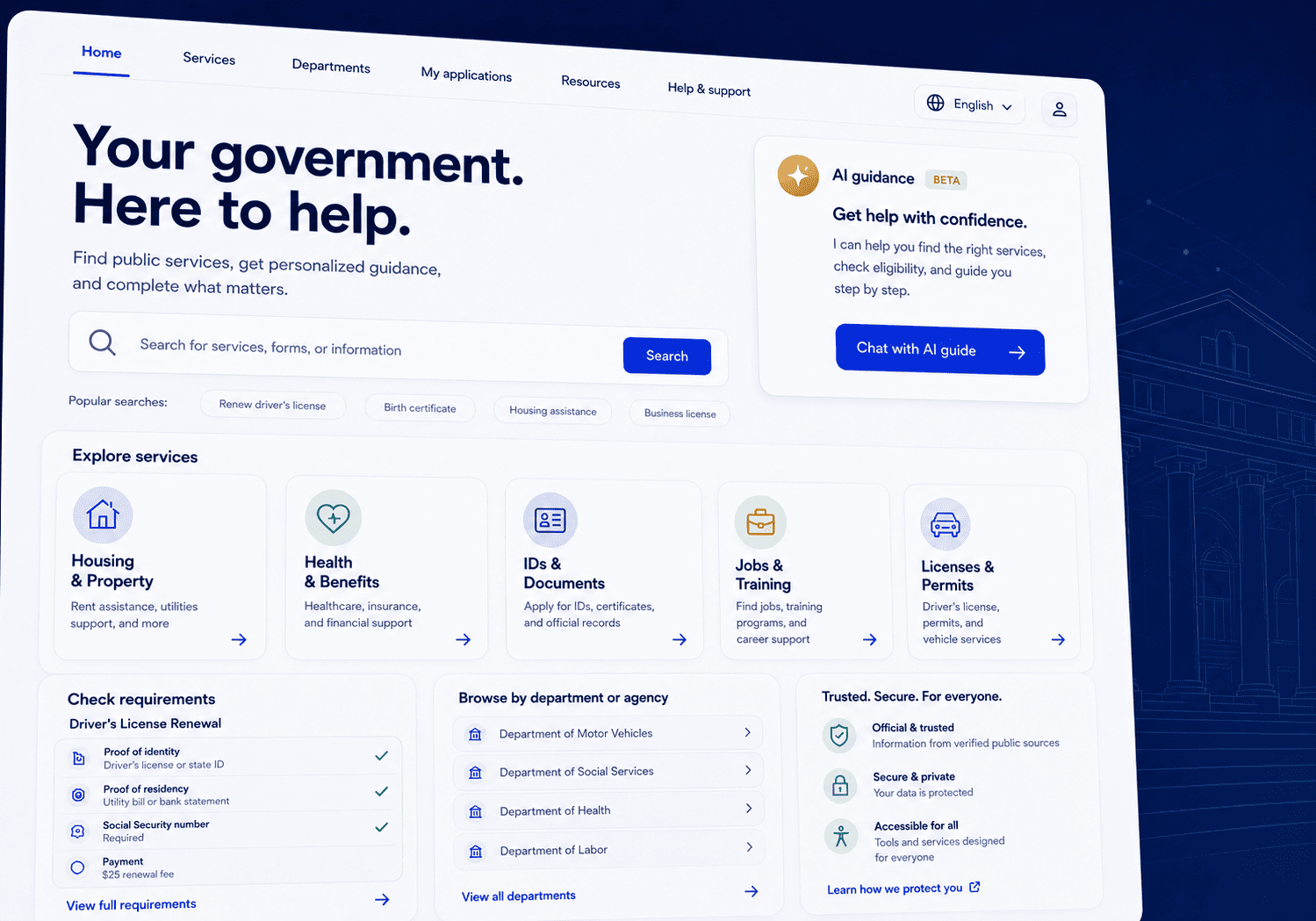
AI-Powered Citizen Services Website Platform for Virginia State Agencies

Plavno developed a modern eGovernment website platform for Virginia state agencies that centralizes citizen services, public information, department content, and an AI-powered guidance agent in one scalable system.

Read More
70%

reduction in routine citizen inquiries to agency staff

AI-Powered Citizen Services Website Platform for Virginia State Agencies

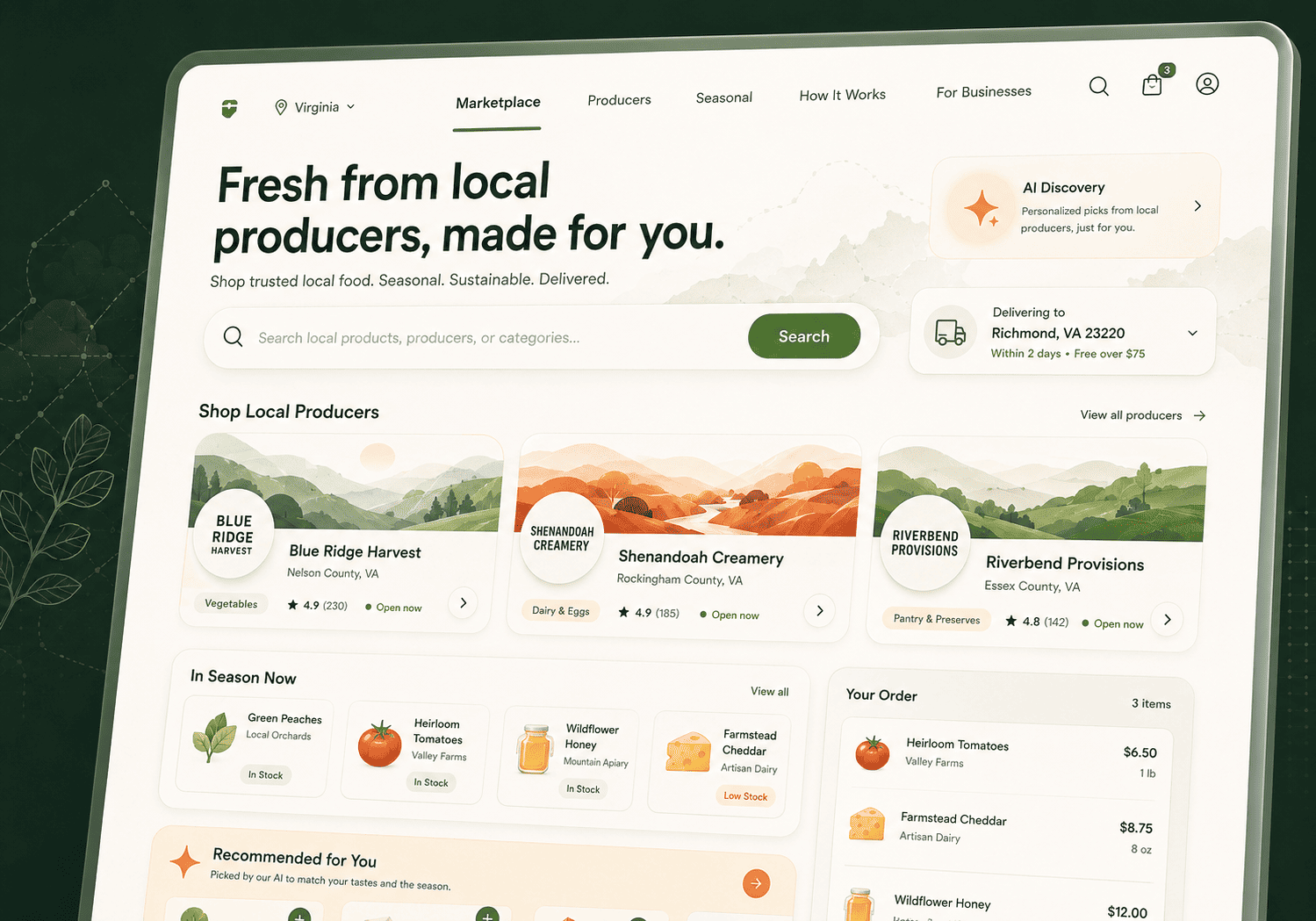
Digital Marketplace for Virginia Farmers, Local Producers & Direct-to-Consumer Food Sales

Plavno developed a custom multi-vendor marketplace for Virginia-based farmers, food producers, and regional sellers to unify product listings, vendor operations, customer ordering, and local fulfillment workflows.

Read More
3x

increase in product discovery relevance

Digital Marketplace for Virginia Farmers, Local Producers & Direct-to-Consumer Food Sales

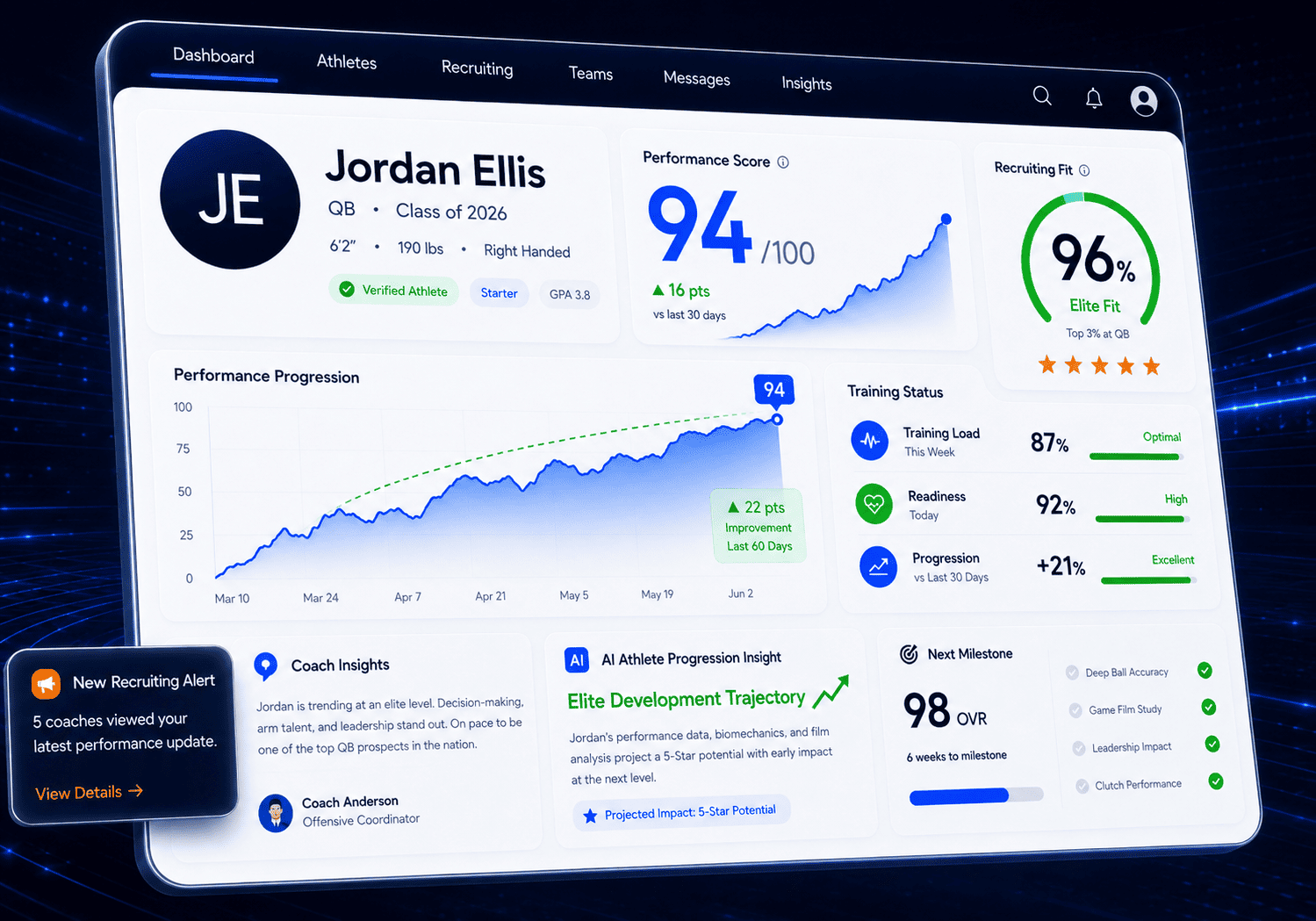
AI-Powered Sports Performance & Recruiting Platform for Virginia Clubs, Academies & Youth Programs

Plavno developed a custom sports technology platform for Virginia-based clubs and academies to combine athlete performance tracking, coach communication, recruiting workflows, and mobile engagement in one ecosystem.

Read More
3x

faster recruiting pipeline

AI-Powered Sports Performance & Recruiting Platform for Virginia Clubs, Academies & Youth Programs

AI Voice Assistant Solutions for Hampton Industries

Regional use cases that map to Hampton Roads work

These patterns follow real employment bases around the port, shipyard corridor, clinics, and tourist traffic feeding Peninsula towns.

Clinic Scheduling

Clinic Scheduling

Booking

Clinic scheduling across Peninsula practices

Independent and multi-site clinics in Hampton fight no-shows and overloaded front desks. Staff spend mornings confirming visits that a voice line could handle. We implement intent capture for reschedule, cancel, and new visit booking with calendar writes. ROI often shows as fewer abandoned calls in the first month and reduced overtime on phones. Technically the assistant uses constrained slot filling and EHR API tools with human override. This mirrors our healthcare scheduling voice assistant build using scheduling automation and workflow integration.

Shipyard Switchboards

Shipyard Switchboards

Triage

Shipyard and defense supplier switchboards

Suppliers supporting Newport News operations field vendor, badge, and delivery questions at volume. Misroutes delay gates and inflate admin load. Voice AI triages by contract type and site, then creates tickets with required fields. A concrete ROI target is lower average time to correct desk without new FTEs. The technical path uses authentication rules, allowlisted tools, and strict logging for audit. Escalation keeps security screening under human control.

Port Logistics

Port Logistics

Appointments

Port and logistics appointment desks

Trucking and terminal partners around the harbor need clear appointment windows. Drivers calling mid-route cannot wait on hold. The assistant verifies load references and returns slots from your scheduling system. ROI appears as fewer missed windows and reduced radio chatter into office staff. Integration runs through REST tools with retries and idempotent writes so double books do not appear. Failure cases open a live agent path with the truck context attached.

Retail Support

Retail Support

Orders

Retail and multi-brand store support lines

Peninsula retailers juggling brands struggle when callers ask stock and order status. Agents hop tabs and still give stale answers. We connect voice turns to catalog and order services with personalization patterns proven in our AI product recommendation agent for ecommerce and retail. ROI is faster first-response resolution and fewer callbacks. The technical summary is a recommendation-style retrieval plus order lookup behind guarded tools. Content mirrors multi-brand catalog rigor we applied in Craft Commerce storefront work.

Municipal Hotlines

Municipal Hotlines

Intake

Municipal and campus service hotlines

City adjacent departments and campuses near Williamsburg handle facilities and scheduling spikes. Seasonal events blow up queues. Voice intake classifies request type, location, and urgency, then opens work orders. ROI shows as shorter queue times during peak weeks without temporary contractors. Systems use GIS-friendly address capture and service catalogs exposed as tools. Supervisors tune priority rules as event calendars change.

Billable Intake

Billable Intake

Services

Professional services billable intake

Law, accounting, and consulting offices in Hampton lose billable hours answering routine status calls. Partners want staff on client work, not phones. The assistant qualifies the matter, gathers documents needed, and schedules consults. ROI is recovered associate time measured against pre-pilot handle minutes. Technically it stores matter IDs, applies retention policies, and never stores unnecessary personal data. Secure handoff keeps privileged context inside approved systems only.

35%

Fewer routine agent transfers

Measures share of calls resolved in voice without a live desk after pilot baselines. We achieve it by locking top intents and tool accuracy before wider routing. Baseline is your pre-launch transfer rate over four weeks. It matters because each avoided transfer frees minutes for complex revenue work.

<2.5s

Median tool response time

Tracks latency from tool request to spoken confirm on critical lookups. We keep it low with lean payloads and timeout budgets per integration. Measurement runs in production traces by intent family. Faster tools cut caller hang-ups that destroy containment.

24h

Mean prompt fix cycle

Counts hours from flagged mis-handle to shipped dialog patch in staging then prod. Process uses reviewed transcripts and versioned policies so changes stay traceable. Weekly ops reviews feed the queue. Rapid fixes stop small errors from becoming brand damage.

Capability growth

How Hampton teams mature voice AI after go-live

A capability ladder that moves from assisted intake to selective autonomy without betting the brand on day one.

Clipboard
Team
01

Step 1: Manual-heavy assist (weeks 1–4)

Agents remain primary while voice drafts structured notes and suggests next actions. Goals are trust building and clean data into CRM fields. Clients receive coaching reports on where scripts confuse callers. Business context favors low-risk lines such as hours and directions first. Technical work centers on dual-write logging for comparison. Timeline covers the first month of supervised traffic.

02

Step 2: Contained automation (weeks 5–10)

Selected intents fully resolve when confidence and policy checks pass. Goals include rising containment with stable CSAT. You get intent scorecards and explicit kill switches per flow. Local Hampton phrasing is added from real transcripts. Technical work expands tool coverage and regression suites. Timeline spans roughly six weeks of iterative expansion.

Search in doc
Rocket
03

Step 3: Cross-team rollout (weeks 11–16)

Additional departments adopt shared components for identity and escalation. Goals are reusable policies across clinics or yards without fork chaos. Clients receive a center of excellence playbook and training path. Business owners fund new intents from proven savings. Technical work introduces shared libraries and environment isolation. Timeline is about six weeks depending on org size.

04

Step 4: Selective autonomy (ongoing)

High-confidence flows act end to end while sensitive topics stay human gated. Goals place autonomy only where audit and cost metrics stay green. Leadership reviews monthly risk and unit economics. Virginia operations keep compliance owners in the change loop. Technical work adds drift monitors on ASR quality and tool schemas. Timeline is continuous with monthly governance meetings.

Architecture & Engineering Overview

Engineering choices that protect margin and uptime

Containment savings

Containment → minute cost

Routine intents convert fixed payroll pressure into controllable spend

Sequenced intents

High-frequency first

Low-regulatory intents ship first; brand risk stays gated

Slot validation

No free-text writes

Slot validation blocks junk bookings before they hit records

Cost control

Per-intent budgets

Anomaly caps + monthly retire of weak flows keep ROI earned

For Business: Technical ROI & Risk Mitigation

Phone labor is a visible line item for Hampton operators with multi-shift coverage. Voice containment on routine intents converts fixed payroll pressure into a controllable minute cost. Savings show when baselines of average handle time and transfer rate are compared week over week after pilot. Risk drops because every automated path has a human escape hatch with context preserved.

We prioritize intents with high frequency and low regulatory weight first. That sequencing protects brand while you learn error patterns. Leaders see dashboards tied to dollars, not vanity completion stats. Finance can model overtime reduction against software burn with clear assumptions.

Data quality risk is managed by refusing free-text writes into systems of record. Slot validation blocks incomplete booking payloads before they create junk appointments. That design came from clinic scheduling work where bad times create no-show cascades. Cleaner records cut back-office cleanup that never appears in call center KPIs.

Vendor lock risk is reduced by keeping dialog policy and business tools in your repos. Model providers can change without rewriting the enterprise edge. Contracts specify data residency and retention so legal reviews stay short. Hampton firms dealing with federal-adjacent work need that paper trail early.

Post-launch cost control uses per-intent budgets and anomaly alerts on minute spikes. If a prompt glitch loops callers, spend caps throttle damage. Monthly reviews retire weak intents instead of letting them burn forever. ROI stays earned, not assumed.

1

Intent prioritization gate

Enter/exit on volume, latency fit & regulatory weight

2

Tool contract freeze

API stubs locked; sync vs queued CRM write trade-offs set

3

Pilot exit criteria

Sandbox → pilot routes → production DIDs with feature flags

4

Ownership transfer

Runbooks, SLOs & prompt-edit governance hand to client eng

For CTOs: Architecture & Technical Lifecycle

Lifecycle starts with traffic reality, not a slide deck stack. Decision gates sit at intent prioritization, tool contract freeze, pilot exit, and production ownership transfer. Each gate has enter and exit criteria tied to latency, accuracy, and operational readiness. Governance includes who may edit prompts and who approves production releases.

Trade-offs appear between fully custom ASR fine-tuning and faster provider baselines. We default to provider strength plus domain glossaries unless accent or noise data proves otherwise. Another trade-off is synchronous CRM writes versus queued commits for resilience. Queueing protects caller experience when systems of record lag.

Environments split sandbox numbers, pilot routes, and production DIDs. Secrets live outside prompt templates. Feature flags roll intents independently so one bad flow does not unwanted expand blast radius. This structure keeps Hampton multi-site rollouts from collapsing into a single fragile binary.

Technical debt control bans one-off scripts hid inside notebooks. Dialog packages version like application code with PR review. Tool schemas publish with compatibility tests against staging systems. Drift in third-party APIs surfaces before callers feel it.

Handoff to client engineering is planned, not hopeful. Runbooks, SLOs, and incident severity models transfer with the system. Optional retained support covers after-hours monitoring for teams still building internal capacity. Ownership clarity prevents the long grey zone that kills many AI pilots.

Speech adapters

Speech adapters

ASR/TTS swap behind interfaces; typed domain entities

Session orchestrator

Session orchestrator

Owns turn state, timers & tool invocation paths

Narrow tool layer

Narrow tool layer

Idempotent retries, least-privilege tokens, fail-open handoff

For Engineers: Implementation Details & Stack

Implementation favors a session orchestrator that owns turn state, timers, and tool invocation. Speech providers plug in behind adapters so recognition and TTS can change without rewriting business logic. We keep domain entities as typed objects rather than raw strings. That choice reduces parse bugs on dates, sites, and person names common in Hampton Roads addresses.

Tool layers expose narrow functions such as getAppointmentWindows or createCase. Authorization tokens map to least privilege service accounts. Retries are idempotent with client request keys so double submits do not book twice. Timeouts fail open to human transfer with packaged context.

Observability hooks emit spans for ASR confidence, tool latency, and end-of-call reason codes. Engineers replay redacted sessions to reproduce issues without leaking PHI. Prompt snapshots store with call IDs for audit. Regression suites speak synthetic callers through critical paths on every release candidate.

Edge cases include barge-in during long status reads, partial DTMF identity, and noisy warehouse floors. We tune endpointing and confirmation strategies rather than shouting over callers. Multilingual needs appear for tourism and crew populations; translation paths stay optional modules when metrics justify them.

Where catalog discovery is needed we reuse patterns from the ecommerce recommendation agent: retrieve, rank, speak short options, confirm. For multi-brand commerce context we keep brand partitions clear so voice answers do not mix assortments. Store operations teams get the same field discipline we used on Craft Commerce catalog architecture.

US regions & HIPAA patterns

Security & compliance layer

US regions, BAAs, MFA admin paths, encrypted audio/text artifacts

Live signal stack

Observability signals

Setup success, ASR confidence, tool errors, containment by intent

Blue-green canaries

Blue-green canaries

Route weights on DIDs/SIP; config-as-code; dual-control secrets

Cost & drift ops

Cost & drift ops

Minutes tagged by intent; monthly policy review & vocabulary drift checks

Infrastructure, Observability & Security

US client deployments default to US regions with encrypted storage for audio and text artifacts. HIPAA-ready patterns cover BAAs, access logs, and minimum necessary data in prompts. SOC2-minded controls include change tickets, MFA on admin paths, and separated duties between builders and producers. Federal-adjacent suppliers near shipyard work get stricter retention toggles.

We monitor call setup success, one-way audio alarms, ASR confidence drops, tool error rates, and containment by intent. Why these signals: they catch carrier issues, model drift, and integration breakage before CSAT falls. On-call joins existing Pager channels when thresholds trip. Incident response playbooks define who freezes an intent and who opens a carrier ticket.

Deployment uses blue-green style route weights on numbers or SIP trunks. Canaries take a slice of off-peak traffic first. Config as code keeps environments reproducible across Hampton and remote team members. Secrets rotate on a fixed cadence with dual control where compliance demands it.

Cost observability tags minutes and model tokens by department and intent family. Finance tables show unit cost next to avoided handle minutes. Spikes in a single intent trigger review rather than quiet budget bleed. Capacity plans cover tourism weekends and defense outage windows when call volume jumps.

Post-launch maintenance includes monthly policy reviews, transcript sampling, and dependency upgrades. Drift detection watches vocabulary shifts when you add clinics or product lines. Security reviews revisit redaction rules whenever new fields enter the dialog. Operations stay active, not set-and-forget.

Testimonials

We are trusted by our customers

“They really understand what we need. They’re very professional.”

The 3D configurator has received positive feedback from customers. Moreover, it has generated 30% more business and increased leads significantly, giving the client confidence for the future. Overall, Plavno has led the project seamlessly. Customers can expect a responsible, well-organized partner.

Sergio Artimenia

Commercial Director, RNDpoint

Sergio Artimenia

“We appreciated the impactful contributions of Plavno.”

Plavno's efforts in addressing challenges and implementing effective solutions have played a crucial role in the success of T-Rize. The outcomes achieved have exceeded expectations, revolutionizing the investment sector and ensuring universal access to financial opportunities

Thien Duy Tran

Product Manager, T-Rize Group

Thien Duy Tran

“We are very satisfied with their excellent work”

Through the partnership with Plavno, we built a system used by more than 40 million connected channels. Throughout the engagement, the team was communicative and quick in responding to our concerns. Overall, we were highly satisfied with the results of collaboration.

Michael Bychenok

CEO, MediaCube

Michael Bychenok

“They have a clear understanding of what the end user needs.”

Plavno's codes and designs are user-friendly, and they complete all deliverables within the deadline. They are easy to work with and easily adapt to existing workflows, and the client values their professionalism and expertise. Overall, the team has delivered everything that was promised.

Helen Lonskaya

Head of Growth, Codabrasoft LLC

Helen Lonskaya

“The app was delivered on time without any serious issues.”

The MVP app developed by Plavno is excellent and has all the functionality required. Plavno has delivered on time and ensured a successful execution via regular updates and fast problem-solving. The client is so satisfied with Plavno's work that they'll work with them on developing the full app.

Mitya Smusin

Founder, 24hour.dev

Mitya Smusin

Readiness before kickoff

Confirm these inputs before a Hampton voice build starts

  • Label your top call intents — Export four weeks of call codes or supervisor notes from your Hampton or shared Norfolk queue. Rank by volume and average handle time so we do not automate rare edge cases first. Include after-hours patterns that voicemail currently swallows. Note seasonal spikes tied to port or tourism calendars. Bring sample recordings under a safe sharing method. Clear intent labels cut discovery waste and force honest ROI math.

  • Inventory systems the assistant must touch — List CRM, EHR, ERP, telephony platform, and identity sources with owners and environments. Mark which APIs are production-ready versus spreadsheet workarounds. Capture rate limits and sandbox availability before promising booking intents. Document any federal or healthcare constraints on data movement. Provide sample payloads for create and update operations. Missing inventory is the top cause of delayed pilots in multi-vendor shops.

  • Define escalation and hours of operation — Write when humans must take over and how presence is detected. Map skills by site across Hampton, Newport News, and Chesapeake if queues span cities. Decide after-hours voicemail versus live answering services. Specify languages that must never be auto-handled without review. Confirm holiday calendars that change routing. Explicit rules stop callers from looping silently overnight.

  • Set measurement baselines up front — Capture transfer rate, abandoned call rate, average speed of answer, and cost per contact. Agree which metrics prove success for finance versus operations. Choose a four-week pre-period without process experiments that muddy data. Assign a single owner for weekly scorecards. Decide stop criteria if quality falls. Baselines keep debates factual when the pilot ends.

  • Prepare compliance and retention decisions — State whether audio is stored, how long, and who may replay it. Confirm redaction needs for payment data and health identifiers. Name the internal approver for prompt changes that touch regulated flows. Align legal on subprocessors early to avoid late contract stalls. Document customer notice language if law requires disclosure of automated calls. Compliance prep prevents rewrite after engineering is already mid-flight.

Vitaly Kovalev

Vitaly Kovalev

Sales Manager

Request a Hampton voice readiness audit

Share budget range, timeline, current phone stack, and dataset scope. Receive a Hampton AI Voice Assistant estimator packet with intent prioritization and integration gaps scored for your team.

Talk to Experts
plavno logo

Build your first
Smart AI project today!

Just tell the Plavno AI Agent about your project - it will ask questions, gather requirements, and propose a tailored solution

Common questions

AI Voice Assistant FAQs for Hampton decision makers

Straight answers on cost, timing, data, quality, security, and operations for Virginia teams planning a 2026 build.

What drives the cost of an AI Voice Assistant project in Hampton?

Cost follows intent count, integration depth, compliance load, and traffic minutes more than flashy model choices. A narrow after-hours booking bot is a different budget than multi-site routing with EHR writes. Hampton labor rates and telephony contracts also shape the business case even when engineering is remote. We price discovery, build, and Hypercare separately so scope stays honest.

Major drivers include number of live systems, need for custom vocabularies, and recording retention rules. Healthcare and defense-adjacent workflows add audit requirements that increase engineering time. Carrier and SIP complexity can raise telephony setup if your current PBX is aging. Training content for supervisors is a real line item if ownership will sit with operations.

Local market factors include multi-site operations across Hampton Roads that need consistent policies. Port and shipyard suppliers often require stricter logging than pure retail. Those needs push security reviews earlier and into the critical path. We include them in the first estimate instead of surprising you later.

To compare vendors, ask for unit economics per thousand minutes and per successfully contained call. Demand clarity on what happens when an API fails mid-call. Cheap demos hide the cost of handoff quality and monitoring. Our proposals list assumptions on dataset readiness and sandbox access.

Share budget, timeline, stack, and sample call volume early. That input lets us model pilot versus full-fleet ranges without filler. You can then decide whether to automate three intents or thirty based on ROI tables. Cost control continues after launch with per-intent spend alerts.

How long does it take to build AI Voice Assistant software?

A focused MVP often lands in eight to twelve weeks when APIs and call samples exist. That path covers audit, two to four core intents, pilot routing, and dashboards. Full multi-department deployment commonly runs four to six months including training and policy hardening. Timelines stretch when systems of record lack sandboxes or when legal review cycles are slow.

Discovery takes one to two weeks to rank intents and map tools. Design freezes dialogs and contracts over the next few weeks. Pilot traffic then proves containment under real Hampton accents and noise. Only after exit criteria do we expand hours and sites.

MVP scope should exclude vague free-form advice and stick to typed tasks. Booking, status, and intake writebacks are classic MVP candidates. Full deployment adds skill-based routing, multi-language options, and deeper analytics. Each expansion needs regression tests so old intents do not break.

Dependencies that slow projects include incomplete CRM fields and unclear escalation ownership. Waiting on production credentials is a frequent blocker we call out in kickoff. Building synthetic test callers early reduces that risk. Parallel track legal BAAs while engineers work in sanitized data.

We publish a week-by-week plan with gates you can slip without silent overruns. If a dependent system is late, the plan pauses paid primarily on blocked tasks. That protects budget while keeping documentation current. Clear timelines are only real when blockers are visible.

Do you work with startups in Virginia?

Yes. We work with US-based clients, including companies operating in Virginia, from early post-revenue startups to established peninsula operators. Startup teams in the Hampton Roads corridor, Richmond circles, and Northern Virginia hybrid models all appear in our pipeline. The fit is strongest when you already take meaningful phone volume or plan a support line at launch. Pure research prototypes without a channel owner are usually a poor match until usage appears.

Virginia startup ecosystems around universities, defense tech spinouts, and health innovation groups often need voice intake sooner than they expect. Early customer success headcount is expensive relative to ARR. An assistant can cover night and weekend layers while founders stay on product. We size architecture so you do not rebuild at the next funding stage.

We adapt commercial process for startups by locking a thin pilot and explicit success metrics. Datasets can start smaller if founders supply raw call recordings and CRM exports. Engineering keeps components swappable so a later enterprise customer security review is survivable. Documentation is produced as if a Series B diligence team will read it.

Startups still need compliance basics if they touch health or financial data. Skipping redaction to move fast creates avoidable debt. We call that out rather than hide it. Better a two-intent clean MVP than a sprawling bot that cannot pass review.

If you operate near Hampton but sell nationally, infrastructure still defaults to US regions and clear data processing terms. You keep code repos and prompt history under your accounts. That ownership matters when investors ask who controls the customer channel. We are comfortable co-existing with small internal engineering teams.

Can an AI Voice Assistant integrate with my existing system?

Yes, if your systems expose APIs, webhooks, secure file drops, or RPA-only edges as a last resort. We prefer documented REST or GraphQL interfaces with sandbox credentials. Legacy on-prem platforms common in older Tidewater firms can still integrate through middleware you control. The assistant never needs direct database passwords when a service layer exists.

Typical connections include CRM case create, EHR appointment search, ERP order status, and PBX presence. Auth uses service accounts with least privilege and rotated secrets. Mapping tables translate voice slots into required field formats. Idempotency keys prevent double booking when callers retry.

When APIs are missing we establish a staged approach. First ship intents that only read. Then add writes once validation is proven. Screen automation is hub-only, monitored, and treated as technical debt with an exit plan. That honesty protects you from brittle HOAs of click paths.

Latency budgets are part of integration design. A status lookup that returns in under a couple of seconds keeps conversation natural. Slow systems get honest messaging and optional callbacks instead of awkward silence. Circuit breakers stop cascading failures into your core apps.

Data needed from you includes field dictionaries, error codes, and sample payloads. We also need ownership names for each system when something breaks at 7 p.m. Integration success is organizational as much as technical. Shared runbooks keep campus IT and our engineers speaking the same failure language.

What industries in Hampton benefit most from AI Voice Assistant services?

Healthcare clinics, logistics and port-adjacent operations, and defense supply networks see the fastest returns in Hampton. High inbound volume with repetitive questions makes containment valuable. Tourism and hospitality on the Peninsula add seasonal spikes that are painful to staff. Professional services firms rank next when billable time is leaking into status calls.

Clinics interact with no-show risk and multi-location schedules that fit voice booking patterns. Our prior healthcare scheduling voice assistant work maps closely to those needs. Logistics desks answer repetitive ETA and appointment questions that tools can resolve. Defense suppliers require stricter logging yet still benefit from intake triage.

Retail and multi-brand storefronts benefit when catalog and order APIs are mature. Patterns from our AI product recommendation agent and multi-brand Craft Commerce builds inform how to speak stock options without confusion. Municipal and campus lines benefit during event weeks when queues explode. Each industry still needs its own policy set rather than a generic script pack.

Quality measurement differs by sector. Clinics track completed bookings and reduced abandoned calls. Ports track missed appointment windows. Defense suppliers track correct routing rate and audit completeness. Agree metrics before build so value is not argued later.

If your industry is highly regulated, start with non-PHI or non-classified subjects. Expand once observability and access control prove solid. Mixed environments across Hampton Roads campuses can share components with tenant isolation. Industry fit is strongest where a human already follows a script you could document tomorrow.

Contact Us

This is what will happen, after you submit form

Need a custom consultation? Ask me!

Plavno has a team of experts ready to start your project. Ask us!

Vitaly Kovalev

Vitaly Kovalev

Sales Manager

Schedule a call

Get in touch

Fill in your details below or find us using these contacts. Let us know how we can help.

No more than 3 files may be attached up to 3MB each.
Formats: doc, docx, pdf, ppt, pptx, xls, xlsx, txt.
Send request