bg image
bg image

Serving Fredericksburg & Virginia

Cut manual load and cycle time for Fredericksburg teams in 2026

Fredericksburg operators still burn hours on handoffs that never needed a person. Defense contractors, public-sector teams, and regional firms feel that drain every week. We build AI agents that own defined tasks end to end and report clear results. You keep control of rules, data access, and escalation paths. Leaders get fewer bottlenecks without hiring another shift. This is for teams ready to move from chat pilots to production agents. Get AI Agents Development cost estimate in 24 hours.

Discuss Project

Overview

Why Fredericksburg ops still depend on people for routine work

Fredericksburg sits between Northern Virginia defense corridors and Richmond commercial traffic. That mix creates dense paperwork, bid cycles, and service requests that never sleep. Local leaders still route many of those tasks through email and spreadsheets. The result is slow response, uneven quality, and overtime that does not scale. AI agent development services change that pattern when agents own a full process rather than a single chat reply.

Trusted AI Agents Development Partner for Fredericksburg Businesses. We work with US-based clients, including companies operating in Virginia. Our focus is production agents that read systems, act under policy, and leave an audit trail. Teams in Spotsylvania, Stafford, and King George face the same pressure from federal work and municipal portals. Agents shine when rules are clear and data already lives in software you trust.

We ground delivery in real builds such as structured service portals and catalog-driven storefronts. Those projects taught us how to model service pages, secure forms, and bilingual content without brittle glue code. The same discipline applies when you build ai agents that call APIs, file records, and escalate only exceptions. Architecture stays simple enough for your staff to run after launch. 10+ AI-related delivery programs completed for US market clients inform how we scope risk early.

Cost control matters as much as speed. Agents that thrash on poor data burn tokens and trust. We start with inventory of systems, owners, and failure modes before writing prompts. Then we ship a narrow agent that proves value on one queue in Fredericksburg operations. Expansion follows only after monitoring shows stable outcomes. That path protects budget and keeps technical debt low for Virginia firms.

Talk to an Expert
Process-owning agents

Process-owning agents

Full case from intake to close under written rules—not single chat replies

Policy & audit trail

Policy & audit trail

Read systems, act under policy, leave replayable decisions for audits

Knowledge retrieval

Knowledge retrieval

Approved corpora with citations inside your VPC for SOPs and portals

Intake & triage

Intake & triage

Classify, request missing fields, route SLA buckets into existing tickets

Cost-controlled rollout

Cost-controlled rollout

Prove one Fredericksburg queue first; expand only after stable monitoring

plavno logo

Build your first
Smart AI project today!

Just tell the Plavno AI Agent about your project - it will ask questions, gather requirements, and propose a tailored solution

Core runtime design

Agent runtimes Fredericksburg teams can own after handoff

Fredericksburg clients receive agent systems built as small services, not monologue chat widgets. Each agent has a clear goal, tool list, memory scope, and human fallback. We prefer event-driven workers that wake on tickets, form submissions, or queue changes. That model fits defense contractors and city service desks that already live in queues. Core stacks use proven LLM APIs for reasoning, structured tool calls for action, and your existing auth for access control.

We separate planning from execution. A planner proposes steps. An executor runs only allow-listed tools with schema checks. Guardrails reject out-of-policy actions before they touch production data. This pattern came from portal work where form workflows needed strict validation before write. The same idea stops an agent from inventing a refund path your finance team never approved. Security/compliance starts at tool design, not after the demo.

Integration stays intentional. Agents call REST or GraphQL endpoints you already expose. Where APIs are thin, we add thin adapters rather than rewriting back ends. Lessons from headless CMS and Next.js storefronts show that structured content and clear schemas beat clever scrapers. Static generation patterns taught us to cache stable context and refresh only volatile facts. That cut latency for end users who wait on agent replies during business hours.

DevOps ships with the agent. We containerize workers, version prompts as code, and pipe traces into your logging stack. Feature flags let you disable a tool without redeploying the whole fleet. Cost dashboards track tokens per successful task so finance sees unit economics weekly. Fredericksburg teams keep SSH and cloud access; we do not lock runtime behind opaque SaaS alone. Handoff includes runbooks your on-call can follow at 2 a.m.

Data quality gates sit in front of the model. Missing fields route to humans instead of guesses. Duplicate tickets merge before agents act. We instrument failure taxonomies so product owners see why an agent stepped back. That feedback loop drives the next sprint more than vanity demo transcripts. The outcome is fewer surprises when you scale from one queue to several departments across Virginia.

What ships

Capabilities Fredericksburg operators use on day one

Task-owning process agents

Task-owning process agents

Many Fredericksburg teams still bounce tickets between people for status updates. Process agents take a defined case from intake to close under written rules. They update systems of record and notify owners only on exceptions. We pick structured tool calling because free-form scripts break under load. Policy files stay versioned so audits can replay decisions. Your staff reviews edge cases in a queue instead of rewriting email chains. Results show up as shorter cycle times on the workflows you measure today.

Knowledge workers for internal docs

Knowledge workers for internal docs

Defense and municipal staff waste time hunting SOPs across drives. Retrieval agents answer from approved corpora with citations your legal team can check. We index source documents with chunking tuned to procedure length. Vector search runs only inside your VPC so sensitive text never leaves control. Ranking prefers recent revisions over stale PDFs. Answers include the file path so humans verify without re-search. This cuts onboarding time for contractors in Quantico-adjacent programs.

Customer intake and triage agents

Customer intake and triage agents

Service desks in Spotsylvania and Stafford face seasonal spikes they cannot staff fully. Intake agents classify requests, request missing fields, and route priority cases. Forms validation mirrors patterns we used on secure public portals. The model proposes categories; rules enforce SLA buckets. Integrations post into the ticketing tool you already pay for. Supervisors adjust thresholds without a release. Citizens and customers get faster first responses without losing human review on sensitive matters.

Ops monitoring and alert agents

Ops monitoring and alert agents

Ops leads drown in noisy alerts that demand context stitching. Watch agents summarize related events and suggest next checks. They pull metrics from your monitoring APIs rather than inventing status. We chose small models for routing and stronger models for summary to control cost. Human on-call still owns the final action. Playbooks stay editable in plain config. Night shifts in Culpeper facilities get clearer briefs instead of raw pager storms.

Vendor and bid research agents

Vendor and bid research agents

Procurement cycles near the defense corridor need fast document comparison. Research agents extract requirements, map vendor claims, and flag gaps. They work on files you upload into controlled storage. Structured extraction beats open chat when tables matter. Output lands in a review sheet your buyers already use. Audit logs capture every source used. Teams reduce days spent on first-pass bid packages without surrendering final judgment.

Delivery path

From first use case to multi-agent rollout in 2026

A staged path that proves value on one Fredericksburg workflow before you expand spend.

Clipboard
Team
01

Step 1: Process map and risk screen (1–2 weeks)

We sit with owners to map the current path end to end. Goals include volume, error modes, and systems touched. Deliverables are a ranked use-case list and a risk matrix. You receive a written scope for the first agent only. Security constraints and data residency needs are logged early. Timeline stays fixed so stakeholders can plan. The client leaves this phase with a go or no-go on the pilot.

02

Step 2: Data and tool contracts (1–2 weeks)

We define schemas for every tool the agent may call. Missing APIs get thin adapters with explicit timeouts. Sample data sets prove that quality is high enough to act. Deliverables include contract tests and a prompt golden set. Your engineers review access scopes before keys are issued. Business owners approve the escalation policy in plain language. This phase locks the interface so later model swaps stay safe.

Search in doc
Rocket
03

Step 3: Pilot agent in a sandbox (2–4 weeks)

We build the first agent against sandboxed systems only. Success metrics cover completion rate, human handoff rate, and cost per task. Daily traces show why the agent paused or failed. You receive a working demo plus a defect log with owners. Training for supervisors happens on real cases from Fredericksburg queues. Timeline includes freeze days for your internal review. Launch criteria are binary so politics do not stretch the pilot.

04

Step 4: Production guardrails and scale (2–3 weeks)

We move the agent behind feature flags into production traffic slices. Observability dashboards track drift, latency, and spend. Runbooks and on-call paths are completed before full cutover. Deliverables include cost caps and automatic disable rules. Staff across Stafford and Spotsylvania get role-based training. Maintenance cadence is agreed with your DevOps owners. Expansion to sibling queues starts only after two stable measurement windows.

Case Study

We help customers cut
down on development

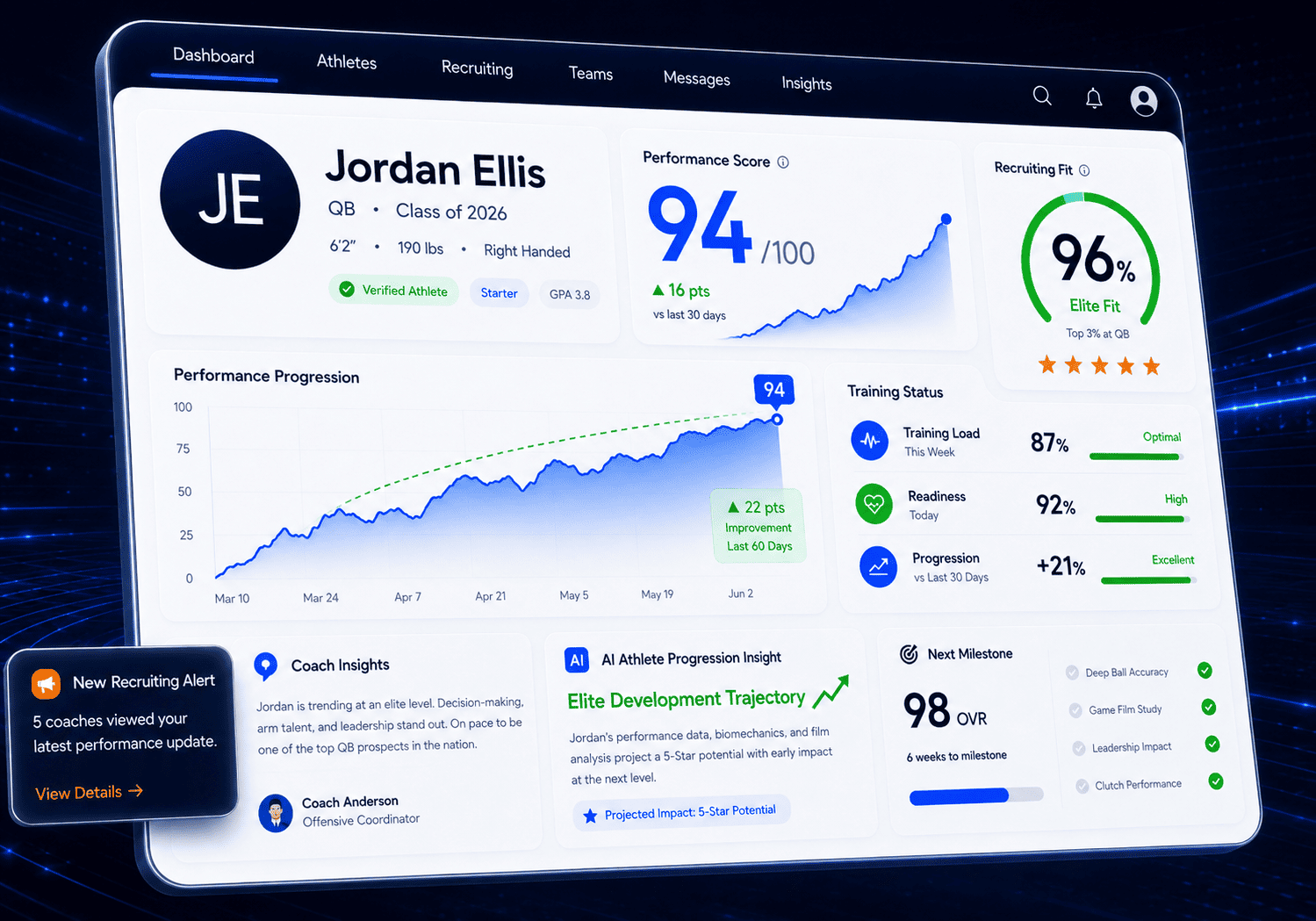
AI-Powered Sports Performance & Recruiting Platform for Virginia Clubs, Academies & Youth Programs

Plavno developed a custom sports technology platform for Virginia-based clubs and academies to combine athlete performance tracking, coach communication, recruiting workflows, and mobile engagement in one ecosystem.

Read More
3x

faster recruiting pipeline

AI-Powered Sports Performance & Recruiting Platform for Virginia Clubs, Academies & Youth Programs

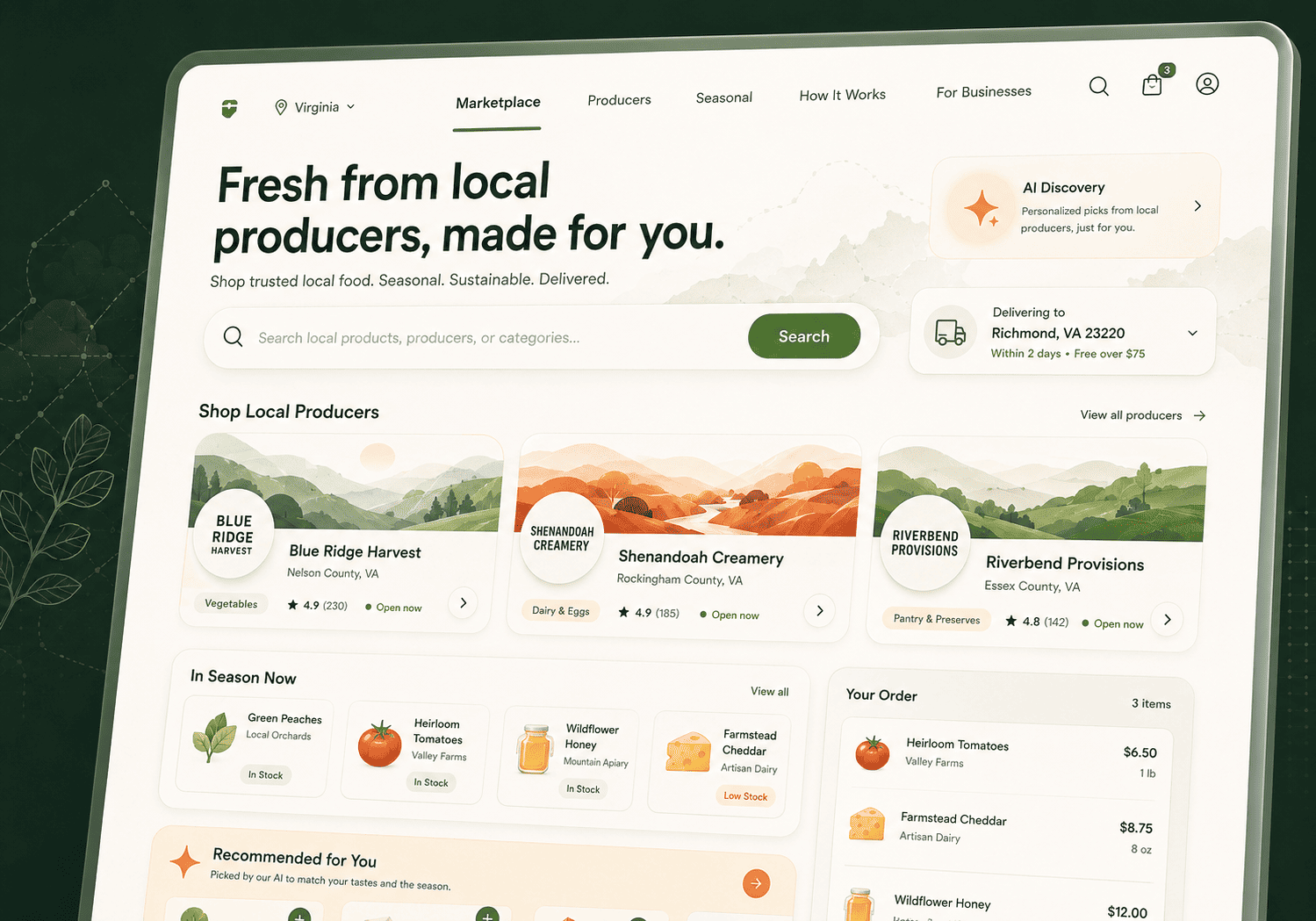
Digital Marketplace for Virginia Farmers, Local Producers & Direct-to-Consumer Food Sales

Plavno developed a custom multi-vendor marketplace for Virginia-based farmers, food producers, and regional sellers to unify product listings, vendor operations, customer ordering, and local fulfillment workflows.

Read More
3x

increase in product discovery relevance

Digital Marketplace for Virginia Farmers, Local Producers & Direct-to-Consumer Food Sales

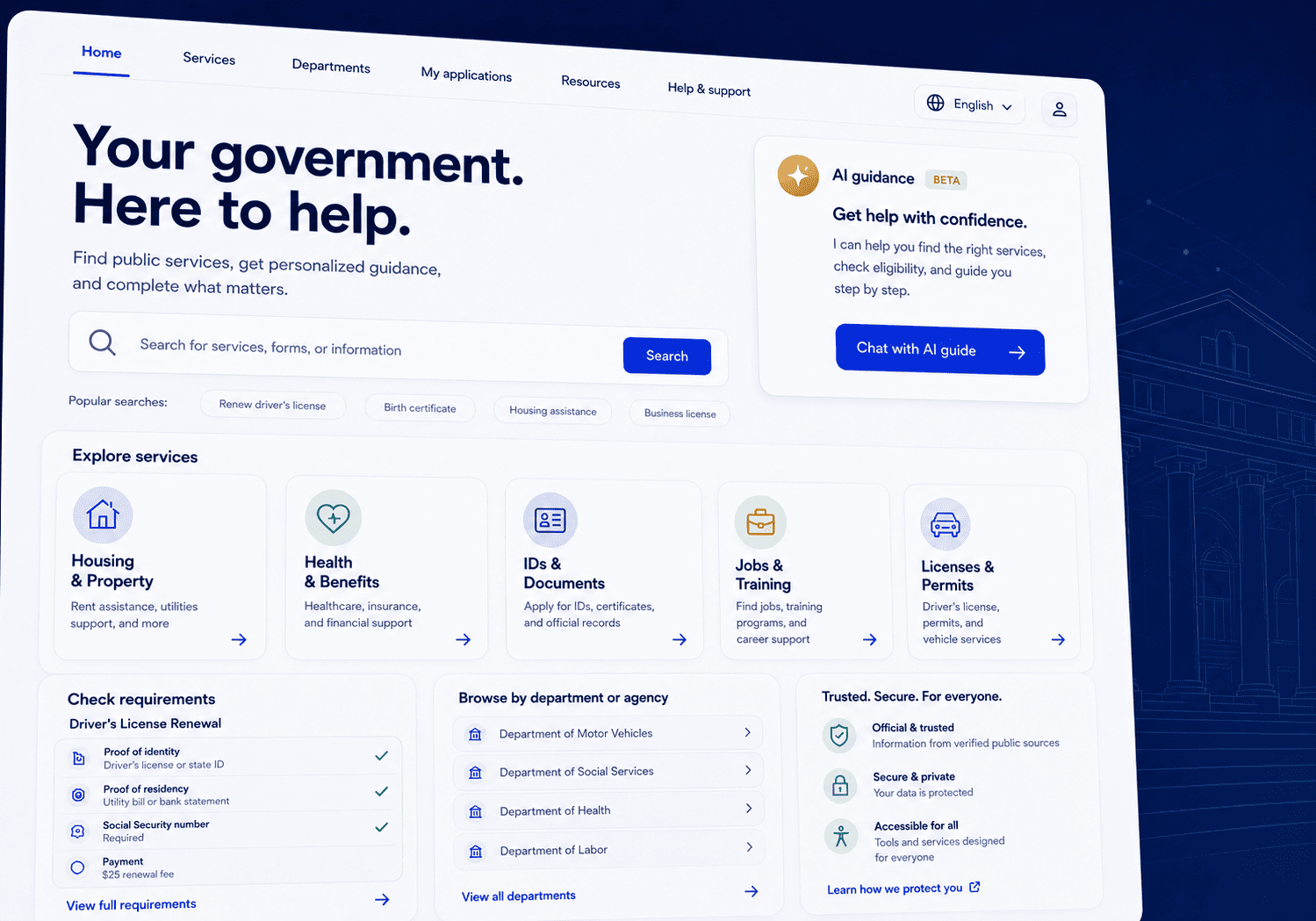
AI-Powered Citizen Services Website Platform for Virginia State Agencies

Plavno developed a modern eGovernment website platform for Virginia state agencies that centralizes citizen services, public information, department content, and an AI-powered guidance agent in one scalable system.

Read More
70%

reduction in routine citizen inquiries to agency staff

AI-Powered Citizen Services Website Platform for Virginia State Agencies

Architecture & Engineering Overview

How Fredericksburg AI agent programs stay accountable in production

Fewer touches per case

Fewer touches per case

Routine intake closed by agents; seniors handle judgment-only exceptions

Labor reclaimedHigh
Cost per successful task

Cost per successful task

Hard caps pause agents on burn; finance compares unit economics weekly

Schema-backed audit trails

Schema-backed audit trails

Every action typed against approved schemas before it can touch production

Same-day rollback

Same-day rollback

Accuracy floor breach returns traffic to prior process; weekly queue scorecards

For Business: Technical ROI & Risk Mitigation

Leaders care about hours returned and mistakes avoided more than model names. The ROI case rests on fewer touches per case and clearer audit trails when something goes wrong. Agents that close routine intake free senior staff for exceptions that need judgment. That shift shows up in overtime line items and SLA miss rates within a quarter. Risk drops when every action is typed against a schema you approved before launch.

Fredericksburg firms near federal work cannot afford silent failures. We price and measure cost per successful task so finance can compare agents to human handling. Token burn without completion is treated as waste and investigated. Budgets set hard caps that pause agents instead of surprise invoices. Those controls matter more than glossy demos during board reviews.

Portal and storefront delivery taught us that structured content reduces rework. The same discipline applies when agents read service catalogs or product SKUs. Ambiguous free text becomes structured fields before decisions fire. Human review queues capture only the residue the agent cannot resolve. That split keeps labor focused and quality measurable.

Insurance of outcomes includes rollback plans. If accuracy dips below a floor, traffic returns to the prior process the same day. Stakeholders see weekly scorecards with baseline versus current for the queue in scope. No vanity averages across unrelated departments. Decision makers keep a live lever on scope expansion rather than a one-way vendor lock.

Bounded context & governance

Layer 1 · Control

Bounded context & governance

Owner, kill switch, documented tool graph; prompts treated as code with reviewers

Model & cost trade-offs

Layer 2 · Runtime

Model & cost trade-offs

Small models for classification; larger for synthesis; queues absorb municipal spikes

Memory split

Layer 3 · State

Session vs system-of-record memory

Short-term local to the case; long-term knowledge stays cited in systems of record

SRE handoff

Layer 4 · Operations

SRE playbooks & full handoff

Cost alerts in your tools; ownership can move in-house after first production window

For CTOs: Architecture & Technical Lifecycle

Lifecycle starts with a single bounded context, not a platform bet. Governance works when every agent has an owner, a kill switch, and a documented tool graph. Kickoff freezes interfaces before prompt craft begins. Change control treats prompts as code with reviewers and regression sets. Production promotion mirrors the standards you already use for microservices.

Trade-offs appear early. Larger models raise quality on messy text but inflate unit cost. We default to small models for classification and reserve larger ones for synthesis. Caching stable knowledge cuts repeated retrieval fees. Queues absorb spikes so bursts from municipal portals do not melt the budget overnight.

Decision points include where memory lives. Short-term session memory stays local to the case. Long-term knowledge stays in systems of record with citations. Mixing the two creates compliance debt for Virginia public-sector clients. We document that split so audits stay simple.

Handoff includes SRE playbooks and cost alerts wired into your existing tools. Ownership can move fully in-house after the first production window. We remain available for expansions without forcing a retainer for routine runs. Architecture diagrams and sequence charts ship with the code, not as a slide afterthought.

Typed tool contracts

Typed tool contracts

LLMs propose; JSON schemas + deterministic validators decide if action proceeds

Queue-native workers

Queue-native workers

Concurrency limits, exponential backoff, dead-letter queues for poison messages

Hybrid retrieval

Structure-aware retrieval

Chunk by doc type; hybrid sparse+vector; bilingual fields normalized before embed

Golden tests & shadow

Golden tests & shadow traffic

Fixture packs lock tool sequences; model upgrades prove agreement before flip

For Engineers: Implementation Details & Stack

Implementation favors boring interfaces. Typed tool contracts and deterministic validators beat clever free-form agents under production load. LLMs propose; code decides whether an action proceeds. JSON schemas validate arguments before network calls. Idempotent writes protect against retries when upstream systems lag.

We use queue-native workers with clear concurrency limits. Retries follow exponential backoff with dead-letter queues for poison messages. Observability tags each span with agent id, tool name, and case id. Engineers can reconstruct a bad path without replaying private prompts in chat. Secrets stay in your vault product, never in prompt text.

Retrieval uses chunk sizes matched to document structure. Procedure manuals get different chunking than tabular SKUs. Hybrid search combines sparse filters with vectors so jurisdiction tags never get lost. Lessons from bilingual content on public portals remind us to normalize language fields before embedding. Edge cases like empty bodies and partial PDFs fail closed with human routes.

Local development uses fixture packs from redacted production cases. Golden tests lock expected tool sequences for common flows. Model upgrades run shadow traffic first. Only after agreement rates hold do we flip live traffic. That process keeps Fredericksburg launches boring in the best sense.

Your cloud, least privilege

Your cloud, least privilege

Deploy in your accounts; no shared multi-tenant store; full audit logging

Ops signals

Success, escalation, p95, spend

Drift detectors vs baseline week; alerts page humans before customers feel it

Sector compliance

Sector compliance gates

HIPAA redaction, BAAs, defense identity gates mapped in the risk screen

Spend as attack surface

Caps & auto-freeze

Unbounded agents are spend attack surfaces; dashboards sit next to your APM

Infrastructure, Observability & Security

US clients need residency and access control you can defend. We deploy inside your cloud accounts with least-privilege roles and full audit logging. No shared multi-tenant store holds your operational text. Network rules keep egress minimal and known. SOC2-minded controls appear in the design docs from day one when your programs require them.

Monitoring covers task success, human escalation rate, latency p95, and spend per task. Drift detectors compare current embeddings and outcomes against a baseline week. Alerts page humans before customers feel quality drops. Incident response defines who pauses an agent and who signs restart. Postmortems use the same templates as your other services.

HIPAA or similar regimes trigger stricter redaction and BAAs where applicable. Defense-adjacent work often needs additional identity gates and no external logging of content. We map those needs during the risk screen so they are not bolted on late. Encryption at rest and in transit is table stakes and verified in checklists.

Cost control is part of security posture. Unbounded agents are attack surfaces for spend as much as data. Caps, budgets, and automatic freezes protect both. Dashboards live next to your APM so ops staff do not learn a new console just for agents. Fredericksburg on-call keeps one pane of glass.

Testimonials

We are trusted by our customers

“They really understand what we need. They’re very professional.”

The 3D configurator has received positive feedback from customers. Moreover, it has generated 30% more business and increased leads significantly, giving the client confidence for the future. Overall, Plavno has led the project seamlessly. Customers can expect a responsible, well-organized partner.

Sergio Artimenia

Commercial Director, RNDpoint

Sergio Artimenia

“We appreciated the impactful contributions of Plavno.”

Plavno's efforts in addressing challenges and implementing effective solutions have played a crucial role in the success of T-Rize. The outcomes achieved have exceeded expectations, revolutionizing the investment sector and ensuring universal access to financial opportunities

Thien Duy Tran

Product Manager, T-Rize Group

Thien Duy Tran

“We are very satisfied with their excellent work”

Through the partnership with Plavno, we built a system used by more than 40 million connected channels. Throughout the engagement, the team was communicative and quick in responding to our concerns. Overall, we were highly satisfied with the results of collaboration.

Michael Bychenok

CEO, MediaCube

Michael Bychenok

“They have a clear understanding of what the end user needs.”

Plavno's codes and designs are user-friendly, and they complete all deliverables within the deadline. They are easy to work with and easily adapt to existing workflows, and the client values their professionalism and expertise. Overall, the team has delivered everything that was promised.

Helen Lonskaya

Head of Growth, Codabrasoft LLC

Helen Lonskaya

“The app was delivered on time without any serious issues.”

The MVP app developed by Plavno is excellent and has all the functionality required. Plavno has delivered on time and ensured a successful execution via regular updates and fast problem-solving. The client is so satisfied with Plavno's work that they'll work with them on developing the full app.

Mitya Smusin

Founder, 24hour.dev

Mitya Smusin

Clear contrast

Why choose deep engineering over thin wrappers

Agencies often ship demos. We ship agents your team can run, pause, and extend inside Virginia compliance needs.

Generic Agencies
Our Platform (Deep Engineering Expertise)
Typed tool contracts with schema validation
checkmark
Prompt and policy versioned as code
checkmark
Cost caps and auto-disable on spend spikes
checkmark
Slide deck strategy workshop only
checkmark
Deploy inside your cloud with your IAM
checkmark
Shared multi-tenant prompt logs by default
checkmark
Runbooks and on-call handoff included
checkmark
Eugene Katovich

Eugene Katovich

Sales Manager

Need a custom software solution? We’re ready to help!

Plavno has a team of skilled developers ready to tackle the project. Ask me!

Get a Free Quote

Data & compliance layer

Integrations and controls that keep Virginia data in bounds

The second build concern is not another model chart. It is how agents touch messy systems without creating shadow IT. Fredericksburg organizations already run CRMs, ERP modules, ticketing tools, and content systems. Agents must speak those languages through official APIs. We write adapters that translate agent intents into the exact payloads those systems accept. Timeouts, retries, and dead letters stay consistent with your other jobs.

Identity is never optional. Agents inherit service accounts with least privilege and short-lived tokens. Human override roles use the same SSO you already trust. When we built secure form workflows for public services, validation and storage isolation were non-negotiable. Agents follow that bar for write actions. Reads are filtered by role so one department cannot pull another's case details.

Content structure matters for quality. Catalog and checkout systems taught us that clean product schemas prevent nonsense at the register. Agents fare better when knowledge sources are structured pages rather than sprawling folders. We help clean taxonomies before wide retrieval goes live. Bilingual needs appear in some Virginia public programs; language tags ride with every chunk so answers stay in the right locale.

Compliance documentation ships with each integration. Data flow diagrams show where text sits at rest and in motion. Retention settings match your policy, not vendor defaults. If a vendor model is used, we document what leaves the boundary and what stays. Legal and security teams in defense supply chains get artifacts they can file, not marketing PDFs.

Post-launch, integration health is a first-class signal. Broken webhooks and auth expirations surface before agents thrash. We prefer static generation and cache where content is stable so agents do not re-fetch the same SOP a hundred times a day. That choice lowers cost and load on back-end teams who already support Spotsylvania and Stafford end users.

Readiness gate

Prepare your Fredericksburg stack before agent build starts

  • Inventory systems and owners — List every system the agent might read or write. Name the human owner for each. Note API quality, rate limits, and auth type. Flag systems with only UI access and no API. Capture volumes for the last ninety days. Confirm which data classes are restricted under your contracts. This list becomes the first integration backlog and prevents surprise mid-sprint gaps.

  • Define success metrics and baselines — Pick one queue and measure current cycle time, touch count, and error rate. Write the target numbers in plain language. Agree who signs that the pilot passed. Document the cost of a failed case today. Include a hard stop if quality falls below baseline after launch. Share the sheet with finance early so spend debates do not block go-live.

  • Clean a minimal knowledge pack — Select the SOPs and FAQs the agent may cite. Remove drafts and conflicting versions. Tag jurisdiction and date on each file. Split long manuals into logical sections. Confirm legal reviewed any public-facing answers. Store the pack in controlled storage with access logs. Quality here matters more than model size for first results.

  • Set guardrails and escalation paths — Write which actions need human approval every time. Name the on-call roles for after-hours failures. Choose channels for agent questions to staff. Define how fast a human must answer. Publish the policy where operators will see it. Test the path with a dry run before real traffic. Unclear escalation is the fastest way to lose trust.

  • Align security review early — Book security before development starts, not after demos. Share data flow sketches and retention goals. Decide cloud accounts and logging destinations. Confirm if SOC2 or sector rules apply. List third-party model constraints up front. Capture open questions in a single register. Early alignment keeps Virginia compliance programs from restarting late.

Vitaly Kovalev

Vitaly Kovalev

Sales Manager

Request your Fredericksburg agent readiness audit

Share budget, timeline, stack, and dataset scope. Receive a scored readiness audit and rough build estimate tailored for Fredericksburg businesses within one business day.

Talk to Experts

Practical answers

AI agents questions from Fredericksburg teams

Straight answers on cost, time, data, quality, security, and operations for Virginia buyers in 2026.

What drives cost for AI agent development in Fredericksburg?

Cost tracks scope, integration depth, and risk controls more than model brand. A single agent on one queue with clean APIs lands far lower than multi-department orchestration. Local market rates for senior engineers sit near Northern Virginia levels when defense compliance enters the room. Token usage becomes a running cost after launch and must be budgeted per successful task. Poor data quality adds rework because agents cannot invent fields your systems lack.

We price discovery separately so you see risk before full build. Adapters for systems without APIs raise effort. Audit logging, role design, and residency requirements add design time that generic chatbots skip. Fredericksburg public and contractor clients often need those controls, so plan for them early. Ongoing monitoring and prompt maintenance are monthlies you should expect.

To reduce spend, start with one measurable workflow and freeze tool lists. Use smaller models for routing and larger ones only where synthesis is needed. Cache stable knowledge. Cap daily spend with automatic pauses. Share budget ranges, timeline pressure, stack list, and dataset quality notes when you ask for numbers so estimates stay honest.

How long does it take to build AI Agents Development software?

A focused MVP agent often lands in six to ten weeks when APIs exist and owners are available. That window covers mapping, contracts, pilot, and limited production. Full multi-queue deployments stretch three to five months because integrations and training dominate. Timeline slips mostly when data is messy or security reviews start late. Fredericksburg teams with change-control boards should pad for approval cycles.

MVP means one agent, one queue, clear metrics, and a kill switch. Full deployment means shared platform pieces, multiple agents, runbooks, and cost controls wired into ops. Training supervisors is not optional; without it, humans undo agent work. We schedule training during pilot so cutover is not the first time staff see the UI.

If you need a faster signal, a two-week spike can prove retrieval quality on your documents without production writes. That spike does not replace a proper build. Parallel work on API adapters shortens the critical path. Provide sample tickets and SOPs in week one to avoid idle engineering time. Clear ownership on your side is the single biggest predictor of on-time delivery.

What data do you need to start an AI agents project in Virginia?

We need sample cases from the real queue, not synthetic ideals. Include successful closes and messy failures. SOPs, policy PDFs, and field dictionaries come next. System diagrams or even whiteboard photos help map tools. Access to sandbox environments is essential before any production key. Privacy redaction can happen before files leave your boundary.

Startup and scale-up teams around Richmond, Northern Virginia, and the Fredericksburg corridor often hold data in mixed SaaS tools. Exports via CSV can start evaluation while APIs mature. Label which fields are authoritative. Note retention rules so we do not store longer than allowed. Identify personal data classes early for sector rules.

Quality beats volume. A few hundred well-labeled cases outperform millions of noisy tickets. Tell us where humans currently spend the most minutes. Share error taxonomies if you track them. If none exist, we will help you define categories during discovery. Datasets stay in your cloud when required. We never train public models on your private operations content.

How do you evaluate quality for AI agents after launch?

Quality is measured against baseline human performance on the same queue. We track completion rate without human help, correct action rate, escalation rate, latency, and cost per completed task. Shadow mode runs first so agents propose while humans still act. Agreement rates decide go-live. Post-launch sampling keeps humans reviewing a fixed percentage every week.

Dashboards expose drift when inputs shift after a process change. Alerts fire when escalation spikes or spend per task jumps. Product owners review failure clusters in backlog grooming. We avoid single vanity scores that hide class-specific pain. Defense-adjacent clients often require immutable logs for every tool call; we design for that from day one.

Evaluation sets stay versioned. When policies change, golden tests update before prompts do. Model upgrades run side by side. Only measured wins earn traffic. This discipline protects SLA commitments across Spotsylvania and Stafford service loads. You receive the raw definitions so third parties can audit methods without trusting marketing claims.

How do you handle compliance and security for agents in Virginia?

Security starts with least-privilege service accounts and your existing identity provider. Agents never hold broad admin rights. Data stays in your cloud accounts by default. Encryption in transit and at rest follows your standards. Logging captures who did what without leaking sensitive prompt bodies into unmanaged tools. Access reviews happen on the same cadence as your other systems.

Sector rules vary. Healthcare-related data may trigger HIPAA controls and BAAs. Public programs may need records retention and FOIA-aware design. Defense supply chain work may demand extra identity gates and restricted egress. We capture the regime during risk screen so architecture matches before code lands. Documentation includes data flow diagrams legal teams can file.

Incident response defines pause authority and restart criteria. Secrets live in your vault. Third-party model calls are allow-listed and monitored. We avoid multi-tenant log mixing. Penetration testing can ride your existing vendor program. Fredericksburg clients keep final control of production keys. Our role is to implement controls you can defend in an audit, not replace your security owners.

Contact Us

This is what will happen, after you submit form

Need a custom consultation? Ask me!

Plavno has a team of experts ready to start your project. Ask us!

Vitaly Kovalev

Vitaly Kovalev

Sales Manager

Schedule a call

Get in touch

Fill in your details below or find us using these contacts. Let us know how we can help.

Required because you selected “Other” above

No more than 3 files may be attached up to 3MB each.
Formats: doc, docx, pdf, ppt, pptx, xls, xlsx, txt.
Book your meeting