bg image
bg image

Serving Charlottesville & Virginia

Cut missed calls and booking delays across Charlottesville teams in 2026

Front desks in Charlottesville still lose patients and revenue to hold music and after-hours silence. An AI Voice Assistant answers, books, and routes without adding headcount. Clinics, campus services, and multi-location operators feel the gap first. You keep staff on high-value work while routine calls finish in seconds. We scope against your real phone volume and systems, not a demo script. Get AI Voice Assistant cost estimate in 24 hours. Bring budget, timeline, stack, and call dataset so we can price a path that fits.

Discuss Project

Overview

Why Charlottesville phone lines stall growth in 2026

Charlottesville businesses run on conversations that still land on overloaded staff. Clinics near UVA Health, professional offices downtown, and service firms in Crozet and Earlysville share the same pattern. Peak hours swamp the front desk. After-hours calls go to voicemail. Bookings slip and patients or clients choose the competitor who picks up. An AI Voice Assistant closes that gap without a hiring freeze. It answers, qualifies intent, books slots, and hands off only when judgment is required.

Trusted AI Voice Assistant Partner for Charlottesville Businesses. We work with US-based clients, including companies operating in Virginia. Local operators need systems that respect HIPAA workflows, EMR calendars, and multi-location routing. We have delivered 10+ voice and AI assistant projects in the US market for teams with similar constraints. Our work includes a voice assistant built for healthcare scheduling that automated booking and clinic workflow handoff. That same pattern maps to dentistry, specialty practices, and campus student services across Albemarle County.

The business case is straightforward. Every missed call is lost revenue and weaker retention. Staff time spent restating hours, insurance basics, and open slots is time taken from care and sales. Voice AI returns that time and records every interaction for audit. Leaders in Harrisonburg, Waynesboro, and Staunton face the same staffing math. Charlottesville’s density of healthcare, education, and professional services makes the ROI visible faster than in pure retail markets.

Technically we start from your call flows and systems of record. Speech recognition, intent models, and telephony APIs sit on top of calendars, CRM, and EHR connectors. We favor production-safe integration over shiny demos. Voice AI solutions only matter if they reduce hold time, improve fill rates, and keep compliance intact. That is the standard we use from discovery through launch.

This page walks the full path for operators ready to act in 2026. You will see architecture choices, delivery phases, industry fits, and readiness checks. Bring your current PBX notes and booking pain points. We will show where automation pays and where human oversight must stay.

Talk to an Expert
Always-on answering

Always-on answering

Peak and after-hours calls answered without front-desk overtime

Live slot booking

Live slot booking

Voice intents write into calendars, EMR, and practice APIs

Safe human handoff

Safe human handoff

Low-confidence or high-risk intents transfer with full transcript

HIPAA-ready audit

HIPAA-ready audit

Consent, encryption, retention, and BAA paths built into the flow

Production voice stack

Voice architecture built for clinic and multi-site load

Charlottesville operators get a voice stack designed for real call volume, not a slide deck. We build telephony ingress, speech-to-text, intent resolution, dialogue management, and secure action layers that write into your booking and CRM tools. The design mirrors work we shipped on a voice assistant for healthcare scheduling. That project automated appointment flows and tied into clinic workflows so staff only handled exceptions. The same pattern applies to specialty practices, dental groups, and student services desks along the Route 29 corridor.

Core components stay modular. Media streams enter through carriers or SIP trunks you already own. Recognition and synthesis use providers selected for latency and medical vocabulary quality. Dialogue logic lives in code we control so prompts, policies, and fallbacks stay versioned. Actions fire only through authenticated APIs against calendars, practice management, or ticketing. We avoid black-box agents that cannot explain a booking decision six months later. For retail-adjacent clients we reuse patterns from our AI product recommendation agent work, where personalization and inventory state drove responses. Voice inherits that discipline of grounding every answer in live data.

Security and compliance sit in the design, not a checklist after launch. PHI paths stay encrypted in transit and at rest. Access uses least privilege and full audit logs. Prompt and transcript retention policies match your legal hold requirements. Role-based gates stop the assistant from changing records outside approved intents. Where HIPAA applies we document BAAs, data maps, and breach response contacts before traffic goes live. Virginia multi-site operators often need per-location consent and recording banners. We encode those rules in the call flow rather than hoping agents remember them.

DevOps treats the assistant like any other production service. Infrastructure as code, staged environments, and canary rollouts reduce risk when prompts or models change. Observability covers ASR confidence, intent hit rates, barge-in failures, average handle time, and handoff reasons. Alerts page owners when fill rates drop or escalation spikes. Cost controls track per-minute media and model spend against budgets you set. We ship runbooks so your team can pause a skill without calling us first.

Integration depth decides whether the project sticks. Shallow bots that only answer FAQ fail the first busy Monday. We map your booking rules, provider preferences, insurance questions, and no-show policies into deterministic steps with model help only where language varies. Grounding comes from systems of record, not static scripts. That approach kept scheduling automation reliable in healthcare delivery work and translates cleanly to Charlottesville multi-brand or multi-clinic brands that need consistent brand voice with local inventory.

You leave with source control ownership, documented APIs, and a clear ops surface. No locked console you cannot export. When you expand from one clinic near downtown to sites in Crozet or Scottsville, configuration is data, not a rewrite. That is the architecture standard we hold for every AI Voice Assistant we put into production.

plavno logo

Build your first
Smart AI project today!

Just tell the Plavno AI Agent about your project - it will ask questions, gather requirements, and propose a tailored solution

What ships

Capabilities Charlottesville operators use on day one

Always-on appointment booking

Always-on appointment booking

Front desks lose evening and weekend slots when nobody answers. Clinics around Charlottesville and UVA need booking that runs after staff leave. We connect voice intents to live calendar inventory so callers reserve real openings. Telephony APIs handle carrier quality. Calendar connectors enforce provider rules and buffers. Staff review exceptions only. Fill rates rise without overtime on the desk.

Intent routing with safe handoff

Intent routing with safe handoff

Not every call should stay with a machine. Urgent symptoms, billing disputes, and VIP accounts need people. Our routing scores intent confidence and policy flags before any transfer. Low confidence or high risk triggers warm handoff with transcript context. Teams in Waynesboro and Harrisonburg keep empathy where it matters. The assistant still clears routine FAQs and reschedules.

Clinic-ready compliance controls

Clinic-ready compliance controls

Healthcare and counseling offices cannot treat voice like a toy chatbot. We encode consent prompts, recording disclosures, and PHI boundaries into the call graph. Access logs support audits. Data retention matches your policy. Encryption covers media and stored transcripts. Leaders get evidence, not promises. This is table stakes for Virginia practices under review.

Multi-location brand and skill packs

Multi-location brand and skill packs

Groups with sites across Albemarle County need one core agent and local rules. Hours, providers, and parking directions differ by office. We ship configuration packs so brand voice stays consistent while facts stay local. Rollout adds a site without a full rebuild. Operations keeps a single dashboard. Expansion stays an ops task, not a new project tax.

Analytics tied to revenue outcomes

Analytics tied to revenue outcomes

Call volume alone does not prove value. We measure booked appointments, recovered after-hours demand, average handle time, and escalation share. Dashboards show which intents convert and which scripts fail. Product and ops teams adjust prompts with data. Finance sees cost per completed booking. Charlottesville leaders can defend the spend in the next budget cycle.

Delivery path

From discovery to live lines in clear phases

A fixed sequence keeps scope honest and gets Charlottesville teams to production traffic without surprise rebuilds.

Clipboard
Team
01

Step 1: Call and systems discovery (1–2 weeks)

We map peak volumes, failure modes, and the systems that own truth. Interviews cover front desk pain, after-hours leakage, and compliance constraints. You receive a flow inventory, risk register, and integration list. Sample recordings or anonymized logs ground intent design. Budget and timeline ranges lock against that evidence. Nothing proceeds on assumed scripts.

02

Step 2: Dialogue and integration design (2–3 weeks)

Intents, slot filling, and policy gates become versioned specs. We wire sandbox connectors to calendars, CRM, or practice software. Security reviews cover PHI paths and retention. You hear working call samples against fake data. Acceptance criteria define success metrics before code freezes. Design debt is caught while change is cheap.

Search in doc
Rocket
03

Step 3: Build, test, and harden (3–5 weeks)

Engineers implement the stack with staged environments and automated tests. Latency budgets, barge-in behavior, and failure recovery get load exercise. QA scripts cover medical vocabulary and local place names. Your team runs acceptance on recorded scenarios. Penetration and access reviews finish before any public number routes in.

04

Step 4: Pilot launch and tune (2–4 weeks)

A controlled slice of traffic goes live with monitoring on. We watch booking completion, handoff quality, and cost per call daily. Prompt and routing fixes ship in short cycles. Training covers pause procedures and escalation ownership. Full cutover follows once metrics hold for an agreed window. You own the runbooks at handoff.

Case Study

We help customers cut
down on development

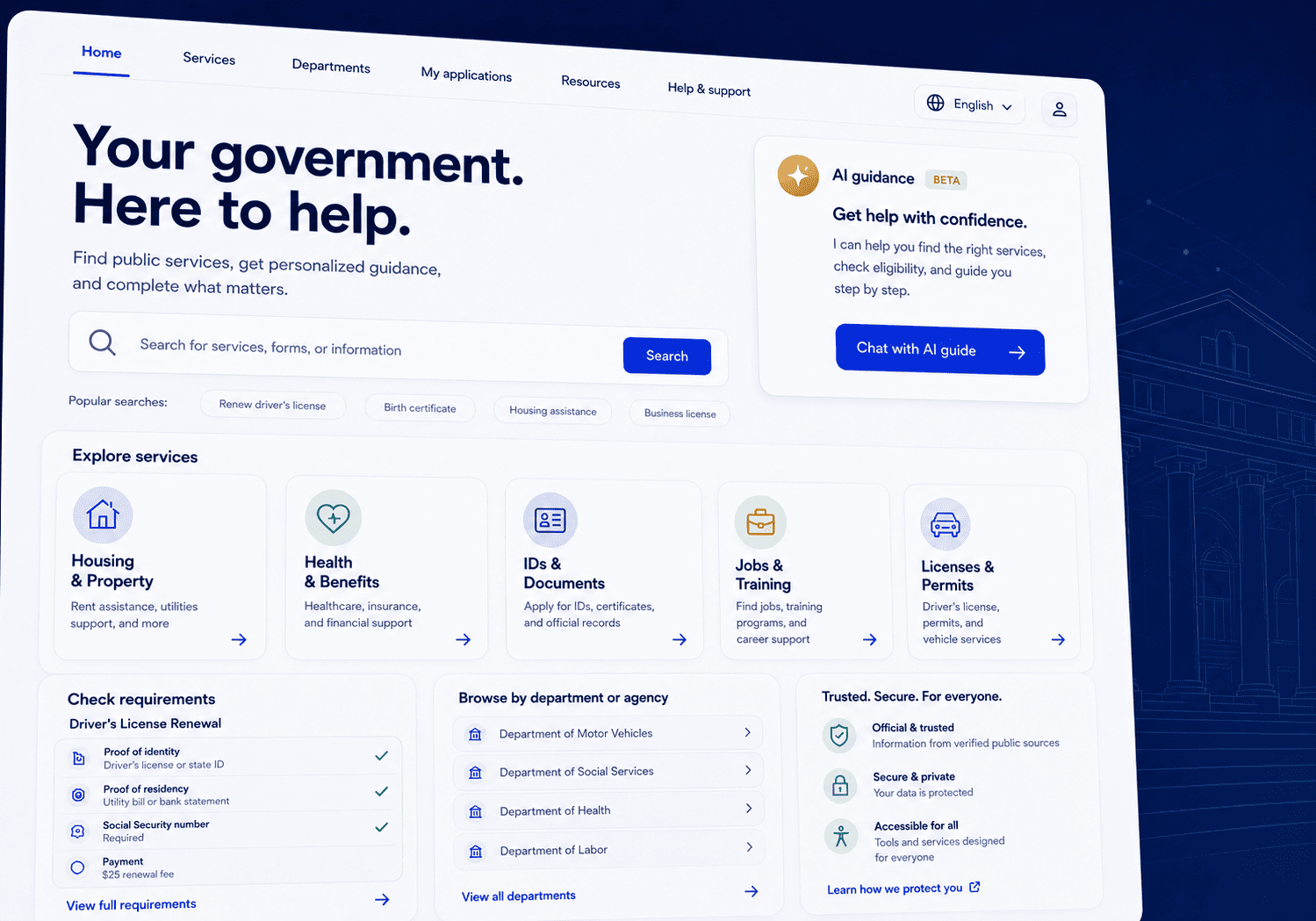
AI-Powered Citizen Services Website Platform for Virginia State Agencies

Plavno developed a modern eGovernment website platform for Virginia state agencies that centralizes citizen services, public information, department content, and an AI-powered guidance agent in one scalable system.

Read More
70%

reduction in routine citizen inquiries to agency staff

AI-Powered Citizen Services Website Platform for Virginia State Agencies

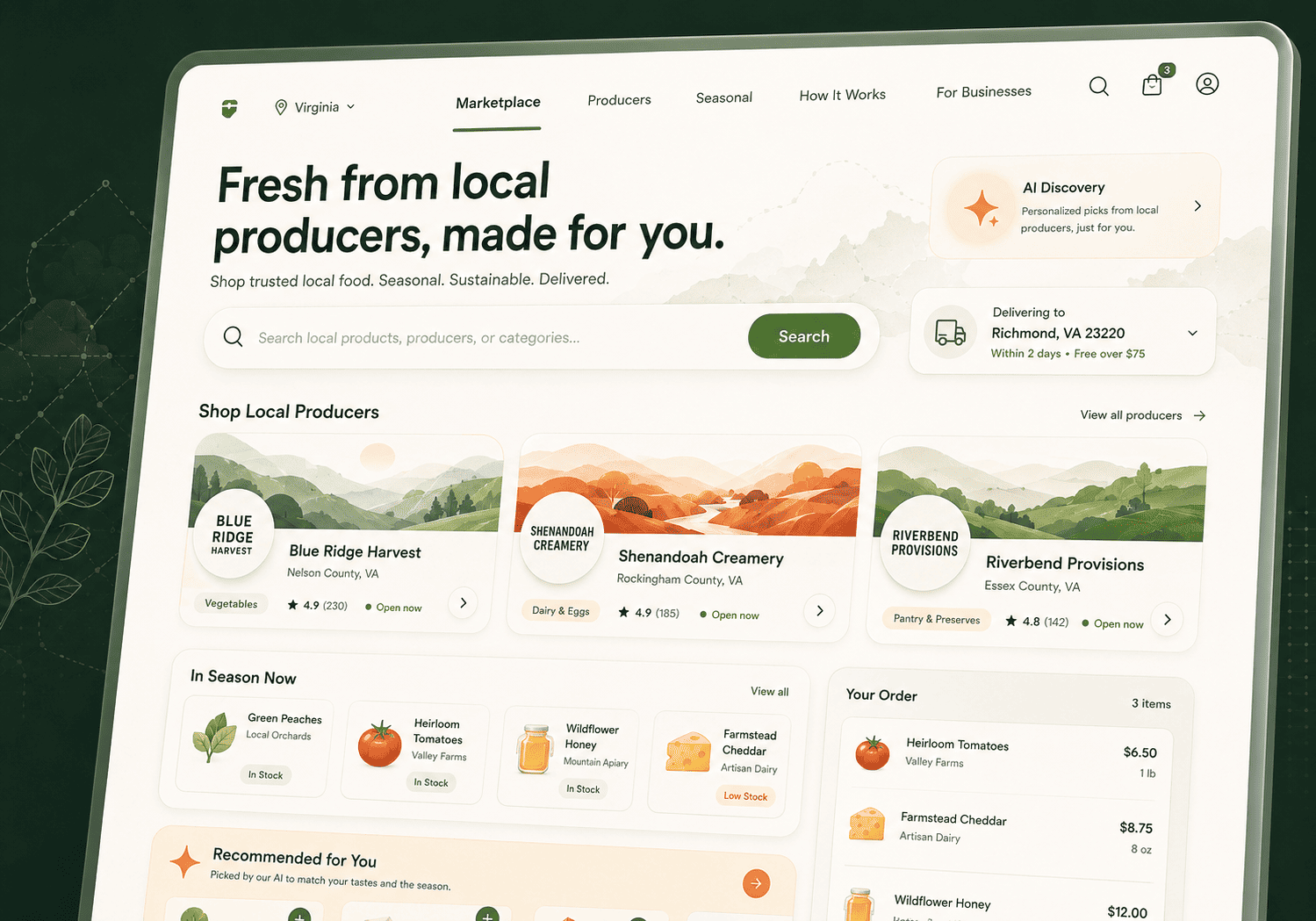
Digital Marketplace for Virginia Farmers, Local Producers & Direct-to-Consumer Food Sales

Plavno developed a custom multi-vendor marketplace for Virginia-based farmers, food producers, and regional sellers to unify product listings, vendor operations, customer ordering, and local fulfillment workflows.

Read More
3x

increase in product discovery relevance

Digital Marketplace for Virginia Farmers, Local Producers & Direct-to-Consumer Food Sales

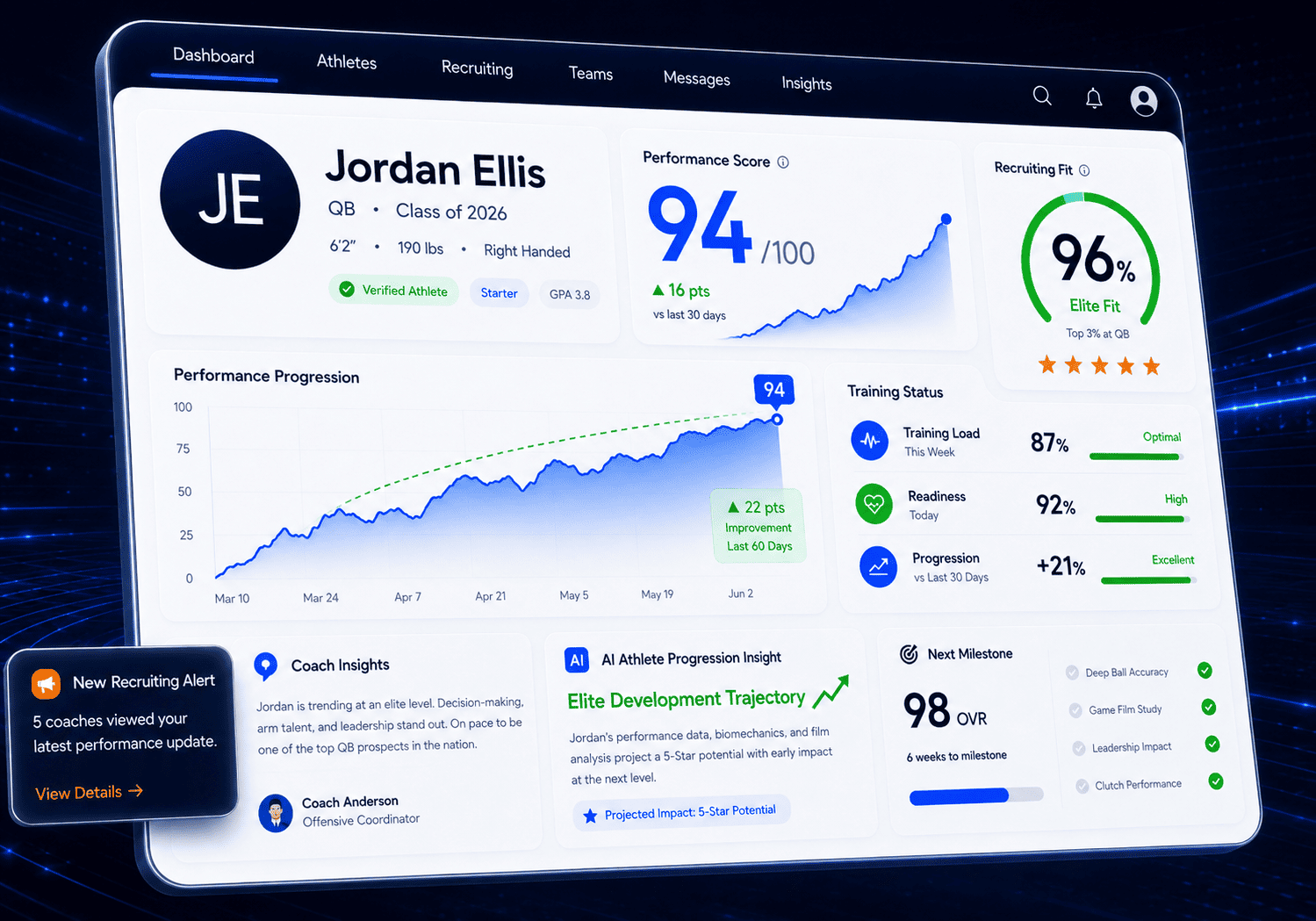
AI-Powered Sports Performance & Recruiting Platform for Virginia Clubs, Academies & Youth Programs

Plavno developed a custom sports technology platform for Virginia-based clubs and academies to combine athlete performance tracking, coach communication, recruiting workflows, and mobile engagement in one ecosystem.

Read More
3x

faster recruiting pipeline

AI-Powered Sports Performance & Recruiting Platform for Virginia Clubs, Academies & Youth Programs

Engineering contrast

Why Charlottesville teams pick deep build over generic bots

Agencies sell demos. We ship assistants that write into your systems and survive Monday morning volume.

Generic Agencies
Our Platform (Deep Engineering Expertise)
Production calendar and EHR write-backs
checkmark
HIPAA-ready consent and audit trails
checkmark
Source code and infra ownership for client
checkmark
Template FAQ scripts only
checkmark
Per-minute cost controls and alerts
checkmark
Multi-location config without rewrite
checkmark
Slide-deck architecture with no ops runbooks
checkmark

Testimonials

We are trusted by our customers

“They really understand what we need. They’re very professional.”

The 3D configurator has received positive feedback from customers. Moreover, it has generated 30% more business and increased leads significantly, giving the client confidence for the future. Overall, Plavno has led the project seamlessly. Customers can expect a responsible, well-organized partner.

Sergio Artimenia

Commercial Director, RNDpoint

Sergio Artimenia

“We appreciated the impactful contributions of Plavno.”

Plavno's efforts in addressing challenges and implementing effective solutions have played a crucial role in the success of T-Rize. The outcomes achieved have exceeded expectations, revolutionizing the investment sector and ensuring universal access to financial opportunities

Thien Duy Tran

Product Manager, T-Rize Group

Thien Duy Tran

“We are very satisfied with their excellent work”

Through the partnership with Plavno, we built a system used by more than 40 million connected channels. Throughout the engagement, the team was communicative and quick in responding to our concerns. Overall, we were highly satisfied with the results of collaboration.

Michael Bychenok

CEO, MediaCube

Michael Bychenok

“They have a clear understanding of what the end user needs.”

Plavno's codes and designs are user-friendly, and they complete all deliverables within the deadline. They are easy to work with and easily adapt to existing workflows, and the client values their professionalism and expertise. Overall, the team has delivered everything that was promised.

Helen Lonskaya

Head of Growth, Codabrasoft LLC

Helen Lonskaya

“The app was delivered on time without any serious issues.”

The MVP app developed by Plavno is excellent and has all the functionality required. Plavno has delivered on time and ensured a successful execution via regular updates and fast problem-solving. The client is so satisfied with Plavno's work that they'll work with them on developing the full app.

Mitya Smusin

Founder, 24hour.dev

Mitya Smusin

AI Voice Assistant Solutions for Charlottesville Industries

Local sectors where voice AI pays back first

Charlottesville’s healthcare, campus, tourism, and professional services base creates concrete booking and triage demand we already know how to automate.

Clinic Scheduling

Clinic Scheduling

Booking

Specialty and primary care clinics

Independent and group practices near UVA Health lose slots to hold times and after-hours voicemail. A custom voice AI assistant for clinics books, reschedules, and confirms against live provider calendars. Staff handle clinical questions only. Our healthcare scheduling voice assistant work showed how automation ties into clinic workflows without bypassing policies. Practices typically recover evening demand that once sat unanswered. Technical path uses secure telephony, intent models, and practice management APIs with full audit logs.

Dental Therapy

Dental Therapy

Scheduling

Dental and outpatient therapy groups

Multi-chair dental offices and therapy practices across Crozet and Earlysville run tight schedules. No-shows and double-books hurt utilization. Voice AI sends confirmations, offers waitlist fills, and answers hours or insurance basics. Integration respects cancellation windows and provider preferences. Front desk load drops during peak school hours. ROI shows as higher chair utilization and fewer overtime hours on phones.

Campus Services

Campus Services

Triage

Campus and student service desks

University-adjacent services field repetitive questions on hours, forms, and appointments. Seasonal spikes overwhelm student workers. An artificial intelligence voice assistant handles standard intents and escalates sensitive cases. Knowledge bases stay versioned so policy updates ship without re-training entire teams. Wait times fall during move-in and exam weeks. Telephony plus authenticated directory lookups keep answers accurate.

Visitor Services

Visitor Services

Reservations

Hospitality and visitor services

Inns, tour operators, and wine country partners near Charlottesville take reservation and direction calls at odd hours. Voice AI captures bookings, shares arrival guidance, and routes VIP needs. Multilingual prompts help weekend visitor spikes. Staff keep face-to-face service quality while phones stay covered. Connectors write into property or booking software so double entries disappear.

Professional services and legal intake

Law, accounting, and consulting firms downtown still lose qualified leads after 5 p.m. Voice intake qualifies matter type, captures contact data, and books consults. Conflicts and privilege rules gate what the assistant can say. Partners receive structured summaries instead of voicemail piles. Conversion improves when callers get same-day callbacks scheduled automatically.

Multi-site Retail

Multi-site Retail

Routing

Multi-site retail and service brands

Regional retailers and service chains with Virginia locations need one voice brand and local facts. Skills pack hours, inventory holds, and store routing per site. Patterns from our multi-brand commerce and recommendation work inform how live catalog state feeds answers. Managers see per-location completion metrics. Expansion adds config, not greenfield code, when a new store opens in Staunton or Waynesboro.

Maturity path

Grow from assisted booking to broader voice ops

After the first live skill, Charlottesville teams expand scope in controlled stages instead of boiling the ocean.

Clipboard
Team
01

Stage 1: Assisted booking only (ongoing month 1–2)

The assistant handles schedule, reschedule, and confirm flows under heavy monitoring. Humans own billing and clinical judgment. Metrics focus on completion rate and handoff quality. Prompt edits stay small and logged. This stage proves carrier quality and calendar truth. Confidence builds before wider intents open.

02

Stage 2: FAQ and triage expansion (month 2–4)

Approved knowledge intents join the graph once booking is stable. Triage flags route urgent language to staff fast. Content owners publish updates through a review queue. Analytics show which answers deflect calls and which confuse callers. Scope grows only where deflection is proven. Cost per call stays visible to finance.

Search in doc
Rocket
03

Stage 3: Multi-site and skill packs (month 4–6)

Additional locations inherit the core agent with local configuration. Shared intents stay centralized. Site-specific facts and hours ship as data. Ops trains local leads on dashboards and pause controls. Rollout risk drops because the model of change is config, not forks. Regional managers compare performance fairly.

04

Stage 4: Adjacent channels and autonomy gates (month 6+)

SMS follow-ups, web voice widgets, or outbound reminders attach under the same policy engine. Higher autonomy actions require dual control and stricter tests. Drift monitors watch intent mix and model cost weekly. Quarterly reviews retire unused skills. The estate stays lean while coverage widens across Virginia operations.

Eugene Katovich

Eugene Katovich

Sales Manager

Need a custom software solution? We’re ready to help!

Plavno has a team of skilled developers ready to tackle the project. Ask me!

Get a Free Quote

Readiness gate

What Charlottesville teams prep before kickoff

  • Call volume and failure map — Export a month of call counts by hour and disposition. Note after-hours volume and abandoned rates. Mark the top ten reasons callers dial. Include hold time samples if available. This data sizes capacity and prioritizes intents. Without it, scope stays guesswork and budgets slip.

  • Systems inventory and access path — List PBX or CCaaS vendor, calendar or practice software, CRM, and identity provider. Note which APIs exist and who owns credentials. Flag any vendor that blocks write-backs. Capture sandbox availability. Integration risk dominates timeline. Early clarity keeps the build honest.

  • Compliance and recording policy — Document HIPAA or other obligations that touch voice. State consent language and retention windows. Name the privacy owner who signs off. Clarify whether transcripts may train models. Gaps here stop launches cold. Resolve them before engineering starts heavy build.

  • Success metrics and budget envelope — Define target handle time, booking completion, and escalation share. Set monthly media and model spend caps. Align who reviews dashboards weekly. Tie goals to revenue or labor savings the CFO already tracks. Shared numbers prevent endless tuning debates after go-live.

  • Owner and escalation roster — Appoint a product owner, a technical contact, and an on-call path for incidents. Write who can pause a skill at 2 a.m. Schedule training windows for front desk leads. Capture vendor support SLAs. Clear ownership beats fancy architecture when the first bad call lands.

Vitaly Kovalev

Vitaly Kovalev

Sales Manager

Request a Charlottesville voice readiness audit

Share budget, timeline, stack, and a sample call dataset. You receive a scoped readiness audit and ballpark estimator built for Charlottesville businesses within one business day.

Talk to Experts

Common questions

AI Voice Assistant FAQs for Charlottesville leaders

Straight answers on cost, timelines, data, quality, security, and operations for Virginia teams planning a 2026 build.

What drives the cost of an AI Voice Assistant project in Charlottesville?

Cost follows scope, integration depth, and compliance load more than city brand premiums. A single-location booking skill with one calendar connector sits at the low end. Multi-site routing, EHR write-backs, and custom medical vocabularies raise design and test time. Carrier minutes and speech API usage add recurring spend that scales with answered calls.

Local market factors still matter. Clinics near UVA often need tighter audit trails and longer retention, which adds engineering for logging and access control. Professional firms downtown may need conflict checks before any intake summary is stored. Those rules are not free to encode correctly. Labor rates for senior voice and integration engineers also shape fixed-fee quotes more than junior chatbot crews.

We price after seeing call volume, systems list, and policy constraints. Bring budget range, target go-live, tech stack notes, and a sample of anonymized call reasons. That package lets us separate one-time build from run costs. Watch for vendors that hide per-minute markups or lock prompts inside a console you cannot export. Ownership and observability should be line items, not afterthoughts. Virginia multi-location groups should model cost per completed booking, not vanity call counts, so finance can defend the program after quarter close.

How long does it take to build AI Voice Assistant software?

A focused MVP that books and reschedules against one calendar usually lands in eight to twelve weeks from signed discovery. That window covers flow mapping, dialogue design, sandbox integration, hardening, and a limited traffic pilot. Full multi-site deployment with several practice systems, compliance reviews, and staff training often spans four to six months. Timeline stretches when vendors slow API access or when policy owners are unclear.

Discovery is short but non-negotiable. Skipping it produces pretty demos that fail on real insurance questions or provider rules. Design locks intents and acceptance metrics before heavy code. Build and test consume the bulk of calendar time because latency, barge-in, and failure paths need exercise. Pilot weeks exist to tune with production accents and local place names common around Charlottesville and Albemarle County.

Parallel work shortens the path. Security review can run beside integration once data flows are drawn. Content owners can draft FAQ while engineers wire telephony. Dependencies still dominate. If your practice software lacks write APIs, we must design human-in-the-loop steps or middle-layer services first. Share stack details early so the plan reflects truth. Teams that staff a single product owner and fast credential access routinely beat teams that circulate decisions across five committees.

Do you work with startups in Virginia?

Yes. We work with US-based clients, including companies operating in Virginia, from early revenue startups to established multi-site operators. Startup teams in the Charlottesville and Richmond corridors often need a sharp MVP that proves booking recovery before a larger raise. We size phases so you ship a measured pilot without burning runway on unused channels. University-adjacent founders and health tech groups are common fits when the first product is voice intake or scheduling.

Startup ecosystems around UVA, regional accelerators, and remote-first Virginia companies share a pattern. They move fast but still face bank-level or HIPAA expectations once real users arrive. We help sequence compliance work so it does not block the first pilot yet does not create rebuild debt. Clear ownership of code and infrastructure matters when investors diligence the stack. You should leave able to hire internal engineers onto the same repos.

Engagements stay practical. We ask for budget, timeline, stack, and dataset scope up front. If seed constraints mean a narrower first skill, we say so. Founders get architecture notes that survive the series A rewrite pressure. Later stages can add sites across Hampton Roads or Northern Virginia without forking the core agent. The same delivery discipline we use for clinics applies when your “clinic” is a marketplace with two-sided scheduling pain.

Can an AI Voice Assistant integrate with my existing system?

Integration is the center of a useful assistant, not a bolt-on. We connect through REST or Graph APIs, SIP or CCaaS webhooks, and event streams your platforms already expose. Calendars, practice management, CRM, and ticketing are the usual systems of record. Where official APIs are thin, we design constrained middleware rather than brittle UI automation. Legacy PBX gear can still front the experience if SIP trunks or call forwarding paths exist.

Typical risks include write permission limits, inconsistent patient identifiers, and rate limits that surface only under morning peak. We probe those in sandbox before production numbers route. Mapping is explicit. Every assistant action cites which system field it reads or writes and what happens on failure. Idempotent booking calls prevent double appointments when callers retry. Human handoff carries transcript and caller identity so staff do not re-ask the same questions.

Charlottesville clinics often run a mix of cloud EHR modules and older billing tools. Campus services may sit on Shared Service platforms with strict identity rules. Both are workable when access paths are documented. We prefer read-before-write checks against live inventory. That pattern kept scheduling automation trustworthy in prior healthcare voice work and applies to any system that owns scarcity. Provide API docs and a technical contact early. Integration workshops then produce a concrete interface list instead of hopeful architecture diagrams.

What industries in Charlottesville benefit most from AI Voice Assistant?

Healthcare practices feel the return first. Primary care, specialty clinics, dental groups, and therapy offices lose measurable revenue to missed calls and no-show churn. Voice AI that books and confirms against live schedules pays back in filled slots and lighter front desk load. Education-adjacent student services and administrative desks rank next because seasonal spikes crush phone lines with repetitive intents. Professional services firms downtown convert more after-hours leads when intake is structured and booked automatically.

Hospitality and visitor economy operators around wine country and downtown lodging also benefit. Reservation and direction calls cluster outside staffed hours. An assistant that captures bookings and routes VIP needs protects reviews and occupancy. Multi-site retail and field service brands across the region gain when one brand voice serves many locations with local facts. Each of these industries already runs on appointments or scarce inventory, which is where voice automation beats generic chat.

Less ideal fits are purely informal businesses with no system of record and no call volume baseline. Without calendars or ticketing, the assistant can answer FAQ but cannot complete work. We still help those teams stabilize knowledge answers, yet we will say when ROI is thin. Bring three months of call dispositions if you can. That sample shows whether your mix looks like clinic scheduling, campus triage, or sales intake. The right first skill follows the data, not a trendy feature list.

Contact Us

This is what will happen, after you submit form

Need a custom consultation? Ask me!

Plavno has a team of experts ready to start your project. Ask us!

Vitaly Kovalev

Vitaly Kovalev

Sales Manager

Schedule a call

Get in touch

Fill in your details below or find us using these contacts. Let us know how we can help.

Required because you selected “Other” above

No more than 3 files may be attached up to 3MB each.
Formats: doc, docx, pdf, ppt, pptx, xls, xlsx, txt.
Book your meeting