bg image
bg image

Serving Alexandria & Virginia

Cut Repeat Support Work for Alexandria Teams in 2026

Alexandria operators still spend too many hours on the same client questions every week. Staff near Old Town, Crystal City, and the beltway juggle tickets while revenue work waits. Custom AI chatbots answer product, policy, and booking questions with your real data. They free people for exceptions and complex cases only. Associations, B2B service firms, and multi-location brands gain consistent replies without adding headcount. Get AI Chatbots cost estimate in 24 hours. We scope budget, timeline, stack, and dataset needs up front so you know the path before any build starts.

Discuss Project

Overview

Alexandria support queues still clog on known questions

Alexandria sits next to federal agencies, associations, and service firms that answer the same customer prompts all day. Front-line teams in Old Town and along Eisenhower Avenue burn calendar time on FAQs, order status, and policy lookups. Hiring more agents near DC metro rates raises cost without fixing the backlog pattern. Leaders need replies that stay on brand and pull from live product data. That is the gap custom conversational systems close when they are built for local workloads.

Trusted AI Chatbots Partner for Alexandria Businesses. We work with US-based clients, including companies operating in Virginia. Our work centers on ai chatbot development that maps to real intake channels, not demo widgets. One delivered path was a beauty support agent with personalized recommendations. It combined an LLM agent, product recommendation logic, and customer support automation so shoppers got relevant picks without waiting on chat queues. That same pattern fits retail, membership, and B2B knowledge desks across Northern Virginia.

Nearby operators from Arlington, Fairfax, Tysons Corner, Falls Church, and Crystal City face the same pressure. Hybrid teams share sparse specialist hours. Night and weekend coverage leaves gaps. A grounded bot reduces after-hours tickets and keeps daytime humans on high-value exceptions. We document data sources, tone rules, and escalation paths before code freezes. You see how the bot will hand off when confidence drops.

Technical approach stays practical. We wire retrieval over your approved content, bind actions to inventory or CRM APIs, and log every turn for review. Security boundaries sit first because association and contractor data often carry compliance constraints. Monitoring catches prompt drift and cost spikes early. Teams keep control of what the model is allowed to say. Full chatbot development detail lives on our service page when you need deeper stack notes.

Outcomes stay measurable against your baseline queue volume and handle time. Expect fewer repetitive tickets, tighter response consistency, and clearer paths when a human must take over. We have delivered 10+ AI Chatbots projects in the US market with the same intake discipline. Alexandria firms gain a channel that scales without linear staff growth. Ask for budget bands tied to channel count, language needs, and integration depth so finance can compare options honestly.

Talk to an Expert
FAQ Intake

FAQ Intake & Retrieval

Grounded answers from approved articles and live policy packs

LLM Agent Core

Controlled LLM Agent

Intent routing, catalog logic, and support automation in one thread

Human Handoff

Context-Rich Handoff

Full thread, intents, and data passed when confidence drops

Core agent stack

Agents that read your catalog and hand off cleanly

Alexandria clients receive chatbot systems built around a controlled LLM agent, not a free-form chat toy. The agent reads approved knowledge, runs product or policy lookup steps, and answers only inside defined bounds. We chose this structure because beauty support work showed how recommendation logic and support automation must share one conversation thread. Shoppers needed a single place to ask about products and still get a safe path to a person. Virginia association and B2B desks need the same unity of flow.

Architecture starts with intent routing, retrieval over curatored documents, and tool calls into inventory, membership, or ticket systems. Retrieval was selected so answers cite real SKUs and policy versions instead of invented claims. Tool calls were selected so the bot can check stock or open a case without leaving the chat. Session state keeps multi-turn context for recommendations. Guardrails reject out-of-scope asks before they waste tokens. Every turn writes to an audit log your ops lead can sample.

Security/compliance sits in design, not a late patch. Role-based keys limit which systems the agent may touch. PII redaction strips drink-or-address fields before model calls when contracts demand it. Content allow-lists lock claims about regulated memberships or contractor services. Virginia firms near federal work often need that boundary. We document retention windows and deletion hooks so legal review can finish without redesign.

DevOps keeps releases boring. Staging mirrors production prompts and tools so experiments never hit customers first. Feature flags open new intents to a small user slice. Cost dashboards track tokens per successful answer. Latency budgets stay under the same thresholds your live chat agents already expect. Rollbacks restore the last signed prompt pack in minutes. Handover includes runbooks so your internal team can update FAQ packs without waiting on us for every text change.

What we built for the beauty client proves the pattern. An LLM agent handled intake. Product recommendation logic ranked options from catalog attributes. Customer support automation closed simple loops and escalated the rest. Alexandria retailers and associations can reuse that three-part design. Swap beauty SKUs for member benefits or service tiers and the conversation graph still holds. You get source-controlled prompts, test suites over critical flows, and a clear map of which APIs own truth. That is the core we ship for Northern Virginia production load.

plavno logo

Build your first
Smart AI project today!

Just tell the Plavno AI Agent about your project - it will ask questions, gather requirements, and propose a tailored solution

Deliverables map

Five outcomes Alexandria operators can schedule around

Support intake that drains the FAQ pile

Support intake that drains the FAQ pile

Alexandria desks lose mornings to status and policy questions that never change. Staff near the waterfront and Landmark corridoriented waste cycles restating the same steps. We build intake bots that answer from approved articles first. An LLM layer sits on top of retrieval so tone stays natural while facts stay fixed. Ticket systems only receive cases the bot cannot close. Log samples show which intents still need human polish. Leaders see handle-time movement within the first release window.

Recommendation flows tied to live catalog rules

Recommendation flows tied to live catalog rules

Product teams need chat that suggests real options instead of generic lists. Beauty work taught us to bind recommendation logic to attributes and availability. Alexandria retailers and membership shops gain the same pattern for kits, plans, or tier upgrades. Rules filter unsafe pairings before the model speaks. Inventory APIs refresh stock signals so replies do not sell empties. Ops can edit attribute weights without a full rebuild. Sales sees better progressive disclosure on complex catalogs.

Association and member self-service desks

Association and member self-service desks

Northern Virginia associations field renewals, events, and credential questions in bursts. Volunteer hours cannot stretch forever. Conversational flows walk members through eligibility and forms with calm pacing. We chose structured dialogs plus retrieval because policy text changes often. Staff review edge cases from weekly logs. CRM notes capture when a human must confirm identity. Boards get fewer complaints about slow email queues during peak membership cycles.

B2B qualification and routing before sales hours

B2B qualification and routing before sales hours

Virginia B2B firms lose leads that arrive after six. A chatbot captures need, size, and deadline without forcing a long form. Qualification rules send serious cases to named owners in CRM. Lighter asks receive resource packs automatically. We selected event-driven hooks so routing does not depend on one brittle inbox. Managers audit conversion from chat to booked call. Alexandria service firms keep nights covered without overtime spikes.

Human handoff with full conversation context

Human handoff with full conversation context

Bots that dump customers lose trust fast. Agents in Alexandria need the full thread, intents tried, and data already collected. We pass structured summaries into the live chat or ticketing tool your team already runs. Confidence thresholds decide when to stop guessing. Supervisors set after-hours voicemail or next-business-day rules. Transcripts stay searchable under your retention policy. Training uses failed turns as future test cases so quality compounds.

Delivery path

How Alexandria projects move from brief to live replies

A fixed sequence keeps scope honest and gives your stakeholders review gates before traffic opens.

Clipboard
Team
01

Step 1: Discovery & channel map (1–2 weeks)

We inventory contacts, systems, and the top twenty question themes. Alexandria stakeholders walk us through peak days near conference season or membership renewals. Deliverables include a channel diagram, risk list, and draft success metrics against current handle time. You receive a written scope with assumptions and out-of-range items. Data owners confirm which documents and APIs are source of truth. Budget bands attach to integration count. Timeline starts only after this pack is signed.

02

Step 2: Conversation design & data prep (2–3 weeks)

Writers and engineers draft intents, escalation rules, and sample dialogs. Content stewards clean FAQs and remove contradictory drafts. We label PII fields and decide redaction points. Prototype flows run in a private sandbox with your reviewers. Decision logs capture why certain phrasings were rejected. Alexandria brand teams approve tone samples against existing sites. The outcome is a frozen dialog pack ready for agent wiring.

Search in doc
Rocket
03

Step 3: Agent build & tool wiring (3–5 weeks)

Engineers connect retrieval, tools, and the LLM agent runtime chosen for latency and cost controls. Unit tests cover recommendation and support paths similar to the beauty automation case. Staging holds load scripts that mimic Alexandria peak hours. Security review checks key scopes and logging. Product owners try failure cases on purpose. Sign-off requires meeting latency and answer groundedness checks before any public traffic.

04

Step 4: Pilot, measure, expand (2–4 weeks)

A limited audience on web chat or a single product line goes live first. Dashboards track containment rate, handoff rate, and cost per resolved session. Weekly review meetings adjust prompts and missing content. Successful paths open to more channels only after targets hold. Runbooks and admin guides transfer to your internal owners. Post-pilot report shows what changed from baseline. Expansion decisions stay data-backed instead of optimistic.

AI Chatbots Solutions for Alexandria Industries

Regional workloads that gain from conversational cover

Alexandria and Northern Virginia economies mix associations, contractors, hospitality, and healthcare adjacent services. Each needs different intake rules and proof points.

Membership Associations

Membership Associations

Self-service

Membership associations along the Potomac corridor

Associations near Alexandria field waves of renewal, event, and benefit questions. Staff burn cycles restating eligibility rules buried in PDFs. A custom bot guides members through status, invoices, and document uploads with clear next steps. ROI often shows as lower email backlog within the first quarter after launch when self-serve succeeds. Technically, retrieval over policy packs plus CRM tools keeps answers version-aware. Handoff opens a case with identity facts already verified. Boards report fewer midnight ticket spikes during conference season.

Professional Services

Professional Services

Lead intake

Professional services firms in Old Town offices

Consultancies and legal-adjacent practices lose time on packaging and intake hybrid questions. Prospects want scope clues before billing hours start. Chat captures need, constraints, and deadlines, then books a human only when fit is clear. Expected ROI is shorter lead response and cleaner pipeline notes for partners. We wire qualification scoring and calendar tools behind the agent. Transcripts feed later proposal templates. Alexandria firms keep evening coverage without adding junior rotation shifts.

Retail Beauty

Retail Beauty

Recommendations

Retail and beauty multi-location brands

Stores serving the DC metro still answer shade, stock, and routine questions across channels. The beauty support agent we built used personalized recommendations to cut wait loops. LLM agent logic ranked products. Support automation closed simple cases. Local shops gain similar lifts when catalog attributes feed the same pattern. Stock checks prevent overselling. Staff coach only on edge complaints. Managers keep one conversation standard across web and in-store kiosks.

Federal Contractors

Federal Contractors

Secure support

Defense and federal contractor support desks

Contractors around Crystal City and Mark Center handle vendor onboarding and program FAQs under strict access rules. Generic bots risk leaking restricted phrasing. Controlled agents answer only from cleared knowledge and escalate identity-sensitive asks. ROI appears as faster supplier self-serve without expanding cleared helpdesk seats. Technical setup favors private retrieval, audited tool calls, and tight retention. Logs support security review after incidents. Team leads keep tone consistent with contract language.

Healthcare Clinics

Healthcare Clinics

Patient intake

Healthcare-adjacent clinics and wellness groups

Practices serving Alexandria residents answer hours, prep rules, and insurance basics all day. Missed calls create no-shows. Chat confirms logistics and routes clinical questions to staff only. Business result is fewer front-desk interruptions and clearer morning boards. Flows avoid medical advice by hard scope limits. Scheduling APIs confirm open slots when policy allows. Supervisors sample transcripts weekly for tone and safety. HIPAA-aware grants limit what fields ever leave the clinic network.

Hospitality Venues

Hospitality Venues

Guest bookings

Hospitality and event venues near the waterfront

Hotels and venues field booking changes, amenity lists, and group logistics outside desk hours. Guests abandon slow email. A chatbot holds context across multi-stop trips and packages. ROI shows higher completed self-serve changes before night shifts end. Integration to property systems keeps answers accurate on room types. Escalation reaches a human with full stay context. Local managers brand the voice to match concierge standards guests expect in Alexandria.

Case Study

We help customers cut
down on development

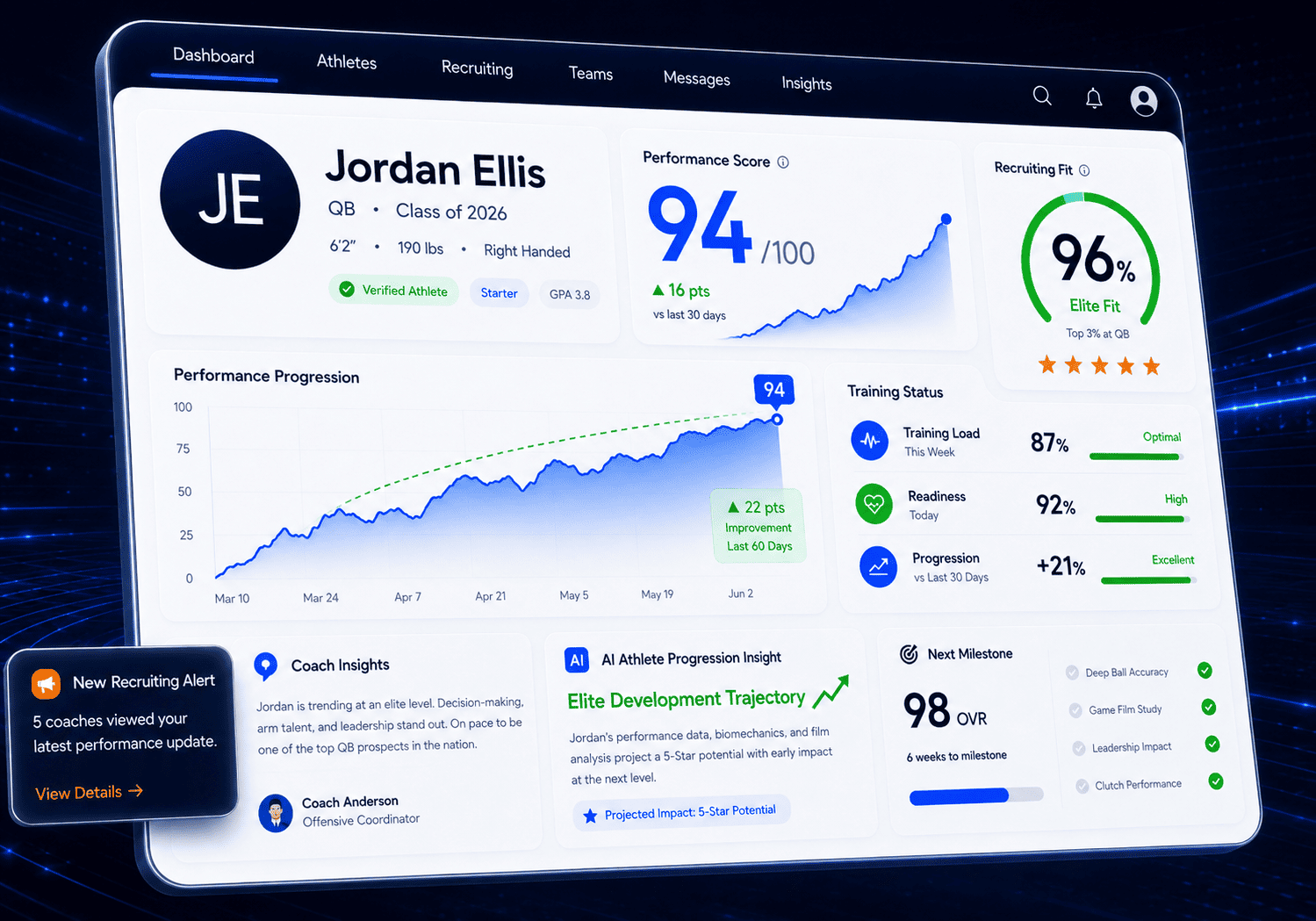
AI-Powered Sports Performance & Recruiting Platform for Virginia Clubs, Academies & Youth Programs

Plavno developed a custom sports technology platform for Virginia-based clubs and academies to combine athlete performance tracking, coach communication, recruiting workflows, and mobile engagement in one ecosystem.

Read More
3x

faster recruiting pipeline

AI-Powered Sports Performance & Recruiting Platform for Virginia Clubs, Academies & Youth Programs

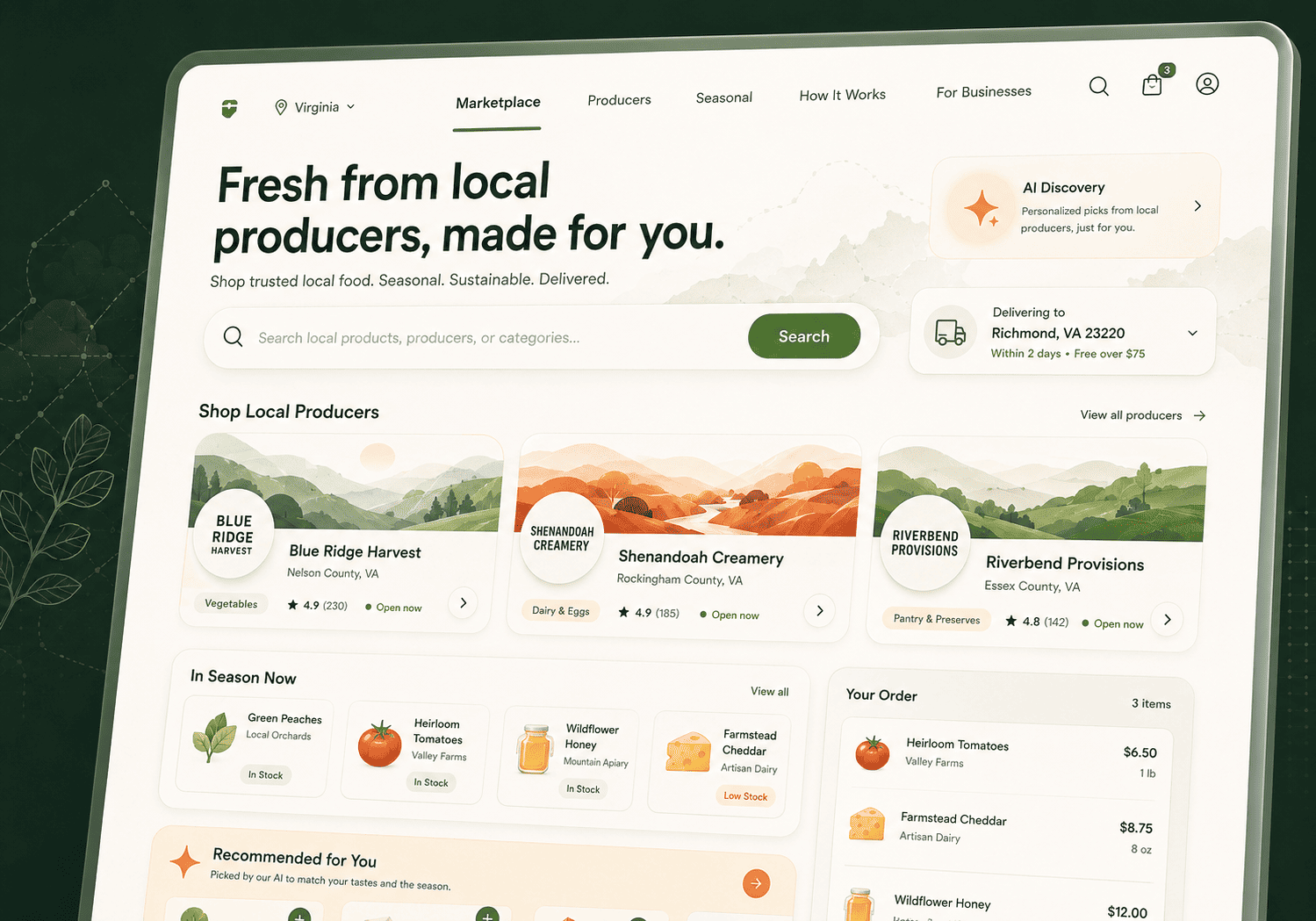
Digital Marketplace for Virginia Farmers, Local Producers & Direct-to-Consumer Food Sales

Plavno developed a custom multi-vendor marketplace for Virginia-based farmers, food producers, and regional sellers to unify product listings, vendor operations, customer ordering, and local fulfillment workflows.

Read More
3x

increase in product discovery relevance

Digital Marketplace for Virginia Farmers, Local Producers & Direct-to-Consumer Food Sales

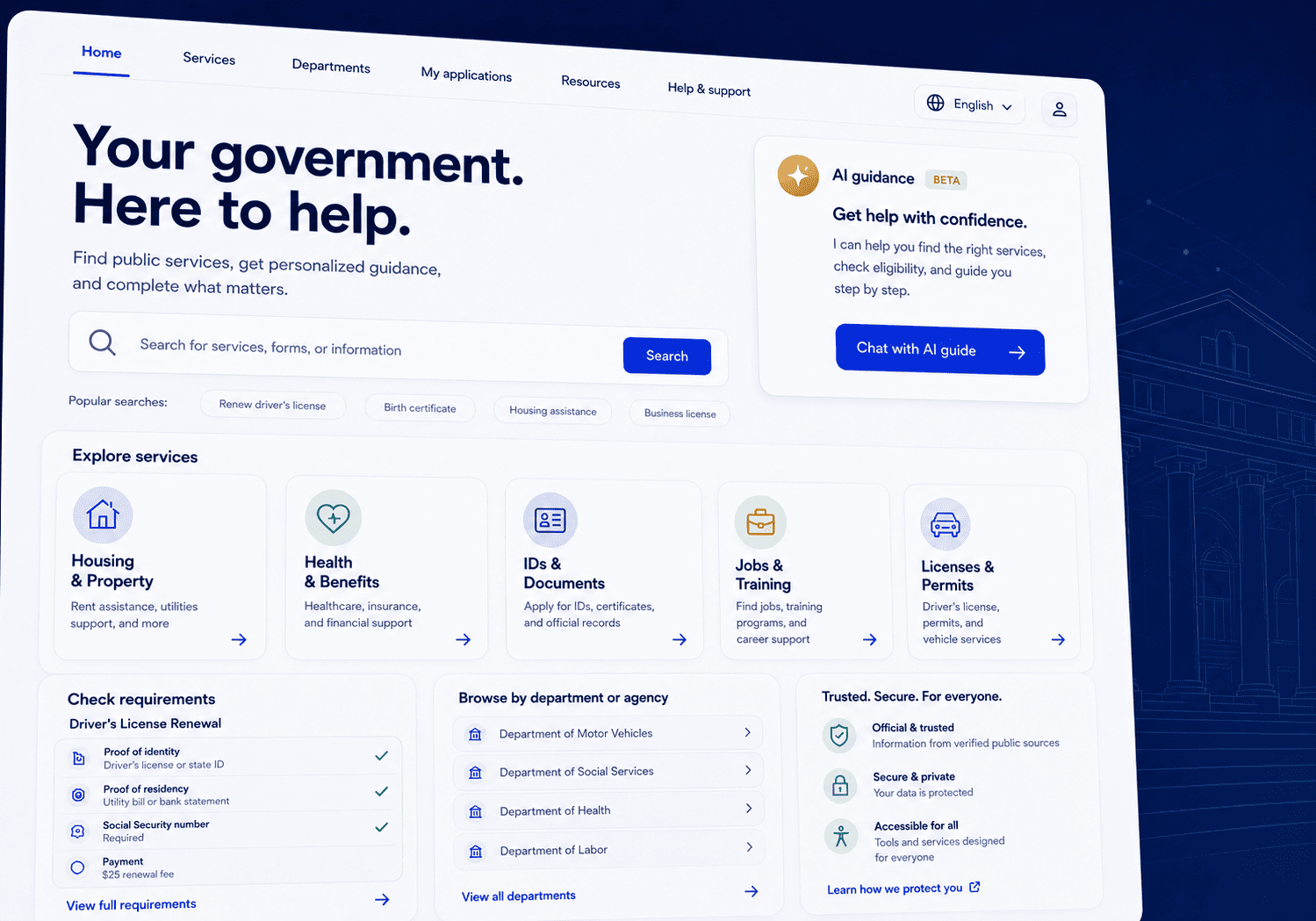
AI-Powered Citizen Services Website Platform for Virginia State Agencies

Plavno developed a modern eGovernment website platform for Virginia state agencies that centralizes citizen services, public information, department content, and an AI-powered guidance agent in one scalable system.

Read More
70%

reduction in routine citizen inquiries to agency staff

AI-Powered Citizen Services Website Platform for Virginia State Agencies

Architecture & Engineering Overview

Decisions that keep Virginia chatbots safe and affordable

Baseline Measurement

Baseline Measurement

Intent volume, handle time, and abandoned chats before spend

Cost Control Levers

Cost Control Levers

Retrieval reuse, FAQ cache, intent budgets, spend alerts

Content Governance

Content Governance

Allow-lists, legal phrases, escalation owners, prompt rollbacks

Scoped Pilots

Scoped Paid Pilots

Metrics hold before full rollout; hidden PDF and API costs surfaced early

For Business: Technical ROI & Risk Mitigation

Chatbots earn keep when they cut repeat work without adding silent brand risk. Alexandria leaders compare overtime, vacancy rates, and lost leads before approving spend. A well-scoped agent hides cost in fewer tickets and faster night coverage. Risk drops when the system refuses inventing answers and always offers a human path. Finance sees clearer month-end variance because token spend is capped by intent and session limits.

Business impact starts with measurement against a true baseline. Count volume by intent class for two weeks before build. Capture average handle time and after-hours abandoned chats. Post-launch, track containment and handoff quality weekly. Only then convert those deltas into labor hours saved. Virginia rates make each avoided ticket visible. We refuse vanity uptime claims that ignore answer quality.

Cost control is a design input. Retrieval reuse cuts repeated long context dumps. Cache frequent FAQs at the edge. Cap tool retries. Alert when a new intent burns unusual spend. Those levers matter more than model brand names for most association and retail loads. Beauty support automation showed that recommendation steps must share the budget pool with support turns or finance loses trust.

Risk mitigation includes content governance. Marketing owns promotional claims inside the allow-list. Legal owns regulated phrases. Ops owns escalation contacts. Drift appears first in logs, not in social complaints. Rollbacks reinstate last good prompt sets. Incident playbooks name who speaks to members when a tool fails. That clarity shortens outages more than extra GPUs ever will.

Procurement conversations improve when scope lists dataset readiness, channel list, and compliance boundaries. Hidden costs live in unclean PDFs and missing API owners. We surface those early so Alexandria sponsors can assign stewards. Paid pilots stay small and wept. Full rollouts lock only after metrics hold for an agreed window. That sequence protects both political and cash capital.

1

Kickoff & Decision Logs

Freeze problem space, data owners, model trade-offs, and publish rights

2

Mid-Build Interfaces

Thin chat UI, tools hold business rules, shared agent core across channels

3

Pre-Prod Adversarial Gates

Injection samples, empty retrieval, safe degrade paths, signed runbooks

4

Live Lifecycle & Debt Control

Feature flags, modular intents, monthly refresh, quarterly tool retirements

For CTOs: Architecture & Technical Lifecycle

Lifecycle discipline matters more than the first model pick. Alexandria CTOs need a path from discovery to production with gates that their security teams can audit. We treat prompts, tools, and retrieval packs as versioned artifacts. Each release carries regression suites for the critical intents. Feature flags open traffic slowly. Observability wraps every external call so failures isolate fast.

Kickoff freezes the problem space and data owners. Decision logs capture why a managed LLM endpoint beat a self-hosted option for latency or staff skills. Trade-offs stay written. If data residency rules tighten later, the design already knows which components move first. Governance assigns who can publish prompt changes to production. Engineers cannot hot-edit live without review when brand risk is high.

Mid-build focuses on interfaces. Chat UI remains thin. Business rules live behind tools and policies. That split lets web and WhatsApp share one agent core. Session stores choose technologies you already operate when possible. Retry policies stay conservative so thrashing APIs never amplify outages. Load tests mimic conference-week bursts common to Northern Virginia associations.

Pre-production adds adversarial cases. Prompt injection samples, empty retrieval, and partial CRM failure all get scripts. Acceptance hinges on safe degrade paths, not infinite cleverness. Runbooks train on-call staff beyond the vendor. After go-live, lifecycle continues with monthly content refresh calendars and cost reviews. Decommission plans exist if a channel dies.

Technical debt control is explicit. We avoid giant mega-prompts. Intents stay modular. Shared libraries cover authentication to internal APIs. Chaos is quieter when ownership maps to named services. Alexandria engineering leads get architecture diagrams that match reality, not marketing slides. Quarterly reviews retire unused tools so the graph stays readable.

LLM Agent Runtime

LLM Agent + Prompt Packs

Source-controlled prompts, golden-set evaluators, CI gates on system prompts

Retrieval Layer

Retrieval over Curated Docs

Policies and SKUs outside weights; embeddings refresh on corpus drift

Deterministic Tools

Narrow Action Tools

Inventory, tickets, recs stay deterministic and fully logged

Cost Latency Edge

Edge Cases & Optimization

Safe empty retrieval, cache hot FAQs, p95 end-to-end, queue-depth scale

For Engineers: Implementation Details & Stack

Stack choices serve grounded answers, not novelty scoreboards. We implement an LLM agent with retrieval for base knowledge and narrow tools for actions. Retrieval was chosen so product and policy text stay outside the weights and can update without fine-tunes. Tools were chosen so inventory and ticket actions remain deterministic and logged. The beauty client path used the same split for recommendation logic and support automation.

Prompt packs stay in source control with review PRs. Evaluators score groundedness and refusal quality on fixed golden sets. Online sampling feeds new failures back into those sets. Rate limits protect upstream SaaS. Streaming responses improve perceived speed for long explanations while metadata still batches for analytics. Embeddings regenerate when document corpora shift past a threshold.

Edge cases show up quick in production. Empty retrieval returns a safe apology plus human path. Conflicting documents raise a content owner ticket rather than inventing a merge. Multilingual needs start with detection and a single response language policy. When B2B users paste large specs, chunking and summarization tools prevent context blowups. Timeouts fall back to ticket creation with the partial transcript attached.

Optimization targets cost and latency together. Cache hot FAQ embeddings. Collapse multi-tool sequences when one query can satisfy several needs. Prefer smaller models for classification stops and larger ones only for generation when needed. Measure p95 end-to-end, not just model call time. Alexandria traffic patterns include lunch peaks and unscheduled social spikes, so autoscaling triggers sit on queue depth, not CPU alone.

Local engineering collaborators receive clear boundaries. They can extend tools behind approved schemas. They cannot alter production system prompts without CI gates. Secrets never live in notebooks. Staging mirrors production config except for keys and data subsets. That discipline keeps Friday deployments boring even when content teams push many FAQ edits.

First-Class Signals

Observability Signals

Containment, handoff, latency, tokens, retrieval hit, tool errors

US Hosting Identity

Regional Deploy & Identity

US hosting, secret rotation, subnet CRM limits, existing IdP

Incident & Compliance

Incident & Compliance

Named roles, signed rollbacks, PHI segment, export/delete jobs

Infrastructure, Observability & Security

Production health is a product feature, not a later ops gift. US clients need monitoring that explains user pain, not just green lights. We track containment, handoff, latency, token cost, retrieval hit rate, and tool error rates as first-class signals. Alerts fire when refusal rates spike or a tool starts timing out. On-call pages include recent transcript snippets under privacy filters so diagnosis is fast.

Deployment favors regional US hosting and your existing identity stack when feasible. Secrets rotate on a schedule. Network policies restrict which subnets can call internal CRM. Audit logs retain enough history for SOC2-minded reviews without hoarding chat content forever. HIPAA-aware projects segment PHI and keep model calls on constrained fields only. Association clients often need lighter but still documented controls.

Incident response names roles. Product decides user messaging. Security judges exposure. Engineering rolls back signed artifacts. Comms templates sit ready for member emails if a channel must pause. Postmortems focus on detection time and content gaps, not blame. Alexandria businesses with mixed onshore remote teams get shared runbooks that work across shifts.

Observability reaches cost boards weekly at minimum. Spikes often map to a new viral FAQ or a broken cache. Fixing content beats scaling spend. Drift detection compares current answer distributions against the golden set. Large shifts trigger human review before more traffic. Model provider changes go through a compatibility matrix so a sudden API deprecation does not surprise finance.

Compliance mapping lists what we store, where, and why. Data processing notes travel with the contract pack. Customer admins can export or delete session data through documented jobs. We never claim certifications we do not hold. Instead we show control sets that map onto common Virginia contractor and association audits. That honesty speeds legal review and keeps builds moving.

Testimonials

We are trusted by our customers

“They really understand what we need. They’re very professional.”

The 3D configurator has received positive feedback from customers. Moreover, it has generated 30% more business and increased leads significantly, giving the client confidence for the future. Overall, Plavno has led the project seamlessly. Customers can expect a responsible, well-organized partner.

Sergio Artimenia

Commercial Director, RNDpoint

Sergio Artimenia

“We appreciated the impactful contributions of Plavno.”

Plavno's efforts in addressing challenges and implementing effective solutions have played a crucial role in the success of T-Rize. The outcomes achieved have exceeded expectations, revolutionizing the investment sector and ensuring universal access to financial opportunities

Thien Duy Tran

Product Manager, T-Rize Group

Thien Duy Tran

“We are very satisfied with their excellent work”

Through the partnership with Plavno, we built a system used by more than 40 million connected channels. Throughout the engagement, the team was communicative and quick in responding to our concerns. Overall, we were highly satisfied with the results of collaboration.

Michael Bychenok

CEO, MediaCube

Michael Bychenok

“They have a clear understanding of what the end user needs.”

Plavno's codes and designs are user-friendly, and they complete all deliverables within the deadline. They are easy to work with and easily adapt to existing workflows, and the client values their professionalism and expertise. Overall, the team has delivered everything that was promised.

Helen Lonskaya

Head of Growth, Codabrasoft LLC

Helen Lonskaya

“The app was delivered on time without any serious issues.”

The MVP app developed by Plavno is excellent and has all the functionality required. Plavno has delivered on time and ensured a successful execution via regular updates and fast problem-solving. The client is so satisfied with Plavno's work that they'll work with them on developing the full app.

Mitya Smusin

Founder, 24hour.dev

Mitya Smusin

Data bindings & guardrails

Keep Alexandria source systems in charge of every claim

The second build focus is integration honesty and ongoing cost control, not another architecture tour. Alexandria bots fail when they drift from CRM, commerce, or membership truth. We bind every factual statement to a system of record and treat the model as a speaker, not a database. That choice grew from production support automation work where product recommendation logic had to honor live attributes. Without tight bindings, shoppers got confident wrong advice. Virginia teams cannot accept that risk with members or regulated services.

Integration patterns stay boring on purpose. Read APIs surface stock, tier, or case status. Write APIs open tickets or update preferences only after confirmation prompts. Idempotent keys prevent double charges if a user hammers send. Webhook consumers keep chat state in sync when back-office staff edit records. Mapping sheets list field owners so when a schema changes we know who updates the tool contract. Retry storms are capped. Circuit breakers protect core systems during vendor incidents.

Data quality gates open earlier than many expect. We score FAQ duplicates, stale policy dates, and missing product attributes before agent training content freezes. Gaps become a backlog with names and dates. Synthetic tests fail loudly when retrieval returns empty for a critical intent. Alexandria content owners stay inside the loop instead of assuming engineering will invent text. Clean inputs are the cheapest latency and accuracy upgrade available.

Cost and scale controls live next to the data plane. Per-intent budgets filter expensive generative paths for questions a simple template still handles. Session limits stop runaway multi-hour chats. Nightly reports show which tools and models consumed mix. Finance sponsors can see whether a spike was traffic growth or waste. Caching strategies favor stable policies while still freshening inventory-sensitive calls. This is how chat remains affordable after the launch press release fades.

Security around integrations mirrors least privilege. Service accounts carry only the verbs required. Field-level filters drop unrelated PII from model context. Secrets rotate without bot downtime. Change windows follow your CAB process when federal-adjacent clients demand it. Documentation gives new engineers a path to extend a tool without forking the agent brain. That isolation means future ERP swaps do not force a full chatbot rewrite. Alexandria teams keep leverage on vendors because their conversation layer owns less irreversible state.

Decision guide

Why Alexandria teams choose engineered agents over templates

Template chat tools look fast until your catalog, compliance, and handoff rules show up. Engineering depth decides whether the bot survives quarter two.

Generic Agencies
Our Platform (Deep Engineering Expertise)
Ground answers in your live product or policy systems
checkmark
Versioned prompts with regression tests before release
checkmark
Documented human handoff carrying full session context
checkmark
checkmark
Per-intent cost and latency dashboards from day one
checkmark
Security review of tool scopes and PII redaction paths
checkmark
Pilot metrics tied to your baseline ticket volumes
checkmark
checkmark
Handover runbooks so internal staff edit content safely
checkmark
Eugene Katovich

Eugene Katovich

Sales Manager

Need a custom software solution? We’re ready to help!

Plavno has a team of skilled developers ready to tackle the project. Ask me!

Get a Free Quote

Adoption curve

Grow from one pilot desk to multi-team cover in Virginia

After launch, maturity beats feature chase. These stages keep automation useful as Alexandria departments join.

Clipboard
Team
01

Stage 1: Manual assist on a single channel (weeks 1–4 live)

Humans remain primary. The bot drafts replies or answers one high-volume FAQ set on web chat only. Supervisors score every handoff. Content gaps become tickets the same day. Success here means lower average first-response time without rising complaints. Alexandria managers confirm tone still matches brand samples. No new channel opens until this stage is stable.

02

Stage 2: Assisted automation with confidence gates (weeks 5–10)

The agent closes safe intents fully when confidence clears a set bar. Ambiguous cases still escalate with context packs. Weekly reviews adjust thresholds using real transcripts. Tool calls expand to status checks. Training uses failed turns as test fixtures. Cost dashboards prove token spend tracks volume, not waste. Teams trust the bot enough to staff fewer pure FAQ seats.

Search in doc
Rocket
03

Stage 3: Cross-team rollout with shared services (months 3–6)

A second department connects using the same retrieval service and auth pattern. Membership and support may share identity tools while keeping separate prompts. Platform owners publish a catalog of approved tools. Local product teams stop spinning one-off bots. Governance boards meet monthly on new intent requests. Virginia multi-entity groups avoid five incompatible chat stacks.

04

Stage 4: Autonomous loops with human exception cells (month 6+)

High-confidence flows run end to end including simple writes back to systems. Exception cells focus on edge cases and relationship work. Models and content refresh on a calendar, not panic tickets. Expansion criteria stay numeric. Sunset rules retire unused intents. Leadership gets a single scorecard across Alexandria and nearby sites like Arlington and Fairfax. Automation finally behaves like infrastructure.

Common questions

Alexandria AI chatbot planning answers for 2026

Straight answers on cost, timing, data, quality, security, and operations for Virginia teams evaluating conversational AI.

What drives the cost of custom AI chatbot development for Alexandria teams?

Cost follows scope depth, not a single sticker. Channel count, language needs, and number of systems behind the bot matter first. A web-only FAQ agent is far leaner than multi-channel flows with CRM writes and catalog recommendations. Alexandria labor markets also influence change-management and content stewards you may need on your side. Budget talks should list those drivers openly.

Integration work often dominates. Clean REST APIs with test sandboxes lower spend. Legacy portals that need brittle scraping raise it. Data cleanup of stale PDFs and conflicting policies also shows up as hours. We pricing discovery first so surprises surface early. Virginia associations with heavy policy libraries should plan a content sprint before model spend climbs.

Model and hosting choices add a variable operating line. Higher-capability models cost more per turn but can reduce tool complexity for hard questions. Caching, smaller classifier models, and strict session limits keep monthly tokens predictable. Dashboards must land at launch so finance sees reality quickly. Surprise invoices usually mean missing caps, not mysterious cloud bills.

Compliance overlays add review time when PHI or federal-adjacent data appears. Redaction, private retrieval, and audit logging are worthy spend. Skipping them to save drug two weeks typically costs more later. We map control needs during discovery so legal can price review cycles. Transparent ranges beat false fixed quotes when requirements still shift.

Total cost of ownership includes handover and maintenance. Content owners need training. Prompt and FAQ updates need a light process. Monitoring sits on someone for extraction. We include those items in proposals so Alexandria sponsors compare complete paths. Ask us for a 24-hour estimate pack once you can name stack, timeline target, budget band, and dataset readiness.

How long does it take to build AI Chatbots software for production use?

Timelines split into MVP and full deployment on purpose. A focused MVP with one channel and a dozen solid intents often lands in eight to twelve weeks when data is ready. That path includes discovery, design, build, and a limited pilot. Alexandria stakeholders still need time for brand and legal reviews inside that window. Parallel content cleanup shortens risk more than adding engineers alone.

Full deployment across more channels, tools, and teams stretches further. Plan another four to eight weeks after a successful pilot for extra connectors, training, and phased rollout. Associations near renewals should avoid freezing production during peak weeks. Load testing and security checks sit near the end and sometimes uncover content issues that loop back. Honest schedules hold contingency for that loop.

Data readiness moves the calendar more than pure coding. Clean FAQ packs, API docs, and named field owners compress build days. Missing product attributes delay recommendation paths like those used in beauty support agents. Schedule stewards early. Weekly decision boards prevent stalled approvals with remote executives across Northern Virginia.

MVP exit criteria should be numeric. Containment, handoff quality, and p95 latency need targets before work starts. Freezing new intent requests after design lock keeps scope sane. Extra wish lists roll into a second release. That discipline prevents year-long sliders that never ship value. Your users feel progress when one channel goes live cleanly.

Post-launch hardening continues after marketing launch. Expect two to four weeks of intense prompt polish as real traffic shows blind spots. Runbooks mature during the same period. Only then expand. We publish a sample timeline during discovery with named client tasks so both sides own dates. Missed client content dates slide the critical path every time.

Do you work with startups in Virginia on AI chatbots?

Yes. We work with US-based clients, including companies operating in Virginia, from early product teams to established operators. Startups around the DC metro, Arlington accelerators, and university spinouts often need a tight MVP that proves retention impact fast. They rarely afford a sprawling platform rewrite. Our intake narrows to one painful workflow such as onboarding self-serve or after-hours lead capture.

Virginia startup ecosystems mix federal-tech founders, health-adjacent products, and B2B SaaS. Each needs different compliance loads. We help pick the minimum safe control set without pretending a seed-stage tool requires enterprise-scale governance. Staging, key hygiene, and audit logs still ship. Expensive zero-gap paper can wait until contracts force it. That balance keeps runway intact.

Founders should arrive with a clear user and a baseline metric. Ticket volume, chat response times, or trial-to-activation drop-offs work well. Without a baseline the bot cannot prove lift. We help define telemetry early so investor updates stay honest. Beauty-style recommendation agents only help if catalog data actually exists.

Resource constraints shape staffing on both sides. We may supply conversation design when you lack writers. You still must supply product truth and API access holders. Joint standups stay short. Documentation Ieft for future full-time hires. Startups graduate off our build team into internal ownership with runbooks rather than permanent dependency.

Pricing for startups focuses on phased releases. Pilot first. Expand after signal. We avoid forcing multi-year platform packages when a crisp three-month outcome is wiser. Alexandria and broader Northern Virginia founders can book a scoped estimate sharing budget ceiling, Timeline, stack, and the dataset currently available. That pack stays realistic and board-ready.

Can AI Chatbots integrate with my existing systems in Alexandria?

Yes, when interfaces are reachable and owned. We commonly connect CRMs, helpdesks, commerce platforms, membership databases, and calendar tools used by Alexandria firms. Integration quality depends on authenticated APIs, sandbox environments, and rate limits that match conversational spikes. Screen scraping is a last resort because it fails silently when UIs change. Prefer documented endpoints even if older.

Legacy systems are not automatic blockers. Middleware can translate old SOAP or file drops into tool contracts the agent understands. Expect extra discovery time to map everything. Field-level dictionaries prevent wrong writes. We add human confirmation steps before any irreversible action until trust is proven. Contractors and associations in Virginia often need that caution on membership or case updates.

Architecture keeps the chatbot out of the core system of record. The agent calls tools. Systems retain authority. Event webhooks notify the bot of status changes so users hear accurate news. Queues cushion back-end slowness. Timeouts convert to polite handoffs instead of hanging spinners. Engineers on your side keep ownership of schema changes with a shared contract test suite.

Security for integrations uses least privilege service accounts. PII redaction can strip fields before they enter model context. Secrets live in your vault when required. Network rules can keep private APIs off the public internet. Audit logs show which tool fires rab and why. Those assets satisfy many review boards before go-live.

Data needed from you includes API catalogs, example payloads, and a written list of which actions the bot may take. Identify owners for each system. Schedule sandbox refresh jobs so tests stay realistic. With that readiness, integration sprints stay predictable. Without it, calendars slip. We surface gaps during the first weeks so leadership can assign owners quickly.

What industries in Alexandria benefit most from AI Chatbots?

Membership associations, professional services, hospitality and events, healthcare-adjacent clinics, defense contractors, and multi-location retail all see clear gains. Alexandria density packs these industries into a short drive. Shared traits are high repeat question volume, expensive staff time, and brand sensitivity. Chatbots that stay on policy and hand off cleanly fit that mix well.

Associations gain self-serve renewals and event FAQs without burning volunteer hours. Professional services firms capture after-hours demand with qualification before partner time is used. Hotels and venues near the waterfront cut abandoned booking change emails. Clinics reduce front-desk interruptions with logistics answers only. Contractors answer vendor onboarding without expanding cleared help desks. Retail mirrors the beauty support pattern with personalized recommendations and support automation.

Local economic rhythm matters. Federal budgets, conference weeks, and tourist peaks create load spikes. Bots absorb pulse traffic better than temporary hiring near DC rates. Consistency across hybrid staff also improves because the same retrieval pack answers every shift. Leaders measure fewer complaint themes after scripts stabilize.

Industries with heavy regulation still benefit when scope is honest. The bot never gives clinical decisions or classified content. It routes those intents. Guardrails and logs are part of the value, not extras. Teams that refuse guardrails are poor fits. Teams that accept clear boundaries convert chat into a reliable channel.

If your industry is adjacent rather than named above, look for the same signals. Lots of repeat queries. Documented policies. API-accessible status. Stakeholder willingness to assign content owners. Those traits predict success more than sector labels. We map use cases during discovery against real Northern Virginia workflows rather than generic playbooks.

Contact Us

This is what will happen, after you submit form

Need a custom consultation? Ask me!

Plavno has a team of experts ready to start your project. Ask us!

Vitaly Kovalev

Vitaly Kovalev

Sales Manager

Schedule a call

Get in touch

Fill in your details below or find us using these contacts. Let us know how we can help.

No more than 3 files may be attached up to 3MB each.
Formats: doc, docx, pdf, ppt, pptx, xls, xlsx, txt.
Send request