bg image
bg image

Serving Hampton & Virginia

Turn CRM Busywork Into Closed Deals Across Hampton in 2026

Hampton sales teams lose hours every week to manual CRM data entry and follow-up. Leads go cold while reps copy information between systems. Your best opportunities slip through the cracks. We build AI CRM automation that scores leads, routes them to the right rep, and sends follow-ups on schedule. Your team stops typing and starts closing. Reclaim the pipeline you already paid to build. Get AI CRM Automation cost estimate in 24 hours.

Discuss Project

Overview

Hampton teams lose deals to manual CRM work in 2026


Hampton businesses from Newport News to Norfolk run on relationships. Your CRM holds the data that drives those relationships forward. But most local teams still move leads, trigger follow-ups, and update records by hand. That manual work creates delays your competitors exploit. AI CRM automation closes that gap by handling routine pipeline tasks without human intervention.

We build CRM systems that connect Salesforce, HubSpot, and custom platforms to AI models trained on your sales data. The system scores incoming leads, routes them to the right rep, and triggers personalized follow-up sequences automatically. A freight company we worked with needed quote automation and logistics workflow orchestration. We built an AI agent that handled quoting and tracking end-to-end, cutting response time dramatically. That same architecture applies to your CRM pipeline whether you sell real estate, vehicles, or professional services.

Hampton's economy runs on real estate, auto dealerships, property management, and home services. Each industry has its own CRM patterns and bottlenecks. A home services company on the Virginia Peninsula needs appointment scheduling automation. A B2B firm in Norfolk needs predictive lead scoring to manage long sales cycles. We configure each system to match the workflow your team actually follows rather than forcing you into a generic template. The automation maps to your deal stages, custom fields, and routing rules.

Trusted AI CRM Automation Partner for Hampton Businesses. We work with US-based clients, including companies operating in Virginia. Ten-plus AI CRM automation projects delivered across the US market. Our deployments span Hampton Roads and surrounding metro areas including Newport News, Norfolk, Virginia Beach, Portsmouth, and Chesapeake. Every project starts with a deep audit of your CRM data and ends with a system your team can operate independently.

The result is a CRM that works while your team sleeps. Leads get scored and routed at any hour. Follow-ups go out on schedule without a rep hitting send. Your salespeople see a prioritized task list when they log in each morning. That shift from reactive to proactive pipeline management separates growing Hampton companies from stagnant ones in 2026.

Talk to an Expert
CRM Systems

CRM Systems

Salesforce and HubSpot serve as the source of truth for all customer relationships and deal records.

AI Automation Layer

AI Automation Layer

Scores incoming leads, routes them to the right rep, and triggers automated follow-up sequences.

Proactive Pipeline

Proactive Pipeline

Leads get scored and routed at any hour. Reps log in to a prioritized task list every morning.

Architecture Built for CRM Data

What we build: AI layers that sit inside your CRM

Every CRM automation project starts with your data architecture. We connect directly to Salesforce or HubSpot through their APIs and event webhooks. The AI layer runs as a separate service that listens for record changes, evaluates lead quality, and writes decisions back to the CRM. This separation matters because it lets you swap models without touching your CRM configuration. The CRM stays the source of truth while the AI layer does the thinking.

For lead scoring we deploy classification models built on your historical win-loss data. We use Python with scikit-learn or XGBoost depending on dataset size and feature complexity. The model pulls firmographic data, engagement history, and deal velocity signals. It outputs a score from 0 to 100 that writes back to the CRM lead record. Your sales team sees the score in their existing dashboard without learning a new tool. For the freight quoting agent we built, the system parsed shipment requests and generated real-time quotes using a rules engine with ML-based pricing.

Security and compliance shape every architecture decision. We encrypt data in transit using TLS 1.3 and at rest using AES-256. Access control follows least-privilege principles with role-based permissions. For clients handling regulated data, we configure audit logging and data residency controls. API credentials live in a managed secrets vault and never appear in source code. The freight platform used these same controls to keep shipment data protected throughout the quoting workflow.

DevOps keeps the system running after launch. We deploy using containerized services on managed cloud infrastructure with automated CI/CD pipelines. Health checks run continuously. If the AI layer degrades, traffic routes to a fallback rules engine so your CRM keeps functioning. We set up dashboards that track model accuracy, API latency, and error rates. When the freight quoting agent processed high volumes during peak shipping season, this architecture kept response times stable without manual intervention.

The build philosophy is straightforward. Your CRM workflow should not bend to fit the AI. The AI should adapt to how your team already sells. That means we study your deal stages, custom fields, and routing rules before writing a single line of model code. The automation we deliver maps directly to your sales process. Not the other way around.

plavno logo

Build your first
Smart AI project today!

Just tell the Plavno AI Agent about your project - it will ask questions, gather requirements, and propose a tailored solution

AI CRM Automation Solutions for Hampton Industries

Use cases for Hampton Roads businesses

Practical CRM automation built for the industries that drive Hampton's economy. Each use case targets a specific workflow bottleneck local teams face every day.

Real Estate Routing

Real Estate Routing

Hampton

AI Lead Routing for Hampton Real Estate Teams

Hampton's real estate market moves fast and property inquiries that sit unassigned for hours can cost you a listing. We built a personalized house-hunting platform for expats that proved how much speed matters in property search. Our AI lead routing system scores incoming inquiries based on property type, budget range, and agent specialty, then assigns each lead to the best-matching agent within seconds. The system writes the assignment to your CRM and triggers a welcome message from the matched agent automatically. Hampton real estate teams using automated routing see faster first-response times and higher lead-to-showing conversion. The routing engine evaluates inquiry data against agent profiles and territory rules using a scoring model deployed as a service above your existing CRM.

Auto Follow-Up

Auto Follow-Up

Dealer CRM

Auto Dealership CRM AI Follow-Up Hampton

Car buyers in Hampton visit multiple dealerships before deciding. The dealer that follows up fastest and most consistently usually wins. We build AI follow-up systems that send personalized messages across email and SMS based on where each prospect sits in the buying journey. A lead who tested a sedan gets different content than someone browsing SUVs online. The AI tracks opens, clicks, and replies, then adjusts the sequence in real time. Service reminders go out automatically based on mileage estimates and last-visit data. Hampton dealerships using AI-driven follow-up see higher return-to-lot rates and improved service bay utilization. The integration plugs into your existing dealer management system through standard CRM APIs and event webhooks.

Property Management

Property Management

AI Routing

Property Management CRM AI Automation Hampton Roads

Property managers across Hampton Roads juggle hundreds of tenant communications daily. Maintenance requests, lease renewals, and rent reminders pile up in inboxes and get lost. We automate that workflow with AI that reads incoming messages, categorizes them by urgency, and routes each one to the right handler. Urgent maintenance issues get flagged immediately while routine inquiries receive auto responses with relevant information. The system logs every interaction in your CRM and creates tasks for staff when human follow-up is needed. Hampton Roads property managers using this automation cut average response time significantly and reduce manual data entry by hours each week. The AI layer connects to your property management platform through webhooks and API endpoints.

Home Services

Home Services

AI Scheduling

Home Services AI Appointment Scheduling Hampton VA

Hampton home services companies lose revenue when crews sit idle between jobs. Manual dispatching creates gaps and double-bookings that drain productivity. We build AI scheduling systems that match crew availability, skill sets, and geographic zones to incoming service requests. The AI calculates drive times between appointments and refines daily routes automatically. Customers book through a self-service portal that syncs to your CRM in real time. Confirmation and reminder messages go out without staff involvement. Home services businesses in Hampton using AI scheduling fill more appointment slots per week and reduce unnecessary drive time across service teams. The scheduler runs as a service layer above your existing CRM scheduling module.

B2B Sales

B2B Sales

Deal Scoring

B2B Sales CRM AI Consulting Hampton Virginia

Hampton B2B sales cycles run long and involve multiple decision makers at every stage. Reps struggle to identify which deals are accelerating and which are quietly stalling. We build deal health scoring systems that analyze engagement signals across your entire CRM. Email opens, meeting attendance, document downloads, and stage duration feed into a predictive model. The system flags at-risk deals and suggests next actions based on patterns from your historical wins. Sales managers see pipeline health on a dashboard without chasing reps for weekly updates. The model trains on your CRM data and updates scores daily for more accurate forecasting.

SMB Integration

SMB Integration

Virginia

Virginia Peninsula SMB CRM AI Integration

Small businesses on the Virginia Peninsula cannot afford a dedicated CRM administrator. Data gets messy, tasks fall through, and follow-ups get missed. We build lightweight AI integrations that handle the work no one has time for. The system cleans duplicate records, fills in missing fields using public data sources, and creates tasks from email threads automatically. It flags contacts who have not been touched in 60 days and drafts re-engagement messages for rep approval. Virginia Peninsula SMBs using these automations keep cleaner databases and maintain consistent outreach without adding headcount. The integration targets CRMs like HubSpot that small teams already use, keeping total cost of ownership low.

How We Deliver

From CRM audit to production automation in Hampton

A structured delivery path that de-risks each phase. You see working automation within the first month and own the system by the end.

Clipboard
Team
01

Step 1: Discovery and Data Audit (1-2 weeks)

We start by mapping your current CRM workflows and identifying where manual effort creates the biggest bottleneck. Our team reviews your Salesforce or HubSpot configuration, custom fields, and historical deal data. We analyze lead sources, conversion patterns, and follow-up gaps. You receive a written automation roadmap that prioritizes the highest-impact workflows first. The audit also flags data quality issues that could affect model performance. This phase typically takes one to two weeks depending on CRM complexity and data volume.

02

Step 2: Model Training and Integration Build (3-5 weeks)

With the roadmap approved, we build the AI scoring models and CRM integration layer. Lead scoring models train on your historical win-loss data to predict deal probability. The integration connects to your CRM through REST APIs and event webhooks. We configure data pipelines that feed real-time CRM events to the AI service. You see the first working prototype within three to five weeks. Every component gets version-controlled, tested, and documented before pilot deployment begins.

Search in doc
Rocket
03

Step 3: Pilot Deployment and Refinement (2-3 weeks)

We deploy the automation to a controlled group of users before scaling across your team. The pilot runs alongside your existing process so there is zero disruption to active deals. Our team monitors prediction accuracy, routing correctness, and system latency daily. We refine model thresholds and workflow rules based on rep feedback and actual outcomes. Most pilots stabilize within two to three weeks. You receive a pilot performance report with recommended adjustments before full rollout.

04

Step 4: Full Rollout and Handoff (1-2 weeks)

Once the pilot meets your performance targets, we deploy the automation to your entire team. The rollout includes user training sessions and documentation built for your CRM configuration. We transfer operational ownership to your team with a runbook covering common scenarios. Monitoring dashboards go live so your admin can track system health independently. Ongoing support is available but not required. Full rollout typically takes one to two weeks for teams under 50 users.

Case Study

We help customers cut
down on development

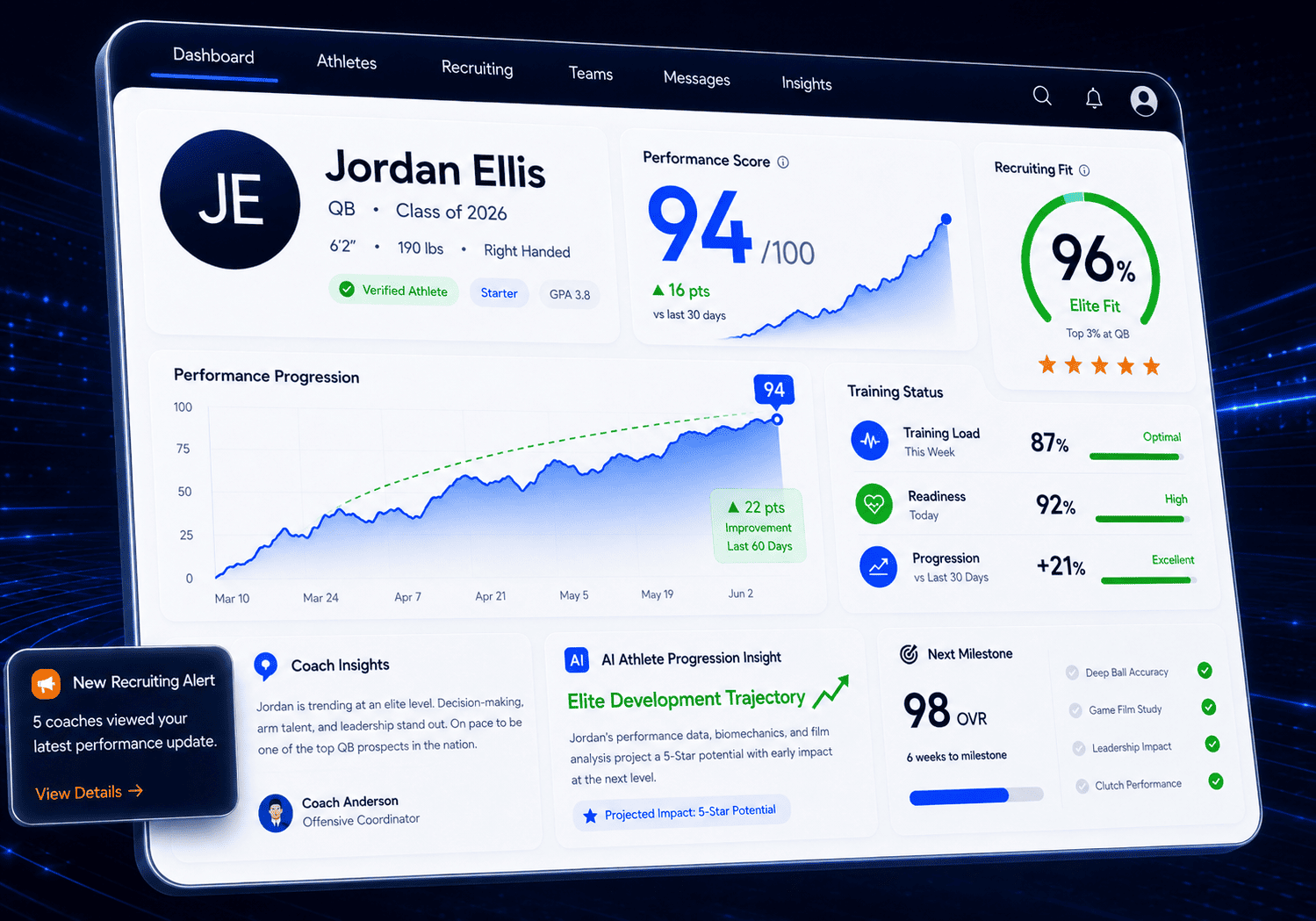
AI-Powered Sports Performance & Recruiting Platform for Virginia Clubs, Academies & Youth Programs

Plavno developed a custom sports technology platform for Virginia-based clubs and academies to combine athlete performance tracking, coach communication, recruiting workflows, and mobile engagement in one ecosystem.

Read More
3x

faster recruiting pipeline

AI-Powered Sports Performance & Recruiting Platform for Virginia Clubs, Academies & Youth Programs

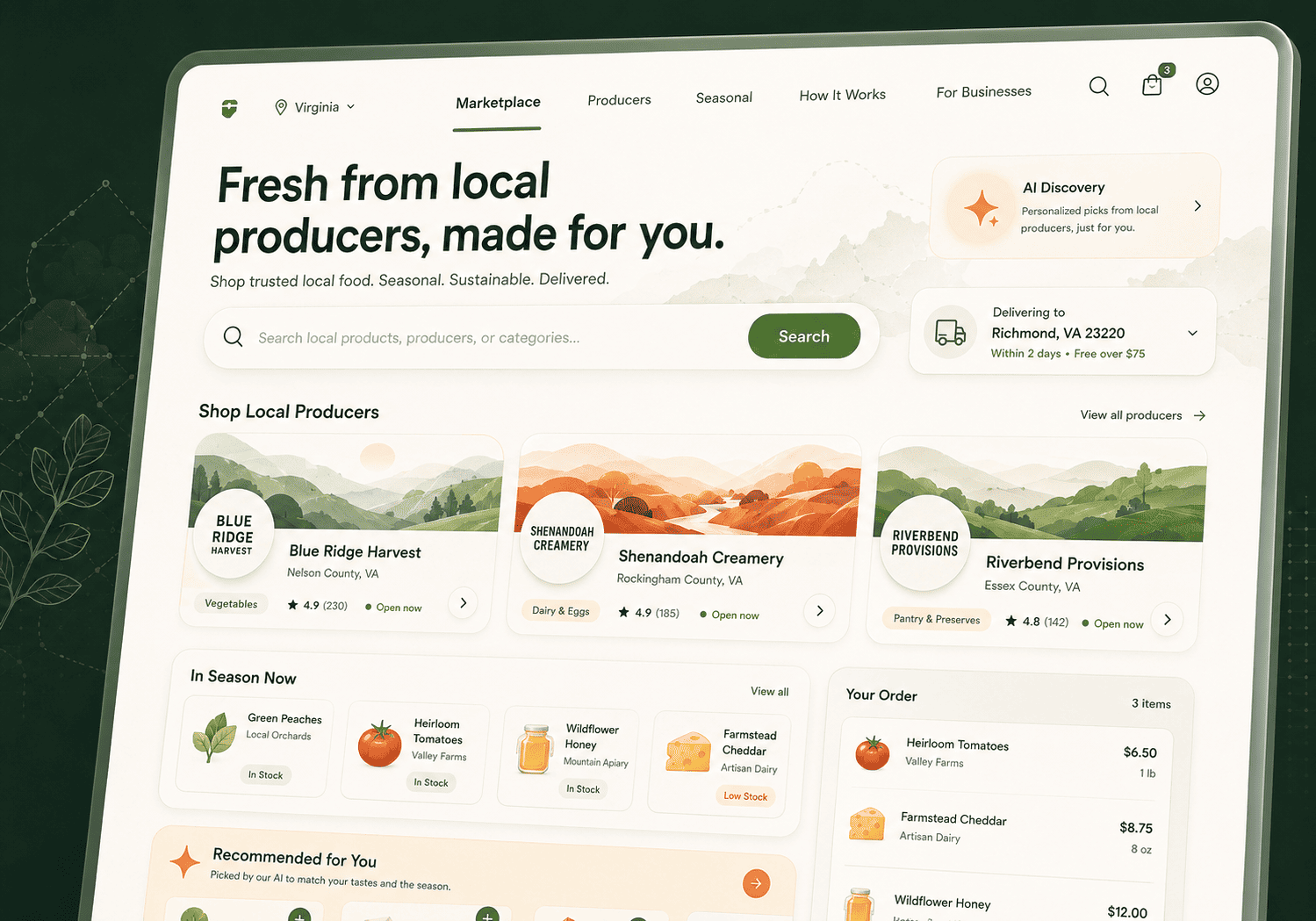
Digital Marketplace for Virginia Farmers, Local Producers & Direct-to-Consumer Food Sales

Plavno developed a custom multi-vendor marketplace for Virginia-based farmers, food producers, and regional sellers to unify product listings, vendor operations, customer ordering, and local fulfillment workflows.

Read More
3x

increase in product discovery relevance

Digital Marketplace for Virginia Farmers, Local Producers & Direct-to-Consumer Food Sales

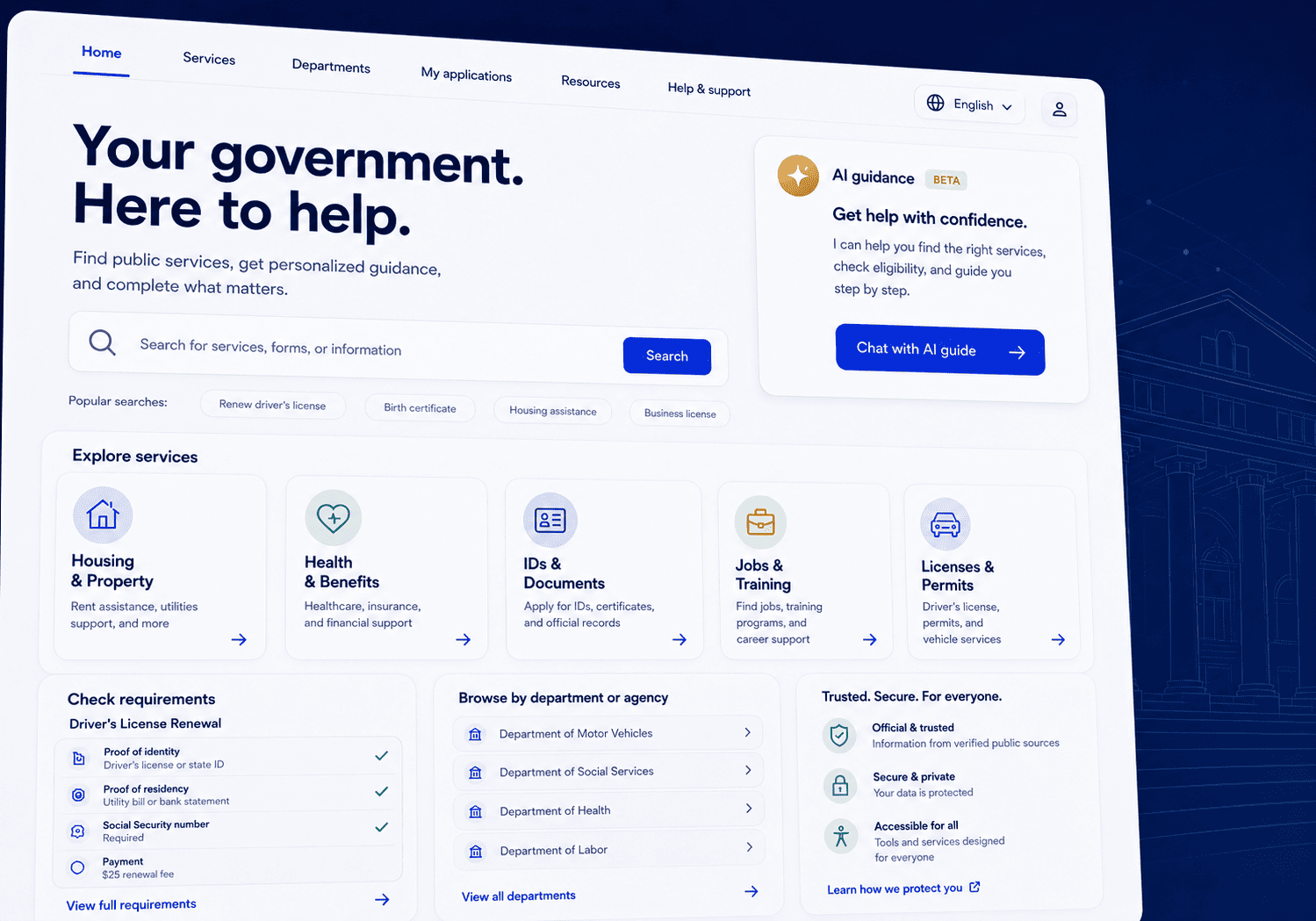
AI-Powered Citizen Services Website Platform for Virginia State Agencies

Plavno developed a modern eGovernment website platform for Virginia state agencies that centralizes citizen services, public information, department content, and an AI-powered guidance agent in one scalable system.

Read More
70%

reduction in routine citizen inquiries to agency staff

AI-Powered Citizen Services Website Platform for Virginia State Agencies

Testimonials

We are trusted by our customers

“They really understand what we need. They’re very professional.”

The 3D configurator has received positive feedback from customers. Moreover, it has generated 30% more business and increased leads significantly, giving the client confidence for the future. Overall, Plavno has led the project seamlessly. Customers can expect a responsible, well-organized partner.

Sergio Artimenia

Commercial Director, RNDpoint

Sergio Artimenia

“We appreciated the impactful contributions of Plavno.”

Plavno's efforts in addressing challenges and implementing effective solutions have played a crucial role in the success of T-Rize. The outcomes achieved have exceeded expectations, revolutionizing the investment sector and ensuring universal access to financial opportunities

Thien Duy Tran

Product Manager, T-Rize Group

Thien Duy Tran

“We are very satisfied with their excellent work”

Through the partnership with Plavno, we built a system used by more than 40 million connected channels. Throughout the engagement, the team was communicative and quick in responding to our concerns. Overall, we were highly satisfied with the results of collaboration.

Michael Bychenok

CEO, MediaCube

Michael Bychenok

“They have a clear understanding of what the end user needs.”

Plavno's codes and designs are user-friendly, and they complete all deliverables within the deadline. They are easy to work with and easily adapt to existing workflows, and the client values their professionalism and expertise. Overall, the team has delivered everything that was promised.

Helen Lonskaya

Head of Growth, Codabrasoft LLC

Helen Lonskaya

“The app was delivered on time without any serious issues.”

The MVP app developed by Plavno is excellent and has all the functionality required. Plavno has delivered on time and ensured a successful execution via regular updates and fast problem-solving. The client is so satisfied with Plavno's work that they'll work with them on developing the full app.

Mitya Smusin

Founder, 24hour.dev

Mitya Smusin

Architecture & Engineering Overview

How the AI layer runs inside your CRM environment

Conversion Lift

Lead Conversion Rate

Significant lift from faster engagement

Admin Overhead Reduction

Admin Overhead Drop

Hours reclaimed per rep weekly

Response Time Speed

Response Speed

Seconds instead of hours

For Business: Technical ROI and Risk Mitigation

The ROI of CRM AI automation shows up in three places: faster lead response, higher conversion rates, and reduced administrative overhead. When leads get scored and routed within seconds instead of hours, your team engages prospects while interest is high. That speed advantage directly improves close rates without adding headcount. For a Hampton sales team processing hundreds of leads monthly, even a small conversion lift compounds quickly across a year.

Administrative overhead shrinks because the system handles data entry, task creation, and follow-up scheduling automatically. Reps spend less time in the CRM and more time talking to prospects. For a Hampton business with a five-person sales team, reclaiming even two hours per rep per week adds up. That time goes back to pipeline-building conversations. The math is simple and the impact is measurable.

Risk mitigation comes from consistency. Manual processes break when someone is out sick or leaves the company. Automated workflows run the same way regardless of staffing changes. The freight quoting agent we built handled quote generation around the clock. No shipment request waited for a human reviewer. That reliability is exactly what CRM automation brings to sales operations.

Cost control is another factor. AI CRM automation replaces tools and manual processes that rack up hidden costs. You stop paying for separate enrichment services when the AI layer pulls that data itself. You reduce reliance on CRM admins who spend hours on data hygiene. The total cost of ownership typically drops as the system matures and the team trusts the scores.

The biggest risk is deploying automation that your team does not trust. If reps think the lead scores are wrong, they ignore them. We mitigate this by running pilots and showing transparency into scoring factors. Reps provide feedback that refines the model over time. Trust builds gradually, and so does ROI.

CRM Platform

CRM Platform Layer

Salesforce or HubSpot remains the system of record, feeding events and data to the AI layer.

AI Service Layer

AI Service Layer

Decoupled service for predictions, drift detection, and governance. Swappable without touching CRM config.

API Integration

API Integration Layer

Reads CRM events through webhooks and writes predictions back. Keeps vendor lock-in risk low and logic portable.

For CTOs: Architecture and Technical Lifecycle

The architecture separates the AI service layer from the CRM platform so you can iterate on models without disrupting sales operations. The CRM remains the system of record. The AI layer reads from it, makes predictions, and writes results back through API calls. This decoupling lets you swap models or change vendors without touching CRM configuration.

The project lifecycle starts with a data audit that determines model feasibility. We need enough historical records with clear outcomes to train a reliable classifier. If your CRM has been live for under a year, we start with rule-based logic until data accumulates. The audit also surfaces integration points and potential bottlenecks early. You get a feasibility report before any model code is written.

Governance matters once the system is live. We establish a model review cadence where your team evaluates prediction quality against actual outcomes. Drift detection alerts fire when input data distributions shift beyond configured thresholds. That tells you when the model needs retraining before performance degrades visibly. Most teams run this review monthly during the first quarter, then quarterly after that.

Trade-off decisions come up around real-time versus batch processing. Real-time scoring gives the best user experience but costs more in infrastructure. Batch processing is cheaper but introduces latency between CRM events and AI responses. We help you choose based on lead volume and response time requirements. Most Hampton businesses land on a hybrid approach for the first year.

Vendor lock-in is a real concern with CRM platforms that push their own AI features. Building a separate AI layer keeps your models portable. If you switch from HubSpot to Salesforce in two years, your scoring logic moves with you. That flexibility is worth the engineering effort upfront. The freight platform we built proved this when the client migrated CRMs mid-project.

Model Stack

Model Stack

Python ecosystem using scikit-learn for tabular models and XGBoost for complex feature interactions.

Event-Driven Pipeline

Event-Driven Pipeline

Webhook subscriptions routed via managed message queues with idempotency keys and dead letter queues.

Model Versioning

Model Versioning

Artifacts versioned with training data snapshots to ensure trivial rollbacks if production degrades.

For Engineers: Implementation Details and Stack

The stack uses Python for model training and a lightweight service runtime for inference, chosen for ecosystem maturity and team coverage. We use scikit-learn for tabular lead scoring models and XGBoost when feature interactions are complex. The inference service runs as a containerized application behind a load balancer. That keeps scaling predictable and deployment straightforward.

CRM integration uses platform-native APIs with webhook event subscriptions. Salesforce triggers Platform Events that our service consumes. HubSpot sends webhook payloads on property changes. We debounce rapid-fire events to avoid redundant model calls. Each event gets an idempotency key so retries do not create duplicate score writes.

Data pipelines move CRM events through a message queue before they reach the inference service. We use managed queue services to avoid operating infrastructure ourselves. The service pulls events, enriches them with firmographic data when needed, runs inference, and writes results back. Error handling retries transient failures with exponential backoff. Dead letter queues capture events that fail repeatedly for manual review.

Model retraining runs on a schedule tied to your review cadence. We version every model artifact with its training data snapshot and feature schema. That makes rollback trivial if a new model underperforms in production. Feature stores are used for larger deployments where multiple models share input features. The freight quoting agent used a similar versioning approach for its pricing model.

The freight quoting agent we built used this same architecture. It parsed incoming shipment requests and extracted structured data with NLP. Quotes were generated through a rules engine augmented with ML-based pricing. The event-driven design handled volume spikes during peak shipping season without manual scaling. That same pattern applies directly to CRM automation at scale.

CI/CD Infrastructure

Managed CI/CD

Containerized services deployed via infrastructure-as-code with automated pipelines and staging validation.

3-Layer Monitoring

3-Layer Monitoring

App metrics, model accuracy, and business outcomes combined into unified dashboards for all stakeholders.

Defense-in-Depth Security

Defense-in-Depth

TLS 1.3, AES-256 encryption, RBAC, and private networking. Data residency controls for regulated industries.

Infrastructure, Observability and Security

We deploy on managed cloud infrastructure with containerized services, automated CI/CD, and continuous health monitoring from day one. Every deployment goes through a pipeline that runs tests, builds containers, and promotes to production after staging validation. Infrastructure-as-code ensures environments are reproducible and auditable. No manual server configuration is involved at any stage.

Monitoring covers three layers. Application metrics track inference latency, error rates, and throughput. Model metrics track prediction accuracy and drift. Business metrics track outcomes like lead response time and conversion lift. Dashboards combine all three so engineering and business stakeholders see the full picture. Alerts fire on critical thresholds with escalation to on-call engineers.

Security follows defense-in-depth. Data in transit uses TLS 1.3 and data at rest uses AES-256. API credentials and model secrets live in a managed vault with rotation policies. Access control is role-based with audit logging on every authenticated request. We test for common vulnerabilities including injection, broken authentication, and excessive data exposure.

For clients in regulated industries, we configure data residency controls and additional audit trails. PII fields can be masked or tokenized before they reach the model service. We support SOC 2 alignment for clients who need formal compliance certification. The deployment architecture isolates the AI service from direct internet exposure using private networking. Hampton businesses in healthcare or finance get these controls by default.

Incident response follows a documented runbook. On-call engineers receive alerts within minutes of a threshold breach. We maintain rollback procedures for both application and model deployments. Post-incident reviews identify root causes and prevent recurrence. For the freight quoting platform, this setup kept the system available during high-volume periods without manual intervention.

CRM AI Maturity Path

Where your Hampton CRM sits on the automation curve

Most teams do not jump from manual to autonomous overnight. This path shows the stages and what each one delivers.

Clipboard
Team
01

Stage 1: Manual CRM Operations (Current State)

Most Hampton businesses start here. Reps enter leads by hand, route them based on gut instinct, and follow up when they remember. Data quality erodes over time as duplicate records accumulate. No scoring exists, so every lead gets equal attention regardless of value. Reporting is manual and often outdated by the time someone reads it. This stage is where CRM investment yields the least return relative to license cost. Teams at this stage lose deals to faster competitors every week.

02

Stage 2: AI-Assisted Workflows (First Layer)

In this stage, AI starts handling specific tasks but humans still make the calls. Lead scoring models rank prospects so reps know who to call first. Automated email sequences send initial follow-ups without manual triggering. Data enrichment fills in missing fields from external sources. Reps review AI suggestions and approve or override them. This stage typically delivers a quick win because it augments existing behavior rather than replacing it. Most Hampton teams reach this stage within the first project cycle.

Search in doc
Rocket
03

Stage 3: Predictive Automation (System-Driven)

At this stage the system makes decisions without waiting for rep input. Leads get routed automatically based on AI scores and territory rules. Follow-up sequences trigger based on behavioral signals like email opens and website visits. Deal health scoring flags at-risk opportunities before they stall. The CRM becomes proactive rather than reactive. Reps spend their time on qualified conversations instead of triage. This stage requires clean historical data and a mature integration setup to function reliably.

04

Stage 4: Autonomous CRM Agents (Full Delegation)

The final stage is where AI agents handle end-to-end workflows with minimal human oversight. An agent qualifies inbound leads, books meetings, and hands off warm prospects to reps with full context. The freight quoting agent we built operates at this level. It parses requests, generates quotes, and tracks shipments without human intervention. CRM agents at this stage handle routine communication, escalate exceptions, and learn from outcomes. This is the target state for Hampton businesses that want to scale sales without scaling headcount.

Pre-Project Readiness

Data checklist before starting CRM AI automation

  • Verify historical deal data volume — AI lead scoring models need labeled data to train on. Pull a report of closed-won and closed-lost deals from the past 12 to 24 months. You need at least 200 closed deals with complete records for a basic model to perform reliably. If your CRM has been live for less than a year, plan for a rule-based approach until enough data accumulates. Export the report and check for fields like lead source, deal value, and outcome. Missing outcomes make training impossible and must be backfilled before the project starts.

  • Audit CRM data quality and completeness — Scoring models are only as good as the data feeding them. Run a deduplication check on your contact and lead records. Look for missing values in critical fields like industry, company size, and email address. Identify records with no activity logged in the past six months. High duplicate rates and sparse fields signal that a data cleanup phase is needed before model training begins. Hampton teams that skip this step end up with unreliable scores that reps learn to ignore. Budget time for data hygiene before any AI work starts.

  • Map your current lead routing rules — Document how leads move from intake to assignment today. Note who handles routing, what criteria they use, and how long the process typically takes. Capture edge cases like after-hours inquiries and territory disputes. This mapping becomes the foundation for your automated routing logic. If the current rules live only in someone's head, codify them before the project starts. The AI system needs explicit rules and thresholds to replicate and improve on manual decisions. Unknown routing logic is the most common cause of rollout friction.

  • Review API access and integration constraints — Confirm that your CRM plan includes API access and check for rate limits. Salesforce and HubSpot both cap API calls per day depending on your tier. Count the integrations you already have running and estimate additional API load from the AI service. If you are near your limit, plan for batch processing instead of real-time calls. Document any custom objects or fields that the AI layer needs to read or write. This step prevents integration surprises that delay deployment by weeks.

  • Define measurable success criteria — Decide what a successful implementation looks like before the project begins. Common metrics include lead response time, lead-to-meeting conversion rate, and rep time saved on administrative tasks. Set a baseline for each metric using current performance data. Share these targets with your team so everyone knows what the automation is expected to achieve. Without defined success criteria, it is impossible to evaluate whether the project delivered value. Hampton businesses that set clear baselines see faster rep adoption and clearer ROI measurement.

Vitaly Kovalev

Vitaly Kovalev

Sales Manager

Get your Hampton CRM AI readiness score

Request a free CRM AI readiness audit for your Hampton business. Share your budget, timeline, CRM platform, and deal volume so we can deliver a scope and cost estimate within 24 hours.

Talk to Experts
Eugene Katovich

Eugene Katovich

Sales Manager

Need a custom software solution? We’re ready to help!

Plavno has a team of skilled developers ready to tackle the project. Ask me!

Get a Free Quote

Plain Answers for Hampton Teams

Questions Hampton businesses ask about CRM AI automation

Direct answers on cost, timeline, data needs, and what happens after launch. No jargon, no evasions.

What does AI CRM automation cost for Hampton businesses in 2026?

Pricing depends on CRM complexity, data volume, and the number of automated workflows you need. A basic lead scoring integration for a single CRM system typically costs less than a full multi-workflow deployment. The cost breaks down into three project phases. Discovery and data audit run one to two weeks.

Model training and integration build take three to five weeks. Pilot and rollout add another three to five weeks of effort. Hampton businesses with existing Salesforce or HubSpot setups generally pay less because the integration layer is simpler. Custom CRM configurations increase cost because each custom field, object, and workflow rule requires mapping.

Ongoing maintenance is optional and billed as a separate engagement. Most Virginia businesses budget for an initial build plus a quarterly model review cadence. We provide a detailed cost estimate after the discovery phase so you know the full scope before committing. Request a project scoping call to get a number built for your CRM environment.

How long does it take to deploy AI CRM automation?

A typical deployment runs eight to twelve weeks from kickoff to full rollout. The timeline depends on CRM complexity, data readiness, and the number of workflows being automated. An MVP with lead scoring and basic routing can go live in six weeks for a clean CRM environment. Full deployments with multiple automated sequences and team training take closer to twelve weeks.

The discovery phase takes one to two weeks regardless of project size. Model training and integration build consume the largest chunk at three to five weeks. Pilot deployment runs two to three weeks while we refine thresholds based on real rep feedback. Full rollout typically completes in one to two weeks.

Hampton businesses with messy CRM data should add a data cleanup phase before the project starts. That cleanup can add two to four weeks depending on record volume and quality. We give you a detailed timeline after the discovery audit so there are no surprises. Most projects stay within the estimated range once data is clean.

What CRM data do we need before starting an AI automation project?

You need historical deal records with clear outcomes for lead scoring models to train on. That means closed-won and closed-lost deals from the past twelve to twenty-four months with complete field data. Critical fields include lead source, deal value, industry, company size, and outcome status. You also need clean contact and lead records without excessive duplicates.

If your CRM has fewer than 200 closed deals, start with rule-based logic. Transition to ML models once more data accumulates. Existing activity logs matter too. Email opens, meeting notes, call logs, and stage change timestamps all feed the scoring models.

Hampton businesses using Salesforce should verify that activity tracking is enabled and consistent across reps. HubSpot users should check that lifecycle stages are being used correctly. Data quality is the single biggest predictor of project success. We run a data audit in the first phase and flag specific gaps that need fixing before model training begins.

How do you measure the quality and accuracy of AI lead scoring models?

We evaluate scoring models using precision, recall, and lift over baseline random selection. Precision tells you what percentage of high-scored leads actually convert. Recall measures how many true opportunities the model catches. Lift compares the model's conversion rate against your average conversion rate.

We run these metrics on a holdout set of historical deals during training. Once live, we track actual outcomes against predicted scores weekly during the pilot phase. The model is considered healthy when its precision stays above your baseline conversion rate by a meaningful margin. Drift detection monitors input data distributions for shifts that could degrade accuracy over time.

If the percentage of leads from a particular source changes dramatically, the model may need retraining. We also collect rep feedback during the pilot. If reps consistently disagree with certain scores, we investigate whether the model is missing a signal. That feedback loop improves the model over the first few months of production use.

What security and compliance standards apply to CRM AI automation?

We design every deployment with encryption in transit and at rest as a baseline. Data moving between your CRM and the AI service uses TLS 1.3. Data stored in the inference layer uses AES-256. API credentials and model secrets live in a managed vault with rotation policies, never in source code.

Access control follows least-privilege principles with role-based permissions and audit logging on every authenticated request. For Hampton businesses in regulated industries like healthcare or finance, we configure additional controls. PII fields can be tokenized or masked before they reach the model service. Data residency controls ensure records stay within designated regions.

We support SOC 2 alignment for clients who require formal compliance certification. The AI service runs in an isolated network segment with no direct internet exposure. If your CRM handles consumer data subject to Virginia data protection laws, we configure the system to minimize retention and support deletion requests. Security review happens during the discovery phase, not as an afterthought.

Contact Us

This is what will happen, after you submit form

Need a custom consultation? Ask me!

Plavno has a team of experts ready to start your project. Ask us!

Vitaly Kovalev

Vitaly Kovalev

Sales Manager

Schedule a call

Get in touch

Fill in your details below or find us using these contacts. Let us know how we can help.

No more than 3 files may be attached up to 3MB each.
Formats: doc, docx, pdf, ppt, pptx, xls, xlsx, txt.
Send request