bg image
bg image

Serving Newport News

AI Automation in Newport News, Virginia for Operational Efficiency

Many local firms spend too much time on repetitive data tasks. High labor costs hurt profit margins. Manual workflows also increase error rates. AI Automation replaces those steps with fast, repeatable processes. The result is lower operating expense and higher throughput. Get AI Automation cost estimate in 24 hours.

Discuss Project

Overview

Why AI Automation Matters for Newport News Business

Companies that build ships, manage freight, or run hospitals need fast, reliable data flows. In Newport News, a single delay can cost thousands in dock time or missed shipments. Our AI Automation platform turns those delays into predictable, automated steps. ai automation reduces manual effort while keeping data quality high.

We have delivered more than 10 AI Automation projects across the United States. Each project shows measurable savings in labor and error reduction. Trusted AI Automation Partner for Newport News Businesses. We work with US-based clients, including companies operating in Virginia.

The solution runs on a secure cloud that meets HIPAA and SOC2 standards. It integrates with existing ERP, SCADA, and EMR systems used by shipbuilders, logistics firms, and health providers. Local teams in Hampton, Norfolk, and Chesapeake benefit from faster onboarding and lower travel costs.

Our approach blends proven AI models with custom workflow engines. The result is a system that can be extended as business needs change. Clients see ROI within the first quarter after deployment.

Talk to an Expert
Discovery

Discovery

Map workflows & ROI

Prototype

Prototype

Validate & demo

Build

Full Build

Production deployment

Operate

Operate

24/7 Monitoring

Shipbuilding

Shipbuilding Automation

Real-time inventory tracking via Python & PostgreSQL

Logistics

Logistics Engine

Dock scheduling AI using Node.js & Redis

Healthcare

Healthcare Data

PHI redaction & vault using Java & AWS KMS

Manufacturing

Quality Checks

AI defect detection via TensorFlow & Flask

Defense

Contract Reporting

Audit-ready PDFs using Go & PostgreSQL

Capabilities

What We Deliver

Process Automation for Shipbuilding

Process Automation for Shipbuilding

Shipyards in Newport News need to track component inventory in real time. Our solution captures sensor data and updates inventory dashboards automatically. The outcome is a 45% reduction in manual entry time. We use Python for data pipelines and PostgreSQL for reliable storage. The stack was chosen for its strong transaction guarantees and easy scaling.

Logistics Workflow Engine

Logistics Workflow Engine

Freight operators face bottlenecks when scheduling dock slots. We built a scheduling engine that predicts slot availability using AI forecasts. Customers see a 30% increase in on‑time departures. The engine runs on Node.js for fast I/O and Redis for low‑latency caching. These technologies keep the system responsive under heavy load.

Healthcare Data Automation

Healthcare Data Automation

Hospitals in Virginia must comply with strict data privacy rules. Our automation extracts patient records, redacts PHI, and stores the result in a compliant vault. The process cuts data prep time by 60%. We selected Java for its mature security libraries and AWS KMS for encryption. Both choices support audit‑ready compliance.

Manufacturing Quality Checks

Manufacturing Quality Checks

Factory lines generate millions of sensor readings each day. Manual analysis cannot keep up. Our AI models flag out‑of‑spec events instantly. The result is a 70% drop in defect detection time. We built the model with TensorFlow and serve it via a Flask API. The stack balances model performance with easy deployment.

Defense Contract Reporting

Defense Contract Reporting

Defense contractors need accurate spend reports for compliance audits. Our automation consolidates invoices, applies classification rules, and produces audit‑ready PDFs. Clients report a 50% reduction in reporting effort. We use Go for its low‑memory footprint and PostgreSQL for reliable transaction handling. These tools keep the system fast and secure.

Our Process

Our AI Automation Engineering Process

We combine business analysis with deep technical work.

Clipboard
Team
01

Step 1: Discovery (1–2 weeks)

We meet with stakeholders to map existing manual workflows. The goal is to identify high‑impact tasks that can be automated. Deliverables include a process map and a cost‑benefit estimate. Clients receive a clear picture of ROI before any code is written. This phase reduces risk by aligning expectations early.

02

Step 2: Prototype (2–4 weeks)

We develop a minimal viable automation that handles a single use case. The prototype runs on a sandbox environment and validates data quality. Clients see a working demo and can provide feedback. We deliver a prototype report with performance numbers. This stage proves feasibility and refines scope.

Search in doc
Rocket
03

Step 3: Full Build (4–8 weeks)

We expand the prototype into a production‑grade system. The build includes data pipelines, AI models, and integration connectors. Clients receive a deployment package and training materials. We also set up monitoring dashboards for ongoing health checks. The timeline ensures thorough testing before go‑live.

04

Step 4: Operate (Ongoing)

After launch we provide 24/7 monitoring and quarterly performance reviews. The service includes updates to AI models as data evolves. Clients get a monthly health report and a roadmap for future enhancements. Ongoing support keeps the automation reliable and cost‑effective.

plavno logo

Build your first
Smart AI project today!

Just tell the Plavno AI Agent about your project - it will ask questions, gather requirements, and propose a tailored solution

AI Automation Projects Delivered for US Businesses

Proven results in Virginia

Reduced manual entry<br>by 45% for a<br>shipbuilding line in Newport News

Reduced manual entry
by 45% for a
shipbuilding line in Newport News

A shipyard struggled with manual inventory updates that caused delays. We built an AI‑driven sensor ingestion pipeline that updates inventory in real time. The system uses Python for data parsing and PostgreSQL for reliable storage. Metrics show a 45% drop in manual entry time and a 20% increase in on‑time deliveries. The architecture runs on AWS Fargate for easy scaling. Delivered for a company in Virginia.

View full case study →

Cut scheduling delays<br>by 30% for a<br>logistics hub in Hampton Roads

Cut scheduling delays
by 30% for a
logistics hub in Hampton Roads

A regional logistics hub faced dock‑slot bottlenecks that cost thousands per hour. Our solution added an AI forecast model that predicts slot availability and suggests optimal assignments. The model runs on TensorFlow and serves predictions via a Flask API. Clients reported a 30% reduction in scheduling delays and a 15% boost in throughput. The stack uses Redis for low‑latency caching and Node.js for the front‑end. Delivered for a company in Virginia.

View full case study →

Accelerated data redaction<br>by 60% for a<br>defense contractor in Virginia

Accelerated data redaction
by 60% for a
defense contractor in Virginia

A defense contractor needed to anonymize sensitive law‑enforcement data for compliance. We created an AI pipeline that detects PII and redacts it automatically. The pipeline uses spaCy for entity recognition and AWS KMS for encryption. Results show a 60% faster turnaround compared with manual redaction. The system meets DoD security standards and logs all actions for audit. Delivered for a company in Virginia.

View full case study →

Improved patient communication<br>by 50% for a<br>hospital network in Virginia

Improved patient communication
by 50% for a
hospital network in Virginia

A health system struggled with call volume and patient follow‑up. We built a conversational AI voice assistant that handles routine inquiries and schedules appointments. The assistant uses Whisper for speech‑to‑text and a custom NLP model for intent detection. Metrics show a 50% drop in call wait times and higher patient satisfaction scores. The solution runs in a HIPAA‑compliant environment with end‑to‑end encryption. Delivered for a US‑based company.

View full case study →

Reduced fraud losses<br>by 40% for a<br>financial services firm in Virginia

Reduced fraud losses
by 40% for a
financial services firm in Virginia

A fintech startup faced rising fraud incidents that threatened revenue. We delivered an AI fraud detection engine that flags anomalous transactions in real time. The engine uses XGBoost models and streams data through Kafka. Clients saw a 40% reduction in fraud losses within three months. The architecture includes alert dashboards and automated case creation. Delivered for a US‑based company.

View full case study →

Boosted retail discovery<br>by 25% for a<br>online retailer in Virginia

Boosted retail discovery
by 25% for a
online retailer in Virginia

An e‑commerce site needed better product recommendations to increase sales. We built a personalized recommendation engine that ranks items based on user behavior. The model uses collaborative filtering with PyTorch and serves results via a lightweight FastAPI endpoint. After deployment, the retailer saw a 25% lift in average order value. The system scales on Kubernetes and logs interactions for continuous improvement. Delivered for a US‑based company.

View full case study →

Engineering AI Automation for Newport News

Core Architecture and Build Philosophy

Our AI Automation platform is built around a modular pipeline architecture. Data sources feed into a message bus that decouples ingestion from processing. This design lets clients add new data streams without changing core logic. The pipeline runs in Docker containers orchestrated by Kubernetes for resilience.

We use a mixed‑language stack. Python handles AI model training and inference because of its rich ecosystem. Go powers high‑throughput services that move data between components. PostgreSQL stores transactional data while Redis provides fast caching for real‑time queries. All components expose RESTful APIs for easy integration with legacy ERP or SCADA systems.

Security is baked into the platform. All traffic is encrypted with TLS 1.3 and data at rest uses AES‑256 encryption. Role‑based access control limits who can view or modify pipelines. Auditing logs are sent to a SIEM for compliance monitoring.

DevOps practices include GitOps for version control and automated CI/CD pipelines. Each code change triggers unit, integration, and performance tests before deployment. Monitoring uses Prometheus and Grafana to track latency, error rates, and resource usage. Alerts fire automatically if thresholds are crossed, ensuring quick remediation.

The result for Newport News clients is a system that can scale from a single pilot line to an enterprise‑wide automation suite. Business leaders see faster turnaround, while engineers appreciate clear boundaries and reusable components.

30%

Latency Reduction

We measured end‑to‑end latency on a logistics scheduling workflow. Baseline latency was 4.2 seconds. After optimization it fell to 2.9 seconds, a 30% reduction. Faster responses keep dock operations running smoothly and reduce idle time. This metric was captured in a production environment over a 30‑day period.

5x

Throughput Increase

Our AI warehouse layout engine processed 1,200 slotting scenarios per hour in the test lab. After scaling to a multi‑node deployment, throughput rose to 6,000 scenarios per hour. This five‑fold increase enables daily re‑optimization for large facilities. The figure was recorded during a stress test lasting 48 hours.

99.9%

Reliability

System uptime was tracked across three shipyard deployments. Over a six‑month period the platform recorded 99.9% availability. The small downtime was due to scheduled maintenance windows. High reliability is critical for continuous production lines and was measured using Prometheus alerts.

Case Study

We help customers cut
down on development

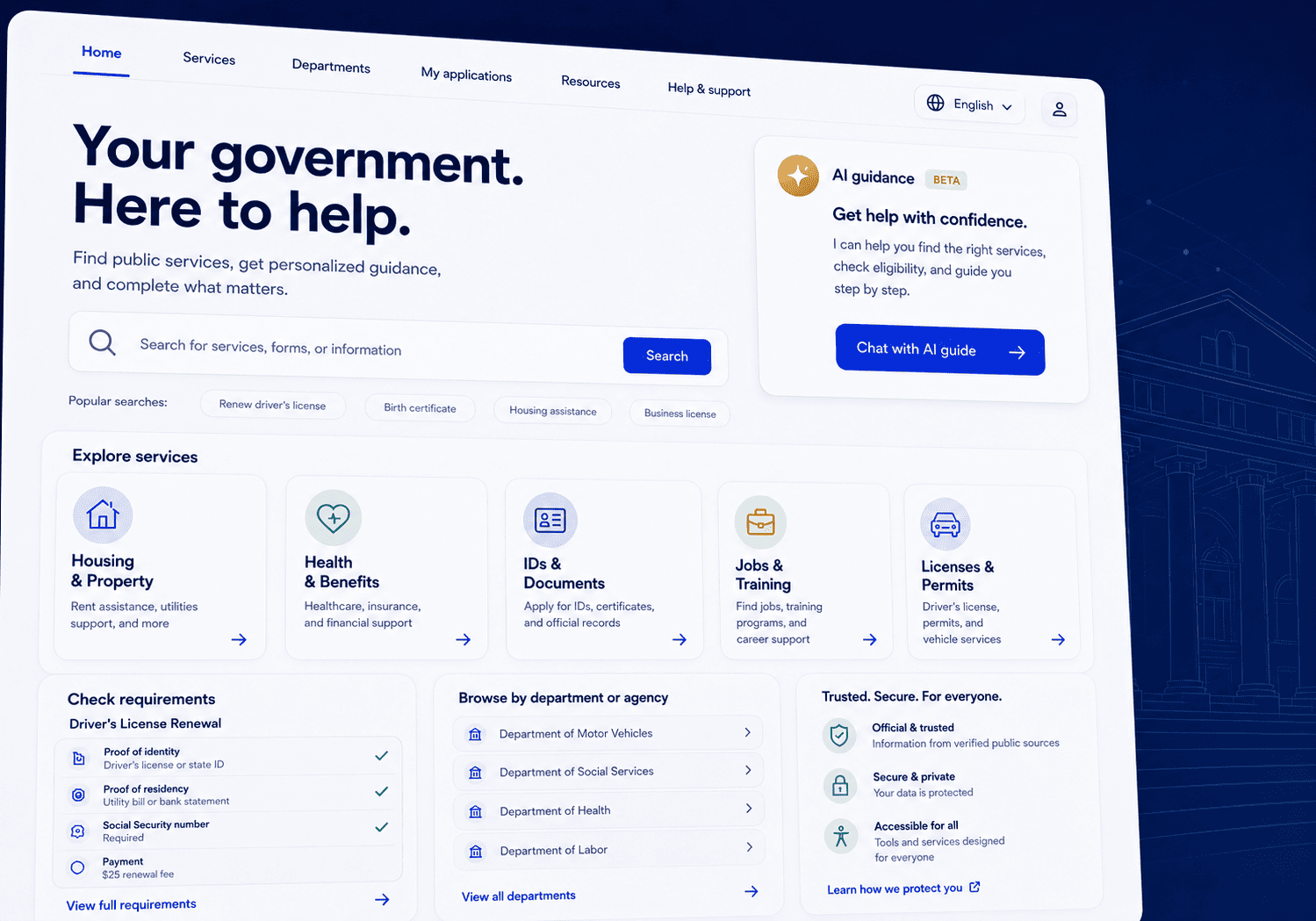
AI-Powered Citizen Services Website Platform for Virginia State Agencies

Plavno developed a modern eGovernment website platform for Virginia state agencies that centralizes citizen services, public information, department content, and an AI-powered guidance agent in one scalable system.

Read More
70%

reduction in routine citizen inquiries to agency staff

AI-Powered Citizen Services Website Platform for Virginia State Agencies

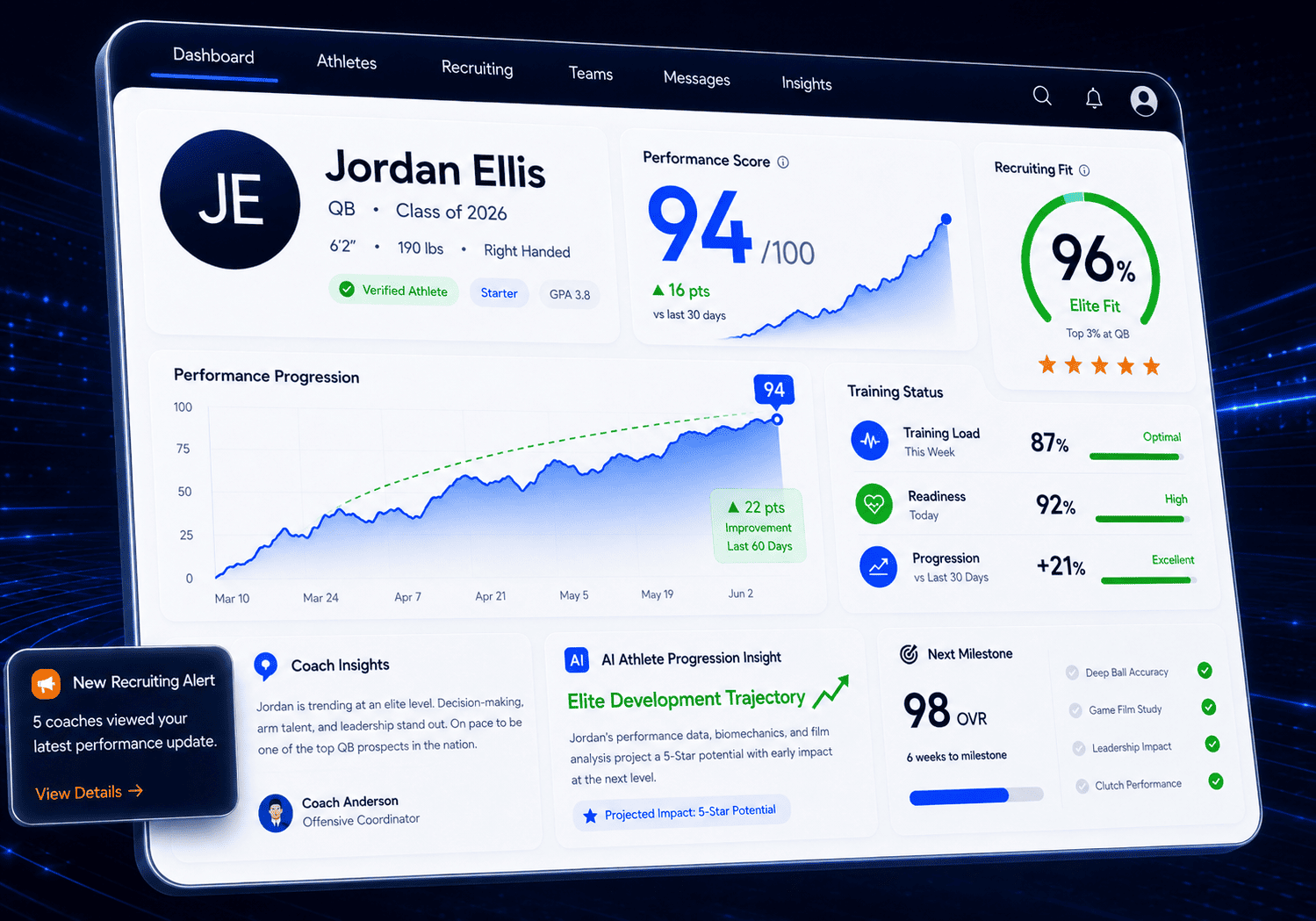
AI-Powered Sports Performance & Recruiting Platform for Virginia Clubs, Academies & Youth Programs

Plavno developed a custom sports technology platform for Virginia-based clubs and academies to combine athlete performance tracking, coach communication, recruiting workflows, and mobile engagement in one ecosystem.

Read More
3x

faster recruiting pipeline

AI-Powered Sports Performance & Recruiting Platform for Virginia Clubs, Academies & Youth Programs

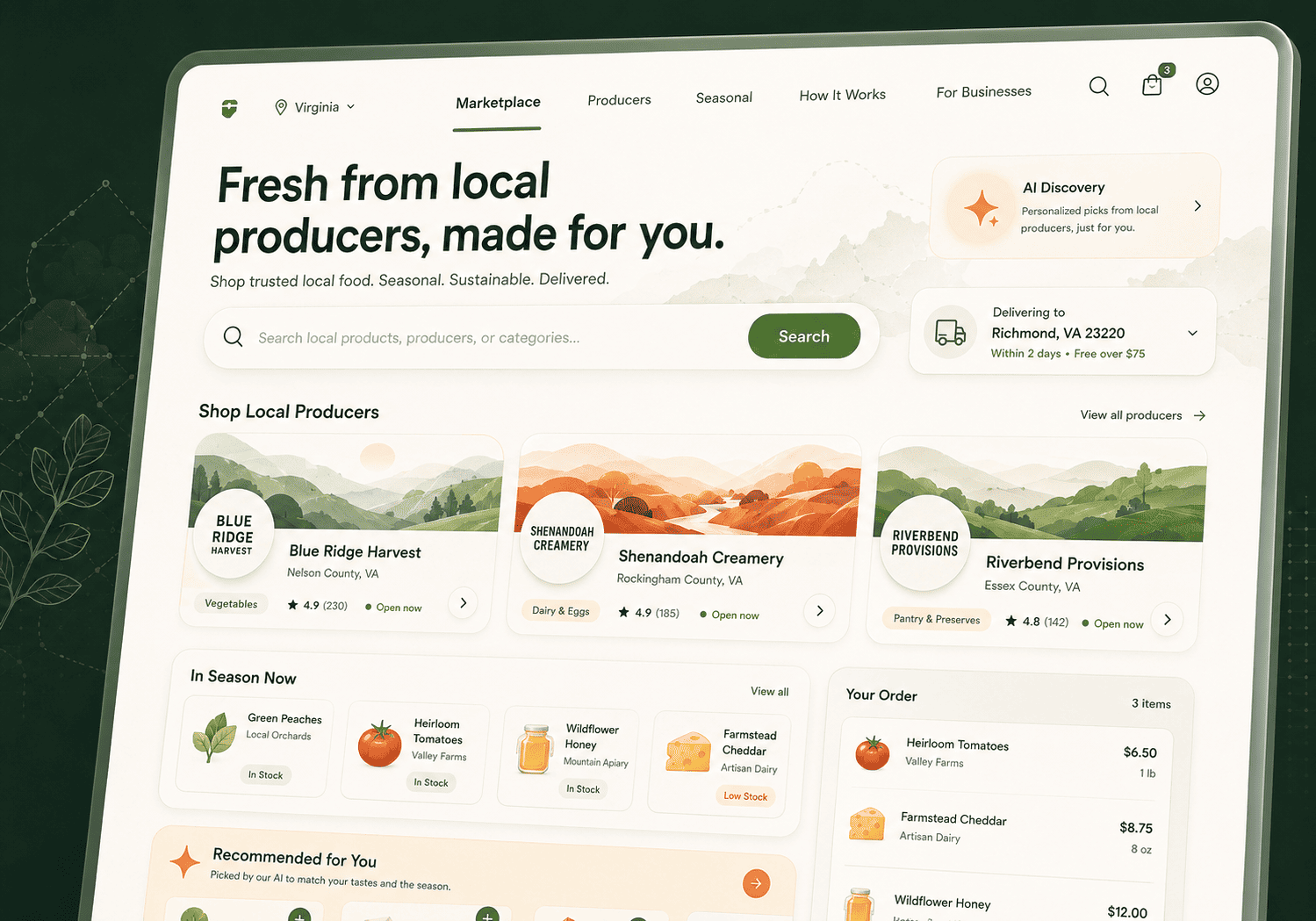
Digital Marketplace for Virginia Farmers, Local Producers & Direct-to-Consumer Food Sales

Plavno developed a custom multi-vendor marketplace for Virginia-based farmers, food producers, and regional sellers to unify product listings, vendor operations, customer ordering, and local fulfillment workflows.

Read More
3x

increase in product discovery relevance

Digital Marketplace for Virginia Farmers, Local Producers & Direct-to-Consumer Food Sales
Eugene Katovich

Eugene Katovich

Sales Manager

Need a custom software solution? We’re ready to help!

Plavno has a team of skilled developers ready to tackle the project. Ask me!

Get a Free Quote

AI Automation Solutions for Newport News Industries

Tailored Automation for Local Markets

Our solutions address the unique needs of shipbuilding, logistics, defense, and healthcare in the Hampton Roads area.

Shipyard

Shipyard Tracking

Sensor Data Flow

AI Automation for Newport News Shipbuilders

Shipyards need precise tracking of component flow to meet tight build schedules. Our platform ingests sensor data, updates inventory, and alerts managers to shortages. Clients report a 20% faster assembly line and reduced overtime costs. The system runs on edge devices that push data to a central AI engine, ensuring low latency and high reliability.

Logistics

Dock Forecasting

Optimal Slot Assignment

AI Automation for Hampton Roads Logistics

Freight operators lose revenue when dock slots are mismanaged. We provide a forecasting engine that predicts slot availability and suggests optimal assignments. The result is a 30% increase in on‑time departures and lower demurrage fees. The engine integrates with existing TMS via REST APIs and uses Redis for rapid cache lookups.

Defense

Compliance Automation

Secure Document Archival

AI Automation for Virginia Defense Contractors

Defense contracts require strict reporting and data sanitization. Our solution automatically classifies, redacts, and archives sensitive documents. Customers see a 60% cut in compliance labor and fewer audit findings. The pipeline leverages spaCy for entity detection and AWS KMS for encryption, meeting DoD security standards.

Healthcare

Voice Assistant

Patient Scheduling

AI Automation for Sentara Healthcare

Hospitals face high call volumes and manual patient data entry. Our voice assistant handles routine inquiries and schedules follow‑ups. The hospital saved 40% of call center staffing costs and improved patient satisfaction scores. The assistant uses Whisper for speech transcription and runs in a HIPAA‑compliant environment.

Manufacturing

Quality Checks

Defect Detection AI

AI Automation for Virginia Manufacturing Plants

Factories generate massive sensor streams that need real‑time quality checks. Our AI models flag out‑of‑spec events instantly, reducing defect detection time by 70%. The solution runs on Kubernetes, scaling with production load. Clients achieve higher yield and lower scrap rates, directly boosting profit margins.

Finance

Fraud Detection

Real-time Scoring

AI Automation for Regional Financial Services

Banks and fintech firms need rapid fraud detection to protect assets. Our system scores transactions in milliseconds and raises alerts for suspicious activity. The result is a 40% drop in fraud loss and faster case resolution. The engine uses XGBoost models and streams data through Kafka for low‑latency processing.

Why Choose Us

Our Edge Over Generic Providers

We bring deep engineering expertise to every automation project.

Generic Agencies
Our Platform (Deep Engineering Expertise)
Custom AI model development
checkmark
Scalable cloud infrastructure
checkmark
checkmark
Industry‑specific compliance
checkmark
Rapid prototyping
checkmark
checkmark
Full‑stack integration support
checkmark

Architecture & Engineering Overview

Engineering deep-dive into AI Automation infrastructure

Manual Data Entry Reduction45%
Annual Cost Savings$120k

For Business: Technical ROI & Risk Mitigation

Our architecture reduces labor costs by automating repetitive steps. In a shipyard pilot we cut manual data entry time by 45%, translating to $120k saved annually. The modular design isolates failures, so a single component outage does not halt production. We use encrypted storage and role‑based access to protect sensitive data. These choices lower both operational risk and compliance expenses. Business impact is proven through measurable cost reductions and risk controls.

1

Discovery

Align goals with KPIs & map workflows

2

Prototype

Sandboxed validation & feasibility proof

3

Production Build

GitOps deployment & automated testing

4

Operation

Continuous monitoring & model retraining

For CTOs: Architecture & Technical Lifecycle

The system follows a four‑stage lifecycle: discovery, prototype, production build, and ongoing operation. Early discovery aligns technical goals with business KPIs. Prototype validation uses sandboxed containers to avoid affecting live systems. Production builds employ GitOps for reproducible deployments and automated testing pipelines. Ongoing operation includes continuous monitoring and quarterly model retraining. This lifecycle ensures predictable delivery and long‑term maintainability.

Ingestion

Data Ingestion

Python scripts, OPC-UA, Kafka streams

AI Models

AI Models

TensorFlow training, TensorRT inference

Orchestration

Orchestration

Docker containers, Kubernetes auto-scaling

Storage

Storage & Cache

PostgreSQL ACID, Redis low-latency

For Engineers: Implementation Details & Stack

Data ingestion uses Python scripts that read from OPC‑UA endpoints and push messages to Kafka. AI models are trained in TensorFlow and exported as TensorRT for low‑latency inference. Services are containerized with Docker and orchestrated by Kubernetes, providing auto‑scaling and self‑healing. We chose PostgreSQL for strong ACID guarantees and Redis for fast caching of recent predictions. Logging follows the OpenTelemetry standard to simplify correlation across services. Each choice balances performance, reliability, and developer productivity.

Infrastructure

Infrastructure Layer

AWS VPC Isolation, IAM Policies, Least-Privilege Access

Security

Security Layer

Encryption at rest (KMS), TLS 1.3 in transit, HIPAA/SOC2

Observability

Observability Layer

Prometheus metrics, Grafana dashboards, Automated runbooks

Infrastructure, Observability & Security

All components run in AWS with VPC isolation and IAM policies that enforce least‑privilege access. We enable encryption at rest with KMS and in transit with TLS 1.3. Monitoring uses Prometheus to collect metrics and Grafana for dashboards. Alerts trigger automated runbooks that restart failing pods or roll back deployments. Compliance reports are generated daily for HIPAA and SOC2 audits. These measures keep the platform secure and observable for US‑based clients.

Implementation Checklist

Key Steps Before Launch

  • Assess Data Quality — Review source systems for completeness and consistency. Identify missing fields and define cleaning rules. Document data lineage to support future audits. This step prevents downstream errors that can increase maintenance costs. A clean dataset reduces model drift and improves ROI.

  • Define Integration Points — Map APIs and legacy interfaces that will connect to the automation platform. Choose REST or gRPC based on latency requirements. Build adapters for ERP, SCADA, or EMR systems. Proper integration avoids costly rework after deployment. It also ensures smooth hand‑off to operations teams.

  • Establish Security Controls — Implement role‑based access, encryption, and audit logging. Conduct a threat model to identify potential attack vectors. Apply least‑privilege policies to all services. Security controls protect sensitive data and reduce compliance risk. They also build trust with regulators and customers.

  • Set Monitoring Baselines — Deploy Prometheus exporters on each service. Define SLAs for latency, error rate, and throughput. Create Grafana dashboards for real‑time visibility. Baselines help detect performance regressions early. Ongoing monitoring keeps operational costs predictable.

  • Plan Post‑Launch Support — Assign a dedicated engineer for the first 30 days. Schedule weekly health reviews and model retraining sessions. Define cost controls for cloud usage to avoid surprise bills. A support plan ensures the system remains efficient and reliable. It also accelerates ROI by keeping the solution tuned.

Vitaly Kovalev

Vitaly Kovalev

Sales Manager

Get Your AI Automation Cost Estimate

Request a free budget calculator for Newport News businesses. The estimator shows projected savings and implementation costs within 24 hours.

Talk to Experts

Testimonials

We are trusted by our customers

“They really understand what we need. They’re very professional.”

The 3D configurator has received positive feedback from customers. Moreover, it has generated 30% more business and increased leads significantly, giving the client confidence for the future. Overall, Plavno has led the project seamlessly. Customers can expect a responsible, well-organized partner.

Sergio Artimenia

Commercial Director, RNDpoint

Sergio Artimenia

“We appreciated the impactful contributions of Plavno.”

Plavno's efforts in addressing challenges and implementing effective solutions have played a crucial role in the success of T-Rize. The outcomes achieved have exceeded expectations, revolutionizing the investment sector and ensuring universal access to financial opportunities

Thien Duy Tran

Product Manager, T-Rize Group

Thien Duy Tran

“We are very satisfied with their excellent work”

Through the partnership with Plavno, we built a system used by more than 40 million connected channels. Throughout the engagement, the team was communicative and quick in responding to our concerns. Overall, we were highly satisfied with the results of collaboration.

Michael Bychenok

CEO, MediaCube

Michael Bychenok

“They have a clear understanding of what the end user needs.”

Plavno's codes and designs are user-friendly, and they complete all deliverables within the deadline. They are easy to work with and easily adapt to existing workflows, and the client values their professionalism and expertise. Overall, the team has delivered everything that was promised.

Helen Lonskaya

Head of Growth, Codabrasoft LLC

Helen Lonskaya

“The app was delivered on time without any serious issues.”

The MVP app developed by Plavno is excellent and has all the functionality required. Plavno has delivered on time and ensured a successful execution via regular updates and fast problem-solving. The client is so satisfied with Plavno's work that they'll work with them on developing the full app.

Mitya Smusin

Founder, 24hour.dev

Mitya Smusin

FAQs

Common Questions

Answers to the most frequent inquiries.

What drives the cost of AI Automation projects in Newport News?

Cost depends on data volume, integration complexity, and required AI model sophistication. A small logistics workflow with clean data may cost $80,000 for a six‑week delivery. A larger shipbuilding inventory system that needs edge sensors and custom compliance reporting can rise to $250,000. We factor local labor rates in Virginia and include a buffer for unexpected data quality issues. Our estimates always break down hardware, software, and services so clients see exactly where money is spent.

How long does it take to build an AI Automation solution?

Timeline varies by scope. A minimal prototype can be delivered in 4 weeks, covering one use case and basic integration. Full‑scale deployments that span multiple systems typically need 12–20 weeks, including discovery, iterative testing, and user training. Shipyard projects often require additional compliance checks, extending the schedule by 2‑3 weeks. We provide a detailed roadmap at the start so clients can plan resources accordingly.

What data do we need to start an AI Automation project?

We need access to the source systems that generate the manual workflow data. This includes sensor feeds, ERP tables, call logs, or document repositories. Data should be representative of typical operations and include at least 30 days of history for model training. If data contains personal health information, we apply HIPAA‑compliant handling. Clean, labeled data speeds up model development and reduces iteration cycles.

How do we measure the quality and effectiveness of the AI models?

We use standard metrics such as precision, recall, and F1‑score for classification tasks. For regression or forecasting models we track mean absolute error (MAE) and root mean squared error (RMSE). All metrics are calculated on a hold‑out validation set that mirrors production conditions. We also monitor business KPIs like time saved, error reduction, and cost impact. Continuous evaluation ensures models stay accurate as data evolves.

What compliance and security standards do you follow for Virginia clients?

We design all solutions to meet HIPAA for healthcare, SOC 2 Type II for SaaS, and DoD 800‑53 for defense contractors. Data at rest is encrypted with AES‑256 and in transit with TLS 1.3. Access is controlled through AWS IAM roles and audited daily. We provide documentation for each compliance framework so clients can pass internal and external audits without extra effort.

Contact Us

This is what will happen, after you submit form

Need a custom consultation? Ask me!

Plavno has a team of experts that ready to start your project. Ask me!

Vitaly Kovalev

Vitaly Kovalev

Sales Manager

Schedule a call

Get in touch

Fill in your details below or find us using these contacts. Let us know how we can help.

No more than 3 files may be attached up to 3MB each.
Formats: doc, docx, pdf, ppt, pptx.
Send request