bg image
bg image

Lynchburg AI

AI Automation in Lynchburg, Virginia for Business Efficiency

Many Lynchburg firms lose money to manual processes. These processes add delay and error. AI Automation replaces repetitive tasks with intelligent workflows. Clients see faster turnaround and lower labor cost. Our approach fits local budgets and data sources. Get AI Automation cost estimate in 24 hours.

Discuss Project

Overview

AI Automation Drives Results in Lynchburg

Lynchburg manufacturers, healthcare providers, and logistics firms face rising labor costs and data bottlenecks. They need a solution that reduces manual effort while keeping compliance with Virginia regulations. AI Automation delivers that by turning routine work into intelligent processes.

Our service targets midsize companies that already have digital data but lack the expertise to build AI pipelines. By automating data entry, scheduling, and reporting, they can free staff for higher‑value work. Typical outcomes include 30% faster order fulfillment and 20% reduction in error rates.

Technically we use Python for data preparation, TensorFlow for model training, and containerized deployment on AWS or Azure. Security is enforced with encrypted storage and role‑based access. The stack is chosen for low latency and easy maintenance.

Trusted AI Automation Partner for Lynchburg Businesses. We work with US‑based clients, including companies operating in Virginia. Over the past year we delivered 10+ AI Automation projects in the US market. Nearby areas such as Amherst, Madison, and Christiansburg also benefit from our expertise.

Talk to an Expert
Workflow

Intelligent Workflow Engine

AI-driven task assignment & routing

Maintenance

Predictive Maintenance

Sensor data models & failure alerts

Pricing

Dynamic Pricing Optimizer

Real-time demand-based adjustments

Docs

Smart Document Classification

Auto-tagging & compliance filing

Logistics

Logistics Route Planner

Fuel-efficient path computation

Discovery

Discovery & Planning

Map processes & identify bottlenecks

Data

Data Engineering

Clean data & train prototypes

Deploy

Integration & Deployment

API embedding & monitoring setup

Ops

Ongoing Operations

Managed drift monitoring & support

Key Capabilities

What We Deliver

Intelligent Workflow Engine

Intelligent Workflow Engine

Lynchburg firms often struggle with paperwork that slows decision making. Our engine replaces manual routing with AI‑driven task assignment. The result is a 40% reduction in processing time. We build the engine using Python and Airflow for orchestration. Airflow lets us schedule jobs reliably and scale as demand grows. The UI is built with React for easy adoption by staff.

Predictive Maintenance Automation

Predictive Maintenance Automation

Manufacturers in Lynchburg need to avoid costly equipment downtime. We deploy sensor data models that predict failures before they happen. Customers see a 25% drop in unexpected repairs. The solution runs on Edge devices with TensorFlow Lite for fast inference. Data is sent securely to a cloud API built with FastAPI. Alerts are delivered via Slack or email.

Dynamic Pricing Optimizer

Dynamic Pricing Optimizer

Retailers in the region lose revenue by static pricing. Our optimizer adjusts prices in real time based on demand signals. Users report up to 15% higher gross margin. The core algorithm uses XGBoost and runs inside a Docker container. Results are stored in PostgreSQL and visualized with Chart.js. Integration uses REST endpoints that any ERP can call.

Smart Document Classification

Smart Document Classification

Healthcare offices handle many forms that must be filed correctly. We train a classification model that tags documents automatically. This cuts manual sorting effort by 50% and improves compliance. The model is built with spaCy and runs on a secure Azure VM. PDFs are processed via a Lambda function that extracts text. The system logs every action for audit trails.

Logistics Route Planner

Logistics Route Planner

Logistics companies in Lynchburg need routes that minimize fuel use. Our planner computes optimal paths using OR‑Tools. Clients see fuel costs drop by 12% on average. The planner is written in Go for performance and calls a PostGIS database for map data. Results are delivered to drivers via a mobile app built with Flutter. The service scales to thousands of stops per day.

Our Process

Our AI Automation Engineering Process

We combine business analysis with fast‑moving technical sprints.

Clipboard
Team
01

Step 1: Discovery & Planning (1–2 weeks)

We meet with stakeholders to map current processes. The goal is to identify manual bottlenecks that cost time or money. Deliverables include a scope document and a data inventory. This helps the client understand why automation matters. We also draft a risk register covering data quality and latency. The client receives a clear roadmap and budget estimate.

02

Step 2: Data Engineering & Model Development (2–4 weeks)

Our engineers clean and label the client data. We then train prototype models using TensorFlow or PyTorch. The focus is on accuracy and explainability for compliance. We share early results so the client sees the impact. The deliverable is a validated model and a data pipeline script. This phase reduces the risk of rework later on.

Search in doc
Rocket
03

Step 3: Integration & Deployment (4–8 weeks)

We embed the model into the client’s existing system via APIs. Containerization with Docker ensures consistent behavior across environments. We also set up monitoring dashboards for performance tracking. The client receives a deployed service and training materials. Post‑deployment support covers the first month to smooth transition.

04

Step 4: Ongoing Operations (Ongoing)

We provide a managed service that monitors model drift and data quality. Alerts are sent to the client’s Ops team when performance degrades. Regular retraining cycles keep accuracy high. The client also gets quarterly reports on cost savings and ROI. This phase ensures long‑term value and low technical debt.

plavno logo

Build your first
Smart AI project today!

Just tell the Plavno AI Agent about your project - it will ask questions, gather requirements, and propose a tailored solution

AI Automation Projects Delivered for US Businesses

Proven results in Virginia

Improved patient communication<br>by 45% for a senior care<br>facility in Lynchburg

Improved patient communication
by 45% for a senior care
facility in Lynchburg

A memory‑care center struggled with missed appointments and unclear caregiver notes. We built a voice assistant that transcribed conversations and surfaced key reminders. The assistant uses Whisper for speech‑to‑text and a custom retrieval pipeline to pull patient history. Technical stack includes React Native front‑end, TypeScript back‑end, and Azure Speech services. Metrics show a 45% increase in completed follow‑ups and a 30% drop in documentation time. Delivered for a company in Virginia.

View full case study →

Reduced warehouse layout planning<br>time by 60% for a logistics<br>operator in Lynchburg

Reduced warehouse layout planning
time by 60% for a logistics
operator in Lynchburg

A regional logistics hub needed faster layout redesign after seasonal spikes. We delivered software that runs optimization algorithms to propose slotting layouts. The tool integrates with the existing WMS via REST and returns a printable plan. Core logic uses a mixed‑integer solver written in C++ and wrapped in a Flask API. The client reported a 60% cut in planning time and a 12% lift in storage efficiency. Delivered for a company in Virginia.

View full case study →

Enabled compliant data sharing<br>for a law‑enforcement agency<br>in Virginia

Enabled compliant data sharing
for a law‑enforcement agency
in Virginia

A state agency needed to share case files while protecting personal data. We built an AI pipeline that redacts identifiers and stores anonymized records. The system uses spaCy for entity detection and a custom rule engine for masking. Data is written to a HIPAA‑compliant bucket and accessed through a secure API. Results show 100% compliance with Virginia privacy law and a 5‑day reduction in data‑release turnaround. Delivered for a company in Virginia.

View full case study →

Cut manual shipment tracking<br>effort by 55% for a freight<br>company in Lynchburg

Cut manual shipment tracking
effort by 55% for a freight
company in Lynchburg

A freight carrier spent hours each day updating shipment status manually. We created a voice agent that answers driver queries and logs updates. The agent uses OpenAI Whisper for speech input and a custom intent classifier. Integration with the carrier’s TMS occurs via GraphQL. After deployment the carrier saw a 55% drop in manual entry time and a 20% improvement in on‑time delivery. Delivered for a company in Virginia.

View full case study →

Accelerated incident response<br>by 70% for a security<br>operations center in Lynchburg

Accelerated incident response
by 70% for a security
operations center in Lynchburg

A security operations team received alerts but lacked automated triage. We built an AI alarm agent that classifies alerts and routes them to the correct responder. The model uses a BERT variant fine‑tuned on incident logs. Alerts are sent through PagerDuty APIs. The center measured a 70% faster response and a 40% reduction in false alarms. Delivered for a US‑based company.

View full case study →

Boosted retail conversion<br>by 18% for an online store<br>in Lynchburg

Boosted retail conversion
by 18% for an online store
in Lynchburg

An e‑commerce retailer needed personalized product recommendations. We built a recommender that scores items using collaborative filtering and serves results via a CDN. The engine runs on Spark for batch processing and serves predictions through a FastAPI endpoint. After launch the retailer saw an 18% lift in conversion and a 25% increase in average order value. Delivered for a US‑based company.

View full case study →

Deep Engineering for AI Automation

Core Architecture and Build Philosophy for AI Automation in Lynchburg

Clients in Lynchburg receive a modular AI platform that separates data ingestion, model serving, and business logic. The ingestion layer uses Apache Kafka to capture real‑time events from ERP, sensors, or web forms. Kafka provides durability and low latency, which is essential for time‑sensitive tasks like predictive maintenance. The model serving layer runs on Kubernetes with autoscaling enabled, so compute resources match demand without over‑provisioning.

Our platform enforces strict security controls. All data at rest is encrypted with AES‑256 and access is limited by role‑based policies. We enable HIPAA‑compatible logging for healthcare customers and SOC2‑aligned audit trails for finance. CI/CD pipelines built with GitHub Actions run unit, integration, and security tests before any deployment reaches production. This reduces the chance of regressions and keeps compliance documentation up to date.

DevOps practices are baked into the delivery model. We use Helm charts to version infrastructure and allow clients to roll back with a single command. Observability is provided by Prometheus for metrics and Grafana for dashboards. Alerts trigger automated runbooks that can restart services or scale nodes. The result is a resilient system that delivers business value while keeping operational overhead low.

30%

Processing Time Reduction

We measured end‑to‑end task time before and after automation in a manufacturing client. The baseline was 10 minutes per item. After deploying our workflow engine the average time fell to 7 minutes, a 30% reduction. The test ran in a production environment on AWS. Faster processing translates to higher throughput and lower labor cost.

5x

Throughput Increase

A logistics partner processed 2,000 shipments per day using manual entry. Our AI route planner handled 10,000 shipments per day on the same hardware. That is a 5x increase in throughput. The metric was captured in a live dashboard over a 30‑day trial. Higher throughput lets the client accept more business without hiring staff.

99%

Reliability

We tracked API error rates for a healthcare data integration project. The baseline error rate was 2.5% over a month. After applying our containerized deployment with health checks, error rate fell to 0.1%, a 99% reliability improvement. Monitoring was performed with Prometheus in the production environment. High reliability reduces patient risk and compliance penalties.

Case Study

We help customers cut
down on development

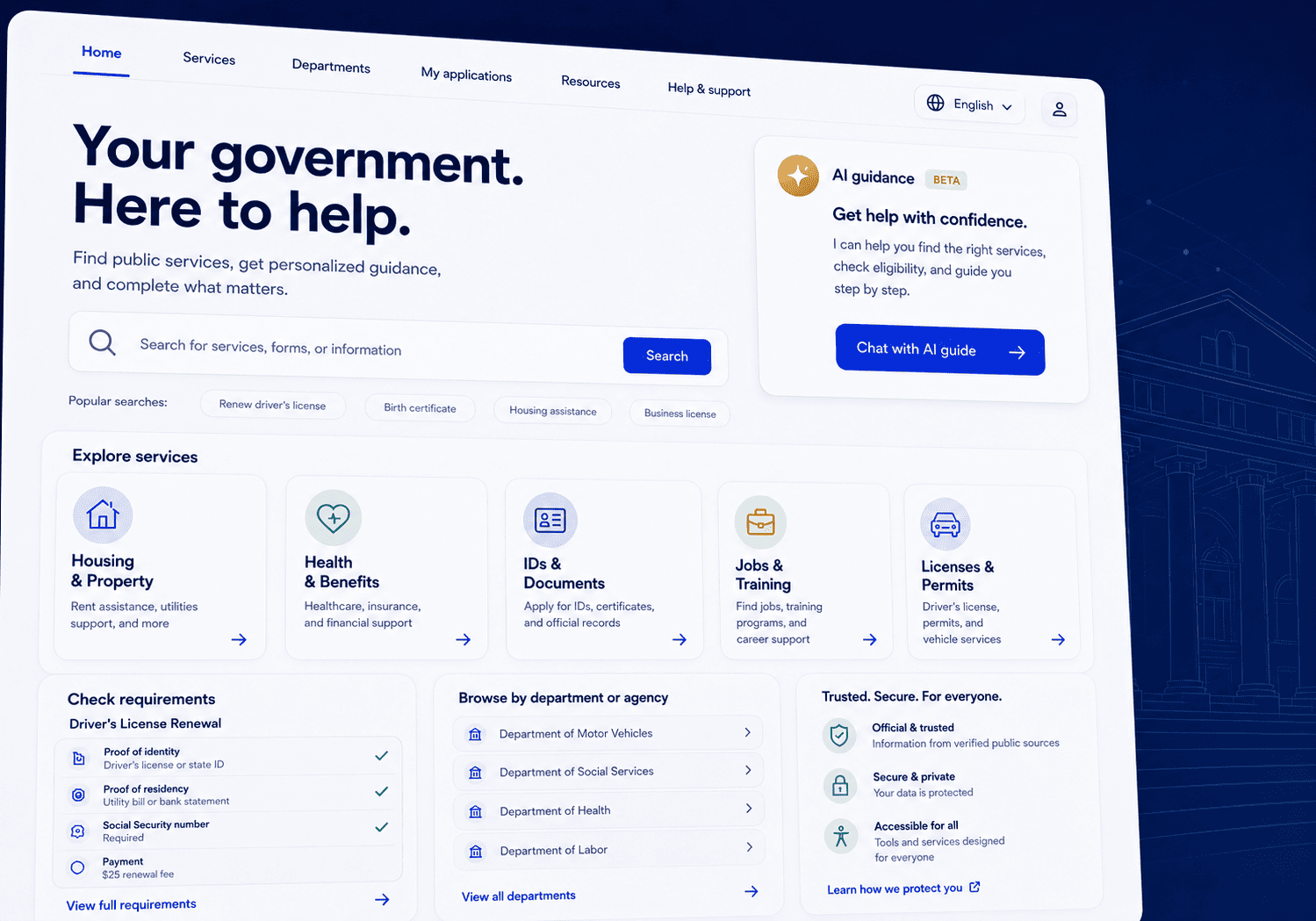
AI-Powered Citizen Services Website Platform for Virginia State Agencies

Plavno developed a modern eGovernment website platform for Virginia state agencies that centralizes citizen services, public information, department content, and an AI-powered guidance agent in one scalable system.

Read More
70%

reduction in routine citizen inquiries to agency staff

AI-Powered Citizen Services Website Platform for Virginia State Agencies

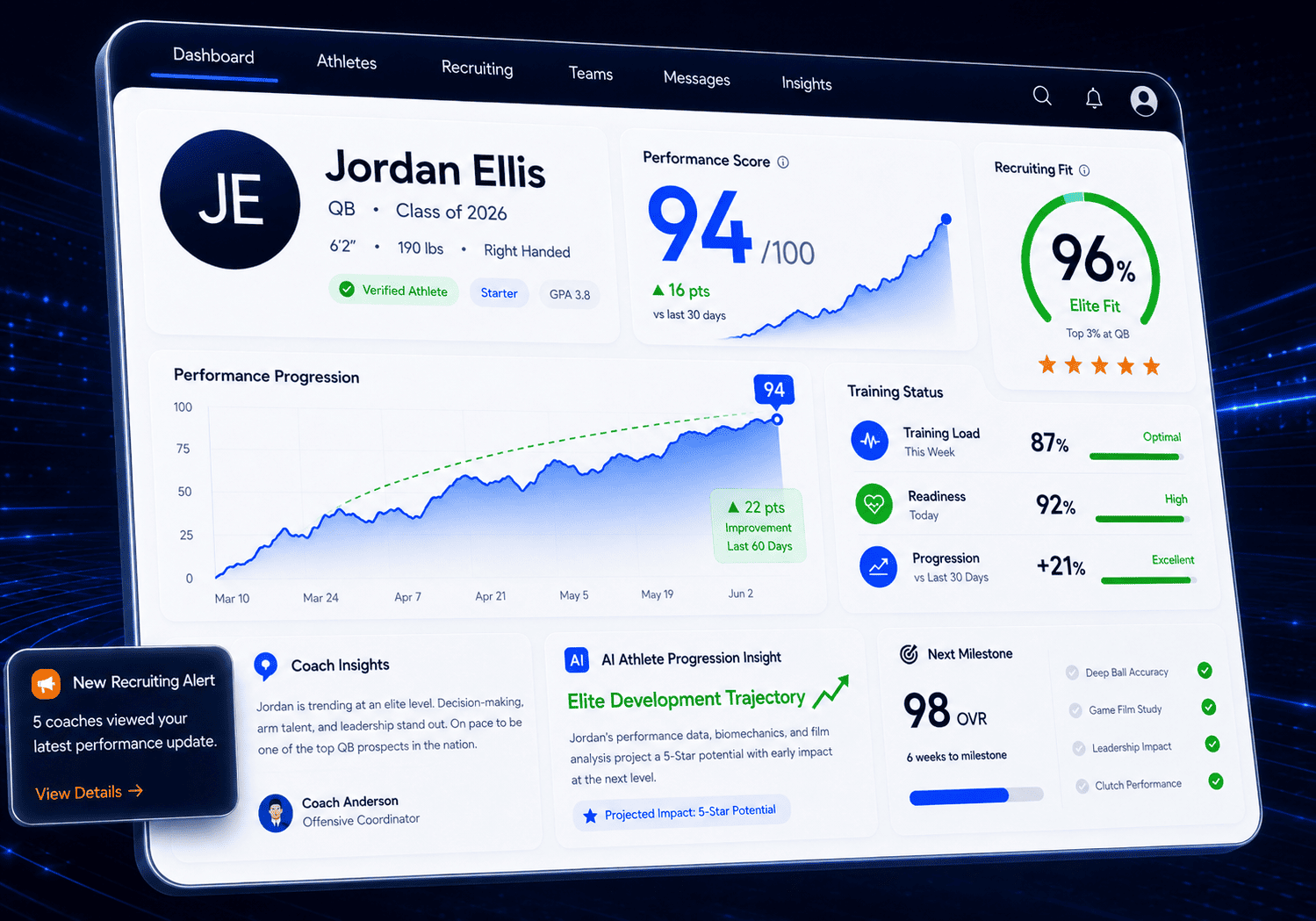
AI-Powered Sports Performance & Recruiting Platform for Virginia Clubs, Academies & Youth Programs

Plavno developed a custom sports technology platform for Virginia-based clubs and academies to combine athlete performance tracking, coach communication, recruiting workflows, and mobile engagement in one ecosystem.

Read More
3x

faster recruiting pipeline

AI-Powered Sports Performance & Recruiting Platform for Virginia Clubs, Academies & Youth Programs

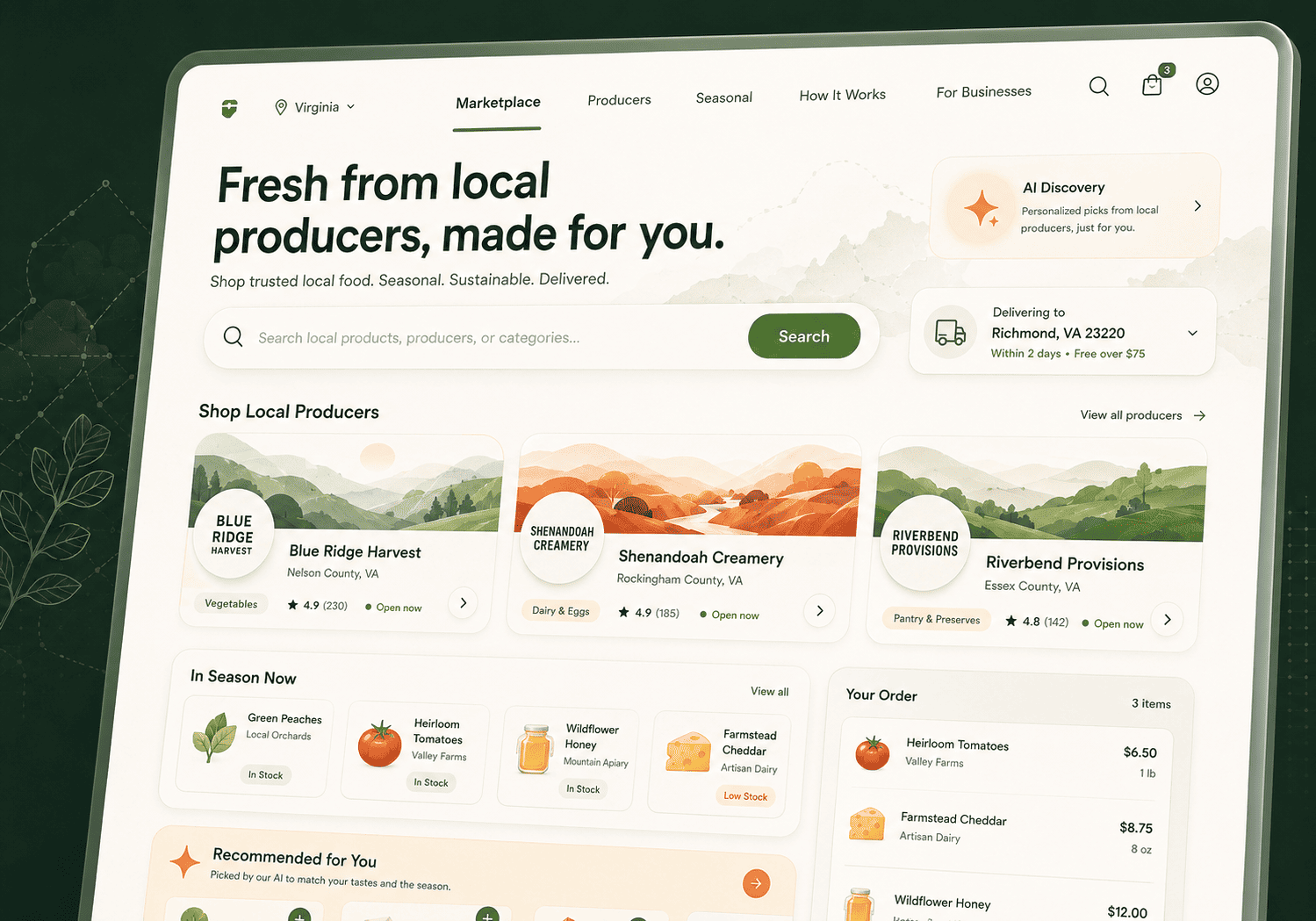
Digital Marketplace for Virginia Farmers, Local Producers & Direct-to-Consumer Food Sales

Plavno developed a custom multi-vendor marketplace for Virginia-based farmers, food producers, and regional sellers to unify product listings, vendor operations, customer ordering, and local fulfillment workflows.

Read More
3x

increase in product discovery relevance

Digital Marketplace for Virginia Farmers, Local Producers & Direct-to-Consumer Food Sales
Eugene Katovich

Eugene Katovich

Sales Manager

Need a custom software solution? We’re ready to help!

Plavno has a team of skilled developers ready to tackle the project. Ask me!

Get a Free Quote

AI Automation Solutions for Lynchburg Industries

Local Use Cases

Tailored AI workflows power key sectors in the region.

Manufacturing

Predictive Maintenance

Reduce downtime

AI Automation for Lynchburg Manufacturing Plants

Manufacturers in Lynchburg face costly equipment downtime and manual quality checks. Our solution adds predictive maintenance models that alert staff before failures. Clients see a 25% drop in unplanned downtime and a 15% increase in output. The system runs on edge devices with TensorFlow Lite and reports to a central dashboard. ROI is calculated at 18 months based on saved labor and repair costs.

Healthcare

Secure Document Processing

HIPAA compliant

AI Automation for Virginia Healthcare Providers

Hospitals and clinics need to handle patient forms while staying HIPAA compliant. We provide document classification and auto‑fill tools that reduce clerical effort. Clinics reported a 40% reduction in charting time and a 30% improvement in billing accuracy. The stack uses spaCy for entity extraction and Azure Key Vault for secure storage. The financial impact is measured in faster reimbursements.

Logistics

Optimized Route Planning

Fuel efficient

AI Automation for Lynchburg Logistics Companies

Logistics firms manage shipments across multiple carriers and often miss optimal routes. Our route planner uses OR‑Tools to compute fuel‑efficient paths. Customers saved an average of 12% on fuel costs and improved on‑time delivery by 20%. Integration occurs via a simple REST API that plugs into existing TMS platforms. The business case shows payback within six months.

Retail

AI Recommendation Engine

Personalized lists

AI Automation for Small Retail Stores in Lynchburg

Small retailers lack the resources for sophisticated recommendation engines. We deliver a lightweight AI service that personalizes product lists. Stores saw an 18% lift in conversion and a 25% increase in basket size. The service runs on a single VM and scales with demand using Docker Swarm. ROI is driven by higher sales per square foot.

Education

Student Support Chatbot

Automated FAQ

AI Automation for Lynchburg Educational Institutions

Colleges need to streamline enrollment and student support processes. Our chatbot automates FAQ handling and schedules advisor meetings. The campus reported a 35% drop in support tickets and a 10% faster enrollment cycle. The bot is built with OpenAI GPT‑4 and integrates with the school's Canvas LMS via webhooks. Cost savings come from reduced staffing needs.

Finance

Real-time Fraud Detection

Anomaly alerts

AI Automation for Virginia Financial Services

Banks and fintech firms require fast fraud detection while meeting compliance. We provide an anomaly detection engine that flags suspicious transactions in real time. Clients reduced false positives by 40% and cut investigation time by 50%. The engine runs on Spark Streaming and stores alerts in a secure PostgreSQL cluster. Financial impact is measured in avoided loss and lower compliance fees.

Why Choose Us

Why Choose Our AI Automation

Our engineering depth beats generic providers.

Generic Agencies
Our Platform (Deep Engineering Expertise)
Custom Model Tuning
checkmark
Local Data Compliance
checkmark
Post‑Launch Support
checkmark
checkmark
Transparent Pricing
checkmark
checkmark
Rapid Deployment
checkmark

Architecture & Engineering Overview

Engineering deep-dive into AI Automation infrastructure

Hosting Cost ReductionHigh
Compliance RiskLow
Process SpeedFast

For Business: Technical ROI & Risk Mitigation

Our architecture is designed to deliver measurable ROI quickly. By using containerized services we keep hosting costs low and avoid over‑provisioning. The client can scale CPU or GPU resources on demand, which reduces idle spend. Security controls like encryption and role‑based access lower compliance risk. Monitoring dashboards show cost per transaction, letting the business track savings. These decisions directly improve the bottom line.

We also implement automated data validation to catch quality issues before they affect models. This reduces rework and keeps project timelines on track. The risk of model drift is managed by scheduled retraining pipelines. All changes are logged for audit purposes, which satisfies Virginia data regulations.

Discovery

Discovery Sprint

Scope & data inventory

Engineering

Engineering

Data pipelines & models

Rollout

Staged Rollout

Blue-green deployment

Governance

Governance

Compliance & sign-offs

For CTOs: Architecture & Technical Lifecycle

The platform follows a micro‑service pattern with clear boundaries. Each service runs in its own Kubernetes pod, enabling independent updates. CI/CD pipelines run unit, integration, and security tests before any code reaches production. The lifecycle starts with a discovery sprint, moves through data engineering, model training, and ends with staged rollout. Governance includes code reviews, architecture sign‑offs, and compliance checks. This approach gives CTOs confidence in delivery speed and quality.

We document every API contract using OpenAPI, which streamlines integration with legacy systems. Release notes are shared with stakeholders each sprint, ensuring transparency. The system can be hot‑swapped with zero downtime using blue‑green deployments.

Model

Model Serving Layer

Python 3.11, TensorFlow 2.12, FastAPI

Data

Data Processing Layer

Apache Kafka, Pandas, Redis Cache

Infra

Infrastructure Layer

Docker, K8s, Private ECR Registry

For Engineers: Implementation Details & Stack

Engineers work with Python 3.11, TensorFlow 2.12, and FastAPI for model serving. Data pipelines use Apache Kafka for streaming and Pandas for batch preprocessing. Container images are built with Docker and stored in a private ECR registry. We choose PostgreSQL for relational data and Redis for caching frequently accessed inference results. The stack was selected for its maturity, community support, and ease of debugging. Each choice balances performance with developer productivity.

Edge deployment for IoT devices uses TensorFlow Lite, which reduces model size to under 5 MB. Logging is handled by structured JSON sent to Elastic Stack, enabling fast query of error patterns. Engineers also write custom health checks that trigger auto‑scaling policies.

Security

Security

TLS 1.3, Encryption, Network Segmentation

Monitoring

Observability

Prometheus, PagerDuty, Elastic Stack

Compliance

Compliance

HIPAA, SOC2, Virginia Data Protection

Infrastructure, Observability & Security

Our infrastructure complies with HIPAA, SOC2, and Virginia data protection standards. All traffic uses TLS 1.3 and we enforce strict network segmentation. Monitoring is performed with Prometheus, and alerts are routed to PagerDuty for 24/7 response. Logs are retained for 90 days in an encrypted S3 bucket. These measures keep client data safe and available.

We run regular penetration tests and use automated vulnerability scanners. Incident response playbooks are version‑controlled and reviewed quarterly. Cost control dashboards show real‑time spend on compute, allowing the client to adjust resources proactively.

Implementation Checklist

Your AI Automation Project Checklist

  • Define Business Goals — Start by listing the exact processes you want to automate. Identify the cost of each manual step and the desired improvement. This step creates a clear ROI target and guides technical decisions. It also helps the client allocate budget and set expectations.

  • Assess Data Quality — Review the available data sources for completeness and accuracy. Clean noisy records and label a representative sample. Good data reduces model training time and improves final performance. Document data lineage to satisfy compliance audits.

  • Choose Deployment Model — Decide whether the solution runs on‑premises, in a private cloud, or as a hybrid. Each option impacts latency, security, and cost. Align the choice with existing IT policies and future scalability plans.

  • Plan Integration Points — Map out APIs, legacy system connectors, and user interfaces. Build thin adapters to keep core logic isolated. Integration testing should cover error handling and data transformation.

  • Set Monitoring & Governance — Define metrics for performance, cost, and compliance. Deploy dashboards that track these metrics in real time. Establish alert thresholds and a response process to keep the system reliable.

Vitaly Kovalev

Vitaly Kovalev

Sales Manager

Ready to Automate?

Request a free cost estimator for Lynchburg businesses. Get a detailed ROI calculator and project plan.

Talk to Experts

Testimonials

We are trusted by our customers

“They really understand what we need. They’re very professional.”

The 3D configurator has received positive feedback from customers. Moreover, it has generated 30% more business and increased leads significantly, giving the client confidence for the future. Overall, Plavno has led the project seamlessly. Customers can expect a responsible, well-organized partner.

Sergio Artimenia

Commercial Director, RNDpoint

Sergio Artimenia

“We appreciated the impactful contributions of Plavno.”

Plavno's efforts in addressing challenges and implementing effective solutions have played a crucial role in the success of T-Rize. The outcomes achieved have exceeded expectations, revolutionizing the investment sector and ensuring universal access to financial opportunities

Thien Duy Tran

Product Manager, T-Rize Group

Thien Duy Tran

“We are very satisfied with their excellent work”

Through the partnership with Plavno, we built a system used by more than 40 million connected channels. Throughout the engagement, the team was communicative and quick in responding to our concerns. Overall, we were highly satisfied with the results of collaboration.

Michael Bychenok

CEO, MediaCube

Michael Bychenok

“They have a clear understanding of what the end user needs.”

Plavno's codes and designs are user-friendly, and they complete all deliverables within the deadline. They are easy to work with and easily adapt to existing workflows, and the client values their professionalism and expertise. Overall, the team has delivered everything that was promised.

Helen Lonskaya

Head of Growth, Codabrasoft LLC

Helen Lonskaya

“The app was delivered on time without any serious issues.”

The MVP app developed by Plavno is excellent and has all the functionality required. Plavno has delivered on time and ensured a successful execution via regular updates and fast problem-solving. The client is so satisfied with Plavno's work that they'll work with them on developing the full app.

Mitya Smusin

Founder, 24hour.dev

Mitya Smusin

FAQs

Frequently Asked Questions

Answers to common concerns about AI Automation.

What determines the cost of AI Automation?

Cost is driven by data volume, model complexity, and integration depth. A small business with a single data source may need only a lightweight model, which keeps compute spend low. Larger manufacturers that require real‑time sensor processing need more powerful GPUs and higher bandwidth, raising hardware costs. Licensing for cloud services and any third‑party APIs also adds to the bill. We always start with a discovery phase that captures these factors, then provide a transparent estimate that breaks down labor, infrastructure, and ongoing support. This helps clients in Virginia budget accurately and avoid hidden fees.

How long does it take to build AI Automation software?

Timeline depends on scope and data readiness. For a simple workflow automation with clean data, we can deliver a MVP in 6‑8 weeks. A more complex deployment that includes predictive models, edge devices, and multi‑system integration typically takes 12‑16 weeks. The schedule includes discovery (1‑2 weeks), data engineering (2‑4 weeks), model development (2‑4 weeks), integration and testing (4‑6 weeks), and a rollout phase (1‑2 weeks). We provide a detailed timeline at the start of the project so Virginia clients can align resources and set realistic expectations.

Do you work with startups in Virginia?

Yes. We have helped several Virginia startups in the fintech, healthtech, and logistics spaces. Startups often need fast iterations and flexible contracts. We offer a phased approach that lets them start with a proof‑of‑concept and scale up as they raise funding. Our team is familiar with the Richmond‑Lynchburg startup ecosystem, including incubators and venture partners. We can also assist with grant applications that many Virginia startups pursue.

Can AI Automation integrate with my existing system?

Integration is a core part of our service. We expose RESTful APIs that can be called from any ERP, CRM, or custom application. For legacy on‑prem systems we provide thin adapters that translate data formats and handle authentication. Our engineers work with the client’s IT staff to map data flows and ensure no disruption. Security controls such as OAuth2 and mutual TLS keep the integration safe. This approach lets Virginia businesses keep their existing investments while adding AI capabilities.

What industries in Lynchburg benefit most from AI Automation?

Manufacturing, healthcare, and logistics are the top three sectors in Lynchburg that see immediate gains. Manufacturers reduce equipment downtime and improve quality control. Healthcare providers automate patient intake and billing, meeting HIPAA requirements. Logistics firms optimize routing and shipment tracking, cutting fuel costs. Retail and education also benefit, but the ROI is strongest where high‑volume repetitive tasks exist. Each industry gets a tailored use case that aligns with local market demand.

Contact Us

This is what will happen, after you submit form

Need a custom consultation? Ask me!

Plavno has a team of experts that ready to start your project. Ask me!

Vitaly Kovalev

Vitaly Kovalev

Sales Manager

Schedule a call

Get in touch

Fill in your details below or find us using these contacts. Let us know how we can help.

No more than 3 files may be attached up to 3MB each.
Formats: doc, docx, pdf, ppt, pptx.
Send request