bg image
bg image

Serving Harrisonburg & Virginia

Reduce Diagnostic Workloads with Harrisonburg Healthcare AI in 2026

Medical teams in Rockingham County spend hours on manual data entry and administrative tasks. This reduces time for patient care and increases burnout. Our AI systems automate these workflows to improve accuracy and speed. You get reliable tools that integrate with your existing electronic health records. We focus on measurable outcomes like reduced readmission rates and faster billing cycles. Get Healthcare AI cost estimate in 24 hours.

Discuss Project

Overview

Why Virginia Medical Teams Need AI Now

Hospitals in Virginia face rising pressure to cut costs while improving patient outcomes. Administrative burdens often slow down critical care and lead to staff fatigue. Implementing healthcare AI addresses these issues by automating repetitive tasks and analyzing complex data. We work with US-based clients, including companies operating in Virginia to build custom solutions. Trusted Healthcare AI Partner for Harrisonburg Businesses, we understand the local regulatory landscape. Our computer vision models help radiologists scan images faster. We have delivered 10+ Healthcare AI projects in the US market. Local clinics in Staunton and Waynesboro also benefit from our regional expertise.

Effective AI requires more than just algorithms; it needs integration with legacy systems. Many providers struggle with data silos that prevent useful insights. We build pipelines that clean and structure this data for machine learning models. This approach ensures that predictions are accurate and actionable for medical staff. The goal is to support decision-making without adding technical debt to your infrastructure.

Rockingham County medical providers need solutions that scale with patient volume. Our systems handle increased loads without sacrificing performance or speed. We design architectures that remain stable even during peak usage times. This reliability is crucial for emergency departments and intensive care units. By 2026, AI adoption will be a standard for competitive healthcare delivery in Virginia.

Integration with local providers like Carilion Clinic requires strict adherence to standards. We ensure our software communicates flawlessly with existing EHR platforms. This reduces the friction often associated with adopting new technology. Our team handles the complex backend logic so your staff can focus on medicine. We provide the technical foundation for modern medical practices in the Shenandoah Valley.

Talk to an Expert
Cost Efficiency

Cost Efficiency

Reduce administrative costs and staff fatigue through intelligent automation.

Computer Vision

Computer Vision

Radiology support and anomaly detection using advanced imaging models.

Data Pipelines

Data Pipelines

Clean and structure data silos for actionable medical insights.

Scalable Architecture

Scalable Architecture

Stability under peak loads for emergency departments and ICUs.

EHR Integration

EHR Integration

Seamless connection with legacy systems and local provider platforms.

plavno logo

Build your first
Smart AI project today!

Just tell the Plavno AI Agent about your project - it will ask questions, gather requirements, and propose a tailored solution

Core Architecture

Building Reliable AI Agents for Medical Data

We deploy retrieval-augmented generation (RAG) systems to answer internal medical queries. These systems pull verified data from trusted sources to ensure accuracy. For example, we built an enterprise knowledge assistant for internal support and information retrieval. This solution used LLM agents to provide instant answers to employee questions. It reduced the time staff spent searching for protocols by a significant margin. The architecture prevents hallucinations by grounding responses in specific documents.

Vector databases store embeddings of medical guidelines and policy documents. When a query occurs, the system retrieves the most relevant chunks of text. The LLM then synthesizes a coherent answer based only on that retrieved data. This method is safer than using a generic model trained on public internet data. It ensures that advice aligns with internal hospital standards and regulations. We use Python and LangChain to construct these robust workflows.

Security is paramount when handling patient information or internal protocols. We enforce strict access controls and audit logs for all AI interactions. Data encryption at rest and in transit protects sensitive information from unauthorized access. Our architecture isolates the AI model from the production database to minimize attack vectors. This design meets HIPAA requirements and maintains patient trust effectively.

DevOps practices ensure these AI services remain available around the clock. We containerize applications using Docker for consistent deployment across environments. Kubernetes clusters manage scaling automatically based on user demand. Monitoring tools track the health of the API endpoints and model performance. This infrastructure allows us to deploy updates without downtime for critical hospital systems.

Delivery Process

From Discovery to Deployment

A structured approach to building and validating medical AI tools.

Clipboard
Team
01

Step 1: Discovery & Audit (1-2 weeks)

We analyze your current data workflows and identify bottlenecks. Our team meets with stakeholders to define specific clinical or operational goals. We assess data quality and availability to ensure feasibility. You receive a roadmap that outlines the technical approach and expected ROI. This phase aligns our engineering efforts with your business needs.

02

Step 2: Pilot Development (3-4 weeks)

We build a minimum viable product focused on the highest-impact use case. This involves training models on your sanitized data and connecting to key systems. We conduct rigorous testing to validate accuracy and integration points. You get a working prototype to test in a controlled environment. Feedback from this pilot informs the final production build.

Search in doc
Rocket
03

Step 3: Integration & Training (2-3 weeks)

Our engineers integrate the AI tool into your existing EHR or workflow platform. We provide training sessions for staff to ensure smooth adoption. Security checks are performed to verify compliance with healthcare standards. The system is fine-tuned based on real-world usage during this period. You receive documentation and handover materials for your IT team.

04

Step 4: Launch & Monitor (Ongoing)

We deploy the solution to your production environment with zero-downtime strategies. Continuous monitoring tracks performance metrics and prediction accuracy over time. We stand by to address any issues and implement updates as regulations change. This ensures the AI system remains effective and secure long-term. You gain a reliable partner for ongoing optimization and support.

Key Capabilities

What Our Software Solves

Diagnostic Assistance

Diagnostic Assistance

Algorithms analyze medical images to highlight anomalies for radiologists. This speeds up the review process and reduces human error rates. We use convolutional neural networks trained on diverse datasets. Early detection of conditions improves patient prognosis significantly.

Automated Documentation

Automated Documentation

Voice-to-text tools transcribe patient visits automatically. NLP models extract key codes and symptoms for the EHR. This saves doctors hours of typing per day. The structured data improves billing accuracy and claim processing speed.

Predictive Analytics

Predictive Analytics

Systems analyze patient history to forecast readmission risks. Care teams can intervene early to prevent costly returns to the hospital. We use time-series analysis on patient vitals and lab results. This proactive care model improves overall population health metrics.

Workflow Automation

Workflow Automation

Bots handle repetitive administrative tasks like scheduling and insurance verification. Staff can focus on complex patient needs instead of paperwork. We integrate RPA with legacy hospital systems seamlessly. Operational efficiency increases while administrative costs drop.

Drug Interaction Checkers

Drug Interaction Checkers

AI scans prescriptions against patient records for potential conflicts. Pharmacists receive instant alerts about dangerous combinations. This layer of safety prevents adverse drug events. The system updates automatically with new pharmaceutical research.

Data & Scale

Scaling Logic for High-Volume Assessment

Handling high-volume data requires specialized infrastructure beyond basic AI models. We developed an AI grader for EdTech that demonstrates this scalability principle. The system performs automated scoring and rubric-based evaluation at massive scale. It processes thousands of submissions simultaneously without lag or degradation in quality. This architecture is applicable to healthcare for processing lab results or patient forms rapidly.

Custom logic engines ensure that evaluation rules are applied consistently every time. We build stateless microservices that can spin up and down based on traffic. This elasticity handles surges in demand, such as during flu season or enrollment periods. The feedback generation component creates detailed reports for users. In a medical context, this translates to clear, automated explanations for patients or insurance audits.

Data pipelines must sanitize inputs before they reach the inference layer. We validate data schemas to prevent crashes or injection attacks. For the grader, this meant parsing diverse file formats and text structures. In healthcare, this means normalizing data from different device manufacturers. Clean data pipelines are the backbone of any reliable automated analysis system.

Cost control is a major concern when running inference at scale. We optimize model weights and use quantization to reduce cloud computing costs. Caching strategies store results for common queries to avoid redundant processing. This ensures that your operational budget remains predictable as usage grows. We build systems that are not only powerful but also economically sustainable for large institutions.

Case Study

We help customers cut
down on development

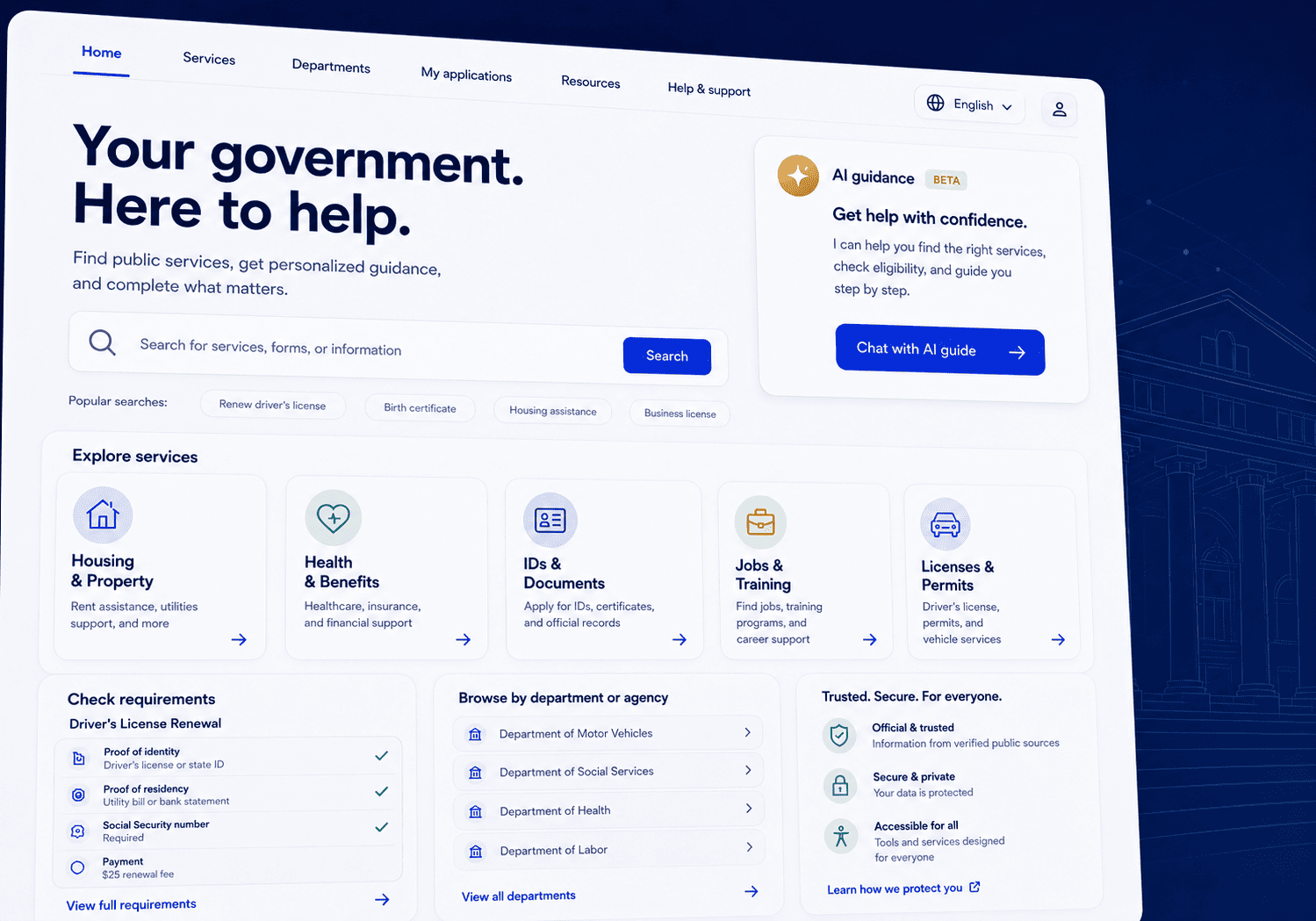
AI-Powered Citizen Services Website Platform for Virginia State Agencies

Plavno developed a modern eGovernment website platform for Virginia state agencies that centralizes citizen services, public information, department content, and an AI-powered guidance agent in one scalable system.

Read More
70%

reduction in routine citizen inquiries to agency staff

AI-Powered Citizen Services Website Platform for Virginia State Agencies

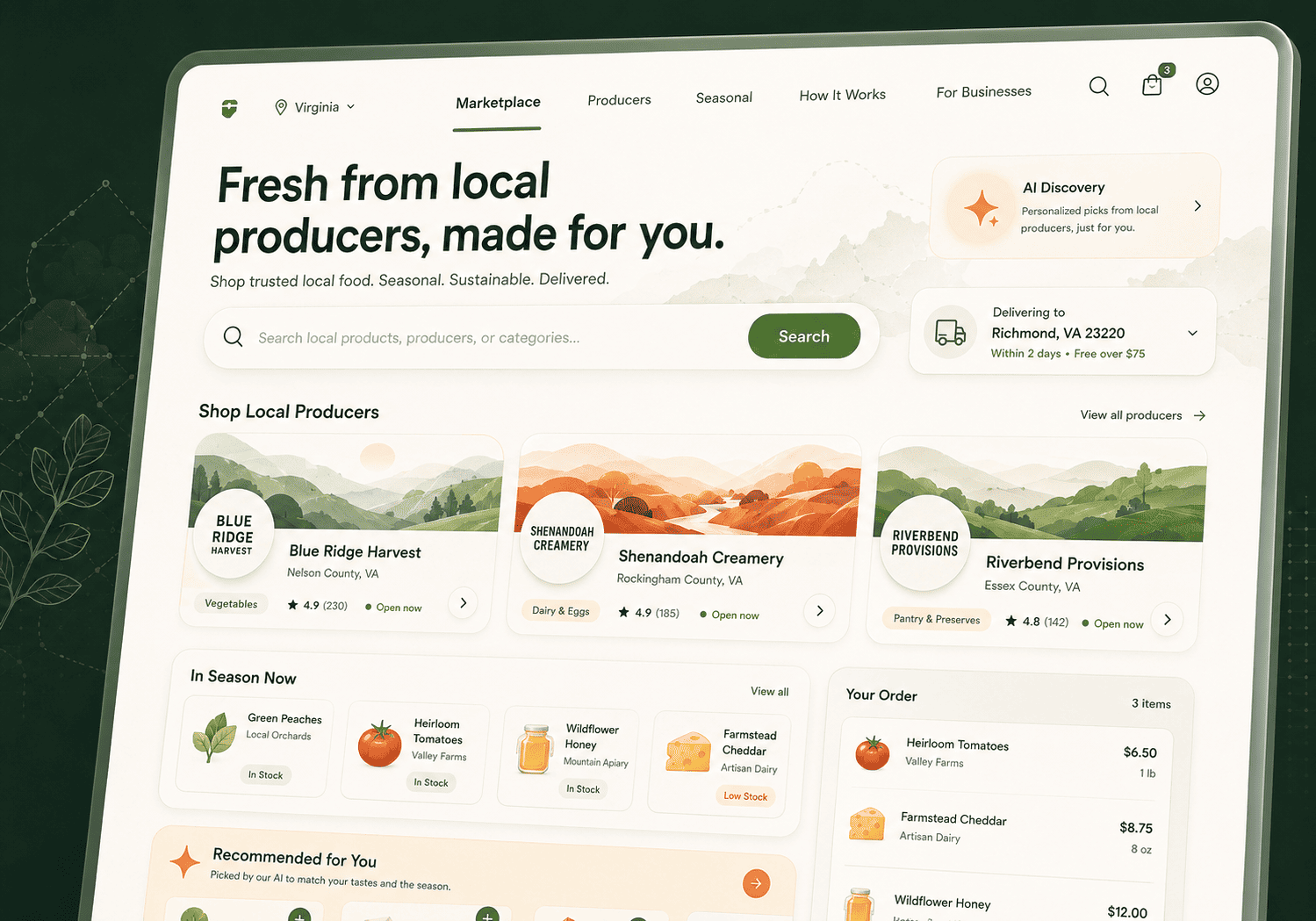
Digital Marketplace for Virginia Farmers, Local Producers & Direct-to-Consumer Food Sales

Plavno developed a custom multi-vendor marketplace for Virginia-based farmers, food producers, and regional sellers to unify product listings, vendor operations, customer ordering, and local fulfillment workflows.

Read More
3x

increase in product discovery relevance

Digital Marketplace for Virginia Farmers, Local Producers & Direct-to-Consumer Food Sales

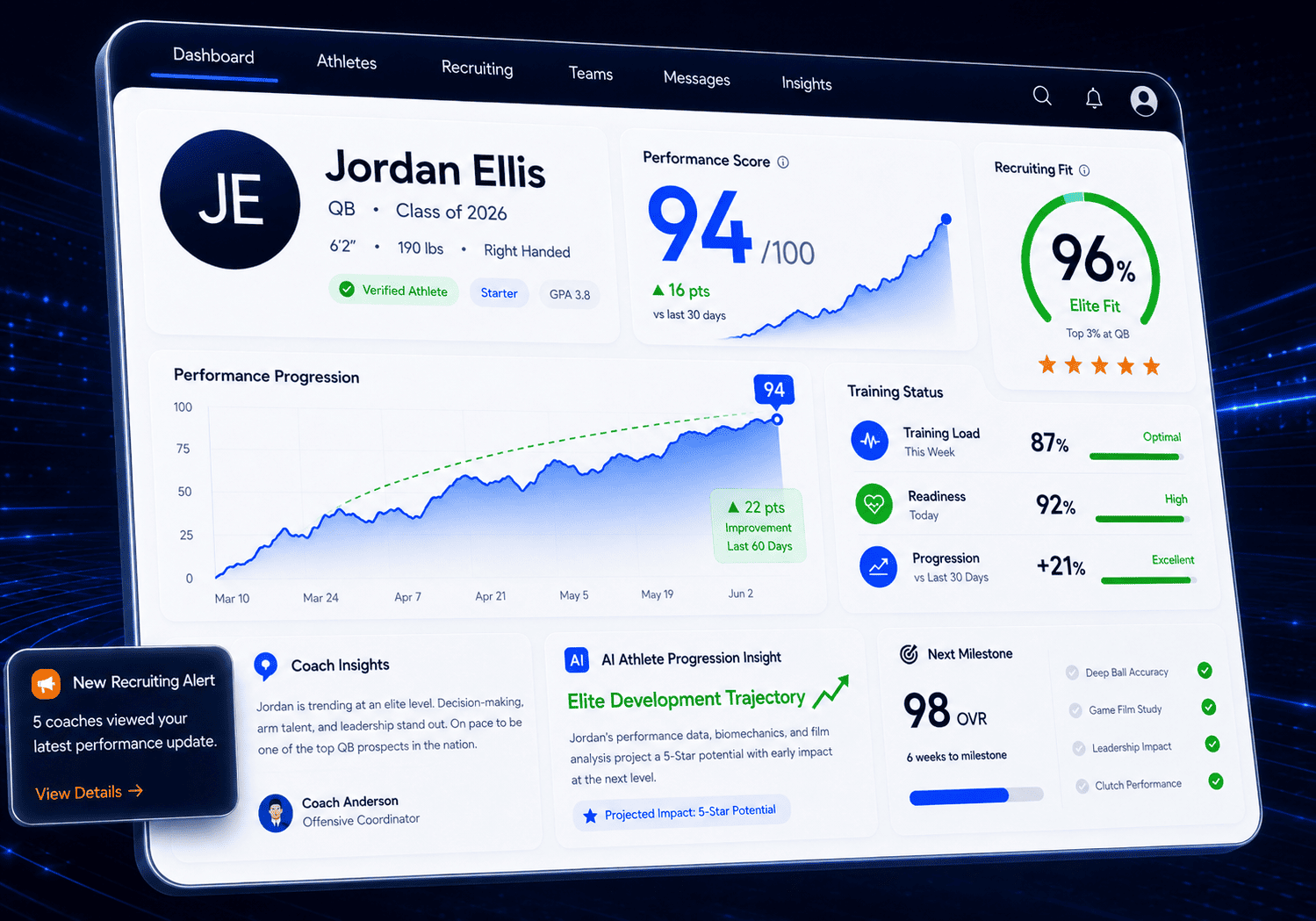
AI-Powered Sports Performance & Recruiting Platform for Virginia Clubs, Academies & Youth Programs

Plavno developed a custom sports technology platform for Virginia-based clubs and academies to combine athlete performance tracking, coach communication, recruiting workflows, and mobile engagement in one ecosystem.

Read More
3x

faster recruiting pipeline

AI-Powered Sports Performance & Recruiting Platform for Virginia Clubs, Academies & Youth Programs

Healthcare AI Solutions for Harrisonburg Industries

Regional Impact & Applications

Tailored AI for the specific needs of Virginia's key sectors.

Clinical Imaging

Medical Imaging

Faster Scans

Clinical Diagnostics & Imaging

Hospitals in Rockingham County need faster image analysis. Our medical imaging solutions reduce radiologist workload by 30%. We deploy convolutional neural networks to flag anomalies in X-rays and MRIs. This allows specialists to focus on critical cases immediately. ROI: 30% workload reduction.

Clinic Automation

Clinic Admin

Auto Tasks

Administrative Automation for Clinics

Small practices in Harrisonburg struggle with staffing shortages. Our automation tools handle scheduling and billing tasks automatically. This reduces administrative overhead by 20% and minimizes human error. RPA bots interact with existing practice management software to update records. ROI: 20% overhead reduction.

Medical EdTech

Medical EdTech

Scale Grading

EdTech for Medical Training

Local universities like JMU require scalable assessment tools. We built an AI grader that provides rubric-based evaluation and rich feedback. This allows educators to assess student performance at scale without manual effort. The system uses NLP to understand context and generate detailed comments. ROI: 40% time savings on grading.

Pharma R&D

Pharma R&D

Drug Insights

Pharmaceutical Research Support

Biotech firms in Virginia need to analyze vast datasets. Our AI models predict molecular behavior and drug interactions. This accelerates the research phase and reduces R&D costs significantly. We use graph neural networks to model complex chemical structures. ROI: 25% faster time-to-insight.

Claims AI

Claims AI

Auto-Process

Insurance Claim Processing

Payers in the region face high volumes of claims. Our AI extracts relevant data from documents to auto-adjudicate claims. This speeds up reimbursement cycles for providers and patients. The system learns from past decisions to improve accuracy over time. ROI: 50% faster processing.

Remote Care

Remote Care

Monitoring

Remote Patient Monitoring

Providers managing chronic diseases need continuous data streams. Our algorithms analyze wearable device data for trends and alerts. This enables early intervention for patients with heart conditions or diabetes. We stream data to the cloud for real-time processing and visualization. ROI: 15% reduction in ER visits.

Architecture & Engineering Overview

Technical Implementation Strategy

Reduced Readmission RatesHigh Impact
Administrative Cost SavingsSignificant
Risk Mitigation & GovernanceSecure
Infrastructure EfficiencyOptimized

For Business: Technical ROI & Risk Mitigation

Investing in healthcare AI requires a clear understanding of return on investment. Our focus is on measurable metrics like reduced readmission rates and lower administrative costs. For instance, automating documentation can save a single physician thousands of dollars annually in lost time. We mitigate risk by using interpretable models rather than black boxes. This ensures that medical staff can trust and validate the AI's recommendations. Proper data governance reduces the risk of regulatory fines and data breaches. By choosing robust architectures, we avoid expensive rewrites and technical debt.

Cost savings also come from optimized infrastructure usage. We design systems that use resources efficiently, preventing cloud bill shocks. Scalable solutions mean you pay for what you use as you grow. Risk is further managed through rigorous testing and validation protocols. We simulate peak loads to ensure stability before deployment. This proactive approach protects your revenue and reputation.

Data Readiness

Data Readiness

Ingestion, cleaning, and assessment.

Model Training

Model Training

Validation in isolated environments.

Deployment

Deployment

Blue-green strategy for safety.

Monitoring

Monitoring

Drift detection and retraining.

For CTOs: Architecture & Technical Lifecycle

The lifecycle of a healthcare AI project begins with data readiness assessment. We establish a modular architecture that allows for rapid iteration and component swapping. Initial phases focus on data ingestion and cleaning pipelines. We then move to model training and validation using isolated environments. The decision point involves choosing between pre-trained models or custom training based on data volume. Governance frameworks are established early to oversee model performance and bias.

Deployment requires a strategy that balances speed and safety. We use blue-green deployments to introduce new AI models without disrupting service. Post-launch, the lifecycle shifts to monitoring for data drift and model degradation. We set up automated retraining pipelines to keep models accurate over time. This ensures the system remains compliant with evolving medical standards. The architecture supports long-term maintenance without locking you into a single vendor.

Frontend Layer

Frontend & Visualization

React dashboards for real-time data visualization and staff interaction.

API Layer

API & Logic Layer

FastAPI for low latency, Redis for caching, and async processing.

Data Layer

Data & ML Layer

Python, PyTorch, Hugging Face, DVC, and Feast for model management.

For Engineers: Implementation Details & Stack

Our stack relies heavily on Python for its rich ecosystem of data science libraries. We utilize PyTorch or TensorFlow for building and training custom neural networks. For natural language tasks, we leverage Hugging Face transformers to process clinical notes. Data versioning with DVC ensures that all experiments are reproducible and traceable. We store feature sets in Feast to serve data consistently to models in production. This separation of concerns makes the codebase maintainable and scalable.

APIs are built using FastAPI to serve predictions with low latency. We implement asynchronous processing to handle large file uploads like medical images. Frontend dashboards use React to visualize data for medical staff. State management is handled carefully to ensure real-time updates. We use Redis for caching frequent queries to reduce database load. This technology stack is chosen for performance, community support, and scalability.

Security

Security & Compliance

HIPAA standards, VPC peering, IAM roles, and encryption at rest.

Observability

Observability

Prometheus, Grafana, and ELK stack for real-time monitoring and logging.

DevOps

DevOps & IaC

Terraform for infrastructure as code and automated CI/CD vulnerability scanning.

Infrastructure, Observability & Security

We host infrastructure on secure cloud providers compliant with HIPAA standards. Security is enforced through VPC peering, strict IAM roles, and encryption of all data at rest. We use Terraform to manage infrastructure as code for consistent and auditable deployments. Observability is achieved through Prometheus and Grafana for real-time monitoring. These tools track latency, error rates, and resource utilization across the system.

Logging is centralized using the ELK stack (Elasticsearch, Logstash, Kibana). This allows for quick debugging and forensic analysis in case of incidents. We implement automated vulnerability scanning in the CI/CD pipeline. Incident response plans are defined and tested regularly to ensure rapid recovery. Data backups are performed daily and stored in geographically separate locations. This comprehensive approach guarantees availability and data integrity.

Testimonials

We are trusted by our customers

“They really understand what we need. They’re very professional.”

The 3D configurator has received positive feedback from customers. Moreover, it has generated 30% more business and increased leads significantly, giving the client confidence for the future. Overall, Plavno has led the project seamlessly. Customers can expect a responsible, well-organized partner.

Sergio Artimenia

Commercial Director, RNDpoint

Sergio Artimenia

“We appreciated the impactful contributions of Plavno.”

Plavno's efforts in addressing challenges and implementing effective solutions have played a crucial role in the success of T-Rize. The outcomes achieved have exceeded expectations, revolutionizing the investment sector and ensuring universal access to financial opportunities

Thien Duy Tran

Product Manager, T-Rize Group

Thien Duy Tran

“We are very satisfied with their excellent work”

Through the partnership with Plavno, we built a system used by more than 40 million connected channels. Throughout the engagement, the team was communicative and quick in responding to our concerns. Overall, we were highly satisfied with the results of collaboration.

Michael Bychenok

CEO, MediaCube

Michael Bychenok

“They have a clear understanding of what the end user needs.”

Plavno's codes and designs are user-friendly, and they complete all deliverables within the deadline. They are easy to work with and easily adapt to existing workflows, and the client values their professionalism and expertise. Overall, the team has delivered everything that was promised.

Helen Lonskaya

Head of Growth, Codabrasoft LLC

Helen Lonskaya

“The app was delivered on time without any serious issues.”

The MVP app developed by Plavno is excellent and has all the functionality required. Plavno has delivered on time and ensured a successful execution via regular updates and fast problem-solving. The client is so satisfied with Plavno's work that they'll work with them on developing the full app.

Mitya Smusin

Founder, 24hour.dev

Mitya Smusin

Why Choose Us

Deep Engineering vs Generic Agencies

We build production-grade systems, not just prototypes.

Generic Agencies
Our Platform (Deep Engineering Expertise)
Proprietary Algorithms
checkmark
HIPAA Compliance Strategy
checkmark
Legacy System Integration
checkmark
Model Monitoring & Drift Detection
checkmark
Fixed Price/Fixed Scope
checkmark
Eugene Katovich

Eugene Katovich

Sales Manager

Need a custom software solution? We’re ready to help!

Plavno has a team of skilled developers ready to tackle the project. Ask me!

Get a Free Quote

Common Questions

Frequently Asked Questions

Answers about cost, timeline, and technical requirements.

What are the primary cost drivers for developing Healthcare AI in Harrisonburg?

Data preparation and cleaning are the largest initial cost factors. Custom model training requires significant GPU resources and specialized engineering time. Integration with legacy EHR systems like Epic or Cerner adds complexity and expense. Compliance measures for HIPAA also increase the development overhead. We optimize these costs by using efficient architectures and pre-trained models where possible.

How long does it take to build Healthcare AI software?

A minimum viable product typically takes 3 to 4 months to develop. This includes the discovery phase, data pipeline setup, and initial model training. Full deployment with enterprise integration may take 6 to 9 months. Timelines vary based on data quality and regulatory requirements. We provide a detailed roadmap during the initial consultation to set clear expectations.

Do you work with startups in Virginia?

Yes, we partner with startups across Virginia including those in the Shenandoah Valley. We understand the budget constraints and agility required by emerging companies. Our flexible engagement models suit the dynamic nature of startups. We help startups validate their AI concepts quickly and cost-effectively. We have experience working with university spinouts and local incubators.

Can Healthcare AI integrate with my existing system?

Yes, we specialize in integrating AI with legacy medical systems. We use HL7 and FHIR standards to communicate with electronic health records. Our team builds custom APIs to bridge gaps between old and new technologies. This ensures a seamless flow of data without disrupting current workflows. We conduct thorough testing to ensure data integrity during the integration process.

What industries in Harrisonburg benefit most from Healthcare AI?

Hospitals and clinics in Rockingham County see immediate benefits from diagnostic AI. EdTech companies, like those near James Madison University, use AI for assessment. Local biotech firms utilize AI for drug discovery and data analysis. Insurance providers in the region automate claims processing using our solutions. These industries gain efficiency, accuracy, and cost savings from AI adoption.

Contact Us

This is what will happen, after you submit form

Need a custom consultation? Ask me!

Plavno has a team of experts ready to start your project. Ask us!

Vitaly Kovalev

Vitaly Kovalev

Sales Manager

Schedule a call

Get in touch

Fill in your details below or find us using these contacts. Let us know how we can help.

No more than 3 files may be attached up to 3MB each.
Formats: doc, docx, pdf, ppt, pptx, xls, xlsx, txt.
Send request