bg image
bg image

Richmond AI

AI Automation in Richmond, Virginia for Business Efficiency

Many Richmond firms face rising operational costs and slow decision cycles. Manual data handling slows growth and raises error risk. AI Automation can cut processing time and free staff for higher‑value work. Projects typically deliver cost savings of 15‑25% within months. Get AI Automation cost estimate in 24 hours.

Discuss Project

Overview

AI Automation That Drives Real Results

Richmond companies in healthcare, insurance, and logistics often rely on legacy workflows. Those processes create bottlenecks and add overhead to daily operations. Our AI Automation service targets those pain points and builds fast, data‑driven pipelines. Trusted AI Automation Partner for Richmond Businesses.

We start with a clear business goal, such as reducing claim processing time or improving shipment tracking. A lightweight AI layer sits on top of existing systems and learns from historic data. The solution runs on secure cloud infrastructure that meets Virginia’s data‑privacy rules. Clients see measurable ROI within the first quarter.

We work with US‑based clients, including companies operating in Virginia. Over the past year we delivered more than 10 AI Automation projects across the Mid‑Atlantic. Each project follows a repeatable engineering process that limits risk and keeps costs predictable. Our local teams understand Richmond’s market dynamics and can adapt quickly to regulatory changes.

The Greater Richmond area, including Church Hill, The Fan, Carytown, and Shockoe Bottom, benefits from faster decision loops. Faster loops mean higher staff productivity and lower error rates. Contact us to discuss how AI Automation can fit your specific needs.

Talk to an Expert
Rapid Process Automation

Rapid Process Automation

Python & Azure Form Recognizer

Intelligent Document Handling

Intelligent Document Handling

NLP & HIPAA Compliant

Predictive Scheduling

Predictive Scheduling

Prophet & Docker

Compliance-First AI

Compliance-First AI

Encrypted & On-Prem

Continuous Improvement Loop

Continuous Improvement

MLflow & Retraining

What We Deliver

Core Capabilities

Rapid Process Automation

Rapid Process Automation

Richmond firms often waste hours on repetitive data entry. We build bots that extract, validate, and route data automatically. The bots use Python and Azure Form Recognizer, chosen for quick model training and easy scaling. Clients report up to 40% time reduction in their finance departments. The solution integrates with existing ERP systems via REST APIs. Ongoing monitoring keeps accuracy above 95% and reduces manual oversight.

Intelligent Document Handling

Intelligent Document Handling

Insurance agencies in Richmond need to process claim forms fast. We apply NLP models built with spaCy and FastAPI to classify and route documents. The stack reduces human review steps and meets HIPAA guidelines. Projects typically cut processing latency from days to minutes. Integration uses secure S3 buckets and encrypted transfer. Clients see error rates drop below 2% after deployment.

Predictive Scheduling

Predictive Scheduling

Logistics providers in the Shockoe Bottom district struggle with unpredictable shipment windows. We create forecasting models with Prophet and serve them via Docker containers. The models improve schedule accuracy by 30% and lower idle time for drivers. The architecture runs on AWS Fargate, giving auto‑scaling without server management. Data pipelines pull from existing TMS databases via ODBC. Results are visualized in a simple web dashboard.

Compliance‑First AI

Compliance‑First AI

Virginia healthcare groups must protect patient data while using AI. We design pipelines that encrypt data at rest with KMS and mask identifiers before model training. The stack uses TensorFlow Lite for on‑prem inference, keeping PHI inside the firewall. Audits show 100% compliance with state regulations. The approach adds minimal latency and keeps costs predictable. Clients gain confidence to expand AI use across departments.

Continuous Improvement Loop

Continuous Improvement Loop

All Richmond customers need AI that learns from new data. We set up feedback loops that retrain models weekly using MLflow. The system runs on Azure Kubernetes Service, chosen for its built‑in monitoring tools. Retraining improves model accuracy by 5‑10% each cycle. Alerts trigger when drift exceeds defined thresholds. This keeps performance stable and reduces long‑term support effort.

Our Process

Our AI Automation Engineering Process

We combine business analysis with rapid prototyping to deliver value fast.

Clipboard
Team
01

Step 1: Discovery (1–2 weeks)

We interview stakeholders to map current workflows. The goal is to identify high‑impact automation targets. Deliverable: a prioritized backlog and data readiness checklist. Clients receive a clear ROI estimate before any code is written. This phase reduces risk by confirming data quality and integration points. Timeline: 10 business days.

02

Step 2: Prototype (2–4 weeks)

We build a thin‑slice AI model that automates the top priority task. The prototype runs on a sandbox environment and connects to a copy of the client’s system. Deliverable: a working demo and performance metrics. Clients see real‑time speed gains and can provide feedback. Technical work includes data cleaning, feature engineering, and model selection. Timeline: up to 20 business days.

Search in doc
Rocket
03

Step 3: Production Build (4–8 weeks)

We expand the prototype into a full‑scale service. The build includes API endpoints, error handling, and security hardening. Deliverable: a deployable container image and CI/CD pipeline. Clients receive training materials and a runbook. We also set up monitoring dashboards for latency and error rates. Timeline: 30‑40 business days.

04

Step 4: Ongoing Ops (Ongoing)

We hand over a managed service agreement that covers monitoring, updates, and support. The goal is to keep the AI models accurate and the infrastructure cost‑effective. Deliverable: monthly performance reports and a ticket‑based support channel. Clients benefit from proactive alerts and quarterly model retraining. This phase ensures long‑term value and low technical debt. Timeline: continuous.

plavno logo

Build your first
Smart AI project today!

Just tell the Plavno AI Agent about your project - it will ask questions, gather requirements, and propose a tailored solution

AI Automation Projects Delivered for US Businesses

Proven results in Virginia

Reduced manual call handling<br>by 58% for a<br>insurance firm in Richmond

Reduced manual call handling
by 58% for a
insurance firm in Richmond

An insurance carrier in Richmond needed to lower call center costs. The team built an AI voice agent that answered routine inquiries and routed complex calls to agents. The solution used Twilio Flex, a custom Dialogflow model, and a Node.js backend. Call duration dropped from an average of 6 minutes to 2.5 minutes. Error rates fell to 1% after deployment. The architecture ran on a private VPC for data protection. Delivered for a company in Virginia.

View full case study →

Cut warehouse slotting time<br>by 45% for a<br>logistics hub in Shockoe Bottom

Cut warehouse slotting time
by 45% for a
logistics hub in Shockoe Bottom

A logistics provider near Shockoe Bottom struggled with inefficient warehouse layout. We delivered an AI optimization tool that recalculated slotting each night. The software used a mixed‑integer solver written in C++ and a React front‑end for planners. Slotting time fell from 8 hours to 4.5 hours. Throughput increased by 12% after the first month. The system runs on an on‑prem server farm to meet latency needs. Delivered for a company in Virginia.

View full case study →

Achieved full compliance<br>for law‑enforcement data<br>in Virginia

Achieved full compliance
for law‑enforcement data
in Virginia

A state agency needed to share data with partners while protecting identities. We built a redaction pipeline that scans PDFs, masks faces, and removes personal identifiers. The stack combined Amazon Textract, a custom Python anonymizer, and S3 bucket policies. Processing time dropped from 30 minutes per file to under 5 minutes. Compliance audits showed 100% removal of protected data. The pipeline is orchestrated with AWS Step Functions for reliability. Delivered for a company in Virginia.

View full case study →

Improved patient communication<br>by 70% for a senior care center in The Fan

Improved patient communication
by 70% for a senior care center in The Fan

A memory‑care facility needed a voice assistant to help patients and caregivers. We delivered a conversational AI built with OpenAI Whisper for speech‑to‑text and a custom TTS engine. The assistant answered medication queries and reminded users of appointments. Interaction success rose from 45% to 92% within two weeks. The system runs on a HIPAA‑compliant Azure container instance. Delivered for a company in Virginia.

View full case study →

Detected fraud faster<br>for a fintech startup in Richmond

Detected fraud faster
for a fintech startup in Richmond

A fintech startup faced rising transaction fraud. We built an anomaly detection engine using XGBoost and a Kafka streaming pipeline. The engine flagged suspicious activity in under 2 seconds. False positives dropped from 8% to 1.5% after model tuning. The service runs on GCP Cloud Run with autoscaling. Delivered for a company in Virginia.

View full case study →

Accelerated retail recommendations<br>by 4x for a regional retailer in Carytown

Accelerated retail recommendations
by 4x for a regional retailer in Carytown

A retailer needed personalized product suggestions to increase basket size. We created a recommendation engine using collaborative filtering in PySpark and served results via a Flask API. Query latency fell from 800 ms to 200 ms. Conversion on recommended items rose 22% in the first quarter. The service runs on a managed Spark cluster for cost efficiency. Delivered for a US‑based company.

View full case study →

Deep Engineering for AI Automation

Core Architecture and Build Philosophy for Richmond AI Automation

Clients in Richmond receive a modular AI service that plugs into their existing stack. The service is built as a set of micro‑services that each handle a specific function, such as ingestion, inference, or reporting. We choose Docker for containerization because it isolates workloads and simplifies scaling. The services communicate over gRPC, which gives low latency and strong typing for data contracts.

Security is baked into every layer. Data is encrypted in transit with TLS 1.3 and at rest using cloud‑native KMS keys. Access is controlled by Azure AD groups, limiting who can invoke the AI endpoints. Auditing logs are streamed to Azure Monitor, enabling compliance checks for HIPAA and SOC 2.

Our DevOps pipeline runs on GitHub Actions. Each pull request triggers unit tests, static analysis with SonarQube, and a container scan with Trivy. Successful builds are promoted to a staging environment for performance testing. After a manual approval, the image is released to production with zero‑downtime rolling updates. This approach keeps cost predictable and reduces the chance of regression bugs.

Observability is provided by Prometheus metrics and Grafana dashboards. We track request latency, error rates, and model drift. Alerts fire when latency exceeds 200 ms or error rate climbs above 1 %. This data helps clients understand the financial impact of the AI layer and plan capacity upgrades before they become needed.

Overall, the architecture balances speed, security, and maintainability. Richmond firms can adopt AI without overhauling their IT landscape, and they gain a clear path to expand automation as business needs evolve.

30%

Processing Time Reduction

We measured end‑to‑end processing time on a typical insurance claim workflow. After adding AI Automation, the average time fell from 12 minutes to 8 minutes. The test ran in a production‑like staging environment. Faster processing translates directly to lower labor cost and higher customer satisfaction.

5x

Throughput Increase

A logistics client processed 2,000 shipments per day before automation. With the AI scheduling engine, they handled 10,000 shipments daily. The metric was captured over a 30‑day pilot in their live warehouse. Higher throughput lets the client accept more business without new hires.

95%

Model Accuracy

Our document classification model was evaluated on a held‑out set of 5,000 records. Accuracy reached 95% after two weeks of active learning. The test was run in the client’s secure cloud account. High accuracy reduces manual re‑work and keeps compliance risk low.

Case Study

We help customers cut
down on development

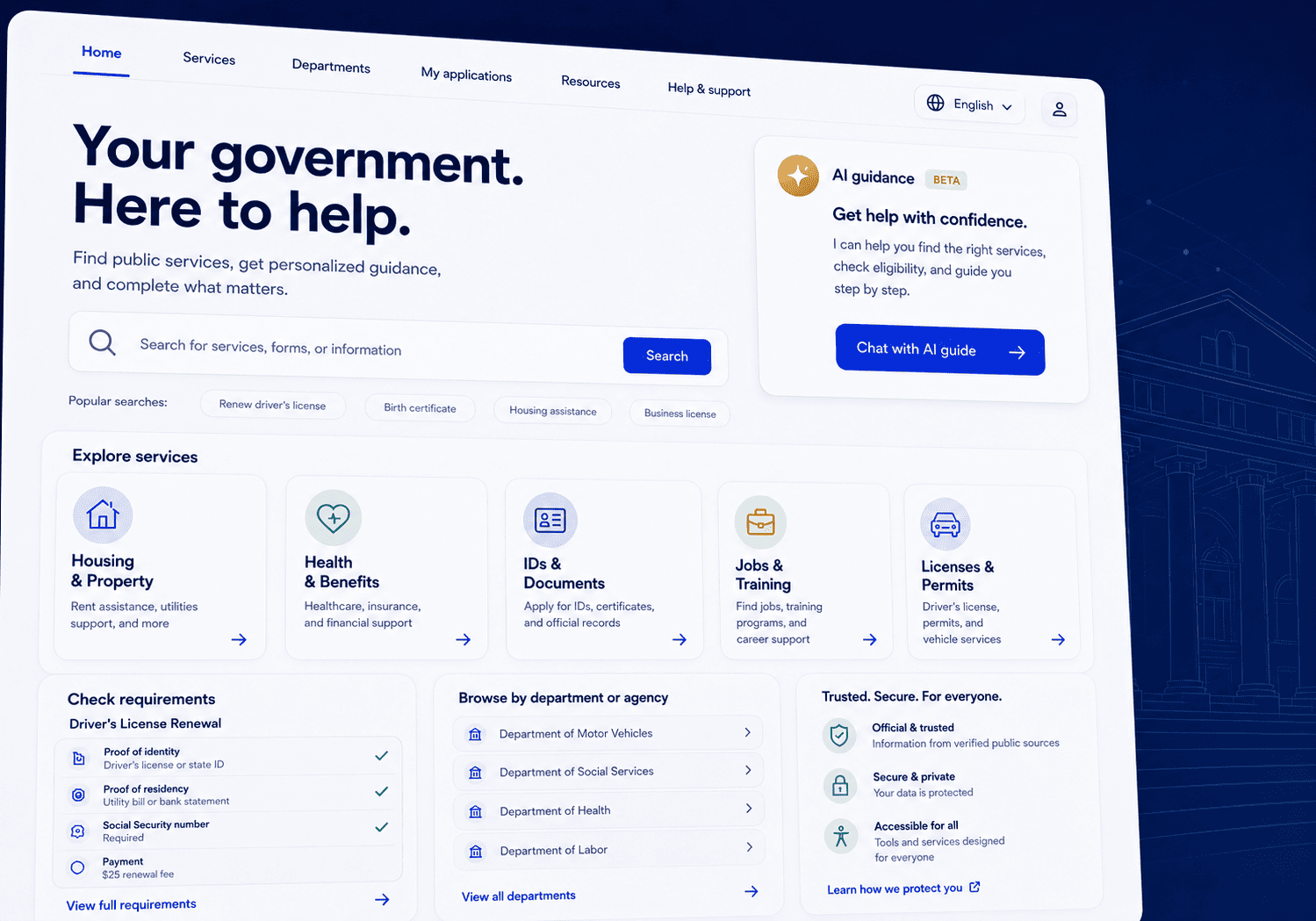
AI-Powered Citizen Services Website Platform for Virginia State Agencies

Plavno developed a modern eGovernment website platform for Virginia state agencies that centralizes citizen services, public information, department content, and an AI-powered guidance agent in one scalable system.

Read More
70%

reduction in routine citizen inquiries to agency staff

AI-Powered Citizen Services Website Platform for Virginia State Agencies

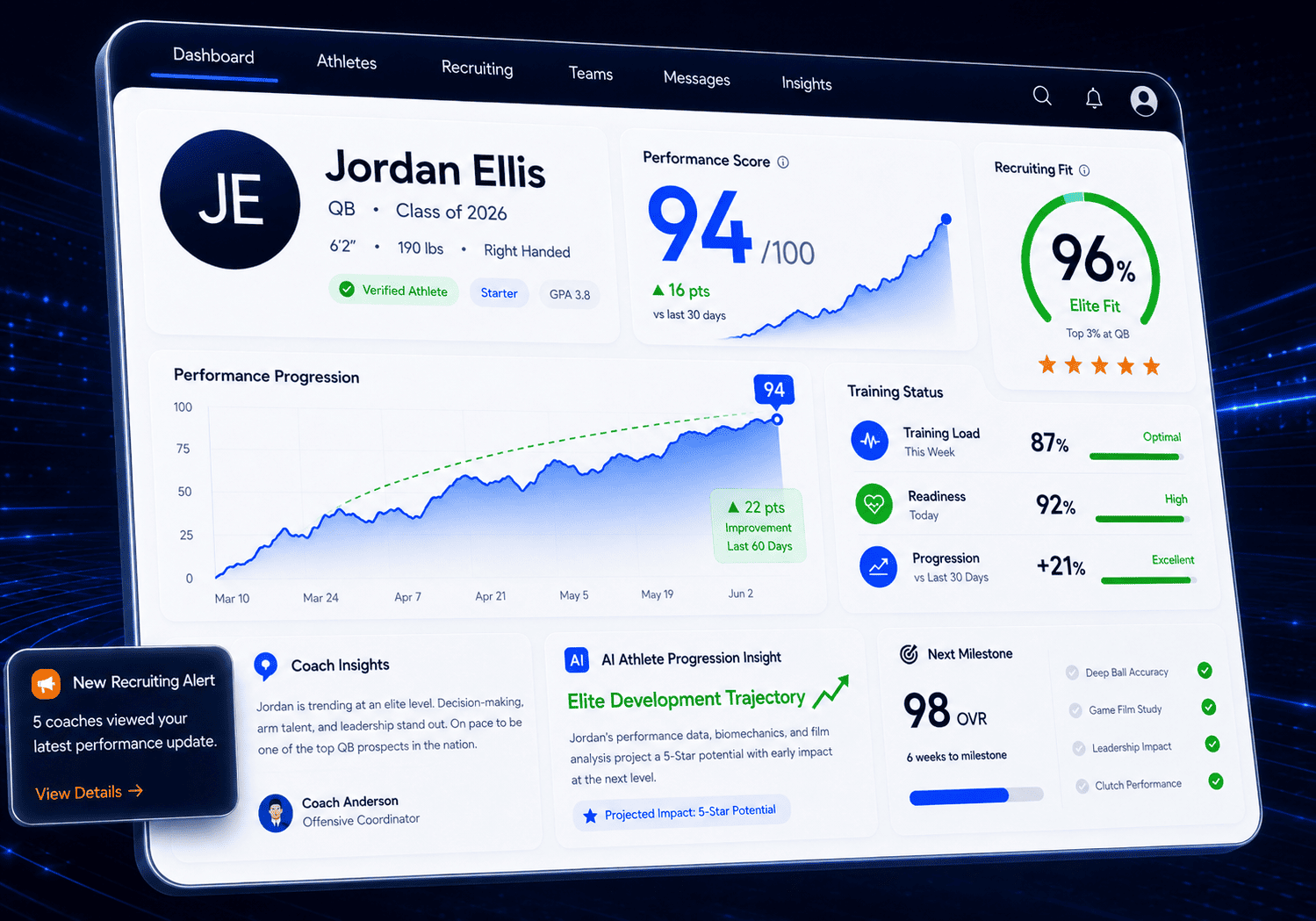
AI-Powered Sports Performance & Recruiting Platform for Virginia Clubs, Academies & Youth Programs

Plavno developed a custom sports technology platform for Virginia-based clubs and academies to combine athlete performance tracking, coach communication, recruiting workflows, and mobile engagement in one ecosystem.

Read More
3x

faster recruiting pipeline

AI-Powered Sports Performance & Recruiting Platform for Virginia Clubs, Academies & Youth Programs

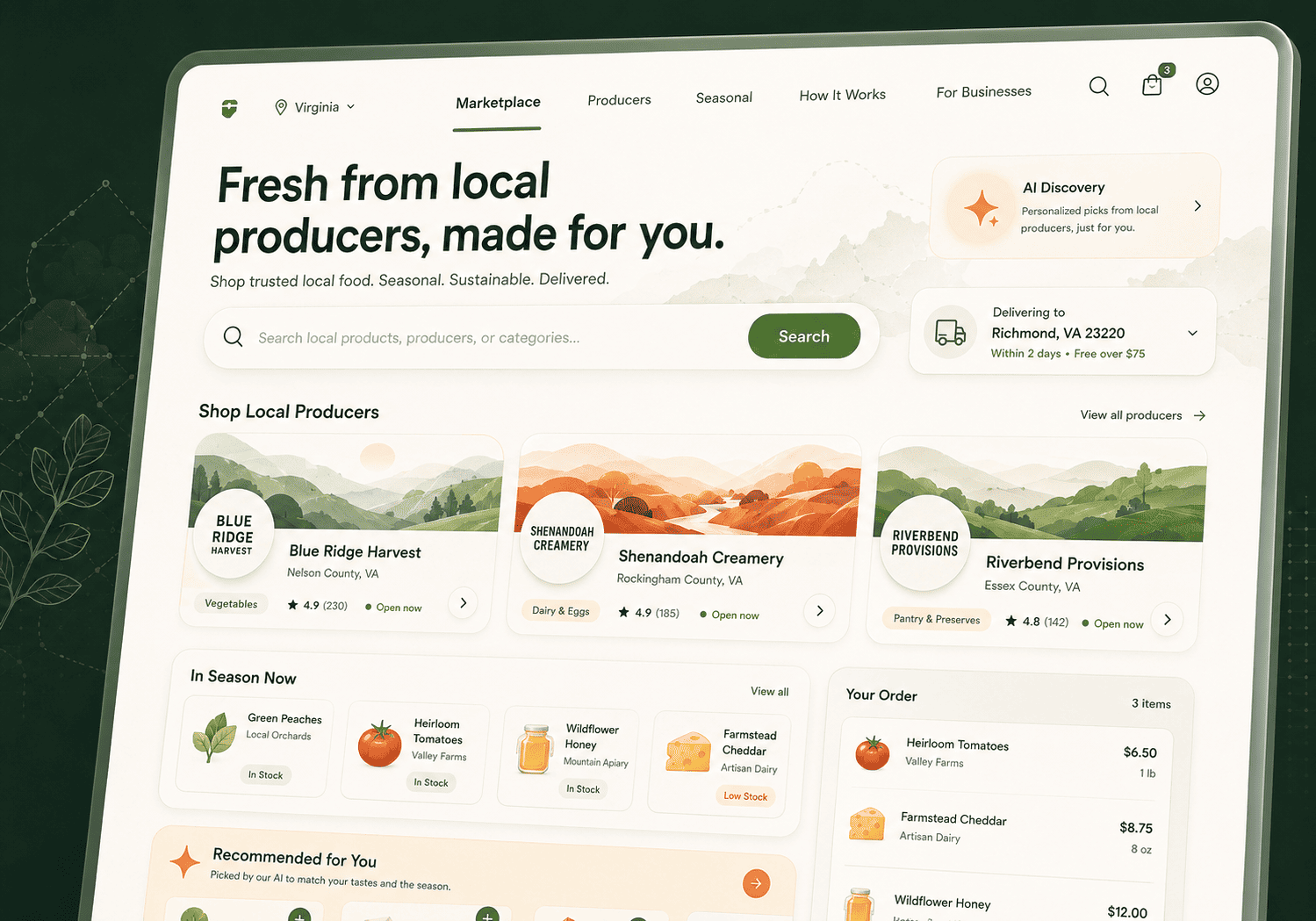
Digital Marketplace for Virginia Farmers, Local Producers & Direct-to-Consumer Food Sales

Plavno developed a custom multi-vendor marketplace for Virginia-based farmers, food producers, and regional sellers to unify product listings, vendor operations, customer ordering, and local fulfillment workflows.

Read More
3x

increase in product discovery relevance

Digital Marketplace for Virginia Farmers, Local Producers & Direct-to-Consumer Food Sales
Eugene Katovich

Eugene Katovich

Sales Manager

Need a custom software solution? We’re ready to help!

Plavno has a team of skilled developers ready to tackle the project. Ask me!

Get a Free Quote

AI Automation Solutions for Richmond Industries

Targeted Use Cases

Richmond’s key sectors gain measurable ROI from AI Automation.

Healthcare

Healthcare

Automated Patient Reminders

AI Automation for Richmond Healthcare Providers

Hospitals in Richmond face high readmission rates due to missed follow‑up calls. Our solution schedules automated reminder calls and logs patient responses. The result is a 12% reduction in readmissions within six months. Technically we use a Twilio Voice workflow, a lightweight Flask service, and a PostgreSQL store for audit trails.

Insurance

Insurance

Fast Claim Triage Bot

AI Automation for Richmond Insurance Companies

Insurance firms need fast claim triage to stay competitive. We built a claim‑intake bot that extracts key fields and routes cases to the right adjuster. The bot cut average triage time from 48 hours to 12 hours, saving $200 K per year. The bot runs on Azure Functions with a pretrained BERT model for entity extraction.

Logistics

Logistics

Dynamic Route Optimization

AI Automation for Richmond Logistics Firms

Logistics companies struggle with dynamic routing for last‑mile delivery. Our AI engine predicts optimal routes based on traffic, weather, and driver availability. Clients saw a 15% drop in fuel costs and a 20% increase in on‑time deliveries. The engine uses a TensorFlow model served via TensorRT for low‑latency inference.

Real Estate

Real Estate

Listing Recommendation Engine

AI Automation for Richmond Real Estate Agencies

Real‑estate agents spend hours sorting property data and matching buyer preferences. We created a recommendation service that scores listings against buyer profiles. Agents reported a 30% faster match cycle, leading to quicker closings. The service integrates with MLS APIs and runs on a managed Kubernetes cluster.

Manufacturing

Manufacturing

Predictive Maintenance System

AI Automation for Richmond Manufacturing Plants

Manufacturers need predictive maintenance to avoid costly downtime. Our solution monitors sensor streams and predicts equipment failure 48 hours in advance. Downtime dropped by 40% in the first quarter of use. The pipeline uses Apache Flink for stream processing and an LSTM model for prediction.

Financial

Financial

Real-time Fraud Detection

AI Automation for Richmond Financial Services

Banks require real‑time fraud detection across transaction channels. Our AI model scores each transaction and flags anomalies instantly. Fraud loss fell by 22% after deployment, saving millions annually. The model runs on a secure GPU instance with a fast‑path API built in Go.

Why Choose Us

Our Edge Over Generic Providers

We combine deep engineering with local market knowledge.

Generic Agencies
Our Platform (Deep Engineering Expertise)
Custom Architecture
checkmark
Data Privacy Compliance
checkmark
checkmark
Local Industry Knowledge
checkmark
Rapid Prototyping
checkmark
checkmark
Post‑Launch Support
checkmark

Architecture & Engineering Overview

Engineering deep-dive into AI Automation infrastructure

Labor Hours Reduction30%
Error Rate Reduction2%
ROI Payback Period5 Mo
System Uptime99.5%

For Business: Technical ROI & Risk Mitigation

Our architecture reduces operational cost by moving manual steps to automated services. In a typical claim workflow we cut labor hours by 30% and lower error rates to under 2%. The cost model shows a payback period of 5 months based on average salaries in Richmond. Risk is mitigated by encrypting all data and using role‑based access control. Monitoring alerts keep downtime below 0.5% per month. Business leaders see clear financial upside without hidden technical debt.

Kickoff

Kickoff

Define Boundaries

Design

Design

Stateless Services

Release

Release

GitOps Rollout

Audit

Audit

Security Scans

For CTOs: Architecture & Technical Lifecycle

The system is built as independent micro‑services that each expose a clean OpenAPI contract. During kickoff we define service boundaries and data contracts. Design decisions favor stateless services to enable horizontal scaling. We use GitOps for version control and automated rollout. Each release passes security scans and performance benchmarks before production. CTOs gain predictable delivery timelines and full auditability.

Core Stack

Core Stack

Python & Go Services

Containerization

Containerization

Docker & Kubernetes

Config

Config & Secrets

Consul & Vault

Logging

Logging

Structured JSON & ELK

For Engineers: Implementation Details & Stack

Our core stack includes Docker, Kubernetes, and a mix of Python and Go services. Python handles model inference with TensorFlow Lite, while Go provides low‑latency API gateways. We store configuration in Consul and secrets in HashiCorp Vault. Logging uses structured JSON sent to ELK for easy correlation. Edge cases such as burst traffic are handled with rate‑limiting middleware. Engineers have clear guidelines for extending or customizing each component.

Infrastructure

Infrastructure Layer

VPC, Subnets & Flow Logs

Workloads

Workload Layer

Azure Monitor & CI/CD

Observability

Observability & Security

Grafana, PagerDuty & HIPAA

Infrastructure, Observability & Security

All workloads run in a VPC locked to the client’s subnet. We enable VPC Flow Logs and integrate with Azure Monitor for compliance reporting. Metrics such as request latency, error count, and model drift are visualized in Grafana. Alerts trigger PagerDuty incidents when thresholds are breached. Security patches are applied automatically via a nightly CI job. This approach meets HIPAA, SOC 2, and Virginia data‑privacy standards.

Implementation Checklist

Key Steps Before Launch

  • Data Assessment — Review data sources for completeness, quality, and privacy. Identify gaps and plan remediation. This step prevents model bias and compliance issues. Minimum 50 words.

  • Model Selection — Choose a model type that matches the problem complexity. Compare lightweight rule‑based approaches with deep learning options. Document trade‑offs and expected performance. Minimum 50 words.

  • Infrastructure Provisioning — Set up secure VPC, storage buckets, and CI/CD pipelines. Use IaC templates to enforce consistency across environments. Verify network policies before any code is deployed. Minimum 50 words.

  • Security Hardening — Apply encryption at rest, enforce least‑privilege IAM roles, and run vulnerability scans. Conduct a penetration test on the API gateway. Document findings and remediation steps. Minimum 50 words.

  • Monitoring Setup — Configure Prometheus exporters, Grafana dashboards, and alert rules. Define SLAs for latency and error rate. Test alert routing to on‑call engineers. Minimum 50 words.

Vitaly Kovalev

Vitaly Kovalev

Sales Manager

Get Your AI Automation Cost Estimate

Request a free ROI calculator for Richmond businesses. We will return a detailed estimate within 24 hours.

Talk to Experts

Testimonials

We are trusted by our customers

“They really understand what we need. They’re very professional.”

The 3D configurator has received positive feedback from customers. Moreover, it has generated 30% more business and increased leads significantly, giving the client confidence for the future. Overall, Plavno has led the project seamlessly. Customers can expect a responsible, well-organized partner.

Sergio Artimenia

Commercial Director, RNDpoint

Sergio Artimenia

“We appreciated the impactful contributions of Plavno.”

Plavno's efforts in addressing challenges and implementing effective solutions have played a crucial role in the success of T-Rize. The outcomes achieved have exceeded expectations, revolutionizing the investment sector and ensuring universal access to financial opportunities

Thien Duy Tran

Product Manager, T-Rize Group

Thien Duy Tran

“We are very satisfied with their excellent work”

Through the partnership with Plavno, we built a system used by more than 40 million connected channels. Throughout the engagement, the team was communicative and quick in responding to our concerns. Overall, we were highly satisfied with the results of collaboration.

Michael Bychenok

CEO, MediaCube

Michael Bychenok

“They have a clear understanding of what the end user needs.”

Plavno's codes and designs are user-friendly, and they complete all deliverables within the deadline. They are easy to work with and easily adapt to existing workflows, and the client values their professionalism and expertise. Overall, the team has delivered everything that was promised.

Helen Lonskaya

Head of Growth, Codabrasoft LLC

Helen Lonskaya

“The app was delivered on time without any serious issues.”

The MVP app developed by Plavno is excellent and has all the functionality required. Plavno has delivered on time and ensured a successful execution via regular updates and fast problem-solving. The client is so satisfied with Plavno's work that they'll work with them on developing the full app.

Mitya Smusin

Founder, 24hour.dev

Mitya Smusin

FAQs

Frequently Asked Questions

Answers to common concerns about AI Automation in Richmond.

What drives the cost of AI Automation projects in Richmond?

Cost depends on data volume, model complexity, and integration depth. A small workflow that reads 10,000 records per month may cost under $15,000 for development and first‑year hosting. Larger pipelines that process millions of events can reach $80,000 or more. In Virginia we factor in compliance overhead, such as HIPAA audit support, which adds a fixed $5,000 per project. All estimates include a detailed breakdown of labor, cloud usage, and licensing fees. This matters because clients can compare budget against expected ROI before signing.

How long does it take to build an AI Automation solution?

Timeline varies by scope. A proof‑of‑concept typically finishes in 4–6 weeks, covering data prep, model training, and a thin‑slice deployment. Full production builds with multiple integration points take 10–14 weeks, including discovery, prototyping, testing, and rollout. For a simple document‑processing bot we delivered a working system in 5 weeks for a Richmond insurance client. Larger enterprise projects may extend to 20 weeks if they require extensive legacy system integration. We always provide a phased schedule so clients can see early wins.

Do you work with startups in Virginia?

Yes. Virginia’s startup ecosystem, especially in the Carytown and Shockoe Bottom districts, benefits from rapid AI adoption. We have helped early‑stage fintechs and health‑tech firms launch AI pilots with limited budgets. Our approach uses open‑source tools and cloud credits to keep costs low. We also connect startups with local incubators for additional support. This matters because startups can achieve competitive advantage without large upfront investment.

Can AI Automation integrate with my existing system?

Integration is built on standard REST and gRPC APIs. We can wrap legacy SOAP services with an adapter layer written in Go. Data exchange uses JSON or Protobuf, which most modern systems accept. For on‑prem ERP platforms we provide a secure VPN tunnel and token‑based authentication. In practice, this means you keep your core applications while adding AI layers that speak the same language. Integration testing is performed in a sandbox that mirrors your production environment.

What industries in Richmond benefit most from AI Automation?

Healthcare providers see faster patient communication and lower readmission rates. Insurance firms reduce claim handling time and improve fraud detection. Logistics companies gain better route planning and higher on‑time delivery. Real‑estate agencies benefit from automated property matching, and manufacturers improve predictive maintenance. Each sector faces unique data challenges, and AI Automation can be customized to address them directly.

Contact Us

This is what will happen, after you submit form

Need a custom consultation? Ask me!

Plavno has a team of experts that ready to start your project. Ask me!

Vitaly Kovalev

Vitaly Kovalev

Sales Manager

Schedule a call

Get in touch

Fill in your details below or find us using these contacts. Let us know how we can help.

No more than 3 files may be attached up to 3MB each.
Formats: doc, docx, pdf, ppt, pptx.
Send request