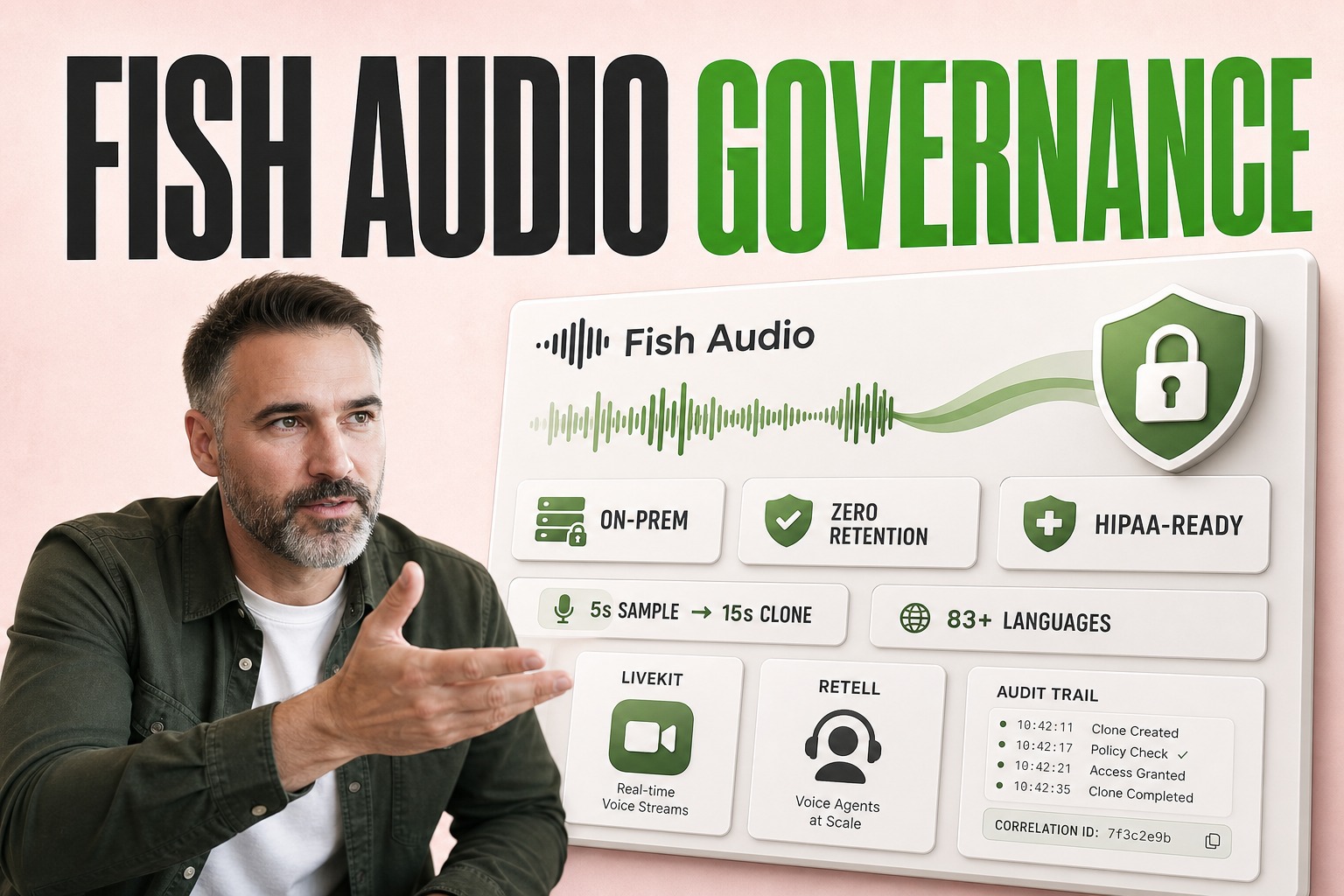
Is real-time voice cloning now “enterprise-ready,” or still a creator toy? → It’s enterprise-ready when the vendor supports on-prem deployment, zero data retention, and regulated configurations like HIPAA—otherwise it’s still a pilot risk.
What’s the one market signal we should treat as dominant this week? → A voice-platform vendor hitting $21 million ARR in its first commercial year and raising $52 million to expand voice-agent and speech-to-speech capabilities signals that voice infrastructure is becoming a serious enterprise category.
What primary question should a CTO actually be searching? → “How do we evaluate and choose a real-time TTS and voice cloning platform for production voice agents without taking on privacy, reliability, and integration debt?”
Where do most voice-agent projects break after the demo? → Not on “voice quality,” but at security posture (retention, on-prem), orchestration boundaries (streaming, turn-taking), and operational governance (consent, controls, auditing).
What’s our non-obvious angle at Plavno? → Treat voice as a governed interface layer—if your platform choice doesn’t match your deployment and compliance reality, the best model won’t survive procurement or production.
The funding wave is about voice infrastructure, not voice demos
Fish Audio raising $52 million right after its first commercial year—while scaling to about $21 million in annual recurring revenue and more than eight million users—signals that the ‘voice layer’ is consolidating into a platform decision, not a feature experiment. For engineering leaders, the shift is practical: voice is moving from novelty UX to core interface, and that forces architecture choices around streaming, deployment controls, and retention guarantees instead of just model selection.
Quick answer: how to choose an enterprise real-time voice cloning platform
Choose a platform that can meet your data and compliance constraints first—on-prem deployment, zero-data-retention options, and HIPAA-aligned configurations when required—because those constraints determine whether you can ship at all. Only then optimize for capability signals like fast cloning from short samples (Fish Audio cites a five-second sample cloned in about 15 seconds), broad multilingual coverage (83+ languages), and fine-grained expressiveness (15,000+ word-level controls), since those features only matter once the platform survives security review and production monitoring.
Central claim: voice agents fail at governance and integration boundaries, so pick for controllability
Our central claim is simple and arguable: as voice quality becomes ‘good enough,’ production failures shift from the model to the system—specifically the boundaries where audio streams, data retention, and emotion controls meet your compliance and orchestration stack—so the right response is to select a voice platform for deployment guarantees and operational control, then design the agent around those constraints. A reasonable engineer could disagree and still try to win via model quality; we think that approach dies in procurement and on-call.
Why this matters this quarter: voice becomes the default interface, fast
Fish Audio’s stated direction beyond text-to-speech into voice-native language models and speech-to-speech systems is the market telling us that voice isn’t just output formatting; it becomes the interaction substrate. When investors and customers like HeyGen, Telnyx, OpenArt, and Sanas support that trajectory, teams should expect internal demand for voice agents in support, sales, HR, and regulated workflows—where privacy and retention are not optional add-ons but the gatekeepers to production.
If your voice platform can’t pass a security and retention review, you don’t have a voice strategy—you have a demo.
The real search problem: ‘How do we evaluate real-time TTS + cloning for production?’
Most CTOs aren’t searching for ‘best voice model.’ They’re searching for a decision they can defend: which platform can run in their environment, integrate into their voice stack, and be governed like any other customer-facing interface. Fish Audio’s combination of on-premises deployment, zero-data-retention options, and HIPAA-compliant configurations is a direct response to that enterprise evaluation reality.
What Fish Audio’s numbers imply about the new baseline for capability
A platform reaching eight million users and roughly $21 million ARR in its first year of commercial operations implies the baseline expectations have shifted: teams now assume realistic voices, multilingual output, and controllable expressiveness. Fish Audio’s claim of cloning a voice from a five-second sample in about 15 seconds, and supporting more than 83 languages, sets a market bar that changes buyer questions from ‘can it do it?’ to ‘can it do it safely, at scale, in our infra?’
In voice agents, the hard part is rarely generating audio; it’s owning the operational blast radius of generating audio.
Why ‘word-level emotion controls’ change your QA and brand risk surface
Fish Audio markets more than 15,000 natural-language controls for word-level emotion, which is a capability many teams underestimate operationally. More controls expand expressiveness, but they also expand the space of failure modes: compliance tone, brand voice, and escalation handling become configuration problems, not just prompt problems. In practice, engineering has to treat emotion control as a governed input with testing and release discipline, not as a creative slider.
‘Preferred by 67%’ is a product signal, not a production guarantee
Fish Audio reports its S2.1 Pro model was preferred by about 67% of listeners over competing products in company-reported blind tests. We treat that as a commercial signal that subjective quality is competitive, not as proof you’ll meet production requirements. Preference doesn’t validate your streaming path, your fallback behavior, your retention posture, or the way you contain harmful outputs—those are system properties you still have to design.
A/B preference tests don’t measure your incident response runbook.
The developer-adoption clue: open source changes enterprise buying pressure
Fish Audio grew out of Fish Speech, an open-source project with more than 31,000 GitHub stars. That matters because it shifts how voice tools enter organizations: developers experiment first, stakeholders hear quality improvements quickly, and procurement gets pulled in after the fact. For CTOs, open-source gravity is useful—but it also means you need a governance path from ‘dev toy’ to ‘approved platform’ before shadow deployments proliferate.
Where real-time voice agents actually break: the orchestration seam
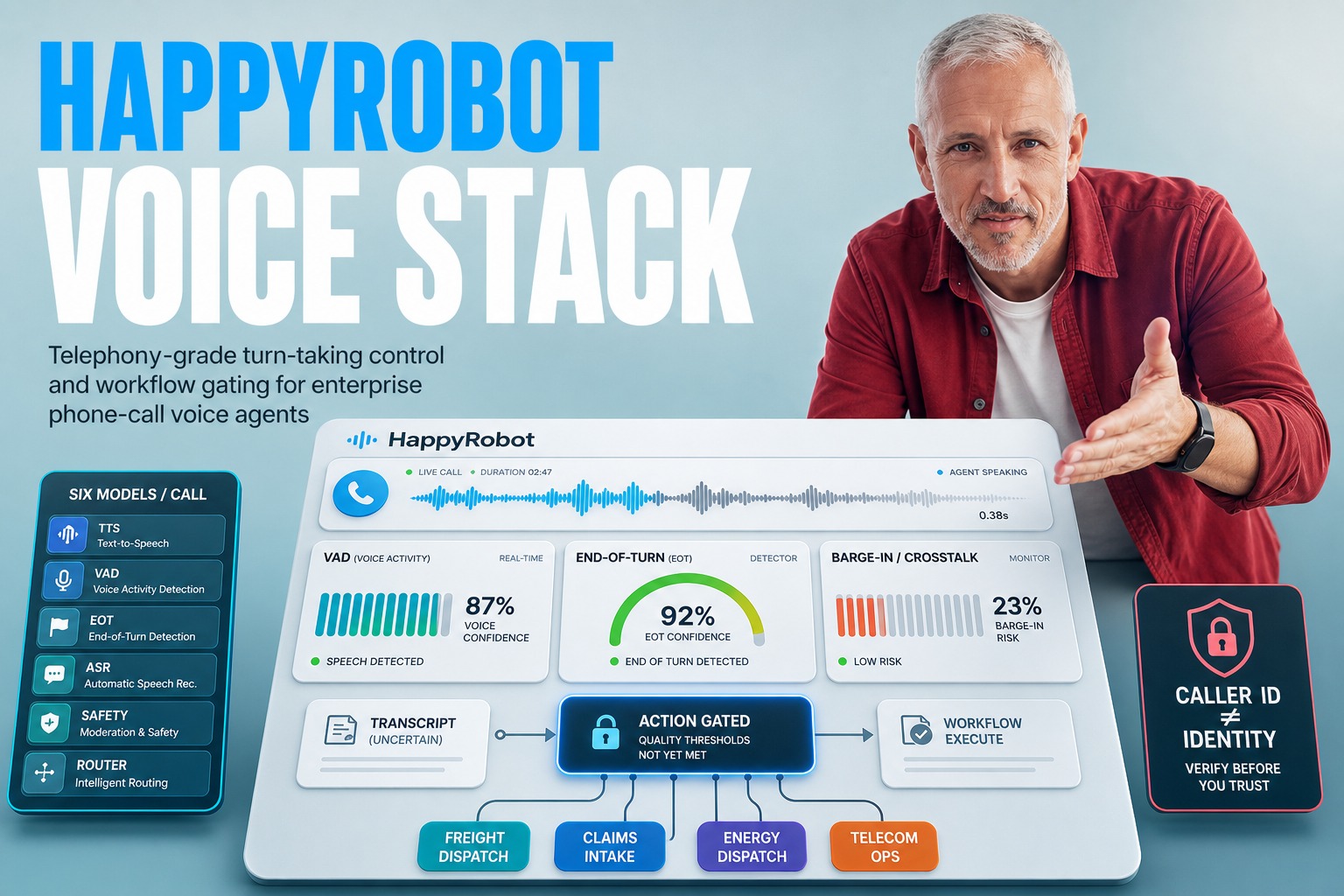
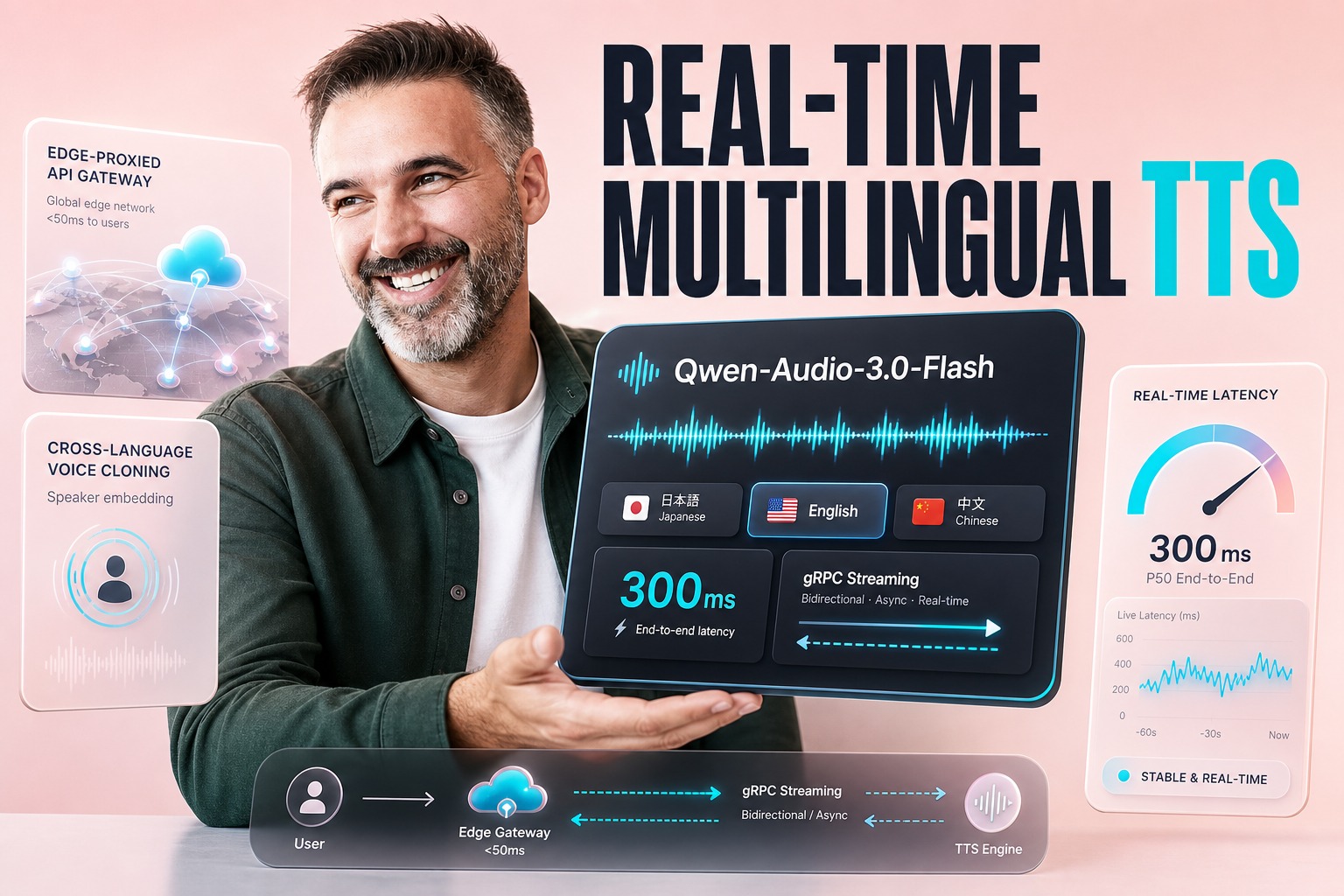
Real-time voice agents are multi-system interactions: audio input, speech understanding, a decision loop, and audio output. Even when you ‘only’ buy text-to-speech, you are buying a live dependency that sits on the edge of customer interaction. Fish Audio’s planned integrations with LiveKit and Retell underline the seam: your agent’s reliability is bounded by the weakest link between the call layer and the voice generation layer.
What ‘real-time’ means operationally, not marketing-wise
In practice, ‘real-time’ forces you to reason about backpressure, retries, and partial results. When a voice platform is generating audio while your agent is still deciding, your system needs policies for interruptions, barge-in, and turn-taking. The vendor’s API may stream; your stack still must decide what happens on network jitter, what the user hears during tool calls, and how the conversation state is reconstructed after a reconnect.
On-prem and zero retention aren’t checkboxes; they are architecture constraints
Fish Audio explicitly offers on-premises deployment and zero-data-retention options, which is a strong signal that enterprises want the voice layer inside their security boundary. That choice changes everything downstream: how you manage keys, how you isolate tenants, how you monitor latency, and how you handle upgrades. If you can’t run the voice platform in the deployment model your risk team requires, you’ll either stall or build an expensive wrapper you never wanted.
HIPAA-compliant configurations: treat voice as PHI-adjacent by default
Fish Audio mentions HIPAA-compliant configurations. The practical implication is that voice is often sensitive even when you think it isn’t, because it can contain identifiers, medical context, or consent markers. Engineering leaders should assume that voice transcripts, audio recordings, and derived embeddings can fall into regulated handling requirements depending on workflow. That pushes you to define retention, access control, and audit trails before you choose convenience.
If your workflow touches regulated data, your voice vendor is part of your compliance scope.
The new platform evaluation stack: capabilities are secondary to guardrails
Fish Audio sells realistic voices, multilingual support, and emotional control. Those are important, but for production we evaluate the guardrails first: deployment options, data retention, and regulatory alignment. Only after that do we evaluate expressiveness features like fine-grained emotion controls, because those features expand surface area and create additional test cases. The business upside is real; the operational cost is too.
- Deployment reality first: If you need on-prem or zero retention, pick only vendors that offer it; everything else is wasted evaluation.
- Streaming compatibility: Plan around how your call layer and the voice layer share timing; real-time systems punish mismatched assumptions.
- Governed expressiveness: Word-level emotion control must be treated like a configuration interface with approvals and regression testing.
- Language footprint: A claim of 83+ languages is compelling, but your enterprise needs verified coverage for your customer mix.
- Integration maturity: Vendor plans for LiveKit and Retell hint at ecosystem fit; your stack still needs end-to-end observability.
Why five-second cloning is a governance issue before it’s a feature
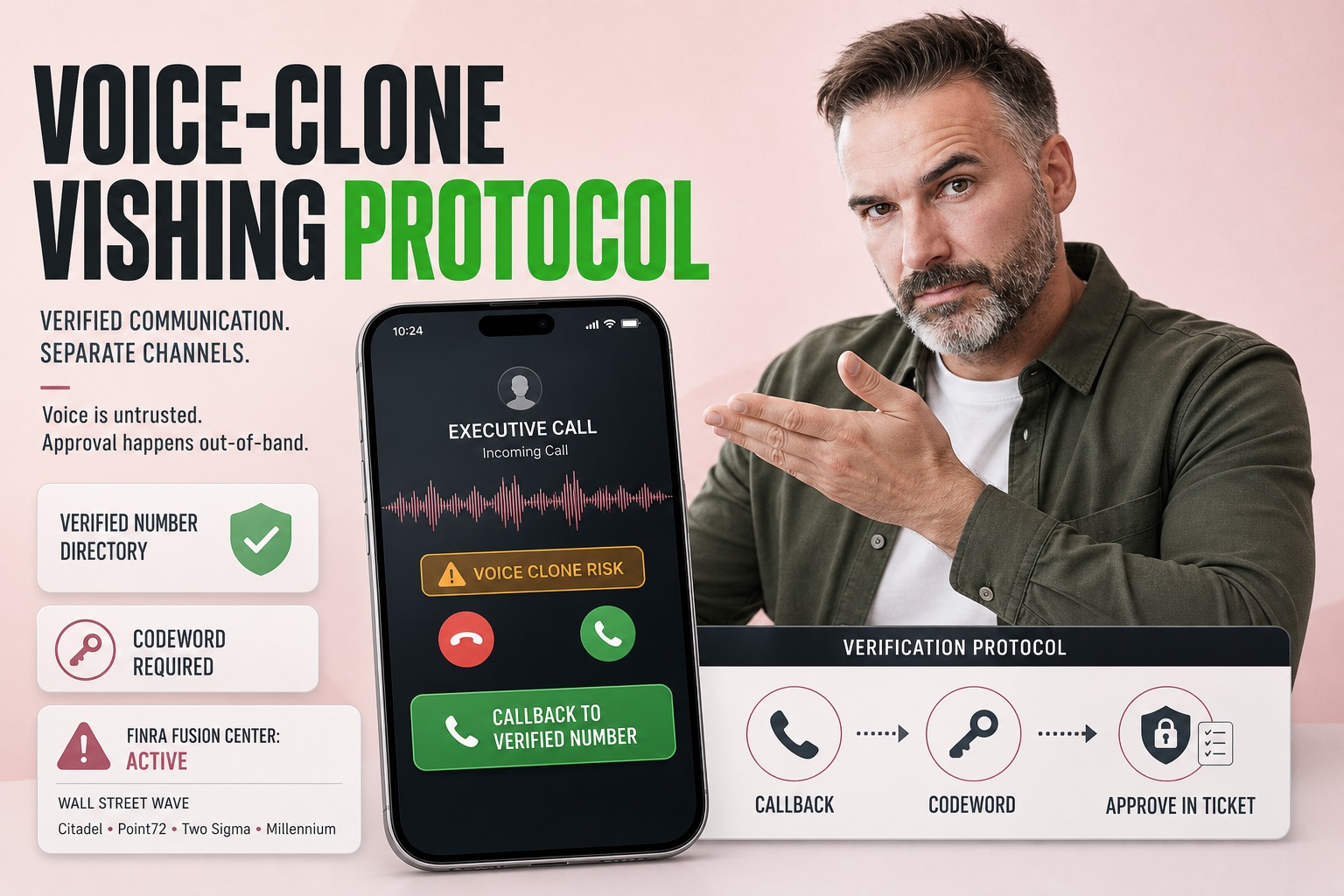
Fish Audio claims voice cloning from a five-second sample in about 15 seconds. That’s a dramatic reduction in friction, and it changes the threat model: the bottleneck becomes permission, proof of consent, and usage logging, not technical feasibility. In an enterprise, we need to define who can initiate cloning, what constitutes authorization, and how we prevent a ‘helpful’ internal tool from becoming an impersonation factory.
Establish a consent policy that is enforceable in tooling, not just written in a doc.
Gate cloning behind identity and approvals so internal users can’t create voices casually.
Bind every cloned voice to a purpose, an owner, and an audit trail for later investigation.
Define revocation and deletion behavior aligned with your retention posture and vendor capabilities.
Emotion controls will force you to formalize ‘tone’ as product requirements
Fish Audio’s ‘15,000 natural-language controls for word-level emotion’ is the kind of feature that product teams love and engineering teams dread—unless you name the constraint explicitly. Tone becomes a requirement with acceptance criteria: what your support agent is allowed to sound like, how escalation is expressed, and which words must remain neutral. Without that, you ship variability, and variability is what produces brand incidents.
The hidden coupling between emotion and intent classification
In voice workflows, users infer intent and competence from prosody. If you allow the agent to express emotion at word-level granularity, you can accidentally change how users interpret outcomes, from denial messages to payment reminders. That coupling means your NLU/decision logic and your TTS configuration are not independent modules. We treat them as a joint release: new policies or intents must be validated against the voice expression layer.
Multilingual coverage is more than language count—it’s operational supportability
Supporting more than 83 languages is a major platform claim, but enterprise evaluation isn’t satisfied by a number. You need to know what happens to monitoring, QA, and escalation across languages. Even if the voice sounds natural, your support org must be able to reproduce issues, review logs, and validate that the agent didn’t drift in meaning. A broad language footprint increases the need for structured testing and post-call review workflows.
| Evaluation focus | What you validate in your stack | Why it fails in production |
|---|---|---|
| Multilingual output | QA and review workflows per target language | You can’t verify incidents you can’t understand |
| Emotion controls | Tone policies, approvals, regression tests | Small changes create outsized brand risk |
| Fast voice cloning | Consent capture, audit logs, revocation | Misuse is cheaper than governance |
| Deployment posture | On-prem, zero retention, regulated configs | Procurement blocks you late |
LiveKit and Retell integrations point to a voice-agent ecosystem forming
Fish Audio plans to build developer tools and integrations with platforms such as LiveKit and Retell. That is a meaningful signal: voice agents are becoming composable, where call infrastructure, orchestration, and voice generation are separate providers. The upside is faster assembly; the downside is more seams. When an incident happens, you need to isolate whether it was the call path, the agent logic, or the TTS layer—otherwise you’ll chase ghosts.
- Call layer seam: Audio transport and session management can introduce failure modes you’ll wrongly blame on the model.
- Agent orchestration seam: Tool calls and state transitions can disrupt turn-taking and create awkward interruptions.
- Voice generation seam: Streaming output and partial synthesis can expose retries and jitter to end users.
- Observability seam: Each vendor’s logs differ; without correlation IDs you lose causality.
- Vendor accountability seam: Separate SLAs can still produce one broken customer experience.
Plavno’s position: treat voice as an interface layer you must secure and operate
At Plavno, we don’t treat voice as a shiny feature; we treat it as the front door to your system. The platform selection should be anchored in security posture and deployment reality, then in integration and operational maturity, and only then in subjective quality. When teams ask us to build voice agents, we align the voice stack with existing governance and incident response, often as part of AI agents development rather than a standalone model experiment.
Decide your retention stance up front: zero retention versus stored audio/transcripts for QA.
Confirm whether on-prem is required for your risk posture or your customer contracts.
Define how the voice layer integrates with your call stack and how failures degrade.
Establish tone and consent policies that engineering can enforce.
Only then compare voice quality and expressive controls as differentiators.
The business impact is speed-to-deployment, not just ‘better conversations’
A platform that supports on-prem deployment, zero retention, and HIPAA-aligned configurations can compress time-to-production because it removes the most common late-stage blockers: security review, data handling objections, and regulatory uncertainty. Fish Audio’s traction—eight million users and meaningful ARR—also suggests internal stakeholders will come with expectations already set by what they’ve heard in the market, which raises the bar for your deliverable.
Why procurement now asks for deployment modes before they ask for voice quality
In many enterprises, procurement and security teams have become fluent in AI risk patterns. When a vendor can articulate on-prem, zero retention, and regulated configurations, it answers the first gating questions. Only after those are satisfied do stakeholders debate whether one voice is ‘more human.’ This ordering matters: engineering teams that optimize for sound quality first often redo the entire selection when legal and security finally engage.
How to evaluate in practice: start from your call flows and failure policy
The right evaluation process starts with your real call flows, not a generic prompt set. You need to know what the user hears when the agent is waiting on a tool call, what happens if synthesis stalls, and how quickly you can fail over to a safe response. A vendor’s raw capability, like fast cloning or word-level emotion control, is only helpful if you can define a stable failure policy and maintain it under load and change.
| Production question | What you need to decide | What to test with any vendor |
|---|---|---|
| What is the safe fallback? | Silence, hold message, human transfer | How synthesis failures surface to the caller |
| Who owns tone? | Product, compliance, or operations | How emotion controls are configured and reviewed |
| Where does data live? | SaaS, on-prem, or hybrid | Whether retention and access are enforceable |
| How do we debug? | Correlation across vendors | Whether you can trace one call end-to-end |
Real-world application: regulated support agents need ‘zero retention by design’
If you’re building voice agents for workflows that may be HIPAA-adjacent, Fish Audio’s mention of HIPAA-compliant configurations and zero-data-retention options is exactly the kind of capability that can unblock deployment. The real work is aligning that capability with your process: how you prove retention is off, how you restrict access to any logs that exist, and how you audit usage without retaining content.
- Consent capture: You need a workflow to confirm the caller’s awareness and authorization when voice is synthesized or recorded.
- Audit without content: Your ops team still needs traceability even if you avoid storing audio.
- Tenant isolation: On-prem or enterprise deployment must match your internal segmentation model.
- Incident response: You must be able to investigate without violating your own retention promises.
- Vendor posture: ‘Zero retention’ must map to how your contracts and configurations are enforced.
Real-world application: multilingual contact centers expose the weakest QA link
When a platform claims 83+ languages, the temptation is to expand coverage immediately. In practice, multilingual voice agents stress your QA and review process more than your synthesis. You need bilingual review capability, consistent escalation handling, and a strategy for verifying what the agent said and how it sounded when something goes wrong. Otherwise, you’ll discover quality problems only after customers complain.
Pick a small set of high-impact languages aligned with your actual customer demand.
Define who can approve voice tone and phrasing in each language.
Run incident drills where reviewers reconstruct a problematic call without relying on stored audio.
Expand coverage only when your monitoring and review workflows scale with it.
Real-world application: creators and internal tools can become enterprise risk vectors
Fish Audio serves creators and developers as well as enterprises, which is increasingly common for AI platforms. That dual market is a strength, but it also means internal teams can adopt the tool for ‘content’ and inadvertently create brand or compliance exposure. The operational response is not to block creativity; it’s to separate environments and permissions so experimentation doesn’t leak into production identities or customer-facing voices.
- Separate sandboxes: Keep creator experimentation isolated from production voice identities.
- Identity binding: Associate each approved voice with a business owner and a defined use case.
- Approval workflows: Treat voice changes like UI changes—reviewed and versioned.
- Monitoring hooks: Ensure you can detect unusual usage patterns, not just failures.
- Policy enforcement: Make it hard to do the wrong thing by default.
Risks you can’t outsource: cloning, trust, and impersonation pressure
As cloning friction drops—five seconds of sample to a clone in about 15 seconds, per Fish Audio—the cost of misuse drops too. Even if your vendor has strong controls, your enterprise still owns trust with customers and employees. That means your risk model must include impersonation attempts, internal misuse, and brand confusion. The more human the voice sounds, the more a user believes it represents your company.
- Impersonation risk: The same realism that helps conversion also increases the harm of spoofing.
- Consent disputes: You need a verifiable record of who authorized voice creation and use.
- Brand drift: Overly expressive controls can shift tone outside approved boundaries.
- Vendor lock-in: Expressive tuning becomes sticky; migration is harder than swapping a model.
- Operational fatigue: Without tooling, teams burn time reviewing tone instead of outcomes.
Deployment modes create different security work, not different ‘levels of safety’
Fish Audio highlights on-prem deployment and zero retention as enterprise options, which we see as mechanisms to align with existing security models. But no mode is automatically safe. On-prem shifts responsibility to your team for patching and isolation; SaaS shifts trust and audit requirements to contracts and controls; hybrid introduces complexity. The correct choice is the one your organization can operate consistently under real constraints.
| Deployment posture | What you gain | What you take on |
|---|---|---|
| SaaS | Fast iteration and minimal infra | Strong contractual and technical controls for retention and access |
| On-prem | Clear boundary control and data locality | Operational burden for updates, monitoring, and resilience |
| Hybrid | Flexibility for different workflows | More seams, more policy complexity, more debugging effort |
What ‘enterprise sales expansion’ signals about the next 12 months of buying
Fish Audio plans to use capital to support enterprise sales, developer tools, and integrations. That matters because it predicts how vendors will package the category: more procurement-ready features, more compliance language, and more ecosystem tie-ins. For CTOs, this is the window where early adopters can influence architecture standards inside the org before fragmented tooling becomes entrenched across teams.
- Procurement readiness: Expect vendors to formalize retention and deployment options as standard deal terms.
- Ecosystem coupling: Integrations like LiveKit and Retell will shape reference architectures.
- Developer tooling: Better tools accelerate adoption, which increases governance urgency.
- Category consolidation: Platforms will expand beyond TTS toward speech-to-speech and voice-native models.
- Internal demand: Stakeholders will ask why your voice agent doesn’t match market quality.
How we recommend scoping a pilot so it survives the second meeting
A voice-agent pilot that survives beyond a demo is scoped around operational constraints, not wow moments. We start by defining the data handling boundary, the retention rule, and the integration seam with the call layer, then we constrain emotion and language scope until QA and compliance can keep up. This is where pairing voice work with broader AI automation pays off: you reduce variability by automating the surrounding workflows and escalation paths.
- Define the boundary: Decide what audio/transcripts exist, where, and for how long.
- Constrain expressiveness: Start with conservative tone policies and expand only with evidence.
- Instrument everything: Build traceability across call, agent logic, and voice generation.
- Plan fallbacks: Decide what the user hears when dependencies fail.
- Include governance early: Bring security and compliance into week one, not week six.
The quiet cost center: observability across voice, agent, and telecom layers
Voice agents are distributed systems wearing a friendly mask. Your debugging experience depends on being able to reconstruct a single conversation across multiple vendors and services, including the call platform, the agent runtime, and the voice platform. Without consistent identifiers and disciplined logging, you won’t know whether a bad call was a synthesis issue, an orchestration stall, or a call-layer glitch.
If you can’t trace one call end-to-end, you can’t responsibly run voice agents.
Security posture is part of product design, not a late compliance exercise
Because Fish Audio offers zero-data-retention and on-prem options, teams will increasingly be expected to justify why they chose a platform that doesn’t. Security posture affects UX: whether you can do post-call coaching, whether you can replay calls, and how you handle disputes. At Plavno, we often pair voice-agent work with cybersecurity and penetration testing to make sure the voice layer’s permissions and boundaries match the threat model implied by easy cloning.
‘Zero retention’ is a UX decision as much as it is a compliance decision.
Voice-native models and speech-to-speech are coming; don’t lock into brittle assumptions
Fish Audio plans to expand beyond text-to-speech into voice-native language models and speech-to-speech systems. Even if you’re only buying TTS today, your architecture should anticipate that the voice layer may become bidirectional and more autonomous. That implies you should keep boundaries clear: isolate the call layer, keep policy enforcement outside the vendor, and avoid embedding business logic into voice configuration that you can’t migrate.
Design so you can swap capabilities later without rewriting governance from scratch.
A practical procurement stance: ask ‘what can’t we change later?’
When voice quality is competitive, the sticky decisions are the ones you won’t want to revisit: deployment model, retention defaults, and how much control your product team demands over emotional expression. Fish Audio’s positioning around on-prem, zero retention, and HIPAA configurations suggests those are becoming standard enterprise asks. We advise treating those as irreversible early choices and testing everything else as evolvable.
Choose for the constraints you can’t renegotiate, not the features you can re-tune.
Closing insight: the winning voice stack is the one you can operate on Monday
Fish Audio’s traction—$52 million raised, about $21 million ARR, eight million users, open-source roots with 31,000+ GitHub stars, rapid cloning, broad language support, and enterprise-grade deployment options—shows voice is now a platform bet. Our position is that engineers should stop treating voice as ‘output’ and start treating it as governed infrastructure, with explicit retention, consent, and failure policies. Author: Plavno team. Last updated: July 2026.
We can help you design the voice layer so it fits your cloud and ops reality, including streaming integration and deployment hardening through cloud software development.
 Chat GPT
 Perplexity
 Claude
 Gemini