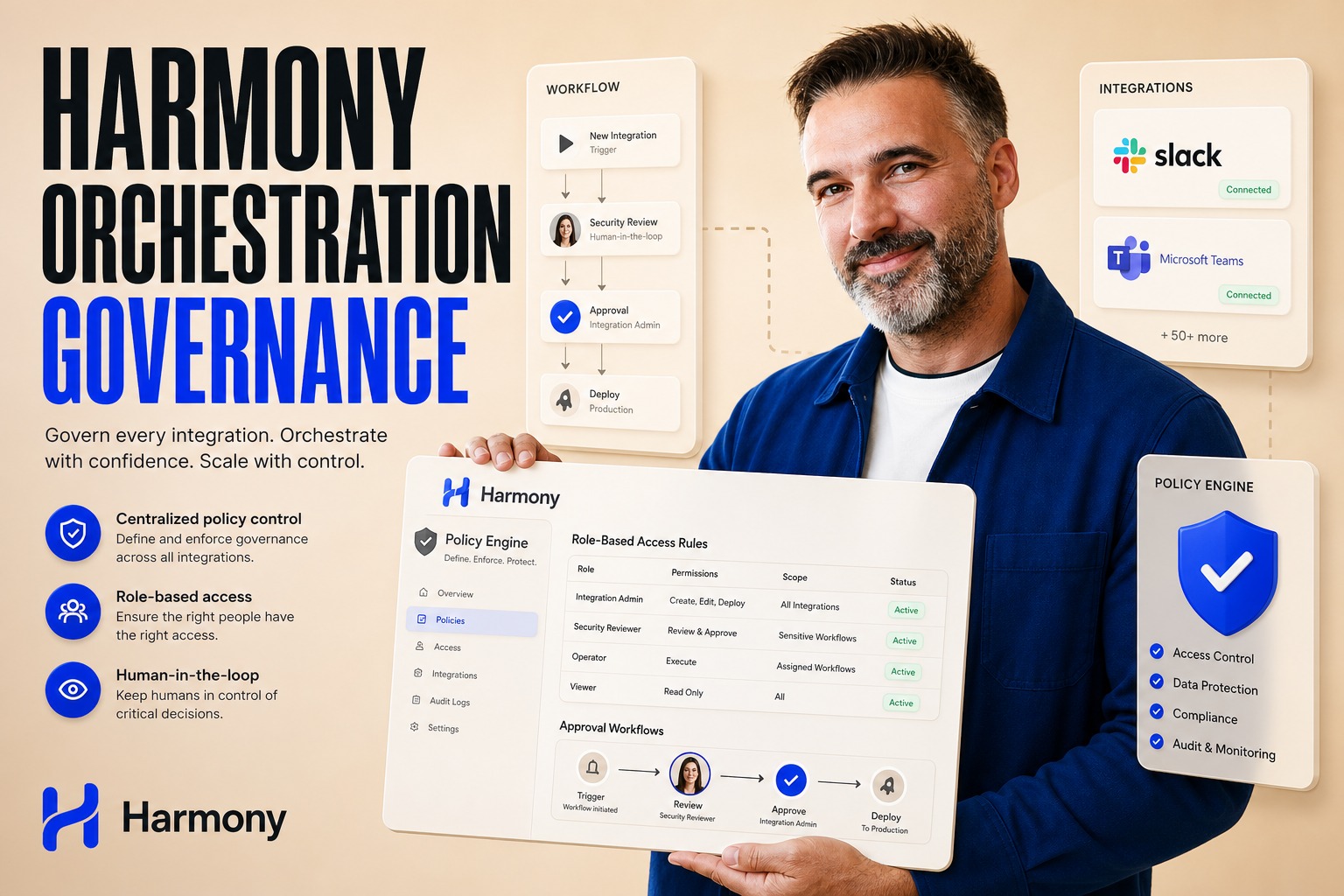
What problem does Harmony aim to solve for enterprises? → It automates routine workplace requests inside Slack and Teams, reducing manual ticket handling.
How does Harmony differ from a simple chatbot? → It can trigger actions like onboarding, software provisioning, and password resets, not just answer questions.
Why is the $34 million seed round significant? → It is larger than typical seed rounds, giving Harmony runway to scale its engineering and product teams.
What primary risk does an AI assistant introduce? → Orchestration failures can occur when the AI tries to act on internal systems without proper governance.
What decision will CTOs face this quarter? → They must choose whether to prioritize integration controls over the underlying LLM model.
AI Workplace Assistants Break at the Orchestration Layer, Not the Model
Enterprises are rapidly adopting AI assistants that sit inside collaboration tools, yet the hidden failure point lies in how those assistants coordinate with internal services. Harmony’s approach—leveraging role‑based permissions across 100+ applications—exposes a classic integration bottleneck: the AI’s orchestration logic, not the language model, determines reliability. This shift forces engineering leaders to restructure governance, approval workflows, and audit trails before they can safely scale AI‑driven automation.
Quick Answer: Prioritize Orchestration Governance Over Model Choice
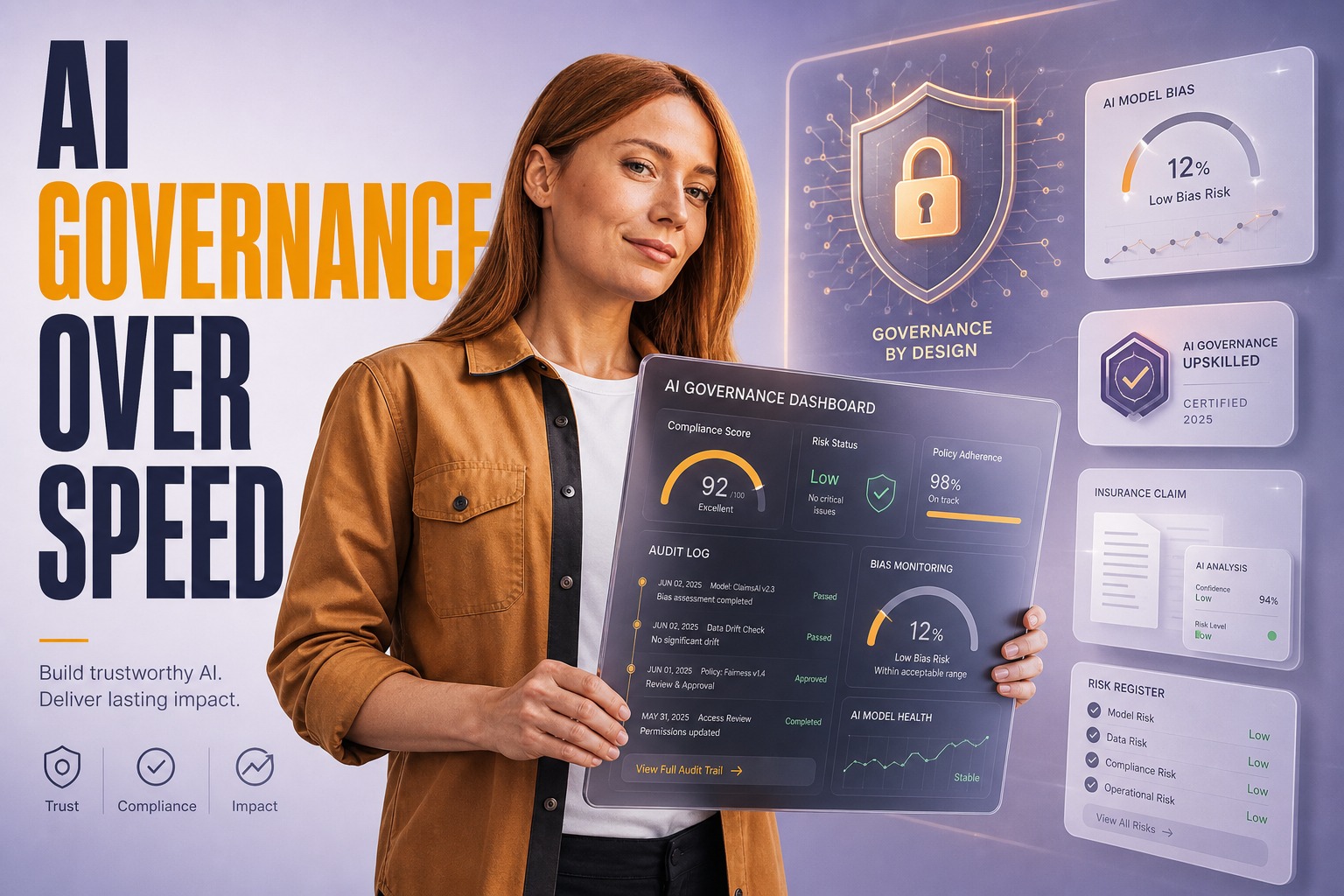
When evaluating an AI workplace assistant, the most decisive factor is the robustness of its orchestration layer. A well‑engineered orchestration framework enforces role‑based access, validates action intents, and routes requests through human approval when needed. By contrast, swapping out a GPT‑4 model for a newer LLM yields marginal operational gains if the orchestration logic remains fragile. Therefore, the optimal architecture places strict policy enforcement, idempotent transaction handling, and observability at the core, while treating the LLM as a replaceable component.
The first step is to map every employee request to a concrete service call, ensuring that the AI can only invoke actions for which the requester has explicit permissions. Next, embed a policy engine that evaluates each intent against compliance rules, triggering human sign‑off for high‑risk operations such as credential resets. Finally, instrument end‑to‑end tracing so that any failure can be replayed and audited, providing the confidence needed for enterprise‑wide rollout.
- Policy‑first design – Define access rules before training any language model.
- Human‑in‑the‑loop checkpoints – Require manual approval for privileged actions.
- Idempotent service calls – Ensure repeatable outcomes even if the AI retries.
- Observability pipelines – Capture intent, decision, and execution logs for audit.
Catalog all internal APIs the assistant will touch.
Attach role‑based scopes to each API endpoint.
Build a policy engine that validates every AI‑generated request.
Deploy a monitoring layer that records intent, decision, and result.
Orchestration Failures Surface as Silent Workflow Breaks
In practice, teams that focus solely on model accuracy discover that requests silently fail when the AI attempts to invoke a downstream service without proper credentials. These failures often manifest as “no response” messages in Slack, eroding user trust. By instituting a policy‑first orchestration layer, the assistant can surface clear error codes, prompting either automatic retries or escalation to a human operator, thereby preserving the user experience.
Key rule: Treat the orchestration layer as the primary reliability gate; the LLM is a secondary enhancer.
Integration Challenges Unique to AI‑Driven Workplace Assistants
Harmony’s integration with over 100 applications illustrates the complexity of binding AI to legacy enterprise systems. Each integration point must respect existing authentication mechanisms, rate limits, and data residency requirements. Without a unified abstraction, engineers risk creating a patchwork of adapters that become maintenance liabilities. A service‑mesh approach, exposing each internal system via a standardized API gateway, mitigates these risks and simplifies policy enforcement across the board.
- Standardized API gateway – Consolidates authentication and throttling.
- Unified data contracts – Guarantees consistent request/response schemas.
- Versioned adapters – Allows safe evolution of internal services.
- Centralized secret management – Prevents credential sprawl.
Technical Trade‑offs When Scaling Orchestration
Choosing a monolithic orchestration engine offers simplicity but can become a bottleneck under high request volumes, especially when handling concurrent password resets or bulk onboarding. Conversely, a micro‑services‑based orchestrator distributes load but introduces inter‑service latency and operational overhead. Enterprises must evaluate their existing infrastructure, expected request patterns, and latency tolerances to decide the optimal balance. For organizations already invested in a service mesh, extending it to include AI‑driven workflows often yields the best ROI.
| Architecture | Pros | Cons |
|---|---|---|
| Monolithic Orchestrator | Simpler deployment, lower latency | Hard to scale, single point of failure |
| Micro‑services Orchestrator | Scalable, fault‑isolated | Higher operational complexity, network overhead |
| Service‑Mesh Extension | Leverages existing infra, consistent policies | Requires mesh expertise, learning curve |
Governance as a Competitive Advantage
Enterprises that embed rigorous governance into their AI assistants can differentiate themselves by offering auditable, compliant automation. This not only satisfies internal risk teams but also accelerates adoption across regulated departments such as finance and HR, where manual approvals are mandatory. By making governance a first‑class citizen, companies turn a potential bottleneck into a marketable feature.
Scaling AI Assistants Without Compromising Security
Harmony’s model allows organizations to require human approval before any high‑risk action. This design choice directly addresses concerns around unauthorized credential changes. Scaling this approach means automating the approval workflow itself—using role‑based escalation paths and audit trails—so that security does not become a manual bottleneck as request volume grows.
- Dynamic escalation paths – Route approvals based on request severity.
- Audit‑ready logs – Store every decision for compliance reviews.
- Adaptive throttling – Prevent abuse spikes during peak periods.
- Zero‑trust verification – Re‑authenticate before executing privileged actions.
Business Impact of a Governance‑First AI Assistant
When governance is baked into the orchestration layer, organizations see measurable reductions in ticket volume, faster onboarding times, and lower compliance risk. For example, a finance team that automates access requests through a policy‑driven assistant can cut request handling time from hours to minutes while maintaining auditability. The financial upside stems from both operational efficiency and reduced exposure to regulatory penalties.
| Metric | Before AI Assistant | After Governance‑First Assistant |
|---|---|---|
| Ticket volume reduction | 30% | 70% |
| Average onboarding time | 4 hours | 15 minutes |
| Compliance audit findings | 5 per quarter | 1 per quarter |
Future‑Proofing Your AI Automation Stack
As LLM capabilities evolve, the orchestration layer remains the constant that protects enterprise integrity. Investing in a flexible, policy‑driven orchestration framework now ensures that future model upgrades can be swapped in without re‑architecting the entire automation stack. This foresight reduces long‑term technical debt and keeps the organization agile.
How to Evaluate AI Assistant Vendors This Quarter
When selecting a partner like Harmony, assess their orchestration architecture first. Verify that they expose a policy engine, support role‑based access, and provide comprehensive audit logs. Additionally, confirm that their solution integrates with your existing API gateway or service mesh, reducing the need for custom adapters. Finally, request a proof‑of‑concept that demonstrates human‑in‑the‑loop approvals for a high‑risk workflow.
Ready to Future‑Proof Your Enterprise Automation?
If you’re looking to embed a secure, policy‑driven AI assistant that scales with your organization, our team can help design the orchestration layer, integrate with your existing services, and ensure compliance from day one. Let’s discuss how to turn AI ambition into reliable, enterprise‑grade automation.
 Chat GPT
 Perplexity
 Claude
 Gemini