Will AI replace a quarter of insurance jobs soon? → GlobalData reports that up to 25% of roles could be automated as insurers scale AI.
Is faster automation always better for profit margins? → Without strong governance, speed can create regulatory fines that outweigh cost savings.
Do insurers need new cybersecurity measures for AI? → The same report flags heightened cyber risk as AI expands across claims and underwriting.
Can upskilling offset workforce reductions? → Companies that pair automation with employee training see better risk selection and customer retention.
What should a CTO prioritize this quarter? → Building an AI governance framework before large‑scale rollout.
Automation's Promise: 25% Job Reduction in Insurance
The latest GlobalData poll shows that insurers anticipate AI‑driven automation to replace roughly one‑quarter of their workforce, echoing Allianz Partners’ plan to cut up to 1,800 roles. By automating claims processing, underwriting support, fraud detection and document handling, firms aim to slash operating costs and accelerate processing speed. Yet the headline‑grabbing figure masks a deeper strategic dilemma: the same AI surge brings regulatory scrutiny, fairness concerns and a surge in cyber exposure that many executives underestimate. Our AI automation services help insurers navigate this transition.
- Cost reduction: AI can trim repetitive manual effort, delivering measurable savings on labor‑intensive tasks.
- Speed gains: Automated decision loops cut claim settlement times from days to minutes, improving customer satisfaction.
- Talent shortage mitigation: AI fills gaps where hiring skilled adjusters is increasingly difficult.
- Regulatory pressure: Faster decisions must still meet fairness and transparency standards imposed by insurers’ supervisors.
- Cyber attack surface: More data pipelines and model endpoints increase vulnerability to breaches.
Why Governance Becomes the Real Bottleneck
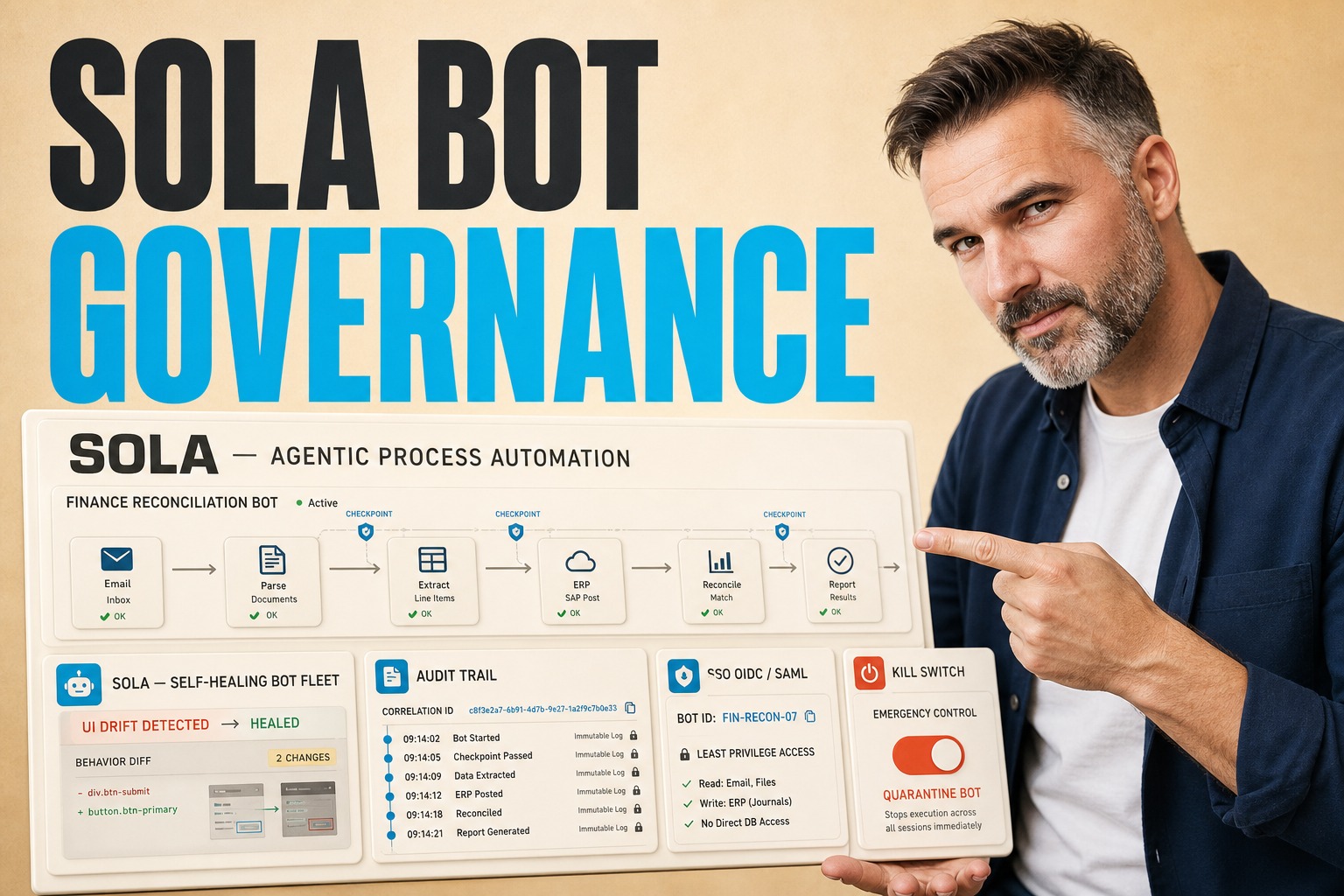
Even as AI promises dramatic efficiency, the real limiting factor is governance. Insurers must embed model validation, bias monitoring, audit trails and clear accountability into every automated workflow. Without these controls, regulators can impose penalties that quickly erode any cost advantage. Moreover, governance frameworks enable consistent risk‑based pricing and claims decisions, preserving brand trust while satisfying emerging AI‑specific compliance mandates.
The Governance‑First Playbook for Insurers
A governance‑first approach starts with a cross‑functional AI oversight board that includes risk, legal, IT security and product teams. The board defines model lifecycle policies, from data ingestion to post‑deployment monitoring, and mandates regular fairness audits. Parallel to policy creation, insurers should invest in tooling that automates audit log collection, version control for model artifacts and real‑time alerting for drift detection. This creates a transparent, auditable pipeline that satisfies both internal risk appetites and external regulator expectations.
The second pillar is workforce transformation. Upskilling programs that teach business analysts to interpret model outputs and engineers to embed security controls ensure that automation augments rather than replaces human expertise. By aligning talent development with governance objectives, insurers can reap AI benefits while mitigating the risk of job displacement backlash and compliance breaches. Our AI consulting services support this transformation.
Integrating AI Governance into Existing Risk Frameworks
Most insurers already operate robust enterprise risk management (ERM) systems. Embedding AI controls into ERM means mapping model risk categories—data quality, algorithmic bias, operational failure—to existing risk registers. This alignment allows senior leadership to view AI risk alongside credit, market and operational risks, facilitating balanced capital allocation and board reporting. Tools such as policy‑as‑code and automated compliance dashboards make this integration seamless and auditable. Our digital transformation expertise ensures smooth integration.
Governance should be built before scaling AI, not after.
Upskilling the Workforce While Automating
Automation alone cannot close the talent gap; upskilling is essential. Structured learning paths that combine domain knowledge with AI fundamentals empower underwriters and claims adjusters to become AI‑augmented decision makers. Certification programs, internal hackathons and mentorship from data science teams accelerate this transition, ensuring that displaced staff can migrate to higher‑value roles that oversee and refine automated processes. Our cloud software development platform supports these learning tools.
From Legacy Systems to AI‑Ready Pipelines
Legacy policy administration platforms often lack the APIs needed for real‑time model inference. Modernizing these systems involves exposing micro‑service endpoints, containerizing inference engines and adopting event‑driven architectures that feed fresh data into models without batch delays. This technical shift reduces latency, improves model freshness and creates a foundation for future AI extensions.
Audit legacy interfaces: Identify bottlenecks and missing data contracts.
Expose secure APIs: Use OAuth2 and mutual TLS to protect model endpoints.
Containerize inference: Deploy models in Docker/Kubernetes for scalability.
Implement event streams: Leverage Kafka or Pulsar for real‑time data flow.
Monitor end‑to‑end latency: Set SLOs and alert on deviations.
Real‑time pipelines are the backbone of trustworthy AI automation.
Cybersecurity Implications of Large‑Scale AI
As AI models become integral to claims and underwriting, they also become attractive attack vectors. Threat actors can poison training data, hijack inference endpoints or exfiltrate sensitive policyholder information. Insurers must therefore extend their security controls to cover model supply chains, enforce strict access controls on model repositories and conduct regular red‑team exercises that simulate AI‑specific attacks. Our AI agents development services help mitigate these threats.
Threat Surface Expansion in Claims Automation
Automated claim triage introduces new endpoints that ingest photos, voice recordings and structured claim forms. Each ingestion point must be validated against schema, scanned for malware and rate‑limited to prevent denial‑of‑service attacks. Moreover, model explanations should be logged to detect anomalous inference patterns that could indicate model tampering.
- Data poisoning defenses: Validate and version control training datasets.
- Endpoint hardening: Apply WAF rules and mutual TLS for model APIs.
- Zero‑trust networking: Segment AI workloads from core policy systems.
- Continuous red‑team testing: Simulate adversarial attacks on model pipelines.
- Audit trails: Record inference requests and responses for forensic analysis.
Evaluating ROI: Automation vs. Governance Investment
When CFOs ask whether the $2 M automation budget outweighs a $1.5 M governance spend, the answer lies in risk‑adjusted return. Governance reduces the probability of costly regulatory fines, which historically can exceed 10% of annual premiums for non‑compliant insurers. Meanwhile, automation delivers incremental efficiency gains that plateau after the low‑ hanging fruit is harvested. A balanced investment that earmarks at least 40% of AI spend for governance yields a higher net present value over a three‑year horizon.
The second consideration is time‑to‑value. Governance frameworks that are baked into CI/CD pipelines enable rapid model updates without re‑approval delays, accelerating the payoff of automation initiatives. In practice, insurers that adopt a governance‑first stance see a 20% faster realization of cost savings while avoiding the average $3 M penalty observed in recent regulator actions.
Allocate a minimum of 40 % of AI budgets to governance for optimal ROI.
Decision Framework for Q2 AI Projects
A practical decision matrix helps CTOs prioritize projects that align with both automation potential and governance readiness. First, score each initiative on automation impact (cost reduction, speed), governance complexity (regulatory exposure, data sensitivity) and talent availability (upskilling needs). Projects with high impact but low governance complexity move to fast‑track, while high‑complexity items require a governance sprint before any code is written.
The matrix also incorporates a risk‑adjusted timeline: high‑risk projects receive a longer planning horizon to embed controls, whereas low‑risk pilots can be launched within 6 weeks. This structured approach ensures that limited engineering resources are deployed where they generate the most compliant value.
Define impact score: Estimate cost savings and processing speed gains.
Assess governance load: Identify regulatory, fairness and security requirements.
Map talent gaps: Determine upskilling or hiring needs.
Prioritize: Choose projects with high impact, low governance load for quick wins.
Plan governance sprint: Allocate time for policy creation and control implementation before development.
Prioritize pilots that are high‑impact, low‑governance for quick wins.
Case Study: Allianz Partners’ Workforce Reduction
Allianz Partners announced a plan to cut 1,500‑1,800 jobs across Europe while expanding AI use in claims triage and underwriting assistance. The move reflects confidence that automation can sustain service levels despite a leaner staff. However, the company also highlighted a simultaneous investment in AI governance tools, including model audit platforms and a dedicated ethics board, to pre‑empt regulator concerns.
The dual strategy illustrates a market‑leading lesson: scaling AI without parallel governance can trigger compliance back‑lashes, whereas a coordinated approach safeguards both cost efficiency and brand integrity.
- Automation focus: Claims triage bots handling routine inquiries.
- Governance investment: Model audit platform and ethics oversight committee.
- Talent shift: Upskilling remaining staff to supervise AI outputs.
- Regulatory alignment: Early engagement with European insurance supervisors.
- Outcome: Projected 12% reduction in processing costs within 12 months.
Strategic Recommendations for Insurers
First, establish an AI governance board that reports directly to the C‑suite, defining clear policies for model development, bias testing and audit logging.
Second, embed security controls at the model‑serving layer, using zero‑trust networking and regular red‑team exercises to harden the AI supply chain.
Third, launch a targeted upskilling program that equips underwriters and claims adjusters with AI literacy, enabling them to act as human‑in‑the‑loop supervisors.
Finally, adopt a phased rollout: begin with low‑risk automation pilots, validate governance controls, then expand to high‑impact processes such as underwriting and fraud detection. This disciplined cadence reduces exposure to regulatory penalties while delivering measurable efficiency gains.
Start with a governance board, then scale automation in measured phases.
Future Outlook: AI Regulation and Market Competition
Regulators across Europe and North America are drafting AI‑specific statutes that will require insurers to maintain explainable, auditable models and to report on bias mitigation efforts. Simultaneously, competitors that accelerate AI adoption without robust controls risk short‑term gains but may face costly enforcement actions. Insurers that invest early in governance will therefore enjoy a competitive moat, attracting risk‑aware customers and partners.
The market will also see a rise in AI‑enabled products—personalized policies, dynamic pricing engines and voice‑driven claim assistants—that demand seamless integration of governance, security and talent pipelines. Companies that align these elements now will be positioned to capture the next wave of digital insurance.
Key Metrics to Monitor
Critical performance indicators include automation cost‑savings ratio, governance compliance score (audit findings per quarter), model drift detection latency, and upskilling completion rate among affected staff. Tracking these metrics provides a real‑time health check of both efficiency gains and risk exposure.
| Metric | Automation Focus | Governance Focus |
|---|---|---|
| Cost Savings Ratio | Direct labor reduction | Avoided regulatory fines |
| Compliance Score | N/A | Audit findings per quarter |
| Model Drift Latency | Time to update model | Time to detect drift |
| Upskilling Rate | N/A | Percentage of staff certified |
Monitoring both efficiency and risk metrics ensures balanced AI growth.
Take Action Now: Build Governance Before Scaling
The decisive move for insurers this quarter is to formalize an AI governance framework before committing additional capital to automation projects. By allocating resources to policy creation, security hardening and workforce education, firms can unlock the promised 25% productivity boost while safeguarding against compliance penalties and cyber threats. The payoff is a resilient, future‑ready insurance operation that delivers faster service without sacrificing trust.
 Chat GPT
 Perplexity
 Claude
 Gemini