bg image
bg image

Serving Charlottesville & Virginia

Charlottesville teams stop wasting budget on manual work in 2026

Operations leaders in Charlottesville lose hours every week to repetitive intake, pricing, and screening tasks. That cost compounds across Albemarle offices and field teams. We build AI systems that remove those loops and free skilled staff for higher-value work. This is for growth-stage and mid-market firms that already feel the squeeze from labor and delayed decisions. You get clear scope, fixed delivery gates, and systems your team can run without a research lab. Get AI Development cost estimate in 24 hours. Tell us budget, timeline, current stack, and the dataset or process you need automated.

Discuss Project

Overview

Why Charlottesville operators fund AI builds now

Charlottesville firms face thin hiring pipelines and rising service expectations from UVA-linked research partners, clinics, and hospitality brands. Manual intake for quotes, deposits, and patient or guest requests still sits on spreadsheets. That delay shows up as lost bookings and slower cash cycles across downtown and the Barracks Road corridor. Leaders need systems that act on data already inside their CRM, PMS, or EHR. Trusted AI Development Partner for Charlottesville Businesses, we ship production agents not slide decks.

We work with US-based clients, including companies operating in Virginia. Our AI development work targets measurable cycle-time cuts on high-volume tasks first. Healthcare triage, customs document checks, hotel voice booking, and candidate pre-screening were all built as real client systems. Each started with one costly workflow and a clear baseline metric. We then wire the model into existing tools so staff keep current logins and audit trails. 10+ AI development projects delivered in the US market give us patterns that fit regional scale rather than only enterprise labs.

Local demand clusters around health systems, legal practices, property teams, and logistics handlers just east toward Richmond routes. Albemarle County manufacturers and Crozet operators need the same clarity on cost and ownership. We map data sources, privacy rules, and failure modes before any model training starts. Integration complexity is treatment, not an afterthought. Bad source data or hidden latency can erase the whole gain. That is why discovery covers schema quality and peak-load behavior early.

Outcomes stay front of mind. Shorter time to first interview, cleaner customs packets, or priced listings that match local demand all beat vanity accuracy scores. Post-launch we instrument drift, spend, and human override rates so finance can see ROI monthly. Teams in Waynesboro and Harrisonburg use the same playbooks with region-specific connectors. The goal is durable software your staff can run, not a pilot that dies after the demo.

Talk to an Expert
Production agents

Production agents

Ship working systems for intake, triage, booking—not slide-deck demos

CRM PMS EHR wiring

Wire into CRM, PMS, EHR

Keep staff logins and audit trails; treat integration as first-class work

Cycle-time cuts

Cycle-time cuts first

Quotes, deposits, guest and patient requests—high-volume paths with baselines

Monthly ROI

Instrument monthly ROI

Drift, spend, and override rates so finance sees durable gains post-launch

Production AI stack

What ships under the hood for Virginia AI builds

Charlottesville clients receive working services that call models behind stable APIs, not notebooks stranded on a laptop. Core pattern is a thin orchestration layer that handles prompts, tools, retries, and audit logs. We pick managed model hosts when speed of change matters. We choose self-hosted weights when data cannot leave controlled networks. Either path still uses structured outputs so downstream systems can act without a human parsing free text. Ground truth here comes from systems we already ran: voice translation pipelines, pricing agents, and compliance checkers with rules engines beside the model.

For real-time voice and meeting work we built pipelines that stream audio, run translation, and emit transcripts in the same session. Separate services own capture, inference, and storage so one failure does not take the call down. Message queues absorb spikes when several meetings start at once. For document-heavy flows like customs or depositions, models read PDFs and structured fields first. A deterministic rules engine then validates against statutes or tariff tables. That dual path keeps accuracy high when pure generation would invent codes.

Security/compliance sits in the same design reviews as features. Role-based access can mirror department trees, as we did when moving an employee portal off SharePoint onto Payload CMS with Next.js. PHI or PII routes through encrypted stores and redaction hooks before any vendor model sees content when policy requires it. Secrets never land in prompts. DevOps means versioned prompts, model pins, canary traffic, and rollback in minutes. Feature flags let product owners turn new behaviors on by site or team without a full redeploy.

Data and integration work defines success more than the model brand. We connect CRM, telephony, property systems, and warehouse tools with explicit contracts. Each connector owns retries and dead-letter queues. Logging captures input hashes, latency, and override reasons so legal and ops can reconstruct a decision. Cost control runs side by side: token budgets, caching of repeated lookups, and smaller models for classification stages. Larger models only handle the hard step. That is how hotel voice concierge and logistics phone agents stay affordable at call volume.

Clients leave with runbooks, not black boxes. Ownership of prompts, evaluation sets, and infrastructure tags is transferred at launch. Charlottesville and Albemarle teams keep regional staff closer to the product after we step back. Monitoring dashboards show quality and spend trends weekly. When drift appears, we retrain or tighten rules using the same case suites we used at handoff. Architecture choices always answer one question: will this still run when the third connection and the first outage both hit middle of busy season.

plavno logo

Build your first
Smart AI project today!

Just tell the Plavno AI Agent about your project - it will ask questions, gather requirements, and propose a tailored solution

Core deliverables

Five AI capabilities Charlottesville firms put to work

Voice agents for intake and booking

Voice agents for intake and booking

Front desks and dispatch lines drown in repeat calls. Charlottesville hotels and logistics desks lose bookings when hold times spike. We ship voice agents that schedule, qualify, and log outcomes into the system of record. Telephony hooks keep numbers and call recording policy intact. Speech models handle accents common on campus and visitor traffic. Structured slots feed booking and TMS tools without manual retyping. Staff jump on only the edge cases the agent flags.

Document and compliance checkers

Document and compliance checkers

Trade teams and counsel still burn hours reading ship packets and deposition dumps. Missing fields trigger delays and fines downstream. Our checkers combine document understanding with a rules engine so known statutes flag first. Models extract entities. Code enforces thresholds and product lists. Reviewers see a short exception queue instead of a folder of PDFs. Audit trails show what the system passed or blocked. That design came from live customs and legal builds.

Pricing and market agents

Pricing and market agents

Property groups near the city and mountain corridors need prices that track demand without daily spreadsheet wars. Static rule sheets lag weekends and event weeks. We build agents that pull comps, seasonality, and inventory signals into recommended list prices. Models surface changes with reasons a broker can defend. Humans approve or lock ranges per neighborhood. History of overrides trains the next pass. Revenue teams measure lift against the prior manual grid.

Coaching and personalization engines

Coaching and personalization engines

Wellness and retention programs stall when content ignores household context. Generic tips get ignored by busy parents and staff. We built habit and coaching flows that adapt goals, messages, and check-ins per family profile. Event streams track completion without heavy app fatigue. Recommenders stay simple so product teams can edit rules. Privacy scopes keep one household out of another. Outcome is stickier engagement and clearer coaching hours for clinical or program staff.

Internal portals with gated AI features

Internal portals with gated AI features

SharePoint sprawl still hides knowledge inside Charlottesville nonprofits and mid-size firms. Search fails and access rights drift by department. We rebuild hubs on Payload CMS and Next.js with role-based and department-level control. Optional AI layers summarize policy packs or route tickets to owners. Permissions stay explicit so legal reviews hold. Content teams publish without engineering tickets for every page. Leaders get one source of truth with guardrails their IT already understands.

Delivery path

From scoped pilot to production in Charlottesville 2026

A fixed four-gate path keeps budget honest and gives your team a usable system at every stage.

Clipboard
Team
01

Step 1: Workflow and data audit (1–2 weeks)

We sit with ops owners and map the exact path a ticket, call, or document takes today. Volume, repeat rate, and failure cost are quantified with your numbers. Source systems and schema quality go on a scorecard. Privacy constraints get written before any sample leaves your network. You receive a written problem brief, risk list, and go or no-go criteria. Timeline stays one to two weeks so momentum does not stall.

02

Step 2: Thin vertical slice (2–4 weeks)

One painful path is automated end to end with real data copies. Models, rules, and UI stubs sit behind feature flags. Evaluation sets with gold answers prove quality before wider rollout. Latency and unit cost are measured on that slice. You see a live demo using your sample packs. Decision gated on accuracy and operator feedback. Failures rewrite scope instead of inflating the contract.

Search in doc
Rocket
03

Step 3: Integration hardening (3–5 weeks)

Connectors, auth, queues, and logging land for production systems. Role maps, department gates, and audit hooks mirror how you already approve access. Failover and rate limits are tested under peak day shapes. Runbooks cover model outage and half-open vendor APIs. Staging mirrors prod names so cutover is not a rewrite. Your engineers pair on reviews to keep skills on-site after launch.

04

Step 4: Launch, train, hand off (1–2 weeks)

Traffic ramps by site or team with daily quality dashboards live. Override rates and cost per task sit next to old baselines. Operators get short playbooks and shadow sessions on live tickets. Ownership of prompts, monitors, and keys transfers with a signed checklist. Post-launch support window covers the first drift events. You exit with a system your staff can keep running and a backlog of next automations ranked by ROI.

Case Study

We help customers cut
down on development

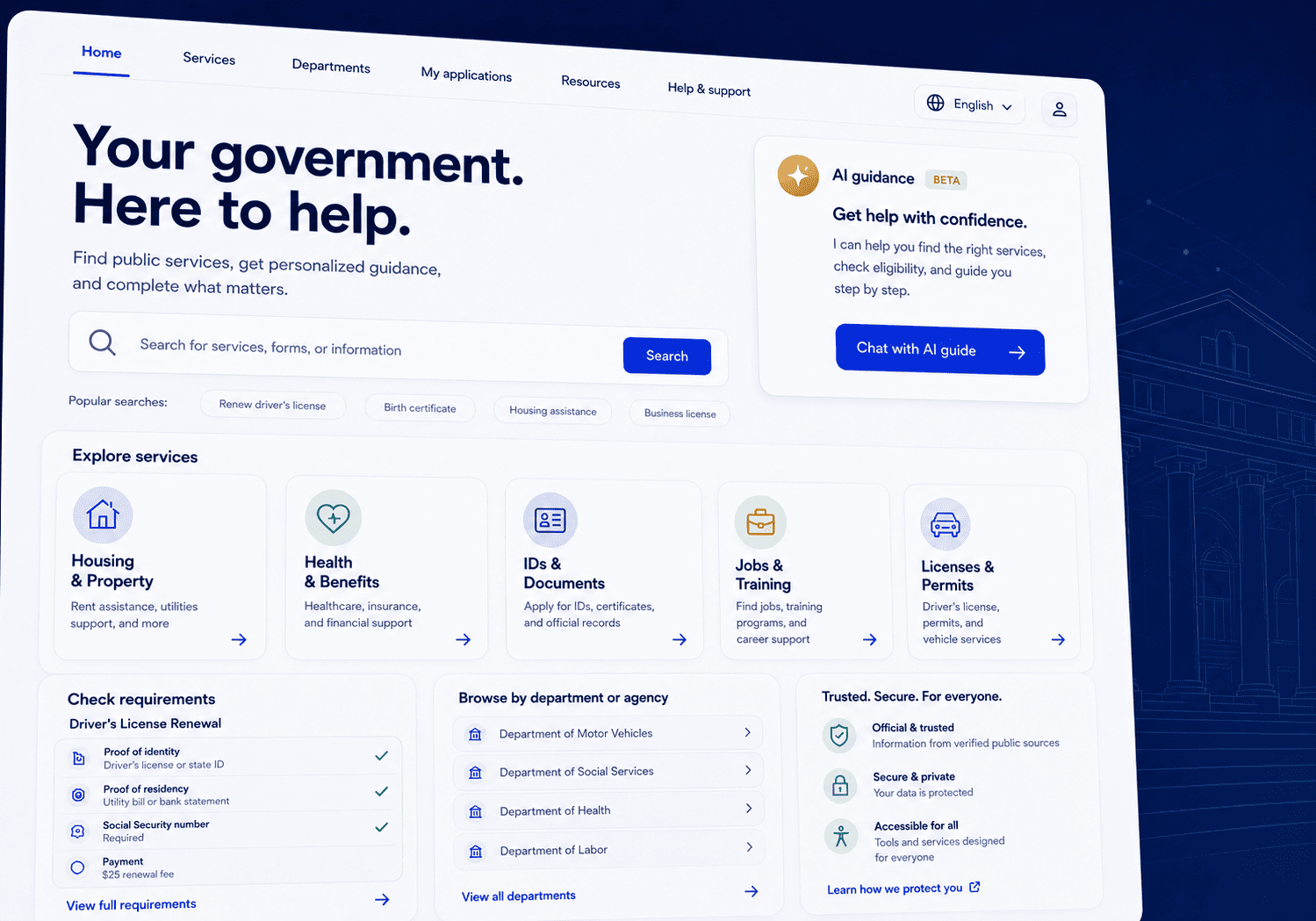
AI-Powered Citizen Services Website Platform for Virginia State Agencies

Plavno developed a modern eGovernment website platform for Virginia state agencies that centralizes citizen services, public information, department content, and an AI-powered guidance agent in one scalable system.

Read More
70%

reduction in routine citizen inquiries to agency staff

AI-Powered Citizen Services Website Platform for Virginia State Agencies

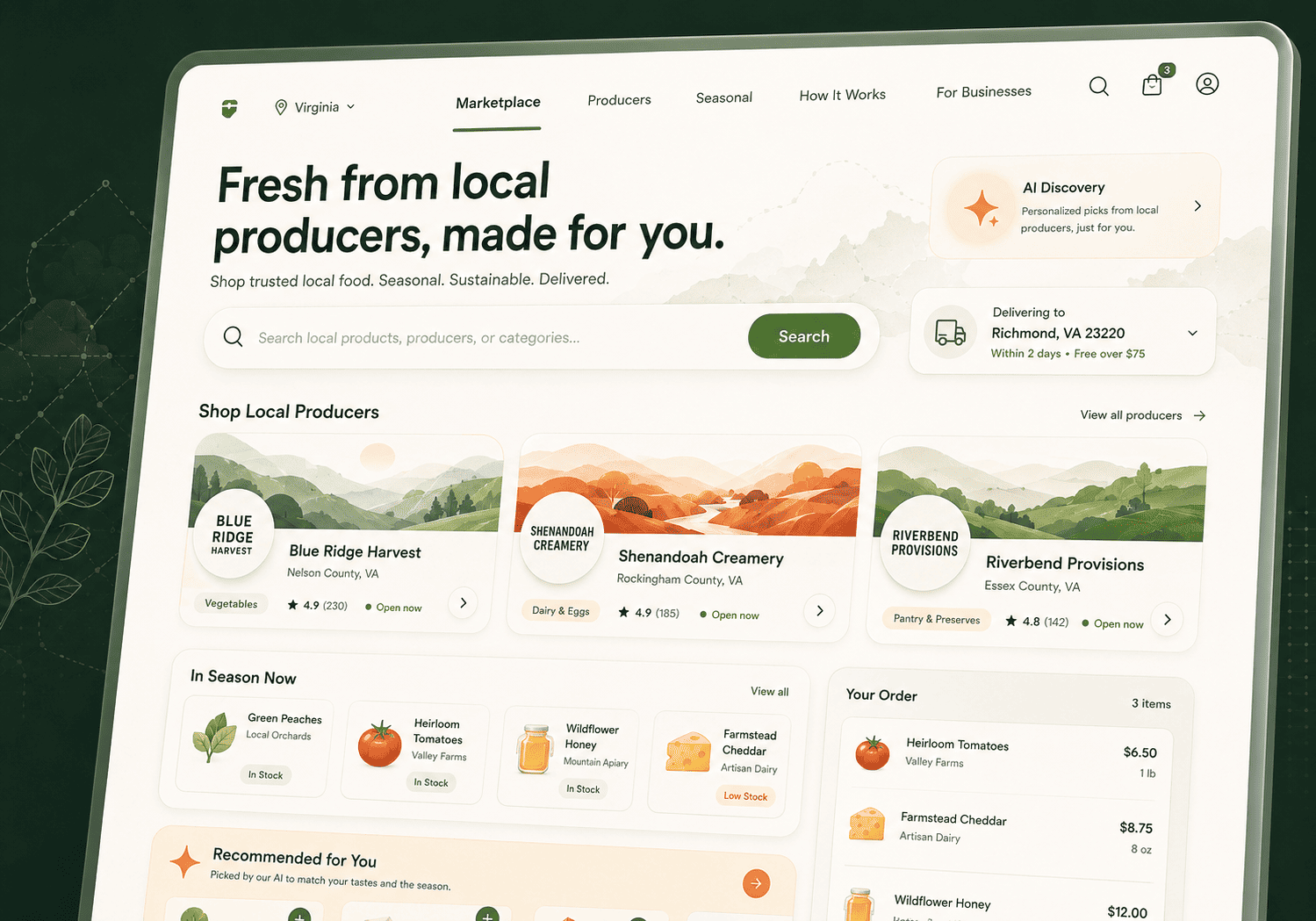
Digital Marketplace for Virginia Farmers, Local Producers & Direct-to-Consumer Food Sales

Plavno developed a custom multi-vendor marketplace for Virginia-based farmers, food producers, and regional sellers to unify product listings, vendor operations, customer ordering, and local fulfillment workflows.

Read More
3x

increase in product discovery relevance

Digital Marketplace for Virginia Farmers, Local Producers & Direct-to-Consumer Food Sales

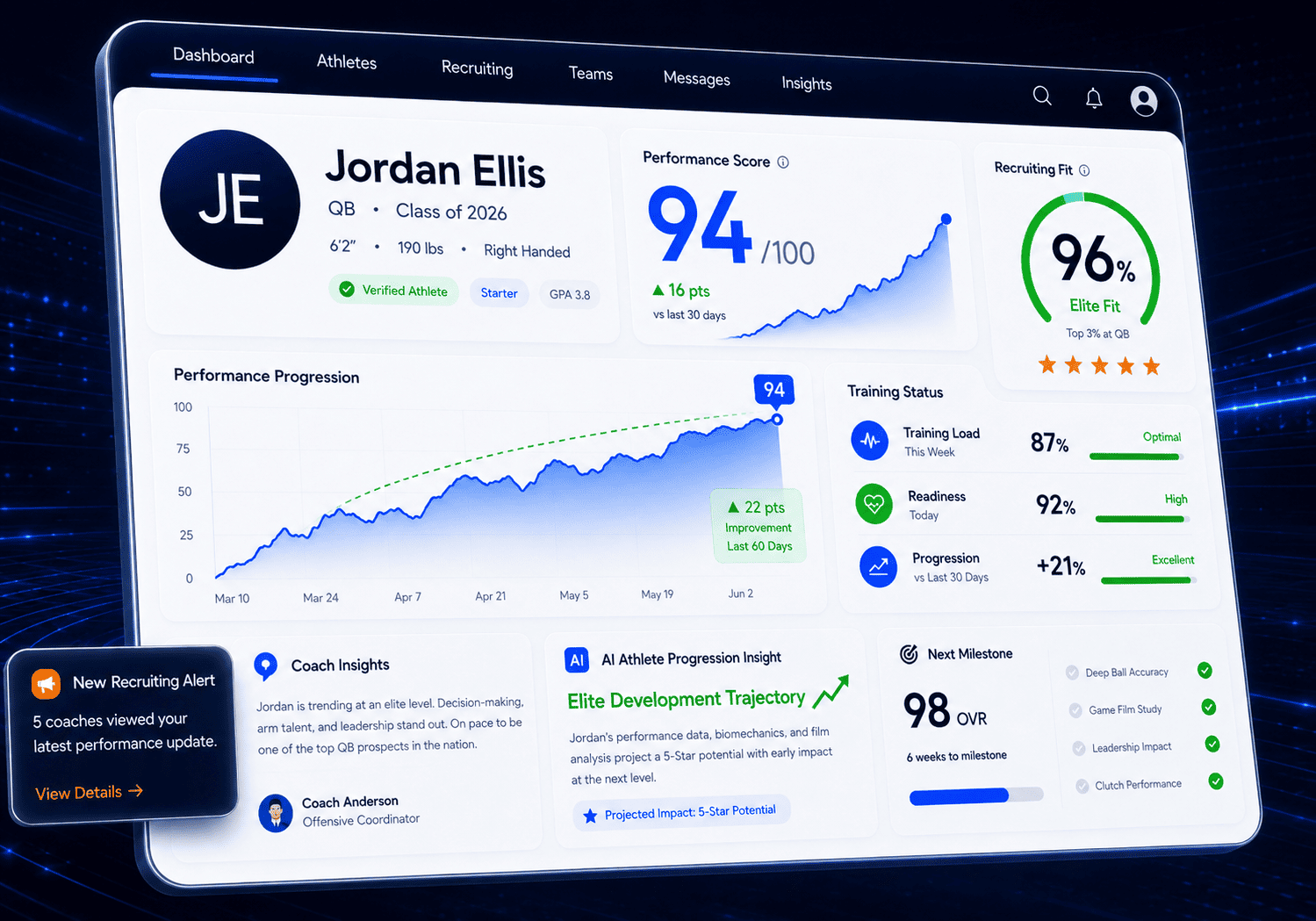
AI-Powered Sports Performance & Recruiting Platform for Virginia Clubs, Academies & Youth Programs

Plavno developed a custom sports technology platform for Virginia-based clubs and academies to combine athlete performance tracking, coach communication, recruiting workflows, and mobile engagement in one ecosystem.

Read More
3x

faster recruiting pipeline

AI-Powered Sports Performance & Recruiting Platform for Virginia Clubs, Academies & Youth Programs

Engineering contrast

Why Charlottesville buyers choose deep builds

Generic agencies sell demos. We ship owned systems your staff can operate when traffic and auditors both arrive.

Generic Agencies
Our Platform (Deep Engineering Expertise)
Production audit logs and override tracking
checkmark
Rules engine beside the model for hard policy
checkmark
Slide deck with sample chat only
checkmark
Department-level access wired into the product
checkmark
Token budget and cost monitors at launch
checkmark
One freelance prompt engineer as whole team
checkmark
Handoff with evaluation sets and runbooks
checkmark

AI Development Solutions for Charlottesville Industries

Regional industries where AI already pays its keep

These use cases map to healthcare, legal, hospitality, property, logistics, and HR markets that power Charlottesville and nearby counties.

Healthcare Triage

Healthcare Triage

Clinic Intake

Healthcare triage for clinic front ends

Local clinics and specialty practices soak up nurse time on routine symptom calls. After-hours volume still routes incorrectly and drives ER use. A symptom checker agent collects structured history and ranks urgency with decision support. Clinicians review queues instead of full phone interviews. Patients get consistent questions every time. ROI shows as fewer unnecessary visits and recovered nurse hours per week. Flows store answers for charting with access controls tied to clinical roles.

Legal deposition prep automation

Charlottesville firms and regional counsel still grind through multi-hour recordings by hand. Summaries lag trial calendars and associate time bills explode. Custom legal software applies AI transcription and summarization inside the existing deposition workflow. Key claims, objections, and exhibit mentions are tagged for counsel review. Partners get same-day briefing packs. ROI lands as cut contract attorney hours on first-pass review. Security keeps content inside approved stores with full audit on who opened what.

Voice Concierge

Voice Concierge

Hotel Booking

Hotel and travel voice concierge

Hospitality near downtown, vineyards, and the Parkway loses walk-in and late booking revenue when night desks are thin. Guests hang up instead of waiting. Voice AI handles availability, add-ons, and common policy questions with booking workflow hooks. Integrations push confirmed stays into the PMS with confirmation numbers. Staff own VIP and edge pricing only. Operators track fill rate and abandonment before versus after. Technical path is telephony, NLU slots, and certified booking APIs under rate limits.

Real Estate

Real Estate

Smart Pricing

Real estate pricing for Albemarle stock

Brokers across the city and surrounding valleys fight stale list prices after event weeks and season shifts. Manual comps miss micro-markets. An intelligent pricing agent scores listings against recent closes and demand signals. Suggested ranges include reasons the desk can explain to sellers. Managers lock floors by sub-area. Lift shows in days on market and fewer price cuts mid-list. Models retrain on closed deals while humans remain the final publish gate.

Logistics Agents

Logistics Agents

Phone Routing

Logistics phone agents on Virginia corridors

Carriers and 3PLs moving freight past Charlottesville still staff outbound status and appointment campaigns by hand. Missed pickups cascade into detention fees. An AI phone agent runs inbound and outbound scripts with telephony integration. It confirms ETAs, books docks, and updates the TMS in the same call. Supervisors get exception-only worklists. ROI is reduced call center load and fewer missed windows. Voice paths include retry logic and secure caller identity checks.

HR Screening

HR Screening

Regional Hiring

HR pre-screening for regional hiring

Employers near the university and light industry face thick applicant piles for seasonal and skilled roles. Screeners burn mornings repeating the same filters. A voice assistant runs structured interviews with scored criteria mapped to the job. Candidates hear consistent questions day or night. Recruiters open only the ranked shortlist with transcripts already attached. Time-to-first-screen drops while interview fairness improves. Stack uses voice screening, HR system write-back, and stored rubrics per role family.

Testimonials

We are trusted by our customers

“They really understand what we need. They’re very professional.”

The 3D configurator has received positive feedback from customers. Moreover, it has generated 30% more business and increased leads significantly, giving the client confidence for the future. Overall, Plavno has led the project seamlessly. Customers can expect a responsible, well-organized partner.

Sergio Artimenia

Commercial Director, RNDpoint

Sergio Artimenia

“We appreciated the impactful contributions of Plavno.”

Plavno's efforts in addressing challenges and implementing effective solutions have played a crucial role in the success of T-Rize. The outcomes achieved have exceeded expectations, revolutionizing the investment sector and ensuring universal access to financial opportunities

Thien Duy Tran

Product Manager, T-Rize Group

Thien Duy Tran

“We are very satisfied with their excellent work”

Through the partnership with Plavno, we built a system used by more than 40 million connected channels. Throughout the engagement, the team was communicative and quick in responding to our concerns. Overall, we were highly satisfied with the results of collaboration.

Michael Bychenok

CEO, MediaCube

Michael Bychenok

“They have a clear understanding of what the end user needs.”

Plavno's codes and designs are user-friendly, and they complete all deliverables within the deadline. They are easy to work with and easily adapt to existing workflows, and the client values their professionalism and expertise. Overall, the team has delivered everything that was promised.

Helen Lonskaya

Head of Growth, Codabrasoft LLC

Helen Lonskaya

“The app was delivered on time without any serious issues.”

The MVP app developed by Plavno is excellent and has all the functionality required. Plavno has delivered on time and ensured a successful execution via regular updates and fast problem-solving. The client is so satisfied with Plavno's work that they'll work with them on developing the full app.

Mitya Smusin

Founder, 24hour.dev

Mitya Smusin
4 wks

First production vertical slice

Most Charlottesville pilots reach a gated live path in about four weeks after audit. Scope stays to one workflow with gold evaluation sets. That speed proves value before multi-system expansion. Finance sees a real before and after, not a lab claim.

2x

Reviewer throughput on documents

Compliance and legal queues process roughly twice the packets per reviewer when checkers pre-flag. Humans still own final judgment on exceptions. Volume was measured on trade and deposition-style loads. Cost drops without adding headcount during peak seasons.

<3s

Median voice agent reply lag

Guest and driver calls stay usable when median agent response stays under three seconds. Streaming audio and lighter first-pass models hold the line. Peak tests reflected hotel and logistics concurrent call shapes. Longer lag would send callers back to hold music.

Capability maturity

How Virginia teams climb from scripts to autonomous agents

This ladder is not a project plan. It is the capability path your organization walks once the first automation is live.

Clipboard
Team
01

Stage 1: Manual with assisted drafts (ongoing)

Staff still own the action. Models only draft replies, summaries, or form fills. Review is mandatory on every item. Metrics track edit distance and time saved per case. Trust builds when drafts need light touch rather than rewrites. This stage fits high-risk domains like medical or legal notes. Exit criteria are stable quality scores and clear cost per assist.

02

Stage 2: Guardrailed auto-action on easy cases

Low-risk paths now run without a person in the loop. Confidence floors and policy rules block stale or odd inputs. Exceptions route to humans with full context attached. Dashboards show auto-rate versus override rate daily. Leadership sets the max auto share per process. Failures feed prompt and rule updates the same week. Teams around Staunton and Harrisonburg often stabilize here before chasing full autonomy.

Search in doc
Rocket
03

Stage 3: Multi-tool agents with human checkpoints

Agents call CRM, calendars, pricing tools, and message systems in sequence. Checkpoints sit at money moves and external commitments. Trace logs show every tool call for audit. Cost caps stop runaway loops early. Product owners edit tool permissions without a full rebuild. This stage mirrors the hotel booking and logistics appointment agents already live. Governance reviews run monthly on tool cards and spend.

04

Stage 4: Portfolio control and continuous evaluation

Several agents share identity, cost, and quality panels. New workflows reuse connectors and eval harnesses. Drift alarms page owners when gold-set scores drop. Budget owners see cost per completed task across departments. Seasonal traffic shapes adjust model tiers automatically. Charlottesville operators graduate when AI work is an ops program, not a one-off project. Expansion follows ranked ROI, not novelty.

Eugene Katovich

Eugene Katovich

Sales Manager

Need a custom software solution? We’re ready to help!

Plavno has a team of skilled developers ready to tackle the project. Ask me!

Get a Free Quote

Readiness review

What to lock before your 2026 AI build starts

  • Own the source systems list — Name every CRM, EHR, PMS, TMS, or phone platform the agent must touch. Record auth methods and sandbox access paths. Note rate limits and vendor change windows that could block launch. Export a real sample of last-month traffic shapes. Without this, integration estimates are fiction. Charlottesville IT owners usually hold keys across two or three vendors already.

  • Define the gold evaluation set — Pull 100–300 labeled examples of good and bad outcomes for the workflow. Include edge cases your senior staff already handle. Freeze the set so demos cannot cherry-pick easily. Decide pass thresholds for precision and recall before work begins. This set becomes the contract for quality at handoff. Skipping it guarantees endless subjective debates later.

  • Write the human override policy — State who can reverse an agent action and in which tool. Capture required notes for each override type. Link overrides to training feedback so models improve. Legal and compliance should sign before go-live. Midsize Virginia firms often miss this until the first angry customer escalates. Clear policy keeps trust intact during early weeks.

  • Budget tokens and third-party AI spend — Model monthly call or document volume at peak. Price each stage of the pipeline with current vendor rates. Add cache and smaller-model fallbacks into the plan. Finance needs a hard ceiling and an alert path. Surprise bills kill executive support faster than mild accuracy gaps. Revisit the budget after the thin slice so reality anchors the full rollout.

  • Name post-launch owners — Assign ops, engineering, and product contacts for alerts, prompt edits, and vendor tickets. Schedule the first 30-day quality review on the calendar now. Store runbooks where the night team can find them. Confirm who pays for infra after the build retainer ends. Ownership gaps create silent drift. A named roster turns AI into a maintained product line.

Vitaly Kovalev

Vitaly Kovalev

Sales Manager

Request your Charlottesville AI readiness score

Share budget, timeline, stack, and dataset scope. Get a free AI readiness audit and cost estimator built for Charlottesville businesses within one business day.

Talk to Experts

Straight answers

AI development questions from Virginia buyers

Practical detail on cost, time, data, quality, security, and operations for teams considering a build in 2026.

What drives the cost of AI development for a Charlottesville company?

Cost tracks scope of integrations, required uptime, and how clean your source data already is. A single voice or document workflow with two system connectors sits in a different band than a multi-agent portfolio across five departments. Model spend is only one line. Engineering time on auth, audit logs, evaluation sets, and operator UI is usually larger. Local labor markets and on-site workshops add travel if you want discovery on campus or at Crozet facilities.

We price discovery fixed so you see risk before full commitment. The thin vertical slice is also fixed once the audit freezes interfaces. Remaining work moves to shared burn with weekly burn-up so surprises stop early. Hardware or dedicated model hosts only appear when policy bans open internet vendors. Most Charlottesville mid-market builds stay on managed inference with private networking and still meet their security bar.

Data labeling and gold-set creation can swell cost if no labeled archive exists. Pulling real samples with legal review shortens that. Peak volume assumptions that are wrong by an order of magnitude will skew month-two bills. We model token and minutes cost from your last ninety days of traffic before launch. Ask your vendor how they bill failure retries. Silent double calls hide real unit economics.

Regional factors matter. Virginia privacy expectations around health and student data add review cycles. Firms near UVA often need extra RBAC design so departments stay isolated. Those hours are not optional. Cheapest bids that ignore them resurface as rework. A clear brief on budget, timeline, stack, and dataset keeps estimates honest within a day of intake.

How long does it take to build AI development software?

A focused MVP that automates one workflow often lands in six to ten weeks from kickoff. That covers audit, vertical slice, primary integration, and a gated launch to a pilot team. Full multi-site deployment with several connectors, formal training, and hardened monitoring usually needs three to five months. Duration expands when source APIs lack sandboxes or when legal review of prompts and logs is multi-party.

Timeline splits clearly. Weeks one and two lock the process map and data scorecard. Weeks three to six produce the thin live path with evaluation metrics. Integration hardening fills the following three to five weeks depending on vendor responsiveness. Training and ramp fill the last one to two weeks for the initial group. Parallel tracks help when your engineers can pair on connectors while we own model and rules work.

MVP means staff still own edge cases and a single site uses the feature flip. Full deployment means department gating, cost alerts, and runbooks signed off by night ops. Do not mix those words in a contract. Hospitals and legal groups in the region often insert an extra compliance gate between MVP and expansion. Plan that buffer rather than treating it as delay. Speed still comes from freezing the gold set early so arguments about quality stop blocking code.

If data is messy, add two weeks before model work for cleaning and schema contracts. If telephony carriers require certification, add their queue time to the plan. We publish a date for first useful output, not only a final go-live. That way leadership sees value while the longer integration list continues. Charlottesville teams with a ready sandbox and a named product owner routinely hit the lower end of these ranges.

Do you work with startups in Virginia?

Yes. We regularly support Virginia startups that need production AI without hiring a full research bench. Charlottesville’s university-adjacent founders, Richmond fintech groups, and Northern Virginia operators all appear in our US client mix. Early teams usually buy a tightly scoped agent or checker that touches one funnel metric. They need ownership of IP, prompts, and eval assets rather than a black-box SaaS lease they cannot adapt.

Startup ecosystems around UVA Launchpad-style programs, regional incubators, and corporate venture arms often introduce us. We still require a clear problem, baseline numbers, and a technical co-founder or fractional CTO who can own post-launch. Pure idea-stage decks without data access waste both sides. Once a seed or Series A team has product logs, call recordings, or document archives, we can move. Pricing stays modular so a thin slice can unlock the next fundraising story with real metrics.

We work with US-based clients, including companies operating in Virginia. That means contracts, hosting options, and support windows align with domestic needs. Startups that sell into healthcare or public-sector buyers get architecture notes that survive security questionnaires. We do not force enterprise ceremony onto a five-person product team. Feature flags, simple dashboards, and shared Slack or Teams channels keep coordination light.

When a startup later graduates into multi-tenant needs, the same codebase usually extends with tenants isolation and rate plans. We design for that fork without gold-plating day one. Founders should bring budget ranges, hiring plans for who will own the system, and honesty about dataset quality. That triad decides whether custom build beats buying a vertical AI product off the shelf.

Can AI development integrate with my existing system?

Yes when the system exposes APIs, webhooks, secure file drops, or database views you may query under policy. We have wired telephony stacks, property management tools, TMS platforms, CRM suites, and HRATS during live projects. Legacy on-prem software still works if we can reach it through a reverse proxy or private link. Lack of auth logs or undocumented SOAP endpoints slows things but rarely stops the plan once a partner engineer is named.

Integration design starts with contracts. Field maps, idempotency keys, and failure modes get written before coding. Queues protect your core system from model retries. Dead-letter stores hold poison messages for human replay. Read paths prefer existing reports or replicas to avoid locking day-one production tables. Write paths always carry actor identity so your audit tools keep working. Role maps reuse groups you already manage in Active Directory or cloud SSO whenever possible.

SharePoint-to-modern hub migrations taught us to recreate department-level permissions explicitly rather than hope default roles match. AI features then sit behind the same gates as documents. For voice, SIP or vendor APIs keep DNIS routing rules intact so callers still hit the correct brand line. For documents, storage stays in your bucket with the model receiving only redacted payloads if counsel requires it.

If a vendor forbids third-party access, we build operator UIs that assist humans who still click inside the old system. That still saves time while contracts get renegotiated. Ask us early for a connector feasibility note. Include API docs, rate cards, and a sample payload. Charlottesville IT teams usually complete that packet in days when leadership marks the project priority. Integration complexity is priced and scheduled, never assumed free inside a model demo.

What industries in Charlottesville benefit most from AI development?

Healthcare and life-science adjacent clinics gain first through triage, scheduling intake, and chart prep reduction. Local practices and university-linked groups feel nurse and coordinator shortage acutely. Legal and professional services gain on deposition prep, research summarization, and document exception queues. Hospitality and travel operators gain on voice booking, guest FAQ, and the night desk gap that costs weekend revenue. Those three already map to systems we shipped in production analogs.

Real estate and property managers across Albemarle gain on pricing agents and inquiry routing during high season. Logistics and trade firms that move goods through central Virginia corridors gain on phone agents and customs compliance checks. Higher education and nonprofit admin groups gain when internal portals finally replace SharePoint sprawl and add gated assistants for policy search. HR teams in manufacturing and service employers gain with candidate pre-screening that keeps rubric fairness while volume spikes.

Not every team should start in the same place. High fraud or clinical risk processes stay in assisted mode longer. High-volume, low-risk communication loops often go auto earlier. We score each candidate workflow on volume, unit cost, risk, and data readiness. That score decides sequence. Downtown retailers and pure restaurant nights rarely need custom AI stack; packaged tools may suffice until chain scale appears.

Pick industries with clear offline metrics already. Call abandonment, days on market, nurse minutes per intake, associate hours per transcript, and dock detention hours all work. Soft brand goals without measures stall projects. Charlottesville buyers who arrive with two candidate workflows and last quarter’s metrics leave discovery with a ranked build order and a businessto-case that finance can fund.

Contact Us

This is what will happen, after you submit form

Need a custom consultation? Ask me!

Plavno has a team of experts ready to start your project. Ask us!

Vitaly Kovalev

Vitaly Kovalev

Sales Manager

Schedule a call

Get in touch

Fill in your details below or find us using these contacts. Let us know how we can help.

No more than 3 files may be attached up to 3MB each.
Formats: doc, docx, pdf, ppt, pptx, xls, xlsx, txt.
Send request