bg image
bg image

Serving Alexandria & Virginia

Alexandria contractors recover staff hours with AI agents in 2026

Government contractors and northern Virginia operators still burn days on intake, routing, and status chasing. Manual handoffs hide real delivery risk and inflate overhead. Purpose-built AI agents take those repeatable steps and keep people on high-value work. This page is for operators who need clear scope, budget control, and a path that fits federal-adjacent environments. We map your real processes before writing a single line of agent logic. Get AI Agents Development cost estimate in 24 hours. Tell us budget, timeline, stack, and dataset scope so pricing stays grounded.

Discuss Project

Overview

Why Alexandria teams revisit agent work in 2026

Alexandria sits next to federal buyers, primes, and dense professional services firms. Teams in Old Town, Mark Center, Eisenhower Avenue, Arlington, Fairfax, and Springfield still run intake, document checks, and status updates by hand. That cost shows up as delayed proposals, missed SLAs, and overtime that never ends. Leaders need ai agent development services that respect data boundaries and audit needs without slowing delivery.

Trusted AI Agents Development Partner for Alexandria Businesses. We work with US-based clients, including companies operating in Virginia. Our delivery record includes complex portals and commerce systems that demanded structured content, secure forms, and reliable handoffs. Those same discipline patterns transfer when we build AI agents for operations that cannot fail quietly.

Local pressure is concrete. Contract shops near Crystal City and the Pentagon corridor juggle multi-system case files. Staff copy data between portals because no agent owns the workflow. Error rates rise when volume spikes. Intelligent agents close those gaps when they connect to the systems of record and log every action.

We start from operating constraints, not model hype. Scope covers the decisions an agent may take, the tools it may call, and the human checkpoints that stay mandatory. Security reviews, cost ceilings, and latency budgets sit in the same plan as feature work. That keeps Northern Virginia programs from accumulating silent technical debt after the first demo succeeds.

Outcomes stay business-first. Faster packet assembly. Cleaner routing of citizen or partner requests. Fewer abandoned queues during surge periods. You still own policy. Agents execute greater volume of the repeatable work that drains margins today.

Talk to an Expert
Workflow automation

Workflow automation

Replace manual intake, document checks, and status handoffs with agents that own the path

Audit-ready boundaries

Audit-ready boundaries

Data residency, policy gates, and logged actions built for federal-adjacent Virginia work

Systems of record

Systems of record

Agents connect via APIs and queues; your portals stay the source of truth

Business-first outcomes

Business-first outcomes

Faster packet assembly, cleaner routing, fewer abandoned queues under surge

Agent runtime foundations

Core agent architecture built for controlled production

Alexandria clients receive agent systems designed as product runtimes, not chat experiments. We separate planning logic, tool access, memory, and policy gates so each piece can be tested and replaced. Sensors collect events from tickets, forms, or APIs. Planners decide next actions under explicit limits. Executors call approved tools only. Reviewers or humans stay on high-impact steps. This bounds risk when regulated or contract-sensitive data is present.

We ground orchestration in explicit state machines and auditable traces. Every agent step writes who acted, what was read, and which tool ran. That discipline mirrors what we learned building a self-hosted public services portal with structured pages and secure form workflows. Structured content and controlled submissions taught us to keep workflows inspectable. The same principle applies when an agent files a record or updates a queue for a Northern Virginia contractor.

Security/compliance sits in the design, not a late hardening pass. Secrets never live in prompts. Least-privilege credentials are short-lived. Content filters and policy codes sit before irreversible actions. Data residency choices respect US hosting expectations common for federal-adjacent work. Role models map to your existing identity provider so audits stay coherent with vertical systems already in place.

DevOps covers packaging, environment parity, staged rollouts, and rollback playbooks. Agents promote through sandbox, UAT, and production with fixed configuration as code. Observability ships with traces, token cost boards, latency charts, and failure taxonomies. We track drift in tool schemas and prompt versions so behavior does not silently change after a library update. Cost controls include per-tenant budgets and circuit breakers when tool error rates spike.

Integration focuses on systems you already run. Agents read and write through documented APIs, queues, or headless content layers. We avoid brittle UI scraping unless no API exists. Where content structure matters, patterns from headless CMS and static generation work keep response pages fast and cacheable. The agent owns decisions. Your systems of record remain the source of truth. That split protects long-term maintainability for Alexandria operators who cannot afford lock-in to a single model vendor.

plavno logo

Build your first
Smart AI project today!

Just tell the Plavno AI Agent about your project - it will ask questions, gather requirements, and propose a tailored solution

Delivery sequence

From discovery to live agents for Alexandria programs

A fixed four-phase path that keeps scope honest for Virginia stakeholders and produces working automation, not slideware.

Clipboard
Team
01

Step 1: Process discovery (1–2 weeks)

We map the work your staff still do by hand across intake, validation, routing, and reporting. Interviews cover Old Town operations, field teams, and back-office queues. We rank tasks by volume, error cost, and policy risk. You receive a scored opportunity list and a data readiness note. Timeline stays at one to two weeks so momentum does not stall. Deliverables include system maps and a first agent shortlist ready for executive review.

02

Step 2: Agent design (2–3 weeks)

Design locks intent, tool contracts, memory needs, and human checkpoints. We write failure modes and cost envelopes up front. Security owners from your side validate data classes early. Prototypes run on synthetic or masked sets so risk stays low. You leave with architecture diagrams and acceptance tests. This phase usually lasts two to three weeks for a focused Alexandria pilot.

Search in doc
Rocket
03

Step 3: Build and integrate (4–6 weeks)

Engineers implement planners, tools, and connectors against your real APIs. Continuous integration traps prompt regressions and schema breaks. Staging mirrors production identity and network rules used by Northern Virginia firms. Weekly demos show live thrift of agent steps on sample tickets. Clients receive working agents plus operator runbooks. Four to six weeks covers a production-grade first vertical.

04

Step 4: Launch and tune (2 weeks)

Controlled rollout starts with a limited user cohort in Alexandria or adjacent offices. We watch latency, tool errors, and cost per successful case. Feedback loops adjust prompts and guards without full rewrites. Training covers exception handling and escalation. You own dashboards on day one. Two weeks of focused tuning closes the first live wave and sets the cadence for expansion.

What ships

Capabilities Alexandria operators actually buy

Workflow agents for intake

Workflow agents for intake

Many Alexandria firms still rekey form packs into multiple systems after a partner or citizen submits. Volume spikes create backlogs that lose hours and goodwill. Workflow agents parse structured submissions, validate required fields, and open the right case with clean metadata. We choose structured content models so fields stay stable across channels. Secure form patterns reduce fraudulent noise before the agent acts. Result is faster case open times and fewer abandoned packets during surge weeks.

Research and briefing agents

Research and briefing agents

Proposal and compliance teams near Mark Center spend nights collating sources into concise briefs. Human quality stays high while turnaround lags. Research agents gather approved sources, extract claims with citations, and draft structured summaries for review. Retrieval uses your curated stores so answers stay on-policy. Editors remain final gatekeepers. Teams reclaim days each cycle without giving up accountability over submitted language.

Operations monitoring agents

Operations monitoring agents

Service desks in Fairfax and Arlington drown in repetitive health checks. Signals scatter across tickets, logs, and status pages. Monitoring agents watch defined thresholds, open tickets with context, and suggest first actions. They never reboot production without policy approval. Integrations favor existing ops tools you already license. Mean time to notice anomalies drops while engineers keep available for complex incidents.

Customer routing agents

Customer routing agents

Support queues for Northern Virginia commerce and services still misroute simple asks. Wrong queues burn SLAs and morale. Routing agents classify intent, attach priority, and assign owners using your taxonomy. Escalation rules keep humans on edge cases. We train on real historical labels so drift is visible. Contact centers see cleaner first-touch accuracy and fewer internal transfers each week.

Compliance checklist agents

Compliance checklist agents

Contract shops shoulder repetitive evidence collection before audits. Missed items create last-minute scrambles. Checklist agents walk required controls, pull artifacts from approved stores, and flag gaps early. Every retrieval is logged for auditors. Humans still certify final packages. Programs reduce fire-drill nights ahead of gate reviews while keeping responsibility fixed with named owners.

Case Study

We help customers cut
down on development

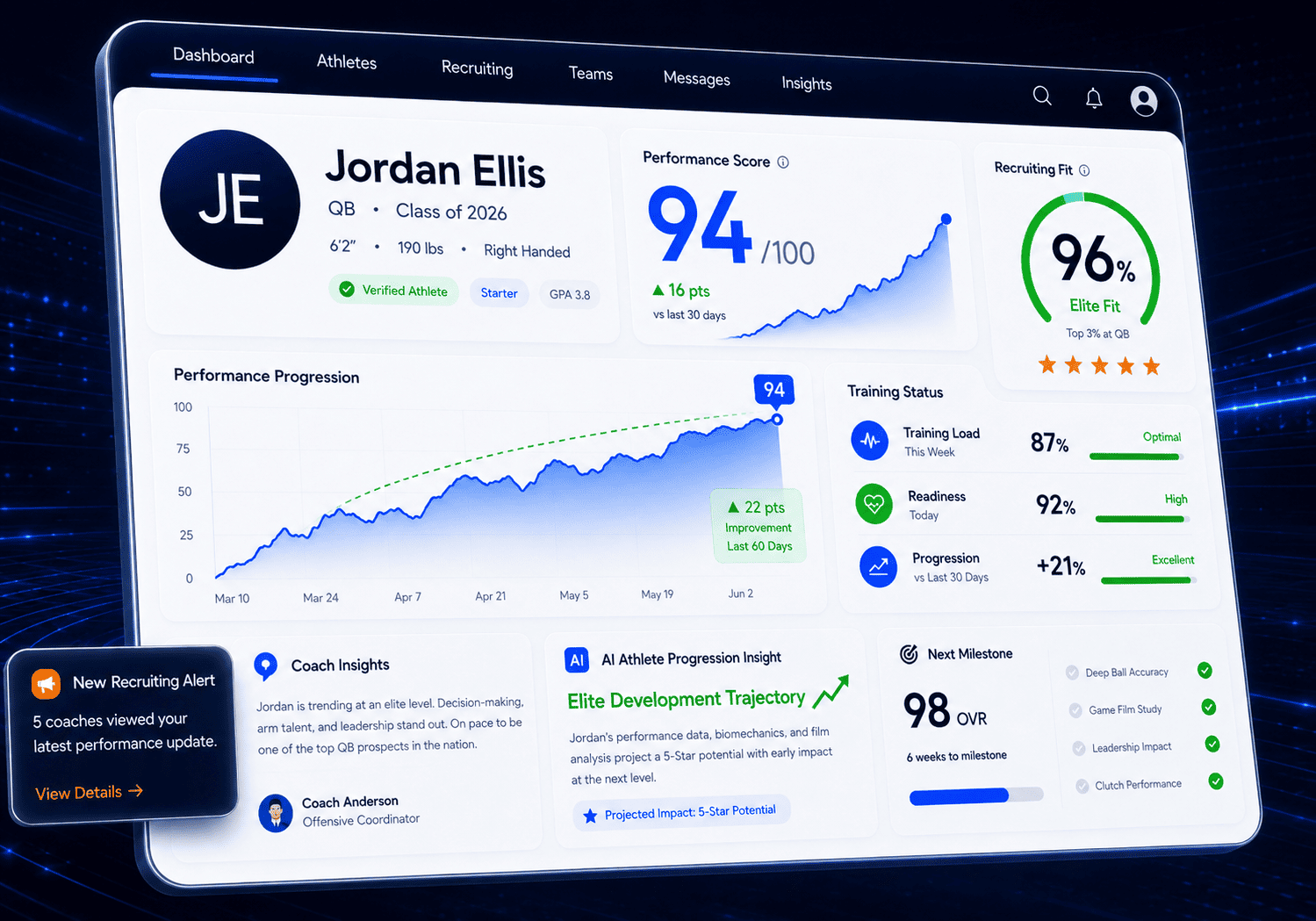
AI-Powered Sports Performance & Recruiting Platform for Virginia Clubs, Academies & Youth Programs

Plavno developed a custom sports technology platform for Virginia-based clubs and academies to combine athlete performance tracking, coach communication, recruiting workflows, and mobile engagement in one ecosystem.

Read More
3x

faster recruiting pipeline

AI-Powered Sports Performance & Recruiting Platform for Virginia Clubs, Academies & Youth Programs

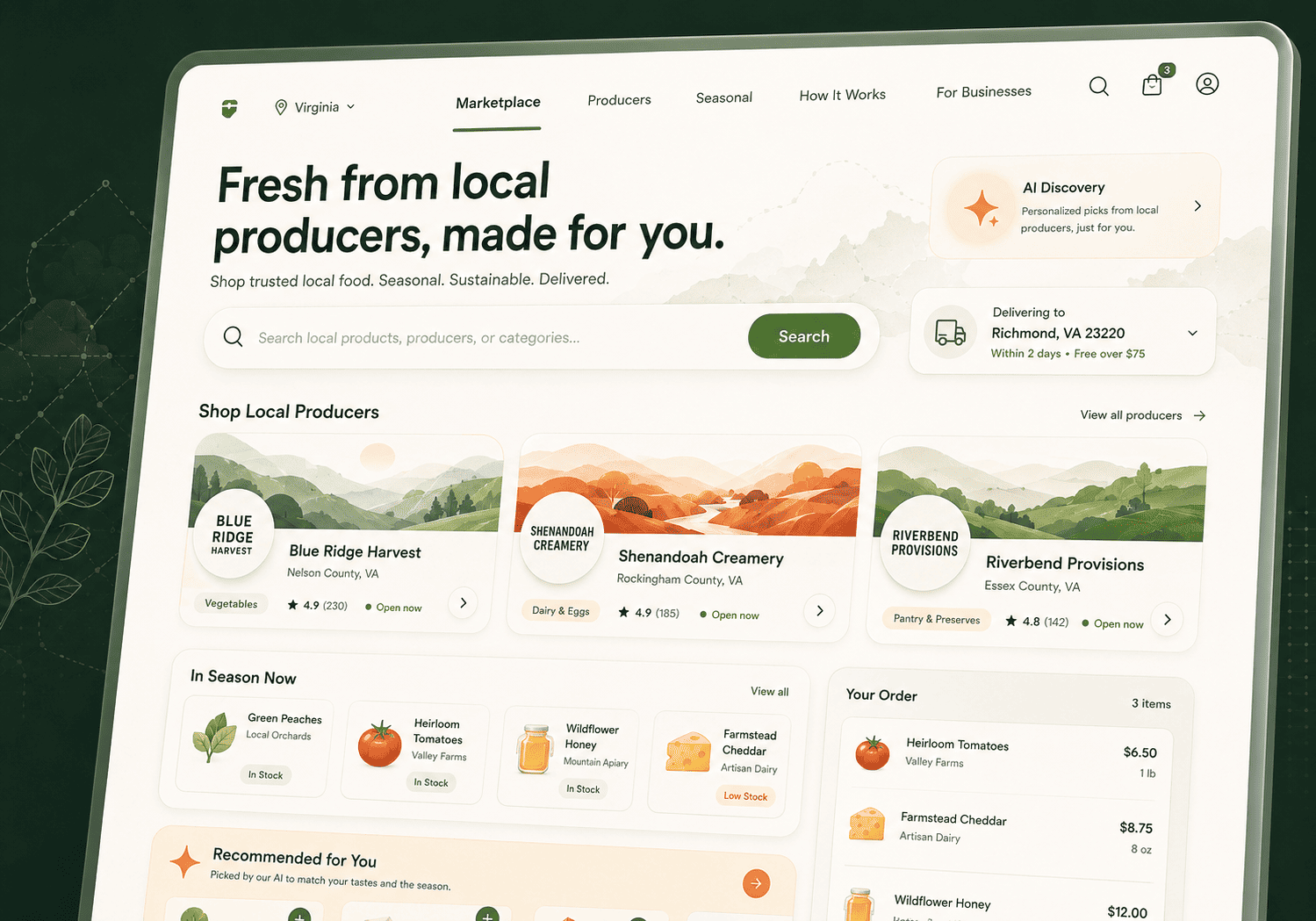
Digital Marketplace for Virginia Farmers, Local Producers & Direct-to-Consumer Food Sales

Plavno developed a custom multi-vendor marketplace for Virginia-based farmers, food producers, and regional sellers to unify product listings, vendor operations, customer ordering, and local fulfillment workflows.

Read More
3x

increase in product discovery relevance

Digital Marketplace for Virginia Farmers, Local Producers & Direct-to-Consumer Food Sales

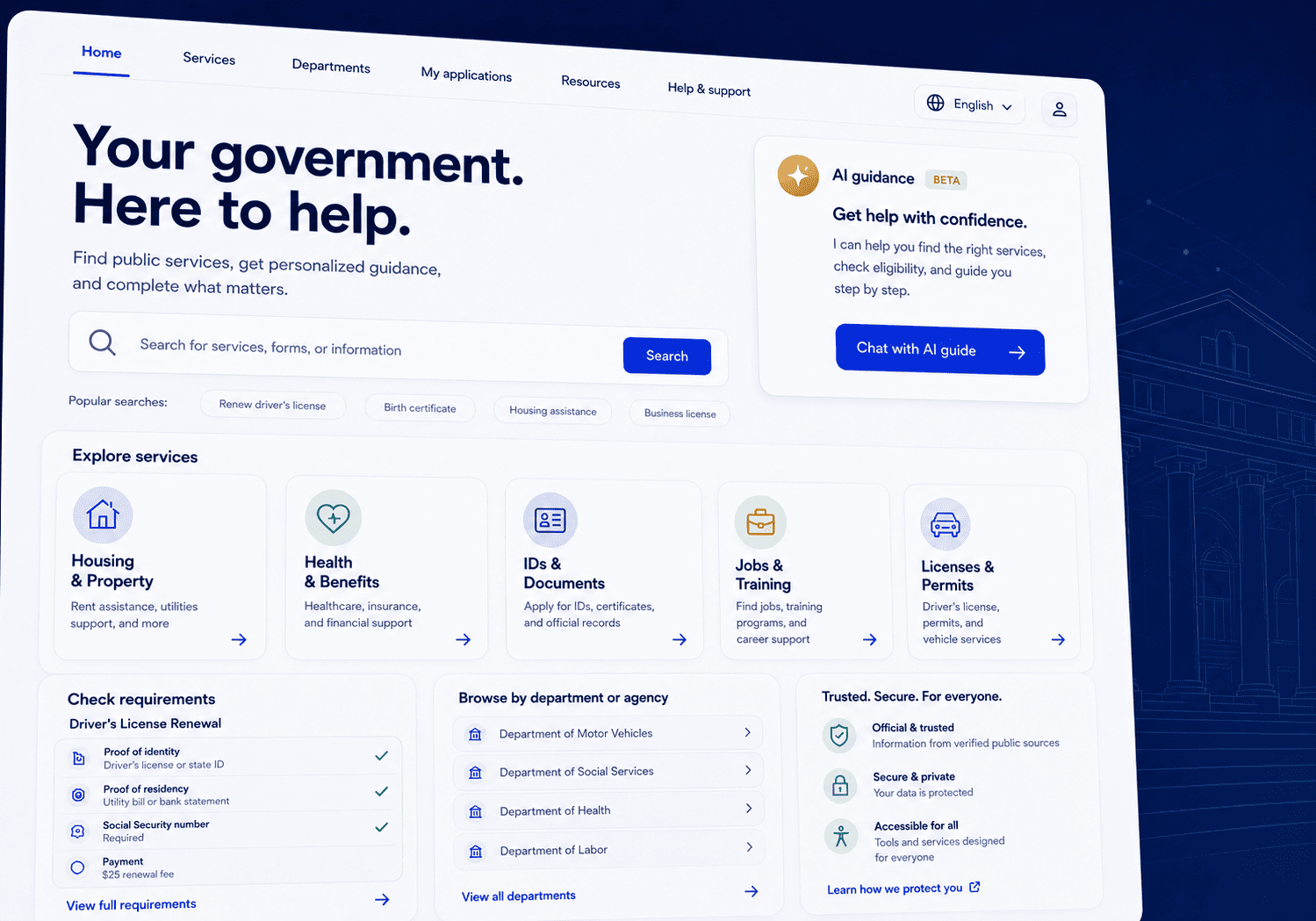
AI-Powered Citizen Services Website Platform for Virginia State Agencies

Plavno developed a modern eGovernment website platform for Virginia state agencies that centralizes citizen services, public information, department content, and an AI-powered guidance agent in one scalable system.

Read More
70%

reduction in routine citizen inquiries to agency staff

AI-Powered Citizen Services Website Platform for Virginia State Agencies

AI Agents Development Solutions for Alexandria Industries

Regional use cases tied to how Northern Virginia works

These six scenarios reflect federal-adjacent pressure, dense professional services, and operators who need agents that survive audits and surge load.

Proposal Packets

Proposal Packets

Contractors

Government contractors — proposal packet agents

Alexandria primes and mid-tier contractors still lose calendar days assembling past performance, staffing, and compliance checks. Agents pull approved artifacts, validate completeness, and assemble first drafts for capture teams. ROI shows as faster green-team readiness with fewer missing exhibits on submission day. Technically, the agent walks a controlled checklist against a document store API and writes a packaged workspace folder with true source links. Humans finalize pricing narratives and sensitive claims before upload.

Service Desk

Service Desk

Triage

Federal IT programs — service desk triage agents

Program offices supporting civilian agencies face ticket floods that bury high-severity cases. Agents classify, enrich, and route while attaching configuration context from CMDB snapshots. ROI arrives as shorter queues and clearer severity accuracy for duty managers. The design uses policy tables plus retrieval of known-error articles so suggestions stay inside approved playbooks. No production change ever fires without the existing change system of record.

Client Onboarding

Client Onboarding

Services

Professional services — client onboarding agents

Consulting firms along the corridor linger on KYC-style intake and access requests. Agents sequence questionnaires, verify required documents, and open project workspaces when checks pass. ROI is reduced days-to-billable start with fewer bounced forms. Implementation chains form validation, identity hooks, and ticket creation so auditors see a clean trail. Green team reviews stay human-owned for edge policy calls.

Prior Auth

Prior Auth

Healthcare

Healthcare administrators — prior-auth assistants

Regional network offices spend scarce clinical staff time chasing incomplete packets. Agents gather missing fields, match payer rules, and prepare clean bundles for staff sign-off. ROI appears as fewer denials tied to incomplete documentation and faster turnarounds for members. Stack focus sits on secure data transport, field validation, and strict least-privilege connectors. PHI never travels without encryption and access logs that match your existing controls.

Quality Signals

Quality Signals

Defense

Defense-adjacent suppliers — quality signal agents

Manufacturing and logistics partners serving DoD contracts track deviations spread across email and spreadsheets. Agents normalize defect reports, score urgency, and notify owners with full context packs. ROI shows reduced scrap escalation time and clearer CAPA starts. Technically we normalize free-text into controlled schemas then push structured events into the QMS or ticket lane you already trust. Human engineers still set corrective actions.

Catalog Hygiene

Catalog Hygiene

Ecommerce

Local ecommerce ops — catalog hygiene agents

Retail and specialty operators near the Beltway fight stale attributes and broken variants that kill conversion. Agents scan catalog deltas, flag missing fields, and draft fixes for merchandisers. ROI is cleaner listings and fewer cart failures from incomplete data. We apply patterns proven on an online pet supplies storefront with catalog and checkout work, extending them with agent checks rather than pure manual QA. Humans publish final changes after quick review.

2-6w

First vertical live window

Focused Alexandria pilots typically reach a limited production cohort in two to six weeks after design lock. Baseline is months of stalled prototypes without owners. We achieve this by freezing tool contracts early and shipping observability with day-one code. Faster live use exposes real friction before budgets expand.

1 queue

Single owner for exceptions

Every agent path ends in one escalation queue with context attached. Baseline is multi-hop ping-pong across chat channels. Central ownership cuts mean recovery time and keeps auditors happy. Bottom line impact is fewer dual-owned incidents and clearer staffing needs during laser surge weeks.

trace

Full action audit trail

Each tool call and decision step stores actor, inputs summary, and outcome codes. Baseline for many chat bots is opaque logs that fail audit questions. Trace discipline reduces rework during compliance reviews. Finance and risk leaders gain a factual cost map per successful case handled.

Testimonials

We are trusted by our customers

“They really understand what we need. They’re very professional.”

The 3D configurator has received positive feedback from customers. Moreover, it has generated 30% more business and increased leads significantly, giving the client confidence for the future. Overall, Plavno has led the project seamlessly. Customers can expect a responsible, well-organized partner.

Sergio Artimenia

Commercial Director, RNDpoint

Sergio Artimenia

“We appreciated the impactful contributions of Plavno.”

Plavno's efforts in addressing challenges and implementing effective solutions have played a crucial role in the success of T-Rize. The outcomes achieved have exceeded expectations, revolutionizing the investment sector and ensuring universal access to financial opportunities

Thien Duy Tran

Product Manager, T-Rize Group

Thien Duy Tran

“We are very satisfied with their excellent work”

Through the partnership with Plavno, we built a system used by more than 40 million connected channels. Throughout the engagement, the team was communicative and quick in responding to our concerns. Overall, we were highly satisfied with the results of collaboration.

Michael Bychenok

CEO, MediaCube

Michael Bychenok

“They have a clear understanding of what the end user needs.”

Plavno's codes and designs are user-friendly, and they complete all deliverables within the deadline. They are easy to work with and easily adapt to existing workflows, and the client values their professionalism and expertise. Overall, the team has delivered everything that was promised.

Helen Lonskaya

Head of Growth, Codabrasoft LLC

Helen Lonskaya

“The app was delivered on time without any serious issues.”

The MVP app developed by Plavno is excellent and has all the functionality required. Plavno has delivered on time and ensured a successful execution via regular updates and fast problem-solving. The client is so satisfied with Plavno's work that they'll work with them on developing the full app.

Mitya Smusin

Founder, 24hour.dev

Mitya Smusin

Architecture & Engineering Overview

How Alexandria programs keep agents honest after launch

Honest labor baseline

Honest labor baseline

Time the manual path first so payback windows reflect real hours returned

Human policy gates

Human policy gates

Approvals, filings, and payments never auto-fire from free-form prompts

Visible cost envelopes

Visible cost envelopes

Token spend, latency fees, and retries on shared boards with freeze budgets

Modular growth

Modular growth

Reuse connectors and identity rules so the next vertical skips a full rebuild

For Business: Technical ROI & Risk Mitigation

Business leaders near the federal market care about hours returned and risk that does not surface in a demo. Agent value only counts when exceptions shrink and cost per case stays visible. We unmask hidden labor first by timing the manual path before automation. That baseline sets honest payback windows rather than hopeful charts.

Risk drops when irreversible actions require a human gate. Approvals, filings, or payments never auto-fire from a free-form prompt. Policy modules encode dollar thresholds and data classes so agents stop when unsure. Your brand and contract posture stay protected during early volume ramps.

Cost control remains part of the product. Token spend, tool latency fees, and retries appear on shared boards. Budgets can freeze an agent path when spend spikes beyond the envelope. Finance teams in Virginia get the same rigor they expect from cloud invoices.

We reuse lessons from structured public service portals where secure forms and bilingual content demanded clear ownership. Structured steps and logs made support predictable. The same habit stresses agent flows so operations can staff the right coverage without guesswork. You measure backlog age, first-pass yield, and escalation rate weekly.

Growth becomes modular. After one queue stabilizes, the next vertical reuses tool connectors and identity rules. Capital spreads across programs instead of one brittle monolith. That is how Alexandria operators turn a pilot into durable operating leverage without a second full rebuild.

Freeze contracts

Freeze contracts

Decision ontology, tool schemas, and memory boundaries locked at kickoff

Promotion rules

Promotion rules

Sandbox → masked pre-prod → production only after regression suites pass

Config as code

Config as code

Low drift across environments; secrets via vault; clean decommission paths

Standing review

Standing review

Inspect failure taxes, cost spikes, and upstream schema drift after launch

For CTOs: Architecture & Technical Lifecycle

CTOs need lifecycle discipline that survives staff turnover and vendor changes. We treat agents as versioned products with contracts, not prompt piles. Kickoff freezes the decision ontology, tool interface schemas, and memory boundaries. Trade-offs between autonomy and certainty get logged with named owners.

Governance forms around promotion rules. Sandbox loads synthetic data. Pre-prod uses masked or limited production samples under dual control. Production promotion needs passing regression suites for planning accuracy and tool error rates. No model swap lands without an automated comparison run.

Lifecycle work includes decommission paths. Agents that lose ROI can shut off without leave behind credentials. Config as code keeps environment drift low across Alexandria, remote, and shared federal environments. Secrets rotate through your standard vault, never chat channels.

Decision points cover model hosting, retrieval approach, and latency budgets for interactive versus batch jobs. We document when a smaller local model beats a large remote call for cost and residency. Trade-off tables sit in the architecture pack reviewers can re-open a year later.

Post-launch, a standing review cycle inspects failure taxes, cost spikes, and schema drift from upstream APIs. Product owners adjust acceptance tests as process rules change. Engineering keeps the right to refuse unsafe expansion until data quality meets the bar. That culture protects the wider estate.

Planning & policy

Planning & policy modules

Independent edges so failures isolate; deterministic pre-checks before expensive model calls

Typed tool interfaces

Typed tool interfaces

JSON schema validation before side effects; idempotent retries stop duplicate tickets

Curated retrieval

Curated retrieval & memory

Controlled corpora, scheduled embedding refresh, cache hits that cut token burn

Edge-case fixtures

Edge-case fixtures

Empty attachments, bilingual inputs, expired tokens, and canary rollbacks as config

For Engineers: Implementation Details & Stack

Engineers implement agents as orchestrated services with clear module edges. Planning, tools, memory, and policy stay independent so failures isolate. Event ingress uses queues or webhooks already familiar to your platform teams. Deterministic pre-checks run before expensive model calls to save cost and reduce noise.

We preference typed tool interfaces over free-form HTTP from the model. JSON schemas validate arguments before side effects. Retries honor idempotency keys so duplicate tickets never multiply during partial outages. These patterns echo reliable form workflows we shipped on self-hosted portals where double submits had to die early.

Retrieval layers favor curated corpora with clear refresh jobs. Uncontrolled web browse stays off by default in contract-sensitive contexts. Caching of frequent lookups cuts token burn on repetitive Alexandria back-office tasks. Embeddings refresh on a schedule tied to your content owners, not system noise.

Edge cases get first-class tests. Empty attachments, bilingual form inputs, expired tokens, and slow upstream APIs appear in fixtures. Static generation and headless content lessons from prior Next.js builds inform how we publish operator-facing status pages that stay fast under load. Engineers can ship UI for oversight without blocking the agent runtime.

Local developer loops use containers that mirror production identity and network restrictions. Feature flags gate new tools. Canary cohorts limit blast radius. When a regression shows, rollback is a configuration change, not a hero debug session at 2 a.m. Mentorship notes ship beside the code so new hires ramp without tribal rumor.

US-region hosting

US-region hosting

Approved regions, network controls, and separation of duties on production secrets

Decision observability

Decision observability

Traces, token cost by tenant, tool latency, and policy deny counts beside SLAs

Hostile-content security

Hostile-content security

Validation, redaction, SOC2-minded change logs; stricter overlays when required

Progressive delivery

Progressive delivery

Flags, canaries, chaos-tested degrade-to-queue, and scheduled compliance evidence

Infrastructure, Observability & Security

Infrastructure choices follow US client norms common to Northern Virginia delivery. We monitor decisions, spend, and drift, not just uptime pings. Hosting stays in approved regions with network controls that match your enterprise standards. Separation of duties keeps builders away from production secrets after release.

Observability covers traces per agent run, tool latency histograms, token cost by tenant, and policy deny counts. Alerts fire on rising fallback rates or sudden prompt version changes. Dashboards pair engineering signals with business SLAs such as time-to-first-response on a critical queue. Incident response runbooks name roles and communication channels before go-live.

Security practice assumes hostile content and aggressive auditors. Input validation, output filtering, and redaction sit before logs leave the trust boundary. Access reviews sync with your identity lifecycle. SOC2-minded controls around change management and access logs are the default posture for commercial work; stricter overlays apply when program rules demand them.

Deployment uses progressive delivery. Feature flags, blue-green or canary slots, and automated smoke packs protect citizens and partners from half-shipped agents. Backup and restore tests include the memory stores and config. Chaos days practice tool outages so agents degrade to safe queues instead of inventing actions.

Continuous compliance work is lightweight and scheduled. Control evidence for access, encryption, and retention refreshes automatically where APIs allow. Humans still confirm policy fit each quarter. That mix keeps Alexandria programs audit-ready without freezing product velocity after the first release.

Data paths and guardrails

Integration and data discipline that keep agents safe

The second build concern for Alexandria is not another model layer. It is how data enters the agent, how long it lives, and how tools fail closed. We design ingestion jobs that normalize tickets, forms, and documents into stable schemas before planning begins. Dirty free text never becomes an invisible system of record. Validation catches missing enforceable fields early so agents do not invent values under pressure.

Connectors favor documented APIs, message buses, and headless content services. Scraping human UIs remains a last resort with explicit expiry. When we reuse patterns from Strapi-based public portals and Next.js front ends, structured service pages and secure form workflows already enforced clean field contracts. Agents inherit that structure instead of fighting spreadsheet exports every night. Batches run on schedules your ops teams can predict and pause.

Retention primary is least data for least time. Working memory for a case expires when the case closes unless policy says otherwise. Long-term stores keep only aggregates or approved artifacts. Encryption in transit and at rest follows your enterprise standard. Access to replay tools is role gated and fully logged for federal-adjacent reviews common across Northern Virginia contracts.

Cost and latency controls sit beside the data plane. Large retrievals page results. Summaries cache with clear invalidation on source edits. Circuit breakers halt an agent path when an upstream system fails availability checks. Operators see a calm degraded mode that queues human work rather than a silent wrong answer. That habit protects citizen services and internal SLAs alike.

Change management covers schema evolution. When a CRM field renames, contract tests fail the agent build before production. Versioned tool adapters buy time for dual-running. Documentation regenerates from the same schemas engineers ship. Your future team inherits a system they can reason about without reverse-engineering a chat transcript that no longer matches production behavior.

Maturity path

How Alexandria teams climb from assisted work to autonomy

A maturity sequence different from project delivery. It shows how control, confidence, and coverage expand without reckless jumps.

Clipboard
Team
01

Level 1: Assist only (ongoing baseline)

Agents draft, classify, or suggest while humans execute every side effect. Goal is trust-building with full auditability. Teams in Alexandria see recommended actions beside their tickets and accept or reject with one click. Metrics track suggestion acceptance and edit distance. Timeline is continuous until acceptance stays above an agreed bar. Deliverable is a measured assist layer, not autonomy claims.

02

Level 2: Guarded execution (2–4 weeks to enable)

Approved low-risk tools may run after policy checks. High-impact acts still need a human. We expand tool scope only with take-home regression packs. Nordern Virginia programs usually need two to four weeks of tuning after assist data piles up. Clients receive playbooks describing exact allowed actions. Business value shows as partial hands-free volume on purely repetitive slices.

Search in doc
Rocket
03

Level 3: Bounded autonomy (3–5 weeks)

Agents own end-to-end paths inside hard ceilings on cost, data class, and blast radius. Exceeding a ceiling auto-escalates. Enablement typically takes three to five weeks per path including shadow runs. Shadow mode compares agent outcomes to prior human baselines before cutting over. You keep a kill switch and daily cost digests. This level suits stable intake flows with clear definitions of done.

04

Level 4: Portfolio scale (continuous)

Multiple agents share connectors, policy packs, and observability. New verticals reuse the platform instead of restarting architecture. Expansion is continuous and gated by data quality scores. Shared libraries cut time-to-next-agent significantly once identity and tooling exist. Governance boards review exception taxonomies monthly. Alexandria groups reach this only after earlier levels prove clean economics and safe failure modes.

Eugene Katovich

Eugene Katovich

Sales Manager

Need a custom software solution? We’re ready to help!

Plavno has a team of skilled developers ready to tackle the project. Ask me!

Get a Free Quote

Readiness gate

Prepare your Alexandria AI agent program before kickoff

  • Name the queue owner — Pick one accountable lead who can change process without a committee delay. Agents fail when three teams share a half-owned workflow. Document the escalation phone tree for holidays and surge weeks. Confirm that owner sits close enough to daily work to spot bad outputs fast. Capture current baseline times so ROI is not a guess. Share sample tickets that represent dirty reality, not ideal happy paths.

  • Inventory systems and APIs — List every system of record the agent must read or write. Note auth methods, rate limits, and sandbox availability for each. Flag legacy screens with no API so scope stays honest. Attach sample payloads with PII masked. Mark data classes that cannot leave a given zone. This inventory prevents mid-build surprises that blow Northern Virginia timelines.

  • Define stop conditions — Write what the agent must never do without a person. Include monetary thresholds, external communications, and irreversible filings. Codify how refusals present to the end user. Agree on logging detail needed for your auditors. Practice one tabletop failure with your security contact. Clear stops keep trust when model output goes sideways.

  • Prepare evaluation sets — Assemble labeled historical cases covering normal, edge, and malicious inputs. Include bilingual samples if your public channels require them. Hold out a slice the builders never train on. Define pass scores for accuracy, latency, and cost per success. Schedule a human review day after each significant model or prompt bump. Real labels beat delivery-room demos every time.

  • Plan post-launch staffing — Decide who watches dashboards in the first month. Budget hours for prompt or tool adjustments after real volume. Confirm on-call coverage overlaps with agent operating windows. Set a monthly cost review with finance. Write the decommission path if a vertical fails to pay back. Enduring programs treat ops as product work, not free residual effort.

Vitaly Kovalev

Vitaly Kovalev

Sales Manager

Get your Alexandria agent readiness score

Share budget, timeline, stack, and dataset scope. Receive a free AI agent readiness audit for Alexandria businesses that ranks opportunities and flags data gaps before you spend.

Talk to Experts

Plain answers

FAQ for Alexandria AI agent buyers in 2026

Practical questions Virginia operators ask before funding agent work. Each answer stays specific to delivery reality.

What drives cost for AI agents development services in Alexandria?

Cost follows scope of tools, data readiness, and audit depth, not model brand names. A single vertical with two or three stable APIs stays far cheaper than a multi-system agent touching citizen data under strict logging rules. Northern Virginia buyers also fund environment isolation, identity integration, and evidence packs that commercial SaaS chat tools skip. Labor for discovery and evaluation design often rivals pure coding hours when processes are undocumented. Local market rates reflect competition for security-cleared or federal-adjacent talent. You should budget discovery, design, build, and a tuned launch window as distinct lines. Ongoing spend covers monitoring seats, token usage, and a light retainer for drift fixes. Hidden cost appears when source systems lack APIs and need adapter work or human-in-the-loop for months. We price after seeing sample tickets, tool lists, and compliance needs. Fixed pilots work when acceptance tests are crisp. Time-and-materials fits open-ended transformation programs. Either way, give budget ranges early so designs respect the envelope. Ask for cost per successful case as a north star metric rather than vanity chat volumes. Alexandria firms near federal buyers should expect extra holds for reviews. Those holds protect you. Factor buffer for security questionnaires and staging access delays. Clarity on those steps keeps invoices predictable across the full delivery year.

How long does it take to build AI Agents Development software?

A useful MVP that assists on one queue often lands in four to eight weeks after kickoff when data and APIs are ready. Full guarded execution across production identity and monitoring usually needs eight to fourteen weeks depending on integration hardness. Multi-vertical portfolios take quarters, not sprints, because governance and shared connectors must mature. Shadow mode before cutover adds calendar time and prevents painful rollbacks. Timeline drivers include cleanliness of historical labels, sandbox fidelity, and how fast your owners answer policy questions. Federal-adjacent programs in Virginia often insert formal review gates that pure commercial startups skip. We surface those gates during discovery so leadership sees a real calendar. Parallel workstreams help. Design can finish tool contracts while access requests crawl through IT. MVP scope should kill one costly manual step end to end. Resist bolting five ambitious skills onto the first agent. After live metrics exist, the second vertical moves faster because identity, observability, and packaging already exist. That reuse is how portfolios accelerate without quality collapse. Give us timeline pressure up front. We will cut scope rather than fake a date. Soft launches to a limited Alexandria cohort beat big-bang deployment in every regulated or high-visibility setting. Plan training and on-call coverage inside the same schedule as code.

Do you work with startups in Virginia?

Yes. We work with US-based clients, including companies operating in Virginia, from early product teams to established contractors. Startup hubs around Arlington, Tysons, Reston, and the broader DMV need agents that prove value before large Series funding arrives. We right-size discovery and ship a sharp first vertical instead of enterprise theater. Founders still receive production discipline so the first win can survive a diligence review. Startup ecosystems here often blend commercial SaaS with public-sector pilots. That mix needs flexible hosting and clear data boundaries. We help founders choose when to rent model APIs and when to isolate workloads for a government prospect. Process coaching covers evaluation sets so investor demos rest on real success rates, not cherry-picked chats. Commercial startups without heavy compliance still benefit from trace logging and cost boards. Early habits prevent mute rebuilds later when an enterprise logo arrives. We can integrate with lean stacks and modern headless front ends familiar to Virginia product groups. Engagements stay transparent on burn so runway math stays intact. If you operate near Alexandria and sell into agencies or primes, we align the agent story with capture needs. Security questionnaires and architecture one-pagers ship as part of delivery. That support turns a technical capability into a sales asset without a separate project.

Can AI agents integrate with my existing system?

Yes, when systems expose APIs, events, or export jobs we can adapt. Agents should call systems of record rather than become a second database. We commonly integrate ticketing, CRM, document stores, identity providers, and headless CMS layers. Legacy platforms without clean APIs may need antifragile adapters or a temporary human step while modernization lands. Clarity beats heroic scraping that breaks on every UI tweak. Integration design starts with authentication and permission mapping. Agents receive least privilege credentials rotated through your vault. Idempotent writes stop duplicate cases during retries. Schema tests guard against silent field changes from vendor upgrades. Observability shows each cross-system hop so ops can debug without reading model prose. For content-heavy services we reuse patterns similar to structured Strapi portals with secure forms and Next.js delivery. Structured fields make agent decisions reliable. Ecommerce catalog systems also accept agents that flag hygiene issues before customers see broken variants. The principle is the same. Keep systems of record authoritative. If your estate includes on-prem components common in federal-adjacent Virginia shops, we plan hybrid connectivity with strict routing. Data residency and logging requirements shape the hop path. Bring interface docs, sandbox accounts, and sample payloads to kickoff to shorten this work. Integration quality decides whether the agent thrives after the pilot applause ends.

What industries in Alexandria benefit most from AI Agents Development?

Government contracting benefits first because proposal assembly, compliance evidence, and service desk triage still eat billable hours. Defense-adjacent suppliers gain from quality signal routing and controlled documentation packs. Professional services firms improve onboarding and research briefs that clog senior staff calendars. Healthcare administrators around the region cut prior-auth and intake toil when packets leave clinical teams alone. Federal IT support groups stabilize queues with triage agents that respect change process. Local ecommerce and specialty retail near the Beltway benefit when catalog and customer routing stay clean under seasonal spikes. Public-interest digital services also see value mirroring structured portal work where forms and bilingual content already demand discipline. Agents extend those foundations around the clock. The common thread is high volume of repeatable decisions with expensive exceptions. Industries with weak digital baselines should invest in data cleanup first. Agents amplify whatever quality exists. We help you stage readiness so capital is not wasted on noise. Northern Virginia density of primes, captives, and startups creates cross-pollination of patterns that transfer well between sectors once governance is set. Choose a vertical with measurable baseline time and a willing owner. That selection beats industry fashion. Early wins fund the shared platform that later verticals reuse. Ask us to pressure-test your candidate list against volume, risk, and API truth before you pick marquee branding over operational value.

Contact Us

This is what will happen, after you submit form

Need a custom consultation? Ask me!

Plavno has a team of experts ready to start your project. Ask us!

Vitaly Kovalev

Vitaly Kovalev

Sales Manager

Schedule a call

Get in touch

Fill in your details below or find us using these contacts. Let us know how we can help.

No more than 3 files may be attached up to 3MB each.
Formats: doc, docx, pdf, ppt, pptx, xls, xlsx, txt.
Send request