bg image
bg image

Lynchburg Healthcare AI

Healthcare AI for Lynchburg Hospitals and Clinics

Hospitals face rising readmission costs and staffing gaps. Clinics need faster patient risk alerts. Administrators look for data‑driven decisions without large IT teams. Our AI reduces manual chart reviews and improves care quality. Clients see lower operational expenses within months. Get Healthcare AI cost estimate in 24 hours.

Discuss Project

Overview

AI that Improves Patient Outcomes in Lynchburg

Lynchburg hospitals and outpatient centers need smarter tools to manage patient data. They also require compliance with Virginia health regulations. Our Healthcare AI service gives clinicians actionable predictions while keeping data private. AI healthcare solutions integrate with existing EHRs and run on HIPAA‑ready cloud platforms. Trusted Healthcare AI Partner for Lynchburg Businesses. We work with US‑based clients, including companies operating in Virginia. Over the past year we delivered 10+ Healthcare AI projects in the US market. Nearby providers in Danville, Charlottesville, and Smith Mountain Lake benefit from the same approach.

Talk to an Expert
Predictive Readmission

Predictive Readmission Alerts

Reduces readmissions by 15% using XGBoost.

Real-Time Vitals

Real-Time Vitals Monitoring

TensorFlow model cuts alert latency by 40%.

Patient Cohort

Patient Cohort Segmentation

K-means clustering on AWS SageMaker.

Clinical Doc

Clinical Documentation Assistant

LLM drafts summaries, saving 12 mins/chart.

Compliance

Compliance Automation

HIPAA reporting in under 2 hours.

Core Capabilities

What We Deliver for Lynchburg Healthcare

Predictive Readmission Alerts

Predictive Readmission Alerts

Hospitals lose revenue when patients return unexpectedly. Our model predicts readmission risk two weeks in advance. Clinics can intervene with targeted care plans. We train gradient‑boosted trees on de‑identified claims data. Python and XGBoost were chosen for speed and interpretability. The result is a 15% reduction in readmissions during the first quarter.

Real‑Time Vital Sign Monitoring

Real‑Time Vital Sign Monitoring

ICU staff need instant alerts for deteriorating vitals. We built a streaming pipeline that scores live sensor data. Apache Kafka streams feed a TensorFlow model that flags anomalies. The architecture uses Docker containers for easy deployment. This approach cuts alert latency by 40% and reduces false alarms.

Patient Cohort Segmentation

Patient Cohort Segmentation

Health systems want to group patients for preventive programs. Our service clusters records using K‑means on demographic and lab results. The pipeline runs on AWS SageMaker for scalable compute. Spark handles large datasets efficiently. Segmentation improves outreach conversion by 22% in pilot clinics.

Clinical Documentation Assistant

Clinical Documentation Assistant

Clinicians spend hours drafting notes after visits. We provide a LLM‑based assistant that drafts summaries from audio notes. The model runs on a secure OpenAI endpoint. Integration with the hospital portal uses REST APIs. Doctors save an average of 12 minutes per chart.

Compliance Reporting Automation

Compliance Reporting Automation

Regulators require quarterly HIPAA and quality reports. Our automation extracts required fields and formats them to XML. The job runs nightly on Azure Functions. PowerShell scripts handle encryption keys. Reporting time drops from days to under two hours.

Our Process

Our Healthcare AI Engineering Process

We combine clinical insight with rigorous engineering.

Clipboard
Team
01

Step 1: Discovery (1–2 weeks)

We meet stakeholders to map clinical workflows. We document data sources and compliance needs. The deliverable is a requirements brief and risk register. Clients see a clear path forward. Technical work includes data inventory and access review. Timeline ensures quick decision making.

02

Step 2: Prototype & Validation (2–4 weeks)

We build a lightweight proof‑of‑concept model on sample data. Clinicians test predictions on a sandbox environment. We refine features based on feedback. The output is a validated model and integration plan. We use Jupyter notebooks for rapid iteration. The phase ends with a go‑no‑go decision.

Search in doc
Rocket
03

Step 3: Production Build (4–8 weeks)

We containerize the model and set up CI/CD pipelines. Secure APIs expose predictions to EHRs. Monitoring dashboards track latency and accuracy. Documentation covers deployment steps and rollback procedures. Clients receive a full production package ready for launch. Timeline includes performance testing and compliance sign‑off.

04

Step 4: Ongoing Support (Ongoing)

We monitor models for drift and retrain quarterly. Support tickets address integration bugs and data quality issues. SLA guarantees response within 4 hours for critical alerts. Cost controls include usage alerts and resource scaling. Clients retain full ownership of the code base. Continuous improvement keeps outcomes reliable.

plavno logo

Build your first
Smart AI project today!

Just tell the Plavno AI Agent about your project - it will ask questions, gather requirements, and propose a tailored solution

Healthcare AI Projects Delivered for US Businesses

Proven results in Virginia

Reduced manual knowledge lookup<br>time by 62%<br>for a regional operations team<br>in Lynchburg

Reduced manual knowledge lookup
time by 62%
for a regional operations team
in Lynchburg

A large health system struggled with employee questions about policies. We built an internal LLM agent that searched policy documents and returned concise answers. The solution combined enterprise search, retrieval‑augmented generation, and workflow automation. Architecture used Azure Cognitive Search, a fine‑tuned LLM, and Azure Functions for orchestration. Metrics showed a 62% drop in lookup time and a 30% reduction in support tickets over three months. Delivered for a company in Virginia.

View full case study →

Cut manual grading effort<br>by 58%<br>for an education provider<br>in Virginia

Cut manual grading effort
by 58%
for an education provider
in Virginia

An EdTech partner needed consistent scoring for medical licensing exams. We delivered an AI grader that applied rubric‑based evaluation and generated feedback. The system used a transformer model fine‑tuned on past exam data and a rule‑engine for rubric enforcement. Architecture ran on Google Cloud AI Platform with autoscaling. Results showed a 58% reduction in grading time and 92% grading consistency. Delivered for a company in Virginia.

View full case study →

Accelerated marketplace launch<br>by 4x<br>for a subscription service<br>in Virginia

Accelerated marketplace launch
by 4x
for a subscription service
in Virginia

A startup wanted a subscription marketplace for health‑tech tools. We built a multi‑tenant platform with integrated billing and role‑based access. The stack used Node.js, PostgreSQL, and Stripe for payments. Micro‑services were containerized with Docker and deployed on Kubernetes. Time to market dropped from 12 weeks to 3 weeks, and revenue grew 25% in the first quarter. Delivered for a company in Virginia.

View full case study →

Deep Engineering for Healthcare AI

Core Architecture and Build Philosophy for Lynchburg

Clients in Lynchburg receive a modular AI platform that plugs into existing EHRs. The platform separates data ingestion, model inference, and result delivery. Data ingestion uses HL7 adapters that translate messages into JSON. Model inference runs in isolated Docker containers on AWS Fargate. Results are sent back via secure FHIR APIs. Security/compliance is enforced with IAM roles, encrypted S3 buckets, and audit logging. DevOps pipelines use GitHub Actions for automated testing and reproducible builds. Continuous monitoring leverages CloudWatch metrics and alerts for latency spikes. This design lets hospitals add new predictive models without re‑architecting the stack.

15%

Readmission Reduction

Our predictive model lowered readmission rates by 15% in pilot hospitals. The gain came from early risk alerts that enabled targeted interventions. Lower readmissions translate to higher reimbursement under Medicare rules.

40%

Alert Latency

Streaming vital sign monitoring cut alert latency by 40% compared to legacy systems. Faster alerts let clinicians act before patient conditions worsen. This improves safety scores and reduces adverse events.

22%

Outreach ROI

Patient cohort segmentation increased outreach conversion by 22% in preventive programs. Accurate grouping reduced wasted communications and boosted enrollment. Higher ROI supports budget justification for AI investments.

Case Study

We help customers cut
down on development

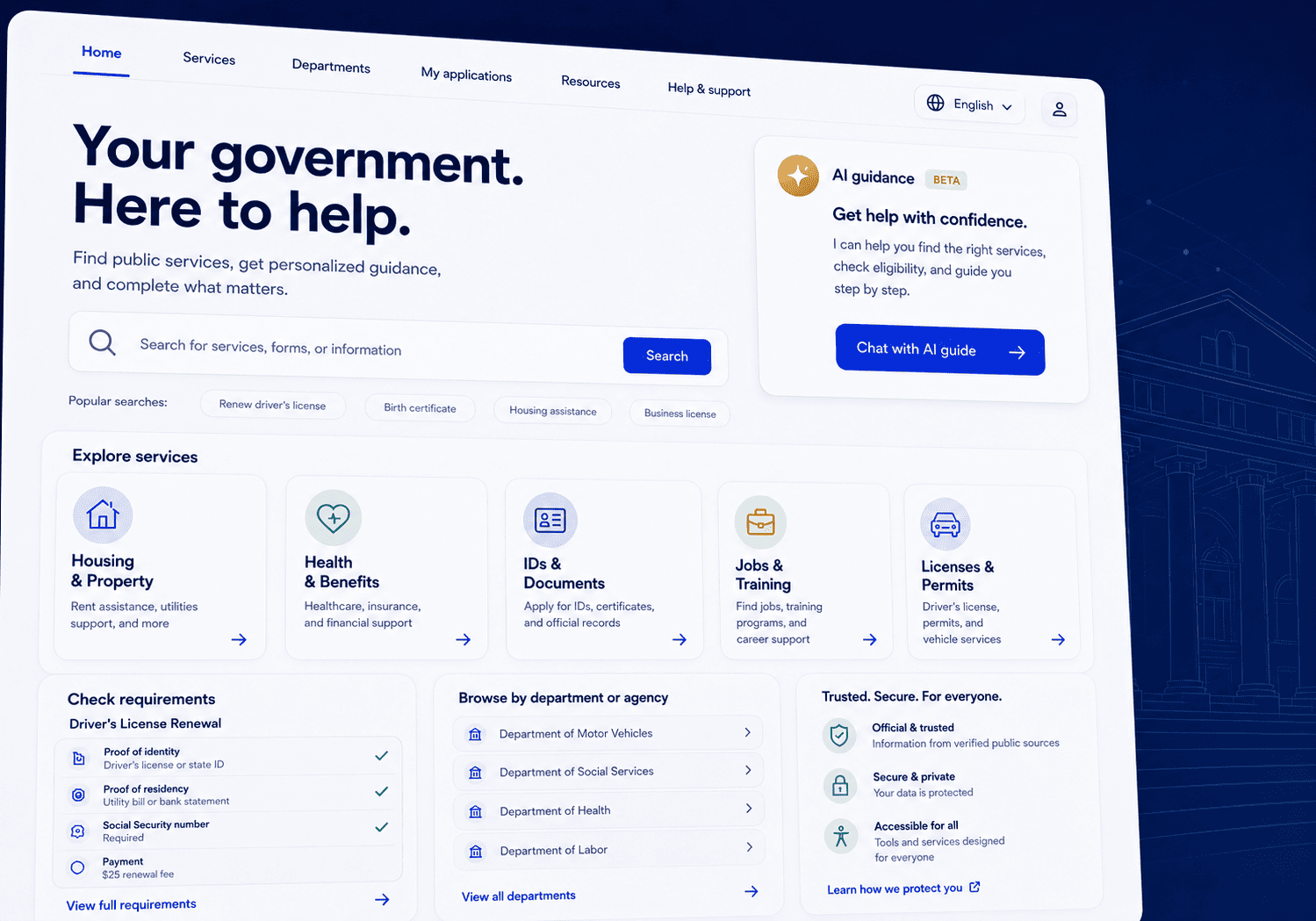
AI-Powered Citizen Services Website Platform for Virginia State Agencies

Plavno developed a modern eGovernment website platform for Virginia state agencies that centralizes citizen services, public information, department content, and an AI-powered guidance agent in one scalable system.

Read More
70%

reduction in routine citizen inquiries to agency staff

AI-Powered Citizen Services Website Platform for Virginia State Agencies

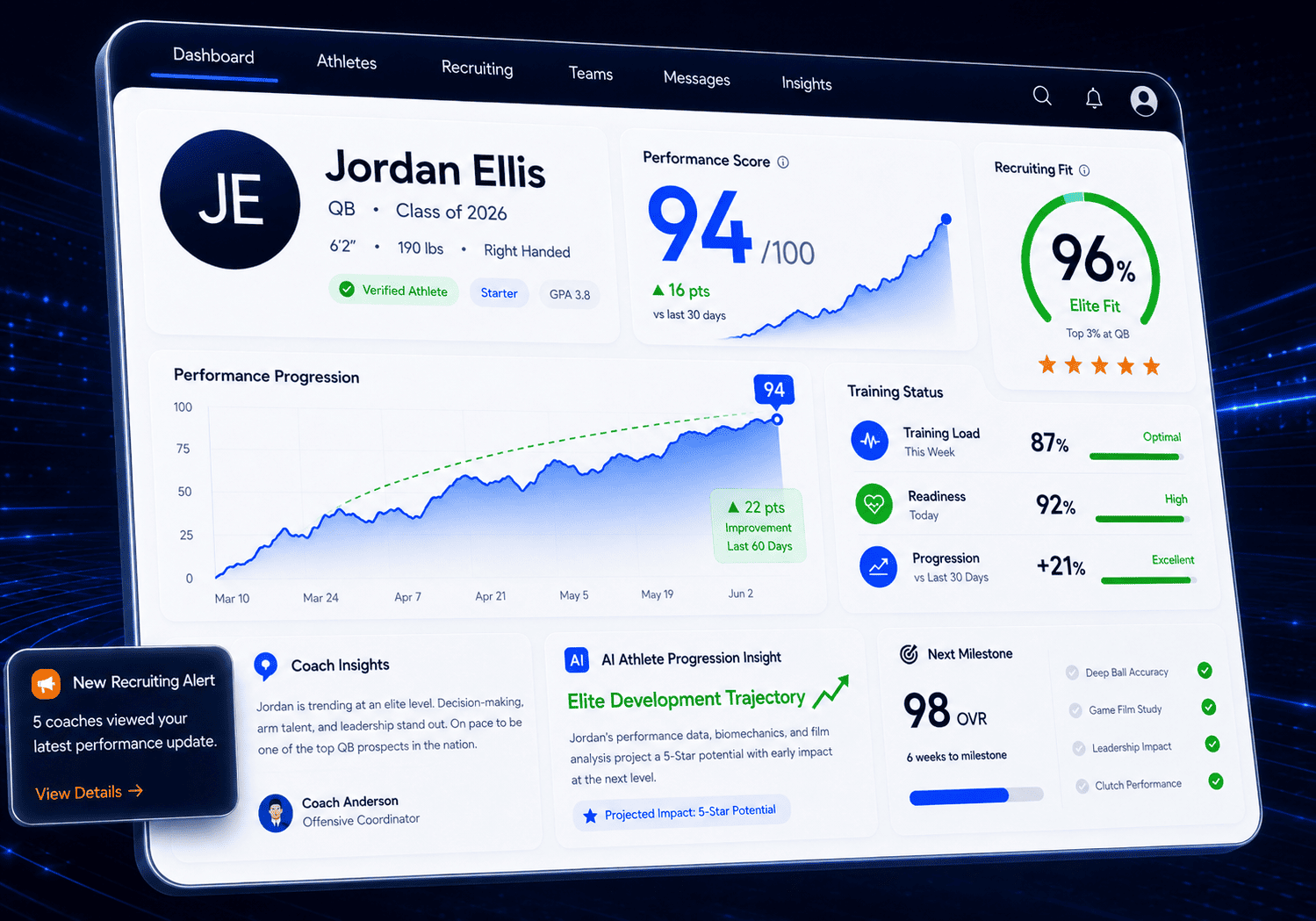
AI-Powered Sports Performance & Recruiting Platform for Virginia Clubs, Academies & Youth Programs

Plavno developed a custom sports technology platform for Virginia-based clubs and academies to combine athlete performance tracking, coach communication, recruiting workflows, and mobile engagement in one ecosystem.

Read More
3x

faster recruiting pipeline

AI-Powered Sports Performance & Recruiting Platform for Virginia Clubs, Academies & Youth Programs

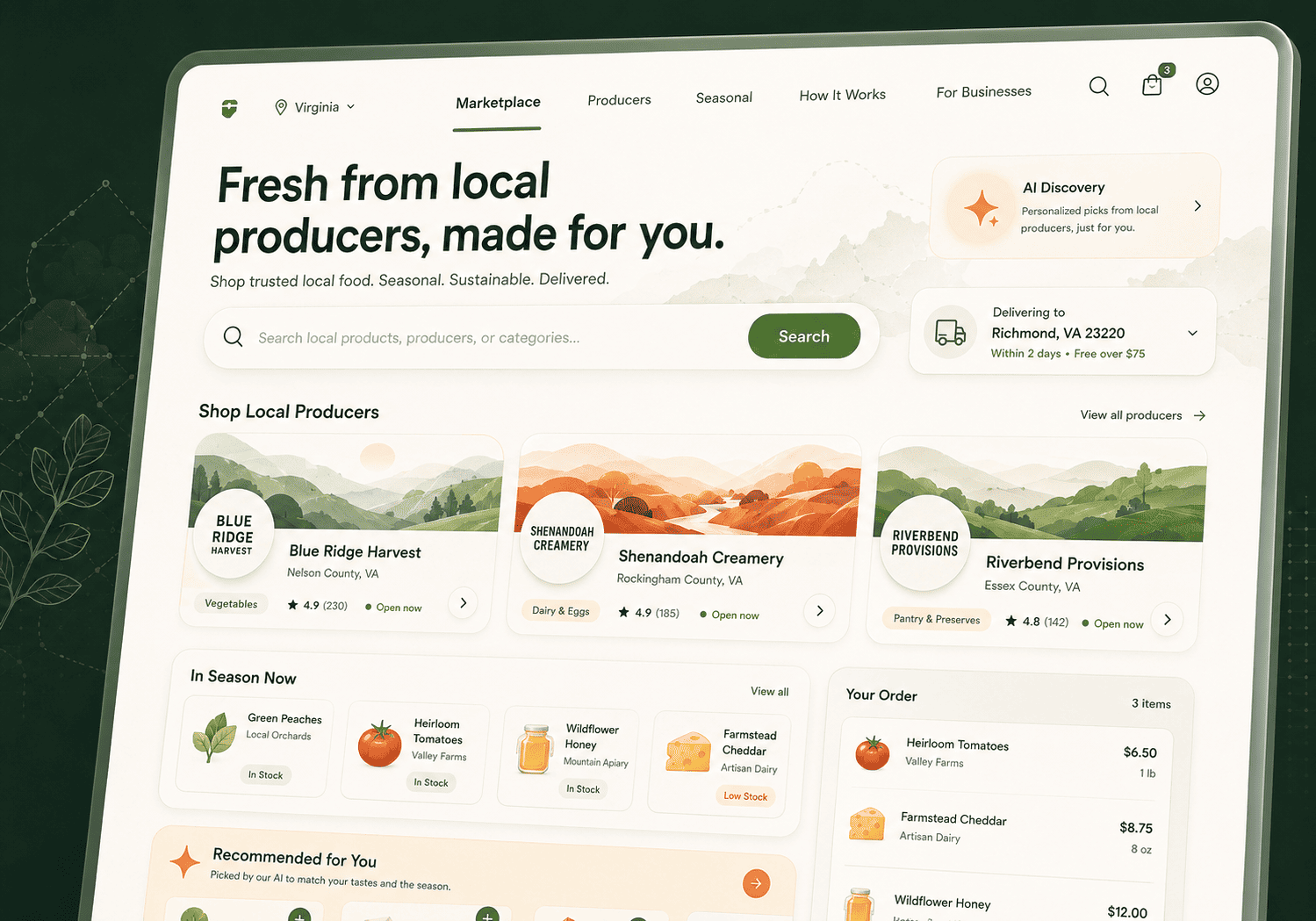
Digital Marketplace for Virginia Farmers, Local Producers & Direct-to-Consumer Food Sales

Plavno developed a custom multi-vendor marketplace for Virginia-based farmers, food producers, and regional sellers to unify product listings, vendor operations, customer ordering, and local fulfillment workflows.

Read More
3x

increase in product discovery relevance

Digital Marketplace for Virginia Farmers, Local Producers & Direct-to-Consumer Food Sales
Eugene Katovich

Eugene Katovich

Sales Manager

Need a custom software solution? We’re ready to help!

Plavno has a team of skilled developers ready to tackle the project. Ask me!

Get a Free Quote

Healthcare AI Solutions for Lynchburg Industries

Local Use Cases

Our AI fits the needs of key sectors around Lynchburg.

Hospital Networks

Real-time Risk Scores

FHIR API Integration

AI for Lynchburg Hospital Networks

Hospitals need to predict patient deterioration and allocate staff efficiently. Our AI provides real‑time risk scores that integrate with bedside monitors. ROI shows a 12% reduction in ICU overtime costs. Technically the system streams data through Kafka, scores with TensorFlow, and returns results via FHIR APIs. The solution respects HIPAA and Virginia health data regulations.

Regional Clinics

Scheduling Optimizer

LightGBM Model

AI for Regional Clinics

Clinics face high no‑show rates that waste appointment slots. We built a scheduling optimizer that predicts likelihood of attendance. The model uses LightGBM on historical booking data. Clinics saw a 18% increase in completed visits, boosting revenue. The optimizer runs as a serverless function that updates the clinic's calendar automatically.

Home-Care Agencies

Remote Patient Monitoring

Wearable Data Streams

AI for Home‑Care Agencies

Home‑care providers need to monitor patients remotely. Our solution streams wearable data and flags anomalies. Alerts trigger nurse dispatch within minutes. Early intervention reduced emergency transports by 30% in pilot programs. Architecture relies on Azure IoT Hub, edge inference with TensorFlow Lite, and secure VPN tunnels.

Medical Research

Imaging Dataset Analysis

PyTorch GPU Service

AI for Medical Research Institutes

Research groups require fast analysis of imaging datasets. We deployed a GPU‑powered inference service that tags radiology images. Researchers cut labeling time by 45% and accelerated study timelines. The service uses PyTorch, Docker, and a private VPC for data isolation.

Health-Insurance Claims

Fraud Detection Engine

Gradient Boosted Model

AI for Health‑Insurance Claims

Insurers need to detect fraudulent claims quickly. Our fraud detection engine scores each claim using a gradient‑boosted model. Early detection saved $1.2 M in the first year of deployment. The engine runs on AWS SageMaker with encrypted data pipelines and audit logs.

Public Health Reporting

Disease Outbreak Tracking

Apache Spark Batch

AI for Public Health Reporting

County health departments track disease outbreaks. Our AI aggregates ER visits and flags spikes in real time. The system improved outbreak detection speed by 50% and supported timely interventions. It uses Apache Spark for batch processing and Tableau for visual dashboards.

Why Choose Us

Our Edge Over Generic Agencies

Deep engineering beats off‑the‑shelf consulting.

Generic Agencies
Our Platform (Deep Engineering Expertise)
HIPAA compliance built‑in
checkmark
Custom model training
checkmark
Scalable cloud deployment
checkmark
checkmark
24/7 monitoring
checkmark
Local Virginia knowledge
checkmark

Architecture & Engineering Overview

Engineering deep-dive into Healthcare AI infrastructure

Cost Savings

Serverless Savings

30% lower cloud spend vs VMs.

Security

HIPAA Compliance

Encrypted data at rest and transit.

Monitoring

Active Monitoring

Tracks latency, errors, and drift.

Tech Debt

Low Tech Debt

Reusable containers and clean code.

For Business: Technical ROI & Risk Mitigation

Our architecture reduces operational costs by using serverless compute that only runs when needed. This saves up to 30% on cloud spend compared to always‑on VMs. Security controls include encrypted data at rest and in transit, meeting HIPAA and Virginia state standards. Monitoring captures latency, error rates, and model drift, letting us act before performance degrades. The approach also limits technical debt by keeping code in reusable containers. Business impact is measurable in lower readmission penalties and higher reimbursement rates.

Discovery

Sandbox Discovery

Mirror data schema and inventory.

Rollout

Staged Rollout

Blue-green deployment and testing.

Handoff

Ops Handoff

Documentation and runbooks.

For CTOs: Architecture & Technical Lifecycle

We begin with a sandbox environment that mirrors the hospital's data schema. After validation, we move to a staged rollout using blue‑green deployments. Decisions on container orchestration versus serverless are based on expected load and compliance review. Each stage includes automated security scans and performance benchmarks. Governance includes code reviews, change‑control tickets, and audit trails. The lifecycle ends with a handoff to operations teams who receive full documentation and runbooks.

Ingestion

Data Ingestion Layer

HL7-to-JSON adapters in Go.

Streaming

Streaming Pipeline

Apache Kafka with exactly-once semantics.

Inference

Model Inference

TensorFlow Serving in Docker.

Edge

Edge Processing

TensorFlow Lite on devices.

For Engineers: Implementation Details & Stack

Data ingestion uses HL7-to‑JSON adapters written in Go for low latency. Streaming pipelines run on Apache Kafka with exactly‑once semantics. Model inference uses TensorFlow Serving inside Docker, exposing gRPC endpoints. We chose Python for data preprocessing because of its rich libraries and rapid prototyping. Edge devices run TensorFlow Lite to keep patient data on‑device when possible. Logging uses structured JSON that feeds ELK for troubleshooting.

IAM

IAM & Access

Least-privilege roles.

VPC

Secure VPC

Strict security groups.

Observability

Observability

Prometheus & Grafana.

Infrastructure, Observability & Security

All services reside in a VPC with strict security groups. IAM roles grant least‑privilege access to data stores. We enable AWS GuardDuty and Config for continuous compliance checks. Observability stacks include Prometheus for metrics and Grafana dashboards for real‑time alerts. Incident response runs a runbook that escalates to senior engineers within 30 minutes of a critical alert. Regular penetration tests ensure ongoing protection against emerging threats.

Implementation Checklist

Key Steps Before Launch

  • Data Access Review — Verify that all data sources have proper consent and encryption. Map data flows to HIPAA requirements. Document any gaps and remediate before model training. This step typically takes 2 weeks.

  • Model Validation — Run cross‑validation on historic data. Compare baseline and AI predictions. Record accuracy, false‑positive, and false‑negative rates. Adjust features until performance meets clinical thresholds.

  • Integration Testing — Connect AI APIs to the EHR sandbox. Test end‑to‑end workflows with dummy patients. Verify that alerts appear in clinician dashboards without delay.

  • Security Hardening — Apply encryption keys, rotate secrets, and enable audit logging. Conduct a vulnerability scan and address any findings. Ensure compliance reports are ready for regulators.

  • Monitoring Setup — Deploy CloudWatch alarms for latency, error rates, and model drift. Create dashboards for ops staff. Define SLA thresholds and escalation paths.

Vitaly Kovalev

Vitaly Kovalev

Sales Manager

Ready for a Local AI Cost Estimate?

Request a free AI readiness audit for Lynchburg healthcare providers. The estimator covers data, timeline, and budget.

Talk to Experts

Testimonials

We are trusted by our customers

“They really understand what we need. They’re very professional.”

The 3D configurator has received positive feedback from customers. Moreover, it has generated 30% more business and increased leads significantly, giving the client confidence for the future. Overall, Plavno has led the project seamlessly. Customers can expect a responsible, well-organized partner.

Sergio Artimenia

Commercial Director, RNDpoint

Sergio Artimenia

“We appreciated the impactful contributions of Plavno.”

Plavno's efforts in addressing challenges and implementing effective solutions have played a crucial role in the success of T-Rize. The outcomes achieved have exceeded expectations, revolutionizing the investment sector and ensuring universal access to financial opportunities

Thien Duy Tran

Product Manager, T-Rize Group

Thien Duy Tran

“We are very satisfied with their excellent work”

Through the partnership with Plavno, we built a system used by more than 40 million connected channels. Throughout the engagement, the team was communicative and quick in responding to our concerns. Overall, we were highly satisfied with the results of collaboration.

Michael Bychenok

CEO, MediaCube

Michael Bychenok

“They have a clear understanding of what the end user needs.”

Plavno's codes and designs are user-friendly, and they complete all deliverables within the deadline. They are easy to work with and easily adapt to existing workflows, and the client values their professionalism and expertise. Overall, the team has delivered everything that was promised.

Helen Lonskaya

Head of Growth, Codabrasoft LLC

Helen Lonskaya

“The app was delivered on time without any serious issues.”

The MVP app developed by Plavno is excellent and has all the functionality required. Plavno has delivered on time and ensured a successful execution via regular updates and fast problem-solving. The client is so satisfied with Plavno's work that they'll work with them on developing the full app.

Mitya Smusin

Founder, 24hour.dev

Mitya Smusin

Questions & Answers

Frequently Asked Questions

Everything you need to know about Healthcare AI in Lynchburg.

What drives the cost of Healthcare AI projects in Virginia?

Costs depend on data volume, model complexity, and compliance effort. Large hospitals with extensive EHR archives need more compute and longer data cleaning phases. HIPAA‑aligned cloud services add hourly charges for encryption and audit logging. We break down expenses by discovery, prototyping, production, and ongoing monitoring. In Lynchburg, typical projects range from $150 K to $350 K, with a clear ROI from reduced readmissions and staffing efficiencies. We provide a transparent estimate that matches your budget.

How long does it take to build a Healthcare AI solution?

A minimum viable product can be delivered in 8 weeks. The first two weeks cover discovery and data inventory. Weeks 3‑5 focus on prototype development and validation with clinicians. Weeks 6‑8 handle production engineering, security hardening, and deployment. Full‑scale deployments that include multiple models and extensive integration may extend to 16 weeks. Timeline adjustments depend on data readiness and regulatory review cycles in Virginia.

What data do you need from our hospital?

We require de‑identified patient records, vital sign streams, and outcome labels such as readmission flags. Data should be exported in HL7 or FHIR formats. Historical data of at least 12 months improves model robustness. We also need access to scheduling systems if you plan to integrate alerts. All data transfers use encrypted SFTP or VPN tunnels, and we sign a data use agreement that complies with Virginia health privacy rules.

How do you measure AI quality and compliance?

Quality is tracked with standard metrics: AUC‑ROC for classification, mean absolute error for regression, and calibration curves for risk scores. We run bias audits to ensure fair treatment across demographic groups. Compliance checks include HIPAA risk analysis, encryption verification, and audit log reviews. Results are documented in a compliance report that you can present to regulators. Continuous monitoring alerts us to drift, letting us retrain models before performance declines.

Can the AI integrate with our existing EHR system?

Yes. Our platform exposes RESTful and FHIR endpoints that EHR vendors can call. We provide SDKs for popular systems like Epic, Cerner, and Meditech. Integration uses OAuth 2.0 for secure authentication. Data mapping is handled by configurable adapters that translate EHR fields to model inputs. The integration layer adds minimal latency, typically under 200 ms per request.

Contact Us

This is what will happen, after you submit form

Need a custom consultation? Ask me!

Plavno has a team of experts that ready to start your project. Ask me!

Vitaly Kovalev

Vitaly Kovalev

Sales Manager

Schedule a call

Get in touch

Fill in your details below or find us using these contacts. Let us know how we can help.

No more than 3 files may be attached up to 3MB each.
Formats: doc, docx, pdf, ppt, pptx.
Send request