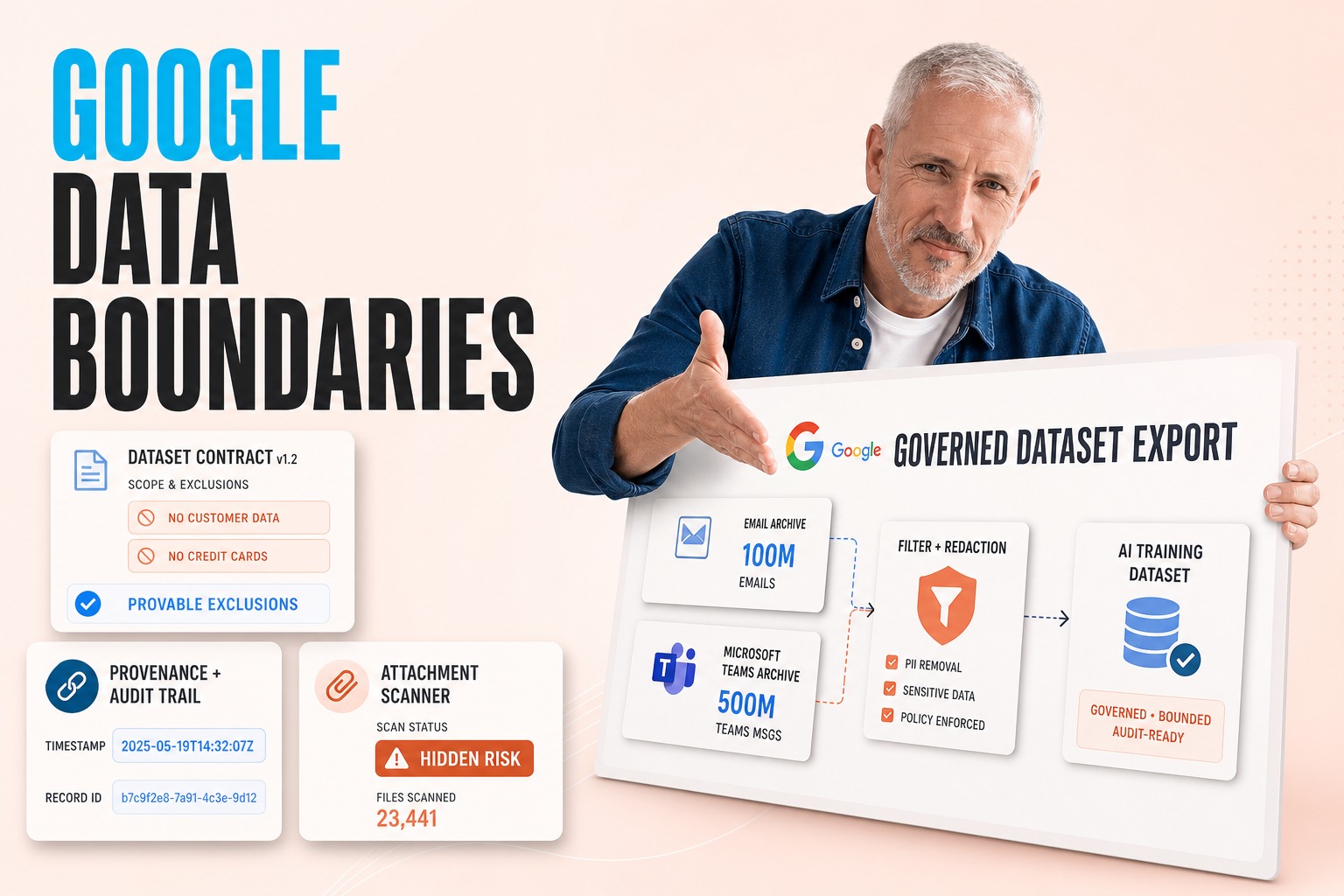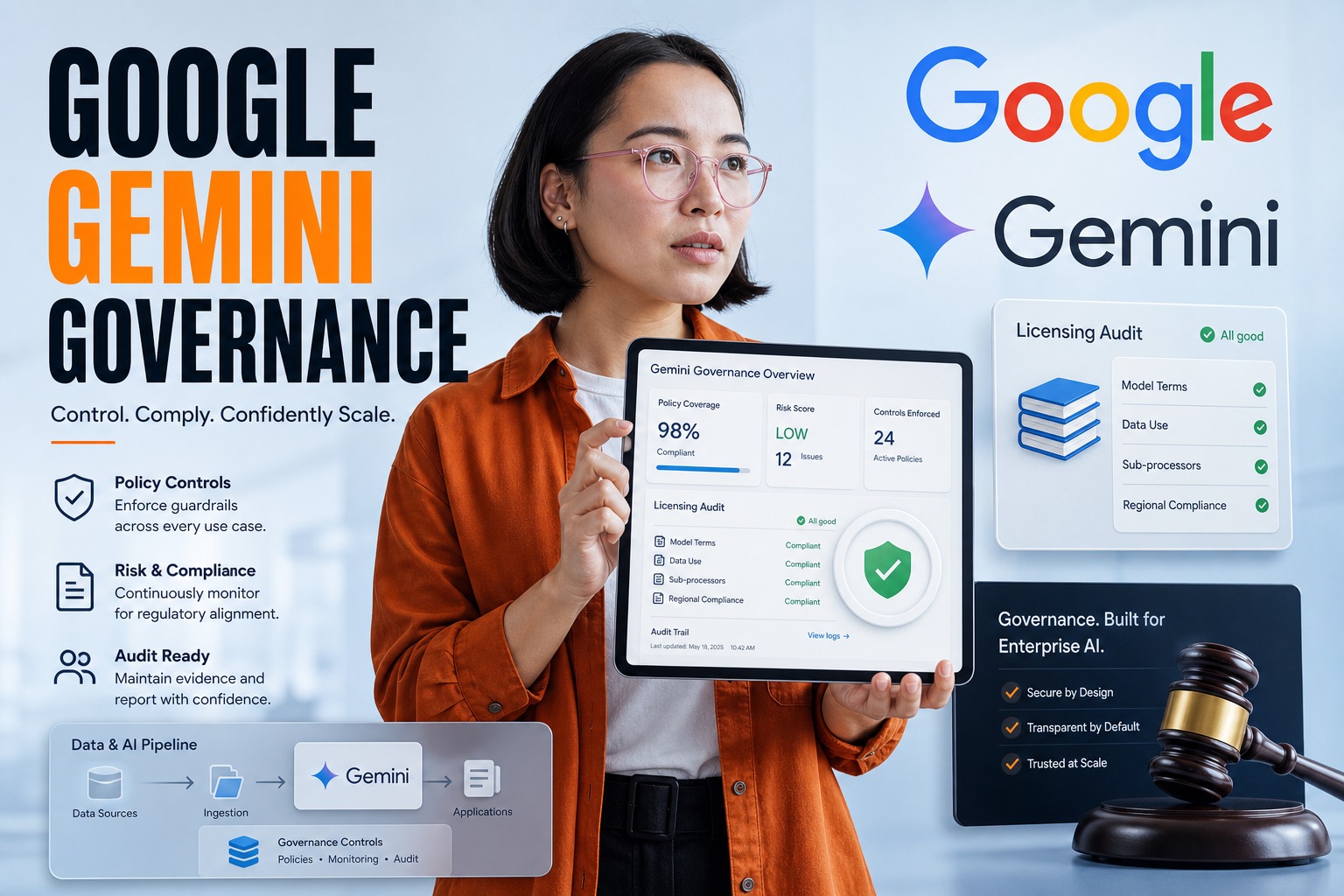
Does Google’s lawsuit claim it used books without permission? → Yes, publishers allege millions of copyrighted books were repurposed for Gemini training.
Will the case affect how AI models are trained industry‑wide? → The ruling could force every AI developer to audit data provenance before model training.
Is the alleged copyright removal a separate legal issue? → Plaintiffs say Google stripped copyright management information to hide the source of training data.
Can companies rely on fair‑use defenses for large‑scale training? → Courts have split; California decisions favor AI firms, but New York may set a different precedent.
What should a CTO do right now? → Begin a licensing audit of all training corpora and build a compliance pipeline before any new model rollout.
Quick Answer: Is Google’s Use of Copyrighted Books Legal?
Google’s alleged repurposing of copyrighted books for Gemini training likely violates the specific licensing terms of services such as Google Books and Google Play Books, which only permit snippet display, bibliographic data, or ebook sales. While some courts have found fair‑use arguments persuasive for AI training, the New York filing challenges that precedent and could deem the practice unlawful, especially given the alleged removal of copyright management information. Enterprises should therefore treat unlicensed training data as a high‑risk liability until clear legal guidance emerges.
- Snippet‑only permission – Agreements let Google show short excerpts, not full‑text ingestion for model training.
- Bibliographic data allowance – Providing metadata does not grant rights to copy or process entire works.
- E‑book sales clause – Selling digital copies is permitted, but using the content to teach an AI exceeds that scope.
- Copyright management removal – Stripping identifiers may constitute concealment, adding a separate infringement claim.
- Potential fines – Internal documents warned of $10 billion‑$100 billion exposure if litigation succeeds.
The Core Claim: Data‑License Compliance Beats Model Choice in AI Projects
We argue that the real engineering risk lies not in selecting a larger language model but in neglecting the legal provenance of the training corpus. When a model is built on unlicensed text, any downstream product inherits that liability, regardless of its accuracy or architectural elegance. This shifts the priority for CTOs from pure performance metrics to a rigorous data‑licensing audit, because a breach can halt deployment, trigger massive damages, and erode brand trust.
Key principle: Treat training data provenance as a first‑order requirement, on par with security and scalability, when designing enterprise AI pipelines.
How the Gemini Lawsuit Exposes Gaps in Current AI Data Practices
The complaint identifies concrete practices—mass ingestion of books from Google Books, removal of copyright tags, and reuse in Gemini—that bypass the narrow permissions granted by existing contracts. Engineers often assume that any publicly accessible text is fair‑use eligible, yet the lawsuit shows that contractual terms can be more restrictive than statutory doctrine. This misalignment means that internal data pipelines, which may automatically scrape large corpora, are operating on shaky legal ground.
Identify source contracts – Catalog every agreement governing text access, from Google Books to third‑party APIs.
Map usage rights – For each source, define whether snippet, metadata, or full‑text use is permitted.
Validate ingestion pipelines – Ensure that automated crawlers respect the mapped rights and flag violations.
Document removal actions – Record any metadata stripping; if it occurs, it must be justified or avoided.
Establish legal review checkpoints – Insert review stages before large‑scale training runs.
Practical Steps to Build a Licensing‑Aware Training Pipeline
A compliant pipeline starts with a metadata‑driven catalog that records the origin, licensing terms, and any transformations applied to each document. When a new dataset is added, the system cross‑references the catalog against a policy engine that enforces the allowed actions. Only after passing this gate does the data flow into preprocessing, tokenization, and model training stages. This architecture mirrors existing security‑by‑design patterns and can be integrated with cloud‑native orchestration tools.
| Phase | Typical Practice (Pre‑lawsuit) | Compliance‑First Alternative |
|---|---|---|
| Data Acquisition | Bulk scrape of public‑web and library APIs | Contract‑driven ingestion with rights metadata |
| Pre‑processing | Remove all metadata to reduce token count | Preserve copyright tags; log any removal |
| Model Training | Feed entire corpus into GPU clusters | Filter corpus by licensed subset; audit logs |
| Deployment | Release model globally | Deploy with usage‑based licensing checks |
Why Existing Fair‑Use Defenses Are Unreliable Across Jurisdictions
Fair‑use analysis varies dramatically between California and New York courts. California rulings have leaned toward allowing large‑scale text mining, whereas the New York filing explicitly challenges that view, emphasizing contractual breach over statutory doctrine. For multinational enterprises, this geographic split means a model trained on a globally sourced corpus could be legal in one state and infringing in another, creating a patchwork of compliance obligations that is untenable without a unified data‑governance framework.
- State‑specific precedent – California may permit certain uses; New York may not.
- Contractual hierarchy – License terms outrank generic fair‑use arguments.
- Risk of injunctions – Courts can order immediate cessation of model training.
- Financial exposure – Statutory damages can reach billions, as warned by internal Google memos.
- Reputation impact – Public lawsuits erode trust among authors and partners.
The Hidden Cost of Ignoring Copyright in Model Development
When teams overlook licensing, they often incur hidden technical debt: retrofitting filters, re‑training models, and rebuilding data pipelines after a legal setback. This debt manifests as delayed product launches, wasted compute spend, and the need for costly legal remediation. Moreover, the effort to scrub already‑trained models of infringing content is technically formidable, because the weights embed the copyrighted patterns in ways that are not easily separable.
Plavno’s Approach: Embedding Licensing Checks into AI Engineering
At Plavno we embed licensing verification directly into our AI‑agent development workflow. Our platform integrates with the Google Cloud AI suite while maintaining a metadata registry that records the provenance of every text fragment used for training. By coupling this registry with our custom policy engine, we ensure that any model built for a client respects the exact permissions granted by each content provider. This approach eliminates the surprise of post‑deployment litigation and aligns with enterprise risk‑management standards. Learn more about our AI consulting services, custom software development, and cloud software development offerings.
- Metadata registry – Stores source, license type, and usage constraints for each document.
- Policy engine – Enforces rights at ingestion, preprocessing, and training stages.
- Audit trail – Generates immutable logs for compliance reviews and regulator inquiries.
- Dynamic filtering – Excludes unlicensed content automatically before tokenization.
- Scalable orchestration – Works with Kubernetes and Terraform to keep pipelines performant.
Evaluating Licensing Risks When Selecting a Model Provider
When comparing cloud AI services, the licensing posture of the provider becomes a decisive factor. Google’s Gemini controversy illustrates that even market‑leading platforms can expose customers to infringement risk if the underlying data pipeline is opaque. Enterprises should therefore score providers on transparency of training data sources, availability of licensing documentation, and the ability to request data‑source audits.
Transparency score – Does the provider disclose the categories of text used?
Auditability – Can you request a breakdown of source licenses for a given model?
Remediation guarantees – Does the provider commit to removing infringing data on demand?
Legal indemnification – Are there contractual clauses protecting you from downstream lawsuits?
Compliance tooling – Does the platform offer built‑in licensing checks or APIs?
Real‑World Scenarios Where Licensing Oversight Saves Money
Consider a fintech firm building a legal‑assistant LLM that references regulatory documents. If the training set includes unlicensed excerpts from proprietary law textbooks, the firm could face injunctions that halt the product just before launch, costing months of development and millions in sunk costs. By contrast, a pre‑deployment audit that flags such sources enables the team to replace them with licensed alternatives, preserving the timeline and avoiding legal exposure.
Business Impact: From Potential Billion‑Dollar Fines to Competitive Advantage
If courts side with the publishers, damages could range from $10 billion to $100 billion, as cited in the internal Google memo. Even a fraction of that exposure would cripple most enterprises. Conversely, firms that proactively secure licenses can market their AI solutions as “legally vetted,” gaining trust from risk‑averse customers and differentiating themselves in a crowded market. This compliance edge can translate into faster sales cycles and higher contract values.
How to Evaluate This in Practice: Decision Logic for CTOs
CTOs should adopt a three‑tier decision framework. First, assess the legal risk of each data source against the organization’s risk tolerance. Second, quantify the engineering effort required to implement licensing checks, using existing CI/CD pipelines as a baseline. Third, compare the total cost of compliance (including licensing fees) against the projected revenue uplift from a legally sound AI product. If the compliance cost exceeds the expected benefit, the project should be paused or re‑scoped.
Quick Evaluation Checklist for Your Next AI Initiative
- Source audit – List every text corpus and its licensing terms.
- Policy mapping – Translate contract clauses into enforceable rules.
- Tooling check – Verify that your data pipeline can enforce those rules automatically.
- Legal review – Secure sign‑off from counsel before large‑scale training.
- Monitoring plan – Set up alerts for any future changes in source licensing.
Bottom line: Treat data‑license compliance as a non‑negotiable gate before any model training begins.
Where to Find Expert Help Building Compliant AI Systems
Plavno offers end‑to‑end AI‑agent development that incorporates licensing verification, from data ingestion to model deployment. Our services include AI consulting, custom software development, cloud software development, AI agents development, and broader digital‑enterprise transformation consulting. Learn more about our AI‑solutions portfolio and how we can safeguard your next generative‑AI product.
- AI‑consulting – Strategy and risk assessment for AI initiatives.
- Custom‑software development – Build pipelines with built‑in licensing checks.
- Cloud‑software development – Deploy compliant models on secure infrastructure.
- AI‑agents development – Create assistants that respect content rights.
- Digital transformation – Align AI governance with broader enterprise policies.
The Path Forward: Aligning Innovation with Legal Discipline
The Gemini lawsuit is a watershed moment that forces the industry to reconcile rapid AI innovation with the immutable rules of copyright law. Companies that double‑down on performance while ignoring data provenance risk costly shutdowns. Those that embed licensing governance into their engineering culture will not only avoid legal peril but also unlock market credibility, turning compliance into a competitive moat.
- Invest in metadata management – Centralize licensing data for all text assets.
- Automate policy enforcement – Use policy engines to block unlicensed ingestion.
- Engage legal early – Involve counsel during dataset selection, not after training.
- Document everything – Maintain immutable logs for audit and regulator review.
- Iterate responsibly – Pilot with licensed subsets before scaling.
Frequently Asked Questions About AI Copyright Risks
Can I rely on fair use for any public text? – No; fair use is a case‑by‑case defense and does not override explicit license terms.
What if my model was already trained on unlicensed data? – Conduct a forensic audit, consider model‑weight sanitization, and be prepared for potential injunctions.
Do cloud providers guarantee clean training data? – Not universally; verify each provider’s data‑source disclosures.
How much does a licensing audit cost? – Costs vary, but early investment is far cheaper than multi‑million‑dollar settlements.
Is there a standard framework for AI data governance? – Emerging standards exist, but each organization must tailor policies to its data sources and jurisdictions.
| Risk Level | Mitigation Strategy | Expected Impact |
|---|---|---|
| High (unlicensed bulk data) | Full audit + replace with licensed sets | Prevents injunctions, reduces legal exposure |
| Medium (partial licensing gaps) | Implement policy engine, add metadata tags | Lowers compliance cost, improves auditability |
| Low (licensed data only) | Ongoing monitoring for license changes | Maintains trust, supports rapid iteration |
The Role of Open‑Source Communities in Shaping Future Licensing Norms
Open‑source AI projects often use publicly available text, but the Gemini case shows that community‑driven datasets can still run afoul of copyright if contributors do not verify source permissions. As the ecosystem matures, we anticipate stronger attribution standards and community‑managed licensing registries that will help reduce ambiguity for both hobbyists and enterprises.
- Community registries – Central repositories that track source licenses for datasets.
- Attribution tooling – Automated insertion of copyright notices during preprocessing.
- License‑compatible forks – Encourage contributions that respect original terms.
- Legal education – Provide guidance to contributors on copyright basics.
- Collaborative audits – Joint reviews of large datasets to certify compliance.
Looking Ahead: How Future Courts May Define AI Training Boundaries
If New York courts adopt a strict contractual interpretation, the industry could see a wave of licensing‑as‑a‑service platforms, where data providers sell pre‑cleared text bundles for AI training. This shift would make data provenance a market commodity, encouraging enterprises to invest in licensed corpora rather than relying on opportunistic scraping. CTOs should monitor legislative proposals and case law to anticipate these structural changes.
 Chat GPT
 Perplexity
 Claude
 Gemini