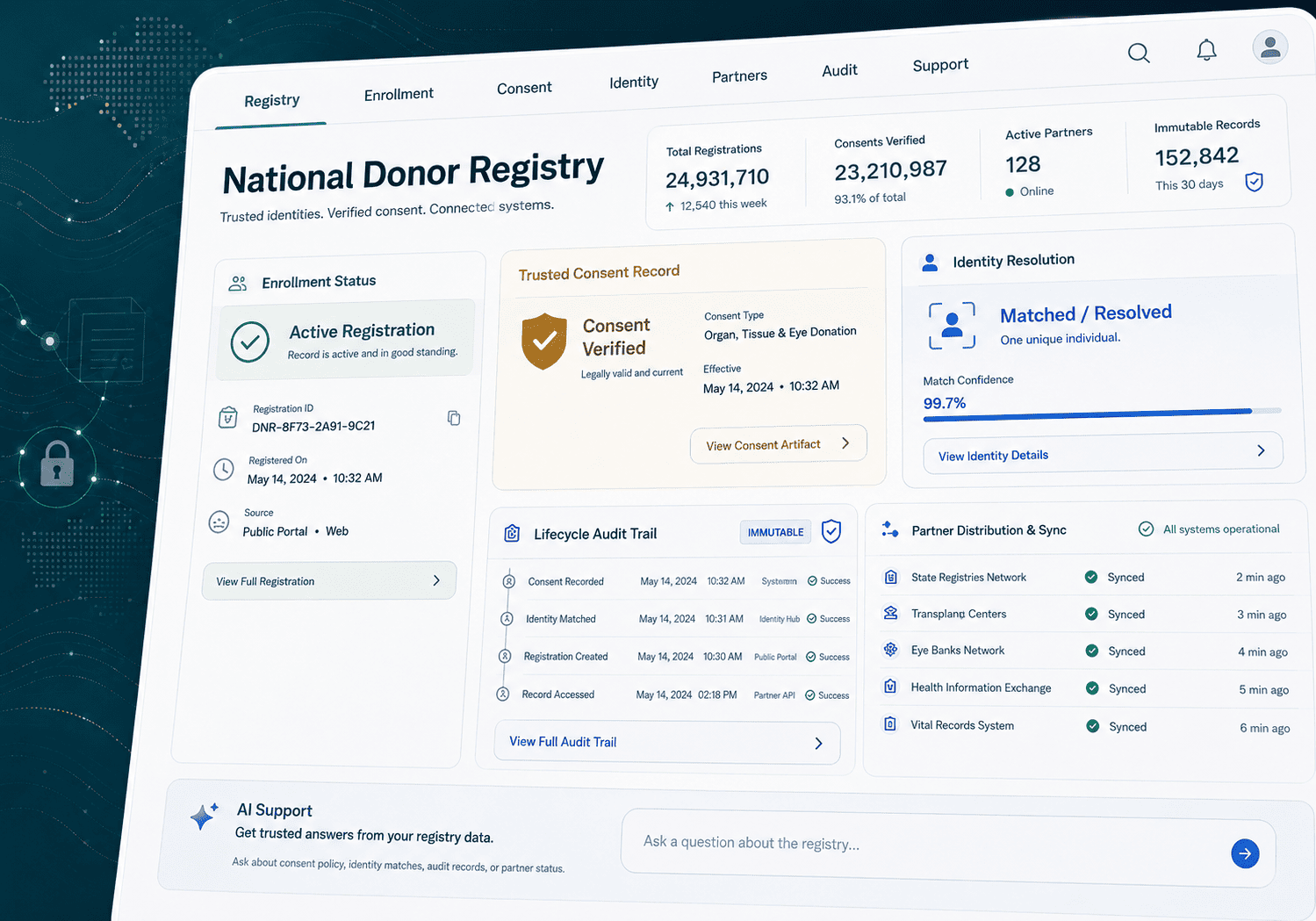
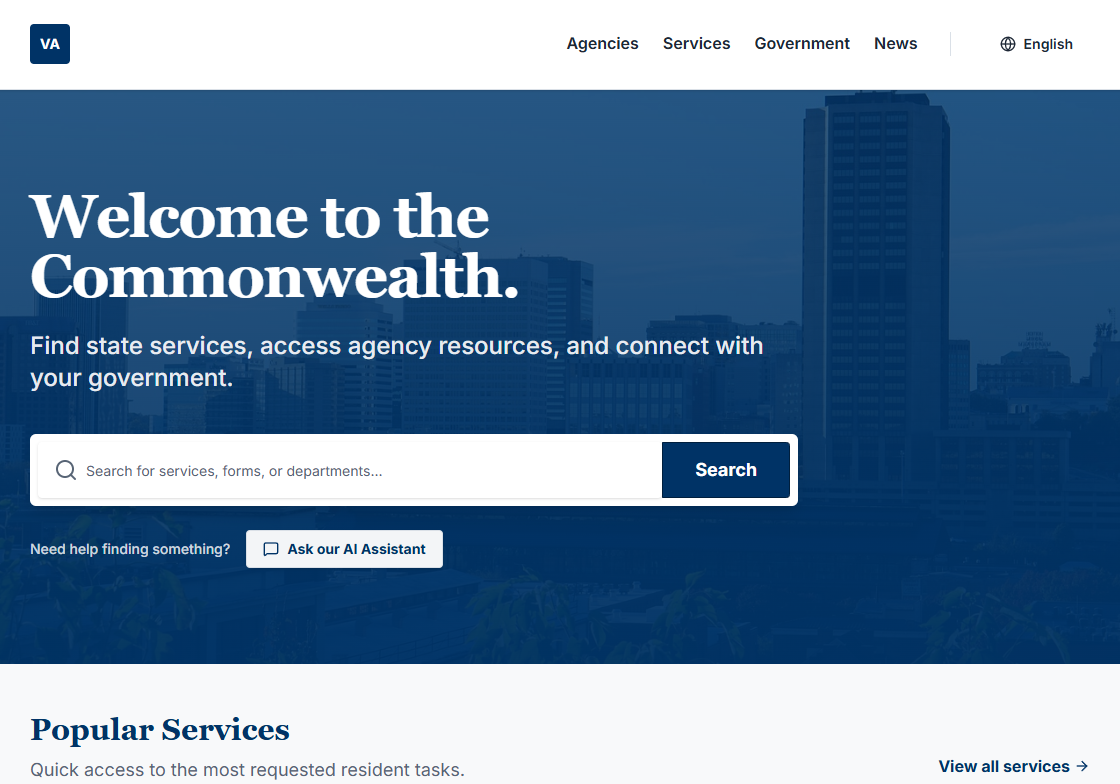
A scalable municipal digital services platform that evolved from a website redesign into GIS integration, permit workflows, online payments, resident self-service, and multi-year support.
Overview
This case is based on a New Hampshire town of about 12,000 residents with a Select Board, Town Administrator, more than 15 boards and commissions, and around 40 employees. The key strength of the engagement was not only the initial redesign, but the multi-year expansion path: Year 1 focused on the website foundation, Year 2 introduced GIS, permitting, payments, and SSO integrations, and Year 3 added a resident dashboard, multilingual support, push notifications, and analytics for town leadership.
Maintained a 3-year continuous contract with 2 renewals.
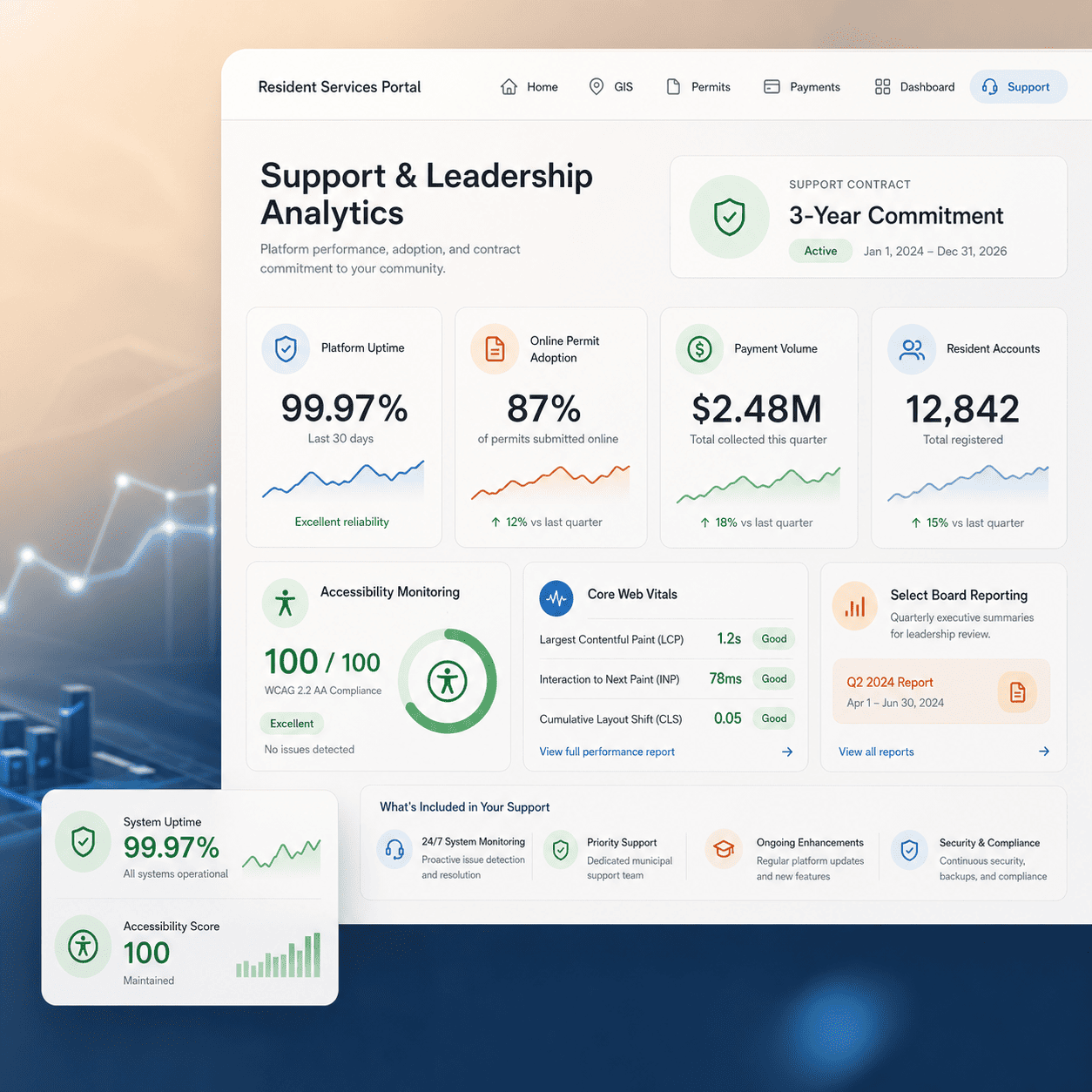
Achieved 99.97% cumulative uptime.
Processed $4.2M in online payments during 2025.
Increased permit submissions to 87% online, up from 12% in 2023.
Reached 3,400 active resident accounts, or about 28% of the population.
Maintained Lighthouse Accessibility 100 throughout expansion, with zero regression accessibility issues.
Before modernization, the town operated across fragmented systems: the website, permitting, payments, and calendar functions all lived in separate tools. Residents faced a confusing experience, and municipal staff duplicated data entry across systems.
The town needed more than a website refresh. It needed a digital services architecture that could start with core municipal publishing requirements and expand over time into GIS, payments, resident services, and staff authentication without forcing a full rebuild every year.

The project needed to be delivered in stages for this municipal digital services platform: Year 1 to redesign the website, migrate content, meet WCAG 2.1 AA, add role-based board publishing, forms, hosting, and support; Year 2 to integrate GIS, online permitting, online payments, SSO, and stronger accessibility monitoring; and Year 3 to introduce a resident dashboard, multilingual support, PWA notifications, engagement analytics, and performance optimization.
There were also strategic constraints: the architecture had to support future modules instead of a one-time MVP; the town needed well-known municipal system integrations such as ArcGIS, ViewPoint Cloud, and Municipay; accessibility could not regress as new modules were added; and new resident-facing functionality had to coexist with board workflows, public information publishing, and staff operations.

Solution
From Website Foundation to Resident-Focused Platform – Phased Growth in GIS, Permitting, Payments, and Self-Service
WordPress municipal platform with phased growth architecture.
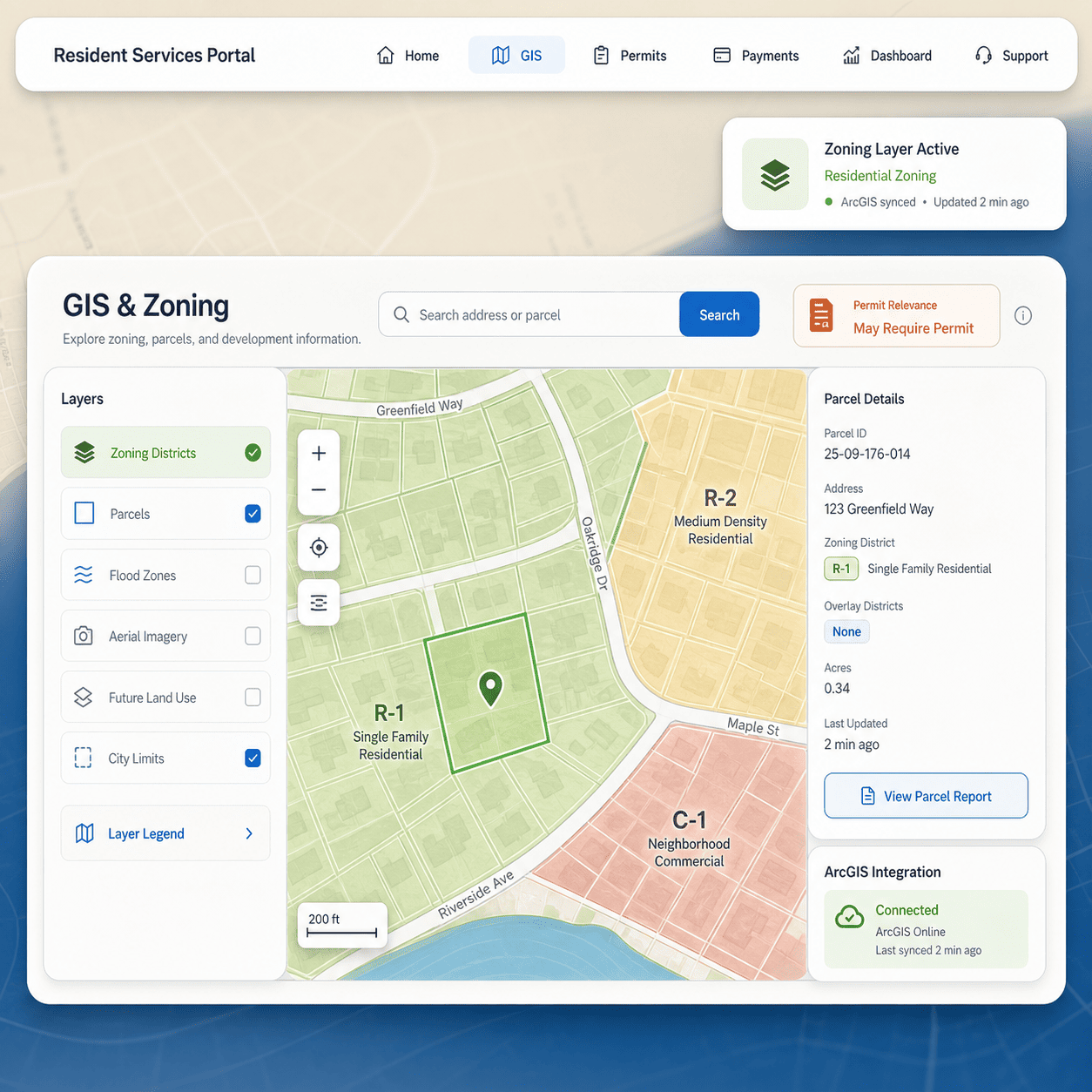
ArcGIS integration with zoning map overlays.
ViewPoint Cloud permit workflow integration with SSO and permit status visibility.
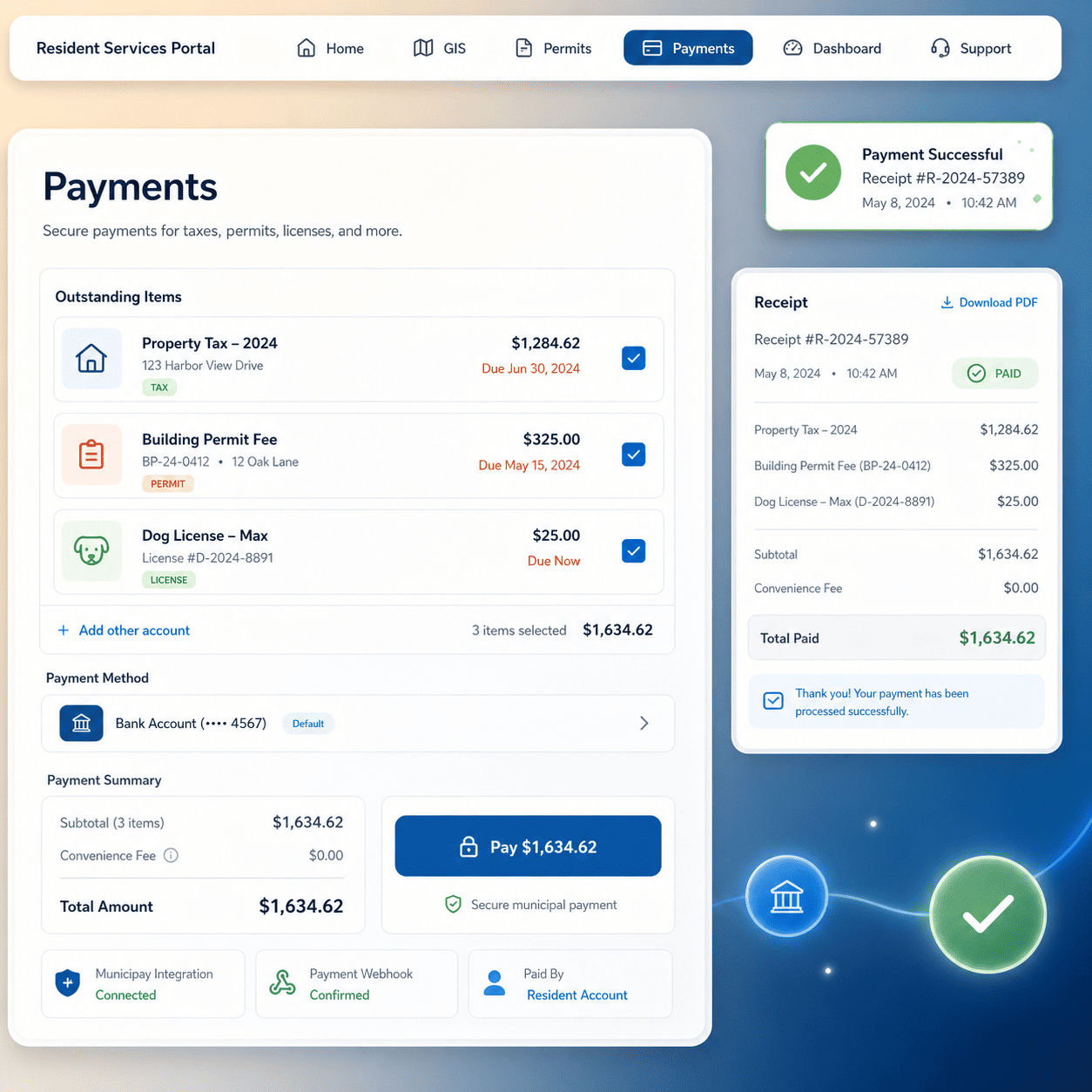
Municipay integration for online payments.
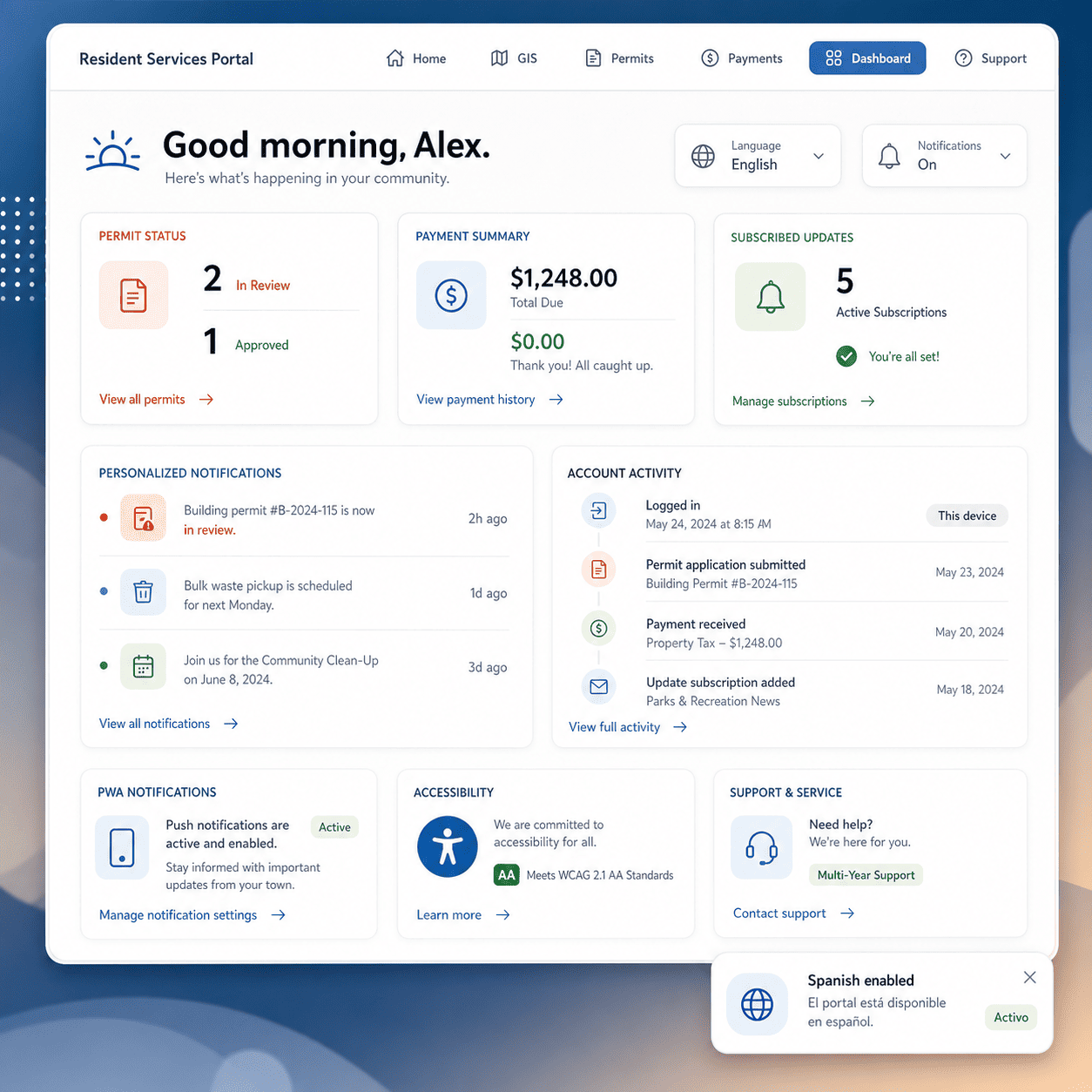
Resident dashboard and logged-in experience — the same account/engagement logic Plavno applies in CRM development work.
Multilingual support and PWA notifications.
Accessibility retained across all phases of expansion.
Publish Core Municipal Content: In Year 1, the town launched the redesigned public website with board publishing, forms, and accessible public information.
Use GIS and Permit Workflows: In Year 2, residents could access zoning overlays and view permit statuses through integrated workflows.
Make Payments Online: The platform supported payments for taxes, permit fees, and dog licenses.
Access Resident Services: In Year 3, logged-in residents could view permit statuses, tax information, and personalized updates from one dashboard.
Built for a town of about 12,000 residents.
Supports Select Board governance, 15+ boards and commissions, and approximately 40 staff members.
Designed as a long-term municipal platform rather than a one-time redesign.
Proven through a 3-year contract and two renewals.
Architecture Overview
CMS Layer:WordPress with a headless approach for dashboard functionality, using the WordPress REST API plus a React frontend for logged-in areas.
GIS Layer: ESRI ArcGIS Online with Leaflet fallback.
Permitting & Payments Layer: ViewPoint Cloud REST API integration plus Municipay iframe integration and payment status webhooks.
Authentication & Resident Services Layer: Microsoft 365 SAML for staff SSO, resident dashboard logic, multilingual support with WPML, and PWA notifications via a custom service worker.
Accessibility & Performance Layer: Accessibility monitoring remained active during expansion, and Core Web Vitals optimization was included in Year 3.

Value
Delivering enterprise-grade reliability without sacrificing usability or municipal fit.
Residents move from public information to permits, payments, and dashboard access inside one connected environment.
The platform integrates with common New England municipal systems instead of replacing everything.
Accessibility remained at Lighthouse 100 with zero regression issues during expansion.
The engagement proved that the website could grow into a broader resident services platform.
Benchmarks
Built to handle real municipal demand — from day one through multi-year growth.
The town stayed in a three-year continuous contract with two renewals.
Online permits reached 87% of submissions, up from 12% in 2023.
The platform processed $4.2M in online payments during 2025.
Resident accounts reached 3,400 active users.
Data Protection
Maintaining trust through consistent accessibility, secure access, and modular evolution.
Staff authentication used Microsoft 365 SAML.
Accessibility monitoring expanded as the platform grew.
GIS, permitting, and payments were added as modules rather than through full rebuilds.
Innovative Experience
Purpose-built for local government workflows, from zoning boards to resident self-service.
Delivery Crew
High-performing developers for growing companies

Eugene Katovich
Sales Manager
Plavno helps municipalities launch the right foundation first, then expand into the digital services residents and staff actually need.
Talk to an ExpertCompetitive Ability
Demonstrating how Plavno turns a municipal website into a scalable digital services platform
Launch the core website
Redesign the site, migrate content, support boards, and meet accessibility requirements.
Add operational integrations
Connect ArcGIS, permitting, payments, and staff authentication.
Expand resident services
Introduce resident dashboards, multilingual access, and notifications.
Optimize and report
Track analytics, improve performance, and support long-term town operations.
Phased 3-year roadmap with 2 contract renewals
WordPress + React headless architecture for dashboard functionality
ArcGIS Online integration with Leaflet fallback
ViewPoint Cloud REST API permitting integration with SSO
Municipay iframe payment integration with status webhooks
WPML multilingual support (English/Spanish) with PWA notifications
Core Web Vitals optimization after Google algorithm updates
99.97% cumulative uptime over 3 years
$4.2M in online payments processed during 2025
87% online permit submissions, up from 12% in 2023
3,400 active resident accounts (~28% of population)
Supports 12,000 residents, 40 staff, 15+ boards/commissions
3-year continuous engagement with proven growth capacity
WCAG 2.1 AA compliance maintained from Day 1
Lighthouse Accessibility 100 with zero regression across 3 years
Microsoft 365 SAML for staff SSO and secure authentication
Expanded accessibility monitoring as new modules were added
Secure modular integration model without full rebuilds
Measurable outcomes that prove the value of a phased, integrated municipal platform.
The town dramatically increased online permitting and payment usage.
Thousands of residents adopted the new dashboard experience.
The platform expanded over three years without needing a rebuild.
Accessibility quality stayed high while the feature set grew.
Staff reduced manual data entry and duplicate work across permitting, payments, and content publishing through integrated workflows.
Tools We Used
Project Estimator
The estimated time to launch the product
Clear vision of functionality you need
15% discount on your first sprint

Frequently Asked Questions
Find answers to your common concerns
Yes. It grew over three years into GIS, permitting, payments, resident portal features, and multilingual support.
Yes. Lighthouse Accessibility remained at 100, with zero regression issues.
Yes. The platform integrated ArcGIS, ViewPoint Cloud, Municipay, and Microsoft 365.
Yes. The relationship lasted three years and included two renewals.
Related Projects
About Plavno

Senior engineers + proven AI components to accelerate time-to-value.

From MVPs to enterprise platforms at global scale.

From extension UX to GPU pipelines and global scale.
Testimonials
Contact Us
Plavno experts contact you within 24h
Discuss your project details
We can sign NDA for complete secrecy
Submit a comprehensive project proposal with estimates, timelines, team composition, etc
Plavno has a team of experts ready to start your project. Ask us!

Vitaly Kovalev
Sales Manager

Fill in the form
to access the case study.