bg image
bg image

Serving Roanoke & Virginia

Stop losing Roanoke deals to slow CRM handoffs in 2026

Roanoke growth teams still spend hours updating records, chasing quotes, and guessing next steps. That lag costs revenue when competitors respond first. We build AI CRM Automation that scores leads, drafts follow-ups, and keeps every stage honest. It is built for operators who manage real pipelines across manufacturing, logistics, healthcare, and professional services. Your reps stay focused on buyers while the system handles routine capture and routing. Finance and ops get cleaner forecasts without another spreadsheet layer. Get AI CRM Automation cost estimate in 24 hours.

Discuss Project

Overview

Why Roanoke pipelines stall without smart CRM flow

Roanoke companies across Salem, Vinton, Blacksburg, and Lynchburg run busy pipelines on tools that were never designed for AI-assisted work. Sales, support, and operations still retype notes from calls, freight updates, and email threads. Missed fields break reporting. Handoffs slow when a quoting desk waits on manual status checks. The result is a forecast that looks fine on Monday and drifts by Friday.

Local operators feel this in logistics corridors, regional manufacturers, clinic networks, and B2B service firms near the Blue Ridge. A rep who should close now rewrites the same customer history three times. Managers pull numbered dashboards that hide stale data. Trusted AI CRM Automation Partner for Roanoke Businesses means we fix the workflow first, then layer models where they reduce cost and risk. We work with US-based clients, including companies operating in Virginia.

Our approach starts with the processes your team already runs. We map lead intake, qualify rules, quote turns, and renewal signals before choosing models or connectors. That keeps automation tied to revenue events instead of vanity chatbots. For teams that need deeper product work, our CRM development path covers custom objects, permissions, and migration without freezing day-to-day selling.

Evidence matters more than slogans. We built an AI agent for freight quoting and tracking that automated quotes and orchestrated logistics workflows for ops staff under constant volume pressure. We also shipped a personalized house-hunting platform where search and ranking had to adapt to different user profiles without drowning staff in filters. Those builds shape how we structure custom AI CRM Automation for Roanoke: grounded data contracts, clear human override, and audit trails managers can trust.

In 2026, 10+ AI CRM Automation projects delivered in the US market inform how we price risk and scope. Roanoke teams get practical routing, scoring, and summary features that clip idle time without forced platform swaps. You keep control of customer data. You see which rules fire and why. That is how automation earns a place on the floor instead of sitting in a slide deck.

Talk to an Expert
Workflow first

Workflow-first mapping

Lead intake, qualify rules, quote turns, and renewals before any model choice

Data contracts

Grounded data contracts

Stable fields and audit trails so forecasts stop drifting by Friday

AI CRM Automation

Custom AI CRM Automation

Scoring, summaries, and routing tied to real revenue events

Human override

Human override control

Clear gates, trusted audit logs, and Roanoke desks keep customer data ownership

plavno logo

Build your first
Smart AI project today!

Just tell the Plavno AI Agent about your project - it will ask questions, gather requirements, and propose a tailored solution

Stack with purpose

Event-first CRM architecture Roanoke teams can own

Roanoke clients receive an automation layer that sits beside the CRM they already trust rather than a risky rip-and-replace. We model core objects first: accounts, contacts, opportunities, tickets, and quotes. Then we define events for create, stage change, idle time, and document attach. Those events drive scoring, summaries, and task creation so the system reacts to real work instead of batch jobs nobody watches.

The runtime mixes a strong CRM core with lightweight services that keep latency low for desks in Salem and Blacksburg. We connect CRM objects through well-named APIs and webhooks so each automation has a single source of truth. Message queues absorb spikes when campaigns land or freight updates flood in. We choose queues because a silent retry policy beats lost tasks during afternoon peaks. Background workers handle embedding refresh, dedupe passes, and enrichment so interactive pages stay responsive for reps.

For decision logic we combine rules you already use with models that classify intent, prioritize follow-ups, and draft context-aware next steps. Rules own hard compliance gates. Models handle fuzzy ranking and language. That split protects policy while still reducing keyboard work. Prompt and feature definitions live in version control next to tests. Product and ops can read what changed between releases without hunting chat history.

Security/compliance starts with least-privilege service accounts, field-level encryption for sensitive attributes, and retention windows that match your legal hold policy. Role maps mirror how Roanoke teams actually sell and support, not a generic enterprise template. Audit logs capture who approved an automation change and which records a model touched. When screens hold health or payment context, we isolate those fields and document access paths before go-live.

DevOps covers staged environments, schema migration checks, and canary releases of automation rules. Feature flags let Virginia operators enable a scoring model for one team before wide rollout. We wire health checks on queue depth, model timeout rate, and CRM API error budgets. Alerts page the people who can act, not a shared inbox. Grounding comes from live delivery work: freight quote automation taught us to keep orchestration idempotent under flaky carrier feeds, and the housing search build showed how ranking quality collapses when user signals are noisy. We bake those lessons into data contracts and recovery paths so Roanoke automation degrades safely instead of inventing junk tasks.

Delivery path

How Roanoke AI CRM work reaches production in 2026

A fixed sequence from discovery to supervised launch so Virginia teams keep selling while automation hardens.

Clipboard
Team
01

Step 1: Pipeline discovery (1–2 weeks)

We sit with sales, ops, and support leads to map the true CRM path from lead to cash. Shadowing shows which fields are theater and which drive routing. You receive a process map, risk list, and automation candidates ranked by hours saved. Timeline is one to two weeks so momentum stays high. Deliverables include sample event definitions and a draft data quality scorecard tied to Roanoke desk realities.

02

Step 2: Data contracts (2–3 weeks)

Engineers freeze object schemas, required fields, and enrichment sources before any model trains. We write contracts for stage transitions and document types so junk never becomes training fuel. Clients get a dictionary of fields, owners, and validation rules. Work takes two to three weeks depending on legacy exports. The goal is predictable inputs so scoring and summaries stay stable after launch.

Search in doc
Rocket
03

Step 3: Pilot automations (3–5 weeks)

We ship a narrow set of flows such as lead triage, idle opportunity nudges, or quote summary push. Supervised mode keeps humans in approve loops. You measure time-to-first-touch and correction rates weekly. Three to five weeks covers build, integration tests, and desk training on real cases. Success criteria are agreed before code freezes so pilots do not drift into feature shopping.

04

Step 4: Controlled scale-out (2–4 weeks)

Winning flows expand team by team across Roanoke and nearby sites with feature flags. We add monitoring dashboards for queue lag, model confidence bands, and CRM API budgets. Training packs cover override paths and incident contact trees. Two to four weeks is typical once the pilot baseline is clean. Ownership docs pass to your admins so external help shrinks over time.

Case Study

We help customers cut
down on development

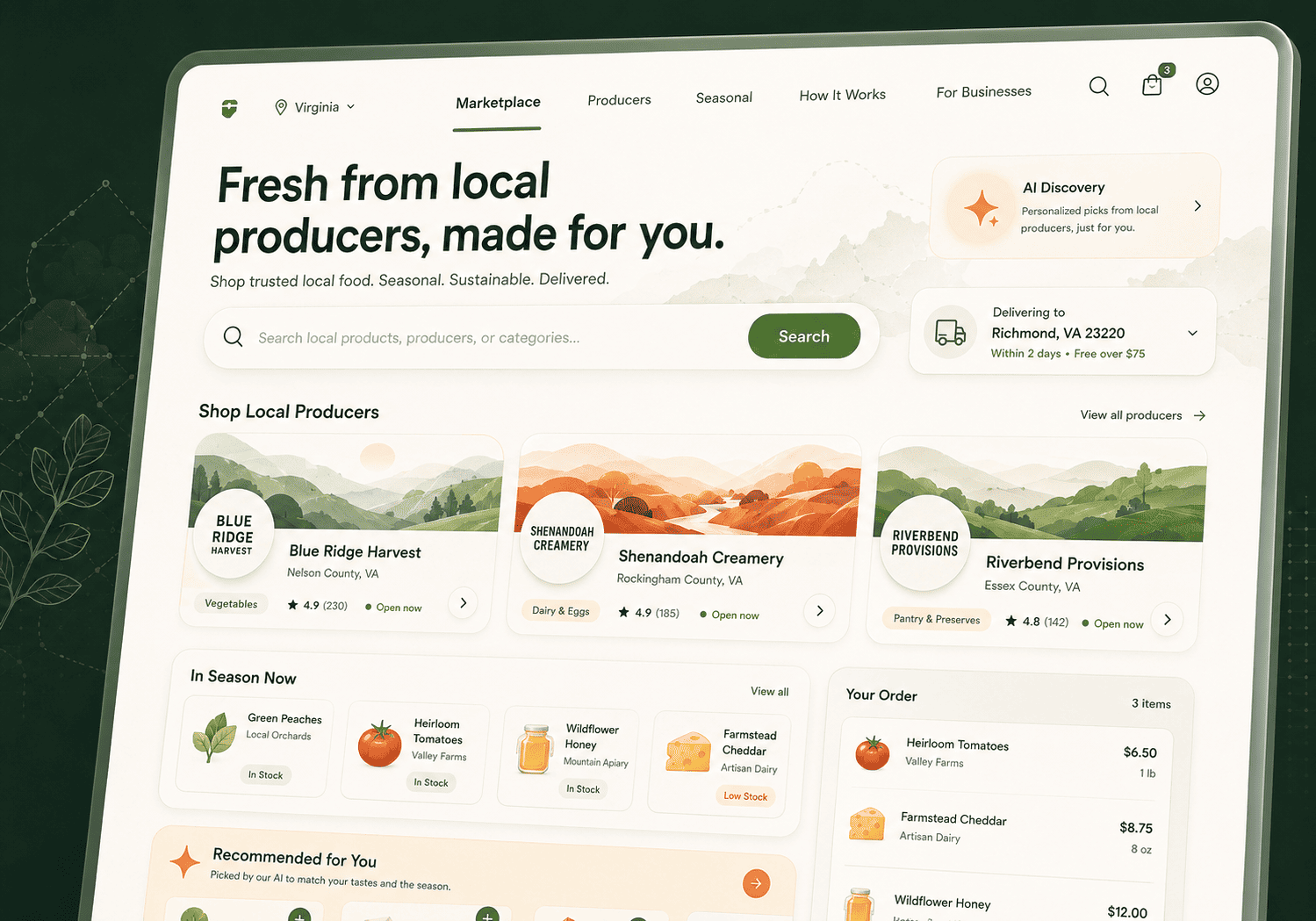
Digital Marketplace for Virginia Farmers, Local Producers & Direct-to-Consumer Food Sales

Plavno developed a custom multi-vendor marketplace for Virginia-based farmers, food producers, and regional sellers to unify product listings, vendor operations, customer ordering, and local fulfillment workflows.

Read More
3x

increase in product discovery relevance

Digital Marketplace for Virginia Farmers, Local Producers & Direct-to-Consumer Food Sales

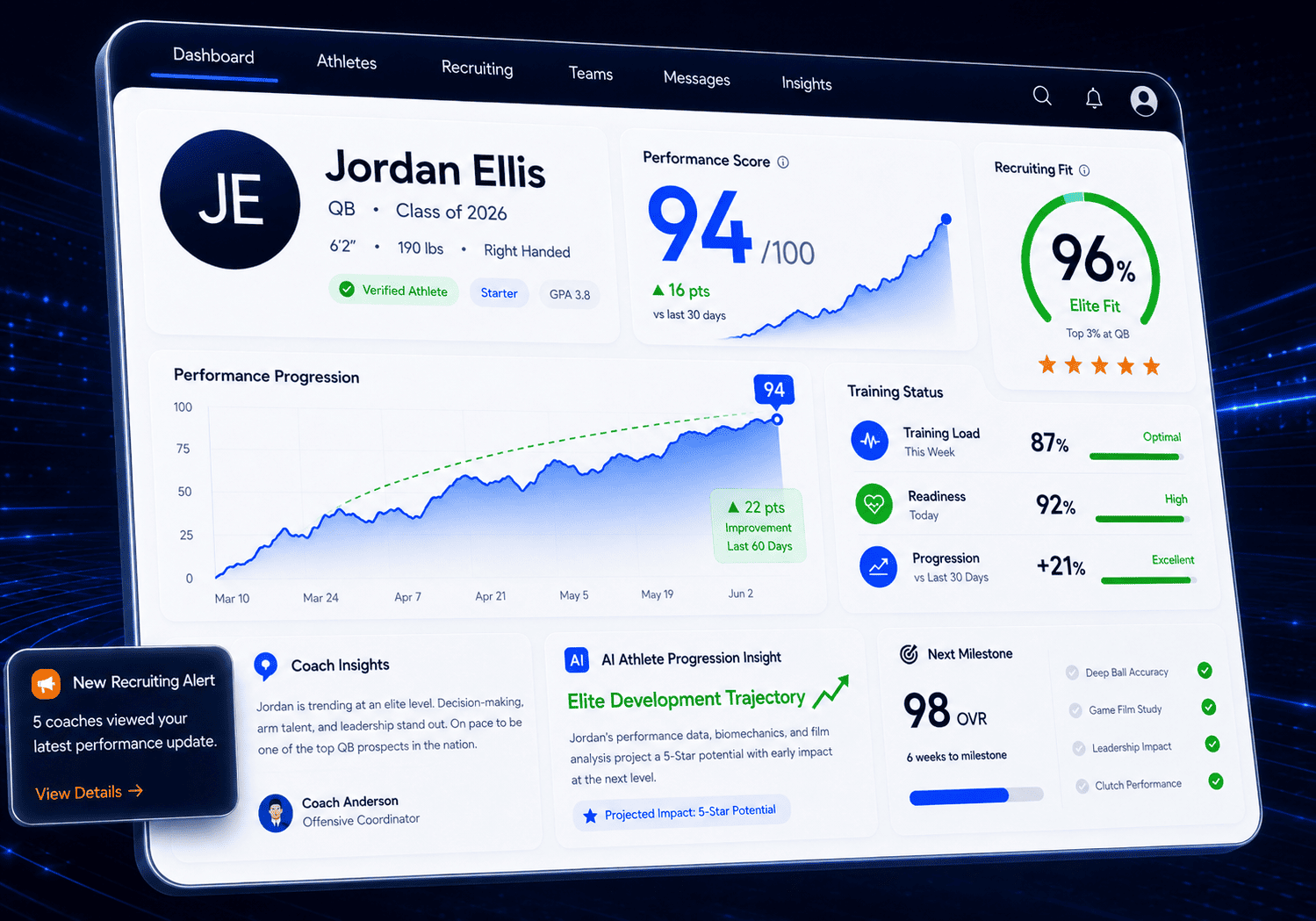
AI-Powered Sports Performance & Recruiting Platform for Virginia Clubs, Academies & Youth Programs

Plavno developed a custom sports technology platform for Virginia-based clubs and academies to combine athlete performance tracking, coach communication, recruiting workflows, and mobile engagement in one ecosystem.

Read More
3x

faster recruiting pipeline

AI-Powered Sports Performance & Recruiting Platform for Virginia Clubs, Academies & Youth Programs

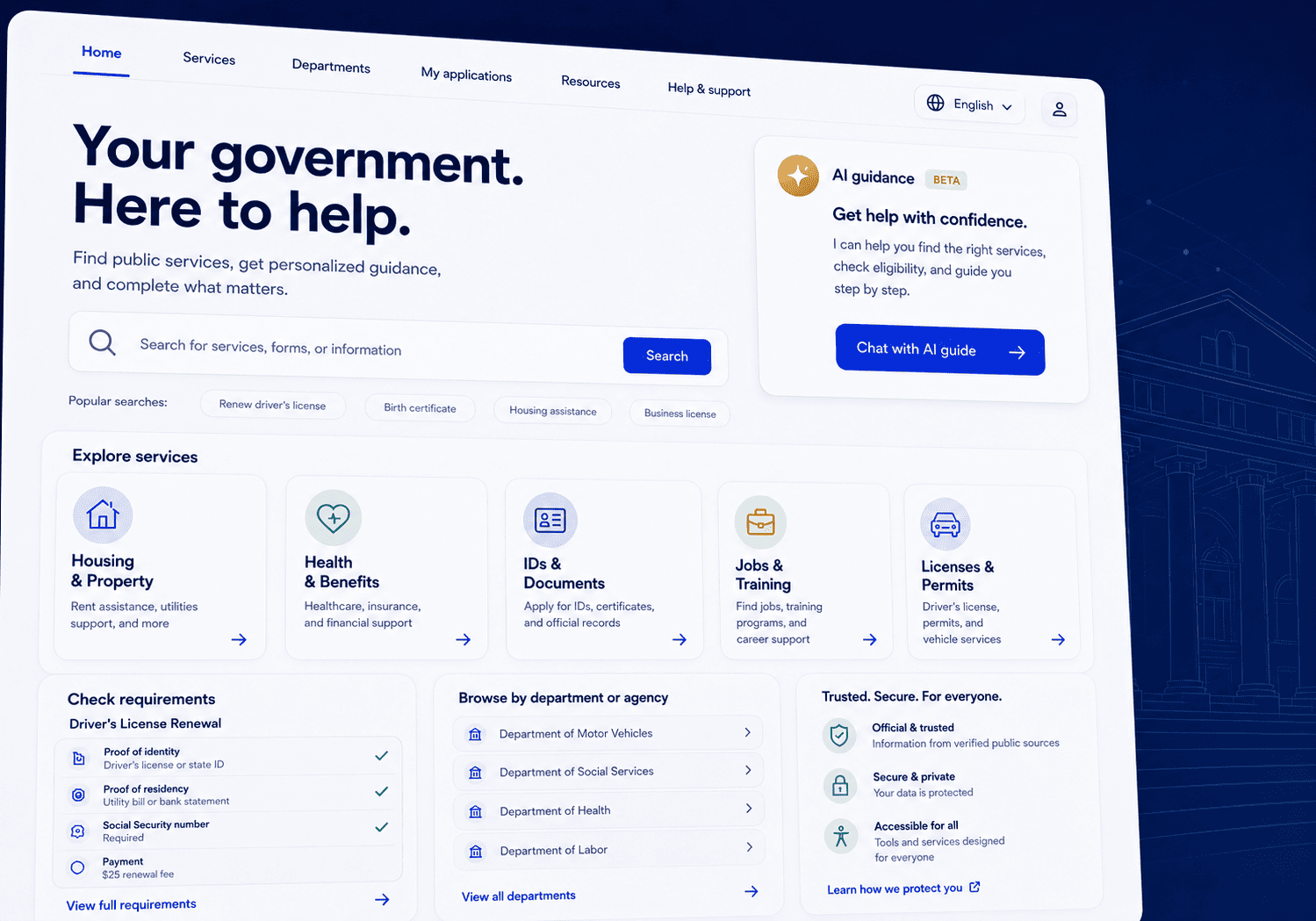
AI-Powered Citizen Services Website Platform for Virginia State Agencies

Plavno developed a modern eGovernment website platform for Virginia state agencies that centralizes citizen services, public information, department content, and an AI-powered guidance agent in one scalable system.

Read More
70%

reduction in routine citizen inquiries to agency staff

AI-Powered Citizen Services Website Platform for Virginia State Agencies

AI CRM Automation Solutions for Roanoke Industries

Where Valley operators cut CRM friction first

Use cases mapped to Roanoke Valley industries that move goods, care for patients, build products, and sell complex services.

Freight Logistics

Freight Logistics

Quote Flow

Freight and logistics desks

Carriers and brokers near the I-81 corridor drown in quote requests and tracking pings that never land cleanly in CRM. Our automation drafts quote packages from structured inputs and writes status events back to opportunities without retyping. Workflow orchestration keeps exceptions visible for humans instead of hiding them in inboxes. Business result is faster response on lanes that win on speed. ROI often shows up as reduced idle quotes and fewer missed handoffs during peak windows. Technically, event hooks listen for rate and tracking updates, then idempotent workers update AI CRM records and create tasks only when thresholds trip.

Manufacturing CRM

Manufacturing CRM

Expansion Signals

Regional manufacturers

Plant-adjacent sales teams juggle distributor contacts, kit configurations, and service tickets across long cycles. Automation scores expansion signals from order history and service noise so reps open the right account first. Renewal reminders fire before silence becomes churn. Managers see stage hygiene without weekly scrub meetings. Expected payoff is cleaner forecast bands and fewer forgotten follow-ups after plant tours. Implementation uses CRM custom objects for product lines plus lightweight classifiers that tag service urgency for dispatch boards.

Healthcare Routing

Healthcare Routing

Clinic Intake

Healthcare groups and clinics

Administrative staff lose hours routing referral inquiries and partnership leads that sit outside clinical systems. AI CRM Automation captures intake, checks missing fields, and routes by specialty and capacity rules your leaders set. Draft acknowledgments stay within approved language packs. Compliance hold flags stop risky automation before send. Result is shorter queue for non-clinical partnership work and better visibility for outreach leads. Stack choices favor strict field isolation, audit logs, and role gates that match clinic hierarchies across Roanoke sites.

Services Pipeline

Services Pipeline

Proposal Nudges

Professional services firms

Consultancies and agencies in the Valley win work then bury moments of truth inside email chains. Automation pulls proposal milestones into opportunity timelines and nudges owners when silence grows. Contact roles stay current when team members change mid-engagement. Partners see pipeline truth without weekend cleanup. Payoff is better utilization of senior time and fewer stalled proposals. Technical path combines mailbox connectors, stage validators, and summary models that only write into review queues, never auto-closing deals.

Education Vendors

Education Vendors

Campus Nurture

Education and research adjacent vendors

Suppliers serving campuses around Blacksburg and Roanoke face long buying groups and seasonal bursts. CRM automation maps multi-contact buying committees and schedules nurture based on academic calendars you define. Lead forms drop straight into scored queues with campus tags. Alumni or dual-role contacts merge under controlled rules. Outcome is less thrash during enrollment peaks and clearer owner maps. Design uses committee objects, season rule tables, and merge policies that demand human confirm on high-value accounts.

Relocation Matching

Relocation Matching

Home Search

Home and relocation services

Movers, brokers, and service networks chase expats and transfer employees who need fast matching. Drawing on our personalized house-hunting work, we align CRM stages to search intent and preference shifts without turning agents into data clerks. Lead cards surface ranked fits and missing documents in one place. Follow-up cadence adjusts when a search cools. Result is higher contact quality and less abandoned inquiry volume. Under the hood, preference signals update scoring features while agents keep override rights on any suggested match.

Capabilities

What Roanoke buyers actually receive

Lead scoring that respects local mix

Lead scoring that respects local mix

Roanoke funnels mix thermal industrial leads with service and healthcare inquiries that behave differently. Generic scores punish solid mid-market accounts. We encode fit rules you already trust, then layer models for intent signals from forms and emails. Python services and CRM native fields store features so admins can audit weights. Outcome is a queue ordered by expected value, not noise. Teams recover hours previously spent alphabetizing fresh leads every morning.

Conversation capture without double entry

Conversation capture without double entry

Notes die in personal inboxes and never reach the account record. Capture flows summarize calls and emails into structured CRM updates with source links. Humans approve sensitive language before publish. We pick transcript services for accuracy on noisy factory floors and quiet clinic lines. The business win is a shared history that new reps can trust on day one. Errors drop when managers stop hunting for context before forecasts.

Quote and document orchestration

Quote and document orchestration

Quote cycles stall when attachments live on personal drives. Automation assembles approved templates, tracks versions, and logs send events on the opportunity. Lessons from freight quote automation guide retry logic when upstream pricing systems lag. Document storage stays in your controlled repositories with signed links. Result is faster turns and clear ownership when legal asks what left the building. Reps stop playing file courier between tools.

Idle stage detection and nudges

Idle stage detection and nudges

Deals freeze after demos when no one owns the next step. Watchers scan stage timers and create tasks with plain reasons in the CRM. Escalations follow your hierarchy, not a blunt broadcast. Rules engine choices keep policy readable for sales ops. Usable dashboards show which stages leak lagged opportunities across Roanoke teams. Forecasts regain meaning when ghost deals exit or move with real dates.

Integration fabric for legacy stacks

Integration fabric for legacy stacks

Many Valley firms still run a mix of on-prem ERP, niche industry tools, and modern CRM. We build connectors that move only the fields that matter on schedules you can defend. Message buses absorb outages so a nightly ERP blip does not duplicate contacts. API gateways centralize auth rotation and rate limits. Business value is one customer picture without a multi-year platform rewrite. Teams keep operational software while CRM becomes the relationship spine.

Architecture & Engineering Overview

How engineering choices protect Roanoke revenue systems

Baseline meters

Baseline ROI meters

Time-to-first-touch, missing next steps, and manual update hours before vs after pilot

Approve gates

Human approve gates

Confidence thresholds fall back to tasks—never auto-send the wrong contact

Flaky feed recovery

Survive flaky feeds

Last-known CRM state plus recovery tasks stop ghost opportunities inflating pipeline

Unit cost control

Unit-cost control

Feature flags, cached embeddings, and spend tied to opportunity volume

For Business: Technical ROI & Risk Mitigation

Leaders funding AI CRM Automation care about fewer lost handoffs, cleaner forecasts, and lower cost per closed stage. Technical choices only matter when they move those numbers under real desk load. We measure baseline time-to-first-touch, percent of opportunities with missing next steps, and manual update hours before build starts. After pilot, the same meters prove value without theater metrics.

Risk sits in bad data, silent model drift, and automations that email the wrong contact. Mitigation starts with human approve gates on outbound content and confidence thresholds that fall back to task creation rather than automatic send. Change windows stay short so Virginia teams see impact within a quarter. Budget protection comes from feature flags that pause costly enrichment if margin targets slip.

Freight quoting automation taught a direct lesson: orchestration must survive flaky upstream feeds. When external systems stall, the CRM still shows last known state and a clear recovery task. That pattern prevents ghost opportunities that inflate pipeline. The house-hunting platform reinforced ranking discipline. If user signals are thin, the system should ask rather than invent. CRM scoring follows the same restraint.

Cost control is part of design, not an afterthought. We right-size model calls, cache stable embeddings, and keep heavy jobs off peak for US working hours. Finance sees unit costs tied to opportunity volume so spend tracks revenue activity. Procurement gets vendor maps and exit plans so lock-in risk stays visible.

Governance briefings for Roanoke sponsors translate model behavior into plain operations language. You know which automations may propose and which may never act alone. That clarity cuts political risk inside sales and service leadership. ROI stays honest because every live flow lists an owner, a rollback path, and a measured business metric.

1

Sandbox spike & decisions

Thin CRM integration, event-bus choice, model hosting boundaries with written exit criteria

2

Interface freeze & contracts

Identity, objects, and outbound channels locked; schema migrations need reverse scripts

3

Idempotent build & canary

PR tests for partial failure, feature flags separate deploy from release, single-team Roanoke canaries

4

Ownership transfer

Runbooks, cost dashboards, drift reviews; partners shrink once admins ship rule changes

For CTOs: Architecture & Technical Lifecycle

Lifecycle starts with a thin spiked integration against sandbox CRM tenants, then moves to production mirrors with synthetic loads. Decision points cover build versus configure, event bus choice, and model hosting boundaries before code multiplies. Trade-offs are written down with exit criteria so stakeholders cannot quietly reopen closed debates mid-sprint.

Kickoff freezes interfaces for identity, objects, and outbound channels. We prefer explicit contracts over implicit field scraping because CRM admins change layouts without warning. Schema migrations pass through review gates with reverse scripts. Environments separate secrets per stage so a test key never touches production customer data.

During build, pull requests demand tests for idempotency and partial failure. Queues make retries safe; workers must not create duplicate tasks if a CRM write already succeeded. Feature flags separate deploy from release so Friday code need not equal Friday desk impact. Observability baselining sits in the definition of done, not a later ticket.

Go-live uses canaries on single teams in Roanoke before wider Virginia spread. Rollback is a switch flip plus documented CRM batch undo where needed. Post-launch, drift reviews check score distributions weekly against the pilot window. Governance boards include product, security, and a sales ops chair with veto on high-risk automations.

Ownership transfers with runbooks, on-call charts, and cost dashboards tied to API and model usage. External partners shrink to advisory once internal admins can ship rule changes. That lifecycle keeps technical debt visible and scheduled rather than surprising next year’s budget.

CRM connectors

CRM APIs & webhooks

Official scopes only; explicit contracts beat layout scraping when admins change fields

Edge
Queues and workers

Queues & container workers

At-least-once delivery, dead-letter visibility, idempotency keys stop duplicate task spam

Runtime
Language and ranking

Language & ranking services

Strict timeouts behind gateways; silent model creates manual review, never blocks the pipeline

ML
Data quality jobs

Data quality & CI contracts

Null scans open tickets; sandbox contract tests on every merge catch mid-quarter schema drift

Quality

For Engineers: Implementation Details & Stack

Implementation favors components you can explain to a mid-level engineer in one sitting. We pick boring, testable pieces and reserve novelty for the ranking and language layers where it earns its keep. CRM connectors use official APIs with explicit scopes. Webhooks feed a queue service chosen for at-least-once delivery and dead-letter visibility so nothing vanishes overnight.

Workers run in containers with small memory budgets and clear job IDs. Idempotency keys join external event IDs with object types to stop duplicate task spam. Structured logs carry correlation IDs from inbound event through CRM write. When a summary model runs, prompts and feature snapshots store for later audit without dumping raw secrets.

Language and ranking services sit behind internal gateways with strict timeouts. If a model stays silent, the worker creates a manual review task rather than blocking the pipeline. We favor simpler classifiers when rules already capture most value. Complex models appear only after baselines prove residual lift on Roanoke data samples you own.

Data quality jobs scan for null critical fields, conflicting owners, and circular account hierarchies. Fixes open tickets instead of silent overwrites. Secondary indexes on high-query fields keep desk pages responsive. Caching covers reference data with short TTLs so branding lists stay fresh without thrashing CRM APIs.

Edge cases mirror production: partial address data, multi-currency quotes, and dual-owner accounts after mergers. Test fixtures come from anonymized samples, never production dump leftovers. Continuous integration runs contract tests against sandbox tenants on every merge. That discipline keeps AI CRM Automation services predictable when schema drift hits mid-quarter.

Desk-pain signals

Desk-pain signals first

Webhook failures, queue age, model latency p95, CRM API error budgets, override counts

Redacted access

Redacted access paths

Hashed PII, short-lived credentials, private service links, immutable audit on threshold changes

Industry controls

Industry-fit controls

Field isolation for healthcare, dual control for finance, offline tolerance for manufacturing floors

Impact paging

Impact-ranked incidents

Peak quoting stalls page faster than UI polish; CRM admin freezes flows while workers isolate

Infrastructure, Observability & Security

US client deployments default to region choices that keep customer data inside approved boundaries. We monitor the signals that predict desk pain before users complain. Metrics include webhook failure rate, queue age, model latency percentiles, CRM API error budgets, and automation override counts. Spikes mean an owner investigates with a runbook, not a vague alert that greys out.

Logging stays structured and redacted. Personally identifiable fields hash or drop outside secure stores. Access uses short-lived credentialsrotated through your existing identity provider where possible. Network paths lock service-to-service talk behind private links. Admin actions on scoring thresholds write immutable audit events.

Compliance posture maps to the industries in play. Healthcare-adjacent work gets stricter field isolation and BAAs when contracts require them. Financial services accents add dual control on outbound content rules. Manufacturing clients often need factory floor offline tolerance and cleaner device identity. We document controls rather than assume a single checklist fits Roanokemeson callers.

Incident response defines severities by pipeline impact. A stalled quoting automation in peak hours pages faster than a cosmetic UI defect. War rooms include a CRM admin who can freeze flows while engineers isolate workers. Post-incident notes list user-facing impact, data correctness checks, and a schedule for tests that close the gap.

Cost observability sits next to reliability. Budgets alert when enrichment or model spend climbs without matching opportunity volume. Capacity plans revise after campaign calendars known to Virginia teams. Security reviews before major releases include dependency scans and permission diffs. The goal is calm operations where automation stays a tool your staff trusts on Monday morning.

Testimonials

We are trusted by our customers

“They really understand what we need. They’re very professional.”

The 3D configurator has received positive feedback from customers. Moreover, it has generated 30% more business and increased leads significantly, giving the client confidence for the future. Overall, Plavno has led the project seamlessly. Customers can expect a responsible, well-organized partner.

Sergio Artimenia

Commercial Director, RNDpoint

Sergio Artimenia

“We appreciated the impactful contributions of Plavno.”

Plavno's efforts in addressing challenges and implementing effective solutions have played a crucial role in the success of T-Rize. The outcomes achieved have exceeded expectations, revolutionizing the investment sector and ensuring universal access to financial opportunities

Thien Duy Tran

Product Manager, T-Rize Group

Thien Duy Tran

“We are very satisfied with their excellent work”

Through the partnership with Plavno, we built a system used by more than 40 million connected channels. Throughout the engagement, the team was communicative and quick in responding to our concerns. Overall, we were highly satisfied with the results of collaboration.

Michael Bychenok

CEO, MediaCube

Michael Bychenok

“They have a clear understanding of what the end user needs.”

Plavno's codes and designs are user-friendly, and they complete all deliverables within the deadline. They are easy to work with and easily adapt to existing workflows, and the client values their professionalism and expertise. Overall, the team has delivered everything that was promised.

Helen Lonskaya

Head of Growth, Codabrasoft LLC

Helen Lonskaya

“The app was delivered on time without any serious issues.”

The MVP app developed by Plavno is excellent and has all the functionality required. Plavno has delivered on time and ensured a successful execution via regular updates and fast problem-solving. The client is so satisfied with Plavno's work that they'll work with them on developing the full app.

Mitya Smusin

Founder, 24hour.dev

Mitya Smusin

Maturity path

Move Roanoke teams from manual CRM to guided automation

A capability ladder for sales and ops leaders who want steady gains without betting the company on day-one autonomy.

Clipboard
Team
01

Step 1: Manual baseline map (1 week)

Teams document every human touch that updates CRM today, including shadow spreadsheets. We time each step on real deals, not ideal scripts. Output is a heat map of hours lost to re-entry and search. One week keeps scope honest. Leaders leave with a ranked list of frictions by stage so budget talks use evidence.

02

Step 2: Assisted capture (2–3 weeks)

Assist mode drafts notes, field fills, and next-step suggestions that humans approve. No automatic external messages yet. Training covers how to reject bad drafts without drama. Two to three weeks includes connector setup and desk coaching. Quality gates track acceptance rates so weak prompts die early.

Search in doc
Rocket
03

Step 3: Conditional automation (3–4 weeks)

Approved patterns run alone inside narrow envelopes such as internal tasks and stage timers. External email or SMS still need human sign-off. Monitoring watches override frequency as a health signal. Three to four weeks covers rule polishing and fallback paths. Roanoke managers gain hours back while retaining brakes on customer-facing risk.

04

Step 4: Supervised autonomy bands (2–3 weeks)

High-confidence, low-risk actions expand with strict budgets and kill switches. Weekly reviews compare model suggestions to human finals. Documentation states which object types may never auto-update. Two to three weeks embeds the operating rhythm. The end state is guided autonomy that still answers to sales ops in Virginia.

plavno logo

Build your first
Smart AI project today!

Just tell the Plavno AI Agent about your project - it will ask questions, gather requirements, and propose a tailored solution

Readiness review

Prepare your Roanoke CRM data before automation spend

  • Inventory critical fields and owners — List every field that drives routing, forecasting, or compliance today. Name a living owner for each object type rather than a generic admin box. Capture which fields are required versus decorative. Note which ones originate outside the CRM so integration scope stays real. Flag free-text blobs that hide structure automation will need. Finish with a shareable dictionary your sales ops can maintain after kickoff.

  • Measure current stage leakage — Pull ninety days of opportunities and mark stages with abnormal dwell time. Separate paused deals from pure neglect. Record how often next steps are blank at end of week. Compare team patterns across Roanoke and satellite offices such as Salem. Convert findings into baseline metrics automation must beat. Without this map, success stories stay anecdotal.

  • Clarify customer communication policy — Write which messages may never auto-send. Define brand language packs and exclusion lists for regulated topics. Confirm opt-out and quiet-hour rules with legal. Document approving roles for template changes. Align support and sales so one CRM voice transcends departments. Automation only scales when policy is readable on a single page.

  • Secure identity and access paths — Review who can export full contact lists today. Rotate shared passwords still floating on desks. Plan service accounts with least privilege before vendor onboarding. Confirm MFA coverage on admin seats. Decide backup ownership for off-hours freezes. These steps shrink blast radius if a connector misbehaves.

  • Assemble sample journeys and edge cases — Collect five won and five lost paths with timestamps and artifacts. Include messy examples like dual owners and incomplete addresses. Note seasonal spikes that hit Valley industries. Share redacted files so engineers test against reality. Good samples prevent polished demos that collapse on week two.

Vitaly Kovalev

Vitaly Kovalev

Sales Manager

Request your Roanoke automation readiness audit

Share budget range, timeline, current tech stack, and dataset scope. Receive a Roanoke-specific AI CRM Automation readiness audit that scores data quality, integration risk, and first-flow ROI.

Talk to Experts

Straight answers

AI CRM Automation questions from Virginia buyers

Practical detail on cost, timing, data, quality, security, and life after launch for Roanoke teams.

What drives the cost of AI CRM Automation for a Roanoke company?

Cost tracks scope of objects, number of integrations, and how much historical cleanup is needed before models help. A single service-line CRM with clean stages costs less than a multi-brand setup merged from older tools. Local market factors include the mix of manufacturing, logistics, and clinical adjacent data that need stricter review. Labor for discovery and change management often rivals pure engineering on first projects. Licensing on your existing CRM still applies. We do not force a platform swap to create fees. Model inference spend scales with volume of summaries and scores per day, so we set budgets and caching early. Custom connectors to on-prem ERP or niche freight systems add fixed build effort. Ongoing monitoring and small rule changes belong in a support retainer if your team prefers not to staff that skill. Roanoke buyers should expect a phased price: discovery, pilot, then scale. Pilots bound risk with a fixed outcome list. Full rollout pricing reflects seat counts, automation count, and environments. Shared code from prior US work reduces greenfield hours when patterns match. The honest answer on cost is a short discovery using your real schema rather than a brochure package. Ask vendors for unit drivers, not one vague number. Pressure them on who owns hosting, who pays model overages, and how rollback is billed. Include change management time for managers in Salem or Blacksburg satellite offices. That full picture prevents a cheap software line item that balloons when desks refuse the new flow.

How long does it take to build AI CRM Automation software?

Timelines split between a usable pilot and a hardened multi-team deployment. A focused pilot on one or two flows often lands in eight to twelve weeks when data access is ready. That window covers discovery, contracts, build, supervised testing, and desk coaching. Full deployment across several business units in Virginia can run four to six months depending on integration depth and training cycles. MVP scope should ship value without boiling every object in the CRM. Typical MVP targets include lead triage, idle stage alerts, or quote package assembly. We freeze success metrics before coding so the pilot does not morph into unbounded feature work. Data cleanup that surfaces late is the main cause of slip, which is why the readiness checklist matters. Parallel tracks help. Security reviews, content policy drafting, and sandbox access can progress while engineers wire events. If legal needs extra cycles on patient or financial fields, start those reviews on day one. Hardware-light cloud services mean environment spin-up is rarely the bottleneck. People availability on your side is. Post-pilot hardening adds monitoring, tighter roles, and scale tests at peak volume. Plan a quiet buffer around major sales pushes so go-live does not collide with quarter end. When those buffers exist, Roanoke teams see benefits inside a single budget year rather than a multi-year saga.

Do you work with startups in Virginia?

Yes. We work with early and growth-stage companies across Virginia, including teams tied to the Roanoke and Blacksburg innovation corridors and operators who keep a presence near larger state hubs. Startup constraints differ from enterprise: thinner admin staff, faster product pivots, and a need to prove ROI before heavy tooling spend. Engagements stay lean with clear MVP boundaries and week-by-week visibility. Virginia startup ecosystems around research campuses and regional accelerators often blend hardware-adjacent products with software GTM motions. Their CRM pain shows up early when founders still own the pipeline personally. Automation that captures notes and enforces next steps frees founders without hiring a full sales ops team yet. We design for that reality instead of copying Fortune 500 process weight. Commercial terms match stage. Fixed pilot packages protect runway. Source access and documentation stay yours so a future internal hire can take the wheel. Integrations focus on the two or three systems that already run the business, not a catalog of future maybe tools. When fundraising timelines matter, we align demos to investor milestones with auditable metrics. We also support startups that sell into regulated buyers and therefore need clean audit trails earlier than peers. That does not require enterprise bloat. It requires disciplined field design and logging from the first automation. If you operate primarily outside Virginia but serve US customers including State-based accounts, the same delivery model applies.

Can AI CRM Automation integrate with my existing system?

Integration is the normal path, not an exception. Most Roanoke clients keep their current CRM brand and surrounding ERP, support desk, or industry tools. We connect through official APIs, webhooks, and scheduled sync jobs with explicit field maps. Legacy systems without modern APIs may need a thin adapter service that speaks file drops or database views behind a controlled interface. The integration design prioritizes idempotent writes and clear ownership of each field. If ERP owns billing status, CRM should not invent a rival value. Conflict rules are written before go-live so night jobs do not thrash records. Rate limits and backoff protect production tenants during big historical backfills. Failure queues surface records that need human cleanup instead of failing silently. Security reviews cover credentials storage, network paths, and least-privilege scopes. We prefer short-lived tokens when platforms allow them. Logging redacts secrets while still giving engineers enough to debug a bad payload. For on-prem components inside factory or clinic networks, we plan jump hosts or private links with your IT staff rather than punching casual holes. Expect an inventory workshop early. You list systems of record, batch windows, and known data bugs. We reply with a connector plan, test strategy, and rollback approach. That document becomes the backbone of the build so AI CRM Automation improves the stack you already paid for rather than creating another island.

What industries in Roanoke benefit most from AI CRM Automation?

Logistics and freight operators benefit quickly because quote and tracking noise punishes slow follow-up. Automation that orchestrates status into CRM stages protects revenue when lanes are competitive. Regional manufacturers gain when long sales cycles leave sparse notes and forgotten service signals. Cleaner opportunity hygiene improves forecast talks with leadership. Healthcare groups and clinic networks gain on the non-clinical side where partnership referrals and outreach leads stall in shared inboxes. Strict field controls and audit logs keep automation inside policy. Professional services firms around the Valley reduce proposal stall time when milestones and owners stay visible without partner babysitting. Education-adjacent vendors serving campuses near Blacksburg and Roanoke face seasonal compressions and multi-stakeholder buys. Committee mapping and calendar-aware nurture stop leads from rotting between terms. Home, relocation, and related services that handle complex preference matching also benefit, as shown in personalized search work where ranking quality decides conversion. Across these industries the pattern is the same: high human re-entry, multi-system truth, and monetary cost when follow-up lags. If your Roanoke operation lives in that pattern, AI CRM Automation is a fit. If your CRM is already pristine and volume is tiny, start with lighter process work before model spend.

Contact Us

This is what will happen, after you submit form

Need a custom consultation? Ask me!

Plavno has a team of experts ready to start your project. Ask us!

Vitaly Kovalev

Vitaly Kovalev

Sales Manager

Schedule a call

Get in touch

Fill in your details below or find us using these contacts. Let us know how we can help.

No more than 3 files may be attached up to 3MB each.
Formats: doc, docx, pdf, ppt, pptx, xls, xlsx, txt.
Send request