bg image
bg image

Serving Richmond & Virginia

Richmond sales ops still bury teams in CRM chores in 2026

Manual CRM updates drain hours from sellers and support leads across the metro. Handoffs stall. Forecasts lag. Follow-up slips when volume spikes. We help Richmond operators remove that busywork without ripping out the systems already in place. You keep your process. We wire automation that actually writes clean records and moves deals. Built for B2B teams that need measurable cycle-time cuts, not slide decks. Get AI CRM Automation cost estimate in 24 hours.

Discuss Project

Overview

Why Richmond pipelines stall without AI CRM control

Richmond growth firms stretch thin across Short Pump, Henrico, and the Downtown core. Sellers chase freight lanes, professional services retainers, and government-adjacent work while CRM notes lag the real conversation. Managers then plan from stale stages. Revenue risk compounds week to week. That is the gap AI CRM Automation closes when it sits on live activity rather than after-the-fact data entry.

We work with US-based clients, including companies operating in Virginia. Trusted AI CRM Automation Partner for Richmond Businesses that need record quality without another headcount spike. Our CRM development path pairs agent workflows with the platforms your team already opens daily. You get cleaner stages, faster quotes when procurement presses, and fewer missed renewals.

Local operators tell the same story from Chesterfield warehouses to Midlothian service firms. Tools multiply. Reps copy paste across tabs. Leadership asks for a forecast they can defend. enterprise AI CRM Automation answers that pressure by turning repeated desktop work into supervised flows. We design those flows around your rules, not a generic playbook from another market.

Proof stays grounded in delivered work. We built an agent for freight quoting and tracking that automated quote steps and orchestrated logistics workflows for support and ops. We also shipped a personalized house-hunting platform where search logic and UX reduced friction for complex user journeys. Both projects taught the same lesson for Richmond CRM owners. Automation works when it owns a narrow high-volume job first.

Expect integration complexity. Legacy fields, MQL rules, and partner portals rarely align. Data quality debt shows up on day one. Latency and token cost need guardrails. We surface those risks early and keep post-launch monitoring, maintenance, and cost control in the plan. Suites for Glen Allen and Mechanicsville teams usually start with one revenue-critical path, then expand after the metric holds.

Talk to an Expert
Live Activity Capture

Live Activity Capture

Inbox, forms & telephony events replace stale after-the-fact notes

AI CRM Control Plane

AI CRM Control Plane

Supervised agent workflows invent on platforms your team already opens

Policy-Gated Writes

Policy-Gated Writes

Cleaner stages, faster quotes & fewer missed renewals under admin rules

Cost & Risk Guardrails

Cost & Risk Guardrails

Token ceilings, freeze switches and post-launch monitoring from day one

Core CRM agent stack

Architecture that keeps Richmond CRM agents honest

Richmond clients receive a modular agent layer over the CRM they already trust. We do not force a rip and replace. The control plane routes events from forms, inbox hooks, and telephony into task workers that propose writes. Humans approve out-of-policy changes. That pattern keeps audit trails clean for boards and regulators common across Virginia contractors.

Core building blocks stay practical. Event buses capture stage changes and dialogue summaries. Retrieval draws from product catalogues, SLA rules, and rep notes. Structured output schemas force agent writes into field contracts your admins define. We choose queue orchestration because Richmond traffic is spiky around month end and bid cycles. Batch jobs would miss same-day promises. Idempotent write handlers stop double updates when retries fire.

We ground choices in shipped systems. The freight quoting and tracking agent automated quote assembly and logistics workflow orchestration under real service pressure. That taught us to isolate rate tables and carrier constraints behind versioned services. Quote logic can change without retraining the whole pipeline. The house-hunting platform required personalization over messy inventory signals. Search ranking needed feedback loops, not one-shot prompts. CRM scoring models in Richmond benefit from the same separation of ranking logic and write path.

Security/compliance sits in the design, not a checklist redline at the end. Role-based scopes map to CRM profiles. Secrets live in managed vaults. PII redaction runs before logs leave the tenant. Virginia firms serving healthcare or public sector often need audit exports acceptable to SOC 2 reviewers. We implement export jobs and retention policies alongside the agent code so evidence is automatic.

DevOps stays boring on purpose. Blue-green deploys, contract tests against sandbox CRM objects, and canary write ratios protect production. Feature flags throttle autonomous actions until confidence thresholds hold for a measured week. Cost dashboards track model spend per opportunity and per ticket. Teams in Chesterfield and the Fan can watch unit economics before they open broader autonomy. Architecture here is a business control system first.

plavno logo

Build your first
Smart AI project today!

Just tell the Plavno AI Agent about your project - it will ask questions, gather requirements, and propose a tailored solution

AI CRM Automation Solutions for Richmond Industries

Sector plays that match the capital region economy

Richmond industries share one trait. Manual CRM work scales worse than demand. These six patterns show where automation pays first.

Freight Quoting

Freight Quoting

3PL desks

Freight and 3PL quoting desks

Central Virginia lanes move with tight windows and noisy rate data. Reps still rebuild quotes by hand while customers wait. We bind carrier rules, route history, and CRM contacts into an agent that drafts quotes and posts status back to the deal. The freight quoting and tracking program proved quote automation plus logistics workflow orchestration can own the busy path. Result is shorter quote cycles and cleaner stage history. ROI often shows as hours returned per dispatcher week plus fewer lost bids from slow replies. Technically, workers call rate services, validate constraints, then propose CRM field writes under policy gates.

Services Pipeline

Services Pipeline

hygiene

Professional services pipeline hygiene

Law, consulting, and accounting firms around Downtown and Short Pump juggle matters, retainers, and partner referrals. Notes live in email. CRM stages drift. Partners lose sight of who owns next steps. Automation drafts activity summaries, proposes next tasks, and flags stale opportunities by matter type. Managers see factual stage aging instead of hopeful updates. ROI lands as reduced write-off risk and better utilization planning. The stack uses mailbox connectors, matter taxonomies, and approval queues so partners can correct tone before anything becomes client-facing.

Healthcare Admin

Healthcare Admin

patient logistics

Healthcare admin and patient logistics

Regional providers and specialty clinics track referrals, authorizations, and outreach in CRM-style systems that were never staffed for volume. Staff chase missing forms rather than care navigation. Agents prefill records from intake packets, schedule follow-ups, and surface SLA breaches to supervisors. PHI aware redaction and role scopes stay mandatory. Business result is fewer abandoned referrals and clearer capacity forecasts. Implementation uses validated extraction, human review for edge cases, and audit logs suitable for internal compliance reviews.

Manufacturing Orders

Manufacturing Orders

distribution

Manufacturing and distribution order desks

Chesterfield and Henrico plants still marry spreadsheet trackers to CRM opportunities for custom runs. Order changes leak. Delivery promises slip into verbal updates. Automation binds BOMs, inventory signals, and CRM line items so change requests revise both systems together. Supervisors approve exceptions only. ROI appears as fewer expedite costs and better on-time ship rates. Technical path relies on ERP adapters, optimistic locking on write, and notification topics for plant schedulers.

Gov Capture

Gov Capture

contractors

Government contractor capture teams

Virginia federal and state contractors live on pursuit calendars that outgrow adhesive notes. Capture managers need task discipline across partners, NDAs, and proposal gates. Agents maintain pursuit stages, remind owners, and link document sets to opportunities. Security constraints limit autonomous external mail. Human release remains the default. Result is higher on-time submittals and cleaner pipeline reviews for leadership. Build centers on workflow graphs, document metadata indexes, and CRM campaigns mapped to gate criteria.

Real Estate

Real Estate

relocation sales

Real estate and relocation concierge sales

Relocation and commercial leasing teams serve mobile talent entering the metro. Preferences change fast. Manual matching burns coordinator time. Drawing on patterns from our personalized house-hunting platform, we automate property search signals into CRM shortlists with expat-oriented filters and clear UX feedback. Coordinators approve packages before clients see them. ROI is higher show rates and less dead inventory promotion. Engines combine listing feeds, preference vectors, and CRM task queues for outreach cadence.

What ships with every build

Capabilities Richmond buyers actually opening tickets for

Event-driven CRM writes

Event-driven CRM writes

Sales leaders in Richmond lose trust when agents invent messy fields. We start from the pain of dirty stages and rebound deals. Outcome is policy-checked updates that match admin definitions. Event handlers listen for inbox, form, and call outcomes. Structured schemas force safe payloads. We use queue workers so month-end spikes do not block the CRM UI. Retry logic stays idempotent because double writes destroy forecasts. Clients keep final say through approval thresholds on high-risk changes.

Quote and offer copilots

Quote and offer copilots

Pricing desks waste cycles rebuilding the same packets. Faster grounded drafts lift close rates without rogue discounts. Agents assemble language from approved rate cards and product catalogs. Human release remains the default for customer-facing numbers. Retrieval layers pull only current artefacts so stale PDFs cannot leak. We chose versioned content stores so legal can freeze a release without freezing engineering. Richmond manufacturers and logistics firms use this to answer same-day RFQs.

Lifecycle task orchestration

Lifecycle task orchestration

Support and success teams drown when handoffs lack owners. Orchestrated tasks cut silent drops between sales and delivery. Workflow graphs assign next steps by SLA clocks and skill tags. Escalations fire before customers notice. We pick explicit state machines over free-form chat agents because auditability matters for Virginia contractors. Observability records who approved each branch. That trail becomes evidence when leadership asks why a renewal slipped.

Data quality sentinels

Data quality sentinels

Bad phone formats and duplicate accounts still break campaigns across Henrico lists. Sentinels stop automation from amplifying junk. Rules catch missing firmographics before same-day outreach. Merge suggestions surface for admin review rather than silent overwrite.” Scoring models down-rank records that fail freshness checks. We store quality metrics next to opportunity KPIs so finance sees the cost of dirt. Clean inputs make later model upgrades useful instead of expensive.

Cost and drift monitors

Cost and drift monitors

Autonomy without spend control becomes a surprise invoice. Richmond CFOs want unit cost per qualified meeting and per ticket resolved. We meter model calls, tool calls, and failed retries. Alerts trip when prompt drift raises empty replies. Dashboards show trends by team and by product line. Freeze switches disable autonomous writes in minutes. That operational brace keeps post-launch cost predictable while volume grows.

Case Study

We help customers cut
down on development

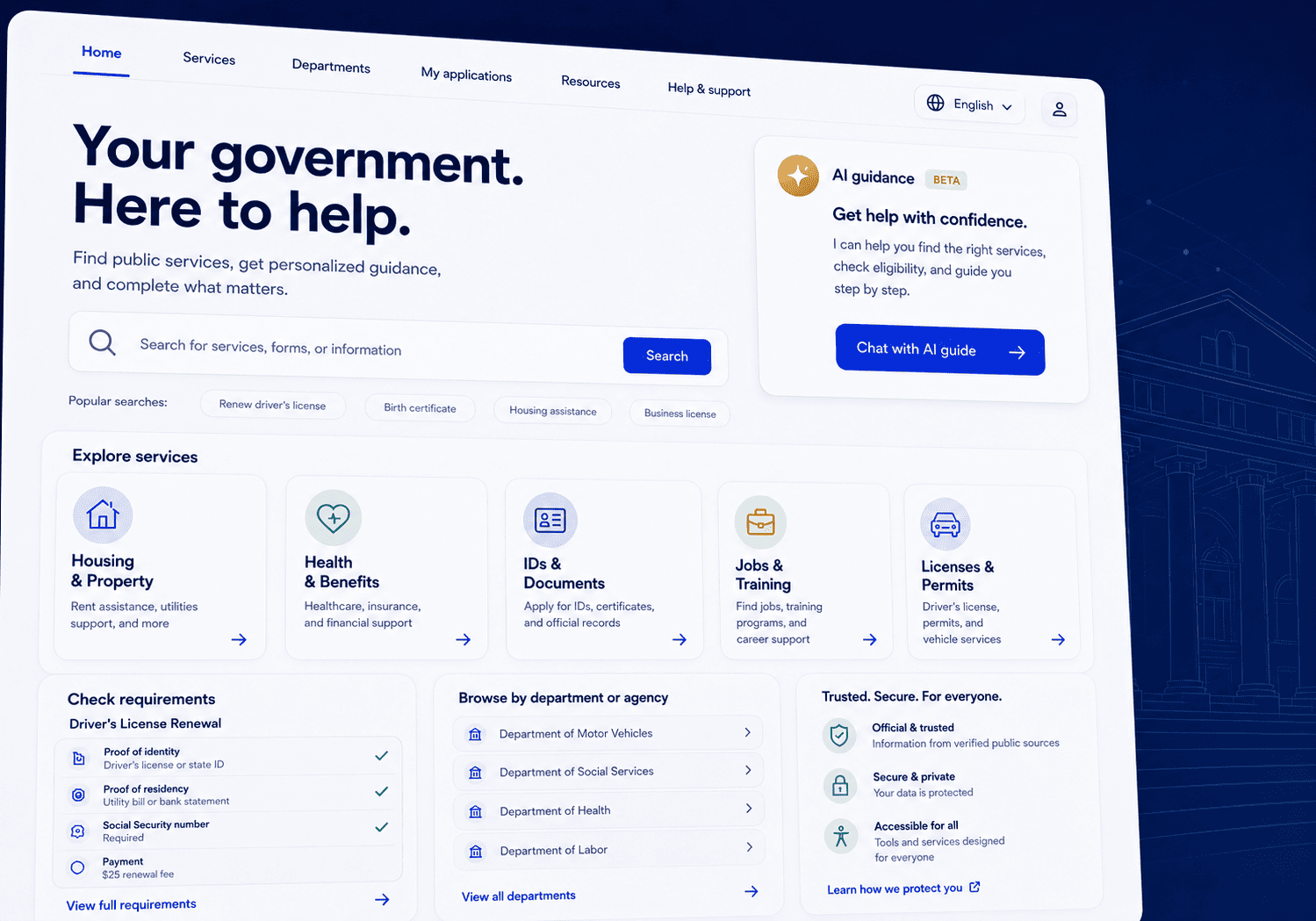
AI-Powered Citizen Services Website Platform for Virginia State Agencies

Plavno developed a modern eGovernment website platform for Virginia state agencies that centralizes citizen services, public information, department content, and an AI-powered guidance agent in one scalable system.

Read More
70%

reduction in routine citizen inquiries to agency staff

AI-Powered Citizen Services Website Platform for Virginia State Agencies

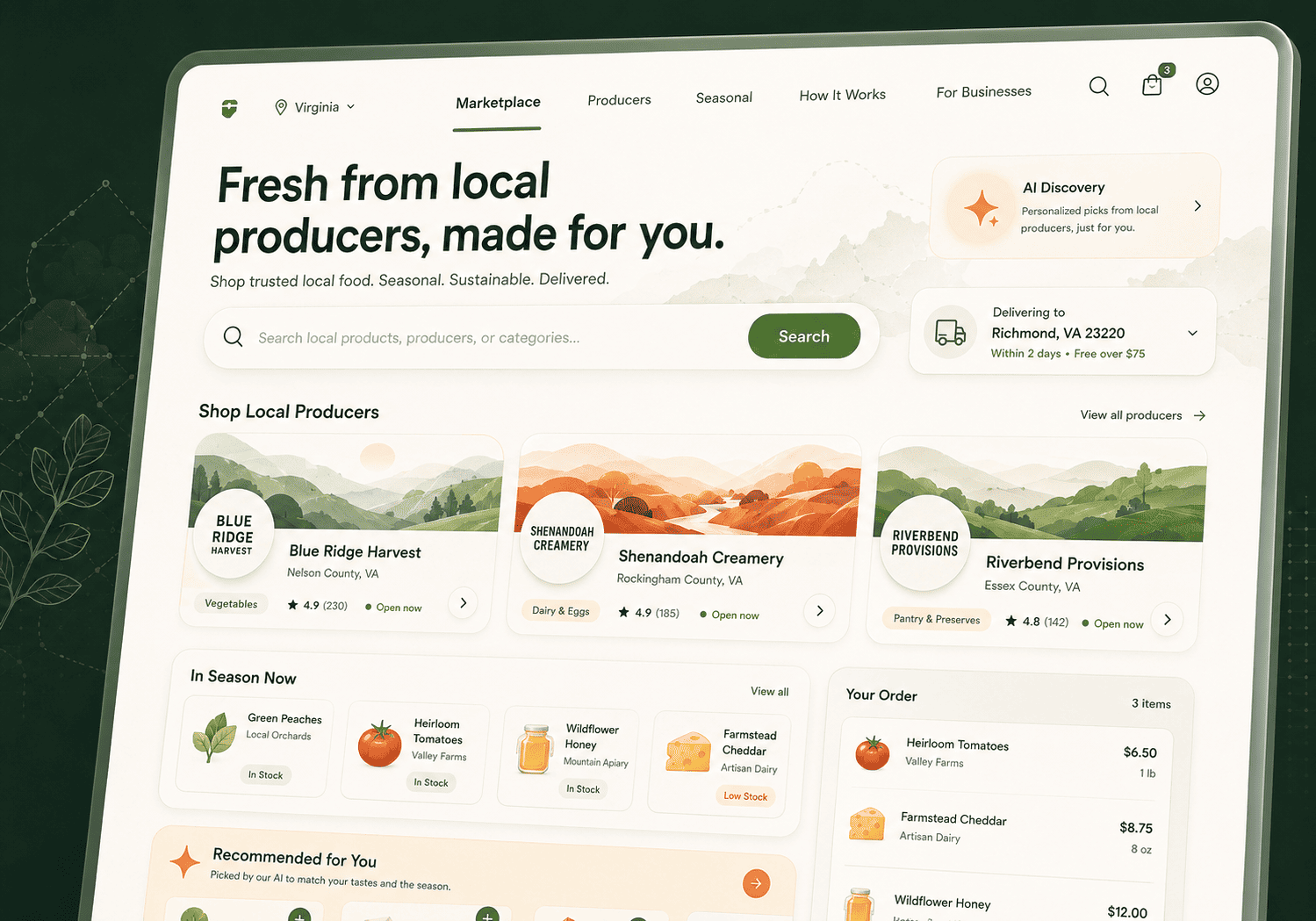
Digital Marketplace for Virginia Farmers, Local Producers & Direct-to-Consumer Food Sales

Plavno developed a custom multi-vendor marketplace for Virginia-based farmers, food producers, and regional sellers to unify product listings, vendor operations, customer ordering, and local fulfillment workflows.

Read More
3x

increase in product discovery relevance

Digital Marketplace for Virginia Farmers, Local Producers & Direct-to-Consumer Food Sales

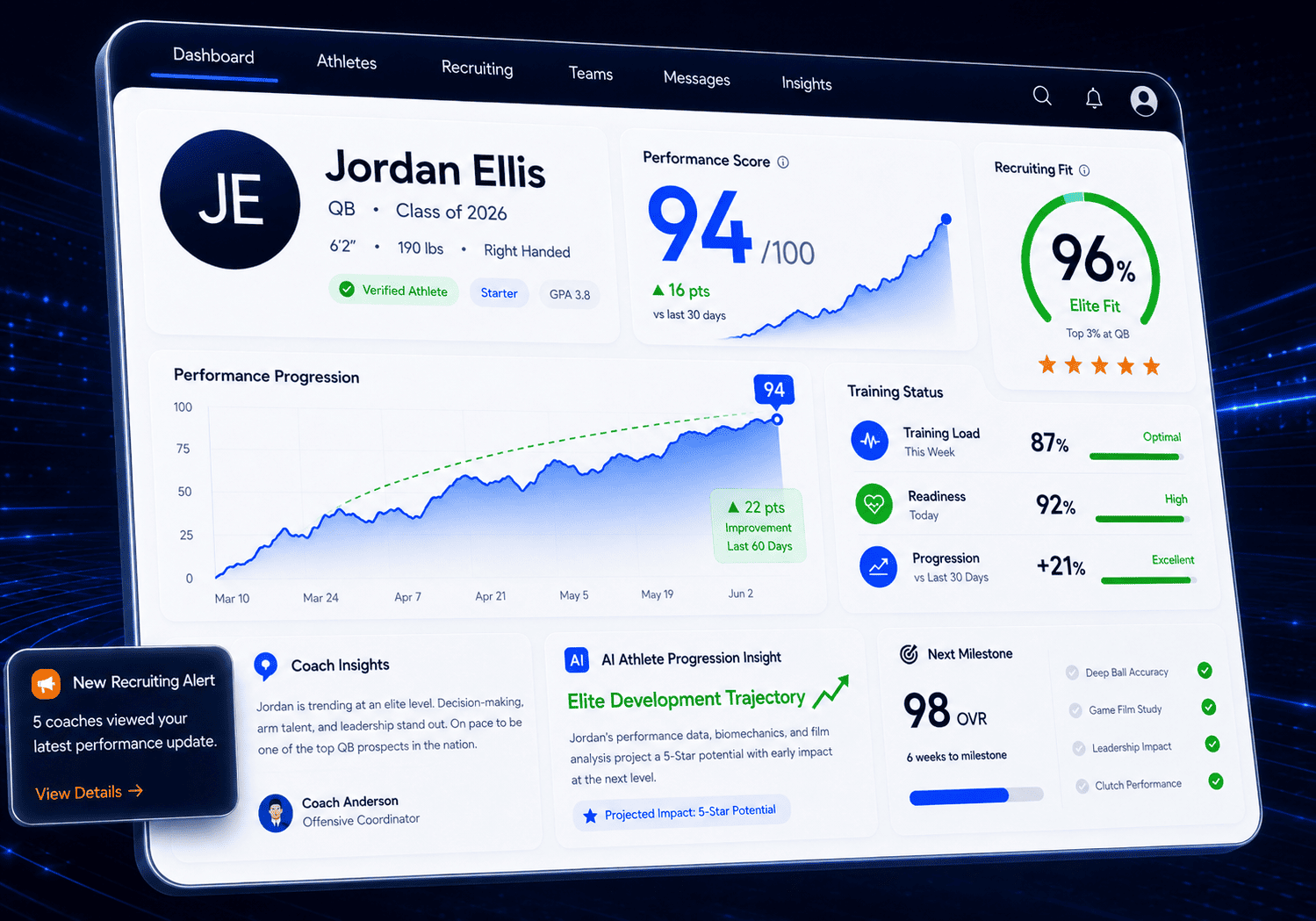
AI-Powered Sports Performance & Recruiting Platform for Virginia Clubs, Academies & Youth Programs

Plavno developed a custom sports technology platform for Virginia-based clubs and academies to combine athlete performance tracking, coach communication, recruiting workflows, and mobile engagement in one ecosystem.

Read More
3x

faster recruiting pipeline

AI-Powered Sports Performance & Recruiting Platform for Virginia Clubs, Academies & Youth Programs

Testimonials

We are trusted by our customers

“They really understand what we need. They’re very professional.”

The 3D configurator has received positive feedback from customers. Moreover, it has generated 30% more business and increased leads significantly, giving the client confidence for the future. Overall, Plavno has led the project seamlessly. Customers can expect a responsible, well-organized partner.

Sergio Artimenia

Commercial Director, RNDpoint

Sergio Artimenia

“We appreciated the impactful contributions of Plavno.”

Plavno's efforts in addressing challenges and implementing effective solutions have played a crucial role in the success of T-Rize. The outcomes achieved have exceeded expectations, revolutionizing the investment sector and ensuring universal access to financial opportunities

Thien Duy Tran

Product Manager, T-Rize Group

Thien Duy Tran

“We are very satisfied with their excellent work”

Through the partnership with Plavno, we built a system used by more than 40 million connected channels. Throughout the engagement, the team was communicative and quick in responding to our concerns. Overall, we were highly satisfied with the results of collaboration.

Michael Bychenok

CEO, MediaCube

Michael Bychenok

“They have a clear understanding of what the end user needs.”

Plavno's codes and designs are user-friendly, and they complete all deliverables within the deadline. They are easy to work with and easily adapt to existing workflows, and the client values their professionalism and expertise. Overall, the team has delivered everything that was promised.

Helen Lonskaya

Head of Growth, Codabrasoft LLC

Helen Lonskaya

“The app was delivered on time without any serious issues.”

The MVP app developed by Plavno is excellent and has all the functionality required. Plavno has delivered on time and ensured a successful execution via regular updates and fast problem-solving. The client is so satisfied with Plavno's work that they'll work with them on developing the full app.

Mitya Smusin

Founder, 24hour.dev

Mitya Smusin

Engineering contrast

Why Richmond teams pick deep build over templates

Template agencies ship demos. We ship governed write paths that survive real CRM policy and local compliance pressure.

Generic Agencies
Our Platform (Deep Engineering Expertise)
Policy-gated CRM field writes
checkmark
Idempotent workers under spiky load
checkmark
Sandbox contract tests before prod writes
checkmark
Slide deck discovery only
checkmark
Token spend metered per opportunity
checkmark
Shared multi-tenant prompt leftovers
checkmark
Post-launch drift and cost runbooks
checkmark

Architecture & Engineering Overview

What changes after Richmond leaders greenlight build

Measurable Hours Returned

Measurable Hours Returned

Baseline minutes per update, stage corrections & same-day quote misses — remeasure after launch

Policy + Owner + Journal

Policy + Owner + Journal

Every automated action carries an owner, policy check and reversible journal entry

Spend Tied to Deals

Spend Tied to Deals

Meter model cost to progressed opportunities; freeze switches and prompt narrowing cut waste

Narrow Path First

Narrow Path First

Champions co-own acceptance tests; one pipeline win funds expansion without scope sprawl

For Business: Technical ROI & Risk Mitigation

Boards care about cycle time, forecast trust, and fixed ops cost. AI CRM Automation earns budget when it returns measurable hours and fewer leakage events inside a quarter. Manual updates inflate headcount needs just as Virginia hiring tightens. Automating the repetitive write path reallocates people to negotiation and retention work that actually moves revenue. Risk drops when every automated action carries an owner, a policy check, and a reversible journal entry.

We avoid vanity dashboards. Baseline capture comes first. Count minutes per opportunity update. Count stage corrections after forecast meetings. Count quotes that miss the same-day promise. After launch we remeasure the same definitions. Leadership in Richmond can hold the program to those numbers rather than vague satisfaction scores. That discipline also prevents scope sprawl into low-value chat toys.

Technical choices cut business risk. Structured outputs stop free text from poisoning picklists. Human approval on discounts protects margin. Freeze switches give ops a break glass when a model degrades. Insurance and public-sector adjacent clients often require that kill switch language in vendor reviews. We document it before procurement asks.

Cost control is part of ROI, not a finance afterthought. Metering ties model spend to closed or progressed deals. If a flow burns tokens without stage movement, we retrain prompts or narrow triggers. Freight quoting work showed that isolating rate assembly from CRM writes kept expensive model calls off the hot path where tables already answered the question.

Change management is priced into delivery. Champions in sales ops and admins co-own acceptance tests. Early wins on one pipeline segment fund expansion. Teams that skip that path buy prototypes they never trust. Trust is the binding constraint in CRM automation more than model brand names.

1

Sandbox Write Surface

Lock object schemas, custom fields & credentials; risk register covers latency, tokens and rollback

2

Propose-and-Confirm Autonomy

Default human release for external content; enrichment auto-runs only when it never emails prospects

3

Governance in Code

Contract tests, trace IDs to CRM journal, tenant isolation and dual-run shadow of fragile Zaps

4

Measurable Exit Gates

Raise write ratios only when accuracy, latency and cost sit inside band for fixed sample size

For CTOs: Architecture & Technical Lifecycle

Lifecycle starts with a constrained write surface, not a platform rewrite. We treat the CRM as a system of record and the agent layer as a supervised effector. Kickoff locks object schemas, custom fields, and integration credentials in a sandbox first. Risk register covers data quality, latency budgets, token ceilings, and rollback. Decision gates sit after discovery, after pilot metrics, and after production canary success.

Trade-offs appear early. Full autonomy looks attractive until legal reviews customer-facing messages. We default to propose-and-confirm for external content. Background enrichment can run with less friction when it never emails a prospect. CTOs pick the autonomy dial per object type. Tickets may auto-assign. Discount fields may never self-write.

Governance lives in code and policy. Contract tests fail the pipeline when a CRM field type changes under our schemas. Observability attaches trace IDs from inbound event to CRM journal. On-call runbooks define pages for elevated error rates and silent dropouts. Virginia firms with multi-team CRM instances need tenant isolation so one business unit experiment cannot poison another.

Migration away from fragile Zap stacks happens gradually. We shadow existing automations, compare outcomes, then cut traffic. Dual-run periods protect revenue operations during spike seasons. Roadmaps sequence integration debt overtly. CTOs see a backlog of connectors, not a black box QR code to magic.

Exit criteria stay measurable. Demo theater ends. Pilots exit when accuracy, latency, and cost sit inside the agreed band for a fixed sample size. Only then do we raise write ratios. This lifecycle keeps technical risk proportional to business value at every week of the build.

Typed Agent Tools

Typed Agent Tools

Every tool is a typed function with deterministic side effects and logged inputs; domain rules live in code

CRM Adapters & Queues

CRM Adapters & Queues

Vendor API wrappers with retries, backoff, circuit breakers; queue workers absorb rate-limit storms

Schema Registries & Features

Schema Registries & Features

Stop silent field drift; cache firmographics; version ranking features so personalization experiments roll back

Defensive Fixtures & Golden Tests

Defensive Fixtures & Golden Tests

Soft-deletes, merges, partial phones covered before write mode; sandbox-only pilots with cost estimates on PRs

For Engineers: Implementation Details & Stack

Engineers inherit explicit interfaces. Every agent tool is a typed function with deterministic side effects and logged inputs. CRM adapters wrap vendor APIs with retries, backoff, and circuit breakers. We keep domain logic out of prompt text whenever rules can live in code. Prompts handle language and ranking judgments. Code handles validation, idle timeouts, and policy matrices.

Stack choices follow failure modes we already hit in production. Queue-backed workers absorb retry storms when CRM rate limits trip. Schema registries stop silent field drift. Feature stores or simple feature tables cache firmographics so models do not re-extract the same PDF daily. For personalization patterns similar to the house-hunting search work, ranking features stay versioned so experiments roll back cleanly.

Edge cases dominate time. Soft deleted contacts. Merged accounts. Partial phone numbers. Recurring opportunities that look new. We write defensive fixtures from real anonymized samples before enabling write mode. Golden transcript tests cover multi-turn quote chats so prompt edits cannot quietly break price grounding. Developers own those fixtures like unit tests.

Optimization is boring on purpose. Cache retrieval chunks. Batch enrichment overnight when freshness allows. Prefer smaller models for classification gates and reserve larger models for drafting. Streaming is optional for internal UIs. Customer emails prefer complete drafts with review.

Local development mirrors production controls. Sandbox CRM orgs, seed data sets, and policy toggles ship with the repo. No engineer pilots against live customer records. That rule alone prevents most headline incidents. Pull requests must include cost estimates for new tool calls so spend does not sneak in as an innocent helper function.

Customer-First Monitors

Customer-First Monitors

Write failures, approval backlog, p95 latency & anomalous spend with runbook-linked alerts

Compliance & Journals

Compliance & Journals

PHI minimization, SOC 2 evidence, immutable mutation logs, SSO least-privilege roles

Canary Deploys

Canary Deploys

Slice of events first; shadow vs human baselines; flag-flip rollback; IaC staging/prod parity

Injection & Cost Guards

Injection & Cost Guards

Prompt probes on inlets, daily spend caps, circuit openers, drift watches on empty outputs

Infrastructure, Observability & Security

US client deploys prefer regional isolation and clear data residency notes. We instrument what could hurt customers or controllers first, then add vanity metrics. Monitors cover write failure rates, approval queue backlog, p95 tool latency, and anomalous spend per workspace. Alerts route to ops channels with runbook links. Incident response defines severity by customer-facing blast radius, not by model NSS alone.

Compliance mapping depends on industry. Healthcare adjacent flows need PHI minimization and strict access logs. Contractor work often needs SOC 2 aligned change tickets and evidence packs. We enable immutable journals for automated CRM mutations. Access uses SSO with least privilege service roles. Secrets rotate without redeploying agents by side-loading vault references.

Deployment is progressive. Canaries take a slice of eligible events. Health checks compare shadow outcomes to human baselines where labels exist. Rollback is a flag flip, not a midnight rebuild. Infrastructure as code keeps staging and prod parity so Richmond IT reviewers can audit dual environments quickly.

Cost observability sits beside reliability. Budgets cap daily model spend. Circuit openers stop a stuck loop from burning cash. Weekly cost reviews feed product owners who might otherwise equate more tokens with more value. Drift detection watches prompt and tool version diffs against rising empty or low-confidence outputs.

Security testing includes prompt injection probes on every external text inlet. Mail and form content is untrusted. We strip active content, bound context windows, and refuse tools that facilitate data exfiltration. Post-launch maintenance retains patch windows for connector libraries and model deprecations so stacks do not quietly rot after the initial glory launch.

Data paths & connectors

Integration debt decides whether Richmond automation sticks

Second build focus is the data plane. Core agents fail when CRM objects disagree with ERP, billing, and support tools. Richmond mid-market stacks often mix a primary CRM with niche industry systems and spreadsheet holdouts. We map sources, owners, and freshness SLAs before elevating write rights. That map becomes the product backlog for connectors, not a sticker on a pitch slide.

Integration patterns stay deliberate. Outbound enrichment should never overwrite gold fields without consent rules. Inbound ticket closes should reconcile open tasks. Partner portals may lag internal stages by days. We design conflict policies openly with sales ops. Last-write wins is rarely safe. Event time plus source priority usually wins. Dead letter queues capture poison messages for human triage instead of silent drop.

Lessons from prior delivery guide the orders of work. Freight quoting and tracking automation only worked after rate and logistics steps orchestrated with clear system boundaries. Property search personalization only felt useful when inventory freshness and preference signals stayed coherent for the user. CRM automation in Richmond follows that truth. Agents need trustworthy facts more than clever phrasing.

Latency and cost risk rise with chatty architectures. We cache stable product facts. We batch low-priority enrichments overnight. We keep interactive paths lean for sellers on calls. Technical debt shows as brittle field mappings and hidden Zap spaghetti. Replace those with versioned adapters and contract tests. Document every custom object the agent may touch. Admins need a kill list when a field retires.

Security on the wire matters as much as model policy. mTLS or signed webhooks protect inbound events. Scope tokens to the minimum CRM objects. Log access, not payloads, when PII is present. Virginia teams selling into regulated buyers will ask how data leaves their tenant. We keep training off customer content unless a contract explicitly allows isolated fine tunes. Integration excellence here is how custom AI CRM Automation survives the second year, not just the demo week.

Eugene Katovich

Eugene Katovich

Sales Manager

Need a custom software solution? We’re ready to help!

Plavno has a team of skilled developers ready to tackle the project. Ask me!

Get a Free Quote

Autonomy maturity path

Move Richmond teams from manual CRM to supervised autonomy

This sequence grows trust and authority over time. It is not a generic kickoff checklist. Each stage expands what the agent may write.

Clipboard
Team
01

Stage 1: Manual baseline capture (2 weeks)

Instrument the current path without changing rep behavior. Log time spent updating stages, notes, and quotes. Interview ops in Glen Allen and Downtown pods. Export sample records for quality scoring. Deliver a baseline scorecard and risk register. Leadership sees why automation targets one flow first. No autonomous writes yet. Timeline typically spans two weeks with light shadow logging only.

02

Stage 2: Assisted drafting only (2–4 weeks)

Agents draft notes, tasks, and quote language. Humans paste or approve every change. Measure edit distance between draft and final. Tighten retrieval sources that cause heavy rewrites. Sellers feel speed without surrendering control. Deliver assisted UI and weekly quality reports. Spans two to four weeks depending on content pack readiness and CRM sandbox access.

Search in doc
Rocket
03

Stage 3: Supervised field writes (3–5 weeks)

Enable writes on low-risk fields with mandatory approvals for money and legal sensitive values. Canary a single team. Compare forecast hygiene before and after. Expand when error budgets hold. Deliver policy engine configs and on-call runbook. Timeline lands between three and five weeks as contract tests and admin training complete.

04

Stage 4: Conditional autonomy (4–6 weeks)

Raise autonomy where confidence and history support it. Keep freeze switches hot. Add cost monitors and drift alerts as standing ops. Train backup owners so one admin departure cannot strand the system. Deliver autonomy matrix by object type and quarterly review ritual. Four to six weeks covers roll wide across remaining Richmond pods once the pilot cohort stays green.

Buying questions

AI CRM Automation FAQs for Richmond operators

Straight answers on cost, time, data, quality, security, and life after launch for Virginia teams.

What drives the cost of AI CRM Automation for a Richmond company?

Cost follows scope of objects, write risk, and integration depth more than brand of model. A Richmond firm automating note capture on one pipeline spends far less than a full multi-object enterprise with ERP and CPQ links. Local market rates for senior engineers and CRM admins shape discovery length. Virginia public-sector adjacent compliance work can extend security reviews and evidence packaging. You should budget for sandbox licenses, data cleanup hours, and post-launch monitoring, not only build sprints.

Primary cost drivers include number of CRM objects touched, external systems to reconcile, and the autonomy level you approve. High-risk fields with money impact need more policy tests and human queues. Messy historical data forces cleanup before any agent trusts those records. Keyword search over ancient PDFs without structure inflates retrieval spend. We price those realities up front rather than hiding them in hourly burn.

Regional factors matter. Many Richmond buyers already hold Salesforce, HubSpot, or Dynamics seats. If APIs are limited on lower tiers, connector work grows. Teams split across Short Pump and Chesterfield sites often need role variations and duplicate detection across datasets. That adds matching logic. Token spend becomes a recurring opex line. We meter it so finance can forecast.

A transparent estimate needs budget range, timeline pressure, current stack, and a plain description of the dataset or project scope. Share sample export volume and the peak daily event count. That single packet lets us returnsopher a squarede plan instead of rainbow ranges. Fixed discovery workshops protect both sides when unknowns sit in legacy custom objects.

How long does it take to build AI CRM Automation software?

Timelines split between a supervised MVP and a wider production rollout. A focused MVP that drafts notes and proposes low-risk field updates can land in several weeks when sandbox access and sample data arrive on day one. Full deployment across multiple objects, partner systems, and conditional autonomy often stretches across multiple months. Rushing write rights before quality baselines exist usually costs more later through rework and lost user trust.

MVP phases lock one high-volume path. Example targets include meeting notes to opportunity fields, inactive deal nags, or quote packet drafts. Acceptance tests use live-like samples from Richmond operations. Timeline risks cascade from delayed credentials, frozen admin capacity, and surprise required fields that have no owner. We schedule admin pair sessions early to surface those traps.

Full deployment adds connectors, canary plans, and training. Supervised writes expand after the pilot cohort holds accuracy and latency budgets. Conditional autonomy waits for stable cost curves and low escalation rates. Enterprise AI CRM Automation for larger Virginia groups may phase by business unit so a manufacturing desk does not share failure modes with a services desk.

Expect parallel workstreams. Data cleaning runs beside agent design. Security review runs beside UI approval queues. Change management starts before engineers flip production flags. When leadership asks for a date, we answer with exit criteria tied to metrics, not calendar wishful thinking. That keeps go-live honest even when a holiday freeze hits the metro.

Do you work with startups in Virginia?

Yes. We work with US-based clients, including companies operating in Virginia, from early B2B startups to established mid-market operators. Richmond founders near VCU ecosystems, Scott's Addition product teams, and Northern Virginia founders who keep delivery pods in the capital region all show up in our mix. Startups usually need a thinner slice. Automate the painful manual CRM motions that burn founder and early AE time before hiring a full ops bench.

Startup constraints differ from enterprise ones. Budgets are sharper. Stacks change faster. We keep architecture modular so a CRM swap later does not force a full rewrite. MVP autonomy starts low. Drafting and task creation often return enough hours to justify the build without gambling brand trust on freestyle customer emails. We still wire freeze switches because a bad weekend loop can torch limited token budgets.

Local ecosystems matter for hiring and partners. Richmond startups often sell into logistics, health-adjacent services, and professional tools for the greater Mid-Atlantic. Their CRMs collect messy outbound motion data. Automation must respect that roughness. We help define clean required fields before any model writes, even if it means a short process redesign with the founding team.

Evaluation for a young company should focus on cycle time saved, not vanity AI branding. Bring budget, timeline, stack, and a brief on the dataset you can share. If you operate only five seats today but plan thirty next year, say so. We size queues and permissions for that curve. Startups that document their playbook early get cleaner agents and fewer rewrites when they raise and scale the team.

Can AI CRM Automation integrate with my existing system?

Integration is the default plan, not an optional add-on. We connect to common CRM platforms through official APIs and events. Legacy systems without modern APIs get secure middleware or staged exports with clear freshness labels. The goal is supervised automation beside your current source of truth. Replacing a stable CRM just to adopt agents creates needless program risk for Richmond operators who already trained staff on existing screens.

API quality varies. Some stacks offer rich webhooks and bulk jobs. Others throttle hard or hide critical fields behind clunky UIs. We probe those limits in a sandbox during discovery. Where rate limits bind, we design queues and backoff. Where custom objects dominate, we generate typed adapters so engineers do not hand-write fragile mappings every sprint. Idempotent write keys prevent double creates when network timeouts occur.

Legacy on-prem tools still appear in Virginia manufacturers and contractors. File drops, SFTP, and database views can feed enrichment without opening reckless writeback. We document which direction data may flow. One-way safe enrichment is often enough for phase one. Bidirectional sync arrives after conflict rules exist. House-hunting style search services and freight quoting services taught the same connector ethic. Clear boundaries beat quantum entanglement between systems.

Security reviews inspect OAuth scopes, IP allow lists, and secret storage. Prod credentials never sit in chat logs. Contract tests fail builds when the remote schema drifts. If your stack includes marketing automation, CPQ, or warehouse software, list it early. That inventory drives the true timeline more than the model vendors in the brochure.

What industries in Richmond benefit most from AI CRM Automation?

Three patterns lead locally. Logistics and freight operators face quote speed pressure and tracking updates that swamp small desks. Professional services firms across law, consulting, and accounting need cleaner matter and opportunity hygiene as partners juggle referrals. Healthcare administration and specialty referral networks need intake follow-through without expanding clerical headcount. Manufacturing distributors, government contractors, and talent mobility or real estate services also show strong returns when CRM busywork blocks growth.

Logistics benefits when quote automation and workflow orchestration cut reply times while preserving margin rules. Our freight quoting and tracking work is the blueprint for that motion. Services firms benefit when notes and next steps stop living only in partner inboxes. Healthcare-adjacent teams benefit when referrals do not expire in silent queues. Each industry still needs its own policy matrix. Discounts, PHI, and proposal content never share the same freedom dial.

Richmond's economy also includes finance operations support and public-sector suppliers. Those buyers care about audit trails as much as speed. Agents that journal every automated write help them pass reviews. Construction and trade suppliers around the tri-cities corridor often sit on hybrid paper and CRM processes. Partial automation on order status can free desks without a full digital transformation slogan.

Choose the first industry motion by volume and pain, not fashion. If your team burns afternoons rebuilding the same quote packets, start there. If forecast meetings always rewrite stages from memory, start with hygiene sentinels. We map industry templates but validate against your fields. Local industry labels help sales conversations. Your object model decides the engineering plan.

Contact Us

This is what will happen, after you submit form

Need a custom consultation? Ask me!

Plavno has a team of experts ready to start your project. Ask us!

Vitaly Kovalev

Vitaly Kovalev

Sales Manager

Schedule a call

Get in touch

Fill in your details below or find us using these contacts. Let us know how we can help.

No more than 3 files may be attached up to 3MB each.
Formats: doc, docx, pdf, ppt, pptx, xls, xlsx, txt.
Send request