bg image
bg image

Serving Charlottesville & Virginia

Stop losing pipeline to manual CRM work in Charlottesville 2026

Sales and ops teams in Charlottesville still burn hours on routing, follow-ups, and stale records. That lag shows up as missed renewals and slow quotes. AI CRM Automation puts scoring, handoffs, and next-best-action on autopilot so managers see clean data every morning. It is built for growth-stage firms, professional services, and regional operators who outgrew spreadsheets. Get AI CRM Automation cost estimate in 24 hours. Tell us budget, timeline, stack, and dataset scope and we return a fixed plan.

Discuss Project

Overview

Why Charlottesville pipelines stall without AI CRM in 2026

Charlottesville firms face a clear operations gap. UVA-adjacent health ventures, biotech spinouts, and service firms grow headcount faster than their CRM discipline. Reps still retype notes. Managers still guess peak weeks. Simply buying another seat does not fix poor routing or missing activity history. AI CRM Automation closes that gap by reading signals, writing structured fields, and triggering the next step without waiting on a human queue.

Trusted AI CRM Automation Partner for Charlottesville Businesses. We work with US-based clients, including companies operating in Virginia. Teams in Crozet, Earlysville, Waynesboro, and the Rivanna corridor ask for the same outcome. Fewer dropped handoffs. Faster first response. Clearer forecasts. We have delivered 10+ AI CRM Automation and adjacent agent projects in the US market, including logistics quoting agents and search platforms that taught us how to keep models grounded in live operational data.

Our approach starts with the real system of record, not a demo sandbox. We map lead sources, stages, and ownership rules, then wire models to those objects with audit-friendly writes. When a freight client needed quote speed, we used agent orchestration for price assembly and tracking updates rather than another dashboard. That same pattern applies when a Charlottesville B2B team needs meeting prep packs or churn alerts that actually fire. You get CRM development that sits on top of tools you already pay for.

Outcomes stay measurable. Cycle time on qualified outbound falls because drafts start warm. Pipeline hygiene rises because activity is written back automatically. Cost control stays in view because every agent run is logged with token, latency, and result codes. Integration risk is handled early through staged dual-write and rollback paths so sales never lose a week of notes. Post-launch we keep drift checks on prompts, field mappings, and pricing tables so the system does not quietly go stale in Q3.

Talk to an Expert
Lead scoring

Lead scoring sales trusts

Closed-won classifiers · JSON reasons · policy rules override

Routing agents

Routing & ownership

Round-robin · account-fit rules · idempotent queue locks

Meeting prep

Meeting prep packets

Emails · tickets · signals in one brief under two minutes

Pipeline hygiene

Hygiene & renewals

Stale deal scans · contract watchers · auto task drafts

Architecture first

Event-driven CRM agents built for production load

Charlottesville operators need CRM agents that survive real volume on Monday mornings, not slideware bots. We build an event layer over your CRM and mail stack. New leads, stage changes, and support tickets publish to a queue. Workers score intent, enrich firmographics, and decide handoff. The write path uses idempotent upserts so retries never duplicate contacts. Security/compliance starts with least-privilege service accounts, field-level redaction on free text, and encrypted secrets in a vault your team controls.

Core runtime favors a typed orchestration service written in a modern backend language your engineers can read. Models sit behind a thin tools layer so business rules live in code and config rather than prompt folklore. For ranking and classification we use hosted LLM calls with structured JSON outputs, plus deterministic validators that reject bad field shapes before CRM write. Vector stores hold account history snippets only when retrieval proves value. Otherwise we keep pricing rules and SLA tables as plain configuration your ops lead can edit.

We ground designs in what we already shipped. Freight quoting and tracking work forced hard lessons on latency budgets and multi-step tool use. An agent that builds a quote must pull rates, apply margin rules, and return a human-readable packet under a few seconds. We reuse that orchestration style for CRM: qualify, draft, book, log. House-search work taught us preference filters and UX copy that matches how buyers talk. That transfer shows up when we design lead cards and next-step texts that reps actually open.

DevOps is not an afterthought. Every agent run emits traces with prompt version, model id, tool timings, and CRM object ids. Feature flags roll agents by team or geography so Crozet pilots do not break downtown users. Blue-green deploy keeps draft generators online during package updates. Cost gauges sit next to conversion gauges. If token spend climbs without lead quality gains, early alerts fire before finance does. Staging mirrors production objects with scrubbed data so UAT feels honest.

Clients leave with live connectors, not binders. We deliver connector configuration for major CRM platforms, webhook receivers, and retries that respect rate limits. Role-based policies match how Virginia professional-services firms often separate hunters from closer teams. Data retention hooks expire embeddings when deals close lose-and-archive. The result is AI CRM Automation that your operations manager can explain in a Monday meeting without a translator.

plavno logo

Build your first
Smart AI project today!

Just tell the Plavno AI Agent about your project - it will ask questions, gather requirements, and propose a tailored solution

What you receive

Five AI CRM capabilities Charlottesville teams ship first

Lead scoring that sales trusts

Lead scoring that sales trusts

Inbound volume spikes leave Charlottesville reps guessing who to call first. Manual score fields drift after one quarter of campaign changes. We train classifiers on closed-won features your CRM already holds and keep human overrides. Outcomes include ranked queues each morning and clearer marketing ROI. Models emit reasons in plain fields so a manager can audit a decision. We chose structured JSON model outputs because free prose breaks filters. Rules run after the model so policy always wins on regulated accounts.

Routing and ownership agents

Routing and ownership agents

Territory maps stall when names and regions lag reality across Virginia sites. Deals bounce between bags and SLA clocks miss. Ownership agents watch new records and apply round-robin or account-fit rules with full history writes. Managers get fewer escalations about orphan leads. We use queue workers because they absorb spike traffic without blocking the CRM UI. Idempotent locks stop two agents from claiming one account. Audit rows show why a rule fired so disputes end faster.

Meeting prep packets

Meeting prep packets

Reps lose twenty minutes digging notes before every Charlottesville client call. That friction hits professional services hardest. Prep agents pull last emails, open tickets, and buying signals into a single brief. Call quality rises because context is current. We store briefs on the activity timeline for coaches to review. Retrieval is limited to approved objects so private HR mail never leaks. Draft length caps keep reading under two minutes for field staff.

Follow-up and renewals automation

Follow-up and renewals automation

Renewal windows often slip at mid-market firms near the university corridor. Manual reminders live in personal calendars nobody else sees. Agents watch contract dates and usage signals then open tasks and draft outreach. Retention mixes improve when outreach is early and specific. We bind templates to stage objects so legal-reviewed language stays intact. Calendar and mail APIs were selected because reps already live there. Failures retry with backoff and page an owner after threshold.

Pipeline hygiene bots

Pipeline hygiene bots

Forecast meetings fail when stages lie and next steps stay blank. Charlottesville leaders waste hours cleaning boards on Friday. Hygiene bots scan stale deals, empty fields, and impossible close dates. Managers get a repair queue before the review. Validation rules run in workers so the CRM remains snappy for reps. We write suggestions as optional tasks first to avoid forced churn. Metrics track fixed fields week over week so the pilot proves value fast.

AI CRM Automation Solutions for Charlottesville Industries

Regional use cases that map to 2026 Virginia growth

These six patterns match how Charlottesville and nearby metros actually sell and retain accounts today. Each pairs a local constraint with an automation path you can pilot in weeks.

Healthcare Outreach

Healthcare Outreach

Life Sciences

Healthcare and life-sciences outreach

Clinic networks and research groups around UVA juggle referral partners with strict privacy needs. Manual CRM notes miss consent tags and referral source facts. Our agents score inbound by specialty fit and write only allowed fields to the record. Sales cycles compress when the right liaison is alerted first. ROI often shows as hours returned each week on intake alone, with one mid-market pilot reclaiming roughly a day of coordinator time once routing stabilized. Technically we keep PHI out of prompts, use field masks, and log every write with actor and purpose codes for later review.

Professional Services

Professional Services

Pipeline

Professional services pipeline for firms

Law, accounting, and consulting shops in downtown Charlottesville still track opportunities in inboxes. That hides utilization risk until month end. We wire proposal stages, partner ownership, and engagement type into scoring and task agents. Partners see which pursuits need content or intro help before deadlines bite. One pattern reduces draft time on first proposals by automating research packs; savings show as billable hours protected rather than vanity AI metrics. Stack choice pairs CRM custom objects with a document API so lockstep versioning survives partner edits.

Logistics Quoting

Logistics Quoting

Distribution

Logistics and distribution quoting support

Shippers and 3PLs serving I-64 corridors need quote velocity and shipper status without extra clerks. Manual rate pulls create lag and errors at peak. We mirror the freight quoting agent work we already delivered: assemble rate inputs, apply margin rules, publish quotes, then track milestones back to CRM. Teams see shorter quote turnaround and fewer status chase emails. Business result is more bids answered per dispatcher shift without new headcount. Technical path uses multi-tool agents with hard guards so a bad rate source cannot publish unchecked numbers.

Hospitality Sales

Hospitality Sales

Tourism

Hospitality and tourism membership sales

Inns, venues, and destination groups near the Blue Ridge seasonality swing hard. Lead lists go cold between shoulder seasons. CRM agents warm seasonal contacts with timed campaigns and capacity-aware offers. Front desks stop missing reunion and conference inquiries burned in general inboxes. ROI lands as recovered bookings that would have expired unattended, tracked against prior season baselines. Implementation pairs CRM campaigns with calendar capacity checks so oversell risk stays low during festival weeks.

Edtech SaaS

Edtech SaaS

University

Edtech and university-adjacent SaaS

Startups selling into higher ed face long cycles and committee buying. CRM fields often skip the real champion path. We build buying-group maps and next-stakeholder prompts so AE notes stay structured. Forecast accuracy rises when multi-thread coverage is scored, not guessed. Founders cut reverse-demo prep time by auto-pulling past webinar and support signals into one brief. Agents use-campus term calendars as input so outreach avoids exam blackouts that kill reply rates.

Real Estate

Real Estate

Relocation

Real estate and expats relocation services

Relocation firms and agents serving new faculty and executives need preference-aware matching. Spreadsheets lose filters that mattered to the same family last week. Drawing from our house-hunting platform work, we connect property and preference signals into CRM tasks and shortlist briefs. Coordinators ship better matches faster and clients feel heard on day one. Result is fewer drop-offs after first tour batches, measured against prior process cycle times. Technical design keeps search filters declarative and human-editable so market inventory shifts do not require engineer tickets.

Case Study

We help customers cut
down on development

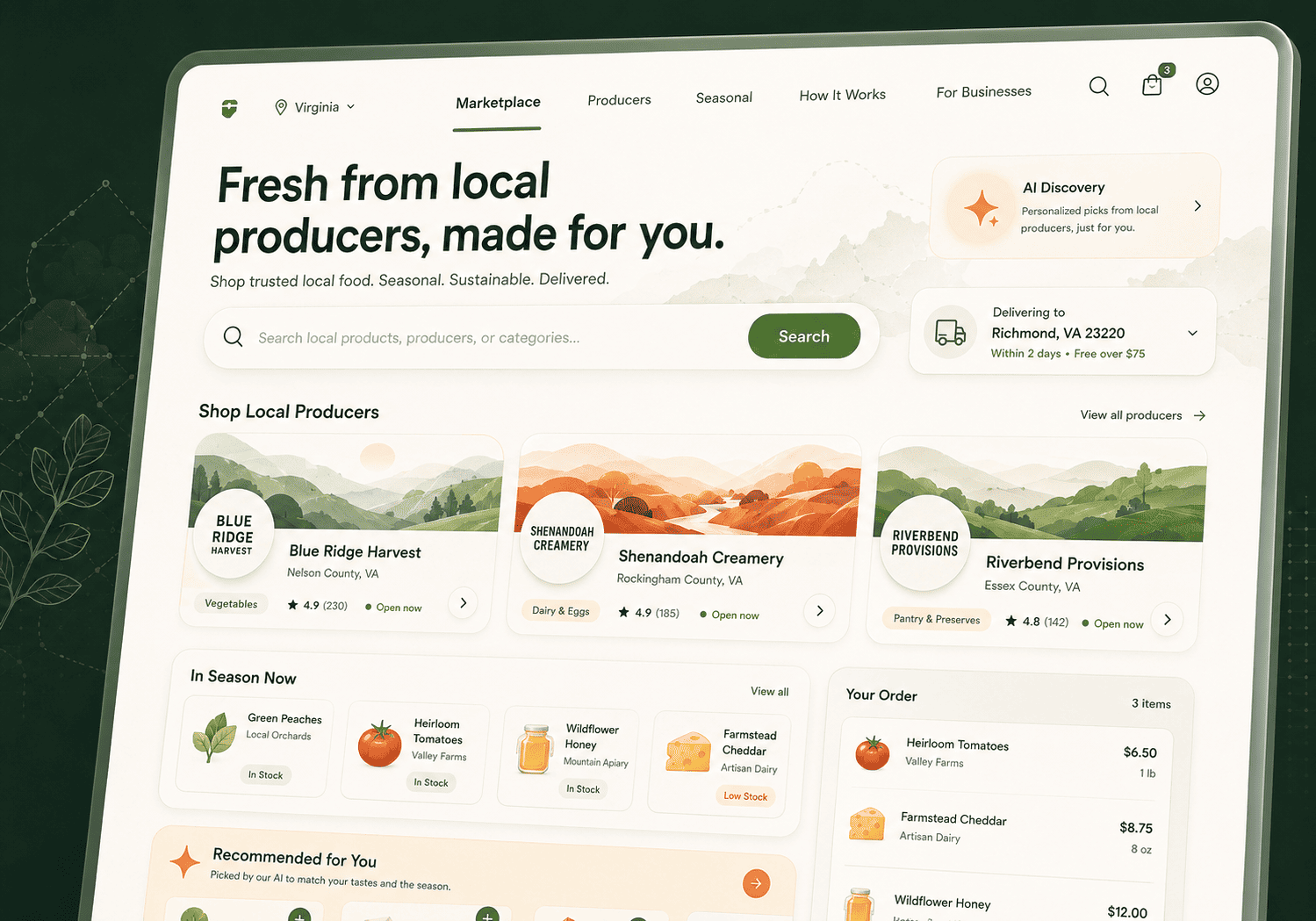
Digital Marketplace for Virginia Farmers, Local Producers & Direct-to-Consumer Food Sales

Plavno developed a custom multi-vendor marketplace for Virginia-based farmers, food producers, and regional sellers to unify product listings, vendor operations, customer ordering, and local fulfillment workflows.

Read More
3x

increase in product discovery relevance

Digital Marketplace for Virginia Farmers, Local Producers & Direct-to-Consumer Food Sales

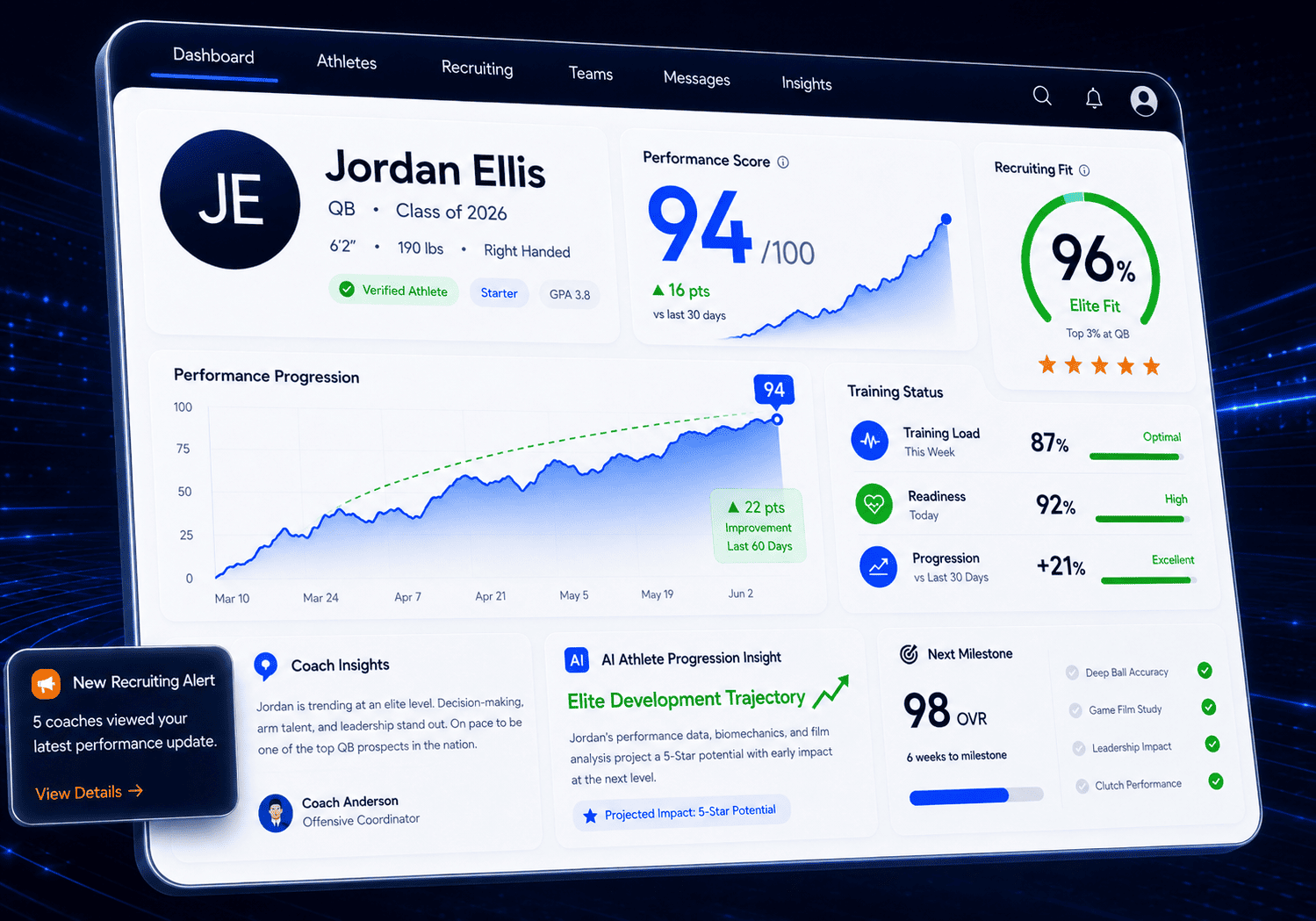
AI-Powered Sports Performance & Recruiting Platform for Virginia Clubs, Academies & Youth Programs

Plavno developed a custom sports technology platform for Virginia-based clubs and academies to combine athlete performance tracking, coach communication, recruiting workflows, and mobile engagement in one ecosystem.

Read More
3x

faster recruiting pipeline

AI-Powered Sports Performance & Recruiting Platform for Virginia Clubs, Academies & Youth Programs

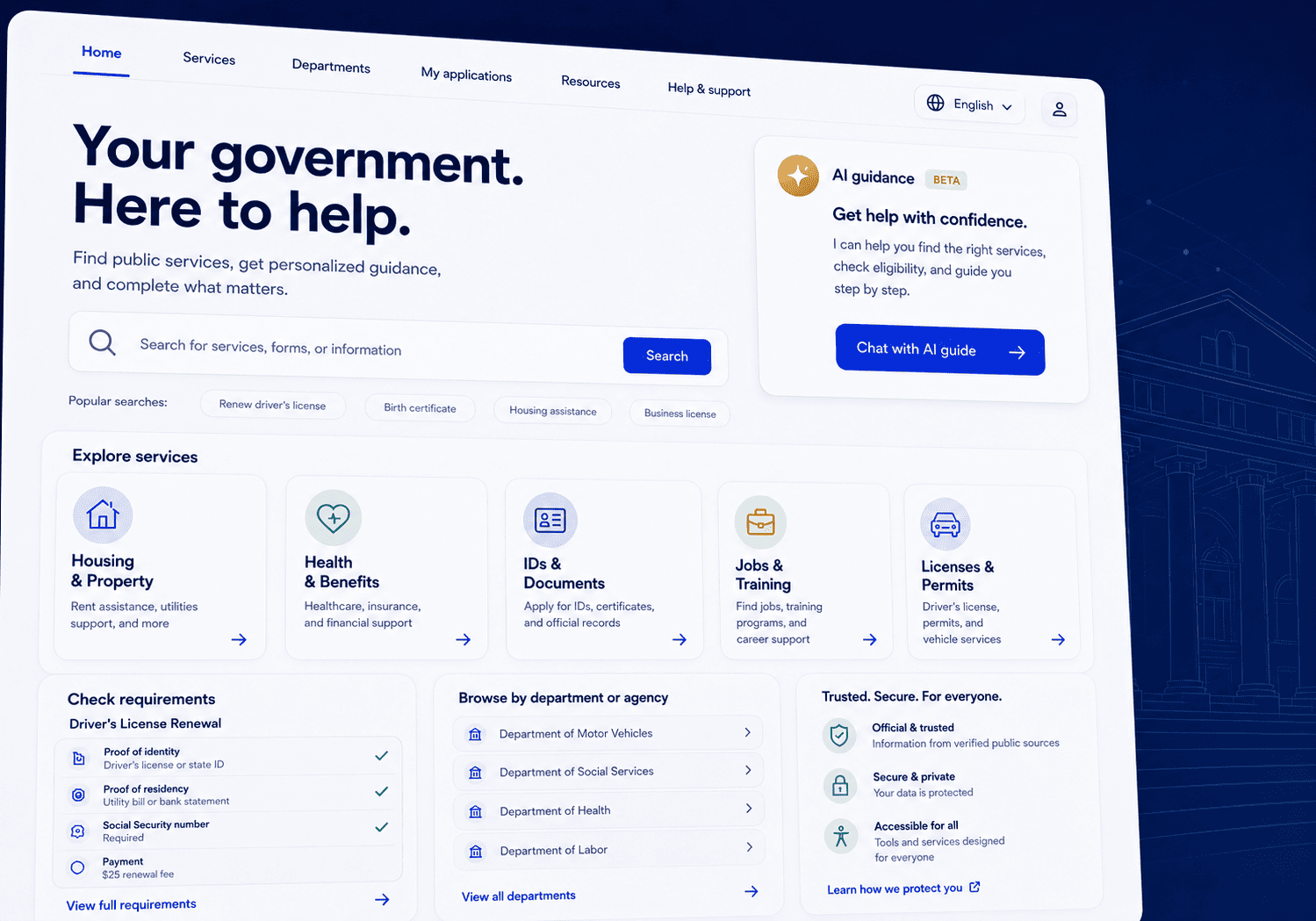
AI-Powered Citizen Services Website Platform for Virginia State Agencies

Plavno developed a modern eGovernment website platform for Virginia state agencies that centralizes citizen services, public information, department content, and an AI-powered guidance agent in one scalable system.

Read More
70%

reduction in routine citizen inquiries to agency staff

AI-Powered Citizen Services Website Platform for Virginia State Agencies

Delivery path

How a Charlottesville AI CRM pilot reaches production

Four fixed phases move from messy CRM reality to agents with owners, gauges, and a clear go or stop call.

Clipboard
Team
01

Step 1: Discovery & data truth (2 weeks)

We sit with sales ops and one power rep to map stages, sources, and ownership gaps. Field dictionaries and permission models get documented before any model prompt is written. Day-two deliverable is a risk list covering dirty phone formats, freemail noise, and dual CRM instances. You receive a scored backlog of which automations pay first. Timeline is two weeks including a working session in Charlottesville or remote for multi-site Virginia teams. Exit criteria lock success metrics tied to cycle time and hygiene, not vanity AI demos.

02

Step 2: Architecture & stone spike (2 weeks)

Engineers stand a thin connector stack and prove one end-to-end agent on sandbox data. Lead score write and task create is the usual spike because sales perceives it fast. We measure latency, error shapes, and token cost on realistic batches. Security reviews IAM and secret storage before any production key is issued. Deliverable is a decision memo with go or no-go on each tool and model. Clients leave the phase knowing VAT, rate limits, and edge cases rather than slogans.

Search in doc
Rocket
03

Step 3: Build & controlled pilot (4–6 weeks)

Agents expand to the approved set under feature flags covering one team or one region first. Dual-write modes keep human CRM edits supreme while we prove accuracy. Dashboards show acceptance rate of agent suggestions and corrected fields. Weekly demos keep Crozet or Waynesboro stakeholders inside the loop. Fixes land against real objections rather than lab data. Exit gate is pilot KPIs met for two consecutive weeks with ops sign-off.

04

Step 4: Rollout, training & handoff (2–3 weeks)

Flags open to remaining teams after runbooks and office-hours trainings. Runbooks cover failure modes, escalation, and how to pause an agent mid-day. Monitoring thresholds move from engineering ownership to a shared ops channel. Residual backlog lists deferred automations with cost and effort tags. You receive source, diagrams, and admin how-tos your staff can edit. Post-launch cadence sets the first 30-day drift review so prompts and mappings do not rot after brand campaigns change.

2 wks

Discovery to scored backlog

Most Charlottesville pilots leave Discovery with ranked automations in two weeks. Baseline CRM audits take that long when fields and stages are messy. Speed matters because sales leaders refuse open-ended research. Clear exit criteria keep scope honest before build spend.

<3 s

Agent response under load

Quote-style and prep agents target under three seconds for suited steps. Freight orchestration taught us slow tools kill adoption. Latency is measured from trigger to CRM write on staging. Under that budget, reps keep agents in the primary workflow rather than workarounds.

2 wks

Stable pilot KPI window

We require two greek weeks of target KPIs before broad rollout. One good week is noise from a campaign spike. Dual control windows protect Virginia multi-site brands from early false confidence. Stability gates reduce support tickets after general availability.

Testimonials

We are trusted by our customers

“They really understand what we need. They’re very professional.”

The 3D configurator has received positive feedback from customers. Moreover, it has generated 30% more business and increased leads significantly, giving the client confidence for the future. Overall, Plavno has led the project seamlessly. Customers can expect a responsible, well-organized partner.

Sergio Artimenia

Commercial Director, RNDpoint

Sergio Artimenia

“We appreciated the impactful contributions of Plavno.”

Plavno's efforts in addressing challenges and implementing effective solutions have played a crucial role in the success of T-Rize. The outcomes achieved have exceeded expectations, revolutionizing the investment sector and ensuring universal access to financial opportunities

Thien Duy Tran

Product Manager, T-Rize Group

Thien Duy Tran

“We are very satisfied with their excellent work”

Through the partnership with Plavno, we built a system used by more than 40 million connected channels. Throughout the engagement, the team was communicative and quick in responding to our concerns. Overall, we were highly satisfied with the results of collaboration.

Michael Bychenok

CEO, MediaCube

Michael Bychenok

“They have a clear understanding of what the end user needs.”

Plavno's codes and designs are user-friendly, and they complete all deliverables within the deadline. They are easy to work with and easily adapt to existing workflows, and the client values their professionalism and expertise. Overall, the team has delivered everything that was promised.

Helen Lonskaya

Head of Growth, Codabrasoft LLC

Helen Lonskaya

“The app was delivered on time without any serious issues.”

The MVP app developed by Plavno is excellent and has all the functionality required. Plavno has delivered on time and ensured a successful execution via regular updates and fast problem-solving. The client is so satisfied with Plavno's work that they'll work with them on developing the full app.

Mitya Smusin

Founder, 24hour.dev

Mitya Smusin

Architecture & Engineering Overview

What Charlottesville leaders demand from AI CRM engineering in 2026

Measurable ROI

Logged cycle-time ROI

Baseline + timeframe on Monday boards managers already trust

Data quality

Data cleanup first

Freemail noise & incomplete emails fixed before scoring trains

Latency budgets

Latency before call

Prep packets arrive on time or graceful degrade keeps trust

Cost gates

Token spend gates

High-token tools value-filtered · weekly spend vs conversion

For Business: Technical ROI & Risk Mitigation

Business buyers care whether agents return hours and protect revenue more than model names. Technical ROI shows up when cycle time, coverage, and renewal touch rates move with baseline and timeframe explicitly logged. We instrument every pilot against the Monday board your managers already trust. Hours returned on intake and follow-up are counted at the team level, not aspirational company averages. Risk drops when dual-write and pause switches keep humans in control during the first painful weeks.

Poor data quality is the first silent killer. Incomplete emails and freemail clutter cause false positives that burn cold outreach budgets. We price a cleanup sprint into Discovery so scoring starts on truth rather than hope. Latency is the second killer. If prep packets arrive after the call starts, reps stop opening them. Early budgets and graceful degradation protect that adoption curve.

Cost risk is third. Unbounded model spend on low-value tasks drains goodwill by quarter end. We gate high-token tools behind value filters and show weekly spend next to conversion. Technical debt risk rises when prompts hide business rules. Hard rules live in code and config so a leave event or a brand change does not take an engineer three days. Insurance for Virginia firms with multi-entity setups is staged entity logging so legal can answer where data traveled.

Freight orchestration work proved ROI lived in fewer status chases and faster quote replies rather than flashy chat windows. Property search work proved ROI lived in preference fidelity that kept families moving forward. We carry that discipline into CRM. You see dashboards that a finance lead can audit. You get stop conditions before spend grows. That is how automation earns another budget cycle.

Event ingestion

Event ingestion layer

CRM & mail webhooks normalized · durable queue · residency frozen at kickoff

Decisioning

Decisioning layer

Deterministic rules + typed model tools · feature flags in one config plane

Actuation

Actuation & lifecycle

Retries · dead-letter · human overrides · versioned schema contracts · decommission paths

For CTOs: Architecture & Technical Lifecycle

CTOs need a lifecycle that survives handoffs and leave events. Governance beats clever prompts when the same agent must serve Crozet pilots and downtown production under one org structure. Kickoff freezes the system of record, identity model, and data residency rules. Decision records capture why a queue was chosen, why a model vendor was limited to approved regions, and which fields are forbidden from prompts. Trade-offs stay unique, never generic checklists.

Architecture slices into three layers. Event ingestion normalizes CRM and mail webhooks. Decisioning combines deterministic rules and model calls behind typed tools. Actuation writes with retries, dead-letter queues, and human override records. Feature flags sit in one config plane. That structure lets you roll one agent backward without touching others. Schema contracts live in versioned definitions so mobile clients and warehouse loads fail loud rather than quiet.

Lifecycle includes a weekly decision forum once pilot starts. Product, sales ops, and engineering rank defect classes. Security owns secrets rotation evidence. Finance reviews token and connector spend against the original business case. Exit to full rollout is a documented quality bar, not a demo meeting vibe. Decommission paths exist for agents that fail that bar so zombie processes never stay forever.

Post-launch ownership is explicit. Runbooks name primary and backup humans. On-call routes distinguish agent logic faults from CRM outage faults. Change windows map to sales calendar so quarter-end freezes are respected. This is how AI CRM Automation becomes a product inside your company rather than a contractor black box.

Queue workers

Durable queue pull

Workers load context via approved tools only

Structured LLM

Hosted LLM JSON

Typed tools · structured outputs · config outside prompts

Validators

Deterministic validate

Reject missing CRM fields before any write path

CRM write

Idempotent write

Dead-letter stubs · replay-safe · merge wins over creates

For Engineers: Implementation Details & Stack

Engineers inherit systems they must debug at 2 a.m. Implementation favors typed tools, deterministic validators, and traces you can replay. Backend service language is chosen for your team readability first. Workers pull events from a durable queue. Each task loads context through approved tools only. Models return structured JSON. A validator rejects missing required CRM fields before write. Failures board a dead letter with full payload stubs for safe replay later.

Why this stack. Hosted LLMs give quality and speed without managing GPU fleets for a regional firm. Structured outputs beat freeform text because field filters and assignment engines need shape. Vector retrieval is optional and only when account history volume justifies the operational cost. Configuration for commercial margin rules, territory maps, and SLA timers lives outside prompts. That split kept freight quoting honest when rate tables moved weekly and keeps CRM routing honest when territories change mid-quarter.

Edge cases get equal design time. Duplicate lead merges must win over agent creates. Soft deletes must not revive bad contacts. Multi-brand Virginia companies need tenant isolation even when a shared login mesh exists. Rate limits from CRM vendors force backlog strategies so a bulk campaign import does not starve live routing. Clock skew between mail systems and CRM is normalized once at the edge.

Local evaluation tests run on scrubbed production samples from the actual instance. Fixture packs include foul phone formats, emoji in names, and empty company fields. Regression suites lock golden paths for scoring, prep, and renewals. Performance tests model Monday spikes. Only then do we call an agent ready for a Charlottesville pilot flag.

Infrastructure

Residency-matched cloud

Short-lived service IDs · pinned CRM paths · vault secrets

Observability

Four-question traces

Finish · object · cost/latency · redaction · prompt version ids

Security

Privacy side-by-side

PHI blocked · field masks · purpose tags on every write

Ops controls

Pause & cost caps

Admin kill switch · token budgets · mapping drift scans

Infrastructure, Observability & Security

US clients need controls that pass buyer security forms. We monitor agent correctness, cost, and privacy side by side rather than celebrating model novelty. Infrastructure sits in cloud regions matching your residency notes. Secrets never enter repos. Service identities are short-lived. Network paths to CRM are pinned where vendor options allow. Encryption in transit is mandatory. Encryption at rest follows your existing key practice.

Observability answers four questions. Did the agent finish. Did it write the right object. How long and how expensive was the path. Did any redaction trip. Traces carry prompt version and model id so drift hunts start with facts. Metrics board acceptance rates of agent suggestions, correction rates by field, and dead-letter volume. Logs strip free-text bodies when policies require. Alerts go to a volume channel sales ops actually watches rather than a silent engineering inbox only.

Compliance posture depends on industry. Healthcare-adjacent work blocks PHI from models and keeps purpose tags. Professional services often want SOC2-aligned change records and ticketed production deploys. We document data flows for buyer questionnaires so procurement cycles move. Incident response defines severity for wrong routing, data leakage risk, and full outage. Drills run once pre-launch and on a stated cadence after. Pause switches sit in a simple admin screen an operations manager can hit without a deploy.

Post-launch work includes cost controls. Token budgets per agent, spike throttles, and monthly reviews prevent quiet surprises. Mapping drift is scanned when CRM admins add fields. Prompt versions advance only after eval packs pass. That is how AI CRM Automation stays safe and affordable long after launch week media versions fade.

Maturity path

From manual CRM chores to supervised autonomy

A four-rung maturity model lets Virginia teams grow automation depth without betting the quarter on day one.

Clipboard
Team
01

Step 1: Manual baseline capture (1–2 weeks)

Time motion on routing hits, prep packing, and renewal touches for one team. Record baseline minutes per deal and error types. Capture screenshots of the real UI badges and queues. Outcome is a written baseline report sales leadership signs. Without this rung, later "gains" are marketing noise. Timeline stays short because we shadow, not survey forever. Deliverable includes top five waste paths ordered by hours.

02

Step 2: Assisted suggestions only (2–4 weeks)

Agents draft scores, emails, and next steps but never write without a human click. Reps accept, edit, or reject inside the CRM surface. Acceptance rates teach which prompts deserve writes later. Risk stays low and trust builds with skeptical sellers. Metrics track edit distance and reject reasons. This rung often surfaces field definition bugs you would have pushed into production too early.

Search in doc
Rocket
03

Step 3: Supervised writes on narrow objects (3–5 weeks)

Green-lit fields accept direct agent writes under dual control. Stage moves and ownership still require human confirm if value is high. Monitoring shows false write rates and auto-rollback counts. Ops owns a midday pause button. Scope stays narrow by object type rather than "everything sales." Only after two clean weeks expand field coverage. Training includes what to do when a write looks wrong.

04

Step 4: Selective autonomy with kill switches (ongoing)

High-confidence paths such as hygiene fixes and low-risk reminders run alone with full logs. High-value acts stay assisted. Weekly drift reviews keep mappings and prompts honest after campaign changes. Cost caps already sit in place. Expansion queues new agents through the same assisted-then-write path. Charlottesville multi-site brands can keep different rungs per location if maturity differs. The model prevents all-or-nothing bets that stall programs.

Eugene Katovich

Eugene Katovich

Sales Manager

Need a custom software solution? We’re ready to help!

Plavno has a team of skilled developers ready to tackle the project. Ask me!

Get a Free Quote

Readiness check

Prep your Charlottesville CRM before AI agents land

  • Own a single system of record — Confirm which CRM instance wins when duplicates appear across brands or acquisitions. List every shadow sheet teams still treat as truth. Decide merge rules for contacts and accounts before models train on noise. Document who may create custom fields going forward. Without this lock, scoring learns contradictions and trust dies. Assign one ops owner with change rights. Share the decision with nearby offices in Waynesboro and Harrisonburg if they share pipeline.

  • Clean identity and consent fields — Standardize email, phone, and consent flags for outreach. Remove test records and contractor junk that skews models. Confirm legal basis tags for healthcare-adjacent or education data. Export a sample and spot-check ten percent by hand. Fix format validators in the CRM before the agent launch. This step is boring and it is what makes downstream scoring honest.

  • Define stages with exit criteria — Write the exit rule for every stage managers actually use. Kill ghost stages nobody updates. Agree what "next step" means as a field type. Publish the definitions in the same place reps already look. Sync marketing names with sales names so attribution stops arguing. Agents cannot enforce what the company itself has not defined.

  • Instrument baseline metrics now — Capture time-to-first-touch, stage dwell, and open-without-next-step rates for two recent weeks. Store those numbers outside chat threads so disputes end. Note seasonality around university calendars and tourism peaks. Pick three KPIs the pilot must move. Avoid vanity counts like number of AI drafts that no finance lead will fund again.

  • Name owners for post-launch ops — Assign a primary owner for agent pause, a backup, and an engineering contact. Agree weekly 30-minute drift review slots before go-live. List vendors and admin logins needed after contractor exit. Budget a small monthly token and connector envelope separately from project fees. Without owners, monitoring alerts become wallpaper and cost drifts quietly for months.

Vitaly Kovalev

Vitaly Kovalev

Sales Manager

Request a Charlottesville AI CRM readiness audit

Share budget, timeline, tech stack, and dataset scope. Receive a readiness scorecard and cost estimator built for Charlottesville businesses within one business day.

Talk to Experts

Common questions

AI CRM Automation questions from Charlottesville teams

Straight answers on cost, timing, data, quality, security, and operations for Virginia buyers evaluating AI CRM Automation in 2026.

What drives the cost of AI CRM Automation in Charlottesville?

Cost is driven by object count, integration depth, compliance needs, and how dirty the CRM data is on day one. A single lead-score agent on a healthy Salesforce or HubSpot instance lands lower than multi-brand routing with custom objects and SOX-style change control. Local market rates for senior engineers in Virginia sit below large coastal hubs, yet enterprise security reviews still add calendar time. Model spend is a line item you can cap; integration labor is usually the larger slice.

Discovery usually runs on a fixed fee because its goal is clarity rather than open build. Build phases package by agent family so you fund scoring first and renewals later if cash timing requires. Post-launch monitoring and token budgets are separate monthly numbers you should insist on seeing early. Regions around Charlottesville with multi-office setups pay more for identity isolation and shared pipeline rules than single-site shops.

Hidden cost drivers include dual CRM instances after a merger, free-text fields that hold private data, and campaign tools with weak APIs. Cleaning those before model work is cheaper than teaching an agent bad patterns. We document each driver in the estimate so finance sees labor, licenses, infrastructure, and model tiers distinctly. Ask any vendor for that split. If the quote is one big number with no baseline dirty-data assumption, treat it as incomplete.

How long does it take to build AI CRM Automation software?

A focused MVP such as assisted lead scoring and task drafts typically lands in eight to twelve weeks including Discovery. Full deployment with routing, prep packets, renewals, and hygiene across multiple teams often spans four to six months. Timeline moves with CRM admin availability more than with engineer count. University and tourism calendars in Charlottesville also create freezes around major events that smart plans respect.

MVP scope is narrow on purpose. We prove one end-to-end path with gauges and a human accept button. That early win funds expansion and surfaces field definition problems while change cost is low. Full deployment adds maturity rungs, multi-region flags, and training programs. Parallel work happens where safe, but production keys and security sign-off remain gated.

Factors that stretch plans include missing staging environments, undocumented custom objects, and vendors with slow app-review processes. Factors that compress plans include a single system of record, a named sales ops owner, and baseline metrics already collected. We set an even cadence of demos every one or two weeks so stakeholders see substance rather than wait for a big-bang reveal. If a deadline is fixed to a fiscal start, we cut scope rather than quality gates.

What data do you need before starting an AI CRM project?

We need sample exports of leads, contacts, accounts, opportunities, and activities with field definitions. Two to four weeks of recent history is enough for a pilot model, provided it covers both wins and losses. Consent and do-not-contact flags must travel with the export. Identity rules and ownership maps matter more than sheer volume. Systems diagrams listing mail, calendar, support, and billing connections complete the starter kit.

Quality beats quantity. Ten thousand clean rows outperform a million rows with broken emails and blank companies. We also need access policies: who may approve production writes, which fields are forbidden from model context, and where secrets live. For healthcare-adjacent or student-adjacent data around UVA, purpose limitation notes should arrive in week one. Startup ecosystems in Charlottesville and the broader central Virginia tech community often lack perfect warehouses. That is fine. Structured CRM tables plus labeled outcomes are enough if definitions are shared.

If data is messy, Discovery expands into a cleanup phase rather than pretending. We never invent synthetic customers to flip a demo. You should expect a data readiness memo before any paid model training. When exports are blocked by legal review, we work from scrubbed samples under an agreed protocol so project time doesn't stall. Clear data inputs are the single best predictor of on-time AI CRM Automation delivery.

How do you evaluate quality of AI CRM Automation in production?

Quality is measured against business KPIs and technical correctness together. Business KPIs include time-to-first-touch, stage dwell, accepted suggestion rate, and renewal outreach earliness versus the recorded baseline. Technical correctness includes write error rate, schema validation fails, latency distributions, and dead-letter volume. Both sets sit on one board so engineering and sales ops argue from shared facts.

We freeze evaluation packs before launch. Packs hold golden examples with expected fields and reasons. Prompt or model changes must pass packs before flags open. Human review samples a fixed percentage of agent writes each week during the first month, then a lower rate once stable. Reject reasons from assisted mode feed the pack so the system improves on real objections rather than lab fiction.

Drift checks scan field mapping changes, prompt version age, and distribution shifts in lead sources. A summer tourism spike near the Blue Ridge will move inbound mix and can confuse naive models. Alerts exist for sudden reject spikes and spend spikes. Quality is never a one-time UAT checkbox. Contracts should state who owns weekly review and what the pause criteria are. That is how evaluation stays honest after the launch congratulations fade.

How do you handle security and compliance for AI CRM Automation?

Security starts with least privilege service accounts, encrypted secrets, and explicit deny lists for sensitive fields. Model context never receives full unrestricted notes when policies forbid it. Logs redact free text when required. Infrastructure lands in approved regions. Change records support SOC2-style buyer questions even when you are not chasing a new certification next quarter. Incident runbooks name severities for wrong routing versus potential leakage.

Virginia professional services, healthcare-adjacent groups, and education sellers each add constraints. We map those constraints during Discovery rather than bolting controls later. Vendor diligence covers sub-processors for model hosting and observability. Contracts state data use limits so training on your private deals is off by default. For multi-entity firms, tenant isolation is a first design constraint, not a later ticket.

Access reviews and key rotation schedules Ops keeps after handoff. Pause switches are non-negotiable so a bad release can stop without waiting on a deploy window. Penetration testing scope can include agent tool endpoints when clients require it. Documentation pack for procurement is prepared early because enterprise buyers in central Virginia still need paper trails. Security is treated as a feature that enables sales to bigger accounts, not as a late obstacle.

Contact Us

This is what will happen, after you submit form

Need a custom consultation? Ask me!

Plavno has a team of experts ready to start your project. Ask us!

Vitaly Kovalev

Vitaly Kovalev

Sales Manager

Schedule a call

Get in touch

Fill in your details below or find us using these contacts. Let us know how we can help.

No more than 3 files may be attached up to 3MB each.
Formats: doc, docx, pdf, ppt, pptx, xls, xlsx, txt.
Send request