bg image
bg image

Serving Roanoke VA

Run leaner operations in Roanoke in 2026 with AI Automation

Manual steps still hide inside "digital" workflows, and they show up as slow cycle times, missed follow-ups, and rework. We implement AI Automation that removes the busywork while keeping your team in control of approvals and exceptions. This is for Roanoke owners and operators who need faster throughput without adding headcount in finance, sales, support, and operations. Get AI Automation cost estimate in 24 hours.

Expect fewer handoffs, clearer queues, and better response times across the Roanoke Valley and nearby sites. The goal is simple. Reduce touches per transaction and keep service quality steady as volume grows. You will see what is automated, what is not, and why. We help you decide where automation pays back first and what to leave manual.

Discuss Project

Overview

Roanoke teams waste hours on work software should do

Roanoke companies are running more work through SaaS tools in 2026, but the last mile is still manual. Someone retypes order details, copies email threads, tags documents, or checks a portal for updates. Those steps create delays and hidden labor costs. They also create mistakes that only show up when a customer calls or a payment is late.

Our focus is ai automation that fits real workflows in the Roanoke Valley. That includes ai workflow automation for sales follow-ups, business process automation ai for back-office tasks, and intelligent process automation for documents and calls. We start with the process you already run, then remove the steps that are pure copying or searching. The result is faster cycle time and fewer exceptions, not a new tool that teams avoid.

Trusted AI Automation Partner for Roanoke Businesses. We work with US-based clients, including companies operating in Virginia. Across the US market, we have delivered 10+ AI automation projects that connect business systems with human-in-the-loop review. Work often spans Roanoke, Salem, Vinton, Botetourt County, Blacksburg, and Bedford because operations rarely stay inside one zip code. The common constraint is the same. Data sits in several systems and people bridge the gaps by hand.

To avoid "automation that breaks on week two," we treat integration and data quality as first-class requirements. In our logistics voice agent project for shipment tracking, the system had to interpret intent and pull status from tracking sources without creating support tickets. In a law-enforcement anonymization project, the automation had to redact sensitive data consistently and leave an audit trail. Those lessons carry into Roanoke work where compliance, customer trust, and traceability matter as much as speed.

If you want the technical view, our AI automation practice covers discovery through production rollout. We assess what can be automated safely, what needs approval gates, and what data needs cleanup first. Then we build small, measurable automations and expand only after you see stable results. That keeps cost controlled and reduces technical debt.

Talk to an Expert
Workflow-first audit

Workflow-first audit

Map the real process, exceptions, and build an ROI model from your volumes + cycle time.

Integration + data quality

Integration + data quality

Validate APIs/auth/IDs early so automations don’t break when formats or vendors change.

Faster cycle time, fewer exceptions

Faster cycle time, fewer exceptions

Remove copying + searching, keep human review gates for edge cases, log every outcome.

Measured rollout + monitoring

Measured rollout + monitoring

Start small, track latency/errors/cost per workflow, then expand only after stability.

Engineering-first automation

Automation that ties data, decisions, and actions together

In Roanoke, AI Automation fails most often at the boundaries between systems. A workflow looks simple until you need to read a PDF, confirm a customer identity, and update a CRM plus an ERP. We build automations as end-to-end paths that start with an event and finish with a verified action. That includes strict inputs, explicit decision points, and a logged outcome your team can audit. It keeps the automation reliable when volumes spike or a vendor changes a format.

For unstructured work, we use conversational and document pipelines that turn messages into structured tasks. The MemoryVoice project required conversational AI with NLP, ASR, and TTS because caregivers cannot always type. It also used retrieval pipelines and a memory graph to keep responses consistent with context. Those same patterns work for Roanoke support desks, dispatch, and field service teams that need answers and actions, not chat for its own sake. When the output triggers a workflow step, we include human review for edge cases and clear fallback behavior.

For data-heavy workflows, we apply algorithmic decisioning where it reduces manual sorting and rework. In the AI Warehouse layout and slotting project, we used optimization algorithms and layout planning to improve how work is assigned and executed. In Roanoke manufacturing and distribution, that maps to pick-path planning, slotting rules, and task batching that reduce travel time and errors. We do not push "full autonomy" first. We start with assisted recommendations and move toward automation only when the team agrees the logic matches reality.

security/compliance is designed in, not added at the end. The law-enforcement anonymization system used data redaction and an anonymization pipeline because sensitive data cannot leak into logs, prompts, or analytics. We apply the same discipline for Virginia finance, healthcare, and legal workflows where PII shows up in attachments and email threads. Access is least-privilege, secrets are managed centrally, and every automated action is traceable to an input and a policy. You get audit logs that answer who triggered what, when, and with which source record.

DevOps makes automation stable and affordable after launch. We ship workflows with versioning, environment separation, and controlled rollouts so a new rule does not break invoicing on Monday morning. Observability is included so you can see latency, error rates, and cost drivers per workflow and per integration. When a dependency changes, alerts tell you where the failure started and what retries were attempted. That is how AI process automation stays predictable in production for Roanoke teams that cannot pause operations.

plavno logo

Build your first
Smart AI project today!

Just tell the Plavno AI Agent about your project - it will ask questions, gather requirements, and propose a tailored solution

AI Automation Solutions for Roanoke Industries

Local workflows worth automating first

Roanoke ROI usually comes from removing repeatable handoffs between people, documents, and systems. These examples map to what we see in regional manufacturing, logistics, healthcare, finance, and professional services.

Work Orders

Work Orders

QA Handoff

Manufacturing work orders and QA handoffs

Manufacturing teams in Roanoke often lose hours to manual work-order updates, QA checklists, and vendor paperwork. We build AI process automation that reads inbound documents, flags missing fields, and creates structured tasks for review. A practical ROI model is simple. If you process 300 work orders per month and save 6 minutes each, you recover 30 hours monthly. At $40 fully loaded per hour, that is about $1,200 per month before error reduction. Technically, this uses document extraction plus rules and routing that updates the right systems and keeps an audit trail.

Shipment Status

Shipment Status

Doc Intake

Logistics document intake and shipment status calls

Roanoke logistics teams still get status requests by phone and email that pull staff away from execution. We implement intelligent automation using patterns proven in our voice agent for logistics and shipment tracking. A ROI estimate can be computed from call volume. If 600 monthly calls drop by 50% and each call avoided saves 4 minutes, you recover 20 hours. At $35 per hour, that is about $700 per month plus faster customer response. The system uses intent detection, integration to tracking sources, and clear fallback to a human when data is missing.

AP Triage

AP Triage

Exceptions

Accounts payable triage and exception routing

Accounts payable AI automation in Virginia often pays back by reducing touches per invoice and speeding up approvals. We build workflows that classify invoices, match them to POs when available, and route exceptions with the right context attached. Use a conservative model to validate ROI. If you process 2,000 invoices per month and save 90 seconds each, you recover 50 hours. At $45 per hour, that is roughly $2,250 per month, plus fewer late fees from missed approvals. Technically, it combines document parsing, validation rules, and system updates with logged approvals.

CRM Followups

CRM Followups

Lead Sync

Salesforce and HubSpot follow-up automation

Sales teams around Roanoke often lose deals due to slow follow-up and inconsistent data entry. We implement AI workflow automation Roanoke VA teams can trust, including Salesforce HubSpot AI automation Roanoke for lead capture and routing. ROI can be tied to response time. If automation helps recover just 2 extra deals per quarter at $6,000 average value, that is $12,000 per quarter. The technical core is event-driven triggers, enrichment from email and forms, and deduping so reps do not fight duplicate records. Every action is reversible and tracked in the CRM.

Lead Qualify

Lead Qualify

Scheduling

Real estate lead qualification and scheduling

Real estate lead automation Roanoke VA brokerages need is less about chat and more about speed, filtering, and clean handoff. We build flows that qualify inbound leads, schedule showings, and capture missing details before an agent calls. A grounded ROI model is time-based. If your team handles 400 leads per month and saves 3 minutes each, that is 20 hours saved. At $30 per hour, that is about $600 per month, plus fewer missed leads during peak weekends. Technically, it uses form and message parsing, calendar rules, and routing with human confirmation for high-value leads.

Law firm document intake and sensitive-data handling

Law firm document automation Roanoke practices need must protect confidentiality while speeding up intake and review. We apply lessons from our AI data anonymization work, where redaction and compliance automation were required by design. ROI can be calculated from paralegal review time. If you handle 120 intakes per month and save 10 minutes each, that is 20 hours recovered. At $60 per hour, that is about $1,200 per month, plus lower risk from consistent redaction. Technically, the workflow classifies documents, extracts key fields, redacts sensitive content, and stores evidence for audit.

Delivery plan

From first workflow to stable production

We ship one measurable automation first, then expand to related workflows once data, integration, and ownership are clear.

Clipboard
Team
01

Step 1: Workflow audit and ROI model (1 week)

In week 1, we map one Roanoke workflow end-to-end and quantify where time is spent. We identify inputs, systems touched, and common exceptions. You get a written scope, a risk register, and an ROI model based on your volumes and labor rates. We also confirm who owns approvals and who owns system access. The deliverable is a prioritized backlog with one automation chosen for the first build. Timeline is 1 week.

02

Step 2: Data and integration spike (1-2 weeks)

In weeks 2 to 3, we validate the data and the integration points before building the full workflow. We test API access, export formats, and authentication paths for each system. You receive a short report of gaps, including missing IDs, inconsistent fields, and rate limits. We also define the audit log schema so every automated action is traceable. This step avoids surprises when the automation hits real production data. Timeline is 1-2 weeks.

Search in doc
Rocket
03

Step 3: Build the automation with human review (2-4 weeks)

In weeks 4 to 7, we implement the workflow, exception handling, and review screens. We build the smallest feature set that can run daily and prove value. You get working software in a staging environment plus test cases that match Roanoke operational reality. We include approval gates for high-risk actions and clear fallbacks when data is incomplete. Training is included for the people who will use and supervise the automation. Timeline is 2-4 weeks.

04

Step 4: Production rollout and KPI tracking (1-2 weeks)

In weeks 8 to 9, we deploy with controlled rollout and measurable KPIs. We instrument cycle time, error rate, and manual touches per transaction. You receive dashboards and alerting for failures, retries, and integration latency. We also run a post-launch review to tune rules based on real exceptions. The output is a stable workflow that the team trusts enough to expand. Timeline is 1-2 weeks.

Case Study

We help customers cut
down on development

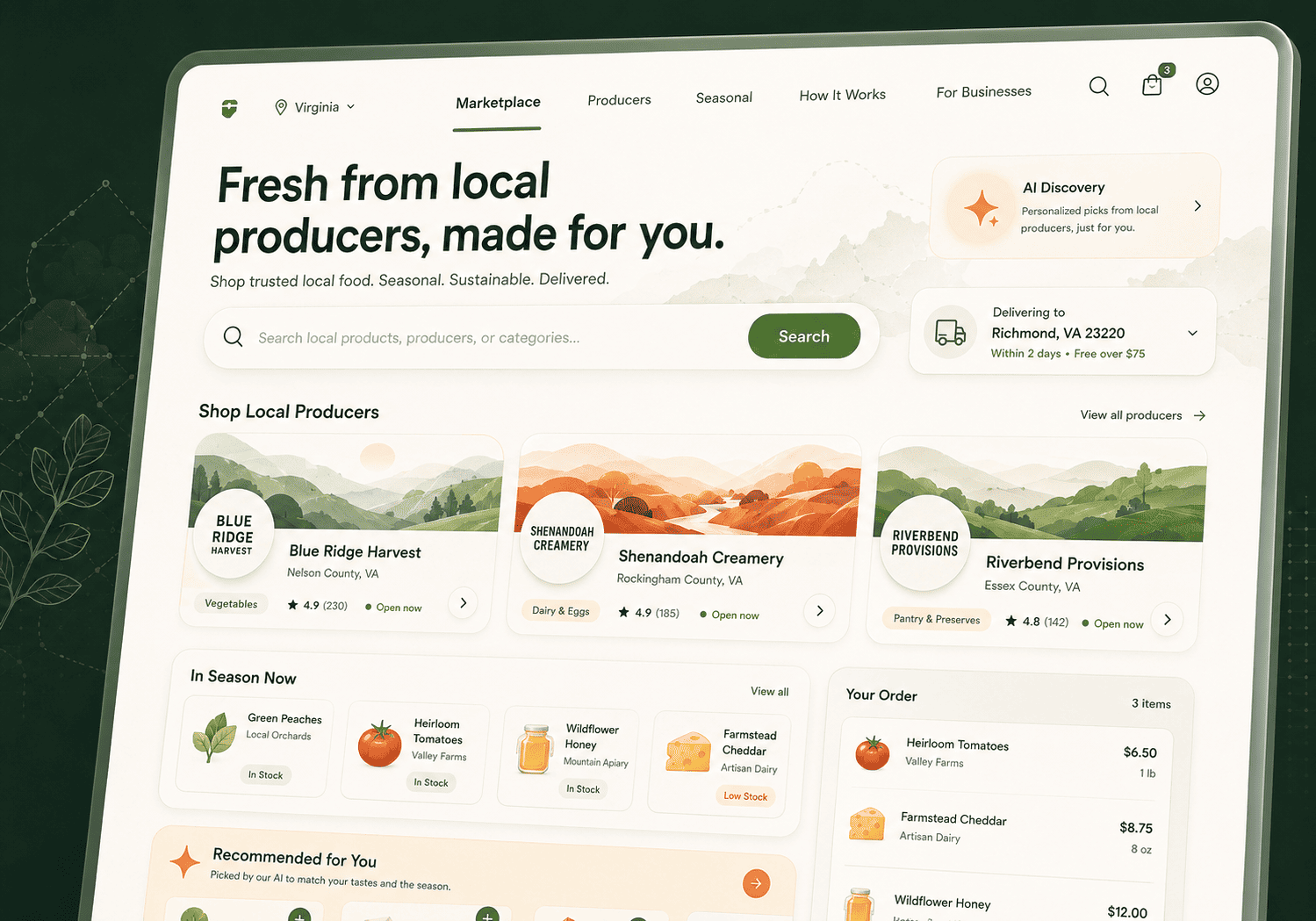
Digital Marketplace for Virginia Farmers, Local Producers & Direct-to-Consumer Food Sales

Plavno developed a custom multi-vendor marketplace for Virginia-based farmers, food producers, and regional sellers to unify product listings, vendor operations, customer ordering, and local fulfillment workflows.

Read More
3x

increase in product discovery relevance

Digital Marketplace for Virginia Farmers, Local Producers & Direct-to-Consumer Food Sales

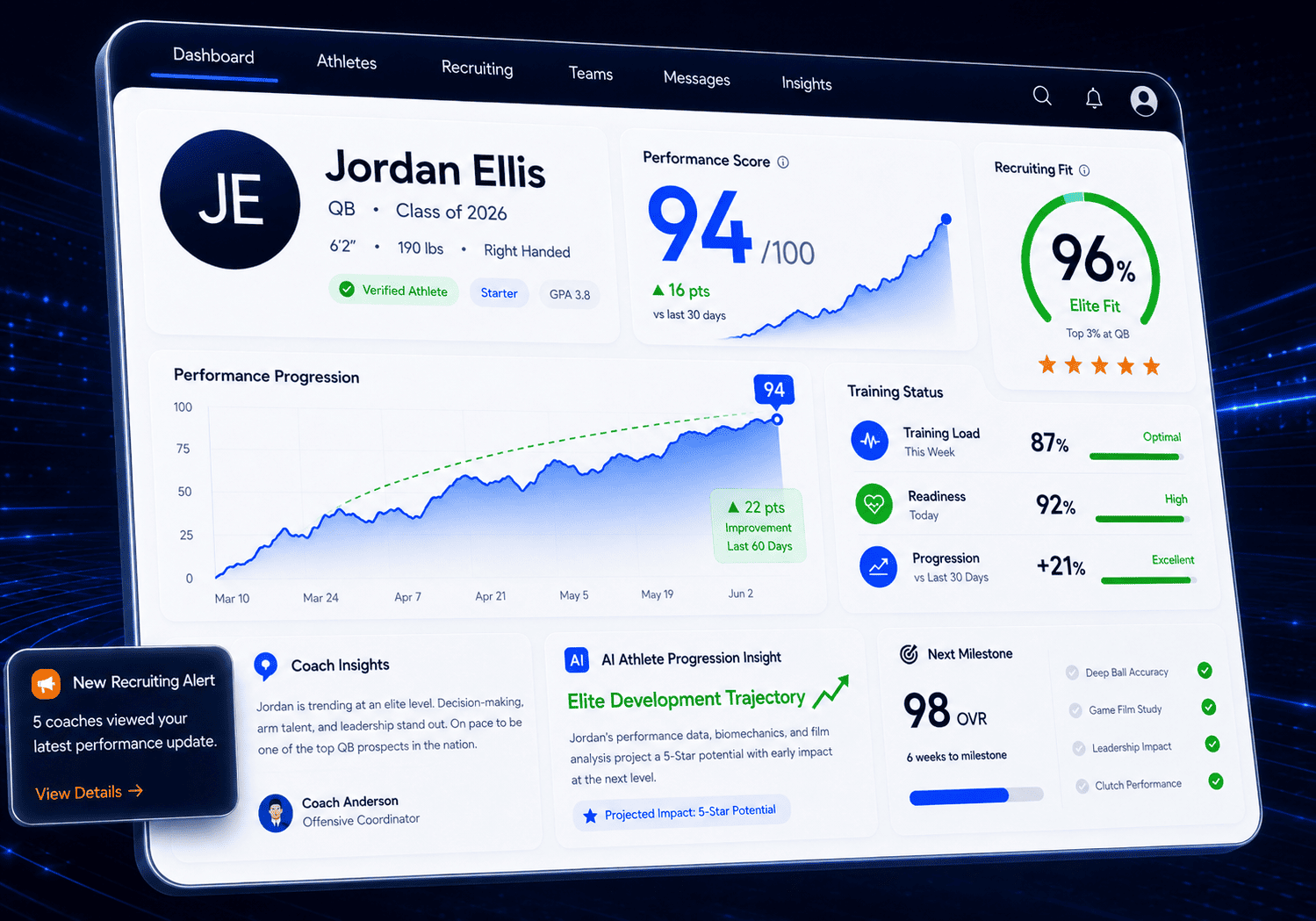
AI-Powered Sports Performance & Recruiting Platform for Virginia Clubs, Academies & Youth Programs

Plavno developed a custom sports technology platform for Virginia-based clubs and academies to combine athlete performance tracking, coach communication, recruiting workflows, and mobile engagement in one ecosystem.

Read More
3x

faster recruiting pipeline

AI-Powered Sports Performance & Recruiting Platform for Virginia Clubs, Academies & Youth Programs

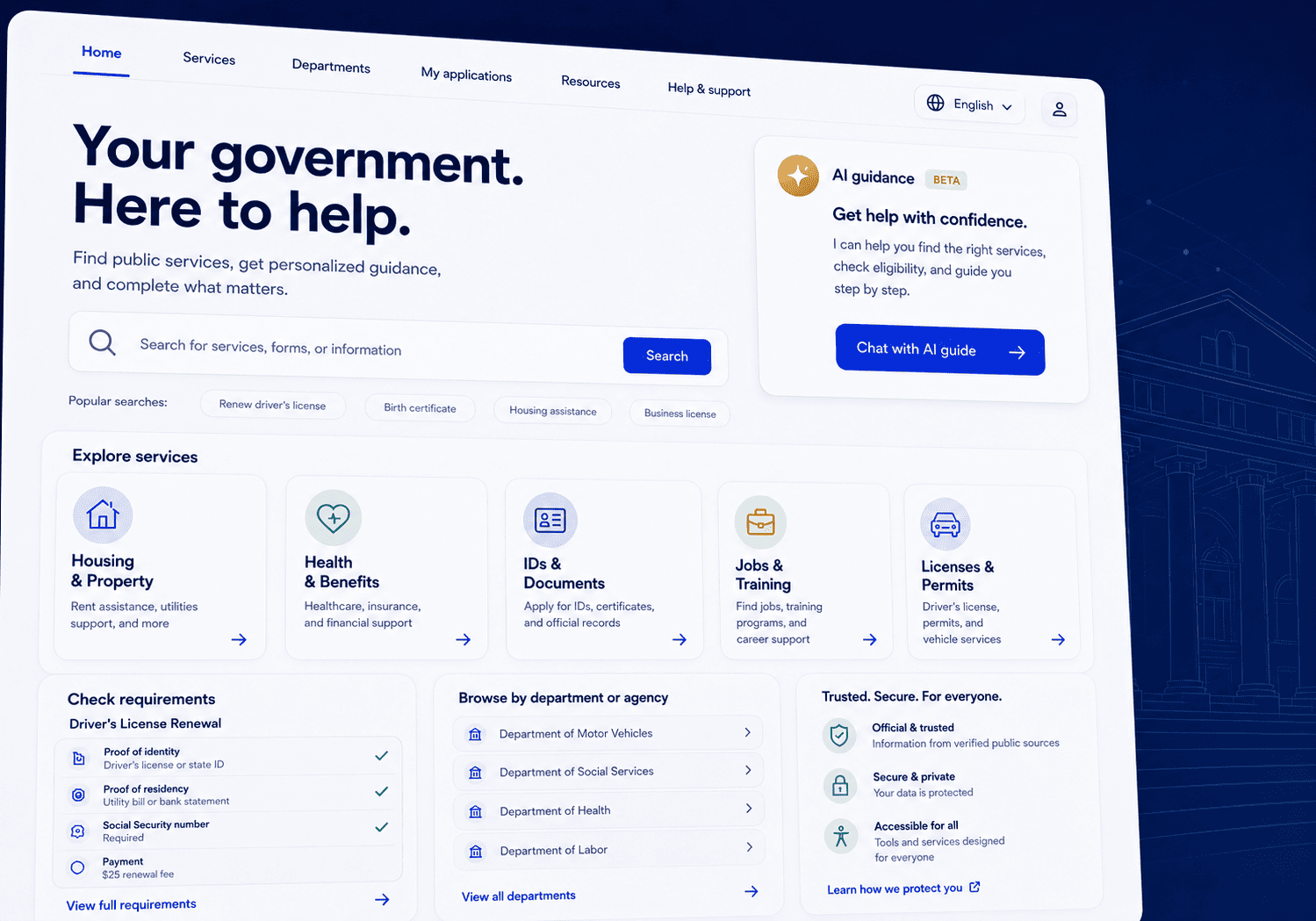
AI-Powered Citizen Services Website Platform for Virginia State Agencies

Plavno developed a modern eGovernment website platform for Virginia state agencies that centralizes citizen services, public information, department content, and an AI-powered guidance agent in one scalable system.

Read More
70%

reduction in routine citizen inquiries to agency staff

AI-Powered Citizen Services Website Platform for Virginia State Agencies

What you get

Five deliverables that make automation stick

Workflow inventory with a payback model

Workflow inventory with a payback model

Roanoke teams often start automation with a tool choice, then discover the workflow is the real constraint. We document the current process, the exception paths, and the exact systems involved. Then we build a payback model using your volumes, cycle time, and labor cost. You get a prioritized list of workflows with assumptions written down. We also flag integration and data risks early so the first build does not stall. For data modeling and reporting, we use structured schemas because they reduce rework later.

AI-assisted document handling with audit trails

AI-assisted document handling with audit trails

Document-heavy work in Virginia often fails because inputs are inconsistent and users cannot trust the output. We build intake flows that extract fields, validate them, and route exceptions. The anonymization case taught us to log decisions without leaking sensitive content. That discipline carries into finance, legal, and healthcare workflows around Roanoke. We choose data redaction approaches when PII appears in attachments. The outcome is faster routing without losing traceability.

Voice and chat actions for high-friction tasks

Voice and chat actions for high-friction tasks

Phone calls and short messages are still a big part of logistics, scheduling, and support in Roanoke. We build agents that handle repetitive requests and then trigger a real workflow action. The MemoryVoice and insurance phone agent work required ASR and TTS because the interface is hands-free. We use that pattern where speed matters more than perfect text entry. The business result is fewer interruptions and faster responses. We pick conversational AI when it reduces steps, not because it is trendy.

CRM automation that reduces missed follow-ups

CRM automation that reduces missed follow-ups

Sales and service teams lose time when CRM data is incomplete or duplicated. We implement event-driven updates so leads, tickets, and tasks move without manual copying. For Salesforce and HubSpot, we choose API-first integration because it keeps ownership in your system of record. We also add deduping rules and validation so reps do not fight the automation. The outcome is shorter response time and cleaner reporting. Roanoke managers get consistent pipeline views they can trust.

Operational dashboards for errors, cost, and throughput

Operational dashboards for errors, cost, and throughput

Automation that runs in the dark creates new risk and hidden cost. We build dashboards that show throughput, failure causes, and time spent in human review. That makes it clear where the next improvement should be. We select metrics that map to P&L, like touches per transaction and time-to-resolution. Alerts are routed to the right owner so issues do not bounce between teams. This approach reduces downtime and keeps Roanoke operations predictable. It also helps control AI usage cost as volume grows.

2-6w

Time to first production workflow

This measures how fast a Roanoke team can move from a chosen workflow to a live, monitored automation. We keep it short by starting with one path and explicit exception handling. Integration spikes happen early so surprises do not push timelines out. Faster first value makes budget decisions easier because you can fund expansion from evidence.

1-3x

Throughput gain in high-volume queues

This measures how many more requests a team can process with the same headcount after automation removes copying and searching. The gain comes from reducing touches, not from rushing decisions. We implement routing, pre-fill, and validation so humans spend time only on exceptions. Higher throughput in Roanoke back offices reduces overtime and improves customer response time.

<5%

Exception rate after stabilization

This measures the share of transactions that need human intervention after rules and data issues are addressed. We reduce exceptions by improving input validation and by handling known edge cases explicitly. We also keep a review path for uncertain cases so the automation does not guess. A low exception rate matters because it controls labor cost and helps teams trust the workflow.

Testimonials

We are trusted by our customers

“They really understand what we need. They’re very professional.”

The 3D configurator has received positive feedback from customers. Moreover, it has generated 30% more business and increased leads significantly, giving the client confidence for the future. Overall, Plavno has led the project seamlessly. Customers can expect a responsible, well-organized partner.

Sergio Artimenia

Commercial Director, RNDpoint

Sergio Artimenia

“We appreciated the impactful contributions of Plavno.”

Plavno's efforts in addressing challenges and implementing effective solutions have played a crucial role in the success of T-Rize. The outcomes achieved have exceeded expectations, revolutionizing the investment sector and ensuring universal access to financial opportunities

Thien Duy Tran

Product Manager, T-Rize Group

Thien Duy Tran

“We are very satisfied with their excellent work”

Through the partnership with Plavno, we built a system used by more than 40 million connected channels. Throughout the engagement, the team was communicative and quick in responding to our concerns. Overall, we were highly satisfied with the results of collaboration.

Michael Bychenok

CEO, MediaCube

Michael Bychenok

“They have a clear understanding of what the end user needs.”

Plavno's codes and designs are user-friendly, and they complete all deliverables within the deadline. They are easy to work with and easily adapt to existing workflows, and the client values their professionalism and expertise. Overall, the team has delivered everything that was promised.

Helen Lonskaya

Head of Growth, Codabrasoft LLC

Helen Lonskaya

“The app was delivered on time without any serious issues.”

The MVP app developed by Plavno is excellent and has all the functionality required. Plavno has delivered on time and ensured a successful execution via regular updates and fast problem-solving. The client is so satisfied with Plavno's work that they'll work with them on developing the full app.

Mitya Smusin

Founder, 24hour.dev

Mitya Smusin

Adoption model

A maturity path for Roanoke automation teams

Most teams get better results by moving from assisted work to partial automation, then to autonomous execution only where risk is low.

Clipboard
Team
01

Step 1: Make work visible (2 weeks)

In the first two weeks, we standardize how tasks enter the system and how outcomes are recorded. This includes consistent IDs, status fields, and a single owner for each queue. Roanoke teams get immediate value because work stops hiding in inboxes. We also capture baseline metrics like cycle time and touches per transaction. The deliverable is a workflow map and a measurement plan. Timeline is 2 weeks.

02

Step 2: Add assisted decisions (2-4 weeks)

Over the next two to four weeks, we add AI assistance that suggests actions rather than executing them. It can classify documents, propose routing, or draft responses with citations. Your team approves the action and corrects mistakes, which creates training signals without added overhead. This stage is how many Virginia small business AI automation programs avoid risk while proving value. The deliverable is a supervised workflow with review screens and audit logs. Timeline is 2-4 weeks.

Search in doc
Rocket
03

Step 3: Automate low-risk actions (3-6 weeks)

In three to six weeks, we move specific steps to automatic execution when confidence and risk are acceptable. Examples include creating tickets, updating CRM fields, or sending a status message when data is complete. We add guardrails like rate limits, approval thresholds, and rollback paths. Roanoke operators keep control because high-impact actions still require approval. The deliverable is a hybrid workflow with clear boundaries between auto and manual steps. Timeline is 3-6 weeks.

04

Step 4: Expand and govern (ongoing, monthly)

After the first workflows are stable, we expand across teams with shared governance. We define who can change rules, who can deploy updates, and how incidents are handled. Monthly reviews look at cost drivers, error patterns, and new integration needs. This keeps automation from drifting into a collection of scripts no one owns. The deliverable is an operating rhythm and a roadmap tied to Roanoke business priorities. Timeline is ongoing with monthly checkpoints.

Architecture & Engineering Overview

Engineering details that affect cost and risk

ROI drivers

ROI drivers

Remove repeatable touches: copying data, searching context, and routing requests between systems.

Integration spike before full build

Integration spike before full build

Prove latency, auth paths, and rate limits early so a key system doesn’t block production rollout.

Data quality + auditability

Data quality + auditability

Validate inputs, contain exceptions, and log decisions to avoid rework and compliance surprises.

Cost control after launch

Cost control after launch

Track cost per transaction and alert on drift from retries, integration failures, or prompt growth.

For Business: Technical ROI & Risk Mitigation

AI automation ROI in Roanoke comes from removing repeatable touches while keeping exception risk contained. We focus on tasks where people copy data, search for context, or route requests between systems. Those minutes add up faster than most teams expect. The risk is not only cost. Errors create rework, customer churn, and late fees that do not show up in a quick time study.

We model ROI using your volumes and your real cycle time, not industry averages. For example, an AP flow might save 90 seconds per invoice, but only if matching rules are stable. A logistics intake flow might save more time, but only if integration latency is predictable. That is why we run an integration spike before full build. It reduces the chance that a key system blocks production rollout.

We also treat data quality as a budget item, not a hidden tax. If fields are missing, the automation will either fail or send more work to review. In our anonymization work, a small format change could have created a compliance issue. That is why we log decisions and validate inputs before any action is taken. The same approach helps Roanoke teams avoid expensive post-launch cleanup.

Cost control continues after launch. Usage-based AI components can drift in cost if prompts grow or if retries increase due to integration failures. We track cost per transaction and alert when it changes. This gives business owners in Virginia a way to keep margins stable as volume grows. It also keeps the next workflow decision grounded in numbers, not opinions.

Define workflow + system of record

Define workflow + system of record

Field ownership across CRM, ERP, and spreadsheets to prevent conflicting updates.

Acceptance tests for exceptions

Acceptance tests for exceptions

Codify happy path + real edge cases as the contract for production behavior.

Versioned decision components

Versioned decision components

Explicit, reviewable logic (policy thresholds, scripts, fallbacks) for audits and change control.

Staged rollout + governance

Staged rollout + governance

Feature flags + rollback, plus clear owners for rules, mappings, incidents, and regular reviews.

For CTOs: Architecture & Technical Lifecycle

The lifecycle that works best in 2026 is iterative delivery with strict governance around integrations and change control. We begin by selecting one workflow and defining the system of record for each field. That prevents conflicting updates between a CRM, ERP, and spreadsheets. We then define acceptance tests that reflect real exception paths, not just the happy path. This becomes the contract for production behavior.

During build, decision points are treated as explicit components you can review and version. That matters when a policy changes, such as a credit threshold or a compliance rule. It also makes audits easier because you can show what logic was in place at the time. For voice or chat actions, we include scripts and fallback behavior so responses stay consistent. This reflects what we learned on production voice agents for insurance and logistics workflows.

Before rollout, we design a deployment plan around your operational calendar. Roanoke manufacturing and logistics teams cannot afford downtime during peak shifts. We use staged rollout and feature flags so new logic can run on a subset of traffic. If an issue appears, rollback is fast and documented. The goal is stable operations, not a one-time launch.

Governance is what keeps automation maintainable. We set ownership for rules, data mapping, and incident response. We also schedule regular reviews of exception logs and integration health. This prevents silent failures and avoids technical debt building up in side scripts. It is the difference between a useful automation program and a fragile collection of hacks.

Deterministic event-driven core

Deterministic event-driven core

Clear inputs/outputs; AI supports steps (classification/extraction/intent) with guardrails.

AI components

AI components

Retrieval for grounded outputs; ASR/TTS when voice-first; consistent scripts + fallback behavior.

Defensive integrations

Defensive integrations

Idempotency, backoff, and rate-limit handling; validated exports when APIs are weak.

Testing + traceability

Testing + traceability

Edge cases, missing/contradictory data, latency budgets, and correlation IDs across steps.

For Engineers: Implementation Details & Stack

Implementation succeeds when you treat AI as one component in a deterministic workflow. We structure automation as event-driven steps with clear inputs and outputs. AI is used for classification, extraction, and intent, not for deciding final business actions without guardrails. This keeps behavior testable and reduces production surprises. It also makes it easier to explain outcomes to users and auditors.

We reuse proven building blocks from our delivered systems. Conversational flows may use NLP plus ASR and TTS when the interface is voice-first, as in MemoryVoice and phone agents. Retrieval pipelines are used when outputs must stay grounded in known facts, not free-form text. For data handling, we apply redaction and anonymization pipeline patterns when PII can appear in content. These choices are about reducing risk in real environments.

Integrations are treated as products. We implement idempotency so retries do not create duplicates. We also handle rate limits and backoff to avoid cascading failures. Where APIs are weak, we use staged exports with validation to keep data consistent. Roanoke teams often depend on vendor systems, so defensive integration work is non-negotiable.

Testing focuses on edge cases. We test format changes, missing fields, and contradictory data across systems. We also test latency budgets so a workflow does not block a user waiting on a slow dependency. Logs include correlation IDs across steps for debugging. This keeps on-call work manageable and speeds up fixes when a system changes.

Observability

Observability

Monitor failures, latency, backlogs, and exception rate; route alerts to the accountable owner.

Security controls

Security controls

Data classification + least-privilege access; redact/anonymize when needed; logs avoid secrets and PII.

Compliance evidence

Compliance evidence

Immutable, searchable audit logs; change management + monitoring evidence; retention/deletion rules.

Post-launch drift + cost

Post-launch drift + cost

Versioned releases and periodic reviews; track cost per workflow so usage stays aligned with budget.

Infrastructure, Observability & Security

Production AI workflow automation in Virginia needs observability and security controls that are as strong as your core systems. We set up monitoring for integration failures, latency, and queue backlogs because those are the real causes of missed SLAs. We also monitor exception rates because a rising exception rate is usually a data quality regression. Alerts go to the owner who can fix the issue, not to a generic inbox. This reduces time to resolution when something breaks.

Security starts with data handling. We classify data types, then apply least-privilege access so the automation can only read and write what it needs. Sensitive content is redacted or anonymized where appropriate, based on lessons from our law-enforcement anonymization delivery. Logs avoid storing secrets, PII, or full document bodies unless required and approved. Audit logs are immutable and searchable for incident review.

Compliance is handled as a set of controls, not a claim. For healthcare-related workflows, we can align practices with HIPAA expectations around access and auditability. For B2B SaaS teams aiming for SOC 2, we focus on change management, access controls, and monitoring evidence. Roanoke firms in legal and finance also need clear retention and deletion rules. We implement those rules in storage and in workflow logic.

Post-launch, we plan for drift and cost. Integrations change, vendors update formats, and business rules evolve. We run periodic reviews of metrics and exception samples, then update logic with versioned releases. We also track cost per workflow so usage stays aligned with budget. This keeps AI automation stable, secure, and predictable after the initial rollout.

Eugene Katovich

Eugene Katovich

Sales Manager

Need a custom software solution? We’re ready to help!

Plavno has a team of skilled developers ready to tackle the project. Ask me!

Get a Free Quote

FAQ

AI Automation in Roanoke: questions we hear often

Answers below focus on cost, timelines, data readiness, measurement, compliance, and long-term operations for Virginia teams.

What does AI Automation cost in Roanoke, Virginia, and what drives the price?

Cost in Roanoke usually depends on workflow count, integration count, and how messy the inputs are. A single workflow with one or two systems is cheaper than a cross-department flow touching CRM, ERP, and document storage. Data quality drives cost because missing IDs, inconsistent formats, and manual exceptions increase build time. Another driver is risk level. Workflows that post payments, change customer records, or handle regulated data need more controls and testing.

AI usage cost is separate from engineering cost and needs to be planned. If you use voice or document extraction at high volume, per-transaction costs can grow quickly. We design flows to minimize retries, reduce unnecessary calls, and keep prompts small and consistent. We also add cost monitoring per workflow so you can see what changed when spending moves. That matters for Virginia small businesses that need predictable monthly spend.

Local factors show up in who supports the process and how fast decisions are made. Many Roanoke companies run lean teams, so approvals and access can become schedule drivers. We reduce that friction by defining roles, access needs, and acceptance tests in the first week. If you share your target workflow, systems involved, and monthly volumes, we can scope the build and provide a cost range with clear assumptions.

How long does it take to build AI Automation software?

Timeline depends on whether you want one production workflow or a multi-workflow program across teams. For a first workflow, we usually plan a short audit, an integration spike, and then a build plus rollout. In practice, a focused first automation can reach production in weeks, not quarters, if access and data are available. A larger deployment takes longer because governance, training, and change management become real work items. In Roanoke, this matters because many teams cannot pause operations for long migrations.

An MVP approach targets one workflow with measurable KPIs and clear exception handling. That MVP includes monitoring and an audit trail, not just a script. Full deployment expands to multiple workflows, adds more integrations, and hardens security controls. It also includes operational runbooks and ownership so the automations do not become orphaned. That is where timelines can extend, especially when legacy systems require custom connectors.

We reduce schedule risk by validating integrations early and by agreeing on acceptance tests before most code is written. You will see working software in staging quickly, then production rollout happens in controlled steps. If you tell us your deadline, peak season constraints, and the systems involved, we can propose a realistic plan with a clear critical path.

Do you work with startups in Virginia?

Yes. We work with startups and growth teams across Virginia, including those building around healthcare, logistics, and B2B SaaS. In the region, we often see founders connected to the Roanoke-Blacksburg technology corridor and university-driven networks around Virginia Tech. Those teams usually need automation to scale operations before they can hire larger support or finance staff. The priority is fast deployment with measurable impact, not a large platform rewrite.

Startups typically have two constraints. First, their process changes often, so the automation must be easy to change and version. Second, their data is still forming, so we build validation and exception routing early. We also keep infrastructure simple and cost-aware, then add complexity only when volume demands it. That keeps burn rate under control while still delivering production-grade behavior.

We can support both product-side and internal operations automation. Case work like voice agents and workflow-driven software products maps well to startup needs because it proves we can ship and maintain production systems. If you share your current stack, your target workflow, and what data you have, we can outline a phased plan that matches your runway.

Can AI Automation integrate with my existing system?

Integration is usually the main engineering effort, and it is where most automation projects succeed or fail. We integrate through APIs when the system supports them because APIs are stable and auditable. When APIs are limited, we can use exports, webhooks, or database-level reads with careful controls. For older systems, we plan for idempotency, retries, and rate limits so the workflow does not create duplicates. In Roanoke, this often comes up when a legacy ERP sits next to modern SaaS tools.

We start by mapping systems of record. Each field should have one authoritative source, and the automation should not guess when sources disagree. We also define what happens when an integration is down. The workflow can queue work, alert an owner, and fall back to manual steps. This reduces operational risk and prevents silent failures that create data drift.

For CRM workflows like Salesforce or HubSpot, we focus on event-driven triggers, validation, and audit logs. For document-heavy flows, we combine extraction with structured updates into your systems. If you list the systems involved and any restrictions, we will propose an integration approach with clear trade-offs, including cost and long-term maintainability.

What industries in Roanoke benefit most from AI Automation?

In Roanoke, the strongest use cases show up where work is repetitive, time-sensitive, and spread across systems. Manufacturing operations benefit when work orders, QA checks, and vendor paperwork create bottlenecks. Logistics and distribution teams benefit when intake, status updates, and document routing consume staff hours. Healthcare and senior care teams benefit when communication and documentation must happen quickly and consistently. Financial services and insurance teams also benefit when calls, forms, and compliance steps create high labor load.

Professional services are another strong fit. Law firms see value in intake automation, document classification, and sensitive-data handling. Real estate teams see value in lead qualification and scheduling workflows that reduce missed follow-ups. In each case, the goal is to reduce touches per transaction and keep exceptions visible. That is how you improve throughput without losing control or accountability.

We choose the starting workflow based on volume, risk, and how measurable the outcome is. Roanoke Valley businesses often start with AP triage, customer support routing, or logistics document intake because ROI is easy to calculate. If you tell us your top three manual bottlenecks, we can map them to a phased automation plan and quantify likely payback using your numbers.

Contact Us

This is what will happen, after you submit form

Need a custom consultation? Ask me!

Plavno has a team of experts ready to start your project. Ask us!

Vitaly Kovalev

Vitaly Kovalev

Sales Manager

Schedule a call

Get in touch

Fill in your details below or find us using these contacts. Let us know how we can help.

No more than 3 files may be attached up to 3MB each.
Formats: doc, docx, pdf, ppt, pptx, xls, xlsx, txt.
Send request