bg image
bg image

Serving Roanoke & Virginia

Stop funding pilot theater. Fix AI spend in Roanoke for 2026 growth

Roanoke operators still lose money on manual checks, slow handoffs, and tools that never reach production. This work is for owners and tech leads who need a clear plan, not another slide deck. We tie use cases to real revenue, risk, and labor hours you already track. You get ranked opportunities, build-or-buy calls, and a delivery path your team can own. Budget waste stops when scope, data readiness, and success metrics sit in one document. Get AI Consulting cost estimate in 24 hours. Tell us budget, timeline, stack, and the dataset or process you want changed first.

Discuss Project

Overview

Why Roanoke teams waste AI budget in 2026

Roanoke leaders face a simple bind. Competitors ship faster decision loops while local staff rekey claims, inventory, and customer replies. Manufacturers along the I-81 corridor and clinics near Carilion need ranked use cases, not vague roadmaps. AI consulting services here mean hard prioritization of labor hours, error cost, and revenue friction. We work with US-based clients, including companies operating in Virginia. Trusted AI Consulting Partner for Roanoke Businesses means scope that fits how Salem, Vinton, and Blacksburg teams already operate today.

Most failed pilots start with a model demo instead of a process map. Teams skip data contracts, ownership, and unit economics. Then finance kills the project when cloud bills climb without a linked KPI. Our AI consulting path starts with the process cost you already measure. We bind recommendations to lines in the P&L and to systems staff use every morning.

Southwest Virginia firms in insurance, logistics, higher education, and food services share the same risk pattern. Fragmented SOPs meet thin IT benches and legacy ERPs. Artificial intelligence consulting then becomes change management plus architecture, not only model choice. We document integration debt early and name who owns drift after go-live. That keeps technical debt from becoming a second project tax next year.

Local proof matters more than decks. For media firms we shipped multi-platform discovery and personalization layers. For insurers we built eligibility verification agents that encode rules at intake. Ecommerce support chatbots and fintech payment agents reduced handle time on high-volume queues. Credit scoring and CRM insight pipes brought automated decisioning without silent model drift. Ten-plus AI consulting and delivery programs completed across the US market inform every Roanoke engagement we propose.

What you receive is a board-ready plan with build-buy-partner calls, stack options, and phased release gates. We include dataset audits, latency and cost envelopes, and post-launch monitoring duties. Nearby operators in Christiansburg, Lynchburg, and Botetourt County reuse the same playbook with local industry twists. Hire when you need a path from idea to production owners, not another unpaid discovery spin.

Talk to an Expert
Ranked use cases

Ranked use cases

Score labor hours, error cost, and revenue friction—not vague roadmaps

P&L-linked scope

P&L-linked scope

Bind every recommendation to process cost and KPIs finance already tracks

Integration & ownership

Integration debt named

SOPs, legacy ERPs, and post-go-live owners mapped before model demos

Board-ready plan

Board-ready path

Build-buy-partner calls, cost envelopes, and phased release gates

Consulting architecture stack

The decision system behind every Roanoke AI plan

Clients in Roanoke get a working decision system, not a binder of options. We map process economics first, then bind candidate agents and models to measurable gates. Architecture starts with event logs, system of record APIs, and human review queues that already exist. That keeps greenfield freeze-outs rare even when SAP, Epic, or legacy AS/400 pieces remain. Every recommendation cites a case we already shipped so risk approximation is grounded in real builds.

Core delivery objects include a use-case scorecard, a target architecture sketch, and a cost envelope per thousand requests. Scorecards weight labor minutes saved, error dollar cost, and compliance exposure. Architecture sketches list model endpoints, retrieval stores, rule engines, and human escalation paths. We prefer proven patterns: retrieval for policy FAQs, rules-first agents for insurance eligibility, and supervised scoring for credit risk. MediaSphere taught us multi-platform personalization needs strong feature stores and stable identity keys before ranking quality rises.

Technology choices stay boring on purpose. Python services for orchestration, PostgreSQL or warehouse tables for ground truth, and vector search when retrieval quality beats keyword alone. Message queues isolate long-running jobs such as dubbing pipelines and payment workflows. We pick managed model APIs when time-to-value beats private hosting. Private or hybrid placement appears only after latency, PHI, or PCI constraints demand it. Each pick carries a plain reason tied to budget and ops load in your Roanoke stack.

Security/compliance work lands in the same plan as features. Role maps, audit logs, retention rules, and redaction paths sit beside the first release candidate. Insurance eligibility agents proved that rule versioning and reversible decisions matter more than flashy chat. Credit scoring builds forced explicit feature lineage and bias checks before any live decision. Fintech payment agents required dual-control on money movement and full replay of tool calls. None of that is optional when auditors or carriers belong on the critical path.

DevOps for consulting outputs means reproducible environments and release discipline from day one. Infrastructure as code, staged model promotion, and cost alarms ship with the pilot, not after. Canary traffic and shadow scoring prove value before full cutover. Tracking latency, token spend, and human override rates prevents silent regressions after launch. Roanoke teams with thin IT benches need this scaffolding more than large coastal labs do. We design for your headcount, not for a fictional platform group.

plavno logo

Build your first
Smart AI project today!

Just tell the Plavno AI Agent about your project - it will ask questions, gather requirements, and propose a tailored solution

What you walk away with

Five deliverables Roanoke executives actually use

Ranked use-case portfolio

Ranked use-case portfolio

Roanoke firms drown in AI ideas with no order. We score each opportunity on cost, risk, data readiness, and time to first value. Finance and ops see the same grid. You leave with a 90-day sequence and a clear no-list. Tools stay light: shared scorecards and process time studies. This stops executive thrash and protects 2026 budget from vanity pilots.

Build-buy-partner memo

Build-buy-partner memo

Buying the wrong platform locks multi-year cost. We compare vendor fit against custom agents using your volume and compliance needs. Insurance rule engines often beat pure LLM agents for eligibility. Ecommerce FAQs may fit a retrieval chatbot faster than a full RPA rebuild. You get plain language trade-offs and a term-sheet checklist your counsel can review.

Data readiness brief

Data readiness brief

Bad labels and missing keys kill models after launch. We sample source systems, map owners, and flag PII or PHI early. Credit scoring work showed gap fills must land before scoring go-live. Food delivery voice assistants needed clean menu and order state feeds. The brief names fixes, effort, and who on your team owns each table.

Architecture and cost envelope

Architecture and cost envelope

Roanoke teams need known cloud spend, not surprise invoices. We size request volume, retrieval load, and human review rates. Payment agents and CRM insight pipes taught us which calls stay async. The packet lists stack choices with reasons and a monthly run-rate band. Controllers can approve stages without guessing token burn.

Production operating plan

Production operating plan

Pilots die when no one owns drift after release. We define monitors, override paths, and weekly review rituals. Model quality, latency, and cost alarms go to named owners near Salem or your hub. CRM feedback systems need continuous label feedback or insights rot. You leave with a runbook your bench can run without us every day.

AI Consulting Solutions for Roanoke Industries

Where Southwest Virginia operators see payback first

Use cases map to real Roanoke-area employers in insurance, healthcare supply, education media, logistics food service, manufac­turing, and regional fintech.

Insurance Eligibility

Insurance Eligibility

Claims Intake

Insurance eligibility and claims intake

Carriers and third-party administrators near Roanoke still burn adjuster hours on eligibility lookups. Manual rule checks delay authorizations and raise leakage. We design AI verification workflows that encode plan rules and flag exceptions for humans. Similar insurance eligibility verification agents cut repetitive check hours and tightened first-pass accuracy. ROI often appears as fewer denials reworked inside one quarter. Technically, rules engines and retrieval over plan documents feed an agent with full audit trails for every decision.

Healthcare Revenue

Healthcare Revenue

Cycle Assist

Healthcare revenue cycle assistants

Hospital systems and clinics across the Roanoke Valley chase missing authorizations and incomplete patient data. Staff juggle portals while backlog swells. Consulting scopes agents that prep eligibility, summarize charts, and route missing data requests. Related eligibility and CRM insight patterns reduce rework loops for front-office teams. A practical ROI target is shorter days in A/R on high-volume payer mixes. Implementation uses secure APIs, role-based access, and human sign-off on any billing-impacting action.

Quality Scheduling

Quality Scheduling

Manufacturing

Manufacturing quality and scheduling copilots

I-81 corridor plants lose shift time to paper quality logs and slow rescheduling. Scrap and overtime hide in tribal knowledge. We map sensor and MES data, then name models that predict twin defects or propose job swaps. Credit-style scoring patterns transfer well when fault signals are structured. Plants often recover a full crew-hour per line per day once alerts are trusted. Stack choices favor edge collection, warehouse features, and simple dashboards operators actually open.

Ecommerce Support

Ecommerce Support

Dealer Chat

Ecommerce and dealer support chat

Regional retailers and B2B distributors take repetitive SKU and shipping questions after hours. Agent queues balloon while conversion dips. AI chatbot assistants for ecommerce pull product and FAQ retrieval into guided flows. Teams reduce average handle time and cover nights without another headcount. ROI shows up as higher first-contact resolution and lower abandon rate. Architecture mixes retrieval over catalogs, order APIs, and safe escalations when refunds or exceptions appear.

Fintech Payments

Fintech Payments

Credit Agents

Fintech payment and credit decision agents

Virginia-based lenders and payment firms need faster decisions without silent risk spikes. Manual review queues stall onboarding. We consult on agentic payments and credit scoring software that automate checks while preserving dual control. Payment agents and credit models both demand replayable tools and clear feature lineage. Typical ROI is same-day decisions on a larger share of low-risk applications. Technical design combines policy rules, supervised models, and immutable logs for examiners.

Content Localization

Content Localization

Media Education

Media and education content localization

Studios, game teams, and campus media groups near Blacksburg and Roanoke face multilingual release pressure. Manual dubbing and catalog tagging stall go-to-market. Consulting defines dubbing pipelines, speech translation, and discovery layers proven in MediaSphere, Play TV, and Khutba work. Results include faster multi-language launches and better personalization of catalogs. ROI is measured in days saved per title and higher watch or attendance completion. Systems chain ASR, translation models, alignment, and human QC gates for tone.

Case Study

We help customers cut
down on development

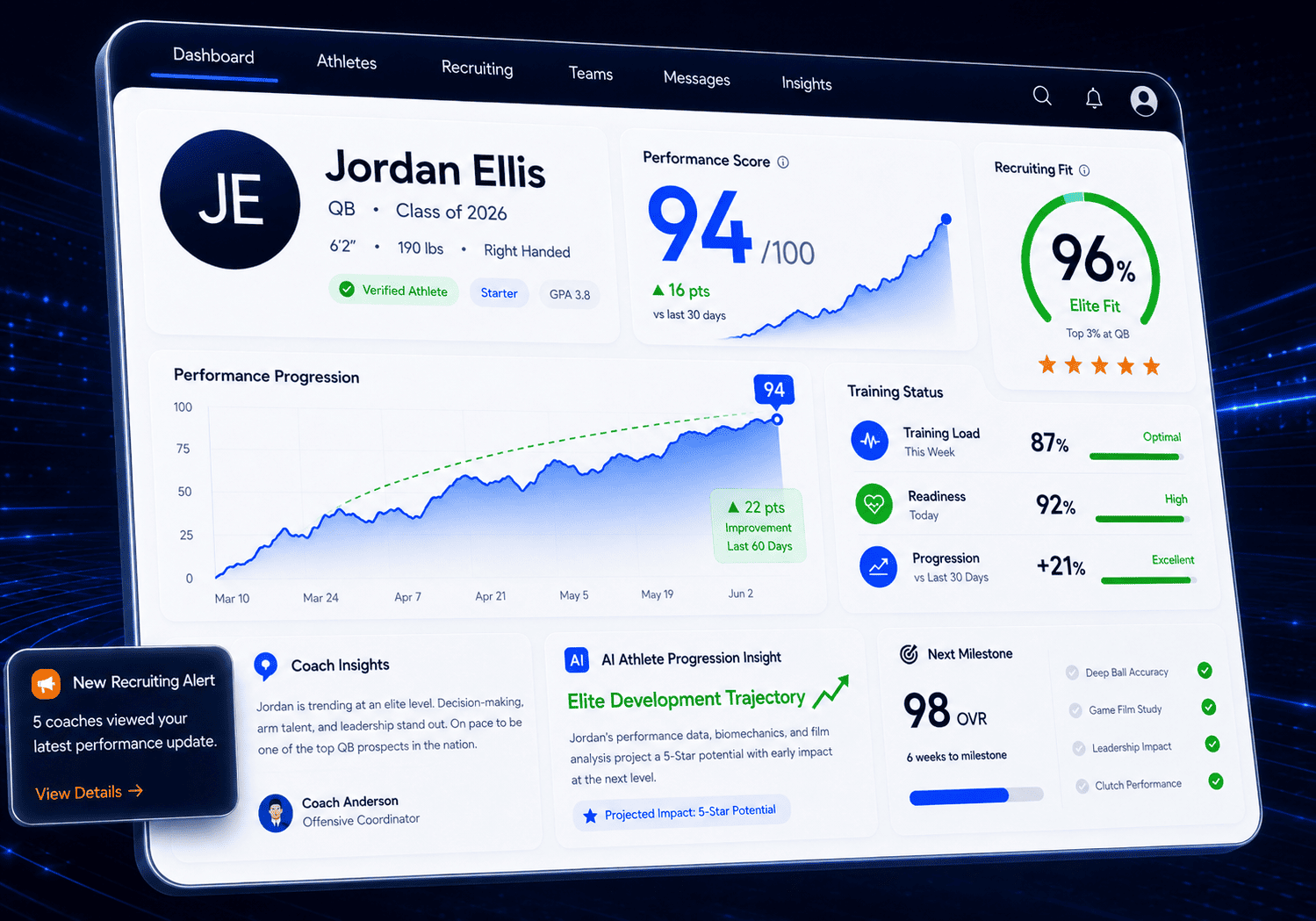
AI-Powered Sports Performance & Recruiting Platform for Virginia Clubs, Academies & Youth Programs

Plavno developed a custom sports technology platform for Virginia-based clubs and academies to combine athlete performance tracking, coach communication, recruiting workflows, and mobile engagement in one ecosystem.

Read More
3x

faster recruiting pipeline

AI-Powered Sports Performance & Recruiting Platform for Virginia Clubs, Academies & Youth Programs

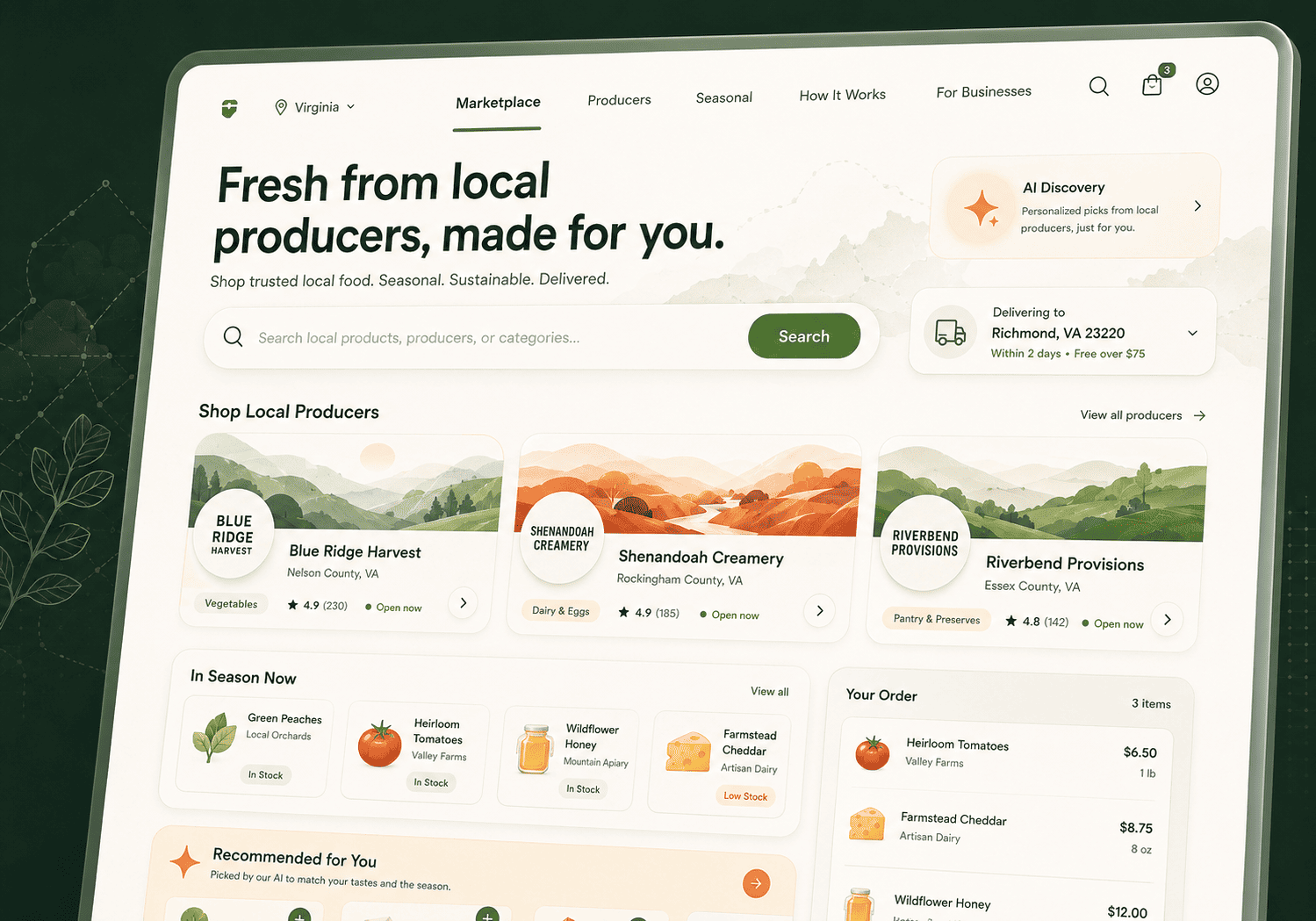
Digital Marketplace for Virginia Farmers, Local Producers & Direct-to-Consumer Food Sales

Plavno developed a custom multi-vendor marketplace for Virginia-based farmers, food producers, and regional sellers to unify product listings, vendor operations, customer ordering, and local fulfillment workflows.

Read More
3x

increase in product discovery relevance

Digital Marketplace for Virginia Farmers, Local Producers & Direct-to-Consumer Food Sales

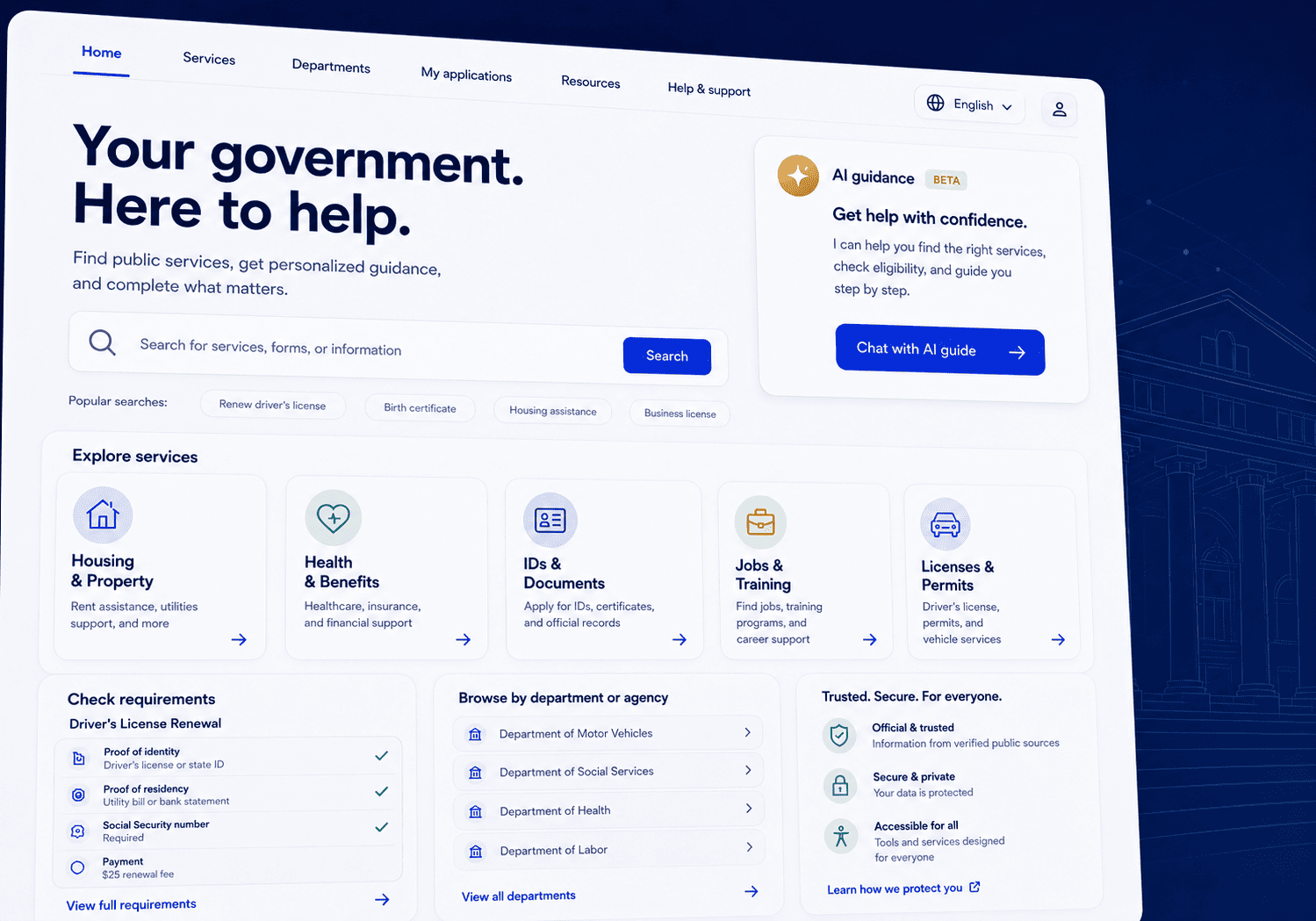
AI-Powered Citizen Services Website Platform for Virginia State Agencies

Plavno developed a modern eGovernment website platform for Virginia state agencies that centralizes citizen services, public information, department content, and an AI-powered guidance agent in one scalable system.

Read More
70%

reduction in routine citizen inquiries to agency staff

AI-Powered Citizen Services Website Platform for Virginia State Agencies

Engineering difference

Why Roanoke buyers pick deep AI partners

Generic agencies sell workshops. We ship decision systems you can run, measure, and defend in audits.

Generic Agencies
Our Platform (Deep Engineering Expertise)
Use cases ranked on P&L and data readiness
checkmark
Production agents with audit replay
checkmark
Fixed slide deck discovery only
checkmark
Cost envelope per thousand model calls
checkmark
Named owners for drift and overrides
checkmark
Hands-off after pilot demo day
checkmark
Compliance paths for PHI PCI and exams
checkmark

Testimonials

We are trusted by our customers

“They really understand what we need. They’re very professional.”

The 3D configurator has received positive feedback from customers. Moreover, it has generated 30% more business and increased leads significantly, giving the client confidence for the future. Overall, Plavno has led the project seamlessly. Customers can expect a responsible, well-organized partner.

Sergio Artimenia

Commercial Director, RNDpoint

Sergio Artimenia

“We appreciated the impactful contributions of Plavno.”

Plavno's efforts in addressing challenges and implementing effective solutions have played a crucial role in the success of T-Rize. The outcomes achieved have exceeded expectations, revolutionizing the investment sector and ensuring universal access to financial opportunities

Thien Duy Tran

Product Manager, T-Rize Group

Thien Duy Tran

“We are very satisfied with their excellent work”

Through the partnership with Plavno, we built a system used by more than 40 million connected channels. Throughout the engagement, the team was communicative and quick in responding to our concerns. Overall, we were highly satisfied with the results of collaboration.

Michael Bychenok

CEO, MediaCube

Michael Bychenok

“They have a clear understanding of what the end user needs.”

Plavno's codes and designs are user-friendly, and they complete all deliverables within the deadline. They are easy to work with and easily adapt to existing workflows, and the client values their professionalism and expertise. Overall, the team has delivered everything that was promised.

Helen Lonskaya

Head of Growth, Codabrasoft LLC

Helen Lonskaya

“The app was delivered on time without any serious issues.”

The MVP app developed by Plavno is excellent and has all the functionality required. Plavno has delivered on time and ensured a successful execution via regular updates and fast problem-solving. The client is so satisfied with Plavno's work that they'll work with them on developing the full app.

Mitya Smusin

Founder, 24hour.dev

Mitya Smusin

Architecture & Engineering Overview

How Roanoke AI programs stay solvent after launch

90-day payback

Baseline & 90-day hypothesis

Green-light only work tied to labor, rework, leakage, and cycle time

Risk reverse paths

Risk-by-design escapes

Reverse paths, human hatches, challenger models before silent updates

Unit cost envelopes

Unit cost envelopes

Token burn, retrieval load, reviewer rates sized before coding starts

Adoption metrics

Adoption over dual-run

Saves vs override rates on real tickets; shared patterns cut next-stream cost

For Business: Technical ROI & Risk Mitigation

Business impact starts when a use case ties to a line leaders already track. Labor minutes, rework dollars, leakage, and cycle time beat vanity accuracy slides. We only green-light work with a measured baseline and a 90-day payback hypothesis. Insurance eligibility agents cut repetitive verification loops that burned adjuster time. Ecommerce chatbots shrank overnight ticket backlogs that forced overtime. Payment agents reduced manual exceptions on common transfer paths without removing dual control.

Risk mitigation is a design requirement, not a late compliance patch. Every automated action needs a reverse path and a human escape hatch. Credit scoring work shows why silent model updates scare risk committees. Feature changes ship behind gates with challenger models and documented impact. Food delivery voice flows fail safe to a human agent when confidence drops. That keeps customer trust while automation expands coverage hours.

Cost control lives beside value claims. Token burn, retrieval volume, and reviewer load set the true unit cost. We size envelopes before coding so finance can reject bloated designs early. Media personalization stacks taught us feature computation can outspend models if unchecked. Dubbing pipelines batch work overnight to protect daytime compute budgets. Controllers in Roanoke see monthly run-rate bands, not open-ended clouds.

Change management decides whether ROI survives past the pilot team. Supervisors need dashboards that show saves beside override rates. Training materials use real tickets from Salem or Lynchburg operations, not stock screenshots. When staff trust the numbers, they stop shadowing the old process in parallel. That dual-run waste is usually larger than model fees themselves. We bake adoption metrics into the same board report as technical KPIs.

Portfolio discipline multiplies gains. After the first win, we reuse integration patterns across related queues. CRM feedback automation feeds product and support the same insight pipe. Localization stacks reuse speech components across games and education content. Shared components drop marginal cost on workstream two and three. That is how Southwest Virginia firms build a durable AI budget story for 2026.

1

Constrained discovery

Systems of record, decision boundaries, contracts, and threat notes at kickoff

2

Modular services mix

Typed tool calls, separate retrieval, rules for policy—swap models without core rewrite

3

Shadow, canary, kill gates

Frozen eval sets, staged quality/cost bands, stop coding if data pipelines lag

4

Post-launch cadence

Quarterly model reviews, drift monitors, independent model rollback playbooks

For CTOs: Architecture & Technical Lifecycle

Lifecycle starts with a constrained discovery that names systems of record and hard constraints. We freeze the decision boundary: what the model may do alone, and what always needs a human. Governance sits on the critical path from kickoff, not after the first outage. Kickoff produces interface contracts, threat notes, and a staged release plan. Trade-offs between speed and isolation are written down so later staff can defend them.

Architecture decisions favor modular services over monolith copilots. Orchestration services call tools with typed schemas and timeouts. Retrieval indexes stay separate from transactional databases to protect operational load. Rule engines handle deterministic policy while models handle language and ranking noise. Payment and insurance builds used this mix so money and eligibility paths stayed auditable. CTOs can swap a model vendor later without rewriting the business core.

Data lifecycle covers training, evaluation, production features, and retirement. Owners sign for accuracy of labels and for retention windows. Shadow modes run against live traffic before any auto-action. Canaries expand only when quality and cost stay inside agreed bands. Credit scoring projects required frozen evaluation sets to stop metric gaming. Localization work locked language pairs and glottal edge cases into regression packs.

Delivery governance uses short stages with kill criteria. If data quality stalls, we stop coding models and fix pipelines first. If vendor lock terms fail legal review, build effort shifts before sunk cost grows. Roanoke and Blacksburg engineering benches often share staff with other products. So we keep runbooks short and avoid exotic ops that need a platform SRE army. The goal is a system the existing on-call rotation can actually carry.

Post-launch lifecycle includes quarterly model and prompt reviews. Drift monitors watch input distributions, override spikes, and unit cost. Incident playbooks define rollback of models independent of app deploys. Security reviews revisit scopes when new tools gain write access. This cadence keeps the consulting plan honest after the slide stage ends. You own the lifecycle map. We staff the hard parts until your team is ready.

Deterministic rails

Interfaces before prompts

Tool schemas, idempotency keys, retries; Python state machines + queues wrap probabilistic pieces

Clear data stack

Boring clarity stack

PostgreSQL truth, object storage artifacts, warehouse features; vectors only when quality beats keyword

Versioned models

Models under cost ceiling

Hosted APIs or private PHI/PCI endpoints; prompts, tools, and rule packages versioned in git with evals

Edge-case tests

Edge cases gate the build

Vocab thresholds, empty-feedback CRM, bureau lag fallbacks, spoken price confirms; broken tests fail CI

For Engineers: Implementation Details & Stack

Implementation starts from concrete interfaces, not notebooks thrown over the wall. We define tool schemas, idempotency keys, and retry rules before model prompts. Deterministic rails wrap probabilistic components so failures stay diagnosable. Orchestration often sits in Python services with explicit state machines for long workflows. Message queues absorb spikes from batch dubbing or mass eligibility checks. Engineers get ADRs that explain each pick against local latency and staffing constraints.

Stack defaults favor clarity. PostgreSQL holds transactional truth. Object storage holds media and large artifacts. A warehouse or lakehouse stores features and eval sets. Vector indexes appear only when retrieval quality tests beat strong keyword baselines. MediaSphere personalization needed stable identity joins before ranking models paid off. Ecommerce assistants used catalog embeddings plus strict product filters to stop invented SKUs.

Model choice is an experiment with a cost ceiling. Hosted APIs accelerate pilots when data sensitivity allows. Private endpoints appear for PHI/PCI or for steady high volume where unit economics flip. Prompt and tool versions live in git with eval scores attached. Insurance agents kept rule packages versioned beside prompts so legal could diff decisions. Fintech payment agents logged every tool call with redaction for account numbers.

Edge cases dominate production pain. Speech systems mis-hear domain terms on plant floors or prayer audio. We ship custom vocabularies and confidence thresholds with forced human routes. CRM insight pipes must survive empty feedback weeks without hallucinating trends. Credit models need fallbacks when bureau feeds lag. Voice order flows must confirm price and items out loud before submission. Each case gets a test that fails the build if broken.

Optimization means fewer tokens, smarter caches, and better batching, not mystery while-true loops. Retrieval depth and re-rank stages are tuned against measured answer quality. Async workers handle translation and dubbing so interactive APIs stay quick. Feature computation reuses shared tables across scoring and CRM analytics. Observability hooks emit spans from tool start to human decision. That lets engineers isolate whether latency lives in the model, the ERP, or the network path into Roanoke sites.

Security & compliance

Least privilege & audit

Data-class envs, HIPAA/PCI patterns, scoped tool writes, redaction, proven kill switches

Unified observability

Quality · latency · cost · access

Token spend, drift alerts, ERP vs model latency split, override volume on one board

Staged deployment

IaC rings & canaries

Small traffic slices, blue-green windows, cost alarms, model hashes linked to approvals

Sustained operations

Year-later operating layer

Access reviews, disaster tests, shift-aware maintenance, continuous retrieval cost checks

Infrastructure, Observability & Security

US client deployments assume regional cloud controls, least privilege, and full auditability from day one. Environments split by data class. Secrets never sit in prompts or tickets. We monitor quality, latency, cost, and access together because any one alone hides real risk. HIPAA paths appear for clinical assistants. PCI-aligned patterns appear for payment agents. SOC2 evidence collection is designed into logging, not bolted on before an audit week.

Observability covers product and model health. Dashboards track request rates, token spend, cache hit rates, and human override volume. Drift alerts fire when input features shift beyond training bounds. Latency budgets break out model time versus upstream APIs common in Roanoke ERPs. Localization pipelines expose queue and word-error proxies so content leads see quality early. On-call runbooks name who owns model rollback versus app rollback.

Security reviews treat tools as privileged actors. Write actions require scoped credentials, confirmation steps, and reproducible logs. Redaction strips PAN, SSN, and clinical notes before storage in eval sets. Network policies limit which services can reach payroll or claims cores. Insurance and fintech cases made these controls non-negotiable for go-live. We tabletop an incident where a model starts leaking context and prove the kill switch works.

Deployment uses infrastructure as code, staged rings, and automated checks. Canaries take a small percent of Roanoke traffic before wider rollout. Blue-green or short rollback windows protect busy claim or order peaks. Cost alarms stop runaway batch jobs overnight. Change tickets link model hashes to business approval records. Nearby teams in Vinton or Christiansburg can read the same diagrams without tribal knowledge.

Post-launch operations include monthly access reviews and quarterly disaster tests. Raw training sets age out on schedule. Vendor status pages and fallback models are wired before peak season. Maintenance windows match plant shift patterns and hospital night mixes. Continuous cost reviews catch retrieval indexes that grew without demand. This operating layer is why consulting value still shows on the P&L a year later.

Eugene Katovich

Eugene Katovich

Sales Manager

Need a custom software solution? We’re ready to help!

Plavno has a team of skilled developers ready to tackle the project. Ask me!

Get a Free Quote

Data contracts & integration

Integration patterns that keep Roanoke stacks intact

The second build concern is not model fashion. It is how AI touches the systems Roanoke teams refuse to rip out. Consulting work here defines contracts, sync timing, and failure modes before any agent writes a record. We inventory APIs, flat-file drops, and human side doors that still move money or inventory. Only then do we place automation where integration risk stays acceptable. This section is deliberately separate from core architecture so owners of EDI, Epic, or older ERPs get their map.

Read patterns prefer events and change data capture over brittle nightly dumps. When events are missing, we time windowed extracts with watermarks and checksums. Write patterns never silent-update finance or clinical systems without correlation IDs. Insurance eligibility agents read plan data and emit decision objects with full provenance декораators. Payment agents call fintech rails with twin-control steps and reverse transaction paths. Ecommerce chatbots read tiered catalog APIs and only mutate carts through existing commerce services.

Data quality gates sit in front of every training or retrieval refresh. Schema tests catch silent field renames from upstream vendors. Label audits sample human decisions that will train the next exit model. Media discovery layers fail if identity keys fracture across platforms. CRM insight pipes fail if feedback forms stop mapping to ticket IDs. We script these checks so a bad Monday extract cannot poison Thursday rankings. Beats hoping a dashboard looks fine afterward.

Latency budgets are set per workflow class. Interactive eligibility or support needs hard ceilings and graceful degradation. Batch credit rescoring and offline dubbing tolerate queues and midnight workers. Cross-region calls out of Southwest Virginia add real milliseconds that coastal demos hide. We measure on your VPN and business hours clutter, not a clean lab. Cost envelopes include retry storms so one flaky SOAP endpoint cannot explode the token budget overnight.

Security for integration means scoped tokens, mTLS where required, and strict PII minimization at the boundary. PHI and card data never land in free-text long-term stores used for prompt logs. Master data ownership stays with your system of record. We document who may expand scopes after launch so shadow IT cannot attach new write tools quietly. Post-launch monitors watch API error rates, schema drift, and unexpected write volumes. That closes the loop between consulting advice and the daily run for Roanoke operators.

Before you fund the pilot

Roanoke readiness checks that prevent failed AI spends

  • Name the decision and owner — Write the exact decision the system will make or assist. Assign a single business owner in Roanoke who controls the KPI. Include the human override path and who is paged on failure. List the systems of record that must stay authoritative after go-live. Confirm legal has seen any customer notice requirements. Capture this in one page before workshops expand.

  • Baseline the process cost — Count minutes, error rates, and volume for two to four weeks. Use ticket exports or time studies from Salem, Vinton, or your main site. Finance must accept the baseline or ROI later becomes opinion. Note seasonal spikes that will break a model sized on quiet weeks. Photograph the actual screens staff use today. Bring that evidence to scoping, not only process lore.

  • Prove the data frame — Inventory tables, APIs, files, and access lead times. Mark PII, PHI, and PCI fields for redaction. Sample hundred-row extracts to spot nulls and conflicting IDs. Credit and insurance projects die here when keys do not join. Name an engineer who can release credentials within the first sprint week. Without that person, stop the calendar.

  • Set cost and risk ceilings — State monthly cloud and vendor limits for pilot and production. Define decisions that must never fully automate. Payment and clinical actions need dual control written down. Agree kill criteria for drift, latency, and budget alarms. Put security review dates on the same plan as content freezes. Ceilings keep bold demos from owning next quarter’s cash.

  • Plan the week after launch — Schedule monitoring duties, label feedback, and weekly quality huddles. Assign who reads special-case queues on weekends. Document rollback for models separate from app deploys. Train floor supervisors on override etiquette so shadow processes die. Book a thirty-day economics review with finance. Without this, value leaks even when the model works.

Vitaly Kovalev

Vitaly Kovalev

Sales Manager

Get your Roanoke AI readiness score

Share budget, timeline, stack, and dataset scope. Receive a free AI Readiness Estimator for Roanoke businesses with scored gaps and a 90-day plan outline.

Talk to Experts

Common questions

AI consulting questions from Roanoke teams in 2026

Straight answers on cost, time, data, quality, security, and the work after launch for Southwest Virginia operators.

What drives the cost of AI consulting services in Roanoke, Virginia?

Cost tracks scope complexity, data readiness, integration count, and compliance load more than buzzword count. A single process with clean APIs and no PHI is far cheaper than multi-system claims work. Local market rates for engineers and part-time SMEs in the Roanoke Valley also shape workshop and shadowing time. Travel stays low for teams already in Salem, Vinton, or Blacksburg. Remote tape reviews can replace some on-site days when security policy allows.

We price discovery separate from build so you can stop after the plan if value is thin. Discovery covers process baselines, data sampling, risk notes, and a ranked portfolio. Build adds design, orchestration, evaluation harnesses, and production hardening. Insurance eligibility style agents need rule encoding and audit trails that pure chat demos skip. Credit scoring needs feature lineage work that adds weeks but prevents exam pain later. Ecommerce chatbots cost less when catalogs are already clean and APIs exist.

Hidden cost drivers include waiting on credentials, unlabeled history, and brittle vendor APIs. Each week of access delay burns calendar and smothers staff focus. Brownfield ERPs with only nightly flat files raise engineering hours versus modern event streams. Token and retrieval spend becomes material after go-live if envelopes were never modeled. We include a run-rate band for monthly model and infra spend so finance sees continuous cost, not only project fees.

Compared with coastal rates, Roanoke programs often pay less for on-site collaboration yet face thinner local IT benches. That means we invest more in runbooks and simple ops tooling. Vendor licenses can eclipse consulting if you buy an enterprise suite for a narrow use case. Our build-buy memos protect you from that mismatch. Expect honest ranges after a short intake covering budget, timeline, stack, and dataset scope, not a one-number slogan on a billboard.

How long does it take to deliver AI consulting outcomes and first production software?

Consulting discovery for a focused Roanoke domain usually runs two to four weeks. That window baselines processes, samples data, and ranks use cases with finance in the room. You leave with a decision packet, cost envelope, and a go or no-go call. Teams that already know the target process finish faster. Multi-department programs with unclear ownership take longer because alignment work dominates early days. We keep the calendar explicit so calendar creep is visible.

An MVP agent or decision service often needs six to ten weeks after discovery when APIs exist and compliance is moderate. That includes orchestration, evaluation sets, human review UI, and staging rollout. Insurance eligibility style flows sit closer to the long end because rules packing and audit trails matter. Ecommerce FAQ chatbots with mature catalogs can sit closer to the short end. Fintech payment agents add control design and security reviews that extend critical path. Localization pipelines add media QA gates that are separate from pure software time.

Full deployment across sites or channels is a phased program, not a single cutover. Shadow mode may run two to four weeks while quality and cost prove out. Canary percentage then grows under agreed kill criteria. Plants along I-81 and clinics with shift work need training slots booked early. If labels or feature quality lag, we pause model work and fix data instead of shipping theater. That honesty saves more months than aggressive demos promise.

What you receive at each gate is concrete. After discovery: portfolio, architecture sketch, and budget band. After MVP: working path in staging with monitors. After production: runbooks, owners, and a 30-day economics review. Parallel work on integration credentials can shrink wait time if you start access requests during discovery. Share timeline targets up front and we will map a critical path that respects your freeze windows for 2026 peaks.

What data do you need before AI business consulting can start in Southwest Virginia?

Start with process evidence more than a giant data lake. We need two to four weeks of volume counts, handle times, error codes, or ticket exports for the target workflow. Screen recordings or SOP PDFs help when systems lack clean logs. Owners must confirm which fields are trusted. Without a baseline, ROI is negotiation instead of measurement. This step is short when operations already reviews those metrics weekly.

Next come technical samples. Representative database extracts, API schemas, and file layouts beat abstract diagrams. Mark PII, PHI, and payment fields immediately. For credit scoring patterns we need historical decisions and outcomes with stable keys. For eligibility agents we need plan rule sources and prior determination examples. For chatbots we need FAQ corpora, product feeds, and real chat transcripts with sensitive data redacted. For voice or dubbing work we need audio samples across accents and noise profiles common to your content.

Access logistics often decide speed for Roanoke companies. Name the identity admin who can issue VPN, SSO, and read-only roles. List change windows for production mirrors. If a vendor hosts the system, share ticket SLAs for new integrations. Higher education and healthcare partners near Blacksburg or Carilion may need extra committee time. We plan those reviews into the calendar instead of discovering them mid-sprint. Empty promises of casual admin access waste budget.

Label quality matters as much as volume. Ten thousand noisy rows lose to two thousand well-reviewed decisions. We sample jointly with SMEs so definitions stay sharp. Feedback loops such as CRM notes or adjuster comments become gold when structured. If labels do not exist, discovery includes a labeling design and cost. Bring what you have. We will tell you what is enough for a pilot versus what must wait.

How should Roanoke teams evaluate AI consulting companies and measure quality?

Evaluate partners on shipped systems with audit trails, not keynote polish. Ask for cases close to your domain such as eligibility agents, payment agents, credit scoring, ecommerce chat, or localization pipelines. Require named metrics with baseline, change, measurement window, and where measured. Vague percent claims without a base line are a warning. Review whether they discuss failure modes, overrides, and cost envelopes without prompting. Those topics separate builders from workshop vendors.

Quality measurement starts before models ship. Define acceptance tests for decisions that matter: false automate rate, average handle time, token cost per successful task, and reviewer load. Shadow mode compares agent output against current staff on live traffic without customer impact. Canaries add risk thinsly. We recommend held-out evaluation sets that leadership cannot tweak midstream. Credit and insurance contexts need fairness and explainability checks as first-class scores. Media ranking needs online engagement and offline relevance packs together.

During vendor evaluation, inspect integration depth. There is little value in a chatbot that cannot reach order status truth. Ask how they version prompts, tools, and rules jointly. Ask who owns drift monitors after ninety days. Confirm they will train your staff, not create permanent dependency on black-box isles. Compare two or three firms using the same sample process packet. Score them on clarity of threats as well as optimism of upside.

Local fit for Southwest Virginia counts. Partners should understand elongated vendor paths, plant shift realities, and mixed cloud/on-prem estates. They should mention post-launch economics without shame. Reference calls must include a technical owner, not only a marketing sponsor. When you measure us, use the same bar. We publish gates you can fail us on so quality stays contractual rather than cinematic.

How do you handle compliance and security for artificial intelligence consulting with Virginia companies?

Security design begins with data classification and decision impact. PHI, PCI, student records, and financial decisions each force different controls. We map where data flows, where logs live, and who can prompt with sensitive fields. Least privilege roles and short-lived credentials are defaults. Customer code secrets never enter model prompts. Redaction pipelines strip permanent stores used for debugging. These practices apply whether the client sits in downtown Roanoke or operates statewide from multiple hubs.

Regulatory patterns depend on industry. Healthcare assistants respect HIPAA access, encryption, and audit needs. Payment agents follow PCI mentality even when full certification rests with other vendors. Insurance decisioning needs reverse decisions, reason codes, and retention policies that examiners accept. Education related translation or content tools may invoke FERPA considerations. We do not invent certifications. We implement technical and process controls that make your existing frameworks executable inside AI workflows.

Technical lifecycle controls include environment separation, change tickets linking model hashes to approvals, and independent rollback of models. Tool write actions require confirmations and full replay logs. Penetration tests and tabletop incidents cover prompt injection and data exfiltration cases. Vendor reviews check subprocessors for model APIs and storage. US hosting regions default for regulated workloads. Hybrid designs appear when on-prem systems cannot open broadly to public endpoints. That keeps university, hospital, and fintech partners inside policy.

Consulting deliverables include threat notes, control matrices, and operator guidance. Supervisors learn what they may override and what must escalate to security. Access reviews sit on a monthly calendar after launch. Incident contacts and evidence pack locations are documented before go-live. We work with US-based clients, including companies operating in Virginia, so counsel can review contracts under familiar law. Bring your policies early. We map them to concrete engineering tasks rather than a parallel paper pile.

Contact Us

This is what will happen, after you submit form

Need a custom consultation? Ask me!

Plavno has a team of experts ready to start your project. Ask us!

Vitaly Kovalev

Vitaly Kovalev

Sales Manager

Schedule a call

Get in touch

Fill in your details below or find us using these contacts. Let us know how we can help.

No more than 3 files may be attached up to 3MB each.
Formats: doc, docx, pdf, ppt, pptx, xls, xlsx, txt.
Send request