bg image
bg image

Serving Richmond, VA

Ship AI that reduces cycle time for Richmond teams in 2026

You are under pressure to move faster without adding headcount. Manual review, triage, and customer follow-up keep piling up across ops, support, and compliance. We build AI features that cut backlog, shorten response times, and make outcomes consistent across teams. The work is scoped to your workflows and your risk tolerance, not a demo script. Get AI Development cost estimate in 24 hours. Best fit for product, ops, and IT leaders who need results they can measure in weeks.

Discuss Project

Overview

Richmond AI builds that pay off this quarter

Richmond teams in finance, healthcare, and government are moving AI from experiments into production in 2026. The hard part is not ideas. The hard part is fitting AI into real workflows, with real latency limits and approval paths. Trusted AI Development Partner for Richmond Businesses is a claim we earn by shipping systems that survive daily operations. If you are comparing an ai development vendor, ask how they handle integration debt and production support, not just prototypes.

We work with US-based clients, including companies operating in Virginia. In the Richmond metro, we often support teams spread across Short Pump, Scott's Addition, Shockoe Bottom, Henrico County, and Chesterfield County. The local reality is mixed systems, heavy compliance, and tight timelines tied to budgets and legislative cycles. AI work succeeds here when it reduces rework and speeds decisions without breaking audit trails. Our published portfolio includes 10+ AI and automation case studies from US-market delivery, and we apply those lessons locally.

We have built AI systems that process speech and text in real time, like a video conferencing pipeline with live voice translation and meeting transcription. We have also built decision support flows for sensitive domains, like a medical symptom checker agent and AI-assisted deposition software. Those projects shaped how we design prompts, workflows, and guardrails so outputs stay actionable. They also informed how we log sources, capture feedback, and measure drift over time. Richmond buyers care about accountability because teams are small and ownership is visible.

AI value in Richmond is usually tied to two outcomes. First is cycle time reduction in high-volume work like intake, call routing, document review, and policy checks. Second is quality consistency across shifts and locations, especially when contractors or rotating staff are involved. We plan projects around what can be measured in your system of record, not in a slide deck. That means agreeing on baseline metrics before model work starts and instrumenting the app so you can see change week to week.

Our approach combines product engineering with data engineering for AI. We start by mapping decisions and failure modes, then we build a small vertical slice that touches your real data and your real users. From there we extend coverage, add controls, and integrate into the tools your team already runs. You get a build plan, a clear testing strategy, and production operations guidance. The goal is simple. Ship AI that increases throughput and reduces risk at the same time.

Talk to an Expert
Workflow-first vertical slice

Workflow-first vertical slice

Map decisions & failure modes → ship a small slice using real data, real users, and measurable baselines.

Data + integration as source of truth

Data + integration as source of truth

Adapters, data contracts, and API-first integration into CRM/ticketing/legacy systems (no “side chatbot”).

Guardrails, auditability, approvals

Guardrails, auditability, approvals

RBAC, traceable outputs, human review & escalation paths designed for regulated workflows.

Operate & optimize in production

Operate & optimize in production

Instrumentation for latency/cost/quality, drift monitoring, release gates, and day-two support playbooks.

2wk first working slice
1hr incident playbook readiness
10% cost variance guardrails

AI Development Solutions for Richmond Industries

Local use cases that clear real backlogs

Richmond's mix of regulated services, public sector work, and industrial ops creates repeatable AI problems. We focus on the workflows where latency, auditability, and integration decide success.

Doc Intake

Doc Intake

Policy checks

Financial services intake and document checks

Richmond finance teams lose days to document triage, exception routing, and manual policy checks. We build AI-assisted review flows that classify documents, extract fields, and route exceptions with explainable reasons. The ROI model is straightforward: if you reduce 2 hours per analyst per week across a 20-person team, that is 40 hours weekly returned to higher-value work. We have delivered document understanding and rules-driven checks in an AI customs compliance checker, and the same pattern applies to financial controls. Technically, we combine structured extraction with a rules layer so policy changes do not require retraining. We also keep human approval in the loop where your regulators expect it.

Patient Triage

Patient Triage

Assist

Healthcare triage and patient-facing assistants

Richmond healthcare organizations deal with inconsistent intake notes and long queues for basic triage. We build symptom collection and decision support flows that standardize questions and surface next steps for staff review. A practical ROI target is a 15% reduction in nurse callback time for low-acuity requests when the assistant gathers complete information first. We have built a Symptom Checker Agent that structures symptom capture and supports triage decisions in a controlled flow. The technical design uses constrained conversation paths and strong logging so you can audit what was asked and what was answered. We add escalation rules so urgent signals route to a human immediately.

Casework Search

Casework Search

Records

Government AI modernization for casework and records

Virginia public sector teams in and around Richmond often sit on legacy systems with strict retention and public records constraints. We build AI features that help staff find, summarize, and route records without changing the core system on day one. A common ROI case is reducing caseworker time spent searching and summarizing by 30 minutes per case. At 500 cases per month, that is 250 hours monthly returned to citizen-facing work. We implement retrieval over approved sources, with access control that matches department permissions. We also design for explainability so decisions can be defended during audits and reviews.

Predictive Maintenance

Predictive Maintenance

Quality

Manufacturing predictive maintenance and quality signals

Richmond-area manufacturers face downtime risk and scattered maintenance logs across shifts. We build ML signals that highlight abnormal patterns and turn free-text notes into structured events for analysis. An ROI model can be as direct as preventing one unplanned downtime event per quarter. If a line outage costs $20,000 per hour and lasts four hours, that is $80,000 protected per event. The technical work starts with data cleanup and feature engineering so sensor and log data can be trusted. We then add alerting thresholds that operations can adjust without code changes. The end product is a system that makes early warnings visible and actionable.

Legal GenAI apps for deposition and matter workflows

Richmond legal teams spend time turning recordings and notes into searchable work product. We build custom GenAI apps that transcribe, summarize, and organize deposition content into matter-ready artifacts. A realistic ROI model is cutting 3 hours of paralegal time per deposition for first-pass summaries and issue tagging. At 30 depositions per month, that is 90 hours monthly returned to billable or higher-skill work. We have delivered Custom Legal Software Development and an AI solution for depositions with workflow automation and summarization. Technically, we keep source references attached so attorneys can verify outputs quickly.

Call Wrap-Up

Call Wrap-Up

Routing

Contact center LLM integration and voice workflows

Richmond contact centers and internal help desks are judged on speed and consistency, but knowledge is spread across tools. We build LLM integration for contact centers that summarizes calls, drafts follow-ups, and routes cases to the right queue. An ROI model is reducing after-call work by 60 seconds per call. At 50,000 calls per month, that is 833 hours monthly returned to live capacity. We have built voice and transcription systems, including real-time meeting transcription and an AI phone agent for logistics, which informs our voice pipeline choices. Technically, we connect to your ticketing and CRM via APIs and log every step for QA review.

plavno logo

Build your first
Smart AI project today!

Just tell the Plavno AI Agent about your project - it will ask questions, gather requirements, and propose a tailored solution

Production AI delivery

The core architecture behind usable AI products

Richmond organizations usually do not need a general chatbot. They need AI embedded in a workflow that already exists, with clear inputs, outputs, and approval steps. We build end-to-end AI software development services that include UX, backend APIs, model integration, and measurable instrumentation. The goal is to make AI a predictable component in your product, not an unpredictable side tool. We use patterns proven in our shipped work, including voice translation and transcription pipelines for conferencing products. We also draw on regulated-domain work like medical triage flows and legal deposition automation to keep controls practical.

For GenAI development, we design the application layer around failure modes. That means defining what the system is allowed to do, what it must never do, and when it must ask a human. We implement retrieval over your approved knowledge sources when the problem is knowledge-bound. We keep citations or source pointers when the workflow needs traceability. This approach came from building systems like customs compliance checking, where outputs must map to rules and documents. It also reduces hallucination risk because the app is constrained by authoritative context and explicit policies.

For machine learning development, we treat data quality as a first-class deliverable. We define the data contract, the label plan, and the minimum viable feature set that can be maintained by your team. If the data cannot support the model reliably, we say so early and propose alternatives, like rules plus targeted ML. This mindset fits Richmond manufacturing and logistics, where sensor data and shift notes are often inconsistent. We have built agent workflows for pricing and market optimization in real estate, which required careful separation of signals from noise. The same discipline applies when a local business wants predictive insights without years of clean history.

Security/compliance is designed into the workflow, not bolted on. We enforce role-based access control and department-level permissions when content should not cross boundaries, as we did in an employee portal built with Payload CMS and Next.js. We log user actions, model inputs, and model outputs so your compliance team can audit decisions. For sensitive domains, we avoid storing raw prompts when they contain protected data, and we scope retention explicitly. We also document where data is processed, who can access it, and how exceptions are handled.

DevOps is part of delivery because AI systems fail in production when monitoring is missing. We set up environments, CI checks, and release gates so changes can be tested and rolled back. We instrument the app to capture latency, error rates, and feedback signals tied to the business process. For voice and transcription systems, we pay close attention to real-time performance because delays break user trust fast. For text-heavy workflows, we track cost per request and queue depth because usage can spike unexpectedly. The result is enterprise AI solutions that can be operated by Richmond teams, not just demonstrated.

Data readiness path

From messy data to AI you can trust

We run a short, structured path that proves data quality and integration early. It prevents teams in Richmond from spending months building on assumptions.

Clipboard
Team
01

Step 1: Workflow and data audit (1–2 weeks)

We map the exact decisions the AI must support and where data enters and exits the workflow. Your team receives a workflow diagram, a data inventory, and a risk register tied to real failure modes. We also define the baseline metrics that matter, like turnaround time, rework rate, and queue age. In Richmond regulated environments, we include auditability and retention constraints in the requirements from day one. The output is a prioritized backlog with a small set of high-value AI interventions. Timeline is 1–2 weeks, depending on system access and stakeholder availability.

02

Step 2: Data contracts and integration spike (1–2 weeks)

We write a data contract that defines fields, types, ownership, and refresh frequency. Then we build an integration spike that reads and writes through the same APIs your production system uses. You receive a working proof that authentication, rate limits, and permissions are handled correctly. For departments split across Henrico and Chesterfield County, we validate access control early so the rollout does not stall. We also identify where manual exports are still required and what automation is realistic. Timeline is 1–2 weeks, based on API maturity and vendor constraints.

Search in doc
Rocket
03

Step 3: Gold dataset and evaluation plan (1–3 weeks)

We create a small, high-quality dataset that represents real cases and edge conditions. Your team receives labeling guidelines, sampling rules, and an evaluation rubric tied to business outcomes. We run pilot evaluations to expose where the model fails and why it fails. In domains like legal and healthcare, we include reviewer instructions to keep judgments consistent. We also define stop conditions, so the team knows when the system is good enough to ship safely. Timeline is 1–3 weeks, depending on review availability and data volume.

04

Step 4: Production pilot with feedback loop (2–4 weeks)

We ship a limited-scope pilot into the real workflow with logging and human review enabled. Your team receives dashboards for latency, cost per transaction, and quality scores based on the evaluation plan. We collect feedback at the point of work, not in after-the-fact surveys, so iteration is fast. We also define clear rollback criteria and a path to expand coverage safely. This phase is where Richmond operators decide if the AI is saving time without creating new risk. Timeline is 2–4 weeks, based on rollout constraints and training needs.

Deliverables

What you receive from an AI build

LLM apps tied to workflows

LLM apps tied to workflows

Richmond teams often start with prompts, then get stuck when real users need consistent outcomes. We build LLM app development as product features, with clear inputs and guarded outputs. The app includes review states, escalation paths, and traceability for decisions. We often choose structured UI plus constrained generation because it reduces support load. When text is the core asset, we add retrieval so answers come from approved sources. This pattern is informed by legal deposition summarization and customs compliance checking work.

Voice, transcription, and translation pipelines

Voice, transcription, and translation pipelines

Support and operations leaders in Richmond want faster documentation and better handoffs after calls and meetings. We build voice pipelines that turn speech into text, then create summaries and action items. Real-time performance matters because users abandon tools that lag. We choose streaming designs when the workflow needs live captions and near-real-time notes. This approach comes from our video conferencing platform with real-time voice translation and meeting transcription. The result is less after-call work and fewer missed commitments.

AI agents for bounded tasks

AI agents for bounded tasks

Many Richmond organizations want agents, but open-ended autonomy creates risk. We build AI agent workflows that are bounded by tools, permissions, and explicit goals. Agents can price, route, schedule, or check rules, then ask for approval at defined steps. We choose this approach when the task has clear success criteria and stable APIs. Our real estate pricing and market optimization agent work informs how we structure plans and tool calls. The outcome is automation that stays within guardrails.

Data engineering for AI

Data engineering for AI

AI projects fail when data is scattered across CRMs, ERPs, file shares, and legacy databases. We build the pipelines and schemas that make data usable and testable for models. We often start with a narrow set of high-value tables and documents to reduce time to first value. When teams rely on permissions, we implement role-based access control so data exposure matches policy. The employee portal migration from SharePoint to Payload CMS and Next.js shaped how we handle content governance. The result is a data platform foundation you can extend safely.

Integration and rollout tooling

Integration and rollout tooling

In Richmond, the fastest AI win still fails if it cannot fit into Salesforce, ticketing, or custom back-office apps. We build integration points that respect rate limits, authentication, and existing workflows. We choose API-first designs so changes can be tested without downtime. For operational teams, we include admin tools to adjust thresholds and routing rules without code edits. This reduces long-term cost because small changes do not require a new sprint. The outcome is faster rollout across departments with fewer manual workarounds.

Integration and cost control

AI integration services that avoid new tech debt

Richmond buyers often discover that the model is not the hard part. The hard part is making AI behave correctly inside a stack that already has identity, permissions, and operational ownership. We build AI integration services that treat your existing systems as the source of truth. That means the AI reads from approved data and writes back in a way your team can audit. It also means we design around the limits of your vendors, like API quotas and event delays. Integration is where enterprise AI solutions succeed or quietly stall.

We prefer incremental integration over big migrations because most Richmond organizations cannot pause operations. A good example is our employee portal modernization, where content moved from SharePoint into a modern internal hub. Payload CMS and Next.js were chosen to keep content editing simple while enforcing role-based access control and department-level permissions. That same approach translates to AI features that must respect department boundaries. We model authorization once and apply it everywhere, including retrieval and workflow actions. This prevents cross-team data leaks and reduces support tickets after launch.

For systems that depend on speech or near-real-time events, we design for predictable latency. Our video conferencing work required real-time voice translation and meeting transcription, which taught us to treat time as a product requirement. In Richmond contact centers, the same constraint applies to call summaries and agent assist prompts. We measure end-to-end latency from audio capture to usable output, then remove bottlenecks one by one. When real-time is not required, we use asynchronous jobs to keep costs controlled and retries safe. The integration design matches the business need, not the trend.

Cost control is a design concern, not a billing surprise. We implement caching, batching, and request shaping so usage spikes do not blow budgets. We also create budgets per workflow and per user group, then alert when usage is outside expected bounds. For AI-heavy experiences, we include fallbacks, like rules-based responses for common cases. This keeps service levels stable during vendor outages or rate limiting. It also helps Richmond teams forecast spend during expansions to new departments.

Post-launch, we keep integrations healthy with testing and monitoring. We add contract tests for APIs so vendor changes are caught before users are affected. We monitor queue depth, error rates, and retry behavior because those are early signs of brittle integration. We also document ownership so your IT team knows who responds to incidents and what the playbook is. This is where many vendors stop, but Richmond operators need day-two readiness. The result is an AI system that stays useful after the first release.

Case Study

We help customers cut
down on development

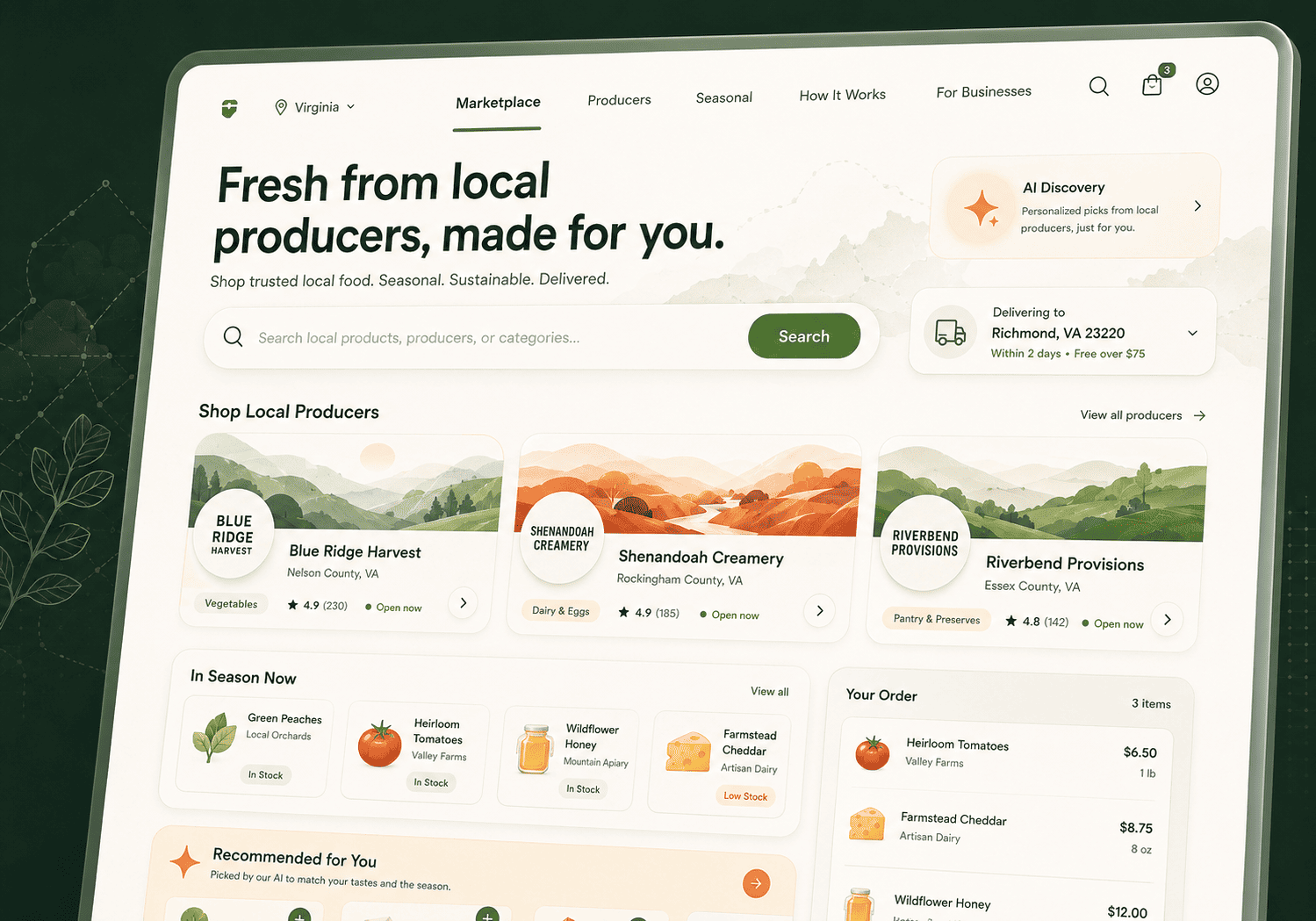
Digital Marketplace for Virginia Farmers, Local Producers & Direct-to-Consumer Food Sales

Plavno developed a custom multi-vendor marketplace for Virginia-based farmers, food producers, and regional sellers to unify product listings, vendor operations, customer ordering, and local fulfillment workflows.

Read More
3x

increase in product discovery relevance

Digital Marketplace for Virginia Farmers, Local Producers & Direct-to-Consumer Food Sales

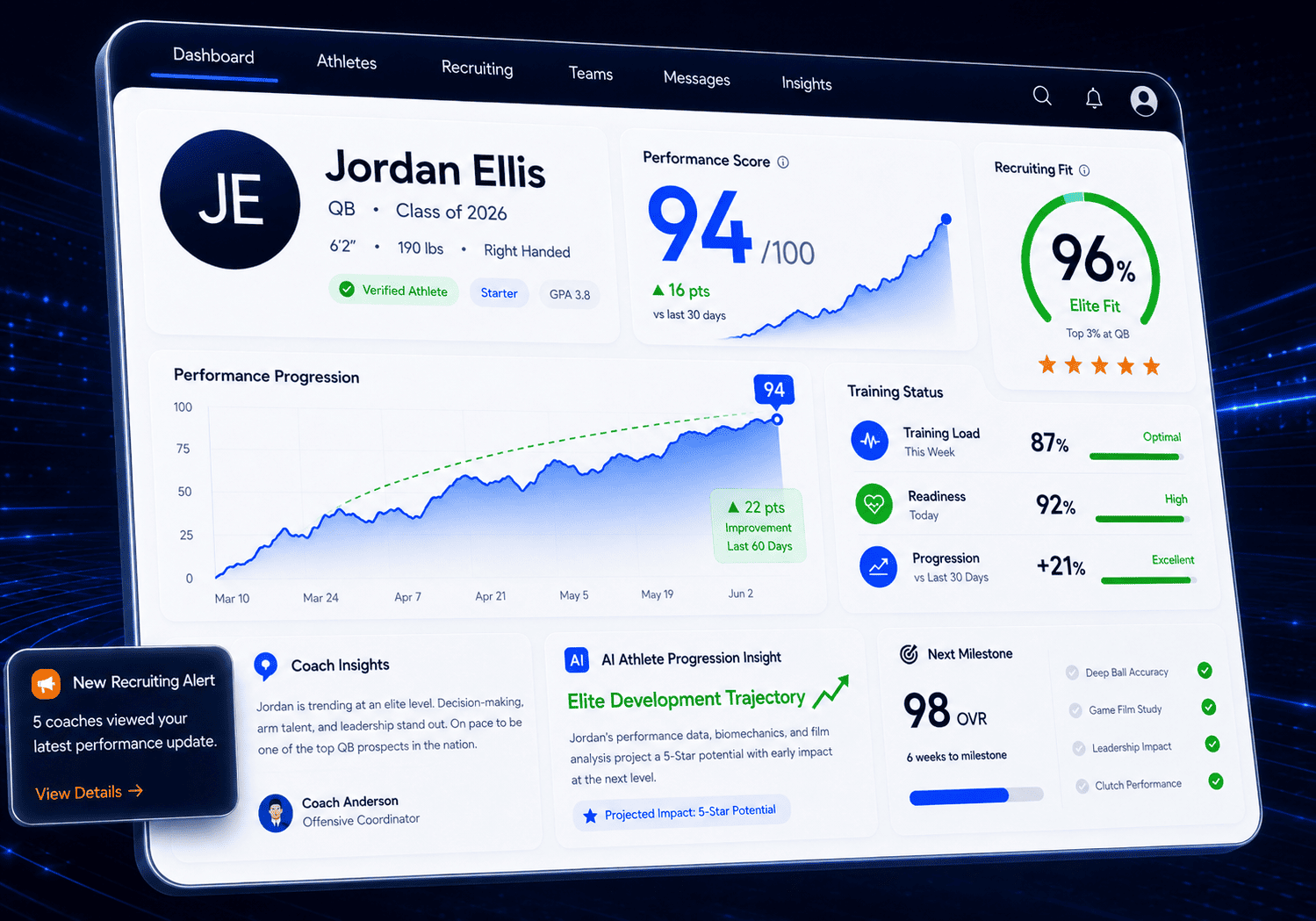
AI-Powered Sports Performance & Recruiting Platform for Virginia Clubs, Academies & Youth Programs

Plavno developed a custom sports technology platform for Virginia-based clubs and academies to combine athlete performance tracking, coach communication, recruiting workflows, and mobile engagement in one ecosystem.

Read More
3x

faster recruiting pipeline

AI-Powered Sports Performance & Recruiting Platform for Virginia Clubs, Academies & Youth Programs

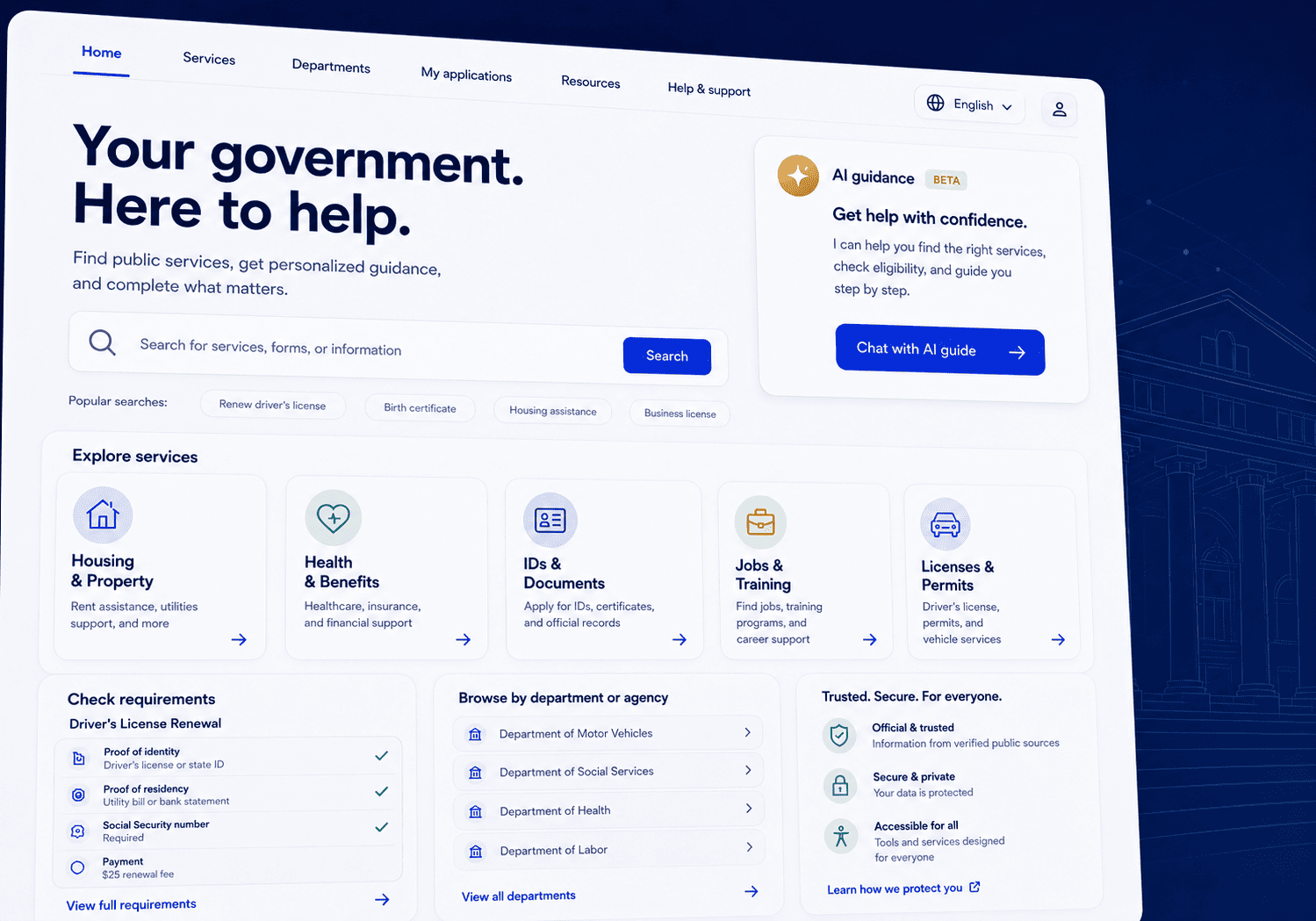
AI-Powered Citizen Services Website Platform for Virginia State Agencies

Plavno developed a modern eGovernment website platform for Virginia state agencies that centralizes citizen services, public information, department content, and an AI-powered guidance agent in one scalable system.

Read More
70%

reduction in routine citizen inquiries to agency staff

AI-Powered Citizen Services Website Platform for Virginia State Agencies
2wk

First working vertical slice

We target a first vertical slice in 2 weeks after access is confirmed and a baseline metric is agreed. Baseline is usually a manual workflow with no instrumentation and unclear queue age. The slice measures latency and user acceptance in the real system of record for one narrow use case. It matters because Richmond teams need proof before expanding scope and budget.

1hr

Incident response playbook readiness

We aim to produce an incident playbook that supports a 1 hour response window for critical workflow breakages once in production. Baseline is often ad hoc troubleshooting with unclear ownership and long handoffs. The playbook defines who is paged, what logs are checked, and how to roll back safely. This reduces downtime risk for contact centers, clinics, and public-facing services.

10%

Cost variance guardrails

We set budgets and alerts so monthly AI cost variance stays within 10% of the forecast once usage stabilizes. Baseline is unknown per-transaction cost, then a surprise invoice after adoption grows. We track cost per workflow step and per user group, then adjust caching and batch strategies. This protects Richmond departments that must plan spend across quarters and fiscal years.

Testimonials

We are trusted by our customers

“They really understand what we need. They’re very professional.”

The 3D configurator has received positive feedback from customers. Moreover, it has generated 30% more business and increased leads significantly, giving the client confidence for the future. Overall, Plavno has led the project seamlessly. Customers can expect a responsible, well-organized partner.

Sergio Artimenia

Commercial Director, RNDpoint

Sergio Artimenia

“We appreciated the impactful contributions of Plavno.”

Plavno's efforts in addressing challenges and implementing effective solutions have played a crucial role in the success of T-Rize. The outcomes achieved have exceeded expectations, revolutionizing the investment sector and ensuring universal access to financial opportunities

Thien Duy Tran

Product Manager, T-Rize Group

Thien Duy Tran

“We are very satisfied with their excellent work”

Through the partnership with Plavno, we built a system used by more than 40 million connected channels. Throughout the engagement, the team was communicative and quick in responding to our concerns. Overall, we were highly satisfied with the results of collaboration.

Michael Bychenok

CEO, MediaCube

Michael Bychenok

“They have a clear understanding of what the end user needs.”

Plavno's codes and designs are user-friendly, and they complete all deliverables within the deadline. They are easy to work with and easily adapt to existing workflows, and the client values their professionalism and expertise. Overall, the team has delivered everything that was promised.

Helen Lonskaya

Head of Growth, Codabrasoft LLC

Helen Lonskaya

“The app was delivered on time without any serious issues.”

The MVP app developed by Plavno is excellent and has all the functionality required. Plavno has delivered on time and ensured a successful execution via regular updates and fast problem-solving. The client is so satisfied with Plavno's work that they'll work with them on developing the full app.

Mitya Smusin

Founder, 24hour.dev

Mitya Smusin

Operations maturity

How AI stays reliable after launch

The second half of AI success is operating it like software, not a one-time model drop. We use a simple maturity path that Richmond teams can own.

Clipboard
Team
01

Step 1: Instrument and baseline (1–2 weeks)

We add tracking that ties AI outputs to the business step where they are used. Your team receives dashboards that show usage, latency, and error rates per workflow. We also capture a baseline for quality, like reviewer acceptance rate or edit distance, using the evaluation rubric. This creates a shared definition of success across product, IT, and operations. Without baseline, teams argue about anecdotes instead of results. Timeline is 1–2 weeks, depending on your analytics stack and access.

02

Step 2: Human review and escalation rules (1–2 weeks)

We define what gets auto-approved, what requires review, and what is blocked. Your team receives role-specific review queues and clear escalation triggers. This is critical in Richmond sectors where mistakes have compliance or safety impact. We also train reviewers on consistent scoring so feedback is usable. The result is higher quality without slowing the whole process. Timeline is 1–2 weeks, based on the number of roles and workflow complexity.

Search in doc
Rocket
03

Step 3: Drift checks and retraining gates (2–4 weeks)

We run scheduled checks that compare current inputs and outcomes to the baseline. Your team receives drift alerts tied to concrete thresholds, not vague model confidence. When drift is detected, we decide between prompt changes, rules updates, or retraining based on root cause. This is where ML projects often fail quietly if no one is watching. We also set change gates so retraining does not introduce regression. Timeline is 2–4 weeks, depending on data availability and review cadence.

04

Step 4: Cost and performance tuning (ongoing, 2–6 weeks cycles)

We tune latency and spend based on real usage, not early estimates. Your team receives a backlog of tuning tasks with expected impact and measurement plans. Common fixes include caching frequent queries, batching requests, and using smaller models for routine steps. We also revisit workflow design because the cheapest request is the one you do not need. This phase is ongoing, and we plan it in 2–6 week cycles aligned to your release calendar. It keeps AI useful and affordable as adoption grows across Richmond sites.

Eugene Katovich

Eugene Katovich

Sales Manager

Need a custom software solution? We’re ready to help!

Plavno has a team of skilled developers ready to tackle the project. Ask me!

Get a Free Quote

Architecture & Engineering Overview

Engineering choices that hold up in Richmond

Baseline the bottleneck

Baseline the bottleneck

Pick a narrow workflow (after-call work, summarization, search) and measure “before” from your own logs.

Build trust at point-of-use

Build trust at point-of-use

Human review + escalation paths; no irreversible actions without policy approval and audit trails.

Control cost growth

Control cost growth

Budgets by workflow, caching/batching for volume steps, and fallbacks so pilots don’t become surprises.

Short milestones to time-to-value

Short milestones to time-to-value

Working software over research-only phases—reduces sponsorship risk and fits approval and budget cycles.

For Business: Technical ROI & Risk Mitigation

AI ROI improves when technical decisions reduce rework, not just minutes per task. In Richmond, most AI business cases fail because outputs cannot be trusted at the point of use. We design systems where a manager can audit what happened and fix it fast. That reduces operational drag and keeps adoption from stalling. It also protects reputation in regulated environments where one bad decision becomes a leadership issue.

We start ROI planning with a narrow workflow that already has a measurable bottleneck. For contact centers, that is usually after-call work and inconsistent case notes. For legal teams, it is first-pass summarization and issue tagging. For public sector casework, it is search time and repeat data entry across systems. We define a baseline from your own logs or sampling so the before state is defensible. Then we measure change in the same system where work is counted and billed.

Risk mitigation is built into the workflow design. We do not ship AI that can take an irreversible action without policy approval. We define escalation paths and require human review when confidence is low or the case is sensitive. This approach is informed by projects like medical triage and compliance checking, where incorrect outputs have real consequences. We also keep a record of inputs, outputs, and reviewer actions so disputes can be resolved quickly. In Richmond organizations with lean teams, fast dispute resolution matters because it prevents internal politics from killing the project.

Cost risk is another hidden issue. Many teams see costs spike when usage grows beyond the pilot group. We plan usage budgets by workflow, then design caching and batching around the highest-volume steps. We also use fallbacks for routine cases so the expensive path is reserved for complex work. This prevents budget surprises during expansions to new departments. It also lets leaders fund AI as an operating line item instead of a one-time experiment.

Finally, we treat time-to-value as a risk metric. A long build increases the chance that requirements change or sponsorship fades. We use short milestones that produce working software, not just research. That pacing fits Richmond budgets and approval cycles. It also gives business owners visible progress they can defend.

1

Define owned artifacts

Requirements tied to workflow steps, an evaluation set, and release notes so behavior changes are explainable.

2

Version & gate changes

Prompts, retrieval configs, and rules as versioned assets; model selection documented by latency, cost, and privacy trade-offs.

3

Govern access & environments

RBAC, retention/deletion paths, and separated envs so test data and production data never leak across boundaries.

4

Operate as a lifecycle loop

Scheduled metric reviews → prompt changes, rules updates, or retraining, with rollback-ready release control.

Key idea: treat AI updates like software releases—tested, approved, and reversible.

For CTOs: Architecture & Technical Lifecycle

Production AI succeeds when the lifecycle is governed like any other software release. Richmond organizations often have strong governance for apps, but weak governance for models and prompts. We close that gap with clear change control and measurable gates. You get a plan for how updates are tested, approved, and rolled back. That matters because AI behavior can change with small edits and new data.

We define the lifecycle around artifacts your team can own. That includes a requirements spec tied to workflow steps, an evaluation set, and release notes for every change. We treat prompts, retrieval configuration, and rules as versioned assets. We also treat model selection as a decision with documented trade-offs in latency, cost, and privacy. This prevents teams from swapping components casually and then wondering why behavior changed. It also helps with audits and vendor reviews.

From kickoff to production, the main decision points are about constraints. We decide early if the use case is knowledge-bound, rule-bound, or pattern-bound. That guides whether retrieval, rules, or ML is the primary tool. We also decide how to handle partial failures, like vendor rate limits or downstream API outages. Those choices are driven by the workflow's tolerance for delay and the cost of wrong actions. In Richmond public sector and healthcare, tolerance for wrong actions is low, so gates are stricter.

Governance includes access, data handling, and environment controls. We define who can see training data, who can review outputs, and who can deploy changes. We separate environments so test data does not leak into production and vice versa. We also document data retention and deletion paths so legal and compliance can sign off. This is where many AI efforts get blocked late, after engineering work is already done. We plan it upfront to avoid that stall.

Once in production, the lifecycle becomes a loop. Usage and feedback create new requirements and new edge cases. We review metrics on a schedule, then decide on prompt changes, rules updates, or model retraining. We keep the process simple enough that a Richmond internal team can run it. That is the difference between a pilot and a lasting product.

Workflow adapters + data contracts

Workflow adapters + data contracts

Normalize inconsistent schemas and mixed permissions at the boundary so test and production behave the same.

Structured LLM outputs + validation

Structured LLM outputs + validation

Constrained formats, output checks before writing into CRMs/records, and source pointers for fast review.

Voice + streaming edge-case handling

Voice + streaming edge-case handling

Design for accents, noise, interruptions, partial results, retries, and strict end-to-end latency budgets.

Scenario tests + safe degradation

Scenario tests + safe degradation

Workflow-level tests, failure injection for downstream APIs, permission-boundary tests, and peak-hour perf checks.

Traceability: output → prompt/RAG set → code version
Faster iteration: reproducible evals + clear logs

For Engineers: Implementation Details & Stack

Implementation quality comes from controlling inputs, outputs, and edge cases, not from a single model choice. Richmond deployments often touch CRMs, ticketing, shared drives, and legacy databases. That means you will face inconsistent schemas, missing fields, and mixed permissions. We build adapters that normalize data and enforce data contracts at the boundary. This reduces bugs that only appear with real users and real roles. It also keeps evaluation honest because the model sees the same structure in test and production.

For LLM features, we build structured prompts and constrained output formats. We validate outputs before they hit downstream systems, especially when writing into CRMs or records. We use retrieval when the answer must come from a controlled set of documents. We keep source pointers so reviewers can verify quickly. This pattern is informed by compliance checking and legal summarization work, where traceability matters. It also improves debugging because you can see what context was used.

For voice and transcription workflows, the edge cases are environmental. Accents, background noise, interruptions, and crosstalk all affect output quality. Our conferencing work with real-time voice translation and meeting transcription informs how we handle streaming, partial results, and retries. We design the UI to show confidence and allow corrections when needed. We also treat latency as a feature, not an afterthought. Engineers get clear budgets for end-to-end response time per step.

Testing is built around the workflow, not just unit tests. We create scenario tests that mirror real tickets, calls, or cases. We include failure injection for downstream APIs so the system degrades safely. We also test permission boundaries because cross-department access issues are common in Richmond organizations. Performance tests focus on peak hours and batch backlogs. This prevents surprises when a pilot expands to multiple teams.

Finally, we build developer ergonomics into the system. Clear logs, reproducible evaluations, and versioned configuration speed up iteration. Engineers can trace an output to the exact prompt, retrieval set, and code version that produced it. That shortens debugging cycles and reduces finger-pointing between app and model layers. It is how you keep AI work maintainable after the first release.

Security & compliance

Security & compliance

RBAC + department permissions, retention rules for prompts/outputs/transcripts, and vendor/data processing docs.

Observability by workflow step

Observability by workflow step

Latency, errors, retries, and quality signals (review feedback, drift indicators) monitored where users feel it.

Incident response readiness

Incident response readiness

Runbooks, ownership, rollback paths, feature flags, and fallbacks so clinics/contact centers keep operating.

Cost operations

Cost operations

Cost per transaction and spend by workflow/user group, alerts on pattern change, plus caching/batching tuning.

Infrastructure, Observability & Security

Security and observability decide if AI can run in regulated Richmond environments. Many organizations can build a demo. Far fewer can operate AI with predictable cost and behavior. We implement monitoring that shows what users experienced, what the system did, and why it failed when it fails. That is the foundation for reliable operations and responsible governance. It also reduces mean time to recovery during incidents.

On compliance, we design for HIPAA, SOC 2 expectations, and public sector audit needs when applicable. We scope access with role-based controls and department-level permissions, based on patterns used in our portal work. We log who accessed what and what actions were taken. We define data retention rules for prompts, outputs, and transcripts so sensitive data is not kept longer than necessary. We also document where data is processed and which vendors are involved. That documentation speeds procurement and security reviews in Virginia organizations.

Observability covers latency, errors, and quality signals. We monitor request latency by workflow step because a single slow step can break the whole experience. We monitor error rates and retry rates because they indicate integration brittleness. We also track quality using reviewer feedback, acceptance rates, and drift indicators over time. For voice systems, we add metrics for streaming stability and partial result handling. The goal is to detect issues before users file tickets.

Incident response is planned, not improvised. We create a runbook that defines severity, ownership, and rollback paths. We include feature flags so AI features can be disabled without a full release. We also include fallbacks so core operations can continue during vendor outages. This is critical for contact centers, clinics, and public services in the Richmond area. Teams cannot wait for a model vendor to recover to keep operating.

Finally, we address cost as part of operations. We monitor cost per transaction and total spend by workflow and user group. We set alerts when usage patterns change so finance is not surprised. We tune caching and batching to reduce repeated calls and wasted tokens. We also review usage quarterly with stakeholders and adjust budgets and thresholds. That is how AI stays sustainable after the pilot phase.

FAQ

AI development questions Richmond teams ask

These answers reflect what we see in real Virginia delivery, from procurement to production operations.

How much does AI development cost in Richmond, Virginia, and what drives pricing?

AI development cost in Richmond is driven less by the model and more by integration and operational requirements. The biggest cost drivers are data access, number of systems to integrate, and how much review and auditability your domain requires. Teams in financial services, healthcare, and government often need stronger controls, which increases engineering effort. Another cost driver is latency and uptime expectations, especially for contact center and real-time workflows. Procurement timelines and security reviews in Virginia can also affect the schedule and the cost of delivery staffing.

We price projects around a clear scope and a measurable outcome, not around vague "AI features". A small pilot that reads from one source and produces drafts for human review costs much less than a system that writes back into systems of record and triggers downstream actions. Data readiness matters as much as model work. If your data has inconsistent fields, missing IDs, or mixed permissions, you will pay to fix that first. That work is still valuable because it reduces long-term support burden.

Local market reality matters too. Richmond teams often have limited bandwidth for workshops and reviews, so we plan shorter, focused sessions and asynchronous feedback. That reduces calendar risk, but it requires disciplined documentation and strong evaluation design. If you want an accurate estimate quickly, send budget range, timeline, current tech stack, and a short description of datasets and workflow volume. We will respond with a scoped plan and the primary trade-offs, including what to cut first if cost needs to drop.

How long does it take to build AI Development software?

Timeline depends on how quickly we can prove three things. First, we need to confirm that the workflow is measurable and that the before state is known. Second, we need stable access to the systems that contain the data and the systems where results must appear. Third, we need an evaluation plan that matches the business definition of "good". In Richmond, delays most often come from waiting on credentials, vendor approvals, and security reviews. Those should be treated as first-class tasks, not background items.

An MVP can often be built in 6 to 10 weeks when the scope is narrow. That MVP typically covers one workflow slice, uses human review, and focuses on reading data and producing drafts or suggestions. A full deployment usually takes 3 to 6 months because it includes broader coverage, deeper integration, and stronger operational controls. In regulated domains, the testing and review stages can be as long as the build stage. We plan for that by shipping small releases that can be validated continuously.

We also separate "working" from "ready". A demo can be built quickly, but production readiness requires monitoring, rollback plans, and cost controls. Those steps are what keep AI from becoming a fragile tool that breaks during peak periods. If you need a deadline tied to a public sector cycle or a budget window in Virginia, we can plan a staged rollout. That way you get value early while still reaching a mature operational state.

Do you work with startups in Virginia?

Yes. We work with startups that need to ship a first AI feature without building a large internal ML org. In Virginia, many early-stage teams are connected to networks around Richmond, Northern Virginia, and university ecosystems. Founders often need a fast path to an MVP that still respects security and user trust. That means selecting a narrow workflow, defining a baseline, and shipping an instrumented vertical slice. It also means choosing an approach that the startup can maintain after launch.

For Virginia startups, cost control and speed matter as much as technical depth. We focus on the smallest deliverable that proves ROI, like summarization with review, intake automation, or retrieval over a controlled knowledge base. We build evaluation sets early so you can show quality improvements to investors and design partners. We also plan integration from day one, because pilots that live outside the product rarely convert to paid usage. If your product depends on voice, we can apply lessons from real-time transcription and translation systems to keep latency practical.

Startups also need strong clarity on data needs. If you have limited data, we can still build value using constrained workflows and retrieval over documents. If you have sensitive customer data, we will propose a handling plan that matches your contracts and expectations. The goal is to help a Virginia team ship something that sells, not just something that demos. Share your current stack, target customer workflow, and what data you already collect, and we will propose a build plan that matches your runway.

Can AI Development integrate with my existing system?

Yes, and integration is usually the deciding factor for success in Richmond deployments. We integrate AI with CRMs, ticketing systems, document stores, call platforms, and custom back-office apps through APIs and event hooks. The first step is confirming what the system supports in practice, not just in documentation. We also confirm authentication methods, rate limits, and whether the system allows write-back actions safely. In many Virginia organizations, the biggest constraint is permissions and auditability, not the model itself.

We typically start with a read-only integration that produces suggestions for human review. That proves value without changing the system of record. Next, we add controlled write-back for low-risk actions, like drafting notes or pre-filling fields. Only after quality is proven do we automate actions that affect customers or compliance outcomes. This approach reduces risk and makes adoption smoother for frontline teams. It also gives IT a clear rollback path if something goes wrong.

Legacy systems are common in Richmond, especially in public sector and healthcare. When APIs are limited, we can integrate through exports, secure file drops, or intermediary services while a longer modernization plan is defined. We still enforce data contracts so integrations do not become brittle scripts. We also add monitoring for queue depth and failure rates so you see issues early. If you tell us what systems you run, we will outline integration options and the trade-offs in time, cost, and operational risk.

What industries in Richmond benefit most from AI Development?

In Richmond, AI returns are strongest in industries where work is repetitive, documented, and tied to measurable outcomes. Financial services sees quick wins in document checks, exception routing, and customer communication drafts. Healthcare benefits when intake and triage are standardized and staff time is protected for higher-acuity work. Government and public sector teams gain when records search, summarization, and routing reduce case backlog without breaking audit requirements. These are common patterns in Virginia because many organizations operate under strict policies and public accountability.

Manufacturing and logistics also benefit, especially when downtime and delays create real cost. Predictive signals, quality detection, and structured maintenance logs can reduce unplanned events and improve scheduling. Legal services has clear value in deposition and matter workflows, where transcription, summarization, and tagging reduce time spent on first-pass work. Contact centers benefit when after-call work drops and case notes become consistent, which improves customer experience and reporting. In Richmond, these industries often share a need for integration across many tools and teams.

The best indicator is not the industry label. It is the existence of a workflow where people spend hours on triage, summarization, search, or repeated decision checks. If that workflow produces a clear output in a system of record, it is a strong candidate. We will help you pick the first use case based on measurable baseline, data availability, and risk tolerance. That selection step is what prevents wasted spend on low-impact automation.

Contact Us

This is what will happen, after you submit form

Need a custom consultation? Ask me!

Plavno has a team of experts ready to start your project. Ask us!

Vitaly Kovalev

Vitaly Kovalev

Sales Manager

Schedule a call

Get in touch

Fill in your details below or find us using these contacts. Let us know how we can help.

No more than 3 files may be attached up to 3MB each.
Formats: doc, docx, pdf, ppt, pptx, xls, xlsx, txt.
Send request