bg image
bg image

Serving Leesburg & Virginia

Stop losing hours to manual work with AI built for Leesburg teams in 2026

Leesburg operators face rising labor cost and thin margins across contracting, data centers, and professional services. Manual review, routing, and reporting still eat entire team days every week. Custom AI Development targets those exact choke points with systems that fit your stack and your data rules. You keep control of models, cost, and compliance from day one. This work is for ownership and ops leaders who need measurable throughput gains, not proof-of-concept theater. Get Custom AI Development cost estimate in 24 hours. Tell us budget, timeline, stack, and dataset scope so we scope what ships this quarter.

Discuss Project

Overview

Why Leesburg firms fund custom AI before rivals do

Leesburg sits inside Loudoun County’s dense tech and contracting corridor. Teams here already run Salesforce, SharePoint, ServiceNow, and custom ERP. Manual handoffs between those systems still burn analyst time every day. Custom AI Development closes those gaps with models and workflows owned by you, not a vendor portal. We work with US-based clients, including companies operating in Virginia.

Trusted Custom AI Development Partner for Leesburg Businesses when the goal is production software rather than demos. Our custom software practice already modernizes internal platforms so AI layers have clean data and clear permissions. One recent engagement replaced a brittle SharePoint employee portal with Payload CMS and Next.js plus department-level access control. That kind of foundation keeps models from reading the wrong records.

Ashburn, Sterling, Reston, and Herndon neighbors face the same pressure. Data center operators need faster ticket triage. Defense contractors need controlled document intelligence. Professional services firms need proposal and delivery automation that stays inside their tenancy. Generic chatbots fail those tests. Owned models and pipelines succeed when design starts from your risk profile.

We have delivered 10+ related AI and platform projects across the US market for teams that needed clear ROI inside twelve months. Scope always opens with budget, timeline, stack, and dataset quality. Cost drivers stay visible: data labeling load, inference volume, integration depth, and monitoring overhead. You see unit economics before we write production code.

Northern Virginia buyers also care about residency and audit trails. Models can run in your VPC or a governed cloud account you control. Logging, drift checks, and human approval gates ship with the first release. That is how custom AI becomes an operating asset instead of another shadow IT experiment that security kills later.

Talk to an Expert
Data & Portal Integration

Data & Portal Plane

Payload CMS, Next.js, and role-based access control inherited directly.

Custom AI Core & Agents

Owned AI Core

FastAPI inference, vector retrieval, and explicit agent tool graphs.

Governance & Security

VPC Governance

Local cloud residency, PII redaction, and strict SOC 2 / CMMC audit logs.

DevOps & Eval Pipelines

Ops & Cost Control

CI quality evaluation, canary releases, and real-time inference monitoring.

plavno logo

Build your first
Smart AI project today!

Just tell the Plavno AI Agent about your project - it will ask questions, gather requirements, and propose a tailored solution

Architecture that ships

Model serving, data plane, and guardrails Leesburg teams keep

Clients in Leesburg receive a production AI system, not a notebook. The core pattern is a clean data plane, versioned feature sets, a model service behind your identity provider, and workflows that call tools with least-privilege credentials. We choose stack pieces for reasons you can audit. Python and FastAPI for inference APIs because they stay readable under change. Postgres or your existing warehouse for feature stores so you avoid a second source of truth. Vector indexes only where retrieval quality requires them, not as default clutter.

Every build starts from the systems you already trust. If your internal hub runs Payload CMS with Next.js and role-based access, the AI services respect those same department boundaries. Models never see records the user cannot open. That rule alone prevents most compliance failures before they start. We implement retrieval and agents as explicit tool graphs so behavior is testable, not a black-box chat that invents process.

Security/compliance is designed in, not bolted on. Secrets live in your vault. Data paths are logged with who, what, and why. PII redaction happens before training or prompt assembly when the use case requires it. For government-adjacent work common around Leesburg and Loudoun, we map controls to your existing SOC 2 or CMMC program rather than inventing a parallel checklist nobody will maintain.

DevOps for AI means more than a container. We ship CI that runs evaluation suites on every model or prompt change. Canary traffic metrics decide promotion. Rollback is a single deployment action. Cost meters sit beside latency charts so finance sees spend drift the same day ops does. GPU or high-memory nodes scale only on queue depth you define. Idle burn stops automatically overnight when the workload allows it.

What we built for the modern employee portal informs how we approach AI access. Department-level permissions and role checks travel with every request. The same pattern applies when an assistant drafts a report or labels a ticket. If the human user lacks the right, the model path is blocked. That discipline keeps pilots from turning into security incidents. It also makes auditors comfortable extending scope after the first win.

Delivery path

From scoped problem to live Leesburg AI in weeks

A fixed sequence that keeps budget, data readiness, and production gates visible from week one through handoff.

Clipboard
Team
01

Step 1: Scope & data audit (1–2 weeks)

We map the business process that loses the most hours. Interviews cover owners in ops, IT, and compliance. Sample datasets reveal gaps, bias risks, and label needs. You receive a written risk list and a go or no-go on model viability. Budget, timeline, stack, and dataset quality become the contract backbone. Nothing proceeds on optimism alone.

02

Step 2: Architecture & control design (1–2 weeks)

We lock identity, secrets, data residency, and evaluation metrics. Diagrams show offline jobs versus online inference. You approve the tool permissions the agent may call. Threat models cover prompt injection and data exfil paths. Deliverables include a cost model for monthly inference. Clients in Leesburg leave this phase knowing spend caps before code lands.

Search in doc
Rocket
03

Step 3: Build & evaluation loops (3–6 weeks)

Engineers implement the pipeline, UI hooks, and monitoring. Golden sets score quality every merge. Product owners review actual outputs twice weekly. Failures feed prompt or model changes under version control. Integration tests hit your staging CRM or portal. You see working software early, not a slide deck at the end.

04

Step 4: Production harden & train (1–3 weeks)

We load production configs, runbooks, and on-call paths. Staff train on override and feedback tools. Load tests confirm latency under peak. Security completes its checklist using your templates. Cutover happens behind a feature flag. Support rotates to your internal team with clear SLAs and our backup window.

What ships

Five deliverables Leesburg buyers actually keep using

Process automation agents

Process automation agents

Leesburg teams still sink hours into ticket routing, intake forms, and status chasing across tools. Agents take those tasks with explicit tool access and human approval on high-risk steps. We wire them to your identity store so actions carry a user audit trail. Python services host the orchestration because the logic stays plain and testable. Queues absorb spikes so user latency stays stable. You measure closed tickets per hour before and after. Ownership of prompts and policies stays with you.

Document intelligence pipelines

Document intelligence pipelines

Contractors and professional firms around Loudoun drown in PDFs and scan packs. Custom extraction turns them into structured fields your ERP can trust. Models run only on redacted content when contracts demand it. We pick OCR and layout parsers for accuracy on your real samples, not marketing claims. Human review queues catch low-confidence rows. Export lands in the systems finance already uses. Cycle time for intake falls without hiring more processors.

Internal knowledge assistants

Internal knowledge assistants

New hires in Reston and Leesburg waste days hunting policy truth across SharePoint and wiki sprawl. Retrieval assistants answer from your approved corpus with citations. Permission filters match the portal model used in our Payload CMS plus Next.js employee hub work. Wrong department never sees the wrong page. We store embeddings beside your existing content versioning. Feedback buttons improve ranking over weeks. Help-desk volume drops on repeats that no longer need a person.

Forecast and anomaly signals

Forecast and anomaly signals

Ops leaders need early warning on capacity, spend, or quality before month end. Smooth models on your warehouse tables beat generic SaaS that ignores local seasonality. Feature jobs refresh on the schedule your data already supports. Alerts fire into Slack or PagerDuty with the features that drove the score. Thresholds stay editable by the business owner. False positives get logged and tuned. Decisions move from gut to measured thresholds.

Secure model gateways

Secure model gateways

Many Leesburg companies already buy outside models. Mobile teams still need a single gateway for keys, quotas, and content policy. We place that gateway inside your network with rate limits and redaction. OpenAI or other providers stay behind your contract and logging. Developers call one internal API. Finance sees per-team cost. Security blocks disallowed data classes before they leave. Adoption grows without shadow spend.

Custom AI Development Solutions for Leesburg Industries

Local use cases tied to Loudoun’s real economy

Each case below starts from a friction point common from Leesburg through Ashburn and Reston, then shows how owned AI changes the numbers.

Defense Review

Defense Review

RFP Match

Defense and gov contracting review

Proposal and compliance teams near Leesburg still reread the same RFPs line by line. Custom extraction highlights mandatory clauses and past performance matches from your library. Confidence scores route unsure sections to senior reviewers only. Clients report fewer missed requirements and shorter pink-team cycles. Technical path uses document parsers plus a private retrieval index keyed to your access groups. ROI shows up as less weekend crunch before submission gates. Models never leave your controlled environment.

Data Center

Data Center

Ops Triage

Data center operations triage

Ashburn corridor facilities open tickets faster than humans can classify. AI labels severity, asset, and probable cause from free-text and sensor notes. Routing hits the right crew on the first try. Mean time to assign drops without adding night-shift headcount. We blend rules you already trust with a classifier so rare events still escalate. Integration targets your existing CMMS APIs. Monthly ops reports include auto-built trend pairs for leadership.

Services Delivery

Services Delivery

Control

Professional services delivery control

Consulting shops across Northern Virginia lose margin when status writes arrive late. Assistants draft weekly updates from ticket systems and time entries under partner review. Clients get steadier communication. Partners reclaim hours for real delivery risk. Stack uses your identity provider and read-only project data feeds. Drafts carry citations so humans verify fast. Realization rate climbs when write-ups stop blocking billable work.

Healthcare Intake

Healthcare Intake

Admin

Healthcare admin intake in Loudoun

Clinics and admin groups near Leesburg still rekey referrals and prior-auth packs. Pipelines extract fields, flag missing pages, and stage them for staff. Days of lag shrink to hours on clean packets. PHI stays inside approved boundaries with redaction before any external model call. Audit logs satisfy internal privacy review. Staff move from typing to exception handling. Claim cycle time improves without new medical coders.

Finance Cases

Finance Cases

KYC

Financial services case handling

Northern Virginia finance teams push high volumes of KYC and exception cases. Custom AI pre-fills risk scores and document completeness checks. Analysts decide rather than assemble. False negatives get special review queues. Models train on your labeled history under your retention policy. Authentication ties every action to an individual. Handle time falls while documentation quality rises for auditors.

HR IT Hubs

HR IT Hubs

Self-Serve

Internal HR and IT employee hubs

Shared services orgs waste cycles answering the same access and policy questions. Knowledge assistants built on your modern portal content cut ticket volume for tier-one issues. We applied lessons from migrating a SharePoint employee portal to Payload CMS and Next.js with department-level permissions. Answers respect the same roles. Employees self-serve safely. IT reclaims time for higher-risk requests. Onboarding surveys show faster time-to-productivity for new hires in Leesburg offices.

Case Study

We help customers cut
down on development

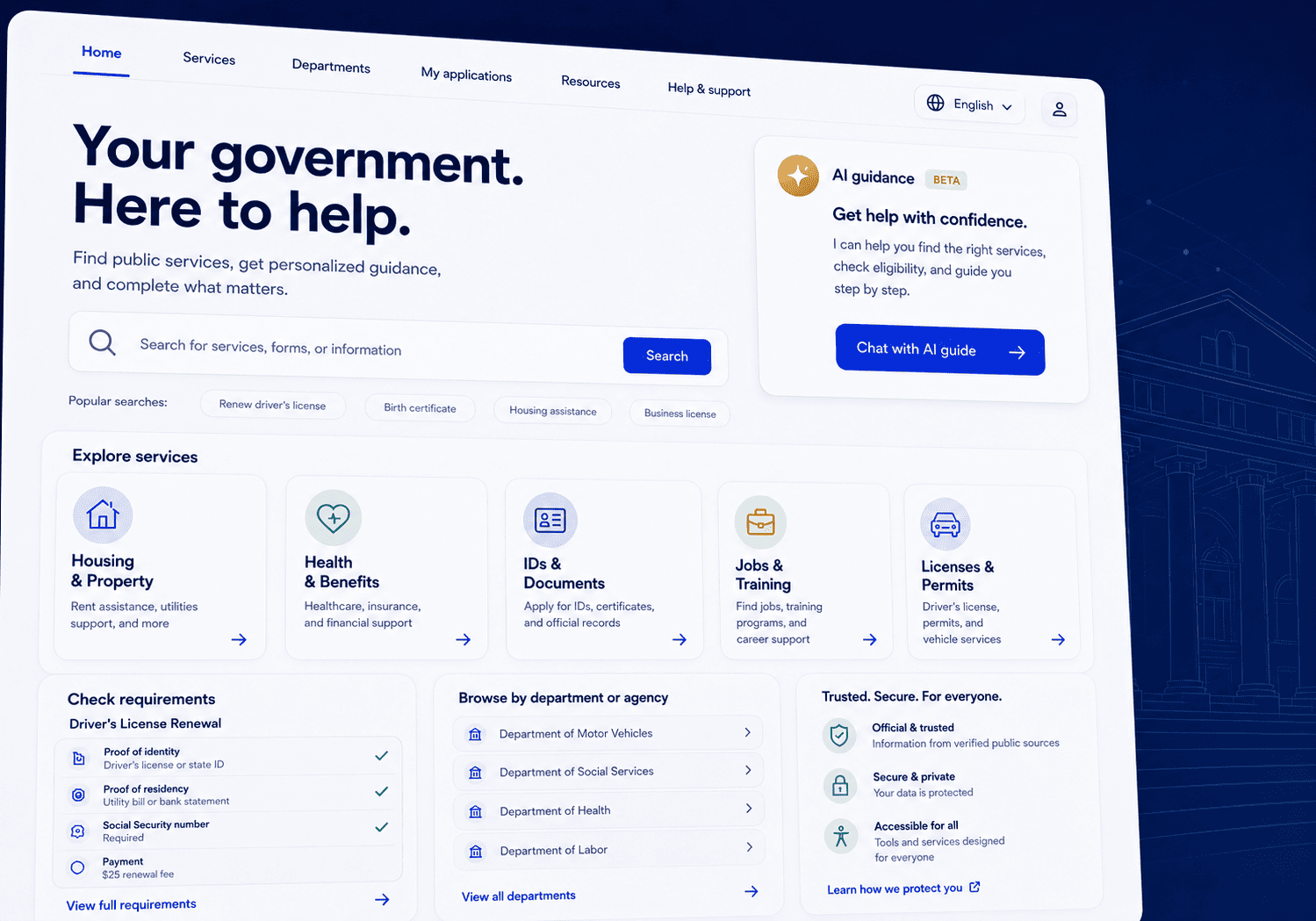
AI-Powered Citizen Services Website Platform for Virginia State Agencies

Plavno developed a modern eGovernment website platform for Virginia state agencies that centralizes citizen services, public information, department content, and an AI-powered guidance agent in one scalable system.

Read More
70%

reduction in routine citizen inquiries to agency staff

AI-Powered Citizen Services Website Platform for Virginia State Agencies

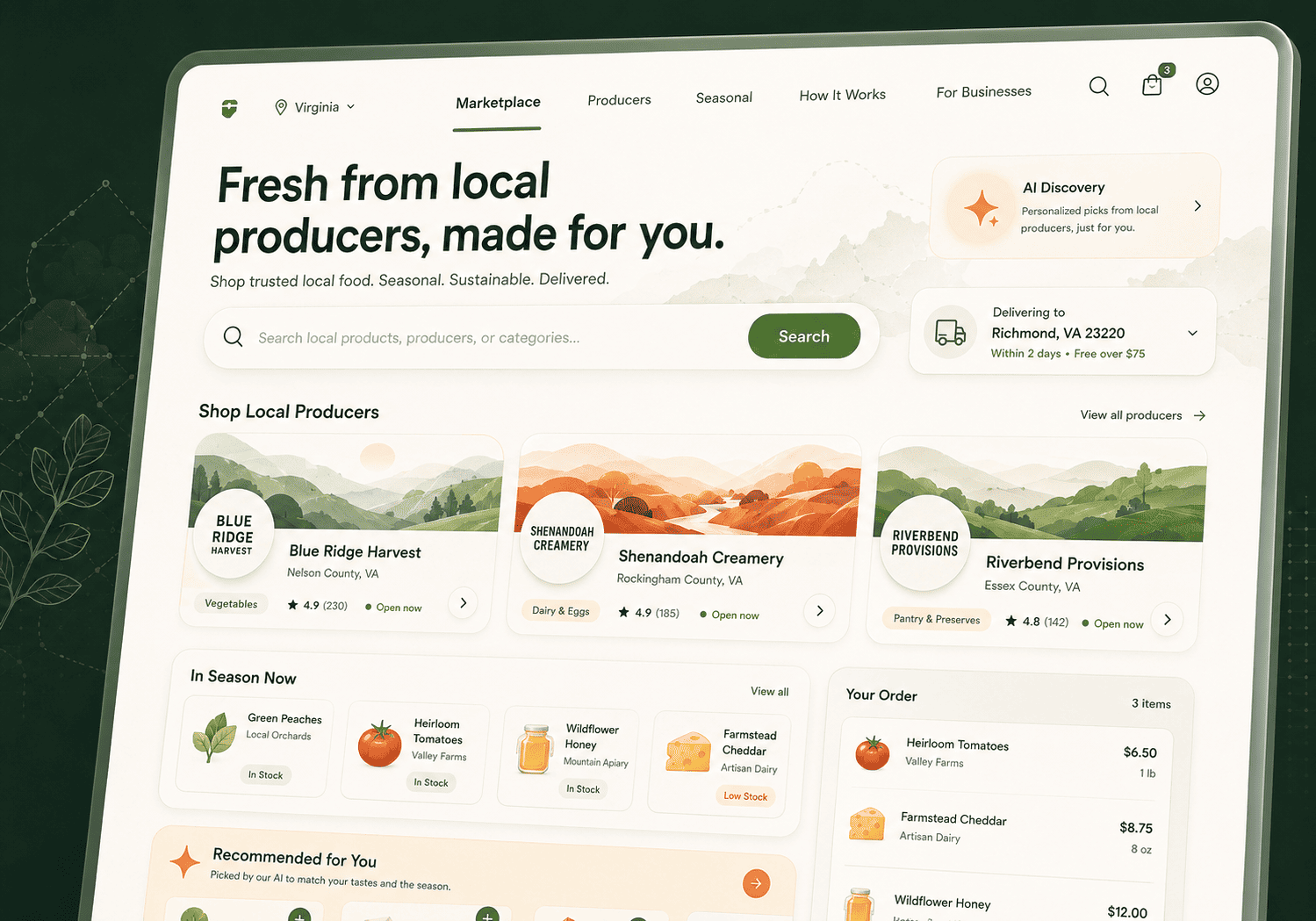
Digital Marketplace for Virginia Farmers, Local Producers & Direct-to-Consumer Food Sales

Plavno developed a custom multi-vendor marketplace for Virginia-based farmers, food producers, and regional sellers to unify product listings, vendor operations, customer ordering, and local fulfillment workflows.

Read More
3x

increase in product discovery relevance

Digital Marketplace for Virginia Farmers, Local Producers & Direct-to-Consumer Food Sales

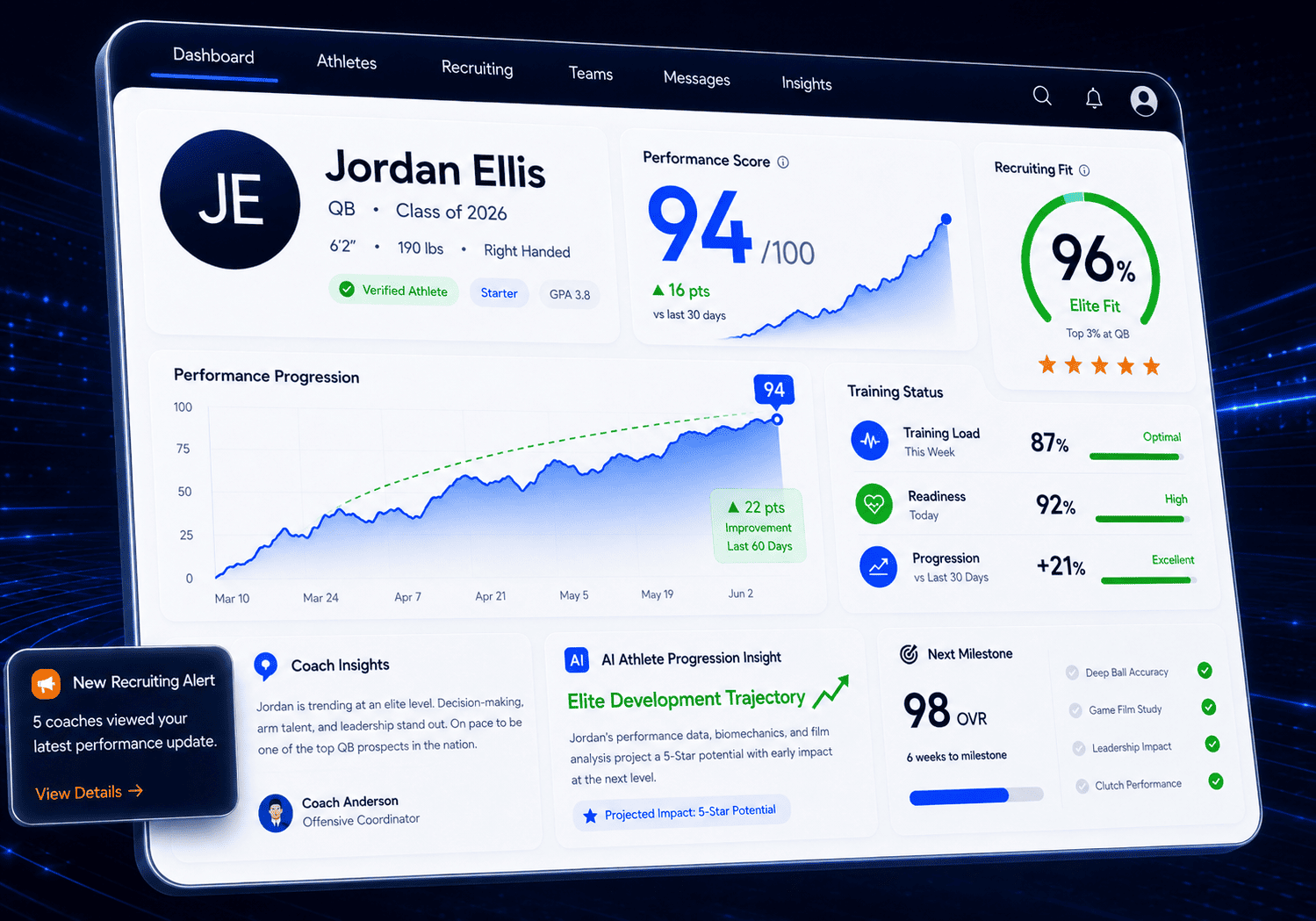
AI-Powered Sports Performance & Recruiting Platform for Virginia Clubs, Academies & Youth Programs

Plavno developed a custom sports technology platform for Virginia-based clubs and academies to combine athlete performance tracking, coach communication, recruiting workflows, and mobile engagement in one ecosystem.

Read More
3x

faster recruiting pipeline

AI-Powered Sports Performance & Recruiting Platform for Virginia Clubs, Academies & Youth Programs

Architecture & Engineering Overview

How Leesburg AI programs stay reliable after launch in 2026

Measurable Labor Savings

Baseline ROI Meters

Pre-build time audits with mandatory 30/90-day post-launch impact reviews.

Controlled Risk Scope

Narrow Scope Gate

Human-in-the-loop approvals on high-stakes workflow actions.

Inference Unit Economics

Unit Cost Caps

Caching, batching, and off-peak execution to keep compute predictable.

Vendor Independence

Zero Lock-In Asset

Full ownership of prompts, evals, and deployment infrastructure.

For Business: Technical ROI & Risk Mitigation

Custom AI only pays when it removes real labor or error cost. We put a baseline week of process metrics in writing before build. After launch the same meters show change after 30 and 90 days. ROI comes from fewer human hours on repetitive decisions plus lower rework from missed steps. Leadership sees a single page that ties spend to outcomes without marketing charts.

Risk mitigation starts with narrow scope. The first process has clear inputs and a reversible human path. We never flip an irreversible financial or safety action without an approval gate. That discipline protects brand and license while the system earns trust. Expansion happens after the first queue shows clean economics.

Cost control is part of the product. Inference budgets alarm when projections break the forecast. Caching and batching cut repeat calls. Off-peak jobs move to cheaper capacity when deadlines allow. Finance joins the design review so nobody is surprised in month three.

Local buyers also price the cost of delay. Waiting another year while rivals automate intake means more overtime and harder hiring. Leesburg talent markets stay tight. Tools that stretch senior headcount matter more than vanity AI. We size the first release so a mid-size team can defend it in board papers with plain numbers.

Vendor lock risk stays in view. You own prompts, evaluation sets, and deployment configs. Switching basemodel providers remains a controlled change, not a rewrite. That optionality is how you keep price and quality pressure over the full asset life.

Decision Records

1. Decision Records

Documented stack choices, latency rules, and basemodel exit strategies.

Eval Staging

2. Staging & Eval Gates

Synthetic test shapes and latency load budgets required before promotion.

Active Governance

3. Drift Governance

Model cards, automated drift tickets, and mapped on-call runbooks.

Integration Standards

4. Idempotent APIs

Queues, webhooks, and checkpointed state for fault-tolerant executions.

For CTOs: Architecture & Technical Lifecycle

Lifecycle starts with a decision record, not a sprint zero folklore deck. We log why a managed basemodel versus a self-hosted path was chosen under your latency, privacy, and skill constraints. Every major fork gets written rationale and an exit plan. Six months later nobody guesses.

Environments mirror prod for evaluation traffic. Staging holds synthetic and scrubbed samples that match production shapes. Promotion requires green eval gates plus latency budgets under peak mock load. Change windows align to your existing IT calendar around Leesburg and cascading US regions.

Governance is practical. Model cards list training data lineage, known failure modes, and owners. Access reviews for tooling secrets follow the same cadence as your other privileged systems. Drift monitors send tickets, not unread dashboards. On-call maps to the team that can roll back both app and model layer.

Trade-offs stay explicit. Higher accuracy may demand more human labels. Faster answers may cost more GPUs. We show the curve and you pick the point. That conversation beats silent debt. Futures like multi-model routing appear only when volume or resilience requires them.

Integration standards prevent sidewalk paths. Webhooks, queues, and idempotent APIs are the default. Long-running agent runs checkpoint state so retries stay safe. Your enterprise service bus or iPaaS remains in charge if that is already policy. We adapt to that reality instead of fighting it.

API Runtime

FastAPI Runtime

Containerized Python services with Docker compose parity for CI.

Feature Pipelines

dbt & Hybrid Search

Warehouse SQL data lineage paired with BM25 + dense vector indexes.

Regression Testing

Continuous Evals

Repo-versioned golden sets blocking quality regressions on merge.

ACL Security Layer

Auth Middleware

Payload CMS + Next.js department permissions passed with every call.

For Engineers: Implementation Details & Stack

Implementation stays boring on purpose. FastAPI or equivalent host the inference and tool layer so logs and traces match the rest of your Python estate. Containers and infrastructure as code define every service from day one. Local creators use the same compose file CI uses. Surprises drop.

Feature pipelines write to tables you already query. dbt or plain SQL jobs are fine when they keep lineage clear. Vector stores appear only when retrieval quality metrics prove they earn the ops cost. Hybrid search with BM25 plus embeddings is standard when legal docs dominate.

Evaluation is not optional. We store gold and silver sets next to the repo. Regression of quality blocks merge the same way unit tests do. Prompt and model versions tag against each result so you can explain a drop weeks later. Shadow traffic against new models reduces blast radius on cutover.

Edge cases get first-class tests. Empty inputs, toxic text filters, and oversize documents all have fixtures. Timeouts on tool calls force graceful degradation to a safe human path. Rate limits protect backends when a batch job misfires. These are the details that keep nights quiet.

From the employee portal work with Payload CMS, Next.js, and role-based access, we reuse patterns for authorization middleware. Every AI request carries the user context. Downstream loaders filter entities by the same department rules. Engineers do not reimplement ACL logic in prompt text. That single decision eliminates a class of leakage bugs.

Full Telemetry

Full Tracing

Token cost, latency, cache hits, and live evaluation metric tracing.

Security & Compliance

SOC 2 / CMMC Controls

Private subnets, customer-managed keys, and short-lived credentials.

Data Residency

US Data Residency

Strict local cloud VPC boundaries with zero cross-border telemetry exposure.

Incident Playbooks

Incident Response

Single-command rollback paths and automated 90-day post-launch drift checks.

Infrastructure, Observability & Security

Production AI without observability is a liability. We emit traces for prompt assembly, model call, tool calls, and final render. Metrics cover latency percentiles, token cost, cache hits, and evaluation scores on live samples. You monitor quality and cost with the same seriousness as uptime. Alerts page humans before finance does.

Security defaults to your standards. Private subnets, customer-managed keys, and short-lived credentials. SOC 2 mapped controls inventory sit with your GRC team. For healthcare-adjacent scope we align to HIPAA safeguards already in force. CMMC minded contractors get evidence packs that match their existing SSPs rather than a parallel binder.

Deployment for US clients prefers regions you name. Leesburg leadership often requires US data residency. We document every cross-border path or prove there is none. Backups and disaster recovery include model artifacts and eval sets so rebuilds are real. Secrets never land in prompt logs.

Incident response is rehearsed. Playbooks cover bad model output spikes, key leakage scares, and runaway cost. Rollback is one command. Comms templates name who informs business owners. Postmortems feed evaluation sets so the same failure is measured forever after.

Post-launch ops include weekly cost and drift reviews for the first ninety days. Thresholds adjust as traffic grows. When ownership transfers fully, your team holds the runbooks and dashboards. Our residual support remains optional and scoped. That is how custom AI remains an owned asset instead of a permanent outsourced neck risk.

Testimonials

We are trusted by our customers

“They really understand what we need. They’re very professional.”

The 3D configurator has received positive feedback from customers. Moreover, it has generated 30% more business and increased leads significantly, giving the client confidence for the future. Overall, Plavno has led the project seamlessly. Customers can expect a responsible, well-organized partner.

Sergio Artimenia

Commercial Director, RNDpoint

Sergio Artimenia

“We appreciated the impactful contributions of Plavno.”

Plavno's efforts in addressing challenges and implementing effective solutions have played a crucial role in the success of T-Rize. The outcomes achieved have exceeded expectations, revolutionizing the investment sector and ensuring universal access to financial opportunities

Thien Duy Tran

Product Manager, T-Rize Group

Thien Duy Tran

“We are very satisfied with their excellent work”

Through the partnership with Plavno, we built a system used by more than 40 million connected channels. Throughout the engagement, the team was communicative and quick in responding to our concerns. Overall, we were highly satisfied with the results of collaboration.

Michael Bychenok

CEO, MediaCube

Michael Bychenok

“They have a clear understanding of what the end user needs.”

Plavno's codes and designs are user-friendly, and they complete all deliverables within the deadline. They are easy to work with and easily adapt to existing workflows, and the client values their professionalism and expertise. Overall, the team has delivered everything that was promised.

Helen Lonskaya

Head of Growth, Codabrasoft LLC

Helen Lonskaya

“The app was delivered on time without any serious issues.”

The MVP app developed by Plavno is excellent and has all the functionality required. Plavno has delivered on time and ensured a successful execution via regular updates and fast problem-solving. The client is so satisfied with Plavno's work that they'll work with them on developing the full app.

Mitya Smusin

Founder, 24hour.dev

Mitya Smusin

Maturity path

Move Leesburg ops from manual to assisted to governed AI

A staged capability path so teams adopt AI without betting the company on day-one autonomy.

Clipboard
Team
01

Step 1: Manual baseline capture (2 weeks)

Measure real handle time, error rate, and rework on the target process. Shadow the people who live it daily. Document edge cases that break naive scripts. Export sample data packs for later evaluation. Leadership freezes the metric definitions. Everyone agrees what good looks like before tools change the flow.

02

Step 2: Assisted mode with humans in loop (3–5 weeks)

Ship suggestions that humans accept or edit. Capture every correction as training signal. Limit tools the assistant may invoke. Keep write actions behind confirm buttons. Score acceptance rate and edit distance weekly. Staff see the system as help, not a silent replacement. Trust builds with visible control.

Search in doc
Rocket
03

Step 3: Selective autonomy on low risk (2–4 weeks)

Allow auto-complete only where confidence is high and blast radius is low. Expand tool rights one at a time. Add secondary checks for money or customer-facing content. Page humans when confidence drops. Publish dashboards of auto versus assisted mix. Savings appear while override stays one click away.

04

Step 4: Governed scale across teams (ongoing)

Promote patterns to neighboring departments with shared gateways and policy. Centralize cost and quality reviews monthly. Extend evaluation sets as new intents appear. Rotate owners so knowledge is not a single hero. Leesburg and Loudoun units share what works without duplicating stacks. The platform becomes default infrastructure, not a pilot graveyard.

Eugene Katovich

Eugene Katovich

Sales Manager

Need a custom software solution? We’re ready to help!

Plavno has a team of skilled developers ready to tackle the project. Ask me!

Get a Free Quote

Readiness gates

Confirm these five items before you fund Leesburg AI build

  • Named process owner and metric — Pick one workflow with a real owner who can approve design weekly. Define time, cost, or error metrics with current baselines. Without a single throat to choke, scope drifts into endless chat demos. Document the handoff points between teams before any model training. Confirm data is available weekly without heroics. Put decision rights in writing so engineering is not stuck waiting on committees.

  • Data access path that IT will sign — Identify systems of record and user of record for identity. Confirm whether production replicas or exports feed the project. Map privacy rules and retention on day one. Leesburg and broader Virginia clients often need written residency statements. Schedule the security review early so it never lands as a surprise gate. Store samples with labels needed for evaluation sets.

  • Budget envelope with inference included — Cap monthly runtime cost beside build fees. Include monitoring, label refresh, and on-call time. Model price drops do not erase bad architecture costs. Plan buffer for evaluation redesign after first user feedback. Finance should see a 12-month total, not a one-time invoice myth. Update the envelope when scope grows rather than absorbing silence.

  • Integration contacts for each system — Name an owner for every CRM, ERP, portal, or queue you touch. Share sandbox credentials that correctly mirror production roles. Test write paths in nonprod with realistic permissions. Remember lessons from modern portal work: department-level access must travel with every AI call. Log who approved each connection. Plan decommission of any temporary dual entry once cutover succeeds.

  • Post-launch operating model — Decide who watches drift, cost, and user feedback after week twelve. Book a recurring review so issues do not rot. Train at least two internal people on runbooks. Choose whether residual vendor support is retained. Write severity definitions for AI-specific incidents. Without this, even great software becomes shelfware when the champion leaves.

Vitaly Kovalev

Vitaly Kovalev

Sales Manager

Get your Leesburg AI readiness score

Share budget, timeline, stack, and dataset scope. Receive a free readiness audit and build-or-wait estimate tailored for Leesburg and Loudoun County teams.

Talk to Experts

Common questions

Custom AI Development questions from Leesburg buyers

Straight answers on cost, timing, data, quality, security, and life after launch for Virginia teams deciding in 2026.

What drives the cost of Custom AI Development for a Leesburg company?

Cost tracks four levers more than fancy model brands. Data readiness decides labeling and cleaning load. Integration depth multiplies engineering weeks when you connect several systems of record. Inference volume and latency targets set infra spend after launch. Compliance packaging for audits adds specialist time when you face SOC 2 or government-adjacent reviews common in Loudoun County.

Local market rates for senior engineering sit above some US averages because Northern Virginia competes with federal and hyperscale employers. That reality shows in proposals as higher day rates yet shorter calendar time when teams already live nearby time zones. Remote-only low bids often hide lag on security reviews that you must staff yourself.

We price discovery as a fixed short phase so surprises surface early. Production build then uses a scoped backlog with change control. You always see a monthly run-rate estimate that includes monitoring and evaluation refreshes. Skipping that line is how pilots look cheap and production looks expensive.

Budget conversations should include your stack list, dataset quality notes, and hard deadlines. Share those four facts and we can outline ranges. Capex heavy self-hosting only pays when volume or residency makes managed APIs the costlier path. Most Leesburg first projects start with managed models behind your gateway for speed, then revisit hosting once metrics prove value.

Finally, include internal staff time. Owners still need hours for reviews and acceptance. That hidden cost often exceeds vendor line items on under-staffed campaigns. Plan it or watch schedules slip.

How long does it take to build Custom AI Development software?

A useful assisted MVP often lands in eight to twelve weeks when data is reachable and scope is one process. That time covers audit, architecture, build, and a supervised pilot with real users. Full production hardening with multi-system writes, formal compliance packs, and training packages can stretch to four or six months. Calendar reality depends more on access speed than coding speed.

Discovery and data audit take one to two weeks when stakeholders answer quickly. Architecture and control design take another one to two. Core build and evaluation loops run three to six. Hardening and training take one to three. Those ranges assume your sandboxes exist. Waiting on VPN, sample extracts, or legal review of data use freezes the clock regardless of headcount.

MVP definition matters. Assisted suggestions with human approval ship faster than fully autonomous money moves. Leesburg buyers who insist on day-one autonomy without baseline metrics take longer and face more risk. We recommend a measurable assisted cut first, then openness on selected paths.

Parallel work trims time. Content cleanup, identity plumbing, and UX for review queues can progress beside model experiments. Sticky parts are usually permission design and evaluation quality, not the model API call itself. Plan senior attention there.

After go-live plan at least ninety days of active tuning. That is still part of timelines if you care about lasting results. Drift and empty edge cases appear only under real traffic. Teams that book that window keep gains. Teams that stop at launch day often watch quality decay silently.

What data do you need before starting a Custom AI project in Virginia?

You need representative samples of the inputs people handle today, labeled outcomes when history exists, and a map of systems that will send or receive results. Ideal packs cover edge cases, not just clean textbook rows. Ten to twenty golden examples that executives agree are correct beat thousands of noisy rows without judgment. Access policies must state who may view each field in Leesburg and across other Virginia sites.

Structured logs speed jobs. Ticket histories, click paths, and past decisions teach models how your teams actually act. Unstructured PDFs and emails help document work but require OCR checks. We test samples early to report what portion is usable. That percentage should enter the go or no-go memo before money commits.

Privacy rules sit beside completeness. Mark PII and CUI clearly. Decide redaction points before any outside model call. Many Virginia contractors already keep strict spill rules. We fit your existing process rather than invent a shadow one security will block.

If labels are thin, budget for a human labeling pass. Subject-matter experts outperform generic contractors on your jargon. We build light review tools so experts move fast. Plan ten percent of that label set as held-out evaluation that training never sees. Without that holdout, you cannot trust quality claims.

Start-up ecosystems in Northern Virginia, including Dulles corridor and Reston founders, often hold data in product warehouses already. Older firms may still live in shared drives. Either works if exports are reliable. The hard failure mode is monthly manual CSV drop with drift in column meaning. Automate feeds before promising autonomous actions.

How do you measure quality for Custom AI Development work?

Quality starts with business metrics that matched the baseline. Handle time, first-pass yield, and rebate or rework rates beat vanity accuracy scores alone. We still track precision, recall, or error distance where they explain user pain. Every release must show both layers. If latency freezes users, accuracy is irrelevant until paths return fast enough.

Evaluation sets are versioned assets. Gold cases hold known answers. Silver cases capture live sampled judgments. Regressions fail the build when quality falls past agreed deltas. Prompt or model changes that cannot defend scores never reach production. This is the same discipline software teams already accept for unit tests now applied to AI outputs.

User acceptance rates in assisted mode are power signals. If humans rewrite every draft, the system fails regardless of offline scores. We log edit distance and rejection reasons. Product owners review themes weekly during ramp. That loop often improves outcomes more than a larger basemodel would.

Fairness and safety checks belong in quality too. Restricted content greps, PII leakage scans, and policy violation flags run on samples. For government-adjacent clients around Leesburg, we add controls that match their documented threat models. Passing these gates is a ship requirement, not a nice-to-have.

After launch, drift monitors continue the story. Input distribution shifts trigger re-evaluation. Cost per successful task stays beside quality so finance and ops share the same dashboard. Quality is not a one-time certificate. It is an operating metric you staff.

How do you handle security and compliance for AI systems in Leesburg?

Security design begins with identity, least privilege, and data classification. Every AI request runs as a real user or a constrained service account you own. Department-level rules pioneered in modern portal builds travel with retrieval and tools so models cannot open forbidden records. Logs bind outputs to actors for later review. Secrets never sit in prompts or tickets.

Compliance packaging maps to programs you already run. SOC 2 evidence, HIPAA safeguards, or CMMC practices get extended rather than replaced. We produce model cards, data flow diagrams, and control narratives security teams can paste. Third-party basemodels stay behind gateways that enforce redaction and outbound DLP. Contracts name residency in US regions when that is policy.

Threat modeling lists prompt injection, data exfiltration via tools, poisoned feedback, and cost denial attacks. Mitigations include allowlists for tools, output filters, human gates on high impact actions, and spend caps. Periodic red team samples test those defenses. Findings create backlog, not unread reports.

Deployment blends traditional AppSec with AI specifics. Containers stay patched. SBOMs list dependencies. Network paths stay private where possible. Evaluation data is treated as sensitive production data because it often contains real examples. Access reviews include who can push a new model version.

Incident response adds AI failure modes. Bad outputs that harm customers get severity definitions. Rollback paths cover code and model artifacts. Notify steps name legal and customer owners when needed. Postmortems feed new evaluation cases. Security is continuous operations, not a binder on a shelf in Loudoun.

Contact Us

This is what will happen, after you submit form

Need a custom consultation? Ask me!

Plavno has a team of experts ready to start your project. Ask us!

Vitaly Kovalev

Vitaly Kovalev

Sales Manager

Schedule a call

Get in touch

Fill in your details below or find us using these contacts. Let us know how we can help.

No more than 3 files may be attached up to 3MB each.
Formats: doc, docx, pdf, ppt, pptx, xls, xlsx, txt.
Send request