bg image
bg image

Serving Herndon & Virginia

Reduce Review Cycles for Herndon Operators in 2026

Herndon teams still burn hours on manual checks that should already be automated. Bid packages, compliance packets, and internal routing stall when data lives in too many tools. Custom AI Development gives you software that reads your sources and applies your rules with audit trails. It is built for contractors, product groups, and operations leaders across Northern Virginia. Get Custom AI Development cost estimate in 24 hours. We need your budget range, timeline, current stack, and dataset scope to price honestly. You leave the call with a clear build path and ownership model.

Discuss Project

Overview

Herndon firms need AI that survives audit review

Herndon sits next to Dulles, Reston, and the federal buyer corridor that drives Northern Virginia work. Contractors and product teams here win on speed and proof, not slide decks. Manual triage of documents, tickets, and access requests still drains margin. Custom AI solutions only help when they respect your data boundaries and your existing systems of record.

Trusted Custom AI Development Partner for Herndon Businesses. We work with US-based clients, including companies operating in Virginia. Our teams have shipped internal platforms that replace brittle share drives with controlled portals and department-level permissions. That same discipline applies when we add model-assisted workflows for search, routing, and decision support. You keep clear ownership of code, prompts, and data paths.

Local buyers ask for measurable outcomes first. Can review time drop without new risk. Can staff reuse one supervised interface instead of five tools. We answer those questions with scoped AI software builds rather than broad platform promises. 10+ Custom AI Development projects delivered in US market form the pattern we reuse on each engagement.

Nearby operators in Fairfax, Ashburn, McLean, and Tysons face the same press of compliance and schedule risk. Integration complexity is the usual blocker. Legacy identity stores, SharePoint estates, and fragmented data lakes stop generic pilots cold. We start from your sources, your roles, and your retention rules before any model is wired in.

The practical path is steady. Define the decision you want supported. Map the data required. Ship a thin production slice with monitoring. Expand only after costs and error rates stay inside agreed bounds. That is how Herndon teams keep AI projects out of the failed-pilot pile in 2026.

Talk to an Expert
Ingestion

Ingestion layer

Normalize documents, tickets, and records from your systems of record

Reasoning

Reasoning layer

Models and rules with full logging for search, routing, and support

Action

Action layer

Write results into tools staff already trust under gated APIs

Ownership

Owned & auditable

Code, prompts, data paths, and US residency under your control

Production architecture first

AI systems Herndon teams can operate daily

Clients in Herndon receive working software, not notebooks on a demo laptop. We design custom AI development around three layers that stay separate on purpose. Ingestion normalizes documents, tickets, and structured records. Reasoning applies models and rules with full logging. Action writes results into the systems staff already trust. Separation keeps failures contained and audits simple.

Stack choices follow the job. We favor Python services for training and inference orchestration because the ecosystem is mature and hireable. API gateways expose narrow contracts so front ends stay replaceable. For internal content hubs we have shipped Payload CMS with Next.js when teams needed modern editors and department-level access control after leaving SharePoint. That pattern still matters when AI features sit behind the same role model. Users only see what policy allows.

Security/compliance is not a later phase. Identity ties to your SSO. Secrets stay in managed vaults. Training and inference environments run in locked network segments when contracts demand it. Prompt and response logs carry request IDs so investigators can reconstruct any action. Data residency stays inside agreed US regions for government-adjacent work common across Reston and Dulles corridors.

DevOps practice keeps releases boring. Infrastructure is defined as code. Staging mirrors production quotas and model versions. Canary deploys roll new prompts or weights to a thin slice of traffic. Rollback is a single reverse promotion. Cost dashboards track token spend, GPU hours, and storage growth per product area so finance sees the same numbers engineering sees.

Integration work is where most Northern Virginia projects stall. Legacy ERPs, contract systems, and shared drives move data slowly and inconsistently. We build adapters with clear schemas and backoff rules rather than brittle scripts. Quality gates reject low-confidence outputs before they hit a human queue. Humans stay in the loop where risk requires it. The goal is less busywork, not unsupervised automation for its own sake.

What you own at handover is explicit. Source repositories, infrastructure definitions, runbooks, eval suites, and model cards. Documentation covers failure modes we already hit in earlier US builds. Your team can extend features without calling us for every change. That ownership model is the difference between a lasting platform and another abandoned experiment.

plavno logo

Build your first
Smart AI project today!

Just tell the Plavno AI Agent about your project - it will ask questions, gather requirements, and propose a tailored solution

Delivery path

From first workshop to live AI in Herndon

A fixed sequence keeps scope honest and cost visible from week one through production care.

Clipboard
Team
01

Step 1: Discovery & data map (1–2 weeks)

We inventory systems, roles, and the decisions you want supported. Workshops pull real samples from Reston and Herndon operations. Gaps in labeling, retention, or access surface early. You receive a written scope, risk register, and draft architecture. Budget and timeline ranges lock against that document. No code ships until sign-off.

02

Step 2: Thin vertical slice (2–4 weeks)

Engineers build one end-to-end path from source data to user action. Model choice stays provisional until eval scores beat your baseline. Role-based access mirrors the pattern we used on internal portals with Payload CMS and Next.js. You test with real staff under supervision. Metrics cover latency, error classes, and unit cost per run.

Search in doc
Rocket
03

Step 3: Hardening & integrations (3–5 weeks)

Adapters connect remaining systems of record. Logging, tracing, and cost caps go live. Security review covers secrets, network paths, and audit exports. We load-test with volumes your Dulles-side teams actually see. Failure playbooks and owner rosters land in your wiki. Scope freezes for the first production cut.

04

Step 4: Launch & operate (2 weeks + ongoing)

Release uses staged traffic and automatic rollback gates. Training for Herndon operators covers override paths and cost alerts. Weekly reviews track drift, spend, and ticket volume for thirty days. You keep full repo access and runbooks. Optional support continues only on a written monthly plan.

What ships

Capabilities Herndon buyers actually fund

Document intelligence pipelines

Document intelligence pipelines

Contract shops near Dulles still re-key the same clauses every week. We build intake flows that classify, extract, and route packets to the right owner. Models sit behind confidence thresholds so weak reads become human tasks. Python workers and queue systems keep throughput steady during proposal season. Storage rules honor retention tied to free deals. Your staff sees a single queue instead of mailbox chaos.

Role-aware AI assistants

Role-aware AI assistants

Generic chat tools ignore who may see which contract file. Assistants we ship inherit department-level permissions so answers never leave policy. Next.js front ends pair with APIs that attach user context on every call. Payload-backed content stores keep source text curated and searchable. Audit logs capture prompts and citations for later review. Teams in Fairfax and Herndon gain speed without new exposure.

Operations decision support

Operations decision support

Field and NOC teams lose time reconciling alerts from separate screens. Custom models score events against your historic labels and open only actionable tickets. Time-series stores hold baselines so seasonal noise stays filtered. Service level targets stay visible beside model scores. Engineers can override stays one click away. Cost of false pages drops once the model and rules share the same dashboard.

Secure model gateways

Secure model gateways

Northern Virginia buyers demand control over where tokens go. We place a gateway between apps and model providers so every call is authenticated, logged, and budgeted. Policy blocks forbidden fields before they leave the network. Failover paths switch providers without rewriting product code. Rate limits protect shared accounts during spikes. Finance gets monthly exports matched to each product line.

Eval and drift tooling

Eval and drift tooling

Ship day is not the finish line. Offline eval suites score new prompts against frozen gold sets before release. Online monitors watch answer quality and user overrides. Alerts fire when weekly scores slide past agreed floors. Rollbacks reopen the prior model card automatically. Herndon product owners keep a living quality record instead of stories.

Custom AI Development Solutions for Herndon Industries

Where Northern Virginia teams apply custom AI first

Use cases track the real economy around Herndon: federal work, technical services, finance ops, and regulated delivery.

Proposal Support

Proposal Support

Gov contractors

Government contractor proposal support

Proposal teams burn nights matching past material to new RFPs. Our systems index approved content and surface ranked snippets with source links. Writers keep final edit control while search time falls. Role rules block cabinets they should not browse. A typical engagement targets a one-third reduction in initial research hours inside the first quarter. Tech path uses embeddings over curated corpora plus a citation-first response schema staff already trust.

Knowledge Routing

Knowledge Routing

Defense tech

Defense technology knowledge routing

Program offices struggle when expertise sits in personal folders. We stand up controlled knowledge services that answer from marked sources only. Access mirrors clearance-aware groups you already maintain. Every response stores the parent document IDs for later challenge. Teams report fewer repeat questions to senior engineers within six weeks. Architecture favors private retrieval layers and air-gapped eval when contracts require isolation.

Exception Handling

Exception Handling

Fintech ops

Fintech operations exception handling

Payment and lending ops near Tysons still open tickets by hand when rules fire. Models pre-score exceptions and attach the fields that drove the flag. Analysts clear queues faster because context arrives with the case. False positive rates become a tracked KPI. Expected ROI is fewer overtime hours during peak filing windows without raising loss rates. Integration leans on existing case APIs and strict field-level redaction before inference.

Chart Prep

Chart Prep

Healthcare IT

Healthcare IT chart prep assist

Clinics and health IT vendors in Fairfax lose minutes to chart assembly. Assistive flows gather required artifacts and highlight missing items before a visit. PHI stays inside covered environments with access logs. Staff confirm rather than rebuild. Cycle time targets aim for multi-minute savings per encounter at scale. Stack choices prefer HIPAA-ready hosting, audit trails, and human confirmation gates on every write-back.

Quality Intake

Quality Intake

Aerospace

Aerospace supplier quality intake

Supplier packets arrive in uneven formats and delay the line. Intake AI normalizes certificates, flags gaps, and routes complete packs to approvers. Incomplete packs bounce with a checklist instead of silent stalls. Quality leads keep override rights. Goal is shorter dock-to-stock times without cutting inspection depth. Implementation pairs document models with workflow engines already on the plant network.

Portal Intelligence

Portal Intelligence

Enterprise hubs

Enterprise internal portal intelligence

HR and ops portals grow messy after years of SharePoint sprawl. We rebuild hubs with Payload CMS and Next.js, then add search and assistants that respect department-level permissions. Employees find policies and forms without pinging a shared inbox. Admins manage content without engineering tickets. Prior migrations show cleaner access boundaries and faster publishing for multi-department staff. AI features reuse the same role model so answers never outrun rights.

Case Study

We help customers cut
down on development

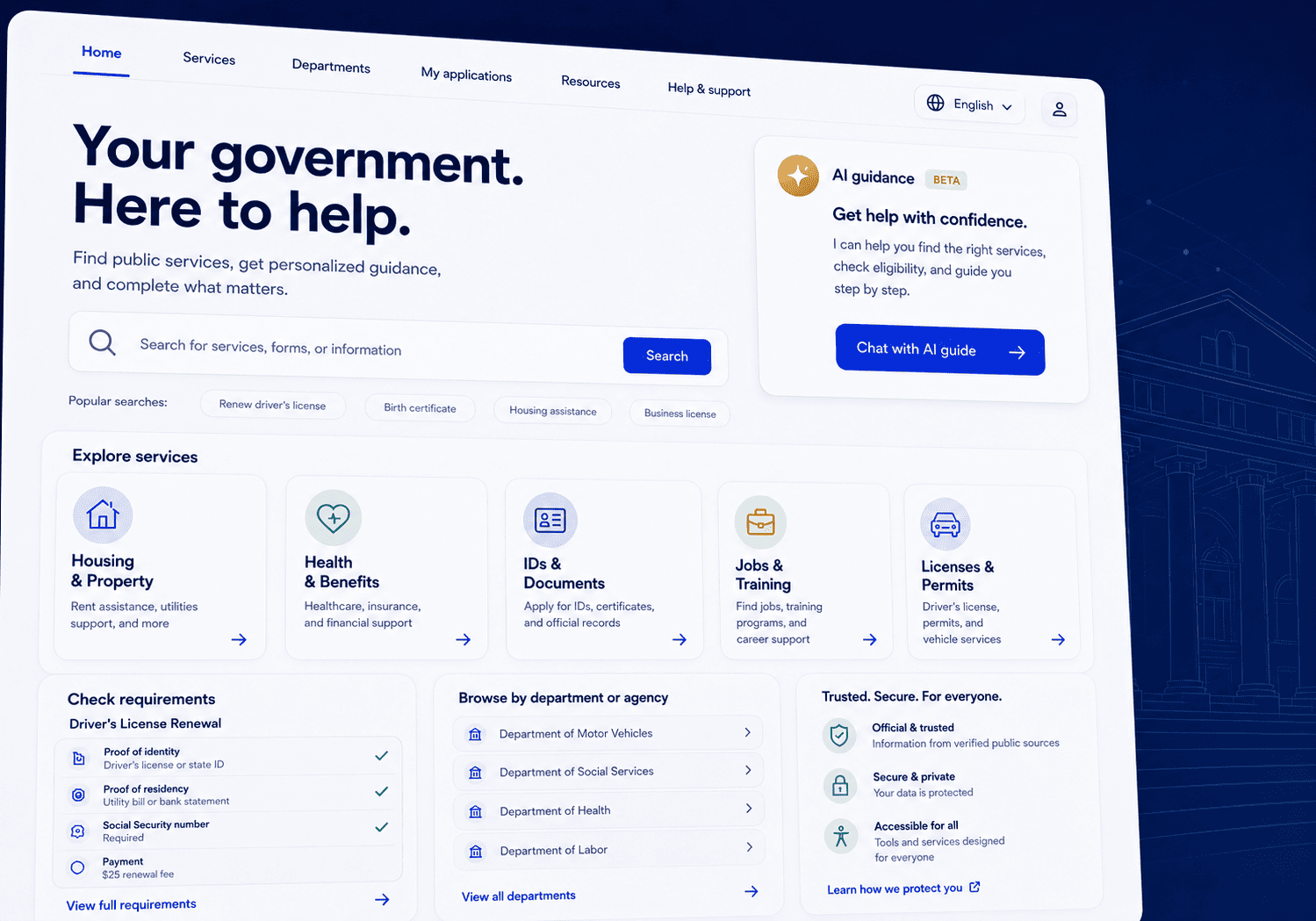
AI-Powered Citizen Services Website Platform for Virginia State Agencies

Plavno developed a modern eGovernment website platform for Virginia state agencies that centralizes citizen services, public information, department content, and an AI-powered guidance agent in one scalable system.

Read More
70%

reduction in routine citizen inquiries to agency staff

AI-Powered Citizen Services Website Platform for Virginia State Agencies

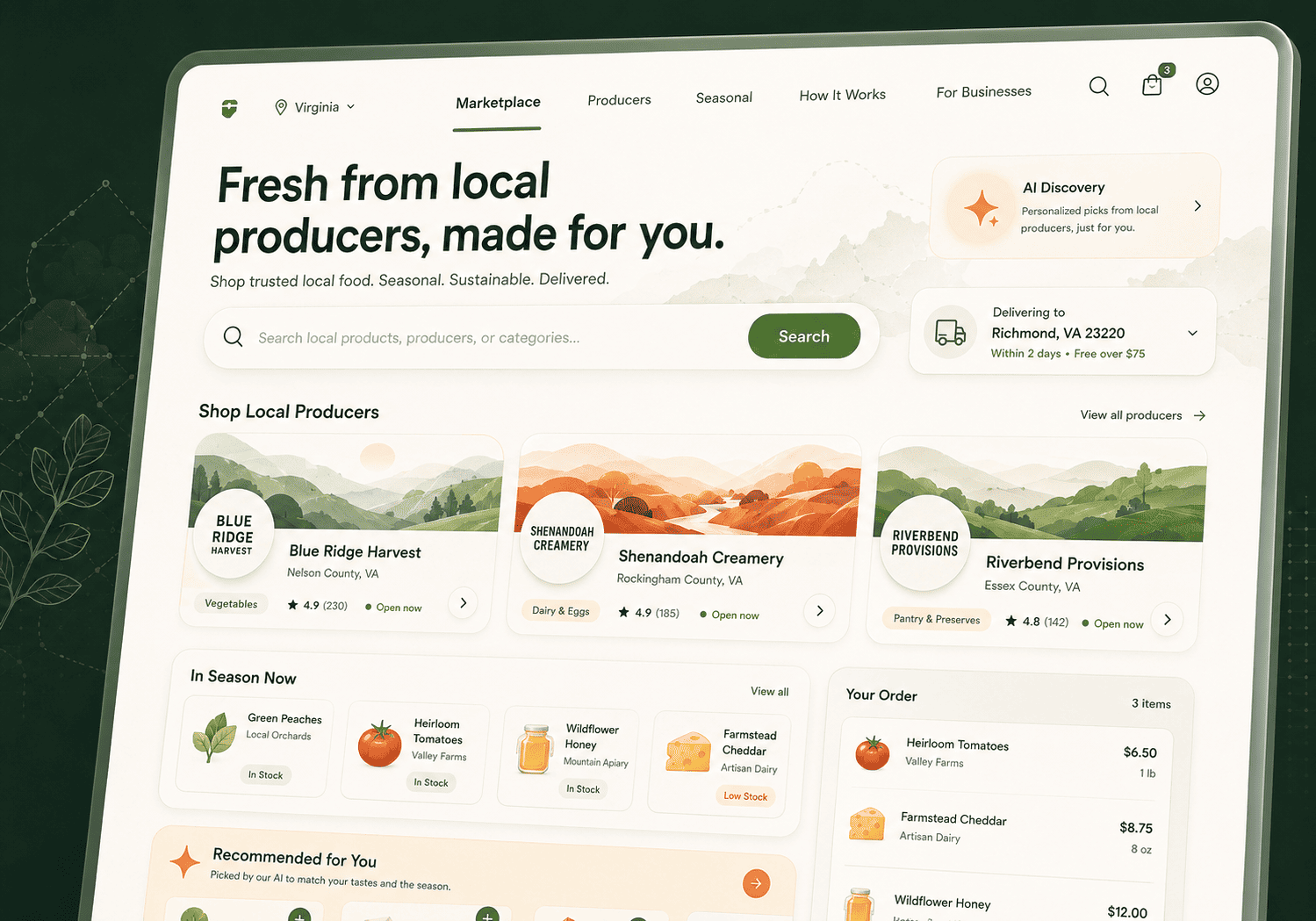
Digital Marketplace for Virginia Farmers, Local Producers & Direct-to-Consumer Food Sales

Plavno developed a custom multi-vendor marketplace for Virginia-based farmers, food producers, and regional sellers to unify product listings, vendor operations, customer ordering, and local fulfillment workflows.

Read More
3x

increase in product discovery relevance

Digital Marketplace for Virginia Farmers, Local Producers & Direct-to-Consumer Food Sales

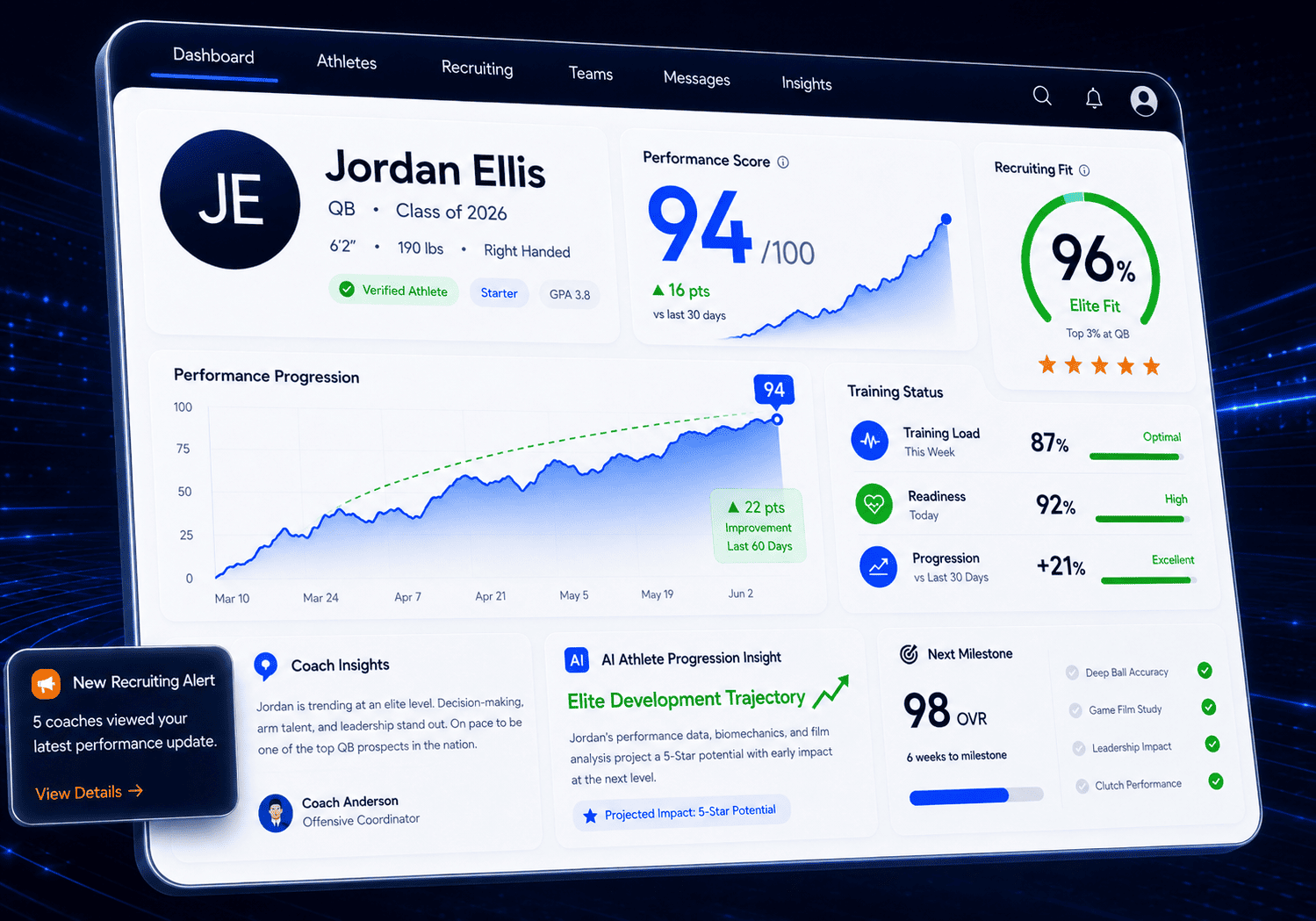
AI-Powered Sports Performance & Recruiting Platform for Virginia Clubs, Academies & Youth Programs

Plavno developed a custom sports technology platform for Virginia-based clubs and academies to combine athlete performance tracking, coach communication, recruiting workflows, and mobile engagement in one ecosystem.

Read More
3x

faster recruiting pipeline

AI-Powered Sports Performance & Recruiting Platform for Virginia Clubs, Academies & Youth Programs

Testimonials

We are trusted by our customers

“They really understand what we need. They’re very professional.”

The 3D configurator has received positive feedback from customers. Moreover, it has generated 30% more business and increased leads significantly, giving the client confidence for the future. Overall, Plavno has led the project seamlessly. Customers can expect a responsible, well-organized partner.

Sergio Artimenia

Commercial Director, RNDpoint

Sergio Artimenia

“We appreciated the impactful contributions of Plavno.”

Plavno's efforts in addressing challenges and implementing effective solutions have played a crucial role in the success of T-Rize. The outcomes achieved have exceeded expectations, revolutionizing the investment sector and ensuring universal access to financial opportunities

Thien Duy Tran

Product Manager, T-Rize Group

Thien Duy Tran

“We are very satisfied with their excellent work”

Through the partnership with Plavno, we built a system used by more than 40 million connected channels. Throughout the engagement, the team was communicative and quick in responding to our concerns. Overall, we were highly satisfied with the results of collaboration.

Michael Bychenok

CEO, MediaCube

Michael Bychenok

“They have a clear understanding of what the end user needs.”

Plavno's codes and designs are user-friendly, and they complete all deliverables within the deadline. They are easy to work with and easily adapt to existing workflows, and the client values their professionalism and expertise. Overall, the team has delivered everything that was promised.

Helen Lonskaya

Head of Growth, Codabrasoft LLC

Helen Lonskaya

“The app was delivered on time without any serious issues.”

The MVP app developed by Plavno is excellent and has all the functionality required. Plavno has delivered on time and ensured a successful execution via regular updates and fast problem-solving. The client is so satisfied with Plavno's work that they'll work with them on developing the full app.

Mitya Smusin

Founder, 24hour.dev

Mitya Smusin
1 path

Single production path before scale

We measure success as one supervised workflow live with real users before any broad rollout. Baseline is a pilot stuck in slides. Change is production traffic under monitoring. Window is the first delivery slice. Herndon sponsors see risk early while spend stays bounded.

Full

Ownership package at handover

Handover completeness tracks code, infra definitions, eval suites, and runbooks in client repos. Baseline is vendor-held black boxes. Change is checkout rights on day one of support. Measured at acceptance. Finance and security teams retain exit options without renegotiation.

Daily

Cost and quality visibility

Dashboards refresh daily for token or compute spend and override rates. Baseline is monthly surprise invoices. Change is alerted drift including owner assignment. Window is ongoing operations. Product leads in Virginia adjust usage before budgets are blown.

Architecture & Engineering Overview

How Herndon AI builds stay operable in 2026

Measured baselines

Measured baselines

Ticket ages and handoffs set ROI before models touch production

Gated writes

Gated write paths

Models propose; systems accept only via APIs security already trusts

Cost control

Cost beside quality

Token caps and unit cost per task stop weak flows from enlarging

Audit package

Audit-ready proof

Cited answers, identity on actions, exportable logs for federal buyers

For Business: Technical ROI & Risk Mitigation

Business sponsors care about cycle time, labor mix, and audit exposure. Custom AI only pays when a known process loses measured minutes without creating new review debt. We set baselines from your current ticket ages and handoff counts before models touch production data. That keeps ROI conversations tied to operations, not model demos.

Risk reduction starts with narrow write permissions. Models propose. Systems of record accept only through gated APIs your security team already understands. Override rates become a weekly metric. Spikes signal either data drift or a training gap worth funding. You fund fixes with evidence instead of instinct.

Cost control lives beside quality. Token and compute caps alert owners before month-end. Feature teams see unit cost per completed task, not abstract cloud totals. Projects that cannot beat the baseline stop enlarging. Capital stays free for the few flows that clear the bar.

Vendor lock is treated as a balance sheet issue. Prompt configs, evaluation sets, and orchestration code live in your repositories. Provider keys rotate through your vault. Switching an underlying model becomes a configuration change with regression tests, not a rebuild. Exit cost stays low on purpose.

Compliance narrative improves when every answer cites sources and every action carries a user identity. Auditors receive exportable logs rather than verbal assurances. That package matters for Herndon contractors who sell into federal and commercial buyers in the same year. Trust becomes a sales asset, not a fire drill.

The governing idea is simple. Ship the smallest supervised system that moves a real metric. Expand only when cost, quality, and ownership stay green for a full review cycle. That discipline protects margin better than large multi-year automation programs that never finish.

Decision catalog

Decision catalog

Rank workflows by data readiness, blast radius, and clear owners

Modular edges

Modular edges

Ingestion, inference, and action scale and fail independently

Pipeline governance

Pipeline governance

PRs require eval scoreboards; releases reuse secrets and network rules

Telemetry roadmap

Telemetry roadmap

Drift, cost burn, and overrides drive shrink, retire, or wider traffic

For CTOs: Architecture & Technical Lifecycle

Lifecycle starts with decision catalogs, not model shopping. We rank candidate workflows by data readiness, blast radius, and owner clarity before architecture diagrams exist. Kickoff freezes the first production path and names the executive sponsor who accepts risk trade-offs. Ambiguity dies early or the project stays parked.

Architecture favors modular edges. Ingestion, inference, and action services scale and fail independently. Contracts between them stay versioned. Front ends remain thin so UX teams iterate without touching model pods. This shape lets you replace a provider or a UI kit without a second program.

Trade-offs get written. Public managed APIs speed delivery when data classification allows. Private endpoints cost more and add latency but keep regulated content inside approved boundaries. We present both with unit economics. Sponsors pick on merit, not fashion.

Governance sits in the pipeline. Pull requests require eval scoreboards. Releases stage through environments that reuse the same secrets pattern and network rules. Change Advisory notes link model cards, data snapshots, and rollback buttons. Auditability becomes default rather than a critical-path scramble.

Post-launch the lifecycle becomes telemetry-driven. Drift monitors, cost burn, and human override clusters feed a monthly architecture review. Some features shrink. Some retire. Some earn wider traffic. The roadmap stays honest because production numbers lead the discussion, not backlog volume.

Your team gains capacity through pairing, not opaque handoffs. Joint design sessions, shared repos, and rotating on-call optional support transfer judgment. After two cycles most Herndon engineering groups run day-to-day changes themselves. We remain available for spikes without becoming a permanent dependency.

Front ends

TypeScript & Next.js fronts

Thin UIs and gateways keep contracts explicit for web and internal tools

Python orchestration

Python orchestration

Small, typed, horizontal services for model wiring with strong profiling

Payload CMS

Payload CMS knowledge

Structured collections with department permissions; AI reads only allowed data

Hybrid retrieval

Hybrid retrieval & tests

Keyword plus vector hits, citations, circuit breakers, and CI eval packages

For Engineers: Implementation Details & Stack

Implementation prefers boring components that survived production load. Orchestration services stay small, typed, and horizontal so incidents stay local. Python remains the default for model wiring because profiling and library support are strong. TypeScript front ends and gateway layers keep contracts explicit for web and internal tools.

When internal content is the knowledge base we often use Payload CMS with Next.js. Editors gain structured collections and hooks. Department-level permissions reuse the same patterns we applied when migrating employee portals off SharePoint. AI retrieval reads only collections a caller may access. There is no second permission model to drift.

Retrieval design is pragmatic. Chunking follows document structure rather than raw token windows when possible. Metadata carries owner org, effective dates, and classification labels. Hybrid search blends keyword and vector hits so rare identifiers still surface. Citations return with answers so humans can challenge them fast.

Edge cases get first-class tests. Empty corpora, stale indexes, provider timeouts, and partial outages each have fixtures. Circuit breakers degrade to human queues instead of silent wrong answers. Idempotent writers protect systems of record when retries fire. Timeouts sit below user patience thresholds with clear spinner copy.

Optimization leans on caching of embeddings, request coalescing, and batch windows for non-interactive jobs. Hot prompts compile once. Cold paths pay the full cost but stay rare through pre-warming on schedule. GPU or premium token spend stays behind feature flags tied to cost dashboards.

Local developer experience mirrors prod shapes in miniature. Compose files bring up gateway, fake providers, and seeded corpora. CI runs unit, contract, and eval packages on every pull request. Engineers in Ashburn or Reston can onboard from a clean laptop in a day because secrets and seed steps are scripted.

IaC infrastructure

IaC in approved US regions

Rebuildable from empty accounts; private model and data planes

Four-signal observability

Four-signal observability

Latency, error class, unit cost, and quality proxy on every path

Security baseline

Security baseline

SOC2-oriented controls, least privilege, labels that block illegal joins

Progressive delivery

Progressive delivery

Canaries, auto-halt on regression, one-click reverse, frozen failure cases

Infrastructure, Observability & Security

Infrastructure targets US regions your contracts already approve. Everything important is defined as code and is rebuildable from empty accounts. Networks split public edges from private model and data planes. Bastion patterns and private links keep administrative paths off the public internet when required.

Observability covers four signals on every path: latency, error class, unit cost, and quality proxy. Traces bind user action to model call to storage write. Logs stay structured and retention-bound. Metrics feed both engineering pages and business summaries so the same truth appears in both rooms.

Security controls map to common buyer packages including SOC2-oriented practices and, when needed, HIPAA-ready patterns. Key rotation, least privilege roles, and encryption in transit and at rest are baseline. Secrets never sit in repositories. Data classification labels travel with objects so policies can block illegal joins before inference.

What we monitor day to day is intentional. Provider error budgets, embedding lag, queue depth, override clusters, and spend curves. Why those signals: they predict user pain and budget pain before tickets explode. Incident response uses severity classes with named owners on both sides. Comms templates and rollback steps live in the same runbook set handed over at launch.

Deployment for US clients prefers progressive delivery. Canaries, automatic halt on regression, and one-click reverse. Decision records note why a model version advanced. That paper trail shortens external assessments and internal postmortems alike.

Post-incident learning feeds the eval suite. Every real failure becomes a frozen case that future releases must pass. Over months the suite becomes a map of how Herndon production actually behaves. That is the durable defense against repeating the same outage under a new model name.

Maturity path

How Herndon teams grow AI responsibility

A maturity sequence moves work from manual handling to assisted flows and then selective autonomy with controls intact.

Clipboard
Team
01

Step 1: Manual baseline capture (2 weeks)

Staff continue current process while we instrument times, error types, and handoffs. Samples become labeled gold sets. Leaders see the true cost of the status quo in Northern Virginia units. No models run against customers yet. The deliverable is a measured baseline and a stop rule if data quality fails.

02

Step 2: Assisted recommendations (3–6 weeks)

Models draft or rank while humans still click approve. Interfaces show citations and confidence. Override reasons feed the next training loop. Throughput rises without surrendering control. Herndon managers keep accountability during audits. Success is fewer raw hours with stable error rates.

Search in doc
Rocket
03

Step 3: Guardrailed automation (4–8 weeks)

High-confidence classes auto-complete inside strict rules. Low-confidence cases stay assisted. Cost and quality monitors gate expansion. Kill switches reset flows to manual in minutes. Expansion criteria are written numbers, not hope. Only stable classes earn autonomy.

04

Step 4: Portfolio operations (ongoing)

Multiple flows share gateways, eval harnesses, and cost ledgers. A cross-team council retires weak models and funds strong ones. Documentation and ownership maps stay current. Virginia sponsors review a single portfolio report each month. AI becomes a managed product line, not a side project.

Eugene Katovich

Eugene Katovich

Sales Manager

Need a custom software solution? We’re ready to help!

Plavno has a team of skilled developers ready to tackle the project. Ask me!

Get a Free Quote

Readiness filter

Prepare data before you fund Herndon AI build

  • Name the decision and owner — Pick one workflow with a single accountable leader in Herndon or Reston. Write the decision the system must support in one sentence. List systems of record involved. Capture current cycle time and error examples from the last month. Confirm budget authority before engineering starts. Skip multi-process programs until one path proves value.

  • Inventory access and retention — Document who may see each data class today. Export group memberships and department rules already enforced. Note retention and legal hold obligations for contractor work. Map any SharePoint or file shares that still hold critical text. Identify gaps that block training or retrieval. Fix policy holes before models ever load the files.

  • Collect gold samples — Pull representative tickets, proposals, or charts with correct labels from real periods. Include hard negatives that should never auto-approve. Store them outside production so tests stay frozen. Assign a reviewer who stays available during build. Measure inter-reviewer agreement early. Weak labels waste every sprint that follows.

  • Define kill metrics — Agree offline score floors, max unit cost, and max override rate before kickoff. Tie each number to a business outcome finance recognizes. Write the rollback trigger as an automatic rule. Name the person who can halt traffic. Publish the sheet to engineering and sponsors. Ambiguous success criteria create endless pilot theater.

  • Confirm integration contacts — List API owners for identity, storage, and ticketing. Book access windows for non-production environments. Supply sample payloads with secrets removed. Note change-control calendars common in Northern Virginia enterprises. Prepare VPN or private link requests early. Blocked integrations are the top delay after funding lands.

Vitaly Kovalev

Vitaly Kovalev

Sales Manager

Request the Herndon AI readiness audit

Share budget, timeline, stack, and dataset scope. Receive a scored readiness audit and build estimator tailored for Herndon businesses within one business day.

Talk to Experts

Common questions

Custom AI Development questions from Herndon teams

Straight answers on cost, timing, data, quality, security, and life after launch for Virginia buyers.

What drives cost for Custom AI Development in the Herndon market?

Cost tracks data readiness, integration depth, and the supervision level you require after launch. Clean, labeled samples shrink engineering time. Messy SharePoint estates and fragmented identity stores expand it. Local Northern Virginia buying patterns also matter because many teams need private networking, detailed audit exports, and dual environments that mirror production controls.

Labor mix is the next lever. Senior architecture hours dominate early discovery. Implementation then leans on a leaner team once contracts and evals lock. If you need on-site workshops around Dulles or Reston, travel and scheduling buffers appear in the estimate. Remote-first delivery with US business hours usually costs less without losing governance.

Model spend sits in a separate line. Prototypes may use hosted APIs priced per token. Production may move tight models to private endpoints if data classification demands isolation. We forecast both paths so finance sees the steady-state bill, not only the build. Caps and alerts are part of the design, not a later onboarding package.

Compliance work changes the floor. SOC2-oriented logging, stricter change control, and vendor review packages all add calendar time. Government contractor contexts near Herndon often require extra evidence export paths. We price those reviews as explicit milestones rather than burying them in a blended rate.

Change volume after launch is the last major driver. If product owners expect weekly prompt or rule edits, plan a support retainer with clear throughput. If the system is mostly stable, a thinner care plan with on-call escalations is enough. Share budget range, timeline, current stack, and dataset scope up front. That package is enough for a fixed estimate path instead of open-ended discovery that never ends.

How long does it take to build Custom AI Development software?

Most Herndon programs ship a thin production path in eight to fourteen weeks when data is reachable and owners respond fast. Discovery and baseline capture take one to two weeks. A supervised vertical slice usually needs two to four weeks after that. Hardening, security review, and first integrations fill the remaining calendar. Exact timing follows integration friction more than model choice.

MVP means one workflow, real users, monitoring, and rollback. It does not mean five departments and every content type on day one. Full deployment across a portfolio of flows takes additional quarters because each new class needs gold samples and owner sign-off. Trying to launch everything at once is the pattern that stalls mid-year budgets in Northern Virginia.

External blockers reshape the plan. Identity team lead times, change advisory boards, and production freezes common in contractor environments can add weeks. We map those calendars during discovery and pad milestones rather than promising abstract velocity. Transparent buffers beat missed dates.

Staff availability on your side is a hidden clock. Reviewers who label samples or accept UI flows must be booked early. Delayed feedback loops double sprint counts faster than slow compilers. We request named contacts and quiet hours for tough reviews before the kickoff memo goes out.

After the first go-live, expect a thirty-day intensive watch. Metrics stabilize, prompts get small fixes, and runbooks absorb real incidents. Only then do we discuss expansion. Post-launch speed is high when the gateway, eval harness, and cost dashboards already exist. The second flow often costs less elapsed time than the first because the platform pieces no longer need inventing.

Do you work with startups in Virginia?

Yes. We work with US-based clients, including companies operating in Virginia, from early product teams to established government contractors. Startup engagements stay opinionated and narrow so capital goes into one path that can win design partners. Larger firms often need more documentation and dual control planes. The engineering core is shared. The governance wrapper changes with your stage.

Virginia startup density is strongest across Northern Virginia and the broader DC corridor, with product, cyber, and mission-adjacent software common near Herndon, Reston, and Arlington. We meet teams where they already hire and sell. That includes founders still proving a wedge use case and growth-stage groups productizing internal tools for external revenue.

Startups usually bring clearer ownership and faster decisions. They sometimes lack clean historical data. We adapt with synthetic fixtures and careful human review rather than pretending a tiny corpus is enough for open autonomy. The first release stays assisted by design until metrics earn trust.

Funding calendar discipline matters. We align milestones to runway and customer commitments so demos are real production paths, not theater. Estimates spell out what freezes if a round slips. You keep repository ownership the entire time so diligence rooms show code, not just slides.

Whether startup or enterprise, the intake is the same. Budget, timeline, tech stack, and dataset scope. Share those four and we return a plan that matches your stage. If a build is premature, we say so and point at the readiness gaps to close first. Honest sequencing protects both seed cash and board patience.

Can Custom AI Development integrate with my existing system?

Yes. Integration is the normal case for Herndon teams, not a special project. We connect through APIs, message queues, secure file drops, and database read models depending on what your vendors allow. Legacy systems stay authoritative. AI services propose or pre-fill and then write only through gated interfaces your owners already approve.

Identity is the first join. Assistants and pipelines inherit roles from your SSO groups. That approach mirrors how we enforced department-level permissions on modern portals built with Payload CMS and Next.js after SharePoint migrations. Users never see answers or documents outside policy because retrieval itself filters by rights.

Legacy constraints shape adapters. Older ERPs may offer batch exports instead of real-time APIs. We design for eventual consistency with clear freshness labels so staff know when data last arrived. Retries are idempotent. Poison messages land in review queues rather than vanishing. Documented failure modes reduce overnight pager noise.

Data quality risks sit beside technical glue. Mapping fields is useless if labels still float free of meaning. We add validation at the edge and reject incomplete payloads before they hit models. Your operations team receives actionable error codes. That feedback loop gradually cleans upstream systems without a full rewrite.

Latency and cost become visible early. Gateways track each hop so you can see whether the model or a slow system of record owns the wait. Caching and asynchronous completion protect user experience for longer jobs. When contracts require private networking, we plan private links and allow lists before code week starts so security review is not a surprise on the critical path.

What industries in Herndon benefit most from Custom AI Development?

Government contracting benefits first because proposal, compliance, and knowledge reuse still rely on scarce senior staff. AI systems that retrieve approved language with citations cut research hours while logs satisfy audit questions. Herndon and nearby Reston shops feel this pressure every bid cycle. Measurable time saved on research is the usual first ROI story.

Defense technology and aerospace suppliers gain when quality packets and program knowledge stop living in personal drives. Controlled retrieval and intake triage keep work moving without relaxing configuration rules. Teams near Dulles already run complex document flows; model assistance sits cleanly on top when permissions are correct.

Fintech and professional services operations across Tysons and McLean win on exception handling. Models pre-score cases and attach evidence so analysts spend time on true edge conditions. Unit cost per closed case becomes a dashboard metric. Overtime during peak windows falls once queues stabilize.

Healthcare IT groups in Fairfax and surrounding clinics reduce chart prep friction with assistive assembly and missing-item flags. PHI controls and human confirmation remain mandatory. The benefit shows up as minutes saved per encounter multiplied across schedules, not as fireworks demos.

Across these industries the common thread is integration complexity and regulated data, not novelty for novelty. Custom AI Development helps when the workflow is frequent, the sources are identifiable, and owners will measure overrides. If those conditions are false, we recommend process cleanup first. That honesty saves Herndon sponsors from funding projects that cannot stick.

Contact Us

This is what will happen, after you submit form

Need a custom consultation? Ask me!

Plavno has a team of experts ready to start your project. Ask us!

Vitaly Kovalev

Vitaly Kovalev

Sales Manager

Schedule a call

Get in touch

Fill in your details below or find us using these contacts. Let us know how we can help.

No more than 3 files may be attached up to 3MB each.
Formats: doc, docx, pdf, ppt, pptx, xls, xlsx, txt.
Send request