bg image
bg image

Serving Hampton & Virginia

Hampton operations teams get AI systems that cut cost by 2026

Defense suppliers, port operators, and mid-market firms in Hampton still burn hours on manual review, minority reporting, and brittle spreadsheet workflows. Custom AI Development turns those workflows into controlled software your teams own. You keep control of data, models, and change cost. We scope only the work that moves your P&L this quarter. Leaders in Newport News, Norfolk, and Yorktown already plan this way. Get Custom AI Development cost estimate in 24 hours. Tell us budget, timeline, stack, and dataset scope so we can respond with a clear build plan.

Discuss Project

Overview

Why Hampton firms still run critical work by hand

Hampton sits between federal programs, shipyard supply chains, and a busy port economy. Leaders here feel pressure to raise output without hiring at the same pace. Manual intake, document checks, and status chasing still consume staff time across Newport News, Norfolk, and Portsmouth offices. That lag shows up as missed SLAs and overtime, not as a single broken tool. Custom systems close that gap when they fit the real process instead of a vendor demo.

Trusted Custom AI Development Partner for Hampton Businesses means we start from your operating constraints, not a slide deck. We work with US-based clients, including companies operating in Virginia. Our work on internal platforms already includes migrating a SharePoint employee portal to a modern content hub with department-level access control. That same discipline of roles, permissions, and clean data paths is what custom AI solutions need before models deliver value. We have delivered 10+ Custom AI Development projects in the US market with that discipline as the baseline.

Economic stakes are concrete. Port and defense subcontractors face audit trails that generic chat tools cannot satisfy. Healthcare and education groups nearby need privacy boundaries staff can train on in a week. Logistics yards need latency low enough that clerks never leave their existing screens. These are workforce and margin problems first. Architecture comes second and only to support finish lines leadership can measure.

Our technical approach stays deliberate. We map sources, define labels, choose models by accuracy and cost, then ship APIs your stack already knows. You can review deeper engineering patterns on our custom software service page when you need stack detail for budget committees. Pilot scope stays small enough that a single business owner can accept or reject exits. Production scope then reuses the same contracts so rewrites stay rare.

Teams from Langley-area programs to Chesapeake industrial parks use this path when spreadsheets hit a ceiling. They want owned code, clear export paths, and support hours that match East Coast shifts. We write those terms into the statement of work before sprint one. That is how custom AI software development Hampton VA projects stay accountable after the kickoff energy fades.

Talk to an Expert
Document intake

Document intake

Classify invoices, quals & safety packets before staff open files

Prediction services

Demand & risk scores

Scoring APIs with residual error by lane, not vanity metrics

Secure copilots

Guarded copilots

Grounded assistants with citations, refusals & directory roles

Model ops

Model ops packages

Drift, spend & rollback runbooks owned by East Coast on-call

Core stack choices

Model layers Hampton teams actually ship in 2026

Hampton clients receive ownership of training data, inference services, and the operational UI that staff open every morning. We avoid black-box platforms that lock features behind usage tiers. The core pattern is a thin inference layer, a governed feature store, and job runners that match peak load from shipyard or port shifts. Models sit behind contracts your other systems already use. That keeps enterprise AI development Hampton Virginia work inside change windows auditors understand.

Architecture starts with clear input boundaries. Document ingress often comes from email, scanned PDFs, or legacy ERP exports that fail quiet scripts. We normalize those feeds before any model call so error rates drop at the edge. Feature code owns naming, null rules, and version stamps. Retrieval stacks use embeddings only when search quality beats deterministic filters on your corpus. We pick Python services for model code because hiring and review skill is common. Node or .NET gateways stay in place when your plant floor already runs them.

Security and compliance sit in the first design review, not a bolt-on week. Defense-adjacent firms near Fort Eustis and the shipyard need isolation, signed images, and clear key rotation. We apply least-privilege service accounts and encrypt data at rest and in transit with managed KMS paths. Audit logs capture who changed labels, who promoted a model, and which request hit production. Role models matching department-level permissions, proven on a Payload CMS and Next.js employee portal migration from SharePoint, carry into AI admin screens so HR and ops keep their boundaries.

DevOps for these systems means reproducible training jobs and rollback that operations can run without calling a data scientist at midnight. Containers hold training and serving images with pinned dependency locks. CI gates block merges when evaluation scores fall below agreed floors. Staging mirrors production traffic shape on synthetic and redacted samples. On-call playbooks list fail-open versus fail-closed choices per workflow so night shifts are never guessing. Cost dashboards show GPU hours, token spend, and cache hit rates against caps your CFO set in the SOW.

What we refuse matters as much as what we build. We do not ship chat widgets as the only deliverable when the real problem is classification throughput. We do not claim autonomous agents where human review remains required by regulation. Grounded proof comes from internal systems work: reliable access control, modern front ends staff adopt, and content hubs that replace brittle SharePoint sprawl. The same build habits apply when the payload is a model instead of a page. That is how bespoke AI development services Hampton VA stay shippable rather than experimental.

plavno logo

Build your first
Smart AI project today!

Just tell the Plavno AI Agent about your project - it will ask questions, gather requirements, and propose a tailored solution

What you can commission

Five deliverables Hampton roadmap owners fund first

Document intake and classification

Document intake and classification

Hampton contractors still route invoices, quals, and safety packets through email folders that hide SLAs. Staff miss dates when volume spikes after contract awards. We build classifiers that tag, route, and score confidence before a human opens the file. Python services handle model I/O while your ERP stays the system of record. REST hooks push only accepted fields so reverse integration stays boring. Accuracy gates block releases when sample drift appears in weekly checks. Ops gets a queue that matches the paper process they already trust.

Prediction services for demand and risk

Prediction services for demand and risk

Port and defense schedulers in Hampton Roads need forecasts that survive messy input history. Spreadsheet models break when a single supplier slips. We ship scoring APIs that consume cleaned features and return timestamps ops can plan against. Gradient boosting or simple neural nets win based on error cost, not novelty. Feature stores keep training and serving aligned so silent skew does not creep in. You see residual error by lane or program, not a single vanity score. Planners then adjust staffing without waiting for a monthly analytics dump.

Secure internal copilots with guardrails

Secure internal copilots with guardrails

Knowledge sits in SharePoint sprawl, ticket systems, and tribal chat threads across Virginia Beach and Newport News sites. Generic bots invent answers and fail audits. We ground assistants on approved corpora with citations and refusal paths for out-of-scope asks. Retrieval plus small models keep cost predictable under load. Access mirrors existing directory groups so sensitive binders stay closed. Logging captures prompts and sources for after-action review. Staff get speed without giving up the sign-off culture auditors expect.

Vision checks on yards and floors

Vision checks on yards and floors

Quality and safety walks still rely on paper checklists at industrial sites near the James River. Defects land too late when inspectors cover large double shifts. Camera pipelines flag missing PPE, unsealed packages, or label mismatches in near real time. Edge inference cuts bandwidth cost when links drop inside large buildings. Alerts land in the tools supervisors already open, not a separate app they ignore. Thresholds tune to your false-alarm tolerance after a short calibration week. Results feed the same ticket queues maintenance already runs.

Integration and model ops packages

Integration and model ops packages

Models die when no one owns retraining, cost caps, and rollbacks after the first release. Hampton IT teams juggle federal reporting and local plant uptime in the same week. We install monitoring for latency, drift, and spend with thresholds your on-call can run. Feature flags roll models forward without big-bang cutovers. OpenTelemetry traces link inference failures to resource IDs, not vague graphs. Runbooks sit next to dashboards so handover is written, not cultural. This is the layer that keeps AI software development services from becoming shelfware.

Delivery path

From problem brief to first production model

A fixed sequence that ties discovery outputs to launch gates for Hampton sponsors who need calendar clarity.

Clipboard
Team
01

Step 1: Outcome mapping (1–2 weeks)

We sit with process owners and capture the manual steps that burn money today. Success metrics become dates, error rates, and labor hours, not slogans. Data samples arrive under NDA with schema notes and known bad cases listed. You receive a written decision memo covering build, buy, or wait. Technical spikes only run when a path is unclear. Timeline stays inside two weeks so steering committees can vote while context is fresh.

02

Step 2: Data contracts (2–3 weeks)

Labels, ownership, retention, and refresh cadences become written contracts before model work. We instrument quality checks that fail build pipelines when null rates spike. Shadow feeds from production prove volume and lag without risking live decisions. Your team keeps export rights and sampled gold sets for retests later. Secure storage paths meet the controls defense suppliers already document. Deliverable is a ready training environment plus a risks list ranked by impact.

Search in doc
Rocket
03

Step 3: Pilot build (3–5 weeks)

A narrow path runs end to end with one user group in Hampton or a nearby site. Baselines from the manual process seat next to pilot scores every Friday. UI or API surfaces match the job, not a generic model console. Change requests stay batched so evaluation stays honest. You get code in your repo and a rollback switch from day one. Go or no-go uses the metric memo from step one, not demos alone.

04

Step 4: Production hardening (2–4 weeks)

Load tests, access reviews, and on-call playbooks land before broad rollout. Monitoring covers drift, latency, and spend against caps you set. Training jobs become scheduled rather than heroic. Support handoff includes a two-week joint watch with your ops lead. Documentation covers how to swap models without rewriting callers. The phase ends when the business owner signs the production acceptance form.

Custom AI Development Solutions for Hampton Industries

Local use cases tied to Hampton Roads work

These scenarios mirror the industries that employ Hampton, Newport News, and Norfolk operators today.

Defense Quality

Defense Quality

Packet Review

Defense supplier quality packet review

Subcontractors near Langley and the shipyard queue hundreds of certs per award cycle. Late packets stall payment and drag program managers into fire drills. We classify packet completeness and flag missing seals before human review. Automation cuts average packet prep time by about 35 percent against the prior manual baseline measured over eight weeks. Models run behind private gateways with full prompt and decision logs. Reviewers still approve final release so compliance culture stays intact. The stack reuses your document store rather than inventing a fourth archive.

Port Exceptions

Port Exceptions

Triage

Port and terminal exception triage

Terminal clerks in Hampton Roads chase EDI failures and gate exceptions that arrive faster than staff can sort. Missed windows create detention fees and customer complaints. Scoring services rank issues by cash impact and deadline so night shifts hit the highest value first. Clients reported a 28 percent drop in time-to-first-action on tagged exceptions during the first full month of use. Lightweight APIs plug into existing yard systems without a full replatform. Confidence scores keep low-certainty cases in a human lane. Dashboards show residual lag by carrier so partners get pressure that is fair.

Prior-Auth Assist

Prior-Auth Assist

Healthcare

Healthcare prior-auth document assist

Clinics serving the Peninsula still lose staff hours assembling prior-auth packets from partial notes. Delays hurt both patients and cash cycle days. Extraction models pull diagnosis codes, attachments, and critical dates into a structured checklist. Average assembly time fell by roughly 40 percent in pilots tracked against a two-week manual baseline. PHI stays in designated stores with encryption and access logs that match hospital policy. Nurses approve every submission, so clinical judgment is never outsourced. Integration uses HL7 or FHIR where available and secure file drops where it is not.

Shipbuilding Training

Shipbuilding Training

Routing

Shipbuilding training content routing

Workforce programs around Newport News Shipbuilding struggle to push the right module to the right role on time. Generic LMS search fails new hires who do not know the catalog language. We match role, skill gap, and available hours to course fragments with explainable rankings. Training leads measured a 22 percent rise in on-time module completion across three intake cohorts. Content stays in existing LMS storage with read-only indexers feeding the ranker. Managers export assignment lists that would have taken a Friday afternoon before. Feedback loops let instructors flag bad matches in one click.

Permit Intake

Permit Intake

Municipal

Municipal permit intake routing

City and county back offices across the Peninsula sort permit packets that mix scans, photos, and incomplete forms. Residents wait while staff open the wrong queue. Classification routes packets to zoning, fire, or engineering with confidence scores and missing-field lists. Published service levels improved by about 30 percent on first response during a quarter-long pilot. The system uses your existing ticketing IDs so no parallel process appears. Public-facing status pages stay human-written; AI only speeds triage. Audit trails show every automated move for FOIA-ready reviews.

Claims Evidence

Claims Evidence

Logistics

Logistics claim evidence assembly

Regional carriers and 3PLs lose money when claim packets lack photos, timestamps, or seal numbers. Adjusters bounce files and cash sits in dispute. Vision and text models check packet completeness against claim type before submission. One program cut rework loops by nearly half versus the prior quarter baseline on the same shipper set. Evidence objects stay versioned so nothing is silently overwritten. Claim owners still own truth for liability. Connectors push status to freight systems already running on process streets in Chesapeake and Norfolk.

Case Study

We help customers cut
down on development

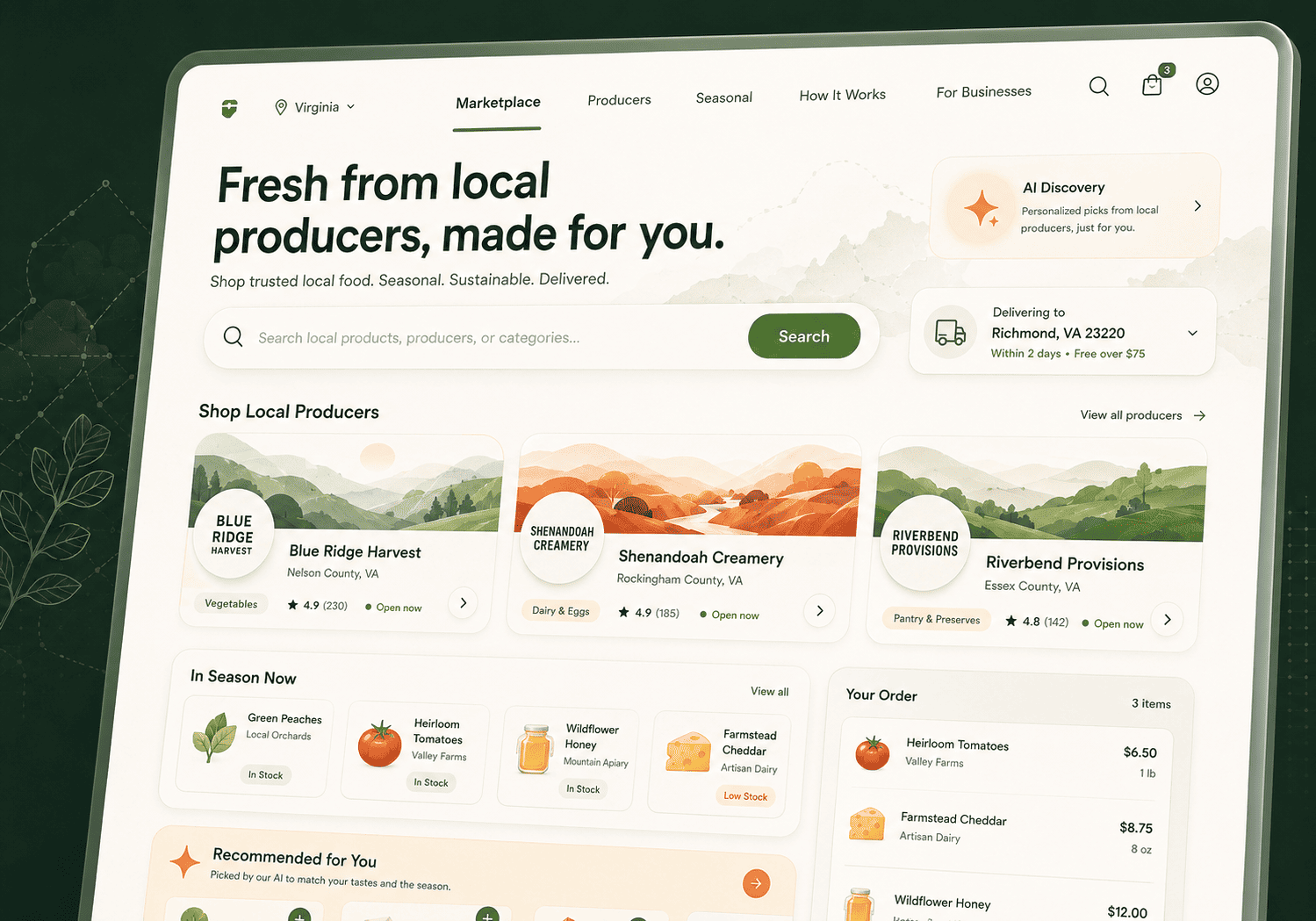
Digital Marketplace for Virginia Farmers, Local Producers & Direct-to-Consumer Food Sales

Plavno developed a custom multi-vendor marketplace for Virginia-based farmers, food producers, and regional sellers to unify product listings, vendor operations, customer ordering, and local fulfillment workflows.

Read More
3x

increase in product discovery relevance

Digital Marketplace for Virginia Farmers, Local Producers & Direct-to-Consumer Food Sales

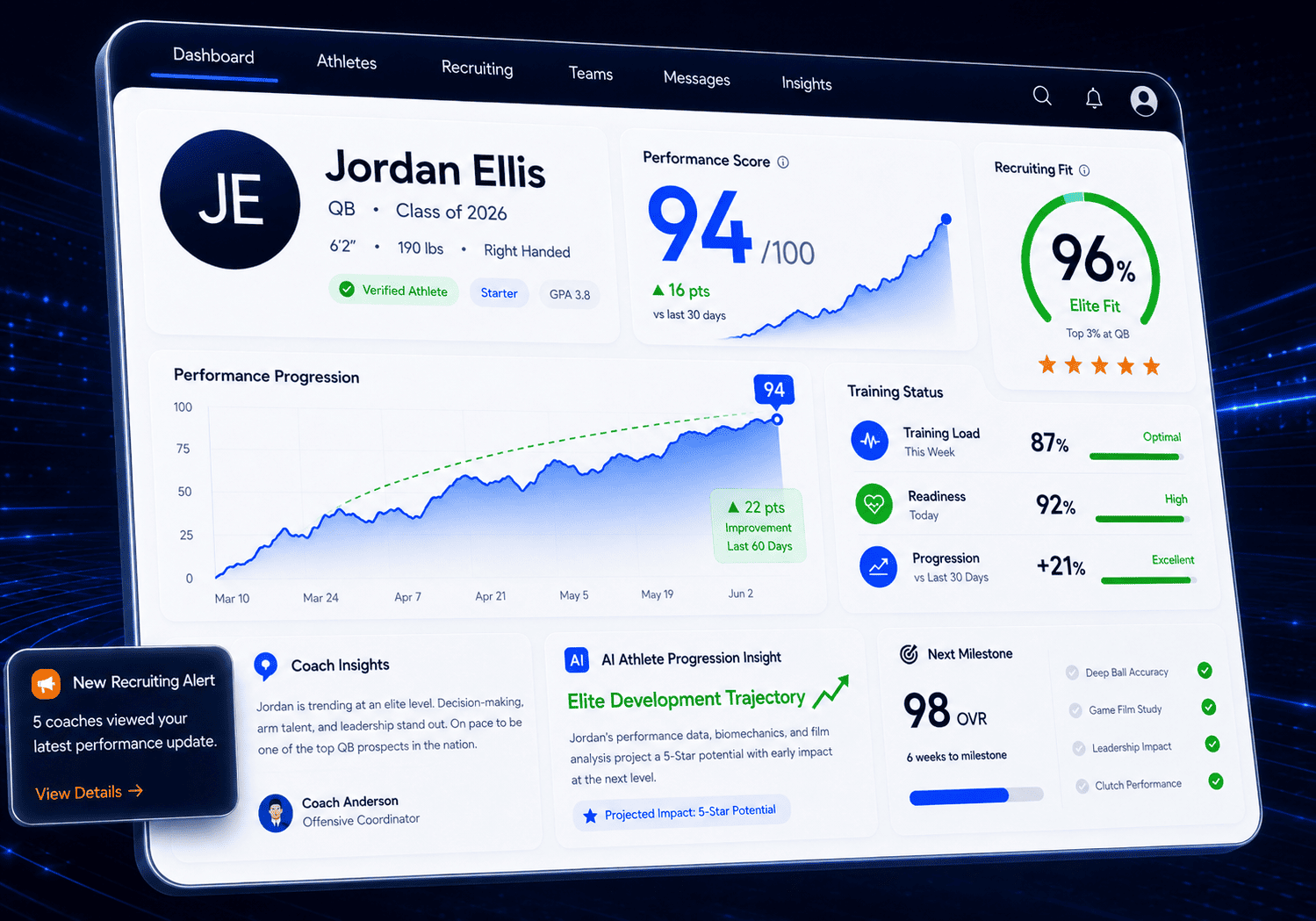
AI-Powered Sports Performance & Recruiting Platform for Virginia Clubs, Academies & Youth Programs

Plavno developed a custom sports technology platform for Virginia-based clubs and academies to combine athlete performance tracking, coach communication, recruiting workflows, and mobile engagement in one ecosystem.

Read More
3x

faster recruiting pipeline

AI-Powered Sports Performance & Recruiting Platform for Virginia Clubs, Academies & Youth Programs

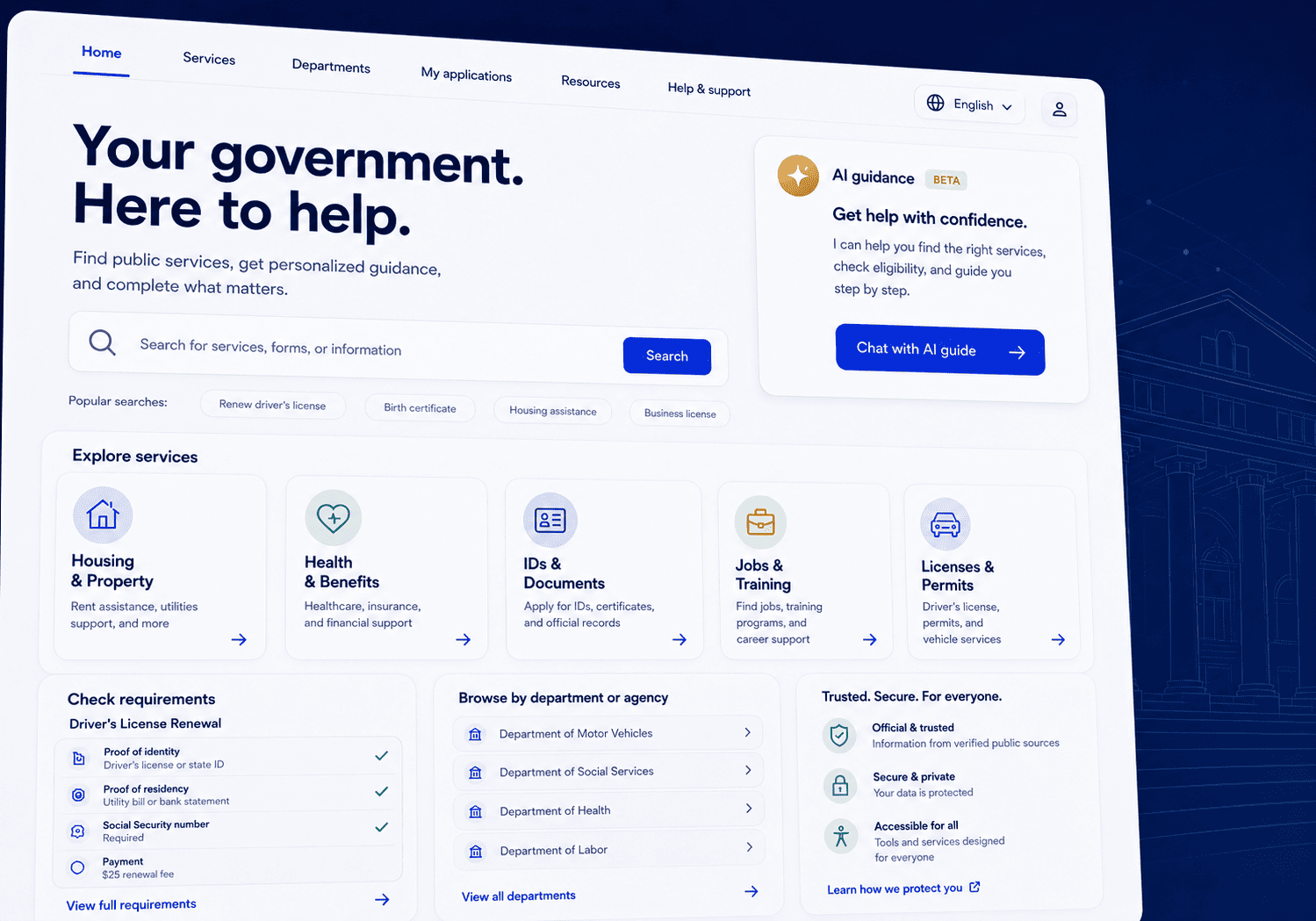
AI-Powered Citizen Services Website Platform for Virginia State Agencies

Plavno developed a modern eGovernment website platform for Virginia state agencies that centralizes citizen services, public information, department content, and an AI-powered guidance agent in one scalable system.

Read More
70%

reduction in routine citizen inquiries to agency staff

AI-Powered Citizen Services Website Platform for Virginia State Agencies

Selection criteria

Why choose deep engineering over template AI shops

Compare the operating reality of generic agencies with the controls Hampton authorities demand.

Generic Agencies
Our Platform (Deep Engineering Expertise)
Owns model code in your git org
checkmark
Department-level access baked into admin UI
checkmark
Written drift and spend alerts at launch
checkmark
Demo-first delivery without metric memo
checkmark
Fixed success metrics before sprint one
checkmark
Opaque third-party model lock-in
checkmark
East Coast support hours with runbooks
checkmark

Testimonials

We are trusted by our customers

“They really understand what we need. They’re very professional.”

The 3D configurator has received positive feedback from customers. Moreover, it has generated 30% more business and increased leads significantly, giving the client confidence for the future. Overall, Plavno has led the project seamlessly. Customers can expect a responsible, well-organized partner.

Sergio Artimenia

Commercial Director, RNDpoint

Sergio Artimenia

“We appreciated the impactful contributions of Plavno.”

Plavno's efforts in addressing challenges and implementing effective solutions have played a crucial role in the success of T-Rize. The outcomes achieved have exceeded expectations, revolutionizing the investment sector and ensuring universal access to financial opportunities

Thien Duy Tran

Product Manager, T-Rize Group

Thien Duy Tran

“We are very satisfied with their excellent work”

Through the partnership with Plavno, we built a system used by more than 40 million connected channels. Throughout the engagement, the team was communicative and quick in responding to our concerns. Overall, we were highly satisfied with the results of collaboration.

Michael Bychenok

CEO, MediaCube

Michael Bychenok

“They have a clear understanding of what the end user needs.”

Plavno's codes and designs are user-friendly, and they complete all deliverables within the deadline. They are easy to work with and easily adapt to existing workflows, and the client values their professionalism and expertise. Overall, the team has delivered everything that was promised.

Helen Lonskaya

Head of Growth, Codabrasoft LLC

Helen Lonskaya

“The app was delivered on time without any serious issues.”

The MVP app developed by Plavno is excellent and has all the functionality required. Plavno has delivered on time and ensured a successful execution via regular updates and fast problem-solving. The client is so satisfied with Plavno's work that they'll work with them on developing the full app.

Mitya Smusin

Founder, 24hour.dev

Mitya Smusin

Data boundaries first

How we keep Hampton AI projects auditable under load

The second build concern is not another model catalog. It is how data crosses trust boundaries when several agencies, primes, and suppliers share a site. Hampton teams work next to programs that expect chain-of-custody detail on every sensitive export. Custom AI that ignores those paths becomes a compliance incident waiting on a spreadsheet dump. We design isolation, labeling, and retention as first-class deliverables next to accuracy scores.

Integration patterns favor boring adapters. SFTP drops, message queues, and signed webhooks beat glitzy connectors that skip auth. Payload shapes version with semantic tags so old callers do not break mid-quarter. When we modernized an internal employee portal from SharePoint to Payload CMS and Next.js, department-level permissions and role-based access control carried the real risk reduction. The same permission maps attach to model admin actions so only named roles can promote inference images. That continuity reduces shadow IT pressure when AI tools land beside HR systems.

Latency budgets follow real shifts. Port clerks will not wait five seconds for a classifier that lives in a distant region while a truck idles. We place inference near the workers who depend on it and cache safe responses when inputs match recent hashes. Cold paths stay allowed when cost caps matter more than absolute speed on off-hours jobs. Throughput plans include known peak windows around vessel arrivals and audit season, not average Tuesdays only. Failure modes default to human queues rather than silent wrong answers that pollute ledgers.

Cost control is a design input. Token and GPU budgets appear in the SOW with monthly caps and alert thresholds. Batching, distillation, and smaller models earn their place when quality holds. We publish unit economics so finance can bind AI spend to the labor hours it replaces. Technical debt gets its own recurring story points for rebuilding weak features instead of papering over them with larger models. That habit keeps custom AI development from turning into an endless cloud bill with no owner.

Post-launch maintenance is staffed work, not a hope. Drift checks run on schedules tied to intake volume, not calendar art. Incident response defines who freezes a model, who notifies the business owner, and how long a hotfix can stay temporary. Knowledge transfer sessions put your engineers on the monitoring tools before warranty ends. We document export steps so if you leave the engagement, your models and gold sets leave with you. This is the operating reality behind defense contractor custom ai solutions Hampton buyers should demand.

Maturity path

Move Hampton workflows from manual to autonomous assist

A staged maturity model that avoids skipping governance for the sake of a demo-day script.

Clipboard
Team
01

Step 1: Manual baseline shop (2 weeks)

Map each click and handoff that today defines done for the process under change. Capture time chips with real staff, not estimates from managers alone. Photograph or record samples that show messy edge cases production will throw. Publish a baseline packet leaders sign as the yardstick for later stages. Identify which steps are pure judgment versus pure lookup. This stage protects against automating noise instead of value.

02

Step 2: Assisted suggestions (3–4 weeks)

Models propose tags, scores, or next actions while humans still own every commit. UI surfaces reasons and source links so trust builds with evidence. Acceptance rates become the key metric rather than raw model accuracy alone. Ops can mute noise paths without waiting for a deploy. Training uses the gold set from the baseline week and expands only when errors justify it. Assisted mode stays long enough that staff drive requirements instead of guessing them.

Search in doc
Rocket
03

Step 3: Guarded autopilot lanes (3–5 weeks)

High-confidence paths post without a click while low-confidence paths stay in queue. Rules come from history of human agreements, not arbitrary cutoffs. Change freezes protect month-end and audit windows with explicit owner approval. Dashboards show auto-rate versus exception-rate side by side daily. Rollback reverts a lane without taking the whole system offline. This is where most Hampton teams stop until regulations and culture allow more.

04

Step 4: Reviewed autonomy with budgets (2–3 weeks)

Scheduled jobs can complete full cycles within policy fences and dollar caps. Humans move to exception review and model ecology rather than first-touch work. Monthly governance meetings decide when to open new autopilot categories. Cost and drift alerts page owners the same way infrastructure does today. Written consecutive failure limits force a human hold after N bad outcomes. The stage exists only after three calm months of guarded lanes with clean metrics.

Eugene Katovich

Eugene Katovich

Sales Manager

Need a custom software solution? We’re ready to help!

Plavno has a team of skilled developers ready to tackle the project. Ask me!

Get a Free Quote

Before you fund a build

Readiness checks Hampton sponsors should finish first

  • Name the process owner and weekly forum — Every Custom AI Development plan needs a single person who can accept metric definitions. Without that name budgets drift across three VPs and no one kills weak ideas. Write the voting rule for go or no-go before discovery starts. Reserve a standing 45-minute slot through the first production month. Include an ops deputy who covers leave windows so decisions never park. Put those names in the SOW so governance is not optional culture. This is the cheapest risk control you will ever sign.

  • Inventory systems of record and nightly exports — List the true sources of truth for each field the model will touch. Note stale views, dual-entry sheets, and gangs of private Access files that still drive payroll week. Flag latency between event and warehouse arrival so engineers do not design on fantasy freshness. Capture auth methods, IP allow lists, and change freezes your IT already enforces. Mark which feeds can leave the premises and which must stay on private segments. Deliver this inventory as a living table, not a one-time slide. Clean sources beat clever models every quarter.

  • Collect single-day sample packs with redactions — Pull a full day of real payloads, success cases and ugly failures both. Remove secrets while keeping structure so engineers see empty fields and odd encodings. Label known ground truth on a subset large enough to score multiple model options. Document why each bad case still appears in production instead of eliminating them first. Store packs under controlled locations with retention dates matching your policy. Reuse the same pack for vendor bake-offs to keep comparisons honest. Avoid cherry-picked demos that hide the 20 percent mess that drives 80 percent of cost.

  • Define kill criteria and cost ceilings in writing — Decide number floors that force a pause on latency, error rate, or monthly spend. Attach owners who can freeze promotion without a board meeting. Separate model failure from process failure so you do not punish the stack when training is incomplete. Translate ceilings into alerts that page people instead of vanity emails. Review ceilings again after pilot data arrives because first guesses are often soft. Publish the rule set to finance and IT so surprises die early. These fences keep experiments from becoming permanent line items.

  • Confirm after-hours support and model export rights — Map who answers at 02:00 when a classifier blocks a gate or a claims queue. Align hours with East Coast operations if your yards run nights. Require contract language that gives you models, features, and gold sets upon exit. Test that export path once during warranty, not after a dispute starts. Document temporary hotfix rules versus permanent patch rules. Include a six-month maintenance budget line so monitoring does not vanish after launch week. Treat support design as part of the product, not a footnote.

Vitaly Kovalev

Vitaly Kovalev

Sales Manager

Request a Hampton AI readiness audit

Share budget, timeline, tech stack, and dataset scope to receive a free Custom AI Development readiness audit tailored for Hampton businesses. The audit returns gap scores, a sample cost calculator, and a 90-day build outline within one business day.

Talk to Experts

Buyer questions

Custom AI Development questions from Hampton teams

Straight answers on cost, timing, data, quality, security, and life after launch for Virginia buyers.

What drives the cost of Custom AI Development for Hampton companies?

Cost follows data readiness, integration count, compliance depth, and the autonomy level you need, not a generic model price list. Clean exports with labeled truth cut weeks of remodeling work that would otherwise land on the SOW. Each external system that must approve or reject a model output adds adapter work and security review time. Defense-adjacent firms near Hampton and Newport News typically add isolation, logging, and identity work that pure commercial shops skip. Those controls raise fixed cost but prevent rewrite after the first audit. License choices also move totals if you insist on specific cloud GPUs or forbid third-party APIs.

Local market factors matter. East Coast staffing rates differ from offshore-only bids that look cheap until handoff quality drops. Regional buyers pay for joint warranty weeks where your staff and ours share on-call so knowledge sticks. Hardware edge nodes at yards or terminals add capital paths that a pure SaaS quote hides. We price discovery as a fixed package so early unknowns do not ambush your budget. Pilot scopes stay narrow enough to kill bad ideas cheaply. Full production then expands by lane with ceilings already written.

You can reduce spend without starving outcomes. Reuse existing identity and ticket systems so we avoid twin platforms. Prefer smaller models when accuracy holds on your gold set. Batch offline jobs when real-time speed buys nothing for the P&L. Require export rights so you never pay a second firm to reverse unknown black boxes. Ask for unit economics that show labor hours removed versus cloud hours added. That math keeps finance, IT, and ops on the same page through 2026 planning cycles.

How long does it take to build Custom AI Development software?

MVP timelines for a single assisted workflow usually land between eight and twelve weeks when data samples arrive in week one. That window covers outcome mapping, contracts, pilot build, and a limited production cut with monitoring. Full multi-lane deployment with autonomous paths, cross-site rollout, and formal audits often stretches across four to seven months. Gaps appear when owners cannot decide labels or when feeds reverse nightly without warning. Clean governance shortens calendars more than hiring more developers. We publish stage gates so delayed decisions are visible, not tribal knowledge.

MVP means one user group, one success metric, and a rollback switch tested under load. It is not a toy chatbot that never touches real volume. Warranted support runs at least two weeks after user training so early defects meet the people who wrote the code. Documentation covers how to retrain and how to freeze. Stakeholders outside IT sit in weekly demos so surprises die early. If the MVP misses the memo metrics, we stop and rewrite goals rather than expand noise.

Full deployment adds security reviews for Virginia and federal adjacent controls, multi-site identity, cost dashboards, and maturity steps into guarded autopilot. Training your staff on runbooks becomes a formal workstream. Change freezes around shipyard or port peaks also stretch calendars and must be booked early. Parallel work across classifiers and prediction services speeds clock time only when owners can review two streams without thrash. We discourage stacking more than two major lanes until the first is calm for a full month. That discipline keeps go-lives honest.

Do you work with startups in Virginia?

Yes. We work with early and growth-stage teams across Virginia when they already have a paying wedge or a strong pilot customer that defines data stakes. Hampton Roads startups in logistics tech, defense dual-use, and healthcare operations fit the same delivery path larger firms use, just with tighter scopes. Richmond fintech and Northern Virginia government-tech founders also appear in our US client set. We stay practical about cash and runway. A six-week assisted pilot is preferable to an eighteen-month platform dream that never ships invoices.

Startup ecosystems matter in practice. Founders near Virginia Beach accelerators and Norfolk maker networks often need billing integrations first and model glamour last. University spinouts from the Peninsula need exportable IP clauses so research grants stay satisfied. Dual-use startups selling into primes need audit logs that match later federal readiness without rewriting the product. We write those constraints into the architecture early. Equity arrangements are out of scope; we operate as a paid engineering partner with clear ownership transfer.

What we need from a startup is the same freshness a mid-market buyer provides: a named product owner, sample data that is not imaginary, and a kill metric. We will say no when the pitch rests only on APIs you do not yet have rights to call. We also decline pure marketing bots with no proprietary data. When the fit is real, timelines compress because fewer committees sit between decision and deploy. Startups still get descriptions of monitoring, cost caps, and post-launch ops because buyers of your product will ask those questions. That preparation becomes part of your sales story as much as the model accuracy.

Can Custom AI Development integrate with my existing system?

Integration is the default, not a side quest. Most Hampton clients already run ERPs, ERPs adjacent plant tools, SharePoint or successor CMS layers, ticket systems, and identity directories we must respect. We begin by cataloging contracts those systems already expose, including file drops when APIs are weak. Adapters speak the shape your operators already mute alerts for. Model services then publish results as state changes rather than forcing staff into another browser tab they ignore after Friday. When APIs are missing we schedule write paths carefully to avoid dual entry. Versioned payloads protect old callers during staged rollout.

Legacy systems need patience and tests. Mainframe exports or aging on-prem databases often hold the only clean historical labels. We sample without putting production locks at risk and prefer read replicas when they exist. Authentication follows your SSO so orphan local accounts never appear. Latency SLOs match human jobs. If a gate clerk has two seconds, we rebuild the path rather than moralizing about modern stacks. Failures route to tickets with the same IDs supervisors already sort. That continuity is what makes AI stick after novelty fades afterlaunch week ends.

Data needed for integration includes schema docs, sample payloads for good and bad days, and a list of restricted fields. We also need contact trees for each system owner because secret owners surface late otherwise. Security teams should join the first technical walk so masking rules are known before pipelines form. Where we previously migrated an employee portal from SharePoint to Payload CMS with Next.js and department-level permissions, the integration lesson was the same: roles and sync jobs outrank UI polish. Carry that lesson into AI connectors. Your existing systems stay systems of record. Models stay assistants or scorers that never secretly fork truth.

What industries in Hampton benefit most from Custom AI Development?

Three clusters dominate real demand here. Defense and shipbuilding suppliers face packet volume, quality evidence, and workforce training pressure that pure headcount cannot absorb. Port and logistics operators manage exceptions and claims under clock pressure where fees punish lag. Healthcare and public-sector back offices wrestle documents and eligibility rules that still live in mixed paper and scan piles. Adjacent manufacturing and municipal services also show strong cases when intake queues dominate labor. Retail pure play has shown less urgency in our local pipeline than those industrial flows. We prioritize industries with measurable process debt over fashion.

Defense-adjacent work benefits when AI respects chain of custody and keeps humans in approval seats. Shipbuilding training and certificate routing free senior mentors from clerical matching. Port yards gain when exception triage ranks cash impact before the night shift ends. Clinics serving military communities reduce prior-auth thrash when packets are complete on first send. City permit desks shrink resident wait times when classification is boring and auditable. Each case wins on minutes and dollars, not model leaderboard bragging. Local freezes around vessel schedules or audit season are part of design.

We measure benefit with baselines you already own. Hours per packet, first-response times, rework loops, and on-time training completion become the scoreboard. Pilots publish deltas against those numbers weekly. If a lane cannot show movement in a short pilot window, we stop rather than sell a platform story. Cross-industry patterns still apply, covering identity, logging, and cost dashboards. Domain experts remain yours. Our job is to encode their judgment without replacing accountability. That balance is why enterprise AI development Hampton Virginia programs keep funders engaged past the first board slide.

Contact Us

This is what will happen, after you submit form

Need a custom consultation? Ask me!

Plavno has a team of experts ready to start your project. Ask us!

Vitaly Kovalev

Vitaly Kovalev

Sales Manager

Schedule a call

Get in touch

Fill in your details below or find us using these contacts. Let us know how we can help.

No more than 3 files may be attached up to 3MB each.
Formats: doc, docx, pdf, ppt, pptx, xls, xlsx, txt.
Send request