bg image
bg image

Serving Hampton & Virginia

Cut operating waste with production AI systems built for Hampton in 2026

Hampton operators still burn hours on manual intake, status calls, and document checks that should run alone. Defense suppliers, port logistics teams, and healthcare groups feel it first when headcount cannot keep pace. We design AI that removes those bottlenecks and protects the margins you already fight for. This work is for leaders who need reliable automation, not another pilot that never reaches production. Get AI Development cost estimate in 24 hours. Tell us your budget, timeline, stack, and dataset scope so we can scope a real build path.

Discuss Project

Overview

Why Hampton teams treat AI as ops infrastructure in 2026

Hampton sits inside a dense defense, shipbuilding, and logistics corridor. Langley Air Force Base, NASA Langley, and Newport News Shipbuilding set a high bar for process discipline. Port and distribution traffic across Newport News, Norfolk, and Portsmouth multiplies manual desk work every week. Leaders here need systems that reduce cycle time without creating new risk. That is the job of serious AI development, not slide-deck demos.

Trusted AI Development Partner for Hampton Businesses. We work with US-based clients, including companies operating in Virginia. Our focus is production systems that answer real intake, triage, pricing, and compliance loads. Local firms lose days when documents sit in queues or phones require full-time staff to field repetitive status calls. Custom models and agents reverse that pattern when they sit on clean process boundaries.

We ship AI development that starts from the workflow, not from a model catalog. Past work includes an AI phone agent for logistics call automation, a customs compliance checker for trade document review, and a medical symptom checker for triage flows. Each project began with the cost of delay and the data already present in operations. The same discipline applies to Hampton Roads enterprises that must prove value inside one budgeting cycle.

Nearby teams in Virginia Beach, Chesapeake, and Williamsburg face the same constraints on staff cost and audit readiness. Integration with existing CRM, ERP, and telephony stacks happens early so the AI layer does not become orphan software. Security reviews, role controls, and monitoring plans are part of the first delivery, not a later retrofit. 10+ AI development projects delivered in the US market give us repeatable patterns for discovery, model selection, and production cutover.

Outcomes stay concrete. Fewer human touches on routine requests. Faster document decisions. Clearer handoffs from voice or chat channels into back-office systems. You keep ownership of data and vendors stay accountable to measurable workflow gains. That is how AI earns a permanent place in Hampton operating plans for 2026.

Talk to an Expert
Voice status agents

Voice status agents

Logistics call automation with telephony writeback into TMS and CRM

Document triage

Document triage

OCR plus rules engine for customs, quality packets, and compliance

Ops-bound AI

Ops-bound AI

Production agents on clean process boundaries, not slide-deck demos

Governed cutover

Governed cutover

Role controls, monitoring, and CRM/ERP hooks from first delivery

Core stack & runtime

Production AI architecture Hampton teams can operate daily

Clients in Hampton receive governed AI services that sit beside the systems they already run. We favor clear service boundaries over monoliths so voice, document, and scoring workloads can scale apart. Models are selected for task fit and latency, not brand familiarity. Retrieval layers pull only the records a workflow needs. Every component ships with logging so operators can see decisions after go-live.

For voice and call-heavy processes we build agent pipelines like the logistics phone agent workstations already trust. Telephony hooks feed structured transcripts into CRM events. Intent routing keeps human staff on exceptions only. For document jobs we reuse patterns from the customs compliance checker, pairing document understanding with a rules engine so policy stays explicit. Real estate pricing agents showed how tabular models and market features can live as reusable services rather than notebooks lost on a laptop.

Security/compliance controls are designed before code ships. Role scopes, secrets handling, and audit trails mirror what defense-adjacent suppliers already expect in Virginia. We isolate training data from production traffic. Access logs follow least privilege. When legal or healthcare data appears, we keep PHI or privilege-sensitive content out of shared prompt stores. Encryption in transit and at rest is baseline, not a paid add-on.

DevOps discipline keeps releases boring. Models version with the APIs that call them. Feature flags gate new ranking logic. Staging mirrors production traffic shape before cutover. Continuous evaluation runs sample sets so accuracy drift is caught early. Infrastructure is treated as code so recovery steps stay documented for client SRE teams.

We also ground interface choices in delivered work. The employee portal migration used Payload CMS and Next.js with department-level permissions when content access itself was the control plane. Family wellbeing platforms required personalization loops that stay private to a household profile. Video conferencing translation pipelines proved that streaming STT and translation can sit behind a stable meeting session model. Each case shows why we avoid one-size platforms and instead compose services around the operational contract a Hampton buyer must hit.

plavno logo

Build your first
Smart AI project today!

Just tell the Plavno AI Agent about your project - it will ask questions, gather requirements, and propose a tailored solution

AI Development Solutions for Hampton Industries

Regional workflows where custom AI pays for itself

Hampton Roads mixes defense supply chains, port logistics, healthcare, hospitality, and professional services. These six builds map to the costs those teams carry every week.

Defense Intake

Defense Intake

Doc Triage

Defense supplier intake and document triage

Prime and subcontractor teams near Langley still sort RFIs, quality packets, and shipment proofs by hand. Missed clauses create costly resubmissions. We implement document understanding with explicit rules so reviewers see only exceptions. Patterns mirror our customs compliance checker that pairs extraction with a rules engine. Throughput rises during audit windows while policy language stays controlled by compliance owners. Technical path uses OCR, structured extraction, and workflow hooks into existing quality systems. Typical ROI appears as fewer rework cycles per shipment lot inside one quarter.

Port Logistics

Port Logistics

Voice Agents

Port and logistics voice status agents

Dispatchers across Newport News and Norfolk burn shifts on ETA and pickup calls. Drivers and brokers repeat the same five answers. An AI phone agent owns outbound and inbound status flows, then writes structured results into the TMS. Our logistics phone agent work already proved call automation with telephony integration. Staff time returns to exception handling and yard moves. The stack pairs voice models with CRM writebacks and struggle alerts. Measured gain is reduced handle time on routine calls and shorter queue backlogs during peak vessel weeks.

Hotel Concierge

Hotel Concierge

Voice Lines

Hospitality reservation and concierge voice lines

Hotels and operators serving Virginia Beach visitors absorb after-hours booking spikes they cannot staff evenly. Missed calls become abandoned revenue. We ship voice concierge flows that handle booking intents and common guest questions. Prior hotel concierge builds combined voice AI with booking workflows and operator integrations. Guests get answers without waiting on a desk that is already closed. Property managers keep human teams for upgrades and complaints only. ROI shows as higher overnight capture and lower overflow staffing spend during event weekends.

Healthcare Triage

Healthcare Triage

Symptom Intake

Healthcare triage and symptom intake

Clinics supporting Hampton and Peninsula populations face front-desk overload before providers ever see a patient. Poor intake data slows schedule use. A symptom checker agent collects structured complaints and guidance paths before the visit. Our medical triage assistant work centered on symptom collection and decision support without replacing clinicians. Nurses receive cleaner diffs. No-show risk drops when patients know next steps early. Implementation uses guided dialogue, risk flags, and EHR-friendly summaries. Gains appear as shorter intake time per patient and better slot utilization.

Legal Depositions

Legal Depositions

Summaries

Legal deposition capture and summary pipelines

Firms across Hampton Roads still retype long deposition assets into usable briefs. That labor costs partners and delays case strategy. Custom legal AI software supports transcription and summarization inside a firm-controlled workspace. We automated deposition handling so reviewers jump to issues, not raw hours of audio. Privilege boundaries stay intact with access controls. The pipeline combines speech models, segmentation, and attorney review UI. Result is faster first-pass summaries and lower contractor transcription spend per matter.

Talent Screening

Talent Screening

Hiring

Talent screening for industrial and contractor hiring

Shipyard and defense contractors compete for skilled trades and cleared talent under tight timelines. Screeners drown in first-round calls. An AI voice assistant runs structured pre-screens and returns scored summaries. Our candidate pre-screening work used voice screening and HR automation for consistent interviews. Recruiters start later stages with complete facts. Hired rates improve when poor-fit candidates exit earlier. Technically it is guided voice dialogue, rubric scoring, and ATS writeback. Teams recover recruiter hours weekly while keep ratings stay owner-defined.

What you receive

Capabilities Hampton operators can put into next-quarter plans

Workflow-bound AI agents

Workflow-bound AI agents

Hampton teams rarely need a freeform chat toy. They need an agent tied to tickets, calls, or documents that already exist. We map intents to the systems of record first. Then we decide which steps run alone and which escalate. Voice and text channels share the same policy layer. Tooling often includes telephony bridges and structured event buses chosen because operators already trust those audit trails. Delivery ends with runbooks your staff can own without constant vendor presence.

Document intelligence with explicit rules

Document intelligence with explicit rules

Trade, quality, and claims packets still drive cost across the Peninsula. Pure generative answers are unsafe when a clause can void a shipment. We combine extraction models with a transparent rules engine so decisions stay explainable. Compliance owners edit rules without a model retrain. Retrieval stays limited to the case file. This approach came from logistics compliance work where document understanding had to pair with enforceable policy. Resulting queues shrink while audit readiness improves for federal-facing suppliers.

Domain scoring and pricing models

Domain scoring and pricing models

When markets move weekly, static spreadsheets lag. Real estate and industrial pricing teams need agents that refresh features and publish guidance to sales. We build model services with versioned feature stores and human override paths. Operators see the drivers, not only a black score. Prior pricing agent work used market optimization workflows instead of one-off notebooks. Models deploy behind APIs so CRM and quoting tools stay current without manual export.

Secure internal knowledge hubs

Secure internal knowledge hubs

Many AI failures start because staff cannot find the current SOP. Modern content hubs with role-based access feed retrieval cleanly. We migrated SharePoint-style employee portals to Payload CMS and Next.js when department permissions mattered more than flashy search. Search indexes respect those same scopes. Editors keep content fresh without IT tickets for every page. AI layers then answer with sources workers can verify. That reduces bad answers rooted in stale intranet copies.

Real-time media AI for meetings

Real-time media AI for meetings

Distributed defense and contractor partners need translation and transcripts without buying a second meeting stack. We build conferencing pipelines that stream voice translation and capture searchable notes. The session model stays first so media AI is a service, not a brittle plugin. Prior voice translation platforms showed how transcription and translation must share the same latency budget. Hampton multinationals use this to shorten cross-site standups. Recordings remain under client storage policy with redaction options for sensitive programs.

Case Study

We help customers cut
down on development

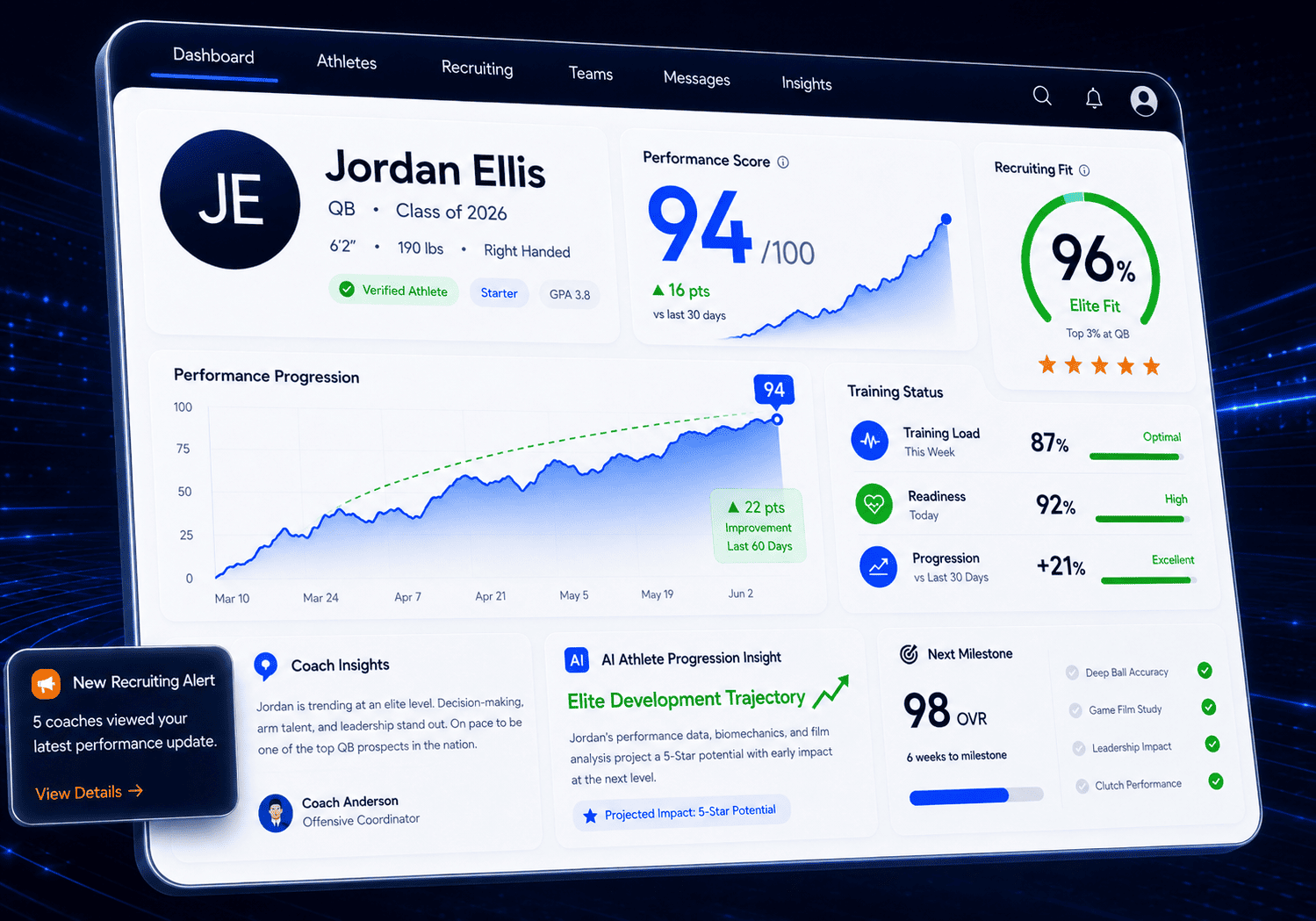
AI-Powered Sports Performance & Recruiting Platform for Virginia Clubs, Academies & Youth Programs

Plavno developed a custom sports technology platform for Virginia-based clubs and academies to combine athlete performance tracking, coach communication, recruiting workflows, and mobile engagement in one ecosystem.

Read More
3x

faster recruiting pipeline

AI-Powered Sports Performance & Recruiting Platform for Virginia Clubs, Academies & Youth Programs

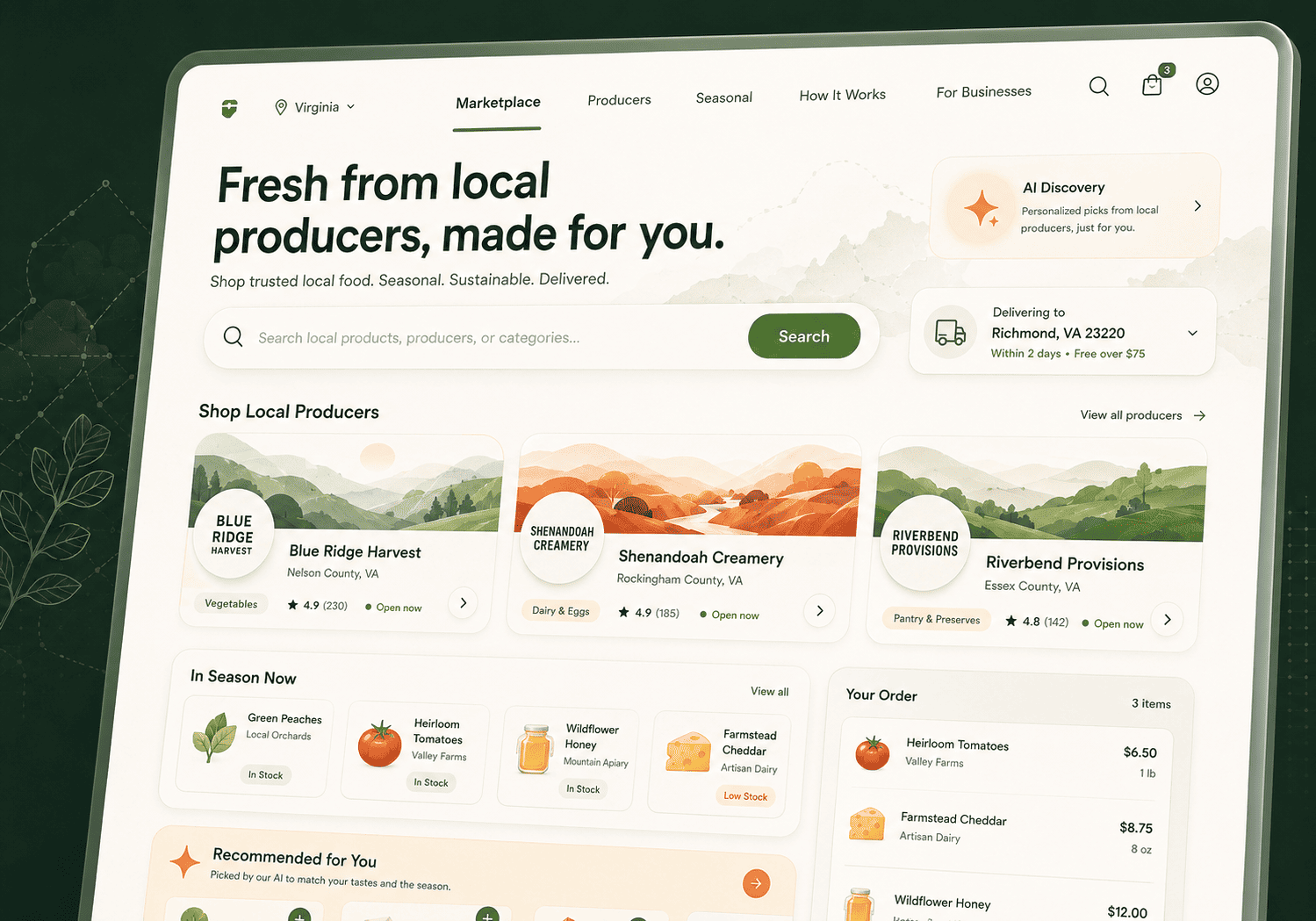
Digital Marketplace for Virginia Farmers, Local Producers & Direct-to-Consumer Food Sales

Plavno developed a custom multi-vendor marketplace for Virginia-based farmers, food producers, and regional sellers to unify product listings, vendor operations, customer ordering, and local fulfillment workflows.

Read More
3x

increase in product discovery relevance

Digital Marketplace for Virginia Farmers, Local Producers & Direct-to-Consumer Food Sales

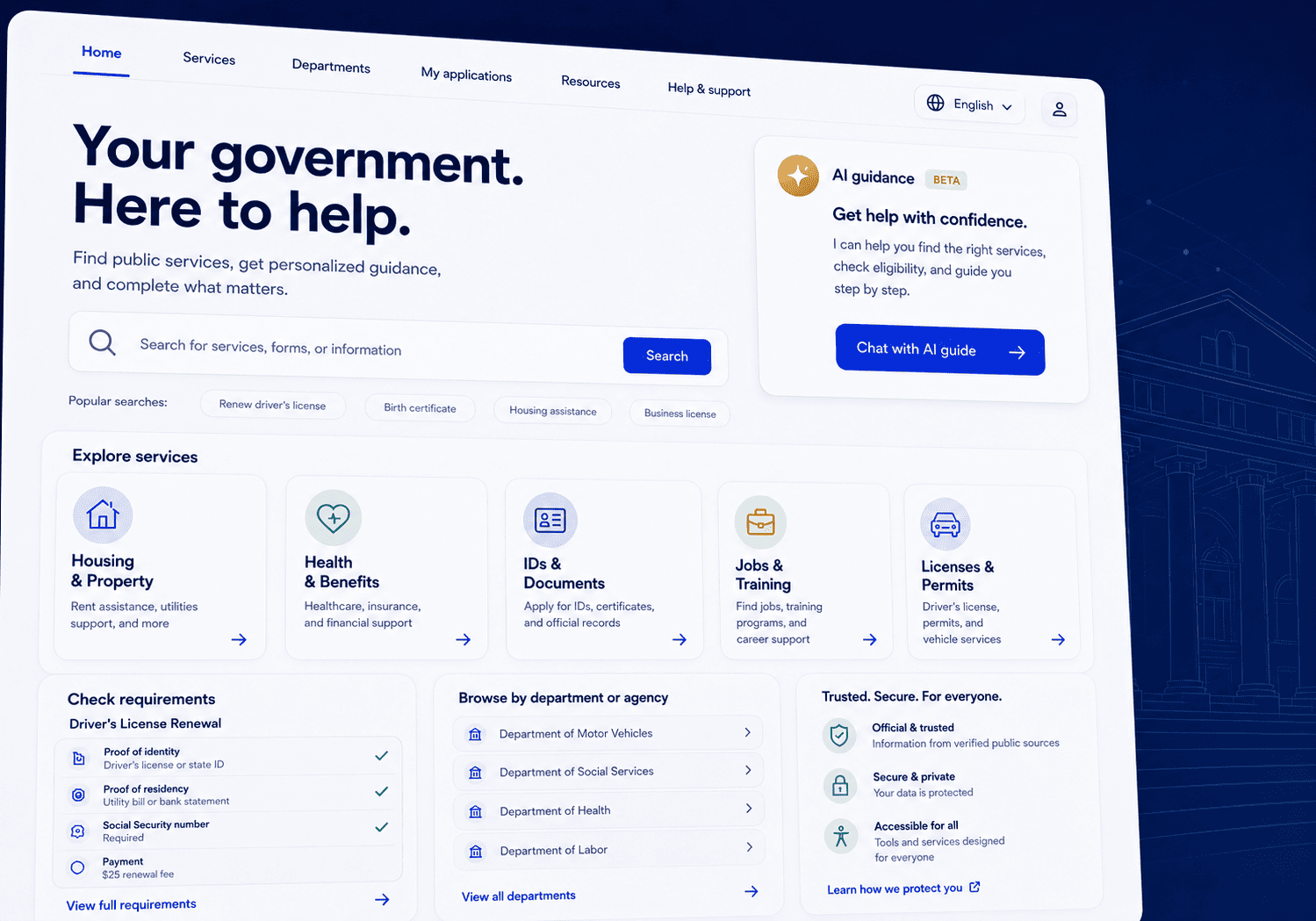
AI-Powered Citizen Services Website Platform for Virginia State Agencies

Plavno developed a modern eGovernment website platform for Virginia state agencies that centralizes citizen services, public information, department content, and an AI-powered guidance agent in one scalable system.

Read More
70%

reduction in routine citizen inquiries to agency staff

AI-Powered Citizen Services Website Platform for Virginia State Agencies

Testimonials

We are trusted by our customers

“They really understand what we need. They’re very professional.”

The 3D configurator has received positive feedback from customers. Moreover, it has generated 30% more business and increased leads significantly, giving the client confidence for the future. Overall, Plavno has led the project seamlessly. Customers can expect a responsible, well-organized partner.

Sergio Artimenia

Commercial Director, RNDpoint

Sergio Artimenia

“We appreciated the impactful contributions of Plavno.”

Plavno's efforts in addressing challenges and implementing effective solutions have played a crucial role in the success of T-Rize. The outcomes achieved have exceeded expectations, revolutionizing the investment sector and ensuring universal access to financial opportunities

Thien Duy Tran

Product Manager, T-Rize Group

Thien Duy Tran

“We are very satisfied with their excellent work”

Through the partnership with Plavno, we built a system used by more than 40 million connected channels. Throughout the engagement, the team was communicative and quick in responding to our concerns. Overall, we were highly satisfied with the results of collaboration.

Michael Bychenok

CEO, MediaCube

Michael Bychenok

“They have a clear understanding of what the end user needs.”

Plavno's codes and designs are user-friendly, and they complete all deliverables within the deadline. They are easy to work with and easily adapt to existing workflows, and the client values their professionalism and expertise. Overall, the team has delivered everything that was promised.

Helen Lonskaya

Head of Growth, Codabrasoft LLC

Helen Lonskaya

“The app was delivered on time without any serious issues.”

The MVP app developed by Plavno is excellent and has all the functionality required. Plavno has delivered on time and ensured a successful execution via regular updates and fast problem-solving. The client is so satisfied with Plavno's work that they'll work with them on developing the full app.

Mitya Smusin

Founder, 24hour.dev

Mitya Smusin

Architecture & Engineering Overview

How Hampton AI programs stay valuable after the pilot ends

1

Baseline the ledger

Capture open tickets, handle time, first-pass yield, and escalation rate before any model trains

2

Prove on high-volume paths

Automate logistics status calls and dual-control document compliance until agreement rates hold

Human takeover on low confidence
3

Stage capital by ROI gate

Discovery → narrow MVP → adjacent workflows only after the first unit hits the operating ledger

4

Prune post-launch spend

Tag tokens, call minutes, and GPU time per workflow; scale seasonal channels down on schedule

For Business: Technical ROI & Risk Mitigation

Business value appears when a workflow loses human touches without creating new failure modes. AI development only pays when the saved hour is real on the operating ledger. We start with baseline measures open tickets, average handle time, first-pass yield, and escalation rate. Those numbers set the acceptance bar before any model trains. Modeling choices follow the cost stack rather than research fashion.

Voice automation for logistics shows the pattern clearly. Status calls are high volume and low ambiguity. Automating them frees dispatchers during vessel peaks in Norfolk and Newport News. The risk sits in bad writebacks. We mitigate with confirmation prompts and human takeover rules on low confidence. Leaders see fewer abandoned callbacks without gambling the customer relationship.

Document compliance carries a different risk profile. A missed HS code or certificate is a financial event. Fairness is less relevant than precise adherence to published rules. Hybrid extraction plus rules keeps authority with trade counsel. Pilots run dual-control until agreement rates hold. Only then do we loosen human review percentages.

Capital planning benefits from staged spend. Discovery produces a narrow production path. MVP targets one channel or document class. Expansion adds adjacent workflows after the first units hit the ROI gate. This protects budget from platform sprawl that never reaches operations. Procurement teams in Hampton get artifacts they can put beside existing IT vendor packs.

Post-launch cost control is part of the same conversation. Token use, call minutes, and GPU time are tagged per workflow. Monthly reviews prune low-value routes. When a channel is seasonal, capacity scales down on a schedule. Finance keeps visibility without waiting for a surprise invoice after a marketing spike.

Kickoff freeze

Kickoff freeze

Decision record for data sources, latency targets, and escalation paths

Discovery sign-off

Discovery sign-off

Context diagram, threat model, data contracts, dual business + eng approval

Separated build

Separated build

Online vs offline paths; planner, tools, and policy packs with feature flags

Governed runtime

Governed runtime

SLOs, shadow traffic, config rollback, quarterly prune of unused tools

For CTOs: Architecture & Technical Lifecycle

Lifecycle design is where Hampton programs avoid becoming unmaintainable science projects. We treat AI as a versioned product service with owners, SLOs, and kill criteria. Kickoff freezes the decision record for data sources, latency targets, and escalation paths. Architecture reviews happen before sprint work so integration debt does not hide behind demos.

Discovery produces a system context diagram and a threat model. Integration points list auth methods, rate limits, and field ownership. Data contracts define required labels and freshness. Model candidates are shortlisted against offline metrics that mirror production constraints. Sign-off is dual from business process owners and engineering leads.

Build phases keep online and offline paths separate. Training jobs never share runtime credentials. Feature computation is either precomputed or bounded so p95 latency stays predictable. For agents we separate planner, tools, and policy packs so middle-of-call failures degrade cleanly. Feature flags control rollout percentages by site or customer segment.

Governance continues after release. Change tickets cover prompt or rule edits when those affect regulated language. Shadow traffic validates new blunt model versions. Rollback is a configuration switch, not a multi-day rebuild. Quarterly architecture reviews prune tools that no longer earn their keep.

Trade-offs stay explicit. Accuracy may yield to latency for call agents. Explainability yields less for pure ranking use cases than for compliance gates. Build-versus-buy decisions weight total cost of ownership against Virginia security expectations, not sticker price alone. CTOs leave with paper they can defend in steering committee.

API edges & workers

API edges & async workers

FastAPI or Node with strict schemas; streaming paths for live STT and translation

Speech & voice agents

Speech & voice agents

STT → diarization → intent; idempotent TMS webhooks and confidence gates to human queues

Document stacks

Document & legal stacks

OCR + layout extraction, rules engine, matter-scoped vectors, gold-set evaluation fixtures

Cost & latency budget

p95 & cost budgets

SOP caching, off-peak batch scores, prompt-length budgets, swap to domain fine-tunes when they win

For Engineers: Implementation Details & Stack

Implementation choices follow load and audit needs more than fashion. We pick components we can observe, version, and replace without rewriting the business layer. API edges are typically FastAPI or Node services with strict schemas. Async workers handle long document jobs. Streaming paths support transcription and translation when the product needs live media.

Speech work builds on proven conference and phone agent patterns. STT streams feed diarization and intent classifiers. For logistics calls, structured slots write to TMS events through idempotent webhooks. Hotel and travel concierge flows add booking tools with confirmation cards so guests can verify without reentering data. Confidence gates drop the call to a human queue with full context.

Document stacks pair OCR with layout-aware extraction. The customs compliance project used a rules engine so policy authors keep control. Legal deposition pipelines chain transcription, segmentation, and controlled summarization inside role-gated workspaces. Vector retrieval is scoped to the matter or shipment ID to avoid cross-matter bleed. Evaluation sets hold gold documents including hard negatives.

For content and knowledge hubs, Payload CMS with Next.js gave department-level access after SharePoint migrations. That same permission map becomes the retrieval ACL later. Candidate screening assistants use structured interview playbooks so scores stay comparable. Medical triage agents collect symptoms into decision trees clinicians already accept. Edge cases are cataloged and turned into regression fixtures.

Optimization work targets p95 latency and cost per successful task. Caching for static SOP passages reduces repeated model spend. Batch score jobs run off-peak. Prompt length is measured as a first-class budget. When a smaller fine-tuned model beats a large general model on your domain tree, we switch. Engineers get load dashboards and failing fixtures, not only notebook accuracy stats.

Workflow SLOs

Workflow SLOs & drift

Intent drift, tool failures, takeover share, token cost per task into your existing monitors

Security baselines

Security baselines

SSO, short-lived creds, private VPC paths, HIPAA/CUI handling, SOC 2 evidence packs

IaC releases

IaC canary releases

Blue-green model cutovers, retention purge APIs, outbound redaction filters on third-party calls

Incident playbooks

Incident playbooks

Gateway outages, poisoned docs, carrier failures → automated tests and surge capacity plans

Infrastructure, Observability & Security

US client deployments assume continuous scrutiny from internal audit and sometimes federal adjacent partners. Observability and security are product features, not after-hours chores. We define service SLOs for availability, error rate, and workflow completion. Metrics emit from edge APIs, model gateways, and worker queues into the monitoring stack your team already runs whenever possible.

What we monitor includes intent distribution drift, tool failure rates, human takeover share, token cost per completed task, and policy trigger counts. Transcript and document samples feed weekly quality review without exporting raw PII to personal machines. Alerts route to on-call with clear runbooks. Incidents get postmortems that address data gaps or tool schema breaks, not only always-up time charts.

Security baselines include SSO, short-lived credentials, encryption in transit and at rest, and secrets stored outside application images. Deployments favor private networking into client VPCs when datasets cannot leave. For healthcare symptom flows we align with HIPAA handling expectations. For defense suppliers we respect CUI handling practices the client defines. SOC 2 aligned process evidence is available for vendor review cycles common across Virginia enterprises.

Deployment uses infrastructure as code with staged environments. Blue-green or canary model releases keep rollback fast. Access reviews happen on a schedule. Data retention policies purge raw media according to client legal hold rules. When third-party model APIs are used, we gate outbound content through redaction filters for fields that must never leave the boundary.

Incident response pairs engineering with the client security contact. Playbooks cover model gateway outages, poisoned document floods, and telephony carrier failures. Post-incident fixes become automated tests. Capacity plans adjust before known Hampton Roads event seasons or Defense production surge windows. That is how systems remain trustworthy past the first press release.

Data, risk, controls

Data readiness and compliance controls for Virginia buyers

A second build concern dominates Hampton projects once the architecture sketch exists. Data quality, lineage, and access rules decide whether models are safe to run near operations. We start with source maps for CRM, TMS, EHR, or document vaults. Field ownership sits with named stewards. Missing labels shut down training until the exports are honest. No amount of clever prompting replaces a broken master record.

Integration work happens in thin adapters instead of mega-ETL dumps. Event streams or scheduled extracts honor rate limits from M365, SAP, or industry TMS tools common locally. Change data capture keeps features fresh without nightly full reloads that thrash production. For voice agents, call metadata and CRM IDs join before the first model call so context is complete. Document jobs tag each page with the case identity used for retrieval filters later.

Defense contractor expectations around controlled information change the bar. We segment environments so development never sees live controlled content. Synthetic or scrubbed samples train first. Production inference stays inside the approved boundary. Logging redacts free-text fields that may contain controlled markers. Review boards receive evidence packs rather than hand-waved assurances. That discipline also helps commercial firms in Chesapeake and Portsmouth that expect the same seriousness.

Security/compliance continues through retention and deletion APIs. When a customer requests erasure, features and caches expire together. Access tokens expire quickly. Service accounts map to least privilege. Vendors who cannot meet these constraints are rejected early. DevOps pipelines enforce policy as code for encryption, network rules, and image scanning so drift is blocked before deploy.

We also design fallback modes. If a model score is low, the workflow routes to a human queue with the original packet intact. If telephony fails, agents leave structured voicemail and open a ticket. If OCR confidence drops, documents wait in a review rail. These modes keep customer experience stable when sensors or upstream feeds wobble. Hampton operators keep service levels even when AI components are imperfect that hour.

Decision criteria

Why Hampton buyers pick deep engineering over template AI shops

Generic agencies sell demos. We sell systems that survive ops queues, audits, and real call volume across Hampton Roads.

Generic Agencies
Our Platform (Deep Engineering Expertise)
Workflow-first scoping with baseline metrics
checkmark
Voice agents with telephony writeback
checkmark
Document AI paired with editable rules engines
checkmark
Slide decks as primary delivery artifact
checkmark
Department-level access for knowledge and retrieval
checkmark
One-size public chatbot installed on any site
checkmark
Post-launch cost, drift, and incident runbooks
checkmark
Eugene Katovich

Eugene Katovich

Sales Manager

Need a custom software solution? We’re ready to help!

Plavno has a team of skilled developers ready to tackle the project. Ask me!

Get a Free Quote

Delivery path

From first data sample to governed AI live in Hampton 2026

A four-stage path that ties discovery, pilot proof, production hardening, and measured rollout to the way Virginia operators actually approve spend.

Clipboard
Team
01

Step 1: Workflow and data forensic (1–2 weeks)

We sit with process owners in Hampton to map the target queue end to end. Baseline metrics capture volume, handle time, and error classes. Sample exports show label quality and dual-system mismatches. Security constraints and retention rules enter the decision record. You receive a scoped problem statement, risk register, and go or no-go recommendation. Timeline stays inside two weeks so steering groups can act in the same month.

02

Step 2: Thin-slice pilot in staging (2–4 weeks)

Engineers implement one narrow path such as status calls or a single document class. Models and rules run against historical samples first. Success criteria match the baselines from step one. Integrations use sandbox credentials and redacted payloads. You get a working pilot, accuracy sheet, and cost-per-task estimate. Leadership sees whether the workflow opens enough value to fund production hardening.

Search in doc
Rocket
03

Step 3: Production hardening and controls (2–3 weeks)

We add authentication, observability, rollback switches, and human takeover rails. Load tests mimic peak port or clinic hours. Runbooks cover carrier failure, model gateway lag, and poisoned input floods. Compliance evidence packs assemble for IT and risk review. Your team trains on consoles where exceptions appear. Hardening finishes only when SLOs and audit owners agree the service is operable.

04

Step 4: Controlled rollout and expansion (2–6 weeks)

Traffic ramps by site, shift, or customer tier with live dashboards. Weekly reviews prune low-value intents and tune prompts or rules. Cost tags show spend per completed task to finance. New adjacent workflows enter the backlog only after the first unit holds its gains. You receive a stable production service plus a 90-day improvement plan. Expansion stays tied to measured outcomes rather than enthusiasm.

Common questions

AI development FAQs for Hampton and Virginia leaders

Straight answers on cost, timing, data, quality, security, and operations for teams planning custom AI work in 2026.

What drives the cost of custom AI development for Hampton companies?

Cost follows workflow complexity, data readiness, channel count, and compliance depth more than slogan feature lists. A single document class with clean exports costs less than multi-intent voice that writes into a mature TMS. Local Virginia labor rates for subject experts belong in the budget when domain review is weekly. Phone minutes, model inference, and secure hosting create operating cost after launch, so we model both build and run numbers. Defense-adjacent controls can add environment separation and audit evidence time that pure commercial apps skip.

Discovery fixes the range before heavy engineering. We quantify baseline handle times so ROI stay honest. Prior builds like logistics phone agents or customs checkers show how integrating telephony or rules engines changes effort relative to a pure chatbot. Integration adapters into Microsoft or ERP stacks sometimes dominate if APIs are incomplete. Clean labels cut model cycles and therefore spend.

Hampton buyers should budget for change management alongside code. Training supervisors, writing runbooks, and dual-running queues for a few weeks keep adoption real. Ignoring that inflates internal cost even when the vendor invoice looks neat. We share a transparent estimate in 24 hours when you provide budget bands, timeline, stack, and dataset scope. That estimate separates fixed build fees from usage drivers you can throttle.

Yearly total cost includes monitoring, prompt or rule maintenance, and model refresh. Seasonal port traffic may spike minutes. Document surges around audit seasons lift OCR volume. We design kill switches for low-value intents so finance can cut waste without a full project restart. Choosing fewer high-value workflows usually beats a wide pilot that never hardens.

How long does it take to build AI Development software?

Timelines depend on whether you need a proof path or a governed production service. Thin pilots with one channel often land in four to six weeks after data access arrives. Full production with SSO, observability, rollback, and staff training typically spans eight to fourteen weeks for a focused workflow. Multi-site rollouts across Hampton Roads add calendar time for each controlled ramp. Legal or clinical content can extend reviews even when code is ready.

MVP scope should hit one measurable queue. Example targets include call status automation or a single compliance document type. That keeps engineering honest and stakeholders engaged. Expanding to multi-language meeting transcription or multi-department knowledge retrieval is a later stage once the first service holds SLOs. Parallel workstreams for content cleanup can shorten idle time while models train.

Data lag is the usual delay. If exports lack keys or labels, the clock stops until stewards fix sources. We front-load forensic work in one to two weeks to surface those gaps early. Staging access and sandbox credentials should appear on the critical path from day one. Clients that pre-assign system owners move faster than those hunting approvals mid-sprint.

Post-MVP hardening is not optional for Virginia industrial buyers. Expect dedicated weeks for security review, load proof, and dual-run comparison. Training WFM or clinic staff needs schedule calendar room. When executives want a date for steering committee, we publish a four-stage plan with gates rather than a single optimistic go-live promise. That plan maps discovery, pilot, hardening, and rollout with clear exit criteria.

Do you work with startups in Virginia?

Yes. We support Virginia startups that already have a defined operator workflow and early customers, not pure idea-stage experiments without data. Hampton Roads founders in logistics tech, health services, defense dual-use, and hospitality tooling often need AI that proves unit economics fast. Richmond and Northern Virginia teams also engage when their product roadmap picks a single agent or scoring engine to ship. The engagement style favors sharp MVPs over multi-year platform fogs.

Startup constraints shape the plan. Budget bands stay tight, so we cut scope to one high-frequency task that investors can measure. Founders get architecture that a small internal team can later own. We avoid lock-in components when a managed API will do for the first year. Instrumentation for conversion or handle-time metrics is part of delivery, because fundraising stories need numbers.

Regional ecosystems matter. Partnerships with customers near the port, Langley, or hospital networks create domain access young companies lack alone. We help structure data-sharing agreements so models train without transferring regulated payloads carelessly. Mentorship from operators is scheduled into discovery so product assumptions die early. That reduces wasted build time when the first pilot goes live with design partners.

Startups still face the same security bar when they sell into enterprise Virginia accounts. We implement basic SSO, audit logs, and tenant isolation early even on lean budgets. That prep stops embarrassing headaches during procurement. If your team needs investor-ready demos plus a path to production credibility, share stack, dataset size, and timeline so we can propose a staged plan that fits. We work with US-based clients, including companies operating in Virginia, across later-stage and growth product teams.

Can AI Development integrate with my existing system?

Integration is the default path, not a future phase. We connect AI services to CRM, ERP, TMS, EHR, telephony, and content platforms already running in Hampton organizations. Pattern choices include REST webhooks, event buses, secure file drops, and robot-free APIs when vendors expose them. Legacy systems without modern APIs get constrained adapters rather than risky direct database writes. The goal is writebacks humans can trust when they audit a transaction later.

Examples from delivered work guide the approach. Logistics phone agents write call results into operational systems through telephony and CRM hooks. Customs compliance checkers feed document decisions back into logistics workflows after rules evaluation. Employee portals built on Payload CMS and Next.js expose role-aware content that retrieval layers can respect. Candidate screening tools return structured scorecards into ATS records. None of these replace the system of record. They sit beside it.

Technical detail matters. Authentication uses enterprise SSO where available. Idempotent message keys stop double posts when retries happen. Schema contracts version so a field rename does not silently poison model features. Rate limits are load tested before peak windows common to port seasons or clinic openings. Offline queues protect upstream systems during spikes.

Legacy risk is managed with dual-run periods. AI suggestions appear for staff while the old path still works. Agreement rates decide when artificial dependencies lift. If a vendor system is brittle, we lengthen the adapter layer and keep business rules outside it. Share your stack inventory early including on-prem components so discovery can price the integration honestly. Most delays arise from credential access, not model training.

What industries in Hampton benefit most from AI Development?

Defense and aerospace supply chains around Langley and NASA Langley gain when document triage and quality packets move faster under audit pressure. Shipbuilding and industrial contractors around Newport News cut recruiter load with structured voice pre-screening and reduce clerical thrash on compliance packets. Port logistics and freight operators across Norfolk, Portsmouth, and the wider harbor automate status calls and customs-style document checks that eat dispatcher days. Healthcare clinics and medical groups improve intake quality with symptom collection agents. Hospitality and travel operators serving Virginia Beach visitors capture after-hours bookings through voice concierges.

Professional services also win. Legal teams handling depositions compress first-pass review with controlled transcription and summarization. Real estate and commercial property groups use pricing and market agents to refresh guidance without spreadsheet lag. Shared services centers serving multiple Peninsula locations benefit from internal knowledge hubs with department permissions feeding accurate answers.

Why these industries first is economic. Labor shortage and overtime already dominate their cost base. Cycle time penalties from federal or carrier partners are real. Customer experience suffers when phones go unanswered during surge events. AI pays when it hits those pains rather than vanity chat on a brochure site. We prioritize cases with measurable baselines so finance sees the link.

Secondary candidates include municipal services, education support offices, and advanced manufacturing cells once data governance is ready. Each still needs owners, metrics, and integration paths. If your sector sits adjacent to the five core groups above, bring a process map and volume stats. We will judge fit against the same ROI rules used for prior logistics, medical, legal, hospitality, and HR automation builds.

Contact Us

This is what will happen, after you submit form

Need a custom consultation? Ask me!

Plavno has a team of experts ready to start your project. Ask us!

Vitaly Kovalev

Vitaly Kovalev

Sales Manager

Schedule a call

Get in touch

Fill in your details below or find us using these contacts. Let us know how we can help.

No more than 3 files may be attached up to 3MB each.
Formats: doc, docx, pdf, ppt, pptx, xls, xlsx, txt.
Send request