bg image
bg image

Serving Hampton & Virginia

Cut wasted pilots and ship AI that pays in Hampton by 2026

Hampton leaders still fund AI tests that never reach production. Manual claims, handoffs, and reporting burn budget while competitors automate the same work. This page is for operators who need a clear plan, not another slide deck. We map which processes earn automation first and which data must improve before spend. You get scope, timeline, and ownership rules your team can run. Defense suppliers, port logistics, and regional healthcare groups use the same approach. Get AI Consulting cost estimate in 24 hours.

Discuss Project

Overview

Hampton firms need AI plans that survive audit

Hampton sits between shipyards, Langley-linked defense work, the Port of Virginia corridor, and regional healthcare. Teams here face strict reporting, long vendor cycles, and systems that do not talk to each other. Random model demos do not fix that. You need ai consulting services that start from process cost, data quality, and who owns the model after go-live. We work with US-based clients, including companies operating in Virginia.

Trusted AI Consulting Partner for Hampton Businesses when the goal is fewer stalled pilots. We sit with operations, finance, and IT to rank use cases by savings and risk. Discovery produces a short roadmap, not a 200-page binder. Each initiative carries baseline effort, target change, and a kill criterion. That keeps Newport News suppliers and Norfolk logistics teams from overfunding ideas that cannot pass security review.

Our AI consulting work ties strategy to systems you already run. Credit and eligibility agents, CRM feedback pipelines, and chatbot support flows from past clients show how rules, models, and APIs share one design. For Hampton operators that pattern matters. You keep ERP, claims, and document tools in place while adding retrieval, decisioning, or voice only where volume justifies it. Integration risk becomes a design input, not a surprise in month six.

Proximity still matters for classified or regulated work. We plan around hybrid delivery so workshops can run near Hampton Roads offices while build sprints stay remote US. 10+ AI consulting oriented programs delivered across the US market give us pattern libraries for insurance verification, media personalization, and payment agents. Portsmouth warehouses and Williamsburg tourism brands get different playbooks. Same discipline on data contracts, evaluation, and cost controls applies to all of them.

Outcomes stay business-first. Faster eligibility checks, cleaner customer insight loops, and fewer manual handoffs beat vanity accuracy charts. Yorktown and Chesapeake sites often share the same parent company. Shared standards across those sites cut rework when one pilot succeeds. If you need artificial intelligence consulting that respects defense contractor constraints and port-scale volume, start with scope and data readiness, then pick the stack.

Talk to an Expert
Process cost first

Process cost first

Baseline effort, data quality, and ownership before any model demo

Ranked roadmap

Ranked short roadmap

Use cases scored by savings and risk with kill criteria per initiative

Systems you run

Integrate what you run

ERP, claims, CRM stay; retrieval and decisioning only where volume pays

Business outcomes

Audit-ready outcomes

Faster eligibility, cleaner insight loops, fewer handoffs across sites

Strategy systems, not slideware

Reference patterns we hand Hampton teams in 2026

Hampton clients leave with a working reference architecture, not a vendor shortlist alone. Core pieces include a use-case backlog scored on value and feasibility, a data contract per system of record, and an evaluation harness that reruns when prompts or weights change. We document failure modes early. Latency budgets sit next to accuracy targets so call-center and yard operations do not melt under load. Security boundaries mirror what defense and healthcare reviewers already expect.

Architecture choices follow what we already shipped. For multi-platform discovery and personalization we used retrieval plus ranking layers so content catalogs stay fresh without full retrain cycles. Insurance eligibility agents encode rules engines beside model calls so policy exceptions stay explainable. Ecommerce chatbots pair FAQ retrieval with product graph lookups to reduce inventing answers. Payment agents for fintech workflows isolate money-moving steps behind strict tool permissions. Each pattern maps to a Hampton sector when volume or compliance pressure matches.

Stack selection stays boring on purpose. Python services for orchestration because teams can audit them. Vector stores only when document volume needs them. Message queues buffer bursty shipyard or hospital feeds. Feature stores matter when credit-style scoring or repeat decisioning must stay consistent over months. We pick managed cloud APIs when speed to pilot wins. We pick private endpoints when CUI or PHI cannot leave approved zones. No tool appears without a cost and exit path written down.

Security/compliance work starts in week one. Role maps, data minimization, and audit logs ship before model tuning. For US clients we align to SOC2-style controls and sector rules such as HIPAA when health claims appear. Defense adjacent shops get environment separation and access reviews that match their existing ATO habits. Secrets never live in notebooks. Prompt and dataset versions attach to each release so auditors can replay a decision. That discipline reduces rework when corporate security joins late.

DevOps for consulting deliverables means more than slides. We deliver IaC stubs, CI checks on evaluation suites, and runbooks for on-call owners in your org. Canary traffic on high-risk flows protects customer-facing paths. Cost dashboards track token and GPU spend against the business case. Post-launch the same harness catches drift when catalogs change or fraud patterns shift. Hampton firms get clear ownership handoff. Your engineers extend the system without calling us for every prompt edit.

plavno logo

Build your first
Smart AI project today!

Just tell the Plavno AI Agent about your project - it will ask questions, gather requirements, and propose a tailored solution

What you receive

Five deliverables Hampton buyers actually use

Process and value map

Process and value map

Hampton operations still hide cost in handoffs no dashboard shows. We chart cycle time, error rate, and labor spend before any model talk. The map ranks candidates by dollar impact and data readiness. You see which steps stay human and which earn automation. Workshops include finance so numbers stick. Output is a one-page portfolio your steering group can fund or kill fast.

AI opportunity backlog

AI opportunity backlog

Virginia defense suppliers often chase every vendor demo at once. We convert noise into a scored backlog with owners and gates. Each epic lists systems touched, PII class, and pilot success metrics. Dependencies across ERP and document stores stay visible. Priority changes when budgets shift without restarting discovery. Teams in Newport News and Norfolk share the same template for multi-site rollouts.

Integration design pack

Integration design pack

Legacy yard and hospital systems rarely offer clean APIs. We design adapters, event hooks, and fallback paths before build. Choices favor message-based sync when batch windows already exist. REST and webhook contracts appear where real-time staff tools need them. Risk notes cover latency and incomplete records. You leave with sequence diagrams your internal architects can challenge and approve.

Evaluation and guardrails kit

Evaluation and guardrails kit

Accuracy claims mean little without baselines. We define golden sets from your historical tickets, claims, or orders. Automated checks catch regressions when prompts or models move. Guardrails block unsafe tools and out-of-policy answers. Dashboards show false accept rates leadership understands. This kit becomes the acceptance bar vendors must pass if they later join the program.

Operating model and runbooks

Operating model and runbooks

Models die when no one owns weekly review. We assign business owners, MLOps contacts, and escalation paths. Runbooks cover drift, cost spikes, and vendor outages. Training short enough for shift leads sits in the package. Quarterly roadmap slots keep new ideas from jumping the queue. Hampton managers keep control after our team rolls off.

Capability path

How Hampton teams move from manual to governed AI

A maturity sequence focused on control and value, not a single project kickoff. Each stage has exit criteria before spend grows.

Clipboard
Team
01

Stage 1: Manual baseline (1–2 weeks)

Document today’s process with timers and sample volumes from real Hampton sites. Capture exception handling people invent offline. Produce a baseline cost and error profile finance accepts. Identify systems of record and shadow spreadsheets. No models yet. Deliverable is a signed problem statement and success metrics for later stages.

02

Stage 2: Assisted decisions (2–4 weeks)

Introduce retrieval and draft suggestions while humans keep final control. Wire evaluation on a thin slice of tickets or claims. Measure handle time and rework against the Stage 1 baseline. Adjust prompts and data filters weekly. Security reviews access patterns early. Exit when assisted mode beats manual on at least one metric without raising risk flags.

Search in doc
Rocket
03

Stage 3: Constrained automation (3–6 weeks)

Automate high-confidence paths with explicit tool limits and stop conditions. Route low-confidence cases to queues with full context. Add cost and latency monitors tied to business units. Train supervisors on override quality. Expand only after two stable release cycles. Deliverables include runbooks and ownership charts for your ops team.

04

Stage 4: Portfolio governance (ongoing)

Stand up a monthly board that funds, pauses, or retires AI products. Shared evaluation kits compare candidates fairly. Cross-site standards cover Newport News, Hampton, and Portsmouth brands under one parent. Budget envelopes cap token and infra spend. New ideas enter the backlog with data prep tasks attached. Governance, not novelty, drives 2026 roadmap choices.

AI Consulting Solutions for Hampton Industries

Local sectors where AI consulting pays first

Use cases mapped to Tidewater industries. Each path starts with process cost and integration risk before any model pick.

Defense Eligibility

Defense Eligibility

Compliance intake

Defense supplier eligibility and compliance intake

Prime and subcontractor shops around Hampton drown in eligibility packets and policy checks. Manual review delays bid response and burns senior staff hours. We apply structured verification workflows similar to insurance eligibility agents we already built. Rules encode known policy constraints while models extract fields from messy PDFs. Human review stays on exceptions only. A typical target is cutting intake cycle time by a third within one quarter once data feeds stabilize. APIs push status into existing PLM and CRM tools so auditors see a full trail.

Port Logistics

Port Logistics

Exception handling

Port and logistics exception handling

Terminal and drayage operators near Norfolk and the wider port network face constant schedule exceptions. Dispatchers bounce between emails and legacy TMS screens. Consulting defines which exception classes deserve agents versus simple rules. We design retrieval over SOPs plus event streams from gate systems. Voice or chat fronts can follow patterns from food delivery voice assistants when drivers need hands-free updates. Result focus is fewer missed appointments and lower overtime. Integration favors queues so peak vessel days do not time out interactive sessions.

Shipbuilding Docs

Shipbuilding Docs

Change orders

Shipbuilding document and change-order support

Shipyard engineering offices move huge drawing and change-order sets. Search fails when version sprawl grows. We scope AI search and summarization against controlled corpuses, not the open web. Personalization lessons from multi-platform media discovery shape how engineers see relevant work packages. Access controls mirror clearance groups already in Active Directory. Goal is reduced time to answer configuration questions during outage windows. Evaluations use real historical tickets so accuracy claims match yard vocabulary.

Healthcare Claims

Healthcare Claims

CRM insight

Regional healthcare claims and CRM insight

Peninsula health systems still chase eligibility denials and fragmented feedback. Manual CRM notes hide churn signals. We reprove patterns from automated eligibility agents and AI-driven CRM insight pipelines. Feedback text and claim outcomes feed a shared analytics layer with strict PHI controls. Staff see prioritized callbacks instead of raw dumps. Expected business lift is faster clean claims and tighter follow-up loops. Technical summary pairs rules engines with model assist and audit logging on every PHI touch.

Credit Decisioning

Credit Decisioning

Local lenders

Fintech and credit decision support for local lenders

Community lenders and fintech teams in the Hampton Roads metro need scoring that explains itself to regulators. Black-box demos fail board review. Consulting frames scorecard refresh, feature store design, and human override policy using approaches from prior credit scoring software work. Decisioning automation only expands once fairness and drift tests pass. Payment agent patterns isolate money movement tools from chat front ends. ROI shows as lower manual underwriting minutes per file with stable default prediction quality.

Tourism Media

Tourism Media

Localization

Tourism and media content localization at scale

Attractions and regional media brands reach multilingual visitors across Virginia Beach resorts and local channels. Manual subtitle and dubbing pipelines lag release calendars. We adapt real-time dubbing and translation experience from game and YouTube localization cases. Pipelines cover speech translation and quality checkpoints before publish. Strategy consulting decides which titles earn full AI dubs versus human polish. Result is wider audience reach without linear staffing growth. Systems integrate with existing CMS and asset stores rather than replacing them.

Case Study

We help customers cut
down on development

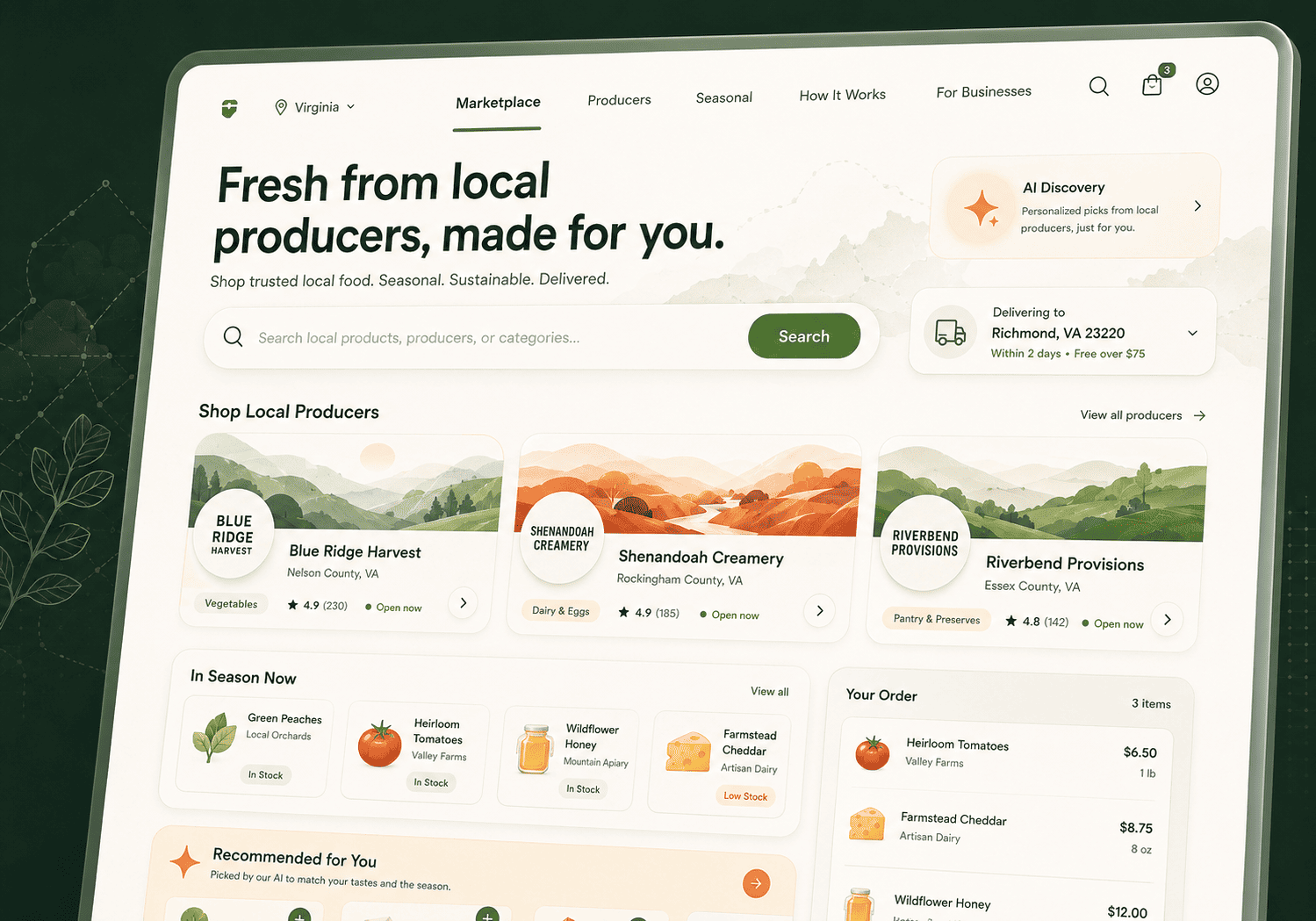
Digital Marketplace for Virginia Farmers, Local Producers & Direct-to-Consumer Food Sales

Plavno developed a custom multi-vendor marketplace for Virginia-based farmers, food producers, and regional sellers to unify product listings, vendor operations, customer ordering, and local fulfillment workflows.

Read More
3x

increase in product discovery relevance

Digital Marketplace for Virginia Farmers, Local Producers & Direct-to-Consumer Food Sales

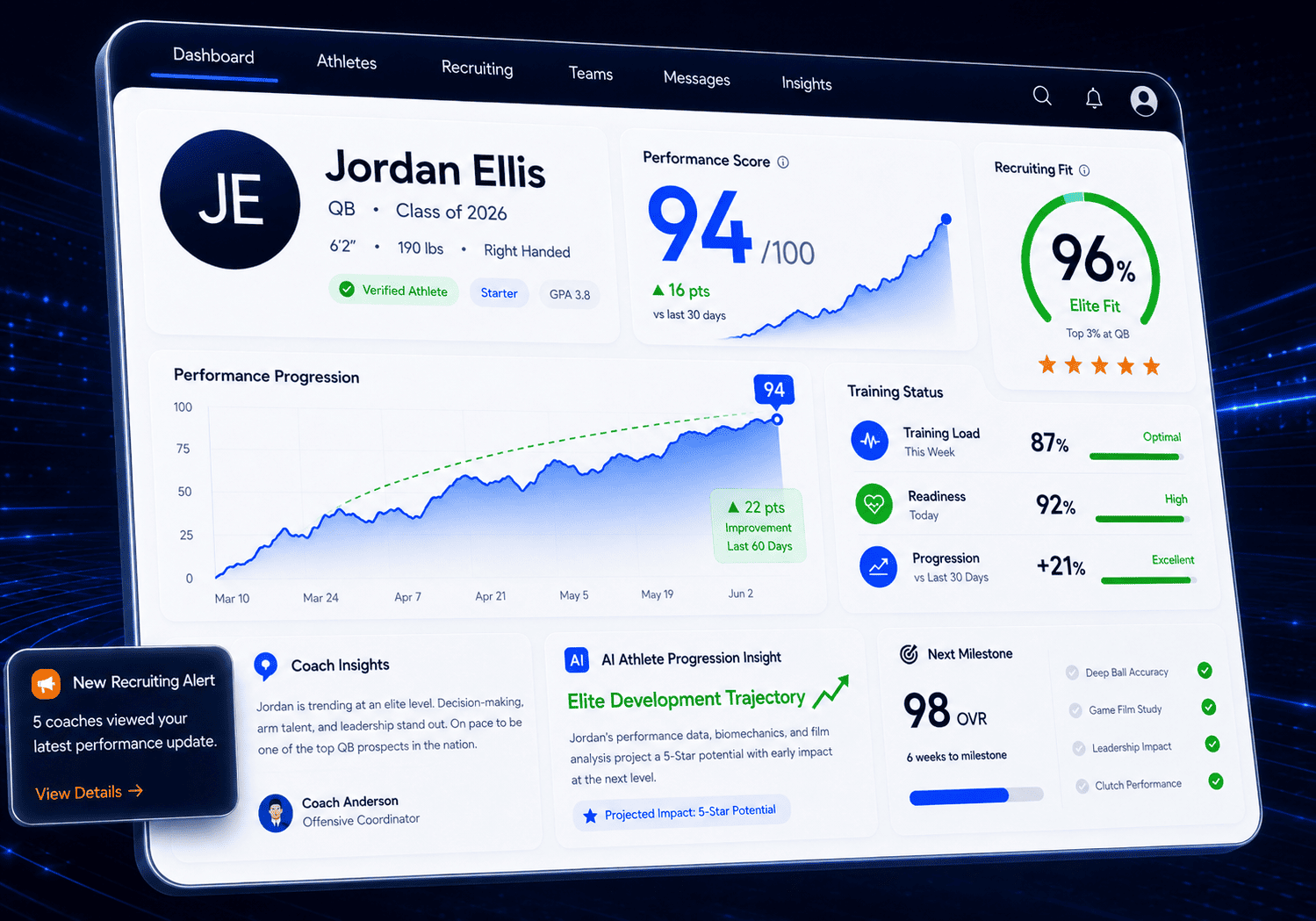
AI-Powered Sports Performance & Recruiting Platform for Virginia Clubs, Academies & Youth Programs

Plavno developed a custom sports technology platform for Virginia-based clubs and academies to combine athlete performance tracking, coach communication, recruiting workflows, and mobile engagement in one ecosystem.

Read More
3x

faster recruiting pipeline

AI-Powered Sports Performance & Recruiting Platform for Virginia Clubs, Academies & Youth Programs

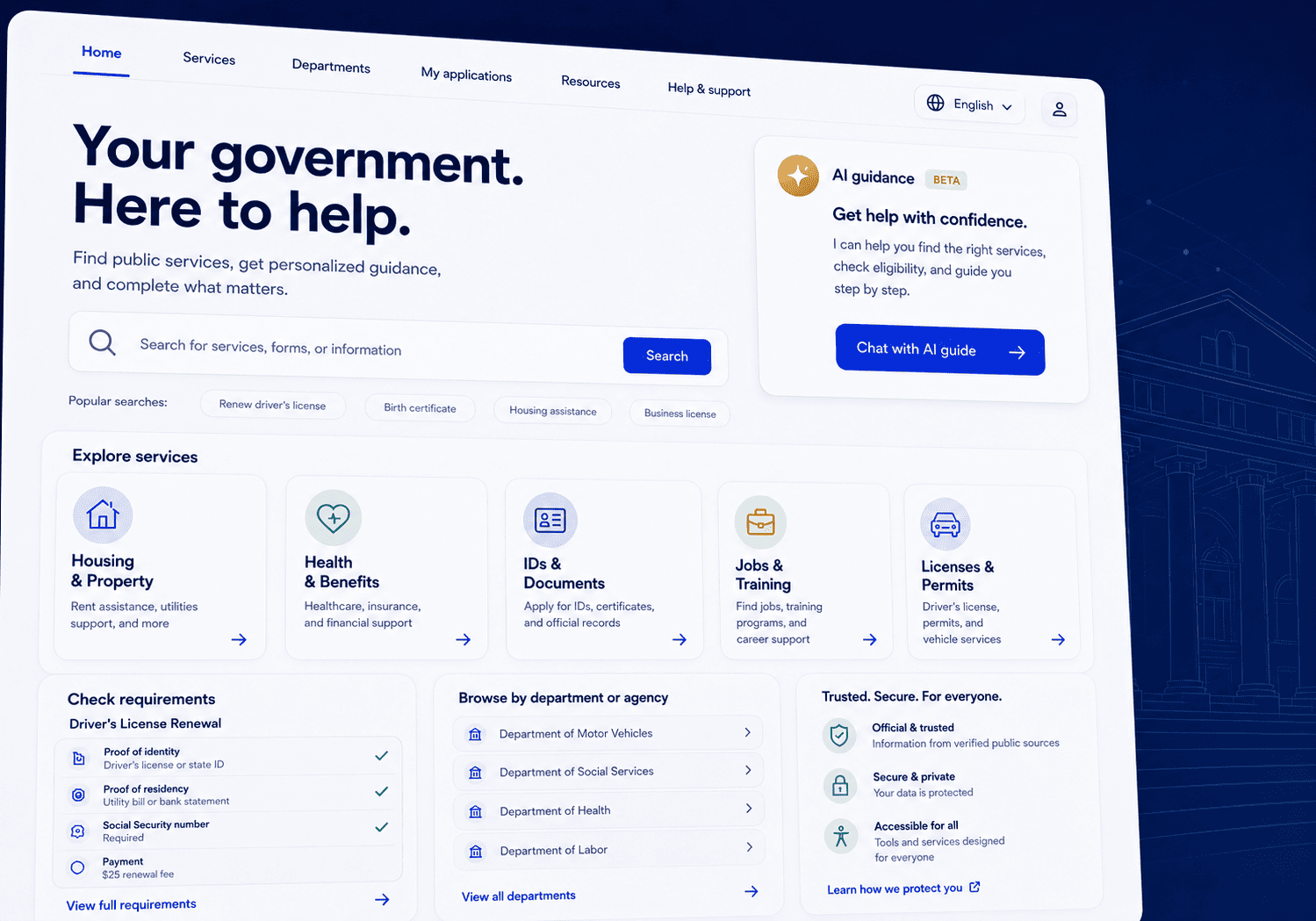
AI-Powered Citizen Services Website Platform for Virginia State Agencies

Plavno developed a modern eGovernment website platform for Virginia state agencies that centralizes citizen services, public information, department content, and an AI-powered guidance agent in one scalable system.

Read More
70%

reduction in routine citizen inquiries to agency staff

AI-Powered Citizen Services Website Platform for Virginia State Agencies

Selection criteria

Why Hampton buyers pick deep engineering partners

Generic agencies sell decks. We ship architectures, evals, and handoffs your team can run after we leave.

Generic Agencies
Our Platform (Deep Engineering Expertise)
Use cases scored on cost and data readiness
checkmark
Written integration design before model pick
checkmark
Evaluation harness with golden sets you own
checkmark
Slide-only strategy with no runbooks
checkmark
Defense and healthcare audit trail patterns
checkmark
Opaque vendor lock on prompts and data
checkmark
Post-launch cost and drift monitors included
checkmark

Data paths and controls

Integration and data quality work that keeps models honest

A second build focus for Hampton programs is the data spine, not the model menu. Many AI failures we repair start as silent schema drift between ERP, CRM, and file shares. We inventory sources, owners, and refresh SLAs before any fine-tune. Contracts define required fields, null policy, and PII classes. Staging mirrors production privileges so pilots do not leak more data than the live system. This is where artificial intelligence consulting earns trust with security officers.

Integration patterns reuse proven connectors. Eligibility and insurance rule bots needed deterministic lookups beside generative answers. Payment agents required hard boundaries on what tools could execute. CRM insight jobs pulled feedback streams without blocking sales operators. Content personalization systems stayed multi-platform by isolating ranking services from CMS write paths. Hampton defense and logistics stacks look different on paper. The same isolation principles still apply when shop-floor systems and corporate IT disagree on release windows.

Data quality gates sit in CI. Freshness checks reject stale risk files before scores push to underwriters. Duplication rules protect customer timelines when ships or trucks re-send events. We prefer incremental sync over full dumps to protect network limits on older sites. Feature definitions version with the model so scores stay comparable quarter to quarter. Business owners approve label definitions. Engineers never invent a churn or defect label alone.

Cost control is a first-class design goal. Token budgets and caching policies attach to each user journey. Heavy batch jobs move off peak for shipyard and hospital campuses. We print unit economics monthly so finance can compare AI spend to labor hours avoided. If unit economics slip, automation stages roll back to assisted mode. That protects the case for AI business consulting after the novelty fades.

Handoff includes lineage diagrams, retention policies, and deletion workflows you can show a customer or regulator. Security/compliance notes name encryption in transit and at rest without inventing certifications you do not hold. Where SOC2 or HIPAA apply, mapping tables show control owners on your side. DevOps scripts deploy schema migrations beside application releases. Observability watches pipeline lag as carefully as model accuracy. Hampton clients keep systems healthy when our consultants leave the building.

Architecture & Engineering Overview

How we engineer AI consulting outcomes for Tidewater teams

Baseline to delta

Baseline → target delta

Every choice tied to cost, dated review gate, and reversible flows

Measured queue lift

Queue remeasurement

Same volume weeks; savings count only when capacity reallocates

Kill switches day one

Funded kill switches

Human queues, dual APIs, and offline SOP caches before incidents

Change ownership

Owned change path

Supervisors co-design queues; underperformers archived, not hidden

For Business: Technical ROI & Risk Mitigation

Leaders in Hampton care about dollars and exposure, not model brand names. We tie every technical choice to a baseline cost, a target delta, and a dated review gate. Eligibility automation only expands after manual sample audits match. Personalization work must move engagement metrics the product team already tracks. Payment and credit flows stay reversible so finance can unwind bad decisions. Risk falls when kill switches and human queues are funded on day one, not after an incident.

ROI storytelling stays concrete. Baseline minutes per case come from time studies on real queues. After assisted mode, we remeasure the same queues under matched volume weeks. Savings count only when capacity systematically reallocates away from low-skill steps. Cost of ownership includes monitoring staff and cloud spend, not license fees alone. Boards in Virginia get a portfolio view instead of one flashy pilot chart.

Risk mitigation covers vendors as well as models. Dual-provider options for critical APIs reduce outage blast radius. Offline caches keep SOP answers available if blob storage lags. Training content stops tribal knowledge loss when senior estimators retire. Legal reviews prompts that could imply medical, legal, or export advice. Insurance and liability language tracks who owns outputs in customer contracts.

Change management is budgeted, not assumed. Supervisors co-design exception queues so they feel ownership. Frontline staff see time savings personally before management claims a win. Communication plans name which metrics remain public. If a pilot underperforms, we document the failure and archive the stack rather than hide it. That culture lowers political risk on the next initiative.

Local operating conditions matter. Hurricane season and yard outage windows change when heavy jobs can run. Consulting calendars avoid freezes you already publish. Multi-site parents want one standard with site-level data zones. We price that complexity up front so procurement is not surprised. Honest scope protects trust more than aggressive timelines.

Discovery

Discovery

Freeze APIs, data freshness SLOs, and build-vs-buy trade-offs

Thin vertical slice

Thin vertical slice

Feature flags, named owner, security package before scale

Production hardening

Production hardening

Canaries, shadow mode, minute-level prompt and weight rollback

Portfolio governance

Portfolio governance

Quarterly review, budget envelopes, multi-entity tenancy split

For CTOs: Architecture & Technical Lifecycle

CTOs need a lifecycle that survives org charts. Our default path runs discovery, thin vertical slice, production hardening, then portfolio intake under one governance board. Decision points include build versus buy, private versus managed models, and human-in-the-loop depth. Trade-offs write down latency, cost, and explainability scores. No stage advances without a named business owner and a security sign-off package.

Kickoff focuses on interfaces. We freeze API contracts early even if internal model swaps stay loose. Feature flags separate model experiments from path routing. Data contracts include SLO on freshness. ADR logs capture why a rules engine sits beside a generative step. Future CTOs awk those files instead of reverse engineering Slack threads.

Production hardening covers load, chaos cases, and access reviews. Canaries on employee tools catch prompt regressions before customer impact. Blue-green or shadow mode runs when regulations forbid hard cuts. Rollbacks restore last known good prompt set and weights in minutes. On-call rotations mix platform engineers with domain reviewers during the first release month.

Governance after launch prevents thrash. A quarterly architecture review retires duplicate copilots and shared libraries. Budget envelopes follow business units so shadow AI spend surfaces. Vendor scorecards track uptime, price changes, and data residency. Open weights enter only when legal and export control finish reviews. Lifecycle documents live next to the product backlog, not in a forgotten wiki dump.

For multi-entity Virginia companies we separate tenancy early. Shared platform services stay centralized. Customer or clearance-specific data stays isolated. Identity federation reuses what IAM already provides. That duality lets you move fast on commercial brands while protecting defense corridors.

Ingest and normalize

Ingest → normalize

Typed payloads, chunking by doc type, version-pinned embeddings

Retrieve or score

Retrieve or score

Rules blended with model ranks; cached FAQs cut bot spend

Decide and enforce

Decide → enforce policy

Tool schemas and allow lists; system of record wins on conflict

Emit and test

Emit events + test harness

Golden sets in-repo; load peaks, vault secrets, CI-owned stubs

For Engineers: Implementation Details & Stack

Engineers inherit code, not mythology. We favor explicit pipelines: ingest, normalize, retrieve or score, decide, enforce policy, then emit events. Orchestration services stay in languages your team already supports whenever possible. Python wins for many ML ops tasks because the ecosystem is dense. Typed interfaces freeze payload shapes. Side effects never hide inside unbound agent loops without tool schemas and allow lists.

Retrieval setups use chunking strategies tuned to document type. Policy PDFs differ from chatty support tickets. Embeddings refresh on schedule with version pins so offline evals remain valid. Ranking layers can blend business rules with model scores the way content discovery systems already did for multi-platform media. Caching hot FAQs cuts spend for ecommerce style bots and internal help desks alike.

Voice and speech paths borrow from delivery assistants and real-time translation work. Streaming partial results lower perceived latency on radio or headset gear. Confidence thresholds drop speech to human agents when SNR collapses on noisy floors. For dubbing and localization pipelines, QA stages catch term mismatches on product names before publish. None of that ships without observable intermediate artifacts.

Testing spans unit checks on parsers, contract tests on APIs, and scenario suites on end-to-end journeys. Golden transcripts and labeled claims travel with the repo. Load tests model black Friday style traffic and ship-launch peaks. Feature flags toggle expensive tools during incidents. Secrets inject at runtime from your vault only. We leave scaffolding your CI can own without purchase of exotic platforms unless you already standardized on them.

Edge cases get explicit stories. Partial records, dual identities, off-shift coverage, and multilingual input appear in acceptance criteria. Fallback responses never invent policy. When models disagree with deterministic systems of record, the so-of-record wins. That rule saved ambiguity on payment and eligibility style agents before and it holds for Hampton production loads.

Boring infrastructure

Private, rebuildable infra

Private endpoints, CMK, IaC envs, backup drills on the calendar

Unified observability

One-timeline metrics

GPU and denial spikes share traces; drift alerts, redacted case IDs

Least privilege security

Least-privilege agents

Injection and exfil reviews; human gates on payments and holds

FinOps and incidents

Cost + incident loop

Per-feature token meters; wrong-answer tabletops feed eval suites

Infrastructure, Observability & Security

US production needs boring infrastructure. We instrument product metrics next to infrastructure metrics so a GPU spike and a denial spike share one timeline. Logs redact PII by default. Traces follow a case ID across microservices. Alerts fire on drift in score distributions, not only on 500s. On-call playbooks name the first three checks and the customer communication owner.

Deployment patterns respect network restrictions common in defense adjacent firms. Private endpoints, IP allow lists, and customer-managed keys appear when required. Environments split sandbox, staging, and prod with distinct identity scopes. Infrastructure as code keeps rebuilds faithful after an audit wipe. Backups and restore drills sit on the calendar, not a whiteboard.

Security reviews cover prompt injection, data exfiltration through tools, and overbroad service accounts. Least privilege tokens bound each agent action. Human approvals gate irreversible steps like payments or shipment holds. Encryption in transit and at rest is baseline. Where HIPAA applies we map PHI stores and BAAs. Where export control applies we exclude unapproved model endpoints entirely.

Observability includes cost. Per-feature token meters feed FinOps dashboards. Anomaly detectors flag sudden prompt length growth that foreshadow budget burns. Capacity plans account for seasonal tourism spikes on the Virginia Beach side and outage surge on the yard side. We document retention for traces so legal hold requests have an answer.

Incident response drills pair platform and business staff. Tabletop runs include model wrong-answer crises, not just outages. Communication templates avoid overclaiming AI certainty. Postmortems feed the evaluation suite so the same failure class cannot silently return. That loop is how consulting work becomes lasting operational strength for Hampton organizations.

Delivery sequence

From signed scope to steady operations in 2026

A delivery track separate from maturity staging. Focused on how a single funded initiative reaches production under your change board.

Clipboard
Team
01

Step 1: Scope lock and data access (1–2 weeks)

Confirm success metrics, systems list, and security contacts for the Hampton sponsor. Collect sample datasets under NDA and least privilege. Write the integration assumptions vendors or internal teams must meet. Publish a RACI so decisions do not stall. Kickoff ends with a written no-go list. Timeline stays short to protect budget season windows.

02

Step 2: Thin slice build (2–5 weeks)

Implement one vertical path from input event to user-visible outcome. Include logging, basic evals, and a human override. Demo weekly to operators, not only IT. Capture defect themes for data cleanup. Refactor only what blocks reliability. Exit criteria require measured lift on a small live cohort with documented baselines.

Search in doc
Rocket
03

Step 3: Hardening and training (2–4 weeks)

Add rate limits, richer tests, and runbooks. Complete access reviews and secrets rotation. Train supervisors and support leads with real tickets from Newport News or Portsmouth queues when available. Load test against peak profiles. Freeze scope for release candidate. Business owner signs go-live checklist covering support hours and rollback.

04

Step 4: Launch, watch, expand (2–6 weeks)

Release behind flags to a defined user set. Monitor quality, latency, and unit cost daily for the first two weeks. Hold a fix-forward cadence with explicit debt. Only then open the next backlog item from the portfolio list. Capture lessons into shared templates for sister sites. Hand full ownership to your platform team with office hours as needed.

Testimonials

We are trusted by our customers

“They really understand what we need. They’re very professional.”

The 3D configurator has received positive feedback from customers. Moreover, it has generated 30% more business and increased leads significantly, giving the client confidence for the future. Overall, Plavno has led the project seamlessly. Customers can expect a responsible, well-organized partner.

Sergio Artimenia

Commercial Director, RNDpoint

Sergio Artimenia

“We appreciated the impactful contributions of Plavno.”

Plavno's efforts in addressing challenges and implementing effective solutions have played a crucial role in the success of T-Rize. The outcomes achieved have exceeded expectations, revolutionizing the investment sector and ensuring universal access to financial opportunities

Thien Duy Tran

Product Manager, T-Rize Group

Thien Duy Tran

“We are very satisfied with their excellent work”

Through the partnership with Plavno, we built a system used by more than 40 million connected channels. Throughout the engagement, the team was communicative and quick in responding to our concerns. Overall, we were highly satisfied with the results of collaboration.

Michael Bychenok

CEO, MediaCube

Michael Bychenok

“They have a clear understanding of what the end user needs.”

Plavno's codes and designs are user-friendly, and they complete all deliverables within the deadline. They are easy to work with and easily adapt to existing workflows, and the client values their professionalism and expertise. Overall, the team has delivered everything that was promised.

Helen Lonskaya

Head of Growth, Codabrasoft LLC

Helen Lonskaya

“The app was delivered on time without any serious issues.”

The MVP app developed by Plavno is excellent and has all the functionality required. Plavno has delivered on time and ensured a successful execution via regular updates and fast problem-solving. The client is so satisfied with Plavno's work that they'll work with them on developing the full app.

Mitya Smusin

Founder, 24hour.dev

Mitya Smusin

Readiness gate

Prepare your Hampton AI consulting engagement

  • Name the economic owner — Assign one leader who controls budget and can kill scope. Include finance in the first workshop so baselines land. List denied past pilots and why they failed. Clarify whether savings must hit P&L this fiscal year. Capture political constraints honestly. Without an owner, even strong prototypes stall after demos.

  • Inventory systems and data classes — Catalog ERP, CRM, MES, and file stores with owners. Mark PII, PHI, CUI, and export-controlled fields. Note batch windows and known schema drift. Provide sample extracts under proper controls. Map current identity provider groups. This inventory drives architecture faster than vendor feature matrices.

  • Define evaluation upfront — Choose metrics tied to cycles, errors, or revenue, not model leaderboard scores. Gather labeled examples for at least one critical path. Agree how human raters judge borderline answers. Set minimum lift required to expand. Document who accepts production grades. Evaluation design prevents mid-project goal drift.

  • Plan security reviews early — Book time with infosec and compliance before build week three. Share data flow drafts, not finished code only. Confirm logging and retention rules. Decide cloud regions and key management. Align with existing SOC2 or sector control catalogs. Early reviews remove months of delay common in Tidewater regulated firms.

  • Budget run, not just build — Reserve funds for monitoring, prompt maintenance, and vendor price shifts. Staff an on-call contact after launch. Decide which team owns user training content. Include contingency for data cleanup sprints. Compare multi-year cost to contractor headcount. Sustainable ops keep AI consulting gains from evaporating.

Vitaly Kovalev

Vitaly Kovalev

Sales Manager

Request your Hampton AI readiness audit

Share budget range, timeline, tech stack, and dataset scope. Receive a free AI readiness audit tailored for Hampton businesses with prioritized use cases and rough cost bands.

Talk to Experts
plavno logo

Build your first
Smart AI project today!

Just tell the Plavno AI Agent about your project - it will ask questions, gather requirements, and propose a tailored solution

Common questions

AI consulting FAQs for Hampton decision makers

Practical answers on cost, timing, data, quality, security, and operations for Virginia teams planning 2026 programs.

What drives the cost of AI consulting services for a Hampton company?

Cost tracks scope breadth, data readiness, and integration depth more than model brand. A focused discovery with one payroll or eligibility process costs far less than a multi-site portfolio program. When data sits in locked legacy systems around shipyards or hospitals, adapter work rises. Security reviews for defense supplier environments also expand calendar effort. Labor for evaluation design and change management is real spend, not optional polish.

Local market factors matter. Hampton Roads labor for specialized engineers competes with larger coastal metros, so hybrid delivery keeps fees grounded while still meeting onsite needs. Cloud consumption during pilots should sit in the estimate as a separate line. If you require private endpoints or customer-managed keys, infra costs grow. If public APIs suffice for non-sensitive drafts, costs drop. We price those branches explicitly.

Compare quotes on deliverables, not day rates alone. You should see a backlog, architecture pack, evaluation kit, and runbooks in the offer. Vague strategy hours without system diagrams create rework later. Ask how success metrics will be measured against your baseline. Demand clarity on what your staff must provide. Transparent assumptions beat optimistic single-number bids that collapse after kickoff.

We also surface stop points. If Stage 1 baselines show weak ROI, you can pause before build. That optionality is part of responsible artificial intelligence consulting. Budget situations in Virginia public-private work often change mid-year. Phased SOWs protect both sides. Share your range early so we size the first slice honestly rather than overdesign the dream state.

How long does it take to move from AI consulting to working software?

Timelines split into consulting outcomes and production software. Discovery and roadmap work for a single domain often finish in two to four weeks when stakeholders show up prepared. A thin vertical slice can follow in two to five more weeks if data access is ready. Full production hardening including training and security sign-off commonly needs another two to four weeks. Complex multi-system programs stretch longer by design.

MVP means different things to different buyers. For us an MVP still includes logging, a human override, and a minimal evaluation set. It is not a slide with a mock UI. Full deployment adds monitoring, cost controls, and operational ownership on your side. Teams that skip those steps relive pilot theater. Build the path so each phase can stop with usable assets.

Delays usually come from access, not coding speed. Waiting on VPN accounts, sample claims, or legal review of cloud regions burns calendar. Hampton organizations with strong change boards should pre-book review slots. Parallelize policy review while engineers assemble non-sensitive scaffolds. That habit recovers weeks. Communicate freeze periods tied to audits or yard events up front.

After first launch, expansion cadence matters more than the initial date. Monthly portfolio reviews decide the next automation candidate. Some clients stabilize one flow for a quarter before starting another. Others run concurrent tracks with separate owners. Either model works if evaluation capacity exists. We help you pick a tempo your managers can actually staff.

What data do you need before starting AI business consulting?

Start with process truth, not giant lakes. We need volume counts, cycle times, and error or rework rates for the candidate workflows. Sample documents, tickets, or transaction extracts under proper controls come next. System inventories naming owners and APIs or file drops are essential. Without those, architecture guesses fail. Labels or historical decisions help when scoring or classification is in scope.

Quality beats quantity early. A few hundred well documented cases beat millions of unclean rows. Define what a correct outcome looks like with business raters. Note seasonal spikes such as tourism weekends or shipyard outage windows. Identify shadow spreadsheets people actually use. Those shadows often hold the logic models must learn politely rather than fight.

Sensitive classes need special handling. PHI, CUI, and financial account data require minimized samples and secure transfer. We prefer synthetic or redacted sets for early prototyping when possible. Production paths later reconnect full fidelity under your keys. Document retention and deletion expectations before files move. Legal and security should co-sign the data request list.

If data is messy, consulting still helps. Part of the engagement becomes a remediation plan with owners and dates. Sometimes the highest ROI is fixing master data before any model spend. We will tell you that plainly. Virginia teams appreciate straight talk when budgets are finite. Bring curiosity and access; perfect warehouses are not a prerequisite.

How do you measure quality and decide if an AI pilot succeeded?

Quality starts with a pre-agreed metric set tied to money or risk. Examples include minutes saved per case, first-contact resolution, false accept rate on eligibility, or ticket reopen rate. We capture a baseline period with the same measurement method used after launch. Guardrail metrics watch for new harm such as policy-violating answers. A pilot succeeds only if primary metrics improve without breaking guards.

Human evaluation remains necessary. Structured rubrics score helpfulness, grounding, and tone on sampled outputs. Disagreements among raters trigger rubric refinement. Automated checks catch regressions on golden sets each release. Both layers feed a go or no-go memo leadership can read in minutes. Vendors who refuse shared golden sets fail our bar.

Statistical noise is real on small volumes. We choose windows long enough for signals and segment by location when Hampton and Norfolk ops differ. Shadow mode compares model suggestions to historical human decisions without customer impact. Confidence thresholds decide when to auto-act versus escalate. Document those thresholds so audits can replay them.

Failure is a valid outcome. If lift misses the threshold, we archive assets and free budget. That discipline is how portfolios stay healthy in 2026. Celebrating only green pilots creates silent waste. Your steering group should expect honest red and yellow statuses. Measurement literacy is part of what AI strategy consultants teach quieter teams.

How do compliance and security reviews work for AI projects in Virginia?

Reviews begin with data flow diagrams and system boundaries, not end with a checklist after code freezes. We classify data, map trust zones, and list third parties. Controls cover identity, encryption, logging, and retention. Sector overlays apply when health, finance, or defense rules enter scope. Your existing policies remain the source of truth; we adapt designs to them rather than invent parallel ones.

For healthcare-adjacent flows, PHI handling and access auditable trails are non-negotiable. For defense supplier work, environment separation and personnel access rules dominate. Commercial brands still need SOC2-minded practices around change control and vendor management. We prepare evidence packages that match how your auditors already operate. Surprises drop when security joins workshops in week one.

Technical safeguards include least privilege tool access for agents, content filters, and human approvals on irreversible actions. Secrets live in your vault. Model endpoints that fail residency or export tests never enter the critical path. Prompt and dataset versioning support forensic review after incidents. Penetration tests or red-team prompts can be scoped when risk justifies.

Operational compliance continues after go-live. Periodic access reviews, model change tickets, and incident tabletop drills stay on the calendar. Drift monitors and cost monitors are security-relevant when runaway automation touches customers. We train your staff to own those loops. Virginia companies gain lasting posture, not a one-time binder that ages out.

Contact Us

This is what will happen, after you submit form

Need a custom consultation? Ask me!

Plavno has a team of experts ready to start your project. Ask us!

Vitaly Kovalev

Vitaly Kovalev

Sales Manager

Schedule a call

Get in touch

Fill in your details below or find us using these contacts. Let us know how we can help.

No more than 3 files may be attached up to 3MB each.
Formats: doc, docx, pdf, ppt, pptx, xls, xlsx, txt.
Send request