bg image
bg image

Serving Hampton & Virginia

Cut stalled AI spend in Hampton before 2026 budgets lock

Hampton operators still fund pilots that never reach day-to-day work. You feel it in slow claims checks, messy content ops, and support queues that grow with every hire. This page is for owners and tech leads who need a clear path from idea to production, not another slide deck. We map the highest-value use cases, price the build, and name the risks early. Get AI Consulting cost estimate in 24 hours. Bring budget, timeline, current stack, and a sample of the data you already own.

Discuss Project

Overview

Why Hampton teams still fund AI pilots that stall

Hampton sits next to shipyards, ports, and defense programs that live on thin margins and strict audit trails. Leaders in Newport News, Norfolk, and Virginia Beach keep buying tools that never touch the real workflow. The pain shows up as duplicate data entry, slow eligibility checks, and support costs that scale with headcount. AI consulting services matter here because the bottleneck is judgment, not more software licenses. We start with which process loses money each week and which data you already trust.

Trusted AI Consulting Partner for Hampton Businesses means we refuse vanity demos. We work with US-based clients, including companies operating in Virginia. Our field pattern mirrors work we shipped for media personalization, insurance verification agents, ecommerce chat, fintech payment agents, and CRM feedback pipelines. Those builds taught us where model choice matters less than clean handoffs into existing systems. Local buyers still need that sequencing before they pick a vendor stack.

A practical AI consulting engagement here covers process map, data audit, risk register, and a phased roadmap with own-cost estimates. You get a ranked backlog tied to revenue, cycle time, or compliance exposure. We keep sentences short, metrics plain, and architecture choices tied to what you must support after go-live. Defense suppliers near Langley and port logistics groups in Chesapeake tend to need audit logs and human override paths on day one. That constraint shapes every recommendation we write.

Outcomes stay concrete. Content teams reduce search waste with recommendation and discovery layers like the MediaSphere build. Underwriters cut manual verification with rule-aware agents. Retail and food ops lighten ticket load with retrieval chat and voice flows. Credit and CRM programs improve decision speed when feedback and risk signals stay in one loop. Across the US market we have delivered 10+ AI consulting and delivery programs with these patterns. Surrounding metros from Portsmouth to Williamsburg share the same integration debt, so the same playbook travels well.

If your 2026 plan still lists AI as a single budget line, split it. Separate discovery, data repair, pilot, and production hardening. That split is how Hampton operators stop paying twice for the same experiment. Bring your current ERP, CRM, claims, or media stack notes. We will tell you what is ready, what is fake-ready, and what should wait.

Talk to an Expert
Process map

Process map

Find the weekly money leaks before any vendor stack talk

Data audit

Data audit

Trust keys, catalogs, and access paths already on hand

Risk register

Risk register

Audit logs and human overrides for defense and port work

Phased roadmap

Phased roadmap

Ranked backlog with unit economics and own-cost estimates

Architecture first

Reference stacks we install after the strategy week

Hampton clients do not buy a model. They buy a controlled path from data to decision with rollback. Our first build track is an advisory-to-architecture kit: process graph, data contracts, evaluation harness, and a thin service layer that can host agents or classic ML without a rewrite. We ground choices in shipped systems. Content discovery work for MediaSphere used personalization and recommendation services sitting beside existing catalogs. Insurance eligibility agents encoded rules plus retrieval so staff could override with a full trail. Ecommerce chatbots used product and FAQ retrieval so answers stayed grounded in inventory truth.

Core pieces stay boring on purpose. An API gateway fronts internal systems so models never hold privileged credentials. Feature and document stores separate cold records from hot context windows. Orchestration workers handle retries, human review queues, and idempotent writes back to CRM, claims, or order systems. We choose this shape because port and defense workflows already punish silent double-writes. Security/compliance starts here: least privilege keys, field-level redaction before any external model call, and encrypted stores for PII that never leave the customer VPC when policy forbids it.

DevOps for these programs is not a slide. We wire staging that replays anonymized traffic, canary releases for prompt or model swaps, and cost meters per tenant and per workflow. Fintech payment agents taught us to price each agent step, not each month of seats. Credit scoring and CRM insight pipelines needed scheduled retrains with frozen baseline models for audit. Voice and food-delivery assistants needed fallback scripts when speech quality dropped. Those lessons land in Hampton projects that cannot afford a blackout during peak vehicle or pier traffic.

Technology picks always carry a plain reason. Retrieval layers sit in front of LLMs when truth lives in PDFs and catalogs. Classic gradient models still win for credit risk where calibration beat novelty. Rule engines remain first-class for insurance eligibility because regulators ask how a decision was formed. Message buses keep long workflows alive when human review takes hours. Speech and translation pipelines from our dubbing and prayer-translation work use streaming paths when latency defines product quality. None of these are fashion choices. They match the failure mode of the buyer.

What you receive after the architecture phase is not vapor. You get diagrams tied to real endpoints, a risk log with owners, a test plan with gold sets, and a cost model with tokens, GPU hours, and staffing. Local operators around Norfolk and Newport News use that pack to brief executives and security teams in one pass. We also mark what not to build. If data labels are weak, we fund labeling before agents. If the source system cannot emit events, we fix integration before personalization. That discipline is why pilots graduate instead of sitting in a shared drive until the next budget cycle.

plavno logo

Build your first
Smart AI project today!

Just tell the Plavno AI Agent about your project - it will ask questions, gather requirements, and propose a tailored solution

What you receive

Five deliverables Hampton sponsors actually use

Use-case ranking board

Use-case ranking board

Hampton teams waste months chasing demos while claims, content, and support stay manual. We score candidates by data readiness, dollar impact, and compliance risk. You leave with a ranked board, not a wishlist. We borrow patterns from insurance verification agents and CRM insight work so ranking stays concrete. Spreadsheet models and workshop notes ship in week one. Executives can fund stage one without another vague briefing.

Data readiness map

Data readiness map

Most Virginia pilots die on missing keys, stale catalogs, and unlabeled tickets. We inventory sources, quality scores, and access paths. The map names repairs before any model train. Media personalization and ecommerce retrieval both failed without clean product and user signals, so we treat that as a gate. You get owners, effort ranges, and a go or no-go note. Finance finally sees why discovery distinct from build spend makes sense.

Agent and workflow blueprints

Agent and workflow blueprints

Operators need flows that call tools, pause for humans, and write back safely. We draft blueprints for verification, payments, support, and scoring using patterns already shipped. OpenAI-style models handle language steps only after retrieval and rules fire. Vendors get clear schemas so integration bids stop swelling. Blueprints include failure modes for network drops common on shipyard Wi-Fi. Staff train against the same drawings developers use.

Evaluation and gold sets

Evaluation and gold sets

Without a score, every demos looks clever. We build labeled gold sets for accuracy, latency, and cost per task. Insurance rules, credit decisions, and chat answers each need different checks. Results print in business language managers can audit. You keep the sets when the project ends so vendors cannot move goalposts. Drift watches later reuse the same cases.

Production cost model

Production cost model

Token bills and idle GPUs surprise first-year budgets across Hampton and Norfolk. We model peak load, caching, and human review mix using payment-agent and voice-assistant lessons. The sheet shows unit cost for each finished task, not vague cloud totals. Security review and logging land as line items early. Sponsors then pick scope that matches cash flow. Revisits happen each quarter against real invoices.

Maturity path

Move Hampton ops from manual to guided automation

A four-stage climb designed for regulated Virginia workplaces that cannot flip a switch overnight.

Clipboard
Team
01

Step 1: Manual baseline (1–2 weeks)

We time the current process with real staff in Hampton and nearby yards. Shadowing produces cycle times, error types, and exception rates. You receive a written baseline before any tool talk. Side-by-side tables show where humans outperform scripts today. That honesty prevents over-automation. Timeline stays tight so momentum does not die in committees.

02

Step 2: Assisted drafts (2–4 weeks)

Models draft replies, eligibility notes, or recommendations while humans approve each action. Retrieval backs every claim with source snippets. Insurance-style rule checks stay ahead of free text. Staff learn overrides and feedback tags. Metrics track accept rate daily. You decide which queues are ready to loosen control.

Search in doc
Rocket
03

Step 3: Guarded automation (3–6 weeks)

Low-risk steps run without click confirm when scores pass thresholds. High-risk money movement still needs a person. Payment-agent patterns define dual control and ledger posts. Logging covers who changed a prompt or rule. Ops dashboards show volume and cost each hour. Rollbacks stay one command away.

04

Step 4: Portfolio autonomy (ongoing)

Multiple workflows share monitoring, identity, and cost caps. New agents inherit the same evaluation sets and secret stores. CRM and credit programs plug into shared insight buses. Leadership reviews a portfolio KPI pack monthly. Failures trigger playbooks the team already rehearsed. Growth adds flow types without a new architecture fight.

AI Consulting Solutions for Hampton Industries

Regional workloads we redesign first in 2026

These use cases map to defense supply, ports, healthcare adjacency, retail, and media crews across Hampton Roads.

Defense Triage

Defense Triage

Document review

Defense supplier document triage

Primes and subcontractors near Langley drown in bid packages and compliance PDFs. Manual review delays bids and hides risk clauses. We design retrieval plus classification so expert readers see only matched sections. Patterns echo multi-platform content discovery work where ranking and personalization cut noise. Expect fewer missed flags and shorter review cycles once gold sets stabilize. Tech summary: embedding store over controlled corpora, rule tags for clauses, human queues for low confidence. Teams often reclaim more than a full day per bid package after the first quarter.

Port Logistics

Port Logistics

Exception agents

Port and logistics exception agents

Yard and warehouse teams in Newport News burn hours chasing shipment exceptions across emails. We shape agents that read status feeds, draft actions, and open tickets with evidence. Workflow design follows payment-agent discipline so every write is reversible. Dispatch leads get a queue sorted by dollars at risk. Result profiles include faster clearances during peak berth windows. Tech summary: event listeners, tool-calling agents, and audit logs wired to the TMS of record.

Insurer Eligibility

Insurer Eligibility

Rule checks

Regional insurer eligibility checks

Carriers serving Virginia shore markets still rely on phone trees for eligibility. Staff rekey the same facts across portals. We adapt insurance eligibility verification agent patterns with rules automation plus retrieval. Call times drop when agents surface status before the agent speaks. Compliance keeps a full decision trail for each case. Tech summary: workflow engine, rules layer, secure connectors, and human override UI. Pilots usually aim at double-digit minutes saved per verification once integrations settle.

Hospitality Chat

Hospitality Chat

Guest support

Hospitality and attraction support chat

Tourism operators from Virginia Beach into Hampton face seasonal spikes that crush phone lines. FAQ bots fail when inventory changes daily. We design ecommerce-style chat with live product and policy retrieval so answers stay current. Supervisors review low-confidence chats each morning. Guests self-serve booking and FAQ steps without long holds. Tech summary: retrieval-augmented chat, session memory limits, and CRM writebacks for handoff.

Fintech Payments

Fintech Payments

Collections agents

Local fintech collections and payments

Payment platforms serving Southside customers need agents that move money with tight controls. Freeform chat is not enough. We reuse AI-powered payment agent methods for step checks, confirmation, and ledger posts. Ops cut manual console work while fraud flags stay visible. Finance sees unit cost per completed payment path. Tech summary: tool-constrained agents, dual approval hooks, realtime balance reads, and sealed audit trails.

Media Localization

Media Localization

Training desks

Media and training localization desks

Studios and training groups around Norfolk ship multilingual assets late. Human dubbing stalls global dates. We bring speech translation and dubbing pipeline designs proven on game releases, YouTube dubbing, and prayer translation apps. Producers track quality scores per language, not vague completion. Release calendars tighten when peak scenes auto-queue. Tech summary: streaming ASR, translation models, voice rendering, and human spot-check gates.

Case Study

We help customers cut
down on development

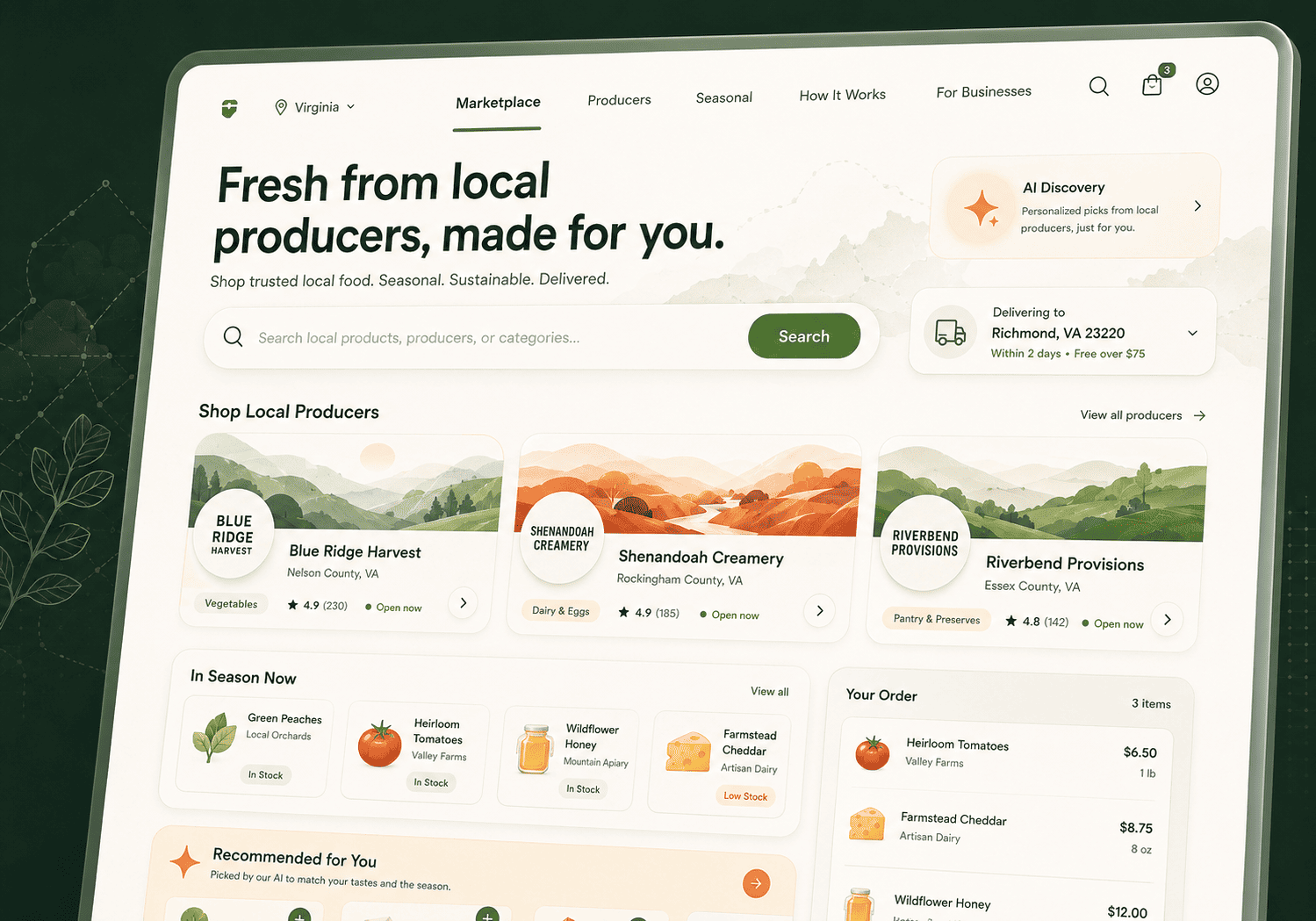
Digital Marketplace for Virginia Farmers, Local Producers & Direct-to-Consumer Food Sales

Plavno developed a custom multi-vendor marketplace for Virginia-based farmers, food producers, and regional sellers to unify product listings, vendor operations, customer ordering, and local fulfillment workflows.

Read More
3x

increase in product discovery relevance

Digital Marketplace for Virginia Farmers, Local Producers & Direct-to-Consumer Food Sales

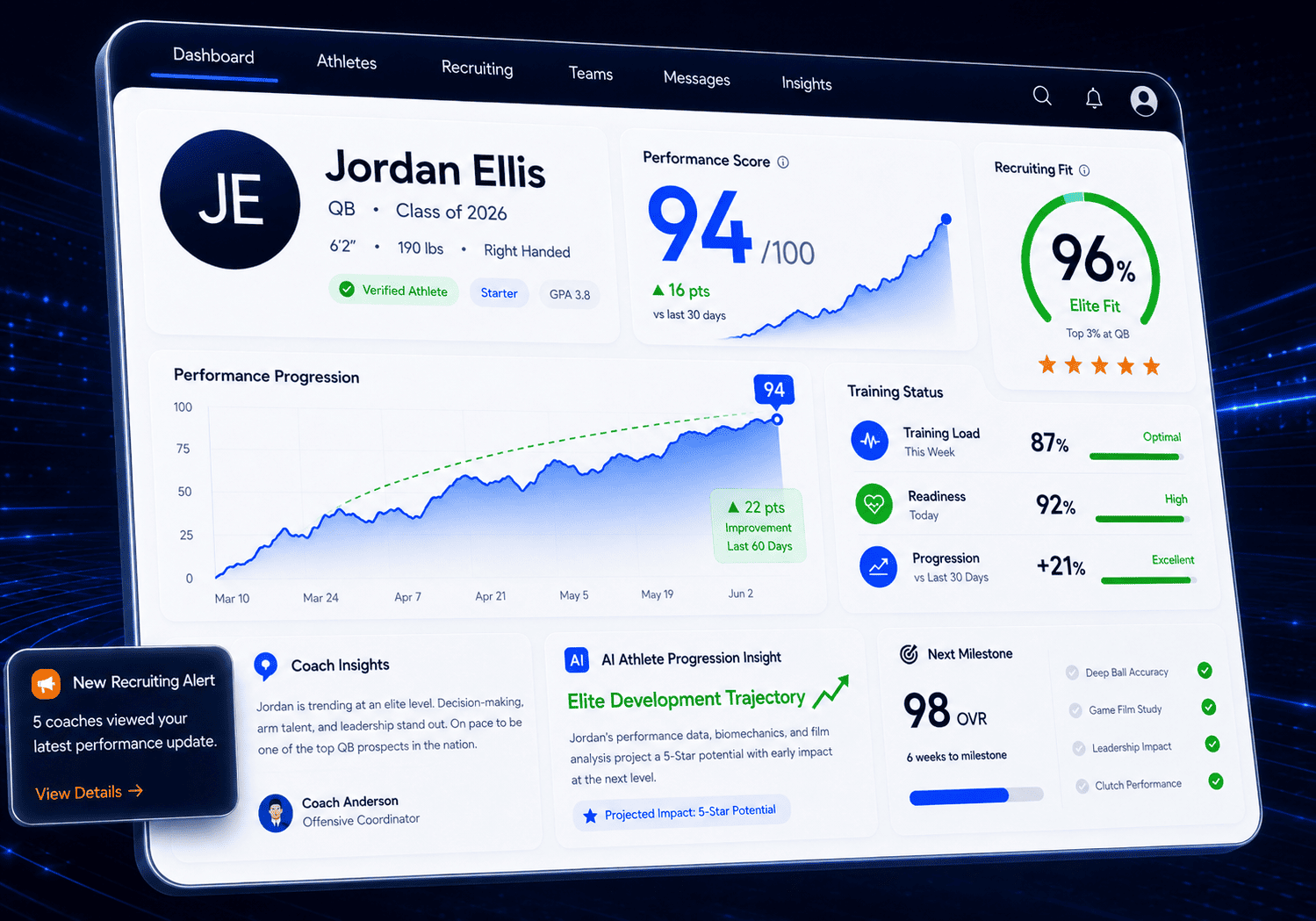
AI-Powered Sports Performance & Recruiting Platform for Virginia Clubs, Academies & Youth Programs

Plavno developed a custom sports technology platform for Virginia-based clubs and academies to combine athlete performance tracking, coach communication, recruiting workflows, and mobile engagement in one ecosystem.

Read More
3x

faster recruiting pipeline

AI-Powered Sports Performance & Recruiting Platform for Virginia Clubs, Academies & Youth Programs

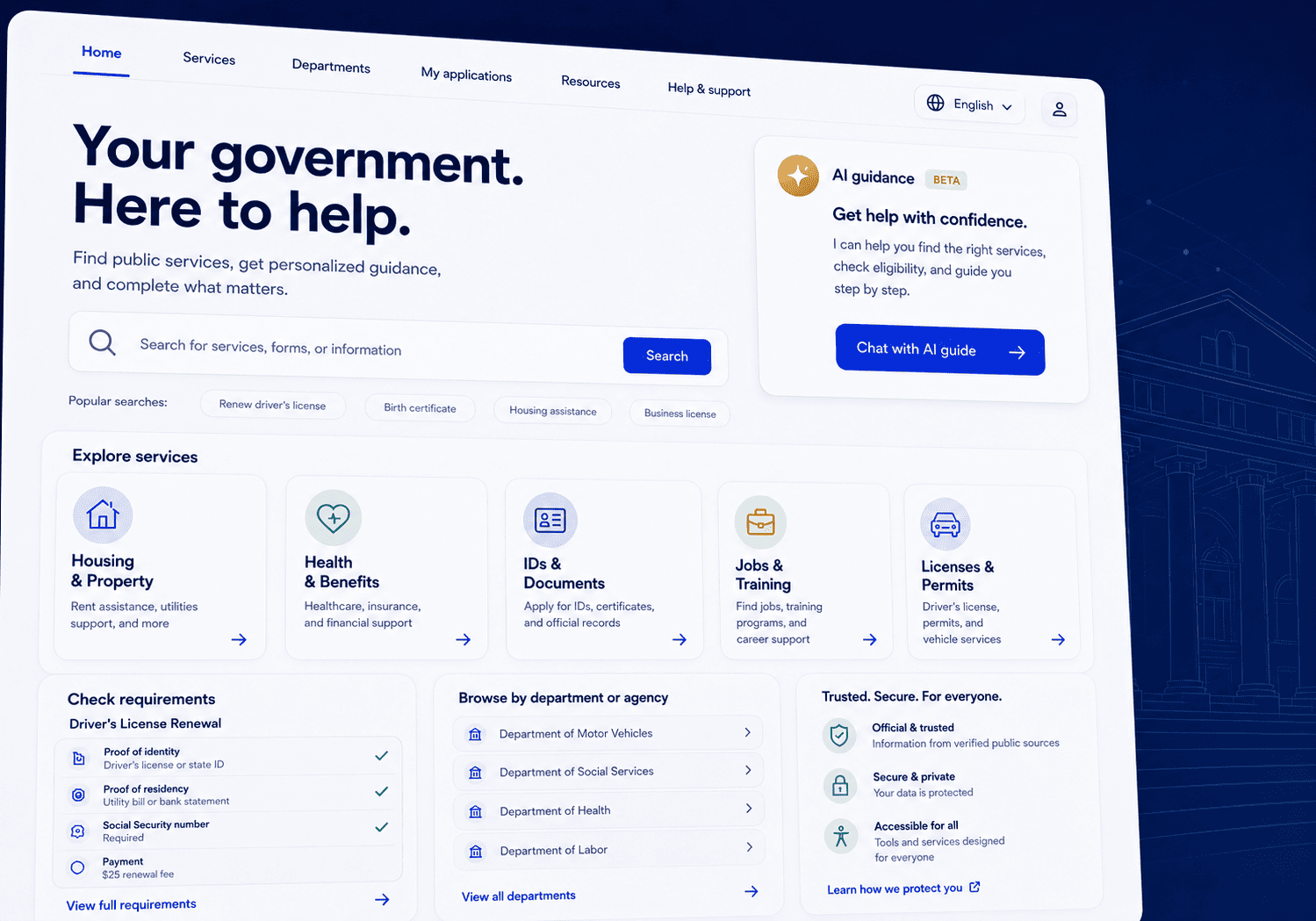
AI-Powered Citizen Services Website Platform for Virginia State Agencies

Plavno developed a modern eGovernment website platform for Virginia state agencies that centralizes citizen services, public information, department content, and an AI-powered guidance agent in one scalable system.

Read More
70%

reduction in routine citizen inquiries to agency staff

AI-Powered Citizen Services Website Platform for Virginia State Agencies

Decision support

Why Hampton buyers pick deep engineers

Side-by-side traits that separate strategy-only shops from teams that ship and maintain production AI.

Generic Agencies
Our Platform (Deep Engineering Expertise)
Produces ranked use-case backlog with unit economics
checkmark
Builds evaluation gold sets before demos
checkmark
Delivers slide-only strategy without system access
checkmark
Designs human override and audit trails for regulated work
checkmark
Owns post-launch cost meters and drift reviews
checkmark
Treats integration as optional phase two
checkmark
Grounds advice in shipped agent, chat, and scoring systems
checkmark

Data & control

Integration gates that keep Hampton AI spend honest

Architecture talks fail when data paths stay imaginary. This second build track focuses on sources, contracts, and control planes rather than model catalogs. Hampton buyers often run aging ERP, shipyard MES, hospital-adjacent billing, or multi-brand CRM stacks. We map event readiness weekly. If a system cannot emit reliable change feeds, we design pull jobs with reconciliation, not fairy-tale realtime. MediaSphere-style personalization only worked after catalog and viewing signals synchronized. Ecommerce chat only stayed useful after inventory retrieval became trustworthy. Those facts drive our order of work here.

Integration patterns stay intentionally few. Read APIs use service accounts with scoped rights. Write paths require idempotency keys and dead-letter queues. Document stores keep policy manuals versioned so retrieval answers cite a date. Feature stores freeze training snapshots so credit scoring style models remain auditable. Voice and translation jobs separate raw audio from personal metadata early. Each choice reduces the blast radius when one vendor product updates its schema without notice.

Security work in this track is operational, not poster-level. Secrets never sit in notebooks. Prompt logs strip regulated fields before storage. Model providers get filters so training-on-your-data stays off. Role maps mirror existing Active Directory groups many Virginia firms already run. Security/compliance reviews cover retention, export, and right-to-delete flows when consumer data appears. Defense-adjacent suppliers force air-gapped options, so we plan offline evaluation copies of the same pipelines.

DevOps joins data rather than sitting beside it. Schema diffs fail the pipeline before agents ship. Synthetic traffic replays the ten failure cases that hurt last quarter. Cost alerts fire when retrieval recalls explode or a prompt regresses to long contexts. CRM feedback loops and insurance agents taught us to version prompts like code with peer review. Food-delivery voice systems taught timed circuit breakers when ASR errors spikes. Hampton teams inherit those runbooks so on-call is not heroic.

Deliverables stay sharp. You receive a connector inventory with health scores, a data quality backlog tied to owners, contract tests in CI, and a privacy matrix by field. We also publish a kill list of connectors that should not exist. Removing brittle scrapers often frees more value than adding another model. When sponsorship asks why spend shifted toward data wrangling, this pack answers with insight from systems already live. That is how AI consulting stops being theater and starts being maintenance of a real production surface.

Architecture & Engineering Overview

How 2026 Hampton AI programs stay fundable

Retired manual steps

Retired manual steps

Cash effect from cycle time, errors, and chargebacks

Human-gated risk

Human-gated risk

Money, denials, and filings stay staff-approved

Unit economics

Unit economics

Capped pilot, metered production, gold-set scoring

Portfolio controls

Portfolio controls

Shared identity, logging, and cost caps across agents

For Business: Technical ROI & Risk Mitigation

ROI comes from retired manual steps and prevented compliance misses, not from model brand names. Hampton sponsors need cash effects inside a single budget year. We connect each technical choice to cycle time, error rate, or chargebacks using baselines captured in discovery. Media personalization reduced search waste by focusing attention on ranked content. Insurance eligibility agents compressed multi-portal checks into one assisted path. Ecommerce chat shifted repetitive FAQ work off agents. Payment agents cut console hops around payouts. Those are the economic anchors we reuse when briefing local boards.

Risk mitigation starts with knowing which decisions can never auto-run. Money movement, eligibility denials, and regulatory filings stay human-gated until evaluation scores and audit coverage clear thresholds. That gate protects brand and license. It also keeps finance from assuming automation savings that staff cannot yet trust. Cost control includes caching, smaller models for classification, and retrieval before generation so tokens are not spent guessing.

We quantify bad-data wait time as a first-class loss. Days spent waiting for labels or keys appear on the roadmap beside feature work. Executives then fund wrangling without guilt. Credit scoring style projects show how poor labels create quiet bias and later credit losses. CRM insight pipelines show how ignored feedback loops raise churn. Presenting those second-order costs keeps AI from looking like optional innovation theater.

Contract design matters as much as math. Fixed discovery, capped pilot, and metered production phases stop scope fog. You see unit economics before multi-year lock-in. Vendors who refuse evaluation gold sets get scored down. This commercial shape has rescued multiple Virginia programs that had burned half a year on scoped demos with no write path back to the system of record.

Finally, we track portfolio risk. One star pilot with no platform owner is still a liability. Shared identity, logging, and cost caps across agents create a real asset. Leadership can compare workflows hourly. Underperforming lanes shut off without politics. That is how technical detail becomes board language your CFO already understands.

Kickoff freeze

Kickoff freeze

Metrics, data owners, and write-access systems locked

Architecture choice

Architecture choice

Rules, classic ML, retrieval, or agents per step

Build & evaluate

Build & evaluate

Thin slices with real staging writes and gold gates

Production governance

Production governance

Canaries, cost budgets, platform owner, quarterly review

For CTOs: Architecture & Technical Lifecycle

Lifecycle governance beats clever demos when production and security share one calendar. Kickoff freezes success metrics, data owners, and systems allowed for write access. Discovery produces the process graph and the red-team list of failure cases. Architecture chooses between rules, classical models, retrieval, and agents per step rather than one slogan stack. Build creates thin vertical slices that post real writes in staging with synthetic identities. Evaluation gates promotion. Production adds canaries and cost budgets. Each gate is a decision record stored next to the code.

Trade-offs stay explicit. Latency targets may force smaller models or edge caches near user regions. Accuracy targets may force larger context or heavier human review. Isolation needs may forbid multi-tenant vector stores. We document the rejected path so later teams do not revisit dead ideas. Defense-adjacent work near Hampton often picks private networking over public SaaS for core retrieval indexes. Consumer chat may reverse that call when speed wins.

Platform ownership is assigned before launch. Without an owner, prompts drift and keys rot. We define who approves model upgrades, who watches dollar meters, and who closes incident tickets. On-call rotations pull from staff who already know the source systems. That mix prevents pure AI teams from thrashing against ERP rules they never learned.

Vendor lock risk is managed with open schema boundaries. Prompts, eval sets, and feature definitions live in your repos. Provider SDKs stay behind adapters. If a speech vendor stalls on a language, switches follow the same contract already proven on dubbing and translation programs. CTOs keep leverage when budgets tighten.

The lifecycle ends with a quarterly architecture review that is short on slides and long on metrics. We retire flows that never cleared automation thresholds. We promote patterns that repeat across insurance, media, and payments. Hampton CTOs leave with a map they can hand a new director without a two-month archeology project.

Typed API layer

Typed API layer

Python, Node, or Java gates with contracts that catch drift

Orchestration & buses

Orchestration & buses

Workflow engines for humans and waits; message buses for long journeys

State & document stores

State & document stores

Postgres for transactions; object storage for docs and audio

Retrieval before LLMs

Retrieval before LLMs

Vector only after offline proof; classic models where calibration wins

For Engineers: Implementation Details & Stack

Engineers ship reliable tool paths, tests, and fallbacks long before they chase novel models. Stacks usually start with a typed API layer in a language your team already runs, often Python services beside Node or Java gates depending on the estate. Orchestration uses workflow engines when waits and human tasks matter. Simple request-response is fine for FAQ chat. Message buses protect long insurance or payment journeys. We pick Postgres for operational state when transactions dominate and object storage for documents and audio. Vector indexes appear only after retrieval quality is proven offline.

Why these pieces: typed contracts catch schema drift early. Workflow engines encode retries that ad hoc scripts forget. Postgres gives auditors familiar backups. Object storage scales media used in dubbing and prayer-translation style apps. Vector search is a tool, not a religion. Classical model training remains for credit risk where scored calibration beats freeform generation. LLM calls sit behind retrieval and policy filters so outputs cite sources.

Evaluation is code. Gold sets live in CI. Offline runs score accuracy, refusal quality, latency, and dollars per thousand tasks. Online canaries compare fresh prompts on matched traffic. Feature flags control exposure by customer segment. Logging attaches correlation IDs from CRM or claims tickets through every hop. Voice pipelines add speech confidence thresholds so bad audio falls to staff scripts.

Edge cases we design for include partial inventory feeds, bilingual callers, multi-step refunds, and PDF tables that extract poorly. Agents must idle safely when tools time out. Idempotent writes stop double refunds when a user retries. Prompt injection tests live next to unit tests. Engineers get a checklist rather than folklore.

Local delivery rhythm keeps dots small. Two-week slices must show a user-visible path or a measurement improvement. Pairing with client engineers is required so knowledge stays on payroll. Branch protections and secret scanning are non-negotiable. When we leave, your repos run without our laptops. That is the only definition of done that survives a budget freeze.

Customer-owned infra

Customer-owned infra

IaC networks, private links, autoscaling GPU pools

Business observability

Business observability

Task success, overrides, tokens, retrieval misses, p95

Security controls

Security controls

Least privilege, PII scrub, prompt injection tests, IR ladder

Infrastructure, Observability & Security

Production AI without meters and identity controls is a temporary demo with invoices. US clients, including firms around Hampton, need just enough cloud automation to redeploy and enough isolation to pass reviews. We prefer customer-owned cloud accounts. Infrastructure as code defines networks, stores, and workers. Private links connect VPC resources to model endpoints when traffic must stay inside trust boundaries. GPU pools autoscale for training jobs on credit models, then shrink. Stateless inference services stay small and swap models without rewrites.

Observability tracks business completion, not only CPU. We watch task success rates, human override rates, token spend, retrieval miss rates, queue age, and p95 latency. Alerts route when unit cost drifts or gold-set scores fall. Voice and translation pipelines add audio error ratios. Payment agents add ledger mismatch scans. Dashboards mirror what sponsors promised the board so ops and finance argue from one pane.

Security controls stick to practice. Least privilege IAM, short-lived credentials, encrypted stores, and confluent key rotation. PII classifiers scrub before external calls. Prompt and response logs carry retention timers. Access reviews reuse your existing tickets. For healthcare-adjacent data we align documentation to HIPAA handling expectations. For fintech we map controls to SOC2 style evidence packs. Penetration tests include prompt injection and tool abuse paths, not only classic OWASP items.

Incident response has a written ladder. Severity defines whether we freeze deploys, revert prompts, or disable an agent lane. Customers get status notes in language staff can forward. Postmortems name detection gaps and it permanently permanently permanently

plavno logo

Build your first
Smart AI project today!

Just tell the Plavno AI Agent about your project - it will ask questions, gather requirements, and propose a tailored solution

Delivery sequence

How a Hampton AI consulting engagement ships

A fixed consulting delivery path from first data dump to handover with runbooks your team can own.

Clipboard
Team
01

Step 1: Scope & access (1 week)

We lock goals, systems, budgets, and security contacts. Accounts are provisioned and sample exports land in a controlled space. You receive a one-page charter with out-of-scope list. Legal reviews data terms before deep work. Nearby stakeholders in Norfolk or Newport News join if shared systems appear. Timeline stays one week to keep energy high.

02

Step 2: Evidence workshop (1–2 weeks)

Operators walk live tickets while we capture exceptions. We pull metrics from CRM, claims, or content tools with guidance from past chat and media projects. Findings become the candidate backlog. Sponsors rank impact live. Gold-set drafts begin from real cases. Nobody leaves with ambiguous homework.

Search in doc
Rocket
03

Step 3: Architecture decision record (1 week)

Engineers propose option sets with cost and risk. Choice lands in a signed decision record. Security and ops countersign. Diagrams name every write path. This is where payment dual-control or eligibility rules enter the design. Clients get estimates tied to phases, not boxes of features.

04

Step 4: Pilot build (3–5 weeks)

One vertical slice reaches staging with real integrations. Evaluation harness runs nightly. Users try assisted mode on weekday queues. We track accept rates and developer friction. Bugs that block writes outrank cosmetic chat style. Exit criteria are published before coding starts.

Testimonials

We are trusted by our customers

“They really understand what we need. They’re very professional.”

The 3D configurator has received positive feedback from customers. Moreover, it has generated 30% more business and increased leads significantly, giving the client confidence for the future. Overall, Plavno has led the project seamlessly. Customers can expect a responsible, well-organized partner.

Sergio Artimenia

Commercial Director, RNDpoint

Sergio Artimenia

“We appreciated the impactful contributions of Plavno.”

Plavno's efforts in addressing challenges and implementing effective solutions have played a crucial role in the success of T-Rize. The outcomes achieved have exceeded expectations, revolutionizing the investment sector and ensuring universal access to financial opportunities

Thien Duy Tran

Product Manager, T-Rize Group

Thien Duy Tran

“We are very satisfied with their excellent work”

Through the partnership with Plavno, we built a system used by more than 40 million connected channels. Throughout the engagement, the team was communicative and quick in responding to our concerns. Overall, we were highly satisfied with the results of collaboration.

Michael Bychenok

CEO, MediaCube

Michael Bychenok

“They have a clear understanding of what the end user needs.”

Plavno's codes and designs are user-friendly, and they complete all deliverables within the deadline. They are easy to work with and easily adapt to existing workflows, and the client values their professionalism and expertise. Overall, the team has delivered everything that was promised.

Helen Lonskaya

Head of Growth, Codabrasoft LLC

Helen Lonskaya

“The app was delivered on time without any serious issues.”

The MVP app developed by Plavno is excellent and has all the functionality required. Plavno has delivered on time and ensured a successful execution via regular updates and fast problem-solving. The client is so satisfied with Plavno's work that they'll work with them on developing the full app.

Mitya Smusin

Founder, 24hour.dev

Mitya Smusin

Straight answers

Hampton AI consulting questions for 2026 buyers

Pricing, timing, data, quality, security, and post-launch care explained without fog.

What drives the cost of AI consulting services for a Hampton company?

Cost follows complexity of integrations, data cleanup depth, and how many workflows need human override design. A focused readiness review that ranks three use cases sits far below a multi-system agent program with payments and audit trails. Local rates also reflect security reviews common for defense suppliers and healthcare-adjacent groups across Hampton Roads. Cloud inference, labeling labor, and staff shadowing hours dominate more than logo licensing.

We price discovery as a fixed band after a short intake covering budget, timeline, stack, and dataset scope. Pilot build then uses a capped range once connectors and evaluation sets are known. Production support becomes a monthly band tied to tickets and model spend. That structure keeps surprise invoices low. Comparing ourselves only on day rates hides the real driver, which is rework when data quality was ignored.

Insurance eligibility style work costs more when every carrier portal needs a connector. Media personalization costs more when catalogs are messy. Credit scoring costs more when historical labels are thin. Voice assistants cost more when acoustic conditions are harsh. We show those drivers in the estimate so finance can choose scope honestly. Get AI Consulting cost estimate in 24 hours when your intake notes are complete.

Hampton teams should budget internal time too. Subject experts must sit in workshops. Security must review access requests. If those hours never appear, calendars slip and vendors bill idle wait. We put that staff plan next to our fee so total cost of change is visible. Transparent scale beats a low bid that explodes after kickoff.

How long does it take to build AI Consulting software outcomes?

Advisory outcomes move faster than full production systems. A ranked roadmap with architecture decision records often lands in three to five weeks when access arrives on day one. An MVP pilot with one write path and evaluation harness commonly needs six to ten weeks after data gates clear. Full multi-queue automation with monitoring, training, and hardened identities can run a quarter or more. Timelines depend more on client availability than pure coding speed.

MVP means assisted mode on a single workflow with measurable accept rates. It does not mean half a platform humorously called done. Full deployment adds canaries, on-call, cost meters, and documentation your auditors accept. Payment agents and insurance verifiers sit toward the longer end because money and regulations raise test load. Simple FAQ retrieval chat sits shorter if inventory feeds already exist.

We protect dates with phase gates. Missing gold labels pauses model work rather than faking accuracy. Broken APIs pause agents rather than screenscraping secrets writtenuites. That discipline looked slower in week two and faster by week eight on past US deliveries. Hampton sponsors appreciate the honesty once a board date is set.

Parallel tracks help. Data cleanup can run beside UI shells when contracts are stable. Security review can start on architecture drafts, not only finals. Coaching your engineers during build reduces handover drag later. Ask for integrated schedule when you share timeline pressure. We will mark which days need your experts so summer shipyard peaks do not erase momentum.

What data do you need before an AI consulting engagement starts in Virginia?

Start with process samples, not petabytes. We need recent tickets, claims notes, chat logs, catalogs, or decision files that show real failures. Schemas and access diagrams for CRM, ERP, LMS, or payment cores come next. Privacy classifications for each field prevent later stalls. If labels already exist for good versus bad outcomes, bring them even when they are imperfect.

Volume requirements scale with ambition. Ranking use cases can begin with a few hundred examples per class. Production models may need thousands with balanced edge cases. Streaming speech work from dubbing and translation history needs audio paired with transcripts. Credit risk needs historical decisions and default outcomes across economic periods when possible. We will tell you the minimum that still produces a trustworthy pilot.

Access is a first-class data need. Read-only service accounts, sample exports, and sandbox tenants matter more than slide decks about future lakes. Defense suppliers sometimes require dedicated environments before any file leaves the building. We plan for that and still complete reviews on-site or in approved clouds. Delay usually comes from waiting on identities, not waiting on algorithms.

Virginia startups and mid-market firms near Newport News and Norfolk often worry data is too messy to begin. Mess is expected. We score quality rather than demand perfection. You will leave discovery with a cleanup backlog sized in weeks, not slogans. That backlog is part of the consulting product, not an awkward apology. Cleaner data later is cheaper than clever models now.

How do you evaluate quality for artificial intelligence consulting deliverables?

Quality starts with a definition owners sign. We translate business goals into measurable task success, override rate, latency, and unit cost. Gold sets built from real Hampton or US cases lock the bar before demos. Offline runs score candidates. Online canaries compare new prompts or models against control traffic. If a change wins the soft ratings but loses the cost race, it fails the release gate.

Different workflows use different scores. Eligibility agents track false approvals and false denials with rules as ground truth. Ecommerce chat tracks grounded answers and deflection without angry recontacts. Payment agents track completed money moves with zero double posts. CRM insight pipelines track precision of themes against analyst labels. Media personalization tracks engagement lift on held-out segments. One generic accuracy percent is never enough.

Human review stays in the loop. Spot checks by domain experts catch silent errors metrics miss. We rotate reviewers so fatigue does not hide issues. Disagreements refine the guidelines and thus the gold set. That loop is how quality compounds instead of decaying after launch day praise fades.

Reporting is weekly during pilots and monthly in steady state. Leaders see trend lines, top failure causes, and the next fix owners. Vendors cannot hide behind isolated lovely transcripts. If another firm claims excellence without shared gold sets, treat the claim as marketing. Evaluation ownership is how you keep power after any contract ends.

How do you handle compliance and security for AI projects with Virginia clients?

Security design begins before model choice. We classify data, map retention, and pick network boundaries that match policy. Customer-owned cloud accounts are the default for regulated work. Secrets use short lives. Access mirrors existing directory groups. External model calls receive redacted payloads whenever feasible. Logs strip sensitive fields yet keep enough context for debug.

Compliance evidence depends on sector. Healthcare-adjacent data demands HIPAA-aligned handling, BAAs where required, and careful PHI minimization. Fintech and payments work align controls to SOC2 style proofs and dual approval on money paths. Defense suppliers may require private networking, isolated evaluation, and no provider training on your content. We document controls in language auditors already accept rather than inventing AI theater checklists.

Prompt injection, tool abuse, and data exfiltration tests join classic app tests. Agents receive allowlists of tools and blast-radius limits. Write actions stay reversible where design allows. Human gates remain on denials, refunds, and regulatory filings until metrics and training justify freer automation. These habits come from shipping insurance agents, payment agents, and CRM systems that already touch sensitive records.

Incident response is written and drilled. Severity defines freeze, revert, or disable actions. Customers receive plain status notes. Postmortems update detection rules. Post-launch reviews check access leftover, key rotation, and store encryption on a calendar. Compliance is continuous operation, not a certificate on a wall. That mindset keeps Hampton programs employable under scrutiny.

Contact Us

This is what will happen, after you submit form

Need a custom consultation? Ask me!

Plavno has a team of experts ready to start your project. Ask us!

Vitaly Kovalev

Vitaly Kovalev

Sales Manager

Schedule a call

Get in touch

Fill in your details below or find us using these contacts. Let us know how we can help.

No more than 3 files may be attached up to 3MB each.
Formats: doc, docx, pdf, ppt, pptx, xls, xlsx, txt.
Send request