bg image
bg image

Serving Chesapeake & Virginia

Chesapeake teams cut operating drag with production AI in 2026

Port, defense, and healthcare operators across Chesapeake still burn budget on manual intake, status chasing, and report assembly. Custom AI Development replaces those steps with systems that read your data, score risk, and route work without waiting on another spreadsheet cycle. This is for leaders who already run reliable software and need models that live inside real workflows, not demos. Growth stalls when every new contract adds headcount instead of throughput. Get Custom AI Development cost estimate in 24 hours. Tell us scope, stack, timeline, and data quality so we can price a build that fits your 2026 plan.

Discuss Project

Overview

Why Chesapeake operators invest in AI now

Chesapeake sits inside Hampton Roads logistics, ship repair, federal contracting, and regional healthcare networks that generate constant operational noise. Dispatch boards, compliance packets, vendor portals, and shift handoffs still lean on people who copy data between systems. That friction shows up as overtime, missed SLAs, and slow quotes when Norfolk and Virginia Beach competitors move faster. Custom AI is useful here when it targets one measurable workflow instead of a vague automation roadmap.

Trusted Custom AI Development Partner for Chesapeake Businesses means we start from production constraints you already own. Volume spikes at the port, clearance rules on defense work, and privacy limits on patient or employee records all shape design choices. We work with US-based clients, including companies operating in Virginia. Our job is to reduce cycle time and error rate on the path you already run, not to force a new platform rewrite before value appears.

Operators in Suffolk, Portsmouth, and Hampton face the same shared systems problem. ERP, CRM, SharePoint-style hubs, and shop-floor tools rarely speak the same language. Teams paste values into sheets to feed weekly reports for leadership. That is where focused models, retrieval pipelines, and controlled agents save real money if assertiveness stays behind human approval gates.

Our approach ties discovery to a living architecture plan, then to pilot metrics you can defend in budget meetings. We ground delivery habits in work like the SharePoint-to-modern-employee-portal migration built with Payload CMS and Next.js, where department-level access control and role-based permissions protected internal content at scale. That same discipline shows up when we insert AI features beside identity, audit logs, and release controls. When ready, review deeper software engineering practice notes for how build teams structure delivery across US sites.

Local demand tracks rising labor cost and federal-adjacent documentation load through 2026. Finance wants forecasts tied to actual cycle reduction, not slideware. Strong custom ai solutions start with clear owners, labeled data samples, and a decision on where humans stay in the loop. Ten-plus Custom AI Development efforts delivered across the US market give us patterns we reuse without inventing risks that Chesapeake IT teams cannot accept.

Talk to an Expert
Measurable workflows

Measurable workflows

One named path — dispatch, packets, quotes — with cycle time and error rate as the bar

Production constraints

Production constraints

Port spikes, defense clearance, and PHI limits shape design before any model pick

Shared systems bridge

Shared systems bridge

ERP, CRM, SharePoint hubs, and floor tools linked so teams stop pasting for reports

Pilot-ready metrics

Pilot-ready metrics

Discovery to living architecture to numbers finance can defend in budget meetings

Production architecture first

Model services that fit Chesapeake stack reality

Chesapeake clients receive AI that runs as services inside their existing identity, network, and change windows. We avoid standalone chat boxes that never touch tickets, invoices, or work orders. Core pattern is a controlled inference layer, a retrieval or feature store path when needed, and application APIs that enforce roles before any write-back. That shape keeps procurement, shipyard, and clinic staff in tools they already trust.

Architecture picks depend on data location and latency tolerance. Event-driven workers pull from queues when nightly batch jobs cannot meet operations speed. Synchronous endpoints power scoring during intake when a clerk cannot wait minutes. We prefer containerized model workers behind gateway auth because release rollbacks stay simple for on-call US teams. Feature flags isolate experiments so a weak model never hits every Portsmouth or Norfolk user on day one.

Stack choices stay practical. Python services host training and inference adapters because library maturity is high and hiring is realistic. TypeScript or similar application layers those teams already run for portals continue to own UI and permissions. When internal content hubs matter, patterns from Payload CMS plus Next.js employee portals with department-level permissions inform how we scope AI-assisted search and drafting behind role checks. We do not bolt models onto public surfaces without the same access model that shields HR and operations data.

Security/compliance work starts before model selection. Data classification, retention, redaction, and tenant isolation sit in the same design pack as prompts or features. Audit trails cover who invoked a model, on which record, and what suggestion was accepted. That is mandatory for defense subcontractors and healthcare allies across Virginia Beach corridors adjacent to Chesapeake. Encryption in transit and at rest follows your cloud baseline rather than a custom one-off vault story.

DevOps for AI means model artifact versioning, canary traffic, drift checks, and cost ceilings per environment. Pipelines promote registered models the way you promote application builds. Observability tracks latency, token or compute spend, confidence distributions, and human override rates. Without those signals, finance only sees a cloud bill after value stalls. We wire alerts to the same channels your incident process already uses so large models never become an unowned black box.

Grounding stays with systems we actually shipped: migration of internal content from SharePoint-style sprawl into a modern hub with Payload CMS, Next.js, role-based access control, and department-level permissions. That work proves how we isolate audiences and prepare structured content food for future AI assistants without opening every department to every prompt. Business owners get usable predictions and drafting inside gated flows. engineers get tests, schemas, and rollback paths that survive real production load in 2026.

plavno logo

Build your first
Smart AI project today!

Just tell the Plavno AI Agent about your project - it will ask questions, gather requirements, and propose a tailored solution

What you actually receive

Five deliverables Chesapeake buyers measure

Workflow scoring services

Workflow scoring services

Intake queues in logistics and service firms still depend on senior staff to prioritize ish. We build scoring services that rank risk, lead quality, or work order urgency from fields you already store. Outcome is shorter queue time and fewer missed windows at the port and base-adjacent sites. Technical path uses supervised models or rules hybrids served over authenticated APIs. Feature stores keep inputs versioned so answers stay explainable in audits. Python inference workers and gateway policies keep calls inside your VPC layout.

Document understanding pipelines

Document understanding pipelines

Vendor packets, inspection notes, and contract exhibits arrive as PDFs that slow Chesapeake contracting teams. Pipelines extract fields, classify document type, and flag missing clauses before humans open the file. That cuts cycle time on compliance review for federal-adjacent work. OCR plus layout-aware models feed validated JSON into your case system. Human review queues catch low-confidence pages instead of silent failures. We chose this split because full automation on mixed scans still fails too often without oversight.

Retrieval assistants on governed content

Retrieval assistants on governed content

Staff waste hours searching policies across SharePoint residues and portal pages. Retrieval assistants answer with citations from content you approve, scoped by department roles. Result is faster onboarding and fewer incorrect answers on the floor. Embeddings and vector indexes stay behind the same RBAC patterns used in modern Next.js and Payload CMS hubs. Chunking strategy follows your document structure rather than blind token splits. Access denial is default when a user lacks the department claim.

Operations forecasting modules

Operations forecasting modules

Warehouse and clinic planners need demand signals beyond last week averages. Forecasting modules turn historical volume, seasonality, and open orders into short-horizon plans leadership can defend. Teams staff more accurately across Norfolk-linked supply chains. Time-series models sit next to existing BI extracts rather than replacing the warehouse of record. Retraining jobs run on scheduled data snapshots with quality gates. Outputs publish as APIs and dashboards so managers keep their review rhythm.

Human-in-loop agent actions

Human-in-loop agent actions

Fully autonomous writes scare most Virginia operations leaders, and they should. Controlled agents propose ticket updates, draft emails, or schedule suggestions and wait for approval. That reduces clerical load without surrendering accountability. Tool-calling layers only expose a narrow set of internal APIs with force-check of identity. Session logs capture prompts, tools, and approvals for later review. We use agent patterns where task shape is repetitive and error cost is recoverable through human review.

Custom AI Development Solutions for Chesapeake Industries

Hampton Roads use cases with hard owners

Each case below maps to industries that already move cargo, people, and federal paperwork through Chesapeake and neighboring cities.

Port Logistics

Port Logistics

Exception Triage

Port logistics exception triage

Container exceptions still land on small control rooms that manually reconstruct timelines from carrier messages. Chesapeake logistics teams lose hours reconciling holds before truck drivers are notified. Our triage models score exception severity and suggest next actions from structured event feeds. Result target is faster release path selection and fewer idle chassis hours. Technically we normalize EDI-like events, enrich with yard status, and publish ranked queues to existing Dispatch UIs. ROI shows as reduced detention risk and lower overtime on exception desks during peak weeks.

Shipyard Packets

Shipyard Packets

Inspection Prep

Shipyard inspection packet prep

Ship repair and industrial yards around the Elizabeth River gather photos, checklists, and sign-offs into thick packages. Staff rekey the same findings into customer portals and internal quality systems. AI packet assistants draft structured summaries from mobile capture and prior templates under supervisor approval. That shrinks package turnaround before vessel departure windows. Extraction models and template engines assemble drafts that QA leads edit, not invent. Gains appear as shorter documentation lag and cleaner customer submittals without hiring more clerks.

Defense Proposals

Defense Proposals

Retrieval Support

Defense contractor proposal support

Federal-adjacent bidders in Chesapeake and surrounding bases restate past performance across repetitive RFP sections. Writers lose days locating proof artifacts buried in network shares. Retrieval systems surface similar language and compliant citations limited by clearance-friendly partitions. Capture managers spend more time on discriminators and less on file dig. Embeddings stay on segregated indexes with strict role filters. Value is measured in proposal labor hours and fewer non-compliant omissions before submission gates.

Healthcare Referrals

Healthcare Referrals

Smart Routing

Regional healthcare referral routing

Clinic networks serving Chesapeake residents still manage referrals through fax and inboxes. Delay risks patient leakage and longer specialist waits. Models classify referral urgency and completeness, then route complete packs to the right queue. Nurses intercept incomplete data early instead of after frustrating call cycles. Redacted text pipelines and role gates protect PHI paths. Business result is higher completed referral rates and better schedule utilization across partner sites.

Manufacturing Quality

Manufacturing Quality

Signal Spotting

Manufacturing quality signal spotting

Light manufacturing and assembly shops feeding Hampton Roads supply chains collect sensor and scrap notes late. Defect patterns hide until end-of-month reviews. Streaming classifiers flag anomalous readings and free-text defect themes for floor supervisors same shift. Teams intervene before scrap piles grow through a full run. Simple models plus rules hybrids attach to existing MES extracts rather than greenfield plants. Savings land in reduced scrap cost and less rework overtime.

Service Desk

Service Desk

Load Relief

Municipal and utility service desk load

City-adjacent utilities and public service desks absorb seasonal telephone spikes with limited staff. Common requests repeat while complex cases wait. Assistants draft responses and collect missing fields before an agent joins the call. First response times drop without promising fully automated adjudication of edge cases. Integration uses CRM APIs and knowledge bases governed by department content owners. Leaders track deflection on routine cases and protection of human time for field emergencies.

Case Study

We help customers cut
down on development

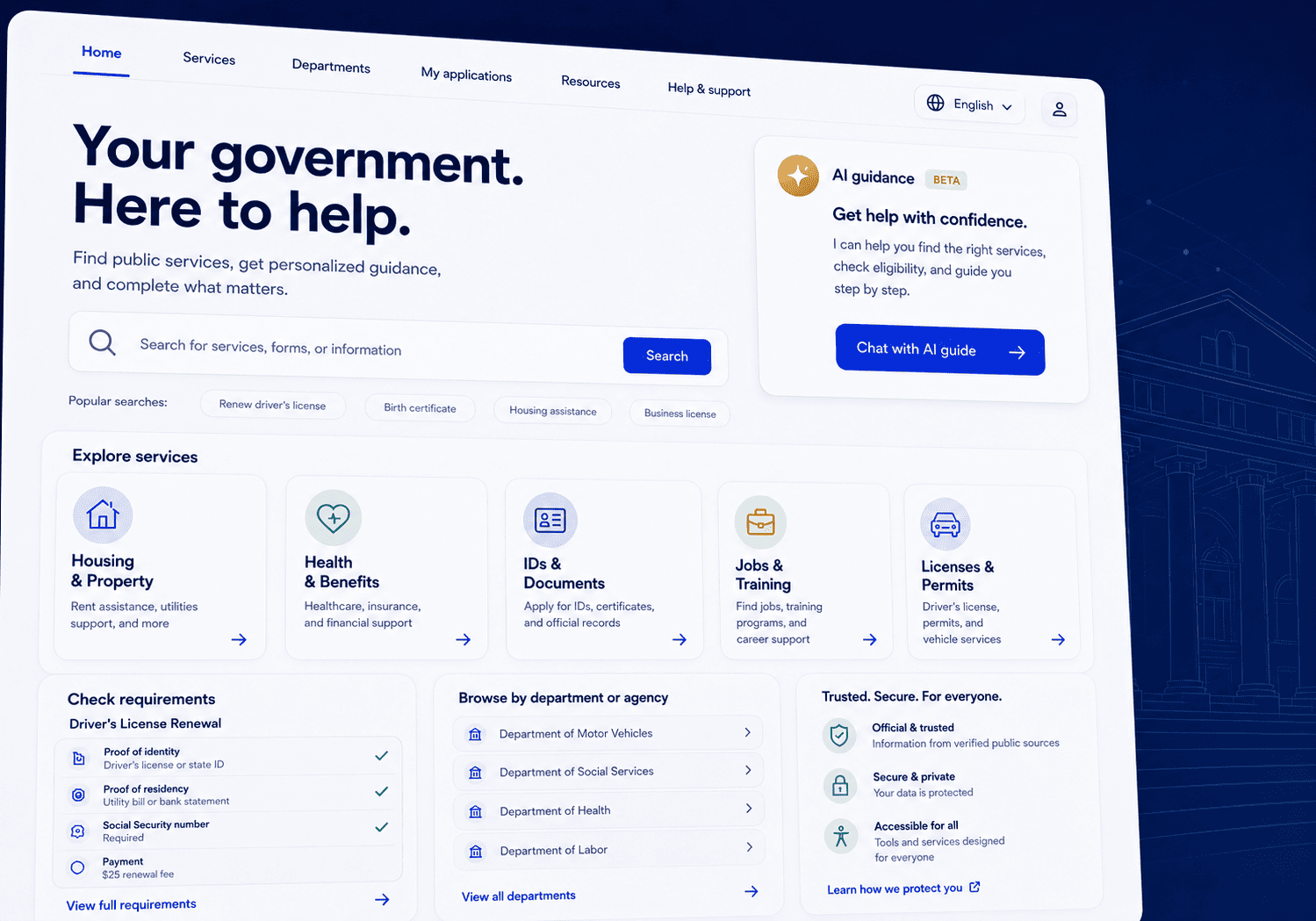
AI-Powered Citizen Services Website Platform for Virginia State Agencies

Plavno developed a modern eGovernment website platform for Virginia state agencies that centralizes citizen services, public information, department content, and an AI-powered guidance agent in one scalable system.

Read More
70%

reduction in routine citizen inquiries to agency staff

AI-Powered Citizen Services Website Platform for Virginia State Agencies

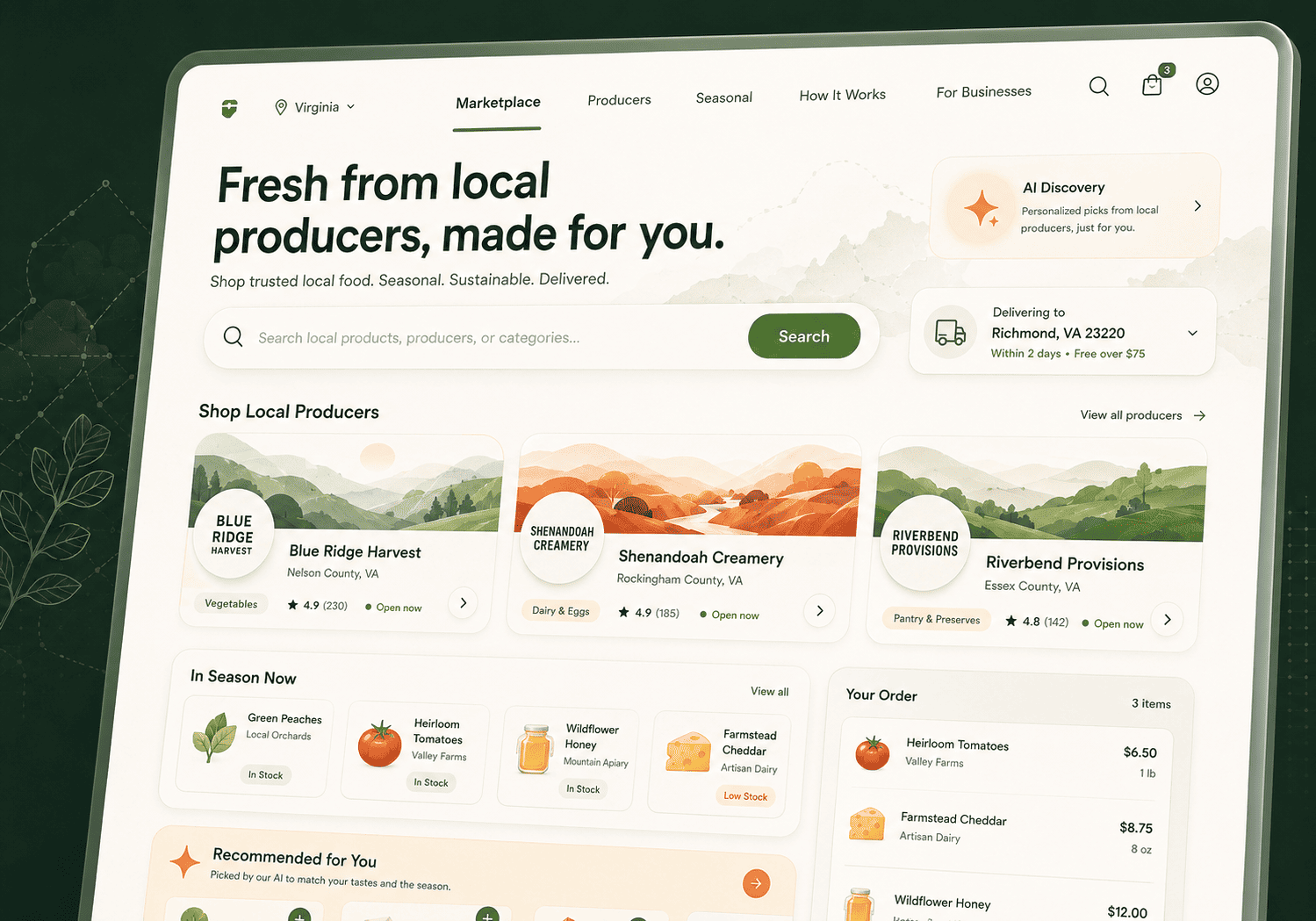
Digital Marketplace for Virginia Farmers, Local Producers & Direct-to-Consumer Food Sales

Plavno developed a custom multi-vendor marketplace for Virginia-based farmers, food producers, and regional sellers to unify product listings, vendor operations, customer ordering, and local fulfillment workflows.

Read More
3x

increase in product discovery relevance

Digital Marketplace for Virginia Farmers, Local Producers & Direct-to-Consumer Food Sales

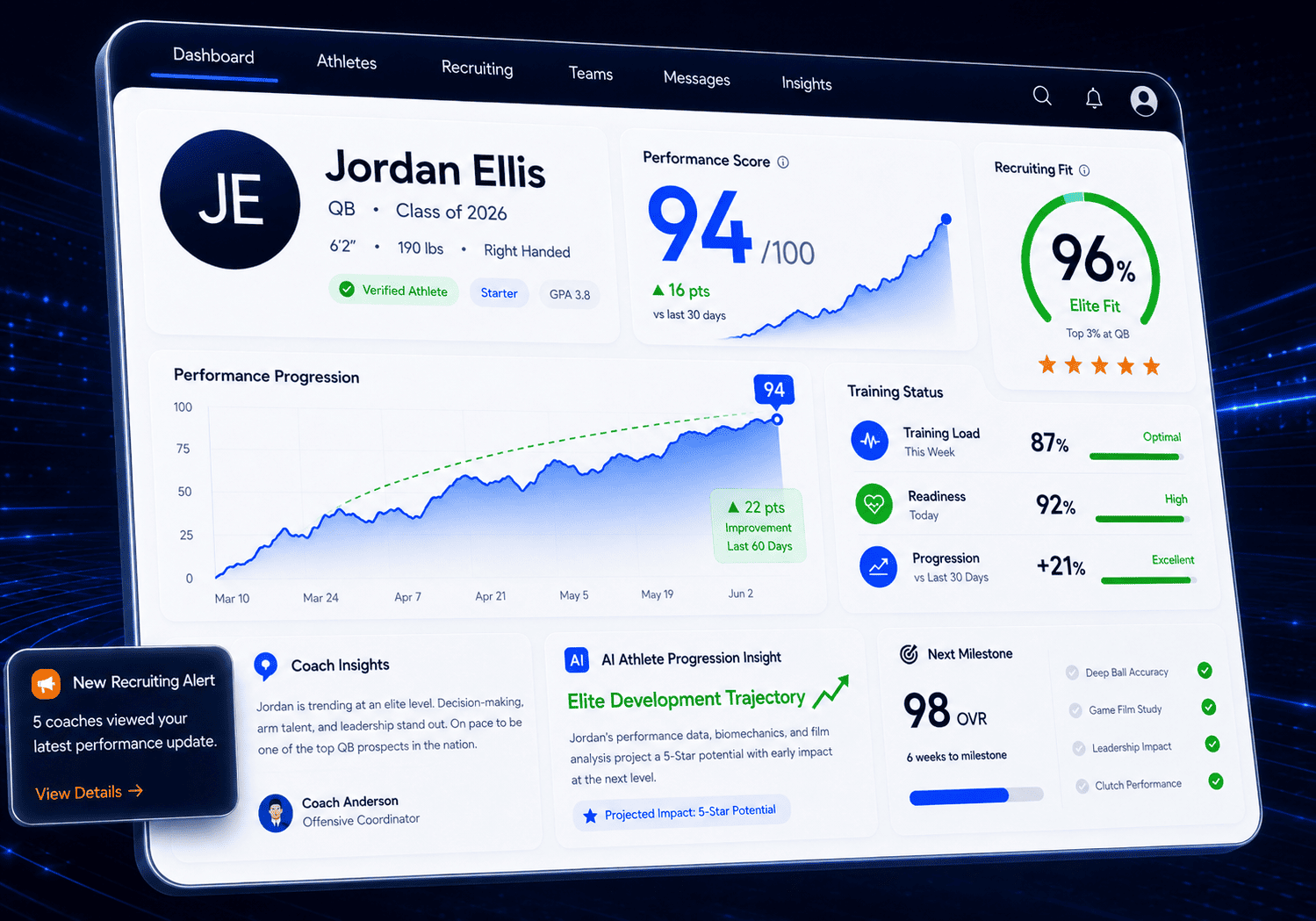
AI-Powered Sports Performance & Recruiting Platform for Virginia Clubs, Academies & Youth Programs

Plavno developed a custom sports technology platform for Virginia-based clubs and academies to combine athlete performance tracking, coach communication, recruiting workflows, and mobile engagement in one ecosystem.

Read More
3x

faster recruiting pipeline

AI-Powered Sports Performance & Recruiting Platform for Virginia Clubs, Academies & Youth Programs

Testimonials

We are trusted by our customers

“They really understand what we need. They’re very professional.”

The 3D configurator has received positive feedback from customers. Moreover, it has generated 30% more business and increased leads significantly, giving the client confidence for the future. Overall, Plavno has led the project seamlessly. Customers can expect a responsible, well-organized partner.

Sergio Artimenia

Commercial Director, RNDpoint

Sergio Artimenia

“We appreciated the impactful contributions of Plavno.”

Plavno's efforts in addressing challenges and implementing effective solutions have played a crucial role in the success of T-Rize. The outcomes achieved have exceeded expectations, revolutionizing the investment sector and ensuring universal access to financial opportunities

Thien Duy Tran

Product Manager, T-Rize Group

Thien Duy Tran

“We are very satisfied with their excellent work”

Through the partnership with Plavno, we built a system used by more than 40 million connected channels. Throughout the engagement, the team was communicative and quick in responding to our concerns. Overall, we were highly satisfied with the results of collaboration.

Michael Bychenok

CEO, MediaCube

Michael Bychenok

“They have a clear understanding of what the end user needs.”

Plavno's codes and designs are user-friendly, and they complete all deliverables within the deadline. They are easy to work with and easily adapt to existing workflows, and the client values their professionalism and expertise. Overall, the team has delivered everything that was promised.

Helen Lonskaya

Head of Growth, Codabrasoft LLC

Helen Lonskaya

“The app was delivered on time without any serious issues.”

The MVP app developed by Plavno is excellent and has all the functionality required. Plavno has delivered on time and ensured a successful execution via regular updates and fast problem-solving. The client is so satisfied with Plavno's work that they'll work with them on developing the full app.

Mitya Smusin

Founder, 24hour.dev

Mitya Smusin

Delivery differences

Why Chesapeake teams pick deep engineering

Generic AI agencies sell demos. We ship controlled systems that survive change control and audit questions in Virginia enterprises.

Generic Agencies
Our Platform (Deep Engineering Expertise)
Role-aware retrieval and write paths
checkmark
Model versioning with canary releases
checkmark
Slide deck heavy discovery only
checkmark
Human approval gates on agent actions
checkmark
One-size SaaS prompt wrapper
checkmark
Cost and drift monitoring in ops channels
checkmark
Department isolation patterns proven on portals
checkmark

Architecture & Engineering Overview

How 2026 Chesapeake AI programs stay fundable

Trusted baseline first

Trusted baseline first

Tickets, packet hours, or dwell time measured before build so pilots move real numbers

Human write authority

Human write authority

Auto-draft packages; never free auto-submit. Override rate is a core KPI, not failure

Spend by design

Spend by design

Batch or smaller models when accuracy holds; per-environment forecasts stop bill shock

Thinnest vertical slice

Thinnest vertical slice

Fund one owner's metrics first; broader rollout follows when that owner sells internally

For Business: Technical ROI & Risk Mitigation

Budget owners care about reduced cycle time, avoided headcount, and lower error cost more than model brand names. Technical choices only pay when they cut labor on a named process with a baseline you already trust. We fix that baseline first : tickets per week, hours per packet, or exception dwell time measured before any build. Pilots then show movement on those numbers with the same reporting cadence finance already uses.

Risk reduction starts by keeping write authority behind humans for high-impact actions. Auto-drafting a package is cheaper than free auto-submit against a customer portal. That restraint protects brand and compliance relationships that Chesapeake defense and healthcare operators cannot gamble. Override rates become a core KPI rather than a failure signal.

Cost control lives in design. Token-hungry patterns die early if batch scoring or smaller models meet the accuracy bar. We publish spend forecasts per environment so cloud bills do not surprise after a marketing pilot morphs into always-on production. Multi-tenant style isolation inside one company still matters when departments share infrastructure but not data rights.

Evidence from related delivery matters here. Migrating internal portals off SharePoint sprawl into Payload CMS and Next.js with department-level access control taught us to inventory content owners before automation. AI on messy permissions only multiplies liability. Cleaner content boundaries raise assistant quality without expensive prompt gymnastics.

Decision makers in Norfolk, Suffolk, and Chesapeake should fund the thinnest vertical slice that hits one owner’s metrics. Broader programs follow after that owner becomes the internal seller. That sequencing cuts political risk and keeps engineering focused on production truth instead of multi-department utopia decks.

Constrained discovery

Constrained discovery

Problem, data inventory, ADR on batch vs real-time; spikes test labels and PII

Phased build

Phased build

Ingestion, model core, UX, observability — demos on frozen acceptance cases

Live governance

Live governance

Model cards, prompt reviews, named eng + product owners; drift as incidents

Production exit

Production exit

Canary thresholds, runbooks, cost alerts, decommission plan your team can run

For CTOs: Architecture & Technical Lifecycle

Lifecycle opens with a constrained problem statement, data inventory, and success thresholds signed by ops and security. We refuse open-ended AI roadmaps that skip gateway, identity, and rollback design. Architecture decision records capture why batch beats real-time or why a managed model API beats self-host for a given stage. Those records travel with the change package your CAB already expects.

Discovery spikes measure label quality, PII density, and integration friction on real samples. Participants include the subject-matter owners who will live with false positives. Output is a build-or-wait recommendation, not a default yes. Waiting is success when data cannot support the claimed outcome yet.

Build phases separate ingestion contracts, model or rule cores, application UX, and observability. Each phase has demos against frozen acceptance cases. Parallel work only happens when interfaces freeze early enough that teams do not thrash. Chesapeake IT groups with limited release windows need this discipline more than greenfield startups.

Governance covers model cards, prompt or feature change reviews, and incident paths if outputs degrade. Ownership names both an engineering contact and a business product owner. Drift is treated as a production incident class, not a research note. That posture matches how you already handle performance regressions on customer-facing software.

Exit criteria for production include canary thresholds, runbooks, cost alerts, and a decommission plan if value fades. CTO review focuses on operational debt created, not only accuracy slides. We leave you with systems your team can run if engagement scope ends after stabilisation.

Stable JSON contracts

Stable JSON contracts

Explicit schemas, validated ingestion, quarantine for poison messages, versioned features

RBAC-aware retrieval

RBAC-aware retrieval

CMS hierarchy chunking; department claims filter sets before rank — Payload/Next.js walls

Inference & eval gates

Inference & eval gates

Health endpoints, golden-set evals, shadows before promote; thresholds block like unit tests

Defensive edge paths

Defensive edge paths

Empty fields, schema drift, multilingual notes; retry only transient faults, Docker CI suites

For Engineers: Implementation Details & Stack

Implementation favors boring interfaces. Stable JSON contracts and explicit schemas beat clever prompt-only glue that no one can test. Ingestion jobs validate payloads, drop poison messages to quarantine, and emit metrics on rejection causes. Feature creation code lives in version control beside the service that consumes it.

When retrieval is required, chunking follows document hierarchy used in your CMS rather than arbitrary character windows. Department claims from identity providers filter retrieval sets before ranking. That pattern extends lessons from role-based employee portals built with Payload CMS and Next.js where department-level permissions already defined audience walls. AI layers respect those walls instead of inventing a parallel ACL myth.

Inference workers expose health endpoints, structured logs, and deterministic seeds where evaluation needs repeatability. Evaluators run offline on fixed golden sets then as online judges with sampling. Threshold breaches block promotion the same way failing unit tests do. Shadow mode compares new models against production without user impact first.

Edge cases include empty fields, conflicting labels, multilingual dock notes, and sudden schema drift from upstream ERP patches. Defensive parsers and contract tests catch these before users see zero-score calamities. Retry policy distinguishes transient network faults from permanent validation fails so queues do not thrash.

Local toolchains stay simple enough for mixed seniorities. Dockerized workers, standard package managers, and CI gates that run both lint and evaluation suites. Secrets never enter notebooks that escape beyond jump hosts. This is the work that separates demo repos from systems Chesapeake plant or clinic staff can use every shift.

Security baseline

Security baseline

TLS everywhere, least-privilege workers, encrypted feature stores, redaction before third-party calls; VPC/on-prem when export controls demand it

Unified observability

Unified observability

Latency, errors, token/CPU cost, confidence histograms, override volume — traces from gateway through retrieval to model

Audit & compliance trails

Audit & compliance trails

Who saw which suggestion and accept/reject; SOC2/HIPAA-minded logs with retention on your legal schedule

Incident & drift loop

Incident & drift loop

Minute rollbacks to last good artifacts, tabletops pre-go-live, live drift dashboards and cost reports to budget owners

Infrastructure, Observability & Security

Infrastructure lands in the cloud accounts and regions your security team already approves for US workloads. Observability without security is just a loud pipeline that still leaks. We wire metrics for latency, error rates, token or CPU cost, confidence histograms, and human override volume into the same paging stack as other critical services. Traces follow a request from gateway through retrieval to model call so root cause path length stays short.

Security baselines cover TLS everywhere, least-privilege roles for workers, encrypted stores for embeddings or features, and key rotation aligned to your policy. PHI or CUI adjacent workloads receive tighter network pathing and redaction before any third-party model call when that call is even allowed. When on-prem or VPC-only inference is required, we plan capacity rather than pretend managed APIs always clear export control reviews.

Compliance conversations reference practices suitable for SOC2-minded environments and HIPAA-sensitive contexts when healthcare data appears. Logging retains who saw which suggestion and whether it was accepted. That trail supports audits without turning prompts into eternal unredacted storage. Retention matches your legal schedule, not vendor defaults.

Incident response playbooks define severity for wrong automated advice, data exposure risk, and spend runaway. Rollbacks switch traffic to last known good model artifacts within minutes. Communication templates notify business owners in plain language. Tabletop these drills before go-live so night teams on Virginia shores are not improvising at first failure.

Post-launch operations keep drift dashboards live and schedule periodic re-evaluation on fresh samples. Cost reports go to the same budget owners who funded the build. That closes the loop between infrastructure choices and business value for Chesapeake AI programs that must justify renewals in 2026.

Eugene Katovich

Eugene Katovich

Sales Manager

Need a custom software solution? We’re ready to help!

Plavno has a team of skilled developers ready to tackle the project. Ask me!

Get a Free Quote

Data paths and integration

Integration fabric that keeps AI honest

Second build focus for Chesapeake programs is the data plane, not another model list. Models fail quietly when feeds arrive late, schema shifts, or labels drift after process changes. We design integration fabric that freezes contracts, validates quality, and records lineage from source system to scored output. That work decides whether AI accelerates ops or invents fiction from stale tables.

Source systems in this market usually include ERP modules, TMS or WMS tools, HRIS, clinical systems, and internal portals. Some still expose file drops and nightly batches more than clean APIs. Adapters normalize those realities into event streams or curated tables without pretending every legacy box is modern. Idempotent loaders prevent double scoring when a batch reruns after a failed night job.

Identity and permission mapping cross every integration. A recommendation that displays a field a user cannot legally see is a defect even if the model was correct. We carry department and role claims from directory services into both UI and retrieval filters. Experience from building scalable employee portals with Payload CMS, Next.js, and department-level access control after SharePoint migration informs how we structure those claims. AI sits inside that same permission masters truth rather than a shadow directory.

Quality monitors check null spikes, distribution shifts, and referential breaks before retraining or before heavy inference hours. Alerts page data owners, not only engineers, when upstream finance or logistics extracts change. That social contract matters as much as the technical sensor. Without named owners, integration debt returns within a quarter.

Latency budgets dictate whether scoring happens inline at click time or as precomputation. Dock-side and clinic workflows often need sub-second UI reactions while overnight risk models can finish before morning standup. We document those budgets in the integration design so finance understands why streaming infrastructure appears on the bill for one use case and not another.

Outputs write back through narrow, audited APIs. Free writes into core ERP tables are refused. Staging entities, suggestion objects, and approval tasks keep irreversible changes behind people or delayed jobs. This dataset discipline is what turns custom AI software solutions around Hampton Roads into systems operations will still defend after the first model refresh pack ships.

Ready before kickoff

Pre-build readiness checklist for Virginia teams

  • Name the workflow owner — Pick one operations lead who feels the pain daily and can approve acceptance cases. Document baseline metrics with date and sample size before any vendor demo. Without that owner, engineers will automate the wrong step. Include backup coverage for leave weeks so decisions continue. Confirm executive sponsor only after the owner signs the metric sheet. This keeps Custom AI Development scoped to real Chesapeake throughput issues rather than abstract innovation labels.

  • Inventory data access paths — List systems of record, refresh cadence, and who grants credentials. Mark fields that contain regulated content needing redaction. Capture sample extracts under NDA that match production shape. Note known quality defects so they become backlog items not surprises. Align security review timelines with project start rather than mid-sprint. Clean inventories prevent multi-week stalls after contracts sign.

  • Define human approval gates — Decide which outputs may auto-apply and which must wait. Write the UI moments where staff accept, edit, or reject suggestions. Link those gates to audit requirements your industry already has. Train a pilot cohort on the approval ritual before full rollout. Measure override reasons as product input. Clear gates calm risk officers spanning defense, healthcare, and public partners near Chesapeake.

  • Set cost and latency ceilings — State maximum monthly inference spend for pilot and production. Define p95 latency that operators will tolerate on each screen. Choose fallbacks when the model service degrades so work continues. Link ceilings to vendor SLAs and internal cloud budgets. Review numbers with finance before architecture freezes. Ceilings stop pleasant prototypes from becoming permanent bill shock.

  • Prepare evaluation sets — Collect labeled examples that represent hard cases, not only happy path records. Include edge situations from Norfolk cargo waves or multi-department portals. Agree how accuracy, precision, or business-cost proxy will be scored. Freeze a golden set that cannot be silently edited mid-project. Assign a steward who updates labels when process rules change. Strong evaluation sets are the only honest quality bar for AI solutions for business leaders carefully fund.

Vitaly Kovalev

Vitaly Kovalev

Sales Manager

Request a Chesapeake AI readiness audit

Share budget range, timeline, stack, and dataset scope to receive a readiness audit and build estimator tailored for Chesapeake businesses. We return gaps, risks, and a phased plan you can take to your 2026 steering meeting.

Talk to Experts

Practical answers

Custom AI Development questions from Chesapeake teams

Straight answers on cost, timing, data, quality, security, and run state for Virginia buyers planning 2026 work.

What drives cost for Custom AI Development in the Chesapeake market?

Cost tracks scope of workflow automation, data cleanup burden, integration count, and required oversight levels more than model brand marketing. A single scoring service on clean structured tables costs far less than multi-source document understanding with PHI redaction and agent write paths. Local programs often sit inside industries with documentation heavy processes, which raises extraction and review design time. Labor rates for senior engineers who can clear security reviews also shape proposals for Virginia clients versus pure offshore-only bids.

You should expect line items for discovery, data contracts, model or rules development, application UX, observability, and hardening. Pilots that write nothing back to systems of record stay cheaper and faster. Production paths that touch ERP or QMS systems add change control effort you already know is real for plant and shipyard environments. Cloud inference spend is a separate operating cost with its own ceiling that must appear in business case sheets.

Regional factors include dual use of commercial and federal-adjacent requirements for many Hampton Roads suppliers. Extra compartmentalization and logging increase engineering hours. We price those explicitly rather than as a vague compliance uplift later. Bring sample volume, systems list, and success metrics to keep estimates honest.

Share budget, timeline, tech stack, and dataset health early. That package yields a firmer number within a day for planning rooms that need a 2026 CAPEX decision. Avoid lowest bid wrappers that skip evaluation design. Those projects reopen budget midstream when quality fails on live cases. Serious buyers fund quality gates and runbooks as part of build cost, not as optional extras after launch stress appears.

How long does it take to build Custom AI Development software?

Time splits between MVP learning loops and full production hardening. A focused MVP that scores or drafts inside one workflow often lands in eight to twelve weeks when data access is ready on week one. That window covers discovery, contract freezes, model baselines, UI hooks, and a limited user pilot. If credentials, legal review, or sample labeling slip, the calendar slips the same amount. Chesapeake teams with busy change freezes should plan around those freezes from day zero.

Full deployment with multi-system write-back, agency-grade logging, training for shifts, and cost controls often runs sixteen to twenty-six weeks depending on integration depth. Parallel tracks help when data engineering and application UX can peel apart after interfaces freeze. Sequencing still protects the hardest dependency first, usually identity-aware data paths. Shipbuilding or clinical partners may add validation documentation that extends calendar without changing pure coding hours.

MVP definition matters. Shipping a demo chat that never touches tickets is not an MVP for operations leaders. Useful MVPs must move a measured metric for a named owner, even if humans approve every action. That standard keeps timelines tied to value rather than novelty. After MVP proof, scaling to additional departments becomes more predictable because patterns for evaluation and rollout already exist.

We publish a milestone plan with demo gates so sponsors see working slices instead of waterfall reveals. Each gate has exit criteria on accuracy proxies, latency, and usability feedback. Missed criteria trigger scope or data remediation, not silent date promises. That discipline keeps Hampton Roads project sponsors aligned with actual engineering reality through 2026 budgets.

Do you work with startups in Virginia?

Yes. We support US-based startups as well as established operators, including companies building inside Virginia ecosystems. Founders near the 757 and across the state often need custom AI features that sit beside an early product rather than a multi-year transformation program. That means tighter scope, faster MVP loops, and careful spend ceilings. We still require clear metrics and data honesty. Startups fail at AI when they chase model fashion ahead of a user problem that pays.

Virginia’s startup map includes university-adjacent teams, defense dual-use founders, logistics tech, and healthcare IT experiments serving regional providers. Many of those companies already talk buyers in Norfolk, Virginia Beach, and Blackstone-adjacent networks even if HQ sits in Richmond or Northern Virginia. We meet them where product and compliance constraints collide. Early security choices matter because enterprise pilots in this region ask harder questions than pure consumer apps.

Engagement style for startups emphasizes product discovery, thin vertical slices, and instrumentation that investors understand. We avoid oversized platform builds that outpace sales learning. Founders leave with code ownership patterns a small team can maintain after our phase ends. That transfer is deliberate. Dependence without documentation kills early companies faster than slow features.

If you operate primarily outside Chesapeake but serve Hampton Roads customers, the same playbooks apply. Dataset readiness and integration still dominate timeline more than office address. Bring API designs, sample data under NDA, and target accounts so architecture matches actual procurement needs. We help sequence roadmap tickets so AI lands behind monetizable workflows rather than vanity roadmaps used only in pitch decks.

Can Custom AI Development integrate with my existing system?

Integration is the bulk of serious AI delivery, not a footnote. We connect to REST and GraphQL APIs, message queues, SFTP drops, warehouse tables, and legacy interfaces common in industrial and government-adjacent Virginia environments. Adapters translate source payloads into validated internal schemas before any model sees them. Write-backs use narrow APIs with idempotency keys and full audit trails. That pattern protects ERP and case systems from partial updates when services retry.

Legacy systems often lack clean endpoints. In those cases we stage data through intermediate stores fed by existing report extracts or change data capture tools. The model tier never speaks proprietary terminal protocols directly when an intermediate contract can isolate risk. Your core maintainers keep ownership of system-of-record rules. We work beside them rather than bypassing change boards that exist for good reasons.

Identity integration is mandatory. SSO claims and group membership drive whose data an assistant may retrieve and which actions appear. Our approach leans on lessons from department-level permission designs used when migrating employee content hubs from SharePoint into Payload CMS and Next.js applications. AI features inherit the same boundaries instead of inventing parallel user stores that drift. If a system cannot express roles cleanly, we surface that as a prerequisite backlog item before model work.

Plan for contract tests that run in CI whenever upstream schemas change. Integration failure is a production incident class with owners on both sides. Documentation becomes runbooks your team can execute if vendor staff are offline. That is how Custom AI Development survives age characteristics of Chesapeake enterprises that cannot freeze operations for a rip-and-replace fantasy.

What industries in Chesapeake benefit most from Custom AI Development?

Three stand out urgently: port and intermodal logistics, ship repair and industrial services, and healthcare networks serving the region. Logistics firms drown in exception messages and dwell-time costs when exceptions sit unprioritized. AI triage shortens decision loops for control rooms that already understand their KPI math. Industrial yards lose labor into inspection and packet assembly that could be drafted much earlier from structured captures. Health systems slow on referrals and documentation that paper handling still owns at too many steps.

Defense contracting and dual-use suppliers form a fourth high-value band across the broader Hampton Roads economy. Proposal support, compliance packet checks, and knowledge retrieval inside cleared partitions reduce writer fatigue without risking uncontrolled data mixing. Manufacturing feeders to larger primes gain when quality signals surface mid-shift rather than after scrap accumulates. Municipal and utility service desks see load relief on repetitive inquiries during storm or peak billing seasons.

Each industry shares messy documents, multi-system truth, and limited spare headcount. Those are the conditions where custom models and retrieval beat generic SaaS chat alone. Benefit requires an owner ready to change a process, not only buy software. Teams that treat AI as a side bot without workflow redesign collect little value beyond novelty screenshots.

We prioritize industries where metrics already exist in Thursday ops meetings. If no one measures packet time or exception dwell today, start there before model selection. Chesapeake companies that pair operational discipline with Custom AI Development see clearer ROI stories to take into 2026 board cycles. Curiosity without metrics remains expensive education with little lasting residue.

Contact Us

This is what will happen, after you submit form

Need a custom consultation? Ask me!

Plavno has a team of experts ready to start your project. Ask us!

Vitaly Kovalev

Vitaly Kovalev

Sales Manager

Schedule a call

Get in touch

Fill in your details below or find us using these contacts. Let us know how we can help.

No more than 3 files may be attached up to 3MB each.
Formats: doc, docx, pdf, ppt, pptx, xls, xlsx, txt.
Send request