bg image
bg image

Serving Chesapeake & Virginia

Stop funding AI pilots that never reach production in Chesapeake 2026

Chesapeake leaders face thin margins, compliance pressure, and stacked vendors selling tools without a plan. You need clear priorities, realistic costs, and a path that ties models to revenue or risk reduction. We help owners and operators across Hampton Roads decide what to build, buy, or shelve. Work spans port logistics, defense contractors, healthcare groups, and mid-market manufacturers. You leave with a ranked backlog, budget ranges, and proof points from live systems. Get AI Consulting cost estimate in 24 hours. Tell us your stack, data sources, and timeline so we can scope the first ninety days with precision.

Discuss Project

Overview

Why Chesapeake firms stall on AI in 2026

Chesapeake sits inside one of the densest military, port, and logistics corridors on the East Coast. Operators here run on tight schedules across Norfolk, Portsmouth, Suffolk, and Virginia Beach. Yet many AI programs still die after a slick demo. Teams buy models without fixing data ownership, latency, or who maintains the pipeline after go-live. That gap burns budget and trust with boards that already saw too many failed automation bids.

We work with US-based clients, including companies operating in Virginia. Our focus is decision quality first, code second. Leaders get a ranked map of where AI reduces cost, cycle time, or error rates against real workloads. Trusted AI Consulting Partner for Chesapeake Businesses, we treat consulting as an engineering discipline with measurable exits. You see draft architectures, integration edges, and risk registers before any multi-year commitment starts.

Proof lives in shipped products, not slide decks. We built an insurance eligibility verification agent that encoded complex payer rules into repeatable AI verification workflows. We shipped multi-platform content personalization for MediaSphere using recommendation engines tied to discovery layers. Fintech clients run agentic payment flows that cut manual handoffs. These are production systems, not lab toys, and they shape how we scope Chesapeake work today.

Local industries need grounded AI consulting that respects export controls, SOC-minded security, and legacy ERPs still common in Hampton Roads yards and clinics. We start from your datasets, fail cases, and staffing constraints. Then we draft a path that names pilots, kill criteria, and the owners who keep models honest after launch. That discipline is why 10+ AI consulting engagements have moved past strategy into funded builds across the US market.

Talk to an Expert
Decision Quality First

Decision Quality First

Ranked map of where AI cuts cost, cycle time, or error rates on real workloads

Architecture Before Build

Architecture Before Build

Draft architectures, integration edges, and risk registers before multi-year spend

Production Proof

Production Proof

Eligibility agents, MediaSphere personalization, and agentic payment flows already shipped

Pilots with Kill Criteria

Pilots with Kill Criteria

Named owners, export-aware security, and exits that keep boards funding winners

Strategy backed by stack choices

Reference architectures that survive Chesapeake production load

Chesapeake clients do not need another generic maturity model. They need a concrete architecture path from raw systems of record to governed model endpoints. We start by inventorying data sources, access patterns, and latency budgets. Port dispatch, shipyard quality, and clinic intake each demand different NFR profiles. The consulting package then produces a target architecture with interfaces that your internal teams can own.

Core delivery often centers on a retrieval layer over curated corpora, plus small supervised models where rules already settle most tickets. For eligibility and verification work we encode payer logic as testable workflows instead of opaque prompts. That same pattern maps well to Hampton Roads insurers and third-party administrators. For discovery and media products we favor candidate generation plus ranking stages so product teams can tune relevance without redeploying the full stack. Recommendation engines and content graphs became the spine of MediaSphere-style platforms for that reason.

Security/compliance sits in the design, not a late checklist. We map data classes early: PII, PHI, CUI, and commercial confidentiality. Encryption in transit and at rest, least-privilege service accounts, and audit trails for model inputs and outputs are baseline. Defense-adjacent contractors around the Hampton Roads belt often need tenant isolation and export-aware logging. We document those controls in the architecture package so security reviews do not stall funding. Human-in-the-loop gates stay explicit where regulations demand them.

DevOps for AI differs from classic app shipping. Model artifacts, feature stores, evaluation suites, and prompt or policy versioning need release trains of their own. We introduce CI gates that fail builds when offline metrics drop or schema drift appears. Staging environments replay production-like traffic with synthetic and sampled real data under mask. Cost telemetry per endpoint, per tenant, and per feature flag is required so finance sees burn before invoices surprise them. Chesapeake mid-market teams rarely have full MLOps staff, so we keep the control plane simple and document runbooks your SREs can actually man.

Technology choices stay boring on purpose. Python services for orchestration, managed cloud ML platforms where throughput warrants them, vector indexes only when retrieval quality needs them, and event buses for decoupled updates. Chat and agent surfaces reuse patterns from ecommerce FAQ bots and food-delivery voice assistants we already productionized. Payment agents taught us to isolate money-moving actions behind dual control and strict tool scopes. Credit scoring work reinforced the need for reproducible features and explainability hooks when decisions hit regulated outcomes. You leave with diagrams, interface contracts, and a backlog that engineers can estimate without reopening strategy debates.

plavno logo

Build your first
Smart AI project today!

Just tell the Plavno AI Agent about your project - it will ask questions, gather requirements, and propose a tailored solution

What you walk away with

Five deliverables Chesapeake teams fund first

AI readiness and data audit

AI readiness and data audit

Most Chesapeake operators discover half their labels live in shared drives and tribal knowledge. We inventory systems, owners, freshness, and access rights across the stack. Gaps that would kill a pilot surface as a scored backlog with fix owners. You get a plain report executives can fund without a second translation layer. Python notebooks and profiling jobs speed sampling so we stay days, not months. Cloud storage scanners help when S3 and SharePoint both hold fragments of truth.

Use-case ranking workshop

Use-case ranking workshop

Ideas outnumber bandwidth in every Hampton Roads boardroom we enter. We score candidates on impact, data fit, integration cost, and regulatory load. Defense and port operators often mis-rank flashy chat surfaces above boring exception routing that actually saves money. Workshop outputs include kill criteria and a ninety-day pilot slate. Facilitation is structured so product, ops, and security agree before spend grows. Priority maps feed every later estimate.

Architecture and API blueprint

Architecture and API blueprint

Strategy dies when engineers face blank a whiteboard with no constraints. We draft service boundaries, auth flows, and integration points against your ERP, CRM, or WMS. Failures we already fixed in payment agents and eligibility bots inform the edges. Sequence diagrams show where humans stay in the loop. The blueprint becomes the RFP for internal or external build teams. Latency and cost budgets appear as hard numbers, not adjectives.

Vendor and model selection memo

Vendor and model selection memo

Chesapeake buyers face relentless pitches from model and platform vendors. We run bake-offs on your samples with fixed evaluation sets and cost per thousand inferences. Open-weight options sit beside managed APIs so lock-in is explicit. Security review criteria cover data residency and divorce rights. The memo recommends a primary path and a fallback so procurement is not stuck. You keep the harness for later residual testing.

Operating model and staffing plan

Operating model and staffing plan

Models drift. Owners assign on-call. Budgets renew. We define roles, SLAs, and escalation paths for post-launch life. Small Virginia teams often share MLOps across product squads, so the plan fits partial FTEs. Monitoring scopes name the dashboards and alert thresholds that refuse silence. Training outlines prepare business SMEs who must label edge cases. Without this page, even strong pilots collapse under ticket load.

AI Consulting Solutions for Chesapeake Industries

Hampton Roads domains where AI spend actually pays off

Regional industry shape drives use cases harder than any national trend deck. Below are patterns we adapt from live builds to Chesapeake operators.

Port Logistics

Port Logistics

Exception Routing

Port and logistics exception routing

Norfolk and Chesapeake freight flows generate mountains of exceptions that still drain humans. Delayed containers, mismatched BOLs, and weather holds stack email threads for hours. We design AI triage that proposes actions against your TMS and EDI streams. ROI often shows as fewer escalations per shift and faster turn times at the yard gate. Technically we combine rule filters with classification models and retrieval over SOP libraries. The same orchestration style powered voice and chat ops in food-delivery environments we already shipped.

Defense Compliance

Defense Compliance

Assistants

Defense contractor compliance assistants

Contractors around the shipyards drown in clause libraries and audit prep. Staffers search sprawling share drives for precedent language under deadline pressure. Consulting scopes here produce secure retrieval systems with strict access controls and citation trails. Business result is shorter proposal cycles and fewer nonconformances during reviews. Stack choices emphasize private indexes, redact-before-embed pipelines, and role-based tool use. Patterns transfer from regulated insurance verification agents that already automated multi-rule checks.

Healthcare Eligibility

Healthcare Eligibility

Intake

Healthcare eligibility and intake

Clinics and regional payers lose days to eligibility back-and-forth. Front desks retype the same fields while patients wait. We scope AI verification workflows that sync with EHR and clearinghouse APIs under clear human approval gates. Cycle-time cuts and lower denial rates show up inside the first quarter when data quality holds. Technical summary mirrors our insurance eligibility agent: encoded rules, staged automation, and audit logs for every decision. PHI handling and retention policy stay first-class requirements.

Manufacturing Quality

Manufacturing Quality

Insight Loops

Manufacturing quality insight loops

Tidewater manufacturers still store photos and defect notes as siloed attachments. Quality leads chase trends by hand after shifts close. Consulting work packages computer vision hybrids and feedback analytics tied into MES records. Throughput gains and scrap reduction become measurable once labeling discipline exists. We reuse CRM feedback pipelines and structured insight jobs first proven on customer feedback automation. Edge inference sits only where plant latency demands it.

Fintech Payments

Fintech Payments

Operations

Fintech and payments operations for regional lenders

Community lenders and fintech partners in Virginia still route too many payment exceptions through inboxes. Agent designs isolate high-risk actions and keep dual control on fund movement. Clear ROI shows up as lower manual touches per thousand transactions and faster customer answers. We adapt agentic payment patterns already running for fintech platforms, plus credit decisioning lessons from scoring software. Model governance and explainability hooks matter when auditors appear. Integration favors event streams over nightly batch alone.

Retail Support

Retail Support

Ecommerce

Retail and ecommerce support for coastal brands

Regional brands selling across the Mid-Atlantic spike tickets every promo cycle. Agents and bots that only parrot FAQs frustrate buyers and staff. We scope retrieval over product catalogs, order systems, and policy copy with clean handoff to humans. Containment rate and average handle time become the ROI pair leadership tracks. Chatbot and ecommerce support flows we already delivered give the technical baseline. Seasonal traffic tests cover Maryland and Carolinas peaks too.

Case Study

We help customers cut
down on development

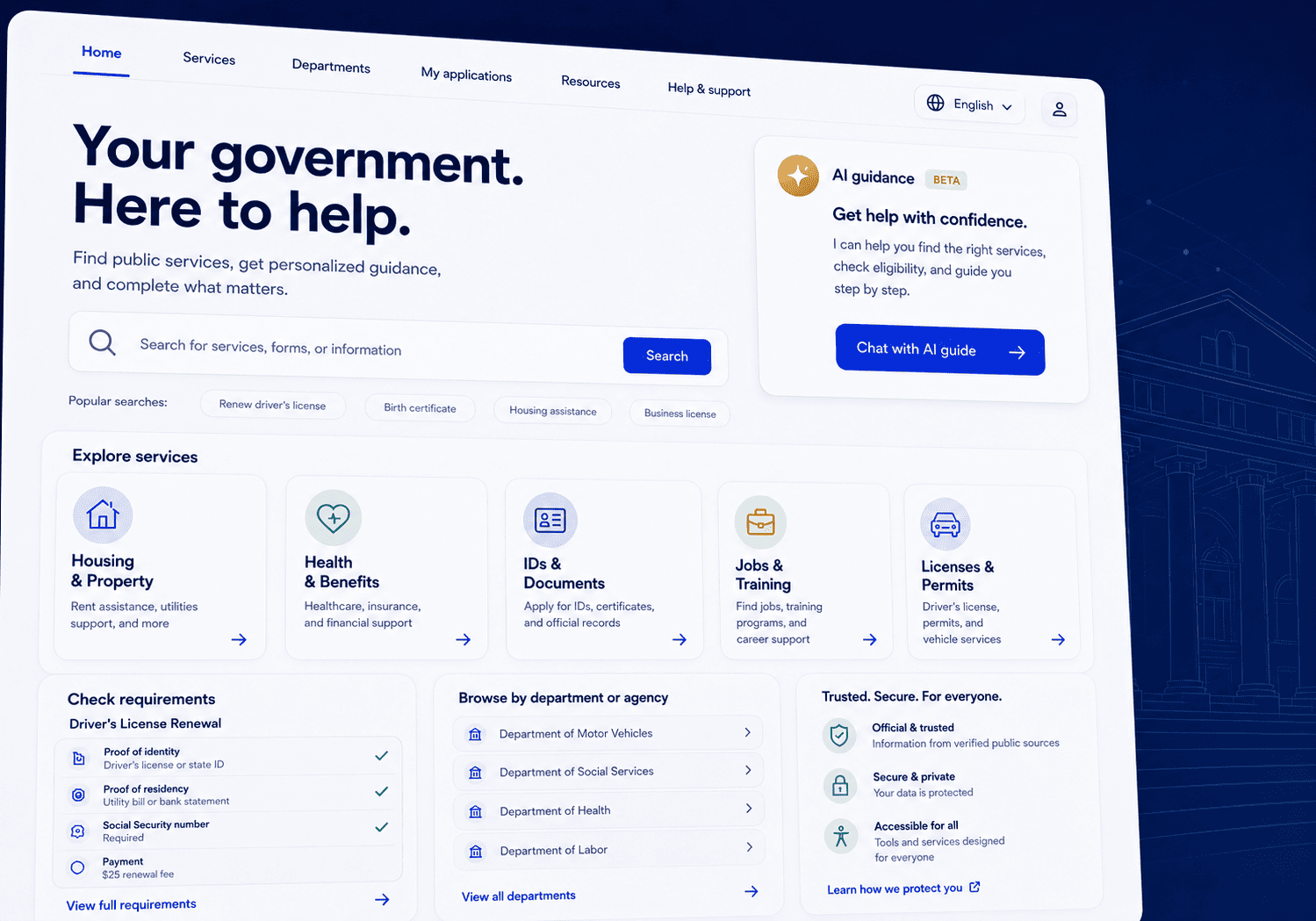
AI-Powered Citizen Services Website Platform for Virginia State Agencies

Plavno developed a modern eGovernment website platform for Virginia state agencies that centralizes citizen services, public information, department content, and an AI-powered guidance agent in one scalable system.

Read More
70%

reduction in routine citizen inquiries to agency staff

AI-Powered Citizen Services Website Platform for Virginia State Agencies

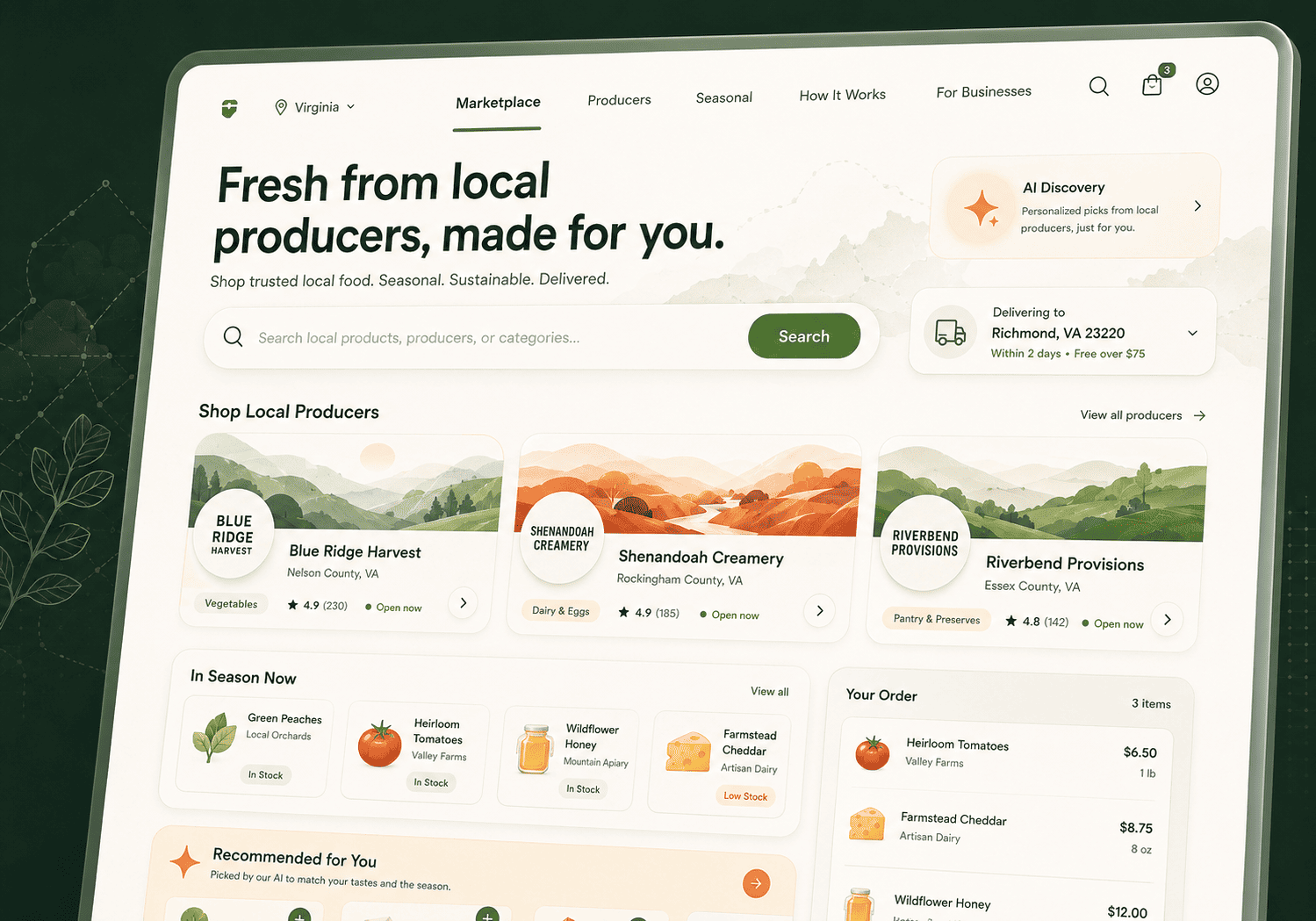
Digital Marketplace for Virginia Farmers, Local Producers & Direct-to-Consumer Food Sales

Plavno developed a custom multi-vendor marketplace for Virginia-based farmers, food producers, and regional sellers to unify product listings, vendor operations, customer ordering, and local fulfillment workflows.

Read More
3x

increase in product discovery relevance

Digital Marketplace for Virginia Farmers, Local Producers & Direct-to-Consumer Food Sales

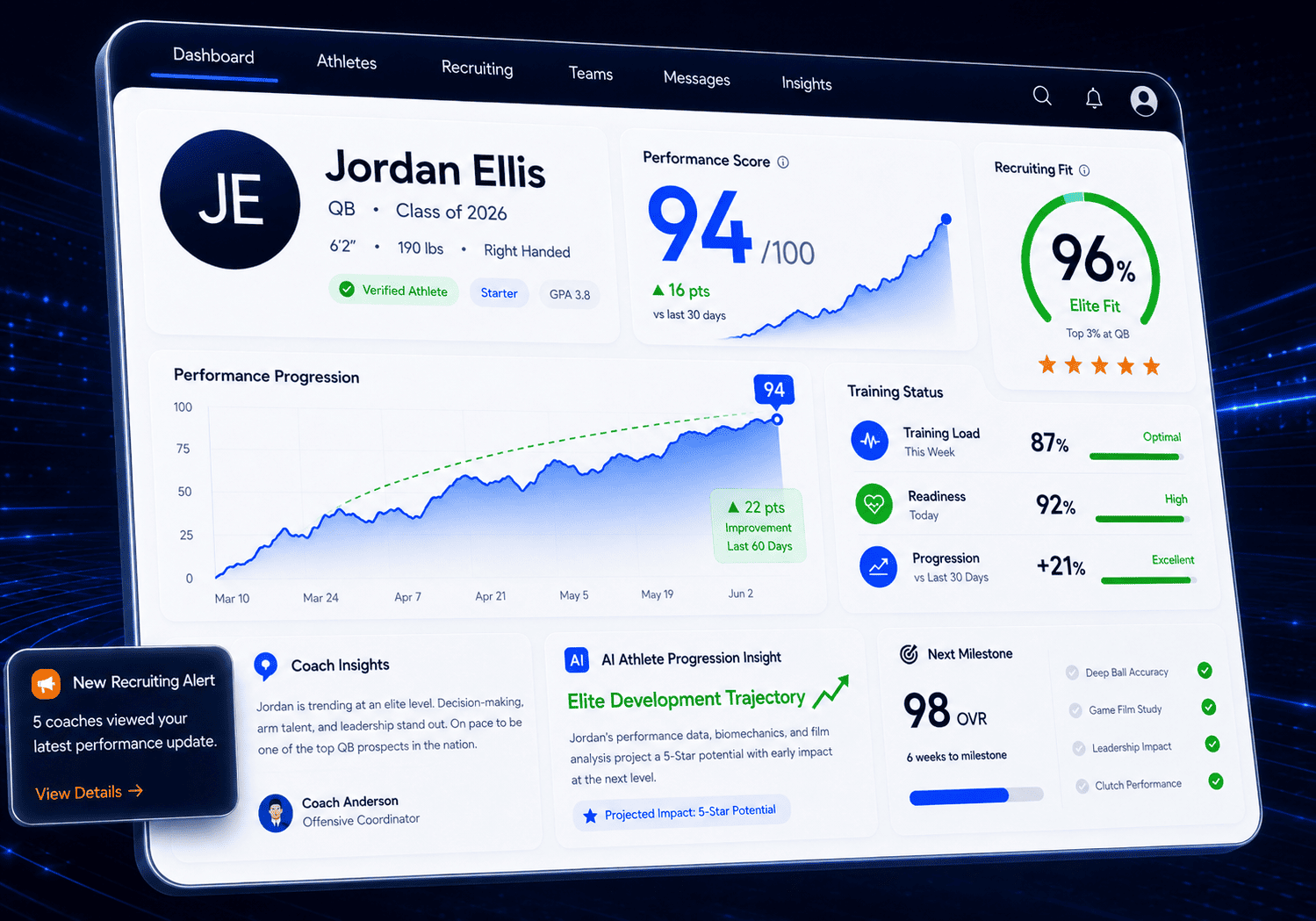
AI-Powered Sports Performance & Recruiting Platform for Virginia Clubs, Academies & Youth Programs

Plavno developed a custom sports technology platform for Virginia-based clubs and academies to combine athlete performance tracking, coach communication, recruiting workflows, and mobile engagement in one ecosystem.

Read More
3x

faster recruiting pipeline

AI-Powered Sports Performance & Recruiting Platform for Virginia Clubs, Academies & Youth Programs

Testimonials

We are trusted by our customers

“They really understand what we need. They’re very professional.”

The 3D configurator has received positive feedback from customers. Moreover, it has generated 30% more business and increased leads significantly, giving the client confidence for the future. Overall, Plavno has led the project seamlessly. Customers can expect a responsible, well-organized partner.

Sergio Artimenia

Commercial Director, RNDpoint

Sergio Artimenia

“We appreciated the impactful contributions of Plavno.”

Plavno's efforts in addressing challenges and implementing effective solutions have played a crucial role in the success of T-Rize. The outcomes achieved have exceeded expectations, revolutionizing the investment sector and ensuring universal access to financial opportunities

Thien Duy Tran

Product Manager, T-Rize Group

Thien Duy Tran

“We are very satisfied with their excellent work”

Through the partnership with Plavno, we built a system used by more than 40 million connected channels. Throughout the engagement, the team was communicative and quick in responding to our concerns. Overall, we were highly satisfied with the results of collaboration.

Michael Bychenok

CEO, MediaCube

Michael Bychenok

“They have a clear understanding of what the end user needs.”

Plavno's codes and designs are user-friendly, and they complete all deliverables within the deadline. They are easy to work with and easily adapt to existing workflows, and the client values their professionalism and expertise. Overall, the team has delivered everything that was promised.

Helen Lonskaya

Head of Growth, Codabrasoft LLC

Helen Lonskaya

“The app was delivered on time without any serious issues.”

The MVP app developed by Plavno is excellent and has all the functionality required. Plavno has delivered on time and ensured a successful execution via regular updates and fast problem-solving. The client is so satisfied with Plavno's work that they'll work with them on developing the full app.

Mitya Smusin

Founder, 24hour.dev

Mitya Smusin

Architecture & Engineering Overview

How Chesapeake AI programs stay funded after the pilot

Baseline Metrics

Baseline Metrics

Named scorecard, lag to first gain, and owner for every recommended system

Spend Modeling

Spend Modeling

Token, GPU, and storage ranges with flags that kill expensive routes early

Human Review Capacity

Human Review Capacity

Priced recovery paths so silent wrong answers never create compliance claims

90-Day Kill Criteria

90-Day Kill Criteria

Bake-off evidence, data portability, and fiscal slices that move funds to winners

For Business: Technical ROI & Risk Mitigation

Boards in Chesapeake care about cash, risk, and whether next quarter looks better than this one. Technical choices only matter when they move those three numbers with a paper trail. We force every recommended system to name a baseline metric, the lag to first improvement, and who owns the scorecard. Media personalization work taught us that relevance gains without inventory and margin guardrails simply move demand, they do not create profit. Insurance verification showed that partial automation of ugly middle steps beats flashy end-to-end demos that fail audits.

Cost risk hides in tokens, storage, and idle GPUs more than in headcount slides. We model spend ranges under low, medium, and high traffic and pair them with feature flags that destroy expensive routes if unit economics slip. Payment agents made dual-control tooling mandatory so fraud edges never ride the same path as routine lookups. Credit scoring taught us to fix data contracts before model thrash burns budget. You receive those lessons as hard gates in the consulting roadmap.

Quiet failure modes destroy trust faster than loud outages. Silent wrong answers in eligibility or quality reviews can create compliance claims. We price human review capacity into the business case instead of assuming perfect models. Food-delivery voice assistants proved that recovery scripts and fallback conversation trees measurably cut abandoned orders. Those recovery paths belong in the budget, not as unpaid heroics after launch.

Procurement risk is real when vendors wrap commodity models in fancy logos. Bake-off evidence and exit clauses protect you if a provider changes pricing or terms mid-contract. We insist on data return, portability of embeddings or features, and independent evaluation harness ownership. That stance kept clients mobile when markets shifted. Chesapeake owners should demand the same exit rights before any multi-year AI contract freezes options.

Finally, timeline honesty is a ROI control. Stretching a pilot across three fiscal years guarantees reorgs erase memory of the original goal. Ninety-day proof slices with kill criteria keep capital allocated to winners. When a slice fails facts, we document why and move funds. That discipline is what separates consulting we stand behind from advisory theater.

Discovery

Discovery

Data contracts, threat models, and ownership maps before any build starts

Thin Vertical Slice

Thin Vertical Slice

One path with eval packs proving value without locking platform debt

Hardened Pilot

Hardened Pilot

Isolation, go/no-go gates, runbooks, and staffing impact documented

Production

Production

Event-driven edges, anti-corruption layers, and minimum viable ownership

For CTOs: Architecture & Technical Lifecycle

CTOs in the Hampton Roads corridor balance aging cores, thin platform teams, and rising board pressure on AI. Lifecycle design beats model choice as the primary control you own. We phase work as discovery, thin vertical slice, hardened pilot, and production with explicit go or no-go gates. Each gate has artifacts: data contracts, threat models, eval packs, runbooks, and ownership maps. Skipping gates to please a demoday calendar is how regression debt starts.

Decision points include build versus buy for the retrieval stack, single versus multi-tenant isolation, and where agents may call tools that mutate state. We document trade-offs with cost envelopes and staffing impact rather than ideology. Payment mutation surfaces get stronger isolation than suggest-only helpers. Eligibility agents deserve versioned rules packs that business analysts can test without waiting on engineers for every clause change.

Governance covers who may promote a model, who may change prompts or policies, and how long audit logs survive. We connect change management to existing ITIL or SRE practices instead of inventing a parallel religion. Naming conventions, environment parity, and secrets handling stay aligned with your current cloud posture. Local contractors with federal exposure often need stronger logging and residency guarantees. Those constraints reshape architecture early, not at CMMC panic time.

Integration patterns favor event-driven edges where legacy cores cannot take chatty synchronous load. Anti-corruption layers protect ERPs from model thrash. CRM feedback systems we shipped leaned on async insight pipelines so agent chatter never locked customer records. You get sequence diagrams and failure cascades for the paths that drivers and clarity depend on. Latency budgets given in numerals stop philosophical debates during estimation.

Staffing plans remain part of architecture. A perfect design that requires six MLOps engineers when you have one part-time SRE is discardable. We sketch minimum viable ownership for six months post-launch and optional later upgrades. Knowledge transfer sessions double as hiring scorecards if you expand the team. That realism keeps Virginia CTOs from purchasing shelfware they cannot staff.

Eval Harnesses First

Eval Harnesses First

Online and offline metrics ship with ticket one so taste debates never block merge

Python Orchestration

Python Orchestration

FastAPI typed contracts, managed vector stores, feature stores only when signals overlap

Scoped Agents & Tools

Scoped Agents & Tools

Allowlisted tools, dual control on money moves, declarative rules with unit tests

Observability Hooks

Observability Hooks

Model version, prompt hash, latency, token cost on every inference for weekly ops

For Engineers: Implementation Details & Stack

Engineers inherit the mess after the workshop photos fade. Our implementation guidance starts from evaluation harnesses and ends at boring deploys. Online and offline metrics ship with the first ticket so no one argues taste later. For retrieval systems we keep chunking, embedding, and ranker choices as swapable modules with fixtures that catch regressions. Content discovery platforms needed multi-source candidate generation; we document those fan-in patterns carefully so latency does not explode.

Python remains the default orchestration language because hiring and library depth still win. FastAPI or equivalent service layers expose typed contracts. We prefer managed vector stores when operations staff is thin, and self-hosted options only when residency or cost flip the math. Feature stores appear when multiple models share overlapping signals, as credit scoring pipelines often require. Otherwise a well-typed warehouse view beats premature platform sprawl.

Agents get tool scopes that are allowlisted and duration-limited. Payment work made us default-deny on money movement tools with dual confirmation channels. Insurance rules automation lived as declarative tables plus unit tests, not endless freeform prompts. Chat commerce bots rely on retrieval over product and policy corpora with citation returned to the agent. Speech and translation pipelines from dubbing and prayer translation work stay separate microservices with clear audio retention policies.

Edge cases we already hit include multilingual user input, partial transcripts, rate-limited partner APIs, and garbled document OCR from scanner farms. We encode fallbacks: clarify, safe refuse, or escalate. Observability hooks tag every inference with model version, prompt hash, latency, and token cost. That data becomes the weekly ops review feed rather than holiday surprise invoices. Load tests simulate Hampton Roads peak events, not average Tuesday traffic.

Security for engineers means secrets never land in prompts logs, PII redaction before embedding when policy demands it, and threat models that include prompt injection paths. CI blocks merges that expand tool permissions without review. Infrastructure as code holds environment parity. You should leave consulting with repo skeletons, eval datasets, and ADRs, not only diagrams. That package is what turns strategy into shippable work for Virginia teams.

Day-One Instrumentation

Day-One Instrumentation

Per-route spend, cache hits, empty retrievals, override rate, and version mix alerts

Canary Model Deploys

Canary Model Deploys

Blue-green with policy packs as deployables; RTO/RPO named for the AI plane

SOC2 HIPAA CUI Map

SOC2 HIPAA CUI Map

Encryption, BAAs, decision audits, and pen-tests that include prompt attack paths

Incident & Cost Loop

Incident & Cost Loop

Force human-only mode, weekly unit economics, flags that drop failing features

Infrastructure, Observability & Security

Production AI dies quietly without instrumentation that finance and security both trust. We instrument cost, quality, latency, and access on day one of any pilot that hopes to graduate. Metrics cover per-route spend, cache hit rates, retrieval empty results, human override frequency, and model version mix. Alerts fire when distribution shifts or error classes spike. Dubbing and real-time translation systems taught us that media workflows need extra queue on queue duration and queue quality regressions, not only text BLEU proxies.

Deployment for US clients favors regions you already run and private networking to core systems. Blue-green or canary releases include model artifacts and policy packs as first-class deployables. Rollbacks reattach previous evaluation baselines so ops does not guess. We document RTO and RPO for the AI plane separately when it becomes critical path. Defense and healthcare neighbors demand that distinction in writing.

Compliance mapping covers SOC2 control families, HIPAA when PHI appears, and contractor overlays when CUI shows up. Encryption, key rotation, access reviews, and vendor BAAs get named owners. Logging retains enough to reconstruct decisions without keeping sensitive payloads longer than policy allows. Insurance eligibility agents required full decision audits; we reuse that pattern wherever regulated outcomes appear. Penetration tests include model and prompt attack surfaces, not only classic web OWASP lists.

Incident response playbooks list who pages whom when a model starts inventing policy or leaking fragments. Containment steps can disable a route, force human-only mode, or turn off a tool that mutates state. Communication templates stay ready for customer success teams. Post-incident reviews feed eval sets so the same failure class becomes a permanent regression test. That loop is the difference between one-off heroics and durable operations.

Cost control remains an infrastructure concern. Reserved capacity, batch windows for non-urgent jobs, and aggressive caching reduce burn. We report unit economics weekly during early production so product managers see which features deserve sunlight. When a feature fails the test, flags remove it without ceremony. Chesapeake budgets rarely forgive surprise AI invoices two quarters running. Discipline here protects the next wave of investment.

Engineering differentiation

Why Chesapeake buyers pick depth over decks

Generic agencies sell slides and offshore capacity. We sell architectures, eval harnesses, and operators who already shipped agents and personalization systems.

Generic Agencies
Our Platform (Deep Engineering Expertise)
Production case studies with live agents and models
checkmark
Evaluation harnesses owned by the client
checkmark
Security and compliance designed before demos
checkmark
Slide-only maturity models with no kill criteria
checkmark
Vendor-neutral bake-offs on your data samples
checkmark
Post-launch cost and drift operating model
checkmark
One-size prompt packs reused across industries
checkmark

Data pipes and control planes

Integrations that keep Chesapeake AI honest after launch

Second-wave failure in Virginia companies rarely comes from model IQ. It comes from rotten integrations, unowned data contracts, and silent cost growth. This consulting stream focuses on the pipes. We map every system your AI surface will touch and name the fields that actually matter. ERP, WMS, EHR, CRM, and custom middle tiers each get an interface plan with failure modes. Without that map, every new feature invents a private adapter and your platform team inherits chaos.

Data quality work precedes glamorous demos. We define freshness SLAs, null handling, late-arriving facts, and label ownership for supervised pieces. Credit scoring programs collapse when feature definitions drift between training and serving. Content personalization collapses when catalog tags lag inventory reality. Eligibility agents collapse when payer rule tables go stale. Our packages bake refresh jobs, anomaly checks, and human queues for data that models should never invent. Chesapeake operators get concrete schemas and sample quality dashboards, not lectures on culture.

Integration style stays pragmatic. Synchronous calls appear only when the user is waiting and latency budgets allow. Everywhere else we prefer events, outboxes, and idempotent consumers so legacy cores stay stable. Payment agents needed hard isolation for money-moving tools so casual chat traffic could never trigger fund movements. Voice assistants for delivery ops taught us to keep order-state writes behind narrow APIs with replay protection. Those lessons transfer directly to port, yard, and clinic systems that fear chatty new services.

Cost and drift controls arrive as platform requirements, not optional polish. Token and inference budgets attach to each product surface with automated digests. Drift detectors watch feature distributions and retrieval hit rates. When thresholds trip, routes degrade gracefully or open human review rather than inventing answers. CRM insight pipelines we shipped produced scheduled quality reports so product managers saw where feedback models went soft. You should expect the same rigor on logistics classification or compliance assistants.

Security around integrations is where many AI projects quietly fail audits. Service identities stay least privilege. Secret rotation joins existing vault practice. PII and PHI travel only through approved channels, with redaction before logging when policies demand it. Cross-border model endpoints stay optional and explicit for export-conscious contractors between Chesapeake and Norfolk hubs. We write the threat model covering poisoned documents, prompt injection via retrieved text, and over-scoped tools. Internal red teams then get a target worth their time. That is how AI technology strategy Chesapeake leaders can defend in quarterly reviews without rewriting history.

Eugene Katovich

Eugene Katovich

Sales Manager

Need a custom software solution? We’re ready to help!

Plavno has a team of skilled developers ready to tackle the project. Ask me!

Get a Free Quote

Before you spend further

Readiness checklist for Chesapeake AI Consulting in 2026

  • Own your problem statement — Write the process, baseline metric, and who feels the pain today in one page. Include volumes, peak hours, and error cost in dollars. Name the systems of record without marketing spin. List compliance constraints that kill certain model options. Attach one real failure example from the last quarter. This document becomes the north star for our first workshop and stops scope thrash later.

  • Inventory the data you will actually open — Catalog tables, documents, audio, and ticket streams with owners and access paths. Mark fields that cannot leave certain networks or regions. Sample quality checks: null rates, stale rows, conflicting dual sources. Note label sources if supervised models are in play. Call out where export controls or PHI force private hosting. Gaps here usually decide timeline more than model choice.

  • Expose the integration edges early — Document APIs, file drops, and human workarounds that currently stitch the process. Capture rate limits, auth styles, and change windows for each core system. Identify who can approve production credentials. Diagram delayed and failed message handling today. Note batch windows that would force AI to wait overnight. Clean diagrams here save weeks once coding starts.

  • Staff the decision seats — Assign a business owner, a technical owner, and a security reviewer who attend every suite of reviews. Restrict advisory thrash by defining who can approve spend and kill a pilot. Plan SME hours for labeling or policy writing during the first ninety days. Confirm who carries nights and weekends after go-live. Capture escalation paths for model misbehavior. Without named owners, even strong tech dies in meet chaos.

  • Clarify budget, timeline, and success gates — Range the capital for pilot and first production slash. Define kill criteria tied to metrics, not feelings. Distinguish R&D curiosity from must-ship rollout dates. Include cost envelopes for inference, storage, and vendor seats. State what happens if data cleanup costs more than expected. These numbers let us return a grounded plan instead of optimistic fiction.

Vitaly Kovalev

Vitaly Kovalev

Sales Manager

Request your Chesapeake AI readiness audit

Send budget range, timeline, current stack, and dataset or project scope. You receive a free AI readiness scorecard and pilot estimator built for Chesapeake and Hampton Roads businesses within one business day.

Talk to Experts

Practical answers

AI Consulting questions from Chesapeake teams

Straight answers on cost, timing, data, quality, security, and life after launch. Built from projects already in production, not theory.

What drives the cost of AI consulting services for a Chesapeake company?

Cost tracks scope of discovery, data chaos, integration depth, and compliance load more than headline model prices. A focused readiness audit with a shortlisted use case costs far less than a multi-system transformation roadmap. When PHI, CUI, or dual control payment paths appear, architecture and security design expand the engagement. Local market rates for senior engineering time in the Hampton Roads corridor also influence blended fees when on-site workshops help. We price fixed packages for audits and time-and-materials with caps for longer roadmaps so finance can plan.

Hidden cost often hides in data prep and stakeholder hours, not our invoices alone. If labels live in email or six systems disagree on customer identity, the hours rise before any model trains. Vendor bake-offs on your samples add some cost but prevent years of wrong platform spend. You control many levers: narrow the first process, pre-gather samples, and lock decision owners before kickoff. Share budget, timeline, tech stack, and dataset scope early so we return ranges that match reality rather than vanity quotes.

Compared with pure staff augmentation, consulting that leaves architectures, eval harnesses, and operating models tends to lower lifetime spend even if the first invoice is higher. That is because internal teams stop rediscovering the same failures. Our packages deliberately transfer assets you keep. Ask for a cost estimate with your constraints and we respond in a business day with a path that names what is fixed fee versus optional expansions.

How long does it take to build AI Consulting software outcomes from strategy through pilot?

Strategy and readiness work for a single domain usually lands in two to four weeks when decision makers show up prepared. That window covers audits, workshops, architecture drafts, and a ranked pilot slate with kill criteria. Full MVP pilots that touch live systems often need six to twelve weeks depending on integration friction and data cleanup. Broader multi-process roadmaps stretch across quarters but still ship value in slices rather than one big bang. Chesapeake teams with clean APIs and assigned owners sit on the faster end of each range.

MVP versus hardened production is a deliberate split. An MVP proves lift against a baseline metric with limited users and clear rollback. Production adds observability, access reviews, runbooks, cascading failure tests, and staffing for on-call. Skipping that second phase is how firms declare AI unfinished after a good demo. We timebox each phase and refuse open-ended research without gates. Calendar risk mostly comes from privacy reviews and vendor security questionnaires, which we queue early.

Translation, voice, chatbot, payment, and eligibility systems we already shipped show the pattern: short proof of value, then engineering hardening. Your timeline should reserve buffer for SME labels and UAT. If leadership wants a board update every thirty days, we align demos to those milestones with metrics rather than slide aesthetics. Bring your target go-live, blackout dates, and compliance windows so plan dates attach to reality, not hope.

What data do you need before starting artificial intelligence consulting with us?

We need process documentation, sample systems of record, volume and error baselines, and clear statements of regulatory constraints. Ideal early packets include de-identified sample rows, redacted tickets, policy documents the AI must respect, and diagrams of current integrations. Access methods matter as much as files themselves: API docs, file drop patterns, and who can grant sandbox credentials. If supervised learning is likely, we look for historical labels or a plan to create them. Without baselines, no one can prove the pilot beat chance.

Quality beats quantity on day one. A thousand clean, well-understood examples beat a million dumping grounds with mixed schemas. We will sample and profile what you provide rather than demanding perfection before breathing. Still, if customer identity keys differ across three systems, that fact must surface immediately. Export-controlled or PHI data stays in your boundary; we design private pipelines and never treat that lightly. Document retention limits also shape what we can score offline.

Data needed also covers operational concern: peak load windows, seasonal spikes around port traffic or enrollment periods, and human staffing that currently absorbs the pain. Those facts change architecture choices and cost models. Startups and mid-market firms around Virginia often underestimate how mainframe batch schedules constrain LLM chatty patterns. Tell us those truths early. We then design around them instead of blaming the model when latency balloons on night batch nights.

How should we evaluate quality and success for AI technology consulting in Virginia?

Define success with baselines before any pilot code lands. Choose metrics tied to money or risk: handle time, error rate, overtime hours, denial rate, scrap rate, or conversion. Offline evaluation sets with graded answers or decision outcomes come next so model changes do not own the scoreboard. Online success requires instrumentation of overrides, empty retrievals, and user abandonment. Without both layers, demos fool executives and regressions slip into production unnoticed. We help you assemble that harness as a client-owned asset.

Quality measurement also includes cost per successful outcome and latency under load that mirrors real Chesapeake traffic. A cheap model that doubles escalations is not a win. Human agreement rates on sampled outputs catch quiet failure modes that pure accuracy scores miss. Regulated domains require decision audit completeness as a first-class metric. Payment and eligibility systems we shipped treated incomplete audit trails as defects equal to wrong answers.

Evaluation should survive team changes. Write the metric definitions, dataset construction, and promotion rules into ADRs your new hires can follow. Bake-offs between vendors reuse the same sets to kill bias. Post-launch, weekly quality reviews outperform quarterly surprise scorecards. If a number moves the wrong way, the operating model already knows whether to retrain, rewrite retrieval, or roll back. That discipline is how artificial intelligence consulting firm Virginia leaders can defend spend with evidence.

How do you handle compliance and security during AI transformation consulting for Hampton Roads firms?

Security and compliance design sail from the first architecture sketch, not the week before go-live. We classify data, map regulatory overlays, and choose hosting and logging models that survive audits. HIPAA applies when PHI appears. SOC2 control families guide access, change management, and vendor management. Defense-adjacent contractors add CUI handling, stronger isolation, and sometimes residency limits. Threat models explicitly cover prompt injection, tool abuse, poisoned documents, and over-collection into logs. Informed clients treat these as product requirements.

Practical controls include least-privilege identities, encryption in transit and at rest, secret management through vaults you already trust, and redaction before embedding when policies demand it. Human-in-the-loop gates stay on high-risk actions. Payment agents demonstrated dual control patterns we reuse whenever money or legal commitments are in play. Audit logs capture model version, policy version, inputs allowed by retention rules, and the actor who approved exceptional outcomes. Retention windows match legal places rather than keeping everything forever for curiosity.

Vendor choices must support divorce. Contracts need data return, subprocessor transparency, and clear breach notice terms. We prefer architectures that keep critical embeddings and evaluation sets under your keys when strategy allows. Penetration tests include AI surfaces. Incident response playbooks name model disable switches and customer communication trees. Training for your staff covers what not to paste into prompts. This whole stack is how Chesapeake operators stay hireready for government and enterprise buyers who ask hard questions.

Contact Us

This is what will happen, after you submit form

Need a custom consultation? Ask me!

Plavno has a team of experts ready to start your project. Ask us!

Vitaly Kovalev

Vitaly Kovalev

Sales Manager

Schedule a call

Get in touch

Fill in your details below or find us using these contacts. Let us know how we can help.

No more than 3 files may be attached up to 3MB each.
Formats: doc, docx, pdf, ppt, pptx, xls, xlsx, txt.
Send request