bg image
bg image

Serving Charlottesville & Virginia

Charlottesville firms cut manual work with custom AI in 2026

Operations leaders lose hours to repeat reviews, handoffs, and spreadsheet checks every week. That waste shows up in payroll, delayed proposals, and missed service levels. Custom AI Development fixes the exact process your team already runs, not a generic booth tool. We focus on Charlottesville companies that need clearer cycle times and lower error rates without hiring a full internal lab. Get Custom AI Development cost estimate in 24 hours. Tell us budget, timeline, stack, and data scope so we can scope a grounded build path. You leave discovery with risks named and a decision you can defend.

Discuss Project

Overview

Why Charlottesville work stalls without custom AI

Charlottesville sits at the crossroads of research talent, clinical networks, and professional services that serve the whole Commonwealth. Teams near the University, Ivy Road corridors, and Pantops handle dense documents, approvals, and client data every day. Spreadsheets and off-the-shelf chat tools break under role rules, audit needs, and uneven data quality. Leaders want fewer backlogs, not another pilot that never reaches production. That is the gap custom AI solutions close when they target one owned workflow.

We design custom software around the process owners already trust. Intake, scoring, routing, and draft generation become measurable steps with human review where risk demands it. Models sit behind clear APIs so finance teams can approach cost by request volume instead of guesswork. Data stays in systems your security group already knows. The outcome is shorter cycle time with accountability still on the desk that signs the work.

Trusted Custom AI Development Partner for Charlottesville Businesses. We work with US-based clients, including companies operating in Virginia. Delivery spans Crozet, Waynesboro, Harrisonburg, and Staunton teams who share vendors and talent pools with the city. Education ops, clinic administration, wine logistics, and consulting practices are frequent fit profiles. An ai development company earns trust when it proves integration and access control before it promises model magic.

Our track record includes modern internal platforms such as a Payload CMS and Next.js employee portal with department-level access control after a SharePoint migration. That work matters for AI programs because role boundaries, content hubs, and permission models decide whether tools can go live safely. We reuse those patterns when AI systems read internal knowledge or write back into ops tools. Ten-plus custom software and AI-related builds in the US market give us patterns, not slide decks. You get production habits first, then smarter automation on top.

Talk to an Expert
Owned Workflow AI

Owned Workflow AI

Intake, scoring, routing & draft steps on queues staff already use

Access-First Delivery

Access-First Delivery

Department rights & audit trails before any model call runs

Private Retrieval

Private Retrieval

Embeddings over approved corpora only — wrong answers fixed at source

Cost & Cycle Control

Cost & Cycle Control

Per-task telemetry, human gates, shorter cycle time with ownership intact

Production AI foundations

Model services Charlottesville teams can operate in 2026

Charlottesville clients receive a bounded AI service, not a notebook demo. We separate data prep, inference, and review so failures stay small and priced. Core paths use API-first services with clear contracts for identity, payload shape, and timeout behavior. Retrieval layers pull from approved stores only. Human checkpoints remain on high-impact actions until metrics support wider automation.

Architecture choices follow operations, not fashion. We often place lightweight workers around existing ERP, EHR adjacent portals, or knowledge hubs so staff keep known screens. Event queues absorb spikes during semester peaks, grant cycles, or tourism seasons without melting interactive apps. Feature stores and job tables make reprocessing honest when source records change. Strong DevOps keeps environments parity so Charlottesville engineers can inspect logs without tribal knowledge.

Security and compliance design starts on day one. Role maps mirror department rights used in prior builds like department-level permissions on a modern employee portal. Token scopes limit what a model may read. Audit trails capture prompt context, output hashes, and reviewer IDs for later disputes. Encryption in transit and at rest follows US client standards; VPC and private networking keep traffic off the public internet when required.

We ground claims in shipped software habits. Payload CMS plus Next.js patterns taught us content portals that age well under multi-department use. Those same patterns host -policy pages, evaluation rubrics, and approved prompt libraries that AI services must **consult**. Automated tests cover permission denials as first-class cases. Monitoring watches token cost, p95 latency, and reject rates so finance and engineering share one dashboard language.

The business result is an ai software solution your ops lead can explain in one slide. Scope names intended users, refusal behavior, and rollback steps. Cost models track per successful task, not vague platform seats. When Virginia partners need to expand from one team to three, multi-tenant config is preferred over forked projects. That is how custom AI stays maintained after the first demo week ends.

plavno logo

Build your first
Smart AI project today!

Just tell the Plavno AI Agent about your project - it will ask questions, gather requirements, and propose a tailored solution

What delivery includes

Capabilities that move Charlottesville backlog owner KPIs

Workflow AI, not chat wallpaper

Workflow AI, not chat wallpaper

City teams drown in ticket piles that need consistent first-pass decisions. We map the real handoff points before writing code. Scoring, triage, and draft responses attach to existing queues so staff keep familiar tools. Python services and typed APIs are chosen for testability and clear contracts. Review queues hold unsure cases until quality data supports wider release. Leaders see finish rates by team without opening ten reports.

Private knowledge retrieval

Private knowledge retrieval

Policy PDFs and SharePoint leftovers still trap answers in folders. We rebuild access with structured content and embeddings over approved corpora only. Vector search sits behind auth so department boundaries stay intact. Next.js and headless CMS patterns help when human-edited source text must update without redeploying models. Search quality is tracked with labeled query sets from your staff. Wrong answers get fixed at the source document, not with another prompt hope.

Document understanding pipelines

Document understanding pipelines

Clinics and campus admin still retype vendor invoices and forms. OCR plus classification extract fields into systems of record with validation rules. We pick batch jobs when latency tolerance is high and save interactive inference for urgent roads. Confidence thresholds send low-certainty pages to specialists. Error dashboards show which template drifts after a vendor redesign. Finance gets fewer mismatches during month close.

Cost and latency controls

Cost and latency controls

Uncapped model calls surprise budgets after a busy week. We place caching, batching, and smaller models on low-risk steps first. Telemetry tags each call with tenant, feature, and dollar estimate. Alerts fire before a runaway loop ends the month early. Charlottesville leaders compare cost per closed task against the prior manual baseline. That number drives expand-or-pause decisions with finance in the room.

Access-aware AI services

Access-aware AI services

Cross-department leaks kill deployments near research and healthcare partners. We implement role checks at the API edge before any model call runs. Department-level permission design mirrors patterns proven on internal portals with Payload CMS. Secrets never sit inside prompts or client bundles. Audit exports give compliance officers a straight story. Trust grows because AI refuses more often than it overshares.

Custom AI Development Solutions for Charlottesville Industries

Local sectors where process AI pays back first

These uses track real Charlottesville and central Virginia economies: campus operations, clinical admin, hospitality supply, consulting delivery, and life science support roles.

Campus Admin

Campus Admin

Form routing

Higher education administration

Registrar and research admin groups near Grounds handle seasonal floods of forms and exceptions. Status questions eat advisor time that should go to students. We build intake classifiers that route incomplete packages and surface missing items early. RAG answers over approved policy text free staff from repeating the same handbook section. Technical path uses retrieval with citation links and staff override. One campus ops lead can expect double-digit cuts in touch time on routine packets when volumes match a full term load.

Healthcare Admin

Healthcare Admin

Referral intake

Regional healthcare administration

Clinic networks around Pantops and Fontaine struggle with referral packets and prior auth paperwork. Delays cascade into missed slots and revenue leakage. Document extraction reads structured fields into scheduling systems after validation. Low-confidence items stay with specialists so clinical risk stays managed. Pipeline design isolates PHI stores and short retention windows for samples. Practices commonly reclaim staff hours equal to a part-time coordinator on high-volume referral lanes-

Wine Operations

Wine Operations

Stock forecasts

Wine and agritourism operations

Wineries and farm venues near Crozet face peak-season booking chaos and supplier variance. Manual inventory notes create out-of-stock surprises for tasting room managers. Demand and stock signals feed simple forecasting helpers tied to POS exports. Anomaly flags highlight orders that break normal pack patterns. Lightweight Python jobs suit seasonal volumes without heavy platform fees. Operators see fewer emergency splits and better weekend staffing plans within one harvest cycle.

Professional Firms

Professional Firms

Proposal drafts

Professional services firms

Consulting and legal support teams in downtown and Emmet corridors still assemble proposals from old decks. Inconsistent reuse hurts win rates and burns senior hours. Proposal assistants pull approved boilerplate and past figures under strict library rules. Generators draft outlines; partners keep final voice. We log which blocks appear so IP governance stays simple. Firms often reclaim multiple senior hours per bid while improving consistency scores on internal reviews.

Life Science

Life Science

SOP retrieval

Life science support businesses

Support labs and biotech services around the research corridor track protocols, COAs, and client change notes. Version confusion slows audits and client deliveries. Structured retrieval over controlled document sets keeps the current SOP in front of technicians. Change summaries highlight what shifted between releases. Systems integrate with existing storage rather than forcing a full PLM buy. Teams cut search time and reduce repeat discovery during sponsor visits.

Public Contractors

Public Contractors

Report packs

Public sector adjacent contractors

Contractors serving state and local programs near Charlottesville juggle reporting packs with harsh deadlines. Manual compile nights raise payroll burn and error risk. Automated excerpting builds first drafts from contract data stores with human edit lanes. Access rules prevent cross-contract leakage between pursuit teams. Export formats match agency templates to cut rework. Account leads ship cleaner packets sooner and protect margin on fixed-price work.

Case Study

We help customers cut
down on development

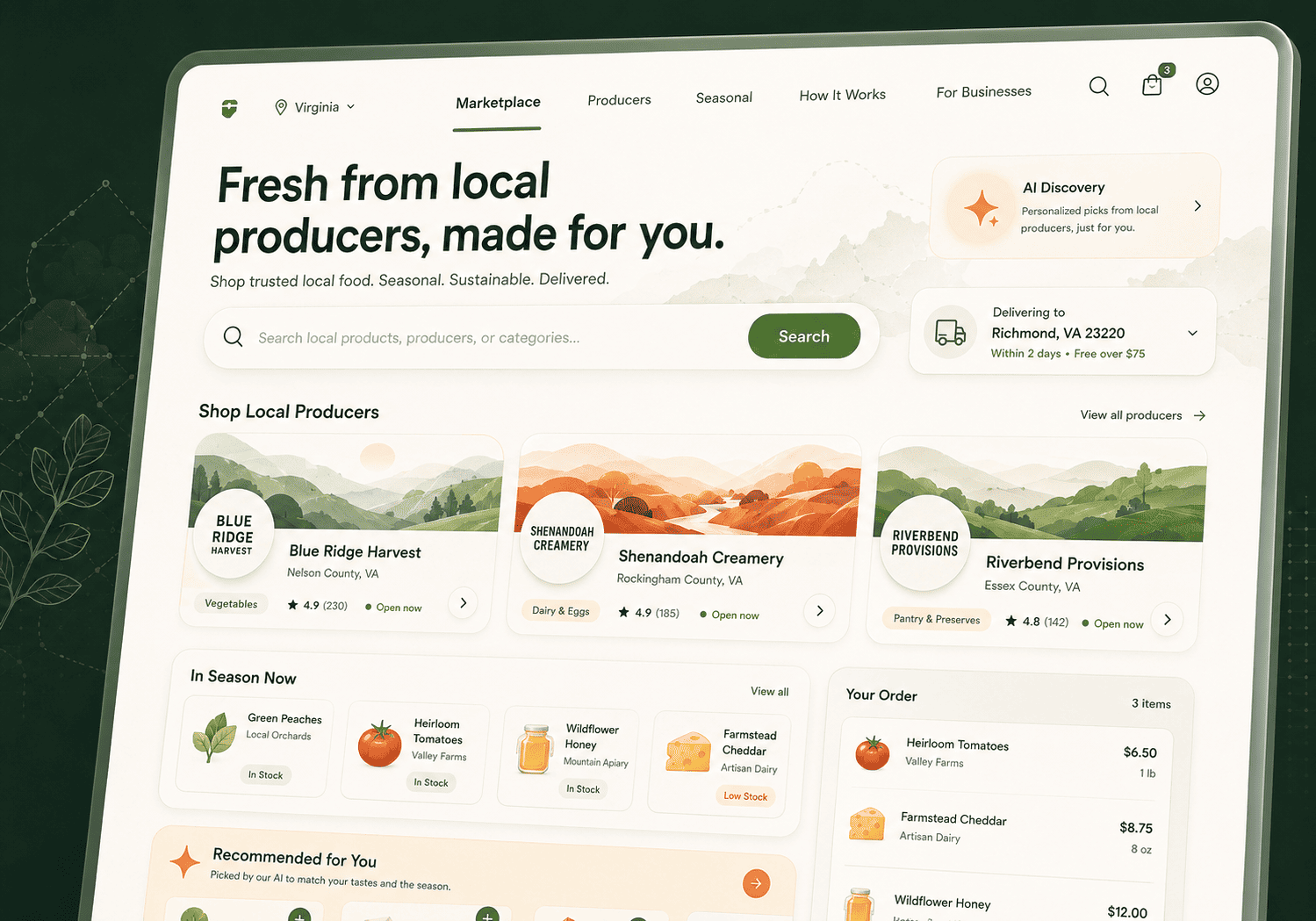
Digital Marketplace for Virginia Farmers, Local Producers & Direct-to-Consumer Food Sales

Plavno developed a custom multi-vendor marketplace for Virginia-based farmers, food producers, and regional sellers to unify product listings, vendor operations, customer ordering, and local fulfillment workflows.

Read More
3x

increase in product discovery relevance

Digital Marketplace for Virginia Farmers, Local Producers & Direct-to-Consumer Food Sales

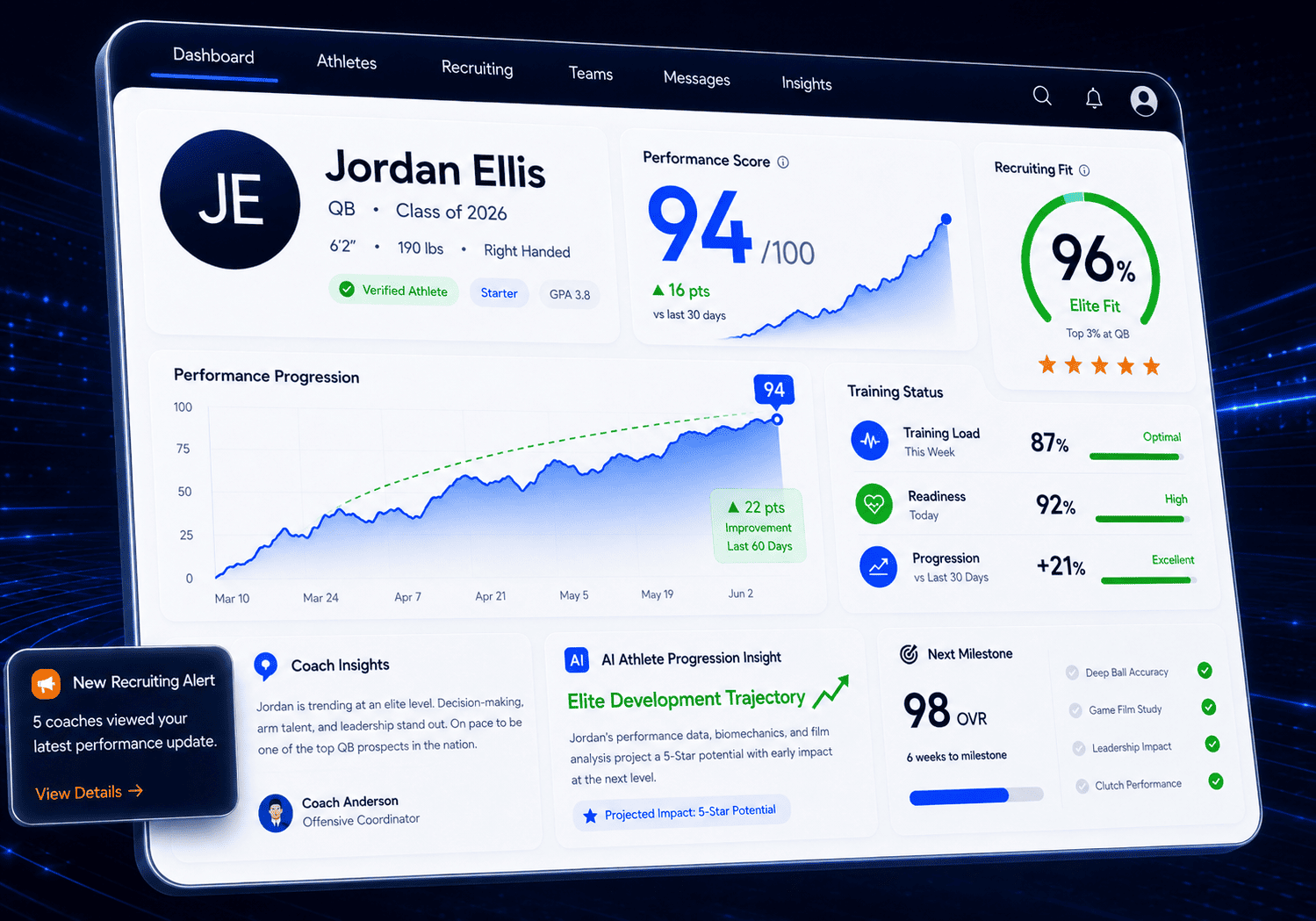
AI-Powered Sports Performance & Recruiting Platform for Virginia Clubs, Academies & Youth Programs

Plavno developed a custom sports technology platform for Virginia-based clubs and academies to combine athlete performance tracking, coach communication, recruiting workflows, and mobile engagement in one ecosystem.

Read More
3x

faster recruiting pipeline

AI-Powered Sports Performance & Recruiting Platform for Virginia Clubs, Academies & Youth Programs

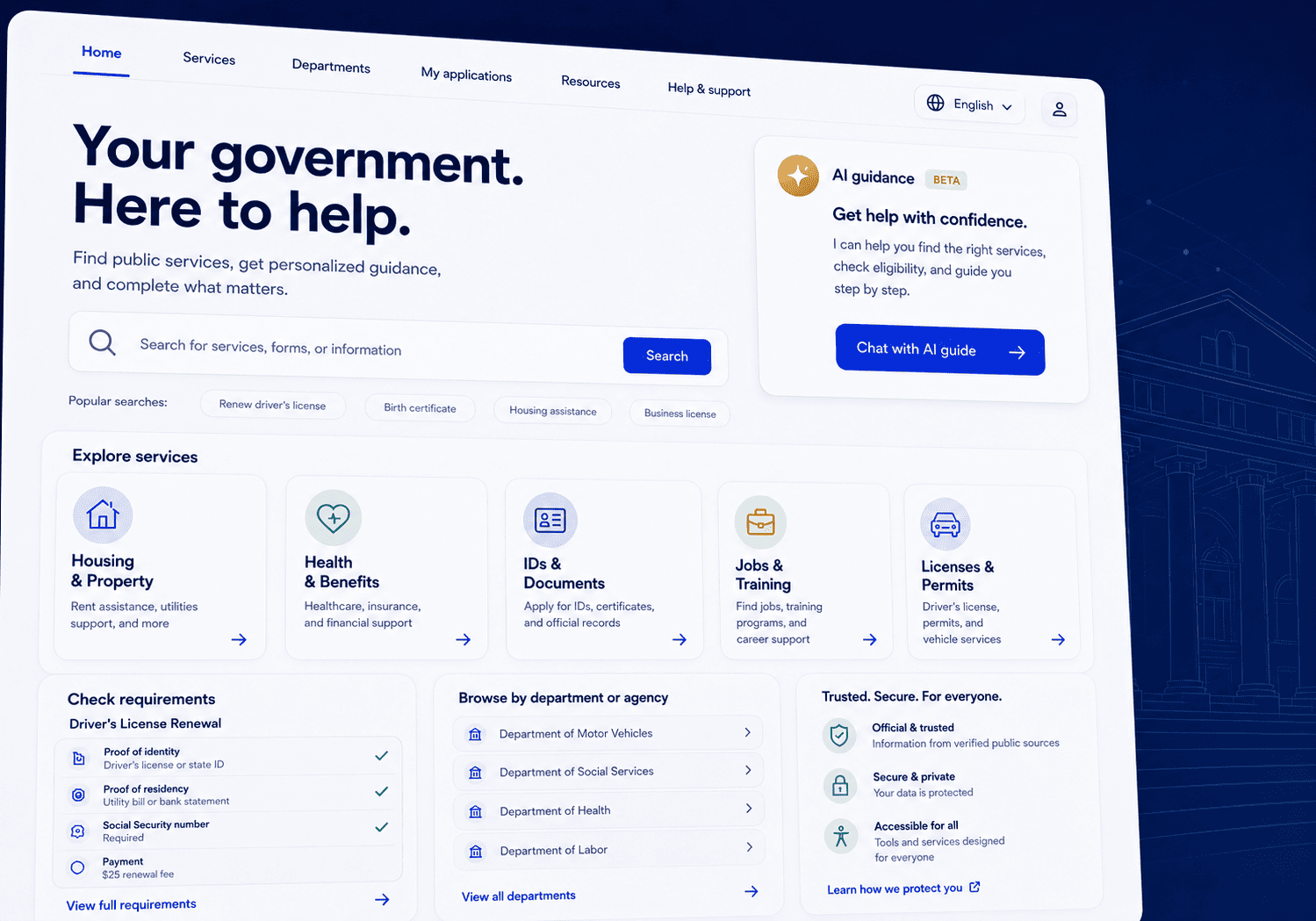
AI-Powered Citizen Services Website Platform for Virginia State Agencies

Plavno developed a modern eGovernment website platform for Virginia state agencies that centralizes citizen services, public information, department content, and an AI-powered guidance agent in one scalable system.

Read More
70%

reduction in routine citizen inquiries to agency staff

AI-Powered Citizen Services Website Platform for Virginia State Agencies

Testimonials

We are trusted by our customers

“They really understand what we need. They’re very professional.”

The 3D configurator has received positive feedback from customers. Moreover, it has generated 30% more business and increased leads significantly, giving the client confidence for the future. Overall, Plavno has led the project seamlessly. Customers can expect a responsible, well-organized partner.

Sergio Artimenia

Commercial Director, RNDpoint

Sergio Artimenia

“We appreciated the impactful contributions of Plavno.”

Plavno's efforts in addressing challenges and implementing effective solutions have played a crucial role in the success of T-Rize. The outcomes achieved have exceeded expectations, revolutionizing the investment sector and ensuring universal access to financial opportunities

Thien Duy Tran

Product Manager, T-Rize Group

Thien Duy Tran

“We are very satisfied with their excellent work”

Through the partnership with Plavno, we built a system used by more than 40 million connected channels. Throughout the engagement, the team was communicative and quick in responding to our concerns. Overall, we were highly satisfied with the results of collaboration.

Michael Bychenok

CEO, MediaCube

Michael Bychenok

“They have a clear understanding of what the end user needs.”

Plavno's codes and designs are user-friendly, and they complete all deliverables within the deadline. They are easy to work with and easily adapt to existing workflows, and the client values their professionalism and expertise. Overall, the team has delivered everything that was promised.

Helen Lonskaya

Head of Growth, Codabrasoft LLC

Helen Lonskaya

“The app was delivered on time without any serious issues.”

The MVP app developed by Plavno is excellent and has all the functionality required. Plavno has delivered on time and ensured a successful execution via regular updates and fast problem-solving. The client is so satisfied with Plavno's work that they'll work with them on developing the full app.

Mitya Smusin

Founder, 24hour.dev

Mitya Smusin

Delivery differences

Why Charlottesville buyers pick deep AI engineering

Generic shops ship chat prototypes. We ship controlled services with ownership, cost telemetry, and access design that survives real departments.

Generic Agencies
Our Platform (Deep Engineering Expertise)
Maps AI to one owned workflow with owners named
checkmark
Department-level access before model access
checkmark
Token and dollar telemetry per feature
checkmark
Slide deck demos without production runbooks
checkmark
Integration plan for existing content hubs
checkmark
Human review gates with measurable exit criteria
checkmark
One-size SaaS wrapper as the whole offer
checkmark

Architecture & Engineering Overview

How Charlottesville AI programs stay funded past pilot

One Metric Lane

One Metric Lane

Cycle time, rework rate & cost per task — baselines from real samples

Spend Caps

Hard Spend Caps

Token ceilings, shadow mode vs humans, kill switches without full outage

Prove Then Expand

Prove Then Expand

Four stable weeks on the first lane before multi-team rollouts

Honest Maintenance

Honest Maintenance

Monthly eval packs, versioned prompts, keep-or-cut with hours-saved data

For Business: Technical ROI & Risk Mitigation

Buyers fund AI when one metric moves enough to free capacity or protect revenue. We target cycle time, rework rate, and cost per completed task before any model brand is panted about. Baselines come from two weeks of ticket or document samples your team already produces. That stops vanity accuracy demos that never touch payroll. Risk lists cover wrong answers, data exposure, and silent cost spikes so leadership signs with eyes open.

ROI logic stays simple. If advisors spend twelve minutes hunting policy text, a retrieved answer with citations proves value when average handle time falls under tracked shifts. If finance clerks fix OCR mistakes twice, field validation savings show on close calendars. We refuse multipage feature lists that dilute one win. Expanding comes only after the first lane meets its threshold for four stable weeks.

Risk mitigation is budget protection. Hard caps on model spend stop runaway loops. Shadow mode compares AI suggestions to human outcomes before write access. Kill switches pull features without a full outage. Legal reviews samples of logged prompts when contracts demand it. These controls matter for Virginia operators who serve education and health partners with reputational exposure.

We also price maintenance honestly. Models drift when forms and policies change. Monthly evaluation packs with labeled failures keep quality visible. Versioned prompt and rule releases give change history auditors accept. Leaders compare support hours against hours saved and keep or cut features with data. That is how pilots become permanent line items instead of forgotten side projects.

Discovery Freeze

Discovery Freeze

Systems, identities & data risks scoped — no intelligence promised yet

Architecture Contracts

Architecture Contracts

Sync vs async paths, hybrid models, schema versions like public APIs

Eval Gates

Eval Promotion Gates

Red-team failure tests before production; feature flags per department

Living Ops

Living Post-Launch

Runbooks, cost anomaly alerts, quarterly prune — owners not hero scripts

For CTOs: Architecture & Technical Lifecycle

Lifecycle work starts with a narrow decision memo. The thesis is governed delivery: discovery freezes scope, architecture freezes contracts, then evaluation freezes promotion rules. Kickoff inventories systems, identities, and data quality risks without promising intelligence yet. Architecture reviews choose sync versus async paths based on user wait tolerance. Governance boards approve production only after red-team style failure tests pass.

Trade-offs stay explicit. Managed model APIs cut time but raise unit cost and data residency questions. Self-hosted options reverse that math and demand GPU ops skill. Hybrid designs place classification on smaller local models and reserve heavy generation for gated calls. Charlottesville stacks often lean hybrid because campus and clinic networks already care about data placement.

Integration is the longest path. We bind services to existing auth providers rather than inventing new user stores. Idempotent writes prevent double ticket creation when retries fire. Schema contracts version like public APIs even for internal consumers. Feature flags let one department roll first while others keep legacy flow. That reduces blast radius during busy academic or clinical periods.

Post-launch haze is planned as first-class work. On-call rotas, runbooks, and cost anomaly alerts sit beside uptime graphs. Quarterly architecture reviews prune unused tools that inflate spend. Tech debt tickets capture prompt libraries turning into spaghetti. CTOs get a living system with owners, not a hero script on one laptop.

Python ML & ETL

Python ML & ETL

Normalize docs before models; mature eval ecosystem & fixtures in CI

Typed Orchestration

Typed Orchestration

Schema-fail-loud APIs beat clever end-to-end prompts at 2 a.m.

Next.js & CMS UIs

Next.js & CMS UIs

Payload-class knowledge libraries staff edit; fast internal human gates

Queues & Caching

Queues & Caching

Retries off UI thread, chunk cache for FAQs, circuit breakers on budgets

For Engineers: Implementation Details & Stack

Implementation favors boring, testable pieces. Typed service boundaries and deterministic transforms beat clever end-to-end prompts for systems people must debug at 2 a.m. Ingest jobs normalize documents into structured records before any model sees them. Evaluation harnesses dump outputs into tables reviewers score. Continuous frozen fixtures prevent silent quality drops after dependency updates.

Stack choices carry plain reasons. Python for ML and ETL because the ecosystem for evaluation is mature. Type-safe APIs for orchestration so multi-service flows fail loudly at compile or schema validation time. Next.js style front ends when human editors need fast internal UIs over approved content. Payload-class CMS patterns suit policy and knowledge libraries staff already edit. Queues absorb retries without blocking the UI thread staff watch.

Edge cases dominate real life. Empty OCR text, bilingual forms, and half-scanned pages all need fallbacks. We store raw artifacts for replay when a model vendor changes behavior. Circuit breakers open when latency or error budgets break. Prompt templates never embed secrets; secrets live in vaults injected at runtime. Golden set regressions run in CI before deploys leave staging.

Optimization is measured, not mystique. Caching retrieval chunks for repeated queries drops cost on FAQs. Speculative small-model filters skip expensive calls on obvious spam. Batch windows overnight big reprocess jobs when UIs do not wait. Engineers leave with dashboards covering p50 and p95 latency, cost, and reject reasons. That data drives the next sprint instead of trial and error guesswork.

Clear Tenancy

Clear Tenancy

Client-approved regions, private network paths, IaC rebuildable envs

Four-Plane Observability

Four-Plane Ops

Traces, latency/token metrics, safe logs, weekly quality samples

US Framework Security

US Framework Security

SOC 2 minded controls, HIPAA isolation paths, department rights on AI

Continuous Cost Control

Continuous Cost Control

Budget alerts, archive unused indices, pinned models, spend runbooks

Infrastructure, Observability & Security

Infrastructure for US clients prefers clear tenancy and logs that make sense to auditors. We monitor answer quality, privacy boundaries, and spend with equal priority to classic uptime. Deployments sit in regions clients approve. Network paths default to private when internal data moves. Secrets rotate on schedules security teams already use. Infrastructure as code keeps environments rebuildable after incidents.

Observability covers four planes. Traces map a request from UI click through retrieval and model call. Metrics track latency, token usage, and human override rates. Structured logs hold correlation IDs without storing raw regulated content unless contracts allow short windows. Evaluations sample live traffic against quality rubrics weekly. Incident response pairs engineering with a business owner who can freeze a feature fast.

Security aligns to common US frameworks your buyers already ask about. SOC 2 minded controls cover access reviews, change management, and vendor lists. HIPAA-sensitive paths add stricter isolation, BAA review gates, and minimized training data handling. Encryption, least privilege IAM, and MFA on admin surfaces are defaults. Department-level rights learned from portal work with Payload CMS and Next.js keep AI readers no wider than human ones.

Post-launch cost control is continuous. Budget alerts page owners before invoices surprise them. Unused embeddings indices get flagged for archive. Model version pins prevent surprise behavior on vendor mega-releases. Runbooks list who approves emergency spend increases. Virginia teams keep AI useful without turning finance into a fire brigade.

Data paths that keep AI honest

Integrations that stop hallway data handoffs

Custom AI fails when sources contradict each other or land outside audit reach. Charlottesville groups often mix campus identity, clinic systems, and vendor portals. We start with a data map that names owners, freshness, and allowed consumers. Only then do models get a path. The build focuses on contracts, cleansing, and lineage rather than another dashboard mirage.

Integration work prefers adapters over rewrite projects. APIs, SFTP drops, and event hooks open paths without freezing core systems for months. Idempotent loaders prevent double inserts when partners retry. Field-level validation rejects records that lack the minimum keys models need for sense. Dead-letter queues hold messes humans must fix. That keeps generative features from inventing values just to fill blanks.

Quality scoring is continuous. Completeness and stall age metrics mark sources that should pause automation. We surface those scores to ops, not only data engineers. When a vendor changes export columns mid-season, alerts fire before accuracy collapses. Schema version locks explain which model prompts still match which fields. Teams stop debating ghosts and start reopening clean feeds.

We reuse access patterns proven on multi-department portals. The SharePoint-to-modern hub migration with Payload CMS and Next.js showed how role-based content is captured, reviewed, and searched under department rights. AI retrieval layers mesh with those rights instead of bypassing them through superuser keys. Content that humans cannot open stays closed to models. That single rule prevents most tragic demos in regulated settings.

Security/compliance reporting ships with the data plane. Lineage diagrams show which store fed which output for a date range. Retention policies drop transient chunks on schedule. Masking patterns hide direct identifiers when evaluation sets leave production walls. Virginia clients keep board questions short because evidence already sits in exportable reports. Integration becomes the backbone that lets AI remain narrow, cheap, and trusted.

Eugene Katovich

Eugene Katovich

Sales Manager

Need a custom software solution? We’re ready to help!

Plavno has a team of skilled developers ready to tackle the project. Ask me!

Get a Free Quote

Before you fund the build

Readiness checks Charlottesville sponsors should finish first

  • Name the single workflow owner — Pick one process with a real budget holder and weekly volume you can count. Write the start trigger, end state, and who signs exceptions today. Capture average handle time across a calm week and a busy week for contrast. List systems touched even if painfully. Without this owner map, AI scope balloons into three projects. Sponsors who skip this step usually restart discovery after month two.

  • Inventory identity and permissions — Document how staff authenticate and how department rights apply on content today. Include contractor and student-worker cases if they appear. Note any shared generic logins that will block safe automation. AI services should inherit truth from identity tools you already run. Gaps here delay go-live more than model choice. Fixing logins early is cheaper than machine purge exercises later.

  • Grade data quality with samples — Pull two hundred real tickets, forms, or documents from last quarter. Score missing fields, conflicting values, and free-text chaos. Mark templates that change without notice. Models punish dirty inputs with expensive retries. A simple scoring sheet beats long strategy decks for budget talks. Use the sheet to decide cleanup tasks before coding predictions.

  • Set latency and cost ceilings — Decide the maximum wait a user accepts on the critical path. Cap monthly model spend for each feature before demos excite people. Document whether overnight batching is allowed for heavy work. Share numbers with finance so surprises do not kill trust. Engineering designs around ceilings rather than inventing them after launch. Clear fences calm every later change request.

  • Plan human review exits — Describe when staff must approve AI output and how they mark fixes. Define metrics that allow widening automation after stable weeks. Name who can freeze a feature if quality drops. Train reviewers the same way you train any high-risk clerk. Without exit criteria, pilots permanently tetherspecialists as eternal editors. Documented gates prove maturity to risk and audit partners.

Vitaly Kovalev

Vitaly Kovalev

Sales Manager

Request your Charlottesville AI readiness audit

Share budget, timeline, stack, and dataset scope for a focused readiness audit built for Charlottesville businesses. You receive a scored checklist, risk flags, and a first-lane estimate within one business day.

Talk to Experts

Practical answers

Custom AI Development questions from Virginia buyers

Straight replies on cost, timing, data, quality, security, and life after launch for Charlottesville teams planning 2026 work.

What drives cost for Custom AI Development in Charlottesville?

Cost follows workflow complexity, data readiness, integration count, and review rigor more than model brand names. A single-document triage truck with clean CSVs costs far less than multi-system decisioning across clinic and campus tools. Local market rates for senior engineers and compliance reviews also matter when healthcare or education data appears. You should budget discovery, build, evaluation, and three months of hypercare as separate lines.

Charlottesville projects often spend early dollars on permissions and content cleanup because shared drives and stale SharePoint libraries still rule. That work is not glamorous funding-wise, yet it decides whether inference is cheap or thrashing. Integration adapters add cost when APIs are partial or file-based. Human review UIs add front-end scope that pure backend confuses underprice. Vendors who hide those pieces later invent change orders.

Usage pricing sits on top of build fees. Token volume, embedding storage, and observability tooling create monthly run rates that finance must approve. We model cost per completed task against your baseline labor minutes so unit economics stay honest. Caps and caches keep first seasons predictable. Ask every bidder for a sample year-one cost sheet with low, mid, and high traffic cases.

Local comparisons help. Regional professional services wages make even mid automation pay when handle times fall by several minutes a ticket. Grant-funded groups should confirm allowable tech spend categories before signing. Failing that step stalls procurement midstream. Transparent drivers beat vague package tiers every time.

How long does it take to build Custom AI Development software?

Meaningful timelines split into MVP and production-hardened lanes. A narrow MVP that assists one team on one document type often lands in eight to twelve weeks after discovery when data is available. That clock assumes clean access to sample sets and a sponsor who answers daily. Delays almost always come from security reviews or missing owners, not coding speed.

Full deployment across departments with audit trails, monitoring, and training usually needs four to six months. Parallel work tracks cover integration, evaluation sets, and change management. Campus calendars and clinical blackout weeks can pause releases. We plan those freezes early so artificial urgency does not ruin quality. Staging sign-off includes lived weeks of shadow mode for riskier write actions.

MVP goals stay ruthless. If the goal is proposal drafting assistance, we ship retrieval plus outline generation with partner edits before any CRM write. If the goal is invoice fields, we ship extraction with clerk confirmation before auto-posting. Measuring success on a single metric keeps the first release honest. Expansion becomes a second funded slice with learned metrics.

Staffing also shapes calendars. Shared product, data, and security roles inside your company must reserve hours. Without them, vendors idle waiting on credentials. We publish a RACI on week one so generations of ping-pong end. Clear calendars protect both cost and trust for Virginia teams juggling real workloads.

What data do you need before starting a Charlottesville AI project?

Start with raw examples of the work product, not polished summaries. Tickets, forms, emails with PII redacted when needed, policy PDFs, and outcome labels matter most. Two to four weeks of representative volume beats a perfect but tiny set. Include ugly edge cases. Models learn what you feed them.

System access lists come next. Name source systems, export methods, auth owners, and refresh cadence. Note whether test environments contain realistic data. Fake data trains pretty demos that collapse in production. Identity providers must open developer sandboxes early to avoid final-week surprises.

Quality annotation plans decide speed. Someone must mark correct classifications or good answers for an evaluation set. That someone is usually an internal SME, not the vendor alone. Budget hours for them. Document rubrics in plain language so new reviewers stay consistent. Without labels, you cannot prove progress past anecdotes.

Legal packets should ride along. Data processing terms, retention needs, and any research or clinical constraints must surface before ingestion. Ferguson Valley and UVA-adjacent partnerships often introduce extra review layers. Early paper avoids halted sprints. Complete data readiness is the difference between a planned build and an open-ended science experiment.

How should we evaluate quality for an AI software solution?

Evaluate against business tasks, not abstract chat beauty. Define acceptance as fewer minutes to complete a case with equal or better accuracy versus humans on the same sample. Track false accept and false reject rates separately because they hurt differently. Build a gold set from historical cases with known outcomes. Score weekly the first quarter.

Human reviewers remain the ground truth while risk is high. Capture their edits as structured signals, not freeform scolding. Those edits retrain prompts, rules, or models with intent. Agreement metrics between AI and reviewers show readiness to widen automation. If agreement stalls, fix data or scope before rocking more models.

Operational metrics complete the picture. Measure p95 latency, abandonment, override rates, and cost per success. A model that is accurate yet slow may cost more than the labor it replaces. Charlottesville teams often care about seasonal peaks; test under peak-like load, not a quiet Tuesday. Publish scorecards in shared channels so no group invents private truth.

Avoid vanity claims like perfect uptime or bulk percent savings without baselines. Require every reported gain to state before numbers, after numbers, sample size, and dates. That discipline filters marketing noise. It also keeps renewals rational when leadership rotates.

How do you handle security and compliance for Virginia AI projects?

Security design begins with data classes and system boundaries. We classify content, map who may see it, and refuse model access broader than human roles. Encryption, private networking, and vaulted secrets are default. Logging avoids writing regulated raw fields unless contracts and retention periods demand otherwise. Access reviews keep contractor keys short-lived.

Compliance paths depend on domain. Healthcare-adjacent workflows invite HIPAA-minded controls, BAAs, and stricter environment splits. Education contexts care about student data rules and research agreements. Professional services may need client confidentiality clauses that ban third-country sub-processors. We align early so architecture does not paint you into a breach later.

Department-level permissions proved their worth on an internal employee portal migration to Payload CMS and Next.js with role-based access control. AI services mirror that posture. Retrieval indexes respect ACLs. Admin tools require MFA and change tickets. Evidence packs for audits include architecture diagrams, access logs samples, and incident runbooks.

Vendors and models themselves are reviewed. We document where inference runs and whether prompts may train external systems. Prefer private endpoints with contractual non-training clauses for sensitive work. Maurer security reviews stay on the calendar after launch, not only at kickoff. Continuous posture beats a one-time PDF checklist.

Contact Us

This is what will happen, after you submit form

Need a custom consultation? Ask me!

Plavno has a team of experts ready to start your project. Ask us!

Vitaly Kovalev

Vitaly Kovalev

Sales Manager

Schedule a call

Get in touch

Fill in your details below or find us using these contacts. Let us know how we can help.

No more than 3 files may be attached up to 3MB each.
Formats: doc, docx, pdf, ppt, pptx, xls, xlsx, txt.
Send request