bg image
bg image

Serving Arlington & Virginia

Cut manual review cycles for Arlington operators before 2026 budgets lock

Defense primes, federal integrators, and growth firms in Arlington lose weeks to brittle spreadsheets and inbox handoffs. Custom AI software turns those queues into governed workflows your teams already trust. You keep control of data, audit trails, and cost. We scope work against real constraints: clearances culture, vendor lock-in risk, and board timelines. Get Custom AI Development cost estimate in 24 hours. Bring budget range, stack notes, and the dataset or process you want improved first.

Discuss Project

Overview

Why Arlington buys custom AI in 2026

Arlington sits next to the Pentagon, Crystal City, and Ballston. That density means more security reviews, more partner portals, and more ops work than a typical metro. Local teams need custom AI solutions arlington leaders can defend in a program review, not toy demos. Manual triage still eats analyst time across capture, HR, finance, and field support. We work with US-based clients, including companies operating in Virginia.

Trusted Custom AI Development Partner for Arlington Businesses. We focus on systems that read your documents, score risk, and route decisions with humans still in control. Proof starts with platforms people actually use. One US delivery migrated an employee portal from SharePoint to a modern internal content hub using Payload CMS, Next.js, and department-level permissions. That same discipline applies when AI sits behind role gates and audit logs.

You get engineers who treat models as a feature, not the product. Integration debt, latency budgets, and data quality decide whether pilots survive first contact with operations. Our custom development practice ties model work to APIs, identity, and release gates your security team already knows. Nearby teams in Rosslyn, Pentagon City, Alexandria, and Falls Church face the same clearance-aware realities.

Outcomes matter more than model brand names. Faster intake. Fewer handoff errors. Lower cost per completed case. We keep scope tight, measure baselines, and publish dashboards leadership can read without a data science glossary. 10+ Custom AI Development projects delivered in US market inform how we staff discovery and how we refuse the wrong first use case.

If you run a Virginia defense contractor or a services firm feeding federal programs, you already feel the pressure to show AI progress without creating shadow IT. This page walks the full arc: what we build, how we stage delivery, where risks hide, and what you need ready before kickoff.

Talk to an Expert
Document intake

Document intake systems

Read RFPs, resumés, and case packets with provenance to page and paragraph

Risk scoring

Risk scoring & routing

Score risk and route decisions while humans retain final control

Identity gates

Identity & audit gates

SSO, role claims, köns logs — models sit behind gates security already knows

Operable outcomes

Operable outcomes

Faster intake, fewer handoff errors, lower cost per case — dashboards leaders can read

plavno logo

Build your first
Smart AI project today!

Just tell the Plavno AI Agent about your project - it will ask questions, gather requirements, and propose a tailored solution

Core stack choices

Ship model systems Arlington teams can operate

Arlington buyers do not need another chatbot slide. They need a maintained service: intake, inference, human review, and write-back to source systems. We design that loop first. Then we pick models, runtimes, and storage that fit your residency, cost, and latency rules. The product is the workflow under load, not a notebook that works on demo day.

Core architecture is intentionally boring where it must be. APIs front the model tier so other apps stay stable when you swap models. Feature stores and document indexes hold structured and unstructured facts with version tags. Orchestration jobs retry on transient failure and dead-letter bad payloads instead of silent drop. We prefer Python services for model glue because hiring velocity and library depth stay high in the US market. When UI speed matters for internal staff, we use modern web stacks proven on real portals. Our employee portal work with Payload CMS and Next.js showed how role-based access control and department-level permissions keep sensitive content in the right hands. AI features inherit those same gates.

Identity is not an afterthought. We map model actions to the same SSO and group claims your IdP already issues. That reduces shadow accounts and simplifies audits. For defense-adjacent work, we separate training data, evaluation sets, and production prompts with different keys and paths. Secrets stay in managed vaults. No long-lived keys in containers. Security/compliance review happens during design, not after staging.

DevOps is part of the build. Every model artifact gets a version, an owner, and a rollback path. Canary traffic checks latency and error rate before full cutover. Observability tracks token spend, queue depth, and human override rate as first-class metrics. When outputs drift, alerts hit the same channels ops already uses. Cost controls include per-tenant quotas and kill switches. You should never discover a spike only on the cloud invoice.

We ground choices in systems already shipping for US clients. Content hubs with department permissions prove we can constrain who sees what. Custom AI layers on that foundation: retrieval limited by role, generation logged with source citations, and export paths that respect policy. If a generic platform fights your identity model, we build the thin service that fits. That is the architecture Arlington program owners can take into 2026 reviews without hand-waving.

Delivery path

From first workshop to live AI traffic in Arlington

A fixed sequence keeps sponsors aligned and cuts the risk of endless pilot loops across Virginia programs.

Clipboard
Team
01

Step 1: Outcome framing (1–2 weeks)

We map the painful process end to end with the people who live it. Baseline cycle time, error rate, and handoff count come from real tickets, not guesses. You leave with a one-page use case, success metrics, and data access list. Legal and security join early so surprises die fast. Timeline sits inside two weeks to protect momentum.

02

Step 2: Data and interface audit (1–2 weeks)

Engineers inventory sources, schemas, PII fields, and rate limits. Sample quality checks expose missing labels and stale exports. We define the API and UI surface staff will actually touch. A thin spike validates that retrieval or classification hits the accuracy bar you set. Deliverable is a risk register with owners and dates.

Search in doc
Rocket
03

Step 3: Thin vertical slice (2–4 weeks)

We ship one happy path in a staging tenant with real permissions. Model, retrieval, review UI, and write-back all work together. Reviewers score outputs against the baseline cases. Cost per run appears on a simple dashboard. You decide go or no-go with evidence, not vague excitement.

04

Step 4: Harden and launch (2–4 weeks)

Production adds auth hardening, rate limits, backups, and runbooks. Training for operators covers overrides and escalation. Monitoring watches latency, spend, and override spikes from day one. Release notes list what changed for auditors. Support windows match your US business hours and Virginia time zones.

What you can field

Five deliverables Arlington sponsors can fund this year

Document intake with human overrides

Document intake with human overrides

Capture and proposal teams in Arlington still burn hours parsing RFPs and resumés by hand. Classification, extraction, and routing cut the queue while reviewers keep final say. We store provenance so every field traces to a page or paragraph. Python services handle parsing. Object storage holds originals for audit. You measure hours saved per packet, not vanity accuracy scores alone.

Role-aware knowledge assistants

Role-aware knowledge assistants

Staff waste time hunting policies across SharePoint sprawl and chat threads. A gated assistant answers from approved corpora only. Department-level permissions mirror how we structured a modern employee portal migration with Payload CMS and Next.js. Retrieval refuses content outside the caller group. Logs capture every answer and source for later review. Training load drops because answers live where work already happens.

Ops copilots for ticket queues

Ops copilots for ticket queues

Service desks drown when volume spikes after a release or incident. Ranking, summary, and suggested next actions shrink first response time. Integration uses your existing ticketing API so agents stay in one console. Models stay swappable behind that interface. Supervisors see override rates and can ban bad suggestions fast. Cost visibility keeps experiments from bloating idle spend.

Forecast and anomaly services

Forecast and anomaly services

Finance and logistics leaders need early warnings, not month-end surprises. Time-series models flag outliers on spend, utilization, or supply signals. Results post to dashboards executives already open. Jobs rerun on schedule with fresh extracts. We document data lag so nobody mistakes delay for insight. Decision cadence improves because signals arrive before the weekly staff meeting.

Secure evaluation harnesses

Secure evaluation harnesses

Without graded cases, nobody knows if a model change helped. We build versioned evaluation sets from your labeled history. Each release scores against that bank before traffic rises. Reports show regression hot spots by document type or cohort. Engineers fix the weak slice instead of meaning. Sponsors finally own a definition of done beyond a demo smile.

Custom AI Development Solutions for Arlington Industries

Local industries where custom AI pays first

Northern Virginia work concentrates in federal, defense, professional services, healthcare adjuncts, and cyber. Use cases below map to that mix.

Proposal Factories

Proposal Factories

Defense bids

Defense contractor proposal factories

Primes near Crystal City and Rosslyn fight deadline crush on volume bids. Draft assembly and compliance checks compress the final stretch when people already work nights. A custom pipeline extracts requirements, maps them to past write-ups, and flags gaps for capture leads. Humans still own narrative and priced strategy. ROI target is a measurable cut in overnight editing hours on recurring proposal types. Technically, document parsers feed a retrieval index constrained by program ACL, then a generation step that only cites allowed prior art.

Federal Support

Federal Support

Case summaries

Federal program support shops

Support contractors handling case logs and status packs drown in narrative reporting. Automatic summaries and diary notes free analysts for exception work that needs judgment. Outputs post back into the case system via existing APIs so tools stay familiar. Supervisors spot stalled cases earlier. Business result is shorter average handle time on high-volume RQ types without new headcount. Stack uses queue workers, structured prompts, and strict PII redaction before any model sees raw text.

Cyber Triage

Cyber Triage

Alert enrichment

Cybersecurity MSSP content and triage

Threat teams in Ballston and Tysons lose minutes when alerts lack context. Enrichment models attach asset owners, prior tickets, and known false-positive patterns. Analysts get a ranked queue instead of a firehose. False starts drop because noise clusters group together. ROI shows as fewer duplicate investigations per shift. Implementation prefers lightweight classifiers first, then RAG over approved playbooks, with every action logged for client SOC reporting.

Knowledge Reuse

Knowledge Reuse

Consulting firms

Professional services knowledge reuse

Consulting firms feeding the federal belt recreate decks and methods every engagement. A firm-specific assistant surfaces past deliverables by industry tag and clearance boundary. Partners spend less time hunting and more time selling. Junior staff ramp faster with grounded examples. Target ROI is recovered billable hours previously lost to document search. Services apply embeddings over governed repositories plus filters enforcing department-level permissions similar to modern internal portals.

Healthcare Admin

Healthcare Admin

Claims routing

Healthcare adjoint and benefits admins

Regional admins process claims notes and member letters that repeat structure. Classification routes workitems and drafts routine outbound language for human approval. Error rates fall when checklists run before send. Members wait less for standard replies. Business case centers on lower cost per closed item during peak open-enrollment weeks. Design keeps PHI out of third-party training paths and keeps full transcripts for compliance export.

Base Logistics

Base Logistics

Facilities ops

Facilities and base-support logistics

Ops groups supporting campuses around Arlington deal with maintenance tickets and inventory lag. Forecasting worn assets and clustering similar tickets reduce emergency buys. Dispatchers plan crews with clearer demand signals. Stockouts drop on high-turn parts. ROI appears as fewer rush orders and more planned work packages. Models train on internal work-order history; APIs write suggestions into the CMMS without replacing it.

Case Study

We help customers cut
down on development

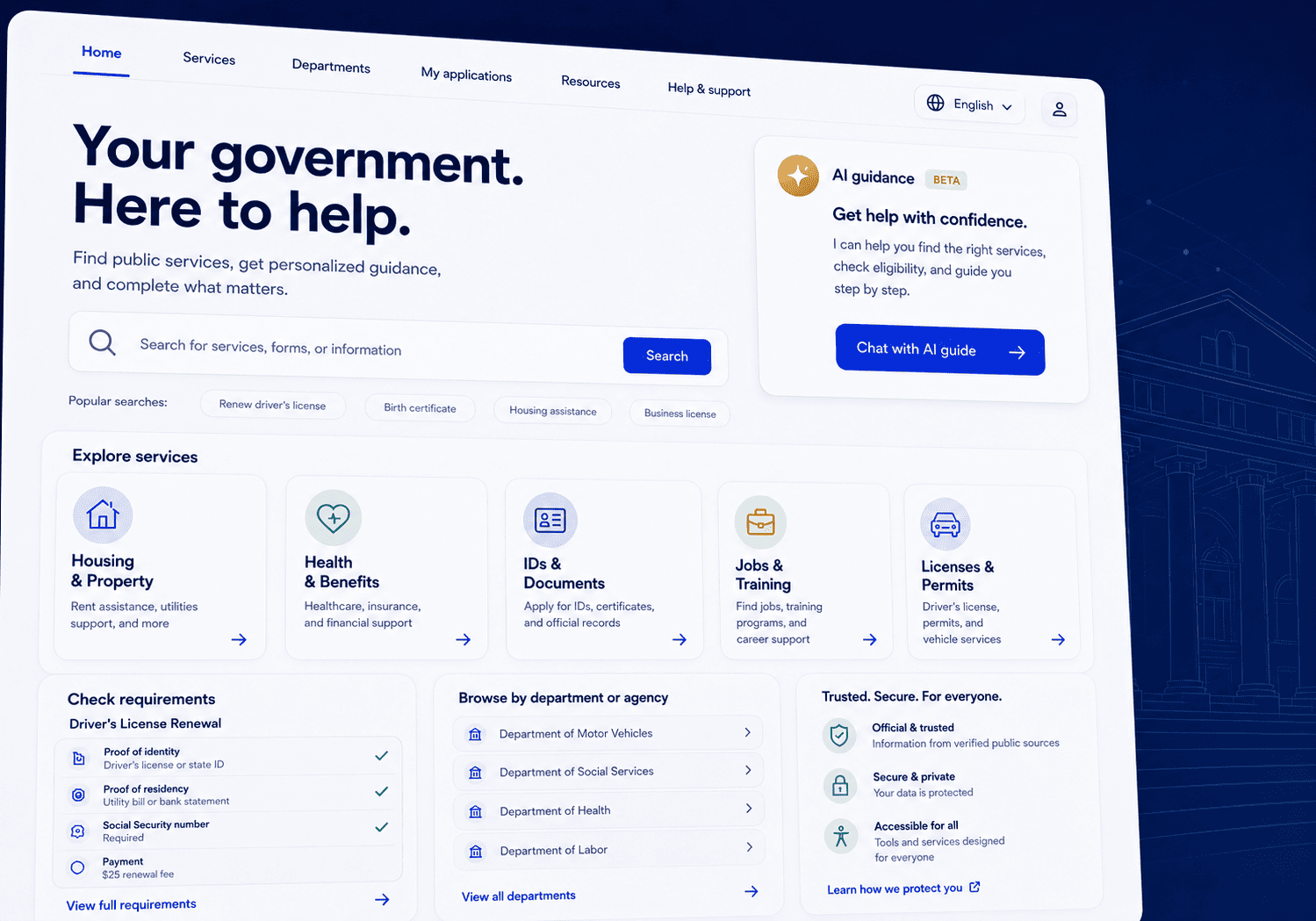
AI-Powered Citizen Services Website Platform for Virginia State Agencies

Plavno developed a modern eGovernment website platform for Virginia state agencies that centralizes citizen services, public information, department content, and an AI-powered guidance agent in one scalable system.

Read More
70%

reduction in routine citizen inquiries to agency staff

AI-Powered Citizen Services Website Platform for Virginia State Agencies

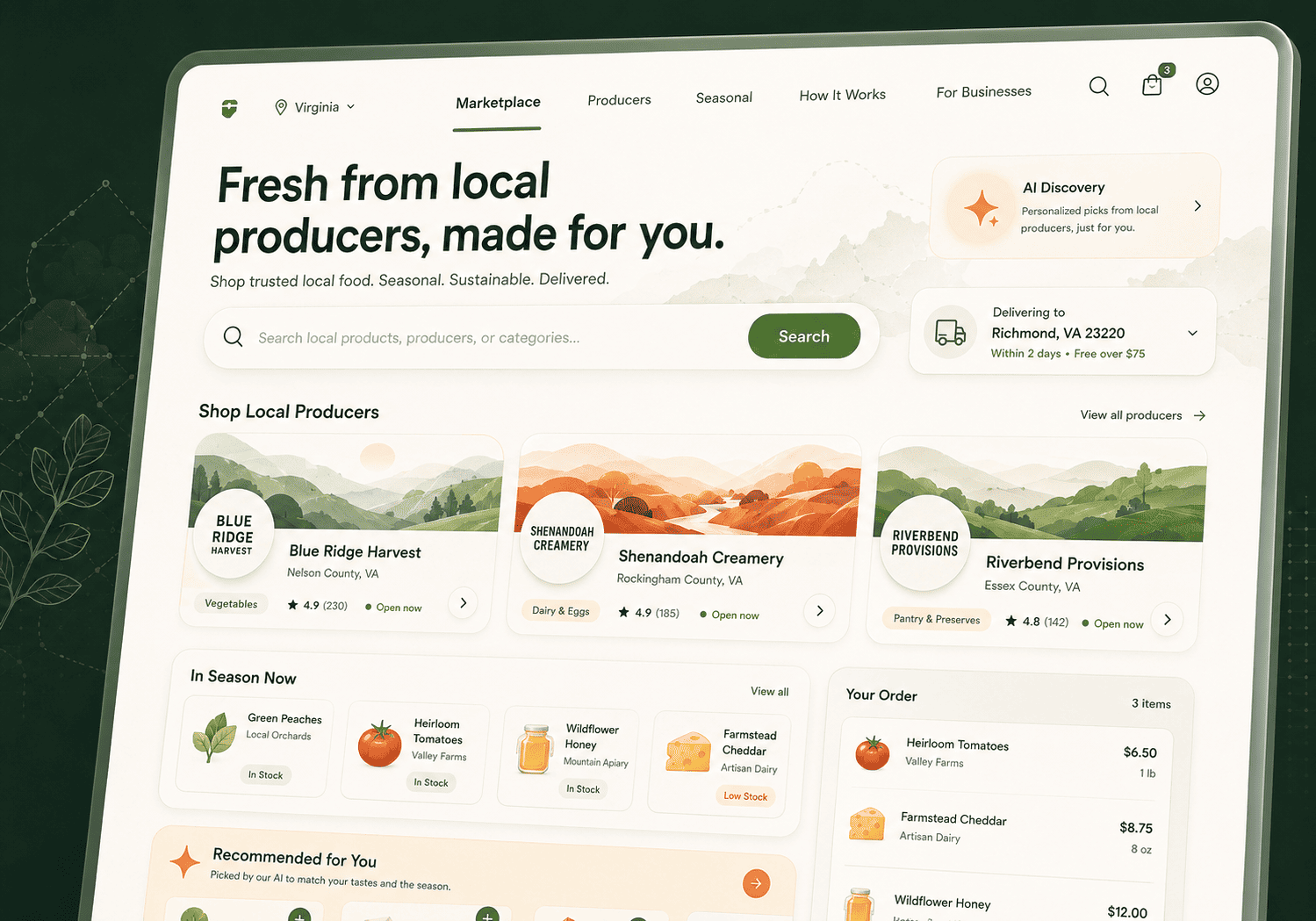
Digital Marketplace for Virginia Farmers, Local Producers & Direct-to-Consumer Food Sales

Plavno developed a custom multi-vendor marketplace for Virginia-based farmers, food producers, and regional sellers to unify product listings, vendor operations, customer ordering, and local fulfillment workflows.

Read More
3x

increase in product discovery relevance

Digital Marketplace for Virginia Farmers, Local Producers & Direct-to-Consumer Food Sales

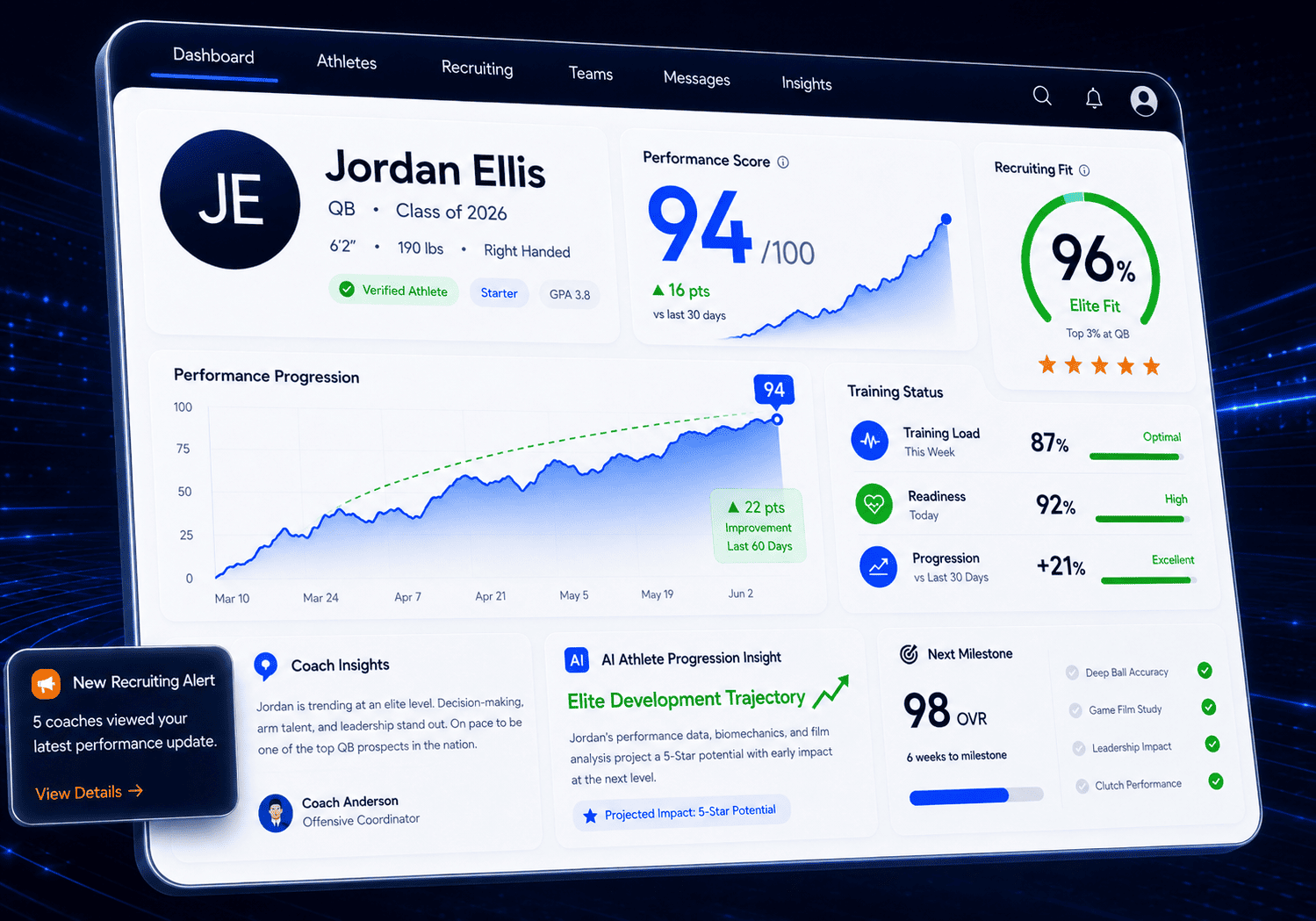
AI-Powered Sports Performance & Recruiting Platform for Virginia Clubs, Academies & Youth Programs

Plavno developed a custom sports technology platform for Virginia-based clubs and academies to combine athlete performance tracking, coach communication, recruiting workflows, and mobile engagement in one ecosystem.

Read More
3x

faster recruiting pipeline

AI-Powered Sports Performance & Recruiting Platform for Virginia Clubs, Academies & Youth Programs

Vendor contrast

Why Arlington teams pick deep engineering over slideware

Generic shops sell model brand names. We sell operable systems that live inside your identity, cost, and audit constraints.

Generic Agencies
Our Platform (Deep Engineering Expertise)
Production rollback for model and app releases
checkmark
Role and department gates on retrieval sources
checkmark
Token and job spend shown to business owners
checkmark
Evaluation set versioned with every change
checkmark
US-hour support with Virginia-friendly cadence
checkmark
checkmark
Glossy demo environment only
checkmark
Security review during design, not after
checkmark

Architecture & Engineering Overview

What Arlington sponsors, CTOs, and engineers must decide

Queue KPIs

Shrink the costly queue

Hold cycle time, rework rate, and overtime open through pilot and first quarter live

Shadow IT risk

Cut shadow-tool exposure

Logging, redaction, and access control keep client text out of public chat products

Cash impact

Hard pilot budget & kill

Weekly spend snapshots finance understands; incentives tied to business metrics

Override health

Override rate as signal

High override = bad data or wrong target; low override + complaints = silent errors

Cycle time / rework focusPrimary
Permissions before featuresGate-first
Vanity accuracy aloneAvoid

For Business: Technical ROI & Risk Mitigation

Sponsors care about schedules, liability, and money, not layer diagrams. Custom AI pays when it shrinks a costly queue you already measure. Start with cycle time, rework rate, and overtime on the target process. Hold those same KPIs open through pilot and first quarter live. If the numbers do not move, stop or redefine scope. Vanity accuracy without load is a budget trap.

Risk does not vanish because the vendor has a nice logo. Shadow tools appear when staff paste client text into public chat products. A custom path with logging, redaction, and access control reduces that exposure. You keep the intellectual property of prompts and evaluation data. Exit costs stay lower when models hide behind your APIs rather than a locked portal.

Cash impact shows in fewer contractor hours, less overnight rework, and faster proposal turns. Set a hard pilot budget and a kill criterion before kickoff. Require weekly spend and quality snapshots in language finance understands. Tie incentives to business metrics, not model leaderboard scores. That discipline protects 2026 portfolios from endless experiments.

We apply the same product discipline used when migrating an employee portal from SharePoint to a modern hub. Permissions and workflow came first because broken access sinks trust faster than missing features. AI projects fail for the same reason when outputs leak across departments. Build gates early. Publish who can see what. Then unlock model capability inside those rails.

Decision quality improves when leaders see override rate as a health signal. High override means either bad data or a wrong process target. Low override with rising complaints means silent wrong answers. Watch both. Fund the fix that moves the real pain, not the flashier model upgrade.

Replaceable model behind owned contracts

Service boundaries

Service boundaries first

Ingest → feature → inference → review → write-back — each with owners, SLAs, interfaces

Governance checkpoints

Governance checkpoints

Data access approval, evaluation sign-off, canary release, quarterly model review

Hosting tradeoffs

Hybrid hosting for VA work

Hosted APIs for speed; VPC/on-prem weights for sensitive corpora — pick per use case

Funding gates

Staged funding gates

Discovery → vertical slice → scale-out with diagrams, threat notes, cost models, runbooks

For CTOs: Architecture & Technical Lifecycle

CTOs need a lifecycle that survives staff changes and vendor churn. Treat the model as a replaceable worker behind contracts you own. Define service boundaries first: ingest, feature, inference, review, and write-back. Each boundary gets owners, SLAs, and interfaces. Swap internals without rewriting every caller. That structure is how you avoid five-year lock to one foundation model.

Governance checkpoints sit at data access approval, evaluation sign-off, canary release, and quarterly model review. Skip any one and you inherit silent drift. Document decision rights among product, security, and ops. Deadlocks kill more AI programs than weak algorithms. Put conflict paths in writing during kickoff, not after a bad night in production.

Trade-offs are explicit. Hosted APIs move faster but export less control. Self-hosted open weights raise ops load but settle residency fears. Hybrid often wins for Virginia federal-adjacent work: closed proprietary models for generic language, on-prem or VPC weights for sensitive corpora. Pick per use case, not by fashion.

Technical debt hides in prompt sprawl and one-off notebooks. Promote prompts to versioned artifacts. Gate merges with evaluation scores. Force feature flags on new behaviors so rollback is boring. These practices mirror standard app delivery. AI is software. If your SDLC ignores it, production will remind you.

From kickoff to steady state expect staged funding gates. Discovery proves feasibility. Vertical slice proves value. Scale-out proves ops readiness. Each gate publishes artifact lists: diagrams, threat notes, cost models, runbooks. Unclear artifacts mean unclear ownership. Fix that before more code lands.

Python services

Python service core

Typed contracts for training, evaluation, inference helpers — queues isolate spikes

Next.js + Payload

Next.js + Payload CMS

Review UIs inherit department-level RBAC — same permission model as source content

Retrieval design

Hybrid retrieval

Chunking, embeddings, keyword+dense mix, stale-vector invalidation, citations

Observability

Trace-first ops

Latency histograms, token counts, cache hits, prompt version traces, peak-hour load tests

For Engineers: Implementation Details & Stack

Engineers implement the boring glue that makes models usable. Prefer clear services and typed contracts over mega notebooks. Python remains the practical core for training scripts, evaluation, and inference helpers because libraries and hiring markets align. Queue systems isolate spikes so interactive apps stay responsive. Object storage plus a metadata store tracks dataset lineage without magic.

For internal user surfaces we reach for proven web stacks. Next.js delivers fast internal UIs when staff need review workspaces. Payload CMS has already powered a scalable employee portal with department-level access control in our case work. Layering AI features each content object means the same permission model travels with the answer and the source. Do not invent a second auth world for models.

Retrieval design matters more than the largest model tree. Chunking strategy, embedding choice, and refresh cadence decide whether answers stay current. We invalidate stale vectors when source documents change. Hybrid search mixes keyword filters for IDs and dense retrieval for prose. Citations ride along so reviewers can open the paragraph that justified the line.

Production edge cases dominate after week two. Extremely long PDFs, scanned images, mixed languages, and empty fields all break naive demos. Build explicit reject paths. Route low confidence to humans without drowning them. Cache repeated requests carefully with tenant keys so one customer never sees another answer. Exhaustive tests on redacted fixtures prevent leaks.

Observability hooks should expose latency histograms, token counts, cache hit rate, and tool-call failures. Engineers debug with traces that show which retriever and prompt version fired. Without that, every outage becomes a guess. Include load tests that mimic Virginia office hour peaks, not just synthetic idle traffic.

Residency

VPC & US residency

Deploy in approved regions; separate accounts by env; least-privilege roles

Compliance

Compliance-mapped controls

HIPAA adjunct, SOC 2 evidence, data marking — control maps before first audit

Security tests

Adversarial test suite

Prompt injection, evil docs, sibling-dept RAG pulls → automated regressions

Service

p95 + errors

Model

Eval drift

Business

Override rate

Cost

Spend / tenant

Infrastructure, Observability & Security

Infrastructure choices answer residency, blast radius, and who wakes up at 2 AM. Monitor cost, quality, and access with the same urgency as uptime. Deploy into your VPC or approved US regions. Separate accounts or projects by environment. Least-privilege roles bar training jobs from production secrets. Backup prompts, indexes, and configs as code so recovery is a procedure, not heroics.

Compliance scope depends on the domain. Healthcare adjunct flows may need HIPAA controls. Many federal contractors require SOC 2 evidence and tight logging. Defense-adjacent programs add data marking and export rules. We craft control maps early, then design collection to feed them. Do not bolt logging on after the first client audit.

What we monitor is intentional. Service health covers error rates and p95 latency. Model health covers eval score drift and unusual output length. Business health covers override rate and backlog age. Cost health covers spend versus budget per tenant. Alerts page people when thresholds break for a defined window, not for single blips that self-heal.

Incident response has named owners and chat channels. Severity guides whether you freeze traffic, roll back a model, or open a dirty-data ticket. Post-incidents capture what signals failed and which dashboards get a new panel. Tabletop once a quarter so muscle memory exists before a live event. US clients get documentation suitable for their own customer audits.

Security tests include prompt injection cases, evil document traps, and overly broad RAG filters. Red teams attempt to pull sibling department content. Failures become automated regression tests. Network policies block unexpected egress. Secrets rotate on a calendar, not after a leak. That posture is how Custom AI Development stays trusted across Arlington government contractor floors.

Testimonials

We are trusted by our customers

“They really understand what we need. They’re very professional.”

The 3D configurator has received positive feedback from customers. Moreover, it has generated 30% more business and increased leads significantly, giving the client confidence for the future. Overall, Plavno has led the project seamlessly. Customers can expect a responsible, well-organized partner.

Sergio Artimenia

Commercial Director, RNDpoint

Sergio Artimenia

“We appreciated the impactful contributions of Plavno.”

Plavno's efforts in addressing challenges and implementing effective solutions have played a crucial role in the success of T-Rize. The outcomes achieved have exceeded expectations, revolutionizing the investment sector and ensuring universal access to financial opportunities

Thien Duy Tran

Product Manager, T-Rize Group

Thien Duy Tran

“We are very satisfied with their excellent work”

Through the partnership with Plavno, we built a system used by more than 40 million connected channels. Throughout the engagement, the team was communicative and quick in responding to our concerns. Overall, we were highly satisfied with the results of collaboration.

Michael Bychenok

CEO, MediaCube

Michael Bychenok

“They have a clear understanding of what the end user needs.”

Plavno's codes and designs are user-friendly, and they complete all deliverables within the deadline. They are easy to work with and easily adapt to existing workflows, and the client values their professionalism and expertise. Overall, the team has delivered everything that was promised.

Helen Lonskaya

Head of Growth, Codabrasoft LLC

Helen Lonskaya

“The app was delivered on time without any serious issues.”

The MVP app developed by Plavno is excellent and has all the functionality required. Plavno has delivered on time and ensured a successful execution via regular updates and fast problem-solving. The client is so satisfied with Plavno's work that they'll work with them on developing the full app.

Mitya Smusin

Founder, 24hour.dev

Mitya Smusin

Data, identity, cost

Keep Arlington AI programs governed after go-live

Architecture starts the job. Governance keeps it alive. The second build concern for Custom AI Development in Arlington is data rights, integration load, and long-run cost control. Models go stale. Sources move. Staff churn. Without deliberate systems for those facts, last quarter inventiveness becomes this quarter tech debt.

Data contracts define who may export, how often, and which fields redaction covers. We encode those contracts as jobs with schemas, not tribal knowledge in a Slack thread. When a CRM field renames, the pipeline fails loud and opens a ticket. Silent mismatches corrupt evaluation sets and destroy trust. Lineage tables show which model version trained on which snapshot so audit questions have answers.

Integration paths honor rate limits and authentication styles already on the network. SOAP remnants, SFTP drops, and modern OAuth APIs still coexist in Virginia enterprise estate. Adapters isolate each oddity. The AI core only sees clean events. Write-back confirms success and retries with backoff. That pattern stops half-written case notes that leave two systems disagreeing.

Cost control is a feature set, not a wish. Per-team budgets, model tier routing, and caching of common queries keep the bill predictable. Cheap models handle classification. Expensive models handle rare generative tasks. Humans stay preferred when volume is low and stakes are high. Dashboards expose unit economics: cost per closed ticket, per scored proposal section, per drafted letter. Finance can compare those numbers to prior year labor.

Identity remains the spine. Borrow the same department-level permission patterns proven when we moved an employee portal off SharePoint onto Payload CMS and Next.js with role-based access control. AI retrieval should fail closed when claims are missing. Session lifetimes match corporate policy. Break-glass accounts are few, logged, and time-boxed. Training data never mixes tenants. Those rules make enterprise AI development services arlington teams can take into security boards with confidence.

Adoption maturity

How Virginia teams climb from pilots to owned AI ops

This second path is a maturity model, not another kickoff-to-launch checklist. Each stage widens control and cuts heroic firefighting.

Clipboard
Team
01

Stage 1: Manual but measured (2–3 weeks)

Stop guessing about the process. Instrument today’s human path with timestamps and outcome codes. Capture samples of good and bad work. Publish a one-page baseline leaders accept. No model ships yet. The goal is shared truth about volume, duration, and failure modes across Arlington teams.

02

Stage 2: Assisted decisions (3–6 weeks)

Introduce ranking or draft aids that never auto-commit. Staff accept or reject with one click. Measure override rates by category. Tune prompts and retrieval where override clusters. Policy still requires a human signature. Value appears as shorter average handling without losing accountability.

Search in doc
Rocket
03

Stage 3: Guarded automation (4–8 weeks)

Automate only low-risk classes that stay under a confidence floor. Automatic paths still log full traces. Sampling audits check five to ten percent of automated outcomes weekly. Disposable kill switches halt a class when quality slips. Operations owns the runbook, not a side consultant.

04

Stage 4: Continuous evaluation (ongoing monthly)

Refresh graded sets from new incidents and seasonal work. Score every model release against that bank. Revisit cost tiers when price or latency changes. Report drift to sponsors in plain language each month. This stage never ends if the system matters to the business.

Eugene Katovich

Eugene Katovich

Sales Manager

Need a custom software solution? We’re ready to help!

Plavno has a team of skilled developers ready to tackle the project. Ask me!

Get a Free Quote

Before you buy

Readiness checks for Arlington custom AI sponsors

  • Name the queue and owner — Pick one process with a real backlog and a living owner who can approve change. Write the start and end of the workflow in plain English. List systems touched. List the people who will test weekly. Without that map, vendors invent scope you do not need. Bring ticket samples from the last 90 days. Confirm privacy classes for every field. Schedule the owner for kickoff workshops before contracts ink.

  • Freeze a metric stack — Choose three measures: cycle time, error or rework rate, and unit cost. Capture baselines with the same formula you will reuse after launch. Document data sources behind each number. Get finance to nod in writing. Vanity model scores stay secondary. Commit that pilots must move at least one baseline. Publish kill criteria if none move after a fixed window. Share the sheet with every stakeholder on day one.

  • Inventory identity and secrets — Confirm SSO provider, group claim shapes, and how service accounts are minted. Note which environments can reach production data. List vault solutions already approved. Map who can grant temporary elevated access. AI that ignored identity becomes shadow IT. Plan redaction rules for logs. Test a break-glass path once before go-live. Record results for auditors in Virginia programs to review.

  • Stage data egress rules — Decide what may leave the building and what must stay in approved clouds. Classify training versus prompt-time data. Write retention periods. Choose who deletes evaluation sets after jobs complete. Unclear egress kills more projects than weak code. Align legal and security early. Build the transport path only after green lights. Keep a diagram managers can explain without engineers in the room.

  • Budget for ops, not only build — Hold dollars for monitoring, retraining cycles, and on-call coverage after first release. Demand a cost dashboard in the proposal. Ask how model price changes cascade to your bill. Plan quarterly evaluation refresh. Projects that fund only the launch demo age poorly. Include training hours for staff who will override AI. Confirm US support windows. Write those numbers beside the build bid so leadership sees total cost.

Vitaly Kovalev

Vitaly Kovalev

Sales Manager

Request your Arlington AI readiness audit

Share budget range, timeline, current stack, and dataset or process scope. Receive a free Custom AI Development readiness audit for Arlington businesses with a 24-hour first-pass estimate.

Talk to Experts

Straight answers

Custom AI Development questions from Arlington buyers

Pricing, time, data, quality, security, and life after launch. Use these to brief internal stakeholders before a first call.

What drives cost for Custom AI Development in Arlington?

Cost tracks scope complexity, data messiness, integration count, and compliance load more than model brand names. A single classification path with clean exports costs far less than multi-system generative workflows under federal vendor constraints. Arlington defense and government contractor work often adds security review cycles that lengthen calendar time even when pure engineering hours stay moderate. Labor is the largest line. Cloud inference is the second. Evaluation design sometimes becomes a quiet third.

Local market rates for senior engineers in the National Capital Region sit above many US metros. You should budget for discovery, a vertical slice, hardening, and at least one quarter of guided operations. Fixed bids work when interfaces and success metrics are clear. Time and materials fit exploration when sources remain unknown. Either way, publish unit economics targets so spend talks to value.

Hidden cost drivers include unlabeled historical files, brittle legacy APIs, and unclear ownership of content. Fixing those during a pilot inflates hours. Reduce surprise by preparing sample sets and system owners before kickoff. Ask vendors for cost dashboards and kill criteria. Refuse proposals that only quote model API list prices without people or observability.

We price against outcomes you already measure: hours per packet, cases closed per week, or proposal sections assembled. If that linkage is missing, pause. Good partners help write it. Weak ones upsell tokens. Bring budget range, timeline, tech stack, and dataset notes so estimates ground quickly. First-pass estimates can return in a business day when materials are ready.

How long does it take to build Custom AI Development software?

Timelines depend on whether you want a thin assisted MVP or a guarded automation path with certifications. A focused MVP that assists people on one workflow often lands in eight to twelve weeks when data access arrives on day one. Full deployment with hard integrations, training, and multi-team rollout can need four to six months. Parallel security reviews in Virginia federal settings sometimes dominate the calendar more than coding.

Discovery and baseline measurement usually take one to two weeks. Data and interface audits take another week or two. The vertical slice that proves value can take two to four weeks. Hardening, runbooks, and go-live take two to four weeks after approval. Those ranges assume responsive stakeholders. Waiting two weeks for a sample export can stall everything.

MVP scope should exclude exotic edge cases. Capture clean majority traffic first. Put rare exceptions behind human queues. That split keeps early wins honest. Full deployment then expands classes, automates only proven low-risk groups, and adds continuous evaluation. Treat evaluation harnesses as a product, not a chore. They decide how fast you can change models later.

Calendar risk rises when legal cannot state egress rules or when three systems claim master data for the same entity. Resolve those before large teams burn hours. You can still run design work during waits. But no honest vendor promises launch dates without data and decision rights. Ask for a plan that shows dependency owners beside each milestone so delays surface early.

What data do we need ready before Custom AI work starts?

You need representative history, clean identity mappings, and a definition of correct outcomes. History means real documents, tickets, or transactions spanning normal and peak periods. Identity means users, groups, and which teams may see which objects. Correct outcomes mean labeled examples or pure human decisions you can score against. Without those three, models learn noise.

Volume needs vary. Classification may work with hundreds of clear examples per class. Generative answers need canonical source corpora that stay current. Forecasting needs continuous series without unexplained gaps. Start smaller if quality is high. Do not dump every unclean archive and hope. Sampling strategies often beat sheer size during pilots.

Privacy work happens before transfer. Redact or tokenize where possible. Keep a key map offline when needed. Document retention limits and who can grant expansions. Arlington teams supporting defense and federal programs should involve security officers in this checklist early. Waiting until staging creates weeks of idle engineers.

Access patterns matter as much as files. Can jobs pull deltas nightly? Are APIs rate limited to a crawl? Is bulk export a quarterly special favor? Those facts decide architecture. Bring interface owners to the table. Write temporary credentials procedures. Test a dry-run extract. Failures here predict production pain with high accuracy. Freezing a data dictionary early pays repeatedly.

How should we evaluate quality for custom AI software?

Quality is multi-dimensional: task accuracy, latency, cost per win, and business override rate. Pick offline evaluation for model changes and online evaluation for live bravos.. Offline uses versioned graded sets. Online watches real user behavior. Running only one type hides failure modes. Explicit acceptance thresholds prevent endless polish debates.

Build graded sets from known hard cases and random samples. Cover each document or ticket type that matters. Store expected outputs with rationales. Score new builds automatically where possible and with human review where judgment is required. Track which version introduced regressions. This is engineering, not art critique.

Business quality may diverge from model quality. A slightly less clever drafting assistant with fewer policy violations can beat a flashier model that confabulates. Measure complaints and audit findings, not just BLEU-style similarity. For Arlington government contractor contexts, compliance missteps outweigh fun features. Encode that priority into scoring weights.

Publish a simple quality board executives understand. Green means ship. Yellow means limited cohort. Red means roll back. Tie board updates to release cadences. When metrics argue, trust the process owners who live with outcomes daily. Tooling helps. Judgment still owns the call on production risk. Demand that vendors share their eval suite method before contract.

How do you handle compliance and security for Virginia clients?

Security design begins with classification of data and clear residency choices. We prefer private networking, least-privilege roles, and complete audit logs over lecture slides. Secrets stay in managed vaults. Training and production environments stay separate. Access grants time out. Egress faces allowlists. Those defaults match how cautious enterprise and public-sector neighbors already work across Virginia.

Compliance frameworks differ by industry. Healthcare-adjacent flows may need HIPAA-minded controls. Many commercial buyers want SOC 2 ready evidence. Defense and federal suppliers add markings, export rules, and personnel constraints. We map controls to features during design so collectible logs match auditor questions. Retroactive logging rarely satisfies serious reviews.

We carry lessons from access-critical systems like the employee portal migration to Payload CMS and Next.js with department-level permissions. Role structures must follow the content, including when AI retrieves or summarizes that content. Fail closed when claims are incomplete. Record every privileged pull. Share export formats your GRC team already uses.

Incident playbooks name roles, channels, and decision authority for freezes and rollbacks. Tabletop exercises prove the playbook before a real event. Monitoring watches more than uptime: drift, weird output, and budget fire alarms all page people. Post-incident notes become automated tests. Continuous improvement is part of the retention redemption story for regulators and customers.

Contact Us

This is what will happen, after you submit form

Need a custom consultation? Ask me!

Plavno has a team of experts ready to start your project. Ask us!

Vitaly Kovalev

Vitaly Kovalev

Sales Manager

Schedule a call

Get in touch

Fill in your details below or find us using these contacts. Let us know how we can help.

No more than 3 files may be attached up to 3MB each.
Formats: doc, docx, pdf, ppt, pptx, xls, xlsx, txt.
Send request