bg image
bg image

Serving Arlington & Virginia

Cut manual load for Arlington operators before 2026 budgets lock

Arlington firms still burn cycles on intake, pricing, compliance checks, and routine calls. That stall hurts revenue and slows contracts near National Landing and the Pentagon corridor. We build AI systems that take those workloads off staff without risky moonshots. You get clear scope, controlled cost, and working pilots your operations team can trust. This is for owners and IT leads who need results, not slide decks. Get AI Development cost estimate in 24 hours. Tell us budget, timeline, current stack, and the dataset you already hold.

Discuss Project

Overview

Why Arlington ops teams stop boxing in AI spend

Arlington sits at the crossroads of defense primes, federal partners, and commercial HQ growth in Crystal City, Rosslyn, Ballston, and National Landing. Leaders here face rising labor cost, tight contract SLAs, and legacy tools that never learned to talk. Pure point tools fail when intake, documents, and phones must share one workflow. Teams need custom AI software development that plugs into what already runs. We work with US-based clients, including companies operating in Virginia. Trusted AI Development Partner for Arlington Businesses, we ship systems that reduce headcount drag without breaking audit trails.

The practical path starts with a narrow job that already costs you money every week. Pricing desks, deposition review, customs checks, and pre-screen calls all fit. Our AI development work turns those jobs into trusted services with clear owners and logs. You keep control of data location and release gates. Models sit behind your APIs rather than inside a vendor black box. Ops staff see the same tickets and dashboards they already use.

We ground delivery in systems already in production, not theory. An employee portal rebuild with Payload CMS and Next.js showed how role-based access and department permissions cut SharePoint friction. A family wellbeing product proved AI coaching and habit flows that staff can actually follow. Real estate pricing agents and customs checkers proved rules plus models beat pure chat demos. Voice agents for logistics and hotels proved the phone channel still matters near major transit hubs.

Northern Virginia buyers ask about integration risk first. Latency on voice, drift on document classes, and unit cost on tokens dominate review meetings. We design for those constraints from day one. Pipelines log inputs, model versions, and outputs for audit. Fail closed when confidence drops. Roll back by version without a weekend fire drill.

Local metric framing matters for budget committees. Our broader US delivery includes 10+ AI projects spanning portals, agents, compliance, and voice. Arlington and Falls Church buyers can inspect that pattern, not a single lab demo. Scope stays honest. We do not sell infinite pilots. We sell a first production slice with a path to widen.

Talk to an Expert
Workflow agents

Workflow agents

Strict schemas close intake forms and post clean records staff already trust

Document brains

Document brains

Classifiers plus rules map PDFs to compliance packs with visible error queues

Voice lines

Voice lines

Telephony agents book, route, and hand off only exceptions near transit hubs

Internal hubs

Owned hubs

Payload + Next.js portals with role claims so IT keeps audit and access

Production stack choices

Agent and model plumbing Arlington teams can own

Arlington clients do not need another chatbot demo. They need services that accept forms, files, and calls, then return structured outcomes staff can act on. We design a request path that starts at an API gateway, moves through auth and policy checks, then hits an orchestration layer that picks tools and models. Each tool has a typed contract. Each model call records version, prompt better known as instruction pack, tokens, and latency. That trail is what finance and security boards require near federal work.

For content-heavy internal systems we used Payload CMS with Next.js because editors get schema-backed content while engineers keep full control of access rules. Department-level permissions mapped cleanly onto job roles after a SharePoint exit. For coaching and wellbeing flows we built personalization loops that track habits and surface next actions without exposing raw notes outside family scopes. Both patterns show the same idea. Store structured state. Let models propose. Let rules decide.

Voice and meeting products need a different spine. Real-time translation and transcription thrived when we separated capture, streaming ASR, translation, and summary stages. Buckets and queues absorb spikes so a busy Monday near Ballston offices does not melt one process. Hotel concierge and logistics phone agents reused telephony hooks plus a short dialog state machine. The model proposes replies. The machine enforces slots like dates, account numbers, and stop words. That split cuts wild answers.

Security/compliance sits in the same commit as features. Private model endpoints, VPC isolation, and secret managers are default for regulated buyers. PII redaction runs before logs land in long-term store. Role claims gate admin consoles. Legal deposition tooling required locked workspaces, audit export, and human sign-off on summaries. Medical triage flows required clear disclaimers and escalation paths rather than autonomous diagnosis. We encode those gates as code, not wiki wishes.

DevOps here means repeatable promote paths. Feature flags open a new agent skill to one squad first. Canary traffic on scoring endpoints exposes cost or error jumps before full rollout. Metrics track task success rate, human takeover rate, and dollar per completed job. Cost control arrives from caching frequent embeddings, batching non-urgent jobs, and right-sizing GPU only where real-time truly needs it. You inherit the runbooks with the code so Arlington IT is not stuck calling us for every restart.

plavno logo

Build your first
Smart AI project today!

Just tell the Plavno AI Agent about your project - it will ask questions, gather requirements, and propose a tailored solution

What ships

Five AI deliverables Northern Virginia teams fund first

Workflow agents that finish the form

Workflow agents that finish the form

Arlington operations still lose hours closing incomplete intake packets. Agents that fill gaps, ask only missing fields, and post clean records cut that waste. We build tool-using agents with strict schemas so free text cannot hang a case. Orchestration libraries were chosen because retries and timeouts stay visible. Rules block publish until required fields pass. Supervisors get a queue of low-confidence items instead of hidden failures.

Document brains for trade and law

Document brains for trade and law

Customs and legal teams drown in PDFs that never share structure. We ship classifiers and extractors that map clauses to your rule packs. Document understanding pipelines beat pure chat because layout and tables stay intact. A rules engine then scores compliance before a human signs. That pattern powered our customs checker and deposition tools. Error queues show why a field failed so trainers can fix labels fast.

Voice lines that book and route

Voice lines that book and route

Call centers near National Landing still answer routine hops about slots, status, and screening. Voice agents handle those loops and hand off only exceptions. We pick telephony APIs that preserve recording custody for your compliance team. Dialog state tracks intent across turns so callers are not reset. Logistics phone agents and hotel concierge work shared this spine. Barges of silence vanish because barge-in and interrupts are tested under load.

Pricing and market agents

Pricing and market agents

Real estate and ops leaders need living price signals tied to local demand. Agents pull certified data feeds, run models, and push recommendations into the tools desks already open. We chose modular pricing models so finance can swap features without rewriting UI. Guardrails stop proposals outside approved bands. Market optimization jobs run on schedules with alerts when spread widens. Analysts review diffs rather than rebuild sheets nightly.

Internal hubs staff actually open

Internal hubs staff actually open

Portals fail when permissions feel random and search is weak. We rebuild internal hubs with clear content models and department scopes. Payload CMS earned use for schema control. Next.js earned use for fast page loads on corporate networks. Role-based access maps to existing identity providers so IT skips a second user directory. Measure adoption by weekly active editors, not vanity traffic.

AI Development Solutions for Arlington Industries

Regional workloads where AI already pays its keep

Arlington and the closer Virginia corridor fund AI where contracts, logistics, clinical intake, and property ops create repeatable spend. These six cuts map to that economy.

Document Control

Document Control

Defense tags

Defense-adjacent document control

Primes and subs near the Pentagon corridor push large volumes of controlled notes through shared inboxes. Manual triage misses labels and stalls program reviews. We build classification services that tag sensitivity, owner, and next action before a human sees the pile. Structured export feeds existing case tools rather than a separate silo. Expected ROI shows up as fewer late rediscoveries and shorter packet prep. Extractors run offline on secured nodes when data cannot leave the building boundary. Humans still release final packets.

Logistics Calling

Logistics Calling

Intake

Logistics intake and outbound calling

Freight desks serving I-95 and Dulles corridors burn staff on status calls and appointment Windows. Our phone agent pattern outbound-dials and answers routine hops, then writes CRM notes automatically. Telephony integration keeps carrier recordings under your retention policy. Slot filling stops optimistic promises the dispatcher never approved. ROI appears when one agent covers the call volume previously held by a small night rotating crew. Low-confidence paths dump straight to a human queue with transcript attached.

Voice Concierge

Voice Concierge

Hospitality

Hospitality and travel voice concierge

Hotels and operators feeding Reagan National traffic need 24-hour booking help without overnight desk bloat. Voice concierge agents handle room wishes, hours, and simple changes. Hospitality system connectors push confirmed bookings without double entry. Conversation design keeps brand tone while refusing unsafe promises. ROI shows as higher after-hours conversion with stable headcount. Supervisors review flagged chats daily then refine prompts for seasonal events.

Legal deposition acceleration

Firms serving federal and commercial matters core time into deposition cleanup. Custom legal software with AI transcription and summarization shortens first draft cycles. Workflow automation locks access by matter code and exports audit packs for opposing discovery requests. Lawyers edit summaries rather than build them from zero. ROI lands as billable hours shifted back to strategy. Models stay matter-scoped so one case never trains another.

Healthcare Triage

Healthcare Triage

Routing

Healthcare triage front doors

Clinics across Arlington and Alexandria face after-hours symptom queues that overload nurselines. Symptom checker agents collect structured complaints and route by severity rules. Decision support never pretends to diagnose; it ranks urgency and prep instructions. Clinical staff jump in with full context already typed. ROI shows as shorter hold times and fewer wrongly delayed pathways. Full logs stay in your EHR-adjacent store for quality review.

Property Pricing

Property Pricing

Metro stock

Property pricing for metro inventory

Brokers and asset teams watching Tysons and Arlington stock need faster reaction than weekly comps. Pricing agents combine local signals with your proprietary adjustments. Market optimization runs flag units drifting outside band. Desk tools show side-by-side human versus model recommendations. ROI appears when time-to-list drops and stale inventory shrinks. Retrain cadence follows market seasons rather than random calendar noise.

Delivery path

From scoped pilot to Arlington production release

A fixed four-phase path keeps budget and risk visible. Each phase ends with artifacts your security and ops teams can review.

Clipboard
Team
01

Step 1: Discovery lock (1–2 weeks)

We map the single job that burns the most staff hours this quarter. Workshops pull sample tickets, call recordings, and schema exports without laundry-list sprawl. Success metrics get numbers, not adjectives. Data gaps land on a punch list with owners. You receive a written scope, risk register, and go or no-go note. Timeline stays inside two weeks so calendar heat does not kill momentum.

02

Step 2: Architecture slice (2–3 weeks)

Engineers draft the request path, storage plan, and identity map against your stack. Threat notes cover data residency and vendor sub-processors early. A thin vertical prototype hits one happy path end to end. Cost model estimates tokens and infra under your true volume. You sign the interface contracts the teams will freeze. No silent scope creep after this gate.

Search in doc
Rocket
03

Step 3: Build and harden (4–8 weeks)

Features ship behind flags in weekly builds your team can click. Evaluation sets score accuracy, latency, and handoff rate against agreed baselines. Security tests cover auth, injection, and logging redaction before staging. Runbooks draft restart, rollback, and on-call steps while memory is fresh. Client stakeholders UAT against real samples, not toy text. Timeline flex only when new data classes appear midstream.

04

Step 4: Launch and train (1–2 weeks)

Production opens to a contained user group with live dashboards. We watch error budgets, cost per task, and takeover rate for a full business cycle. Floor staff get short drills, not multi-day courses. Owners inherit admin rights and alert routes. A freeze window follows so hotfixes stay occasional. Exit report lists backlog items ranked by savings potential.

Case Study

We help customers cut
down on development

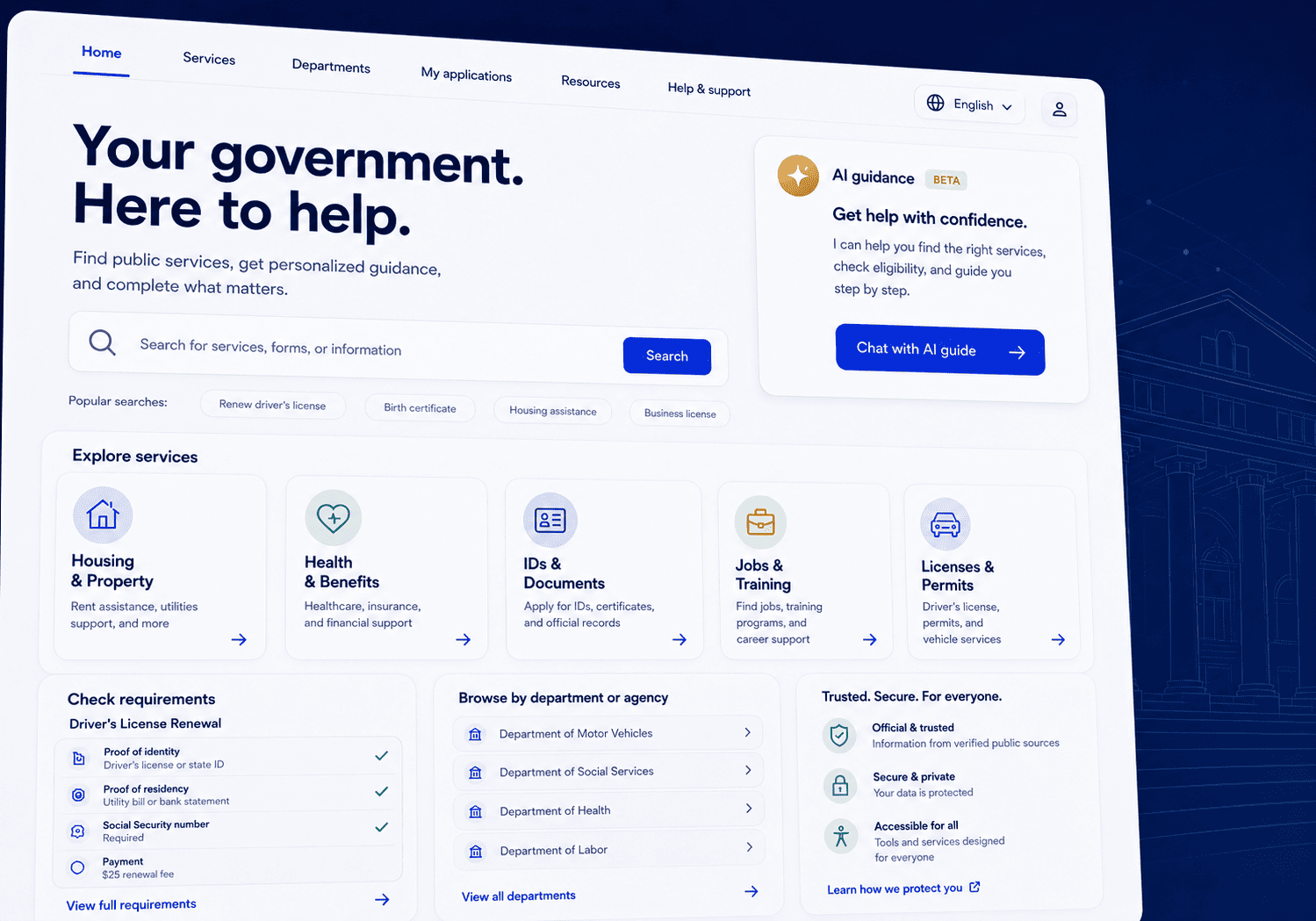
AI-Powered Citizen Services Website Platform for Virginia State Agencies

Plavno developed a modern eGovernment website platform for Virginia state agencies that centralizes citizen services, public information, department content, and an AI-powered guidance agent in one scalable system.

Read More
70%

reduction in routine citizen inquiries to agency staff

AI-Powered Citizen Services Website Platform for Virginia State Agencies

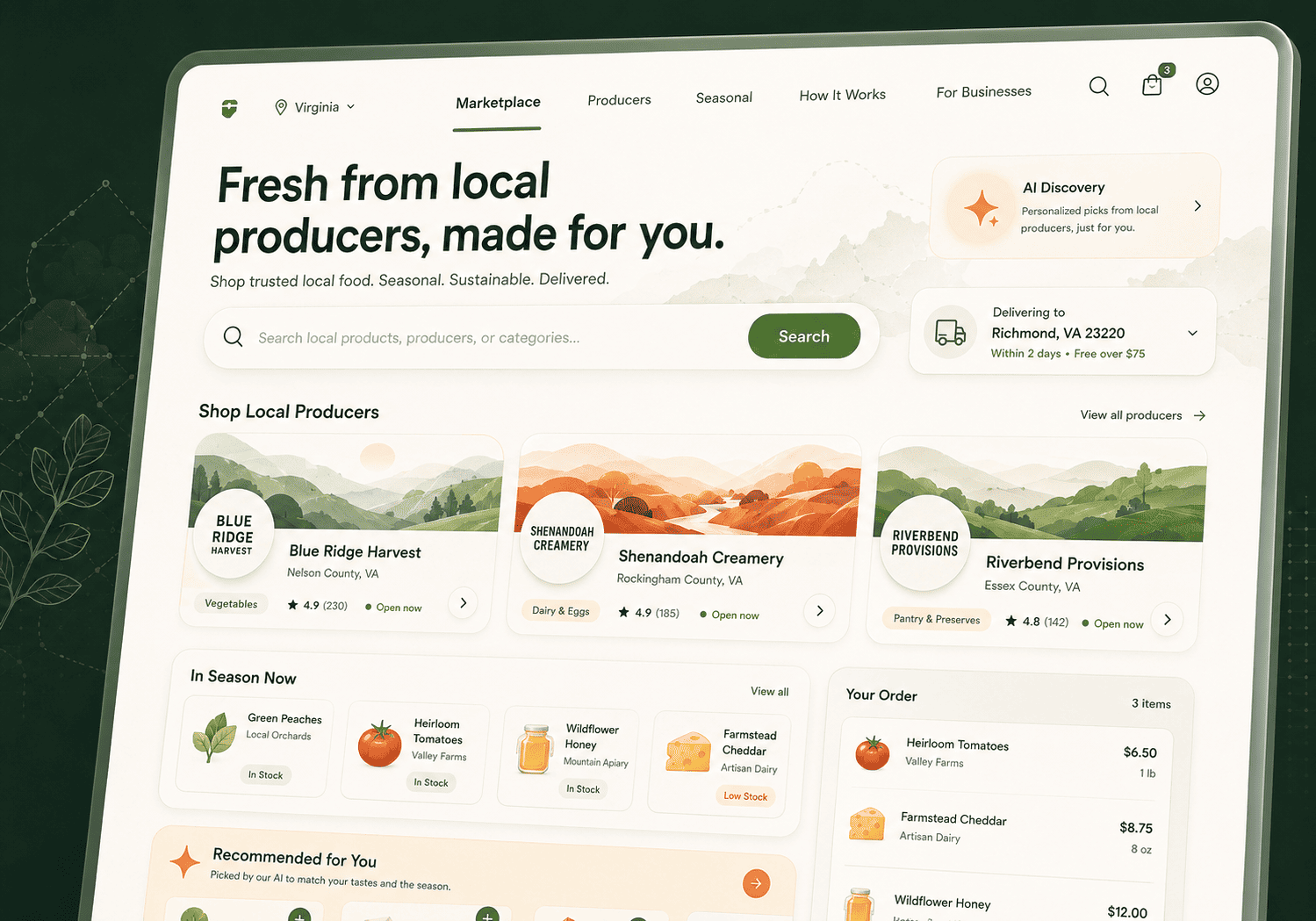
Digital Marketplace for Virginia Farmers, Local Producers & Direct-to-Consumer Food Sales

Plavno developed a custom multi-vendor marketplace for Virginia-based farmers, food producers, and regional sellers to unify product listings, vendor operations, customer ordering, and local fulfillment workflows.

Read More
3x

increase in product discovery relevance

Digital Marketplace for Virginia Farmers, Local Producers & Direct-to-Consumer Food Sales

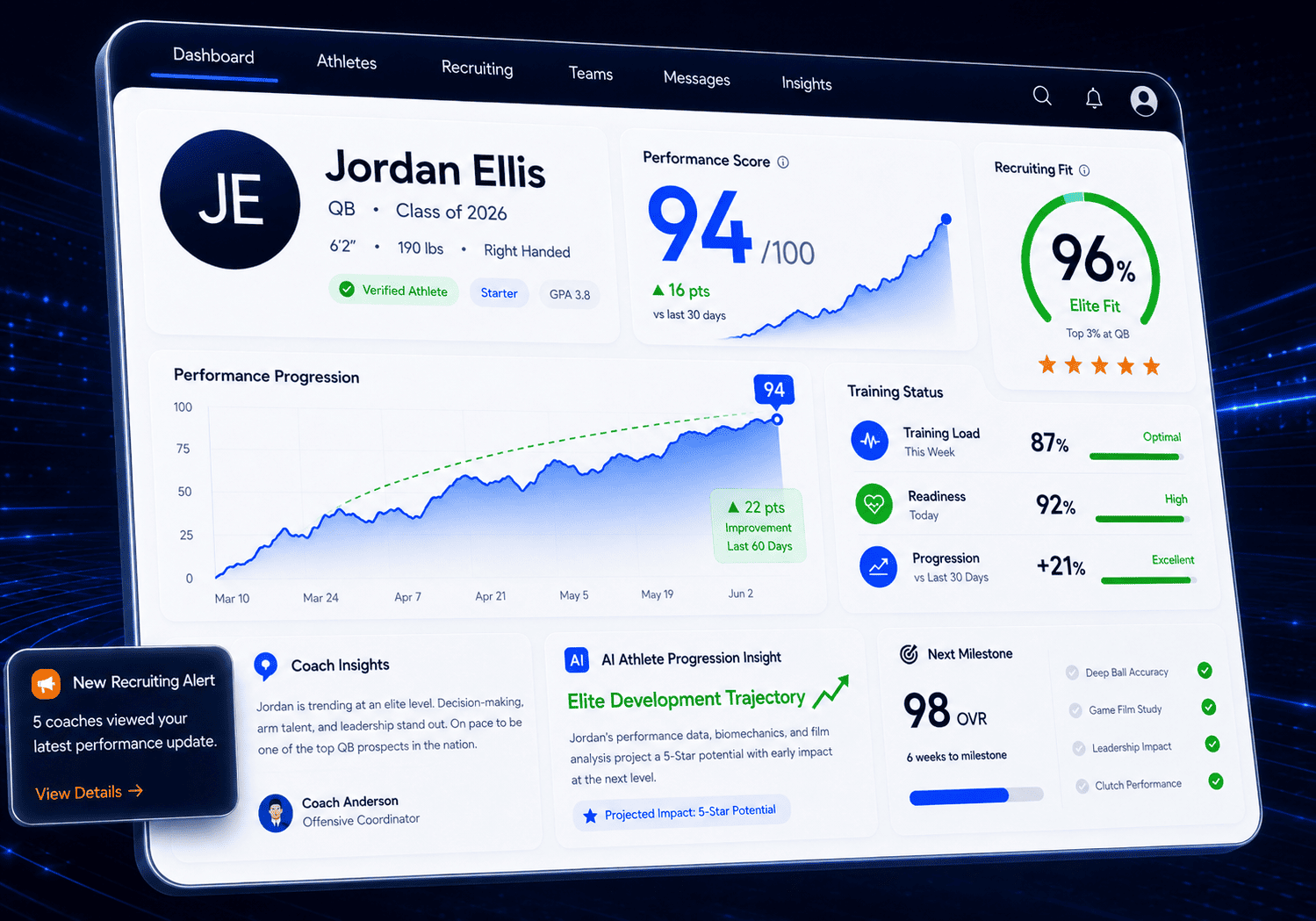
AI-Powered Sports Performance & Recruiting Platform for Virginia Clubs, Academies & Youth Programs

Plavno developed a custom sports technology platform for Virginia-based clubs and academies to combine athlete performance tracking, coach communication, recruiting workflows, and mobile engagement in one ecosystem.

Read More
3x

faster recruiting pipeline

AI-Powered Sports Performance & Recruiting Platform for Virginia Clubs, Academies & Youth Programs

Testimonials

We are trusted by our customers

“They really understand what we need. They’re very professional.”

The 3D configurator has received positive feedback from customers. Moreover, it has generated 30% more business and increased leads significantly, giving the client confidence for the future. Overall, Plavno has led the project seamlessly. Customers can expect a responsible, well-organized partner.

Sergio Artimenia

Commercial Director, RNDpoint

Sergio Artimenia

“We appreciated the impactful contributions of Plavno.”

Plavno's efforts in addressing challenges and implementing effective solutions have played a crucial role in the success of T-Rize. The outcomes achieved have exceeded expectations, revolutionizing the investment sector and ensuring universal access to financial opportunities

Thien Duy Tran

Product Manager, T-Rize Group

Thien Duy Tran

“We are very satisfied with their excellent work”

Through the partnership with Plavno, we built a system used by more than 40 million connected channels. Throughout the engagement, the team was communicative and quick in responding to our concerns. Overall, we were highly satisfied with the results of collaboration.

Michael Bychenok

CEO, MediaCube

Michael Bychenok

“They have a clear understanding of what the end user needs.”

Plavno's codes and designs are user-friendly, and they complete all deliverables within the deadline. They are easy to work with and easily adapt to existing workflows, and the client values their professionalism and expertise. Overall, the team has delivered everything that was promised.

Helen Lonskaya

Head of Growth, Codabrasoft LLC

Helen Lonskaya

“The app was delivered on time without any serious issues.”

The MVP app developed by Plavno is excellent and has all the functionality required. Plavno has delivered on time and ensured a successful execution via regular updates and fast problem-solving. The client is so satisfied with Plavno's work that they'll work with them on developing the full app.

Mitya Smusin

Founder, 24hour.dev

Mitya Smusin

Architecture & Engineering Overview

What Arlington buyers inspect before funds move in 2026

Measured ROI

Line-item ROI

One costly workflow, last-quarter baselines, weekly same-lens reviews

Human gates

Human gates

Money, medical, legal stay human-signed; soft answers route on confidence

Cost knobs

Cost knobs

Embedding cache, overnight batches, concurrent caps, skill-level flags

Portable exit

No lock-in

Portable orchestration, open storage, data-return language counsel can read

For Business: Technical ROI & Risk Mitigation

Budgets near National Landing reward proof, not promises. ROI starts when a single expensive workflow drops measurable hours without raising breach risk. We pick that workflow with finance in the room so savings land on a known line item. Baselines use last quarter tickets or minutes billed. Post-launch we show the same lens every Monday so drift cannot hide.

Risk drops when models never hold sole authority. Human gates stay on money movement, medical advice, and legal filings. Confidence thresholds route soft answers to people. That pattern prevented silent harm in triage and deposition work alike. Insurance and client audits favor this stance.

Cost controls beat surprise invoices. Caching common embeddings, batching overnight jobs, and capping concurrent model calls keep unit economics stable. Feature flags cut a bad skill without a full rollback. Finance teams prefer this knobs-first model when token prices swing.

Vendor lock risk runs real for Northern Virginia buyers. We prefer portable orchestration and open storage formats so walking away does not mean rewriting years of logic. Contracts spell data return and key delete steps. Your counsel can deep-read that language before kickoff.

Change leadership closes the loop. Floor champions learn the new queue in short drills. Adoption metrics share a screen with pure model metrics. When usage stalls we fix the process, not just the prompt. That keeps Year-one ROI from fading into Year-two folklore.

1

Decision ledger

Written trade-offs on models, queues, identity with revisit expiry dates

2

Frozen interfaces

APIs, events, schemas locked as contracts; RFCs only for side-effect changes

3

Honest environments

Synthetic dev, mirrored auth staging, signed prod artifacts with canary burn-in

4

Exit-ready handback

IaC, secrets map, dashboards, sixty-day warmup — retain, co-run, or own fully

For CTOs: Architecture & Technical Lifecycle

Lifecycle starts with a decision ledger, not a backlog dump. Every major choice on models, queues, and identity gets a written trade-off with an expiry date for revisit. That habit keeps temporary spikes from becoming permanent debt. Arlington IT leads can audit the ledger without reverse-engineering tickets.

Kickoff freezes interfaces. APIs, events, and storage schemas become the contract between our builders and your teams. Changes go through a short RFC so side effects stay visible. Continuous freestyle coding against live prod data is banned for good reason.

Environments stay honest. Dev uses synthetic and scrubbed sets. Staging mirrors auth delays and network limits you actually face. Production only accepts signed artifacts with provenance. Canary percentages scale with confidence, not calendar hope.

Governance covers model cards, evaluation boards, and access reviews. Drift checks fire when label distributions shift more than set bands. Prompt and weight version pins travel with each deployment. On-call rotations include both app and ML reply paths so paging never orphan the second half.

Exit readiness matters as much as entry. Handback includes IaC, secrets map, dashboards, and a sixty-day warmup window. You choose retain, co-run, or full internal ownership without scramble. That posture earns trust with defense-adjacent buyers who plan for contractors to leave clean.

Typed contracts

Typed contracts

Python orchestration plus typed APIs stop silent field drift across tools

Layout extractors

Doc extractors

Layout-aware tables first; rules score compliance while models propose

Voice spine

Voice spine

Capture → ASR → intent → dialog with dedicated timeouts and replay fixtures

Observability

Trace + cost

Correlation IDs across gateway, agent, tools; cost labels on every span

For Engineers: Implementation Details & Stack

Implementation favors boring glue with sharp edges only where needed. Typed contracts between tools and models stop silent field drift faster than polished prompts alone. Python services handle orchestration because library depth for evals and retries is mature. Strongly typed API layers guard payloads from front-end to store.

Document work uses layout-aware extractors before any LLM rewrite. Tables and stamps stays intact instead of melting into garbled text. Rules engines score compliance while models propose candidates. That combo powered customs and legal flows without pretending chat could replace policy trees.

Voice pipelines stage capture, ASR, intent, and dialog. Streaming paths get dedicated timeouts and partial-result handlers. Translation and summary jobs sit off the hot path when real-time is not true. Replay fixtures from redacted production calls make regressions cheap to catch.

Edge cases dominate late nights. Empty PDFs, dual-language AutoDial dumps, and identity tokens near expiry all get fixtures. Idempotent write keys keep double posts out of CRM when carriers retry. Dead letter queues never trash payloads without a dashboard light.

Observability hooks emit structured logs with correlation IDs across gateway, agent, and tool hops. Traces show where latency hides, whether model, network, or cold start. Engineers debug with data, not guesswork. Cost labels ride each span so product owners see expensive paths without a separate forensic pass.

First-class signals

First-class signals

Task success, takeover rate, latency percentiles, token spend, auth anomalies — page on error budgets

Compliance controls

Least-privilege stack

SOC2-minded and HIPAA-grade paths, encryption at rest/transit, calendar-owned key rotation

Deploy posture

Canary deploy

Containers, managed identities, IaC peer-review, blue-green paths, restore drills with pass criteria

Clean observability

PII-safe observability

Redact before durable write; separate metrics/traces from raw data; regional synthetic probes

Infrastructure, Observability & Security

US deployments favor locked networks and minimal blast radius. We monitor task success, takeover rate, latency percentiles, token spend, and auth anomalies as first-class signals. Alerts page humans when error budgets burn, not when a log looks scary. Incident runbooks name owners and smoke tests so recovery is not folklore.

Compliance alignment covers SOC2-minded controls and, where clinical data appears, HIPAA-grade handling patterns. Access is least-privilege and time-bound. Encryption stays on at rest and in transit. Key rotation schedules get calendar ownership, not wiki mentions. Audit exports land in formats counsel already knows.

Observability stores metrics and traces separately from raw PII. Redaction filters run before durable log write. Sampling rises when incidents start and falls when calm returns so bills stay sane. Synthetic checks hit the critical path every few minutes from regional probes so quiet failures surface early.

Deployment uses containerized services, managed identities where possible, and infrastructure as code reviewed like application code. Blue-green or canary reduces weekend drama. Secrets never sit in images. Backup restore drills run on a fixed cadence with named pass criteria.

Post-incident reviews billet into code and dashboard changes within sprint windows. drift monitors on label mix and tooling versions catch slow rot after launch. Cost boards review weekly so model bargain hunting does not wait a quarter. Arlington clients inherit this posture as part of the handoff, not as paid extra chaos later.

3 wks

Time to first production slice

Measured from signed scope to a live narrow path used by real staff. We hit this by freezing one workflow and delaying nice-to-haves. Faster proof lowers political risk for Arlington program sponsors and unlocks phase-two funding with numbers.

<8%

Human takeover on voice jobs

Share of calls that leave the agent for a person after launch stabilization. Achieved with strict slot checks and short confidence thresholds. Lower takeover keeps night coverage affordable without hiding failure cases from supervisors.

2x

Document packet throughput

Completed compliance or deposition packets per analyst hour versus pre-AI baseline on the same sample set. Extractors plus rules cut rekey work. Throughput gains free seniors for judgment calls instead of stapling fields together.

Data and connections

How legacy systems near Rosslyn stop blocking AI gains

Most Arlington estates still run a mix of ERP modules, SharePoint libraries, mainframe exports, and modern SaaS CRMs. AI that ignores that mix dies in pilot purgatory. Second-order work is therefore connectivity. We start with a system inventory and trust boundary map. Each source earns a connector with explicit rate limits, pagination rules, and failure semantics. No silent flood of copies lands in a mystery data lake.

Identity joins everything. Corporate SSO and group claims decide who can prompt, who can approve, and who only reads logs. Department scopes from the employee portal rebuild taught us to keep mappings in code, not sheets. When groups change, access changes the same day. Contractors get short-lived roles so offboarding does not rely on perfect memory.

Data quality decides whether models look clever or careless. We profile samples for null rates, mixed units, and stale codes before training or retrieval setup. Cleanup scripts are part of the build, not a side favor. For habit and coaching products we stored structured events so personalization was based on state, not free-text mythology. Same idea applies to logistics tickets and hotel bookings.

Integration debt appears as brittle nightly files and long unsupported SOAP endpoints. We wrap those with anti-corruption services that present clean JSON while the legacy core stays put. Change freezes on the mainframe no longer block AI features upstream. Event streams where available let agents react without polling thrash that hurts shared databases.

Post-launch cost control lives in the connection layer too. Batch windows push non-urgent enrichment off peak. Cache layers shield slow primers that hate chatty AI traffic. Circuit breakers trip when partners slow down so your service degrades gracefully rather than cascading. Arlington platform teams can read these dials without asking us for a private briefing.

Eugene Katovich

Eugene Katovich

Sales Manager

Need a custom software solution? We’re ready to help!

Plavno has a team of skilled developers ready to tackle the project. Ask me!

Get a Free Quote

Adoption ladder

Move Arlington teams from manual grind to guided autonomy

A maturity ladder beats a single big cutover. Each rung proves value before autonomy widens.

Clipboard
Team
01

Step 1: Manual with mirrors (2–4 weeks)

Staff keep current tools while we shadow outcomes with a read-only model. Dashboards compare human labels to model suggestions only. No auto posts. Training data quality becomes visible with zero workflow shock. Leaders inspect gap charts before any rights expand. Timeline covers enough volume to kill lucky-week bias.

02

Step 2: Assisted drafts (3–5 weeks)

Models draft fields, summaries, or call scripts and humans click accept. Edit distance metrics show where editors still rework hard. Shortcuts drop as trust details prove out. Access remains limited to the champion squad. Training refreshers run weekly on residual failures so the baseline climbs.

Search in doc
Rocket
03

Step 3: Guarded automation (4–6 weeks)

High-confidence items auto-complete while gray-zone items still file to people. Thresholds tune against measured error cost, not gut feel. Alerts fire when auto volume spikes beyond norms. Finance sees cost per closed task on the same board. Kill switches sit one click away for on-call staff.

04

Step 4: Broad autonomy with audit (ongoing)

Additional skills unlock only after high-confidence months on the first one. Cross-team playbooks and shared eval sets stop quality drift. Quarterly reviews retire low-value features that burn tokens. New hires train on the live system rather than binders. Continuous ownership stays with named product leads on your side.

Readiness gate

Confirm these five items before an Arlington AI build

  • Name the costly workflow — Pick one job with a clear owner and known weekly hours. Write the start state, happy path, and failure states in plain language. Pull twenty real examples with outcomes already judged by staff. Mark which fields bind money, safety, or legal risk. Agree who can pause automation on day one. Without this focus, pilots sprawl and budgets vanish into exploration.

  • Prove data access paths — List systems that hold tickets, files, calls, and identity. Confirm API or export access with your vendors in writing. Note retention rules and redaction needs for logs. Identify who approves production credentials. Test a sample pull under read-only rights before kickoff. Missing access is the top killer of 2026 timelines in Northern Virginia estates.

  • Baseline the pain in numbers — Capture average handle time, error rate, and monthly volume for the chosen workflow. Record current tool licenses tied to that work. Snap a week of examples for later side-by-side scoring. Finance should agree the formula for savings up front. Benchmarks without baselines invite endless argument after launch. Store this pack beside the SOW so auditors can follow intent.

  • Set security and residency rules — Decide which data may leave the building and which must stay on private endpoints. Name required controls such as SOC2-minded logging or HIPAA pathways for clinical content. Map encryption, key custody, and sub-processor lists. Involve counsel early if defense-adjacent labels appear. Document the incident contact tree. Ambiguity here stalls more builds than missing features.

  • Assign operating owners — Choose a product owner, a technical counterpart, and a floor champion. Give them hours on the calendar free of other crises. Define the escalation path for model failures and cost spikes. Plan the first month of office hours for staff questions. Ownership gaps turn fine systems into shelf accidents. Write names, not only titles, into the kickoff deck.

Vitaly Kovalev

Vitaly Kovalev

Sales Manager

Request your Arlington AI readiness audit

Share budget, timeline, stack, and dataset scope. Receive a scored readiness audit and rough cost estimator shaped for Arlington businesses within one business day.

Talk to Experts

Arlington FAQs

Questions Northern Virginia teams ask before hiring AI builders

Straight answers on cost, time, data, quality, security, and life after launch. No slide-ware filler.

What drives the cost of AI Development for Arlington companies?

Cost lands on four stacks: discovery depth, integration count, model runtime, and compliance overhead. A single workflow agent flying against one CRM costs far less than a multi-system voice pipeline with recording custody rules. Northern Virginia defense-adjacent buyers often add private networking and stricter audit trails, which increases infrastructure line items. Token spend grows with chatty designs; tighter schemas and caching hold it in check. Human review paths also add hours you should price in, not pretend away.

Local labor markets affect design workshops and UAT. Arlington and Crystal City stakeholders book slower near federal cycle peaks, so calendars may stretch even when engineering is free. Data cleanup is another quiet cost. If ticket fields are half empty, profiling and repair become paid work before any model trains. Plan that rather than treating it as free prep.

We price phases with exit gates so you can stop after a pilot without a sunk multi-year deal. Estimates list assumptions on volume, latency targets, and on-call coverage. When those change, cost changes transparently. Bring budget bands early. We will map options inside them instead of inventing a unicorn scope.

Compare not only day rates. Compare included evaluation sets, runbooks, and handoff quality. Cheap builds that skip observability create expensive fires. Ask who owns cloud accounts and keys after go-live. Those answers change total cost of ownership more than a short discount on sprint fees.

How long does it take to build AI Development software?

A focused MVP with one workflow and one primary system usually lands in eight to twelve weeks after discovery. That span covers scoped build, evaluation, security checks, and a limited user launch. Full multi-channel deployment with voice, documents, and several back ends often needs four to six months. Parallel workstreams help, but shared security review gates still sequence some tasks. Rush plans that skip staging feedback create rework that erases the gain.

Discovery itself takes one to two weeks when data samples and owners show up ready. Architecture freezes take another two to three. Build length tracks integration complexity more than model choice. A phone agent with two intents moves faster than a customs checker with dozens of document classes. Legal and medical paths add review cycles for counsel and clinical leads.

MVP does not mean disposable. We ship production-grade code with flags so the same repo grows into the wider system. That choice saves rewrites later. Full deployment • expands traffic, training packages, and on-call coverage. Timeline quotes include those rungs if you ask for them up front.

Calendar reality in Virginia matters. Holiday freezes, federal fiscal pivots, and change windows on shared ERP systems can add idle days. We plan buffers rather than pretend perfect alignment. Status reports show critical path items so your PMO can clear blockers fast. When samples arrive late, every downstream week slides.

What data do you need to start an AI Development project in Virginia?

Start with representative samples of the work product itself. Tickets, PDFs, call recordings, chat logs, and final human decisions are the minimum. Include both clean wins and ugly failures. Mask obvious secrets before transfer if policy requires, but keep structure intact. Schema docs and data dictionaries reduce guesswork. Access credentials for read-only pulls beat giant email attachments if volumes are high.

Identity and permissions maps matter next. Group names mapped to roles tell us how to gate features. Without that, demos show too much data to too many people. Retention windows and residency limits belong in the same pack. Virginia teams with federal partners often restrict cross-region replication and certain subprocessors. Learn that early.

Startup and growth clients can still begin with smaller sets if process experts sit with us. We record edge cases and build synthetic pairs to pad sparse classes carefully. Synthetic only fills temporary gaps; it never replaces production validation. For wellbeing and HR tools we treat personal data with extra care and short trial windows.

You also need outcome labels. Did the human approve, edit, or reject past suggestions when you tried tools already? Those labels become the first evaluation set. Without them we invent metrics that delight engineers and disappoint operators. Share budget and timeline while sharing data so scope matches storage and scrubbing effort.

How do you evaluate quality for AI Development deliverables?

Quality rides measured task success, not vibe. We define a gold set with yours, freeze it, and score precision, recall, latency, and human takeover rate every build. Business KPIs such as packets closed per hour or booking conversion sit beside pure model scores. that prevent shipping a clever demo that fails the desk. Thresholds for go-live are written before coding so nobody moves goalposts under pressure.

Offline evals run on every pull request touching prompts or tools. Online evals sample live traffic after launch with privacy filters. Shadow modes compare model choices to human choices without side effects. Regression fixtures capture past bugs so they cannot return quietly. Dashboards open to your leads, not only to us.

Voice systems get extra checks for barge-in behavior, mean latency, and hang-up rate. Document systems get field-level accuracy and layout survival checks. Agents get tool-call success counts and hallucinated action rates. Each product type earns a card of required metrics before UAT signs. We never hide weak numbers behind one flattering average.

Review councils meet on a fixed cadence. Product owner, tech lead, and floor champ inspect failures together. Fixes go to data glue or UI phrasing as often as to model weights. When quality plateaus, we cut low-value skill surface rather than burn more tokens. Transparent boards keep Arlington sponsors confident during electeds or board demos.

How do you handle compliance and security for AI in Arlington?

Security design starts before model selection. Data classification guides network places, encryption, and logging. Private endpoints and VPC constructs keep sensitive traffic off the public fetch path when required. Secrets live in managed vaults with rotation. Least privilege roles gate every admin and runtime path. Audit logs capture who changed prompts, thresholds, and funding restrictions. Those logs matter when counsel arrives later.

Compliance packages depend on industry. Clinical features follow HIPAA-minded patterns with BAAs and access tracking. Legal matter workspaces isolate corpora by case ID. Defense-adjacent projects may demand cleaner on-prem or sovereign cloud options and stricter staff vetting. We map controls to your existing SOC2 efforts rather than invent a parallel circus. Gap lists become backlog with owners and dates.

Incident response drills cover model abuse, leaked keys, and partner outage. Playbooks name first responders and customer notice steps. Red team prompts test for data exfiltration through chat surfaces. Content filters and output scanners sit on public-facing agents. Fail closed when scanners fail; do not fail soft into silence.

Vendor management lists subprocessors and regions. You approve changes. Contracts define data return and delete proofs. Staff devices and access reviews follow corporate IT rules on joint projects. Training covers phishing risks unique to AI admin consoles. Arlington buyers can attach their own questionnaires; we answer without marketing filler.

Contact Us

This is what will happen, after you submit form

Need a custom consultation? Ask me!

Plavno has a team of experts ready to start your project. Ask us!

Vitaly Kovalev

Vitaly Kovalev

Sales Manager

Schedule a call

Get in touch

Fill in your details below or find us using these contacts. Let us know how we can help.

No more than 3 files may be attached up to 3MB each.
Formats: doc, docx, pdf, ppt, pptx, xls, xlsx, txt.
Send request