bg image
bg image

Serving Hampton

Turn website conversations into booked work in Hampton, 2026

If your Hampton team is answering the same questions all day, a chatbot can take the first pass and route only the work that needs a person. Reduce missed leads after hours and stop losing appointments to slow follow-ups. Keep service consistent across web chat, forms, and contact-center handoffs without adding a new tool for every department. This is for operators who track response time, pipeline, and backlog and want a measurable change in 30 to 90 days. Get AI Chatbots cost estimate in 24 hours. Share your budget, timeline, current systems, and the dataset scope you can provide.

Discuss Project

Overview

Hampton teams lose revenue in the first 60 seconds

Hampton businesses compete on response time. A visitor who cannot book, get an answer, or reach the right office will move on. That is true for clinics near Coliseum Central, property teams around Downtown Hampton, and tourism operators along the Waterfront. In 2026, the fastest path to better response is ai chatbot development that connects to the systems you already run. You get 24/7 coverage without forcing staff to monitor a new inbox all night.

Trusted AI Chatbots Partner for Hampton Businesses. We work with US-based clients, including companies operating in Virginia. Our work is built for real workflows in Hampton Roads and the Virginia Peninsula, including Newport News, Norfolk, Portsmouth, Williamsburg, and Chesapeake. We have delivered 10+ AI chatbot projects in the US market where the goal was lower support load and higher conversion. That experience matters when your chatbot must handle edge cases, not just happy-path FAQs.

Most chatbots fail because they answer questions but do not finish the job. For Hampton teams, the job is usually scheduling, lead capture, case intake, or a clean handoff to a human. Our chatbot development approach starts with the business transaction you want to complete, then we design the conversation around it. We plan for missing data, ambiguous intent, and partial forms, because those are common in real traffic. The result is fewer abandoned sessions and better data in your CRM and ticketing tools.

We back this with delivered work, not generic claims. In our AI Beauty Client Support and Personalized Recommendation Agent case, we built an LLM agent with product recommendation logic and customer support automation. The key lesson was that support quality comes from controlled decision points, not from longer answers. We applied that same pattern to service and sales flows, where a safe next step beats a perfect paragraph. That is the difference between a chatbot that chats and one that drives outcomes.

Expect integration complexity, not just prompt writing. Hampton organizations often have older web properties, multiple departments, and separate data owners. We plan for latency, data quality, and cost control from day one so usage does not surprise you. We also set clear success measures, like deflected tickets, booked appointments, and qualified leads. Those measures keep the build focused and help you decide what to automate next.

Talk to an Expert
Outcome-first workflows

Outcome-first workflows

Designed to finish scheduling, lead capture, case intake, or a clean human handoff.

LLM agent + rules

LLM agent + deterministic rules

Natural language coverage with explicit decision points, required fields, and policy enforcement.

Integrations + routing

Integrations + routing

Connects to CRM, ticketing, and scheduling systems; validates data; passes full context on escalation.

Governance + DevOps

Governance + DevOps

Least-privilege access, retention controls, versioned prompts, monitoring for failures and cost drivers.

plavno logo

Build your first
Smart AI project today!

Just tell the Plavno AI Agent about your project - it will ask questions, gather requirements, and propose a tailored solution

Architecture first

Production chatbots that finish tasks, not chats

For Hampton teams, we build chatbots as a service workflow with a clear end state. That end state might be an appointment request, a lead created, or a case filed with complete fields. The chatbot is only one part of the system. The rest is routing, validation, and a human handoff path that keeps the customer moving. This approach reduces the back-and-forth that drives call volume and inbox backlog.

We implement an agent-style flow when the problem needs decisions, not just answers. The AI Beauty support case used an LLM agent plus product recommendation logic, because recommendations must follow business rules. We use the same idea for Hampton use cases like eligibility checks, intake triage, and guided quoting. The LLM handles language and intent, while deterministic logic enforces policy and required fields. That split improves predictability and makes testing possible.

Knowledge handling is designed to prevent confident wrong answers. We separate public content from internal procedures and map each to allowed intents. When a question is outside scope, the chatbot asks for clarifying data or routes to a person. We also design for partial truth, such as out-of-date pages or conflicting PDFs. That matters for City of Hampton public services, medical offices, and universities where policy changes. The goal is safe, consistent guidance that stays within your approved content.

security/compliance is built into the conversation flow and the data path. We minimize stored personal data and keep only what is needed for the task. Access to logs and admin tools follows least-privilege rules, so staff only see what they need. For regulated workflows, we add clear consent steps and retention controls. Hampton healthcare and education teams often need this level of governance before they can deploy broadly.

DevOps work makes the chatbot predictable to run. We set up separate environments for testing and production so content and logic changes do not break live traffic. We track versioned prompts and rule logic so you can roll back quickly after a change. Monitoring focuses on conversation failures, integration errors, and cost drivers like long sessions. This is the part that keeps your chatbot useful after launch, not just on demo day.

What you get

Five deliverables Hampton teams ask for first

Lead capture that qualifies and routes

Lead capture that qualifies and routes

Hampton sales teams lose leads when forms are long and follow-up is slow. We build a chatbot that asks only the next needed question and saves partial progress. The outcome is more complete lead records and fewer dead-end conversations. We implement intent detection with an LLM agent, because visitors describe needs in varied language. We add rule-based qualification so required fields and routing rules stay consistent. Integration is done through CRM APIs so leads land where your team already works.

Appointment scheduling and confirmations

Appointment scheduling and confirmations

Clinics and service providers in Hampton often see call spikes at lunch and after work. A scheduling chatbot reduces hold times by collecting the details that staff always ask first. The chatbot can confirm constraints and present the next step, even when the user is unsure. We use guided flows, because scheduling fails when questions are open-ended. An LLM agent handles free-text reasons and intent, then a rules layer validates required fields. The result is fewer incomplete requests and better data for staff follow-through.

Customer support deflection with safe handoff

Customer support deflection with safe handoff

Ecommerce and service teams on the Virginia Peninsula spend time on repetitive order and policy questions. A support chatbot can answer common issues, but it must also detect frustration and route to a person. We build the handoff path so context and conversation history are passed forward. We use an LLM agent for natural language coverage, because customers rarely use the exact wording from your help center. We constrain answers to approved content to reduce incorrect guidance. This reduces ticket volume while keeping escalations clean and fast.

Tourism and visitor information

Tourism and visitor information

Tourism operators in Hampton VA need fast answers about hours, parking, and event details. A visitor information chatbot reduces phone calls and helps people plan without searching multiple pages. We structure responses as short options and follow-up questions so visitors reach a decision faster. We use a knowledge base retrieval layer so answers stay tied to your published information. An LLM agent formats the response and handles varied phrasing and misspellings. This improves the visitor experience while keeping staff focused on in-person service.

Government and campus service triage

Government and campus service triage

Public-facing teams in the City of Hampton and campus offices handle requests that are often misrouted. A chatbot can ask targeted questions and direct the user to the right department, form, or next step. The outcome is fewer transfers and fewer incomplete submissions. We use decision trees for policy steps, because policy must be consistent across channels. The LLM agent covers phrasing and language variation, then the rule logic drives routing. This keeps responses consistent while still feeling conversational.

Case Study

We help customers cut
down on development

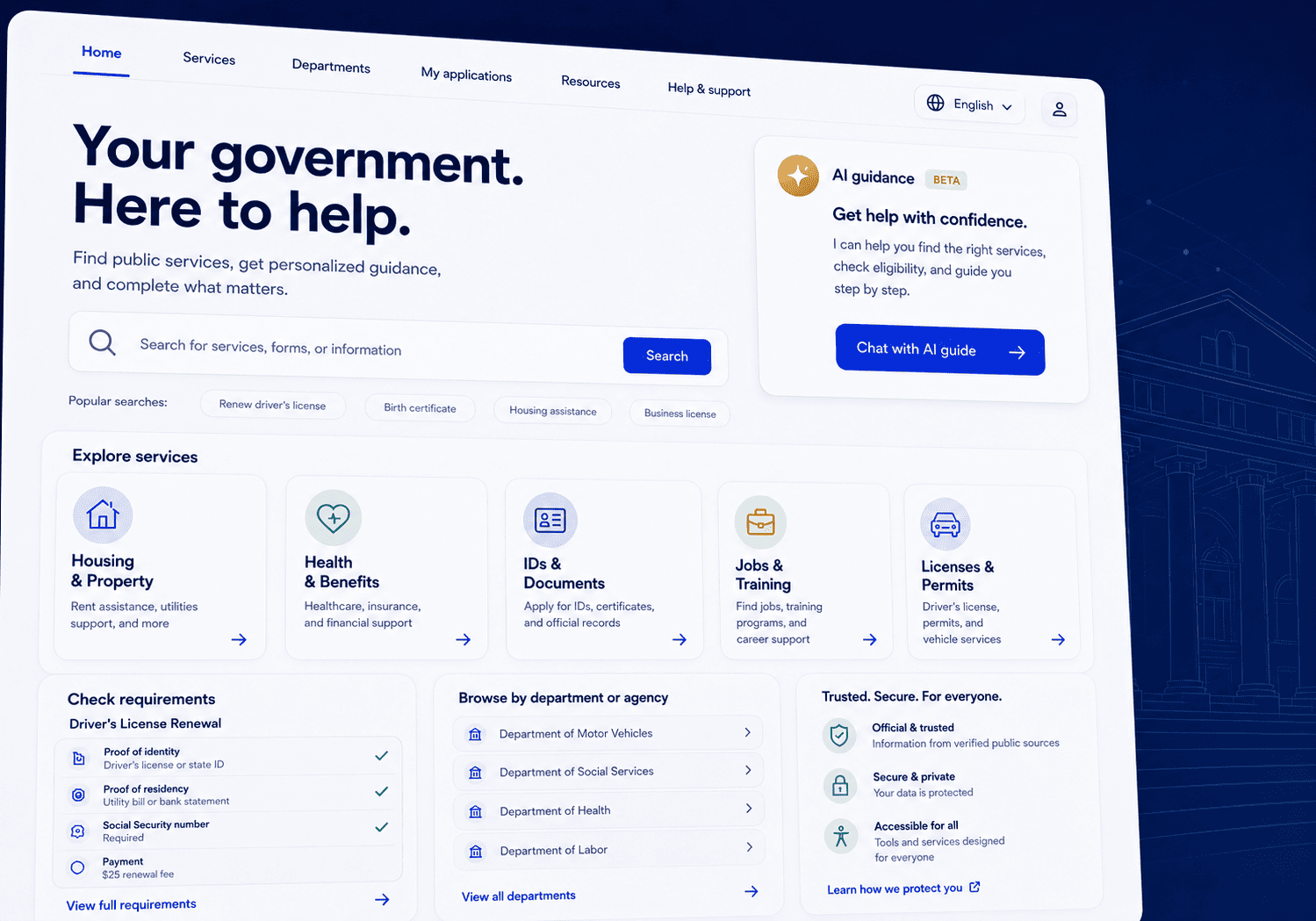
AI-Powered Citizen Services Website Platform for Virginia State Agencies

Plavno developed a modern eGovernment website platform for Virginia state agencies that centralizes citizen services, public information, department content, and an AI-powered guidance agent in one scalable system.

Read More
70%

reduction in routine citizen inquiries to agency staff

AI-Powered Citizen Services Website Platform for Virginia State Agencies

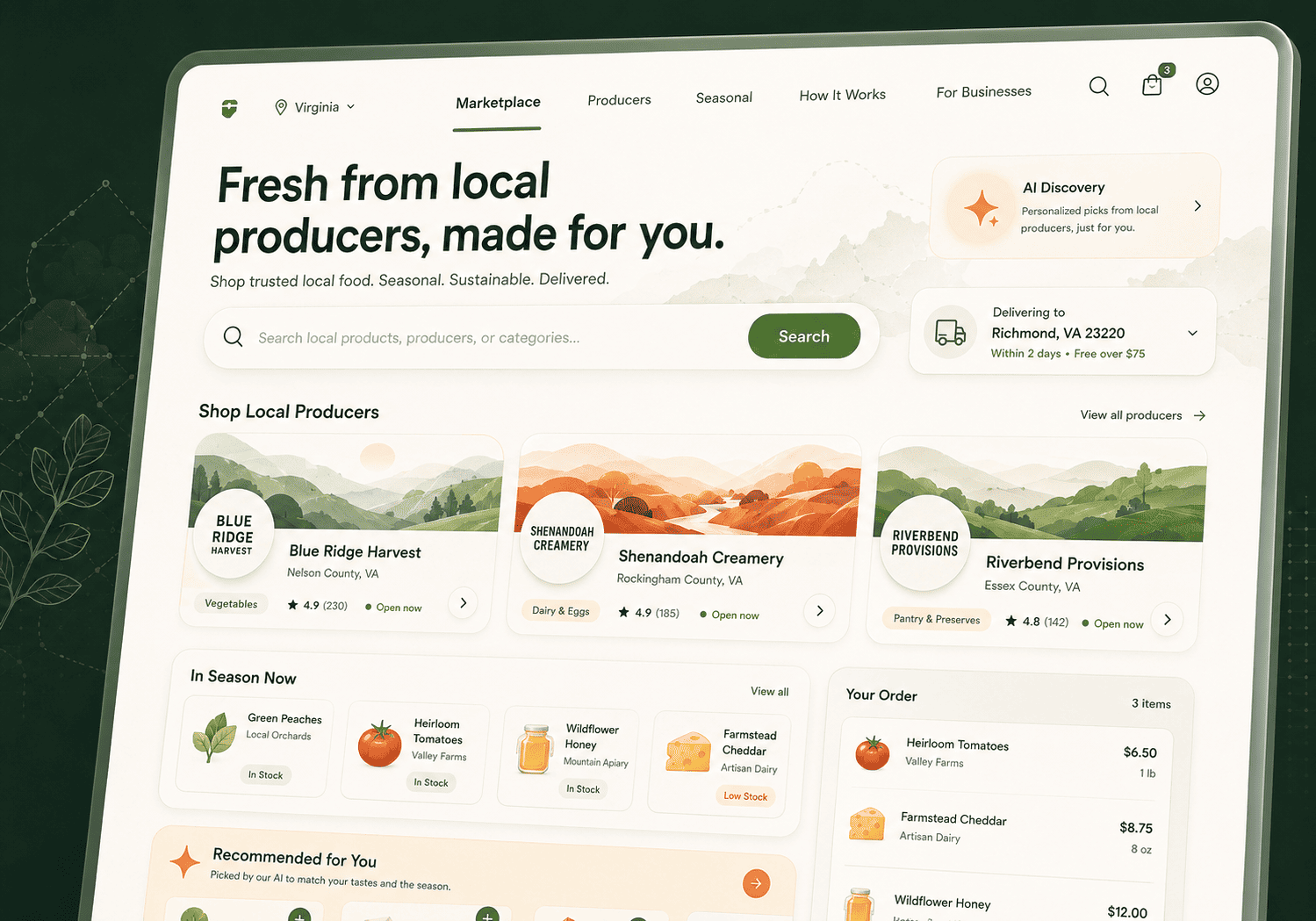
Digital Marketplace for Virginia Farmers, Local Producers & Direct-to-Consumer Food Sales

Plavno developed a custom multi-vendor marketplace for Virginia-based farmers, food producers, and regional sellers to unify product listings, vendor operations, customer ordering, and local fulfillment workflows.

Read More
3x

increase in product discovery relevance

Digital Marketplace for Virginia Farmers, Local Producers & Direct-to-Consumer Food Sales

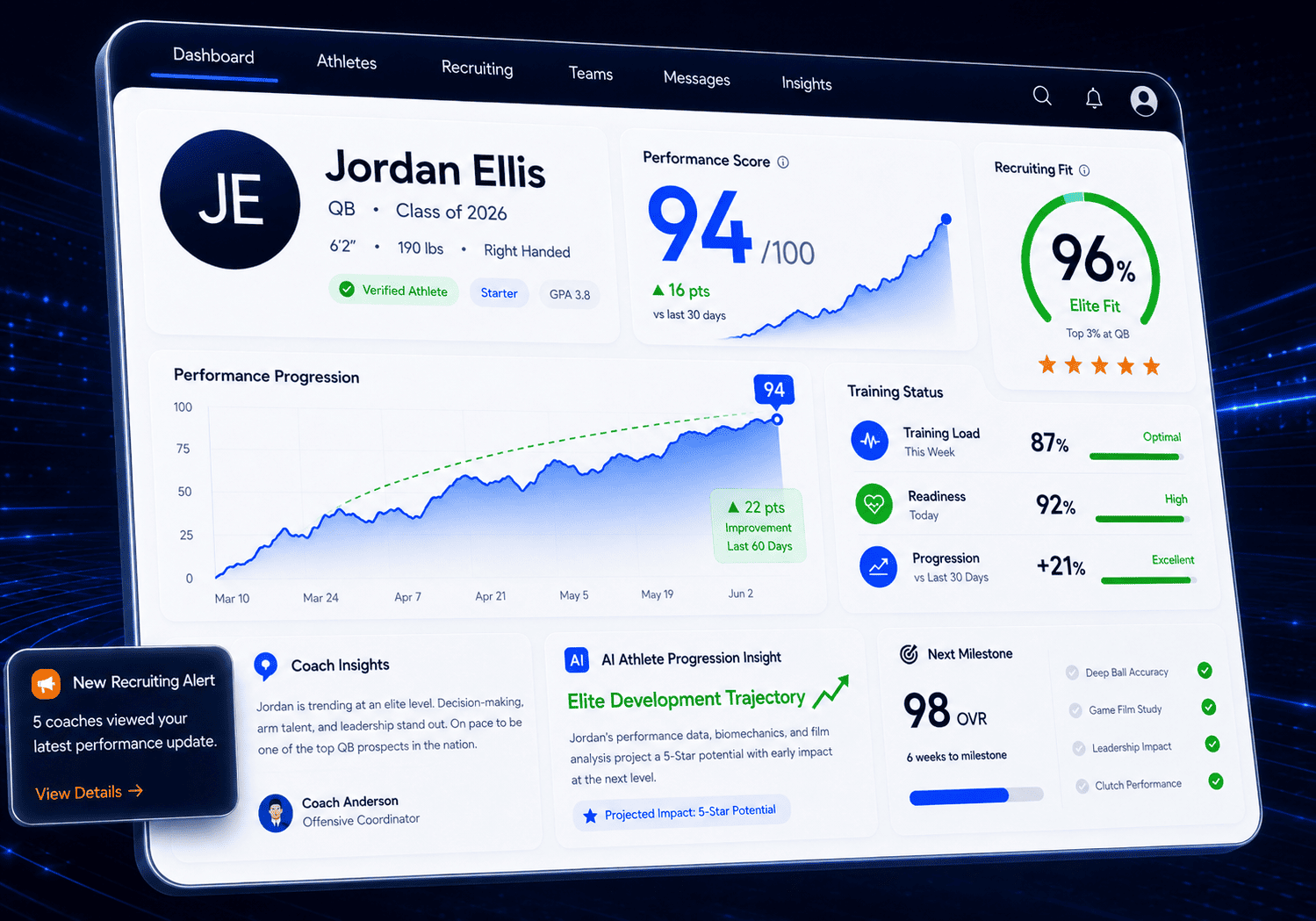
AI-Powered Sports Performance & Recruiting Platform for Virginia Clubs, Academies & Youth Programs

Plavno developed a custom sports technology platform for Virginia-based clubs and academies to combine athlete performance tracking, coach communication, recruiting workflows, and mobile engagement in one ecosystem.

Read More
3x

faster recruiting pipeline

AI-Powered Sports Performance & Recruiting Platform for Virginia Clubs, Academies & Youth Programs

AI Chatbots Solutions for Hampton Industries

Local use cases mapped to Hampton workflows

Hampton Roads teams usually need chatbots that connect to scheduling, CRMs, and case intake. These solutions reflect the region's mix of healthcare, public services, education, real estate, retail, and tourism.

Clinic Scheduling

Clinic Scheduling

24/7

Healthcare appointment scheduling chatbot in Hampton

Scheduling is a revenue workflow, not a support feature, and Hampton clinics feel the impact when phones back up. We build a healthcare appointment scheduling chatbot that collects the minimum required information and confirms next steps. Example ROI: if you reduce abandoned scheduling attempts by 10% in a quarter, the recovered visits often cover build costs. The system routes complex cases to staff with a structured summary, which cuts rework and back-and-forth. Technically, we combine an LLM agent for intent and patient phrasing with rule validation for required fields and safe routing. We also plan retention and access controls so sensitive details are not stored longer than needed.

Realty Lead Capture

Realty Lead Capture

After-hours

Real estate lead capture chatbot for Hampton VA teams

Property managers and agents in Hampton lose leads after hours, especially when buyers ask the same financing and availability questions. We build a real estate lead capture chatbot that qualifies by budget, timeline, and location preferences. Example ROI: converting one extra qualified lead per month can justify the program when the average commission is material. The chatbot also reduces low-quality inquiries by asking a few targeted questions before routing. Technically, an LLM agent interprets free-text needs, then rule logic enforces qualification fields and routing. Integration pushes leads into your CRM so follow-up stays in your existing process.

Admissions Assistant

Admissions Assistant

Next steps

University admissions chatbot for Hampton University flows

Admissions teams answer repetitive questions about deadlines, program fit, and document status. We build an admissions chatbot that guides prospects to the next action, not just a page link. Example ROI: deflecting even 15% of repetitive inquiries during peak season can free staff time for high-intent applicants. The chatbot can collect contact details and route to the correct counselor based on program and residency. Technically, the bot uses approved content for answers and structured forms for data capture. An LLM agent handles natural phrasing, while governance keeps replies aligned with published policy.

Service Triage

Service Triage

City requests

Government services chatbot for City of Hampton requests

Residents often do not know which department handles a request, and transfers increase frustration. We build a government services chatbot that triages by intent and collects the details needed for the first valid submission. Example ROI: reducing misrouted requests by 20% can save staff time and shorten resolution cycles, even without reducing headcount. The chatbot can point to the right form and capture key fields before handoff. Technically, we use a controlled decision flow for policy steps and an LLM agent for flexible phrasing. Logging supports audit needs and helps you see where people get stuck.

Dealership Booking

Dealership Booking

Test drives

Auto dealership chatbot for Hampton Roads sales teams

Dealership sites get high traffic, but many chats end without a test drive or financing pre-check. We build an auto dealership chatbot that captures vehicle interest, trade-in intent, and preferred appointment windows. Example ROI: booking two extra test drives per week can create measurable sales lift when close rates are stable. The chatbot also routes service questions to the right lane so sales staff are not distracted. Technically, an LLM agent handles model names and messy user input, then rules validate contact details and route by department. CRM integration keeps the pipeline consistent and prevents lost leads.

Ecom Support

Ecom Support

Returns

Ecommerce customer service chatbot for the Virginia Peninsula

Support teams spend time on order status, returns, and product selection questions that repeat daily. We build an ecommerce customer service chatbot that answers from your policies and guides users through the next step. Example ROI: if the bot resolves 25 chats per day that would have become tickets, the payback period can be short in a high-volume store. We include a clear escalation path with context handoff to protect customer satisfaction. Technically, we use an LLM agent with a restricted knowledge scope and structured actions for common flows. The pattern mirrors our beauty support agent work, where recommendations and support followed controlled logic.

Decision support

What changes when engineers build your chatbot

Hampton chatbot projects succeed when integration, governance, and operations are planned early. The difference is not the demo. It is what runs reliably after month one.

Generic Agencies
Our Platform (Deep Engineering Expertise)
Defines success metrics tied to revenue or load
checkmark
Builds deterministic rules around AI decisions
checkmark
Plans CRM and workflow integrations upfront
checkmark
checkmark
Implements safe handoff with full context
checkmark
Runs security reviews and retention controls
checkmark
Sets up monitoring for failures and cost drivers
checkmark
plavno logo

Build your first
Smart AI project today!

Just tell the Plavno AI Agent about your project - it will ask questions, gather requirements, and propose a tailored solution

Integration planning

Data and systems that make a Hampton bot useful

After the first demo, the hard part is system fit. Hampton organizations often run a mix of website CMS tools, shared inboxes, and one or more CRMs. A chatbot that cannot read policy content or write a clean lead record will create more work than it removes. We design integrations around the moment value is created, such as a booked appointment or a qualified lead. That keeps scope controlled and makes ROI easier to measure.

We start by inventorying your usable data, not your total data. For many Hampton teams, the best sources are a small set of high-confidence pages, FAQs, and internal scripts that staff already trust. We map each source to a set of intents and define what the bot is allowed to do with it. When the content is inconsistent, we mark those areas as route-to-human until the owner confirms policy. This prevents the bot from improvising when the organization itself has not decided.

CRM and workflow integration gets special attention because it drives follow-up quality. HubSpot and Salesforce chatbot integration in Hampton often fails when field requirements are unclear or ownership is split across teams. We define required fields, validation rules, and routing rules before the bot goes live. We also design for partial submissions so you still capture a lead when the user drops off. This is where a chatbot becomes a pipeline tool, not just a support widget.

We also design for latency and reliability because Hampton customers will not wait for a slow reply. Integration calls must be bounded and retried safely when systems time out. When a system is unavailable, the chatbot should switch to a capture mode and promise a follow-up. These fallbacks protect conversion during outages and reduce support escalations. Cost control is treated the same way, by limiting unnecessary long sessions and focusing prompts on task completion.

Post-launch, we treat the chatbot like a product that needs upkeep. We review conversation logs to find failure patterns, new intents, and content drift. We test changes against a fixed set of scenarios so quality does not degrade as you add features. We also track which integrations cause the most friction, then fix the root issues in the upstream system. This is how a Hampton chatbot stays useful across seasons and policy changes.

Testimonials

We are trusted by our customers

“They really understand what we need. They’re very professional.”

The 3D configurator has received positive feedback from customers. Moreover, it has generated 30% more business and increased leads significantly, giving the client confidence for the future. Overall, Plavno has led the project seamlessly. Customers can expect a responsible, well-organized partner.

Sergio Artimenia

Commercial Director, RNDpoint

Sergio Artimenia

“We appreciated the impactful contributions of Plavno.”

Plavno's efforts in addressing challenges and implementing effective solutions have played a crucial role in the success of T-Rize. The outcomes achieved have exceeded expectations, revolutionizing the investment sector and ensuring universal access to financial opportunities

Thien Duy Tran

Product Manager, T-Rize Group

Thien Duy Tran

“We are very satisfied with their excellent work”

Through the partnership with Plavno, we built a system used by more than 40 million connected channels. Throughout the engagement, the team was communicative and quick in responding to our concerns. Overall, we were highly satisfied with the results of collaboration.

Michael Bychenok

CEO, MediaCube

Michael Bychenok

“They have a clear understanding of what the end user needs.”

Plavno's codes and designs are user-friendly, and they complete all deliverables within the deadline. They are easy to work with and easily adapt to existing workflows, and the client values their professionalism and expertise. Overall, the team has delivered everything that was promised.

Helen Lonskaya

Head of Growth, Codabrasoft LLC

Helen Lonskaya

“The app was delivered on time without any serious issues.”

The MVP app developed by Plavno is excellent and has all the functionality required. Plavno has delivered on time and ensured a successful execution via regular updates and fast problem-solving. The client is so satisfied with Plavno's work that they'll work with them on developing the full app.

Mitya Smusin

Founder, 24hour.dev

Mitya Smusin

Architecture & Engineering Overview

How we reduce risk while increasing outcomes

Prove ROI on one workflow

Prove ROI on one workflow

Start with scheduling, lead capture, or intake; expand automation only after the numbers prove it.

Safe handoff + limits

Safe handoff + limits

Reduce wrong answers by constraining claims and designing clear escalation paths with context.

Cost controls

Cost controls

Fewer unnecessary turns, guardrails for long sessions, and a cost model tied to outcomes.

Reduce technical debt

Reduce technical debt

Versioned content and controlled changes so policy updates don’t break live traffic.

For Business: Technical ROI & Risk Mitigation

ROI comes from finishing workflows reliably, then expanding automation only after the numbers prove it. Hampton leaders usually start with one workflow that touches revenue or service load. That could be scheduling, lead capture, or intake. The goal is to replace repeat questions and prevent drop-off, not to answer every question on day one. This keeps launch timelines realistic and reduces internal resistance.

Risk shows up first as wrong answers and broken handoffs. We reduce that risk by limiting what the bot can claim and by designing clear escalation paths. In our beauty support agent case, the LLM agent was paired with product recommendation logic so decisions followed business rules. The same pattern applies to Hampton workflows where policy and eligibility matter. You can audit the rules and change them without retraining staff.

Cost risk is real in 2026 because usage grows when the bot works. We manage cost by reducing unnecessary turns and by shaping conversations toward a next action. We also put guardrails around long sessions and repeated attempts, which often signal confusion. Those controls keep your spend predictable while you learn what customers ask. You get a cost model that maps usage to outcomes like leads or appointments.

Technical debt is another hidden risk. A chatbot built as a one-off widget is hard to maintain when policy changes. We use versioned content and controlled change management so updates do not break live traffic. That reduces downtime and avoids scramble fixes during peak season. Hampton operators get a system that can be improved without a full rebuild.

Scope + definition of done

Scope + definition of done

Target intents, success measures, and what must route to a person; align data sources and owners.

Explicit decision points

Explicit decision points

Separate language understanding from business rules; define failure states and safe fallbacks.

Pre-prod scenario acceptance

Pre-prod scenario acceptance

Test ambiguous intents, low-quality input, partial sessions, and escalation paths; define governance.

Post-launch improvement loop

Post-launch improvement loop

Review logs for drift and errors, roll out in controlled batches, and keep clear ownership.

For CTOs: Architecture & Technical Lifecycle

The lifecycle matters more than the first release, because the second month is when integrations, governance, and ownership get tested. We begin with a narrow scope and a clear definition of done. That includes target intents, success measures, and a decision on what must be handled by a person. We then align on data sources and system owners, because the bot will expose content gaps fast. This is where many Hampton projects either gain momentum or stall.

During build, we keep decision points explicit. We separate natural language understanding from business rules so policy changes do not require rewriting everything. This mirrors what worked in the beauty support agent, where recommendations needed controlled logic. We also define failure states, such as missing required fields or an unavailable upstream system. Those states trigger safe fallbacks instead of vague replies.

Before production, we run acceptance against scenario suites, not only manual demos. Scenarios include ambiguous intents, low-quality input, and partial sessions. We also validate escalation paths, because these shape customer trust. Governance includes who can change content and how changes are reviewed. Hampton organizations with multiple departments benefit from this structure.

After launch, we operate on an improvement loop. Conversation logs are reviewed for intent drift, content gaps, and integration errors. Changes are rolled out in controlled batches so you can compare outcomes. We also track ownership, so the bot does not become an orphaned tool. This is how the system stays aligned with your business in Hampton.

Controlled flows + actions

Controlled flows + actions

Route intent into a flow, collect fields, validate, then trigger actions (create lead, file case).

LLM where variability is high

LLM where variability is high

Free-text parsing for symptoms, property needs, and preferences; paired with deterministic routing rules.

Edge cases + fallbacks

Edge cases + fallbacks

Handle typos, multi-intent messages, mind-changes, and integration failures with retries and capture mode.

Outcome-focused testing

Outcome-focused testing

Validate complete records, correct escalation context, and policy answers tied to the right source.

For Engineers: Implementation Details & Stack

Implementation quality comes from controlled flows, strong validation, and predictable fallbacks, not from longer prompts. We treat the chatbot as a set of actions and guards around them. Natural language parsing routes the user into a flow. The flow then collects fields, validates them, and triggers an action like creating a lead or filing a case. This structure reduces unpredictable behavior and makes QA repeatable.

We use an LLM agent where language variability is high. Examples include describing symptoms, property needs, or vehicle preferences in Hampton consumer traffic. We pair that with deterministic logic for routing and required fields. This mirrors the beauty recommendation agent design, where business rules and recommendations were explicit. The result is behavior you can explain to stakeholders and debug in production.

Edge cases are planned, not discovered later. We handle typos, multi-intent messages, and users who change their mind mid-flow. We also handle integration failures with retries and capture modes. These patterns prevent dead ends that cause users to call anyway. Hampton teams get higher completion rates because the bot stays useful even when the environment is messy.

Testing focuses on outcomes, not only accuracy. We validate that a lead record is complete, that escalation includes context, and that policy answers cite the right source. We also track conversation failure types so fixes are targeted. Engineers get clear interfaces and versioned changes, which reduces regressions. That makes ongoing improvements safer and faster.

Monitoring for failures + cost

Monitoring for failures + cost

Track conversation loops, unanswered intents, integration timeouts, and long sessions driving spend.

Security + retention

Security + retention

Minimize stored personal data, enforce retention rules, and restrict log/admin access by role.

Incident response + safe mode

Incident response + safe mode

Define owners for content vs system issues; disable actions safely while keeping basic info available.

Drift + change control

Drift + change control

Review logs for new intents and failure clusters; test scenario suites; roll out versioned changes.

Infrastructure, Observability & Security

Operations is where chatbots win or fail, because reliability, cost, and compliance are daily concerns. We set monitoring around three areas: conversation failures, integration errors, and usage patterns that drive cost. Conversation failures include loops, repeated clarifications, and unanswered intents. Integration errors include timeouts and bad payloads. Usage monitoring highlights long sessions and repeated retries that signal a broken flow.

Security controls are designed for the data your Hampton organization processes. We reduce stored personal data and apply retention rules. Access to logs and admin tools is restricted, with role separation where needed. For healthcare and education workflows, we build consent and disclosure steps into the flow. These controls reduce risk while still allowing useful automation.

Incident response is defined before launch. We document who is on point for content issues versus system issues. We also define a safe mode, such as disabling actions while keeping basic information available. This prevents a bad integration from creating bad records. Hampton teams can keep the channel up without risking data integrity.

We also manage drift and change. Content changes, policy updates, and seasonal demand all affect chatbot behavior. We review logs to spot new intents and failure clusters. Changes are tested against scenario suites and rolled out with version control. This keeps the chatbot stable as Hampton operations evolve.

FAQ

Questions Hampton teams ask before funding a chatbot

These answers focus on scope, risk, and what it takes to run AI chatbots in production across Hampton Roads.

What drives the cost of AI chatbots in Hampton, VA?

Cost in Hampton usually tracks three factors: scope, integrations, and governance. Scope is the number of intents and workflows you want the bot to complete, such as scheduling, lead capture, or case intake. Integrations add effort because each system has its own data rules, field requirements, and failure modes. Governance adds work when you need approval gates, retention rules, and clear ownership across departments. These are common in City of Hampton public services, healthcare offices, and university teams.

Local market factors also matter. Hampton organizations often serve residents and visitors across Hampton Roads, so traffic can spike during events and peak seasons. That pushes you to plan for higher usage and tighter monitoring, which affects build and run costs. If you need HubSpot or Salesforce integration, cost depends on your current CRM hygiene and how strict your routing rules are. The best way to price fairly is to define one high-value workflow, list required data sources, and agree on success metrics. Send your budget range, timeline, current stack, and dataset scope, and we can size an MVP and a phased rollout.

How long does it take to build AI Chatbots software?

Timeline depends on whether you want an MVP that proves value or a broader deployment that covers many departments. An MVP is usually one workflow with clear success metrics, such as lead capture or appointment intake. It moves faster when your content is already approved and your integration owners can answer questions quickly. A full deployment takes longer because it adds more intents, deeper integrations, and more governance around changes. Hampton teams often underestimate the time needed to agree on policies and required fields.

Plan for the work in two layers. First is the conversational workflow, which includes routing, data capture, and a human handoff path. Second is the production layer, which includes monitoring, access controls, and a release process for content updates. You can start small, go live, and then expand based on measured outcomes. That approach reduces risk and avoids building features nobody uses. If you share your target launch date, the systems involved, and the dataset scope, we can propose a schedule with clear milestones.

Do you work with startups in Virginia?

Yes. We work with US-based clients, including companies operating in Virginia, and we regularly support early-stage teams that need a focused MVP. For startups, the priority is usually speed with guardrails, not a long feature list. In Virginia, many founders build around the Hampton Roads corridor, Richmond, and Northern Virginia, and they need software that can sell and support customers without hiring too fast. A chatbot can help by capturing qualified leads, answering product questions, and routing support issues with context. The key is picking the workflow that moves revenue or reduces churn first.

Startups also face constraints that change how we design the system. Datasets are often small, content changes weekly, and processes are still forming. We handle that by using controlled flows and versioned content so you can change messaging without breaking production behavior. We also keep integration work proportional to current maturity, then expand once your CRM and support stack are stable. If you share your runway goals, target market, and what systems you already use, we can propose a build plan that fits your timelines.

Can AI Chatbots integrate with my existing system?

Yes, but integration success depends on the quality of the data and the clarity of the workflow. Most Hampton projects need at least one integration, such as a CRM, scheduling tool, ticketing queue, or case intake form. We start by defining what the bot must read and what it must write, because write access is where risk increases. We also define required fields and validation rules so the bot does not create unusable records. For HubSpot and Salesforce chatbot integration in Hampton, the hard part is usually mapping routing rules and ownership across teams.

Legacy systems are common in Hampton government and long-running local businesses. In those cases, we design safe fallbacks when an upstream system is slow or unavailable. The bot can capture the request and promise follow-up rather than failing mid-flow. We also keep a clear human handoff so staff can intervene with full context. If you list your systems, the data objects involved, and any existing API constraints, we can confirm feasibility and propose an integration plan with risk controls.

What industries in Hampton benefit most from AI Chatbots?

In Hampton, the highest impact usually shows up where demand is repetitive and time-sensitive. Healthcare benefits because scheduling and intake drive revenue and patient experience, and phone queues are a constant pain point. Government services benefit because residents need quick routing to the right department, and misrouted requests waste staff time. Higher education benefits because admissions and student services see seasonal spikes and many repeat questions. These are all common across Hampton Roads and the Virginia Peninsula.

Real estate and auto retail also see strong outcomes because lead response time affects conversion. Tourism and visitor services benefit when people need fast answers about hours, parking, and event details, especially on weekends. Ecommerce and customer support teams benefit when the bot can resolve common policy and order questions, then escalate complex cases with context. The best fit is not about industry labels. It is about whether you can define a workflow, identify the data needed, and measure success like booked appointments, qualified leads, or deflected tickets.

Contact Us

This is what will happen, after you submit form

Need a custom consultation? Ask me!

Plavno has a team of experts ready to start your project. Ask us!

Vitaly Kovalev

Vitaly Kovalev

Sales Manager

Schedule a call

Get in touch

Fill in your details below or find us using these contacts. Let us know how we can help.

No more than 3 files may be attached up to 3MB each.
Formats: doc, docx, pdf, ppt, pptx, xls, xlsx, txt.
Send request